Samsung’s first ‘affordable’ Micro RGB TV confirms the technology has a bright future
Unprecedented colour response
Uncompromising Filmmaker Mode
Exceptional backlighting
No Dolby Vision support
Slight motion blur
Expensive for an LCD TV
Squirrel Widget
Advertisement
Key Features
Micro RGB screen
Replaces the traditional white or blue light shone through colour filters LED TV approach with tiny, separate red, green and blue LEDs
Advertisement
Up to 8 HDMI inputs
You can buy an optional Wireless One Connect box for the set that adds another four that send picture and sound to the TV wirelessly
Advertisement
Tizen smart system with AI
Comprehensive collection of streaming apps and lots of AI support for content searching and learning your viewing habits
Advertisement
Introduction
Having dipped a (very big) toe into Micro RGB technology waters towards the end of 2025 with an ultra-expensive 115-inch model, Samsung has now followed that up with the much more affordable (though still premium) R95H TV series.
Does the technology still feel as exciting and cutting edge on smaller, more affordable screens? And is the huge colour gamut it’s capable of delivering really worth worrying about?
Advertisement
Price
The 75R95H costs £4299 in the UK, and $4499 in the US. The 65-inch model that’s also available from the range’s launch goes for £3399 and $3199.
Advertisement
This means Samsung is pitching the R95H range below – albeit only slightly – its flagship S99H OLED TVs. Though the closest screen size to the QE75R95H in the S99H range is two inches bigger.
While this shows that Samsung sees its QD OLED TVs as the absolute pinnacle of its TV performance, the still-premium pricing of the R95H series suggests Samsung believes Micro RGB capable of doing some pretty special things.
Design
Slender sides and rear
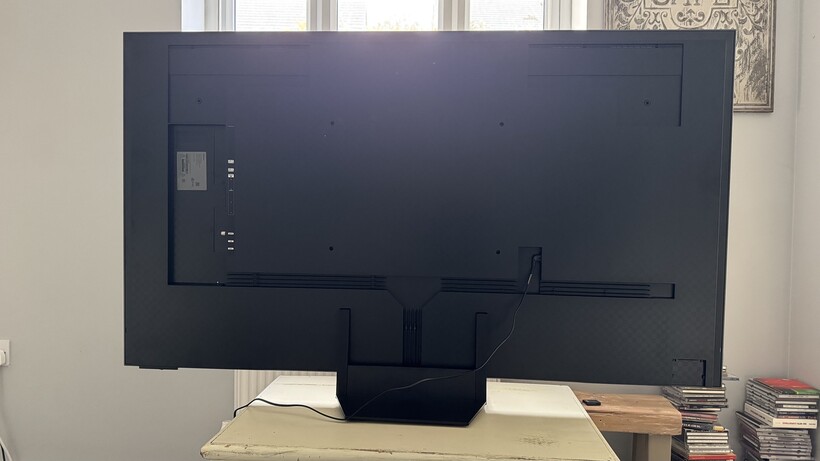
Centrally mounted stand with floating effect
Anti-reflection screen and Art Store create an artwork effect
The R95H has no truck with the wide frame Samsung added to the S99H OLED series. In fact, both the R95H’s screen frame and rear are exceptionally slim by LCD TV standards.
This makes it a great all hanging option – thoughh it actually ships with a desktop stand. This stand slots without screws into to grooves near the centre of the bottom edge, meaning the TV can be placed on even quite narrow bits of furniture. The neck of this stand wears a mirrored finish that creates the optical illusion that the screen is somehow just hovering above the base plate.
Advertisement
Advertisement
Image Credit (Trusted Reviews)
The TV carries well defined and extensive cable channelling on its rear panel to try and stop dangling cables from spoiling the 75R95H’s minimalist chic. Though actually, in a highly unusual move, it’s possible to connect four sources to the TV without any cabling if you add one of Samsung’s new, optional Wireless One Connect boxes to the R95H.
This lets you attach up to four HDMI sources to it, and then broadcasts their pictures and sound wirelessly to the TV from potentially metres away.
One last unusual design feature is the 75R95H’s combination of Samsung’s digital store of digital art screensavers, and an extremely effective anti-reflection screen. Put these together and you can make the TV look like a painting when you’re not watching it.
Image Credit (Trusted Reviews)
Connectivity
Wireless One Connect box option
Four gaming-friendly HDMI 2.1 ports as standard
Wi-Fi, Bluetooth and Airplay 2 support
Advertisement
I’ve already obliquely covered the R95H’s main connection story: Its potential for adding an optional Wireless One Connect Box. This warrants further attention, though, for as well as opening up the potential for cable free connection of up to four external sources to the TV, it also opens up the possibility of the QE75R95H taking in as many as eight HDMI sources at once.
The four HDMI ports built into the R95H’s bodywork and the four on the optional Wireless One Connect box are all fully HDMI 2.1 specified – something I’ll come back to in the Gaming section.
Advertisement
Image Credit (Trusted Reviews)
The Wireless One Connect hosts a couple of USB ports too, again doubling the number of those available.
There are also optical digital audio outputs on the TV and Wireless One Connect box, while the TV’s own ‘built in’ wireless capabilities include Wi-Fi, Bluetooth and AirPlay 2.
Image Credit (Trusted Reviews)
Advertisement
User Experience
Tizen OS smart system
Voice and Gesture control
Two remote controls
The Tizen OS that provides your main interface with the R95H’s smart features is pretty effective. The appearance of the home screen has been improved by shifting the usual roster of sub-menu links from down the side to along the top of the screen, and Samsung has also added a new AI home menu accessed via a direct button now included on the smart remote control.
This AI menu provides manual access to the third-party Co-Pilot and Perplexity AI systems, as well as a Generative AI image creation system that lets you create your own images from a few prompts.
The R95H’s extensive use of AI extends to its support for both the Bixby and Alexa voice recognition systems, and impressively sophisticated tools for coming up with relevant content recommendations based on your viewing habits. This can include the viewing habits of other members of your household, too, thanks to the TV supporting multiple individual user profiles.
Tizen carries a huge array of apps and streaming services, including the individual catch up apps for the UK’s main terrestrial broadcasters. Though there’s no support for Freely ‘wrappers’ carried by some rival brands these days.
Advertisement
Image Credit (Trusted Reviews)
Advertisement
The R95H ships with two remote controls: One traditional button-heavy one, and a much more slender affair with a stripped back button count and a solar panel on its rear that means you’ll never have to change its batteries again. This ‘smart’ remote also carries a built-in mic and Samsung’s new AI button when the other remote doesn’t, so all in all I’m confident this smart remote will be the one most users stick with.
The R95H can also be controlled to some extent via gestures if you’re wearing a Samsung Galaxy Watch, or you can add the TV to Samsung’s SmartThings app for iOS and Android devices, and then control it from your phone via a ‘virtual remote’
The sophistication of the R95H’s Tizen OS makes it a little intimidating initially, but after exploring it for a little while you start to appreciate its depths. Its biggest flaw, ultimately, is its desire to get you to accept adverts on the UI. You can opt out of these during the initial install, but if you do the basic layout of the UI remains unchanged, leaving areas where ads might have appeared often feeling like a fairly substantial waste of space.
Features
Micro RGB panel
Local dimming
Dedicated Micro RGB AI processor
The R95H is the second TV Samsung has released to use Micro RGB technology. This new tech, which is set to appear in 2026 from other brands too, under different names such as RGB LED, Mini RGB and True RGB, replaces conventional LCD TV lighting systems, which shine white or blue lights through colour filters, with dedicated red, green and blue LEDs.
This an approach which has the potential to greatly increase colour gamuts, colour volumes (colour plus brightness), power efficiency and general brightness
Advertisement
Advertisement
The Micro RGB lights on the QE75R95H are working within a VA type of panel, backed up by a potent local dimming system. In the QE75R95H’s case this local dimming zone system operates across a commanding 1792 individually controlled LED clusters. On top of this, of course, there’s the extra dimming effect you can get from each red, green and blue LED.
Image Credit (Trusted Reviews)
Samsung has created a dedicated Micro RGB AI processing system for its new screen technology to, among other things, drive the backlighting system, deliver high-level upscaling of HD sources, and apply the huge colour gamut the screen can provide to real-world content.
The R95H supports the HDR10, HLG and HDR10+ HDR formats, and will eventually, following a firmware update later this year, support the new HDR10+ Advanced format (designed to take on the recently announced Dolby Vision 2 format) by boosting brightness, cloud gaming, motion and the approach the TV takes to different content genres. As ever with Samsung TVs, the R95H doesn’t support Dolby Vision in either of its formats.
Gaming
Up to 165Hz frame rate support
VRR support including AMD FreeSync
Game Hub source screen and dedicated Game menu screen
The R95H leaves no stone unturned on the gaming front. For starters all four onboard and all optional Wireless One Connect HDMI ports support high frame rates for gaming up to 165Hz. They also all support variable refresh rates right across its frame rate range, with the VRR support encompassing the AMD FreeSync Premium Pro format.
Advertisement
Advertisement
Auto low latency support enables the R95H to automatically switch to its Game mode, in which mode the time the screen takes to render graphics drops to 10.4ms. Slightly higher than the S99H OLED, but not by enough for even the most competitive gamer to notice.
Where lag might become an issue, though, is if you’ve connected your console or PC to one of the HDMI inputs on an optional Wireless One Connect Box. The wireless transmission process associated with these boxes adds just under 20ms extra lag time.
The R95H helpfully organises all of your game sources, be they connected by HDMI or streamed via the many cloud gaming services Samsung support, onto a dedicated Game Hub home screen within the Tizen OS GUI, and also calls up a dedicated gaming menu if you press and hold the play button on the remote while playing a game.
Image Credit (Trusted Reviews)
This menu provides detailed information on the incoming gaming feed, and provides a host of cheats – sorry, gaming aids – such as mini map zooming, brightening dark areas so enemies are easier to spot, calling up an onscreen crosshair, and calling in different levels of motion smoothing for those (increasingly rare) occasions where you find yourself playing a low frame rate game.
As a tasty prelude to the video picture quality we’re going to cover in the next section, gaming on the Samsung R95H is a mostly a fantastically fun but also seriously immersive experience. The huge colour vibrancy the Micro RGB screen can achieve (I measured almost 150% of the DCI-P3 colour spectrum) together with brightness that hits peaks as high as around 2200 nits, results in colours that explode off the screen, making titles as varied as Crimson Desert, Forza Horizon and Rayman Legends look radiantly engaging to a degree they’ve seldom looked before.
Advertisement
Advertisement
HDR titles are handled well, with the screen doing a good job of optimising game HDR engines to its capabilities without the results looking clipped or unstable, and gaming feels responsive via the TV’s built-in HDMI ports.
My only gripes with gaming are that blooming around stand-out bright objects seems a little more noticeable if you’re sat off to the side of the screen than it does with video, and that fast pans and rapidly moving objects can look a touch soft compared with the S99H. Though they do look equally fluid.
Picture Quality
Remarkable colour range
High brightness
Excellent backlight controls
While we’ve become pretty accustomed now to TVs that push brightness far beyond the levels commonly used by content creators, doing the same thing for colour is for me much more noticeable – and, therefore, trickier to do convincingly.
Samsung’s Micro RGB AI processor, though, makes a remarkably good job of it. Especially considering it’s dealing with such a new technology.
Advertisement
Starting with just how aggressively the R95H leans into Micro RGB’s wider colour gamut capabilities, measurements taken using Portrait Displays’ Calman Ultimate software, G1 signal generator and C6 HDR5000 light meter reveal that the screen can deliver essentially 150% of the DCI-P3 colour range. An unprecedented figure that at least some of Samsung’s picture presets seek to venture into when showing today’s more constrained HDR images.
Advertisement
The Dynamic preset really goes for it, and is worth checking out for the fullest evidence of the sort of spectacle Samsung’s TV can deliver. While this mode is surprisingly even-handed in how it expands colours across the spectrum, and how little noise it suffers with compared with some rival similar modes I’ve seen on some early Micro RGB/Mini RGB samples, it still looks forced sometimes, particularly when it comes to skin tones.
The Standard preset, while certainly not measuring accurately, is for the most part a joy to watch. I watched multiple favourite 4K Blu-ray test discs in this default mode (having turned off the interfering Eco and ambient sensor-related modes) and for most of the time was both dazzled by seeing such familiar titles looking like they’d been remastered in some new next-gen HDR format, and amazed at how well this ‘expansion’ of their native images had been achieved.
Advertisement
Image Credit (Trusted Reviews)
Especially when it came to avoiding such potentially distracting nasties as exaggerated colour noise, certain tones suddenly jumping out of the picture more than others, and saturations so extreme that the screen is no longer able to express the sort of subtle colour blends required to make objects feel three-dimensional and natural.
Just as importantly as the spectacular but surprisingly authentic feeling colours to the Standard mode’s appeal is the prowess of the Samsung R95H’s backlight system. The more than 1700 local dimming zones in the QE75R95H’s screen together with the extra light control created by using separate red, green and blue LEDs for each lighting ‘unit’ creates light control mechanics which, under the watchful eye of Samsung’s dedicated Micro RGB processor, deliver both fantastically deep black colours by LCD TV standards, but also impressive stability and freedom from either general clouding and backlight blooming around stand-out bright objects.
What’s more, even when a little blooming can occur around extremely bright, colourful objects, unlike normal LED TVs the blooming actually adopts the chief colour tone of the ‘offending’ object. This makes it much less noticeable than the usual grey blooming effect, as your eye more often than not perceives the bloom as natural colour radiance.
Advertisement
Making the capabilities of the backlight controls even more impressive is the fact that the R95H can deliver its deep black colours and clean local dimming effects despite it also being extremely bright.
Advertisement
Calman Ultimate tests reveal brightness peaks of nearly 2300 nits on 10% and more than 660 nits on full 100% light windows, which contributes to an outstanding HDR sensation in terms of baseline brightness and the intensity of classic HDR highlights like sunlight reflecting on glass or metal, or bright streetlights against a night sky.
This impressive brightness doesn’t remotely start to overwhelm the screen’s huge colour capabilities. In fact, far from any tones looking faded or pallid in bright areas, the screen delivers huge levels of colour volume that complete the sense that RGB TVs are in a world of their own where colour is concerned.
Exciting though all of this is, many home cinema fans will still want the QE75R95H to be able to handle movies in a much more ‘as the director intended’ fashion as well, at least for serious film nights.
As with its S99H OLED flagships, Samsung has again managed to cater for this need much more successfully than we might have expected given the extravagant capabilities of the R95H’s screen. Right out of the box, the Filmmaker Mode achieves DeltaE 2000 average measurements with every Calman Ultimate HDR test I tried it with bar one below the 3.0 level beyond which deviations from industry standards might potentially be visible to the human eye. And even on that one test where it strays further than three, it only does so by a half mark.
Advertisement
Filmmaker Mode images inevitably look much less bright and much less vibrant than Standard mode, simply because sticking to today’s common mastering standards means using much less of what the screen can do. But this is as it should be – and the demands of switching into accurate settings don’t cause subjective viewing issues such as pale colour tones, heavily reduced backlight controls or poor dynamic peaking of bright light sources.
Advertisement
Image Credit (Trusted Reviews)
The R95H delivers SDR content in the Standard mode with just as much measurable and subjectively enjoyable precision, while again managing to drastically open SDR up in terms of brightness and colour in the Standard mode – and/or when using a pretty effective SDR to HDR conversion option – without the results looking gaudy.
Inevitably the R95H isn’t perfect. Sometimes the mostly excellent Standard mode can push skin tones, especially in dark scenes, too much, that they look too ripe. A slight pinkish tone can sometimes appear over bright shots in Standard mode too, and very occasionally subtle colour differences, especially over misty backgrounds, can become too overt.
Blooming around bright objects, while disguised by its colour component versus regular LED TVs, is present in a way it isn’t with OLED, and becomes slightly more noticeable if you’re watching the TV from an angle. The Standard mode can sometimes exhibit obvious baseline brightness ‘jumps’ during hard cuts between dark and light shots.
Advertisement
Motion looks slightly softer than it does on Samsung’s regular premium LCD TVs, as well as looking too smooth and noisy if you leave the Standard present’s default Picture Clarity settings in play.
Finally, while for the majority of the time I think most viewers in typical home viewing conditions will love the way the R95H’s anti-glare filter suppresses basically all reflections, it can flatten black levels a little in really extreme bright ambient light.
Advertisement
Upscaling
Well controlled processing side effects
Impressive, 4K-like sharpness and detail
Good noise suppression
The potent, heavily AI-influenced processors in Samsung’s premium TVs over the past few years have consistently delivered some of the best upscaling around – a handy benefit, I suspect, of Samsung’s longer devotion to the 8K TV cause than any other brand.
This trend continues with the Micro RGB AI processor, happily, as the R95H turns HD and even SD into convincing 4K look-a-like territory when it comes to detailing and clarity, without exaggerating source noise or grain, or generating distracting side effects such as colour shift or haloing around hard object edges.
Advertisement
The fact that the upscaling holds up well on a screen as big as 75-inches underlines how effective Samsung’s processing is, too.
Sound Quality
Object Tracking Sound works well
Good power and soundstage creation
Can struggle with sustained deep bass
For most of the time the R95H sounds good. Despite its slender bodywork, for starters, it manages to produce impressive volume levels capable of satisfying pretty substantial rooms. Especially as the sound is projected well beyond the TV’s physical extremities, creating a soundstage larger than even the 75-inch screen.
Advertisement
This large soundstage is exceptionally coherent, too, thanks to the ear-catching efforts of Samsung’s Object Tracking Sound system. Combining clever audio processing with a multi-speaker set up that places speakers all around the screen, OTS does a remarkably accurate job of placing key effects in the right place.
Image Credit (Trusted Reviews)
This applies to everything from dialogue to gunfire and engine noise from moving vehicles, and the number of objects that the OTS engine is capable of handling in any given scene is remarkable.
There’s a lovely crisp, clean but also rounded quality to the QE75R95H’s detailing, and shrill trebles sound controlled, even and free of warbling or buzzing distortions.
Advertisement
The R95H doesn’t quite hold it together at the low frequency end of the sound spectrum, though. Short, impactful bass sounds hit fine, but where there are longer, really deep and pressurised rumbles to handle the pair of dedicated low frequency speakers can descend into various distortions, including buzzing noise, crackling, and a general coarsening of the low frequency sound as the speakers try to push beyond what they’re really capable of achieving.
Squirrel Widget
Advertisement
Should you buy it?
Advertisement
It delivers colours like you’ve never seen before
With a measured ability to cover nearly 150% of the DCI-P3 colour spectrum and nearly 95% of the most extreme BT2020 colour spectrum, and equipped with presets that actually venture into such colour extremes, the 75R95H can deliver some genuinely remarkable colour extremes
Advertisement
Content needs to catch up
While the 75R95H delivers an unprecedented LCD colour response, there’s no real content out there that can fully exploit such wide colour. Though Samsung’s processing does a very good job in some picture presets of mapping current pictures to the TV’s capabilities.
Advertisement
Final Thoughts
With the QE75R95H Samsung has not only proven that Micro RGB and similar technology is relevant even in a world where content doesn’t yet exist that could fully unlock its capabilities, it’s delivered a TV that also breaks new ground with its LCD backlight control and AI features.
And which does things in the colour department that even Samsung’s S99H OLED can’t but that’s not to say you should necessarily buy it over the S99H. There are also areas, inevitably, where the pixel-level light control of OLED remains unmatched.
But the fact that the 75R95H even stands as a credible alternative to a TV as brilliant as the S99H is an outstanding achievement for such a new technology.
How We Test
The R95H was tested over a period of 10 days in both dark test room and regular living room environments.
It was fed a wide variety of content, including console games, 4K Blu-rays, streams of various resolutions and HDR formats from all of the main streaming platforms, as well as broadcast tuner footage.
All of this content was watched on the 75R95H in both daylight and dark conditions, and we explored all of the TV’s many picture setting options to find the best set ups for both regular living room environments and blacked out home cinemas.
Finally, the Samsung 75R95H was tested for both SDR and HDR playback in multiple presets using Portrait Display’s Calman Ultimate software, G1 processor and a C6 HDR5000 colorimeter.
Advertisement
Tested in dark and bright room settings
Tested with real-world content
Benchmarked with Portrait Displays’ Calman Ultimate Software, G1 signal generator and KC6 HDR5000 colorimeter
Gaming input lag was measured with a Leo Bodnar signal generator
FAQs
What HDR formats does the Samsung R95H support?
The 75R95H supports HDR10, HLG, and HDR10+ right away, and the new HDR10+ Advanced system will be added via firmware update later in the year.
What panel technology does the Samsung R95H use?
The QE75R95H uses Samsung Display’s second generation Micro RGB display, applied to a VA panel with more than 1700 local dimming zones.
Advertisement
Test Data
Samsung QE75R95H
Input lag (ms)
10.4 ms
Peak brightness (nits) 5%
2190 nits
Peak brightness (nits) 2%
2000 nits
Peak brightness (nits) 100%
654 nits
Set up TV (timed)
360 Seconds
Full Specs
Samsung QE75R95H Review
UK RRP
£4299
USA RRP
$4499
Manufacturer
Samsung
Screen Size
74.5 inches
Size (Dimensions)
1658.8 x 349.1 x 1019.2 MM
Size (Dimensions without stand)
946.2 x 1658.8 x 29.8 MM
Weight
30.1 KG
Operating System
Tizen
Release Date
2026
Resolution
3840 x 2160
HDR
Yes
Types of HDR
HDR10, HLG, HDR10+, HDR10+ Advanced
Refresh Rate TVs
48 – 165 Hz
Ports
Four HDMI 2.1, two USB, Ethernet, RF input, optical digital audio output; (optional wireless One Connect box) – four HDMI 2.1 ports, two USBs, optical audio port, RF and satellite tuner inputs
Ambassador leaders, from left: COO Mark Steffler, CEO Geoff McDonald, and Chief Strategy Officer John Larson. (Ambassador Photos)
Seattle customer engagement startup Ambassador has acquired the operating assets of Tacoma-based programmatic ad platform Humming, part of a roll-up strategy that anticipates a larger shakeout among startups as major AI platforms expand their capabilities.
The deal will bring Humming’s technology for automatically buying and placing digital ads into Ambassador’s platform, which uses AI to manage and act on customer referrals, loyalty programs, surveys, and other feedback. Ambassador said the addition will improve its attribution capabilities, connecting ad spending to purchases, leads, and other customer actions.
It’s the latest in a series of acquisitions for the 22-person Seattle company, which has raised about $11 million.
The AI shakeout: Ambassador CEO Geoff McDonald said he sees more opportunities for deals in the future as AI startups that essentially built wrappers around large language models struggle to hold onto customers as Anthropic, OpenAI and others add similar capabilities.
The companies that will succeed, in McDonald’s view, are the ones sitting on years of proprietary customer data that can’t be quickly reproduced, what he calls the context layer.
Advertisement
Ambassador has been accumulating that data since well before the current AI wave, bolstered by its 2021 acquisition of a referral marketing platform from an Apollo Global Management subsidiary. It has since rebuilt the platform around AI.
Customers of relatively nascent AI startups are increasingly saying, “Oh, well, Claude just came out with this tool. I’m just going to build it internally,” McDonald said, referring to Anthropic’s popular AI assistant. “And I think that’s where we differentiate.”
Latest acquisition: The Humming deal, structured as an asset purchase, closed last week. Financial terms were not disclosed. Humming, founded in 2018, built a platform for buying and managing ad campaigns across websites, apps, and streaming services.
Based in Tacoma, the company was co-founded by Bill Herling and Jill Nealey-Moore, a psychology professor at the University of Puget Sound, and raised more than $5 million, according to Herling’s LinkedIn profile.
Advertisement
The company had more than 30 employees at its peak. Herling stepped down as CEO in 2023 and has since launched a new ad tech startup called Atrium, focused on TV advertising. He is not joining Ambassador, and Humming’s standalone product will be discontinued.
Ambassador expects to integrate Humming’s technology into its platform within 60 days, an accelerated timeline that McDonald attributed to Ambassador’s use of AI in its own engineering process. Chief Operating Officer Mark Steffler said the team has been shipping new features to customers every two weeks, crediting the company’s use of AI coding tools.
Business model: Ambassador has also shifted its approach away from traditional software subscriptions toward what McDonald calls “Results as a Service,” or RaaS — charging customers based on consumption credits tied to outcomes rather than flat fees for seats or contacts.
The model is designed so that customers pay more when the platform delivers more value, and less when it doesn’t. McDonald said he plans to apply the same pricing approach to Humming’s programmatic ad capabilities, which he described as a first for the space.
Advertisement
Zipwhip connection: Ambassador’s chief strategy officer and co-founder is John Larson, who co-founded Seattle-based business texting startup Zipwhip, which Twilio acquired for $850 million in 2021. He spent three years at Twilio after the deal before joining Ambassador full-time in mid-2024.
He was part of a $7 million funding round in December that included other former Zipwhip execs, calling the company the biggest personal investment of his career.
M&A: Larson said this week that he believes the current environment will produce more acquisition targets. While the “graveyard” of failed AI startups may not be as dire as headlines suggest, many companies with solid teams and technology simply can’t raise money, he said.
Before Humming, the company acquired Predictive Solutions, a Seattle customer data platform, and ChalkLabs, a Spokane-based semantic search startup, before buying the Ambassador referral marketing platform from Intrado, a subsidiary of Apollo Global Management, in 2021.
Advertisement
McDonald, who previously co-founded Seattle startup Element Data, a decision intelligence platform, launched the company as i2H in 2019. The holding company began doing business under the Ambassador name after completing the acquisition from the Apollo Global subsidiary.
Customers: Ambassador says it works with more than 200 companies, listing customers including Visible by Verizon, Canadian bank CIBC, and HR software company Rippling on its website. Its customers are primarily in telecom, financial services, and B2B software.
Financials: The privately held company is approaching cash-flow neutral, McDonald said, distinguishing it from many startups that are burning through their funding as they grow.
The Batman: Part II is now set for an October 1, 2027 release, following multiple delays that pushed the sequel well beyond its original 2025 window. The extended timeline reflects a longer development cycle for director Matt Reeves’ follow-up, with the script only recently completed and production now expected to begin in spring 2026.
The sequel continues Reeves’ grounded take on Gotham, which began with The Batman in 2022. That film earned over $770 million globally and established a more detective-driven version of Bruce Wayne, set within what Reeves has described as an “epic crime saga.” Part II is expected to build directly on that foundation, exploring the aftermath of Gotham’s collapse and Bruce’s evolving role within it.
The delays have been tied to both industry-wide disruptions and Reeves’ deliberate approach to the script. DC Studios co-head James Gunn has confirmed that a completed draft is now in place, allowing the project to move forward after a prolonged development phase. With production finally on the horizon, the sequel is shifting from uncertainty to execution.
Robert Pattinson will return as Bruce Wayne/Batman and there are details with regards to the other cast as well. In a recent interview to French reality show C à vous, Pattinson shared that “The new script is so, so good, I’m very excited about it.” However, that is not all there is to update about this much-talked about film and thus, here is a complete rumor roundup.
Advertisement
When is The Batman Part II releasing?
Warner Bros. Pictures
The Batman: Part II has seen several release date changes. The Batman Part II was initially supposed to premiere on October 3, 2025. Unfortunately, nothing is guaranteed in the world of filmmaking.
Yes, the world will have to wait even longer to see Pattinson suit up again, marking a five-year span between the original film and the sequel. The delays stem from a combination of factors. The writers’ and actors’ strikes slowed development across Hollywood, while Reeves took additional time to finalize the script. Given the scale and expectations surrounding the sequel, the extended timeline appears to be a deliberate choice rather than a production setback.
The result is a five-year gap between the first film and its sequel — longer than typical superhero franchise timelines, but not unusual for director-driven projects of this scope.
What’s the plot of The Batman Part II?
Warner Bros. Pictures
Plot details remain tightly under wraps, but the sequel is expected to continue directly from the events of The Batman.
The first film ended with Gotham flooded and its institutions exposed as deeply corrupt. Bruce Wayne, having begun his transformation from a symbol of vengeance into a figure of hope, now faces a city in deeper chaos. Crime is likely to rise in the power vacuum left behind, setting the stage for a more complex and unstable Gotham.
Advertisement
My money is on Batman facing Thomas Elliot, a.k.a. Hush. Once a childhood friend of Bruce Wayne, this villain is famous for teaming up with the Riddler in the comics, as well as recruiting multiple other villains to battle and torment Batman with his knowledge of the hero’s true identity. At one point, Batman was even forced to fight a brainwashed Superman because of Hush.
The Batman did have the Riddler reveal that Bruce’s father inadvertently caused the death of a reporter named Edward Elliot. Given his surname, Edward may very well be Hush’s father. Combined with online rumors, it seems likely that the sequelwill feature Hush as the main villain, seeking vengeance against Bruce for his father’s role in Edward’s murder.
Reeves also revealed that Bruce Wayne is going to have trouble being the hero Gotham needs.
“This was a time of great turmoil in the city, it’s literally the week after what happened,” he explained to Digital Spy. “Much of the city is in desperation, so police can’t get everywhere, there’s crime everywhere, it’s a very, very dangerous time. [Batman’s] out there trying to grapple with the aftermath of everything that happened, which to some degree he blames himself for.”
Advertisement
Even in the recent interactions, Reeves has indicated that the sequel will explore that instability, focusing on how both Batman and Bruce Wayne evolve in response to the city’s changing conditions.
Who is in the cast of The Batman Part II?
Warner Bros. Pictures
When Warner Bros. announced The Batman Part II in April 2022, only Pattinson was confirmed to return as Bruce Wayne/Batman. This seemed pretty obvious, given he plays the franchise’s lead character. Regardless, we’re almost 100% sure these core cast members will return: Jeffrey Wright as James Gordon and Andy Serkis as Alfred Pennyworth.
Reeves confirmed to SFX magazine that Colin Farrell’s character, Oz Cobb/The Penguin, will be part of the movie. Farrell also starred in HBO Max’s spinoff series, The Penguin, which chronicled Cobb’s rise to the top of Gotham’s criminal underworld.
Farrell already shared his expectations for the sequel and what his contract with the franchise entails. “I signed up for three Batman films, but I didn’t know if I’d be in the second film,” he told The Hollywood Reporter. “Matt Reeves is a brilliant writer and an extraordinary filmmaker, and what I’m most excited-slash-nervous about in the second film is not what Oz does – or what predicaments he finds himself in, or what moments of success he gets to experience – but what his voice is.”
“I was told I have five or six scenes. I don’t have any hopes or any expectations. I’m really an open book, and that’s the way I get excited by shit or not,” he continued. “I think sometimes actors, if they have a career that has a certain length of time, they sometimes get to make too many decisions. Which isn’t to say I won’t push back or argue or fight in Oz’s corner – I do believe I know him better than anyone now.”
Advertisement
Zoë Kravitz could return as Selina Kyle/Catwoman, but it’s also possible that Reeves will hold off on her return to give Bruce a new love interest.
Barry Keoghan had a brief cameo as The Joker in The Batman, hinting at an alliance with Paul Dano’s Riddler. While it isn’t official yet, Keoghan neither confirmed nor denied that his Clown Prince of Crime will appear, implying there is still more to come from him.
Harvey Dent/Two-Face was rumored to be the main antagonist of The Batman Part II, with actor Boyd Holbrook (Logan) hired to portray the iconic villain. However, James Gunn has since debunked those rumors on Threads. This seems to be for the best, as DC already featured a top-tier Two-Face as a core villain in 2008’s The Dark Knight.
Filming and production timeline
After an extended development period, Reeves confirmed in mid-2025 that the script for The Batman: Part II was complete. DC Studios has since indicated that filming will begin in spring 2026, giving the production a full year for shooting and post-production ahead of its 2027 release.
Advertisement
This timeline aligns with the film’s scale and the technical demands of Reeves’ grounded but visually detailed approach to Gotham.
Is there a trailer for The Batman Part II?
Warner Bros., 2022 / Warner Bros. Pictures
No. In fact, now that the film has been delayed to late 2027, audiences likely won’t see a trailer until mid-2026. The first trailer for 2025’s Superman was released seven months before its premiere. If The Batman Part II follows a similar marketing schedule, the world may not get a glimpse of the film until around March 2027.
How The Penguin connects to Part II
HBO
HBO’s The Penguin series serves as a direct continuation of The Batman, taking place shortly after the events of the film.
The series follows Oz Cobb’s rise within Gotham’s criminal hierarchy, filling the power vacuum left behind after the Riddler’s attack. That progression is expected to feed directly into The Batman: Part II, positioning Penguin as a more significant force within the city.
Reeves has emphasized that while the series adds context, the sequel will still function as a standalone story.
What’s the status of The Batman Part II’s script?
After years of waiting, Reeves finally revealed on Instagram that the script for The Batman Part II was complete on June 27, 2025. DC Studios co-CEO James Gunn has also revealed that he had received a finished draft of the script. “It’s great,” he said, without offering any additional detail on the film or who would be in it.
Advertisement
When is The Batman II going into production?
In a letter to shareholders, Warner Bros. confirmed that The Batman II would start filming in spring 2026. This aligns with the October 2027 release date and would give the movie more than a year for post-production and visual effects. Just don’t be surprised if there are more delays.
Matt Reeves was planning an entire trilogy
Warner Bros.
A lot has changed at DC since The Batman debuted in theaters. But back in 2024, Reeves was pretty insistent that he would make an entire trilogy.
“Yes, that is still the plan,” Reeves told Collider about making The Batman trilogy. “I mean, it’s sticking very closely to the path we envisioned.”
“Things kind of shifted. So, when we came up with the idea to do The Penguin, that was something where I had always intended to continue Penguin’s story and wanted to tell this story of his beginning of rise to power,” Reeves continued. “Because we know that he’s introduced in The Batman as a kind of mid-level, sort of overlooked, mocked figure, who’s not yet in anyone’s eyes the kingpin we come to know him as in the lore.”
Will there be more TV spinoffs from The Batman?
Reeves has previously mentioned two other spinoffs from The Batman: one centered on the Gotham City Police Department and the other on Arkham Asylum. Although no other shows are currently lined up, Reeves told Collider: “We are talking about doing more — I think it would be really fun.”
Advertisement
What villains are rumored to be in The Batman Part II?
DC Comics / DC Comics
When talking to SFX magazine, Reeves shot down fans’ hopes of the supervillain Gentleman Ghost appearing in the sequel, stating that the character wouldn’t fit the franchise’s world.
“What was important to me was to find a way to take these pop icons, these mythical characters that everybody knows, and translate it so that Gotham feels like a place in our world. We might push to the edge of the fantastical, but we would never go into full fantastical. It’s meant to feel quite grounded,” Reeves said.
There are other rumors that the villains Clayface, Professor Pyg, and Scarecrow will show up in the sequel, along with Batman’s young ward, Dick Grayson/Robin. Despite these claims, Gunn took to Threads to deny the rumor that Pyg and Scarecrow will join Hush, Clayface, and Robin in Part 2. However, this statement implies the latter three characters will make their debut in the franchise.
Will Barry Keoghan be back as the Joker?
Warner Bros. Pictures / Warner Bros. Pictures
Keoghan’s cameo as the Joker was one of the most-talked-about moments of The Batman. But since Keoghan’s face was obscured in the film, it wouldn’t be hard for Reeves to recast the role if he wanted to. Keoghan was recently asked about coming back during a feature with Variety, and his answer was elusive at best.
“I can’t say much,” Keoghan said. “The camera is looking right at me. We’ll see where that goes. Again, it was an incredible experience … and yeah, I can’t say.”
Andy Serkis shares filming update on The Batman Part II
Warner Bros. Pictures / Warner Bros. Pictures
In an interview with Popverse, Serkis said he hasn’t seen a script for The Batman Part II. However, Serkis believes the sequel’s screenplay will be “brilliant” because of his affinity for Reeves. Serkis then predicted The Batman Part II’s start date for filming and when fans can expect it in theaters.
“Basically, I know nothing about the movie other than that I’ve just found out that we’re probably likely to be starting filming early next year,” Serkis said. “Therefore, if you do the math, it’ll be a year and a half after that.”
Advertisement
What to expect from the sequel?
While specific story details remain under wraps, The Batman: Part II is expected to deepen the tone established in the first film.
The sequel will likely place greater emphasis on Bruce Wayne’s personal evolution while continuing to explore Gotham as a city shaped by corruption, power struggles, and shifting alliances. Rather than expanding outward, the story is expected to become more focused, building on the grounded approach that defined Reeves’ first film.
Will the sequel connect to James Gunn’s DC Universe?
No. The Batman: Part II exists separately from the main DC Universe being developed by James Gunn and Peter Safran.
Reeves originally revealed to Entertainment Weekly that The Batman, its sequels, and its spinoffs will exist in a separate universe called “The Batman Epic Crime Saga.” That means Robert Pattinson’s Batman is not expected to intersect with the broader franchise, which includes its own version of the character.
This separation dates back to before Gunn and Safran took over DC Studios, when The Batman was developed as a standalone project. Reeves has since reiterated that his films and related spinoffs are designed to exist within their own self-contained universe.
Advertisement
That said, Gunn has acknowledged that the idea of bringing Pattinson’s Batman into the wider DCU has been considered, even if no plans are currently in place. For now, The Batman: Part II remains firmly positioned outside the shared universe.
What about that other Batman movie, The Brave and the Bold?
Warner Bros. Animation
The recent delay of The Batman Part II to 2027 coincided with the delay of director Andy Muschietti’s Batman film, The Brave and the Bold, which is set in the DCU. This may lead one to wonder if Gunn will integrate The Batman Part II into the DCU after all. Gunn himself admitted on the Happy Sad Confused podcast that he floated the idea but still wishes to keep both franchises separate.
“I’ve contemplated it, yeah. I contemplate everything,” Gunn said. “I talk about everything… I’d be an idiot not to think of how can this go or how can this go, but I’m committed to both telling stories in the DCU and telling Elseworlds stories.”
Hey, DC, if Marvel could make two Spider-Man franchises at the same time, DC could do the same with two different Batmen.
The Hollywood Reporter has questioned whether the movie even exists or whether there’s someone actively working on it. Muschietti confirmed in October 2025 that the movie was still happening, but he couldn’t discuss it further for at least another two months.
Malwarebytes recently uncovered a new malicious campaign targeting the Windows Update service. Focused on French-speaking users, the campaign uses layered obfuscation techniques to deliver multiple malicious payloads built with legitimate tools. The malware’s primary goal is to steal passwords and other sensitive user data. Read Entire Article Source link
Bellevue, Wash.-based Humanly, a startup that makes AI-powered interviewing tools for employers, announced it has acquired Anthill, a platform that uses AI to help companies connect with and support frontline employees.
It’s the latest acquisition for Humanly, which scooped up three recruiting technology companies last year — Sprockets, Qualifi, and HourWork.
Humanly said Tuesday that the Anthill acquisition adds “post-hire engagement capabilities” to its offerings, which include helping organizations attract, screen, and interview job candidates.
Humanly will continue operating the Anthill platform as it explores how to integrate its capabilities into the broader Humanly platform. Terms of the deal were not disclosed.
Founded in 2018, Humanly is led by CEO Prem Kumar. The startup, ranked No. 152 on the GeekWire 200, just announced a $25 million Series B funding round last week, and has raised $52 million to date.
Advertisement
Founded in 2020 by Muriel Clauson Closs, Young-Jae Kim, and Laura Silvester, Chicago-based Anthill built technology designed to help frontline managers and distributed teams stay connected through messaging, feedback, and operational support. Anthill raised approximately $10 million in funding.
Ising models are designed to help perform quantum error correction and calibration.
Nvidia has announced a new family of open-source quantum AI models on World Quantum Day (14 April).
‘Ising’, the “world’s first” open models for building quantum processors, joins a growing list of Nvidia open-source models including ‘Alpamayo’ for autonomous vehicles, ‘Nemotron’ for agentic systems and ‘Cosmos’ for physical AI.
Ising models are designed to help researchers and enterprises perform quantum error correction and calibration.
Advertisement
The family includes Ising Calibration, a vision language model that can interpret and react to measurements from quantum processors, and Ising Decoding, two variants of a 3D convolutional neural network model that can perform real-time decoding for quantum error correction.
Ising Decoding can deliver up to two and a half-times faster performance and three-times higher accuracy than current open-source industry standards, Nvidia said. The models are available for download on GitHub, Hugging Face and Nvidia.
The Ising models are already in use at the Harvard John A Paulson School of Engineering and Applied Sciences, IQM Quantum Computers, Lawrence Berkeley National Laboratory’s Advanced Quantum Testbed, the UK National Physical Laboratory and the University of California San Diego, as well as a list of other prominent names disclosed by the company.
“AI is essential to making quantum computing practical,” said Jensen Huang, the founder and CEO of Nvidia. “With Ising, AI becomes the control plane – the operating system of quantum machines – transforming fragile qubits to scalable and reliable quantum GPU systems.”
Advertisement
Ising joins other Nvidia quantum-specific products, including the CUDA-Q quantum software platform, and the NVQ Link that connects GPU computing with quantum processors.
We’re sliding into developer conference season and one of the biggest events on the upcoming calendar is Google I/O. This year’s edition is taking place on May 19 and 20. As usual, the in-person element will happen in Mountain View, California, though many of the keynotes and sessions will be livestreamed. Google will surely make its biggest announcements during the opening keynote, which will start at 1PM ET on May 19. A developer keynote will take place later the same day.
As ever, the rumor mill will pick up speed in the leadup to Google I/O. We do have some ideas about what Google will discuss at the event. So let’s take a look at what to expect at Google I/O 2026 (we’ll update this story as we hear more credible rumors).
What’s officially on deck
Google I/O logo (Google)
When it confirmed the dates for this year’s I/O, Google revealed a little bit about what it has in store for us. As you might imagine, AI will be a major focus of the event. Google plans to share its “AI breakthroughs and updates in products across the company, from Gemini to Android, Chrome, Cloud and more,” it wrote in a blog post in February.
There will be news on Gemini model updates as well as agentic coding. Google will have some product demos too.
Advertisement
The company has released its initial schedule of keynotes and sessions, but it doesn’t provide us with a lot of specifics as yet. It has lined up discussions on what’s new in the likes of Google Play, Firebase (a mobile and web app development platform), the Gemma open model family and the open-source app development framework Flutter. Interestingly, there isn’t a dedicated session for Android XR on the schedule just yet.
What to expect
Leaked image of Google’s Aluminium OS (9to5Google)
There haven’t been many credible leaks ahead of Google I/O as yet, but we can make some educated guesses about what to expect from the event. It’s all but certain that we’ll get more details about Android 17 at I/O. Developers need time to tweak their apps ahead of the next major version of the operating system rolling out to everyone if they want to take advantage of new features as soon as possible, and they invariably get a heads up about those at I/O every year. (That said, Google has been moving away from a big annual release approach in favor of juicier Pixel Drops/Android updates, so we may not see some of the new features it unveils at I/O for some time.)
As for other operating systems, Google is planning to meld ChromeOS and Android into a unified platform. This seems to be the project that’s being referred to as Aluminium OS, which we got a first glimpse of earlier this year thanks to some leaks. I/O seems like the perfect venue for Google to start showing that off to the public.
On the AI front, a reveal of Gemini 4 could be on the docket, along with details of the latest Veo text-to-video model. Maybe we’ll hear more about Project Astra, Google’s pitch for a universal AI assistant.
Advertisement
If Google has some consumer hardware to show off at this year’s event, I suspect it’ll be an Android XR device or devices, rather than a Pixel phone or watch. There is a chance that we’ll get a tease of the Google Pixel 11 lineup. But don’t be surprised if we don’t see that or the Pixel Watch 5 until Google’s dedicated hardware event, which has taken place in August or October in recent years (Google will want to stay well away from Apple’s iPhone event, which will likely take place in September as usual).
Here’s hoping for a big surprise or two
Google
Sure, Android updates are all well and good. If Google insists on cramming Gemini and other AI tools into all of its tools and services, we’ll at least listen to what they have to say about all that.
But I have my fingers crossed for some cool surprises. Give us something new from Google X (Alphabet’s moonshot factory, not the thing that was once Twitter), an idea that could be a net benefit for humanity and boost the company’s bottom line at the same time. These events are always more fun when there’s something for us to get genuinely excited about, even if it’s something relatively niche but out there, like the Google Beam 3D video conferencing tech.
Susan Kelly discusses Technology Ireland ICT Skillnet’s tech leadership master’s programme, which is celebrating 20 years in operation.
Last week, Technology Ireland ICT Skillnet announced its plans to award four fully funded places on its MSc in Leadership, Innovation and Technology programme to celebrate 20 years since the programme’s inception.
The funding – called the ‘Big 20 Giveaway’ – is valued at €20,000 per annum per place and will cover all tuition fees of the two-year programme for four candidates.
“The Big 20 Giveaway is a celebration of the programme’s 20-year impact, but also a very practical initiative to support future talent,” says Susan Kelly, network director at Technology Ireland ICT Skillnet.
Advertisement
“What we’re really celebrating is the impact the programme has had with over 300 graduates who have gone on to lead teams, functions and transformation initiatives across Ireland’s technology landscape and beyond.
“For us it is not just about looking back, it’s about investing in what comes next.”
The programme
But what is the course actually about?
The programme, which is delivered at Technological University Dublin, is a part-time, applied master’s designed specifically for experienced professionals working in technology and innovation-led environments.
Advertisement
“Its core objective is to help people move beyond technical expertise and develop the capability to lead, whether that is leading teams, driving innovation or shaping strategy at an organisational level,” says Kelly.
She tells SiliconRepublic.com that the programme focuses on three key areas: leadership capability, innovation and transformation, and business and strategic thinking.
“What really differentiates it is that it is applied, not theoretical,” she says. “Participants work on real challenges from their own organisations, so the learning is immediately relevant and delivers tangible value both to the individual and their employer.”
The programme has been in operation since 2006, and in the 20 years since then, technology has advanced considerably.
Advertisement
Kelly explains that a course such as this is more important than ever today because “the challenge right now isn’t access to technology, it is the ability to lead with it effectively”.
“Organisations are dealing with rapid change driven by AI, digital transformation and global competition,” she says. “The professionals who will stand out are those who can connect technology, strategy and people.”
She adds that the biggest benefit of the programme is that it enables participants to make the shift “from being the person who delivers technology to the person who shapes how and why it’s used”.
“It gives them the language of business and strategy, the confidence to operate at senior levels, and the ability to lead transformation and not just contribute to it.
Advertisement
“For many, it’s the difference between continuing to grow technically and actually stepping into leadership roles with broader organisational impact.”
Who it’s for
With four fully funded places on the programme up for grabs, what constitutes an ideal candidate for the course?
Kelly says the programme is designed for what she calls the “strategic technologist”, which she explains refers to someone who is already established in their career but is ready to take the next step.
“Typically, participants are mid- to senior-level professionals working in roles like software engineering, architecture, product, project management, cybersecurity or IT leadership,” she says. “They are already technically credible but looking to expand into broader leadership or strategic roles.”
Advertisement
She says course participants are often “at a career inflection point”, where they may be leading teams or projects already but “they recognise that technical expertise alone won’t get them to the next level”.
“Many are experiencing a technical ceiling, where they are highly capable but they don’t yet have the strategic, commercial or leadership toolkit to move into senior decision-making roles. This programme is designed specifically to help them break through that barrier.”
For anyone considering applying for one of the funded positions, Kelly says the organisation is looking for motivated, ambitious people who have strong technical or functional expertise and are already operating at a high level in their organisation, and who want to have a greater impact, “not just within their team but across their organisation”.
An important criteria that she emphasises is that they’re not looking for people at the start of their careers or those looking for purely academic study.
Advertisement
“This is for professionals who are already doing significant work and want to elevate their influence and capability,” she clarifies. “We’re also looking for people who will apply what they learn in real time by bringing challenges from their workplace into the programme and using it as a platform to drive meaningful change.
“Ultimately, the strongest candidates will be those who recognise that they’ve outgrown a purely technical role and are ready to take on the responsibilities and opportunities of leadership.”
Don’t miss out on the knowledge you need to succeed. Sign up for the Daily Brief, Silicon Republic’s digest of need-to-know sci-tech news.
Accessory spending rises as creators invest hundreds and thousands into gear upgrades
AI-driven production growth exposes capture weaknesses and boosts hardware demand worldwide
Smartphones still dominate video creation, but growing evidence suggests their physical limits are driving a new spending wave on dedicated gear among millions of creators, experts have said.
A new report from Futuresource Consulting estimates the global population of online video creators reached 246 million in 2025 and could grow to 267 million by 2030. That growth is only part of the story, however, as spending patterns and equipment upgrades appear to be the real commercial driver behind the next phase.
The research draws on responses from more than 16,000 people across the USA, UK, Germany, France, Spain, Brazil, China, and India, and combines survey data with creator population sizing, forecasts, and analysis of device preferences and purchasing behavior.
Article continues below
Advertisement
Smartphones have physical limitations
“Smartphones remain the primary video acquisition device for the vast majority of creators,” said Helen Matthews, Senior Market Analyst at Futuresource. “But the number of users progressing towards dedicated hardware is growing at a significant rate. The closest dedicated alternative, vlogging cameras, falls far behind smartphones in our survey, underscoring how wide the gap remains, and how much runway exists for manufacturers to capture spend.”
She said that progression becomes harder to ignore as creators increase their output.
Advertisement
“And although smartphones present almost no barrier to entry for online content creation, they have physical limitations. As creators grow in ambition and production volume, the penalty for weak capture becomes more visible. That’s where the opportunity for dedicated camera products lies.”
Growth in accessory ownership suggests that move is already happening, with the number of creators using more than just a smartphone rising 17% year over year.
Sign up to the TechRadar Pro newsletter to get all the top news, opinion, features and guidance your business needs to succeed!
Nearly half of creators with additional accessories reported spending over $1,000 on gear, while 70% said they had spent more than $500.
Advertisement
Microphones, smartphone lenses, gimbals, and compact action cameras similar to GoPro-style devices are among the most commonly planned purchases.These add-ons offer incremental upgrades without requiring creators to abandon smartphones entirely.
Three creator groups appear throughout the data — hobbyists, aspirational creators, and professionals — each with different priorities when spending on equipment. Aspirational and professional creators together account for around 35% of creators today and are expected to approach 38% by 2030.
Artificial intelligence is now widely used by four in five creators, largely speeding up editing, idea generation, and visual effects. Faster production cycles boost output volume, which in turn places pressure on capture quality at the start of the process.
Advertisement
“As post-production becomes faster and more automated, the volume of content produced rises,” Matthews said. “As a result, the penalty for poor capture quality becomes more visible. We expect this dynamic to drive sustained demand for higher-specification cameras, audio equipment and accessories as creators who produce regularly seek to differentiate their output.”
Regional differences affect how that spending unfolds, with India accounting for 28% of the global creator base and showing strong momentum in dedicated hardware adoption.
The USA continues to lead in equipment spending and upgrade pathways, while European markets show uneven growth tied to cultural attitudes around monetization and creator income.
The browser tab we reflexively open to use Google every five minutes now has a faster, more efficient replacement sitting on the desktop.
Google
What Does The App Actually Do?
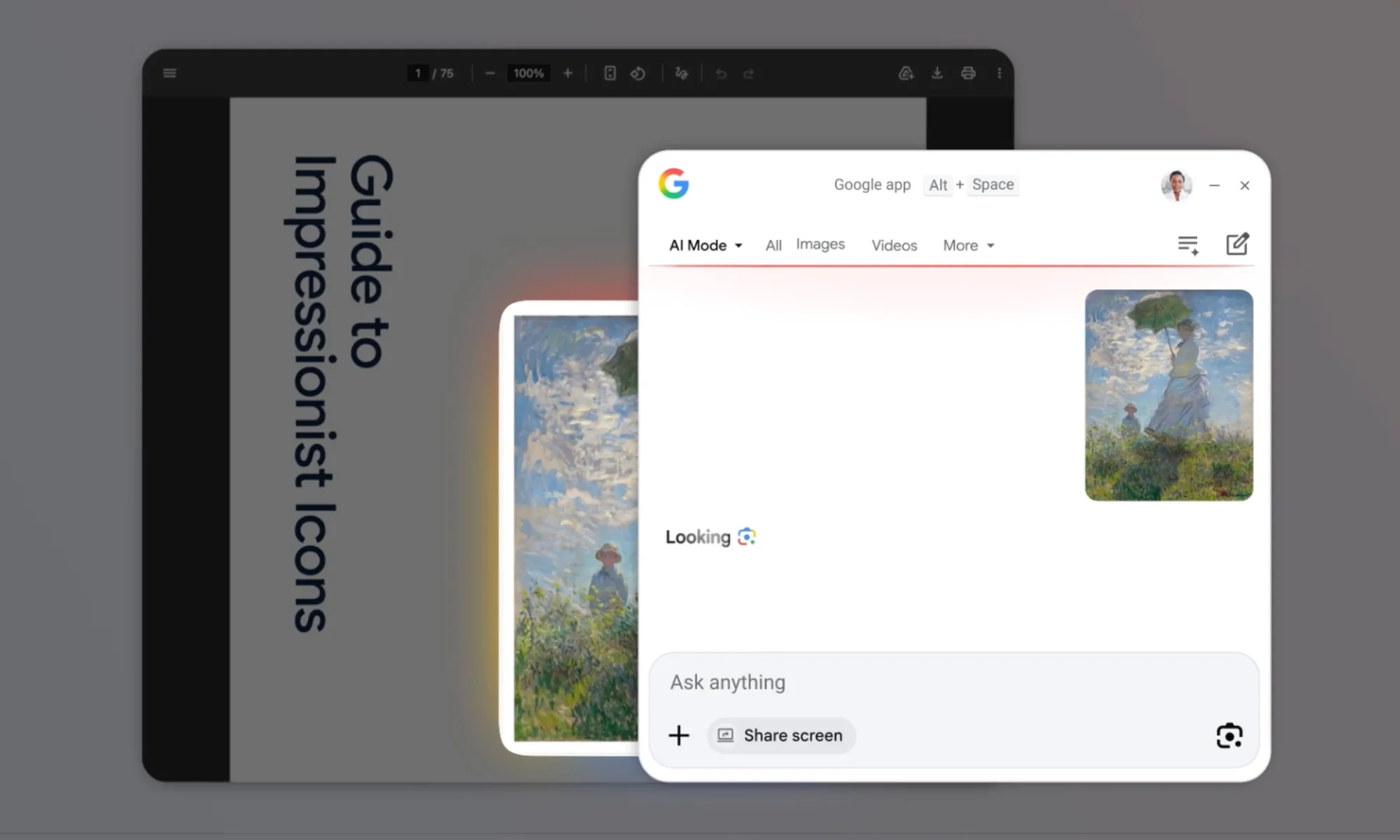
The centerpiece, mind you, is a keyboard shortcut: Alt + Space. It summons a floating search bar over whatever is on the screen, similar to how Cmd + Space summons the Spotlight search on Macs.
Once you summon the search bar, you can search across local computer files, installed apps, Google Drive documents, and the internet in general, all from one place.
If I were a Windows user (which I was until about three years ago), I would have installed the Google app for the Spotlight-like search experience alone, but my Mac’s Spotlight has been working fine for the same amount of time.
Quite a bit, actually. Google Lens, the company’s native image-based search tool, is built directly into the new Google app for Windows. It lets users click and search for anything that’s visible on their screen.
From translating on-screen text to solving a maths problem, you can do such things without copying anything. The app also supports screen sharing within a search session, so users can keep a document or webpage open while asking follow-up questions.
Of course, the new Google apps come with AI Mode embedded. So, answers go beyond blue links, responses are conversational, contextual, and connected to the internet with accurate information, along with appropriate citations.
Google’s global Windows app rollout signals something bigger than convenience; it’s a direct challenge to Microsoft’s dominance over your desktop search experience. Copilot is already embedded in Windows, so Google’s presence is also making itself felt. In the future, we might get to see a dedicated Gemini app for Windows.
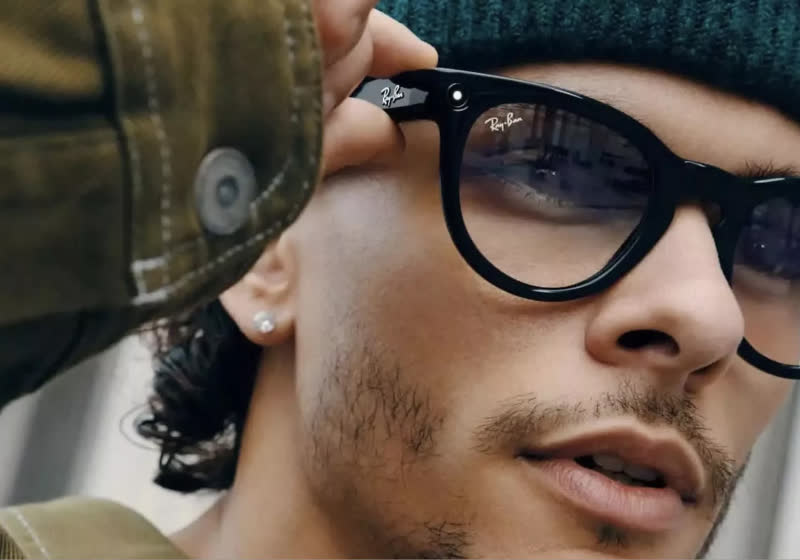
While Meta partnered with Ray-Ban to position its smart glasses as more lifestyle-oriented than experimental, Apple’s design philosophy remains distinctly in-house. In his Power On newsletter, Gurman notes that Apple is taking an independent approach, choosing to develop the product internally rather than collaborate with an established eyewear brand. Each… Read Entire Article Source link



























































You must be logged in to post a comment Login