
Business
Building Global Impact Through Real Estate Leadership

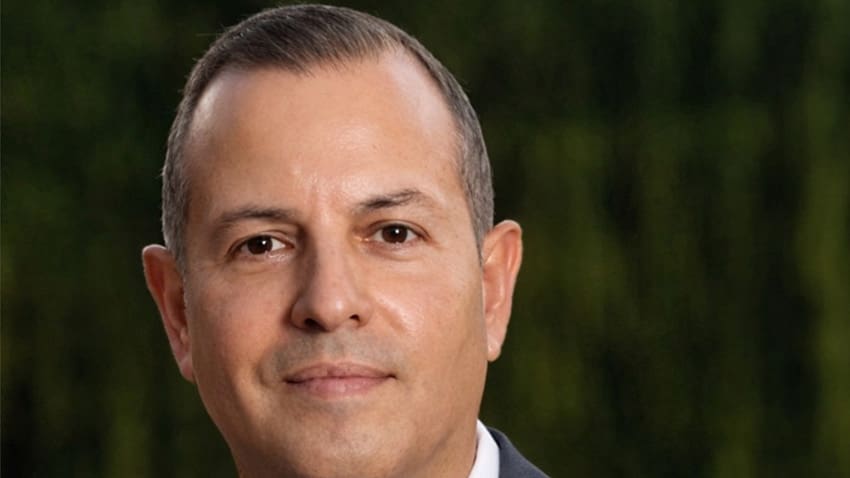
A Career Built on Discipline and VisionRon Yeffet’s story begins in Jerusalem, Israel, where he was born in 1966. His early years were shaped by structure and responsibility. At 18, he entered the Israeli Defense Forces and served for 37 months as a Major Sergeant in the Artillery and Bomb Squad Unit.That experience left a lasting mark.“Discipline is not something you turn on later,” Yeffet says. “It becomes part of how you think and act every day.”After completing his service, he made a defining move. He traveled to the United States to begin his career as an entrepreneur. It was a step that would eventually lead to projects across four continents.
How Ron Yeffet Built a Global Real Estate Career
Yeffet’s early work in New York City real estate laid the foundation for everything that followed. Over the next 25 years, he would own and manage the development of multiple projects across the U.S., Israel, Europe, and Africa.His work is not limited to one type of project. It spans concrete superstructures, energy supply systems, power plants, and major roadways.“I never wanted to stay in one lane,” he explains. “Every project teaches you something new, and that knowledge compounds over time.”This broad scope helped him stand out in a competitive industry. While many developers focus on one region or niche, Yeffet built a portfolio that crosses borders and sectors.His approach is rooted in planning and execution. He emphasizes details and teamwork at every stage.“If the plan is weak, the outcome will be weak,” he says. “Strong planning allows the team to execute with confidence.”
Leadership Style: Planning, Precision, and Execution
One of the defining traits of Yeffet’s career is consistency. Across different countries and industries, his methods remain the same.He focuses on preparation, discipline, and collaboration.“Great projects are never done alone,” he says. “You need the right people, and you need to trust them.”This mindset has helped him manage large-scale developments, including infrastructure projects in Africa. These projects often involve complex coordination with governments, partners, and local communities.His ability to navigate these challenges has led to long-term relationships with government bodies around the world.“Relationships are built on trust and results,” Yeffet explains. “If you deliver consistently, people want to work with you again.”
Expanding Beyond Real Estate into Infrastructure
While many know Yeffet for real estate, his work in infrastructure is just as significant. His projects include energy supply systems and power plants, as well as roadways that support growing cities.These projects require a different level of planning. They often impact entire regions, not just individual properties.“You have to think about the bigger picture,” he says. “It’s not just about building something. It’s about how that project will serve people over time.”This perspective has shaped his reputation as a leader who looks beyond short-term results. His projects are designed to create lasting impact in the communities they serve.
Ron Yeffet’s Role in Global Community Development
Yeffet’s influence extends beyond business. He has played a key role in developing Jewish communal life in the Balkans.Before 2010, organized Jewish life in parts of the region was limited. Yeffet helped establish Or Itzhak communities in Albania and Thessaloniki, creating spaces for cultural and religious connection.“When you build a community, you are building something that lasts beyond you,” he says.These efforts were not one-time initiatives. They grew into sustainable, community-driven institutions that continue to evolve.His work in this area reflects a broader philosophy.“Success is not just about projects,” Yeffet explains. “It’s about the people those projects serve.”
International Recognition and Government Partnerships
Over time, Yeffet’s work has gained global recognition. His experience across multiple regions has led to partnerships with government bodies and organizations.One of the most notable acknowledgments of his work is his role as Honorary Council for Senegal in Israel.This position highlights his involvement in strengthening social, economic, and civic ties between regions.“Opportunities often come from relationships,” he says. “When you invest in people and partnerships, doors open.”
What Drives Ron Yeffet Today
Today, Yeffet continues to lead with the same principles that shaped his early career. He focuses on growth, execution, and long-term impact.His philosophy remains simple.“Stay disciplined. Stay focused. And always think about the bigger picture,” he says.Looking back, his journey shows how consistent values can scale across industries and borders. From his early days in Jerusalem to large-scale projects around the world, Yeffet has built a career defined by structure, adaptability, and vision.And while the scope of his work has grown, his approach has stayed the same.“At the end of the day, it’s about doing the work the right way,” he says. “Everything else follows from that.”

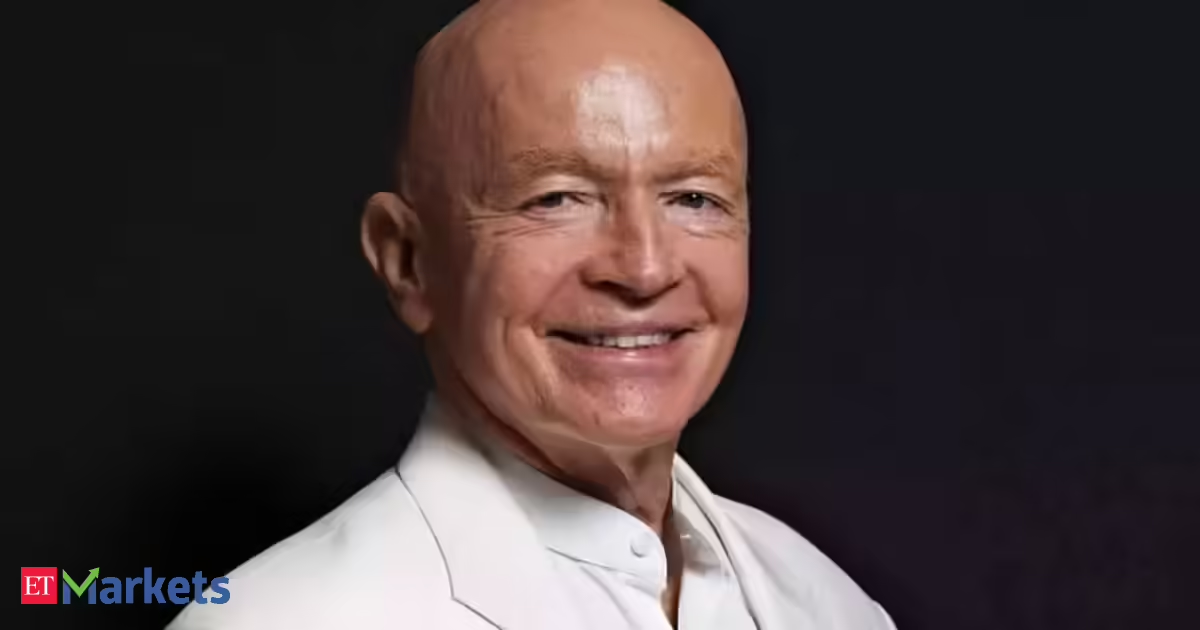
He died today, according to a post on his LinkedIn page attributed to his spokeswoman, Kylie Wong. John Ninia, a partner at Mobius Investments, said he died in Singapore.
In more than 30 years with Franklin Templeton Investments, officially Franklin Resources Inc., Mobius became an evangelist for money-making opportunities in Africa, Asia, Eastern Europe and Latin America. In a crowd of investing advisers, he was distinctive in part for his impeccably shaved head, which inspired the nickname Bald Eagle.
Hired in 1987 by John Templeton, a pioneer in leading American investors to companies abroad, Mobius started one of the first mutual funds dedicated to rapidly developing new markets. He oversaw the Templeton Emerging Markets Group until 2016, was lead manager of its flagship Templeton Emerging Markets Investment Trust until 2015 and retired in January 2018.
From 1989 until his retirement, the closed-end fund returned 13.4% a year on average, according to Morningstar Direct. From 2001, when the MSCI Emerging Markets Index was introduced, the Templeton fund beat that benchmark by 1.9% a year on average, according to Morningstar.

“Mark Mobius is to emerging market investing what Colonel Sanders is to fried chicken,” Peter Douglas, a principal at the Singapore chapter of the Chartered Alternative Investment Analyst Association, said when Mobius stepped aside as portfolio manager. “He is the icon of the industry and has been the global cheerleader of emerging markets.”
Partly based in Singapore, Mobius traveled 250 to 300 days a year in a Gulfstream IV private jet, visiting factories and distributors in remote corners of the globe to identify investment opportunities. He correctly predicted the start of a bull market that began in 2009, snapped up bargains during the Asian financial crisis after Thailand floated its currency in 1997 and bought Russian stocks as panic selling took hold in Russia in 1998. He was also one of the first institutional investors to identify Africa as a promising frontier market, setting up the Templeton Africa Fund in 2012.
‘Kicking the Tires’
“I believe in getting out and kicking the tires,” he wrote in 2015. “I would rather see with my own eyes what’s happening in a company or country. Lies can be as revealing as truth, if you know what the cues are.”
Just last month, via his Substack column, he shared his thoughts on the war in Iran and its impact on equity markets.
Mobius founded London-based Mobius Capital Partners in 2018 and oversaw actively managed funds investing in emerging market equities. He left there in late 2023 but continued to seek out investing opportunities, setting up a new venture in Dubai, where he had lived for three years.
Franklin Resources Inc. was founded in 1947 and is based in San-Mateo, California. It acquired John Templeton’s investment firm — Templeton, Galbraith & Hansberger Ltd. — in 1992 to create Franklin Templeton Investments.
Joseph Bernhard Mark Mobius was born on Aug. 17, 1936, in Bellmore, on New York’s Long Island. His German father, Paul Mobius, was a ship’s cook and baker. His mother, the former Maria Louisa Colon, was Puerto Rican. With his two brothers, Hans and Paul, Mobius grew up with German and Spanish spoken at home.
In 1955, Mobius received a scholarship to study dramatic arts at Boston University and worked as a pianist in a nightclub to help pay for his education. He earned a bachelor’s degree in fine arts and a master’s in communications.
Studied in Kyoto
He successfully applied for a scholarship to learn Japanese culture and the Japanese language in Kyoto, triggering his desire to live and work in Asia. After earning a Ph.D. in political science and economics from Massachusetts Institute of Technology, in 1964, he took a job with International Research Associates, conducting surveys and other consumer research in Thailand and Korea for a year each.
He ended up in Hong Kong, where he started his own industrial research consulting firm. One project — a report on the Hong Kong stock market — was his entre into securities analysis. His Yul Brynner hairstyle, as he described it, was conceived at this time after a fire in his apartment damaged his hair and he shaved the rest off, according to his 1997 memoir.
He was hired by Vickers Da Costa, a UK stock brokerage, to start a Taiwanese fund management company, International Investment Trust. He traveled to the Bahamas to present investment opportunities to Templeton, who in 1986 asked if he would be interested in running an emerging markets fund. The following year they raised $100 million in capital, listed their fund on the New York Stock Exchange and opened a small office in Hong Kong for Mobius and two Chinese analysts. They began investing in six places: Hong Kong, Philippines, Singapore, Malaysia, Mexico and Thailand.
“You must remember, in those days, most countries did not welcome foreign investment,” Mobius recalled in a 2022 interview with Barry Ritholz for Bloomberg’s Masters in Business podcast series. “They were also either socialist or communist like China and Russia. Eastern Europe was out of the question, of course. So we had only six markets in which to invest, and then we started expanding. Gradually, markets opened up. And eventually we were investing in something like 70 different countries around the world.”
1987 Crash
After losing a third of his fund’s value in the October 1987 stock market crash during his first year with Templeton, Mobius diversified to other markets including Argentina, Mexico, Indonesia and Russia.
Mobius wrote more than a dozen books on investing and economics, including The Investor’s Guide to Emerging Markets (1994) and Passport to Profits (1999). He shared rules and aphorisms including, “If you see the light at the and of the tunnel, it’s too late to buy.”
In 1999, he was tapped to serve on the World Bank’s Global Corporate Governance Forum as a co-chairman of a task force on investor responsibility.
Mobius never married. In Passport to Profits, he wrote that there were costs and benefits to being a “full-time nomad — an endangered species I’ve long admired for their fierce independence, their refusal to abide by conventional norms, their desperate desire for freedom.”
“Though some people probably pity me for having no home, no family, no domestic life to speak of,” he wrote, “my somewhat eccentric lifestyle offers untold opportunities for variety, stimulation and creativity.”


Functional coffee brand recently named Julia Perez as its chief marketing officer.
Business
Is Facebook Messenger Down? Web Version Shuts Today as Meta Redirects Users to Facebook Chat in April 2026

NEW YORK — Facebook Messenger’s standalone website messenger.com stopped functioning for messaging on April 16, 2026, as Meta Platforms Inc. completed a long-planned consolidation that forces desktop users to switch to Facebook’s integrated messaging interface at facebook.com/messages.
The change, first announced in February 2026, took effect Thursday, leaving many desktop users confused when they tried to access the familiar dedicated site and found themselves automatically redirected. Mobile apps for iOS and Android continue operating normally, but the web-only experience has ended, marking the latest step in Meta’s effort to streamline its messaging ecosystem and cut costs on separate desktop platforms.
Meta’s official help page clearly states the transition: starting April 2026, messenger.com is no longer available for messaging. Users attempting to visit the site are redirected to facebook.com/messages, where conversations sync seamlessly. The standalone Messenger desktop apps for Windows and Mac, already discontinued earlier, followed the same fate. For those who accessed Messenger without a linked Facebook account, web access is now unavailable, and they must rely on the mobile app to continue chats.
The move has sparked widespread frustration among users who preferred the clean, distraction-free interface of messenger.com. On social media and forums like Reddit, complaints poured in Thursday morning from people who opened their browsers expecting quick access to messages only to be funneled into the full Facebook experience. Many reported that the redirect works but feels slower or cluttered with news feed elements and ads.
Downdetector and similar monitoring sites showed a spike in reports Thursday, with users noting problems accessing Messenger on Chrome and other browsers. Some described the service as “deadsies in Chrome but OK on phone,” while others simply saw the shutdown as the final nail in the coffin for the independent web version. Meta’s business status page and developer tools reported no widespread outages for the Messenger Platform itself, confirming the issue is intentional rather than a technical failure.
The decision fits Meta’s broader strategy of unifying its apps and reducing maintenance overhead. Last year the company phased out standalone Messenger desktop applications, already pushing users toward the Facebook web interface. By eliminating messenger.com, Meta simplifies its infrastructure while encouraging deeper integration within the main Facebook platform. Executives have emphasized that core messaging features — sending texts, voice notes, video calls, group chats and disappearing messages — remain fully intact across supported channels.
For most users the transition should be painless. Conversations, media and chat history sync automatically. Users can restore older chats using a PIN code on any device. The mobile apps, which handle the vast majority of Messenger traffic, are completely unaffected and continue receiving updates with new features such as improved AI-powered replies and enhanced end-to-end encryption options.
Still, the change hits certain groups harder. Power users who relied on messenger.com for work or personal separation from their Facebook feeds now face a less streamlined experience. People without Facebook accounts — a shrinking but notable segment — lose web access entirely and must download or continue using the mobile app. Business users who integrated Messenger into workflows or browser extensions may need to update bookmarks and scripts pointing to the old domain.
Industry analysts view the shutdown as part of Meta’s ongoing efficiency drive under CEO Mark Zuckerberg. The company has faced pressure to control costs while investing heavily in artificial intelligence, the metaverse and advertising tools. Consolidating messaging reduces server overhead and development resources previously split across separate web properties. Similar moves have occurred with Instagram and WhatsApp features migrating toward unified experiences.
User reaction has been mixed but vocal. On Threads, X and Facebook groups, some welcomed the simplification, noting they already used facebook.com/messages without issues. Others expressed annoyance at losing a dedicated space, joking that Meta is slowly erasing the boundaries between its apps. Tech reviewers noted that while the functional impact is minimal for most, the symbolic loss of an independent Messenger web presence feels like another step toward tighter platform control.
Meta has not provided detailed statistics on how many users relied exclusively on messenger.com, but the volume of pre-shutdown discussions on Reddit and tech forums suggests millions accessed it regularly for quick desktop messaging. The company rolled out in-app and browser notifications months in advance, giving users time to adjust habits or export data if needed.
For those still encountering problems Thursday, basic troubleshooting steps include clearing browser cache and cookies, trying a different browser or device, or simply using the mobile app as a temporary bridge. Meta’s help center offers guides for restoring chats and managing notifications after the switch. Business and developer users should check Meta’s status page for any API-related impacts, though the core Messenger Platform shows no known issues.
The shutdown arrives amid broader questions about Meta’s messaging strategy. With WhatsApp dominating international markets and Instagram DMs overlapping heavily with Messenger, the company continues experimenting with cross-app interoperability while maintaining separate identities. Future updates may bring even tighter integration, potentially including shared inboxes or unified notifications across Facebook, Instagram and Messenger.
As of midday April 16, 2026, the majority of users appear to have adapted quickly. Redirects function smoothly for most, and mobile usage remains stable. Any residual spikes on outage trackers likely stem from confusion rather than service failures. Meta has not commented publicly beyond its existing help documentation, a sign the company views the change as routine maintenance rather than a major disruption.
For longtime Messenger fans the day marks the quiet end of an era. Launched as a standalone app in 2011 and spun into its own web presence, Messenger once symbolized Facebook’s ambition to own communication beyond the blue social network. Today it operates more as a feature set embedded across Meta’s family of apps, reflecting a mature platform focused on efficiency over separate branding.
Travelers, remote workers and anyone who preferred keeping messaging separate from scrolling feeds will feel the shift most acutely. Many have already migrated workflows to WhatsApp, Signal or iMessage, while others simply accept the new reality and bookmark facebook.com/messages.
Meta’s larger ecosystem remains robust. Billions of messages flow daily across its platforms with strong encryption and reliability. The company continues investing in spam detection, parental controls and AI features designed to make conversations safer and more useful.
As the dust settles on messenger.com’s final day, the episode serves as a reminder of how quickly digital habits evolve. What felt like a permanent fixture for desktop users has now joined the list of phased-out products in tech’s relentless march toward consolidation. Mobile remains king, and Facebook’s messaging hub stands ready to absorb the traffic.
Users who encounter persistent issues can visit Meta’s help center or contact support through the app. For the vast majority, however, the change is seamless: open Facebook, click Messages, and continue exactly where you left off. The conversations haven’t disappeared — they’ve simply found a new home in the heart of the world’s largest social network.
Whether this consolidation improves the experience or frustrates dedicated users will play out in the coming weeks. For now, Messenger lives on, just not quite as independently as it once did. The standalone web chapter has closed, but billions of daily chats continue uninterrupted across phones and the redirected desktop interface.

JPMorgan, MUFG near completion of Oracle’s $38 billion data center loan – Bloomberg

Uber: Favorable Ride Pricing Tailwinds For 2026 Underlie A Cheap Ebitda Multiple


Trump says Iran war ’close to over’; Pakistan army chief arrives in Tehran to mediate

Bessent says he is optimistic Warsh will be Fed chair ’on time’

Check out what’s clicking on FoxBusiness.com.
More than 5,000 Graco infant car seats sold through Target, Walmart and other major retailers are being recalled in the United States after the company and federal regulators warned of an injury risk tied to the seat base.
The recall applies to Graco SnugRide Turn & Slide car seats sold in the United States from January 2026 through March 2026 at Amazon, Babylist, Target, Walmart and on Graco’s website.
“At Graco, the safety of children and the trust of parents and caregivers are at the heart of everything we do,” Graco said in a statement announcing the voluntary recall on Monday.
“We know parents rely on Graco products every day, and we understand this may create frustration and disruption for families,” the statement continued. “We are working quickly to support affected families and will provide a replacement product at no cost.”
FORD RECALLS 1.74 MILLION VEHICLES DUE TO REARVIEW CAMERA BLACKOUTS, ISSUES

Graco has announced a voluntary recall of select SnugRide Turn & Slide products sold at major retailers including Amazon, Target, and Walmart between January 2026 and March 2026. The company stated the recall was initiated after a structural issu (Graco)
This recall was “due to a structural issue identified during a post-production laboratory test,” according to Graco.
According to a Department of Transportation recall report, 5,126 units are potentially involved. The report warns of “increased risk of injury.”
“A properly seated carrier may detach from the convenience base under certain crash conditions,” the DOT defect description for the Rearfacing Infant Seat reads. “The base locking hooks may allow the carrier to detach.”
CALIFORNIA TODDLER FALLS OUT OF MOVING CAR, MOTHER CHARGED
The recall impacts as many as 5,126 infant car seats. (Graco)
The recall applies only to select SnugRide Turn & Slide models, including some infant car seats, bases and Modes Nest travel systems with the matching car seat. Graco said no other rotating car seats are affected, including EasyTurn and Turn2Me, and no other SnugRide models are included.
Consumers are being told to stop using the seat with the base, though Graco said the seat can still be used without the base if installed with the vehicle seat belt and according to product instructions.
CLICK HERE TO READ MORE ON FOX BUSINESS
| Ticker | Security | Last | Change | Change % |
|---|---|---|---|---|
| GRACO | NO DATA AVAILABLE | – | – | – |
The company is offering free replacement products, including infant seats, toddler seats or, for base-only purchases, a replacement base.
Graco said affected owners should check the model number on the base label, upload a photo of the white label and complete the company’s recall registration form.
GET FOX BUSINESS ON THE GO BY CLICKING HERE
Customers should not return the product to stores, according to Graco.

Thom Tillis, an influential Republican senator on the committee which oversees nominations for the Federal Reserve chair, has threatened to block Warsh’s confirmation. If Warsh is not confirmed before Powell’s term expires, he plans to stay on temporarily in the post.


The Pioneer Of Seeking Alpha’s BAD BEAT Investing, Quad 7 Capital is a team of 7 analysts with a wide range of experience sharing investment opportunities for nearly 12 years. They are best known for their February 2020 call to sell everything & go short, & have been on average 95% long 5% short since May 2020. The broader company has expertise in business, policy, economics, mathematics, game theory, & the sciences. They share both long & short trades & invest personally in equities they discuss within their investing group BAD BEAT Investing, focused on short- & medium-term investments, income generation, special-situations, & momentum trades. Rather than just give you trades, they focus on teaching investors to become proficient traders through their playbook. Their goal is to save you time by providing in depth, high-quality research, with crystal clear entry and exit targets. They have a proven track record of success.Benefits of BAD BEAT Investing include: Learning how to understand the pinball nature of markets, executing well-researched written trade ideas each week, use of 4 chat rooms, receive daily complimentary key analyst upgrade/downgrade summaries, learning basic options trading, & extensive trading tools. If you would like to learn more, click the link above!
Analyst’s Disclosure: I/we have no stock, option or similar derivative position in any of the companies mentioned, and no plans to initiate any such positions within the next 72 hours. I wrote this article myself, and it expresses my own opinions. I am not receiving compensation for it (other than from Seeking Alpha). I have no business relationship with any company whose stock is mentioned in this article.
Seeking Alpha’s Disclosure: Past performance is no guarantee of future results. No recommendation or advice is being given as to whether any investment is suitable for a particular investor. Any views or opinions expressed above may not reflect those of Seeking Alpha as a whole. Seeking Alpha is not a licensed securities dealer, broker or US investment adviser or investment bank. Our analysts are third party authors that include both professional investors and individual investors who may not be licensed or certified by any institute or regulatory body.
Mark Mobius, pioneer of emerging markets investing, dies at 89

Ryan Gosling’s R-Rated Netflix Thriller With An MCU Budget Is Worth Its Weight In Shootouts

Zack Polanski pledges to end the affordability crisis and ‘normalisation’ of foodbank use


-

 Politics5 days ago
US brings back mandatory military draft registration
-
 Sports5 days ago
Man United discover Nico Schlotterbeck transfer fee as defender reaches Dortmund agreement
-

 Fashion5 days ago
Weekend Open Thread: Veronica Beard
-

 Politics6 days ago
Malcolm In The Middle OG Turned Down ‘Buckets Of Money’ To Appear In Reboot
-

 Politics3 days ago
World Cup exit makes Italy enter crisis mode
-

 Crypto World6 days ago
Canary Capital Files SEC Registration for PEPE ETF
-

 Business5 days ago
Tesla Model Y Tops China Auto Sales in March 2026 With 39,827 Registrations, Beating Cheaper EVs and Gas Cars
-

 Crypto World2 days ago
The SEC Conditionalises DeFi Platforms to Be Avoided for Broker Registration
-

 Crypto World2 days ago
SEC Signals Exemption for Crypto Interfaces From Broker Registration
-

 News Videos11 hours ago
Secure crypto trading starts with an FIU-registered
-
 NewsBeat3 days ago
Pep Guardiola and Gary Neville agree over Arsenal title problem that benefits Man City
-

 Business5 days ago
OpenAI Halts Stargate UK Data Centre Project Over Energy Costs and Copyright Row
-

 Business4 days ago
Ireland Fuel Protests Enter Day 5 as Blockades Spark Shortages and Government Prepares Support Package
-

 Politics6 days ago
LBC Presenter Mocks Trump Over Iran War Failures
-

 Crypto World5 days ago
Federal judge blocks Arizona from bringing criminal charges against Kalshi
-
 NewsBeat3 days ago
JD Vance announces ‘no agreement’ with Iran over nuclear weapons fear
-

 NewsBeat1 day ago
Trump and Pope Leo: Behind their disagreement over Iran war
-

 Tech6 days ago
A version of Windows 10 released a decade ago is now eligible for additional security patches
-

 Crypto World2 days ago
SEC Proposes Certain Crypto Interfaces Don’t Need to Register as Brokers
-

 Business5 days ago
IMF retains floor for precautionary balances at SDR 20 billion
You must be logged in to post a comment Login