
Business
(VIDEO) Michael Jackson Biopic Delivers Electrifying Performances but Skirts Controversy in Safe Tribute


LOS ANGELES — The long-awaited Michael Jackson biopic “Michael” hit theaters with a star-studded premiere and mixed early reactions Tuesday, offering dazzling musical sequences and a breakout performance by Jaafar Jackson while drawing criticism for its sanitized portrayal of the King of Pop’s complicated life.
Directed by Antoine Fuqua and written by John Logan, the film traces Jackson’s journey from child prodigy in the Jackson 5 to global superstar through the release of his landmark 1982 album “Thriller.” Produced with the cooperation of the Michael Jackson Estate and distributed by Lionsgate, “Michael” arrives in theaters Friday after a world premiere in Berlin on April 10 and a high-profile U.S. premiere in Los Angeles on Monday night.
Jaafar Jackson, Michael’s nephew, stars as the adult version of the icon, delivering what many early viewers called a “tremendous” and “mesmerizing” performance that captures his uncle’s mannerisms, vulnerability and stage presence. Young Michael is portrayed by Juliano Krue Valdi, who also earned praise for his portrayal of the child star. Supporting roles include Colman Domingo as the stern patriarch Joe Jackson, Nia Long as Katherine Jackson, Miles Teller as manager John Branca, and appearances by Laura Harrier, Larenz Tate and others.
Early reactions from the Los Angeles premiere and select critics highlighted the film’s strengths in recreating iconic performances. The “Thriller” and “Beat It” sequences reportedly feature impressive choreography and visual spectacle, with Jaafar Jackson’s dancing and singing earning comparisons to the original. Reviewers described the musical numbers as “off-the-charts” and “electrifying,” providing the emotional high points that fans have anticipated.
However, several critics noted the film’s decision to avoid the most controversial chapters of Jackson’s life. The narrative stops in the mid-1980s, before the major child abuse allegations surfaced, and reshoots reportedly removed references to those events due to legal constraints from a 1994 settlement. Some reviewers called the approach “saccharine” and “reverential,” likening it to a “bland daytime TV movie” that prioritizes celebration over complexity. One critic described it as “terrified to explore the interiority” of its subject, offering little new insight beyond familiar highlights.
Fuqua, known for intense dramas like “Training Day,” opts for a straightforward chronological structure rather than a bold reinterpretation. The film humanizes Jackson through quieter family moments and his struggles with fame and his father’s expectations, but many felt it played things too safely. The estate-backed production emphasizes the music, legacy and artistry, presenting Jackson as a visionary entertainer whose personal struggles are acknowledged but not deeply examined.
The $200 million production faced multiple delays and reshoots, including 22 additional days of filming in 2025 that reportedly cost $10 million to $15 million. These changes, along with a shift from an initial 2025 release to April 24, 2026, fueled speculation about creative differences and legal hurdles. Some reports suggested the final cut functions as “Part One,” with potential sequels exploring later chapters.
Despite the controversies, many fans and early audience members left theaters impressed by the spectacle and emotional payoff. Social media buzzed with praise for Jaafar Jackson’s transformation, with some calling it a “breakout performance” that makes viewers “forget he isn’t the real thing.” The film’s respectful tone and focus on Jackson’s genius resonated with those seeking a celebratory tribute rather than a critical exposé.
Critics’ scores remain mixed ahead of wide reviews dropping Wednesday. Positive voices highlight the musical excellence and Jaafar Jackson’s commitment, while detractors argue the film glosses over Jackson’s complexities, resulting in a polished but shallow biopic. The approach mirrors other estate-approved projects that prioritize legacy preservation over unflinching examination.
For Jackson’s global fanbase, known as the Army of Love, the film offers a chance to relive the magic of his early career on the big screen. The recreation of Motown performances, the rise to “Thriller” dominance and the cultural impact of breaking MTV barriers provide nostalgic satisfaction. Yet for those hoping for a nuanced exploration of fame’s toll, the absence of later controversies leaves a noticeable gap.
Director Fuqua aimed to capture both the showman and the sensitive artist behind the hits. The film includes tender scenes of family life in Gary, Indiana, and Jackson’s drive to innovate, but stops short of the scandals that defined much of his later public image. Producers, including Graham King (known for “Bohemian Rhapsody”), positioned the project as a tribute to the music and legacy rather than a definitive biography.
The cast’s dedication shines through. Jaafar Jackson trained extensively to embody his uncle’s voice, dance moves and emotional depth, drawing from family stories and archival footage. Domingo brings simmering intensity to Joe Jackson, portraying the demanding father whose influence shaped Michael’s ambition and insecurities. Nia Long adds warmth as Katherine, grounding the family dynamic.
Visually, the film leans into cinematic spectacle with vibrant recreations of iconic videos and performances. Cinematography and choreography aim to transport audiences to the height of Jackson’s creative peak, complete with moonwalks, glove spins and crowd hysteria.
As “Michael” prepares for wide release, it faces the challenge of satisfying both devoted fans eager for celebration and broader audiences seeking deeper insight. The estate’s involvement ensures a protective lens, but some critics argue this limits the film’s dramatic potential and cultural resonance.
Early box office projections suggest strong opening weekend interest, particularly among fans nostalgic for Jackson’s unparalleled showmanship. International appeal remains high given Jackson’s global icon status.
The film arrives amid ongoing conversations about separating Jackson’s art from his personal controversies. By focusing on the pre-1990s era, “Michael” sidesteps much of that debate, presenting a version of the story centered on talent, perseverance and groundbreaking success.
Whether the biopic changes minds or reinforces existing views remains to be seen. For many, Jaafar Jackson’s performance alone justifies the ticket price, delivering a heartfelt homage to one of music’s most influential figures.
As reviews roll in and audiences experience the film this weekend, “Michael” stands as both a lavish tribute and a reminder of the challenges in portraying larger-than-life legends. The King of Pop’s story continues to captivate, even when told through a carefully curated lens.



Company receives patent from United States Patent and Trademark Office.


The protein snack packs are available in four flavor varieties.

‘Barron’s Roundtable’ panelists break down the Magnificent Seven and other stocks gaining traction.
A message encouraging Papa Johns customers to tip their delivery drivers has enraged social media users, as frustration over America’s expanding “tipping culture” continues to ferment.
TikTok user @sydneeee___ posted a video last week showing a box from the pizza chain that stated: “DELIVERY FEE IS NOT A TIP. Please reward your driver for outstanding service.” The message left viewers fuming, sparking a collective debate over the purpose of delivery fees and whether corporations should be responsible for paying their workers livable wages.
Users labeled the message “tone-deaf,” arguing that the company is shifting the financial responsibility of employee compensation onto the consumer.
DOMINO’S PIZZA DEBUTS STUFFED CRUST IN EFFORT TO BOOST SALES
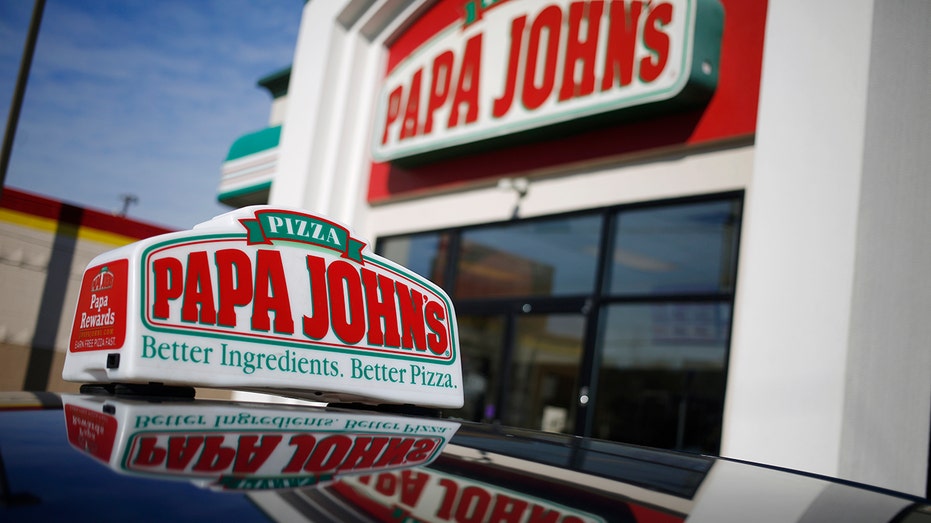
Papa John’s International Inc. signage is displayed on top of a delivery vehicle outside the company’s restaurant in Nashville, Tenn., Feb. 9, 2017. (Luke Sharrett/Bloomberg via Getty Images / Getty Images)
“Companies telling us to tip their workers knowing they won’t pay them is crazy lol,” one user commented.
Another questioned the logic of the charge, asking, “So wtf are we paying a delivery fee for?”
A third user noted, “If a delivery fee is not a tip… then why is there a delivery fee being paid to the business? It should be paid to the driver.”
One commenter pointed out the executive pay scale, writing, “Papa Johns CEO makes $8.44M annually btw.”
Rather than serving as a lighthearted reminder to reward good service, some users argued the message creates unnecessary friction between the customer and the delivery person.
KFC BRINGS BACK A TASTE OF NOSTALGIA WITH FAN-FAVORITE ITEM

A delivery worker carries a Papa John’s pizza outside a restaurant in New York. A message on its pizza boxes encouraging customers to tip delivery drivers fueled a debate online over tipping culture. (Shelby Knowles/Bloomberg via Getty Images / Getty Images)
This backlash comes as more Americans express exhaustion with tipping practices creeping into industries that traditionally never requested them. Customers now frequently face “tip screens” for mundane tasks or at self-service kiosks, leading to awkward social scenarios.
A WalletHub survey released in March found that nearly nine in 10 Americans believe the country’s tipping culture is “out of control.” Similarly, a recent Popmenu report found that 77% of consumers agree the practice has gone too far, with two-thirds of respondents admitting they only tip out of guilt.
FOX Business has reached out to Papa Johns for comment.

A Papa John’s International Inc. pepperoni pizza. (Luke Sharrett/Bloomberg via Getty Images / Getty Images)
GET FOX BUSINESS ON THE GO BY CLICKING HERE
The viral video arrives at a difficult time for the pizza giant, which recently announced plans to close 300 underperforming restaurants across the U.S.
Papa Johns Chief Financial Officer Ravi Thanawala described these “doomed” locations as being primarily franchise-owned, more than a decade old, and generating less than $600,000 in annual unit volume (AUV).


The confectionery line features two chocolate bar varieties.

Form DEF 14A MoonLake Immunotherapeutics For: 21 April


ARLINGTON, Texas — D.R. Horton Inc. shares jumped sharply in morning trading Tuesday after the nation’s largest homebuilder reported fiscal second-quarter 2026 results that exceeded earnings expectations and showed resilient demand through higher net sales orders, despite ongoing affordability challenges in the housing market.
At 11:24 a.m. EDT, D.R. Horton (NYSE: DHI) stock had climbed $11.81, or 7.70%, to $165.15 on elevated volume. The gain extended a recent recovery for the homebuilder, whose shares had traded in a broad range amid fluctuating mortgage rates and economic uncertainty.
D.R. Horton reported net income attributable to the company of $647.9 million, or $2.24 per diluted share, for the quarter ended March 31, 2026. While earnings per share declined 13% from the year-ago period, the figure topped Wall Street consensus estimates. Consolidated revenues reached $7.6 billion, with home sales revenues contributing the bulk of the total.
The standout metric was an 11% year-over-year increase in net sales orders to 24,992 homes valued at $9.2 billion. This growth signaled improving buyer interest even as the company offered elevated incentives to stimulate demand in a high-interest-rate environment. The results highlighted D.R. Horton’s scale advantage and operational discipline as America’s largest homebuilder.
Consolidated pre-tax income totaled $867.4 million, delivering a pre-tax profit margin of 11.5%. Both the pre-tax margin and home sales gross margin benefited from a favorable litigation outcome and lower warranty costs in the quarter. The company also maintained a strong balance sheet, with continued cash generation supporting shareholder returns.
Following the release, D.R. Horton declared a quarterly cash dividend of $0.45 per share, payable on May 14 to stockholders of record on May 7. This marks the company’s ongoing commitment to returning capital while investing in land acquisition and community development.
CEO David Auld and the leadership team emphasized the company’s ability to navigate a challenging housing market through pricing discipline, efficient operations and a focus on entry-level and move-up buyers. “We are pleased with our second-quarter performance and the continued strength in our sales order trends,” Auld said in prepared remarks. The company reaffirmed its full-year fiscal 2026 revenue guidance in the range of $33.5 billion to $34.5 billion, with some analysts noting the midpoint slightly above prior consensus.
The earnings beat and positive order momentum provided relief to investors concerned about persistent headwinds, including elevated mortgage rates near 7% and affordability constraints for first-time buyers. D.R. Horton has responded by offering incentives, adjusting lot sizes and focusing on lower-priced homes that remain more accessible in the current environment.
The stock reaction reflected broader market appreciation for homebuilders demonstrating resilience. Peers such as Lennar and PulteGroup also traded higher in sympathy, though D.R. Horton’s outsized move highlighted its leadership position and scale.
D.R. Horton operates in 126 markets across 33 states, giving it geographic diversification that helps mitigate regional slowdowns. The company closed homes at an average price that remains significantly below both the national new-home median and existing-home median, positioning it well for buyers sensitive to price.
For the first six months of fiscal 2026, net income declined 18% to $1.2 billion, or $4.27 per diluted share, reflecting the cumulative impact of higher interest rates and softer closing volumes in some periods. However, the second-quarter acceleration in orders offers encouragement that demand may be stabilizing or improving modestly.
Analysts had entered the report with cautious optimism. Consensus had called for earnings around $2.15 to $2.18 per share on revenues near $7.7 billion. The actual results, while showing year-over-year declines in some metrics, demonstrated the company’s ability to maintain profitability and grow orders through targeted incentives and inventory management.
The housing market backdrop remains mixed. Mortgage rates have stabilized but remain elevated compared with pre-pandemic levels, limiting buyer pools. Inventory of new homes has tightened in many markets, supporting pricing power in select segments. D.R. Horton’s finished inventory levels decreased during the quarter, indicating efficient turnover and reduced risk of overbuilding.
Longer-term tailwinds include demographic demand from millennials and Gen Z entering prime homebuying years, potential future rate cuts by the Federal Reserve and ongoing shortages of affordable housing stock. D.R. Horton has invested in land positions and community development to capitalize on these trends when affordability improves.
The company returned significant capital to shareholders in the quarter through dividends and share repurchases. Over the first half of fiscal 2026, it paid out $261.2 million in dividends. Its low debt-to-total-capital ratio of around 18-20% provides financial flexibility for opportunistic land acquisitions or further returns.
Market reaction Tuesday underscored investor relief that order momentum improved despite broader economic uncertainty. The stock’s 7.70% surge at mid-morning reflected a classic post-earnings move where positive surprises on key operational metrics outweigh modest year-over-year declines in headline earnings.
Looking ahead, the housing sector will watch for any shifts in mortgage rates or federal policy that could further influence affordability. D.R. Horton’s scale, national footprint and focus on value-oriented homes position it to benefit disproportionately if conditions ease.
As trading continued Tuesday, volume remained heavy, with the stock testing recent resistance levels. Analysts will likely update price targets and ratings in the coming days, with many already maintaining Hold or Buy recommendations based on long-term housing fundamentals.
D.R. Horton’s fiscal second-quarter performance reinforces its status as a bellwether for the U.S. housing market. While challenges persist, the company’s ability to grow orders and maintain solid margins in a tough environment demonstrates operational strength and strategic adaptability.
For investors, the earnings beat and dividend announcement provide fresh reasons for confidence in America’s largest homebuilder as it navigates the path toward potentially stronger demand in the second half of 2026 and beyond.

Michael Dell, chairman and CEO of Dell Technologies, speaks during CNBC’s Invest In America Forum in Washington, April 15, 2026.
Aaron Clamage | CNBC
Michael and Susan Dell announced Tuesday that they have committed $750 million to the University of Texas at Austin that will fund the development of a new medical center and research campus.
The billionaire CEO told CNBC that the new medical center, which will include a hospital and research facility, will use artificial intelligence and advanced computing to deliver earlier and more precise treatment for patients.
“There are a lot of medical centers out there,” Dell said in an interview. “But what you get with the opportunity to build something new is that you can design it from the start with data and computing and AI built in. It allows you to make better decisions earlier and coordinate care more effectively and ultimately create better outcomes.”
The university expects to break ground on Dell Medical Center later this year and open the facility in 2030. The new medical campus will also include a cancer center, which is already under development. The Dells’ donation will also go toward student scholarships and UT’s supercomputing center.
A conceptual rendering of the UT Dell Campus for Advanced Research, which is expected to open in 2030.
Courtesy: The University of Texas at Austin
The couple’s donation is one of the largest ever to an American public university. Dell founded his namesake technology firm from his dorm room at UT Austin in 1984 when he was a premed student. He dropped out of UT Austin before his sophomore year.
“I think about this as the next step in a timeline that actually goes back to my parents sending me off to UT to become a doctor,” he said. “Obviously, that part didn’t work out, but I never stopped thinking about that.”
With the latest commitment, the couple has contributed more than $1 billion in total to UT Austin, including a $50 million initial gift to establish Dell Medical School in 2013. Their foundation also gifted $25 million to establish Austin’s first pediatric hospital in 2007.
Nvidia investor and billionaire Tench Coxe and his wife, Simone, both Austin residents, donated $100 million in January to the new academic medical center.
Dell said he and his wife have stepped up their giving as Austin’s population has surged. The city’s metro area population has roughly doubled since 2000 and was last estimated at nearly 2.6 million people in 2024, according to data from the city.
Investing in Austin’s health-care system means residents are able to seek care closer to home, Dell said.
“My perspective on this is as a parent and as an employer. You know, years ago, if there was a health challenge, you didn’t actually stay in Austin. You went to Houston or Dallas,” he said. “And that’s becoming less and less true, and now Austin is becoming a destination for special surgeries and difficult procedures, and it’s attracting that kind of talent.”
The Dells have ramped up their charitable giving in recent months, committing $6.25 billion in December to fund “Trump accounts” for 25 million U.S. children. The couple’s philanthropic commitments to date total more than $10 billion, according to their foundation.
“The scale has increased as we’ve had more ability to have a greater impact,” Dell said of their philanthropy. “We want to do this while we’re still here — and we’re very much still here — and so there’s a lot to be done.”
A conceptual rendering of a classroom at the new medical campus at the University of Texas at Austin.
Courtesy: The University of Texas at Austin
Patient advocacy groups and medical professionals have raised concerns about AI’s use in health care, such as data privacy risks and the potential for bias.
Dell said he prioritizes AI’s ability to aid health-care professionals rather than replace or hobble them.
“You’ve got to have the right sort of controls and standards around privacy and security,” he said. “At the end of the day, these are just tools. And they’re very powerful, they’re amazing, and they’re going to keep getting better, but still, I think having that human judgment is incredibly important.”

FREMONT, Calif. — Amprius Technologies Inc. shares soared more than 12% in morning trading Tuesday, climbing to $22.07 as investors piled into the high-energy-density silicon anode battery maker amid growing excitement over its role in powering next-generation electric vehicles, drones and defense applications.

At 11:43 a.m. EDT, Amprius (NYSE: AMPX) stock had gained $2.46, or 12.54%, on heavy volume. The sharp move extended a strong 2026 run for the company, whose shares have more than quadrupled year-to-date on optimism surrounding its silicon anode technology and aggressive revenue growth targets.
The rally comes as Amprius prepares to report first-quarter 2026 results on May 7, with a conference call scheduled for that day. The company has already set high expectations after delivering strong 2025 performance and issuing upbeat guidance for the current year.
In early March, Amprius reported fourth-quarter 2025 revenue of $25.2 million, representing 18% sequential growth and a dramatic year-over-year increase. Full-year 2025 revenue reached $73 million, up more than 200% from the prior year. The company also narrowed its net loss and highlighted improving gross margins as it scales production of its second-generation SiCore silicon anode platform.
Management guided for at least $125 million in 2026 revenue — implying more than 70% growth — along with the first full year of positive adjusted EBITDA. Executives expressed confidence in broader adoption of SiCore cells, particularly among unmanned aerial vehicle customers and in electric mobility applications.
A key catalyst driving recent sentiment was Amprius’ March 25 announcement of a $21 million purchase order from a new customer in China for SiCore cylindrical cells targeted at electric two- and three-wheelers, including scooters and motorcycles. The order underscored expanding commercial traction in the electric mobility sector and provided tangible evidence of demand beyond niche high-performance applications.
Amprius’ silicon anode technology delivers industry-leading energy density, with cells reaching up to 500 Wh/kg and 1,300 Wh/L in its SiMaxx platform, far surpassing conventional graphite anodes. The newer SiCore platform offers a balance of high energy density (up to 400 Wh/kg) and longer cycle life (up to 1,200 cycles), making it suitable for broader commercial use while maintaining competitive cost structures.
The company has secured strategic manufacturing partnerships to scale production. In February, it announced a collaboration with U.S.-based Nanotech Energy as its first domestic manufacturing partner, strengthening supply chain security for defense and aerospace customers. This aligns with National Defense Authorization Act compliance efforts and supports a $14.8 million contract with the Defense Innovation Unit for NDAA-compliant cells.
Amprius also earned recognition at CES 2026, winning a Best of Innovation award in the Sustainability & Energy Transition category for its 520 Wh/kg silicon anode battery. The award highlighted the technology’s potential to extend flight times and payload capacity for unmanned aerial systems and other high-performance applications.
Despite the momentum, risks remain. Amprius is still unprofitable and operates at a relatively small scale compared with established battery giants. The company relies heavily on growth in high-margin but currently limited-volume segments such as drones and defense. Execution on scaling manufacturing capacity and converting design wins into sustained revenue will be critical in 2026.
Analyst sentiment has turned more constructive in recent months, though price targets vary widely. Some forecasts see significant upside if Amprius hits or exceeds its $125 million revenue guidance and achieves positive adjusted EBITDA. Others caution that the current valuation already prices in substantial optimism, leaving room for volatility if production ramps or margin improvements fall short of expectations.
The stock’s recent surge reflects broader enthusiasm for advanced battery technologies amid the electric vehicle transition and increasing demand for high-performance power solutions in drones, aerospace and consumer electronics. Amprius’ focus on silicon anodes positions it as a pure-play beneficiary of the shift away from traditional lithium-ion chemistries limited by graphite anodes.
Trading volume remained elevated Tuesday, consistent with heightened retail and institutional interest in battery technology stocks. Options activity showed bullish positioning, with traders betting on continued momentum ahead of the May 7 earnings release.
For long-term investors, Amprius represents a high-risk, high-reward opportunity in the clean energy and electrification megatrend. The company’s proprietary silicon nanowire and SiCore platforms offer clear technological differentiation, but commercial success depends on scaling production cost-effectively and securing larger-volume contracts.
Amprius operates pilot and commercial manufacturing lines, including partnerships in Asia and now the United States. Its Fremont, California headquarters supports research and development, while production partnerships help accelerate time-to-market for customers.
The company has delivered strong year-over-year growth metrics while improving operational efficiency. Gross margins reached 11% for full-year 2025, an 87-percentage-point improvement from the prior year, demonstrating progress toward sustainable profitability.
As the May 7 earnings approach, investors will watch for updates on the $21 million order fulfillment, progress with the Nanotech Energy partnership, and any additional design wins or capacity expansion news. Positive commentary on 2026 revenue trajectory and margin expansion could sustain the rally, while cautious guidance might trigger profit-taking.
Broader market context supported risk appetite Tuesday, with technology and growth stocks showing selective strength. Amprius’ outsized move stood out even in a session with other battery and clean-tech names posting gains.
The stock has experienced significant volatility throughout 2026, with sharp rallies on positive news followed by periods of consolidation. Its year-to-date performance far outpaces the broader market, reflecting investor excitement over silicon anode potential but also highlighting execution risks inherent in early-stage scaling companies.
Amprius Technologies was founded with technology originating from Stanford University research. It has built a portfolio of more than 50 patents focused on silicon anode innovation, positioning it as a leader in next-generation lithium-ion battery chemistry.
For retail traders, Amprius has become a popular momentum name in the battery space. Online discussions often center on its energy density advantages, defense contracts and potential role in the electric two- and three-wheeler market in Asia.
As trading continued past midday, the stock maintained strong gains. Whether the momentum carries through the close and into the earnings period will depend on sustained buying interest and absence of negative news.
The Amprius story illustrates the high-stakes nature of advanced materials companies in the clean energy transition. With its silicon anode platforms offering breakthrough performance, the company sits at the intersection of multiple growth markets — electric mobility, drones, aerospace and defense.
Tuesday’s surge underscores investor willingness to reward visible commercial progress and ambitious 2026 guidance. As Amprius prepares its first-quarter update, the market will seek confirmation that the company is on track to deliver the scale and profitability improvements needed to justify its elevated valuation.

Form DEF 14A Jack In The Box Inc For: 21 April

SEOUL, South Korea — POSCO Holdings Inc. shares surged more than 8% Tuesday on the Korea Exchange, closing at 421,500 won after gaining 32,000 won, as investors cheered approval for a major low-carbon iron plant in Western Australia and positive technical signals ahead of the company’s upcoming first-quarter 2026 earnings and business plan presentation.

The 8.22% advance marked one of the strongest daily gains for the steel giant in recent weeks, pushing the stock above its 200-day moving average and reigniting optimism around POSCO’s decarbonization strategy and long-term growth initiatives. Trading volume was elevated as both institutional and retail investors piled in, reflecting renewed confidence in South Korea’s largest steelmaker amid global shifts toward green steel production.
The catalyst centered on regulatory approval for POSCO’s planned low-carbon iron plant in Western Australia, a project that aligns with the company’s aggressive push to reduce carbon emissions and secure sustainable raw material supplies. The facility is expected to utilize advanced hydrogen-based reduction technologies, positioning POSCO as a leader in the transition to low-emission steelmaking. Analysts noted that such developments could enhance POSCO’s competitiveness as major economies impose stricter carbon regulations and buyers demand greener materials.
The rally also coincided with broader strength in South Korea’s KOSPI index, which hit a record high Tuesday driven by semiconductor and battery sector gains. POSCO Holdings benefited from positive sector rotation and spillover enthusiasm, with battery materials-related names also advancing on EV supply chain optimism.
POSCO is scheduled to release provisional first-quarter 2026 earnings and present its full-year business plan on April 30, with a conference call set for 3:00 p.m. Korea Standard Time. The upcoming disclosure has drawn fresh attention, especially after a recent analyst price target increase that lifted some targets by more than 18%. While some firms maintain cautious “Reduce” or “Sell” ratings, the upgraded targets have encouraged traders betting on POSCO’s longer-term value in green steel, rare earths and EV battery materials.
The company has been actively expanding its footprint beyond traditional steel. Through subsidiary POSCO International, it is building a comprehensive rare earth supply chain, including investments in refining technologies for dysprosium and terbium — critical elements for high-performance electric vehicle motors. A KRW 25 billion corporate venture capital fund supports these efforts, aiming to mitigate geopolitical risks in critical mineral supplies.
POSCO also strengthened ties in India through a joint venture with JSW Steel for a 6 million tons per annum integrated steel plant in Odisha’s Dhenkanal district. The 50:50 partnership is expected to boost India’s steel capacity while deepening technological collaboration between South Korea and India. Additional moves include anode material deals and partnerships for graphite and LFP cathode production, signaling POSCO’s pivot toward battery materials and the broader energy transition.
Stainless steel price hikes implemented in April 2026, driven by rising nickel, ferrochrome and coking coal costs, have helped support margins in select segments. However, the core steel business continues to face cyclical pressures, including global oversupply concerns and fluctuating raw material prices.
Technically, the stock’s breakout above key moving averages has attracted momentum traders. The 200-day moving average served as a significant resistance level in recent months, and its conquest Tuesday signaled potential for further upside in the near term. Volume patterns showed strong buying conviction, with the price closing near session highs.
Despite the gains, some analysts remain wary. POSCO carries a relatively high price-to-earnings multiple compared with global steel peers, and near-term profitability could face headwinds from energy costs and slower demand in certain export markets. The upcoming April 30 business plan presentation will be closely watched for details on capital allocation, decarbonization timelines and battery materials revenue contribution targets.
POSCO Holdings, formerly known simply as POSCO, has evolved from a pure steel producer into a diversified materials and energy group. Its steel segment remains dominant, but green materials, energy and trading divisions are gaining strategic importance. The company operates world-class facilities in South Korea and maintains international joint ventures across Asia, Australia and beyond.
For investors, Tuesday’s surge highlighted the market’s growing appreciation for companies actively investing in low-carbon technologies. As governments worldwide push for net-zero goals, steelmakers capable of producing green steel at competitive costs could command premium valuations.
The stock’s performance also reflected broader optimism in South Korean industrials. With the KOSPI reaching record territory on semiconductor strength, cyclical names like POSCO benefited from improved risk appetite and expectations of eventual interest rate relief.
Looking ahead, Q1 2026 provisional earnings on April 23 and the full business update on April 30 will provide critical data points. Analysts expect the company to address progress on its hydrogen reduction projects, rare earth initiatives and any updates on U.S. or Indian expansion plans.
Community and investor sentiment has turned more positive in recent sessions. Online forums and trading apps saw increased discussion around POSCO’s green steel ambitions and potential for margin recovery if raw material costs stabilize.
The company maintains a solid financial foundation, with manageable debt levels and ongoing cash generation from core operations. Dividend yields remain attractive for income-focused investors in the Korean market.
As the trading day closed in Seoul, POSCO Holdings shares held most of their gains, closing at 421,500 won. The move capped a strong session for the stock and reinforced its position as a key beneficiary of both traditional steel demand and the emerging green transition narrative.
Whether the momentum sustains will depend on execution in the coming quarters and the details shared during the April 30 presentation. For now, investors appear willing to reward POSCO’s strategic vision and visible progress on decarbonization and diversification.
The surge serves as a reminder of the steel sector’s sensitivity to both cyclical factors and long-term structural shifts toward sustainability. POSCO Holdings, with its scale, technology investments and global reach, is well-placed to navigate this dual challenge — a dynamic that helped drive Tuesday’s impressive 8.22% advance.

Solar Foods cleared to produce protein ingredient in US

Crypto Market EXPLODES in 3.. 2.. 1.. (Watch Immediately)

Trump extends Iran ceasefire with Tehran regime ‘seriously fractured’

Manchester United reach agreement with Casemiro over contract clause amid transfer speculation

Steven Gerrard disagrees with Gary Neville over ‘shock’ Chelsea and Arsenal claim | Football

US brings back mandatory military draft registration


-

 News Videos7 days ago
Secure crypto trading starts with an FIU-registered
-

 Fashion4 days ago
Weekend Open Thread: Theodora Dress
-

 Sports5 days ago
NWFL Suspends Two Players Over Post-Match Clash in Ado-Ekiti
-

 Politics4 days ago
Palestine barred from entering Canada for FIFA Congress
-
Entertainment2 days ago
NBA Analyst Charles Barkley Chimes in on Ice Spice McDonald’s Fiasco
-

 Business2 days ago
Powerball Result April 18, 2026: No Jackpot Winner in Powerball Draw: $75 Million Rolls Over
-

 Crypto World4 days ago
Russia Pushes Bill to Criminalize Unregistered Crypto Services
-

 Politics1 day ago
Gary Stevenson delivers timely reminder to register to vote as deadline TODAY
-

 Tech3 days ago
Auto Enthusiast Scores Running Tesla Model 3 for Two Grand and Turns It Into Bare-Bones Go-Kart
-
 Business5 days ago
Creo Medical agree sale of its manufacturing operation
-

 Politics2 days ago
Zack Polanski demands ‘council homes not luxury flats for foreign investors’
-

 Tech6 days ago
‘Avatar: Aang, The Last Airbender’ Leaked Online. Some Fans Say Paramount Deserves the Fallout
-

 Crypto World4 days ago
Russia Introduces Bill To Criminalize Unregistered Crypto Services
-

 Tech7 days ago
Microsoft adds Windows protections for malicious Remote Desktop files
-

 Crypto World7 days ago
X Launches New Cashtag Feature for Stocks and Crypto: X
-
 Entertainment7 days ago
Dave Portnoy Slams Dianna Russini: ‘Makes Zero Sense’
-
 Crypto World7 days ago
Paxos Labs Raises $12M to Launch Crypto Yield and Lending Platform
-

 Sports6 days ago
British climbers complete new route in Swiss Alps
-
 Crypto World7 days ago
Bitcoin surpasses halfway mark in current halving cycle
-

 Crypto World7 days ago
Global recession inevitable if Strait of Hormuz stays shut
You must be logged in to post a comment Login