I’m a wellness writer with health anxiety. Also known as hypochondria or illness anxiety disorder, health anxiety is a condition that makes me worry I am or may become ill even when I’m perfectly healthy. One minute, I have a headache, and the next, I think I’ve got a deadly brain tumor.
What’s ironic is that part of my job involves testing health-monitoring wearables, including fitness trackers and smart rings. While I love exploring this technology and do think it can help you learn more about your body, I have to be careful about how I use it so my anxiety isn’t triggered. I know I’m not alone.
“Healthy adults and individuals with pre-existing medical conditions are increasingly using these devices to manage their health,” says Dr. Lindsey Rosman, assistant professor of medicine in the Division of Cardiology and co-director of the Cardiovascular Device and Data Science Lab at the University of North Carolina School of Medicine. “Whether 24/7 access to health information from a wearable actually helps or potentially harms people is really unclear.”
Advertisement
When you add in the ability to search your symptoms online or ask an AI chatbot in your wearable’s app every health question under the sun, it becomes even more difficult to discern between what’s helpful and harmful.
To help myself and others with health anxiety navigate the world of wearables so we can either enjoy using them or know when it’s time to stop, I reached out to experts for their advice.
1. Turn off anxiety-inducing health alerts
Rosman has observed clinically that it can be beneficial to either scale back or turn off the features that make you anxious. This can be especially helpful for people with pre-existing conditions that are already being treated, such as atrial fibrillation (AFib, an irregular heartbeat), as your wearable’s irregular heart rhythm notifications will only make you anxious and can prompt you to see your doctor when it’s not medically necessary.
Plus, certain medications can affect the accuracy of wearable sensors, provoking false alarms.
Advertisement
“We published a case report on a patient who performed over 900 EKGs [electrocardiograms or ECGs, which measure the heart’s electrical activity] on her smartwatch in a single year,” says Rosman. While most of the EKGs were normal, inconclusive alerts fueled her anxiety, leading to multiple ER visits, spousal conflict and the need for therapy to reclaim her daily life. The patient had no psychiatric history prior to getting a smartwatch.
When you get an unexpected health alert on your device, it can understandably cause panic.
Cole Kan/CNET/Apple
Dr. Karen Cassiday, author of Freedom from Health Anxiety and owner and managing director of the Anxiety Treatment Center of Greater Chicago, says that even patients who don’t have health anxiety can find wearables to be intrusive when they get too many alerts. “They discover they want to be less aware of every moment of their body’s functioning,” she says.
Advertisement
Thankfully, most wearable health features can be turned off completely or customized.
For instance, Shyamal Patel, SVP of science at Oura, maker of the Oura Ring, shares that the device’s Personalized Activity Goals allow you to choose to see steps instead of calories, adjust your daily activity goal or hide calories completely, which can be necessary for anyone who finds calorie counting triggering or overly rigid.
Advertisement
2. Avoid compulsively checking your smart device
Referring to a 2024 study she worked on that examined the impact of wearables on the psychological well-being of patients with AFib, Rosman says that about half of the participants were checking their heart rate every day out of habit, not because they felt symptoms.
Cassidy explains that while people with health anxiety may initially find wearables helpful, compulsively checking to make sure their vitals are normal can accidentally become a form of negative reinforcement that further propels the anxiety.
“Often when I work with anxious people, we try to cut back or eliminate the need to compulsively check for reassurance on their wearables, as well as with ChapGPT or other digital ‘doctors,’” says Cassiday.
When people refrain from compulsively checking, wearables can provide useful feedback that counters the false belief that something terrible will happen to their health.
Advertisement
If checking your health metrics causes anxiety, try reducing how often you view them on your device or in its app. Setting an alert to check weekly, at a minimum, could help — especially since it’ll give you a broader picture, making you less likely to hyperfocus on a single data point that seems off.
You should also avoid checking your wearable’s health information right after you wake up or before you go to bed, as this can set the tone for an anxious day or make it harder to fall asleep.
If having a screen on your wrist makes it difficult for you to stop checking, a screenless smart ring or fitness tracker such as the Whoop 5.0 may be a better option, since they rely on apps instead of screens.
Advertisement
A screenless smart ring may help you stop compusively checking your device.
Anna Gragert/CNET
“You choose how much or how little you engage with the app, which gives those who might be anxious about their health the option to limit the amount of time they spend with their data,” says Patel.
3. Focus on trends, not one-off metrics
When I asked both Patel and Dr. Jacqueline Shreibati, head of clinical for platforms and devices at Google, how people who wear their devices can reduce health anxiety, they emphasized the importance of tracking trends — not individual metrics.
“We focus on long-term trends (rather than isolated metrics) to help users maintain a balanced relationship with their data,” says Shreibati. “What being healthy means differs for everyone, and we encourage users to consult their physician if they have any concerns.”
Advertisement
Patel points to the Tags and Trends features in the Oura app. Tags lets you tag lifestyle factors such as travel, alcohol, meditation or late meals, which you can then view in Trends to see how your behavior affects your recovery and sleep over weeks, rather than looking at a single score that may one day seem abnormal.
Instead of viewing a single sleep or stress score, consider looking at that data weekly or monthly.
Vanessa Hand Orellana/CNET
4. Remember: Your smartwatch can’t replace your doctor
“Most consumer wearables were originally developed as personal wellness devices, which are not required to demonstrate safety and efficacy like traditional medical devices (e.g., a blood pressure cuff or pacemaker),” Rosman explains.
Advertisement
Yet we’ve begun using these wearables to monitor our health, using metrics such as heart rate and rhythm, blood oxygen, stress, sleep and physical activity. Now, some of these devices have medical-grade sensors, software and algorithms approved by the US Food and Drug Administration to detect irregular heart rhythms, hypertension and sleep apnea.
Despite FDA approval, wearables are simply not doctors, and they cannot provide medical diagnoses or treatment. That’s why it’s essential to understand what your device actually measures.
The ECG feature on many smartwatches is just one example of this. FDA-cleared as it may be, a single-lead ECG that only uses one electrode to record your heart’s electrical activity from your wrist is not the same as the 12-lead, hospital-grade ECG a cardiologist would use.
While your wearable’s ECG can surface a potential symptom worth investigating with your doctor, it can’t replace a professional or their medical-grade equipment.
Advertisement
Performing an ECG on your smartwatch is not the same as having that same measurement taken in a doctor’s office.
Viva Tung/CNET/Apple
The gap is even wider for features including stress and sleep scores, which haven’t been clinically validated because there’s no one single gold standard to validate against. These numerical scores are calculated from bodily signals such as heart rate, temperature, movement and heart rate variability, which tend to correlate with your stress and sleep states. But the translation from raw signal to “your stress score is 74” is more of an educated estimate.
“What you’re seeing is a rough indicator of how your nervous system is functioning, not a medical diagnosis,” Rosman emphasizes.
Advertisement
Patel adds that not all physiological stress is inherently negative. “Some forms of short-term physiological stress can be healthy and adaptive,” he says. “That’s why we aim to pair data with in-app context and insights, so members can better understand what they’re seeing rather than receiving that information in a vacuum.”
Nonetheless, when you don’t know exactly what your wearable is measuring, a “bad” stress or sleep score can seem scary when it isn’t necessarily a cause for alarm, but rather a sign that you may want to have a deeper conversation with your doctor.
5. Get a temperature check
Just like you should talk to your doctor before starting a new medication or diet, you should get their thoughts on whether you could benefit from using a wearable.
“Education is probably the most underused tool we have,” Rosman says.
Advertisement
When you don’t know what a healthy heart rate or ECG looks like, one seemingly atypical reading can send you into a panic. That’s why it’s essential to speak with your doctor so you understand your own baseline and if a wearable makes sense for your current health condition.
As a guide, Rosman provides the following questions you can ask your doctor:
Advertisement
What type of wearable should I use?
How often should I check this data?
What are healthy numbers for me?
What do I do when I get an alert?
When should I call the clinic or seek emergency care versus waiting?
“A fast heart rate after climbing stairs is not the same as a dangerous arrhythmia, but without that context, a notification can feel terrifying,” Rosman adds. “So much wearable-related anxiety comes not from the data itself, but from not knowing what to do with it.”
6. Know when it’s time to remove that device and get help
When asked when someone should consider parting with their wearable or seeing a professional for health anxiety, Cassiday says that it’s similar to what many notice when they keep checking their smartphone for the next text, TikTok or other digital data.
“If you find yourself interrupting pleasurable activities or your free time to check, or if you feel anxious about not checking, you have a problem,” Cassiday states.
For instance, if you only stop thinking that you’ll have a heart attack when you check your wearable and see your resting heart rate. Or, put simply, if you only feel at peace after someone or something, such as a wearable reassures you that you’re in good health, it’s time to get professional support.
Advertisement
If health anxiety is making it difficult for you to enjoy your life, then it’s time to talk to a professional.
When you have health anxiety, the gold standard for care is cognitive behavioral therapy. It involves exposure to health-related worries without any form of reassurance and learning to accept the uncertainty that comes with not knowing our future health status, manner of death or time of death.
“People need to learn that all the vague symptoms that trigger their health anxiety are just normal variations of normal body functioning and aging,” Cassiday explains. “They have to reframe the symptoms they notice as nothing to examine, discuss or manage and instead trust the facts of their other evidence of good health.”
CBT can help you live in the present instead of spiraling into the anxiety-inducing “What if?” of the future.
Who should and shouldn’t use health-tracking wearables
Wearables can be great for people who like tracking their fitness to motivate them toward their goals, or for patients and their care teams when medically necessary. Though they usually cost hundreds of dollars, wearables can be less expensive than medical tests. Some are even HSA- or FSA-eligible.
Advertisement
“In AFib specifically, being able to correlate your symptoms with actual rhythm data can be genuinely empowering,” Rosman says. She’s observed that the patients who thrive with wearables are those who use the data as information — not as something to fear — and those who don’t participate in 24/7 surveillance.
In Rosman’s 2024 study, two-thirds of AFib patients said their wearable made them feel safer and more in control. Even so, there is still the risk of unintended consequences.
While they can be beneficial, wearables can also come with risks — especially since there isn’t enough research on the subject.
Advertisement
Giselle Castro-Sloboda/CNET
Just as doctors would never prescribe a medication without knowing the potential benefits, risks and how to manage them, wearables should be no different. “The technology has moved so much faster than the science, and we need the scientific evidence from clinical trials to catch up,” Rosman explains.
Since the evidence isn’t there yet, Rosman is hesitant to say anyone should categorically avoid wearables.
Despite that, people who are highly anxious about their heart or prone to obsessive symptom monitoring should approach with caution. The same goes for those with conditions involving unpredictable, abrupt symptoms, such as paroxysmal AFib and POTS, because the uncertainty of not knowing when the next episode will hit is stressful enough, and constant monitoring can make it worse.
A note on the science (or lack thereof)
Rosman has conducted research on the connection between wearables and anxiety, including a 2025 review describing the psychological effects of wearables on patients with cardiovascular disease and a 2024 study examining their impact on the psychological well-being of patients with AFib.
The 2025 review found that while wearables can help promote healthy behaviors and provide data for diagnosis and treatment, they also pose risks, such as adverse psychological reactions.
In the 2024 study, it was concluded that wearables were connected with higher rates of patients becoming preoccupied with their symptoms, being concerned about their treatments and using both formal and informal health care resources.
Advertisement
On the other hand, a 2021 study that analyzed the 2019 and 2020 US-based Health Information National Trends Survey found that using wearable devices for self-tracking can indirectly reduce psychological distress. Still, misinterpretation of wearable data may cause unnecessary panic and anxiety.
A 2020 qualitative interview study featuring patients with chronic heart disease also found that while wearables’ data may be a resource for self-care, it can create uncertainty, fear and anxiety.
Ultimately, more studies are needed.
“Honestly, we don’t have good scientific evidence in this area yet,” says Rosman. “Despite widespread use, there have been no clinical trials I’m aware of that have looked at the benefits and potential health risks of specific wearable health features.”
Advertisement
Rosman’s team plans to be the first to investigate this in patients with pre-existing heart conditions.
Wearables’ impact on our health care system
When wearables cause health anxiety, they can prompt healthy individuals to schedule unnecessary doctor’s appointments. This places a burden on our health care system, which is already experiencing shortages, making it difficult for people who actually require medical attention to access care.
Rosman’s 2024 study found that those using a wearable sent nearly twice as many patient portal messages to their doctors. Responding to these messages from patients takes time, isn’t reimbursed by insurance and can contribute to burnout.
Advertisement
When health anxiety caused by wearables prompts people to message their doctors, it can put a strain on the health care system.
MoMo Productions/Getty Images
As a result, Rosman believes we need better systems for managing wearable data in clinical settings before we scale it further: “Wearables are changing how we deliver care in ways we haven’t fully prepared for.”
Wearables can further widen health care inequity due to their cost.
“These devices are expensive, they were mostly designed and tested in young healthy people and they’re marketed toward higher-income consumers,” Rosman explains. “If we’re not thoughtful about access, wearables could actually widen health disparities rather than close them. That’s the opposite of what we want.”
The bottom line
While wearables have their benefits, there are also risks to consider, especially given the limited research on the subject.
If you purchase a wearable and it triggers health anxiety, you don’t have to use every available feature, wear it constantly or continue to wear it at all. Before you even buy that device, you can arm yourself with anxiety-reducing knowledge by getting your doctor’s expert opinion.
Advertisement
However, if health anxiety continues to take over your life, it may be time to remove your wearable and seek professional help.
As for me, writing this piece has been a necessary reminder that, while there’s a lot we can’t control in life, the power is in our hands (or on our wrists or fingers) when it comes to the technology we put on our bodies or invite into our homes. Just like an itchy sweater or a lumpy armchair, we can send the technology that doesn’t serve us packing.
BrianFagioli writes: Mozilla says it used an early version of Anthropic’s Claude Mythos Preview to comb through Firefox’s code, and the results were hard to ignore. In Firefox 150, the team fixed 271 vulnerabilities identified during this effort, a number that would have been unthinkable not long ago. Instead of relying only on fuzzing tools or human review, the AI was able to reason through code and surface issues that typically require highly specialized expertise.
The bigger implication is less about one release and more about where this is heading. Security has long favored attackers, since they only need to find a single flaw while defenders have to protect everything. If AI can scale vulnerability discovery for defenders, that dynamic could start to shift. It does not mean zero days disappear overnight, but it suggests a future where bugs are found and fixed faster than attackers can weaponize them. “Computers were completely incapable of doing this a few months ago, and now they excel at it,” says Mozilla in a blog post. “We have many years of experience picking apart the work of the world’s best security researchers, and Mythos Preview is every bit as capable. So far we’ve found no category or complexity of vulnerability that humans can find that this model can’t.”
The company concluded: “The defects are finite, and we are entering a world where we can finally find them all.”
It could enable larger AI models on lower-powered devices
Anker is getting into the silicon business, specifically building a CIM (Compute In Memory) solution that will support onboard large model processing inside tiny, low-powered Bluetooth earbuds.
THUS is Anker’s first step in a long-term plan to bring local, large-model AI to mobile, wearable, and IoT technologies. Anker’s chip technology relies on Neural network-style computing, eschewing the traditional compute architecture in which the CPU processes the commands based on data and instructions it derives from memory. The transit from one to the other is an energy-intensive process. Neural Networks, like the human brain, don’t really respect that division. Letting it all work in one place saves considerable energy. That’s why CIM is attractive to Anker as a solution for bringing more powerful AI to its small-battery, lower-powered devices.
Basically, THUS, which is being fabbed in Germany, performs its computations inside NOR flash memory cells, which are known for their low-power operation; they’re slower than traditional memory for writing data but actually faster than NAND memory for reading operations.
Article continues below
Advertisement
By putting the models the AI need in the same spot as computation, THUS could not only conceivably lower power consumption, but also, Anker claims, make it possible to put larger models in devices that normally cannot house them because of their tiny batteries (at least based on traditional energy needs).
The first platform will be a pair of as-of-yet-unnamed Bluetooth earbuds where THUS will support more powerful environmental noise cancellation than was possible with traditional on-board AIU platforms. A larger on-bud model means the AI can more effectively cut out unwanted noise for better call clarity. Anker will call the feature, naturally, Clear Calls.
The chip will also add a pair of other features, “Signature Sound” and “Voice Control,” though Anker didn’t offer any further details on these features in our briefing. What we do know is that Anker will reveal all the details about its first THUS-bearing headphones on May 21, 2026.
Advertisement
Thinking in memory
CIM (also known as “in-Memory Compute”) isn’t a new concept, and it’s been widely ignored by most chip designers (some wonder if “it’s still alive”) and certainly by most people building ever-larger models, for bigger, more powerful, and more agentic AI operations.
Sign up for breaking news, reviews, opinion, top tech deals, and more.
Still, if Anker, which says it’s not becoming a chip company, succeeds, it could be a big moment for all kinds of low-powered devices, which have traditionally relied on cloud-based AI and the larger models they can house there.
Advertisement
Imagine smarter smart watches. Even smartphones could be impacted if other companies, like say, Apple, adopt CIM technologies for future Apple Silicon builds.
Oppo has just unveiled its flagship smartphone that’s “engineered to be your next camera”.
The Oppo Find X9 Ultra is fitted with “groundbreaking” lenses and “industry-leading hardware”, but how does it compare to the 4.5-star Oppo Find X9 Pro? Considering we concluded that the latter delivers a top-notch camera experience and has a spot on our best camera phones list, how does the X9 Ultra look to compare?
We’ve assessed the specs of the Oppo Find X9 Ultra to the Find X9 Pro, and highlighted the key differences between the two below.
The Find X9 Ultra is the first of Oppo’s Ultra models to launch globally.
Advertisement
The Find X9 Pro is available to buy now, and has a starting price of £1099. However, we have seen the phone’s price drop over the last few months, so it’s worth keeping an eye out for deals.
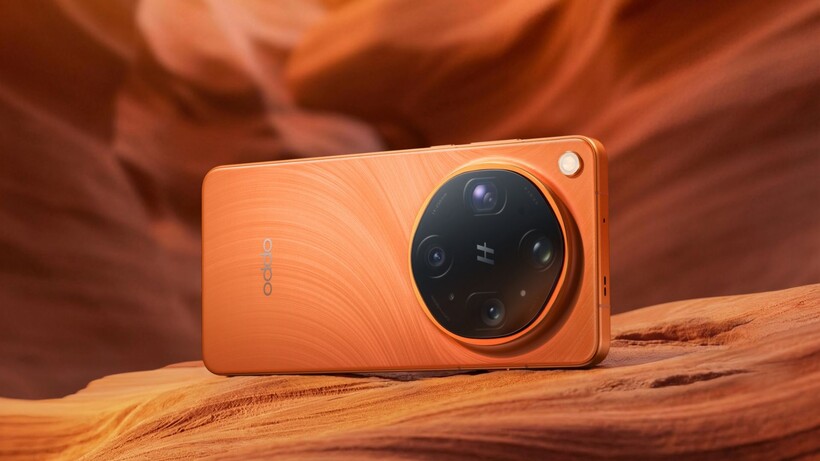
Oppo Find X9 Ultra has five rear lenses
Oppo explains that the Find X9 Ultra is fitted with a new-generation Hasselblad Master Camera System, which promises to deliver a versatile and high-quality framing that spans from 14mm to 460mm.
Advertisement
Made up of five rear lenses, the Find X9 Pro sports dual Hasselblad 200MP lenses. The first of the two is the Ultra-Sensing main lens which features the new 1/1.12-inch Sony LYTIA 901 sensor while the second is a 3x ultra-sensing telephoto which boasts the largest sensor of its type (1/1.28-inch), and doubles as a macro lens.
Oppo Find X9 Ultra. Image Credit (Oppo)
The two 200MP lenses are supported by two 50MP cameras: an ultrawide and a 10x Ultra-Sensing Optical-Zoom telephoto. In fact, the latter benefits from an industry-first 20x optical zoom too.
Finally, the four lenses are flanked by a new-gen True Color Camera which promises natural colour rendition.
Advertisement
In comparison, the Find X9 Pro is equipped with a 50MP main lens which, sure sounds pretty measly when compared to a 200MP alternative, but is able to capture plenty of detail and offers an impressive low-light performance too.
Advertisement
Oppo Find X9 Pro. Image Credit (Trusted Reviews)
This is paired with a 200MP telephoto lens that can reach up to a whopping 120x zoom. While this will come at the expense of detail, using Oppo’s Hasselblad Teleconverter attachment aims to fix this issue – and we’ll explain more below.
Both have supporting teleconverter attachments – but there’s a difference
Both the Find X9 Ultra and X9 Pro can be equipped with their own teleconverter attachments. With the Pro, the Teleconverter twists onto the 200MP telephoto lens and enables impressive zoom without compromising on quality. While it’s certainly not the most subtle of accessories, we were still impressed by its performance.
Oppo Find X9 Ultra attachment. Image Credit (Oppo)
Oppo has also created a similar 300m Teleconverter lens for the X9 Ultra edition, that mounts to the 200MP, 3x telephoto sensor. According to Oppo, this attachment will allow photographers to retain sharp detail at “30x and beyond”. That’s a bold claim, and one we’re keen to try out for ourselves.
Advertisement
Oppo Find X9 Ultra runs on Snapdragon 8 Elite Gen 5
Photography ability aside, one of the key differences between the Find X9 Ultra and X9 Pro is with their respective chips. While the latter Pro model runs on MediaTek’s Dimensity 9500, the Ultra is powered by Qualcomm’s Snapdragon 8 Elite Gen 5.
We found during our review of the Find X9 Pro that its Dimensity 9500 chip, combined with Oppo’s Luminous Rendering Engine, enabled the flagship to fly through everyday use while feeling rapid and responsive too. In addition, although it isn’t a dedicated gaming phone, it still had no issue running titles such as Call of Duty Mobile.
Advertisement
Oppo Find X9 Pro. Image Credit (Trusted Reviews)
However, Snapdragon 8 Elite Gen 5 is a tough competitor to beat. The chip is not only behind many of the best Android phones, but it can handle everything from casual tasks to generative AI tasks and gaming with ease. Having said that, we’d argue that most users will be unlikely to notice much of a difference between the chips in everyday use.
Oppo Find X9 Pro has a larger battery
With a mighty 7500mAh cell, the Find X9 Pro has one of the largest batteries found in any smartphone. This translates to comfortably being a two-day handset, although remember this will depend on your own usage. For example, we found that on days where we really pushed the phone’s limits, the handset couldn’t quite make it through a full second day.
Although it’s not quite as large, the Find X9 Ultra is still fitted with a whopping 7050mAh battery, which promises to ensure “reliable, all-day content creation”.
Advertisement
It’s worth pointing out that, although the Find X9 Pro’s battery is larger than the X9 Ultra’s own, both do boast pretty generous capacities. Considering the likes of the Samsung Galaxy S26 Ultra and Google Pixel 10 Pro XL max out at 5000mAh and 5200mAh respectively, Oppo’s Find series are certainly not to be sniffed at.
Advertisement
Oppo Find X9 Ultra comes in a familiar orange shade
Although both only come in a choice between two shades, they differ with their exact offerings. While the Find X9 Pro comes as Titanium Carbon or Silk White, the Find X9 Ultra is available in either Tundra Umber or Canyon Orange.
Regardless of the colour you choose, both the X9 Ultra and X9 Pro sport IP66, IP68 and IP69 ratings which means the handsets can withstand water submersion and even high pressure and high temperature water jets too.
Early Verdict
Although the Oppo Find X9 Pro is easily one of the best camera phones we’ve reviewed, the Find X9 Pro looks like a promising alternative for those who need even more versatility and shooting modes to play with. With a whopping five rear cameras and Qualcomm’s Snapdragon 8 Elite Gen 5 chip at play, the Oppo Find X9 Ultra is undoubtedly a promising handset for the keen photographer.
Microsoft has released out-of-band (OOB) security updates to patch a critical ASP.NET Core privilege escalation vulnerability.
The security flaw (tracked as CVE-2026-40372) was found in the ASP.NET Core Data Protection cryptographic APIs, and it could allow unauthenticated attackers to gain SYSTEM privileges on affected devices by forging authentication cookies.
Microsoft discovered the flaw following user reports that decryption was failing in their applications after installing the .NET 10.0.6 update release during this month’s Patch Tuesday.
“A regression in the Microsoft.AspNetCore.DataProtection 10.0.0-10.0.6 NuGet packages causes the managed authenticated encryptor to compute its HMAC validation tag over the wrong bytes of the payload and then discard the computed hash in some cases,” Microsoft says in the .NET 10.0.7 release notes.
“In these cases, the broken validation could allow an attacker to forge payloads that pass DataProtection’s authenticity checks, and to decrypt previously-protected payloads in auth cookies, antiforgery tokens, TempData, OIDC state, etc.
Advertisement
“If an attacker used forged payloads to authenticate as a privileged user during the vulnerable window, they may have induced the application to issue legitimately-signed tokens (session refresh, API key, password reset link, etc.) to themselves. Those tokens remain valid after upgrading to 10.0.7 unless the DataProtection key ring is rotated.”
As Microsoft further explained in a Tuesday security advisory, this vulnerability can also enable attackers to disclose files and modify data, but they cannot impact the system’s availability.
On Tuesday, senior program manager Rahul Bhandari warned all customers whose applications use ASP.NET Core Data Protection to update the Microsoft.AspNetCore.DataProtection package to 10.0.7 as soon as possible, then redeploy to fix the validation routine and ensure that any forged payloads are rejected automatically.
More information regarding affected platforms, packages, and application configuration can be found in the original announcement.
Advertisement
In October, Microsoft also patched an HTTP request smuggling bug (CVE-2025-55315) in the Kestrel web server that was flagged with the “highest ever” severity rating for an ASP.NET Core security flaw.
Successful exploitation of CVE-2025-55315 enables authenticated attackers to either hijack other users’ credentials, bypass front-end security controls, or crash the server.
AI chained four zero-days into one exploit that bypassed both renderer and OS sandboxes. A wave of new exploits is coming.
At the Autonomous Validation Summit (May 12 & 14), see how autonomous, context-rich validation finds what’s exploitable, proves controls hold, and closes the remediation loop.
Invincible season 4 episode 8 has landed on Prime Video — and, hoo boy, if Mark Grayson thought he had it bad already, nothing can prepare him (or you, for that matter) about what’s to come after that decision he’s just made.
If you’re here, I’m guessing you’ve seen the Amazon TV Original’s latest finale and have big questions about what you just watched. Luckily for you, I’m a huge Invincible nerd, so I’m perfectly placed to answer them.
Haven’t watched this chapter, titled ‘Don’t Leave Me Hanging Here’, but somehow stumbled upon this article? Consider this your one and only warning: full spoilers immediately follow forInvincible season 4‘s finale.
Advertisement
Article continues below
Advertisement
Do Thragg and his fellow Viltrumites go to Earth in the Invincible season 4 finale?
Season 4 episode 8’s cold open isn’t what you think it is (Image credit: Prime Video)
In short: yes — but the revelation that they’re now secretly living among Earth’s population is withheld until this episode’s final minutes.
Initially, it seems they’ve arrived on Earth with the sole intention of doing what Mark and the Coalition of Planets (CoP) did to the Viltrumites’ home world — that being, completely destroying it. You can remind yourself about that in my Invincible season 4 episode 7 ending explainer.
Anyway, season 4 episode 8 opens with a cataclysmic event that sees Thragg and the remaining Viltrumites attack Earth, and leave countless dead and wanton destruction in their wake.
It’s soon revealed, though, to be a misdirect. Indeed, said scenario is just a nightmarish vision that a traumatized Mark creates in his own mind aboard the interstellar starship he’s travelling home on. He imagines similar incidents throughout this episode, too, including Thragg killing his mom Debbie, girlfriend Eve, and Global Defence Agency (GDA) chief Cecil Stedman. All of them contribute to him having panic attacks and, eventually, seeking therapy through the GDA.
Advertisement
Sign up for breaking news, reviews, opinion, top tech deals, and more.
But I digress. Upon the space vessel’s arrival near Earth, Mark’s dad Nolan and Zoe/Tech Jacket start to formulate a plan in case Thragg and his forces are present on Earth. However, fearing for his mom and Eve, Mark impulsively leaves the ship and heads planetside alone. One quick but fear-fuelled recon mission later, though, and it appears that the Viltrumites haven’t traveled to Mark’s home planet. Phew!
Why does Mark let Thragg and the Viltrumites stay on Earth in Invincible season 4’s finale?
Err, nice to see you again, Thragg? (Image credit: Prime Video)
Or so we’re led to believe. In the final minutes of the Prime Video show’s latest finale, Eve persuades Mark to take a flight to clear his head.
Advertisement
However, upon said excursion, he’s stopped in his tracks by what he thinks is a hallucination of Thragg. Closing his eyes, Mark takes some deep breaths to compose himself but, upon opening them again, realizes Thragg isn’t a figment of his imagination — he’s really there.
This didn’t work last time, Mark, so why would it work now? (Image credit: Prime Video)
Mark launches himself at Thragg, but, just like Invincible season 4 episode 7, his punches do no damage. Thragg soon starts dodging Mark’s increasingly wild attacks with ease before effortlessly pushes him away.
Mark lines up another strike, but Thragg bellows at him to stop, which Mark does. In the incredibly tense chat that follows, Thragg informs Mark that he hasn’t done anything to Earth… yet. Mark angrily asks what Thragg wants, to which the Viltrumites’ Grand Regent replies that, upon his coronation, he was tasked with leading his people out of the darkness and thrive among the stars — a mission that, still clearly weighing heavy on Thragg, he admits hasn’t been easy.
Advertisement
I wouldn’t keep hollering at Anissa if I were you, guys… (Image credit: Prime Video)
Then comes the kicker. Thragg reveals only 37 Viltrumites remain, but even that miniscule number would be enough to “tear Earth apart” and be “fair payment” for Viltrum’s own destruction.
Continuing, Thragg gives Mark an ultimatum. In a voiceover accompanying scenes of Luccan, Anissa, and Krieg secretly living among humanity, Thragg tells Mark to let the remaining Viltrumites stay and breed with humans to prevent the Viltrumite race’s extinction. Do so, and Earth and its inhabitants won’t be harmed. However, if Mark or the CoP get in their way, billions will die and those who survive will be forced to eek out a miserable life under Thragg’s authoritarian rule.
Until next time, Thragg… (Image credit: Prime Video)
An indignant Mark starts to say he’ll never accept Thragg’s truce but, as the previously mentioned hallucinations, plus as a soul-calming memory of Eve smiling at him, flash before his eyes, he reluctantly agrees to Thragg’s proposal.
Surprised, Thragg admits it’s strange how the universe works, adding that, “willing or not,” he didn’t expect Mark to be his species’ savior. As Thragg prepares to leave, Mark says himself “what have I done?”. Thragg hears him and, turning back to Mark, says “you just saved the lives of every person on this planet”. Thragg departs, leaving a despairing Mark floating alone in the sky.
Advertisement
Did Eve get an abortion in Invincible season 4?
Eve finally tells Mark she was pregnant in the season 4 finale (Image credit: Prime Video)
Yes, but not straight away — and there’s an emotionally devastating addendum to this storyline.
After visiting Debbie to tell her that the severely injured Oliver is being treated back on Talescria, Mark leaves to see Eve, who tearfully greets him because she’d started to think he’d died. It’s been months since he left to take part in the Viltrumite War, so I don’t blame her.
Anyway, following some long-overdue, erm, lovemaking, Eve mentions that, as Mark (and, by proxy, viewers) can see, she’s put on some weight. She blames that on living with her parents and overeating in his absence, and Mark replies that he couldn’t care less about her weight gain. Eve also reveals that her powers have miraculously returned, though she’s constantly worried that they’ll stop working again.
Advertisement
Anybody else well up during this scene, too? (Image credit: Prime Video)
Later when the pair are sitting on the Grayson household’s roof, though, Eve comes clean. She tells him that she knows why she lost her matter manipulation abilities — it was, as we learned in season 4 episode 3, that she’d fallen pregnant. Tearing up, she adds that, without Mark around, she felt so alone and, if he had died, she’d have been scared about potentially raising a child on her own. Long story short: she had an abortion.
Visibly moved, Mark tries to process everything Eve’s just told him. However, upon realizing that she’s had to carry this burden alone for months, he quickly turns his attentions to Eve and, while crying himself, hugs his clearly distraught girlfriend to reassure her that everything will be okay.
Does Debbie forgive Nolan in Invincible’s season 4 finale? And why does she go to space?
Season 4 episode 8 indicated that, one day, Debbie might finally forgive Nolan (Image credit: Prime Video)
Let’s start with the first question: no, but there’s a clear hint that her stance has started to soften and that she might one day forgive Nolan.
Advertisement
Before Nolan heads back to Talescria to be with Oliver and aid the CoP’s efforts to find the remaining Viltrumites, he visits Debbie again. He tells her how brave Oliver was, and that he and Mark did her proud. Replying, Debbie, rebukes Nolan for letting Oliver get hurt before chastizing him once more for trying to make amends for what he did in Invincible‘s season 1 finale.
As she prepares to head back into her home, Nolan flies in front of her. Re-expressing his deep regret for the devastation he caused in season 1 episode 8, he also reiterates he’s trying to change and begs Debbie to let him show her that he deserves a second chance — something she’s long believed everyone is entitled to. Somewhat taken aback, Debbie re-composes herself, tells Nolan he can’t stay in the same house as her, and walks away.
Will the Graysons’ rift be healed by this space adventure? (Image credit: Prime Video)
Later, Debbie complains to Paul who, it’s revealed, she’s no longer romantically involved with. Despite the pair’s separation, he surprisingly advises her to go with Nolan to Talescria to be with Oliver, adding that this world of superheroes, villains, and extraterrestrial worlds is her life as much as Mark, Nolan, and Oliver’s — she just “doesn’t see it yet.”
Fast-forward to Nolan’s departure, and Debbie shocks him, Mark, and Eve by saying she’s decided to follow Paul’s advice to be at Oliver’s side. She tells Nolan to call down the spaceship, but he informs her that it can’t land anywhere. Reclutantly, Debbie agrees to let Nolan fly her to said space vessel where they share a tender moment looking out onto planet Earth. D’aww!
Advertisement
Invincible season 4 episode 8’s mid-credits scene: what does it tell us about the Scourge Virus?
Don’t do it, Allen… (Image credit: Prime Video)
In this episode’s one and only post-credits scene, Telia hands Allen, who’s now the CoP’s leader, a tablet with a post-humous video message from Thaedus. In the event of the latter’s death, said footage was to be passed on Allen, so he hits play.
He’s probably wishing he didn’t. As the recording progresses, Thaedus shockingly reveals that he created a perfected form of the Scourge Virus. That’s the pathogen he made to wipe out the Viltrumites decades ago but, while it killed billions, didn’t eradicate them all
With the tyrannical species surviving the Viltrumite War, Thaedus gives Allen a single mission: no matter the cost, use the far deadlier strain to kill every single living Viltrumite. Unfortunately for Allen, that would include Mark, Nolan, and Oliver, who’ve allied themselves with the CoP, and who he considers close friends.
Advertisement
Not exactly the dilemma that Allen probably wanted as he tries to get his feet under the leadership table, but will he go through with it? We’ll have to wait until next season to find out. Speaking of which…
Has Invincible season 5 been announced yet?
Don’t look so surprised, Mark — season 5 was an inevitability (Image credit: Prime Video)
Oh, haven’t you heard? Invincible season 5 is expected to be released sometime in early 2027, with co-creator Robert Kirkman indicating it could drop between February and April next year. All but one of the adult animated series’ installments — Invincible season 2 part 1 — have come out around March, so don’t be stunned if next season does likewise.
A group of unauthorized users has reportedly gained access to Mythos, the cybersecurity tool recently announced by Anthropic.
Much has been made of Mythos and its purported power — an AI product designed for enterprise security that, in the wrong hands, could become a potent hacking tool, according to the company. Now Bloomberg has reported that a “private online forum,” the members of which have not been publicly identified, has managed to gain access to the tool through a third-party vendor.
“We’re investigating a report claiming unauthorized access to Claude Mythos Preview through one of our third-party vendor environments,” an Anthropic spokesperson told TechCrunch. The company said that, so far, it has found no evidence that the supposedly unauthorized activity has impacted Anthropic’s systems in any way.
The unauthorized group tried a number of different strategies to gain access to the model, including using “access” enjoyed by the person who was interviewed by Bloomberg. That person is currently employed at a third-party contractor that works for Anthropic, the outlet reported.
Advertisement
Members of the group are part of a Discord channel that seeks out information about unreleased AI models, the outlet reported. The group has been using Mythos regularly since gaining access to it, and provided evidence to Bloomberg in the form of screenshots and a live demonstration of the software.
Bloomberg reports that the group, which supposedly gained access to the tool on the same day it was publicly announced, “made an educated guess about the model’s online location based on knowledge about the format Anthropic has used for other models.” The group in question is “interested in playing around with new models, not wreaking havoc with them,” the source told the outlet.
Mythos was released to a select number of vendors, including big names like Apple, as part of an initiative called Project Glasswing. The limited release of the model was designed to prevent its use by bad actors. The tool could be weaponized against corporate security instead of bolstering it, Anthropic said.
Techcrunch event
Advertisement
San Francisco, CA | October 13-15, 2026
If true, unauthorized use of Mythos could spell trouble for Anthropic, which provided the exclusive release to allay the company’s concern for enterprise security.
Advertisement
When you purchase through links in our articles, we may earn a small commission. This doesn’t affect our editorial independence.
Summary: Lovable, the $6.6 billion vibe coding platform with eight million users, has faced three documented security incidents exposing source code, database credentials, and thousands of user records, with the most recent BOLA vulnerability left open for 48 days after the company closed a bug bounty report without escalation. The incidents are representative of a structural problem across vibe coding: 40-62% of AI-generated code contains vulnerabilities, 91.5% of vibe-coded apps had at least one AI hallucination-related flaw in Q1 2026, and the market’s incentive structure rewards growth over security at a moment when 60% of all new code is projected to be AI-generated by year end.
Lovable, the vibe coding platform valued at $6.6 billion with eight million users, has spent the past two months dealing with security incidents that collectively exposed source code, database credentials, AI chat histories, and the personal data of thousands of users across projects built on its platform. The most recent disclosure, published on 20 April by a security researcher, revealed a broken object-level authorisation vulnerability in Lovable’s API that allowed anyone with a free account to access another user’s profile, public projects, source code, and database credentials in as few as five API calls. The researcher reported the flaw to Lovable’s bug bounty programme on 3 March. Lovable patched it for new projects but never fixed it for existing ones, marked a follow-up report as a duplicate, and closed it. As of reporting, the vulnerability had been open for 48 days.
Lovable’s response followed a pattern that security researchers found more telling than the vulnerability itself. The company first posted on X that it “did not suffer a data breach,” calling the exposed data “intentional behaviour.” It then blamed its own documentation, saying that what “public” implies “was unclear.” It then blamed its bug bounty partner HackerOne, saying reports were “closed without escalation because our HackerOne partners thought that seeing public projects’ chats was the intended behaviour.” Later that day, it issued a partial apology acknowledging that “pointing to documentation issues alone was not enough.” Cybernews headlined its coverage: “Lovable goes on ego trip denying vulnerability, then blames others for said vulnerability.”
What was exposed
The April incident affected projects created before November 2025. The researcher demonstrated that extracting a user’s source code from Lovable’s API also yielded hardcoded Supabase database credentials embedded in that code. One affected project belonged to Connected Women in AI, a Danish nonprofit. Its exposed data contained real user records including names, job titles, LinkedIn profiles, and Stripe customer IDs, with records linked to individuals at Accenture Denmark and Copenhagen Business School. Employees at Nvidia, Microsoft, Uber, and Spotify reportedly have Lovable accounts tied to affected projects.
Advertisement
The 💜 of EU tech
The latest rumblings from the EU tech scene, a story from our wise ol’ founder Boris, and some questionable AI art. It’s free, every week, in your inbox. Sign up now!
This was the third documented security incident involving the platform. In February, a tech entrepreneur named Taimur Khan found 16 vulnerabilities, six of them critical, in a single app hosted on Lovable and featured on its own Discover page with more than 100,000 views. The most severe was an inverted authentication logic that granted anonymous users full access while blocking authenticated users. The app, an AI-powered EdTech tool, exposed 18,697 user records including 4,538 student accounts from institutions including UC Berkeley and UC Davis, with minors likely on the platform. Khan reported his findings through Lovable’s support channel. His ticket was closed without a response.
An earlier study in May 2025 found that 170 out of 1,645 sampled Lovable-created applications had issues allowing personal information to be accessed by anyone. Approximately 70% of Lovable apps had row-level security disabled entirely.
Advertisement
The structural problem
Lovable is not uniquely insecure. It is representatively insecure. The platform generates full-stack applications using React, Tailwind, and Supabase in response to natural language prompts, a process the industry calls vibe coding after Andrej Karpathy coined the term in February 2025. The approach lets anyone describe an application and have it built by an AI model without writing or reviewing code. Collins English Dictionary named it Word of the Year for 2025. Gartner forecasts that 60% of all new code will be AI-generated by the end of this year.
The security data across the entire category is consistent. Between 40 and 62% of AI-generated code contains security vulnerabilities, depending on the study. AI-written code produces flaws at 2.74 times the rate of human-written code, according to an analysis of 470 GitHub pull requests. A first-quarter 2026 assessment of more than 200 vibe-coded applications found that 91.5% contained at least one vulnerability traceable to AI hallucination. More than 60% exposed API keys or database credentials in public repositories. The vulnerability classes are the same acrossevery major vibe coding platform: disabled row-level security, hardcoded secrets, missing webhook verification, injection flaws, and broken access controls.
Bolt.new ships with row-level security off by default. Cursor has had multiple CVEs patched, including a case-sensitivity bypass enabling persistent remote code execution. Researchers at Pillar Security demonstrated a “rules file backdoor” attack in which hackers inject hidden malicious instructions into configuration files used by Cursor and GitHub Copilot. A separate “Agent Commander” attack in March showed that prompt injection into AI coding agents could convert autonomous coding tools into remotely controlled malware delivery platforms. In January, the vibe-coded social network Moltbook was breached within three days of launch, exposing 1.5 million API authentication tokens and 35,000 email addresses through a misconfigured Supabase database with no row-level security.
The economic incentive problem
Security firms are raising moneyspecifically to address the gap. Escape raised $18 million to replace manual penetration testing with AI agents that scan vibe-coded applications, citing over 2,000 high-impact vulnerabilities and hundreds of exposed secrets found in live production systems. Lovable itself partnered with Aikido to bring automated pentesting to its platform. But the fundamental incentive structure of the market works against security.
Advertisement
Lovable hit $4 million in annual recurring revenue in its first four weeks and $10 million in two months with a team of 15 people. It raised $200 million at a $1.8 billion valuation in July 2025 and $330 million at $6.6 billion in December, more than tripling its valuation in five months. Enterprise adoption of vibe coding grew 340% year over year. Non-technical user adoption surged 520%. Eighty-seven percent of Fortune 500 companies have adopted at least one vibe coding platform. The market rewards speed and accessibility. Security is a cost centre that slows both.
The result is a category in which the dominant platforms generate code that is insecure by default, the users generating that code lack the expertise to identify the vulnerabilities, and the platforms themselves have financial incentives to prioritise growth over remediation. Lovable’s handling of the March and April incidents illustrates the dynamic precisely: a bug bounty report was closed without escalation, a vulnerability affecting thousands of projects was patched for new users but not existing ones, and the public response cycled through denial, deflection, and a partial apology within a single day.
The regulatory gap
TheEU AI Act’s high-risk obligationstake effect on 2 August, requiring transparency, human oversight, and data governance for AI systems. California’s S.B. 53 and New York’s RAISE Act require frontier AI developers to publish safety frameworks and report incidents. But none of these regulations specifically address the security of code generated by AI models for end users, and the adoption data suggests the market is moving faster than regulators can respond. Financial services and healthcare, the two most regulated sectors, show the lowest vibe coding adoption rates at 34 and 28% respectively, which indicates that the market itself recognises the compliance gap even if regulations have not yet caught up.
As Trend Micro framed it: “The real risk of vibe coding isn’t AI writing insecure code. It’s humans shipping code they never had a chance to secure.” The84% surge in App Store submissionsdriven by vibe coding tools suggests the volume of unreviewed code entering production is accelerating. Thirty-five CVEs were disclosed in March alone from AI-generated code, up from six in January, and Georgia Tech estimates the actual figure is five to ten times higher than what is detected.
Advertisement
Lovable is thefastest-growing software startup in historyby several measures. It is also a company that closed a critical vulnerability report without reading it, left thousands of projects exposed for 48 days, and responded to public disclosure by denying a breach, blaming its documentation, blaming its bug bounty partner, and then apologising for the apology. The pattern is not unique to Lovable. It is the pattern of a category that has built extraordinary tools for creating software and almost nothing for securing it.
ZenTimings is a Windows utility designed for AMD Ryzen platforms that displays real-time memory configuration data and timings, frequency, and Infinity Fabric clocks. It’s primarily used to verify BIOS or XMP/EXPO settings, offering a straightforward way to check how system memory is running.
Honor has finally lifted the covers off its latest N-series devices, and the new models bring several key upgrades over the Honor 400 series, which was the last N-series lineup to launch outside China. The Pro model in the new Honor 600 series is especially noteworthy because it’s positioned as a legitimate “accessible flagship” that pairs a top-tier Snapdragon SoC with a stunning display and a massive battery at an attractive price.
Flagship specs without the flagship price
The new lineup pushes Honor’s N-series further into flagship territory, with both the standard Honor 600 and the more premium Honor 600 Pro offering features typically reserved for more expensive phones. The Honor 600 Pro packs Qualcomm’s Snapdragon 8 Elite chip and is positioned as a serious option for gaming and demanding workloads. The standard variant, meanwhile, runs on the Snapdragon 7 Gen 4, offering a more balanced mix of performance and efficiency.
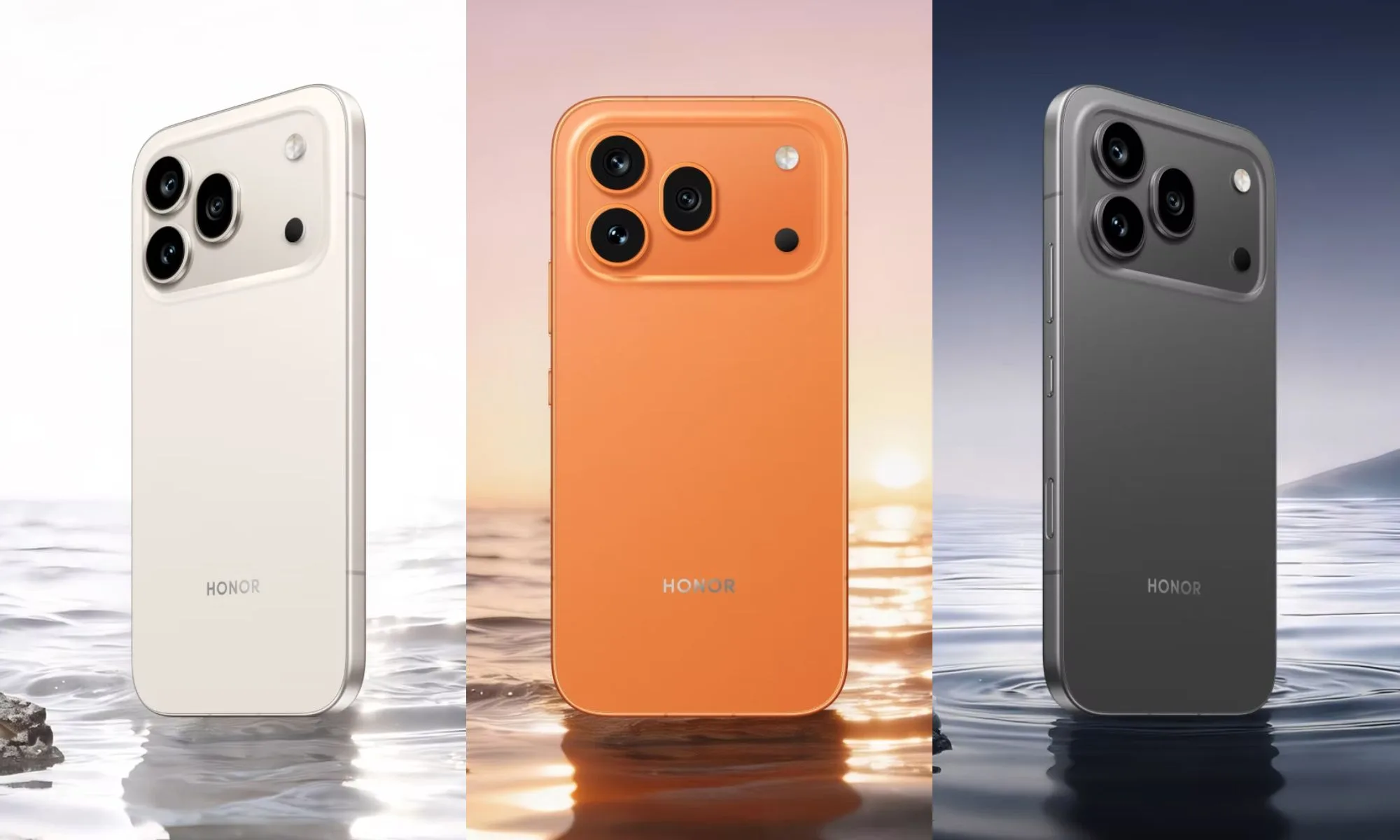
Honor 600 Pro in Golden White, Orange, and BlackHonor
On the display front, both phones feature a 6.57-inch OLED panel with a 120Hz refresh rate, peak brightness of 8,000 nits, and 3,840Hz PWM dimming. Battery life is another major highlight, with the two devices packing a 7,000mAh silicon-carbon battery that supports 80W wired fast charging and 27W reverse charging. The Pro model even includes 50W wireless charging support, a feature that’s often omitted on affordable flagships.
Honor 600 in Orange, Golden White, and BlackHonor
The Honor 600 series’ camera hardware is no slouch either, with both devices featuring a 200MP main shooter with a large 1/1.4-inch sensor size. On the Pro model, it’s paired with a 50MP telephoto lens with up to 120x zoom and CIPA 6.5 image stabilization, a 12MP ultrawide camera, and a 50MP selfie shooter. The standard version has the same ultrawide and selfie cameras, but skips the telephoto camera.
As announced earlier, Honor is also debuting its upgraded AI Image to Video 2.0 feature with the lineup, which allows users to generate short videos from still images using natural language prompts. Durability has also been upgraded, and both models feature an IP69K rating along with enhanced drop resistance certification.
Pricing and availability
Honor has launched the 600 series in Malaysia today, with the Pro model priced at RM3,099 (~$784) for the 12GB+256GB configuration and RM3,299 (~$835) for the 512GB storage option. The standard Honor 600 comes in a single 12GB+512GB configuration priced at RM2,599 (~$658). Both models come in Orange, Golden White, and Black color options.
Advertisement
Honor has confirmed that the devices will roll out to additional global markets, but regional pricing and availability details have not yet been announced.
Federal authorities are now reviewing a string of deaths and disappearances involving scientists tied to sensitive U.S. aerospace and nuclear work, though officials have not established any confirmed link between the cases. The FBI says it “is spearheading the effort to look for connections into the missing and deceased scientists,” adding that it “is working with the Department of Energy, Department of War, and with our state … and local law enforcement partners to find answers.” The Republican-led House Oversight Committee also announced an investigation into the reports. CNN reports: A nuclear physicist and MIT professor fatally shot outside his Massachusetts residence. A retired Air Force general missing from his New Mexico home. An aerospace engineer who disappeared during a hike in Los Angeles. These are among at least 10 individuals connected to sensitive US nuclear and aerospace research who have died or disappeared in recent years, prompting concerns whether they are connected and fueling speculation online about the possibility of nefarious activity. […]
The Defense Department said only that it would respond to the committee directly, and the Department of Energy referred questions to the White House. In a post on X, NASA said it is “coordinating and cooperating with the relevant agencies” in relation to the scientists. “At this time, nothing related to NASA indicates a national security threat,” NASA spokesperson Bethany Stevens said.
The cases vary widely in circumstance. Some involve unsolved homicides, while others are missing persons cases with no signs of foul play. In at least two instances, families have pointed to preexisting medical conditions or personal struggles as explanations. Authorities have not established any links between the cases. The White House said last week it is also working with federal agencies to probe any potential links between the deaths and disappearances, with President Donald Trump referring to the matter as “pretty serious stuff.” “The United States has thousands of nuclear scientists and nuclear experts,” said Rep. James Walkinshaw, a Democrat who also serves on the Oversight Committee. “It’s not the kind of nuclear program that potentially a foreign adversary could significantly impact by targeting 10 individuals.”





























































You must be logged in to post a comment Login