
Crypto World
DeFi traders are stacking risks on top of Strategy’s risky STRC

Strategy (formerly MicroStrategy) already pays 11.5% annualized dividends on its ultra-risky Stretch (STRC) but DeFi users are now adding risks and leverage to crank that up to 39%.
In finance, interest rates are often dictated by the risk of total loss. With very few exceptions, when someone offers a higher interest rate, it’s because they’re much more likely to not pay you back.
Unbothered, traders are now re-routing Strategy’s dividend payouts through multiple blockchain protocols to manufacture yields of double, triple, or more what STRC actually pays.
They add future obligations in exchange for near-term payouts, take advantage of temporary incentives for obscure DeFi protocols, and add exotic forms of leverage to amplify the notional exposure of an otherwise small investment.
In the curious underworld of tokenized STRC, there are at least five protocols offering the financial machinery for DeFi yield farmers, not to mention the risks of the custodians and technology providers involved with these protocols.
A daisy-chain of DeFi risks to amplify STRC
Apyx wraps roughly $136 million of STRC into a synthetic stablecoin-like token called apxUSD. Saturn packages approximately $85 million worth of STRC into its USDat product. Another tokenization protocol xStocks put approximately $53 million worth of STRC on-chain.
Meanwhile, Pendle Finance splits these STRC tokens and the dividends paid to STRC stockholders into separately tradable, fixed-rate and floating-rate components, and Morpho provides the loan-looping mechanism at the end to add even more financial leverage on these instruments.
Depositing assets to borrow these tokens, which trade under a variety of ticker symbols like STRCx, apyUSD, apxUSD, USADT, sUSADT, strcUSX, traders borrow tokens, re-deposit some portion of those loan proceeds to take out more loans, re-deposit some portion of those loan proceeds to take out more loans, and so on.
The more loops and the smaller the range of prices that a user collateralizes, the higher the probability that the protocol will forcibly liquidate the position.
Irresponsible dividends, amplified
The base yield of STRC with no tokenization whatsoever is already extreme. STRC pays 11.50% annualized, roughly 450 basis points above the average junk bond.
Indeed, Strategy has hiked its dividend rate seven times since launching STRC at 9% in July 2025.
Each hike tacitly admitted that demand at the prior rate was too weak to hold up STRC’s secondary trading on Nasdaq at its intended $100 per share.
Read more: We calculated the present value of STRC — it’s bad for MSTR
Rather than ease up on leverage in light of the thinning air, DeFi’s response has been to treat 11.5% as a stable case on which to construct even higher artifices.
Apyx Finance closed a $300 million valuation round in February as a self-described dividend-backed stablecoin protocol.
It issues apxUSD backed by STRC and a related preferred like Strive’s STRC-like SATA, with apyUSD as the yield-bearing version of the same claim. Saturn Credit raised $800,000 from Sora Ventures and Changpeng Zhao’s YZi Labs in January to run the same play through USDat and sUSDat.
Both of these STRC tokenizers wrap their resulting tokens into Pendle, where PT-apyUSD locks in fixed yields of roughly 14.84%.
Users then deposit those PT tokens on Defi protocol Morpho as collateral to borrow USDC at rates as low as 1.59%.
The arithmetic isn’t subtle. A 5x leverage loop landed on a 64% APY. A separate analyst account documented 39% APY.
Hoping and praying STRC never de-pegs for long
On April 14, STRC was approaching its monthly dividend snapshot date, going “ex-dividend” in the parlance of Wall Street, causing its price to decline. That sag dragged sUSDat’s exchange rate below the high-water mark Pendle uses to govern yield accrual for the Saturn token.
Pendle had to explain this basis phenomenon to its users. “Yield accrual on YT-sUSDat is currently paused due to STRC’s ex-dividend event on 14 April, which pushed the exchange rate below the watermark,” it said.
It reassured holders that “If STRC recovers to $100, the watermark is recaptured, yield accrual resumes, and your total earnings will be ultimately unaffected.”
As always, the conditional “if” is doing a lot of heavy lifting.
Indeed, if STRC trades near $100 and pays dividends near 11.5% forever, everything will work out wonderfully.
In fact, STRC fell to $90.52 on November 21, 2025, and to $93.10 in February 2026. That’s why the dividend rate is where it is. It shouldn’t be a mystery as to why Strategy needs to pay such as higher dividend rate.
Unfortunately for STRC traders in DeFi, neither is guaranteed. The quasi-peg has already failed twice in the last six months. Moreover, Strategy’s board of directors can cut the dividend at its discretion.
DeFi traders are also exposed to countless numbers of protocol, blockchain, smart contract, and custodian risks that multiply these risks even higher.
Got a tip? Send us an email securely via Protos Leaks. For more informed news, follow us on X, Bluesky, and Google News, or subscribe to our YouTube channel.

Crypto World
BTC Inc. Adds Lightning Network to Its BTCPay Server Infrastructure Ahead of Bitcoin 2026
Nashville, TN, USA — April 22, 2026 — BTC Inc., a Nakamoto Inc. (NASDAQ: NAKA) company, today announced the addition of Lightning Network payments to its existing BTCPay Server infrastructure, ahead of Bitcoin 2026 (April 27–29, The Venetian, Las Vegas). The expansion brings Lightning to conference ticketing, onsite point-of-sale, and e-commerce, and marks the first time BTC Inc. has been able to deploy Lightning consistently across all of its revenue streams under a single, unified payment stack.
Bitcoin 2026 serves as the first live deployment of the expanded infrastructure.
One Stack, Many Business Models
BTC Inc. operates across a diverse set of revenue streams — live events, media, e-commerce, vendor settlements, and treasury operations, each with distinct payment requirements. Previous Lightning integrations, while promising, proved difficult to scale across this complexity. What worked for one use case often couldn’t be adapted to another, leaving the company without a practical path to consistent Lightning adoption.
BTCPay Server’s open-source, plugin-based architecture changed that. Already running as BTC Inc.’s core payment infrastructure for over a year, it provided the flexibility to address each use case on its own terms — without requiring a separate solution for each one.
“We’ve tried to make Lightning work for us before, and the honest answer is that it was never straightforward,” said Di Lewis, CFO, BTC Inc. “The problem wasn’t Lightning itself, it was that we run a genuinely complex business. Events, ticketing, an online store, payroll, what worked for one never translated cleanly to another. BTCPay Server is the first infrastructure we’ve had that’s flexible enough to fit all of it. Extending Lightning to our conference ticketing was the last piece, and now it runs end-to-end across everything, Lightning stops being a side feature and starts being the foundation.”
“BTCPay Server has been running our payments for over a year,” said Brandon Green, CEO, BTC Inc. “What we’ve built gives us the foundation to keep expanding, and Lightning is the next layer. Free and open-source software isn’t optional for Bitcoin companies, it’s foundational.”
“BTCPay Server’s guiding principle is self-sovereignty. It is not just a headline, but a reality embedded deep in its technical design. As a result, developers and users are free to extend and use BTCPay Server in ways even we did not foresee, without needing our permission. We are thrilled to see companies like BTC Inc. lead as a prime example of that in practice!” – Nicolas Dorier, Founder, BTCPay Server
Lightning Across the Full Commerce Stack
With the addition of Lightning, BTC Inc.’s BTCPay Server infrastructure now supports instant, low-fee Bitcoin payments across three channels:
- Conference ticketing — Buyers can now complete ticket purchases at tickets.b.tc via on-chain Bitcoin or Lightning, through an integration of BTCPay Server, TicketSocket, and Strike, which provides the Lightning layer.
- Onsite point-of-sale — Lightning is live at food and beverage locations, the official merchandise store, and the bookstore across The Venetian conference floor. Attendees paying in Bitcoin can skip the line.
- E-commerce — The Lightning upgrade extends to BTC Inc.’s online store, creating a consistent payment experience across in-person and digital channels.
Building on an Established Foundation
BTC Inc. first deployed BTCPay Server at Bitcoin Asia 2024 in Hong Kong and has expanded its use at every subsequent conference. The January 2026 case study with BTCPay Server documented the results: over 5,600 in-person Bitcoin transactions, more than $1 million in vendor and staff payouts via the VendorPay plugin, and a Guinness World Record at Bitcoin Conference 2025 Las Vegas — 4,187 Lightning and NFC Bolt Card transactions processed in eight hours.
The addition of Lightning to ticketing and e-commerce extends that same infrastructure into channels where it had not previously operated. This is a significant step toward further retail adoption and support of the circular economy that Bitcoin promotes.
About BTC Inc.
BTC Inc. is the world’s leading Bitcoin media enterprise, operating Bitcoin Magazine, The Bitcoin Conference, and Bitcoin for Corporations. Through its media, events, and educational platforms, BTC Inc. delivers trusted news, research, and experiences that advance Bitcoin adoption among individuals, institutions, and enterprises worldwide.
BTC Inc. is a subsidiary of Nakamoto Inc. (NASDAQ: NAKA), a publicly held Bitcoin company that owns and operates a global portfolio of Bitcoin-native enterprises.

Key Takeaways
- NFLX shares declined approximately 13% across five consecutive trading days due to underwhelming Q2 projections
- Wolfe Research maintained its Outperform stance with a $107 target, highlighting robust user engagement metrics
- Reed Hastings, company co-founder, will exit the board of directors in June as his tenure concludes
- Content in languages other than English represented ~68% of platform engagement in 2025, a decline from 70-71% during 2023-2024
- Analyst community maintains Strong Buy consensus: 29 Buy ratings, 8 Hold ratings, with an average target of $114.96
The streaming giant has experienced a turbulent week on Wall Street. Shares of Netflix tumbled approximately 13% throughout five consecutive trading sessions after its Q1 2026 financial results disappointed market participants — primarily due to forward-looking projections rather than current performance.
First-quarter revenue and earnings before interest and taxes exceeded Piper Sandler’s projections by roughly 1%. However, the company’s second-quarter outlook triggered concern among investors. Projected revenue fell short of Wall Street expectations by 0.5%, while operating income guidance underperformed consensus estimates by 5%. These misses were sufficient to trigger the selloff.
Additionally, the company announced that Reed Hastings — Netflix co-founder and current board chairman — plans to depart when his current term concludes in June. This announcement coincided with the earnings disclosure, compounding downward pressure on shares.
Wolfe Research Maintains Conviction
Peter Supino, analyst at Wolfe Research, demonstrated confidence in the streaming platform. He reaffirmed his Buy recommendation and maintained a $107 price objective, emphasizing what he characterizes as strong fundamental engagement patterns.
Supino directly confronted investor worries that Netflix is hemorrhaging viewers to competing platforms including YouTube, Meta, and TikTok. His analysis indicates Netflix’s user engagement remains resilient. He characterizes the platform as a “highly differentiated product” whose competitive advantage extends beyond simple viewing duration.
He further highlighted that the typical American Netflix user already dedicates 1.6 hours daily — approximately one-third of their total daily video consumption — to the service. This represents a substantial engagement foundation.
Supino maintains that Netflix possesses pricing power as long as it remains an integral daily routine for users. He projects sustainable mid-single-digit subscriber expansion if connected television households continue growing at 70 to 100 million annually and Netflix maintains approximately 30% penetration within those households.
User Engagement Patterns Under Scrutiny
Content produced in languages other than English comprised 68% of aggregate platform engagement during 2025, representing a decrease from the 70-71% range observed in 2023-2024. This 2-3 percentage point migration translates to approximately 4 to 6 billion viewing hours shifting toward English-language content.
International engagement per user decreased at a high single-digit rate in 2025, contrasted with low single-digit declines domestically. Wolfe attributes a portion of this trend to Netflix’s penetration into markets such as Japan, where typical television consumption runs approximately 50% below U.S. levels.
While this presents a legitimate challenge, Supino characterizes it as a demographic phenomenon rather than a content quality concern. The platform is simply acquiring more users in regions with inherently lower consumption patterns.
Shares currently trade near $92.58. Sporting a PEG ratio of 0.64, InvestingPro identified the stock as undervalued when measured against near-term earnings expansion potential. Trailing twelve-month revenue growth registers at 16.7%.
Several Wall Street firms recalibrated their price objectives following the earnings announcement. Piper Sandler elevated its target from $103 to $115. KeyBanc maintained its $115 forecast. Bernstein reduced expectations from $115 to $110. Guggenheim lowered its target from $130 to $120. TD Cowen kept its $112 projection unchanged. All firms preserved constructive ratings.
The current Wall Street consensus stands at: 29 Buy ratings, 8 Hold ratings, with an average price target of $114.96 — suggesting approximately 24% potential upside from present trading levels.



Crypto AI agents now execute trades, manage DeFi positions, and bridge assets across chains without human input. Yet the builders behind them say the real race is not to make agents smarter, but to make their authority smaller.
That tension defines crypto’s agent economy right now. The most useful agents, two infrastructure experts argue, will be the ones with the least freedom.
Why Full Autonomy Fails for Crypto AI Agents
The default design pattern has been simple. Give the agent a wallet, broad permissions, and let it optimize. MinChi Park, COO and co-founder of CoinFello, called that approach a liability.
“A capable agent with open-ended authority isn’t a feature; it’s a liability waiting for an incident,” said Park in an interview with BeInCrypto.
Follow us on X to get the latest news as it happens
Park described the alternative as delegation by constraint. Each action an agent performs is scoped to specific tokens, chains, amounts, and time windows. Users approve narrow permissions upfront, and every grant can be revoked instantly.
The analogy Park used was a credit card spending limit versus handing someone a blank check. The agent does not interpret freely. It executes within boundaries the user has defined.
When Permissions Are Not Enough
Scoped authority addresses one risk but leaves another open. Ming Wu, CTO at 0G Labs, pointed out that even a tightly constrained agent is exposed if the compute layer underneath it leaks data.
Most blockchain infrastructure today assumes a human user. Agents need persistent identity, long-running memory, and execution environments no operator can access.
Without hardware-level isolation, Wu argued, a compromised node can expose wallet keys or strategy logic.
He cited a recent surge in misconfigured agent deployments that exposed vulnerabilities across hundreds of instances. Software-level privacy guarantees, he said, fall short. The fix requires isolation at the chip level.
Demand Tells the Real Story
The clearest signal comes from what users actually want. Park said protection-style automation, like monitoring Aave health factors during market crashes, already exceeds demand for autonomous trading.
The October 2025 tariff shock offers a concrete case. Over $19 billion in positions were liquidated within hours while exchange interfaces froze.
Users who had pre-authorized narrow agent permissions could respond. Everyone else watched their positions unwind.
Subscribe to our YouTube channel to watch leaders and journalists provide expert insights
Both experts expect agent-to-agent payment rails and onchain identity standards to shape the next 12 to 24 months. But the trajectory is already clear.
The agents gaining traction are not promising the most autonomy. They are the ones whose constraints make them safe enough to trust.
The post Crypto’s AI Agent Boom Comes With a Twist: Users Are Tightening the Leash appeared first on BeInCrypto.


A single forged signature drained $292M from KelpDAO on Saturday and triggered a $6.6 billion run on Aave. The bridges that kept running all had one thing in common.
By John Egan, Head of Product, Polygon Labs
Between Saturday evening and Sunday morning, a single forged message on a single cross-chain bridge turned into DeFi’s worst week since FTX.
An attacker drained $292 million of rsETH from KelpDAO’s LayerZero bridge, used it as collateral to borrow real ether on Aave, and stuck the protocol with $123 million to $230 million in potential bad debt before markets could freeze.
Within 24 hours, users pulled $6.6 billion out of Aave. Lido, SparkLend, Fluid, Upshift, and Ethena all paused the relevant markets or bridges. rsETH on more than twenty chains became collateral of uncertain backing overnight.
Polygon escaped the contagion. Agglayer’s unified ZK bridge operated without incident. No Polygon-connected chain had to freeze contracts. Polygon PoS & Agglayer bridges processed approximately $200M in volume post hack, while much of DeFi and bridging paused.
That Agglayer held up under that kind of stress reflects a design choice we made early: math proof-based ZK verification and accounting live on-chain, so the system doesn’t depend on a small set of operators getting it right under pressure. Polygon pioneered ZK proving for Agglayer bridging back in July 2024.
One forensic detail is worth holding onto. The root cause was a single verifier. One signature, on the LayerZero V2 route between Unichain and Ethereum, waved through a message corresponding to no real deposit. The bridge released 116,500 rsETH to the attacker’s wallet, roughly one in six rsETH tokens ever issued.
This is unfortunately the predictable outcome of an industry that secures tens of billions of dollars with trust assumptions that held up when bridges moved a few million dollars and nobody sophisticated was watching.
Three exploits in three weeks, all traced to the same broken assumption: that a handful of signers can be trusted with a hundred-billion-dollar industry.
Nine out of ten cross-chain apps trust one or two signers with everything
Most cross-chain infrastructure in crypto works like a notary desk. A small committee watches activity on one chain and attests to it on another. The committee might be a five-key multisig, a decentralized verifier network, a relayer set, or an oracle committee.
Compromise the committee or the data feeds underneath it, and the bridge will happily notarize a lie.
The shorthand making the rounds for this is MultisigFi. The technically precise name is trusted off-chain attestation. Either label points at the same category of design.
A sweep of active LayerZero applications on Dune found 47% running a 1-of-1 verifier configuration. Another 45% run 2-of-2. Fewer than 5% run 3-of-3 or anything stronger. For nine out of ten cross-chain apps, one or two compromised signers is the entire security model between user funds and an attacker.
This high risk pattern isn’t new. Lazarus has been draining cross-chain bridges since 2022, taking $620M from Ronin and $100M from Harmony before moving on to Drift and, in all likelihood, Kelp. What’s changed is the cadence. AI-assisted audits let small teams probe operational infrastructure at a rate that used to require years by hand. Misconfigurations that once stayed hidden beneath layers of obfuscation now get found by relentless AI-driven automation.
Drift drained $285 million on April 1, attributed to Lazarus. Polkadot’s Hyperbridge minted a billion wrapped DOT on Ethereum on April 13 through a Merkle proof replay, though thin destination liquidity capped realized losses around $2.5 million per the postmortem. KelpDAO on Saturday made it three strikes.
Agglayer replaces signers with ZK proofs and enforces accounting at the protocol level
Agglayer validates cross-chain activity with mathematical proofs rather than a committee of attestors.
The core technology is a zero-knowledge proof, which is best understood as a tiny cryptographic receipt. The receipt proves that a complex computation was performed correctly, and any machine can verify it in milliseconds without redoing the work. Either the math holds and the withdrawal clears, or it doesn’t.
Other designs – like LayerZero, Wormhole or Chainlink – have been described as essentially a multisig of validators who attest to the state of chains. Each of these validators in turn rely on a quorum of RPCs and other offchain infra. In the case of the KelpDAO hack – it appears the validator’s underlying RPCs were compromised, causing it to sign the malicious transaction.
With Agglayer, there’s no validator judgment to manipulate, no RPC feed to poison. The signers that get compromised in every other bridge hack don’t exist in this architecture, because the architecture doesn’t need them.
Layered on top of that, Agglayer enforces what we call pessimistic proofs. Think of it as the bridge’s accountant who trusts nobody and verifies everything.
Every chain connected to Agglayer has a running balance of what it has received and what it has sent. Before any withdrawal finalizes, the math has to add up. Any other outcome, including if a chain tries to withdraw more of an asset than it actually has, the proof defaults to failure and nothing moves. Strict firewalls between chains.
This is the design choice that blocks the entire infinite-mint category of attack. The historical record is instructive. Wormhole, February 2022: $325 million, a skipped signature check on the guardian committee. BNB Chain Bridge, October 2022: $570 million, a proof verifier bug. Polkadot’s Hyperbridge last week: a billion unbacked tokens through a proof replay. KelpDAO on Saturday: one DVN approving a forged message for $292 million.
Different bugs, identical outcome. A bridge releasing assets that were never backed on the other side.
If we re-run the KelpDAO scenario through Agglayer’s accounting the pessimistic proof fails to validate the attacker’s withdrawal of 116,500 rsETH because the accounting shows no corresponding deposit. So the withdrawal is blocked and no funds leave the system.
Agglayer’s accounting catches the outcome at the door. Even if upstream verification has a bug, the infinite mint can’t clear into the rest of the system.
Agglayer is open source, works across stacks, and settles in minutes
Agglayer is the only ZK bridge that’s fully open source, with no protocol fee and open to anyone thanks to no commercial licensing. It’s stack-agnostic by design, so ZK rollups, optimistic rollups, proof-of-stake chains, EVM, and non-EVM all coordinate through the same infrastructure without giving up their own security models.
On speed: optimistic bridges connecting Arbitrum and Optimism to Ethereum make users wait seven days for a fraud challenge window to close. Agglayer uses validity proofs that verify state actively, so transfers settle in minutes once the proof lands on L1. Fast Interop Phase 1 ships May 27 with roughly three-minute cross-chain settlement, dropping to sub-minute later this year.
$2.4 trillion settled, zero bridge exploits, and one team on call
Good architecture isn’t enough on its own. Surviving this threat environment also takes having seen the failure modes at scale.
Polygon has processed $2.4 trillion in cumulative stablecoin settlement volume. 6.4 billion transactions. 159 million unique wallets. 99.99% uptime over five years. Zero bridge exploits on Agglayer. Revolut, Stripe, Paxos, and Tazapay put production payment volume on Polygon after months of vendor risk review, compliance sign-off, and technical due diligence. That kind of integration doesn’t happen on infrastructure institutions have to worry about.
When the KelpDAO exploit started surfacing this weekend, our security team paused LayerZero integrations across the ecosystem before the root cause was publicly disclosed. That call gets made in twenty minutes rather than twenty hours because one team owns the full stack.
Polygon’s rapid response did not end there. Its Product, Security and Support teams worked hand in hand through the weekend with our institutional partners, providing white glove support on how to best respond to the crisis and access liquidity.
When a fintech integrates Polygon to bring assets on-chain, tap into yield, or run a cross-chain swap, the rails underneath are cryptographic proofs an adversary cannot forge, run by a team that has seen every variant of this weekend before.
When an institution chooses CDK to launch its own chain, native Agglayer connectivity ships with the deployment. No separate bridge project, no third-party integration, no additional vendor negotiation. The same security architecture that held this weekend arrives with the chain, along with immediate access to the liquidity and cross-chain activity of every other chain in the network.
That connectivity is also what separates Polygon’s blockchain-as-a-service from every other enterprise chain option. Canton, Tempo, and Hyperledger give institutions privacy but wall them off from global liquidity. Public L2s give liquidity but expose positions, counterparties, and transactions to the world. CDK chains connect to the full crypto economy through Agglayer without broadcasting any of it. This is what institutional-caliber crypto infrastructure looks like.
Polygon’s bet has been that institutions eventually want the same things from crypto infrastructure they want from every other financial rail: predictable behavior under stress, accountability when something goes wrong, and security that doesn’t rest on anyone’s good behavior. We’ve been building toward that standard for five years and $2.4 trillion in settlement volume. Last weekend was a preview of why it matters.
The post How Polygon Agglayer Held Through DeFi’s Worst Week Since FTX appeared first on BeInCrypto.
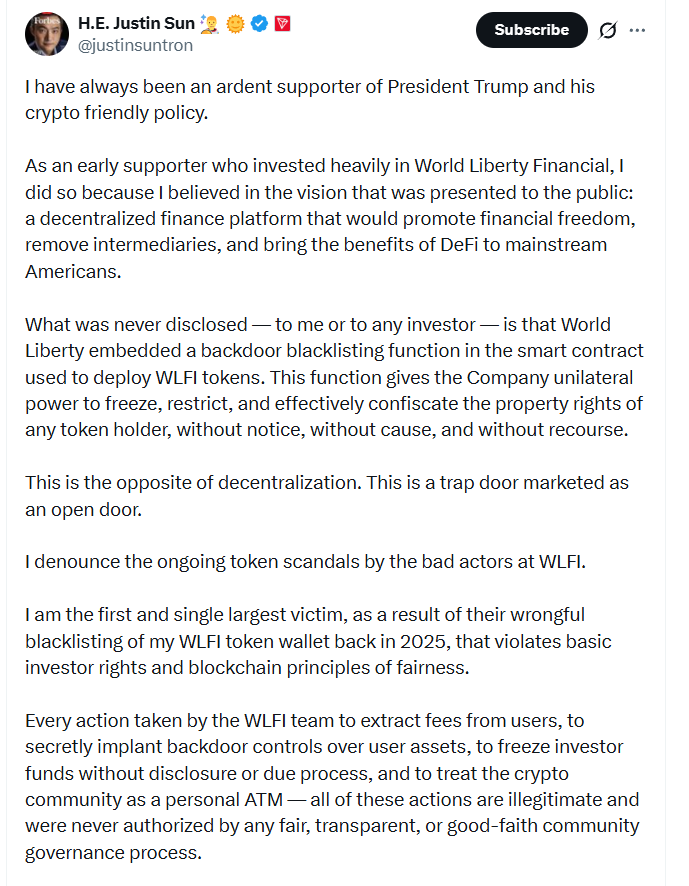
Justin Sun has filed a federal lawsuit in California against World Liberty Financial, alleging breach of contract, fraud, and conversion after WLFI crypto froze approximately 540 million of his unlocked tokens and barred him from governance participation.
The filing, by Sun and affiliated entities, exposes an admin-controlled blacklist function embedded in WLFI’s smart contract that allowed the team to unilaterally freeze any wallet’s transfers, sales, and protocol interactions without, Sun alleges, disclosing that capability to investors.
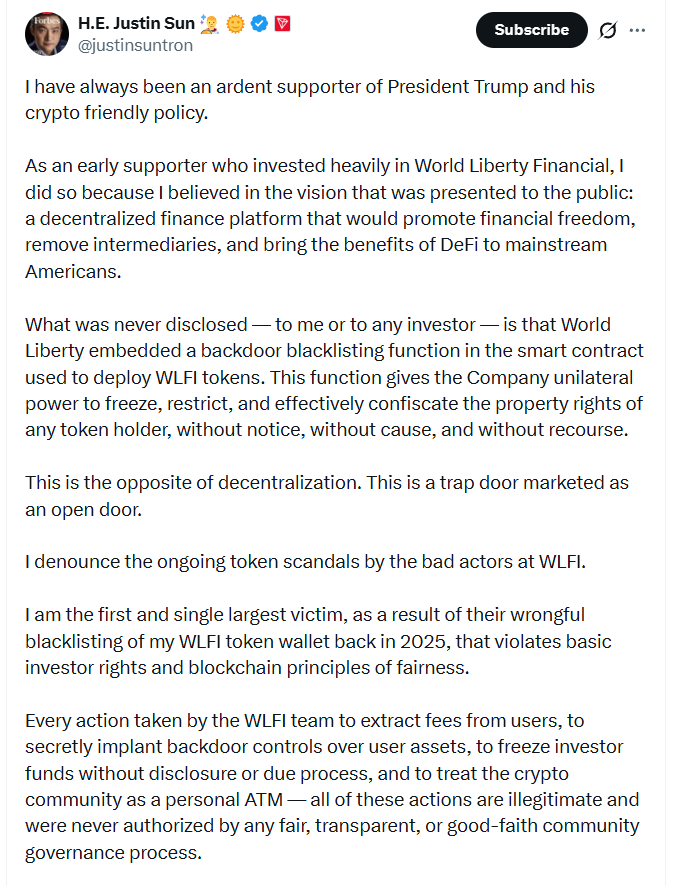
The core question this lawsuit raises is not who is legally right. It is whether a governance token that can be frozen by a centralized admin function was ever meaningfully decentralized to begin with – and what that means for every other WLFI holder.
- Filing: Sun sued World Liberty Financial in California federal court, charging breach of contract, fraud, and conversion over frozen WLFI holdings.
- Token freeze details: WLFI froze 540 million of Sun’s unlocked tokens and 2.4 billion locked tokens – holdings that dropped from over $107 million at the September 2025 freeze to an estimated $43–60 million by April 2026.
- Governance dispute: Sun alleges WLFI excluded him from governance activities and that the blacklist function enabling the freeze was never disclosed to investors.
- Market impact: WLFI fell 15% to a record low after Sun publicly accused the project of embedding an undisclosed backdoor on April 12, 2026.
- Sun’s exposure: Sun invested approximately $75 million directly into WLFI – the project’s largest known outside investor – with total exposure to Trump-affiliated crypto ventures reaching $175 million.
- Key watch item: The California court’s ruling on Sun’s motion for immediate token unfreezing will be the first hard signal on whether the blacklist function survives legal scrutiny.
Discover: The best crypto to diversify your portfolio with
What the Token Freeze Actually Reveals About WLFI Crypto Architecture
The dispute is, at its structural core, a governance architecture failure, not a standard investor disagreement.
WLFI’s smart contract contains an admin-controlled blacklist function that enables the project team to freeze any wallet’s ability to transfer, sell, or interact with tokens. Sun claims this capability was not disclosed to investors as required, a material omission for a project marketed as a decentralized governance platform.
The freeze was triggered in September 2025 after Sun transferred roughly $9 million worth of WLFI tokens to external wallets following the governance token launch, a move WLFI characterized as a potential violation of his investor agreement.
The project defended the blacklist as a standard compliance tool comparable to those used in USDT or USDC.
That framing matters, because it concedes the function operates like a centralized stablecoin control mechanism, not a decentralized governance token.
Today, I filed a lawsuit in California federal court against World Liberty Financial to protect my legal rights as a holder of $WLFI tokens. — H.E. Justin Sun
I have always been—and remain—an ardent supporter of President Trump and his Administration’s efforts to make America crypto friendly.…

 (@justinsuntron) April 22, 2026
Sun’s lawsuit seeks a court order to unfreeze his holdings, trial-determined damages, and an injunction barring WLFI from burning or otherwise tampering with his tokens.
The allegations, if proven, would indicate that WLFI’s governance token design gives its founding team veto power over any holder’s economic rights, a structural reality that extends well beyond Sun’s individual dispute. Governance disputes and frozen assets remain a documented risk across DeFi projects, as recent protocol-level failures have shown.
Discover: The best pre-launch token sales
The post Justin Sun Sues World Liberty Financial Over WLFI Crypto Token Freeze appeared first on Cryptonews.

Key Highlights
- Axe Compute shares explode 145% following announcement of $260M GPU infrastructure agreement
- Enterprise AI contract featuring NVIDIA hardware drives AGPU stock momentum
- Deployment of 2,304 NVIDIA B300 GPUs fuels massive pre-market rally
- Multi-year AI computing deal provides unprecedented revenue predictability
- AGPU gains significant ground with long-term enterprise infrastructure commitment
Shares of Axe Compute Inc. (AGPU) experienced explosive growth during pre-market hours following the company’s announcement of a substantial enterprise AI infrastructure agreement valued at $260 million. Trading closed at $4.88 before skyrocketing to $12.00, representing a remarkable 145.90% increase. This dramatic price movement demonstrates investor enthusiasm for the company’s entry into large-scale GPU deployment for enterprise AI applications.
Multi-Year Agreement Establishes Predictable Revenue Foundation
The company has finalized a 36-month enterprise infrastructure arrangement worth approximately $260 million. This agreement encompasses GPU-based computing services and advanced high-speed storage solutions delivered through a comprehensive payment framework. Payment terms include initial deposits, upfront prepayments, and recurring monthly advance payments structured on a take-or-pay arrangement.
Axe Compute will install 2,304 NVIDIA B300 GPUs within a Tier 3-certified data center facility located in the United States. The configuration incorporates high-performance storage infrastructure optimized for handling massive data processing requirements. This powerful system will facilitate training operations, model fine-tuning activities, and inference execution at enterprise magnitude.
Deployment operations are scheduled to commence during Q3 2026, with provisions allowing for contract extension beyond the initial term. Additionally, the infrastructure configuration will operate on 4.8 megawatts of committed power allocation. The architecture implements N+1 redundancy protocols to maintain continuous operational availability and system resilience.
Strategic Infrastructure Approach Strengthens AI Computing Market Position
Axe Compute maintains its strategic focus as a specialized provider of exclusive AI infrastructure capabilities. The organization concentrates on securing extended-term agreements featuring established pricing structures and guaranteed service parameters. This business approach generates stable revenue flows and enhanced long-term operational predictability.
The service framework enables enterprise customers to select deployment locations aligned with specific workload requirements. This adaptability addresses constraints commonly encountered in conventional hyperscale cloud infrastructure models. The company delivers isolated computing clusters with committed delivery schedules.
This agreement underscores an evolving trend toward customer-specified infrastructure configurations within AI marketplace segments. Enterprise organizations increasingly pursue dedicated computing resources rather than shared cloud platforms. Consequently, Axe Compute intends to replicate this operational framework across additional enterprise partnerships.
Advanced Computing Workloads Drive Market Expansion
The installed GPU cluster specifically addresses intensive AI workload requirements spanning multiple industry verticals. The infrastructure will support foundation model training operations demanding substantial coordination across thousands of parallel GPU units. The B300 architecture delivers optimized communication pathways and accelerated processing completion.
Enterprise clients will leverage the system for customizing models using proprietary data repositories. Dedicated infrastructure guarantees data sovereignty and consistent computing availability. This configuration mitigates vulnerabilities associated with shared computing environments and unpredictable resource access.
The platform additionally manages high-volume inference operations and AI-powered data processing applications. Use cases encompass real-time decision frameworks, personalized recommendation systems, and complex multimodal data workflows. Integrated high-performance storage capabilities will enhance data ingestion velocity and overall processing effectiveness.
This landmark contract represents Axe Compute’s most substantial enterprise partnership achieved thus far. The agreement reinforces the company’s competitive positioning within the expanding AI infrastructure sector. The organization’s growth trajectory remains synchronized with accelerating enterprise demand for scalable, dedicated GPU computing capabilities.
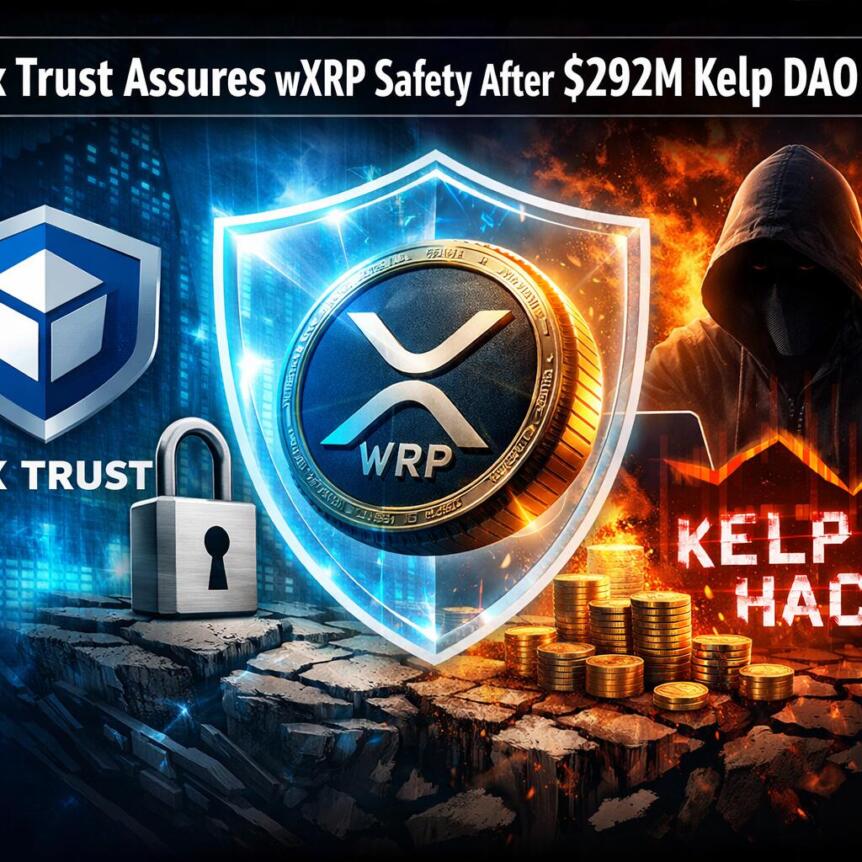
XRP: Hex Trust Confirms Isolation From Kelp DAO Exploit
XRP exposure concerns eased after Hex Trust confirmed that wXRP had no link to the exploited infrastructure. The firm explained that the attack targeted rsETH through a LayerZero bridge, not its own system. As a result, the wrapped XRP structure remained isolated from the compromised pathway.
Hex Trust also detailed its validator setup, which uses multiple decentralised verifier networks for transaction approvals. This structure prevents any single verifier from authorising transactions independently. Therefore, the firm reduced the risk of a single point of failure that affected Kelp DAO.
In addition, the custodian confirmed that none of its verifier networks experienced compromise during the exploit. The company also clarified that it does not rely on the same verifier configuration used by Kelp DAO. Consequently, the operational separation protected wXRP users from direct exposure.
wXRP Backing Structure and Bridge Safeguards
Hex Trust emphasised that it securely holds the underlying XRP assets in regulated custody environments. The firm does not store these assets on cross-chain bridges. Therefore, the exploited bridge had no access to the reserves backing wXRP tokens.
The company also reaffirmed that every wXRP token maintains a strict one-to-one backing with XRP. This structure ensures transparency and consistency across the token supply. Currently, around 50 million wXRP tokens circulate on the Ethereum network.
However, Hex Trust paused its bridge operations as a precautionary measure after the incident. The firm has begun reviewing its configurations to strengthen existing safeguards. This action reflects a broader effort to maintain system integrity amid rising DeFi security concerns.
Solana Expansion and Rising DeFi Risk Concerns
Hex Trust recently expanded wXRP availability to the Solana ecosystem, where adoption has grown rapidly. The token’s circulating supply approached one million within a week of launch. This growth followed integration with several Solana-based applications and trading platforms.
Meanwhile, industry participants raised concerns about holding wrapped tokens instead of native assets. Some analysts highlighted counterparty risks tied to issued tokens across external networks. These concerns intensified after multiple DeFi exploits occurred within a short period.
The Kelp DAO breach also renewed scrutiny of cross-chain bridge infrastructure and validator configurations. Earlier, a separate exploit involving Drift increased pressure on DeFi security frameworks. In response, developers and infrastructure providers have begun reassessing risk management strategies across networks.
The broader context shows increasing attention on secure custody and verification systems in decentralised finance. Firms now prioritise multi-layer validation and asset isolation to reduce vulnerabilities. As a result, the industry continues refining its approach to cross-chain interoperability and asset protection.
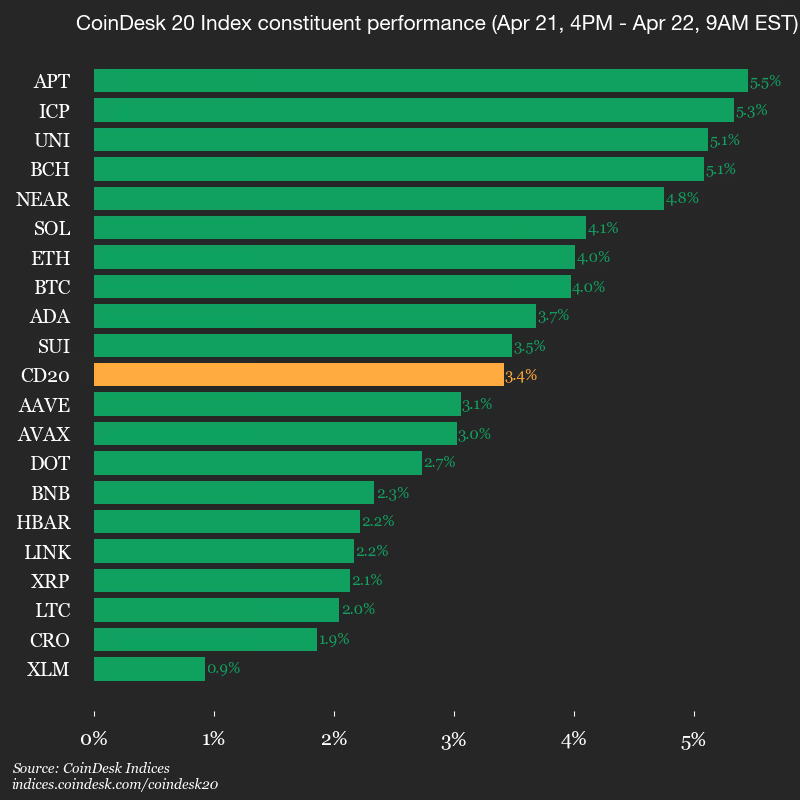
CoinDesk Indices presents its daily market update, highlighting the performance of leaders and laggards in the CoinDesk 20 Index.
The CoinDesk 20 is currently trading at 2157.12, up 3.4% (+71.19) since 4 p.m. ET on Tuesday.
All 20 assets are trading higher.

Leaders: APT (+5.5%) and ICP (+5.3%).
Laggards: XLM (+0.9%) and CRO (+1.9%).
The CoinDesk 20 is a broad-based index traded on multiple platforms in several regions globally.


Crypto exchange Kraken says it filed 56 million crypto-transaction forms with the U.S. Internal Revenue Service (IRS) for the 2025 tax year. Roughly 18.5 million of them covered transactions worth less than $1, and over half were for $10 or less.
Only 8.5% of the newly introduced Form 1099-DAs cleared $600, the threshold that triggers reporting for non-employee compensation, and 74% were for less than $50, the company said in a Wednesday blog post.
Each form is also sent to the customer and creates a reconciliation task for the taxpayer who receives it. On top of that, standard tax software does not handle crypto transactions. Kraken estimated the additional burden on an active crypto holder at $250-$500 a year for dedicated tax software, on top of standard filing costs.
“The hours taxpayers spend reconciling these micro-transactions, often with incomplete data, generate costs wildly disproportionate to any revenue the IRS will collect from them,” Kraken said.
The Tax Foundation estimates individual returns already cost Americans a combined $146 billion in time and expenses, the exchange said, and the National Taxpayers Union Foundation puts the average time for non-business filers at about 13 hours and $290 per return.
Brokers reporting for 2025 provide gross proceeds without cost basis, meaning the form shows what was sold, but not what it was bought for. Kraken said it fielded thousands of client questions about forms that captured only one side of the calculation.
Two problems
Kraken pointed to two parts of the tax code that cause problems. One is the lack of a de minimis, or low-level, exemption for crypto payments, which means even small purchases with crypto can trigger a taxable event that needs to be declared.
“Imagine you walk into a Steak ’n Shake and pay for a $7.99 meal with Bitcoin through a payment app. You have triggered a taxable event,” Kraken wrote as an example. “You are technically required to look up the cost basis of the specific Bitcoin you spent, calculate whether you had a gain or loss on that fraction of a coin, and report it on Form 8949.”
That’s the same argument libertarian think tank Cato Institute recently made. According to the institute, buying a cup of coffee every day with BTC “can result in over 100 pages of tax filings.”
The second issue is staking. Rewards earned on staked assets are treated as ordinary income at the moment of receipt, based on the token’s market price that day. Most holders keep those tokens instead of selling them, meaning they owe tax on tokens that haven’t been sold.
If the token price falls between receipt and filing, the tax can exceed the asset’s current value. Kraken calls this phantom income and says a large share of the sub-dollar 1099-DAs it issued were staking distributions.
Legislation moving through Congress includes a de minimis provision, but is limited to stablecoins. Kraken is pushing for a broader inflation-indexed exemption, paired with anti-abuse guardrails to prevent structuring.
The exchange is also asking Congress to let taxpayers elect when staking rewards are taxed, either at receipt under current rules or at sale, when a gain or loss is realized.
Kraken says its systems and those of other exchanges already support both reporting methods, but the choice needs to be authorized.


Key takeaways
- Bitcoin price rallies higher, trading above $78,000 on Wednesday after surging nearly 6% so far this week.
- US-listed spot ETF recorded a mild inflow of $11.84 million on Tuesday amid uncertainty over US-Iran peace talks.
Bitcoin (BTC) extended its gains on Wednesday, trading above $78,000 after a significant 6% surge this week. BTC showed relatively muted institutional demand on Tuesday, with Bitcoin spot Exchange Traded Funds (ETFs) adding $11 million in inflows.
Bitcoin’s price was buoyed by both geopolitical developments and the US Treasury’s buyback plan, which could inject additional liquidity into markets and further support Bitcoin’s price momentum.
Ceasefire extension pushes BTC’s price higher
Bitcoin’s positive momentum was fueled by the extension of the two-week ceasefire announced by US President Donald Trump late Tuesday. The ceasefire, which was set to expire on April 22, was extended upon Pakistan’s request until Washington receives a unified proposal from Tehran.
While Trump emphasized that the US blockade of Iranian seaports would remain in place, the ceasefire extension triggered a broad risk rally, driving Bitcoin to its highest price since February 3, reaching $78,452.
Market liquidity is expected to receive a significant boost this week, as the US Treasury is poised to buy back $15 billion of its own debt—matching the largest buyback in history. This move could provide fresh liquidity to the markets, creating favorable conditions for Bitcoin. As a liquidity-driven asset, Bitcoin could benefit from the influx of excess capital, which often flows into risk assets and alternative stores of value.
However, Bitcoin spot ETFs recorded a modest inflow of $11.84 million on Tuesday, down from $238.37 million the day before.
This cautious approach reflects investor uncertainty surrounding the ongoing US-Iran peace talks. However, if ETF inflows continue to increase, Bitcoin could see further upside potential.
Bitcoin price outlook: Bullish bias remains
The BTC/USD 4-hour chart remains bullish in the near term as Bitcoin is trading above both the 50-day and 100-day Exponential Moving Averages (EMAs) at $72,345 and $75,368, respectively.
The Relative Strength Index (RSI) and Moving Average Convergence Divergence (MACD) remain constructive, suggesting that buyers are in control.
Resistance levels lie at the 50% Fibonacci retracement near $78,962, followed by the psychological $80,000 level and the 200-day EMA at $82,769.

On the downside, initial support is expected around the prior channel top at $75,680, with further protection from the 100-day EMA at $75,368 and the 38.2% Fibonacci level at $74,487. The 50-day EMA at $72,345 and the lower channel boundary near $62,950 provide deeper support.

Lewis Hamilton goes viral as his photos with Kim Kardashian surface

Live webinar to dissect the outlook of GLP-1’s impact

BTC Inc. Adds Lightning Network to Its BTCPay Server Infrastructure Ahead of Bitcoin 2026

Manchester United reach agreement with Casemiro over contract clause amid transfer speculation

Steven Gerrard disagrees with Gary Neville over ‘shock’ Chelsea and Arsenal claim | Football

US brings back mandatory military draft registration


-

 Fashion5 days ago
Weekend Open Thread: Theodora Dress
-

 Sports5 days ago
NWFL Suspends Two Players Over Post-Match Clash in Ado-Ekiti
-

 Politics5 days ago
Palestine barred from entering Canada for FIFA Congress
-
Entertainment3 days ago
NBA Analyst Charles Barkley Chimes in on Ice Spice McDonald’s Fiasco
-

 Business3 days ago
Powerball Result April 18, 2026: No Jackpot Winner in Powerball Draw: $75 Million Rolls Over
-

 Politics3 days ago
Zack Polanski demands ‘council homes not luxury flats for foreign investors’
-

 Crypto World5 days ago
Russia Pushes Bill to Criminalize Unregistered Crypto Services
-

 Tech4 days ago
Auto Enthusiast Scores Running Tesla Model 3 for Two Grand and Turns It Into Bare-Bones Go-Kart
-

 Politics2 days ago
Gary Stevenson delivers timely reminder to register to vote as deadline TODAY
-

 Tech7 days ago
‘Avatar: Aang, The Last Airbender’ Leaked Online. Some Fans Say Paramount Deserves the Fallout
-
 Business6 days ago
Creo Medical agree sale of its manufacturing operation
-

 Business4 hours ago
Rolls-Royce Voted UK’s Most Iconic Trade Mark as IPO Register Hits 150
-

 Crypto World5 days ago
Russia Introduces Bill To Criminalize Unregistered Crypto Services
-
 Crypto World4 days ago
Kelp DAO rsETH Bridge Hack Drains $292M as DeFi Losses Top $600M in Two Weeks
-

 Sports6 days ago
British climbers complete new route in Swiss Alps
-

 Tech6 days ago
Ford EV and tech chief leaving automaker
-

 Sports6 days ago
“Felt Much Better Today”: Josh Hazlewood Opens Up On His Recovery Win Over LSG
-

 Entertainment7 days ago
Ruby Rose Accuses Katy Perry Of Sexual Assault, Police React
-

 Business6 days ago
Cheaper Doritos and Lays helps PepsiCo win back struggling snackers
-
 Entertainment6 days ago
Clavicular Says Streaming May Not Work Without Substances
You must be logged in to post a comment Login