
Crypto World
Syed Sameer steps in as power broker in Justin Sun–WLFI standoff

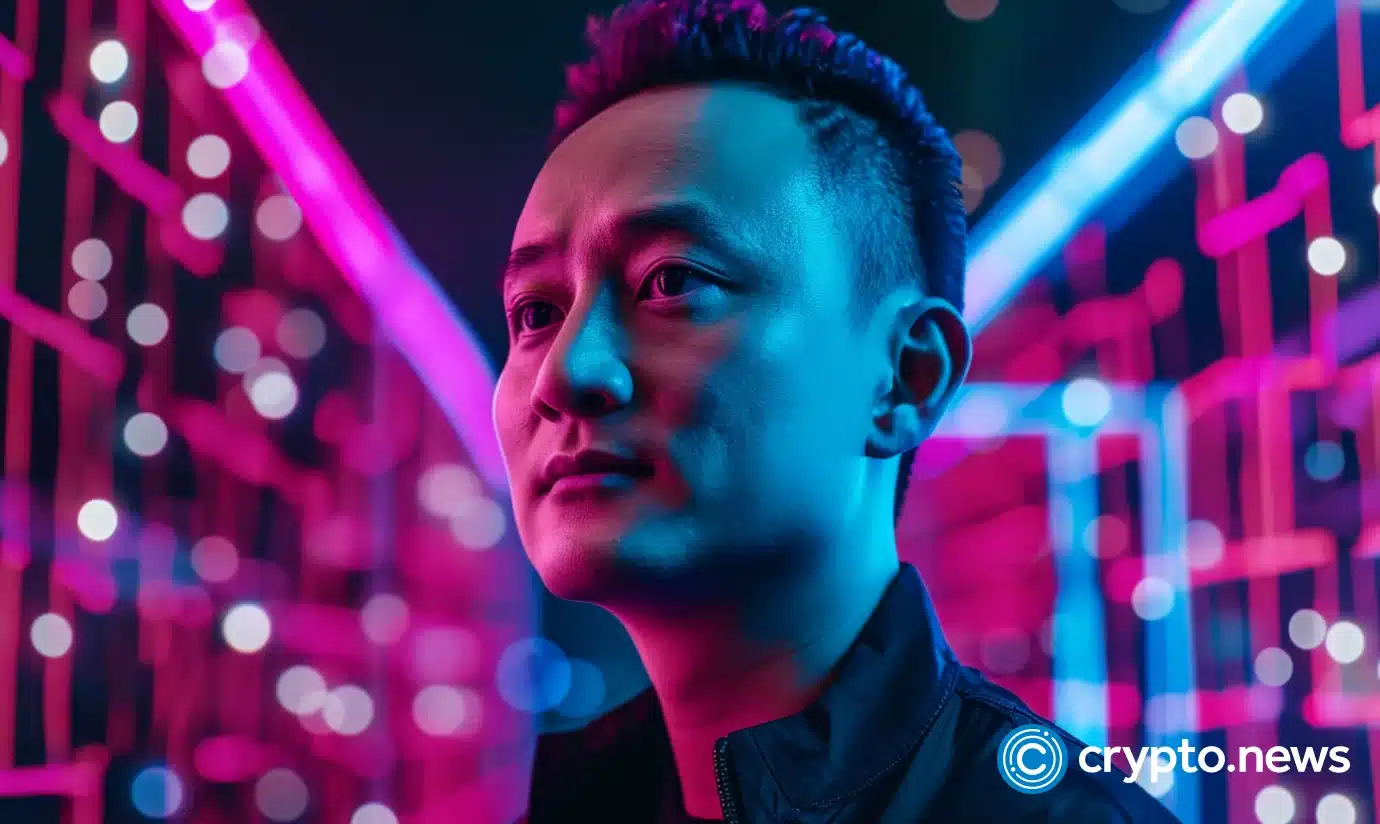
Sameer Group CEO Syed Sameer is offering to broker a private deal to unfreeze Justin Sun’s blacklisted WLFI tokens, drawing backlash from retail holders shut out of negotiations.
Summary
- Sameer Group CEO Syed Sameer has publicly offered to broker a deal to unfreeze Justin Sun’s blacklisted WLFI tokens.
- The outreach comes after Sun filed a federal lawsuit against World Liberty Financial in California over allegedly locked tokens.
- Retail investors are already pushing back, calling the proposal unfair if it benefits Sun but not the broader WLFI community.
Syed Sameer, CEO of Sameer Group LLC, has put himself forward as an institutional mediator in the escalating fight between Justin Sun and World Liberty Financial (WLFI) over frozen WLFI tokens.
Tagging Sun directly, Sameer wrote that as “one of the largest institutional $WLFI holders alongside Aryam 1 & Aqua 1 ($300M+ combined), we are ready and willing to broker a fair resolution to your situation and have your tokens unlocked.”
The offer landed hours after Sun announced, “Today, I filed a lawsuit in California federal court against World Liberty Financial to protect my legal rights as a holder of $WLFI tokens,” stressing that he “remain[s] an ardent supporter of President Trump and his Administration’s efforts to make America crypto friendly.”
Sameer framed his proposal as a fast track compared with courtroom escalation, saying his UAE institutional partners could “facilitate this equitably and quickly through our established channels while avoiding a lengthy litigation process,” and inviting Sun to discuss terms via DM, Signal, or email.
Crucially, Sameer later clarified that the intervention targets blacklisting, not vesting mechanics.
Responding to community criticism, he wrote, “This is specifically about unfreezing / whitelisting Sun’s tokens – they are blacklisted and not just locked,” and then corrected himself: “Sorry – I meant unfrozen / reversing the blacklisting of his tokens. This has nothing to do with locks / vesting schedule.”
That distinction hasn’t calmed the backlash. One user argued, “That’s unfair resolution who will mediate for other community members their token are unjustly locked with authoritarian governance,” while another said, “The proposal is horrible 2 year cliff is not needed,” accusing WLFI’s vesting setup of being a “scam” that “no one in the community deserves nor voted for.”
Others zoomed out to the optics. Critics mocked the spectacle of “the world biggest scammer” being scammed and institutions trying to clean it up; another replied that WLFI “wouldn’t need to contact 3rd part intermediaries if WLFI kept their promise… Unlocked = unlocked Not back door locked via hidden code…,” highlighting fears of hidden control logic in the contract.
Sameer, who describes himself on X as managing “$650M+ AUM” and an institutional partner of the Solana Foundation, is effectively offering a private, big‑holder backchannel to resolve Sun’s claim while the rest of the WLFI community watches from the cheap seats. Whether that becomes a template — where large, politically connected token holders negotiate bespoke fixes while smaller investors are left to litigate or cope — will decide if this episode reads as pragmatic damage control or as the latest example of two‑tier justice in crypto.



Two CIA officers were killed in a car crash in the Mexican state of Chihuahua on April 20 while returning from a counternarcotics operation to destroy a clandestine drug lab, igniting a sovereignty dispute between Washington and Mexico City.
Summary
- Two CIA officers and two Mexican law enforcement agents died when their vehicle crashed in rugged mountain terrain in Chihuahua state.
- The crash occurred after an operation to dismantle what authorities described as one of the largest clandestine drug labs found in Mexico.
- Mexican President Claudia Sheinbaum has launched an investigation into whether US agents violated Mexican law by operating without federal authorization.
Two CIA officers were killed alongside two Mexican law enforcement officials in a vehicle crash in Mexico’s Chihuahua state, following an operation targeting a large clandestine drug processing lab, multiple sources briefed on the matter confirmed to CBS News and CNN. The CIA declined to comment on the identities of the officers. Their truck crashed in rugged mountain terrain connecting Chihuahua to Sinaloa state while traveling in the middle of the night after the operation.
CIA Agents Killed in Mexico as Sovereignty Row Erupts
The crash occurred following what Chihuahua Attorney General César Jáuregui described as an operation to dismantle one of the largest clandestine chemical drug production sites ever found in the country. CBS News reported that the vehicle appears to have skidded on a mountain road and fallen into a ravine, causing it to explode. Mexican President Claudia Sheinbaum confirmed on April 21 that federal prosecutors have launched an investigation to determine whether any laws were violated, specifically whether US agents participated in operations on Mexican territory without authorization from the federal government.
Mexico Questions Legality of US Presence
Sheinbaum was pointed in her public response, stating that any joint operations between local governments and the US without federal authorization would constitute a violation of Mexican law and of the constitution. CNN reported that the CIA has significantly expanded its operations inside Mexico under Director John Ratcliffe, including covertly flying MQ-9 Reaper drones over Mexican territory to monitor cartel activity, and has undertaken a review of its authorities to use lethal force against drug cartels. Sheinbaum has previously insisted that there are “no joint operations on land or in the air” in Mexico, describing US involvement as limited to information sharing within an established legal framework.
The Broader Stakes for US-Mexico Relations
The deaths come at a highly sensitive moment in US-Mexico relations. The Trump administration has designated several Mexican cartels as foreign terrorist organizations, a classification that Mexico’s government has pushed back against strongly, viewing it as a potential pretext for direct US military action on Mexican soil. The incident adds fresh pressure to a bilateral relationship already strained by tariffs, immigration enforcement, and the extent of American intelligence activity inside Mexico. How both governments respond to the investigation’s findings is likely to shape the trajectory of counternarcotics cooperation between the two countries for the near term.
The CIA has not confirmed the identities of the two officers or commented on the nature of their role in the operation that preceded the crash.
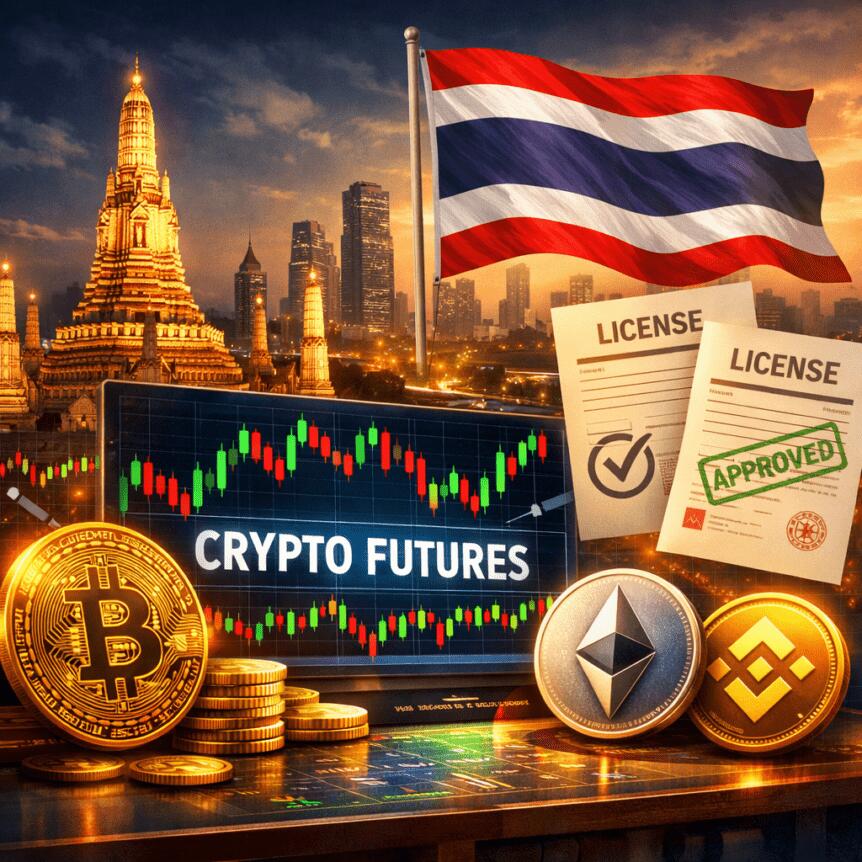
The Thai Securities and Exchange Commission (SEC) has opened a public consultation on proposed rule changes aimed at letting licensed digital asset businesses apply directly for derivatives licenses. The move would remove the current requirement to establish separate entities for derivatives activities and would extend the use of digital assets as eligible underlying assets for futures contracts. The proposed framework also introduces more stringent measures to manage conflicts of interest and bolster supervisory oversight. Public feedback is welcome through May 20, 2026, and will shape the final rule set.
According to the Thailand SEC, the revisions are designed to broaden access to the country’s derivatives market while safeguarding investors. By enabling existing license-holders to extend into derivatives within their current corporate structures, regulators hope to lower entry barriers for crypto firms seeking to offer hedging tools and other risk-management products. The changes also aim to elevate standards for derivatives exchanges and clearing houses in line with international practice, creating a more coherent and resilient market infrastructure.
Key takeaways
- Thailand proposes direct derivatives licensing for licensed crypto firms, eliminating the need for standalone entities.
- Digital assets would be recognized as eligible underlying assets for futures, expanding the scope of Thailand’s derivatives market.
- New rules emphasize conflict-of-interest controls and stronger regulatory oversight of exchanges and clearing houses.
- Public comment runs through May 20, 2026, with decisions likely to influence regional standards and market access.
Thailand’s plan to streamline crypto derivatives licensing
At the heart of the proposal is a practical shift in how crypto firms can participate in the derivatives segment. Instead of having to spin up a separate corporate vehicle solely to handle derivatives activities, licensed digital asset businesses could apply to offer derivatives services within their existing entities. The SEC frames this as a way to reduce bureaucratic friction while keeping activities under tighter regulatory scrutiny, rather than loosening controls.
The proposed regime would also codify the use of digital assets as underlying assets for futures contracts, a step that regulators argue will modernize the financial toolkit available to Thai investors. By broadening the instrument base, the SEC intends to improve hedging options for portfolios and provide more robust risk-management tools for both retail and institutional participants. Still, the draft rules introduce enhanced safeguards—such as stronger conflict-of-interest provisions and clearer delineation of responsibilities among exchanges, clearing houses, and market participants—to preserve market integrity as activity migrates into the derivatives space.
The Thai move aligns with a broader trend in Asia toward formalizing crypto derivatives under conventional financial-market standards. Regulators in several jurisdictions have pursued a balance between enabling sophisticated products and maintaining guardrails to mitigate systemic risk, particularly given the volatility inherent in digital assets. In Thailand’s case, the next milestone is the public consultation window, which will solicit input from market participants, lawyers, and other stakeholders before a final framework is published.
Global derivatives expansion: what the US could unlock
The Thai proposal arrives as the global derivatives landscape around crypto continues to evolve. In a parallel development, perpetual futures—positions that can be held around the clock—are gaining traction across major platforms as firms prepare for potential regulatory approvals in the United States. Blockchain.com, for example, recently launched perpetual futures trading within its self-custody wallet, enabling users to open leveraged BTC-denominated positions without transferring funds to an exchange. The feature, built on Hyperliquid’s execution layer, provides access to more than 190 markets with up to 40x leverage.
Other major exchanges have pursued similar offerings for non-US clients, expanding 24/7, multi-asset trading access. Kraken and Coinbase each introduced perpetual futures tied to equities for non-US users in earlier waves of product development. While these products remain largely inaccessible to U.S. residents for now, the regulatory outlook in Washington could shift the landscape. In March, comments from CFTC Chair Rostin Behn suggested the agency is actively considering crypto perpetual futures, indicating a potential move to enable such products within the coming months. If realized, the change could unlock a new cadre of venues and liquidity for U.S. traders seeking non-traditional hedges and speculative tools beyond spot markets.
The market has already seen strategic moves that hint at anticipated regulatory alignment. Payward, the parent company of Kraken, agreed to acquire Bitnomial, a U.S.-regulated derivatives venue, a deal framed as expanding access to regulated crypto derivatives for U.S. clients. The consolidation signals a broader industry push to anchor crypto derivatives in compliant, well-governed venues, which could appeal to institutional participants wary of regulatory risk and counterparty risk in less-regulated trading environments.
Taken together, the Thai consultation and the broader push in the United States underscore a shared objective: to mature crypto derivatives into reliable, capital-efficient tools for hedging, risk management, and yield generation. Regulators appear to be calibrating the balance between broad market access and robust oversight, with a clearer emphasis on standardized governance for exchanges and clearing environments worldwide.
Industry implications and what to watch next
For investors and builders, Thailand’s proposed changes could reduce the friction for legitimate crypto firms to offer derivative products within a familiar corporate structure, potentially accelerating the regional adoption of hedging strategies and complex financial products tied to digital assets. If implemented with rigorous oversight, the framework could also reassure institutional players seeking compliant venues and clear risk frameworks, contributing to a more resilient regional market.
From a global angle, the emergence of perpetual futures and regulatory-adjacent activity in major markets raises questions about the pace of U.S. approvals and the boundaries of permissible products. Regulators are balancing the desire to protect investors with the benefits of more transparent, regulated marketplaces that can deliver access to mainstream participants. As the U.S. debate advances, exchanges and liquidity providers will likely continue expanding offerings for non-U.S. customers while preparing for potential U.S. entry points.
Market participants will be keenly watching several milestones: the final shape of Thailand’s derivatives licensing rules after the May 20 consultation; any formal guidance on the treatment of digital assets as underlying assets in Thai futures markets; and the timing and scope of any U.S. regulatory green lights for crypto perpetual futures. Together, these developments could influence where liquidity flows, how risk is managed, and which platforms gain prominence as the global crypto derivatives ecosystem evolves.
For readers tracking regulatory trajectories and product innovation, the Thai process offers a concrete example of how a jurisdiction can ease access to advanced financial instruments while preserving rigorous governance standards. The convergence of regional reform and global product experimentation suggests a maturation phase for the crypto derivatives arena, one that could redefine hedging options and capital efficiency for years to come.
The public consultation in Thailand runs through May 20, 2026. As industry participants prepare feedback, observers should monitor how the final framework handles cross-border activity, conflicts of interest, licensing eligibility, and the interplay with existing securities and futures regimes. The outcome could both unlock new pathways for Thai crypto firms and accelerate the global shift toward regulated, investor-protective derivatives infrastructure.
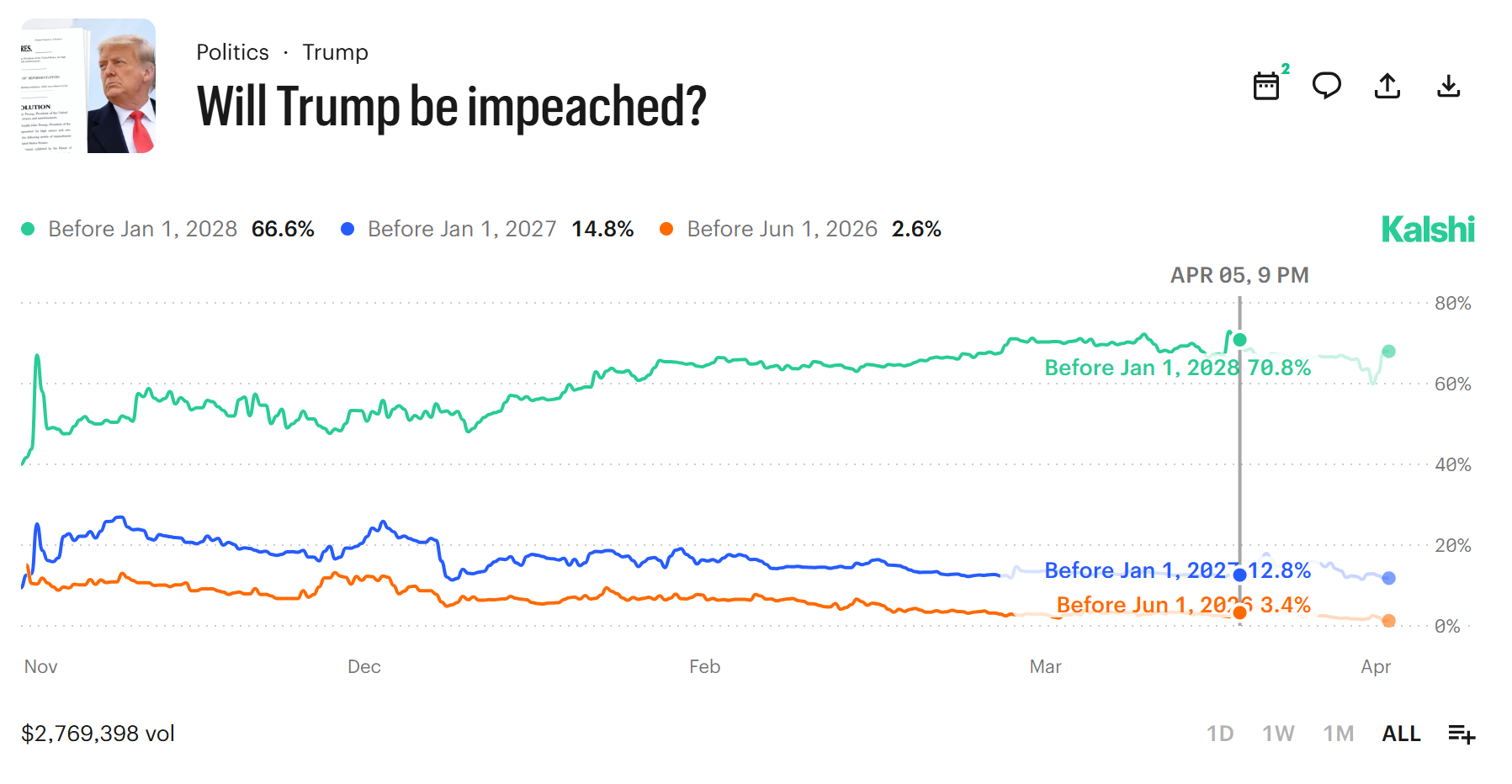
Traders on Kalshi, a regulated US prediction market, now assign a 66.6% probability that President Donald Trump will be impeached before January 2028. The contract has attracted more than $2.76 million in trading volume.
The odds have more than doubled since November 2025, when the market opened near 30%. The contract peaked above 70% in March before pulling back slightly to its current level.
Midterm Risk Fuels the Bet
Kalshi’s impeachment contract resolves “Yes” if the US House of Representatives passes articles of impeachment, verified through congress.gov. It does not require Senate conviction or removal from office.
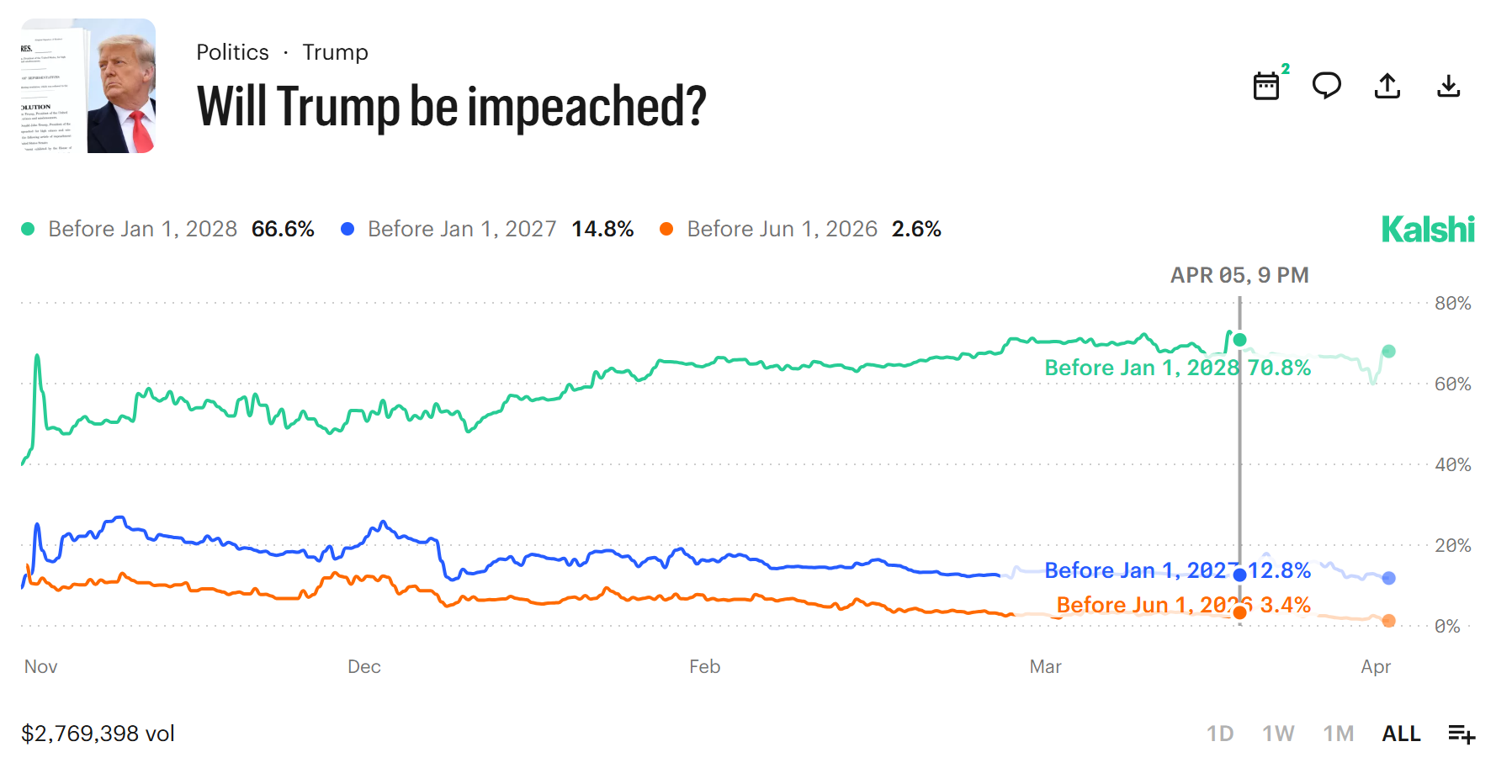
“The shift suggests growing expectations of political trouble ahead, though outcomes remain uncertain,” stated Walter Bloomberg, a popular account on X.
The steady climb reflects trader expectations around the 2026 midterms. Separate prediction markets give Democrats roughly a 71% chance of retaking the House.
A Democratic majority would likely pursue impeachment proceedings, mirroring the two House votes during Trump’s first term.
Geopolitical tensions have also contributed to the rise. Trump’s rhetoric on Iran and the Strait of Hormuz prompted renewed calls from Democratic lawmakers for impeachment or invoking the 25th Amendment.
However, a separate Kalshi market on full removal, which requires a two-thirds Senate vote or the 25th Amendment, trades far lower at roughly 27%.
Prediction markets can also misfire, as traders learned during the 2016 presidential election.
No formal impeachment proceedings are underway as of April 22, 2026.
Whether the odds continue rising will depend largely on November’s midterm results and how Congress responds to the administration’s foreign policy decisions.
The post Markets Anticipate Political Trouble for Trump As Impeachment Odds Rise to 70% appeared first on BeInCrypto.
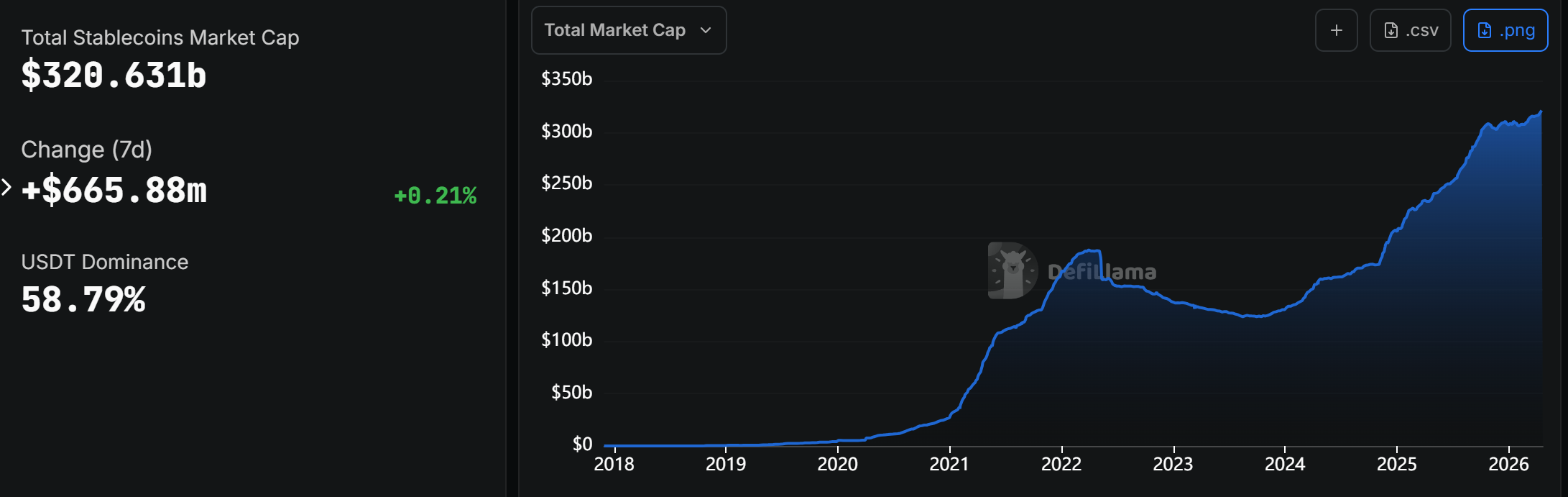
Coinbase listed Tokenised GBP (tGBP) on April 22, making it the exchange’s first British pound-backed stablecoin available to users globally.
The tGBP stablecoin is issued by FCA-registered BCP Technologies and fully backed 1:1 by cash and short-term UK government bonds.
Why the tGBP Stablecoin Matters for the UK
The listing gives UK users a way to hold and transfer value in their local currency on the Coinbase exchange without converting to dollar-pegged stablecoins.
That removes foreign exchange friction for British traders and businesses.
Keith Grose, Coinbase’s UK lead, wrote that locally denominated stablecoins are essential for the country’s role in the on-chain economy.
Users can now buy, sell, convert, send, and receive tGBP through the Coinbase app and Coinbase Exchange.
The broader stablecoin market has grown past $320 billion in total capitalization.
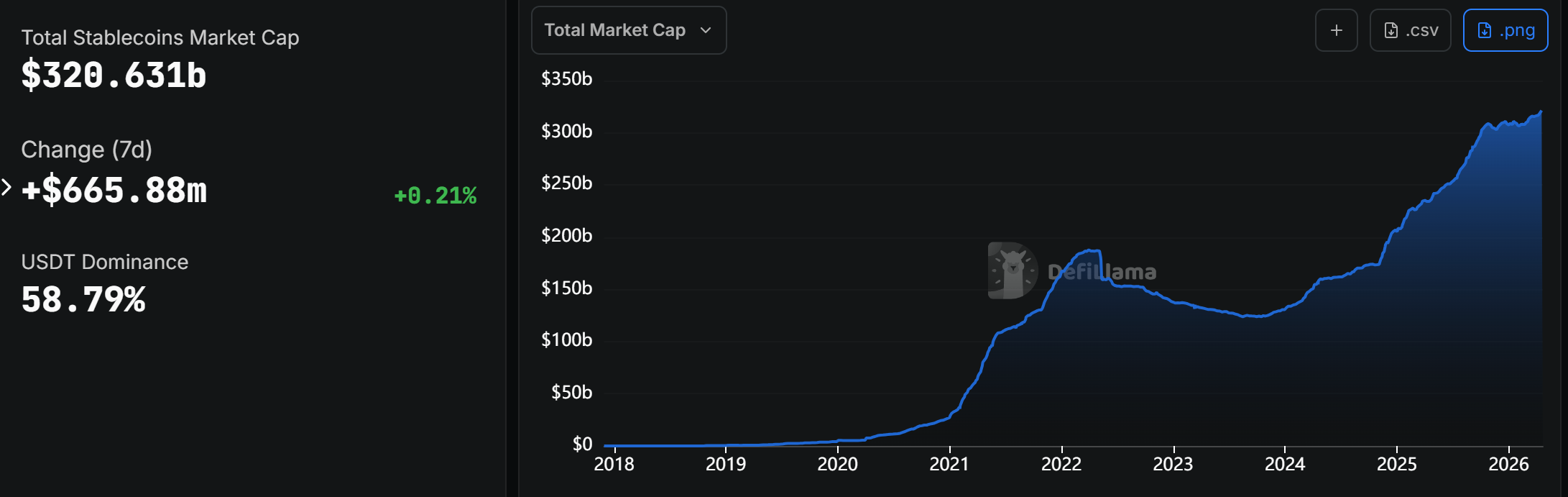
In 2025 alone, stablecoins settled over $30 trillion in transactions, with usage largely uncorrelated to crypto price swings.
Industry Leaders Back the Move
Coinbase CEO Brian Armstrong endorsed the listing, calling stablecoins “the best form of money.”
Polygon Foundation CEO Sandeep Nailwal offered a broader warning about adoption timelines.
“Countries slow to adopt stablecoins will face the same problem as late internet adopters,” he wrote.
Nailwal noted that cross-border payments still cost 6% and take days, while stablecoins settle in seconds for fractions of a cent.
The UK’s regulatory framework for stablecoins remains in development, with full implementation expected by late 2026.
Whether tGBP gains meaningful traction may depend on how quickly the FCA finalizes those rules.
The post Coinbase Lists First GBP Stablecoin as UK Push Accelerates appeared first on BeInCrypto.
Crypto World
The $292 million Kelp DAO exploit shows why crypto bridges are still one of the industry’s weakest links


The $292 million exploit tied to KelpDAO is the latest in a long line of crypto bridge hacks, underscoring how the systems designed to connect blockchains have become some of the easiest ways to break them.
The incident involved KelpDAO’s use of LayerZero’s cross-chain messaging system, a type of infrastructure widely used to move data and assets between blockchains.
Bridges are meant to let users move assets from one blockchain to another, like from Ethereum to a different network. But instead of acting as seamless connectors, they have repeatedly turned into weak points, draining billions of dollars over the past few years.
So why does this keep happening?
Crypto ecosystem leaders say the answer is not just bad code or careless mistakes. The problem is more fundamental; it is in how bridges are built in the first place.
The core problem: trusting the middleman
To understand the issue, it helps to look at what a bridge actually does.
If you move tokens from one blockchain to another, the second chain needs proof that your tokens existed and were locked on the first one. In an ideal world, it would verify that itself. In reality, that is too expensive and complex.
“Most bridges don’t fully verify what happened on another chain,” said Ben Fisch, CEO of Espresso Systems. “Instead, they rely on a smaller system to report it. That [second] system becomes the thing you trust.”
So instead of independently checking the truth, bridges outsource it, often to small validator groups or external networks like LayerZero or Axelar. That shortcut creates risk. In the Kelp DAO-related exploit, attackers targeted the data feeding into the bridge.
“Attackers compromised nodes and fed the system a false version of reality,” Fisch said. “The bridge worked as designed. It just believed the wrong information.”
Bridge hacks often look different on the surface. Some involve stolen keys, others faulty smart contracts. But experts say those are symptoms of a deeper issue. The real problem lies in how the systems are designed.
“Anything that can go wrong will go wrong, and bridge hacks are a perfect example,” said Sergej Kunz, co-founder of 1inch. “You see code vulnerabilities, centralization issues, social engineering, even economic attacks. Usually it’s a mix.”
How bridges work
For users, bridges look simple. You click a button and move assets from one blockchain to another. Behind the scenes, the process is more complicated.
First, your tokens are locked on the original blockchain. Then a separate system confirms that the tokens are locked. This system usually consists of a small group of operators or validators. Those operators then send a message to the second blockchain saying the tokens were locked so new ones can be issued. If that message is accepted, the second chain creates a new version of your tokens. These are wrapped tokens, like rsETH or WBTC.
The problem is that this process depends on trusting whoever sends that message. If attackers compromise that system, they can send a false message and create tokens that were never backed on the original chain.
“The worst case is when the system isn’t really checking anything,” Fisch said. “It’s just trusting someone else’s version of events.”
When one failure spreads
Given how often bridges fail, why has the industry not fixed them?
Part of the answer comes down to incentives. “Security is often not the top priority,” Kunz said. “Teams focus on launching quickly, growing users and increasing total value locked.”
Building secure systems takes time and money. Many DeFi projects operate with limited resources, making it difficult to invest heavily in audits, monitoring and infrastructure.
At the same time, projects are racing to support more blockchains. Each new integration adds complexity. “Every new connection adds more assumptions,” Fisch said.
Bridge hacks rarely stay contained. Bridged assets are used across lending protocols, liquidity pools and yield strategies. If those assets are compromised, the damage spreads.
“Other platforms may treat a hacked asset as legitimate,” Kunz said. “That’s how contagion happens.” Users are rarely told how a bridge actually works or what could go wrong.
There are ways to make bridges safer. Fisch says one key step is removing single points of failure by relying on independent data sources rather than shared infrastructure.
In practice, these “data sources” are computers that watch blockchains and report what happened. They might be run by the bridge itself, by outside networks like LayerZero, or by infrastructure providers. But many rely on the same underlying services, meaning a single compromised source can feed bad data across multiple systems.
“If everyone is relying on the same source, you haven’t reduced risk,” he said. “You’ve just copied it.”
Other approaches include hardware protections and better monitoring to catch misconfigurations early. Some developers are also working on designs that verify data directly using cryptography instead of intermediaries.
Kunz believes a more fundamental shift is needed. “As long as we rely on validator-based bridges, these problems will continue,” he said.
Read more: North Korea’s crypto heist playbook is expanding and DeFi keeps getting hit
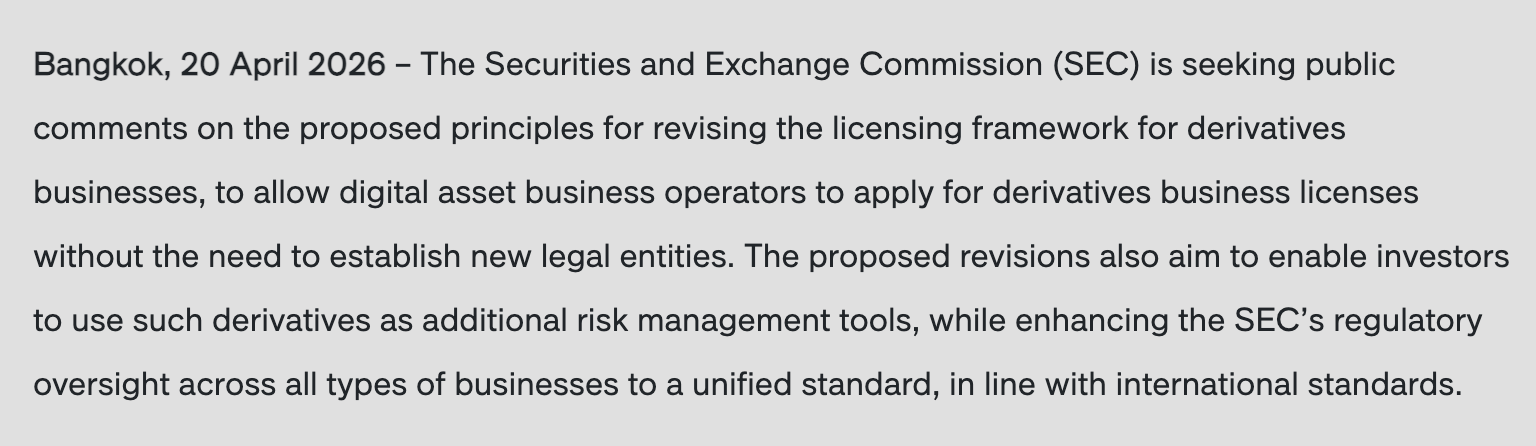
Thailand’s Securities and Exchange Commission (SEC) is seeking public comment on proposed rule changes that would allow licensed digital asset businesses to apply directly for derivatives licenses, removing the requirement to establish separate entities.
The proposed revisions would build on earlier changes recognizing digital assets as eligible underlying assets for futures contracts, expanding the scope of Thailand’s derivatives market while introducing additional requirements to manage conflicts of interest and strengthen oversight.

The proposal could lower barriers for crypto companies to enter the derivatives market by allowing them to apply for licenses within existing entities, rather than establishing separate companies, while bringing those activities under tighter regulatory oversight.
The regulator said the changes are intended to provide investors with additional tools for hedging and portfolio management, as well as bringing standards for derivatives exchanges and clearing houses in line with international practices.
The proposed changes are open for public consultation until May 20, with feedback from industry participants expected to inform the final framework.
Related: Thailand proposes tighter scrutiny of funders behind crypto firms
Crypto derivatives expand as US moves toward approval
Thailand’s proposal comes as crypto derivatives expand globally and momentum builds toward regulatory approval in the United States.
On Tuesday, Blockchain.com introduced perpetual futures trading in its self-custody wallet, allowing users to open leveraged positions using Bitcoin (BTC) as collateral without transferring funds to an exchange. Underpinned by Hyperliquid, the feature offers access to more than 190 markets with as much as 40x leverage.
Other exchanges have taken a similar approach. Earlier this year, both Kraken and Coinbase launched perpetual futures tied to equities for non-US users as part of a broader push toward 24/7, multi-asset trading.
While most of these products remain largely unavailable in the United States, that could change soon. In March, Michael Selig said the Commodity Futures Trading Commission is working to enable crypto perpetual futures, adding the agency could move on the products “within the next month or so.”
In the meantime, exchanges appear to be positioning for potential approval. Last week, Kraken parent Payward agreed to acquire Bitnomial, a US-regulated derivatives venue, in a move aimed at expanding access to products including perpetual futures for US clients.
Magazine: How to fix insider trading on platforms like Polymarket and Kalshi
Circle’s Chief Economist Gordon Liao has proposed a major recalibration of Aave’s USD Coin (USDC) interest rate model. The proposal aims to restore Aave USDC liquidity on Ethereum after days of full utilization.
Circle CEO Jeremy Allaire endorsed the governance proposal on X, calling attention to Liao’s recommended parameter changes.
Why Aave USDC Liquidity Dried Up
USDC on Aave v3 Ethereum Core has been pinned at 99.87% utilization for four consecutive days. Available liquidity sits below $3 million, while total supply contracted by roughly $60 million in 24 hours.
The freeze traces back to the April 18 KelpDAO rsETH exploit, which triggered approximately $300 million in incremental borrowing.
Trapped suppliers began borrowing stablecoins against their own deposits to exit via decentralized exchanges.
These borrowers are structurally rate-insensitive, according to Liao’s analysis.
At 14%, one week of carry costs just 27 basis points. That makes the current rate ceiling insufficient to deter borrowing or attract new capital.
A Two-Step Rate Fix
Liao proposed a two-phase approach. The first step involves a same-day Risk Steward action to raise Slope 2 to 40% and lower optimal utilization to 87%. A full governance vote within five to seven days would then push the parameters to final targets.
At the proposed 50% Slope 2, the maximum supply rate would reach approximately 48%. Liao argued that level should pull capital from allocators across venues within hours, pushing utilization back below the kink.
Aave Working Toward Resolution
Meanwhile, Aave founder Stani Kulechov said the team is working around the clock on multiple paths forward. He noted the Arbitrum Security Council recovered $70 million in ETH, which could meaningfully reduce exposure.
“Every decision we are making is aimed at an orderly return to normal market conditions and the best possible outcome for everyone involved,” wrote Kulechov in a post.
The proposal now awaits input from LlamaRisk, Aave’s remaining risk service provider since Chaos Labs departed earlier this month.
Whether the interim parameters take effect depends on a Risk Steward multisig action.
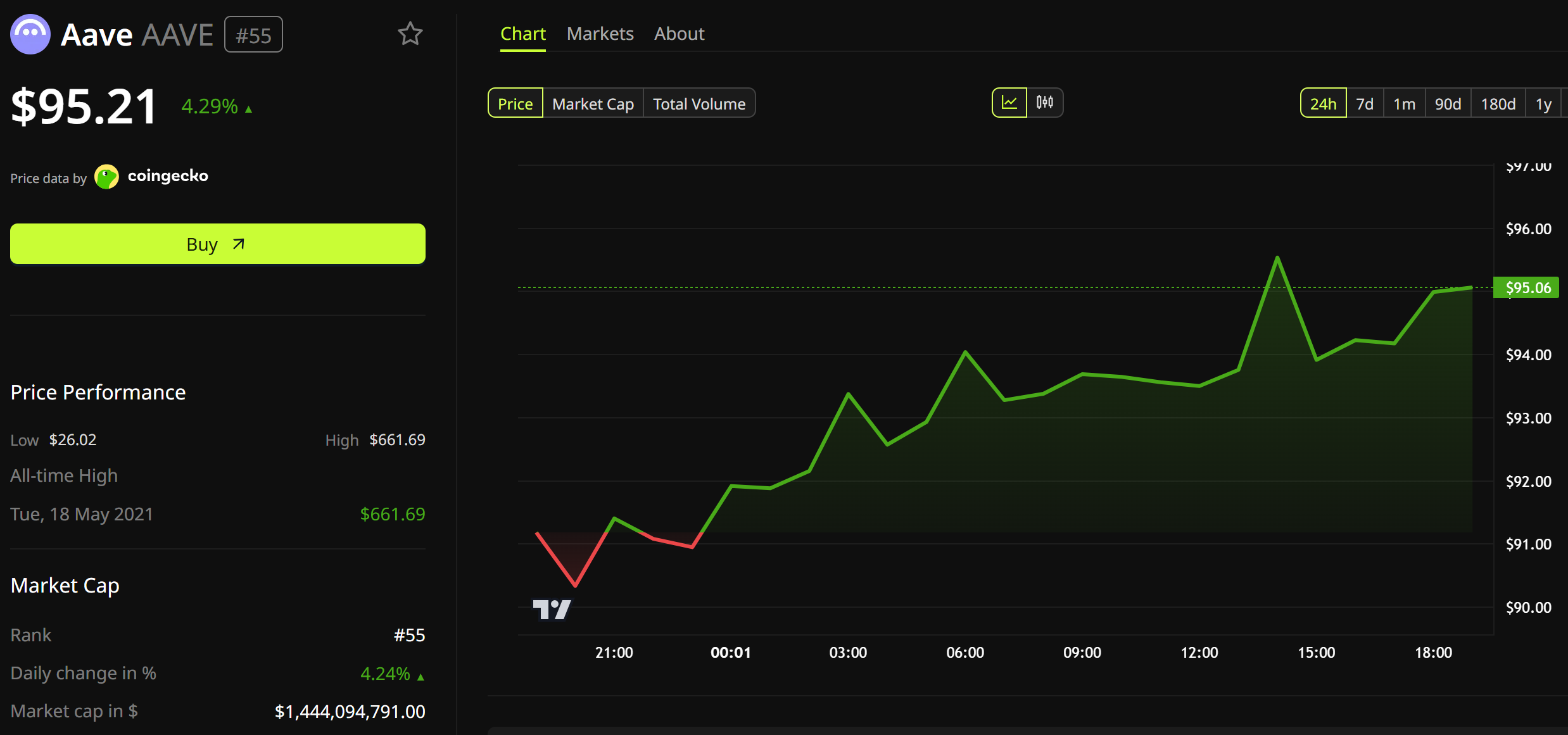
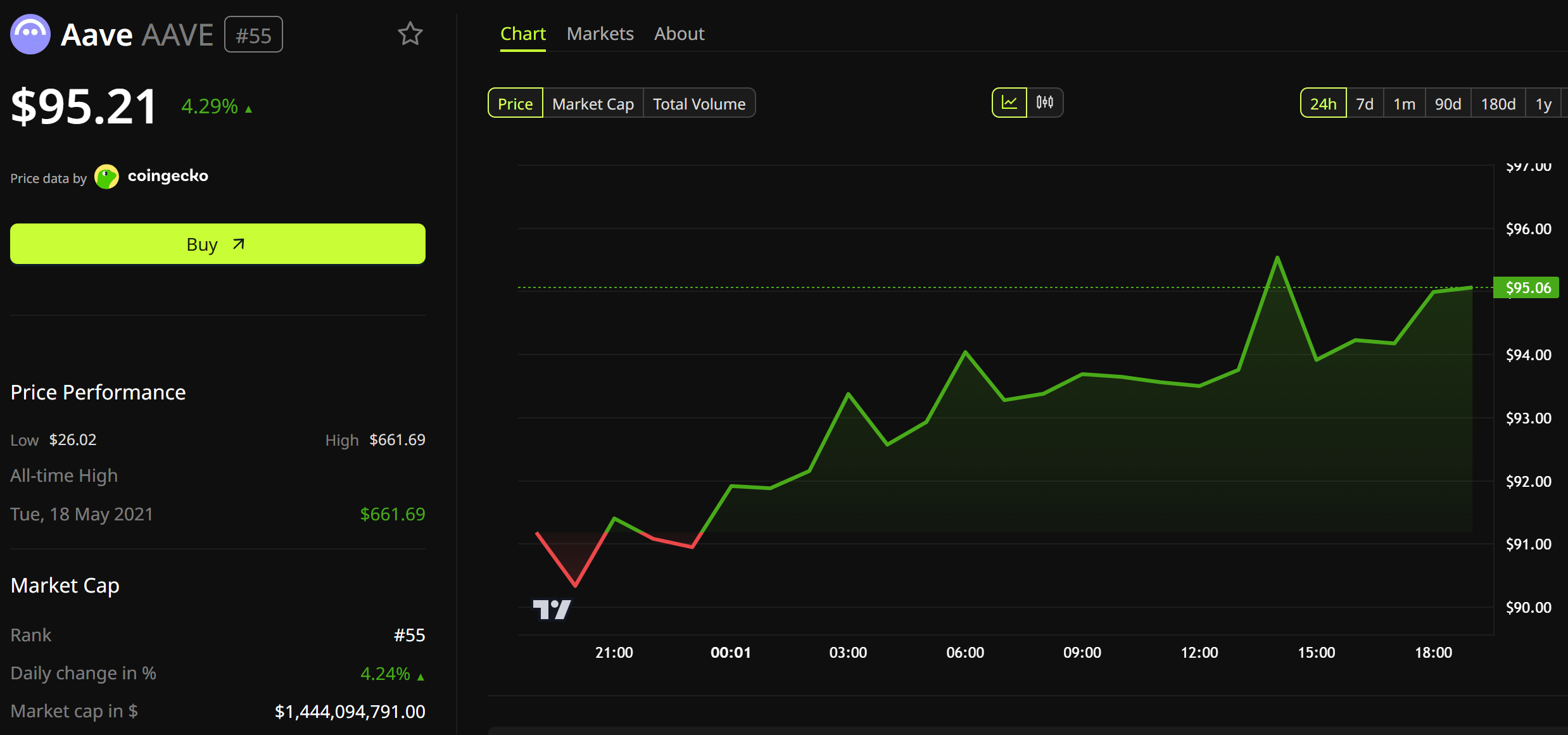
Despite this news, AAVE token price is up by nearly 5% in the last 24 hours, and was trading for $95.21 as of this writing.
The post Circle Proposes Aave Rate Overhaul to Fix USDC Liquidity Crisis appeared first on BeInCrypto.
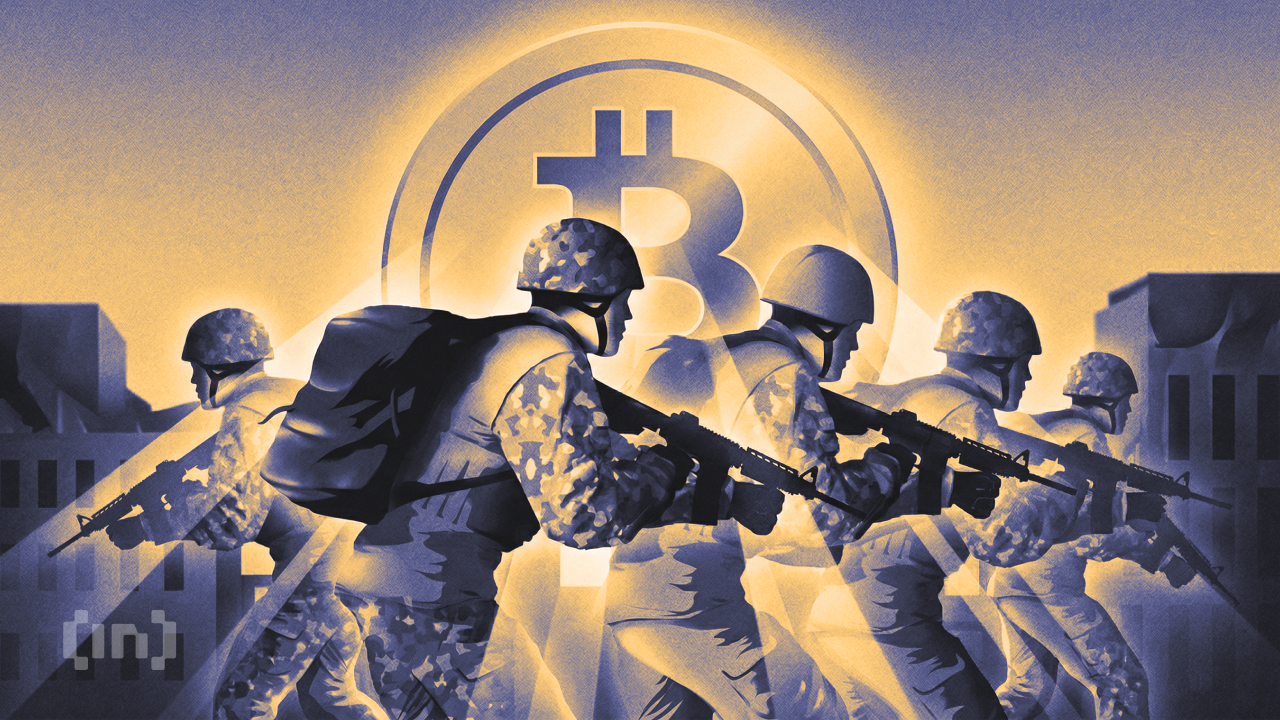
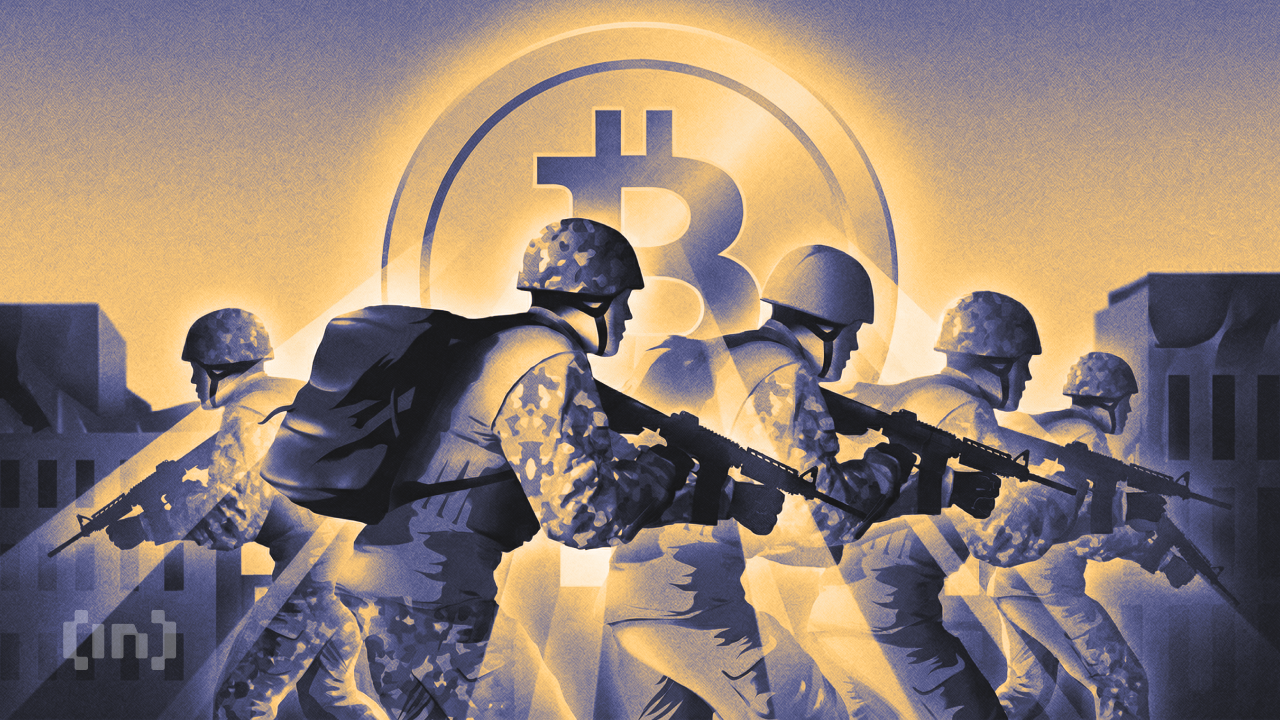
Admiral Samuel Paparo, commander of US Indo-Pacific Command, told the Senate Armed Services Committee that his command is running a Bitcoin (BTC) node and conducting operational tests with the protocol.
The April 21 testimony marked the first time a sitting US combatant commander publicly framed Bitcoin as a national security asset during congressional proceedings.
Bitcoin as a ‘Power Projection’ Tool
Responding to questions from Senator Tommy Tuberville (R-AL), Paparo described Bitcoin as “a peer-to-peer, zero-trust transfer of value” and said that anything supporting all instruments of national power “is to the good.”
He characterized the research as focused on computer science rather than monetary policy.
Proof-of-work, he said, “has got really important computer science applications for cybersecurity,” including protecting data and raising the real-world cost for adversaries conducting cyber operations.
“We have a node on the Bitcoin network right now. We’re doing a number of operational tests to secure and protect networks using the Bitcoin protocol,” he said.
The admiral offered to provide classified details on the tests if requested.
Follow us on X to get the latest news as it happens
Broader Strategic Context
Paparo’s remarks align with a growing US posture toward Bitcoin at the federal level. Legislators have advanced the BITCOIN Act and a Strategic Bitcoin Reserve through executive order.
Meanwhile, Major Jason Lowery’s “Softwar” thesis previously proposed proof-of-work as a form of cyber power projection.
Tuberville framed the exchange around competition with China, noting that Beijing’s top monetary think tank has published its own strategic Bitcoin research.
INDOPACOM oversees approximately 380,000 personnel across the Asia-Pacific theater, the primary front for US-China strategic competition.
No official follow-up from the Department of Defense has clarified the scope of the tests as of April 22.
Subscribe to our YouTube channel to watch leaders and journalists provide expert insights
The post US Military Runs Bitcoin Node for Cybersecurity Tests, Admiral Confirms appeared first on BeInCrypto.
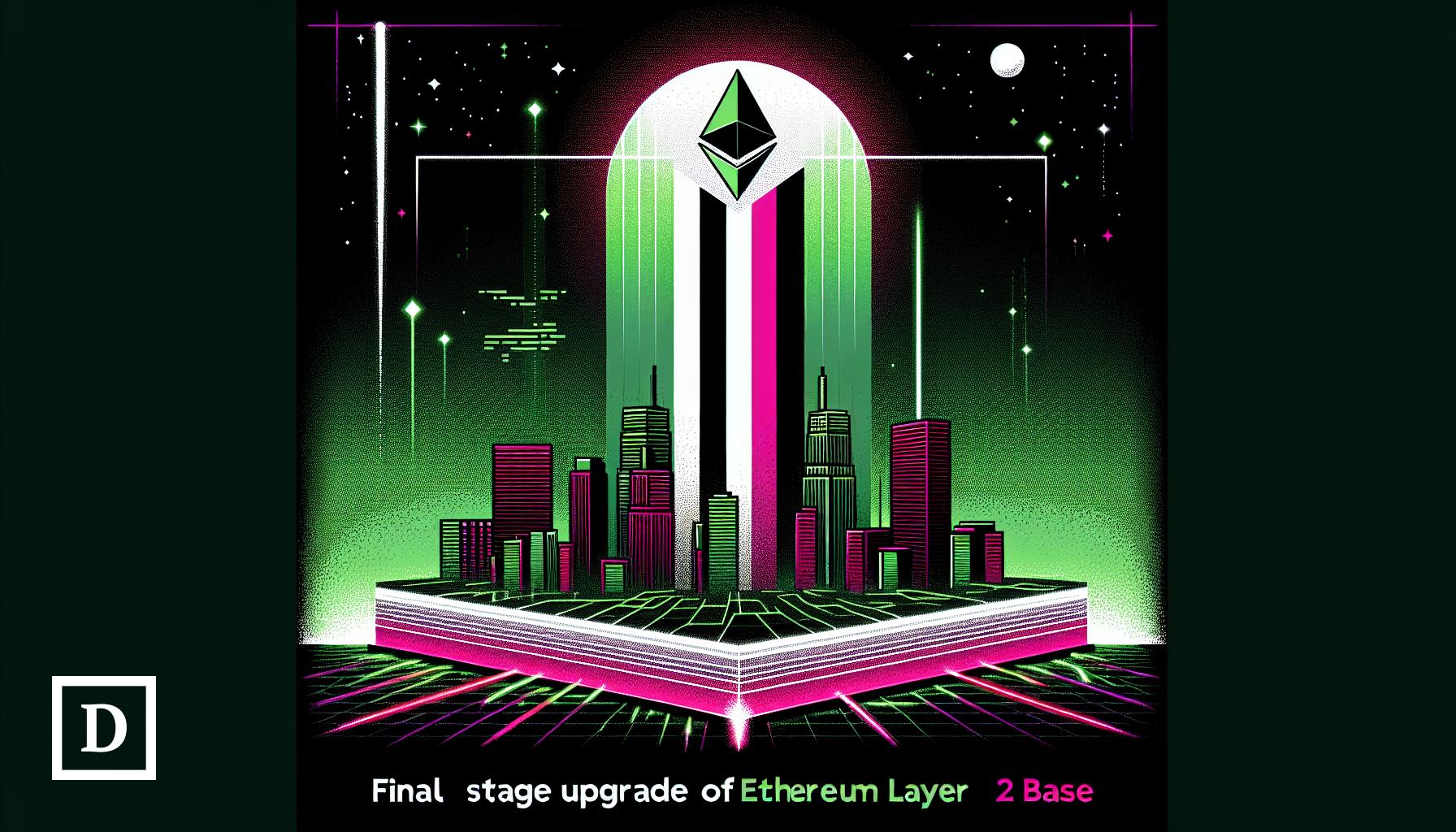
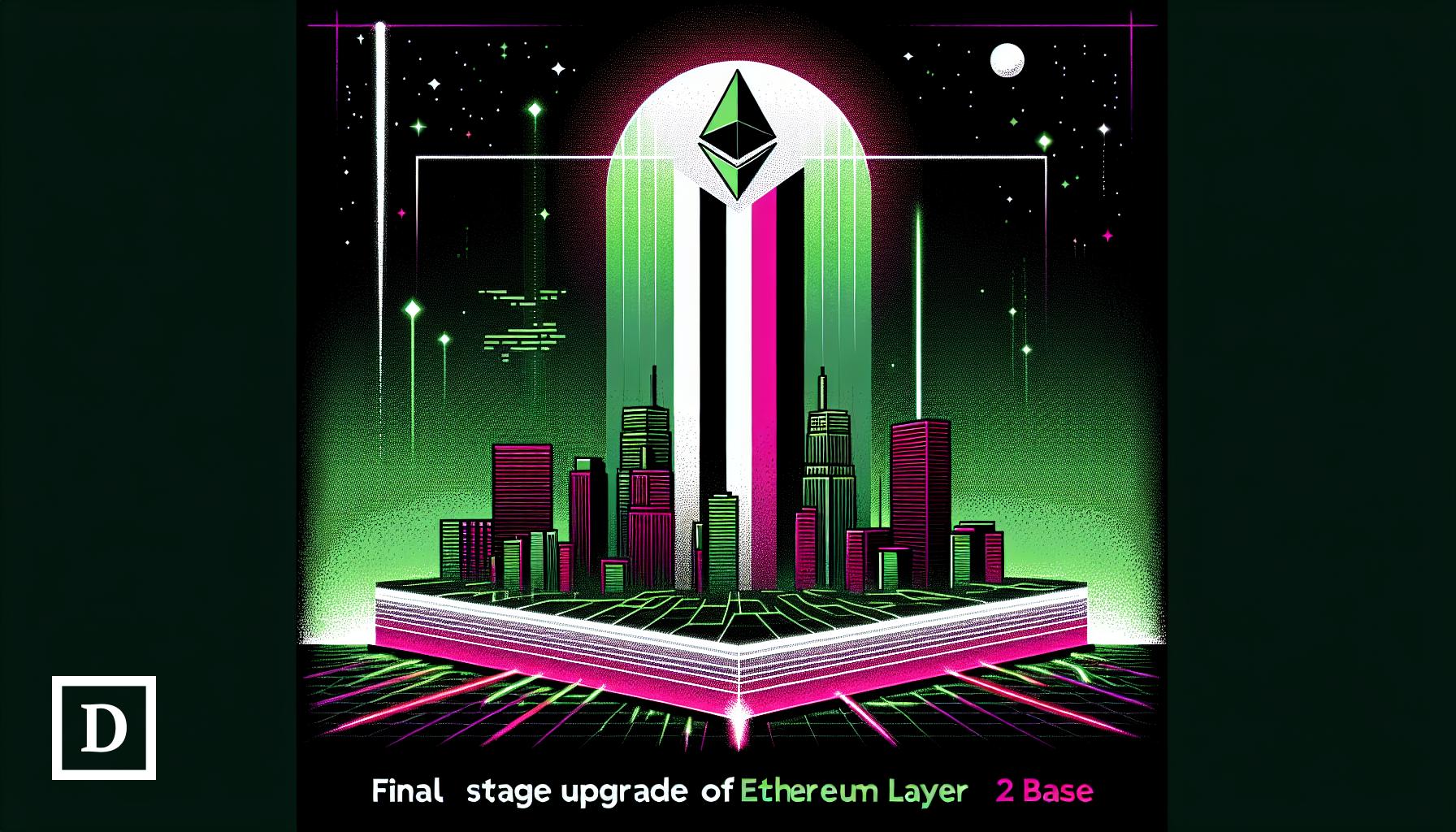
Base’s Azul upgrade is currently live on testnet, with mainnet launch scheduled for mid-May.
Base, the Ethereum layer 2 network developed by Coinbase, announced Tuesday evening its first independently built network upgrade, dubbed Azul, targeting mainnet activation on May 13.
The upgrade marks a “major step” in Base’s push toward Stage 2 decentralization — the highest trust-minimization standard for Ethereum L2s, according to the Base Engineering Blog post announcing the upgrade.
The centerpiece of Azul is a multiproof system that combines two independent proof mechanisms — a trusted execution environment (TEE) prover and a zero-knowledge (ZK) prover — into a single security layer. Either can finalize a transaction on its own, but when both agree, withdrawals from Base to Ethereum settle in as little as a day, the post notes. This architecture satisfies a core Stage 2 requirement: the ability to detect and handle proof system failures entirely on-chain.
Base currently ranks as the second-largest L2 by total value secured, with $12.12 billion, per L2Beat data. Arbitrum One is ranked first with just over $16 billion.
The announcement comes amid growing pressure on L2s to mature their security models. Ethereum co-founder Vitalik Buterin has pushed for faster L2 withdrawal times to reduce reliance on third-party bridges, while also questioning whether the original L2 vision still holds as the space has evolved. Base’s multiproof design is explicitly modeled on Buterin’s L2 finalization roadmap, the Azul announcement notes.
Beyond security, Azul streamlines Base’s underlying client stack and aligns the network with Ethereum’s latest execution-layer specs. Base has also doubled down on stablecoins, global markets, and AI agents as its core growth bets, and faster, cheaper finality is foundational to all three.
Azul is live on testnet now, with a $250,000 bug bounty competition running through May 4.
This article was written with the assistance of AI workflows. All our stories are curated, edited and fact-checked by a human.
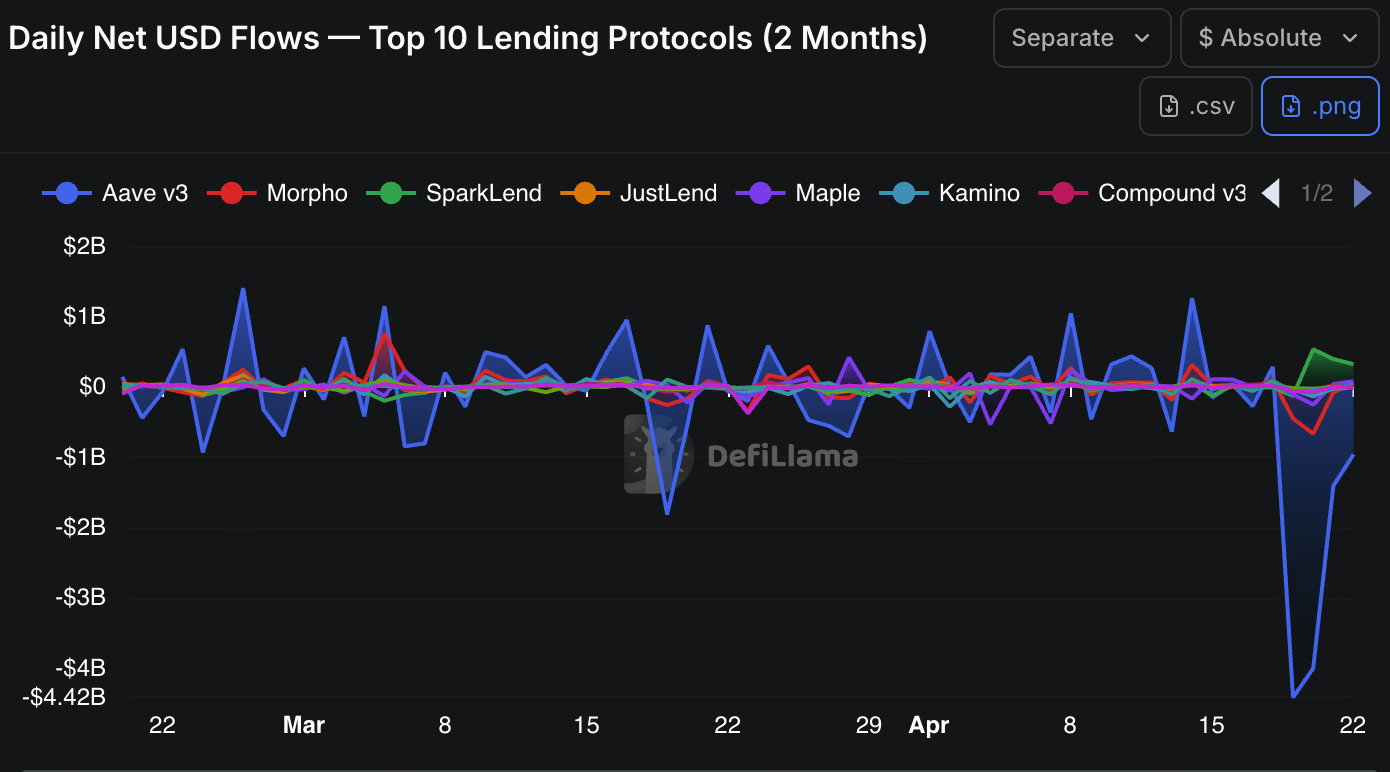
Aave TVL has dropped by $10B since the Kelp attackers used the protocol to borrow $190 million in WETH, depositing unbacked rsETH.
DeFi’s lending landscape is being reshuffled in real time as capital flees Aave in the wake of the Kelp bridge exploit, and a notable chunk of appears to be landing on SparkLend.
Spark’s stablecoin lending protocol SparkLend has seen over $1.4 billion in deposits flow into it in the past few days since the $290 million Kelp bridge exploit on Saturday, April 18, which has continued to rock DeFi since.
Total value locked on SparkLend surged from around $1.89 billion to $3.3 billion as of today, April 22, per DefiLlama data.
Meanwhile, Aave — now the second-largest protocol in DeFi by TLV, and where the Kelp hackers’ faked funds were deposited — has seen its TVL plunge by $10 billion over the same time frame, from above $26 billion to just over $16 billion today.

Per DefiLlama data, Morpho has seen the second-largest outflows in USD aftr Aave.
Active loans on SparkLend have climbed by roughly $500 million over the same period, suggesting the inflows aren’t just parked deposits but fresh borrowing demand.
The April 18 Kelp exploit saw the attacker deposit unbacked rsETH into Aave as collateral and borrowed about $190 million in real wrapped ETH (WETH) against it, leaving the protocol with between $124 million and $230 million in bad debt, depending on how Kelp ultimately allocates losses from the exploit.
Aave has partially unfrozen WETH markets and received indicative commitments from ecosystem participants to help cover shortfalls, as The Defiant reported yesterday.
In the latest Kelp-related update from Aave, the protocol’s founder and CEO Stani Kulechov wrote on X today, “every bit of my energy right now is focused on the outcome for Aave users and the protocol.”
This article was written with the assistance of AI workflows. All our stories are curated, edited and fact-checked by a human.

Urgent scam warning over HMRC calls and new way to check

Two CIA Agents Killed in Mexico Crash
Where's Hulk Hogan's family now? All about the late wrestler's “Hogan Knows Best” costars

Manchester United reach agreement with Casemiro over contract clause amid transfer speculation

Steven Gerrard disagrees with Gary Neville over ‘shock’ Chelsea and Arsenal claim | Football

US brings back mandatory military draft registration


-

 Fashion5 days ago
Weekend Open Thread: Theodora Dress
-

 Sports5 days ago
NWFL Suspends Two Players Over Post-Match Clash in Ado-Ekiti
-

 Politics5 days ago
Palestine barred from entering Canada for FIFA Congress
-
Entertainment3 days ago
NBA Analyst Charles Barkley Chimes in on Ice Spice McDonald’s Fiasco
-

 Business3 days ago
Powerball Result April 18, 2026: No Jackpot Winner in Powerball Draw: $75 Million Rolls Over
-

 Tech4 days ago
Auto Enthusiast Scores Running Tesla Model 3 for Two Grand and Turns It Into Bare-Bones Go-Kart
-

 Politics3 days ago
Zack Polanski demands ‘council homes not luxury flats for foreign investors’
-

 Crypto World5 days ago
Russia Pushes Bill to Criminalize Unregistered Crypto Services
-

 Politics2 days ago
Gary Stevenson delivers timely reminder to register to vote as deadline TODAY
-

 Tech7 days ago
‘Avatar: Aang, The Last Airbender’ Leaked Online. Some Fans Say Paramount Deserves the Fallout
-
 Business6 days ago
Creo Medical agree sale of its manufacturing operation
-

 Business11 hours ago
Rolls-Royce Voted UK’s Most Iconic Trade Mark as IPO Register Hits 150
-

 Crypto World5 days ago
Russia Introduces Bill To Criminalize Unregistered Crypto Services
-

 Sports7 days ago
British climbers complete new route in Swiss Alps
-
 Crypto World4 days ago
Kelp DAO rsETH Bridge Hack Drains $292M as DeFi Losses Top $600M in Two Weeks
-

 Politics3 hours ago
Starmer handler McSweeney to be dragged from shadows by Foreign Affairs Committee
-

 Tech7 days ago
Ford EV and tech chief leaving automaker
-

 Sports7 days ago
“Felt Much Better Today”: Josh Hazlewood Opens Up On His Recovery Win Over LSG
-

 Business6 days ago
Cheaper Doritos and Lays helps PepsiCo win back struggling snackers
-
 Entertainment6 days ago
Clavicular Says Streaming May Not Work Without Substances
You must be logged in to post a comment Login