Connect with us
DAPA Banner

Business

WRU statement on cutting a region is ‘can kicking’ says leader of Swansea Council

Published

on

Business Live

Rob Stewart claims the Ospreys are protected until at least 2030 and could potentially then enter an Anglo-Welsh league

Swansea Council leader Rob Stewart and Ospreys chief executive officer Lance Bradley.(Image: Ospreys)

The leader of Swansea Council, Rob Stewart, said rugby region the Ospreys are now protected until at least 2030 and described the WRU’s statement that it remains committed to reducing the number of regions from four to three as a “can-kicking” exercise.

The union insists that its board remains fully behind the case for reducing the number of regions, despite the ending of negotiations to sell Cardiff Rugby – which it acquired out of administration last year – to the owners of the Ospreys, Y11 Sport and Media.

Advertisement

A deal had been seen as a way of effectively shelving the Ospreys and reducing the number to three, with Y11 divesting from Swansea and investing in Cardiff Rugby.

READ MORE: Y11’s deal to buy Cardiff officially off as west Wales clubs offered agreementREAD MORE: The WRU on its financial outlook after £6m deficit to plan on Six Nations and autumn internationals

However, Mr Stewart, who has led a vociferous campaign – including a legal challenge from the council – against the WRU striking a deal that would have led to the demise of the Ospreys, believes it will now be difficult for the union to maintain its position of three regions without the backing of all four after. The Scarlets and Ospreys are now expected to sign new four year funding deals with the WRU.

This is despite the WRU having early termination clauses in PRA 25, which it has already entered into with the Dragons and Cardiff, the latter which it operates through a subsidiary company. Contrary to Mr Stewart’s position, the union said it will look terminate PRA 25 deals with the region at end of the 2027-28 season.

Advertisement

The WRU said it will provide more details on how it intends to reduce the number of regions to three in June. It is highly likely it will announce details of a competitive tendering process for three licences; one based in Cardiff, and the others for east and west Wales.

There is always potential for three regions to be achieved through a voluntary merger, the most likely being between the Scarlets and the Ospreys, or through another club failure due to the commercial challenges of running four professional clubs in relatively close proximity and often competing for the same commercial and sponsorship sources.

Mr Stewart said: “We believe the action we took as a council, and the legal action, has clearly focused the WRU’s mind and means they no longer wish to proceed with a deal for Cardiff with Y11. It also means that Y11 is now fully committed to the Ospreys as the team they will own and support going forward for the next four years.

“They are having to commit their own resources to sign the PRA, so in that respect there are controls and commitments placed upon Y11 to get this deal over the line.

Advertisement

“This is a major win for the campaign to save the Ospreys that I’m proud to have been a part of. This is the outcome we have been working towards, and it’s amazing to see it happen. This now secures the Ospreys’ future into the 2030s and allows four professional regions to continue to play in Wales, which is what the fans, players and public wanted.”

He said he was not critical of Y11’s position – before the termination of its Cardiff acquisition negotiations with the WRU, – of not being able to commit to the Ospreys beyond 2027. The WRU had secured approval from the United Rugby Championship for Y11 to own two Welsh sides.

Mr Stewart added: “That goes for any investor or owner across the region. I don’t think we can hold Y11 to a higher standard than anyone else. There are always opportunities for backers to decide they don’t want to run a club any longer and to put it up for sale, but that could happen at any club.”

On the WRU’s statement that it remains committed to reducing the regions to three, Mr Stewart said: “It looks like can-kicking, and it is going to be difficult, with all the PRAs signed, for the WRU to extract itself, given that investors have to put something in to access the enhanced funding via the PRA. It is going to be incredibly difficult and messy for the WRU to do it.”

Advertisement

On the prospects of a merger between the Ospreys and Scarlets, he said: “In the same way as Cardiff City and Swansea City would never merge, the Jacks and the Turks won’t either… we are very tribal.”

He said the council’s legal challenge against the union, despite the termination of a Y11 deal for Cardiff, would not be stood down.

In February, the council submitted a legal case to regulator the Competition and Markets Authority, claiming that the proposed sale of Cardiff to Y11 breached the Competition Act.

While the CMA has confirmed it received a legal letter from the council in February, it has not taken the investigation forward. It does not comment on its deliberations, but usually, within six weeks, if a case is to be pursued, it would be listed on its website. This is currently not the case. Swansea Council has also lodged a High Court action.

Advertisement

The WRU is understood to have secured a significant win in a legal arbitration judgment following a challenge from the Scarlets, which argued that its acquisition of Cardiff, and the required financial support, amounted to overreach and was unfair to the other three regions.

That ruling could have given the WRU confidence that it could retain ownership of Cardiff for the long-term and pursue a more lucrative future sale of the club, particularly if an Anglo-Welsh or British and Irish league is created.

Mr Stewart said: “The Scarlets’ legal action was much narrower than ours, and we are not standing down our legal action, let’s be clear about that. Our action is much broader and tackles a number of different points. So, until we have full assurances from the WRU on what we are requiring, the legal action will continue.”

Y11, which is majority-owned by Navis Capital, will now look to work with the council on the redevelopment of St Helen’s as a new sporting and community venue. Subject to sign-off on a new funding deal with the WRU, the Ospreys are understood to be looking to invest £3m, although a small element could be in the form of a commercial loan from the council.

Advertisement

The council will also invest £3m turning the ground into a new home for the Ospreys. The redeveloped ground will also be used by other sporting teams.

Mr Stewart said: “The Ospreys playing at a redeveloped St Helen’s from the start of next season will be fantastic for the city, our local economy and the supporters.

“I’d like to thank the team at Swansea Council, the supporters, fans, players and the public who have backed the campaign -this win is for all of you.

“We could have been in this position a year ago had the WRU not presided over chaos and confusion. The clubs and the union have suffered financially, and fans and the game have faced unnecessary uncertainty. The union’s approach has always been about money rather than the underlying reality, which is the culture of rugby in Wales. If you don’t understand the culture, you are never going to get the right result.”

Advertisement

The Ospreys is a loss-maker in Y11’s media and sporting ownership portfolio. However, Mr Stewart believes that Y11 are attracted to the potential of a route for the club into an Anglo-Welsh league from 2030.


Continue Reading
Click to comment

You must be logged in to post a comment Login

Leave a Reply

Business

Midcap Meltdown: 12 stocks slide up to 50% from 52-week highs, FIIs cut stakes

Published

on

ET Search

The broader market has undergone a sharp correction, with the Sensex falling nearly 8% from its 52-week high. In contrast, the BSE 150 MidCap index has been relatively resilient, slipping only around 3%. But beneath this surface stability lies considerable damage — 42 midcap stocks in the index have corrected between 25% and 50%.To understand the deeper trend, we analysed FII activity in the March 2026 quarter, using shareholding data available for about 135 midcap companies. The numbers offer valuable insight into foreign investor sentiment amid the selloff.Read more

Continue Reading

Business

Stifel Financial: IB Leads The Way Despite March Dealmaking Snag

Published

on

Oppenheimer Holdings: Public Markets Come Back, Driving ECM And Profits

Stifel Financial: IB Leads The Way Despite March Dealmaking Snag

Continue Reading

Business

Generation Income Properties amends Series A preferred unit redemption terms

Published

on


Generation Income Properties amends Series A preferred unit redemption terms

Continue Reading

Business

India denies cash, crypto payments to Iran for Hormuz passage

Published

on

India denies cash, crypto payments to Iran for Hormuz passage
India on Wednesday denied making any payments – either in cash or cryptocurrency – to Iran to secure safe passage for its vessels through the Strait of Hormuz amid heightened tensions in the region.

The clarification came after two Indian vessels had to turn back from the Strait of Hormuz after Iranian forces fired upon them as they attempted to cross the crucial waterway on April 18.

Before turning back, the captain of Indian tanker Sanmar Herald, in an audio recording that has surfaced, is heard pleading with Iranian forces to stop firing despite prior clearance to pass the Strait of Hormuz. “This is motor vessel, Sanmar Herald. You gave me clearance to go, my name is second on your list… You are firing now. Let me turn back.” While New Delhi has consistently rejected claims of any financial arrangements with Tehran for ship movement through the critical energy corridors, some reports linked the April 18 incident to a crypto scam.Reports suggest scammers are offering shipowners fake safe passage through the strait in exchange for crypto. At least one ship fell victim to the scam and was fired at while attempting to pass through the waterway, according to Marisk, a maritime risk services company.


At a news briefing, Mukesh Mangal, Additional Secretary in the Ministry of Ports, Shipping and Waterways, termed as “fake news” the report of any payment being made for the safe passage of Sanmar Herald.
“News is spreading about a reported payment by the captain of the vessel Sanmar Herald in US dollar to persons claiming to represent the Islamic Revolutionary Guard Corps (IRGC) Navy to grant passage, and fell victim to cyber criminals. We spoke with the owner of the vessel, and he confirmed that it is fake news and no such incident had happened,” he said.He said his ministry, in coordination with the Ministry of External Affairs, assesses the situation before asking Indian vessels, stranded in the Persian Gulf since the start of the Iran war, to cross the Strait of Hormuz.

“This unfortunate incident (of Iranian guards firing on Indian ships) happened on April 18. There was firing on two of our vessels, that’s why they had to go back,” he said. “As we have been telling in past also, we do not have any new data, any confirmation on any of our vessels has paid money to any of the authorities for this purpose.”

Advertisement

He termed as “fake news” reports suggesting that Sanmar Herald paid money to some cybercriminals, and that’s why it was fired upon.

“There is no relation (between the firing and the reports),” he said. “This is fake news.”

Chennai-based Sanmar Shipping denied any payment.

“It has come to our attention that there have been reports on social media about Sanmar Shipping’s very large crude carrier, Sanmar Herald, flying the Indian flag, falling prey to a cryptocurrency scam.

Advertisement

“We would like to clarify that these reports are completely false,” it said in a statement.

The shipping line said it is working in close coordination with the relevant agency of the Indian government to ensure the safe passage of Sanmar Herald.

According to shipping monitor TankerTrackers.com, two India-flagged ships, including a supertanker carrying Iraqi crude, were forced to turn back on April 18 after coming under fire.

The disruptions come as scores of commercial vessels and thousands of seafarers remain stranded in the Persian Gulf since the outbreak of the West Asia war on February 28, which has sharply curtailed movement through the Strait of Hormuz.

Advertisement

The Strait of Hormuz handles about a fifth of global oil and liquefied natural gas flows, making it one of the world’s most critical energy arteries. Iran’s ability to disrupt traffic through the narrow passage has emerged as a key lever in the conflict.

The halt in transit has driven up energy prices, triggered supply shortages in parts of the world and forced some countries to ration fuel, underscoring the global impact of the standoff.

Continue Reading

Business

Lululemon names former Nike exec Heidi O’Neill as new CEO

Published

on

Lululemon names former Nike exec Heidi O'Neill as new CEO

Lululemon store sign on March 2,, 2026 in London, United Kingdom.

Peter Dazeley | Getty Images

Lululemon on Wednesday named Heidi O’Neill as the athleisure company’s new CEO, effective Sept. 8.

Advertisement

The news comes after the company has seen more than a year of disappointing performance and been embroiled in a dramatic proxy battle, with founder Chip Wilson criticizing the business.

Shares of the company sank more than 5% in extended trading.

O’Neill has held multiple roles at Nike, contributing to the sportswear behemoth’s growth. She also held positions at Levi Strauss, Hyatt Hotels and Spotify.

“Heidi is an inspiring leader and proven, consumer-driven brand strategist, with a rare ability to both imagine a new future for a brand and to create the structure and processes to deliver on that vision,” said Marti Morfitt, the company’s executive chair of the board of directors, in a statement. “We selected Heidi because of the breadth of her experience, her demonstrated success delivering breakthrough ideas and initiatives at scale, and her ability to be a knowledgeable change and growth agent.”

Advertisement

O’Neill said in a statement that she plans to focus on building off of the company’s core foundation and unlock growth in global markets. O’Neill will start with a base salary of $1.4 million, according to an 8-K filing.

“I am humbled by the opportunity and energized by what the team is already building,” she said in her statement. “I look forward to joining the company and helping to define and deliver the organization’s next chapter of success.”

Lululemon has been struggling with weak sales and increased competition, as well as mounting costs from tariffs. In its last earnings report, the retailer said it expects tariffs to cost the company $380 million this year.

Wilson, Lululemon’s largest shareholder, has also been placing increased public pressure on the company to make changes to its board of directors. He did not immediately respond to a request to comment on the appointment.

Advertisement

In a statement, GlobalData managing director Neil Saunders said O’Neill has “a very strong pedigree in the activewear and sporting space” and “has an intimate knowledge of how the industry works.”

“There will be some, mostly activist investors, who see O’Neill as something of a safe and traditional choice,” Saunders said. “This argument is partly valid as a lot of cultural change is needed at Lululemon in order to improve performance. However, in our view, O’Neill is her own person who will come with an agenda of change.”

While at Nike, O’Neill played a key role in the company’s doomed direct-to-consumer sales strategy, where the brand pivoted away from wholesale partners in favor of its own website and stores under former CEO John Donahoe. When current CEO Elliott Hill took over as Nike’s next chief executive, he made it a priority to walk back the direct selling plan.

Prior to leaving Nike, O’Neill also oversaw product and innovation at a time when the brand faced criticism for falling behind on new products and focusing too heavily on the same legacy lifestyle franchises, Dunks, Air Force Ones and Air Jordans. While the franchises briefly led to a surge in sales, fueling Nike’s growth to a $50 billion plus brand, they ultimately became ubiquitous in the market and viewed as uncool by some consumers.

Advertisement

Now, Hill is still working on unwinding that strategy and clearing inventory from those franchises from the marketplace, which has hit Nike’s margins and led to a decline in sales online.

Choose CNBC as your preferred source on Google and never miss a moment from the most trusted name in business news.
Continue Reading

Business

Southwest Airlines (LUV) Q1 2026 earnings

Published

on

Southwest Airlines (LUV) Q1 2026 earnings

A Southwest Airlines Boeing 737 airplane lands at Los Angeles International Airport after arriving from Chicago on March 7, 2026 in Los Angeles, California.

Kevin Carter | Getty Images

Southwest Airlines forecast second-quarter earnings below analyst estimates, citing higher fuel prices, while holding off on updating its full-year 2026 forecast.

Advertisement

Southwest expects to earn between 35 cents and 65 cents a share in the current quarter, while analysts polled by LSEG expected 55 cents a share.

The airline in January forecast earnings per share of $4 this year, saying that it expected its new initiatives would pay off. Southwest has sought to increase revenue with checked bag fees and seat assignment fees.

“Achieving this outcome would require lower fuel prices and/or stronger revenue performance to offset higher fuel expense. The Company expects to provide updates to this guidance as appropriate,” Southwest said in an earnings release Wednesday.

Airlines have been either cutting their full-year forecasts or holding off on further forecasts because of volatile prices for jet fuel, generally their biggest expense after labor. They are also pulling back on their capacity growth plans to cut costs, which can drive up airfare when fewer seats are for sale.

Advertisement

Southwest said it expects its capacity to be flat to up no more than 1% in the second quarter, and unit revenues to rise by 16.5% to as much as 18.5% over last year.

“Demand continues to be strong, and we remain focused on controlling what we can control by managing costs, optimizing revenue initiatives, and directing capacity toward higher‑return opportunities,” CEO Bob Jordan said in the earnings release.

Southwest Airlines ended its decades long open-seating policy – here's what travelers think

Here’s what the company reported for first quarter compared with Wall Street expectations, according to consensus estimates from LSEG:

  • Earnings per share: 45 cents vs. 47 cents cents expected
  • Revenue: $7.25 billion vs. $7.27 billion expected

Southwest swung to a profit of $227 million, or 45 cents a share in the first quarter, compared with a $149 million loss, or a loss of 26 cents per share, a year earlier.

Revenue rose nearly 13% to $7.25 billion compared with $6.43 billion in the year-earlier period.

Read more CNBC airline news

Choose CNBC as your preferred source on Google and never miss a moment from the most trusted name in business news.
Advertisement
Continue Reading

Business

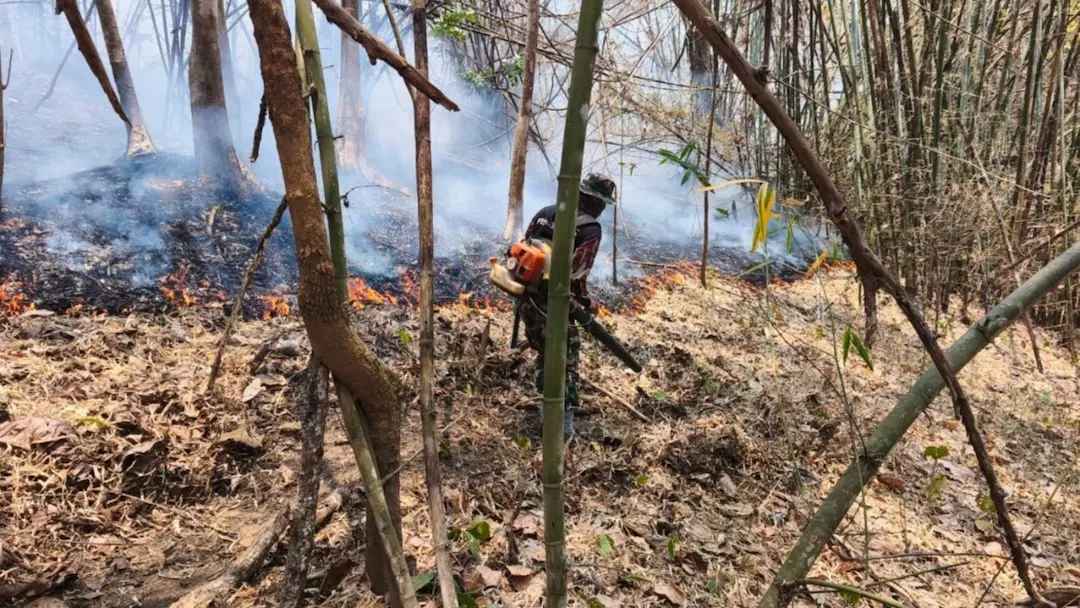
Thailand and the Mekong region engulfed in smoke as relentless forest fires continue

Published

on

Thailand and the Mekong region engulfed in smoke as relentless forest fires continue

A severe environmental and public health crisis is unfolding across Thailand, Laos, and Myanmar as widespread forest fires and agricultural burning create dangerous levels of air pollution. The recurring smog, exacerbated by the region’s dry season and persistent slash-and-burn farming practices, has led to a significant surge in respiratory illnesses and sparked urgent calls for structural legislative reform, as current government efforts remain hampered by weak enforcement and a lack of regional cooperation.

Key Points

  • The northern provinces of Thailand, including Chiang Mai and Chiang Rai, have been subjected to critical, long-term exposure to PM2.5 pollution, which has persisted for over two months.
  • Fires are driven by a combination of natural dry-season conditions and widespread agricultural practices, particularly slash-and-burn land clearing for crops and animal feedstock.
  • Cross-border pollution remains a major obstacle, as Thai officials struggle to mitigate smoke originating from Myanmar and Laos, where enforcement of burning bans is minimal.
  • Medical professionals report an alarming increase in severe respiratory issues and lung cancer cases among non-smokers, attributing these health trends directly to the poor air quality.
  • Volunteer firefighters in countries like Laos are currently tasked with managing large-scale blazes while relying on inadequate, basic equipment.
  • Lawmakers and health advocates are pushing for the enactment of a comprehensive Clean Air Act in Thailand, arguing that the crisis is a systemic issue that cannot be solved with short-term, superficial measures.

The Rising Impact of Seasonal Forest Fires Across Thailand and the Mekong Region

The Mekong region, encompassing Thailand and its neighboring nations, is currently grappling with a severe surge in forest fires. This seasonal phenomenon has escalated into a significant environmental and public health concern, drawing attention from meteorologists, government officials, and international environmental organizations. As the dry season persists, the proliferation of uncontrolled blazes continues to threaten biodiversity, regional air quality, and the stability of local economies.

Northern Thailand is currently facing a severe environmental crisis as persistent forest fires continue to blanket the region in hazardous levels of PM2.5 pollutants. With thousands of hotspots detected across conservation and national forest areas, residents are suffering from significant health complications, while government officials and emergency responders struggle to contain the blazes. Despite ongoing firefighting efforts and proposed infrastructure improvements, the situation remains dire, prompting urgent calls for stronger legislative action to address the recurring annual air quality disaster.

The primary drivers of these forest fires are a combination of extreme climatic conditions and traditional agricultural practices. The onset of the dry season often leads to parched vegetation, creating highly combustible landscapes. Simultaneously, the persistent reliance on slash-and-burn farming techniques to clear land for seasonal crops remains a major catalyst for ignition. While many of these fires originate as managed agricultural clearing, they frequently escape containment due to high winds and prolonged drought, rapidly evolving into widespread wildfires that transcend provincial and national borders.

The environmental consequences of these fires are profound. Beyond the immediate destruction of forest cover and wildlife habitats, the blazes release substantial amounts of carbon dioxide and particulate matter into the atmosphere. This has resulted in a critical decline in air quality across several provinces in Northern Thailand, Laos, and Myanmar. The presence of hazardous levels of PM2.5 pollutants poses a significant risk to public health, leading to increased respiratory illnesses and creating long-term challenges for healthcare infrastructure in the affected regions.

Advertisement

Regional authorities are increasingly aware of the transboundary nature of this crisis. Because smoke and pollutants do not respect national boundaries, isolated efforts by single governments often yield limited results. In response, there is a growing emphasis on regional cooperation within the ASEAN framework. Current strategies focus on strengthening satellite monitoring systems to identify fire hotspots in real-time, enforcing stricter regulations against unauthorized burning, and incentivizing farmers to adopt more sustainable agricultural methods that do not rely on fire.

Economic activity is also significantly impacted. The tourism sector, a cornerstone of the regional economy, faces disruptions as visibility drops and air quality concerns deter travelers. Furthermore, the agricultural sector faces long-term risks, as repeated burning can deplete soil nutrients and contribute to increased land degradation, ultimately undermining the productivity of the land.

Addressing this recurring crisis requires a multifaceted approach. While immediate emergency response teams remain essential for suppressing active fires, a sustainable long-term solution must address the root socio-economic causes. Transitioning toward modern, fire-free farming technologies and enhancing public education regarding the environmental impacts of burning are critical steps toward mitigation. As the Mekong region navigates the remainder of the current dry season, the focus remains on coordinating regional resources to minimize the damage and developing robust frameworks to prevent such extensive fire activity in future seasons.

Advertisement
Continue Reading

Business

Nutella debuts peanut spread

Published

on

Nutella debuts peanut spread

Marks the company’s first flavor innovation in 60 years.

Continue Reading

Business

Only a handful of traders power India’s F&O volumes, highlights Zerodha’s Nithin Kamath

Published

on

Only a handful of traders power India’s F&O volumes, highlights Zerodha's Nithin Kamath
While market regulator Securities and Exchange Board of India (Sebi) has been taking steps to curb speculative trading in the domestic futures & options (F&O) markets, Zerodha founder and CEO Nithin Kamath on Wednesday highlighted the highly skewed nature of India’s derivatives market, noting that despite widespread perception, the F&O segment remains relatively small.

Kamath said that in March, only about 30 lakh individuals traded F&O contracts, while across FY26, roughly 20 lakh traded exclusively in derivatives. Even after combining equity and F&O participants, the number rises to just around 64 lakh, a fraction of India’s nearly 13 crore investor base.

He pointed out that only 3.8 crore investors were active across segments, implying that just 30% of investors actually traded, underlining limited participation in the markets.

More importantly, Kamath emphasized that brokerage industry revenues are heavily dependent on a small set of active traders, with a disproportionate share of activity concentrated at the top. Around 60–70% of F&O volumes are generated by just 1–2% of traders, reflecting a sharply imbalanced market structure.

Advertisement

According to him, the data suggests that while retail participation has expanded, trading intensity—and consequently revenues—are driven by a very narrow base of investors.


“Despite what people think about F&O trading in India and all its problems, it is still a very, very small market compared to almost anything else. In fact, in the month of March, only about 30 lakh people traded an F&O contract. Across FY26 as a whole, only about 20 lakh people traded only in F&O. If you combine people who traded in equities and F&O, that number goes up to roughly 64 lakh. So this is still a very small market. Altogether, out of nearly 13 crore unique investors, only around 3.8 crore investors were active across cash and F&O. That means only about 30% of investors traded anything at all,” Kamath tweeted.
“And yet, the only reason broker revenues have held up is that a small number of people are trading more. Pretty much the entire revenue pool of the broking industry comes from this relatively small pool of traders. If you look at F&O turnover, around 60–70% of trading volumes come from a tiny set of investors, roughly just 1–2%. That is the lopsided structure of the Indian markets,” he added.

Stories you might be interested in

Advertisement
Continue Reading

Business

The Philippines holds significant potential for producing sustainable aviation fuel

Published

on

Choosing the Right Incentive Structure for Your Manufacturing or Logistics Business

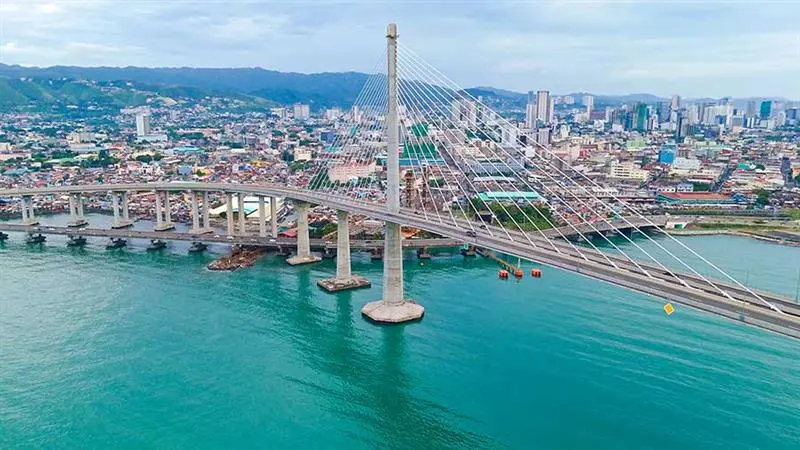
The Port of Cebu is a major potential SAF export hub for ASEAN, fueled by strong underlying drivers in the Philippines.


The Port of Cebu has been recognized as a key hub for potential Sustainable Aviation Fuel (SAF) exports within ASEAN. This strategic positioning highlights the Philippines’ burgeoning role in the global shift towards greener aviation fuels. The identification of Cebu underscores its existing infrastructure and logistical advantages, making it an attractive gateway for the region’s SAF trade.

This recognition is bolstered by strong underlying drivers within the Philippines that support SAF development and export. These factors likely include a growing commitment to renewable energy, favorable government policies, and the potential for robust domestic production of feedstocks necessary for SAF creation. The nation is increasingly investing in technologies and partnerships to capitalize on these strengths.

By leveraging the Port of Cebu, the Philippines is poised to not only meet its own sustainability goals but also to become a significant supplier of SAF to other ASEAN nations. This initiative represents a forward-thinking approach to aviation, aiming to reduce carbon footprints and foster a more environmentally responsible air travel industry across Southeast Asia.

Advertisement

Source : PH has huge potential in sustainable aviation fuel production | Philippine News Agency

Continue Reading

Trending

Copyright © 2025