Connect with us
DAPA Banner

Tech

The Ghost in the Machine: How AI is Crafting the Future of Gaming Worlds

Published

on

For decades, playing a video game was like following someone’s elaborate script. Every character and branching path was meticulously created by a developer. While impressive, these environments were ultimately finite and predictable. They had boundaries, not just on the map, but in their very code. Modern reality has changed it. Artificial intelligence is transforming the virtual world from static landscapes to dynamic systems with no pre-written steps. The gaming environment is becoming smart, and the players enjoy total immersion and engagement in the process.

Beyond the script: creating characters that think

The most noticeable impact of AI falls on the inhabitants of these virtual worlds, Non-Player Characters (NPCs). We’ve all seen a classic city guard who repeats the same line of dialogue endlessly or an enemy running along a predictable path. Modern AI leaves these simplistic automatons behind.

Instead of a rigid script, today’s NPCs perceive and react to the world around them. They utilize complex algorithms to navigate difficult environments, find cover, or coordinate group attacks. More impressively, they learn from player behavior. Imagine an enemy that notices you always use stealth and begins setting traps. This creates a much more engaging experience, the world feels less like programmed challenges and more like intelligent agents with their own goals.

  • Dynamic pathfinding: Characters don’t follow predefined routes. They can analyze the environment in real time and figure out the best way to the destination point. Remarkably, they cope with that even if the terrain changes suddenly.
  • Behavioral trees: Developers apply complex decision-making models. This allows NPCs to choose from a wide range of actions based on current situations, making them highly unpredictable.
  • Machine learning: Some advanced systems train NPCs by having them observe human players. This allows them to adopt effective strategies that a developer might never have programmed manually.

Worlds without end: the magic of procedural generation

Creating a whole world where gamers will learn to survive takes much time and effort. Building every tree or mountain manually is a rigorous task. AI-driven Procedural Content Generation (PCG) turns out to be a solution here. Designers, technical artists, and engineers use the PCG as a toolset of helpful components. The framework creates game content automatically and generates believable environments.

AI technologies allow designers to avoid manually scattering random trees if they need to depict a credible forest landscape. Instead, the AI algorithm learns the rules of a forest ecosystem. The combination of realistic views and the engineer’s initial intent in the setting captures players and makes them enjoy the game. For example, No Man’s Sky used PCG to create a virtual galaxy with billions of planets. Planets have their unique flora and fauna. Players can fight with alien species or trade with them to get necessary resources or equipment. The game fosters a sense of exploration and impresses with its scale. The future of AI in GameDev lies in this ability to create believable worlds.

Advertisement

A game that knows you: the personalized experience

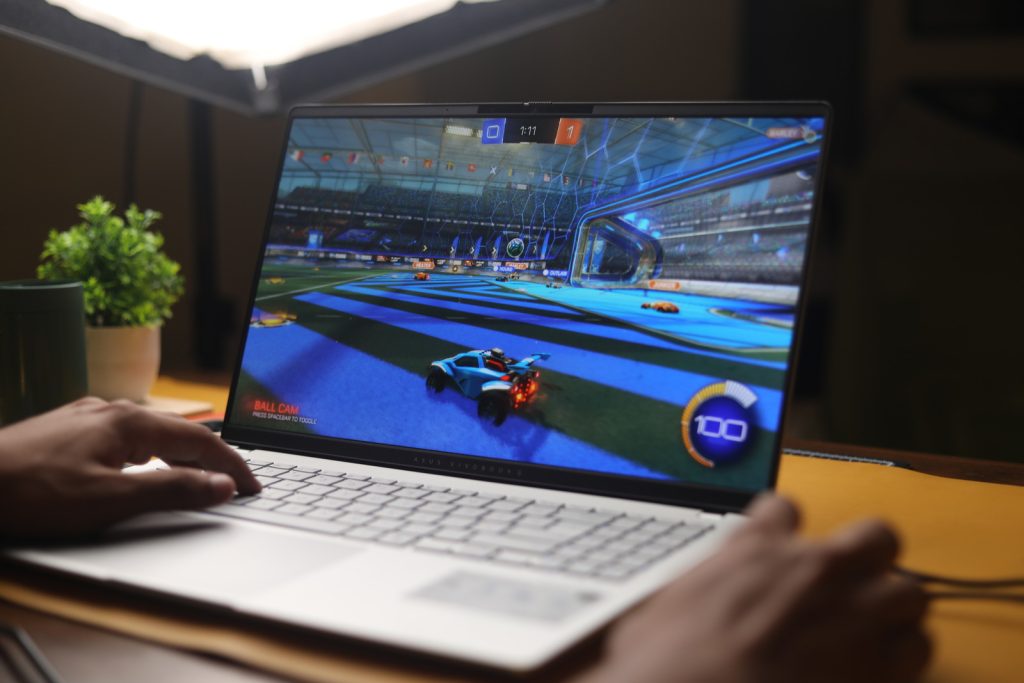
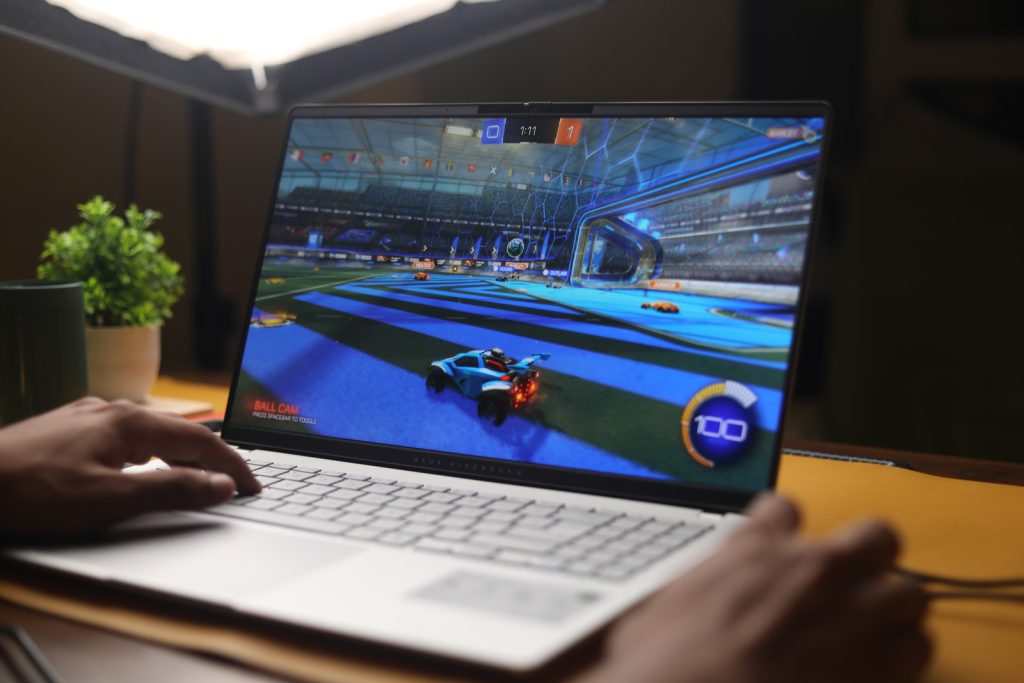
A person gaming on a laptop

It is interesting to play a game as long as it is unpredictable. AI allows for tailoring playing experiences to individuals. This is possible due to the AI analyzing the skill levels, performance, and preferences of players. The game adapts to your style of playing and makes subtle adjustments to the game in real time. This is far more than just a simple “easy, normal, hard” difficulty setting.

  • Dynamic difficulty adjustment: The system detects your performance and adjusts the game levels accordingly. For example, it might slightly reduce enemy numbers or provide more resources. Vice versa, if you’re doing well, the algorithm keeps the challenge.
  • Personalized content: It’s great to know your decisions impact the storyline of the game. AI might notice you prefer a certain weapon type and start dropping more powerful versions of it. In narrative games, it can alter future plot points based on the choices and emotional reactions it observes from the player. Besides, the system might adapt in-game rewards to players’ preferences. For example, you can receive new gear, abilities, or characters.  
  • Social customization: AI may suggest players with the same skill levels to keep the competitive environment. At the same time, it may also offer personalized NPCs, which adds to the general immersive experience.

Conclusion

To summarize what was mentioned before, AI allows for never having the same gaming experience twice. This makes gameplay exciting for gamers, yet the development process becomes challenging and demands high competence from the specialists. Therefore, game studios partner with a specialized AI development company in the United States to create unforgettable playing grounds. And the amazing news is that it is only the beginning. AI continues to develop and inspire improvements in all the spheres where it is applied.

Source link

Continue Reading
Click to comment

You must be logged in to post a comment Login

Leave a Reply

Tech

UL looking for ‘changemakers’ amid Research Week 2026

Published

on

UL’s vice-president for research and innovation Prof Kevin Ryan discusses the university’s Changemakers initiative and what people can expect for Research Week 2026.

Every year, University of Limerick (UL) hosts a week-long event that highlights a variety of innovative research being carried out on its campus.

This year’s Research Week will begin next Monday (27 April), with numerous projects exploring areas such from sustainability to cancer research set to be presented to attendees on UL’s campus.

While the annual event is underpinned by UL’s ‘Wisdom for Action’ strategy – a five-year plan to build, support and boost the university’s research community – 2026 has also seen the introduction of a new initiative to expand its research ecosystem.

Advertisement

In February, UL launched an internationally focused recruitment campaign designed to attract exceptional researchers to the university.

The multimillion-euro ‘Changemakers’ initiative was launched with an initial 35 academic posts available across the organisation in areas such as social justice, AI, pharmaceutical science and health services research, to name a few.

But what defines a changemaker?

Advertisement

UL’s vice-president of research and innovation Prof Kevin Ryan says a changemaker is somebody with a very excellent research profile who is willing to come to the university to “essentially develop their research to the next level and create those innovations”.

“So they have to have that excellence, that curiosity in terms of new research discoveries, and that drive to continue that research excellence and grow that research excellence at the University of Limerick,” he adds.

Speaking to SiliconRepublic.com, Ryan says there’s a number of reasons why UL wants international leading researchers to consider the university for their career.

“It’s an open, innovative university,” he says. “We have a high level of academic freedom.

Advertisement

“We have a very collaborative environment where we have researchers who work in very multidisciplinary activities.”

As an example of what is currently happening at UL, Ryan talks about the ageing research work of Prof Rose Galvin and her research group, which won the President’s Research Excellence Award in 2023.

“[Ageing research] has particular importance in our local environments, but also nationally and internationally, because it’s dealing with how the ageing population interact with the hospital system and ensuring that you’re getting better outcomes for healthcare,” explains Ryan.

Spotlight on innovation

But that’s just one example of academic investigation happening at the university, with UL’s upcoming Research Week 2026 set to highlight a total of 29 different projects over the course of five days, according to Ryan.

Advertisement

“Essentially that’s 29 different research areas that are covered and that covers right through from ageing, cancer research, health and wellbeing, through to battery research,” he says.

The importance of Research Week, Ryan says, is the opportunity it provides researchers to showcase their work for UL’s community, as well as the general public.

And a significant focus of UL’s Research Week is not only spotlighting the research itself, but the reason the projects are instigated in the first place, and the long-term results of the work.

“So the range and the breadth of research is significant, but in each of these you’ll really see an inspiring story of where that research originated, the impact of that research in terms of nationally, internationally,” explains Ryan.

Advertisement

“I suppose that’s something we’re always working on, is to grow our research base and ensure that we can have sufficient funding to support our PhD students, to support research activities, to support the teams that are required to generate those discoveries.”

Don’t miss out on the knowledge you need to succeed. Sign up for the Daily Brief, Silicon Republic’s digest of need-to-know sci-tech news.

Source link

Advertisement
Continue Reading

Tech

How Roku’s 55″ Select Series Smart TV Delivers Everyday Wins That Keep You Coming Back

Published

on

55" Roku Select Smart Series Smart TV
Roku Select Smart TV screen sizes range from 43 to 85 inches, which is large enough to fit almost any living room or apartment without requiring a compromise. When it’s on sale, like today, you can get the 55-inch model for roughly $250 (was $350), and it arrives ready to use without the need to plug in any additional devices. Everything is plugged in and set up right out of the box using the familiar Roku system, which quickly launches the apps and remains out of the way.


The picture on the 4K panel is stunning, especially when HDR10 is enabled for movies and shows. The Roku Smart Picture setting does its job by adjusting the image on the fly to provide the most natural look for your environment. With a 60-hertz refresh rate and a game mode that reduces lag for console gaming, as well as no blur on sports or action scenes, this TV has a lot going for it. However, while it can handle casual daytime viewing just fine, direct sunlight does wash out the picture slightly.

Using the remote feels silky smooth from the first press, as you can drag and arrange the apps on the home screen to keep your favorites front and center. Voice search is also very effective; you may quickly find the station or show you’re looking for. There are also shortcuts on the remote that take you directly to Netflix or live news with a single click. Even if you misplace the remote, the built-in finder will alert you to its location like an AirTag.

55" Roku Select Smart Series Smart TV
The calibrated speakers and Dolby Audio processing ensure that dialogue-heavy shows and movies sound crystal clear. Volume reaches acceptable levels for normal rooms without being distorted. If you want to listen secretly while the rest of the household goes about its business, simply put on your Bluetooth headphones. For larger rooms or if you simply want a little extra oomph, there is an HDMI port that allows you to connect a soundbar in under two seconds.

55" Roku Select Smart Series Smart TV
Setting up the TV takes only a few minutes, as it scans for Wi-Fi, downloads the most recent software, and only asks for accounts when necessary. Apple AirPlay makes it simple to share photographs or movies from your phone, and you can even use voice commands with Siri, Alexa, or Google Assistant to change the channel or turn up the volume. You get over 500 free live channels that provide live news, sports highlights, and the occasional movie, all without having to pay for a subscription, and the TV will even auto-update with new apps and features over time.

55" Roku Select Smart Series Smart TV
The connections include three HDMI inputs for all your consoles and other devices, an Ethernet port for connected connectivity, and a USB slot for loading media on the move. The frameless design is very sleek and lays flat against the wall or on a stand, as it is one of those things that attracts your attention to the image rather than the edges. At only a few pounds, you can mount the TV on your own.

Source link

Advertisement
Continue Reading

Tech

Microsoft issues emergency update for macOS and Linux ASP.NET threat

Published

on

Microsoft released an emergency patch for its ASP.NET Core to fix a high-severity vulnerability that allows unauthenticated attackers to gain SYSTEM privileges on devices that use the Web development framework to run Linux or macOS apps.

The software maker said Tuesday evening that the vulnerability, tracked as CVE-2026-40372, affects versions 10.0.0 through 10.0.6 of the Microsoft.AspNetCore.DataProtection NuGet, a package that’s part of the framework. The critical flaw stems from a faulty verification of cryptographic signatures. It can be exploited to allow unauthenticated attackers to forge authentication payloads during the HMAC validation process, which is used to verify the integrity and authenticity of data exchanged between a client and a server.

Beware: Forged credentials survive patching

During the time users ran a vulnerable version of the package, they were left open to an attack that would allow unauthenticated people to gain sensitive SYSTEM privileges that would allow full compromise of the underlying machine. Even after the vulnerability is patched, devices may still be compromised if authentication credentials created by a threat actor aren’t purged.

“If an attacker used forged payloads to authenticate as a privileged user during the vulnerable window, they may have induced the application to issue legitimately-signed tokens (session refresh, API key, password reset link, etc.) to themselves,” Microsoft said. “Those tokens remain valid after upgrading to 10.0.7 unless the DataProtection key ring is rotated.”

Advertisement

Microsoft describes ASP.NET Core as a “high-performance” web development framework for writing .Net apps that run on Windows, macOS, Linux, and Docker. The open-source package is “designed to allow runtime components, APIs, compilers, and languages [to] evolve quickly, while still providing a stable and supported platform to keep apps running.”

Source link

Advertisement
Continue Reading

Tech

This smart pillow ensures you never sleep through an emergency alarm, or even a phone call

Published

on

Sleeping through a phone call is annoying. Sleeping through a fire alarm is a whole different level of bad. So this new smart pillow idea feels a lot more useful than gimmicky. Researchers at Nottingham Trent University have developed a smart pillow sleeve designed to help deaf users wake up to important nighttime alerts.

Unlike a typical smart pillow, the team developed a smart sleeve that is designed to fit over a standard pillow. It slips inside a normal pillowcase, and vibrates when connected alarms or calls come through.

What problem does it solve?

The project came out of feedback from members of the Deaf community, who told the researchers that existing under-pillow alert devices are often too bulky and uncomfortable to sleep on. In response, the team built a much thinner electronic textile sleeve with four tiny haptic actuators embedded into a yarn-like structure.

Each actuator measures just 3.4mm by 12.7mm, and the electronics are small enough that users are not supposed to feel them while seeping. So the safety product is both handy and comfortable to use.

How it can even save lives

The sleeve connects to a smartphone through a microcontroller, and that setup can then link wirelessly to household alarms. When something goes off, the pillow vibrates intensely enough to wake the user, with distinct patterns used to signal different kinds of alerts. This means a user with a hearing impairment can be alerted of a fire alarm, a burglar alarm, or even an incoming phone call.

Advertisement

This extra layer basically makes the feature thoughtful. The goal here is to wake up someone and also give them enough information to know why they are being woken up in the first place.

The researchers say the yarn used in the sleeve has already passed durability testing, including multiple washing cycles, which suggests they are treating this as a real product concept rather than a lab-only demo. The work was presented at the ACM CHI conference in Barcelona, and the team is now looking for an industrial partner to help bring it to market. Tech Xplore also quotes supervisor Theo Hughes-Riley calling it a significant step toward more inclusive emergency alert systems for deaf and deaf-blind individuals.

Source link

Advertisement
Continue Reading

Tech

Android finally gets a fitting answer to the iPad mini, and it looks stunning

Published

on

Apple has owned the compact premium tablet segment for years, but there’s a new contender in the market that runs on Android and takes on the iPad mini for everything it stands for. 

Unveiled alongside the Find X9 Ultra, the Oppo Pad Mini comes with an 8.8-inch 2.5K OLED panel (2520 x 1680 pixels) in a 3:2 aspect ratio. This is the same, near-square aspect ratio that makes the iPad mini ideal for reading, note-taking, consuming content, and other productive workflows.  

What makes the Oppo Pad Mini worth comparing to the iPad mini?

The tablet’s bezels are remarkably thin at 2.99 mm, and the screen can achieve up to 1,600 nits of peak brightness with a variable refresh rate between 60 and 144 Hz. There’s an optional matte version of the tablet that mimics a paper-like surface, something that the iPad mini doesn’t offer.

Where Apple puts an A17 Pro inside its mini, the Oppo Pad Mini comes with a Snapdragon 8 Gen 5 (3nm) chipset paired with up to 12GB of LPDDR5X RAM and 512GB of UFS 4.1 storage, which, in my opinion, is a capable combination. 

For those wondering, the Snapdragon chip provides better multi-core performance, but its single-core performance matches that of the A17 Pro. In addition, the type of memory and storage should make the Oppo tablet feel more responsive and snappy. 

Advertisement

How does it hold up in terms of portability and battery?

At just 5.39mm thick and weighing 279 grams, the Oppo Pad Mini is designed for portability, to the extent that it can fit in relatively larger pockets and small bags. The iPad mini, by comparison, weighs 293 grams and measures 6.3mm. 

The 8,000 mAh battery supports 67W wired charging (full charge in around an hour), something that the iPad mini lacks. Pricing starts at CNY 3,199, which is around $470 for the baseline variant with 8GB of RAM and 256GB of storage, rising to around $590 for the variant with 12GB of RAM and 512GB of storage. 

While the sales for the iPad mini alternative commence on April 24, 2026, it won’t be available in the United States, at least for now. To me, Oppo’s entry into the premium small-screen tablet segment signals that Android OEMs are taking the category seriously. 

For now, the Oppo Pad Mini isn’t a direct competitor to the iPad mini, primarily because it isn’t available in the United States. However, if and when the product arrives in the region, it could easily take up a good chunk of iPad mini’s sales, providing Android users with a top-notch experience in a smaller form factor without paying a hefty price.

Source link

Advertisement
Continue Reading

Tech

Notification bug that let FBI access messages patched with iOS 26.4.2

Published

on

People being investigated by the FBI deleted Signal, but some messages were still retrievable from the iPhone’s notification database. The latest iOS update patches this vulnerability.

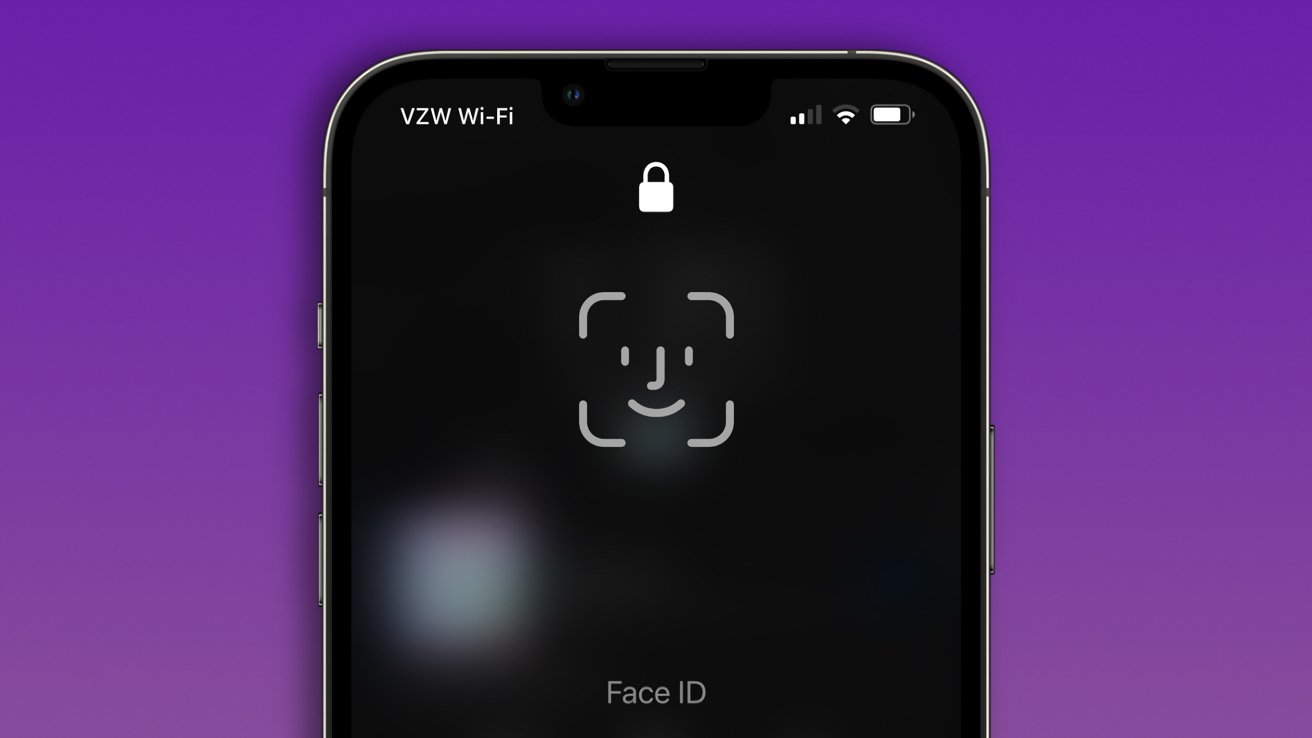
Close-up of an iPhone lock screen showing a locked padlock and large Face ID smiley icon on a dark display, against a purple gradient background.
iPhones may be secure, but they aren’t invulnerable to bugs

Users should reasonably expect that deleting an app from their iPhone will remove all associated data. However, a recent case involving the FBI showed that some notification data was being retained by mistake.
The iOS 26.4.2, iPadOS 26.4.2, iOS 18.7.8, and iPadOS 18.7.8 updates released on Wednesday address the notification database issue directly. The notes simply say that “a logging issue was addressed with improved data redaction.”
Continue Reading on AppleInsider | Discuss on our Forums

Source link

Continue Reading

Tech

Tesla Plaid Owner Learns The Hard Way It Can’t Keep Up With A Corvette

Published

on


Car enthusiasts love comparing vehicle performance, especially when you can see it play out on a drag strip. A YouTube video recently went viral of a very unlikely matchup: a Tesla Model S Plaid versus a Chevrolet Corvette ZR1X. In the video shared by DragTimes, the ZR1X took on three Model S Plaids in the quarter mile at the TX2K event at Texas Motorplex in Ennis, Texas. 

The first Tesla Model S Plaid driver wasn’t sure if he’d beat the ZR1X, but he felt it would be really close. However, it was clear from the launch that it wasn’t close at all — the ZR1X left the Plaid far behind. The ZR1X was able to get up to 60 miles per hour in 1.95 seconds, beating the Plaid’s 2.26 seconds. The ZR1X finished the quarter mile in 8.92 seconds, hitting nearly 154 miles per hour. The Plaid finished in 9.65 seconds, with a top speed of 140 mph. It was a similar story with the other two Plaids. 

Advertisement

Why is the Corvette ZR1X better than the Model S Plaid on the drag strip?


Advertisement

The Corvette ZR1X and the Model S Plaid that raced that day were both stock with all-season tires, meaning the quarter mile race was a true indicator of the vehicles’ performance without enhancements. To be fair to the Model S Plaid, it beat the Corvette ZR1 in a previous video due to its incredible speed, which is why Brooks Weisblat took out the ZR1X, which pairs the twin-turbo 5.5L LT7 V8 engine with a front-axle electric motor for 1,250 horsepower. That’s more than the Plaid’s tri-motor setup, which produces 1,020 hp. The Plaid is also 4,802 pounds (about 1,000 more than the ZR1X).

With more horsepower and a lighter weight, it’s no surprise that the ZR1X had a faster launch. The Plaid still impressed since it had 70,000 miles on it and 85% battery. EVs slightly slow down over time. 

The Tesla Model S Plaid has a top speed of 163 mph without the added $20,000 Track Package while the ZR1X can reach 225 mph. With the ZR1X already ahead, it’s no surprise that it was able to remain far ahead of the Plaid as they raced down the track. While the Plaid is so fast that it was previously banned from NHRA races, the Plaid was no match for what Corvette considers a track-focused “hypercar.” 

Advertisement


Source link

Advertisement
Continue Reading

Tech

Anthropic’s Mythos Model Is Being Accessed by Unauthorized Users

Published

on

Bloomberg reports that a small group of unauthorized users gained access to Anthropic’s restricted Mythos model through a mix of contractor-linked access and online sleuthing. Anthropic says it is investigating and has no evidence the access extended beyond a third-party vendor environment or affected its own systems. From the report: The users relied on a mix of tactics to get into Mythos. These included using access the person had as a worker at a third-party contractor for Anthropic and trying commonly used internet sleuthing tools often employed by cybersecurity researchers, the person said. The users are part of a private Discord channel that focuses on hunting for information about unreleased models, including by using bots to scour for details that Anthropic and others have posted on unsecured websites such as GitHub. […] To access Mythos, the group of users made an educated guess about the model’s online location based on knowledge about the format Anthropic has used for other models, the person said, adding that such details were revealed in a recent data breach from Mercor, an AI training startup that works with a number of top developers.

Crucially, the person also has permission to access Anthropic models and software related to evaluating the technology for the startup. They gained this access from a company for which they have performed contract work evaluating Anthropic’s AI models. Bloomberg is not naming the company for security reasons. The group is interested in playing around with new models, not wreaking havoc with them, the person said. The group has not run cybersecurity-related prompts on the Mythos model, the person said, preferring instead to try tasks like building simple websites in an attempt to avoid detection by Anthropic. The person said the group also has access to a slew of other unreleased Anthropic AI models.

Source link

Continue Reading

Tech

Intel’s upcoming gaming CPU specs have leaked

Published

on

Pointing squarely at AMD’s Ryzen range, Intel’s next-generation desktop CPU lineup has leaked, with the Nova Lake-S architecture set to arrive with up to 288MB of L3 cache across a range expected to carry the Core Ultra 400 branding.

That cache figure dwarfs the 36MB found in Intel’s current flagship Core Ultra 9 285K, and comfortably exceeds the 96MB and 192MB L3 totals found in AMD’s Ryzen 7 9850X3D and Ryzen 9 9950X3D, respectively.

The leak originates from X user Jaykihn, an established source of CPU specification information, who confirmed that the flagship Nova Lake-S chip will carry 16 P-Cores, 32 E-Cores, and four LPE-Cores alongside the 288MB L3 cache figure, with LPE-Cores representing a new low-power efficiency core tier introduced specifically with this architecture.

That core configuration marks a substantial step up from the Core Ultra 9 285K’s eight P-Cores and 16 E-Cores, with the addition of LPE-Cores extending the architectural complexity beyond what Intel’s current Arrow Lake desktop lineup offers at any price point.

Advertisement

Cache capacity matters in gaming because processors can access it far faster than system RAM, reducing latency during gameplay in scenarios where data retrieval speed determines frame time consistency, which explains why AMD’s X3D chips have maintained a performance lead in gaming workloads despite competitive core counts from Intel.

Advertisement

Two unnamed chips sitting above the Core Ultra 9 designation in the leaked table carry 52 and 44 total cores respectively, suggesting Intel plans a tiered flagship structure that extends beyond its current naming scheme for the Nova Lake-S generation.

Intel has not confirmed any specifications for the Nova Lake-S lineup, though Computex in early June represents a credible window for an official announcement, with AMD also expected to reveal details of its next-generation Zen 6 architecture at the same event.

Advertisement

Source link

Continue Reading

Tech

Mozilla fixes 271 Firefox vulnerabilities found by Anthropic’s Claude Mythos in a single evaluation pass

Published

on

Summary: Mozilla released Firefox 150 with fixes for 271 security vulnerabilities identified by Anthropic’s Claude Mythos Preview, an unreleased frontier AI model distributed under the restricted Project Glasswing programme. The collaboration began with Claude Opus 4.6 finding 22 bugs in Firefox 148 earlier this year; Mythos produced more than twelve times as many. Firefox CTO Bobby Holley said the defects are “finite” and that defenders can “finally find them all,” while the UK AI Security Institute confirmed Mythos can also execute autonomous multi-stage network attacks, making the dual-use tension the central policy question.

Mozilla released Firefox 150 on Monday with fixes for 271 security vulnerabilities identified by Anthropic’s Claude Mythos Preview, an unreleased frontier AI model restricted to a handful of organisations under Project Glasswing. The number is striking not because the bugs were exotic but because they were not. “We haven’t seen any bugs that couldn’t have been found by an elite human researcher,” Mozilla said in a blog post titled “The zero-days are numbered.” The point is that no human team could have found 271 of them this fast.

The collaboration between Mozilla and Anthropic began earlier this year with a more modest effort. Starting in February, Firefox’s security team used Claude Opus 4.6 to scan nearly 6,000 C++ files across the browser’s codebase. That pass produced 112 unique reports, of which 22 were confirmed as security-sensitive bugs and shipped as fixes in Firefox 148. Fourteen were classified as high severity, representing almost a fifth of all high-severity Firefox vulnerabilities remediated in 2025. The Mythos evaluation, which followed as part of the continued partnership, produced more than twelve times as many confirmed vulnerabilities. Bobby Holley, Firefox’s chief technology officer, described the experience as giving the team “vertigo.”

What Mythos is, and who gets to use it

Claude Mythos Preview is the model at the centre of Anthropic’s restricted Mythos model programme, Project Glasswing, announced on 7 April. It is a general-purpose frontier model, not a security-specific tool, but its coding capabilities have crossed a threshold that Anthropic considers significant enough to warrant controlled distribution. The UK’s AI Security Institute evaluated the model and found it capable of executing multi-stage network attacks autonomously, completing a 32-step corporate network attack simulation called “The Last Ones” in three out of ten attempts. It can chain multiple small vulnerabilities into a single devastating attack, reconstruct source code from deployed software to find exploitable weaknesses, and build custom tools for lateral movement and data extraction once inside a network.

Advertisement

Access is restricted to 12 named launch partners, including Amazon Web Services, Apple, Broadcom, Cisco, CrowdStrike, Google, JPMorganChase, the Linux Foundation, Microsoft, Nvidia, and Palo Alto Networks, with roughly 40 additional organisations granted access for defensive security work. Anthropic committed up to $100 million in usage credits and $4 million in direct donations to open-source security organisations, including $2.5 million to Alpha-Omega and OpenSSF through the Linux Foundation and $1.5 million to the Apache Software Foundation. The model is available to Glasswing participants at $25 per million input tokens and $125 per million output tokens through the Claude API, Amazon Bedrock, Google Cloud’s Vertex AI, and Microsoft Foundry.

Advertisement

The restricted rollout has already been tested. On the same day Anthropic announced Glasswing, a group of unauthorised users gained access to Mythos Preview by guessing the model’s URL through a third-party vendor environment, an incident Anthropic said it is investigating.

The defender’s argument

Holley framed the 271 vulnerabilities not as an indictment of Firefox’s code quality but as evidence that the security landscape is shifting in favour of defenders for the first time. “A gap between machine-discoverable and human-discoverable bugs favors the attacker, who can concentrate many months of costly human effort to find a single bug,” he wrote. “Closing this gap erodes the attacker’s long-term advantage by making all discoveries cheap.”

The logic is straightforward. A zero-day vulnerability is valuable to an attacker precisely because it is unknown. If a defender can find and patch the same bug before an attacker discovers it, the bug has no offensive value. The cost asymmetry has historically favoured attackers: a browser like Firefox has millions of lines of code, and a single undiscovered flaw in any of them is enough for exploitation. An elite human security researcher might spend weeks or months finding one such flaw. A model like Mythos can scan the entire codebase in a fraction of that time. Mozilla’s thesis is that this changes the economics permanently. “Software like Firefox is designed in a modular way for humans to be able to reason about its correctness,” the blog post stated. “It is complex, but not arbitrarily complex. The defects are finite, and we are entering a world where we can finally find them all.”

The claim is bold and deliberately so. Mozilla is arguing that the age of zero-day vulnerabilities in well-structured software has an expiration date, not because attackers will stop looking, but because defenders will get there first.

Advertisement

The numbers in context

The 271 figure requires some unpacking. Mozilla’s official security advisory for Firefox 150, MFSA 2026-30, lists 41 CVE entries, three of which are standard memory-safety roll-ups that aggregate multiple individual bugs under a single identifier. The 271 number represents the total count of discrete code defects identified by Mythos during its evaluation, many of which were grouped into those CVE bundles. The distinction matters because the headline number and the formal advisory number measure different things: one measures what the AI found, the other measures how much AI-generated code actually ships through the industry’s standard vulnerability disclosure process.

The most dangerous flaws include use-after-free vulnerabilities in the DOM and WebRTC components, the kinds of memory safety bugs that have been the bread and butter of browser exploitation for two decades. These are not novel attack surfaces. They are the same categories of bugs that Google’s Project Zero has been finding across browsers since 2014. Google’s own AI vulnerability research programme, Big Sleep, a collaboration between Project Zero and DeepMind, found a zero-day in SQLite in October 2024 and has since expanded to discover multiple flaws in widely used software. The difference with Mozilla’s effort is scale: 271 bugs in a single evaluation pass, patched before release, across a codebase that has accumulated technical debt over more than two decades.

The dual-use problem

The UK AI Security Institute’s evaluation of Mythos Preview confirmed what the Mozilla results imply from the other direction: the same capabilities that make the model effective at finding vulnerabilities make it effective at exploiting them. The model became the first AI to complete “The Last Ones,” a benchmark designed to simulate a full corporate network compromise. It succeeded in three out of ten attempts, averaging 22 of 32 steps across all runs. Independent testing confirmed that Mythos cannot reliably execute autonomous attacks against organisations with well-hardened defences, but the trajectory is clear. Each generation of frontier model has performed better on offensive security benchmarks than the last.

This is the tension that Project Glasswing is designed to manage. By restricting Mythos to vetted organisations with defensive mandates, Anthropic is attempting to give defenders a structural head start, a window in which the good actors can scan and patch before the capabilities proliferate. The strategy depends on the restriction holding. The vendor breach on launch day suggests that containment is harder than access control. Anthropic has also identified thousands of zero-day vulnerabilities across every major operating system and every major web browser using Mythos, findings it is disclosing to the affected vendors through Glasswing.

Advertisement

Anthropic’s expanding enterprise footprint, from legal contract review in Microsoft Word to cybersecurity through Glasswing, reflects a company that is monetising Claude across every professional vertical where accuracy matters. The Mozilla partnership is the most dramatic demonstration yet, not because the model did something no human could do, but because it did what only a handful of humans can do, and did it 271 times in a single pass.

Holley’s conclusion captures both the promise and the vertigo: “Our work isn’t finished, but we’ve turned the corner and can glimpse a future much better than just keeping up. Defenders finally have a chance to win, decisively.” Whether that future arrives depends on whether the models that find the bugs remain in the hands of the people who fix them, or whether the capabilities leak faster than the patches ship. For now, Firefox 150 has 271 fewer ways to be broken. That is not a small thing. The question is how long that advantage lasts when the tool that found them is commanding extraordinary valuations precisely because of what it can do.

Source link

Advertisement
Continue Reading

Trending

Copyright © 2025