The first new version of the car rolled off the production line in 2001
Neil Lancefield, Press Association Transport Correspondent and Hannah Baker South West Business Editor
00:01, 23 Apr 2026
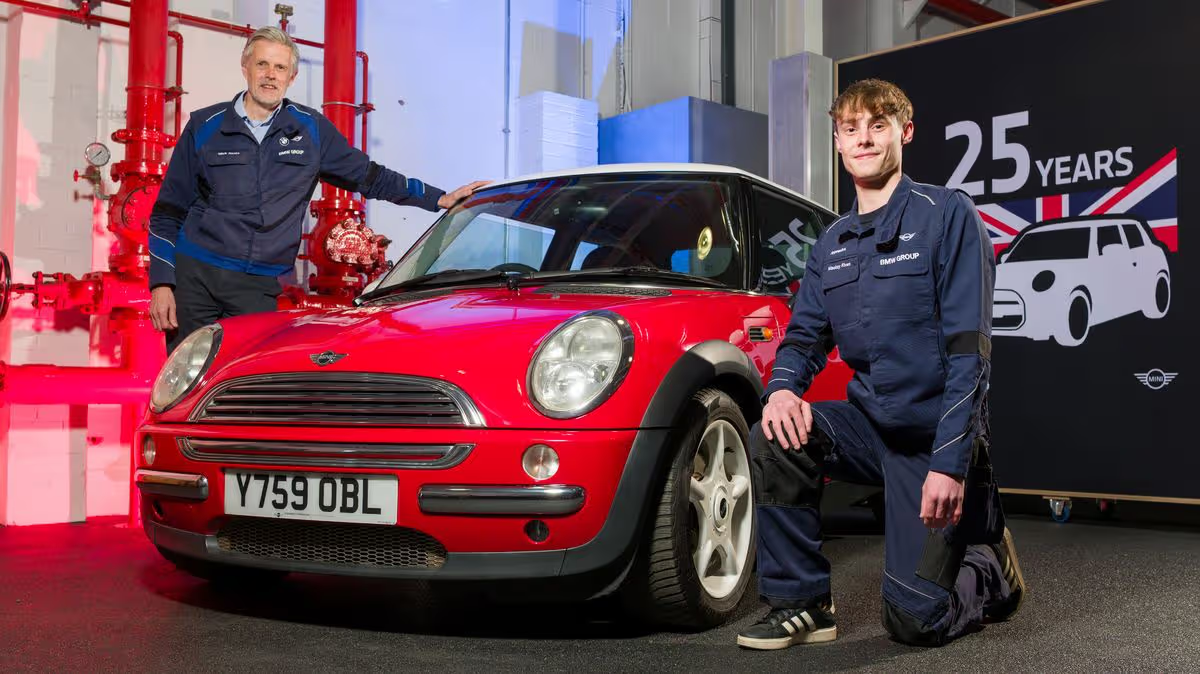
Mick Rivers physical logistics manager, and his son Mackay Rivers, maintenance apprentice, at BMW Group Plant Oxford as the Mini celebrates 25 years of modern production(Image: Richard Dawson/PA Media Assignments)
BMW Group has hailed the “global success” of the Mini as it marked the 25th anniversary of the modern version. The first new generation Mini rolled off the production line at the company’s factory in Oxford on April 26, 2001.
This was “the start of a new chapter” for a car that was already “firmly established as a cultural icon”, BMW Group said. Nearly 4.7 million Minis have been built in Oxford over the past quarter of a century – with body parts made at BMW’s Swindon factory since early 2001 – and the cars have been exported to more than 100 countries.
Advertisement
More than 3,000 people are employed across the Oxford and Swindon plants.
Markus Gruneisl, BMW Group’s chief executive for UK manufacturing, said: “This 25-year milestone is a proud moment for Mini and for everyone involved in its production here in the UK.
“From the very beginning, our plants in Oxford and Swindon have been at the heart of Mini’s global success, combining exceptional craftsmanship with innovation.
“Above all, it is our people – their creativity, expertise and pride in what they do – that continue to make Mini so special.”
Advertisement
The first Mini was launched in 1959 to meet demand for affordable motoring.
The small cars – easy to manoeuvre and with an unusual shape – soon became popular, featuring as getaway cars in movie The Italian Job and being driven by pop stars and fashion legends.
In February, Swindon’s Mini factory announced a new partnership with global logistics giant GXO. BMW Group appointed the US-headquartered company to manage operations at the site on Bridge End Road.
The Wiltshire plant produces parts and panels for cars that are then assembled at its group facility in Oxford and at other international facilities within its network.
Advertisement
The Swindon site, which employs 500 staff and spans more than 400,000 sq m, has been a cornerstone of UK automotive manufacturing since 1955.
It plays a critical role in the global production network for cars, manufacturing key body components and sub-assemblies such as doors, bonnets, tailgates and fenders for Mini vehicles, including the Mini Cooper 3 and 5 door hatch and the Mini convertible.
Oil prices extended their gains on Thursday, building on a sharp rally in the previous session as stalled peace talks between Iran and the United States kept markets on edge. Both countries continue to restrict trade flows through the Strait of Hormuz.
Adding to concerns, Iran seized two ships in the strait on Wednesday, tightening control over the passage. The U.S. has continued its naval blockade on Iranian trade, while Iranian parliament speaker and lead negotiator Mohammad Baqer Qalibaf stated that a full ceasefire would only be meaningful if the blockade is lifted.
Crude oil price on April 23
Brent crude futures slipped 15 cents to $101.76 per barrel, after closing above $100 on Wednesday for the first time in over two weeks. West Texas Intermediate futures also edged lower by 14 cents to $92.82.On Wednesday, both benchmarks had surged more than $3, supported by larger-than-expected draws in U.S. gasoline and distillate inventories, along with continued deadlock in diplomatic negotiations.
Advertisement
Live Events
Although U.S. President Donald Trump extended a ceasefire following mediation efforts by Pakistan, tensions remain unresolved. Iran and the U.S. are still limiting vessel movement through the Strait of Hormuz, a critical route that previously handled about 20% of global oil and LNG flows before the conflict began in late February with U.S. and Israeli strikes on Iran. Markets remain highly reactive to geopolitical signals, with price movements driven more by sentiment than any concrete improvement in supply. Limited vessel activity through the strait highlights the ongoing uncertainty. Even if tensions ease, a full normalization of flows is expected to take several months. Macquarie estimates that crude prices could remain supported in the $85 to $90 range in the near term, with a gradual rise towards $110 as supply conditions improve. It also cautioned that prolonged disruptions through April could push Brent prices as high as $150 per barrel. Analysts believe the market may be entering a phase of structurally higher prices. With the ceasefire viewed as temporary, a return to pre-conflict levels of $70 to $75 may not happen quickly. In the short term, prices are likely to move within a band of $80 to $85 on the downside and $95 to $100 and above on the upside.
Nuvama Institutional Equities added that an extended closure of the Strait of Hormuz, which carries around 20 million barrels per day, could drive crude prices into the $110 to $150 range.
(Disclaimer: Recommendations, suggestions, views and opinions given by the experts are their own. These do not represent the views of The Economic Times)
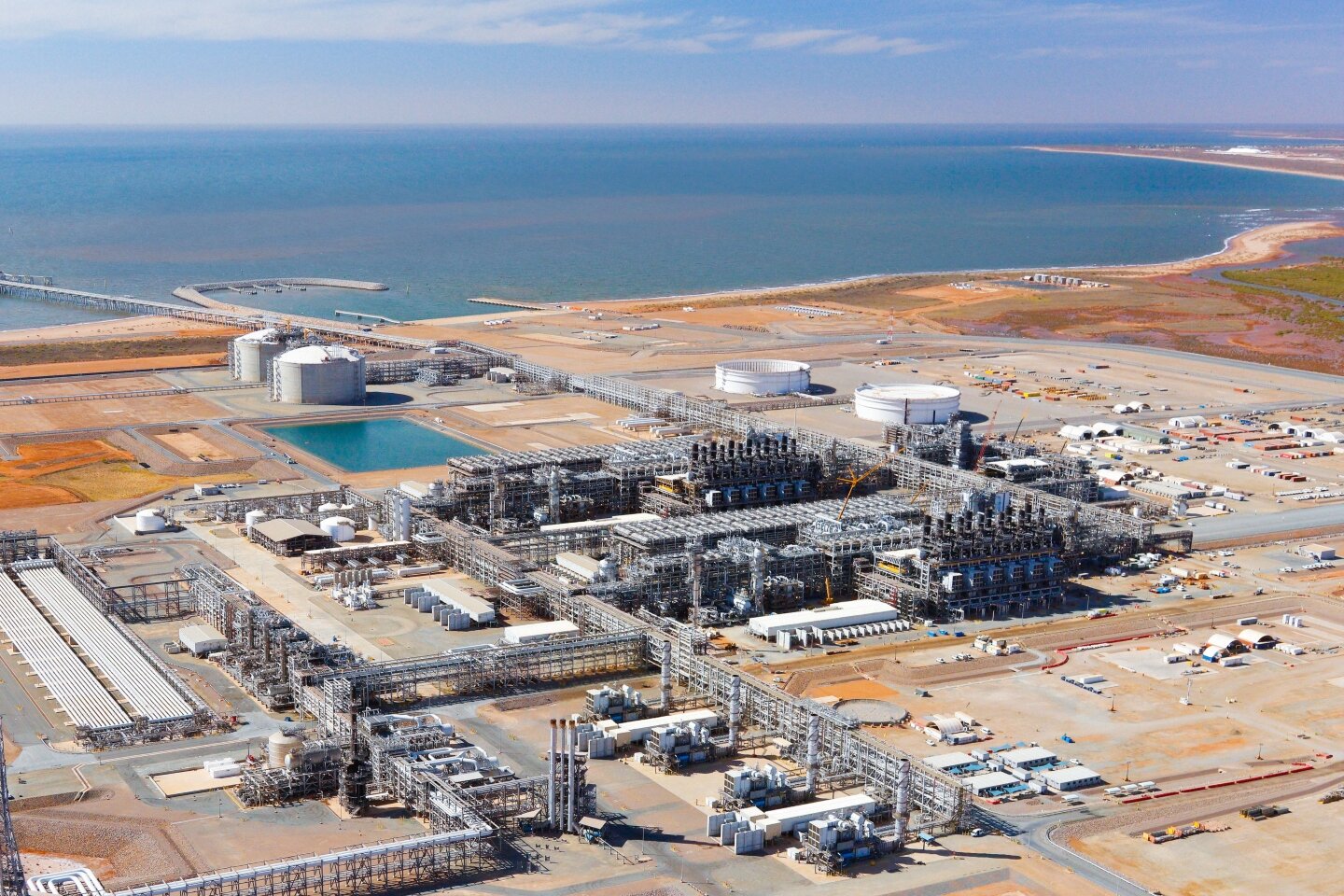
Chevron has fully restored LNG production at its Wheatstone LNG facility, almost a month after Cyclone Narelle damaged infrastructure at the project near Onslow.
US equity-index futures dropped after Brent crude oil rose at the open in Asian trading amid concerns about the war in Iran.
Contracts for the S&P 500 Index dropped 0.4% and Brent advanced 1.3% to nearly $103 a barrel. Asian shares fluctuated at the open and advanced 0.1%.
The fluctuating moves at the open in Asia came after the S&P 500 rose 1.1% to a record Wednesday, placing the index on track for its best month since 2020. The Nasdaq 100 gained 1.7% to also set a closing peak. US chipmakers climbed for a 16th straight day, the longest-ever advance.
Stocks rose during the US session after President Donald Trump’s extension of the ceasefire marked a retreat from threats to resume bombing Iran if a deal wasn’t reached by a Wednesday deadline. The focus now is on whether talks can resume and the two sides can reach an agreement, especially as the closure of the Strait of Hormuz keeps energy prices elevated, risking higher inflation and weighing on economic growth.
Advertisement
Tensions remain high as the US and Iran failed to meet for a fresh round of peace talks, with both sides blocking the waterway to gain leverage during an extended ceasefire. Tehran says it has no plans to take part in negotiations imminently.
Live Events
Strong corporate profits, the revival of the artificial-intelligence trade and an otherwise resilient economy have buoyed stocks despite lingering geopolitical risks. Nearly 80% of the S&P 500 companies reporting first-quarter results have beaten analyst earnings estimates so far, according to data compiled by Bloomberg. Focus is likely to shift to Asian semiconductor stocks after the Philadelphia Stock Exchange Semiconductor Index posted a record run, as investors bet on continued strength driven by artificial intelligence-related demand.The semiconductor sector is expected to grow revenue by about 57% in 2026, according to Bloomberg Intelligence data, which is twice the pace of the overall tech sector, and well above the 9.3% growth expected for the S&P 500 Index.
“There’s a huge amount of demand because of artificial intelligence, and I think we can expect the heavy spending on AI to continue for the foreseeable future,” said Mark Grant, chief global strategist at Alliance Global Partners. “The sector still looks attractive in terms of both valuation and growth, and that should be positive for both semiconductor stocks broadly, but also the market overall.”
NEW YORK — Fermi Inc. shares climbed sharply in early trading Wednesday, rising 13.14 percent to $5.72 as investors appeared to shake off recent volatility tied to a high-profile CEO departure and betting on the company’s ambitious plans to deliver gigawatt-scale power for artificial intelligence data centers.
Fermi Inc Stock Jumps 13% Amid AI Power Play and Leadership Shakeup Recovery Hopes
The Nasdaq-listed stock (FRMI) gained 66 cents by 10:42 a.m. EDT on above-average volume, marking a partial rebound after Monday’s steep decline following news of leadership changes at the specialized real estate investment trust focused on energy infrastructure for hyperscale computing.
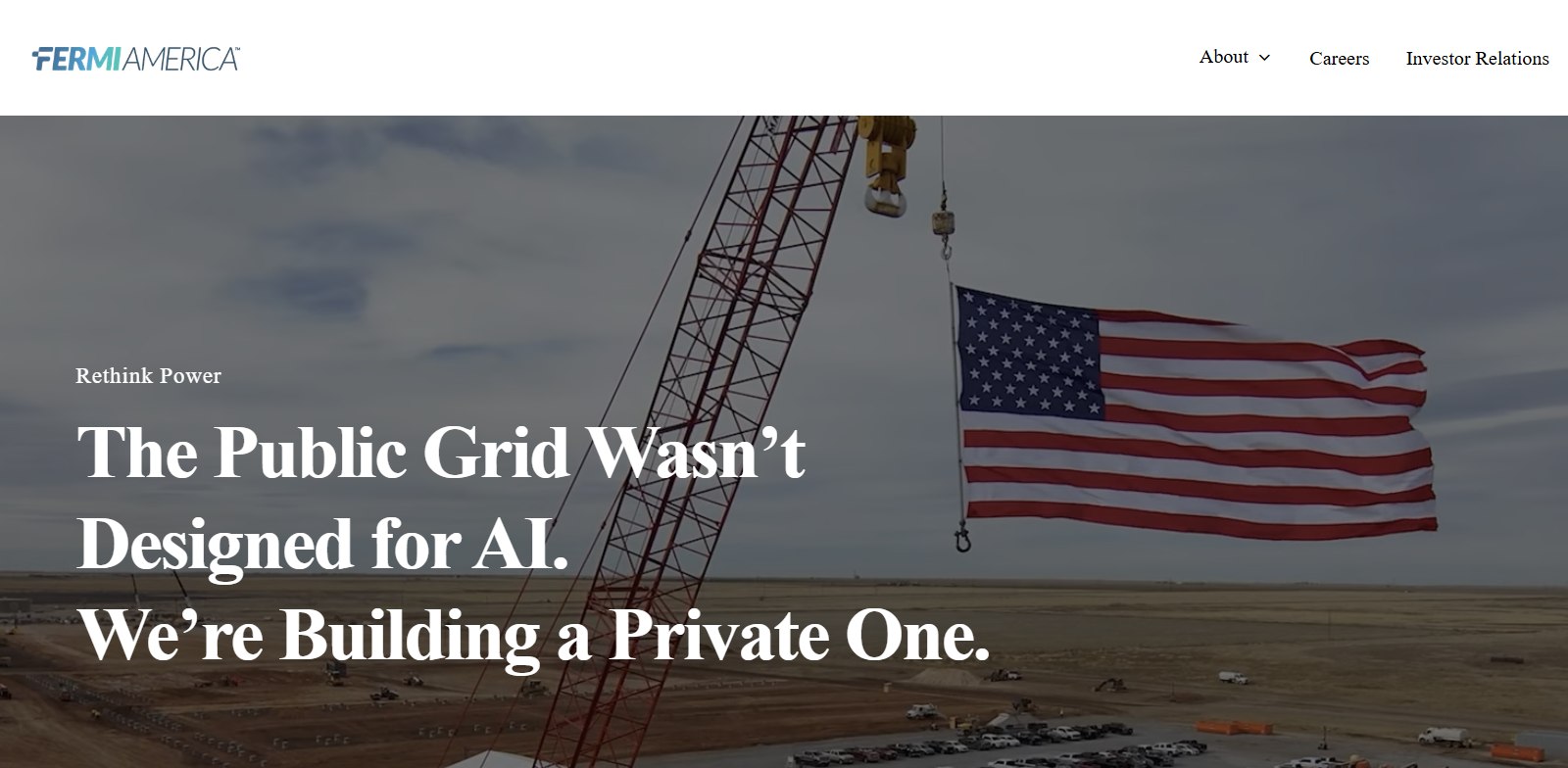
Fermi Inc., operating as Fermi America, develops private power campuses designed to supply behind-the-meter electricity directly to AI-centric customers, bypassing strained public grids. Its flagship Project Matador envisions an 11-gigawatt “HyperGrid” campus on more than 5,200 acres near Amarillo, Texas, combining data center facilities with on-site generation from natural gas, solar and planned nuclear units.
The company positions itself at the intersection of two explosive trends: surging electricity demand from AI training and inference workloads and chronic delays in traditional grid interconnections. By building dedicated power infrastructure, Fermi aims to offer tenants reliable, redundant energy faster than competitors reliant on utility-scale transmission queues that can stretch years.
Recent volatility stems from a leadership transition. On or around April 20, the company announced that CEO Toby Neugebauer had stepped down immediately, with the CFO also departing. The moves rattled traders, sending shares down more than 13 percent that day and contributing to broader uncertainty around execution of Project Matador. Short seller commentary, including critiques labeling the venture “not a field of AI dreams,” added pressure in recent sessions.
Advertisement
Despite the turbulence, some analysts and momentum investors see the dip as a buying opportunity. Fermi’s core thesis remains intact: U.S. data center capacity constraints and power shortages could drive hyperscalers toward behind-the-meter solutions. The company has highlighted partnerships, including advanced discussions with Hyundai Engineering & Construction for nuclear technology, and progress on permitting and front-end engineering design for AP1000 reactors.
Fermi went public in late 2025 via an IPO structured as a REIT, allowing tax-efficient operations while focusing on long-term leases for power and computing space. The REIT structure appeals to income-oriented investors but has drawn scrutiny over whether the company qualifies given its heavy development focus and limited current revenue.
Project Matador remains the centerpiece. Fermi has spoken of bringing the first gigawatt online by the end of 2026, with ambitions to scale to 11 GW or more. Executives have emphasized “HyperRedundant” power delivery — combining multiple generation sources for uptime critical to AI operations that cannot tolerate outages. The campus model includes land acquisition, permitting, construction and leasing to major tech tenants seeking to avoid public grid bottlenecks.
Financially, Fermi is still in the heavy investment phase. The company has reported net losses as it funds development, permitting and early construction. Recent secured financing facilities, including a $156 million committed facility announced in early April and earlier turbine equipment deals, provide runway but also raise dilution concerns if additional equity raises follow.
Advertisement
Analysts remain divided. Some maintain bullish price targets well above current levels, citing massive addressable demand from AI growth and Fermi’s first-mover advantage in private power campuses. Others have lowered targets or expressed caution over execution risks, lack of signed major tenant contracts to date, regulatory hurdles for nuclear components and competition from established data center REITs and utility-backed projects.
The stock’s journey has been dramatic since going public. Shares experienced sharp swings, hitting new 52-week lows in early April before rebounding on AI sector momentum and then pulling back again on leadership news. Wednesday’s 13 percent gain suggests some traders are looking past the near-term noise toward longer-term potential in the AI power infrastructure theme.
Fermi’s board and interim leadership have not yet detailed a permanent CEO search, but the company continues to push forward on strategic initiatives. Recent updates have included progress on clean air permitting in Texas and deepened nuclear collaboration talks. The involvement of high-profile figures, including former Energy Secretary Rick Perry on the board in earlier stages, lent credibility to the nuclear angle, though the company has since emphasized a hybrid generation approach.
Broader market context supports selective buying in AI-adjacent names. While major indices trade modestly higher Wednesday, stocks tied to data center infrastructure and energy have shown sporadic strength as investors weigh the massive electricity needs of next-generation AI models.
Advertisement
For Fermi, the path forward hinges on several milestones: securing anchor tenants for Project Matador, advancing nuclear or gas generation timelines, maintaining financing discipline and navigating regulatory processes in Texas. Success could validate the private power campus model and deliver substantial upside; delays or cost overruns could pressure the stock further given its already volatile history.
Retail investor interest has been notable, with social media and trading forums frequently discussing FRMI alongside other small-cap AI infrastructure plays. High short interest and elevated options activity have amplified swings, creating opportunities for nimble traders but also significant risk for those chasing momentum without regard to fundamentals.
As the morning session continued, Fermi shares held most of their gains, though volatility remained elevated. The upcoming earnings cycle and any fresh updates on Project Matador or leadership will likely dictate the next leg of movement.
Fermi Inc. represents a high-risk, high-reward bet on the infrastructure layer supporting the AI boom. While recent leadership changes have introduced uncertainty, the underlying demand for reliable, scalable power for data centers continues to grow. Whether the company can execute on its ambitious Texas vision will determine if today’s rebound marks the start of sustained recovery or another chapter in its volatile trading story.
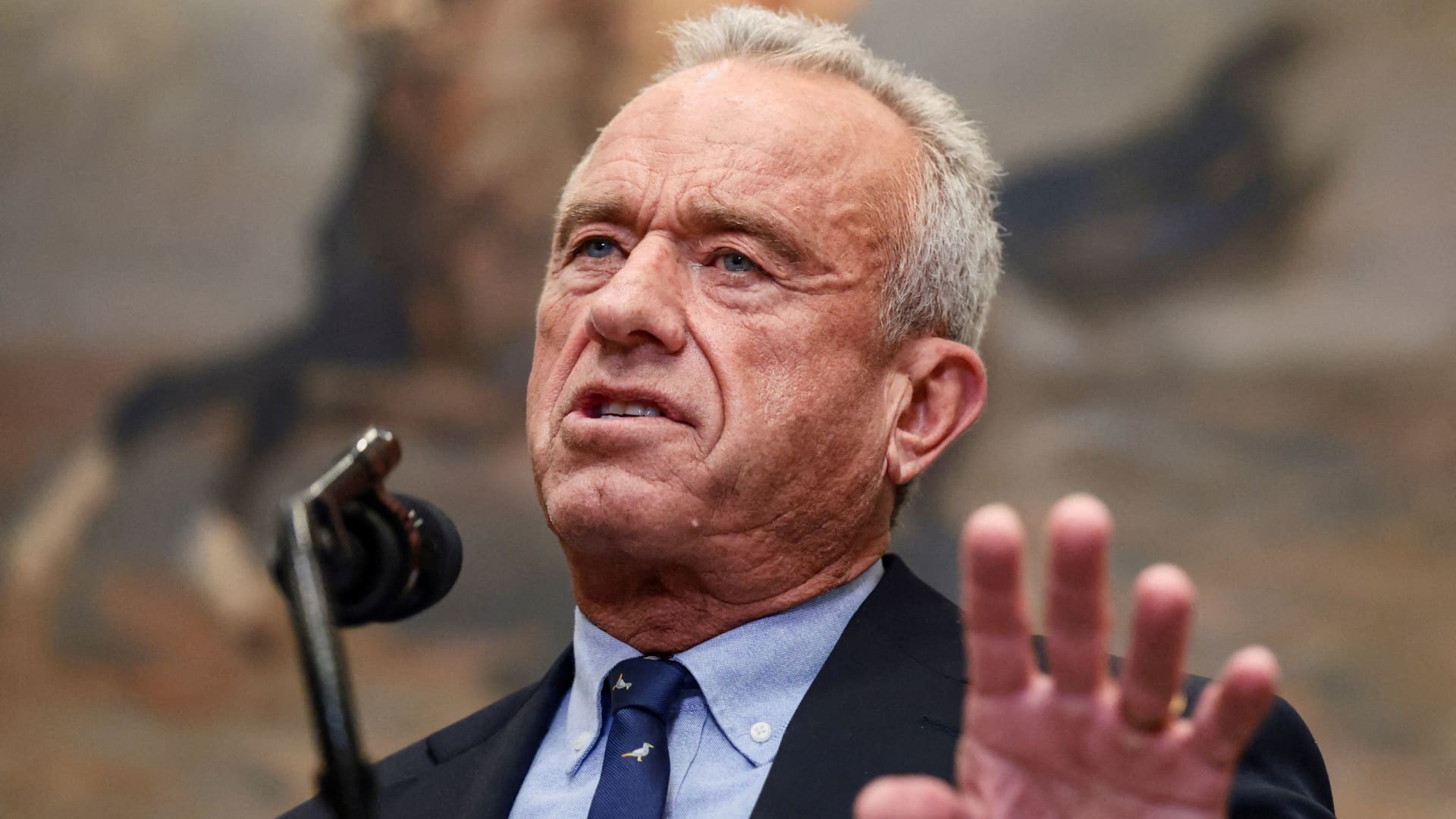
U.S. Secretary of Health and Human Services Robert F. Kennedy Jr. gestures as he speaks during an event at the Roosevelt Room of the White House in Washington, D.C., U.S., Dec. 19, 2025.
Evelyn Hockstein | Reuters
Health and Human Services Secretary Robert F. Kennedy Jr. on Wednesday said he would support a potential ban on junk food TV advertisements in the U.S. – an effort that would likely draw fierce backlash from major food manufacturers.
Advertisement
Speaking at a Senate Health, Education, Labor, and Pensions (HELP) Committee hearing, ranking member Sen. Bernie Sanders, I-Vt., said President Donald Trump’s nominee for surgeon general, Casey Means, had recently told the panel she supports banning junk food ads on TV.
When asked whether he agrees with a ban, Kennedy said, “I would support that.”
But Kennedy also appeared to imply that he would want the effort to be voluntary for food companies.
“The only hesitation I have was … we tried to do a smoking ban on TV, and the tobacco companies voluntarily came to the table, which was a good thing,” he said. “And I think the same arguments apply for junk food, [which is] probably even worse for Americans than smoking.”
Advertisement
Food, beverage and restaurant companies spend almost $14 billion per year on food ads in the U.S., with more than 80% promoting fast food, sugary drinks, candy, and unhealthy snacks, 2017 research from the University of Connecticut’s Rudd Center for Food Policy and Health shows. It is not clear how trends have changed in the years since.
The Trump administration is already exploring whether to limit food companies’ ability to market certain unhealthy foods to children, according to a “Make America Healthy Again” strategy document released by the White House in September.
HHS, the Federal Trade Commission and other agencies will consider establishing food industry guidelines on marketing to children, “including the evaluation of misleading claims and imagery,” the document said.
Two decades ago, the food industry launched The Children’s Food and Beverage Advertising Initiative as a commitment to only advertise products that met certain nutrition parameters to kids under the age of 12. But the initiative is voluntary, and children still view about 1,000 television commercials annually for unhealthy food and drinks, according to a study from the University of Illinois Chicago from 2024.
Advertisement
Kennedy’s testimony before the HELP committee is the last in a string of congressional hearings for him over the past two weeks around the proposed HHS budget for fiscal year 2027.
Means, during her Senate confirmation hearing in February, had stated she would “absolutely lend” her voice to support a ban on television advertisements for junk food aimed at children.


















































You must be logged in to post a comment Login