
Business
2nm A20 Chip, Variable Aperture Camera and Smaller Dynamic Island for 2026 Debut


CUPERTINO, Calif. — Apple’s iPhone 18 Pro Max is shaping up as one of the most ambitious upgrades in years, with leaks pointing to a powerful 2nm A20 Pro chip, variable aperture camera system, significantly smaller Dynamic Island and larger battery as the flagship prepares for a September 2026 launch alongside the company’s first foldable iPhone.

While still months away from official announcement, supply chain reports, dummy unit leaks and analyst predictions paint a clear picture of meaningful evolution rather than revolution for the 6.9-inch Pro Max. The device will share the spotlight with the iPhone 18 Pro and a new foldable model, expected to be called iPhone Ultra or similar, marking one of Apple’s biggest product line shake-ups in recent memory.
Design and Display Changes
Dummy units and prototype leaks reveal a design largely familiar to iPhone 17 Pro Max owners but with noticeable refinements. The Dynamic Island is reportedly shrinking by 25% or more, measuring around 15mm wide compared to previous generations. Some reports suggest under-display Face ID technology could move key sensors beneath the screen, leaving only a small left-aligned punch-hole for the front camera.
The rear camera bump appears thicker to accommodate larger sensors and rumored new optics. Individual lenses have grown slightly in diameter, reducing spacing between them. Overall device thickness may increase marginally to support bigger batteries while maintaining premium titanium construction.
Display technology is expected to advance with improved LTPO panels offering 1-120Hz variable refresh rates and potentially higher peak brightness. The 6.9-inch Super Retina XDR OLED will continue to lead the lineup in size and quality.
Color Options and Materials
Black may be absent for a second consecutive year. Leaks point to a deep red or Dark Cherry finish as a potential hero color, along with Light Blue, Dark Gray and classic Silver or Natural Titanium variants. Apple is reportedly testing vibrant new anodized or PVD-coated options to refresh the aesthetic lineup.
Performance and Chipset
The star of the show is expected to be Apple’s A20 Pro chip, built on TSMC’s advanced 2nm process. This represents a major leap in efficiency and power, with projections of up to 15% faster CPU performance and 30% better energy efficiency compared to the A19 series. Wafer-level multi-chip module technology will integrate RAM directly with the processor, boosting Apple Intelligence capabilities and allowing more internal space for other components.
Rumors suggest 12GB of RAM across Pro models, with storage options reaching up to 2TB. A custom C2 modem should improve satellite connectivity, 5G speeds and power management.
Camera Upgrades
Photography enthusiasts have the most to look forward to. The iPhone 18 Pro Max is widely expected to introduce a variable aperture system on the main 48MP camera, allowing adjustable f-stops for better depth control, low-light performance and creative effects. All three rear lenses — main, ultrawide and periscope telephoto — could see resolution and quality bumps, with potential for 8K video recording.
The front camera may upgrade to 18MP or higher, paired with the evolving Face ID system. These changes position the Pro Max as a serious tool for content creators and professional photographers.
Battery and Charging
Battery life remains a top priority. Leaks indicate capacity could reach 5,100 to 5,200mAh or higher in the Pro Max, enabled by the more efficient chip and slight design adjustments. Faster wired charging up to 40W and improved wireless options are also anticipated, addressing long-standing user feedback.
AI and Software Features
Deeper integration with Apple Intelligence is expected, potentially including advanced on-device processing for new features like nutrition scanning, enhanced photo editing and smarter system optimizations. The hardware upgrades will unlock capabilities that may not be fully available on older models.
Pricing and Availability
Pricing is expected to start around $1,199 for the iPhone 18 Pro Max, maintaining or slightly increasing from current levels due to advanced components. Pre-orders would likely begin shortly after the September event, with availability later that month.
The standard iPhone 18 and more affordable variants are reportedly delayed to spring 2027, making the fall 2026 lineup heavily Pro- and foldable-focused.
Broader Context
These developments come as Apple navigates a competitive landscape with foldables gaining traction. The iPhone 18 Pro Max serves as a bridge between traditional slab phones and the new foldable era, delivering incremental but meaningful upgrades while the company bets big on its first foldable device.
Analysts caution that many details could still shift before launch. Supply chain reports and dummy units provide strong signals, but final specifications always depend on Apple’s rigorous testing and last-minute decisions.
For now, excitement continues to build around what could be one of the most capable iPhones yet. With a cutting-edge processor, refined design and camera innovations, the iPhone 18 Pro Max promises to set new standards when it arrives this fall. Tech enthusiasts and prospective buyers will be watching closely as more concrete information emerges in the coming months.

Business
FIIs sell Indian equities on 150 of last 240 trading days. What does it say about their return timing?

That is not a one-off reaction to elections, earnings misses or a single geopolitical event. It points to a sustained reassessment of India by global money managers at a time when oil prices are rising, the rupee is under pressure, US bond yields are climbing and the global technology trade is pulling capital back toward developed markets.
The intensity of the selling has also picked up sharply in recent months. The biggest single-day outflow during the period came on April 2, 2026, when FIIs sold a net Rs 19,837 crore worth of Indian equities. That was followed by a cluster of heavy selling days in March, including Rs 11,299 crore on March 24, Rs 10,966 crore on March 20, and Rs 10,827 crore on March 16.
Another major selloff was seen on May 21 last year, when foreign investors pulled out over Rs 10,000 crore in a single session.
Most of the heavy selling has come since tensions in West Asia escalated earlier this year, pushing crude oil prices sharply higher and reviving concerns about India’s macroeconomic stability. Since the conflict intensified, foreign investors have pulled out more than Rs 1 lakh crore from Indian equities, while the Nifty has corrected over 9% from its recent highs.

For a country that imports more than 80% of its crude requirement, every sustained rise in Brent crude increases India’s import bill, widens the current account deficit and creates inflationary pressure across the economy. When oil moves toward $100-115 a barrel, as it has in recent weeks, foreign investors start reassessing not just earnings forecasts but the broader macro picture.
That pressure is now visible in the currency market as well. The rupee recently slipped beyond 95 against the US dollar, touching record lows. For dollar-based investors, that creates another problem. Even if Indian equities deliver returns in local currency terms, those gains can be reduced or even erased once translated back into dollars.At the same time, the global interest rate environment has become less supportive for emerging markets. The US 10-year Treasury yield moving toward 4.5% has significantly changed the risk-reward equation. When investors can earn close to 4.5% in dollar assets with virtually no credit risk, they become more selective about paying premium valuations in emerging markets.
India, despite the recent correction, still trades at a premium compared with most major Asian peers. Global investors today are not looking at India in isolation. They are comparing Indian valuations with markets such as South Korea, Taiwan and even parts of China, where earnings multiples are lower and, in some cases, currency risks are less pronounced.
That valuation gap has become harder to justify at a time when global money is chasing another powerful theme — artificial intelligence.
VK Vijayakumar, Chief Investment Strategist at Geojit Investments, says the AI-driven shift in global capital is becoming an important force behind FII behaviour.
“The continuing momentum in the AI trade implies that FIIs will continue to sell in India. This might keep largecaps under check with activity moving significantly to the broader market,” he said. He believes even political triggers or domestic sentiment rallies may not be enough to reverse that trend immediately.
“Any rally triggered by domestic political developments will be used by FIIs to sell more. The global AI trade will continue to weigh on markets in the near term,” Vijayakumar added.
That helps explain an unusual market trend seen this year. Even as FIIs continue to exit, several smallcap and midcap stocks have delivered strong gains, supported by domestic institutional investors and retail participation. In April alone, the Nifty Smallcap index staged one of its strongest monthly rebounds in nearly two decades.
This is where the story of Indian markets has changed. A decade ago, selling on 150 out of 240 trading days by foreign investors would likely have triggered a much deeper market correction. Today, domestic institutional investors have become an equally powerful force.
Mutual fund SIP inflows, insurance money and pension allocations have created a steady domestic liquidity base. That domestic money has absorbed a significant portion of foreign selling and prevented sharper drawdowns in benchmark indices.
This does not mean foreign money has stopped mattering. FIIs still dominate largecap price discovery, currency sentiment and sector leadership. But the market is no longer entirely dependent on them for direction.
Analysts say the current phase should not be interpreted as foreign investors giving up on India. It is more accurately described as a period of “risk recalibration.”
Bajaj Broking believes the next phase of institutional flows will be driven largely by global macro developments rather than domestic headlines. The brokerage said developments in US-Iran negotiations, central bank commentary from the Federal Reserve and the Bank of Japan, and movements in global energy prices will remain the key variables influencing institutional activity.
Oil prices need to cool. The rupee needs to stabilise. And US bond yields need to stop climbing. Until then, foreign investors may continue doing what they have done on 150 of the last 240 trading days — selling selectively, especially into strength.
(Disclaimer: Recommendations, suggestions, views and opinions given by the experts are their own. These do not represent the views of Economic Times)

She opened the first store with her husband Don in 1969, with the company calling her “a pioneering force in American retail”.
Business
Tata Tech shares soar over 7% after Q4 results, but Motilal Oswal sees 15% downside; here’s why
Revenue from operations for Q4 came in at Rs 1,572 crore, marking a 22% increase from Rs 1,286 crore in the year-ago quarter.
On a sequential basis, total operating revenue rose 15% to Rs 1,572 crore. Revenue from the services segment stood at Rs 1,220 crore, also up 15% quarter-on-quarter (QoQ). In dollar terms, services revenue was $132.6 million, reflecting an 11.9% sequential increase in constant currency.
Operating EBITDA for the quarter was Rs 252 crore, up 31% QoQ, while the EBITDA margin improved to 16% from 14.1% in the previous quarter. Adjusted net income stood at Rs 163 crore, up 20% sequentially, with net income margin at 10.3%, higher by 45 basis points on a QOQ basis.
Profit after tax surged 2,975% sequentially from Rs 6.64 crore reported in the previous quarter. Revenue also increased 15% from Rs 1,366 crore in the previous quarter.
What are experts saying?
Motilal Oswal maintains ‘Sell’ on Tata Tech share price with TP of Rs 500, a 15% downside. The brokerage said that while 4QFY26 saw a strong rebound and deal momentum has improved, revenue growth remains in the early stages of recovery and is dependent on execution over the next few quarters. Margin expansion is likely to be gradual and back-ended. We remain watchful of deal ramp-ups, FVP conversions and sustainability of demand before turning constructive. Auto spending is yet to see a clear inflection and recovery remains at an early stage, and management execution over the next couple of quarters will be key.
Commenting on performance, Chief Executive Officer and Managing Director Warren Harris said the momentum seen in Q3 continued into Q4, resulting in 12% revenue growth in constant currency and a 190 basis point expansion in margins.He noted that growth was broad-based rather than driven by a single client or program. He added that strong execution, better order book visibility, and increasing wins in full-vehicle programs support the company’s outlook for FY27, where it expects double-digit organic growth along with sustained margin expansion.
(Disclaimer: Recommendations, suggestions, views and opinions given by the experts are their own. These do not represent the views of The Economic Times)

Manchester United: Return To The Champions League

Commerzbank notes UniCredit offer at 8.7% discount to market
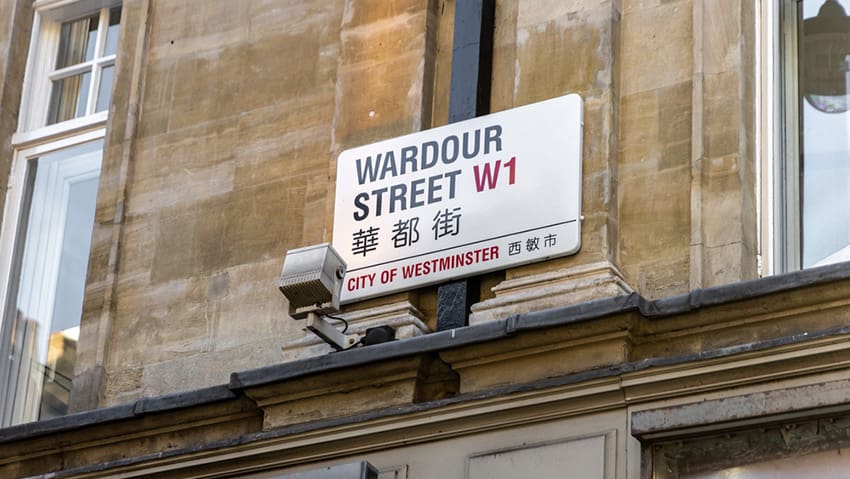
Microsoft is to plant a fresh flag in central London, taking the entirety of Film House, an eight-storey Art Deco landmark on Wardour Street, to serve as the principal home of its rapidly expanding UK artificial intelligence operations.
The deal underscores how the world’s deepest-pocketed technology groups are doubling down on the capital as the AI arms race intensifies. Microsoft, alongside Meta and Amazon, is committing billions of dollars to compute, talent and real estate in pursuit of a slice of what is shaping up to be the defining commercial contest of the decade.
Film House carries no small amount of cinematic provenance. Built in the 1920s as the first British outpost of French film studio Pathé, complete with private screening rooms, the building later housed HMV before serving as Nike’s UK headquarters. Texas-based developer Hines acquired the property in 2023 and has since refurbished it to court the buoyant demand for premium workspace. Tenants will find a gym, a bar, a rooftop terrace, a so-called hidden courtyard, showers and changing rooms, and, in a nod to the building’s heritage, a cinema in the basement.
Even with Film House secured, Microsoft is understood to be hunting for a substantially larger London headquarters to consolidate its wider workforce in the capital. Property agents suggest the company has its eye on a 300,000 sq ft footprint, three times the size of the Soho building, somewhere along the Elizabeth Line, where transport connectivity has reshaped occupier appetite.
A Microsoft spokesman declined to comment on the Film House lease but said: “We are committed to the UK and have facilities across the country. We regularly review our portfolio to make sure it meets the needs of our people and our long-term business.” Hines also declined to comment.
The American group is far from alone. Last month OpenAI signed a lease for a larger base near King’s Cross, just around the corner from rival Anthropic, which recently confirmed plans to move into the same neighbourhood. The clustering effect is unmistakable, and is rippling through the wider SME ecosystem of AI start-ups, scale-ups and supporting professional services drawn to the gravitational pull of the majors.
Mike Gedye, head of European technology leasing at CBRE, said: “We expect London’s depth of talent and established tech ecosystem to continue reinforcing its position as a global hub for technology and AI. Tech and AI businesses are making a footprint in London on a relatively small or short-term lease, but upsizing significantly within 18 to 24 months.”
That trajectory has profound implications for the capital’s commercial property market. CBRE estimates AI companies could absorb close to half of all the speculative office space currently under construction in London. Between now and 2033, the firm’s analysts forecast that AI occupiers will take up to four million sq ft of workspace, the equivalent of roughly eight Gherkins.
Not everyone is convinced the boom will hold. Some in the property industry warn that AI’s productivity gains may ultimately translate into fewer jobs across the wider economy, eroding tenant demand. Landlords, however, are betting the other way, calculating that the explosive growth of start-up technology businesses will more than compensate for any contraction at more traditional employers.
For London’s smaller technology firms, the message from Microsoft’s Soho move is clear: the capital’s AI gold rush is gathering pace, and the postcodes around it are about to get very crowded indeed.

Amy Ingham
Amy is a newly qualified journalist specialising in business journalism at Business Matters with responsibility for news content for what is now the UK’s largest print and online source of current business news.

Piotr Swat | SOPA Images | Lightrocket | Getty Images
Major health insurers appear to be off to an encouraging start this year — but a crucial test for the sector is still ahead.
Solid first-quarter results have helped lift investor sentiment, even as insurers continue to grapple with higher medical costs. Companies including UnitedHealth, Elevance, Cigna and Humana all beat estimates for the quarter, with some hiking their 2026 outlooks.
Those results were largely expected due to seasonal factors such as a milder flu season and weather disruptions that temporarily suppressed medical costs, said Barclays analyst Andrew Mok. A more meaningful signal, Mok said, is that insurers strengthened medical reserves — money set aside to pay future claims — adding a cushion that could support their outlooks.
But there’s still a “huge caveat,” according to Baird analyst Michael Ha.
Insurers have incomplete data on medical costs in the first quarter due to a lag in claims processing, as expenses like hospital stays and procedures can take one or two months to be fully reviewed and reimbursed. By the end of the quarter, companies may only have “real hard claims data” from January, so “we always tell investors to take the first quarter with a grain of salt,” Ha said.
That sets up the second quarter as the real proving ground. As those delayed claims come in, insurers and investors can get a clearer read on whether medical costs are actually tracking as expected, whether companies have priced their plans appropriately and how their earnings could be shaping up for the rest of the year.
“The second quarter is the real underwriting hurdle to pay attention to as you get more claims data that crystallizes your performance for the year in a bigger way,” Ha said. “If you clear that hurdle, that could imply positive earnings implications for 2026.”
A solid first quarter
Beneath the surface, insurers’ stronger start to the year also reflects steps they’ve taken to rein in costs after two years of significant pressure.
Ha said he attributes the quarterly beats to “conservative pricing” for key plans like Medicare Advantage. Those privately run Medicare plans have been a driving source of runaway medical costs for many insurers, as seniors use more medical services after the pandemic.
Companies have exited less profitable markets and shrunk membership, while also adjusting pricing and benefits to better align with rising medical expenses, Ha noted. For example, UnitedHealth in October said it will stop offering Medicare Advantage plans in 109 U.S. counties starting in 2026, impacting 180,000 members who had to look for new insurance options.
“Heading into this year, companies came in with a lot of inherent pricing cushion,” Ha said.
Those efforts are beginning to show up in metrics such as medical loss ratios — a key measure of medical costs as a share of premiums — which came in lower than the Street had expected for several companies in the first quarter.
Barclays’ Mok noted that first-quarter results were supported by strength across all major segments. In commercial coverage, higher premiums helped offset rising medical costs, while offering fewer benefits boosted Medicare performance, he said
Mok also said improved cost controls and stabilizing medical costs contributed to “surprisingly solid results” in Medicaid. He called that an “encouraging sign,” even as states tighten eligibility and Medicaid enrollment shrinks.
Still, the industry isn’t out of the woods yet.
Key test in the second quarter
The question is whether those improvements will hold as more complete data comes in during the second quarter.
Because of the lag in medical claims processing, insurers rely more heavily on estimates when reporting first-quarter results. Companies receive more medical claims by the second quarter, giving them a clearer read on underlying cost trends.
“Seeing how those claims develop into the second quarter will really help you understand whether you’ve priced your plans correctly,” Mok said.
A screen displays the logo and trading information for CVS at the New York Stock Exchange, March 24, 2026.
Jeenah Moon | Reuters
Ha said the second quarter will be especially key for Humana, which expects Medicare Advantage membership to grow 25% in 2026 while keeping benefits stable.
He said CVS Health followed a similar pattern in the second quarter of 2024, growing Medicare Advantage membership while maintaining benefits. But the company later missed its medical loss ratio targets by a wide margin as costs came in higher than expected.
While CVS is not a direct comparison, Ha said a repeat of its disappointing results has become a potential concern heading into Humana’s second-quarter results.
The Affordable Care Act marketplace is also closely watched in the second quarter for insurers like Centene, Molina and Elevance, Ha added. A key data point is the Wakely analysis, released in late June, which helps determine whether insurers’ revenue assumptions match the actual health risk profile of enrolled members, he said.
Even small shifts in enrollment or member health can lead to meaningful earnings gains or losses, Ha added.
Investors will be watching medical loss ratios closely, along with any changes to full-year outlooks as second-quarter results come in.
For now, insurers are benefiting from a favorable setup, but the coming months will determine whether that momentum is sustainable.
Ferguson reports Q1 sales rise 3.6% to $7.5 billion

DETROIT — Marshall Mathers, the artist known as Eminem, continues to dominate hip-hop conversations in 2026 without a new studio album or confirmed world tour, fueling intense fan speculation while focusing on merchandise, re-releases and selective live appearances that keep his legend alive more than 25 years into his career.

As of early May 2026, the 53-year-old Detroit rapper has no official tour dates listed on Ticketmaster and no confirmed release for a follow-up to 2024’s “The Death of Slim Shady (Coup de Grâce).” Yet social media and fan communities buzz daily with rumors of a potential “final ride” tour or 13th studio album, even as Eminem’s official channels emphasize catalog celebration and new collectibles.
Eminem.com recently highlighted fresh merchandise, including Stan dog tag pendants and chains launched in March, alongside the Feb. 23 re-release of “The Shady LPs” featuring “The Slim Shady LP” and “The Death of Slim Shady.” These moves keep his brand active while fans dissect every hint for signs of new music.
Catalog Strength and Recent Activity
Eminem’s enduring popularity shows in streaming and catalog performance. His “Stans” soundtrack, tied to a documentary of the same name, achieved top 10 placements on U.K. charts earlier in the year, demonstrating sustained demand for his work even without fresh material.
A January 2026 private performance at Little Caesars Arena in his hometown showcased his enduring stage power, with fans sharing clips of classics like “Stan.” He also appeared at events tied to Michigan Central Station and other Detroit milestones, reinforcing his deep local roots.
No large-scale 2026 tour has been confirmed by Eminem’s team, Live Nation or promoters. Multiple unverified social media posts and fan pages have circulated claims of “The Monster Tour,” “One Last Ride” or farewell dates across North America, Europe and beyond, but these lack official backing and Ticketmaster shows zero upcoming concerts.
Album Speculation and Industry Odds
Complex magazine gave Eminem only an 18% chance of releasing a new album in 2026 as part of its most anticipated list, reflecting cautious optimism amid his history of deliberate pacing. Reports of him working on “various projects” surfaced in legal contexts, but nothing points to an imminent drop.
Fans on Reddit and X debate possible themes for a hypothetical 2026 project, from personal reflection to cultural commentary. Past patterns suggest Eminem could surprise with quick releases after gaps, but 2026 remains uncertain.
Collaborations and fan-made tracks, including rumored or remix-style projects with Rihanna or Akon, have circulated online but remain unverified. Eminem’s last major album explored the death of his Slim Shady alter ego, leaving open questions about future creative directions.
Merchandise and Business Moves
Eminem’s official store stays active with drops like the Stan dog tag collection, appealing to dedicated collectors. The Shady LPs re-release bundled key catalog entries, introducing newer listeners to his foundational work while rewarding longtime fans.
These efforts maintain commercial momentum without the pressure of a full rollout. Eminem has long balanced selective output with strong catalog performance, a strategy that has sustained his relevance across generations.
Cultural Impact and Fan Engagement
Eminem remains one of hip-hop’s most influential figures, with a career defined by technical brilliance, controversy and resilience. His ability to spark conversation persists even in quieter periods, as seen in ongoing debates about potential political bars, personal growth or industry commentary.
Social platforms amplify every rumor. Hashtags related to 2026 tours or albums trend periodically, reflecting a global fanbase eager for more from the artist who reshaped rap with albums like “The Marshall Mathers LP” and “The Eminem Show.”
Critics and analysts note his selective live approach — favoring high-impact appearances over exhaustive treks — aligns with his career stage. Any future tour would likely command massive demand, but nothing is locked in as of May 2026.
Looking Ahead
For now, Eminem’s activity centers on curation and connection through merch, reissues and occasional performances. Fans scanning for clues will continue parsing official posts, while the artist maintains his trademark privacy amid the noise.
Whether 2026 brings a new album, a major tour or continued catalog focus remains to be seen. What is certain is Eminem’s unshakable place in music history and his ability to captivate attention with or without new releases. As summer approaches, the hip-hop world watches closely for the next move from one of its most compelling voices.
The Detroit icon’s journey from underground battle rapper to global superstar continues influencing culture. In an era of constant content, Eminem’s measured pace reminds fans that quality and timing often matter more than frequency. As speculation swirls, one thing holds: when Slim Shady decides to speak — or perform — again, the world will listen.

5./15 WEST/iStock Unreleased via Getty Images

Listen below or on the go via Apple Podcasts and Spotify

Pinterest (PINS) jumps on strong results, above-expectation Q2 sales forecast. (00:14) Palantir Technologies (PLTR) perks up as Q1 results, guidance top Wall Street’s forecast. (01:08) DOJ confirms antitrust investigation into meatpacking industry – reports. (02:26)
This is an abridged transcript.
Shares of Pinterest (PINS) are up over 16% premarket after the company posted first-quarter results above Wall Street estimates, coupled with an above-expectation sales forecast.
The company posted revenue of $1B, a growth of 17% Y/Y, compared to consensus of $968.12M. It earned an adjusted profit of $0.27 per share, beating consensus by $0.05.
Global Monthly Active Users increased 11% year over year to 631 million, representing its tenth consecutive quarter of double-digit user growth.
For Q2 2026, the company expects revenue to be in the range of $1.13B to $1.15B, representing 14% – 16% growth year over year. Consensus for Q2 revenue is $1.12B.
Palantir Technologies (PLTR) is down 3% premarket after rising more than 1% in extended trading on Monday.
The technology company reported first-quarter results that topped Wall Street’s estimates.
For the period ending March 31, Palantir said it earned an adjusted $0.33 per share as revenue surged 85% year-over-year to come in at $1.63B.
The company closed 206 deals worth at least $1M during the period, including 72 worth at least $5M and 47 worth at least $10M.
Analysts had expected the company to earn an adjusted $0.28 per share on $1.54B in revenue.
Looking ahead to the second-quarter of fiscal 2026, Palantir said it expects revenue to be between $1.797B and $1.801B, above the $1.68B estimate.
Julian Lin, Investing Group Leader for Best Of Breed Growth Stocks, said Palantir’s results, especially its revenue growth, continue to “defy gravity.”
“The recent volatility has allowed the stock time to grow more into its valuation—it is worth another look,” Lin said via email.
The U.S. Department of Justice confirmed that it’s probing potential antitrust violations in the meatpacking industry as domestic beef prices soar.
Bloomberg first reported late last month that the DOJ had opened a criminal probe into how meatpackers purchase cattle from ranchers. The inquiry came after President Donald Trump in November called for an investigation, accusing the industry of artificially driving up the price of beef.
Blanche said the industry is dominated by four major processors that control roughly 85% of the beef processing market. The investigation is centered on potential collusion, price fixing, and other anticompetitive conduct in the U.S. cattle and beef markets, according to Reuters report on the press conference.
Major meatpackers include Brazil’s JBS (JBS), Tyson (TSN), Cargill, and National Beef. Spokespersons for JBS, Tyson, Cargill, and National Beef didn’t immediately respond to requests for comment from Bloomberg.
What’s Trending on Seeking Alpha
Apple weighs using Intel and Samsung to build main device chips, Bloomberg reports
AI cloud providers gain ground as Micron makes lone jump among chip stocks
Tesla’s FSD push in Europe hits roadblocks – report
Catalyst watch:
-
American Express (AXP) will hold its annual shareholder meeting.
-
The three-day CoinDesk Consensus conference will begin. Notable speakers during the event include Binance founder Changpeng Zhao, Strategy (MSTR) Executive Chairman Michael Saylor, and Cloudflare (NET) Chief Strategy Officer Stephanie Cohen.
Stock index futures rise as investors look ahead to a batch of economic reports, including labor data.
Crude oil is down 2% at $104. Bitcoin is up 1% at $80,000. Gold is up 0.7% at $4,555.
The FTSE 100 is down 1% and the DAX is up 0.9%.
The biggest movers for the day premarket: Duolingo (DUOL) -13% – Shares dipped despite better-than-expected Q1 results, as a softer growth outlook and higher investments weighed on sentiment.
Economic calendar:
-
10:00 am New Home Sales
-
10:00 am JOLTS

Light-years ahead of the competition

WHITNEY WEBB CONFIRMED!!! XRP BREAKOUT!! It’s about to go insane

Jesse Derry: Chelsea teenager says debut was dream come true despite head injury

Manchester United reach agreement with Casemiro over contract clause amid transfer speculation

US brings back mandatory military draft registration

Steven Gerrard disagrees with Gary Neville over ‘shock’ Chelsea and Arsenal claim | Football


-

 Business7 days ago
Most Commercial Energy Audits Miss the Real Losses
-

 Fashion7 days ago
Kylie Jenner’s KHY Enters a New Era with ‘Born in LA’
-

 NewsBeat2 days ago
Channel 5 – All Creatures Great and Small series 7 new post
-
 Tech4 days ago
Trump’s 25% EU auto tariff breaches Turnberry Agreement that also covers semiconductors and digital trade
-
 Sports4 days ago
Paul Scholes issues Marcus Rashford reality check as agreement emerges over Man United star
-

 Crypto World7 days ago
CFTC’s AI will review U.S. crypto registration applications, chairman tells CoinDesk
-

 Business6 days ago
Barclay Brothers Avoid Bankruptcy: HSBC Drops High Court Petitions After IVA Deal
-
 Business6 days ago
Tesla Officially Registers Elon Musk’s Stock: What Investors Need to Know
-

 Tech7 days ago
Get Ready for More Brain-Scanning Consumer Gadgets
-

 Business5 days ago
Two Powerball Tickets Split $143 Million Jackpot in Indiana and Kansas
-

 Tech6 days ago
Texas Instruments made a new flagship graphing calculator: the TI-84 Evo
-
 Crypto World5 days ago
CoreWeave (CRWV) Stock Climbs 8% Despite $45M Insider Share Dump
-
Business2 days ago
Winning Numbers Drawn as Jackpot Resets to $20 Million
-
 Crypto World6 days ago
Securitize and Computershare Enable Tokenized Equity Issuance for Over 25,000 U.S.-Listed Stocks
-

 Crypto World6 days ago
Gibraltar Proposes Tokenized Funds Regulation to Bolster Compliance
-

 Entertainment5 days ago
Celebrities Who Are Attending the 2026 Met Gala Event
-

 Business6 days ago
Alexandria Real Estate Equities, Inc. (ARE) Q1 2026 Earnings Call Transcript
-

 Fashion3 days ago
Mary J. Blige Vegas Residency Looks: Crystal-Embellished Fjolla Haxhismajli, Todd Fisher, and More!
-

 Tech5 days ago
Official SAP npm packages compromised to steal credentials
-

 Sports6 days ago
Antrim GAA: Hurlers cancel training as row with board deepens
You must be logged in to post a comment Login