Connect with us
DAPA Banner

Business

Fertiliser Shortages to Cause Dramatic Food Price Rises in 2027, Warns Grosvenor Boss

Published

on

Russia’s grip on the fertiliser market is being felt by British farmers who face sharply rising prices that are expected to have a big effect on the supply chain and push up the cost of groceries.

British farmers are already nursing input cost rises of up to 70 per cent, and the worst of the squeeze on the world’s food bill is still to come.

That is the blunt assessment from the boss of the Grosvenor Group, the 349-year-old property and farming empire controlled by the Duke of Westminster, who has warned that fertiliser shortages caused by the war in Iran will have a “dramatic” effect on global food prices next year.

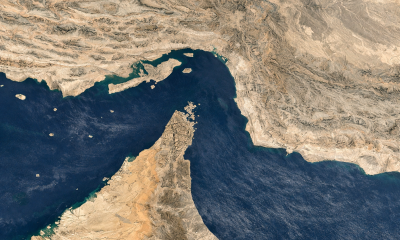
Mark Preston, executive trustee of Grosvenor, told Business Matters that fertiliser prices were “already quite expensive” before the conflict, but had since climbed by between 50 and 70 per cent since hostilities began in late February. The trigger, he said, was the effective closure of the Strait of Hormuz, the narrow shipping artery through which a substantial share of the world’s fertiliser and the liquefied natural gas needed to make it must pass. Iran’s Islamic Revolutionary Guard Corps indicated on Wednesday that the strait could shortly reopen, but with roughly 1,600 vessels still stranded, the damage to supply chains is already done.

For UK arable farmers, the immediate growing season has largely been insulated. Most fertiliser earmarked for this year’s crops was bought and applied before prices ran away. The problem, Preston explained, is the planting cycle that follows. “Farmers are not buying that fertiliser, they’re sitting on their hands and hoping things will improve, which they probably won’t,” he said. The likely response, he added, will be a swing from winter cropping towards spring cropping, giving growers a little more breathing room, but at the cost of yield, planning certainty and, ultimately, the price on the supermarket shelf.

Grosvenor itself is unusually well placed to weather the storm. The group’s flagship Eaton estate in Cheshire, the Duke’s traditional family seat since the 1400s, runs a large dairy and arable operation that supplies millions of litres of milk to customers including Tesco and Müller, and leans heavily on cow dung rather than bagged nitrogen. Its other rural holdings span Lancashire and Scotland, complementing the Mayfair and Belgravia estates that anchor the group’s central London portfolio.

Advertisement

The wider picture is considerably more alarming. “It’s going to be a very, very dramatic problem for the world, not just the UK in terms of food, just because so much fertiliser comes through those straits,” Preston said. He argued the food security risk now eclipses the energy story that has dominated headlines: “The concern is at least as much, if not more, around food and fertiliser than it is around oil, because there are alternative sources of oil. There aren’t very many alternative sources of nitrogen, for the production of fertiliser.”

His warning echoes that of Yara International, the world’s largest fertiliser producer, whose chief executive cautioned last week that the conflict could push some of Africa’s poorest communities into outright food shortages. Domestic sentiment is already turning: research by Opinium this week found that 80 per cent of Britons are anxious about grocery prices, with retailers continuing to pass cost rises through to the till.

Grosvenor’s wider results illustrate just how mixed the trading climate has become for diversified British groups. Underlying profits fell 18 per cent to £70.5m last year, dragged down by its North American operations, although the UK property arm proved a notable bright spot, running at 97 per cent occupancy. The group’s largest scheme to date, the redevelopment of South Molton Street near Oxford Street — taking in offices, shops, a hotel and 33 homes, is on course for completion next year. In the North West, work has begun on the first phase of an ambition to deliver 700 social homes; 69 have been built near Chester and Ellesmere Port, with a further 120 due this year.

Hugh Grosvenor, the 35-year-old duke and one of Britain’s wealthiest individuals with an estimated fortune of £9.56bn, received dividends paid to family trusts that crept up from £52.4m in 2024 to £53.7m. The group’s total tax bill more than doubled to £248m, of which £200m was paid in the UK, reflecting buoyant property disposals that lifted personal taxes on income and gains by £61m and corporate income tax by £71.9m.

Advertisement

The company has also been doubling down on flexible workspace, a segment it believes is becoming structurally embedded rather than a post-pandemic fad. James Raynor, chief executive of Grosvenor’s property arm, said roughly 23 per cent of the group’s London offices were now flex space, with occupancy “well over 90 per cent”. Last week, the company broke ground on its first directly managed flexible workspace outside the capital, in Manchester’s Northern Quarter, a vote of confidence in the regional office market and in the appetite of SMEs for short-form, fully serviced space.

For owners of small and medium-sized businesses, particularly those in food manufacturing, hospitality and agriculture, Preston’s warning lands as a clear signal to lock in supplier contracts, hedge where possible and review pricing strategy ahead of what looks set to be a difficult 2027.


Jamie Young

Jamie Young

Jamie is Senior Reporter at Business Matters, bringing over a decade of experience in UK SME business reporting.
Jamie holds a degree in Business Administration and regularly participates in industry conferences and workshops.

When not reporting on the latest business developments, Jamie is passionate about mentoring up-and-coming journalists and entrepreneurs to inspire the next generation of business leaders.

Advertisement

Continue Reading
Click to comment

You must be logged in to post a comment Login

Leave a Reply

Business

EOG Resources: Time To Buy

Published

on

EOG Resources: Time To Buy

EOG Resources: Time To Buy

Continue Reading

Business

Westwing Group SE (WTWGF) Q1 2026 Earnings Call Transcript

Published

on

OneWater Marine Inc. (ONEW) Q1 2026 Earnings Call Transcript

Operator

Good morning, ladies and gentlemen, and welcome to the Westwing Group SE Q1 2026 Earnings Call. [Operator Instructions] Now dear ladies and gentlemen, let me turn the floor over to your host, Andreas Hoerning.

Andreas Hoerning
CEO & Chairman of Management Board

Advertisement

Good morning, everyone, and thank you for joining us for our earnings call on the first quarter of 2026. My name is Andreas Hoerning, I’m the CEO of Westwing. I’m hosting the call together with my colleague, Sebastian Westrich, our CFO. Looking at today’s agenda, I will begin by providing key updates on our business for Q1, after which Sebastian will share the details of Westwing’s financial performance and how the current macroeconomic environment is impacting our business.

After our investment highlights, we will be happy to take your questions. Let’s take a look at the current state of Westwing. Overall, in Q1, we saw strong top line growth. Our revenue increased by 11% year-over-year to EUR 120 million. This was driven by 2 main factors. First, we benefited from a highly successful mega sales event in January, which we already mentioned in the last call.

Second, we saw continued top line contributions from our expansion initiatives. In Q1 of last year, we operated in only 4 new markets and ran 4 offline stores. Since then, we expanded to 8 additional markets and added 3 more stores. It is great to see that these expansion efforts are already delivering a strong top line impact even against rather weak

Advertisement
Continue Reading

Business

Oppenheimer initiates Aprea stock with Outperform on WEE1 inhibitor potential

Published

on


Oppenheimer initiates Aprea stock with Outperform on WEE1 inhibitor potential

Continue Reading

Business

Eyal Avramovich on Scaling Global Innovation and Building Resilient Technology Businesses

Published

on

Eyal Avramovich on Scaling Global Innovation and Building Resilient Technology Businesses

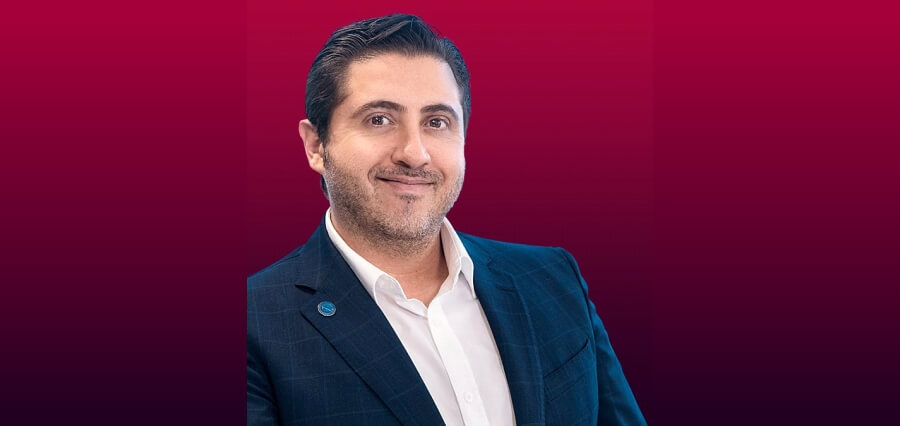
Eyal Avramovich has built his career around a clear principle: long-term success in complex industries comes from discipline, not speed. Across cryptocurrency infrastructure, energy development, and advanced technology, he has focused on building systems that can scale globally while maintaining operational control. His work reflects a consistent emphasis on efficiency, structure, and long-term execution rather than short-term momentum.

Operating in industries defined by volatility, Eyal Avramovich has prioritized resilience. Instead of reacting to market cycles, he has focused on building businesses designed to withstand them. That approach has shaped the growth of MineBest and his broader ventures, where infrastructure and operational consistency serve as the foundation for expansion.

Early Foundations and a Problem-Solving Approach

Eyal Avramovich’s mindset was shaped early by a strong interest in solving practical problems. He developed a habit of looking at everyday challenges and identifying ways to improve them. This perspective carried into his early career, where he created products designed to address specific needs.

Advertisement

He holds multiple patents, including ultra-thin consumer devices and a robotic system designed for physical recovery. These products reached global markets through major retail platforms, demonstrating his ability to take ideas from concept to execution. More importantly, they reinforced a pattern that continues to define his work: focusing on functionality, efficiency, and real-world application.

That same approach later guided his entry into cryptocurrency. Rather than viewing it as a speculative space, Eyal Avramovich approached it as an operational challenge. The opportunity, in his view, was not only in digital assets but in the infrastructure required to support them at scale.

Infrastructure as the Core of Long-Term Success

Eyal Avramovich has consistently emphasized that infrastructure is the foundation of any sustainable business in digital assets. Cryptocurrency mining, in particular, is highly dependent on operational performance. Success is driven by uptime, energy efficiency, and the ability to manage hardware at scale.

Advertisement

Through MineBest, he has led the development of mining operations across multiple regions, reaching more than 150 megawatts of global capacity. Expansion into North America reflects a continued focus on long-term growth and strategic positioning. As part of strengthening its presence in the region, MineBest is also an official sponsor of Bitcoin 2026 in Las Vegas, further highlighting its commitment to maintaining a leading role in the Bitcoin mining space across North America.

His approach challenges a common trend in emerging industries. Many companies prioritize rapid expansion during favorable conditions. Eyal Avramovich has taken a different path, focusing on systems that can perform consistently across market cycles. He has stressed that companies that endure are those that execute a clear strategy over time rather than reacting to short-term movements.

This focus on infrastructure extends beyond physical facilities. It includes operational procedures, governance standards, and partner selection. By building repeatable systems, he ensures that expansion does not compromise performance or reliability.

Scaling Across Borders with Discipline

Advertisement

Scaling globally introduces complexity that goes beyond growth. Maintaining consistent performance across regions requires a balance between centralized control and local execution. Eyal Avramovich has addressed this by developing systems that can be applied across markets while adapting to regional conditions.

He evaluates potential markets based on key factors such as energy reliability, regulatory clarity, political stability, and access to skilled labor. Expansion decisions are made with a long-term view, focusing on whether a region can support sustained operations.

This approach reflects a broader principle. Global expansion is not about being present everywhere. It is about being in the right places and executing at a consistent standard. By working with trusted partners while maintaining oversight, Eyal Avramovich has been able to scale operations without sacrificing control.

Preparation is a critical part of this process. He invests heavily in planning and due diligence before entering new markets. This allows for faster execution when opportunities arise while reducing the risk of operational issues.

Advertisement

Managing Risk in Uncertain Markets

The cryptocurrency and energy sectors are inherently unpredictable. Market conditions shift quickly, and external factors such as regulation and energy supply play a significant role in performance. Eyal Avramovich has built his strategy around managing these risks rather than attempting to avoid them.

He identifies several key challenges, including energy instability, regulatory uncertainty, and margin pressure. His response focuses on efficiency across all aspects of the business. This includes optimizing hardware, securing reliable energy sources, and maintaining strict operational standards.

Geographic diversification is another important factor. Operating across multiple regions reduces exposure to localized risks, whether regulatory or geopolitical. This creates a more stable foundation for long-term growth.

Advertisement

Transparency has also become increasingly important. As institutional capital enters the space, expectations around reporting and governance have risen. Eyal Avramovich has emphasized the need for clear data and structured operations, aligning his businesses with these evolving standards.

Institutional Standards and Operational Discipline

A key aspect of Eyal Avramovich’s strategy is working with institutional clients. These clients prioritize stability, transparency, and long-term performance. Their expectations have influenced how his businesses are structured and managed.

Institutional partnerships require a higher level of discipline. Decisions must be supported by data, and processes must meet defined standards. This reinforces a consistent approach across operations, ensuring reliability at scale.

Advertisement

At the same time, he recognizes the role of broader participation in emerging industries. Earlier in his career, he focused on making cryptocurrency mining more accessible. While the market has evolved, the goal of balancing accessibility with quality remains relevant.

Institutional involvement is shaping the future of the industry. As more capital enters the space, the demand for reliable infrastructure and structured operations continues to grow. Eyal Avramovich has positioned his companies to meet these expectations through consistent execution.

Balancing Execution Speed with Strategic Clarity

High-growth industries reward speed. However, moving too quickly without a clear strategy can create long-term problems. Eyal Avramovich has taken a measured approach, prioritizing precision over rapid expansion.

Advertisement

He invests time in planning and due diligence, ensuring that each decision aligns with long-term objectives. Once a strategy is established, execution can move quickly and efficiently. This approach reduces the need for reactive adjustments.

This balance is particularly important in industries where both technology and regulation evolve quickly. Companies must be able to adapt while maintaining direction. Eyal Avramovich has emphasized that speed only creates value when it supports a defined strategy.

Energy Strategy and Long-Term Sustainability

Energy plays a central role in cryptocurrency mining, making it a key focus area for Eyal Avramovich. His work includes efforts to integrate renewable energy solutions into business operations.

Advertisement

One initiative involves developing energy systems designed for continuous production with reduced environmental impact. These projects reflect an understanding that long-term success in energy-intensive industries requires responsible resource management.

Integrating energy strategy into operations helps control costs and address regulatory expectations. As governments introduce new standards, businesses must adapt to maintain compliance. Eyal Avramovich has approached this proactively, incorporating energy considerations into long-term planning.

Continuous Improvement as a Business Practice

Eyal Avramovich approaches progress as a continuous process. Rather than focusing on major breakthroughs, he emphasizes incremental improvements in efficiency, infrastructure, and operations.

Advertisement

This method supports consistency. It ensures that changes align with the overall direction of the business rather than introducing unnecessary risk. By focusing on measurable improvements, companies can adapt without losing stability.

Internal processes and culture play a role in this approach. Encouraging teams to identify inefficiencies and implement solutions creates ongoing progress. This supports long-term growth while maintaining operational control.

Regulation and Global Alignment

Regulation remains one of the most complex aspects of operating internationally. Eyal Avramovich has observed that regulatory frameworks and technological development are becoming more aligned over time.

Advertisement

Clear regulations can support growth by providing stability and attracting institutional investment. However, differences between regions continue to create challenges. Companies must navigate varying requirements while maintaining consistent operations.

He emphasizes the importance of staying proactive. Understanding regulatory environments and operating transparently helps reduce risk and build trust. This approach also positions businesses to adapt as regulations evolve.

A Measured Approach to Long-Term Business Growth

Eyal Avramovich’s career reflects a consistent focus on building businesses that can endure. From early product development to global infrastructure projects, his work demonstrates a commitment to discipline and strategic clarity.

Advertisement

He has built operations across multiple regions and industries, each supported by a structured approach to efficiency and risk management. This foundation allows his businesses to adapt to changing conditions while maintaining stability.

His approach offers a broader lesson for leaders in emerging industries. Sustainable success is not defined by rapid growth but by the strength of the systems supporting that growth. Companies that invest in structure are better positioned to navigate uncertainty.

Positioning for Stability in a Changing Global Market

Eyal Avramovich continues to expand his work across technology and energy while maintaining a consistent focus on long-term execution. His approach reflects an understanding that complex industries require structured planning and disciplined management.

Advertisement

By prioritizing infrastructure, managing risk, and aligning strategy with execution, he has created a framework for operating in global markets. This model emphasizes stability over speed and consistency over reaction.

As industries continue to evolve, the ability to build resilient systems will remain critical. Eyal Avramovich’s work demonstrates that long-term thinking, supported by disciplined execution, is essential for building businesses that last.

Advertisement
Continue Reading

Business

Paramount Earthmoving boss Shawn Tilley rejoins Macro after fraud charges dropped

Published

on

Paramount Earthmoving boss Shawn Tilley rejoins Macro after fraud charges dropped

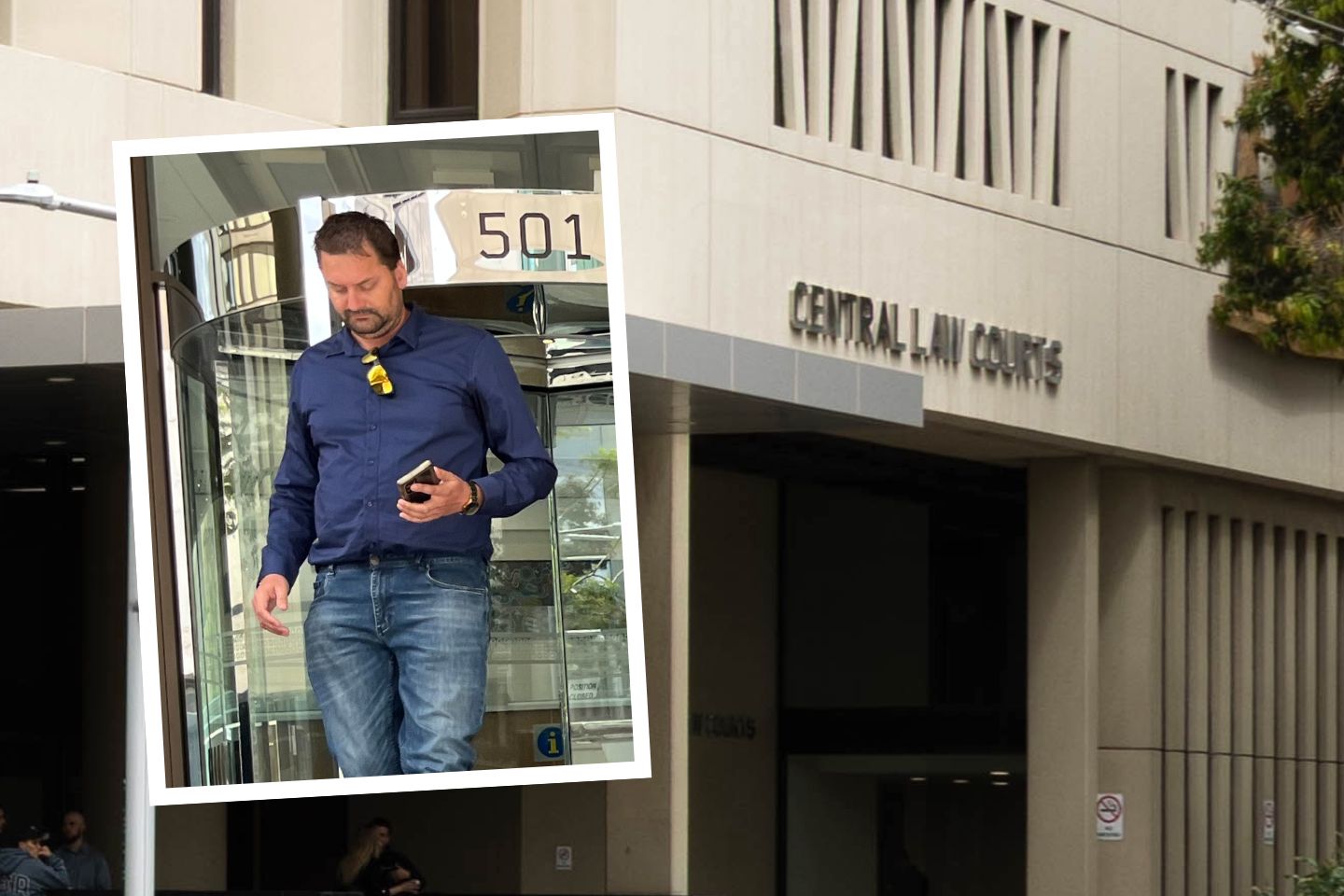
Paramount Earthmoving managing director Shawn Tilley has been re-appointed as a Macro Metals director after fraud charges against him were dropped.

Continue Reading

Business

Major rail disruption in south of England following radio fault

Published

on

Major rail disruption in south of England following radio fault

Trains have been cancelled and delayed, but Network Rail says services are now returning to normal.

Continue Reading

Business

New fund to progress major projects in state budget

Published

on

New fund to progress major projects in state budget

A new $500 million fund to fast-track major projects like the Aboriginal Cultural Centre has come out of the 2026-27 state budget.
Continue Reading

Business

Light & Wonder, Inc. (LNWO) Q1 2026 Earnings Call Transcript

Published

on

OneWater Marine Inc. (ONEW) Q1 2026 Earnings Call Transcript

Q1: 2026-05-06 Earnings Summary

EPS of $1.45 misses by $0.18

 | Revenue of $790.00M (2.07% Y/Y) misses by $41.12M

Light & Wonder, Inc. (LNWO) Q1 2026 Earnings Call May 6, 2026 7:00 PM EDT

Company Participants

Rohan Gallagher – Executive VP & Global Chief Corporate Affairs Officer
Matthew Wilson – CEO, President & Director
Oliver Chow – Executive VP, CFO & Treasurer

Advertisement

Conference Call Participants

Andre Fromyhr – UBS Investment Bank, Research Division
Barry Jonas – Truist Securities, Inc., Research Division
Matthew Ryan – Barrenjoey Markets Pty Limited, Research Division
Rohan Sundram – MST Financial Services Pty Limited, Research Division
Justin Barratt – CLSA Limited, Research Division
David Fabris – Macquarie Research
Kai Erman – Jefferies LLC, Research Division
Adrian Lemme – Citigroup Inc., Research Division
Liam Robertson – Jarden Limited, Research Division

Advertisement

Presentation

Operator

Good day, and thank you for standing by. Welcome to Light & Wonder First Quarter 2026 Earnings Webcast and Conference Call.

[Operator Instructions]

Advertisement

Please be advised that today’s conference is being recorded.

I’d now like to hand the conference over to Rohan Gallagher, EVP of Corporate Affairs. Please go ahead, sir.

Rohan Gallagher
Executive VP & Global Chief Corporate Affairs Officer

Advertisement

Thank you, operator, and welcome, everyone, to our first quarter 2026 earnings conference call. Joining me today in Sydney are Matt Wilson, our President and CEO; and Oliver Chow, our CFO. During today’s call, we will discuss our first quarter results and operating performance, where we will refer to our earnings presentation. This will then be followed by a question-and-answer session.

Today’s call will contain forward-looking statements that may involve certain risks and uncertainties that could cause actual results to differ materially from those discussed during the call. For information regarding these risks and uncertainties, please refer to our earnings materials relating to this call posted in the Investors section of our website and our filings with the SEC and the ASX. We will also discuss certain non-GAAP financial measures. A description of each non-GAAP

Advertisement
Continue Reading

Business

JD Sports warns of ‘muted growth’ amid UK consumer spending slowdown

Published

on

Business Live

Chief executive Régis Shultz says sportswear giant planning ‘control the controllables’ strategy

JD Sports logos

JD Sports says growth this year is likely to be muted(Image: Jonathan Brady/PA Wire)

JD Sports has reported falling profits as the sportswear retailer warned it is bracing for a period of “muted” growth amid subdued consumer spending and potential cost pressures from the Iran conflict.

Advertisement

Pre-tax profit at the FTSE 100 company dropped by 12 per cent to £629m in the year to January, despite sales climbing by 12 per cent to £12.7bn.

The sportswear chain was plunged into boardroom turmoil last month, when chair Andy Higginson resigned after reportedly failing to persuade the board to remove its chief executive.

JD Sports said on Thursday it is anticipating “muted market growth” in the year ahead, “shaped by a weaker spending outlook for our core customer demographic and ongoing product cycle evolution at some of our major brand partners, particularly in footwear”.

Consumer confidence has slumped to its lowest level in more than two years, as Britons rein in non-essential spending amid inflation concerns, as reported by City AM.

Advertisement

JD Sports said it has yet to experience an impact from the Middle East conflict, but said cost increases could be on the horizon and it may need to raise prices in response.

The company said it has no direct sales exposure to the Middle East market, where it runs just eight franchise stores.

The retailer issued broader profit guidance than it was “previously planning” to reflect the “uncertainty” created by the Iran conflict, forecasting a pre-tax profit of between £750m and £850m for the coming year. JD Sports recorded a 2.5 per cent decline in organic sales to £3.1bn in the UK, while sales surged by nine and four per cent in Asia Pacific and Europe respectively.

The retailer attributed the downturn in UK sales to “a tough consumer backdrop” and falling online sales, noting it faced particularly fierce competition within the female athletic footwear market.

Advertisement

Organic sales in the UK fell by 3.6 per cent in the final three months, as poor weather conditions dampened in-store footfall, the retailer confirmed.

READ MORE: JD Sports brings biggest-ever careers event to Manchester as it bids to help more young people into workREAD MORE: JD Sports plans to let shoppers buy through AI platforms

JD Sports closed 24 stores across the UK over the past year, although the retailer recorded 107 net openings in North America.

The company’s share price climbed three per cent at Thursday’s market open, reaching 70p, leaving the stock down 18 per cent for the year to date.

Advertisement

Chief executive Régis Shultz said his company is embracing a “control the controllables” strategy, as it seeks to preserve cash headroom and deliver a dividend to shareholders in the years ahead.

He said: “Whilst we continue to expect muted market growth in full-year 2027, we remain confident in JD Group’s medium‐term trajectory, underpinned by our strong brand partnerships and agile, multi‐brand model.

“For the year ahead we are focused on further enhancing and optimising our product offer, customer experience and store footprint, and delivering strong cost and cash discipline.” Recently departed chairman Andy Higginson is reported to have lobbied JD Sports’ boardroom to remove Schultz, but ultimately left the company himself after his efforts to unseat the chief executive proved unsuccessful.

Advertisement
Continue Reading

Business

Gray Media declares $0.08 quarterly dividend per share

Published

on


Gray Media declares $0.08 quarterly dividend per share

Continue Reading

Trending

Copyright © 2025