

Tech
Premier League Soccer: Stream West Ham vs. Arsenal From Anywhere Live

When to watch West Ham vs. Arsenal
- Sunday, May 10, at 11:30 a.m. ET (8:30 a.m. PT).
Where to watch
- West Ham vs. Arsenal will air in the US on USA Network.


Two teams, both in need of a win for very different reasons, meet on Sunday in this tantalizing all-London match-up, as relegation-threatened West Ham hosts table-topping Arsenal in the English Premier League.
Man City’s slip-up against Everton on Monday handed the advantage to the Gunners in the title race. An impressive double remains in the cards for Arsenal after it reached the UEFA Champions League final in midweek with a 2-1 aggregate win over Atlético Madrid.
West Ham, meanwhile, took a step closer to the trapdoor last weekend, with its demoralizing 3-0 defeat away at Brentford. That was compounded by relegation rival Tottenham picking up an unexpected win against Aston Villa, pushing the Hammers back into the drop zone.
West Ham takes on Arsenal on Sunday, May 10, at the London Stadium, with kickoff set for 4:30 p.m. BST. That makes it an 11:30 a.m. ET or 8:30 a.m. PT start in the US and Canada, and a 1:30 a.m. AEST kickoff in Australia in the early hours of Monday morning.
The reverse fixture between these two teams at the Emirates Stadium in October saw Bukayo Saka score from the penalty spot in a 2-0 win for Arsenal.
How to watch West Ham vs. Arsenal in the US without cable
Sunday’s crucial clash at the London Stadium will be broadcast on USA Network, which you can access with a live TV streaming service like Sling TV, or a pricier option such as YouTube TV or DirecTV’s MySports package.
The Sling TV Blue plan comes with USA Network, making it a great option for those who want to watch Premier League action. It costs $46 a month and includes more than 40 channels, including sports channels ESPN and FS1. Read our Sling TV review.
How to watch the Premier League 2025-26 with a VPN
If you’re traveling abroad and want to keep up with Premier League action while away from home, a VPN can help enhance your privacy and security when streaming.
It encrypts your traffic and prevents your internet service provider from throttling your speeds, and can also be helpful when connecting to public Wi-Fi networks while traveling, adding an extra layer of protection for your devices and logins. VPNs are legal in many countries, including the US and Canada, and can be used for legitimate purposes such as improving online privacy and security.
However, some streaming services may have policies that restrict VPN use to access region-specific content. If you’re considering a VPN for streaming, check the platform’s terms of service to ensure compliance.
If you choose to use a VPN, follow the provider’s installation instructions to ensure you’re connected securely and in compliance with applicable laws and service agreements. Some streaming platforms may block access when a VPN is detected, so verify whether your streaming subscription allows VPN use.
Price $78 for two yearsLatest Tests No DNS leaks detected, 18% speed loss in 2025 testsJurisdiction British Virgin IslandsNetwork 3,000 plus servers in 105 countries
ExpressVPN is our current best VPN pick for people who want a reliable and safe VPN, and it works on a variety of devices. It’s normally $120 a year for its most popular plan (Advanced), but if you sign up for an annual subscription for $90, you’ll get three months free. That’s the equivalent of $6 a month.
Note that ExpressVPN offers a 30-day money-back guarantee.
Livestream West Ham vs. Arsenal in the UK
This Sunday afternoon clash is exclusive to Sky Sports and will be shown on its Sky Sports Main Event channel. If you already have Sky Sports as part of your TV package, you can stream the game via its Sky Go app. Cord-cutters will want to set up a Now account and a Now Sports membership to stream the game.
Sky’s standalone streaming service Now offers access to Sky Sports channels with a Now Sports membership. You can get a day of access for £15 or sign up to a monthly plan from £35 a month right now.
Livestream West Ham vs. Arsenal in Canada
If you want to livestream English Premier League games in Canada this season, you’ll need to subscribe to Fubo. The service has secured exclusive rights to the Premier League and is broadcasting all 380 matches live.
Fubo is the go-to destination for Canadians looking to watch the EPL, with exclusive streaming rights to every match. It currently costs CA$27 for the first month, then CA$31.50 per month thereafter.
Livestream West Ham vs. Arsenal in Australia
Livestreaming rights for the EPL are now with Stan Sport, which is showing all 380 matches live, including this game.
Stan Sport will set you back AU$20 a month (on top of a Stan subscription, which starts at AU$12). It’s also worth noting that the streaming service is currently offering a seven-day free trial.
A subscription will also give you access to Premier League, Champions League and Europa League action, as well as international rugby and Formula E.


Wednesday’s episode of the Musk v. Altman trial kicked off on Wednesday with a unique proposition: OpenAI wanted to bring its ass into the courtroom, and lay it bare before the jury. It’s a good thing lady justice wears that blindfold.
A lawyer for Sam Altman’s AI behemoth, Bradley Wilson, approached US district judge Yvonne Gonzalez Rogers and handed her a small gold statue with a white stone base. It depicted the rear end of a donkey—with two legs, a butt, and a tail—and was inscribed with the message, “Never stop being a jackass for safety.”
OpenAI lawyers claim a small group of employees presented the gift to chief futurist Joshua Achiam, who started at the company as an intern in 2017 and now leads its work studying how society is changing in response to AI. Wilson said that Achiam interrupted Elon Musk’s parting speech from OpenAI in 2018 to warn that the billionaire’s desire to develop AGI at Tesla could come at the expense of safety. Wilson added that the trophy commemorates some “strong language” that Musk used toward Achiam in response—allegedly, calling him a jackass.
OpenAI requested to present the physical object during Achiam’s testimony on Wednesday, arguing that it adds to their case. While Musk’s team said the statue was irrelevant, Judge Gonzalez Rogers said she will consider allowing it when it’s referenced to corroborate the story. However, she seemed less than thrilled about accepting it as official evidence, which would put it in the court’s possession. “I don’t want it,” she said.
Representatives for Musk and OpenAI did not immediately respond to a request for comment about the ass.
Musk’s lawsuit accuses OpenAI of effectively stealing a charity, misusing his $38 million in donations to build an $850 billion business. In response, OpenAI has argued that Musk has always cared more about controlling a top-tier AGI lab than funding a nonprofit.
Earlier in the trial, Musk lawyer Steven Molo asked him if he ever called an OpenAI employee a “jackass.” Musk said “it’s possible” he did at some point, but that he didn’t mean for it to be offensive. “Sometimes you have to use language that gets people out of their comfort zone, if we’re going in the wrong direction,” Musk said.
OpenAI has long been proud of its jackass. When The Wall Street Journal asked about the statue in 2023, Altman told them, “You’ve got to have a little fun … This is the stuff that culture gets made out of.”

Harvard faculty are voting on a proposal (PDF) to curb grade inflation by limiting solid A grades to 20% of students in a class, plus four additional A’s per course. Axios reports: Grade inflation is at a tipping point at Harvard. A move to make A grades harder to come by at one of the world’s leading universities could influence grading debates at peer institutions. Solid A’s account for nearly two-thirds of all undergraduate letter grades. That’s up from roughly a quarter 20 years ago. More than 50 members of last year’s class graduated with perfect GPAs.
[…] Faculty are voting on three separate provisions. Each requires a simple majority to pass. A cap to limit solid-A grades to 20% of enrolled students in a class, plus four additional A’s per course. Changes to how internal honors are calculated, moving from traditional grade point average scoring to an average percentile rank. Allowing courses to use new “satisfactory” or “unsatisfactory” marks with a “satisfactory-plus” distinction.
A pre-vote faculty poll showed around 60% of the 205 respondents favored the 20-plus-four formula over an alternative. Supporters of the cap argue it’s intentionally modest as it places no restrictions on A-minuses. The four-grade buffer is designed to protect small seminars where a higher proportion of students may succeed. […] If passed, changes would take effect in fall 2027, followed by a mandatory three-year review.
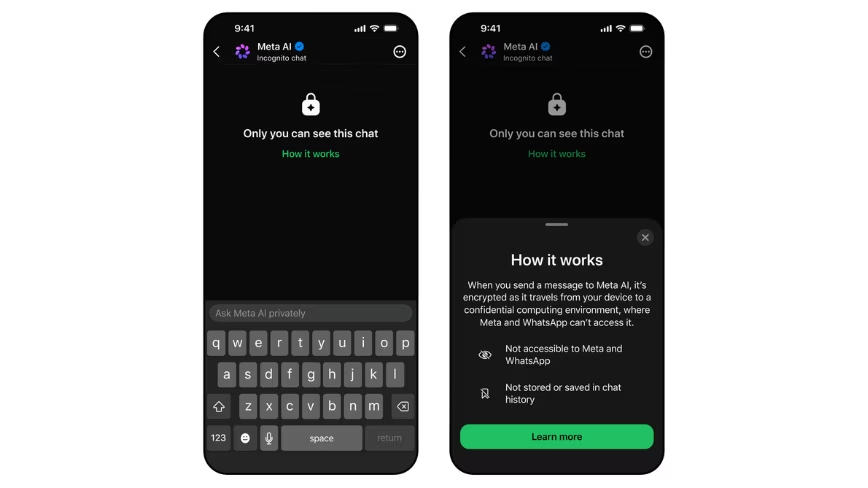
The new mode runs Meta AI on WhatsApp inside the company’s Private Processing enclave, with conversations deleted by default and no server-side record retained.
Meta has launched an Incognito Chat mode for Meta AI on WhatsApp and the Meta AI app, an effort to address the awkward fact that its assistant, like every other major AI chatbot, has until now been able to read the conversations users have with it.
The new mode, the company announced on Tuesday, processes user messages inside what Meta describes as a secure environment that even Meta cannot see, with conversations deleted by default once the session ends.
The technical foundation is WhatsApp’s Private Processing system, the architecture the company published in April 2025 to let AI features run on encrypted data inside Trusted Execution Environments on Meta’s servers.
Inside that enclave, the model can read and respond to a query, but the contents are not accessible to Meta’s engineers, its logging systems, or any of its commercial pipelines.
Other apps offer what they call incognito modes for AI conversations, but Meta’s framing in the announcement is pointed: “they can still see the questions coming in and the answers going out.”
The launch responds directly to a category-wide privacy concern. AI chatbots have become a default tool for the sort of question users would once have asked a doctor, a lawyer, or a partner, with all the data exposure that implies.
OpenAI, Google, and Anthropic each store conversation histories by default, with varying user controls. Apple Intelligence routes some queries through Apple’s Private Cloud Compute, an enclave architecture that is the clearest existing analogue to what Meta is now shipping inside WhatsApp.
Two product details follow from the design. First, the conversations are not saved server-side at all; users cannot pull up Incognito Chat history later because there is nothing to pull up.
Second, the disappearing-by-default behaviour means even a compromised device leaks less, since the chat residue clears between sessions.
Meta has published a technical whitepaper describing the cryptographic architecture for outside review.
A second feature is on the way. Sidechat with Meta AI, also protected by Private Processing, will let users get AI help inside an existing WhatsApp conversation, with the assistant aware of the chat’s context but its responses kept invisible to the other participants.
Meta said Sidechat will arrive on WhatsApp “in the coming months,” without a firmer date.
The launch’s commercial logic is straightforward. WhatsApp has been built for a decade around end-to-end encryption as a selling point, and Meta’s pitch for AI on the platform has had to find a way around the central tension that a conversational AI assistant needs to read your messages to be useful.
Private Processing is the company’s attempt at squaring that circle. The Incognito Chat product is the first time the architecture has been put behind a user-facing feature on this scale.
Whether the implementation holds under scrutiny is a separate question. Trusted Execution Environment-based AI systems have been audited and criticised across the industry, with researchers periodically demonstrating side-channel attacks against similar architectures from Apple, Google, and the hyperscalers.
Meta has invited external review of its Private Processing design, and the new whitepaper extends that posture, but the model’s resistance to subpoena, in particular, has not yet been tested in court.
Incognito Chat with Meta AI begins rolling out on WhatsApp and the Meta AI app this week, with broader availability over the coming months.
The launch lands at the end of a difficult fortnight for Meta on the privacy front, with US employees protesting the company’s new mouse-tracking software on Monday and the company a week out from layoffs of roughly 8,000 staff.
Inside Meta, the bet appears to be that consumer-facing privacy moves like this one will outweigh the internal-surveillance optics.
.png)
Amazon Seller Central offers a layered reporting suite — with access determined by selling plan, fulfillment method, and Brand Registry status. In most organizations, these reports serve a single purpose — confirming what has already occurred: sales reconciled, fees reviewed, inventory checked. That operational function is necessary, but it represents only a fraction of what these reports are built to deliver. The same reports hold intelligence that directly determines how a brand scales:
➔ Conversion signals that reveal listing degradation before it erodes rank
➔ Acquisition quality data that separates genuine brand growth from retargeting spend
➔ Product feedback loops that surface quality and listing gaps before they compound in reviews
➔ SKU-level margin intelligence that identifies which products can sustain paid investment and which cannot
The gap is not access — it is how the data is leveraged.
This blog provides a structured approach to leveraging five core Seller Central report categories — Business, Advertising, Fulfillment, Return, and Payments — for measurable brand growth. It covers best practices for leveraging reports effectively, the structural limitations every brand team needs to account for before acting on the data, and how Amazon account management helps.
The Core Categories: How Amazon Seller Central Reports Are Structured
|
Report |
Key |
Role |
|
Business Reports |
Sales Dashboard, Detail Page Sales and |
Conversion health, traffic trends, |
|
Advertising Reports |
Search Term Report, Placement Report, |
Search demand, new-to-brand acquisition, |
|
Fulfillment Reports |
Inventory Ledger, Stranded Inventory, Inbound |
Inventory health, stockout prevention, |
|
Return Reports |
FBA Customer Returns Report, Returns Trend |
Product quality feedback, brand equity |
|
Payments Reports |
Transaction View, Fee Preview Report |
SKU-level margin clarity for reinvestment |
How to Use Amazon Seller Central Reports for Brand Growth
Step 1: Audit Business Reports for Brand Performance Signals
1. Detail Page Sales and Traffic by Child ASIN: Read session count, page views, Unit Session Percentage (conversion rate), and Featured Offer percentage at the variation level. Track these metrics weekly per ASIN — a sustained downward trend in Unit Session Percentage is your leading indicator of listing degradation before it erodes rank.
2. Brand Performance Report: Review Average Customer Review, Number of Customer Reviews, Sales Rank, and Featured Offer percentage together for each ASIN. These four metrics form a direct snapshot of brand health at the listing level. Flag metric combinations that signal brand risk rather than reading each metric in isolation.
3. Sales Dashboard: Review weekly and monthly trend lines across weekly and monthly windows to gauge whether brand momentum is accelerating or declining. Use the Compare Sales feature to layer on year-over-year context — this helps separate genuine trajectory shifts from recurring seasonal patterns.
Cross-reference sessions against Unit Session Percentage: falling sessions signal a visibility problem; falling conversion with stable sessions signals a listing or pricing issue.
Note: Business Reports are available only to sellers on a Professional selling plan, and historical data is retained for up to two years.
Step 2: Extract Brand Acquisition Insights from Advertising Reports
Advertising Reports address two brand growth questions that Business Reports cannot answer. The first is which channels and keywords drive new demand into the brand. The second is what proportion of that demand represents genuinely new-to-brand customers versus returning buyers.
1. Search Term Reports: Review the actual queries customers typed before clicking an ad.
– Negate: Any term that spends money with zero conversions over 30 days is added as a negative keyword. This is the single fastest way to improve ACoS without changing bids.
– Harvest: Any search term that converts at or below your target ACoS is added as an exact match keyword.
For brands managing large campaign portfolios, use the Bulk Operations feature in Campaign Manager to download a custom spreadsheet with Sponsored Products and Sponsored Brands Search Term data. Edit keyword additions and negations directly in the file and upload to update campaigns in a single operation.
.png)
2. Sponsored Brands and Sponsored Display Reports: Isolate the New-to-Brand (NTB) metric inside these campaign types to separate new customer acquisition from repeat buyers. Monitor NTB percentage, NTB order cost, and NTB sales separately from overall ROAS to measure true brand expansion, not branded retargeting.
3. Placement Reports: Compare conversion and spend distribution across top-of-search, product pages, and rest-of-search. Redirect budget toward placements with the strongest NTB and conversion performance. Top-of-search placements carry disproportionate brand visibility and deserve priority investment when NTB indicators support it.
Step 3: Protect Brand Momentum with Fulfillment Reports
1. Inventory Ledger Report: Consolidate inventory movement across Amazon warehouses — adjustments, receipts, and shipments — in a single view. Monitor inventory accuracy and act on discrepancies before stockouts hit high-velocity ASINs.
.png)
2. Stranded Inventory Report: Identify stock held in FBA warehouses but unsellable due to listing issues. Each stranded ASIN represents a direct revenue leak. Recover these listings weekly, before the associated search rank decays.
3. Inbound Performance Report: Track the efficiency of FBA shipments, including missing units, incorrect labeling, and receiving delays. Address recurring inbound issues at the source before they escalate into repeat offenses, as persistent issues extend reimbursement cycles and delay restock.
4. Inventory Performance Index (IPI): Monitor IPI as a brand growth prerequisite, not a warehouse KPI. Calculated from fulfillment data, the score directly affects FBA storage limits. A low IPI restricts scalability and caps paid acquisition ceilings.
Step 4: Read Return Reports as Product Quality Feedback
1. FBA Customer Returns Report: Mine return reasons, order IDs, and SKU-level detail for recurring patterns. Aggregate return reasons by ASIN to reveal product issues that would otherwise appear only in individual customer reviews.
2. Return Trend Monitoring: Flag ASINs with rising return rates as a signal of either a product quality issue, a listing accuracy issue, or both. Each failure mode damages brand equity and search rank. Address the root cause visible in return reasons, rather than treating the symptom through returns management.
For example, when the most frequent return reason on an ASIN is “not as described,” the listing content itself is driving the returns. An updated, accurate listing reduces future returns, improves conversion rate, and reinforces brand trust — three outcomes from a single fix.
3. Schedule Report Generation: Set up daily schedules for All Returns and Prime returns, instead of pulling them manually. Three operational constraints to note:
– One active schedule per report type
– Maximum of 30 reports in the Scheduled Reports section
– Schedule changes require deletion and recreation
Reports can be scheduled by return date for both FBA and seller-fulfilled orders to track return reasons and item condition across fulfillment channels.
.png)
Step 5: Use Payments Reports to Inform Brand Reinvestment
1. Transaction View: Break down every order into referral fees, FBA fees, promotional rebates, and net proceeds. Surface ASIN-level margin visibility to identify which products can sustain paid acquisition pressure and which cannot.
2. Fee Preview Report: Project FBA fulfillment, storage, and referral fees across existing FBA inventory. Review the report to identify ASINs where upcoming fee changes or aged-inventory surcharges will compress margin. Adjust pricing or inventory planning before the fees hit the bottom line.
Limitations & Challenges of Amazon Seller Central Reports
#1 No Built-in Competitive Benchmarks
Seller Central Reports show only your own performance data. There is no native view of how your brand performs against category peers or direct competitors. External benchmarking requires third-party data or Brand Registry-gated reports.
#2 Data Latency Varies Across Reports
Business Reports refresh daily, while Fulfillment and Payments reports often run on weekly or delayed cycles. This inconsistency complicates cross-report analysis when precise attribution windows matter, particularly for reconciling paid performance against organic results within the same reporting period.
#3 Limited Brand-Level Insights Without Brand Registry
Deeper brand-growth tools sit outside the standard Reports tab. These include Brand Analytics dashboards (Search Query Performance, Market Basket Analysis, Customer Loyalty Analytics), the Brand Dashboard, and Voice of the Customer. Brand Registry enrollment unlocks these additional layers.
#4 Attribution Gaps Between Advertising and Organic
Advertising Reports attribute sales to campaigns, while Business Reports track total sales. Reconciliation between the two requires careful segmentation, especially when paid campaigns and organic traffic overlap on the same keywords.
#5 Report Siloing Across Tabs
Seller Central Reports live across multiple tabs — Reports, Advertising, Returns, Payments — with inconsistent naming and export formats. Cross-report analysis almost always requires careful manual reconciliation.
Best Practices for Using Seller Central Reports Effectively
1. Standardize Date Ranges Across Reports
Different reports operate on different default time windows. Business Reports default commonly to 30 days, while granular Advertising Reports — including Search Term and Purchased Product Reports — are subject to a hard 90-day lookback limit, not a display default. Manually aligning date ranges across reports before cross-referencing ensures comparisons reflect the same performance window and eliminates attribution mismatches.
2. Benchmark Week-Over-Week, Not Day-Over-Day
Single-day metrics are statistically volatile, particularly on low-velocity SKUs where marginal order volume can produce significant conversion rate variance. Weekly benchmarking normalizes daily fluctuations while keeping the reporting window tight enough to surface trends before they compound.
3. Cross-Reference Reports for Root-Cause Analysis
A conversion decline in Business Reports frequently correlates with a Buy Box shift, a pricing change, or a stranded listing in Fulfillment Reports. Isolating a single metric without cross-report validation increases the risk of misdiagnosis and misdirected corrective action.
4. Export and Archive Reports Externally
Business Reports retain data for up to two years. Granular Advertising Reports, including those referenced above, are capped at a 90-day lookback window with no native recovery option beyond that threshold. Once the window closes, that data is permanently removed from Seller Central — brands that need historical context must export it on a defined schedule.
5. Align Reporting Depth with Organizational Role
Operational teams require weekly tactical reviews covering stockouts, suppressed listings, and Buy Box performance. Brand leadership requires monthly and quarterly trend analysis focused on category share and customer retention. Calibrating reporting depth to the decision-making level of each function reduces analysis fatigue and maintains actionable review cycles across the organization.
The Business Imperative: Seller Central Reports provide the data. Translating that data into consistent brand decisions — across listings, advertising, inventory, returns, and margins — requires operational discipline that compounds over time.
For brands managing catalog depth, multi-channel fulfillment, and active advertising simultaneously, cross-report analysis, weekly metric reviews, search term management, inventory reconciliation, and fee audits each demand specialization and bandwidth that most in-house teams cannot sustain at the required cadence.
Amazon account management services bring the field-level expertise and technical infrastructure to close that gap — identifying signals early, connecting them across report categories, and converting them into decisions before they compound into performance issues.
As catalog scale increases, inconsistent report review compounds directly into rank loss, wasted ad spend, stranded inventory, and missed reinvestment signals — each one a measurable cost to brand performance. The question is not whether these gaps exist. The question is how long your brand can afford to leave them unaddressed.

from the nice-work-if-you-can-get-it dept
In a ruling that will clearly be remembered as one of the worst in the history of the Supreme Court, two years ago, the court gave Donald Trump a get out of jail free card, which he appears to be trying to take full advantage of with all the criming in his second term. But, as always with this guy, it’s never enough.
We’ve already covered in detail the ridiculous situation in which Donald Trump acting in his supposed personal capacity, while still being the president, sued his own IRS for $10 billion, because a contractor leaked his tax returns a while back (that contractor is currently in prison for doing so). Again, there is zero indication of any actual harm. Every president — and nearly all major candidates — for the past 50 years released their tax returns to the public. Except Trump.
A decade ago he claimed that it was because he was being audited, and promised to release them once the audit was over. But he’s never done anything. And, as many people have noted, when President Richard Nixon started this tradition of releasing the president’s tax returns, he was actually being audited by the IRS, and was able to release his returns without a problem.
Either way, a contractor (not an IRS employee) leaked some of Trump’s returns to ProPublica and the NY Times, which resulted in a few stories before the news cycle moved on within days. It certainly didn’t stop Trump from being elected in 2024. And even though the returns were leaked in 2019 and 2020, Trump waited until he was back in the White House (and, in charge of the IRS and the DOJ) to file this $10 billion lawsuit.
We’ve covered the ridiculous claim that the “two sides” (there aren’t two sides) were “negotiating a settlement” and how the judge in the case has tried to call timeout, noticing that since Trump is effectively negotiating with himself there’s no cause or controversy, and thus there may be no jurisdiction for the court to hear the case. There’s still briefing going on over that, but the NY Times reports that the supposed (not really) “negotiations” have continued, with Trump apparently proposing that the settlement include the IRS dropping audits of Trump, his businesses, and his family, which would just be a shocking level of corruption from an administration that has spent its first year and a half in office trying to be as blatantly corrupt as possible.
One of the settlement options the Justice Department and White House officials are reviewing is the possibility of the I.R.S. dropping any audits of Mr. Trump, his family members or businesses, according to two of the people.
Again, even though the news cycle moved on quickly, perhaps it should return to exactly what those leaked tax returns showed: which is that at a time when Trump was publicly claiming to be rolling in cash, he basically paid effectively no income taxes and was racking up massive losses — figures that raise serious questions about his financial entanglements and what he stood to gain from his first term in office.
To have the audits of what happened during those years completely dropped — and not just for him, but for his entire family and related businesses — is another form of a get out of jail free card. Call it a “tax cheat for life” card.
To do this at a time when the public is struggling, due almost entirely to Donald Trump’s ridiculous policies — tariffs driving up inflation massively, an illegal war quagmire in Iran driving up energy prices — is even more insulting to the public that Donald Trump is supposed to be working for. The same day this story came out, Trump was asked about whether he was thinking about the impact of his out-of-control war on Americans’ financial situation, and he responded “not even a little bit” and that “I don’t think about Americans financial situation. I don’t think about anybody.”
Well, except himself, apparently.
Filed Under: audits, corruption, donald trump, irs, tax returns

The German Sovereign Tech Fund has invested 1.2 million euros ($1.4 million USD) in KDE Plasma technologies to help strengthen the structural reliability and security of the desktop environment’s core infrastructure, including Plasma, KDE Linux, and the frameworks underlying its communication services. Longtime Slashdot reader jrepin shares an excerpt from the announcement: For 30 years, KDE has been providing the free and open-source software essential for digital sovereignty in personal, corporate, and public infrastructures: operating systems, desktop environments, document viewers, image and video editors, software development libraries, and much more.
KDE’s software is competitive, publicly auditable, and freely available. It can be maintained, adapted, and improved in-house or by local software companies. And modifications (along with their source code) can be freely distributed to all users and departments within an organization.
KDE will use Sovereign Tech Fund’s investment to push its essential software products to the next level, providing every individual, business, and public administration with the opportunity to regain their privacy, security, and control over their digital sovereignty. Slashdot reader Elektroschock also shared a statement from Fiona Krakenburger, Technical Director at the Sovereign Tech Agency.
“We have long invested in desktop technologies for a reason: they are the primary way people access and use digital services in everyday life,” says Krakenburger. “The desktop holds personal data and mediates nearly every service we depend on, from booking the next medical appointment, to education, to the way we work. We are investing in KDE because it is one of the two major desktop environments used across Linux and plays a key role in how millions of people experience open technology. Strengthening KDE’s testing infrastructure, security architecture, and communication frameworks is how we invest in the resilience and reliability of the core digital infrastructure that modern society depends on.”

Thanks to Reddit, one of the best little secrets of the Valve Steam Controller has been discovered. Now I can’t stop dropping it, because it turns out it makes a Wilhelm scream if it does. I tested it, and can confirm. You don’t even need the controller paired to anything to make it happen.
Throughout my several-week review of Valve’s new game controller, I never knew that it made the infamous Wilhelm scream, a stock sound effect that has been used in hundreds of movies, when dropped. How would I know it did that? I don’t drop controllers. Or I don’t intend to.
But that’s exactly what the controller does when dropped even lightly on any surface. I picked up and dropped the controller a bunch of times onto my sofa, from about 3 feet, and that iconic scream that my kids love happened. Check out the video below.
The scream is randomized: It’s not about how hard you drop it, so don’t do that. A harder accidental fall onto the floor produced no scream. Two straight drops made screams. Then none for a bunch after that. That’s the fun of it.
Apparently, the scream is happening via the motor haptics in the controller, which act as a speaker. Or, is it a speaker? It sounds really good, it’s stunning.
The effect occurs even if the Steam Controller isn’t paired to anything. I just turned the controller on, and while it was cycling for Bluetooth pairing, it still made the drop screams, no Steam Deck or PC on or nearby.
I don’t generally recommend dropping $99 game controllers, but this Easter egg is so amazing that I want all game controllers to make little noises now. What if Joy-Cons made Mario sounds? PlayStation DualSense made AstroBot chirps?
I already loved the Steam Controller. I love it even more now.

Testing desks is something of a subjective game. Much like office chairs, the tests are based on comfort, reliability and ease of setup rather than things you can test in electronics such as wattage and battery usage. I still tested each one rigorously and will continue to test them for longevity in the coming months.
I tested these desks by asking three people to try each one. Each of them used the desk for at least 16 hours and then gave me their impressions. The three people were 6 feet, 1 inch tall; 5 feet, 8 inches tall; and 5 feet, 4 inches tall respectively, to give me a good cross-section of average user height.
Setup time and package quality
Building desks can often be difficult and time-consuming. For each desk, I timed how long it took to unpack and assemble, and I noted whether the manual was easy to follow. I followed the instructions as closely as possible so that each build was performed as if I had never built one before. I also thoroughly checked the packaging, to make sure it wasn’t damaged, and if it was secure enough to carry the desk it had in it. Any damage was noted, and images were sent to the manufacturers for review.
Structural integrity
Modern desks need to be able to hold a good amount of weight. If you’re at a writing desk you might only have a small laptop, but if you’re using a gaming desk, it likely has two monitors and a giant gaming PC as well. For each desk, I checked the maximum load specification, and I tried to match that with the materials we actually use on our desks.
I used:
- A heavy gaming PC tower
- Two 27-inch gaming monitors on a dual monitor arm
- A MacBook Pro
- Two different keyboards and assorted mice and trackpads
- My Oculus Quest 2
- My phone stand and USB hub
- A podcasting mic and headphones
Depending on the length and weight capacity of the desk, I mix and match these items, then check for any bowing of the top or inconsistencies in how the desk felt as I worked.
The wibble-wobbles
This is a bit of a throwback from when my dad used to make furniture. Anything my dad built would be critiqued by my mum, and if it didn’t pass muster, she would say, “It’s a bit wibbly-wobbly, isn’t it, dear?” Once I’ve built each desk and loaded it for normal use, I would check it for the wibble-wobbles. This means rocking it from side to side and forward and backward to check that all the screws, bolts and fixtures kept everything rigid.

As AI begins to interact with the physical world, new types of labs are working to build world models that could be used to operate physical robotics or model objects in physical space. Unlike large language models, there isn’t an easy source of data for those models, which has left many labs scrambling to assemble the necessary training sets.
Now, one startup is emerging with an unlikely data source: the video game industry.
That’s the premise of Origin Lab, which just announced an $8 million seed funding round led by Lightspeed Ventures. SV Angel, Eniac, Seven Stars, and FPV also participated, with angel funding from Twitch co-Founder Kevin Lin and Cruise founder Kyle Vogt.
“The AI systems that are being built now need to understand how the physical world works and how things move,” co-CEO and co-founder Anne-Margot Rodde told TechCrunch. “That data essentially lives in video games.”
In simple terms, Origin Lab will serve as a marketplace where world-model-focused labs such as Yann LeCun’s AMI Labs or Fei-Fei Li’s World Labs can buy high-quality licensed data. On the other side of the trade, video game companies can squeeze additional revenue out of the digital assets they’ve already created. In the middle, Origin Lab will convert the video game assets into a form that works as training data — something that could be as simple as a rendering run or as complex as automating hours of walkthrough footage.
“It became clear that the video game industry was sitting on some incredibly valuable data, but there was no real way or infrastructure to basically connect AI labs and the video game industry,” says Rodde. “So essentially, we built that bridge.”
Labs have long been interested in video game footage as a data source, but licensing and data quality issues have often gotten in the way. In December 2024, OpenAI caused a minor scandal when the first version of its Sora video-generation model seemed to regurgitate footage of popular video games and streamers — presumably because it had been trained on Twitch streams. Amazon has been open about its interest in using Twitch footage to train models.
Origin’s success in fundraising is a sign of a growing market — not just for training data, but for startups that can serve as essential suppliers to major AI labs. Faraz Fatemi, a partner at Lightspeed who led the Origin investment, says the success of companies like Scale.AI has made the opportunity impossible to ignore.
“We’ve seen how sharp the revenue scaling can be for data vendors that are serving the major labs,” Fatemi told TechCrunch. “These are very well-capitalized businesses, and the bottleneck for all of them is data.”
When you purchase through links in our articles, we may earn a small commission. This doesn’t affect our editorial independence.
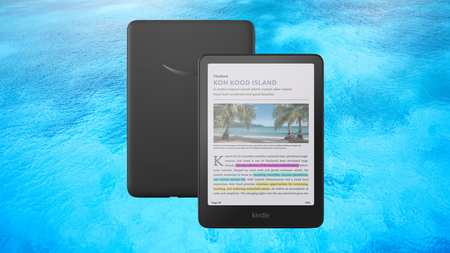
Colour displays on e-readers have always come at a premium steep enough to make most readers pause and quietly settle for black and white instead.
The Kindle Colorsoft is Amazon’s answer to that hesitation, and it is now down from £239.99 to £174, with £65.99 off its usual retail price.
A big 27% price cut brings the Kindle Colorsoft under £175, making a colour Kindle far more affordable
The Kindle Colorsoft is Amazon’s answer to the steep prices of colour e-readers, and it is now down to £174.
This is not simply a standard Kindle with a colour filter dropped over the top; the Colorsoft uses a purpose-built 7-inch Colorsoft display optimised specifically for colour reading, delivering 300ppi in black and white and 150ppi in colour, with a paper-like quality that makes book covers and illustrated content genuinely worth looking at.
The adjustable warm light shifts the display from white to amber, which means comfortable reading holds up whether you are outside in direct sunlight at midday or winding down under a lamp late at night.
Battery life reaches up to eight weeks on a single charge, based on half an hour of reading per day with wireless off and the light at a moderate setting, so the colour display does not come at the cost of the long battery life Kindle readers expect.

Storage sits at 16GB, which is enough to hold thousands of books locally, and free cloud storage covers the rest of your Amazon content library without taking up any space on the device itself.
Waterproofing is rated to IPX8, meaning the Kindle Colorsoft can handle submersion in two metres of fresh water for up to 60 minutes, making it genuinely bath-safe and pool-safe rather than just splash-resistant in name.
Highlighting works across four colours, yellow, orange, blue, and pink, which makes it a more active reading tool for anyone who annotates regularly and wants to distinguish between different types of notes across a single book.
This deal makes strong sense for readers who have been watching the colour Kindle category and waiting for the price to become more reasonable, with the Colorsoft now sitting at its most accessible since launch.
Still want to explore the full Kindle lineup before deciding? Our best Kindle 2026 guide has every current model tested and ranked to help you find the right fit.
SQUIRREL_PLAYLIST_10148964

Don’t waste money on expensive speakers
Gerwyn Price’s shock decision prompts Jonny Clayton to make statement

Reds10 Group takes stake in Hull steel fabrication firm ESL Fabrication Engineers

Manchester United reach agreement with Casemiro over contract clause amid transfer speculation

US brings back mandatory military draft registration

Steven Gerrard disagrees with Gary Neville over ‘shock’ Chelsea and Arsenal claim | Football


-
 Crypto World5 days ago
HarrisX Poll Found 52% of Registered Voters Support the CLARITY Act
-

 Fashion5 days ago
Weekend Open Thread: Marianne Dress
-

 Crypto World6 days ago
Upbit adds B3 Korean won pair as Base token gains Korea access
-
 NewsBeat6 days ago
NCP car park operator enters administration putting 340 UK sites at risk of closure
-

 Fashion2 days ago
Coffee Break: Travel Steam Iron
-

 Fashion3 days ago
What to Know Before Buying a Curling Wand or Curling Iron
-

 Tech4 days ago
Auto Enthusiast Carves Functional Two-Stroke Engine from Solid Metal
-

 Politics2 days ago
What to expect when you’re expecting a budget
-
 Business4 days ago
Ignore market noise, India’s long-term story intact, say D-Street bulls Ramesh Damani and Sunil Singhania
-

 Politics4 days ago
Politics Home Article | Starmer Enters The Danger Zone
-

 Tech2 days ago
GM Agrees To Pay $12.75 Million To Settle California Lawsuit Over Misuse Of Customers’ Driving Data
-

 Politics6 days ago
Simon Cowell Says He Was ‘Horrible’ To Susan Boyle During BGT Audition
-

 Entertainment7 days ago
Sarah Paulson Called Out For Met Gala ‘Hypocrisy’
-

 Entertainment6 days ago
General Hospital: Ric & Ava Bombshell – Ric’s Massive Secret Exposed!
-

 Crypto World7 days ago
Robinhood says Wall Street is building onchain
-

 Entertainment7 days ago
Bold and Beautiful Early Spoilers May 11-15: Steffy Revolted & Liam Overjoyed!
-

 Sports6 days ago
UEFA Champions League final schedule, teams, venue, live time and streaming | Football News
-

 Entertainment6 days ago
Why David Letterman Called CBS ‘Lying Weasels’
-

 Fashion7 days ago
The Best Work Pants for Women in 2026
-
 Sports7 days ago
Mike Tyson speaks out on status of Floyd Mayweather fight
You must be logged in to post a comment Login