

Business
10 Key Things You Must Know About Shai Gilgeous-Alexander in 2026 After Repeat MVP Win

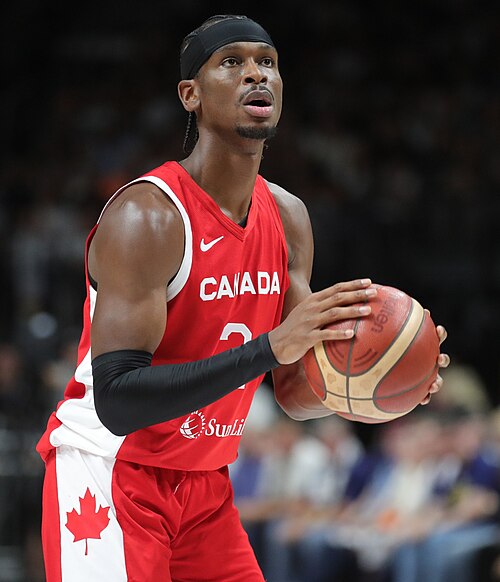
OKLAHOMA CITY — Shai Gilgeous-Alexander has firmly established himself as one of the NBA’s most dominant and marketable superstars in 2026, capturing his second consecutive Most Valuable Player award while leading the Oklahoma City Thunder to the best record in the Western Conference and positioning the franchise as a clear championship contender.
The 26-year-old Canadian guard’s remarkable season has drawn comparisons to the league’s all-time greats, blending elite scoring, playmaking, defense and leadership in a way few players have achieved. As the Thunder prepare for another deep playoff run, here are 10 essential things to know about the face of Oklahoma City’s resurgence and one of the NBA’s most compelling figures heading into the 2026 postseason.
1. Back-to-Back MVP Winner
Gilgeous-Alexander became just the 14th player in NBA history to repeat as MVP, joining legends like Wilt Chamberlain, Kareem Abdul-Jabbar, Magic Johnson, Larry Bird, Michael Jordan, Tim Duncan, Steve Nash, LeBron James and Stephen Curry. He edged out Nikola Jokić and Giannis Antetokounmpo in voting, receiving 82 first-place votes after averaging 32.4 points, 6.2 rebounds, 7.1 assists and 2.1 steals per game while shooting 53 percent from the field.
2. Historic Statistical Dominance
SGA’s efficiency and versatility set him apart. He led the league in scoring among guards while maintaining one of the highest true shooting percentages in the NBA. His ability to finish at the rim, create for teammates and lock down opposing guards on defense made him a nightmare matchup. Advanced metrics ranked him among the top five players in both offensive and defensive win shares, a rare two-way impact.
3. Leadership of a Young Thunder Core
At just 26, Gilgeous-Alexander has become the unquestioned leader of a Thunder team featuring fellow young stars Chet Holmgren and Jalen Williams. His calm demeanor, work ethic and basketball IQ have elevated everyone around him. Teammates credit his attention to detail and competitive fire for the team’s remarkable 68-win season, the best in franchise history.
4. Global Icon Status Growing
Born in Toronto and representing Canada internationally, Gilgeous-Alexander has become a global ambassador for basketball. His popularity in Canada rivals that of past stars, and his stylish off-court presence has made him a favorite among fashion and lifestyle brands. In 2026, he signed major endorsement deals that significantly boosted his off-court earnings.
5. Defensive Excellence
Often overlooked early in his career, SGA has developed into an elite defender. He led the league in steals for the second straight season and earned his third consecutive All-Defensive First Team selection. His length, anticipation and footwork allow him to guard multiple positions effectively, making him a cornerstone of Oklahoma City’s league-leading defense.
6. Clutch Performer in Big Moments
Gilgeous-Alexander has thrived in high-pressure situations throughout the 2025-26 season. He led the league in points scored in the final two minutes of games and delivered multiple game-winning shots. His poise in crunch time has earned respect from opponents and cemented his reputation as a true alpha in the biggest moments.
7. Humble Personality Off the Court
Despite his stardom, Gilgeous-Alexander maintains a low-key, humble public persona. He rarely seeks the spotlight, preferring to let his play speak for itself. Teammates and coaches describe him as quiet but intensely competitive, someone who leads by example rather than loud motivation. His focus on family and community work has also earned admiration.
8. Business and Philanthropic Ventures
Beyond basketball, SGA has expanded his business interests. He launched a foundation focused on youth education and basketball development in Canada and Oklahoma. His growing portfolio includes investments in tech startups and apparel brands, positioning him for long-term financial success after his playing career.
9. Influence on Canadian Basketball
Gilgeous-Alexander has played a major role in Canada’s rising basketball profile. His success has inspired a new generation of young Canadian players, many of whom cite him as a role model. The national team’s strong performances in recent international competitions have been partly attributed to his leadership and visibility.
10. Future Outlook and Legacy Building
At 26, Gilgeous-Alexander is entering the prime of his career. With a young, talented Thunder roster and strong financial flexibility, Oklahoma City is positioned for sustained contention. Many analysts believe multiple MVP awards and championship opportunities lie ahead if he stays healthy and continues his trajectory.
Gilgeous-Alexander’s rise from a late first-round pick to back-to-back MVP represents one of the more remarkable individual ascensions in recent NBA history. His combination of skill, work ethic and leadership has made him the face of a new generation of NBA stars who prioritize winning and team success over individual flash.
As the 2026 playoffs begin, all eyes will be on SGA and the Thunder. Whether they can translate regular-season dominance into a championship remains to be seen, but one thing is certain: Shai Gilgeous-Alexander has earned his place among the league’s elite and shows no signs of slowing down.
For basketball fans, Gilgeous-Alexander represents the ideal modern superstar — skilled, humble, defensively impactful and committed to winning. His journey continues to inspire young players worldwide and serves as a reminder that consistent excellence and quiet leadership can still define greatness in today’s NBA. As he chases his first championship, the basketball world watches with anticipation, knowing that the best may still be yet to come for one of the game’s brightest stars.


Goldman said in a note dated Wednesday that systematic managers – sometimes called quant funds – that use algorithms to trade market trends, have given back a quarter of their year-to-date returns. Returns for this group of traders are now up 10.8% for the year, down from a return of 14.4% on June 22.
Losses came from bets against some of the biggest and most crowded parts of the market right now – U.S. equities, Asian developed-market stocks and, to a lesser extent, Europe, the note said.
Huge volatility in shares of chipmakers had made for a tricky trading environment anyway in late June and into early July. But hefty levels of leverage among retail investors in Korean markets in particular amplified a lot of the share-price moves.
Quant funds made up roughly 10% of the largest hedge funds in 2025, according to data from S&P Global.

Regulators, including those at the Bank of England, the Bank of Japan and the Bank for International Settlements, have been warning for some time about lofty valuations, particularly in the tech sector where shares in companies like Micron Technology , Intel or Marvell Technology have risen by around 200% in 2026 alone.
And they’ve voiced concern over how the growing role hedge funds play in financial markets adds to volatility and risk.Goldman said fundamental managers, or stockpicking funds, were down 2.2% in the same period, having been caught up in crowded tech sector trades. But this group, it said, was still up 15.5% this year.
These stockpickers have “aggressively” fled trades related to AI, most of which had previously driven winning trading positions, Goldman said.
This mass exit has brought hedge fund leverage to its lowest levels of the last year, a sign of the scale of their trading activity.

Optical Cable: A Better Business, But No Longer A Bargain

Form 4 NN Inc For: 9 July

Tehran said it hit U.S. military targets in Kuwait, Qatar and Bahrain following U.S. strikes against Iran on Wednesday. The PHLX chip index surged for a second straight positive session.
Micron Technology jumped after the companylaid out plans to invest more than $250 billion in the U.S. through 2035, to benefit from demand for memory chips to supply the boom in artificial intelligence.
Applied Materials and Sandisk also surged.
AI-related stocks have been volatile lately as investors worried about the sustainability of a rally that has helped Wall Street reach record levels in 2026.
“This is still very much an AI bull market. For a bit, it was starting to broaden out, but that’s contingent on oil prices and interest rates staying anchored, and with this flare-up in the Middle East, that calls that part of the bull market into question,” said Ross Mayfield, investment strategy analyst at Baird in Louisville, Kentucky.
Meta Platforms rose after Reuters reported that the company plans to manufacture AI chips starting in September.According to preliminary data, the S&P 500 gained 59.12 points, or 0.79%, to end at 7,541.83 points, while the Nasdaq Composite gained 328.11 points, or 1.27%, to 26,198.76. The Dow Jones Industrial Average rose 133.31 points, or 0.25%, to 52,481.70.
With quarterly reporting season set to get under way, analysts on average expect S&P 500 earnings to increase 24% year-over-year, with technology companies accounting for much of that increase, according to LSEG I/B/E/S.
The S&P 500 is trading at about 20 times expected earnings, down from 21 a month ago.
The number of Americans filing claims for unemployment benefits fell last week, suggesting the labor market remained stable despite a slowdown in job growth in June.
The Federal Reserve kept interest rates unchanged at its June meeting, under new Chair Kevin Warsh, but minutes released on Wednesday showed a few policymakers saw a case for raising borrowing costs before ultimately agreeing to hold steady.
Traders are pricing in a likely 25-basis-point rate hike by the Fed’s December meeting, according to CME’s FedWatch tool. PepsiCo fell despite the snacks and soda giant beating second-quarter revenue estimates.
Costco Wholesale’s shares sank to a six-month low after the retailer reported decelerating comparable sales for June.
Form 4 ADT Inc For: 9 July
Business
Major League Fishing Bringing Bass Pro Tour to Caddo and Cross Lakes for First-Ever Time in February 2027
SHREVEPORT-BOSSIER CITY, La. — Major League Fishing has announced that Caddo Lake and Cross Lake will host a stop on the 2027 Bass Pro Tour, marking the first time the world’s largest tournament-fishing organization has brought its premier professional bass fishing circuit to either lake.
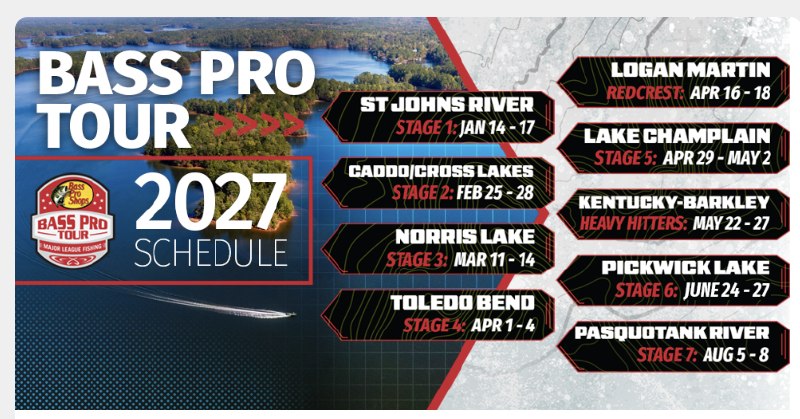
The Shreveport-Bossier region will host Stage 2 of the nine-season 2027 Bass Pro Tour from February 25 through February 28, with the tournament hosted by the Shreveport-Bossier Sports Commission. The event will bring 50 of the top professional bass anglers in the world to the twin lakes, with competitors vying for Fishing Angler of the Year points, some of the sport’s largest payouts, and qualification into REDCREST 2028, MLF’s most prestigious championship event.
Under the tournament’s structure, the field of 50 anglers will compete in a full Qualifying Round across the event’s first two days, held at Caddo Lake, before the competition narrows for the Knockout and Championship rounds on days three and four, which will take place at Cross Lake. The event will use MLF’s signature catch-weigh-release format, with real-time scoring delivered through the organization’s SCORETRACKER leaderboard system and live coverage available to fans throughout each day of competition.
Sara Nelms, director of sports for the Shreveport-Bossier Sports Commission, welcomed the announcement as a significant addition to the region’s sports tourism calendar. “We’re excited to welcome the Bass Pro Tour to Shreveport-Bossier and continue our partnership with Major League Fishing,” Nelms said. She added that the region’s natural resources made it a fitting host for the event, saying, “Our region offers world-class fisheries, passionate fans, and a community that embraces outdoor recreation. Events like the Bass Pro Tour not only showcase the incredible natural resources that make North Louisiana a true Sportsman’s Paradise but also create meaningful economic impact for local businesses while introducing anglers and their families to everything our destination has to offer.”
Daniel Fennel, MLF’s senior director of tournament operations for the Bass Pro Tour, described the broader 2027 schedule as reflecting the core identity of the tour. “The 2027 Bass Pro Tour schedule is exactly what this league is built for – great fisheries, passionate host communities and the best anglers in the world competing in a format that showcases every decision they make on the water,” Fennel said. He specifically highlighted the Louisiana stop as part of a broader slate of venues, adding, “From historic venues like the St. Johns River, Toledo Bend and Lake Champlain to exciting stops like the Pasquotank River and our dual-lake event in Louisiana, this schedule will give our anglers a tremendous test and give fans a season full of storylines to follow, from start to finish.”
While the Bass Pro Tour has visited other Louisiana fisheries in previous seasons, including Caney Creek, Lake D’Arbonne and Bussey Brake, the February 2027 event will represent the circuit’s debut at both Caddo Lake and Cross Lake specifically. The tournament will launch from Earl G. Williamson Park on Caddo Lake for the opening qualifying rounds, before shifting to the American Legion Landing on Cross Lake for the tournament’s concluding knockout and championship rounds.
The Louisiana stop is part of a broader nine-season 2027 Bass Pro Tour schedule that MLF unveiled this week, marking the ninth season of the circuit overall. The season is set to open January 14 through 17 at the St. Johns River in Palatka, Florida, before moving through a series of stops across Louisiana, Tennessee, Texas, New York, Kentucky and North Carolina. Following the Shreveport-Bossier stop, the tour is scheduled to visit Norris Lake in Campbell County, Tennessee, from March 11 through 14, marking that fishery’s own first-ever appearance on the Bass Pro Tour schedule. The circuit will then head to Toledo Bend Reservoir in Hemphill, Texas, from April 1 through 4, before REDCREST 2027, the tour’s championship event, is held April 16 through 18 at Logan Martin Lake near Birmingham, Alabama.
The remainder of the 2027 regular season includes stops at Lake Champlain in Plattsburgh, New York, from April 29 through May 2; the Kubota Heavy Hitters all-star event on Kentucky and Barkley lakes in Calvert City, Kentucky, from May 22 through 27; Pickwick Lake in Counce, Tennessee, from June 24 through 27; and the Pasquotank River in Elizabeth City, North Carolina, from August 5 through 8, closing out the regular-season schedule.
Major League Fishing has been an active presence in the broader northwest Louisiana region in recent years beyond the newly announced 2027 stop. The organization held its Fishing Clash Series Summit Cup in the area in November 2025, featuring two-angler teams competing across Caddo Lake, Cypress Lake and Cross Lake. That event included participation from regional anglers such as Nick LeBrun of Benton, Louisiana, and Todd Faircloth of Jasper, Texas, both of whom are expected to be part of the broader pool of touring professionals eligible to compete in the 2027 Bass Pro Tour stop as well. Other regional anglers with ties to the area, including Justin Cooper of Zwolle, Louisiana, and Marshall Hughes of Hemphill, Texas, have also competed in past MLF events held throughout the Arklatex region.
Headquartered in Benton, Kentucky, Major League Fishing produces more than 250 tournaments annually across some of the country’s most prestigious fisheries and broadcasts its events across multiple television and digital platforms, including CBS, Discovery, the Outdoor Channel and its own MLFNOW! streaming service, available through the MLF app, MyOutdoorTV, Rumble and MajorLeagueFishing.com. The organization’s Bass Pro Tour is supported by a broad roster of sponsors, including Bass Pro Shops, Berkley, Mercury, Toyota, Ranger Boats and Rapala, among others.
With the February 2027 tournament still more than a year and a half away, local officials in Shreveport and Bossier City have pointed to the event as a significant opportunity to showcase the region’s fishing infrastructure to a national audience, while giving local anglers and fishing enthusiasts a rare chance to see the sport’s top competitors testing two of the area’s signature lakes for the first time on professional fishing’s biggest stage.

Check out what’s clicking on FoxBusiness.com.
Kia is issuing a new recall of more than 460,000 vehicles over a fire risk after an earlier recall affecting the same vehicles failed to resolve the problem, according to federal regulators.
The recall affects 462,869 Kia Telluride vehicles from the model years 2020-2024, the National Highway Traffic Safety Administration announced Thursday.
Owners are instructed to park outside and away from other cars and buildings due to a risk of fire while driving or parked.
HONDA RECALLING MORE THAN 325,000 VEHICLES OVER POTENTIAL CRASH RISK

The recall affects 462,869 Kia Telluride vehicles from model years 2020-2024. (Getty Images / Getty Images)
The same vehicles were previously recalled in 2024 for the same issue.
If the front power seat slide cover or knob is hit or accidentally struck, the switch can be dislodged, misaligned or damaged, making the seat motor continue to run and causing overheating.

The same vehicles were previously recalled in 2024 for the same issue. (iStock / iStock)
An improper repair under the previous recall also may lead to the motor overheating and catching fire.
Seven seat fires and 11 cases of seat motors melting have been reported.
FORD RECALLS MORE THAN 110,000 MUSTANG VEHICLES OVER WINDSHIELD WIPER, DRIVETRAIN DEFECTS
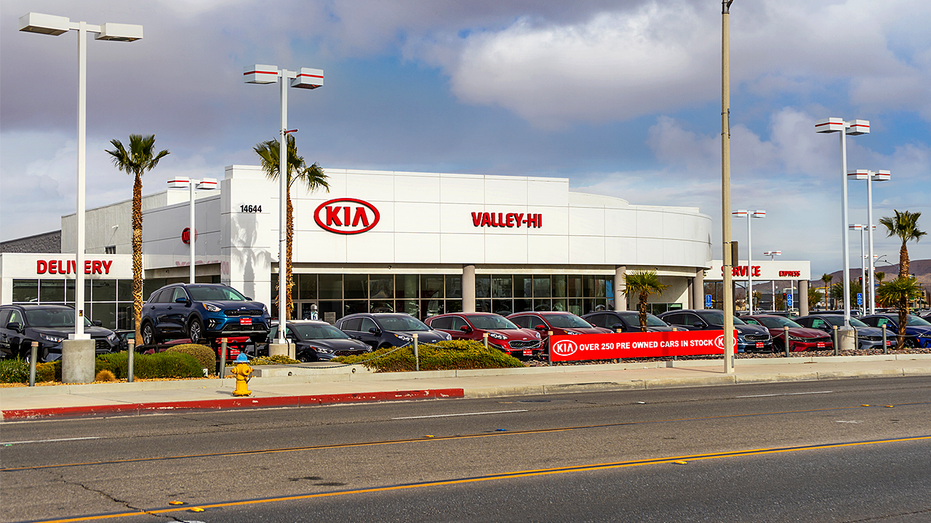
Seven seat fires and 11 cases of seat motors melting have been reported. (Getty Images / Getty Images)
CLICK HERE TO GET FOX BUSINESS ON THE GO
Owner notification letters will be sent out Aug. 13.
Owners can then take their vehicles to a Kia dealer, where an electronic fuse assembly will be installed to prevent continuous operation of the seat motor if the seat switch becomes dislodged, internally misaligned or otherwise damaged.

A welcoming sign at Palm Beach International Airport, as it is renamed as “President Donald J. Trump International Airport,” in West Palm Beach, Florida, U.S., July 9, 2026.
Marco Bello | Reuters
The airport in West Palm Beach, Florida, has officially been renamed after President Donald Trump, the first time an airport has been named after a sitting U.S. president.
Effective Thursday, the facility will be called the President Donald J. Trump International Airport, the Federal Aviation Administration said.
The airport — formerly known as Palm Beach International Airport — said in an FAQ posted online that “updates to signage, branding and public‑facing materials, will occur in phases.”
As part of the transition, the airport’s FAA locational identifier will change from PBI to DJT. The International Air Transport Association code change is set to occur on Aug. 18.
Major U.S. carriers including United Airlines and Delta Air Lines began putting the new airport “DJT” code on their booking pages on Thursday, though consumers searching for flights can still use the old “PBI” code to find the airport.
More than a dozen airlines fly into the facility, including domestic leaders Delta, United, American Airlines and Southwest Airlines.
The fresh branding comes after Florida Gov. Ron DeSantis signed a bill into law earlier this year to change the name of the airport. The move was later approved by the FAA.
The name change is estimated to cost $5.5 million, the airport said.
The state of Florida appropriated $2.75 million toward the project, according to the airport’s FAQ, and the remaining costs for the transition will be funded through the local Department of Airports’ operating budget and capital improvement program.
“While we recognize that the required name change may be received in different ways by our passengers, we’re grateful for your continued support through this transition period,” the airport wrote in the FAQ. “While some things may evolve over time, our core focus remains the same: providing a safe, reliable and welcoming airport experience.”
The airport is near the president’s Mar-a-Lago club in Palm Beach, Florida, and he flies in and out of it fairly often.
The president’s son Eric Trump said Trump Force One — the nickname for the private jet owned by the Trump Organization — would be the first plane to land at the newly renamed airport.
“As a son, and someone who flies out of this airport nearly every day, I will forever be proud to see the initials ‘DJT’ on my boarding pass,” he wrote on X.

The entity, which declared a price band of Rs 545-574 per share for the initial public offering, is looking to double the international book to USD 5 billion in three years from the present USD 2.5 billion as part of a revenue augmentation plan, a top official told PTI.
Citing the valuation sought by the fund house as seen from the pricing of the issue and conversations with larger investors, the company’s Managing Director and Chief Executive Debasish Mishra said the buzz has been good around the issue and the possibility of making good returns will attract investors.
“The market could be volatile, uncertain but a trust is always certain. So, that trust of the confidence of customers who are in the market (will help the IPO),” Mishra told PTI.
It can be noted that after a very strong FY25 which witnessed record issuances, IPO fundraisings have been lackluster since the beginning of the US-Israel campaign against Iran in late February.
SBI MF’s issue is one of the largest in recent times, and is set to be succeeded by mega issuances from largest stock bourse NSE and telco Jio Platforms.
Asked about the revenues being lower than the second largest fund house, the management explained that this is because of managing EPFO (Employee Provident Fund Office) money, where it makes a thinner revenue, but added that newer revenue streams are being chased along with reducing the share of EPFO money in the overall AUM.Mishra said the overall assets under management (AUM) of the company is over Rs 13 lakh crore, of which over Rs 3 lakh crore is EPFO money. Deputy MD and Joint CEO D P Singh said the fund house used to manage 75 per cent of EPFO’s money earlier, which has come down to 26 per cent.
Regulatory restrictions on forms of business had restricted it from launching a portfolio management scheme for long but now the company has entered after a clarification from the RBI, he said, adding that international business is also very important.
SBI MF has an international book of USD 2.5 billion at present and is aiming to double the same to USD 5 billion in the next three years as part of the strategy, Singh said, adding that it will carry this along with its joint venture partner Amundi, which has good presence globally and also by deploying staff in financial centres like New York, London, Hong Kong, and Singapore.
Apart from this, it is also looking at the alternates business very seriously, and may also be open for growing in the line through an acquisition, Singh said.
Mishra chipped-in that the focus of the company generally is to grow organically but it will not hesitate if an opportunity comes. He made it clear that at present, there is no proposal on acquisition.
Singh said more than a fifth of the overall sales for the company come from parent SBI, and stressed that there are no concerns on misspelling as the largest lender in the country sells the safer hybrid schemes the most.
As for the IPO issue, the management exuded confidence that in the next 3-4 days, it will come out with multiple large names who will be investing in the company through the IPO.

The company said direct mutual funds are “the heart of Groww” and that its existing mutual fund investors will see no change in plans, pricing or experience. Groww said more than 1 crore investors have built over Rs 1.9 lakh crore of mutual fund investments on its platform, making it the largest mutual fund platform in the country.
“For every DIY investor, Groww stays exactly what it has always been: direct, zero-commission, and free. Forever,” the company said. It added that it will continue to launch new features for direct mutual fund investors.
Also Read: Zerodha will keep direct mutual fund plans for free, says Nithin Kamath
The response came after Kamath said Zerodha would continue to offer direct mutual funds for free through Coin. He had said that when Zerodha started the discount broking model in India in 2010, it decided to charge the same fee regardless of trade size because the effort to execute a trade was the same. He said the same logic was applied to mutual funds, and Zerodha did not launch mutual funds until it could offer only direct plans.
Kamath had also said that most direct mutual fund platforms that started around the time Zerodha launched Coin had either disappeared, changed direction or were rethinking their choice of offering direct plans. He added that Zerodha would continue to offer direct mutual funds for free.
Groww, without naming Zerodha or Kamath, said there had been “confusion” and “misinformation” about its mutual fund offering. It clarified that MF Prime is not a shift away from direct mutual funds, but an additional product for a different set of investors.”MF Prime is not a shift. It is an addition — a fully opt-in product for a different cohort: investors who want research-backed guidance on what to buy, hold, exit, and rebalance,” Groww said.
The company said many investors wanted to invest through Groww but held back because they needed help. MF Prime is meant for such users, it said.
“If you are a DIY customer on Groww today, nothing changes for you. Not the plans, not the pricing, not the experience,” Groww said. “Any commentary claiming Groww has changed its approach to mutual fund investing is simply incorrect.”

Lamborghini seized in Burnley after dangerous driving
AI selloff drives quant funds’ worst performance since August

Prediction markets spark insider trading fears. How firms are responding


-

 Fashion6 days ago
Weekend Open Thread: High Hopes
-
 NewsBeat5 days ago
Taylor Swift and Travis Kelce wedding staffer hilariously struggles to keep her cool while checking in megastars
-

 Crypto World6 days ago
Standard Chartered Secures MiCA License as ESMA Adds 37 New Crypto Firms
-

 Fashion3 days ago
Open Thread: What Great Books Have You Read Recently?
-

 Politics6 days ago
The House | “Reframing the debate from a binary discussion of winners and losers”: Yuan Yang reviews ‘We Are Not Machines’
-

 Fashion10 hours ago
Loro Piana Fall 2026 Enters Houston’s Art Scene
-

 News Videos3 days ago
Whats Hidden Inside This Cash Register? #treasure #reselling #money
-
 Tech3 days ago
Anthropic’s new “J-lens” reveals a silent workspace inside Claude that mirrors a leading theory of consciousness
-
 Crypto World6 days ago
ESMA Expands Crypto Register by 37 Firms Following MiCA Transition Period
-

 Business3 days ago
AXT Shares Jump Nearly 14% as Semiconductor Materials Maker Rebounds on AI-Linked Indium Phosphide Demand
-

 Sports2 days ago
Joshua Pacio ‘more complete’ ahead of ONE rematch vs Malachiev
-
Crypto World3 days ago
SK hynix (000660.KS) Stock Dips as $28B Nasdaq ADR Offering Drives AI Memory Expansion
-

 Crypto World4 days ago
South Africa proposes crypto tax guidance under existing rules
-

 News Videos3 days ago
Best Time to Enter Small Caps Right Now? Another Bull Run? | Financially Free
-

 Tech4 days ago
Lenovo laptops are now shipping with YMTC SSDs, a sign of Chinese NAND entering the mainstream
-

 Business7 days ago
What a 10 Percent Drop Means for Buyers, Sellers and Renters
-
Sports2 days ago
We have punished the disrespect
-

 Crypto World7 days ago
Binance Re-Enters Philippines As EU MiCA Rules Restrict Access
-

 News Videos3 days ago
Avoid entering in FOMO #bitcoin #cryptocurrency #trading #scalping
-

 Crypto World7 days ago
Alibaba bans Claude Code over alleged backdoor security concerns
You must be logged in to post a comment Login