

Politics
The House Article | Confessions of an election observer: Viktor Orban’s defeat



4 min read
Labour MP Rupa Huq shares her diary from Hungary, where she led a team of international MPs examining the elections that saw Viktor Orbán defeated
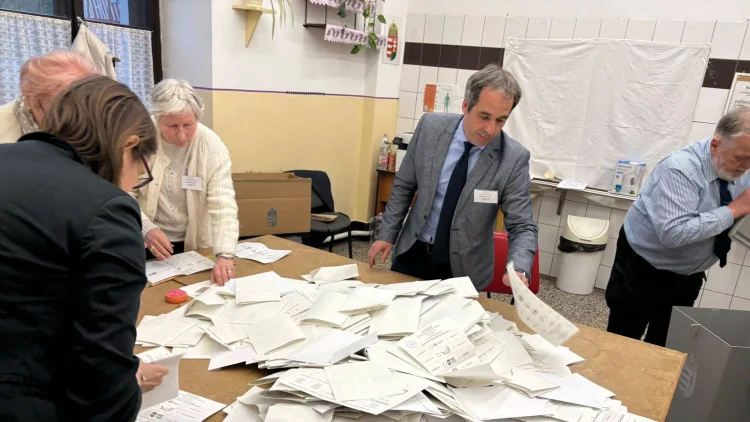
It was the morning after Hungary’s landmark election last month. “I think they heard the cheers in Brussels, Washington and Moscow,” one of two Portuguese MPs I bumped into in Budapest city centre told me. We were amongst international parliamentarians there to observe and certify them legit.
Over the years, I’ve conducted monitoring all over the world: the US, Poland, Turkey, Kazakhstan… When asked to lead the Organization for Security and Co-operation in Europe (OSCE) MP team examining the electoral contest that eventually ended Viktor Orbán’s four-term premiership, I had no hesitation.
My role included Budapest twice: a scoping visit in the run-up to the mission; then chairing briefings for 200-odd fellow MPs from 38 countries, culminating in an intense election day of primary schools where voting occurs to see the process close-up. I met ministers, media, NGOs and counterparts in the Hungarian parliament (architecturally based on Westminster) along the way.
Our mission was the second most popular after the US, such was the gravity of what was at stake from Maga strongman politics to multilateralism. Observers were deployed all over the country to check no funny business was afoot.
On the Sunday night, as the outcome became clear from my hotel room, I heard cheers and hooting of horns from mostly young people excited at both the record 80 per cent turnout and the remarkable turnabout – a regime that seemed so entrenched was gone.
I was flagging after a long polling day from opening of polls in central Budapest to the count, so I ducked out. I was also conscious that as team leader I needed to be impartial. The Portuguese, however, had gone out for air and crashed impromptu festivities, witnessing history.
Queues had already started building when we arrived to inspect empty ballot boxes at 6pm, then subsequently secured shut before us. It reminded me of similar showing-off routines with 1970s/80s magician tricks when girls were sawn in two.
We criss-crossed Budapest, observing multiple polling stations including in Veresegyház and Pestszentlőrinc. We encountered huge numbers of people; a 95-year-old great gran, kids skipping hand in hand with parents. I did a 10am press conference in a polling station location where the message was things were going smoothly. At 8pm, at the final station I ended up in, proceedings saw the boxes opened and two separate lots of ballot papers manually recounted by municipal officials, such was the unprecedented volume with a 85 per cent turnout. It all concluded beyond 10pm.
On the Sunday night, as the outcome became clear from my hotel room, I heard cheers and hooting of horns
Memorable from my first visit in March was President Volodymyr Zelensky looking out from every lamppost and billboard, with Ursula von der Leyen a close second starting from the airport road. It had to be explained to me that these were negative scare-mongering Fidesz/governing party posters about the wrong turn the country could take if it fell into opposition hands. “Wipe the smile off of Zelensky’s face, don’t be a vassal state of the EU,” they screamed, demonstrating how it takes a sophisticated electorate to recognise such propaganda – albeit with crude messaging.
On paper, Hungary has efficient election systems and a multiple-choice contest, but allowing unlimited campaign funding limits and the folding of many parties to allow Tisza a clearer run make “free and fair” hard to certify. The new parliament has different flavours of right-wing, from the victorious Tisza to extreme nationalists “Our Homeland”.
By visit two, Orbán was omnipresent – plastered too on government-owned billboards, looking suspiciously chisel-jawed compared to recent TV footage. We heard how he’d used his prime ministerial status to write to every mother in the land promising tax reductions the more kids they produced, abusing state resources for party politics.
Fears that factors wider than just the day itself of systematic changes to judiciary, constituency boundaries and media ownership designed by Orbán for Orbán would ensure his re-election were confounded. Even government “state of danger” emergency powers invokable to overrule parliament and rule by decree – rather like Boris Johnson’s Covid provisions – came to nought. The OSCE concluded it was a fair fight on the day but the line between state and party along with any ‘level playing field’ had dissolved over the 16 years.
The EU, US and Russia where the cheers landed should take note: even with a meticulously rigged system, you can’t deny an unstoppable thirst for change.
Rupa Huq is the Labour MP for Ealing Central and Acton



The news that Folarin Balogun would be eligible to suit up against Belgium Monday night was met with near-universal celebration across the country.
Just don’t ask the Belgian fans living here.
POLITICO caught up with several of them at the Belgian embassy’s watch party at Wunder Garten, a trendy bar in Washington’s NoMa neighbourhood.,
“I had to keep up my vomiting,” said Johan Hamels, an Ottawa resident from Leuven in D.C. on a business trip. “Rules are rules. Every team is briefed by FIFA. And for every game, it’s in one of their slides. That you get a red card, you’re off next time.”
Balogun was given a red card in the Americans’ Round of 32 matchup last week against Bosnia and Herzegovina, which typically carries a suspension for the following game. But FIFA suspended his ban on Sunday.
Critics have charged that the White House pressured FIFA into making the switch. European politicians have slammed Balogun’s inclusion, and the Royal Belgian Football Association formally challenged FIFA’s reversal on Monday morning.
And while FIFA insists the ruling had nothing to do with politics, President Donald Trump is taking credit for getting Balogun back on the field.
“I’m Belgian,” said Win Van Dijck, a native of Brussels who has lived in the U.S. for the last five years. “So I appreciate surrealism. But it’s just too much.”
It’s another example of Trump pulling the strings in a tournament that has increasingly strayed into the political arena, they say.
“Having it reversed based on a call from the American God is a little bit lack of workmanship. And it’s sad for the kids here because that’s what they see as an example,” said Brigitte, a retiree who came to the U.S. in 1984.
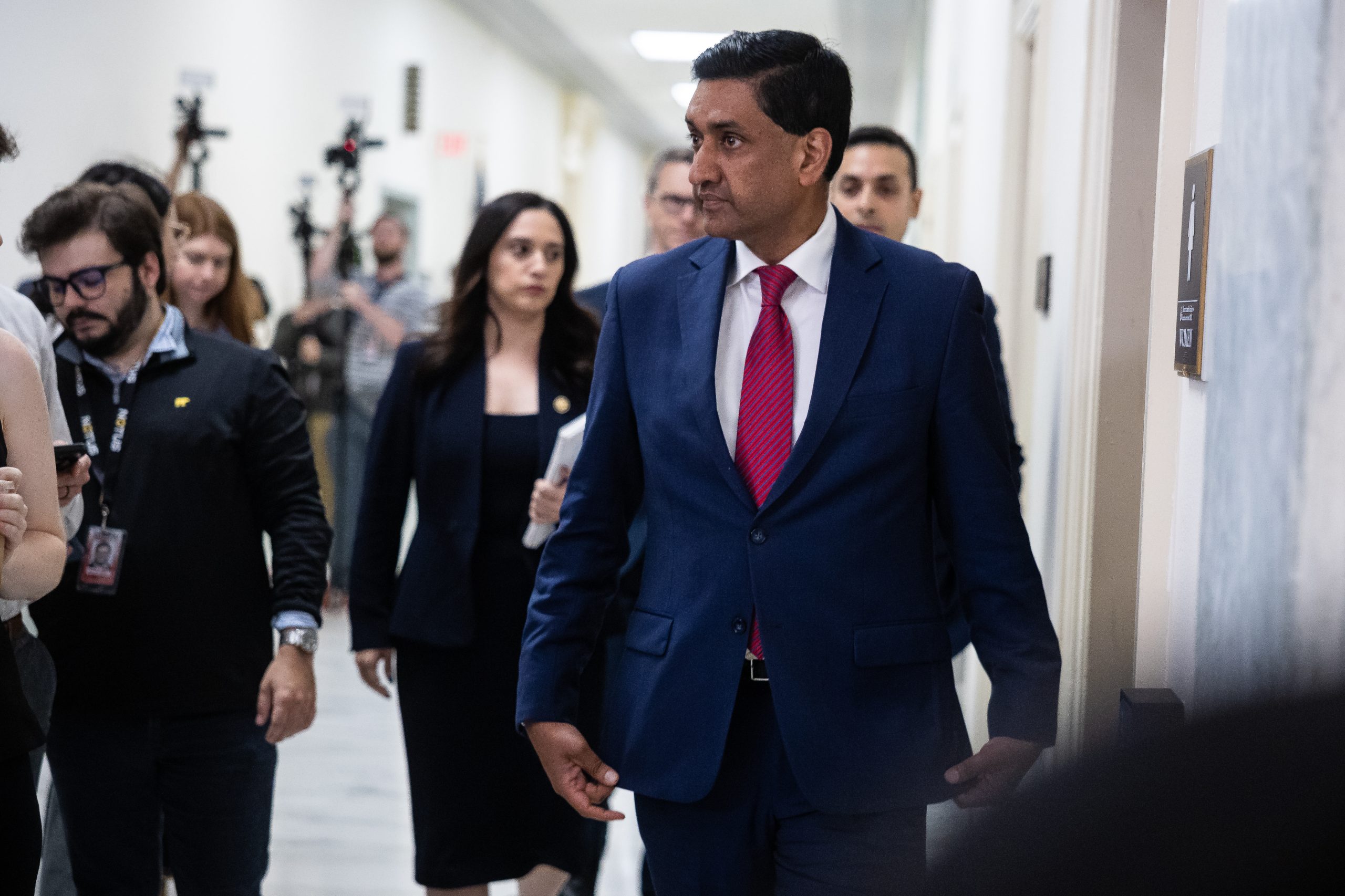

Rep. Ro Khanna and Sen. Ruben Gallego rescinded their support of Graham Platner on Monday, with Khanna additionally calling for the Democratic nominee to drop out of the Maine Senate race.
It’s a significant reversal from two formerly staunch Democratic defenders of Platner, following a POLITICO report that a woman who dated Platner said he forced her to have sex with him five years ago.
Platner has denied the allegations, but he also posted on social media that he was “taking the time to reflect on the best path forward” for his candidacy.
“I’ve been very clear that sexual assault or violence against women is a red line,” Khanna (D-Calif.) said on X. “These allegations are very serious and credible. Graham Platner should drop out from the race. I am withdrawing my endorsement.”
In his own social media post, Gallego (D-Ariz.) called the allegations “troubling and deeply serious” while announcing he would no longer back the progressive oysterman.
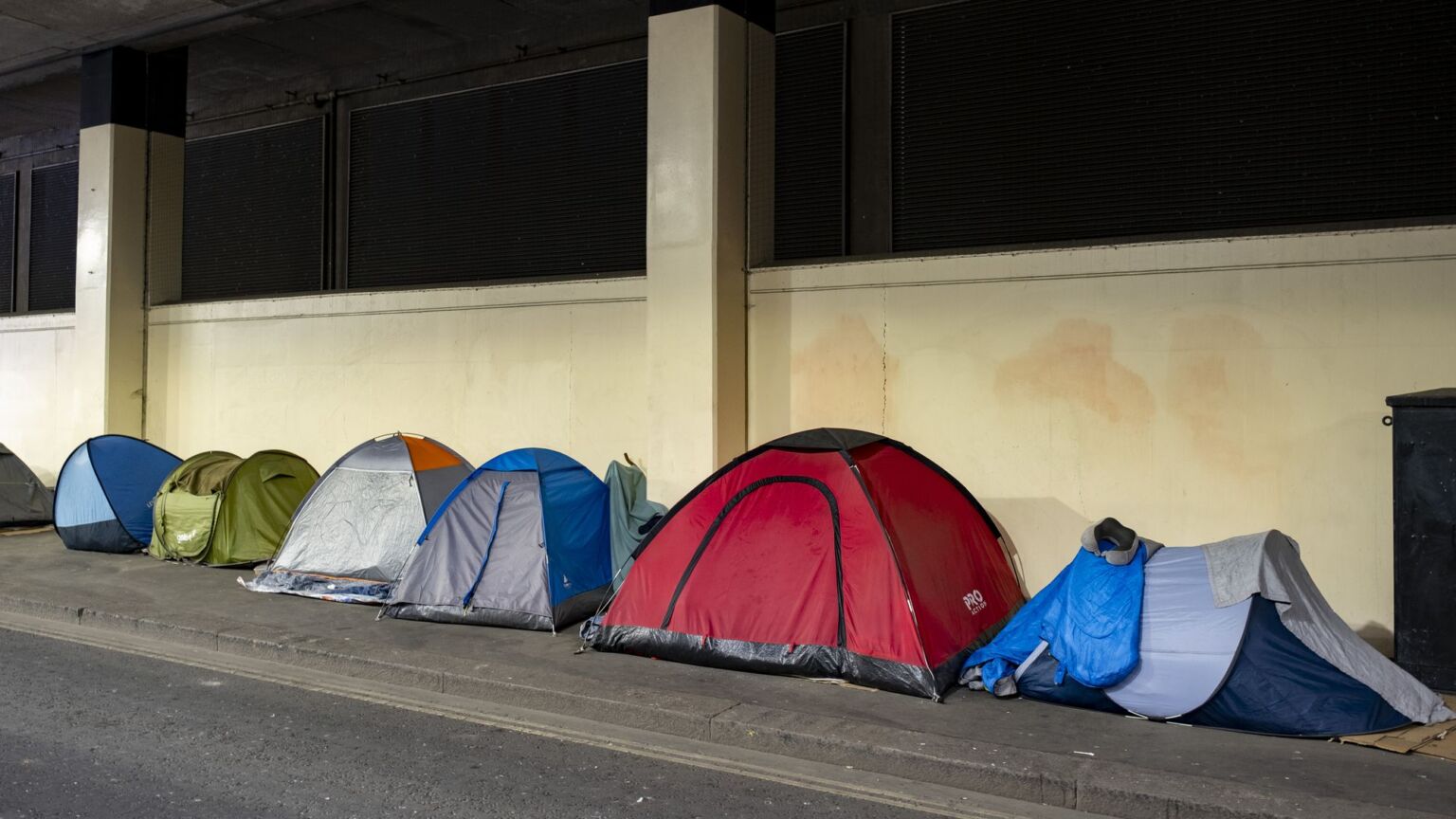
A 200-year-old relic of the Georgian era has finally been buried. Labour’s recent decision to repeal the 1824 Vagrancy Act means that rough sleeping and begging have officially been decriminalised across England and Wales.
Predictably, the commentary pages have been filled with back-slapping. Campaigners are calling it a ‘watershed moment’ for human rights, while ministers assure us we are shifting ‘from punishment to prevention’.
But let’s be honest, decriminalising vagrancy doesn’t address the actual problem of homelessness. No one walks down a high street in modern Britain and feels comfortable with what they see. Passing row after row of tents on Euston Road, or seeing people huddled in sleeping bags in the Tube stations, is deeply unsettling.
It looks like a fundamental breakdown of civilisation. Most heartbreakingly of all, a massive number of those forced on to the pavement are veterans – people who risked everything to serve this country, only to be left entirely abandoned on our streets.
Is scrapping a law really the right step? If we just decriminalise the reality of our broken streets without fixing the cause, are we actually helping anyone? Or is the state just legalising squalor, abdicating its responsibility and walking away?
The state of our streets is a sign that the foundational social contract has been shredded. Celebrating a minor legislative tweak while people – especially those who served in the armed forces – are left to deteriorate in public view isn’t compassion in any meaningful sense.
The truth is that repealing the Vagrancy Act is purely symbolic. It is a hollow victory for a prime minister desperately searching for a legacy.
Worse still, while the government is busy removing an archaic policing penalty with one hand, it has done the bare minimum to tackle the most significant cause of homelessness – namely, the complete lack of new homes, caused largely by planning laws.
For young people today, housing is not only expensive, it is unattainable. We are told to work hard, get a degree and contribute to society. Yet substantial chunks of our salary end up on rent, essentially going toward funding someone else’s retirement.
The dream of ever owning a home, and having the stability required to start a family, has been pushed into our late thirties – if it’s achievable at all. When you rob young people of the ability to build a stable life, you destroy the very foundations of a society. You create a rootless, anxious generation. And, for those at the absolute margins of society without that family safety net, that lack of housing supply can ultimately lead to a sleeping bag on a pavement.
This desperate situation is a direct consequence of the state’s failed planning laws. For decades, the 1990 Town and Country Planning Act has acted as a rigid barrier to development. By effectively giving local NIMBYs veto powers over new housing developments, the government has made building even basic accommodation impossibly expensive, across vast swathes of the country.
Labour’s Planning and Infrastructure Act 2025 doesn’t go nearly far enough. Despite being hailed by the government as a solution to the housing crisis, little – if anything – has changed. Rents have continued to skyrocket and the most vulnerable individuals continue to be squeezed into the bottom rung of society.
The mainstream solution is always the same: demand more state interventions, heavy-handed rental caps or endless bureaucratic schemes.
But it was the state that got us into this mess. The current planning system functions primarily as a state-enforced wealth transfer, protecting the asset values of wealthy, older homeowners at the direct expense of everyone else’s independence.
Until we address the fact that the state has made building roofs over our heads incredibly difficult, decriminalising rough sleeping is completely pointless. If you want to demonstrate true compassion, the answer isn’t about stopping the police from moving rough sleepers on so they are out of sight. It means tearing down the red tape that stops homes from being built in the first place.
Samiksha Bhattacharjee is the head of Ladies of Liberty Alliance UK and the president of the University College London Libertarian Society. You can find more of her work at Samiksha’s State of the Debate.


FIFA President Gianni Infantino on Monday defended his organization’s decision to defer U.S. striker Folarin Balogun’s one-game suspension ahead of the Monday World Cup match between the U.S. and Belgium.
“FIFA’s judicial bodies are independent,” Infantino said in a statement posted on X. “I read the decisions of the FIFA Disciplinary Committee when they are issued. Sometimes I am surprised by them. Sometimes I agree with them, and sometimes I disagree. What I always do, however, is respect those decisions and the autonomy of the bodies that make them.”
On Sunday, FIFA announced that its disciplinary committee suspended the red card that Balogun received during the U.S. game against Bosnia and Herzegovina. U.S. President Donald Trump said Monday that he had called Infantino to lobby for the suspension to be lifted, though the president insisted that “all I did was ask for a review,” and “I didn’t say that you have to do this.”
Infantino acknowledged discussing Balogun’s suspension with Trump but said he explained the “ongoing legal process involving FIFA’s independent judicial bodies” to the U.S. president.
Infantino added that “respect for independent institutions and the rule of law is what protects the integrity of our competitions and the credibility of FIFA at all times.”
UEFA, European football’s governing body, said in a statement Monday that FIFA’s decision was “incomprehensible and unjustifiable.”


A high-ranking Dallas police commander met with Egyptian World Cup officials over the weekend to smooth over relations after an altercation between the team’s staff and a city officer.
Deputy Chief Osama Ismail, who speaks Arabic, met and exchanged gifts Saturday with Egypt head coach Hossam Hassan, his brother and team manager Ibrahim Hassan, team captain Mohamed Salah and others, the department said in a statement on social media.
“We understand one conversation can make a difference and respect is demonstrated through actions,” the statement said.
The team — and the Dallas police — made international headlines Thursday night when a Dallas officer was caught on video shouting at and shoving Ibrahim Hassan and other team staffers in the lobby of the team hotel.
Egypt went on to beat Australia in Dallas on Friday. Hossam Hassan said at the postgame press conference that he was satisfied with the police response, adding, “We have nothing to follow up in that regard.”
Politics
Trump confirms he called FIFA head but says he didn’t influence overturning Balogun's red card


President Donald Trump said Monday that he asked FIFA President Gianni Infantino to review the red card issued against a star American soccer player ahead of a monumental last-16 game, but emphasized that he did not unduly influence the controversial decision.
The ruling by the international soccer governing body to suspend a red card issued against American Folarin Balogun during its knockout tilt against Bosnia and Herzegovina sparked concerns over the president’s potential influence over the decision. POLITICO reported Sunday that Trump had called Infantino regarding the red card, which the president subsequently confirmed Monday.
“Yes, I asked for a review by FIFA,” Trump told reporters gathered in the Oval Office.
However, the president rebuffed the idea that his talks with Infantino influenced the decision, even as the FIFA president has cozied up to Trump during his second term — showering him in compliments and creating a new “peace prize” that he awarded Trump ahead of the tournament.
“All I did was ask for a review,” Trump said. “I didn’t say that you have to do this.”
The comments come after a slate of other nations’ soccer federations panned the decision, with the European Commission demanding “fair play and transparent competition” in sports. Belgian officials, whose country will play against the U.S. today, expressed intense consternations and have formally challenged the ruling.
Trump on Monday described his reaction to the initial game call as confused. He characterized the collision between Balogun and Tarik Muharemović as the two players being “sort of entangled” and, upon learning that a red card would bar Balogun from suiting up for the U.S.’s match against Belgium, thought it was “unfair.”
“It is one thing to penalize somebody for the game,” Trump said. “But how do you penalize him for a game that hasn’t been played yet? It’s very unfair, you can’t do that.”
The president took the opportunity to celebrate the success of the World Cup— which has high attendance across its venues and strong viewership — and said Balogun’s red card would have been a “big stain” on the tournament had it been upheld.
The president on Monday cast suspicions on the referee who delivered the red card to Balogun, Brazilian official Raphael Claus, calling him “a little bit suspect, if you check his past.”
Asked by a reporter if he had spoken with the Belgian prime minister, Trump said he hadn’t but would be open to it. Belgium’s foreign minister told POLITICO that the decision “raises many questions,” its soccer federation issued a livid statement in the aftermath of the decision and subsequently challenged Balogun’s eligibilityahead of the match.
“I will tell you this,” Trump continued. “The people of Belgium, if they win the game, they can be very proud.”
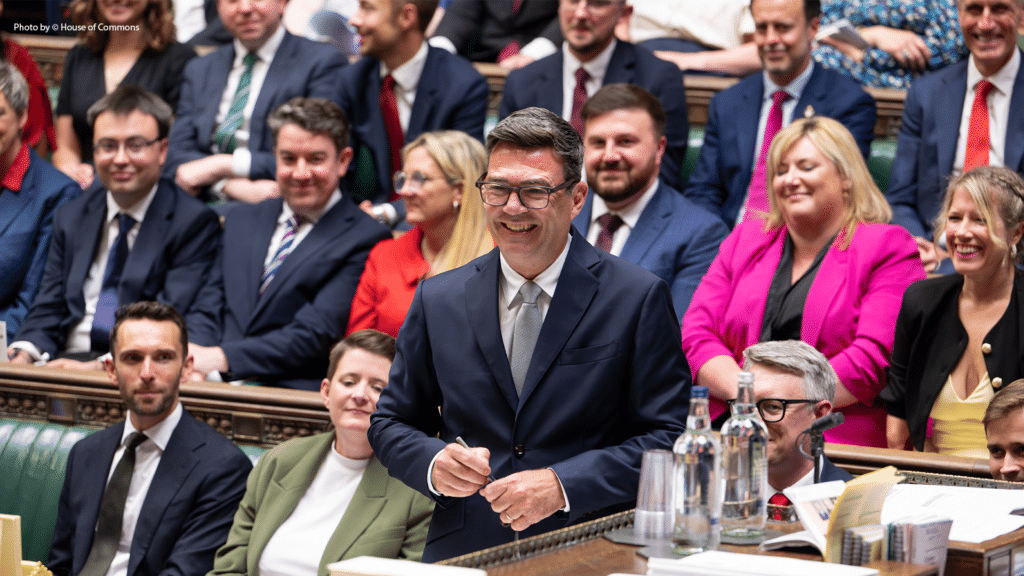
Jill Rutter reflects on how Andy Burnham should approach governing as he prepares to take over from Keir Starmer later this month.
Morgan McSweeney has now admitted that Labour was unprepared for power in 2024.
They had, realistically assessed, two years to plan – the period from when it was clear that Boris Johnson was vulnerable and Labour could form the next government. Keir Starmer had by then ‘changed the Labour party’. His focus was on winning the election. Policy was refracted through the lens of not getting in the way of winning – not setting strong foundations for the governing project. When there was a trade-off between winning or governing, winning won. It did not help that Keir Starmer seems to find it easier to focus on working his way through the immediate problem in front of him, rather than setting any clear long-term vision.
Andy Burnham has weeks rather than years. He has the benefit that he may be able to avoid an election, but Keir Starmer appears to have decided to enjoy his summer break rather than let his usurper have the time he wanted to plan.
He has already made some big calls. Successive Prime Ministers have made a mess of the structure and people in No.10. Burnham has brought in a close former cabinet colleague to head his No.10 with the appointment of James Purnell as Chief of Staff. That looks like a good start to have someone who will be able to speak authoritatively for the PM, has run organisations, knows him well enough to challenge him when he is getting things wrong and will have credibility with the Labour MPs. So far so good.
We also know, in terms of structures, that he wants to build up No.10 as a strong centre able to lead the government. That too was missing from Starmer’s passive No.10. It also looks as though he has persuaded Jonathan Powell to stay on as his national security adviser – a guarantee of continuity and a good way of compensating for Burnham’s lack of foreign and defence experience.
The most eye-catching proposal is to base some of No.10 in Manchester – No.10 North. That could just be a gesture – but it could also make a lot of sense if Andy Burnham decides he is going to live at home and work out of Manchester a couple of days a week. A prime ministerial presence is essential to signal that this is a real change rather than performance art.
One question will be how to decide how this will work in practice. Will it simply be the base for the No.10 team leading on economic and devolution strategy? Or will core private office and policy unit and comms teams have members permanently based in Manchester as well as London? That would offer new career options for civil servants who choose to base themselves in Manchester (not so much if you are in Darlington, Bristol or Wolverhampton), allow Burnham to bring in allies who have worked closely with him at Greater Manchester Combined Authority and have no desire to shift south, and reduce the need for people to spend their lives on Avanti West Coast.
Getting the structures right matters – but then Burnham needs to decide what to do. This is not a change of the sort we saw in 2024. Andy Burnham is taking over mid-term. The government already has Labour ministers who have been doing the job for almost a year or more. It has a legislative programme announced in the King’s Speech in May. In many areas it has announced reforms that are in train – people may not see change yet, but that is in part at least because in most cases change takes time.
The key choice for Burnham is continuity versus change. He has made clear that there are some areas where he wants change. There he needs to make clear what the purpose of that change is, appoint people he is convinced share that view and help them drive it through. Some of those big themes are coming through already – devolution; council housebuilding; skills policy – though in all of these he needs to be absolutely clear where devolution and local choice wins and where he wants to control centrally.
Governments are usually elected on the basis of comprehensive manifestos – which the civil service crawls through before election day. They may be picking up hints from Burnham speeches now – but a couple of policy speeches and a few sassy TikTtok videos do not make clear how Andy Burnham wants to go forward on the whole range of issues where Prime Ministers need to have views.
There are lots of other areas where change is in progress, but potentially suffering from blight as its not clear what Burnham wants. So an urgent task for the new No.10 will be to review the portfolio of current policies and programmes that the government is pursuing and decide what to do.
The first option is to proceed on the current timetable. The second is to speed up or slow down and potentially tweak where there are reservations about some aspects of the policy and make it reflect the priorities of the new government. The third, where the new government wants to do something very different, is to stop the change in its tracks and ask for new ideas.
Similar principles apply to ministerial change. There will be some eye-catching new appointments. But there is a good case for prizing continuity as far as possible – a mistake Gordon Brown made when he came in in 2007 and embarked on what looked like change for change’s sake. A mantra of change where necessary, continuity where possible would enable the Burnham government to hit the ground running and start being able to point to concrete achievements which we assume he will be able to communicate better than his predecessor.
And then he can turn to the event that will define his premiership, as it did for Keir Starmer: his government’s first Budget.
By Jill Rutter, Senior Fellow at the Institute for Government.


4 min read
We haven’t heard much from the prime minister-in-waiting about the defining issue of the age.
As Keir Starmer’s premiership draws to a close, talk turns to his legacy. Even as an opposition MP, I recognise his achievements: the Renters’ Rights Bill and Workers’ Rights Bill delivered meaningful protections and undid decades of regression.
Beyond the many U-turns and poor judgements, from disability benefit cuts to the winter fuel allowance, as well as the failure to uphold international law and impose comprehensive sanctions on the Israeli government, history will judge our leaders on the defining issue of the age: the climate and nature crisis. If we are to use that as a yardstick, this Prime Minister has abjectly failed to meet the moment. The Climate Change Committee says so themselves: the government is not moving fast enough to reduce emissions and protect households and businesses from volatile fossil fuel prices. We are woefully ill-prepared for the changes in the climate which are already here.
We recently experienced our second intense heatwave in two months. In 2022, a comparable year, the death toll from extreme heat was around 3,000 people. Homes are flooding, and schools, hospitals and care homes are overheating. Climate breakdown is not a distant prediction. The Global South has already been living with its impacts. It is already here.
The sustained campaign by climate deniers and fossil fuel companies, financially backing Reform and the Conservatives, has had an effect. The cross-party consensus behind the Climate Change Act was one of Britain’s proudest political achievements. Abandoning it now would not just be a policy failure. It would be a moral one.
Andy Burnham should not repeat Starmer’s mistake of treating climate and nature as second order. I welcome signs he’ll govern in a less tribal, more collaborative way, which matters for restoring trust in politics. On climate and nature, however, he has said very little. My message is clear: climate resilience and nature restoration must be central to his programme, and Green MPs stand ready to help deliver it.
That starts with ruling out new oil and gas fields. Drilling at Rosebank alone would generate around 200m tonnes of CO2, more than 28 low-income countries emit in a year combined, without lowering bills or improving energy security.
The UK has some of the least energy-efficient housing in Europe. Better insulated homes mean lower emissions, lower bills, and greater resilience to both heatwaves and cold snaps. We need heat plans for every town, city, and county throughout the nation.
The London Heat Plan unveiled last month is the start of what we should be doing throughout the country, driven and funded by Downing Street, whether in London or Manchester. That means investing in our infrastructure. It means installing air conditioning in hospitals, care homes, schools, and prisons where needed. It means retrofitting the homes most at risk and redesigning our towns with more tree cover, shaded rest spots, and public drinking water.
None of this happens without long-term investment, and that same instability is undermining the clean energy transition that should fund it. Stop-start grant schemes have hit a renewable sector that, per CBI research, contributes £105bn to our economy annually, supports over a million jobs, and has nearly half a trillion pounds of investment in the pipeline.
The next PM must meet the moment: speed up the transition to net zero and start restoring nature in one of the most nature-depleted countries on Earth. Denmark shows what’s possible: after decades of straightened rivers and drained marshland, restoring the Skjern River to its natural course brought wildlife back within years. Nature restoration isn’t separate from climate resilience. It’s part of the answer. We need the next prime minister to invest in both, properly, now, or he will push this crisis onto the next generation, making it harder, costlier, and eventually too late to stop the worst of it. The technology exists, and the economics are overwhelming. There is no case for delay.
Burnham will either be the prime minister who finally provided the political will this crisis demands, or he will be judged as Starmer will be: as a leader who knew exactly what was coming and looked away.
Adrian Ramsay is the Green Party MP for Waveney Valley

Insulting Muhammad. Criticising a local councillor. Being a white lad who gets punched in the head by a gang of black kids. In Britain in 2026, these are the ‘crimes’ that get the cops off their arses. They might not be able to find the lowlifes who burgled your home or the gang members who groomed your daughter. But they’ll come running if you diss Islam or have a pop at a Green politician or commit the heinous sin of being white and male on a night out. Welcome to your two-tier tyranny.
After this week, anyone still denying Britain’s cops have become the armed wing of wokeness needs to give their head a wobble. First we had the Birmingham scandal. Footage emerged of a chilling incident that reportedly took place on the night of 21 June. A young white fella who appears to have had the benefit of a few pints gets into an altercation with some black lads. He is pushed to the ground by one of them, and seemingly punched by another. A gaggle of keystone cops swarm in and you won’t believe who they go for? Yep, the white boy.
It’s a staggering, infuriating spectacle. Every normal observer of this late-night spat will have considered the white lad the victim. Yet it’s he who is brutishly shoved by the police into the metal shutters of a shop. His assailants, meanwhile, walk off. One of the officers speaks to him as if he were a piece of shit. ‘Walk to the fucking car, you dick’, she says. Since when was it acceptable for cops to use such gutter language, least of all against a lad who appears to have just been assaulted?
It has reanimated the debate about two-tier policing. Coming so soon after the Henry Nowak atrocity – when an 18-year-old white boy was fatally stabbed by a Sikh and then cuffed by cops – the Brum incident has got people talking about the ‘anti-whiteness’ ingrained in the woke state. This looks like ‘clear unequal treatment by the police’, says Robert Jenrick of Reform UK. With nauseating arrogance, West Midlands Police said they had ‘no concerns’ over what happened and said the footage should not be ‘further shared’ online. In short: pipe down, plebs. They’ve now admitted an assault did take place and are promising to ‘identify those involved’. Cops doing their jobs? How novel.
It feels undeniable now that the indoctrination of cops with the baleful ideology of DEI has nurtured an ugly, simmering prejudice against ‘whiteness’. In the wake of the death of George Floyd in particular, police across these isles were expressly instructed to treat the ‘races’ unequally – to take a softer approach towards historically ‘oppressed’ communities compared with the majority white community. Indeed, West Midlands Police itself instituted a Race Action Plan that implored officers not to ‘over-police’ the black community. Can we really be surprised by what happened on 21 June?
It makes depressing sense that in a woke society where being ‘pale, male and stale’ is tantamount to a crime, and where the academy devotes itself to the study of the scourge of ‘whiteness’, and where the phrase ‘white man’ is almost always spat out as a pejorative, the police, too, would come to be intoxicated by such elitist white-wariness, making themselves its brutish enforcers on the street.
Before we even had time to take in the madness of what happened in Birmingham, we got news from Leeds about the arrest of a man for insulting Muhammad. Video footage shows a bloke taunting a ‘pro-Palestine’ march with barbs about the Islamic religion. He’s grabbed and cuffed by cops. He asks why he’s being arrested and the reply of the arresting officer is one of the most unnerving things I’ve ever heard a police officer say: ‘Because you called Muhammad a rapist and a killer.’
There it is, on film, for the world to see: the arrest of a man in Britain in 2026 for taking the piss out of a supposed prophet. This is an abomination. We binned our blasphemy laws in 2008, so why the hell is someone being hauled off for spicy remarks about Islam? Everyone who values liberty, especially the liberty to utter, should be horrified that our police are behaving like Islamic Republic goons and manhandling someone for ‘speaking ill’ of Islam.
Then we had the Chiswick incident, also last week. A man enjoying a pint in a pub in Chiswick, west London, was asked by cops to step outside for a ‘conversation’. His misdemeanour? He’d written social-media posts slagging off the local council’s plan to ban riverside boozing, and he alleged that a Green Party councillor was the driving force behind this nanny-state madness. The cops accused him of filming outside the home of the Green councillor, which he adamantly denied. We’re ‘raising awareness’, the officers said, to make sure you know not to cross the line. Pulling a citizen from a pub to reprimand him for his criticism of the political class? These are Stasi tactics. It’s obscene.
Who do the police serve? In the above instances, they seem to have been serving Allah, and the Green Party, and the soulless diktats of DEI. This is not policing for the people but against them. It is the enforcement of ruling-class orthodoxy against individuals who merely want to speak freely and fruitily about Muhammad or the political establishment. Or who just want to be white and have a pint. A new report on the state of our police, led by Lord Blunkett, is published today. It says police should quit the ‘culture wars’. Too right. For we can all now see that in the hands of the armed wing of the state, the culture war becomes an actual war against ordinary people and our fundamental liberties.
Brendan O’Neill is spiked’s chief political writer and host of the spiked podcast, The Brendan O’Neill Show. Subscribe to the podcast here. His latest book – After the Pogrom: 7 October, Israel and the Crisis of Civilisation – is available to order on Amazon UK and Amazon US now. And find Brendan on Instagram: @burntoakboy.


Hutton’s Soviet stroganoff

4 min read
Politicians making a meal of it. This week: cookbooks as propaganda
“Correct distribution of nutrients and selection of dishes during the day is one of the most important requirements of rational nutrition.” It’s not quite Nigella Lawson, but then The Book of Tasty and Healthy Food isn’t quite How To Be A Domestic Goddess.
First published in 1939, The Book was the official cookbook of the Soviet Union. It was intended to help housewives (I use the word advisedly) prepare meals for their families that were, well, tasty and healthy. It was huge – my translated edition runs to 700 pages – and offered much more than recipes: there were instructions on how to plan menus, how to set the table, even how to use a knife and fork.
But it was also, like everything produced by the Soviet state, a work of propaganda. Published the same decade that government policies had seen millions perish as the result of famine, it painted a picture of a happy people enjoying the fruits of the communist state.
Alison Smith is professor of history at Toronto University, and the author of Cabbage and Caviar: A History of Food in Russia. She says Russia’s rulers had long worried that their people ate less meat than other nations, especially the British. “There’s this real concern that Russian peasants in particular ate very little other than bread, porridge and cabbage.” The Soviet era was supposed to bring abundance. In practice, that meant sausage, a relatively cheap form of meat that stored well.
The Book was produced under the supervision of Anastas Mikoyan, the people’s commissar of the Food Industry. He’d visited the USA and wanted to see food production modernised in the USSR. His recipe book was enthusiastic about tinned food and ice cream, the foodstuffs of the future. The promise of communism was that food wouldn’t just be more plentiful, says Smith, but of a higher quality. “It’s canned peas, it’s sausages, it’s champagne, it’s mayonnaise.”
The reality, of course, was a little different. Few comrades would ever have been able to enjoy the more luxurious meals that the book suggests, and the authors knew that. They put descriptions of three-course meals served with silverware next to advice on storing and reusing leftovers. And there was still a lot of porridge. My edition has 26 recipes, including the enticing “Buckwheat Porridge with Beef Lung” (boil the lung in salted water for 90 minutes, fry it with onions, add to porridge).
There were instructions on how to plan menus, how to set the table, even how to use a knife and fork
My butcher had no lungs to hand, so I’ve settled for making beef stroganoff. Fry onions, then chopped meat, then add sour cream and something called “Yuzhni sauce”. There are whole Reddit threads of people looking for western substitutes for Yuzhni sauce – “sweet, sour and a bit spicy” – but the general advice seems to be to use mustard.
According to Smith, the book had an aspirational message. “It is very much a sort of vision of a life that very few people actually have,” she says. “A dream of a world of plenty.” Communist children would flick through it as British kids did the Argos catalogue. Even refugees from communism would take their copy with them.
My stroganoff, accompanied by fried potatoes and broccoli, is both simple to cook and tasty. Whether half a pot of cream counts as “healthy” is a discussion I shall have with the first Soviet doctor I meet.
But if readers in the 1950s had felt the recipes offered them hope of what they might one day be able to enjoy, as the decades wore on, food shortages meant they may have felt they were being taunted by them. As the queues for food grow longer through the 80s, says Smith, “the ability to access those dreams becomes even more attenuated”.
After the Second World War, the book had claimed that the USSR, unlike Britain, had left rationing behind. But by the 1980s, it was increasingly clear that life, and food, was more abundant in the West.
“Maybe the distance started to feel too much. There start to be so many challenges that the that the dream just loses its ability to be there for people.”

NADINE DORRIES: The trend for manifesting is real. I’ve done it my entire life with huge success… here’s how YOU can make my techniques work, too
Palisade Bio director Robert Baltera Jr. buys $59,400 in stock

China Purges Over 14,000 AI Products Amid “Qinglang” Cleanup Campaign


-

 Fashion3 days ago
Weekend Open Thread: High Hopes
-

 Politics4 days ago
The House | “Reframing the debate from a binary discussion of winners and losers”: Yuan Yang reviews ‘We Are Not Machines’
-

 Crypto World7 days ago
Strategy authorizes up to $1.25B in Bitcoin sales under new capital plan
-

 Fashion7 hours ago
Open Thread: What Great Books Have You Read Recently?
-

 News Videos7 days ago
How to Build INSANE Live Financial Dashboards With Claude
-
 NewsBeat2 days ago
Taylor Swift and Travis Kelce wedding staffer hilariously struggles to keep her cool while checking in megastars
-

 Tech7 days ago
Anonymous researcher drops 0-day ‘exploitarium’ repo
-

 Business7 days ago
Australia treasurer says alleged access of prime minister’s bank data ’incredibly concerning’
-
 Crypto World5 days ago
Airdrop Registration Becomes Key Focus For Remittix As RTX Launch Updates Approach
-

 Sports5 days ago
Broncos roster: OL Ben Powers (No. 74) entering final year of contract
-

 Crypto World5 days ago
Binance stock trading tops $1B in first month after launch
-

 NewsBeat6 days ago
Presenter Caroline Flack’s brother Paul Flack dies aged 55
-

 Crypto World5 days ago
Alibaba-affiliate Ant Group enters the humanoid robot market with 12 deals
-

 Crypto World3 days ago
Standard Chartered Secures MiCA License as ESMA Adds 37 New Crypto Firms
-

 Crypto World1 day ago
South Africa proposes crypto tax guidance under existing rules
-

 News Videos8 hours ago
Best Time to Enter Small Caps Right Now? Another Bull Run? | Financially Free
-
 NewsBeat5 days ago
New exhibition reflects five decades of movement between island of Ireland and GB
-

 Business5 days ago
Meta Platforms Stock Jumps 7% Today as Bloomberg Reports Company Plans to Enter the Cloud Business
-

 Tech2 days ago
Lenovo laptops are now shipping with YMTC SSDs, a sign of Chinese NAND entering the mainstream
-

 Business4 days ago
What a 10 Percent Drop Means for Buyers, Sellers and Renters
You must be logged in to post a comment Login