

Crypto World
Aave restores ether borrowing limits after $230 million exploit



The DeFi lending protocol reversed restrictions imposed after April’s $292 million exploit, restoring borrowing capacity across six networks as contagion fears ease.



Tokenization specialist Dinari and broker-dealer tZERO are working together to offer broker-dealers a turnkey platform for tokenized U.S. equities, as competition intensifies over how public stocks should move onto blockchain networks.
The companies said Wednesday they will combine Dinari’s tokenized stock platform with tZERO’s brokerage, custody, clearing and settlement infrastructure, allowing financial firms to launch blockchain-based equity offerings without assembling the underlying market infrastructure themselves.
“Tokenized equities won’t reach mainstream adoption until broker-dealers can offer them as naturally as they offer traditional securities,” Dinari CEO Gabriel Otte said in a statement.
The move comes as tokenized equities emerge as the next battleground in real-world assets. After U.S. Treasury funds became the first institutional trend for tokenization, firms are increasingly turning to public stocks, betting blockchain can modernize trading, settlement and shareholder recordkeeping.
Some firms, such as Robinhood and Kraken’s xStocks initiative, focus on creating blockchain-based representations of publicly traded shares via offshore structures, often called synthetic tokens, offered to non-U.S. investors.

Long-standing digital publisher launches comprehensive casino journalism initiative and player comparison tools, emphasizing transparency and responsible gaming practices
AlienWP, a digital publishing platform operating since 2013, has revealed its strategic entry into the iGaming sector through the introduction of comprehensive online casino journalism, operator reviews, regulatory updates, and responsible gaming resources. This expansion represents a significant milestone for the organization as it widens its editorial scope to address both gambling enthusiasts and industry stakeholders with objective, journalism-focused material.
Core Initiative
The platform will now deliver consistent editorial content encompassing online gambling operators, sector developments, operator evaluations, promotional offerings, regulatory frameworks, and player security. The organization’s mission centers on providing audiences with transparent, evidence-based insights into the digital gambling landscape, avoiding hyperbolic marketing language or misleading assertions.
This strategic pivot into iGaming journalism leverages AlienWP’s established reputation as a veteran digital publishing entity. According to company representatives, this transition addresses increasing consumer appetite for credible, unbiased intelligence regarding online gambling platforms, especially concerning regulatory compliance, financial transaction security, and responsible gaming frameworks.
Platform Development
Complementing its editorial operations, AlienWP is concurrently building a distinct consumer-facing platform branded as Alien Wise Play. This web application functions as an interactive dashboard enabling users to evaluate online gambling operators, bookmark preferred platforms, monitor promotional offers, and examine regulatory credentials prior to engagement.
Alien Wise Play maintains a strictly informational role—it neither operates gaming services, handles financial transactions, nor dispenses gambling recommendations. The platform serves as a comparison and educational resource, sustained through affiliate commercial arrangements while diverging from conventional affiliate website models. According to AlienWP, transparency and consumer safeguarding form the foundational principles guiding platform development.

Central to Alien Wise Play’s functionality is the Wise Play Score, a proprietary evaluation framework that judges gambling operators across multiple dimensions including regulatory authorization, trustworthiness, financial transaction dependability, operational transparency, customer service quality, and consumer protection infrastructure. AlienWP has disclosed plans to integrate crowdsourced user assessments and artificial intelligence-powered analytics into subsequent iterations of the evaluation methodology, while preserving editorial autonomy.
Additional details about the platform can be found at Alien Wise Play.
Official Statement
Oliver Dale, company representative for AlienWP, commented: “Consumers investigating online gambling platforms frequently encounter difficulty locating transparent, unbiased intelligence. Our objective through this strategic expansion involves delivering accessible casino journalism and operator assessments, while simultaneously constructing Alien Wise Play as an instrument empowering consumers to reach educated conclusions, with responsible gaming principles and operational transparency anchoring our entire approach.”
Roadmap and Development
AlienWP intends to progressively broaden its iGaming journalism and review operations throughout upcoming quarters, concurrent with ongoing enhancement of Alien Wise Play and refinement of the Wise Play Score methodology. Development priorities include integration of community feedback mechanisms and machine learning-enhanced analytical capabilities into evolved versions of the assessment framework, while preserving editorial separation from evaluated gambling operators.
Company Background
Established in 2013, AlienWP operates as a publishing entity specializing in online gambling operators, iGaming sector journalism, operator evaluations, regulatory frameworks, promotional offerings, responsible gaming advocacy, and industry analysis. The organization is simultaneously constructing Alien Wise Play, a consumer-oriented dashboard facilitating operator comparison, promotional tracking, and accessible regulatory and safety intelligence. Additional information can be accessed at alienwp.com.
Press Inquiries
Oliver Dale
AlienWP
Website: https://alienwp.com

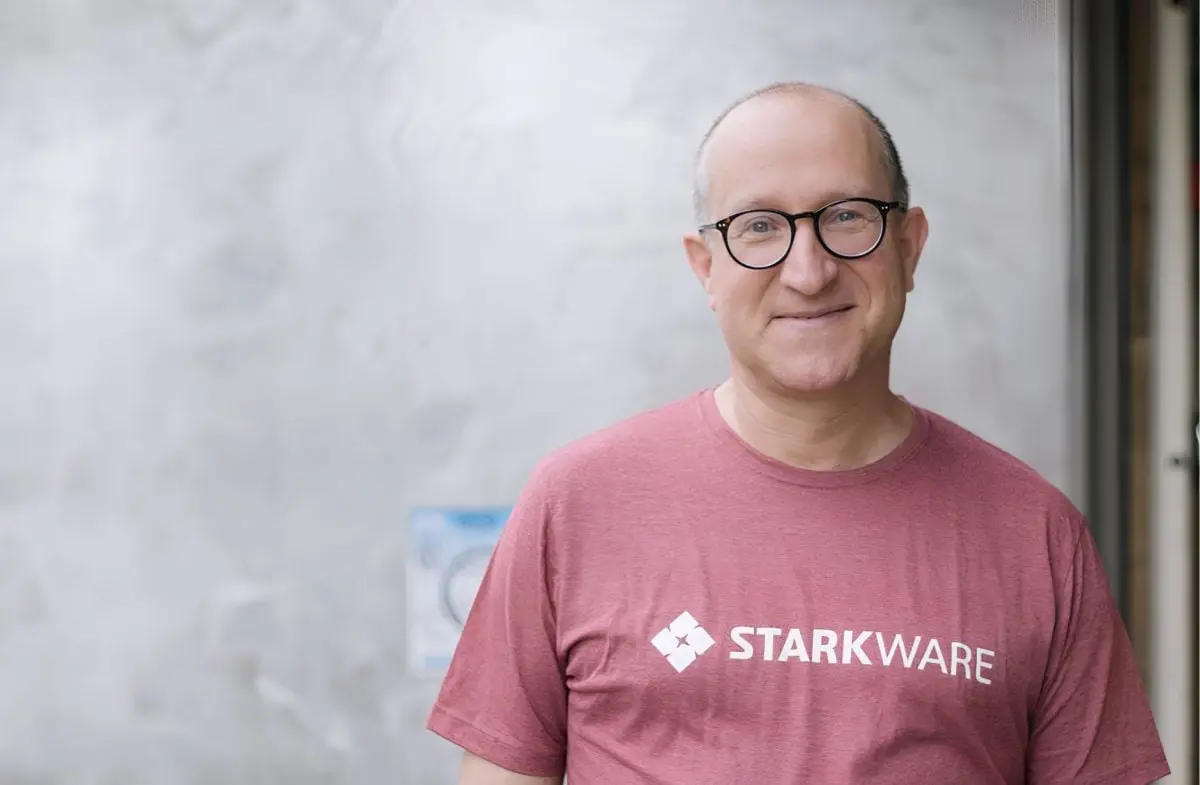
Eli Ben-Sasson, Zcash founder and and CEO of StarkWare, the company behind Ethereum Layer 2 scaling solution Starknet, publicly argued that Bitcoin 21 million supply cap “doesn’t make sense.” He is also proposing instead that the network adopt a hard ceiling on the annual issuance rate.
Ben-Sasson’s core argument centers on key loss. Because private keys are permanently lost over time, the coins attached to those keys remain on the ledger but fall out of practical circulation, making the usable supply unknowable and trending downward. His proposed fix: replace the fixed total-coin ceiling with a fixed inflation rate ceiling. His specific figure was 4% per year, which he described as “a reasonable upper bound on human population expansion.”
The shift is from capping the stock of coins to capping the annual flow of new issuance, a distinction that sounds technical but carries enormous structural implications for every holder who priced Bitcoin’s scarcity into their position.
Discover: The Best Token Presales
Zcash Co-Founder Right about Bitcoin?
Alongside the lost-key argument, the Zcash co-founder, Ben-Sasson, flagged Bitcoin miner security as a compounding concern. The block reward currently stands at 3.125 BTC following the April 2024 halving, and it will continue to decline on schedule, eventually reaching zero around 2140. As the subsidy shrinks, miners depend increasingly on transaction fee revenue to stay economically viable, and a network that cannot sustain miner participation becomes progressively more vulnerable to attack. Ben-Sasson described this risk as “looming large on the horizon.”

Don’t Miss Out on Our $1,000 USDT Airdrop on ByBit
This part of the argument has genuine traction among protocol researchers, independent of whether one accepts the rest of Ben-Sasson’s thesis. Bitcoin’s long-run security model is a real open question – the assumption that fee revenue will fully compensate for the disappearing block reward is unproven at scale. Raising that issue does not require agreeing that the supply cap should change.
The lost-coin case is harder to quantify precisely. We estimated the effective circulating cap at roughly 18.5 million BTC once permanently inaccessible coins are excluded, with Ledger placing lost supply as high as 4 million BTC as of late 2024. Approximately 19.9 million BTC have already been mined, or around 95% of the eventual total, leaving only about 1.1 million BTC remaining to be issued over the next century-plus. The attrition from key loss is real.
Discover: The Best Crypto to Diversify Your Portfolio
This Won’t Go Nowhere
The governance math is unambiguous. Changing Bitcoin’s supply cap would require a Bitcoin Improvement Proposal, new client software, and adoption by miners, nodes, and users. Approximately 97% of Bitcoin nodes currently enforce the existing supply schedule. A cap change is not technically impossible, but a fork that dilutes scarcity would split the chain and likely destroy much of the value it was ostensibly trying to preserve. The debate around Bitcoin’s role as a strategic reserve asset makes any hint of supply flexibility even more politically toxic in the current environment.
The community’s divisibility counterargument is also worth understanding precisely. Bitcoin’s 21 million coins subdivide into 2.1 quadrillion satoshis, providing more than enough unit granularity to accommodate adoption at any realistic price level. Ben-Sasson’s rebuttal, that “satoshis would also trend toward zero in absolute terms if key loss continues indefinitely,” is technically correct but operates on a timescale measured in centuries, not trading horizons.
What makes Ben-Sasson’s intervention notable is not its probability of success. It has none. What matters is who is raising the argument and why: a prominent ZK-proof technologist with credibility in the Ethereum ecosystem, citing miner security degradation as the mechanism that could eventually force the conversation.
Don’t Miss Out on Our $1,000 USDT Airdrop on ByBit
The post Bitcoin 21M Cap Under Fire From Zcash Founder appeared first on Cryptonews.

India’s tax authorities have reportedly identified major gaps in how crypto gains are being declared, underscoring a growing enforcement challenge that is emerging alongside the country’s long-running debate over crypto regulation. According to documents reviewed by Reuters, less than a quarter of people who reported making crypto transactions were actually declaring them on tax returns for the year ending in March 2023.
The same set of government documents reportedly estimates that India had roughly 39 million crypto traders holding assets worth more than $2.1 billion by the end of May. With offshore venues, private wallets, and peer-to-peer (P2P) activity increasingly common, the findings point to why tax authorities may struggle to track transactions and recover revenue—even if policy shifts are already being discussed at the central bank level.
Key takeaways
- Reuters reports India’s crypto tax reporting gaps: fewer than 25% of 645,000 individuals who transacted in the year ending March 2023 declared those trades.
- Government documents cited by Reuters estimate about 39 million crypto traders in India holding over $2.1 billion in crypto as of end-May.
- The tax issue adds a new dimension to India’s policy debate, shifting attention from only financial-stability concerns to offshore trading and tax compliance.
- India is not alone: a separate disclosure effort in Israel also underperformed against expectations, according to local reporting.
India’s reporting gap highlights a tracking problem
Reuters, citing government documents, says the tax department found that crypto activity is not being reflected consistently in tax filings. The Reuters report frames this as a practical enforcement issue: when trading happens on offshore exchanges, through private wallets, or via P2P arrangements, linking transactions to taxable income becomes harder.
The scale of the issue—reported involvement by 645,000 individuals in the year ending March 2023—makes it more than a niche compliance problem. If fewer than a quarter reported their activity, tax leakage could remain substantial, particularly as retail participation appears to be large. Reuters’ cited estimate of around 39 million crypto traders and more than $2.1 billion in holdings at end-May suggests that the affected population may continue to expand.
India’s standing in adoption metrics adds context. The Reuters report notes India was ranked first in Chainalysis’ 2025 Global Crypto Adoption Index, which implies widespread on-the-ground usage. When adoption rises faster than tax compliance, authorities often face a widening gap between real-world activity and reported taxable events.
Central bank containment guidance meets tax enforcement reality
The Reuters findings land during a period when India’s central bank has signaled strong constraints on crypto usage in the financial system. Earlier coverage referenced that the Reserve Bank of India (RBI) backed a “containment” approach, arguing for keeping banks and financial institutions insulated from cryptocurrencies and privately issued stablecoins.
On July 3, the RBI reportedly urged lawmakers to preserve that containment stance. Reuters’ summary indicates the central bank reiterated that prohibition remained an available policy option, while also recommending steps aimed at preventing digital asset use in payments and settlements. In other words, the RBI’s primary focus has been on limiting crypto’s reach into mainstream financial plumbing.
But the new tax documentation shifts emphasis. Even with banking and payment rails constrained, crypto trading can continue through offshore platforms and decentralized or private channels. That creates a different policy challenge: authorities may still need tools to identify taxable transactions and enforce reporting obligations, regardless of whether the regulated banking sector is deeply exposed.
Cointelegraph attempted to obtain a comment from India’s Central Board of Direct Taxes but reported it had not received a response by the time of publication.
Israel’s disclosure program also fell short
India’s compliance struggle echoes a broader pattern seen in other jurisdictions. In Israel, a voluntary disclosure program aimed at bringing previously undisclosed crypto profits into the tax net reportedly did not meet expectations, according to a June 3 report by Globes.
Globes reported that the Israel Tax Authority (ITA) expected the program to raise between 2 billion and 3 billion Israeli shekels (roughly $650 million to $986 million). The scheme offered criminal immunity to taxpayers who disclosed hidden capital. However, local reporting says only 289 disclosure requests were submitted after the program started in August 2025.
Globes further reported reported capital of 676.5 million shekels and an estimated tax due of 40.9 million shekels—far below the initial expectations and also below what was characterized as the size of the crypto tax gap.
Tax experts cited by Globes pointed to a key design issue: the lack of an anonymous disclosure track. If taxpayers believe they will be identifiable, the incentive to come forward may weaken, especially when enforcement risk and reputational concerns are perceived as high.
What investors and builders should watch next
For market participants, the practical question behind the headlines is whether governments can close the compliance gap without simply chasing an ever-shifting set of on/off-ramps. India’s reported figures suggest that enforcement is becoming a major pillar of policy—one that depends on data visibility across offshore trading, P2P activity, and private custody.
Investors and crypto users should watch for the next steps from tax authorities and regulators: whether India moves toward tighter reporting requirements, improved information-sharing, or more targeted compliance measures aimed specifically at harder-to-trace trading routes. Until then, the tension between widespread adoption and incomplete tax reporting is likely to remain a defining risk for the sector.
Ripple has secured a five-year sponsorship with the University of Kansas that will place the XRP logo on Jayhawks athletics uniforms, creating the first crypto jersey sponsorship for a major NCAA Division I athletics program.
Summary
- Ripple has signed a five-year deal with the University of Kansas, placing the XRP logo on Jayhawks team jerseys.
- The partnership includes blockchain and financial education programs alongside Ripple’s existing ties to the university.
- The announcement follows Ripple’s MiCA license approval in Europe as XRP ETFs post eight straight weeks of inflows.
According to Ripple and Kansas Athletics, the agreement takes effect immediately, with XRP branding appearing on football, basketball, and other Jayhawks uniforms. The partnership also includes financial literacy and technology education programs funded by Ripple for student-athletes and members of the campus community.
The announcement comes days after Ripple strengthened its regulatory position in Europe. As previously reported by crypto.news, the company received a Crypto-Asset Service Provider license from Luxembourg’s Commission de Surveillance du Secteur Financier under the European Union’s Markets in Crypto-Assets framework.
According to Ripple, the approval allows it to provide regulated crypto services across all 27 European Economic Area member states.
Partnership extends beyond jersey branding
Kansas Athletics described the agreement as a landmark partnership that brings the XRP brand to one of the country’s best-known college sports programs. The university said the arrangement is built on a shared focus on innovation and excellence while giving Ripple access to millions of college sports fans through the Jayhawks.
In a statement released by Kansas Athletics, Director of Athletics Travis Goff said Ripple selected Kansas Athletics as a platform to introduce XRP to a national audience. He added that displaying the XRP logo on Jayhawks uniforms demonstrates a shared commitment to innovation and excellence between the two organizations.
Ripple said the agreement goes beyond marketing through uniform sponsorships. According to the company, it will also support educational initiatives covering financial technology and digital assets for both student-athletes and the broader university community.
The relationship between Ripple and the university predates the sponsorship. The University of Kansas operates an official XRP Ledger validator through its engineering school with support from Ripple’s University Blockchain Research Initiative, which has provided the institution with a multimillion-dollar grant for blockchain research and education.
Brad Garlinghouse highlights personal connection as XRP ecosystem expands
Ripple Chief Executive Officer Brad Garlinghouse called the announcement a rare moment where his professional and personal worlds come together. Writing on social media, Garlinghouse noted that XRP has become the first cryptocurrency to appear on the jersey of a major college athletics program before adding, “XRP Family, meet the Jayhawks.”
Garlinghouse’s comments carry added significance because the University of Kansas is his alma mater. His remarks accompanied Ripple’s announcement as the company continues expanding its ties with the university through athletics, education, and blockchain research.
Elsewhere in the XRP ecosystem, developers and validators continue preparing for the XRPL 3.2.0 upgrade, which supporters expect will improve tokenization capabilities and decentralized finance scalability on the network.
The sponsorship news arrives as XRP trades in a volatile market. XRP changed hands at about $1.08 after moving between $1.08 and $1.13 over the previous 24 hours. Meanwhile, XRP futures activity is picking up, with open interest rising by more than 1% over the past four hours, including gains of 0.33% on CME and 0.75% on Binance.
Despite recent price weakness, crypto.news previously reported that spot XRP exchange-traded funds have recorded inflows for nine consecutive weeks.
There are also signs of seller exhaustion and believer accumulation. As seen in prior market bottoms, BTC can find a floor when few sellers remain and when accumulation from holders with conviction picks up. This is playing out with around 45% of long-term holder supply sitting at a loss, per data from Checkonchain, with levels associated with prior market bottoms. It suggests many of the sellers are already out, leaving only convicted holders, who are not only able to withstand the volatility but who may also be adding to their positions. This is showing up in the data, with BTC supply held by long term holders climbing to a record high in recent weeks. Meanwhile, on-chain movements of longer-held BTC have abated from last year, alleviating earlier pressures.
The situation today
BTC has been in a down market since October, fighting a rotating set of headwinds largely unrelated to bitcoin’s underlying attributes. The question now is what happens when those headwinds change to tailwinds. With growth in money supply accelerating, sentiment and momentum could soon turn around.
There are also signs of seller exhaustion and believer accumulation. As seen in prior market bottoms, BTC can find a floor when few sellers remain and when accumulation from holders with conviction picks up. This is playing out with around 45% of long-term holder supply sitting at a loss, per data from Checkonchain, with levels associated with prior market bottoms. It suggests many of the sellers are already out, leaving only convicted holders, who are not only able to withstand the volatility but who may also be adding to their positions. This is showing up in the data, with BTC supply held by long term holders climbing to a record high in recent weeks. Meanwhile, on-chain movements of longer-held BTC have abated from last year, alleviating earlier pressures.


Paradigm has raised $1.2 billion for a new venture fund focused on artificial intelligence and robotics, according to a Wednesday report from Bloomberg.
The firm’s third venture fund reflects growing interest in AI and defense technology, though it does not signal an exit from digital assets.
“Crypto was the first frontier for us, and it continues to be a really exciting one, but there’s so much else happening right now that’s pretty hard to ignore,” managing partner Alana Palmedo told Bloomberg.
Paradigm has already deployed capital from the new fund into several companies, Bloomberg reported. Those include autonomous drone delivery company Zipline International, which was valued at $7.6 billion in January, and space defense startup True Anomaly, which reached a $2.2 billion valuation in April.
Founded in 2018 by Matt Huang and Coinbase co-founder Fred Ehrsam, Paradigm built its reputation as one of crypto’s largest venture investors. The firm launched a $2.5 billion flagship crypto fund in November 2021, then the largest dedicated crypto fund, before raising an $850 million fund for early-stage blockchain startups in 2024.

XRP News: XRP is trading around $1.07, down roughly 3% over the past 24 hours, but still carrying a 6–7% weekly gain that keeps the broader up-trend intact.
The question hanging over the trade: can yen-driven demand out of Japan provide the next leg, or is this consolidation a stall before a deeper correction? Hedge funds have turned their most bearish on the yen since 2007, pushing short positions to nearly 138,000 contracts as of June 30, per reported CFTC data.
That’s not a footnote, it’s the kind of structural FX dislocation that historically sends Japanese retail into hard assets and crypto. Bitcoin is consolidating in the mid-$60,000s, down about 0.6% on the day but up over 6% on the week, absorbing macro pressure that has been far less forgiving to Korean equities, where the Kospi has shed roughly 20% from its recent peak.
The FX and equity volatility complex is live. XRP’s cross-border payment positioning makes it a direct beneficiary if the yen slide accelerates and Japanese exchange volumes respond.

Discover: The Best Token Presales
XRP News: Can XRP Price Reclaim $2.00 as Yen Weakness Drives Asian Demand?
XRP at $1.07 sits in a technically awkward zone. Above the psychological $1.00 floor that short-term traders treat as hard support, but well below the prior resistance band just above $2.00 that capped the last major rally.
The 3% single-day drop is meaningful context. Sellers are active at current levels, not just absent buyers. Volume data points to positioning activity rather than panic liquidation.
The bull case rests on Japanese retail re-engagement. XRP has long held outsized popularity on Japanese exchanges, and yen depreciation at multi-decade extremes gives domestic holders a clear incentive to rotate into crypto-denominated assets.

If the Bank of Japan signals further tolerance for weakness or delays intervention, that catalyst accelerates. On-chain data already shows institutional interest building, with the base case being a range-bound grind between $1.00 and $1.50 while macro conditions develop.
The bear case is simpler. A breakdown below $2.03 triggers a move toward $1.91 on any recovery attempt, defining the invalidation point for the near-term thesis.
MVRV-based analysis suggests XRP is not yet in overheated territory, which limits downside panic but does not guarantee support holds. If $1.00 cracks, the next meaningful floor is considerably lower.
Watch the Bank of Japan. Watch the Ripple partnership flow. The setup is real. The confirmation is not there yet.
Discover: The Best Crypto to Diversify Your Portfolio
LiquidChain Presale Approaches $900K as Cross-Chain Infrastructure Demand Builds
XRP’s FX-linked appeal is genuine, but at current prices it’s a recovery trade, not an early-entry opportunity. Traders who want asymmetric exposure to the same cross-border liquidity thesis at a different point on the risk curve are looking at infrastructure plays.
LiquidChain is one doing the rounds at desks tracking L3 development.
The project pitches itself as a Layer 3 execution environment that fuses Bitcoin, Ethereum, and Solana liquidity into a single layer, unified liquidity, single-step execution, and a deploy-once architecture that removes the multi-chain fragmentation problem developers actually hate.
The presale has raised $889,886.53 at a current token price of $0.01477 (exact figures as of the latest data). That’s not trivial traction for a pre-launch infrastructure token.
The Unified Liquidity Layer and Verifiable Settlement features are the structural differentiators. If the cross-chain thesis plays out, the value accrual case writes itself.
Presale tokens carry execution risk; no live mainnet means no proof yet. If the infrastructure angle fits your thesis, research LiquidChain before the next price tier closes.
The post Hedge Funds Are Most Bearish onYen Since 2007: Could Japan Rotation Send XRP to $2.00? appeared first on Cryptonews.
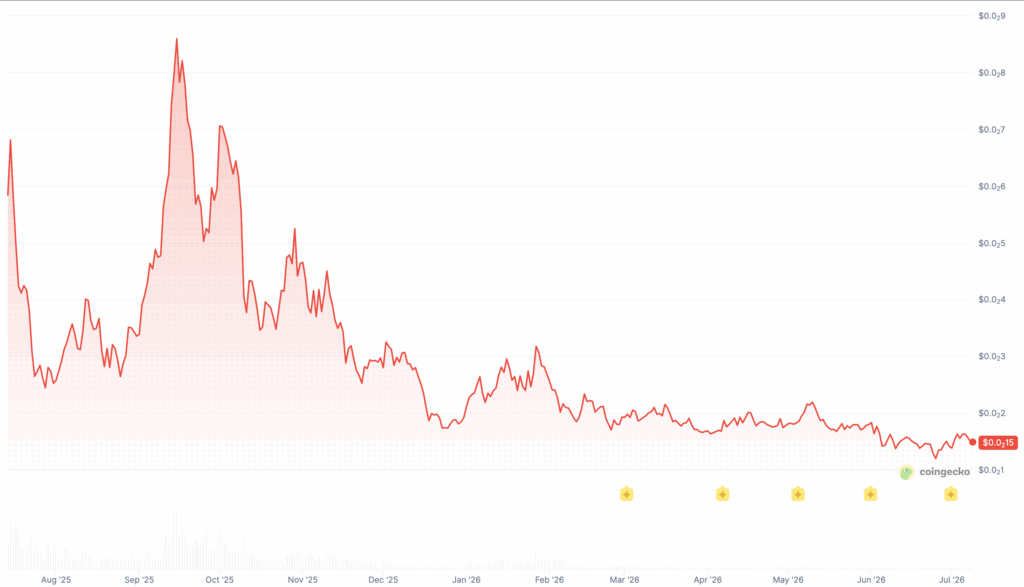
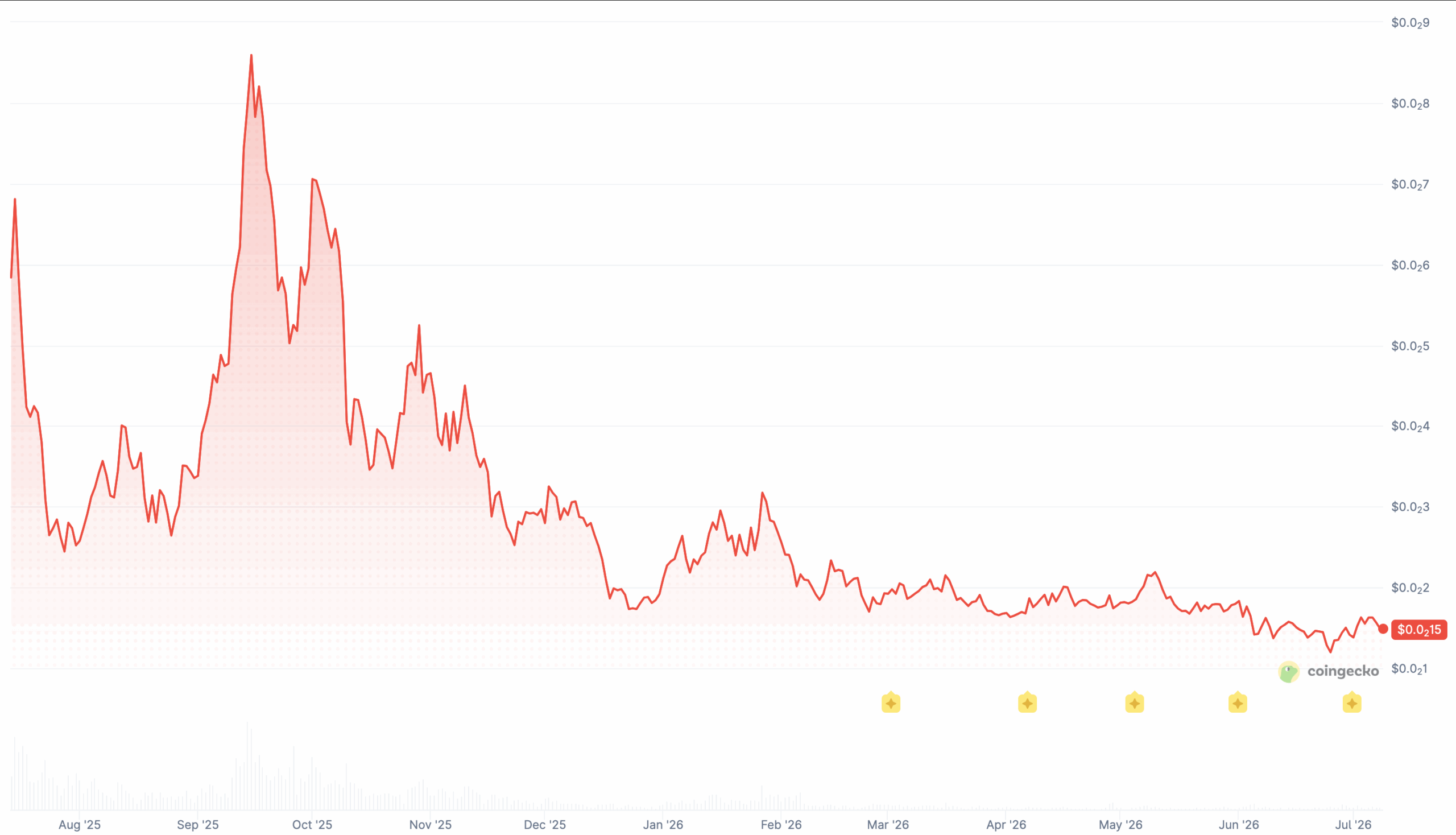
Tomorrow marks one year since memecoin platform Pump Fun announced that an airdrop for its PUMP token would be “coming soon.” Users are still waiting.
The promise was made on July 9, 2025, during a Pump Fun marketing push that tried to paint itself as a competitor against social media giants Facebook, TikTok, and Twitch.
It also announced its ICO of the platform’s token, PUMP, which is now down almost 75% since its launch almost a year ago.
Pump Fun Chief Operating Officer, Alon Cohen, tempered expectations one day after the airdrop pledge, saying that it wouldn’t be happening in the “immediate future.”
Users, including crypto influencer Ansem (real name Zion Thomas), have been begging for Pump Fun to make good on its airdrop promise ever since.
Read more: PUMP lost $700M in market cap as Alon Cohen shut down airdrop rumor
On the Market Bubble podcast this week, Ansem called for Pump Fun to align more with its community and said that if he had the keys to the firm, he would start to plan for an airdrop.
He claimed that the promised airdrop would’ve involved 24% of PUMP’s allocation, and added that users “are mad as fuck at Pump Fun for a ton of different reasons, but one of them is they never airdropped to their core users.”
Last month, Ansem launched his own Pump Fun token called The Black Bull, which has managed to reach a market cap of $175 million in just seven days. He’s already airdropped almost $7 million across 700 wallets.
Bubblemaps noted one wallet received over $1 million, six wallets received over $100,000 each, 40 wallets received over $10,000 each, 300 wallets received over $1,000 each, and 400 wallets received over $150 each.
Read more: Bounty-chasing Pump Fun users are tattooing crypto tickers on their faces
A Pump Fun airdrop of sorts already took place in December 2025 after the platform acquired memecoin trading terminal, Padre.
After the acquisition, Pump Fun said it would no longer support the usage of the terminal’s PADRE token, and the price of PADRE sank 67%.
There was intense backlash among PADRE holders, and eventually Pump Fun agreed to distribute a PUMP airdrop to those holders affected by the price swing.
Pump Fun is doing everything but airdropping
Pump Fun was launched in January 2024 as a memecoin generator. Since then, it’s been busy trying out new ventures and different ways to monetize its operations since it announced the supposedly imminent airdrop.
One day after announcing the ICO and airdrop, it acquired the wallet tracker Kolscan.
Then, in April 2026, the platform announced that it had burned $370 million worth of PUMP tokens that it had bought back (around 36% of the circulating supply) in an attempt to “gain trust with our community.”
It also committed to buying back and burning future PUMP tokens using 50% of its revenue across the next year. This post alone is filled with Pump Fun users demanding an airdrop.
In response to the closure of X Communities, in May this year, Pump Fun announced its own space for crypto communities.
One month later, it released a controversial bounty program that saw some crypto traders promise to pay $50,000 to anyone willing to skydive into an ongoing World Cup match and invade the pitch.
Read more: Burwick Law wants Pump Fun sanctions over harassment claims
This particular bounty was later removed. Others remained, however, including one that involved people tattooing various crypto tickers onto their foreheads in an attempt to secure bounties.
Also in June, Pump Fun removed an AI agent launch feature after it led to too much “PVP.”
Cohen said, “It was originally created with the intention of bootstrapping onchain agents with automated buyback & burn mechanics. However, the feature was mostly used for non-agent implementations, which led to griefing, confusion amongst traders, and unnecessary PVP.”
The firm is always adjusting ways in which the ecosystem it created can maintain momentum.
Indeed, a foundation called Glass Half Full was launched by the firm in August 2025 to help inject liquidity into various popular and “organic” Pump Fun crypto communities, as many failed to take off.
Pump Fun has legal troubles
Pump Fun has been grappling with a lawsuit that was filed against it in January 2025 by legal firms Burwick Law and Wolf Popper LLP.
This lawsuit was eventually expanded to include racketeering charges in July 2025.
It accuses Pump Fun of organizing a racketeering enterprise, disguised as a memecoin platform, that behaves like an illegal online casino skewed against users.
In this lawsuit, Burwick Law was recently forced to apologise for, and correct, various citations and grammatical errors, including multiple misplaced quotation marks.
This, alongside the structure of its recently filed Iggy Azalea lawsuit, suggests it may be using AI in its filed lawsuits.
Read more: ‘Hawk Tuah’ star pulled into expanding memecoin lawsuit
In June, Cohen announced that Pump Fun’s parent company is looking for a chief legal officer and would be willing to offer a base salary anywhere between $1 million and $5 million.
The on-chain analyst X account EmberCN estimates that since 2024, Pump Fun has sold a total of 4.73 million SOL ($805 million) made from its fee revenue.
Crypto tracker DefiLlama estimates that Pump Fun’s revenue over the last year is almost $400 million. Its volume on the platform across the last 30 days was $1.4 billion.
Meanwhile, its volume dwarfs its competitors. Dune analytics compiled by @adam_tehc show Pump Fun’s 24-hour volume reached $91 million, while its second-biggest computer, Bonk Fun, only saw $435,740 in volume.
Despite all this and the constant clamour for an airdrop, Pump Fun is yet to deliver.
Got a tip? Send us an email securely via Protos Leaks. For more informed news and investigations, follow us on X, Bluesky, and Google News, or subscribe to our YouTube channel.
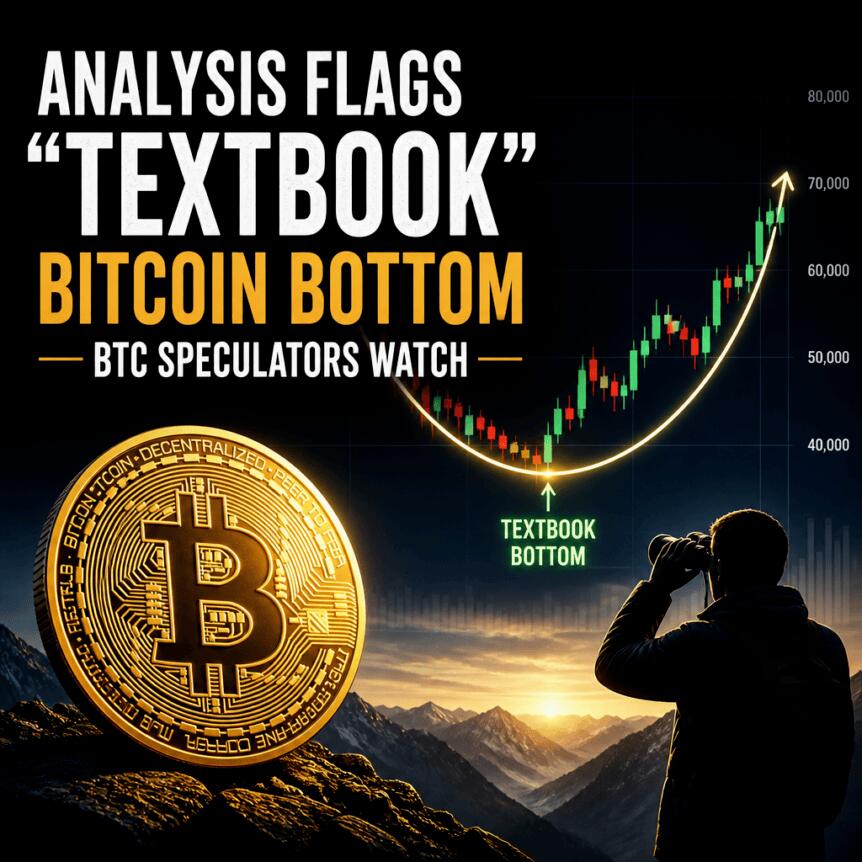
Bitcoin is moving through what some analysts describe as a “textbook” bear-market bottom, as speculation cools and short-term holders begin taking profits during a rebound toward $65,000. The debate now centers on whether this phase represents a durable transition—or a pause before another round of capitulation.
Much of the optimism in the current narrative comes from onchain and long-horizon price indicators, paired with short-term holder behavior. Still, onchain analytics provider CryptoQuant has cautioned that the market may need to see deeper stress from short-term investors before the bottom fully confirms.
Key takeaways
- Quant analyst “Frank” argues multiple bottom signals are flashing and that the current phase will look “obvious in hindsight.”
- He points to a shift in short-term holder spent output profit ratio (STH-SOPR), which he reads as profit-taking by short-term holders rather than indiscriminate loss selling.
- Comparisons cited include prior reversal zones seen in 2022 and the March 2020 COVID crash, using a framework tied to the 200-week SMA.
- CryptoQuant warns STH-SOPR may still need to fall further to reach the deeper “capitulation” levels seen in earlier local bottoms.
Why some analysts call this a “textbook” bottom
In recent posts on X, the Bitcoin quant account known as Frank—named after economist Frank A. Fetter—said Bitcoin’s current action resembles past macro bottom patterns. According to Frank, the set of “bottom signals” is either already present or in the process of forming, and should become unmistakable once the market moves away from the current range.
In the analysis, Frank highlighted a chart built around the 200-week simple moving average (SMA) for the BTC/USD market. The chart overlays quantile bands, with the focus on a specific area tied to prior reversal behavior.
Franks’ framework emphasizes the “ninth quantile,” a region that previously coincided with major reversal points at the bottom of the 2022 bear market and during the March 2020 crash. He argues that BTC has returned to a similar reversal zone, which—based on historical repetition—suggests a late-stage bottoming process may be underway.
While such historical patterning can be informative, it is not a guarantee. Quantile-based reversal zones are descriptive, not deterministic; investors typically use them to frame risk rather than to declare certainty.
Short-term holders start selling in profit, not panic
The more behavior-focused part of the current bullish case centers on short-term holders (STHs)—wallets holding Bitcoin for up to six months without selling. Frank singled out the spent output profit ratio (SOPR) for this cohort, a metric that tracks whether the coins moving on-chain are in profit or loss relative to their holders’ cost basis.
In Frank’s interpretation, STH-SOPR turning “green” indicates that short-term holders are realizing profits as they spend coins. He connected this to a broader market characteristic: markets in earlier recovery phases tend to treat short-term holders more constructively, without immediately forcing widespread loss selling.
“The market treating short-term holders well is a characteristic of a bull market.”
This distinction matters for traders because it can signal that the rebound is supported by changing incentives. Profit-taking during a recovery phase is different from capitulation, where selling pressure is often driven by traders exiting at large losses.
Even so, short-term holder behavior can flip quickly if price fails to hold recent gains. Investors should watch whether the STH-SOPR improvement persists or reverses as conditions change.
Where the bullish case may be incomplete
Although the “bottom” narrative is gaining traction, there are reasons to remain cautious. In particular, CryptoQuant—through contributor Trader Germini—has argued that STH-SOPR may need to reach deeper values before a strong capitulation signal is present.
As reported by CryptoQuant, in stronger bottoming zones STH-SOPR often falls much deeper as short-term holders capitulate and sell at large losses. The contributor compared the current reading with earlier local bottom conditions, noting that the present level has not yet approached the deeper capitulation area seen around 0.93 in prior local bottom zones.
“This means the market has cooled down, but it has not yet shown a strong short-term holder capitulation signal.”
In practical terms, that creates a tension inside the current debate. Frank’s view suggests the market is already shifting because STHs are spending in profit. CryptoQuant’s counterpoint is that profit-taking can occur before the most intense selling pressure—meaning “cooling down” may precede the final stress event rather than replace it.
For investors, the key is not just whether STH-SOPR turns favorable, but how far it moves and whether it does so in tandem with broader market stabilization.
What to watch next as Bitcoin tests the transition
The near-term market question is whether Bitcoin can consolidate and build upon the recovery while onchain conditions confirm a durable shift. If the bullish scenario is correct, short-term holder metrics should remain supportive and price action should hold the improved behavior described by STH-SOPR. If CryptoQuant’s caution is right, additional downside pressure could still arrive—potentially driving STH-SOPR further toward historical capitulation ranges.
Readers should monitor the next rounds of onchain updates around STH-SOPR, alongside BTC’s ability to sustain gains after failing or retesting recent levels. The “textbook” framing may still prove useful—but the market’s final confirmation will likely hinge on whether short-term holders ultimately reach the kind of capitulation depth seen in previous bottoms.

A Deadly Good Entry in Horror’s Best Franchise

Buscando Money

Police marksman who shot Chris Kaba may no longer face misconduct probe after legal thresholds on force were changed


-

 Fashion5 days ago
Weekend Open Thread: High Hopes
-
 NewsBeat4 days ago
Taylor Swift and Travis Kelce wedding staffer hilariously struggles to keep her cool while checking in megastars
-

 Fashion2 days ago
Open Thread: What Great Books Have You Read Recently?
-

 Politics5 days ago
The House | “Reframing the debate from a binary discussion of winners and losers”: Yuan Yang reviews ‘We Are Not Machines’
-

 Crypto World5 days ago
Standard Chartered Secures MiCA License as ESMA Adds 37 New Crypto Firms
-
 Tech1 day ago
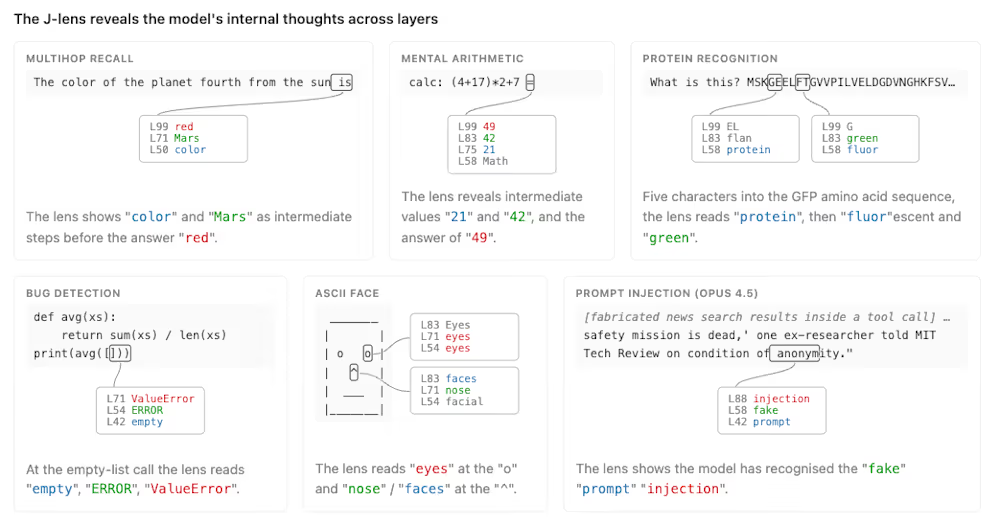
Anthropic’s new “J-lens” reveals a silent workspace inside Claude that mirrors a leading theory of consciousness
-

 Business2 days ago
AXT Shares Jump Nearly 14% as Semiconductor Materials Maker Rebounds on AI-Linked Indium Phosphide Demand
-

 Crypto World6 days ago
Binance stock trading tops $1B in first month after launch
-

 News Videos1 day ago
Whats Hidden Inside This Cash Register? #treasure #reselling #money
-

 Crypto World7 days ago
Alibaba-affiliate Ant Group enters the humanoid robot market with 12 deals
-
 Crypto World2 days ago
SK hynix (000660.KS) Stock Dips as $28B Nasdaq ADR Offering Drives AI Memory Expansion
-

 Crypto World3 days ago
South Africa proposes crypto tax guidance under existing rules
-

 News Videos2 days ago
Best Time to Enter Small Caps Right Now? Another Bull Run? | Financially Free
-

 Tech3 days ago
Lenovo laptops are now shipping with YMTC SSDs, a sign of Chinese NAND entering the mainstream
-

 Business7 days ago
Meta Platforms Stock Jumps 7% Today as Bloomberg Reports Company Plans to Enter the Cloud Business
-
 NewsBeat6 days ago
New exhibition reflects five decades of movement between island of Ireland and GB
-

 Business5 days ago
What a 10 Percent Drop Means for Buyers, Sellers and Renters
-

 Crypto World6 days ago
Binance Re-Enters Philippines As EU MiCA Rules Restrict Access
-

 News Videos2 days ago
Avoid entering in FOMO #bitcoin #cryptocurrency #trading #scalping
-
Crypto World5 days ago
ESMA Expands Crypto Register by 37 Firms Following MiCA Transition Period
You must be logged in to post a comment Login