KUWAIT CITY — Kuwait International Airport is continuing a gradual return to operations more than three weeks after reopening its airspace in late April, following a nearly two-month closure triggered by regional security tensions and drone strikes that damaged parts of the facility.
The airport reopened April 23, 2026, with commercial passenger flights resuming April 26 from Terminals 4 and 5, according to the Directorate General of Civil Aviation and multiple aviation sources. The closure began February 28 amid escalating Middle East conflicts, affecting more than 200,000 passengers and disrupting regional connectivity.
Kuwait Airways initiated phased services from Terminal 4 on May 9, initially serving select destinations and expanding to roughly 29 routes by mid-May. Jazeera Airways resumed full operations from its dedicated Terminal 5 on May 3, serving 27 destinations after temporarily relocating to hubs in Saudi Arabia and Egypt during the shutdown.
The airport has not yet returned to pre-crisis capacity. Officials describe the current phase as a controlled ramp-up that prioritizes safety over speed, emphasizing rigorous protocols before expanding operations further. Daily flight volumes remain well below normal levels, though exact figures have not been confirmed by the civil aviation authority.
The closure began after multiple drone strikes hit Kuwait International Airport on March 27, 2026, causing significant damage to radar systems and other critical infrastructure. Terminal 1 was evacuated and has remained closed for repairs with no official reopening timeline announced. Technical teams have completed essential repairs on runways, fuel systems and security infrastructure, though full restoration depends on ongoing assessments.
Sheikh Hamoud Mubarak Al-Sabah, Chairman of the Civil Aviation Authority, personally oversaw readiness reviews and commended staff for restoring operations under challenging conditions. Civil aviation officials emphasized that safety remains the absolute priority as the airport continues its phased recovery.
Travelers currently face restrictions and operational challenges. Many passengers report delays and cancellations as airlines work through compressed schedules that strain crew rotations and ground handling. Foreign carriers are operating cautiously, with some routes rerouted or scaled back during the recovery period. Passengers are advised to check flight status frequently and arrive early at the airport.
The economic impact of the closure has been significant. Kuwait Airways and Jazeera Airways reported revenue losses during the suspension, with stranded passengers and disrupted supply chains affecting regional connectivity. Businesses reliant on air cargo and tourism also suffered during the shutdown, particularly during the peak spring travel period.
Enhanced security measures remain in place at both active terminals, including stricter inspections and coordination with the Ministry of Interior. Check-in processes have been streamlined for security reasons, contributing to longer processing times for passengers. Travel experts recommend verifying terminal assignments, as most international flights currently use Terminal 4 or Terminal 5.
Kuwait Airways added routes incrementally in recent weeks, including new services to Cairo. Jazeera Airways is focused on restoring its low-cost network, with passenger numbers rising steadily as confidence returns. However, the airport remains far from its pre-February operational levels, and full recovery is expected to take additional months depending on regional stability.
International carriers have begun restarting limited services, though many long-haul routes remain curtailed. The airline industry is watching closely to see whether the phased approach will continue or accelerate as infrastructure assessments improve and regional tensions ease.
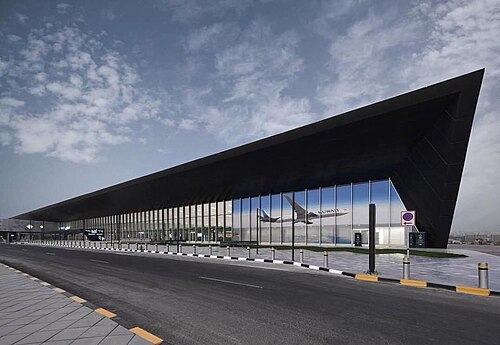
The long-term modernization project continues unaffected despite the disruption. Kuwait’s ambitious new Terminal 2, designed by Foster + Partners and built by Limak İnşaat, remains on track for a late 2026 opening. The facility will dramatically boost capacity to 27 million passengers annually once operational, transforming Kuwait into a more competitive regional hub.
Looking ahead, airport authorities aim for progressive expansion in the coming weeks and months. Officials hope to increase daily flight numbers and operating hours as confidence in infrastructure stability grows. Full normalization could take additional months, depending on completion of remaining repairs and sustained calm in the region.
The episode underscores the vulnerability of Gulf aviation to geopolitical events. Kuwait’s quick response in repairing damage and implementing a structured reopening has drawn praise from regional partners, even as travelers express frustration over lingering limitations. Qatar and Bahrain offered support during the recovery period.
As the summer travel season approaches, demand for flights through Kuwait is expected to surge. Authorities and airlines have pledged continued coordination to minimize disruptions while maintaining the highest safety standards. The phased recovery represents a cautious but determined return to normalcy after one of the facility’s most serious disruptions in modern history.
Kuwait International Airport’s story in 2026 reflects both resilience and the realities of operating in a volatile neighborhood. From near-total shutdown to a steadily expanding operation, the hub is rebuilding step by step. While not yet fully recovered to pre-crisis levels, clear progress offers hope for a stronger facility in the months ahead.
For travelers planning to use the airport in the coming weeks, the advice remains clear: verify all flight details directly with airlines, allow extra time for security procedures, and remain flexible as schedules continue to evolve. Many passengers are grateful to have direct flights again, while others continue to voice disappointment over limited destinations.
Aviation industry analysts view the current situation as a positive but incomplete step. Kuwait’s quick decision to resume limited operations shows resilience, though full recovery will depend on completing repairs to Terminal 1 and restoring confidence among international carriers. The DGCA continues working closely with airlines and international partners to expand the flight schedule safely.
The skies above Kuwait are once again seeing increasing activity, symbolizing a cautious but determined return to connectivity after a difficult two-month period. Officials and airlines alike are committed to restoring full service as safely and quickly as conditions allow.



































































You must be logged in to post a comment Login