

Crypto World
3 Factors May Send Bitcoin Price Back To $80K

Key takeaways:
- Aggressive Bitcoin buying by Strategy helped to offset the recent leveraged long liquidations.
- Rising bond yields and a heavy US government debt burden are driving investors toward scarce assets.
- A potential deal between the US and Iran could quickly restore traders’ risk appetite.
Bitcoin (BTC) faced a rejection following a failed attempt to break above $82,000 on Thursday. A subsequent retest of the $76,000 level on Monday triggered $400 million in liquidations for bullish Bitcoin positions over a four-day period. While traders’ confidence took a hit from the 7% price decline, the prospects for recovering the $80,000 mark remain valid.
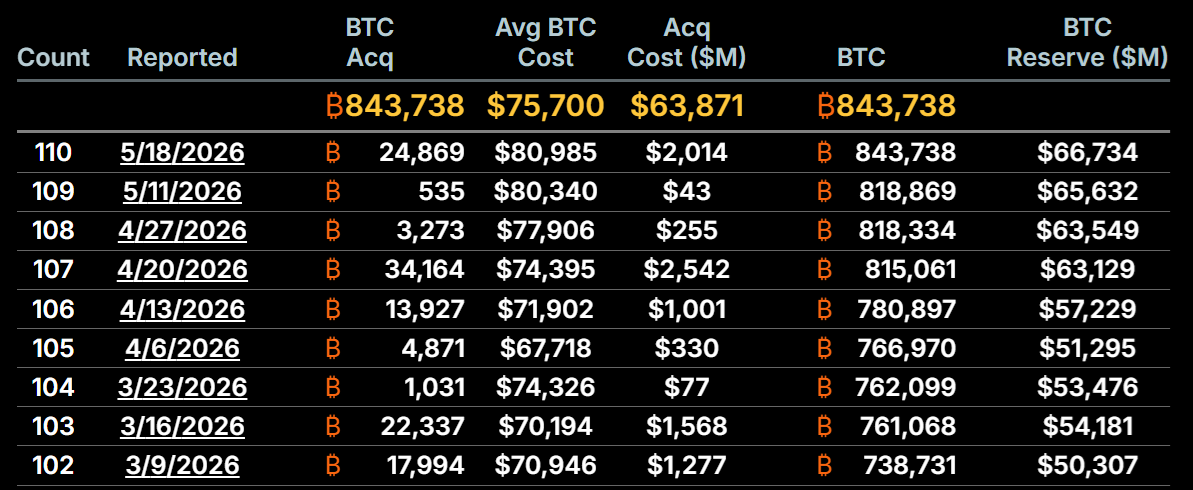
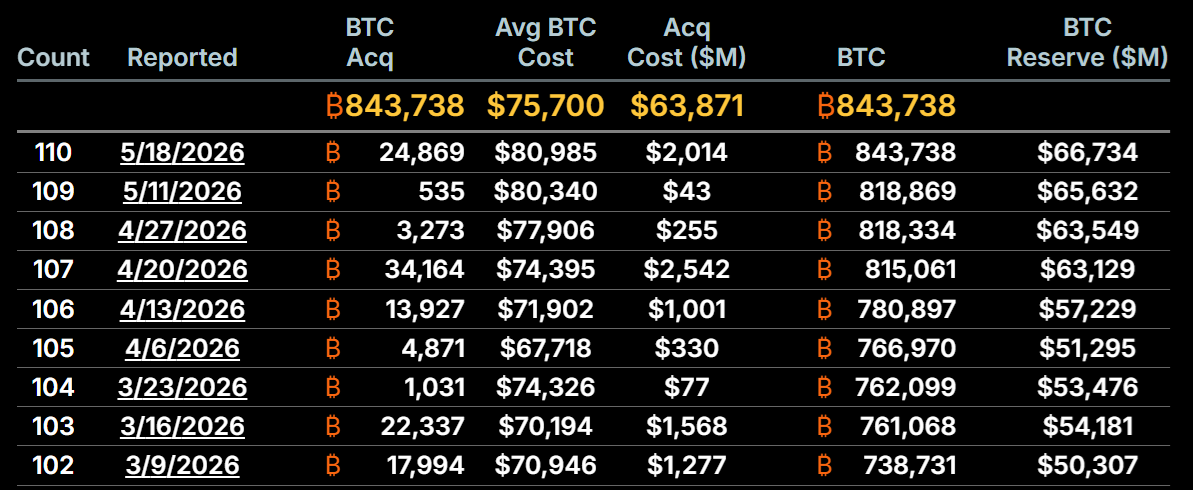
Bitcoin reserve accumulation by Strategy (MSTR US). Source: Strategy
US-listed Strategy (MSTR US) completed the acquisition of $2 billion in BTC over the past week alone. Spearheaded by Michael Saylor, the company continues to surprise investors by finding innovative ways to reduce the cost of capital and raise cash through equity issuance, whether via MSTR common stock or STRC preferred equity.
More importantly, Strategy proved the company can also capitalize on a weaker market by repurchasing $1.5 billion of its debt due in 2029. Retiring some of its senior convertible notes reduces potential future dilution for current MSTR holders. This move clears the runway for new share issuance and additional Bitcoin purchases.
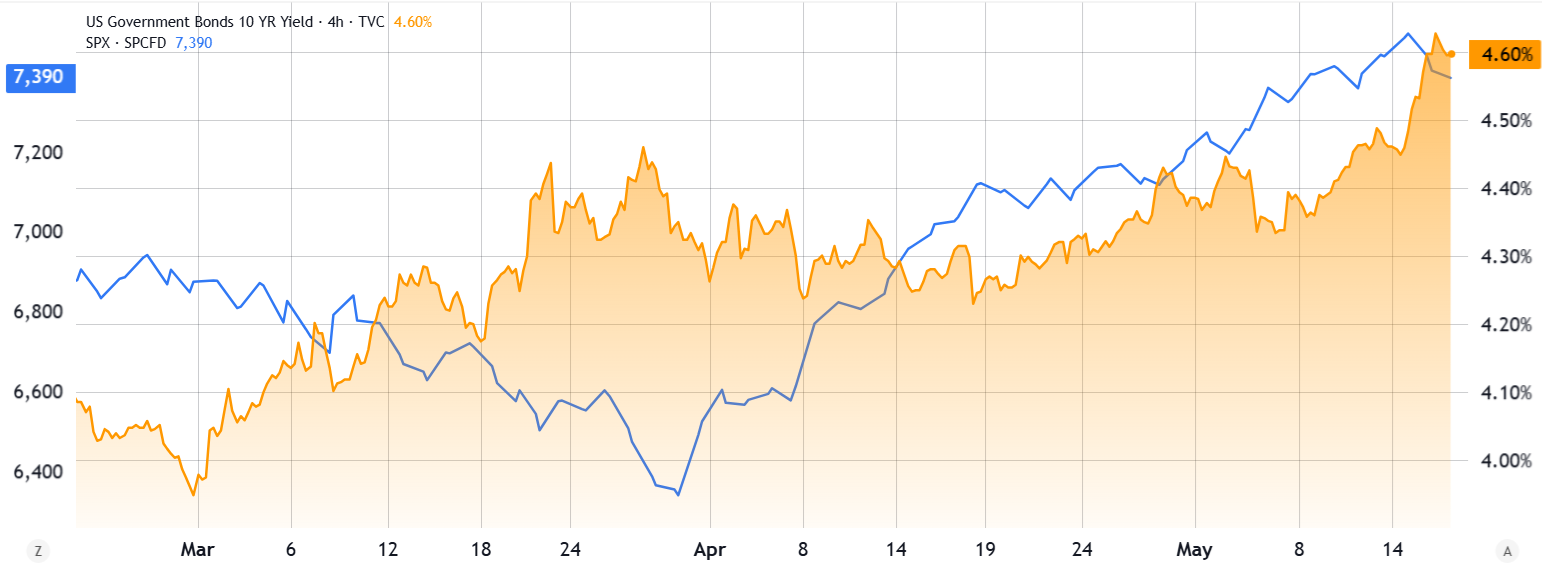
S&P 500 index (left) vs. US 10-year Treasury yield (right). Source: TradingView
From a macroeconomic perspective, the odds of a sustainable bullish momentum for Bitcoin improved as traders demanded higher returns to hold government bonds. Yields on the 10-year Treasury jumped to 4.60%, hitting their highest level in 16 months. Investors are gradually realizing the heavy burden on the US Treasury, especially with $2 trillion in long-term debt maturing in 2026.
US dollar weakness and a potential deal with Iran
The US Federal Reserve will likely need to continue accumulating bonds and Treasurys, a move that potentially weakens the US dollar. Typically, investors seek shelter in scarce assets when they lose confidence in the central bank’s ability to navigate a crisis without devaluing the currency. Even if gold acts as the primary beneficiary, the incentive to hold fixed-income assets drops significantly.
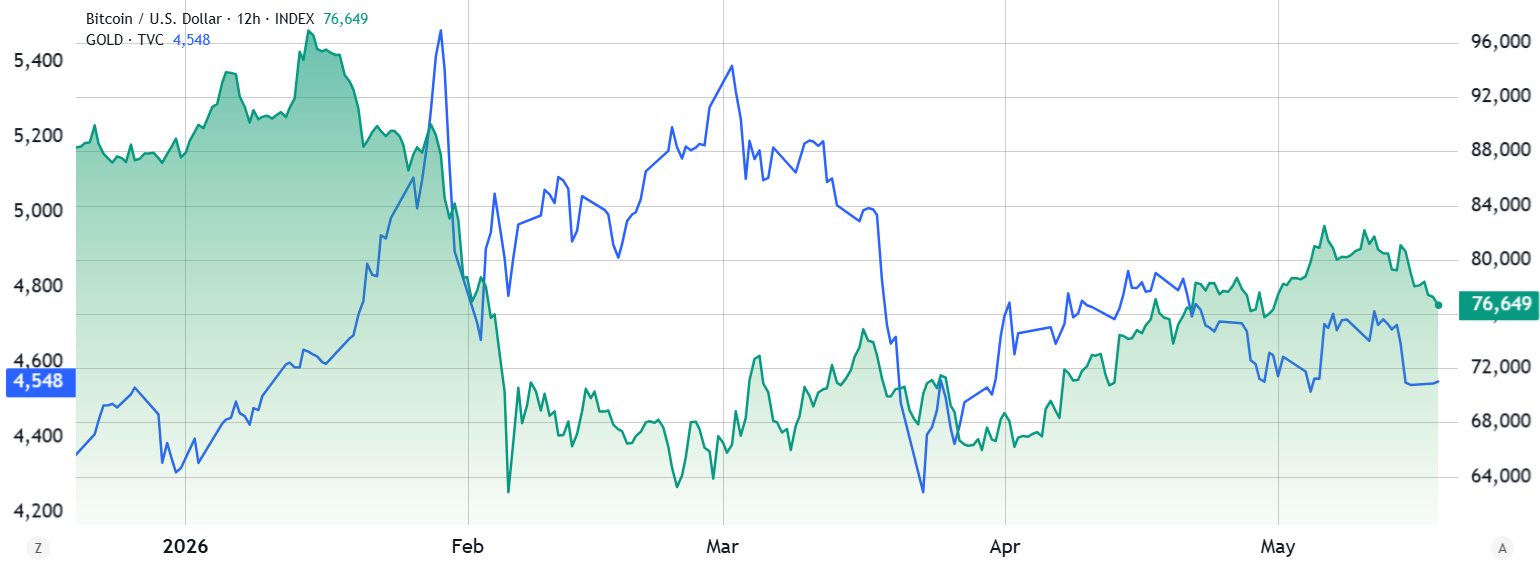
Gold/USD (left) vs. Bitcoin/USD (right). Source: TradingView
Gold prices surged in January after the US captured Venezuelan President Nicolas Maduro and President Trump’s global trade war escalated. However, gold retraced most of those gains over the next four months, while Bitcoin built strong bullish momentum, jumping to $76,500 from $65,000 in late February. These recent price moves hint at growing confidence in Bitcoin as a reliable hedge instrument.
Related: Analysts debate whether Bitcoin is in ‘sell in May’ bear market setup
Crude Brent oil prices jumped to $113 on Monday as negotiations to fully reopen the Strait of Hormuz backpedaled. Oil prices have surged more than 50% since the US and Israel attacked Iran in late February. President Trump’s administration also decided not to renew a waiver for Russian crude oil, further squeezing supply, according to Yahoo Finance.
A deal between the US and Iran, while not the baseline scenario, could trigger renewed risk appetite and catapult the Bitcoin price back above $80,000. Inflation has been pinned down by high energy prices, limiting the odds of expansionary monetary policies. Even so, the odds favor Bitcoin, as the US stock market is hovering near its all-time high while the cryptocurrency still sits 39% below its peak.

Crypto World
Crypto News, July 8: U.S. Strikes Iran Again, Ethereum Price Wobbles After Bitcoin Spot Sell-Off

Crypto markets woke up to fresh news as U.S. strikes hit Iran again. The Bitcoin price is stuck chopping between $62,000 and $64,500 after rejecting its recent push near $64,500. Ethereum is feeling the heat too, while the Iran strike sends oil price to the sky and risks appetite lower. July’s earlier gains are now looking shaky.
Now, does crypto remain tied to geopolitics? Higher Japanese bond yields are also spilling into U.S. rates, adding more pressure on risk assets. Yet while macro headlines dominate the crypto news, corporate players are moving in opposite directions.
Don’t Miss Out on Our $1,000 USDT Airdrop on ByBit
Iran Strike Sends Oil Higher as Bitcoin Price Turns Choppy

Today’s Iran strike is sending oil through the roof and is hitting crypto hard. Bitcoin price is struggling to hold ground, and Ethereum is moving in tandem with market fear. In the past months, when oil spikes and yields rise, crypto is the first to bleed.
Still, this isn’t 2022; institutional infrastructure is stronger, and corporate balance sheets are actively participating. We still remember that since the big October crash last year, Bitcoin price has been lackluster. It briefly tested higher levels in July but failed to sustain momentum. Weak spot demand and falling open interest are making it look fragile. Some analysts even warn that they feel cautious about the near-term outlook.
At the same time, Strategy has been selling Bitcoin aggressively, including a $216 million tranche recently. This shift from major accumulator to seller has caught attention, though markets have mostly shrugged it off so far.
Discover: The Best Crypto to Diversify Your Portfolio
Ethereum Price Holds Up Better as Bitmine Keeps Buying

Ethereum price may be soft on the surface, but on-chain activity is looking way better. Tom Lee’s Bitmine just bought another 40,000 ETH worth $71.6 million from FalconX and Kraken 11 hours ago. This follows their 42,000 ETH purchase last week as they continue pushing toward 5% of total supply.
Don’t Miss Out on Our $1,000 USDT Airdrop on ByBit
As of today, Bitmine’s steady accumulation stands in sharp contrast to Strategy’s selling. Tom Lee has previously described that Saylor’s move is a “classic bottom behavior.”
Not all are looking bad this time around. Japan’s weakening yen is also driving local companies to buy Bitcoin and XRP for treasury diversification. Daily ETF flows have started turning positive again after earlier outflows. Major institutions are staffing up, too. Vanguard is hunting for a digital assets chief, and Solana just hired a former Twitter security executive as CISO.
The Iran strike is striking crypto, but it would eventually move off the front page. When it does, Bitcoin and Ethereum price will be supported by the same quiet accumulation that’s been happening while everyone else is distracted by oil and yields.
Bitmine isn’t buying because conditions are perfect, and corporate demand from Japan and returning ETF inflows are cementing a hard floor.
Discover: The Best Token Presales
The post Crypto News, July 8: U.S. Strikes Iran Again, Ethereum Price Wobbles After Bitcoin Spot Sell-Off appeared first on Cryptonews.
Zcash (ZEC) briefly climbed above $500 after founder Zooko Wilcox-O’Hearn said the project’s Tachyon Formal Verification initiative is close to delivering a mathematical proof that the latest Zcash shielded pools contain no undetectable counterfeiting bugs.
Wilcox said the project is “on the verge of producing a mathematical proof” that would eliminate the long-standing tradeoff between privacy and the ability to verify a cryptocurrency’s money supply.
Hidden Bug Scare
Project Tachyon has shared new details about its verification work for Zcash’s upcoming Ironwood shielded pool, following the recent discovery of a vulnerability in Orchard.
In May, Shielded Labs security researcher Taylor Hornby identified a counterfeiting flaw in Orchard, Zcash’s flagship shielded pool. While the issue was patched through a network upgrade and the team believes it was never exploited, its undetectable nature led the community to develop Ironwood as a new shielded pool with the vulnerability removed.
Ironwood is based on Orchard but starts with the patched design. The protocol also includes a turnstile mechanism that allows users to move funds from Orchard to Ironwood, and helps demonstrate that no counterfeiting occurred. As part of the transition, payments within the older Orchard pool will be disabled, providing an upper limit on the circulating ZEC supply.
According to the project, fixing the bug alone was not enough to ensure future security. Instead, the community launched a “multi-pronged” verification effort that combines extensive security audits, analysis using frontier AI tools, and formal verification to confirm the correctness of Ironwood.
Bullish Setup?
ZEC gained steadily over the past week. The privacy coin rose from around $410 to briefly cross the $500 mark before giving back some of its gains to settle near $480. Even after pulling back, ZEC is up by almost 20% during this period.
Trader ‘Ardi’ said ZEC is facing a key resistance around $480, where a descending trendline and a horizontal resistance level meet. This has created a “compound resistance.” The trader believes the recent rejection at that level actually strengthened the setup by bringing the price back to retest the trendline.
According to Ardi, if the token breaks above $480 and holds that level as support, it could regain momentum and climb back above $500.
The post ZEC Briefly Tops $500 After Founder Says Formal Proof Is Nearly Ready appeared first on CryptoPotato.

Key Takeaways
- Cryptocurrency regulatory reform tops the SEC’s 2026 priority list
- ‘Regulation Crypto’ framework aims to provide exemptions for certain digital asset activities from traditional securities requirements
- New guidelines will address crypto broker-dealers, trading platforms, and regulatory safe harbors
- Paul Atkins, SEC Chair, envisions positioning America as the global cryptocurrency leader
- Former President Trump acknowledged strategic political motivations behind his crypto advocacy before the 2024 election cycle
The Securities and Exchange Commission is on track to unveil its first comprehensive cryptocurrency-focused regulatory framework, with an anticipated launch window of July 2026. This initiative, dubbed “Regulation Crypto,” aims to establish conditional exemptions from standard securities registration requirements for specific digital asset operations.
On Tuesday, SEC Chair Paul Atkins revealed the agency’s updated regulatory roadmap. According to Atkins, these forthcoming rules directly support the Trump administration’s strategic vision of establishing the United States as the preeminent global cryptocurrency hub.
The regulatory package encompasses three primary focus areas: cryptocurrency broker-dealer operations, digital asset listing on trading platforms and national securities exchanges, and protective safe harbor provisions for token issuers transitioning away from active project management.
Additional provisions in the agenda address digital asset custody standards and crypto market infrastructure. Unlike advisory guidance, these measures constitute binding regulations with substantial legal weight, creating significant barriers to future policy reversals.
Core Components of the Regulation Crypto Framework
The “Regulation Crypto” proposal would grant developers launching cryptocurrency investment contracts temporary registration relief. The framework also establishes prescribed fundraising thresholds and offers legal protections for issuers deliberately reducing their operational control over digital assets.
Atkins initially previewed this regulatory approach in March 2026, projecting implementation “in the coming weeks.” The July timeline now appears on the SEC’s official calendar, though the proposal remains under examination by the White House Office of Information and Regulatory Affairs.
Earlier this year, the SEC released its inaugural digital asset “taxonomy,” establishing classification standards for various token types and their corresponding regulatory treatment. Parallel efforts are underway to develop specific regulations governing tokenized securities.
Congressional Scrutiny and Political Dynamics
The SEC’s cryptocurrency regulatory pivot has generated significant political friction. Democratic legislators have criticized the commission for allegedly reducing enforcement intensity against entities with Trump administration connections, including Binance, Coinbase, Ripple Labs, and Kraken.
In January, three Democratic House representatives sent correspondence to Atkins, expressing concern that the SEC’s withdrawal from enforcement proceedings has created investor protection gaps. They emphasized that federal judicial rulings had already classified certain tokens as securities.
Atkins has indicated the agency will proceed independently but stands ready to defer to Congressional authority should comprehensive crypto market structure legislation advance. That proposed legislation, which would transfer substantial SEC crypto oversight responsibilities to the Commodity Futures Trading Commission, currently faces legislative gridlock.
Meanwhile, Trump publicly admitted Monday that his cryptocurrency engagement was “a little bit for politics.” This marks a dramatic reversal from his first presidential term, when he characterized Bitcoin as fraudulent before shifting his stance prior to the 2024 electoral contest.
The SEC’s current cryptocurrency regulatory agenda represents unprecedented activity levels for the sector within the agency’s history. The central question facing the industry remains whether formal SEC rules will materialize before Congressional action.



EU lawmakers are set to vote again on controversial legislation dubbed “chat control” by its critics, which would allow tech firms to scan messages for child sexual abuse material.
On Tuesday, the European Parliament voted through a rarely used urgent procedure that will bring lawmakers to a vote Thursday on whether to extend the legal framework, which expired in early April.
“Today’s vote violates our own rules of procedure, the European Parliament decided to use an urgent procedure for Chat Control 1.0,” Pirate Party MEP Markéta Gregorová said on Tuesday. “This means that on Thursday, we will once again vote on extending the derogation that allowed online platforms to scan our private communications.”
The upcoming vote could revive the so-called “chat control” rules that are controversial among privacy and cryptography advocates, as tech companies must scan end-to-end encrypted messages.
Since the legal framework expired in April, messaging platforms such as WhatsApp have been allowed to take their own voluntary measures to seek out those sharing abusive material.
Rejecting proposal requires absolute majority
Gregorová said rejecting or amending the proposal will require an absolute majority of 361 votes in Parliament.
The vote Tuesday narrowly passed, with 331 in favor, 304 against and 11 abstaining.
In March, Parliament rejected a temporary extension of the scheme proposed by the European Commission while a new version of the law was under discussion, in a vote of 311 against, 228 for and 92 abstaining.
Euronews reported Tuesday that the latest proposal was revived by the European People’s Party, the largest group in Parliament, which largely voted against the measure in March because of amendments that restricted the scope of the chat scans.
However, European People’s Party leader Manfred Weber has been looking for ways to push through the extension without changes.
Related: Privacy advocates slam reCAPTCHA update they say locks out de-Googled phones
“The European People’s Party is abusing its position as the largest political group to bring back, through a procedural loophole, a proposal that Parliament had already rejected,” Gregorová said. “This is unprecedented.”
EU member states agreed to reinstate an interim “chat control” measure last month, which would allow service providers to detect, report, and remove abusive material until 2028.
Features: Crypto industry looks to stablecoins and DeFi revisions in MiCA 2.0


Clearstream has expanded its institutional crypto custody service by adding six more digital assets.
Summary
- Clearstream now supports eight crypto assets, widening institutional access beyond Bitcoin and Ether custody.
- The service uses Crypto Finance as sub-custodian, keeping the offering inside Deutsche Börse’s regulated structure.
- MiCA is pushing European institutions toward licensed custody, settlement, trading, and stablecoin infrastructure providers.
Clearstream, the post-trade services provider owned by Deutsche Börse Group, said it now accepts Ripple-linked XRP, Cardano, Solana, Litecoin, Stellar, and Avalanche in its crypto custody offering. These assets join Bitcoin and Ether, which were already supported.
The move gives institutional clients a wider list of crypto assets inside Clearstream’s custody system. The firm said the expansion responds to growing demand for MiCA-compliant crypto assets in institutional finance.
Clearstream is one of Europe’s largest settlement and custody firms. Its parent, Deutsche Börse Group, operates across trading, clearing, settlement, and market infrastructure.
Crypto Finance remains sub-custodian
Clearstream said the service continues to use Crypto Finance, another Deutsche Börse Group company, as sub-custodian. Crypto Finance holds a MiCAR license, which lets it provide regulated crypto services across Europe.
The structure allows Clearstream clients to access crypto custody through existing accounts with Clearstream Banking S.A. in Luxembourg. It also lets institutions use familiar market infrastructure instead of setting up direct relationships with separate crypto service providers.
When the service was first announced, Clearstream said it would support Bitcoin and Ether before considering more assets based on client demand. As previously reported by crypto.news, the original plan gave about 2,500 institutional clients access to crypto custody and settlement from April 2025.
MiCA shapes institutional demand
The timing comes as Europe’s crypto market adjusts to the Markets in Crypto-Assets framework. MiCA created a single rulebook for crypto-asset service providers, including custody, exchange, transfer, and stablecoin services.
Meanwhile, ESMA’s register expanded after the July 1 deadline, with more firms gaining authorization to serve clients across the European Union. That shift has made licensing a key part of institutional crypto access.
Clearstream’s expansion fits that market. Banks, brokers, asset managers, and trading firms need custody providers that can meet regulatory, settlement, reporting, and operational needs.
The new token list also shows that institutional access is moving beyond only Bitcoin and Ether. XRP, Solana, Cardano, Litecoin, Stellar, and Avalanche each have large public markets and established user bases.
Deutsche Börse widens digital asset rails
Deutsche Börse Group has been building several digital asset services across its market infrastructure. Clearstream’s custody expansion adds another piece to that broader strategy.
Moreover,Deutsche Börse partnered with Circle to bring USDC and EURC into its trading and custody network under MiCA. The plan includes trading through 3DX and custody through Clearstream.
The group’s approach centers on regulated access rather than direct retail crypto services. Clearstream serves institutional clients that often need asset safety, settlement support, and clear legal structures before handling digital assets.


Microsoft has begun swapping OpenAI and Anthropic models for its own MAI systems in Excel and Outlook, a shift aimed at curbing its fast-growing artificial intelligence bill.
Tens of thousands of prompts in the two applications now run each week on Microsoft’s internally built models.
Why Microsoft Wants to Cut Its AI Bill
Microsoft consumes huge volumes of AI tokens across products such as its Copilot assistant. It currently gets much of that computing at a discount through a long-standing partnership with OpenAI.
That arrangement will not last forever. AI chief Mustafa Suleyman’s team wants to avoid paying whatever leading labs charge once the discount ends.
Bloomberg, citing a person familiar with the work, reported that Excel and Outlook had previously leaned more on OpenAI and Anthropic. Now, MAI usage accounts for a small share of overall AI activity.
Follow us on X to get the latest news as it happens
In June, Suleyman said Microsoft was trying to cut spending on Anthropic by using more of its own systems. His comments framed the internal effort in blunt cost terms.
“We pay a lot of money to Anthropic — so our goal is to reduce and ultimately eliminate that cost,” he said.
This follows earlier signs of an enterprise AI cost squeeze at the company. Microsoft began winding down most internal Claude Code licenses in mid-May 2026.
Meanwhile, the model switch forms part of a wider cost push at Microsoft. The company is trimming spending even as it pours record sums into AI.
BeInCrypto reported that Microsoft is cutting 2.1% of its workforce, or 4,800 jobs. Its Xbox unit absorbed major reductions, with roughly 3,200 roles set to go.
Subscribe to our YouTube channel to watch leaders and journalists provide expert insights
The post Microsoft Cuts AI Bill by Replacing OpenAI and Anthropic in Software Products appeared first on BeInCrypto.
Key Highlights
- Real-world asset tokenization on XRPL exploded from $150M to $4B within twelve months
- Institutional investors pushed XRP spot ETFs to $1.49B in net inflows across eight weeks
- Ripple obtained comprehensive MiCA CASP authorization in Luxembourg, enabling operations throughout 27 EEA nations
- Weekly new wallet creation jumped from 18,100 to 26,000, marking the strongest growth since March
- XRP currently trades near $1.13 with derivatives open interest standing at $2.38B
Multiple catalysts are converging to drive renewed interest in XRP. According to information released by Evernorth, a digital asset treasury company backed by Ripple, the ecosystem is experiencing simultaneous expansion across tokenized real-world assets, exchange-traded fund capital flows, and on-chain user engagement.
The value of tokenized real-world assets operating on the XRP Ledger has skyrocketed from approximately $150 million twelve months ago to over $4 billion currently. More than 500 distinct products now operate on the network. Leading the charge are JMWH and the Ondo Short-Term Government Bond Fund, which collectively account for nearly $2.5 billion in market value.
In a landmark transaction, JPMorgan, Ripple, Mastercard, and Ondo Finance successfully executed a cross-border tokenized treasury settlement using the XRP Ledger. The entire transaction settled in roughly four seconds.
Market analyst Celal Kucuker (@CelalKucuker) shared his perspective on XRP’s immediate price trajectory, stating that “$XRP could reach $1.50 before the end of this month,” describing a 40% rally within 20 days as “absolutely possible.” His analysis emerged alongside strengthening on-chain metrics and derivatives market indicators.
Institutional Capital Continues Flowing Into XRP ETFs
XRP spot exchange-traded funds have maintained an unbroken streak of positive net inflows for eight consecutive weeks, accumulating a combined total of $1.49 billion. Current assets under management have reached approximately $1.05 billion, representing roughly 1.47% of XRP’s overall market capitalization.
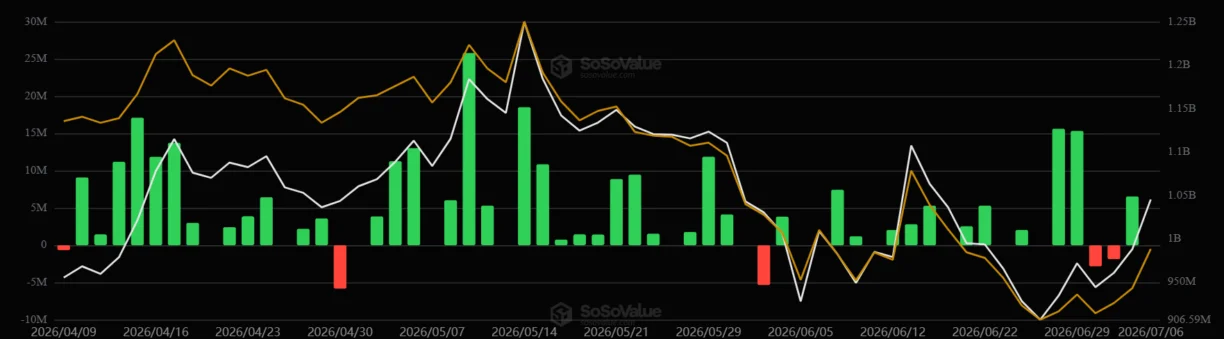
Bitwise commands the largest position among XRP ETF providers with $330.84 million in net assets, trailed by Canary at $265.30 million and Franklin at $261.68 million. Daily trading volume across all XRP exchange-traded funds hit $14.48 million in the most recent session.
Evernorth emphasized that the sustained ETF inflow pattern indicates a meaningful transition toward institutional market participation, creating a bridge between conventional financial markets and digital asset ecosystems.
Ripple Secures Full MiCA Regulatory Clearance Across Europe
Ripple has been granted a Crypto-Asset Service Provider license by Luxembourg’s CSSF under the European Union’s Markets in Crypto-Assets framework. This certification builds upon preliminary MiCA approval obtained in June and represents the completion of Ripple’s comprehensive regulatory authorization process under EU legislation.
The licensing arrangement enables Ripple to passport regulated cryptocurrency services throughout all 27 European Economic Area member countries. Cassie Craddock, Ripple’s Managing Director for the UK and Europe, confirmed the company stands fully prepared to scale operations under the MiCA regulatory structure.
Ripple anticipates the dual regulatory approvals will accelerate market adoption of XRP-powered payment solutions and its RLUSD stablecoin throughout European markets.
Weekly XRP wallet creation surged from 18,100 to 26,000, representing the strongest weekly performance since March. XRP futures open interest climbed to $2.38 billion, with CME futures open interest increasing 3.21% in recent trading hours.
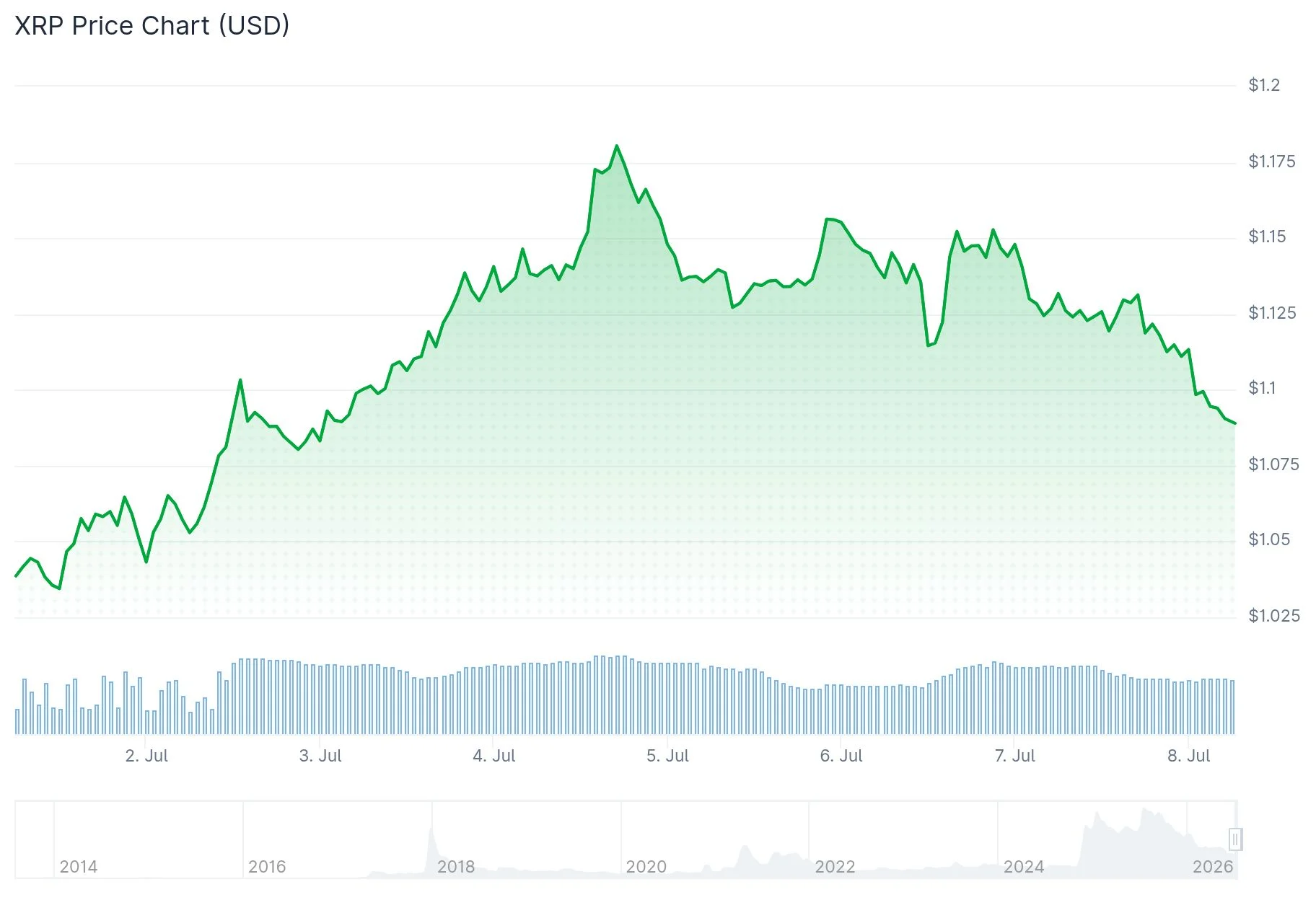
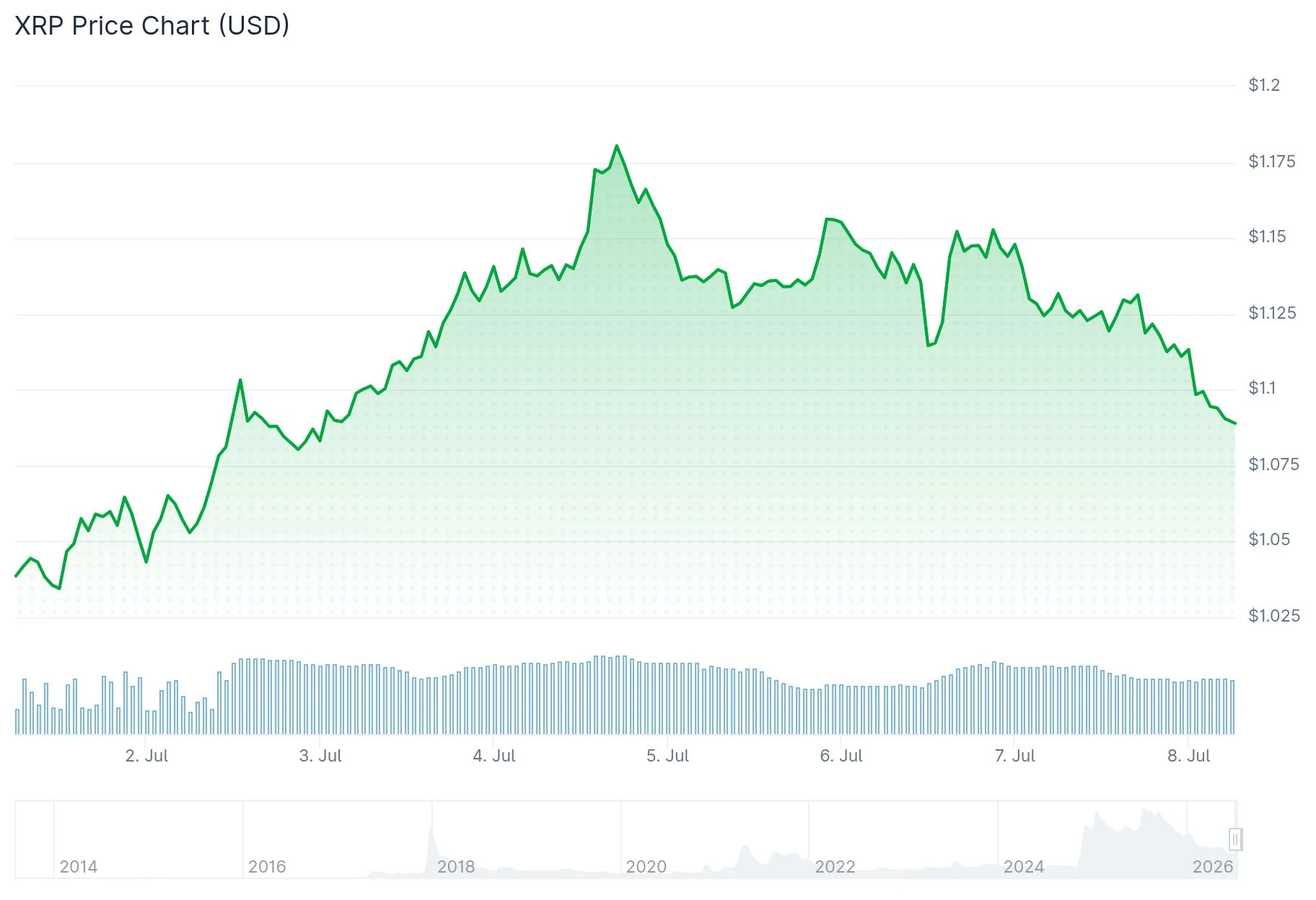
At the time of publication, XRP was changing hands at $1.13, trading within a 24-hour band of $1.11 to $1.16, while trading volume increased by nearly 50%.
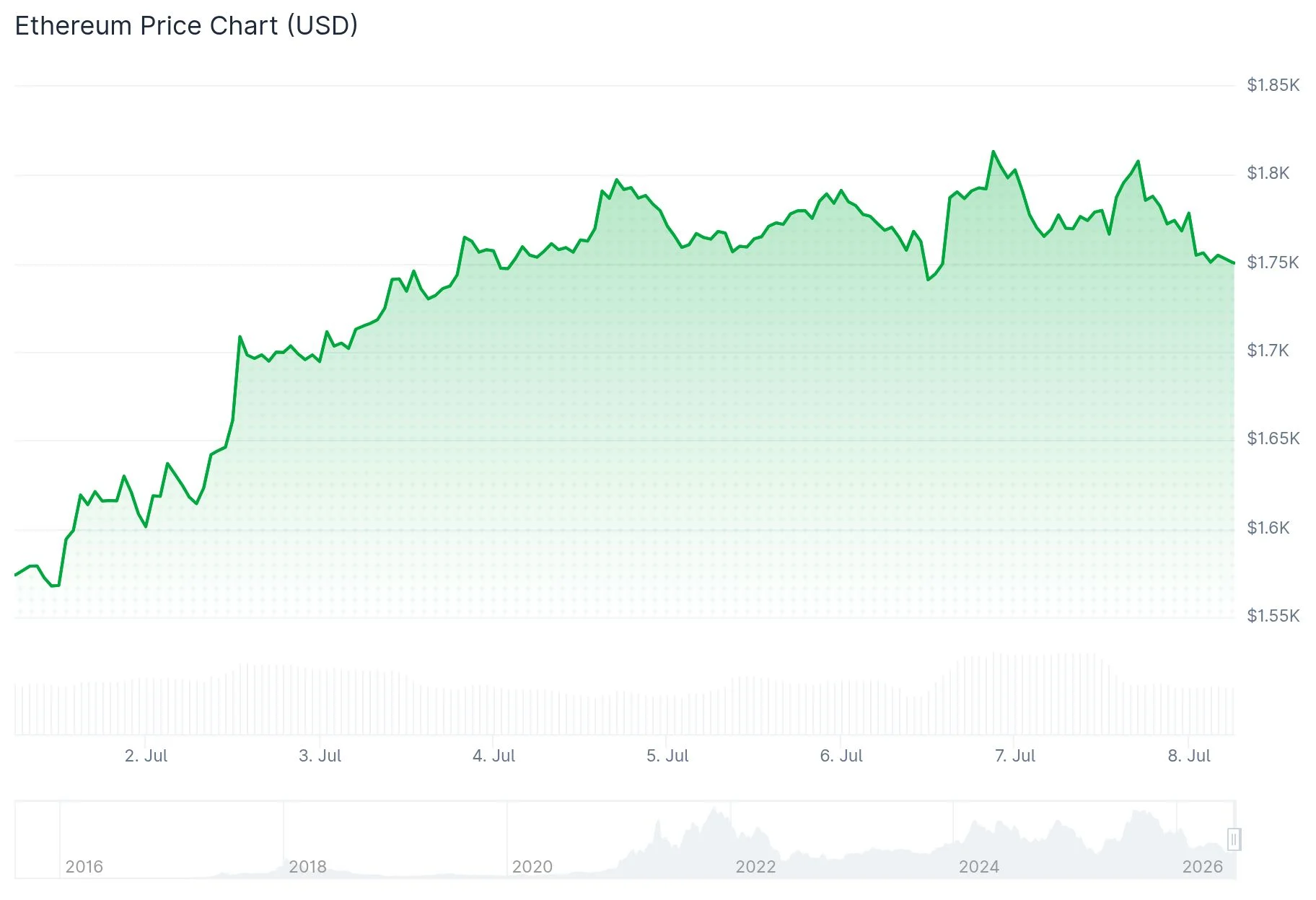
Key Highlights
- ETH surged approximately 10% and momentarily reclaimed $1,800 following a positive shift in Net Taker Volume on June 28
- Open interest remained unchanged throughout the price increase, indicating the rally lacks leverage-driven speculation
- A critical resistance zone exists at the 50-day EMA near $1,806
- US-based ETH spot ETFs recorded net inflows for three consecutive trading sessions
- Vitalik Buterin presented “Lean Ethereum,” an extensive protocol transformation projected to reduce ERC20 transaction costs by more than tenfold
Ethereum has appreciated roughly 10% during the previous seven days, momentarily reaching the $1,800 level for the first time in several weeks. This upward movement followed the ETH Net Taker Volume indicator turning positive on June 28, demonstrating that purchasing activity was dominating perpetual futures markets. Following this shift, ETH has registered gains approaching 14%.
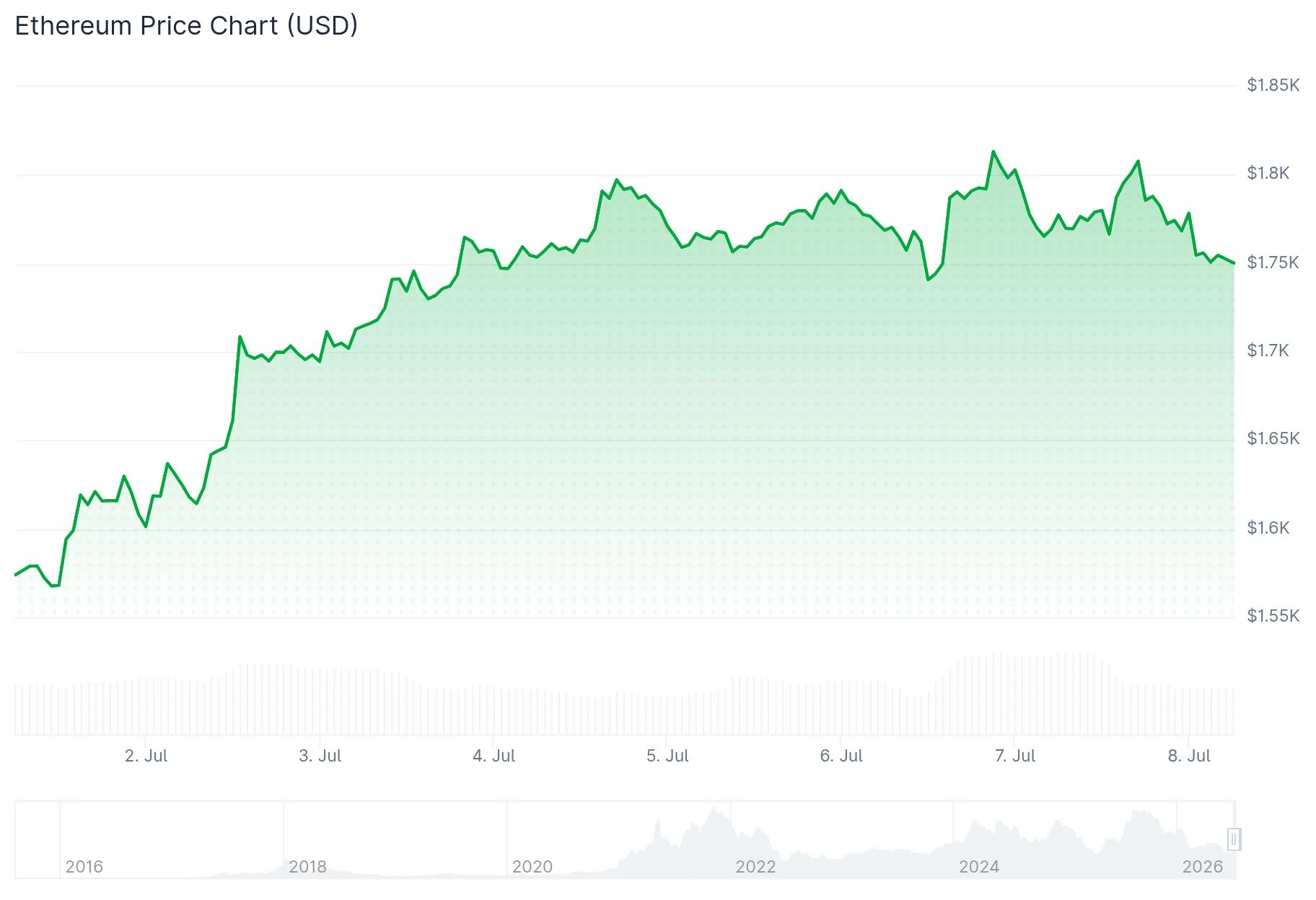
The most notable characteristic of this price advance is that open interest has remained essentially unchanged. This indicates that market participants are not increasing positions using leverage. The Estimated Leverage Ratio has similarly shown no significant increase following its June contraction. When price movements occur without corresponding leverage expansion, they generally demonstrate greater sustainability due to reduced exposure to cascading liquidation events.
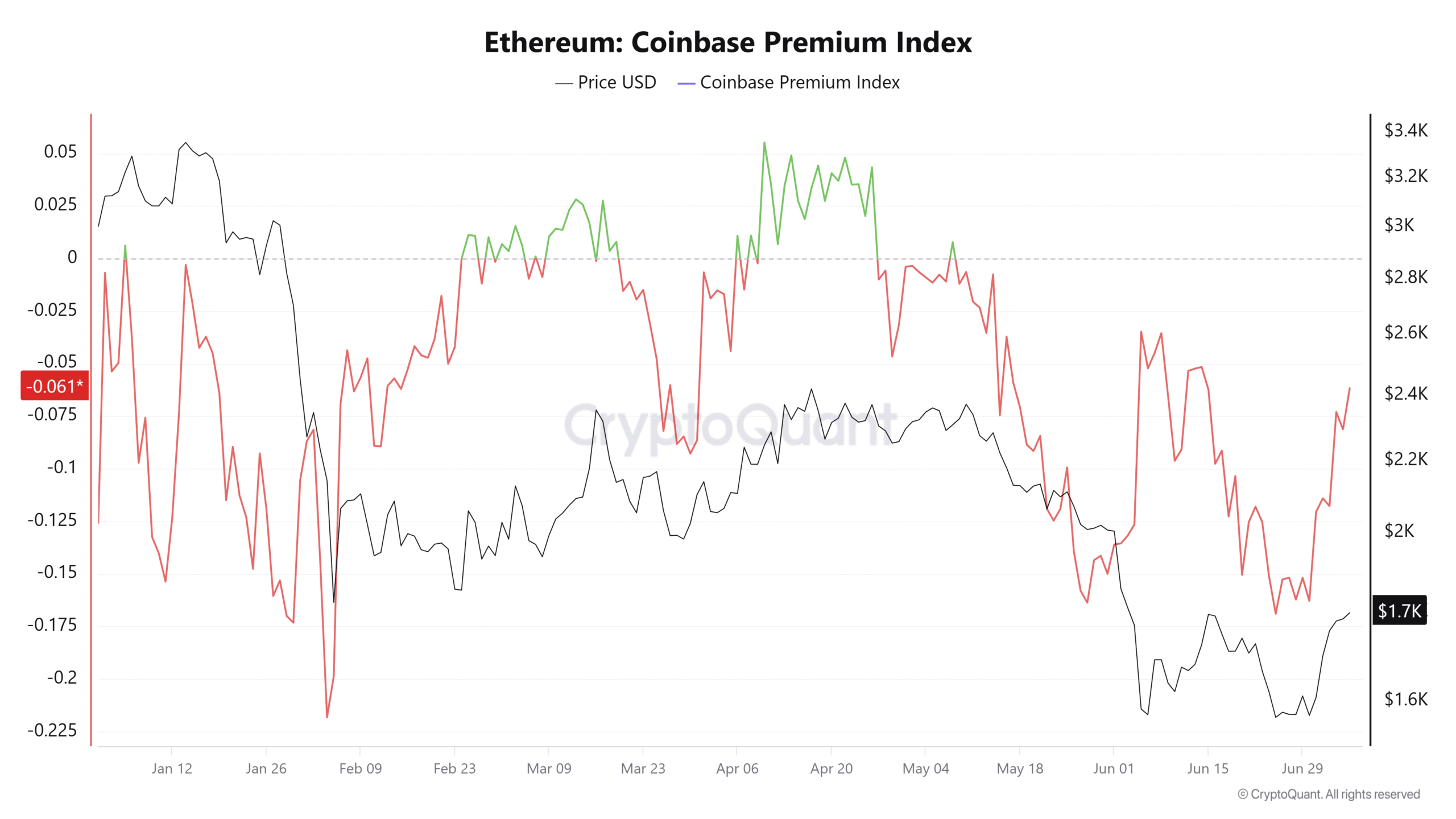
The ETH Coinbase Premium Index, measuring buying pressure from US markets, continues to register in negative territory. However, it has recovered from the extreme depths observed in early July, indicating a gradual return of US-based purchasing activity.
US spot ETH exchange-traded funds have registered three consecutive sessions of net capital inflows, based on SoSoValue tracking. While modest, this represents a consistent indication of growing institutional participation.
Technical Barrier at $1,806
ETH is currently encountering a significant technical obstacle. The 50-day Exponential Moving Average is positioned at $1,806, coinciding with a horizontal resistance barrier at the identical price point. The RSI currently reads 57, suggesting positive momentum without reaching overbought territory. The Stochastic Oscillator approaches 86, indicating potential short-term overextension.
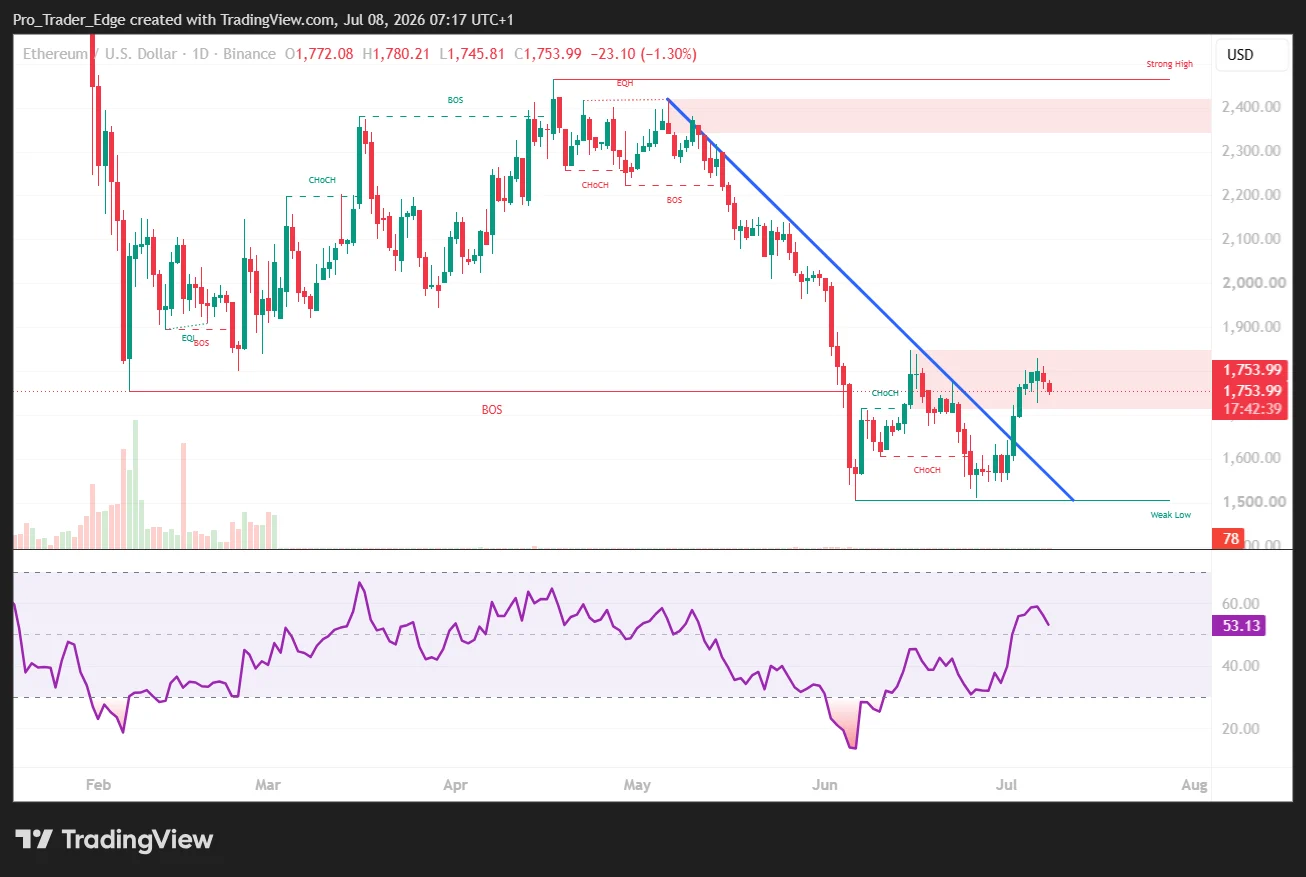
Should ETH break through $1,806, the subsequent price objectives include $1,909 followed by the 100-day EMA positioned at $1,970. Beyond that level, $2,018 and $2,108 represent additional resistance zones. To the downside, initial support appears at $1,741, with secondary support at $1,713 where the 20-day EMA resides.
Crypto analyst Daan Crypto Trades commented on the market dynamics, observing that ETH has successfully closed both weekly and daily candles back within the $1,750–$2,400 trading range. He indicated that a breakout above the local peak at $1,850 would represent a shift in market structure and demonstrate underlying strength. He noted this level would serve as his signal to begin targeting the upper boundary of the range.
Vitalik Buterin Introduces “Lean Ethereum” Blueprint
Regarding protocol development, Ethereum creator Vitalik Buterin has presented an extensive protocol transformation called “Lean Ethereum.” He characterized it as the third significant iteration of Ethereum, rivaling the Merge in scope and impact.
The implementation timeline spans three to four years and encompasses verification mechanisms, consensus protocols, privacy features, quantum resistance, and client infrastructure. Buterin indicated that verification will transition toward recursive STARKs. Consensus modifications target achieving one or two-round finality.
State modifications represent the most transformative component. Buterin projected that a potential 2030 configuration could feature Ethereum maintaining 2 TB of existing dynamic state alongside 100 TB of redesigned state architecture. This new architecture would optimize ERC20 tokens and NFTs. A proposed ERC20 restructuring utilizing UTXO-based storage could decrease transaction fees by over 10 times.
ETH is presently exchanging at $1,780.
Key Highlights
- Kraken is pursuing comprehensive banking authorization in Europe, with Lithuania identified as the target jurisdiction
- Success would make Kraken the sole cryptocurrency exchange holding a European banking license
- The strategy mirrors the approach taken by Revolut, which secured licensing from Lithuania’s banking regulator in 2018
- The exchange currently operates with MiCA credentials via Ireland and holds a MiFID license through Cyprus
- In early 2026, Kraken Financial achieved a milestone by becoming the first cryptocurrency company to connect with the Federal Reserve’s payment systems
Kraken, a leading global cryptocurrency exchange, is actively pursuing full banking authorization within Europe. According to sources with knowledge of the matter, the platform has set its sights on Lithuania as the preferred location for this regulatory milestone.
When approached for comment, Kraken representatives declined to provide details. The Bank of Lithuania confirmed that all licensing procedures for financial institutions remain confidential under current regulations.
Should the application succeed, Kraken would break new ground as the inaugural crypto exchange to secure comprehensive banking authorization in Europe. This designation would enable the platform to provide services including checking accounts, consumer credit products, and enhanced payment capabilities throughout the European Economic Area.
The regulatory strategy Kraken is pursuing follows an established precedent. Revolut, the digital banking platform, successfully obtained specialized banking credentials from Lithuanian regulators in 2018. That authorization enabled Revolut to broaden its financial service offerings across the EEA. Lithuania has also granted banking or specialized banking licenses to institutions such as Mano Bank, PayRay, and EMBank.
European Regulatory Framework Already Established
Kraken maintains MiCA authorization issued through Ireland’s Central Bank. Additionally, the exchange operates under a MiFID license granted by Cypriot authorities. These regulatory frameworks enable the platform to deliver compliant services to customers throughout the European Union.
MiCA regulations became enforceable EU-wide on July 1, 2026. Kraken has leveraged its existing authorizations to establish itself as a compliant operator for European customers under the updated regulatory environment.
Securing banking authorization would represent a significant advancement. It would enable Kraken to integrate cryptocurrency operations more seamlessly with conventional financial infrastructure, encompassing payment processing, asset custody, and institutional-grade services.
Constructing a Worldwide Regulatory Infrastructure
The European banking initiative represents one component of a broader licensing approach by Payward, Kraken’s corporate parent.
In March 2026, Kraken Financial achieved a significant first by obtaining access to the Federal Reserve’s fundamental payment systems. This development granted its US banking division direct connectivity to Fedwire for specific operational functions.
In May 2026, Payward obtained VARA authorization in the United Arab Emirates, incorporating another regulated jurisdiction into its operational framework.
Kraken co-CEO Arjun Sethi addressed attendees at Money 2020 Europe and detailed the company’s strategic vision. He indicated that the organization’s ten-year roadmap involves securing regulatory licenses across all major regions, either through acquisition of established entities or building operations from the ground up.
Kraken is additionally preparing for a public listing in the United States, creating additional incentive to establish a robust regulatory compliance record across key international markets.
The Lithuanian banking license, if obtained, would constitute one of the most significant achievements in this regulatory expansion. It would provide Kraken with direct access to traditional European banking infrastructure and position the exchange ahead of competitors regarding regulatory breadth.
Neither an application timeline nor anticipated approval date has been publicly disclosed.
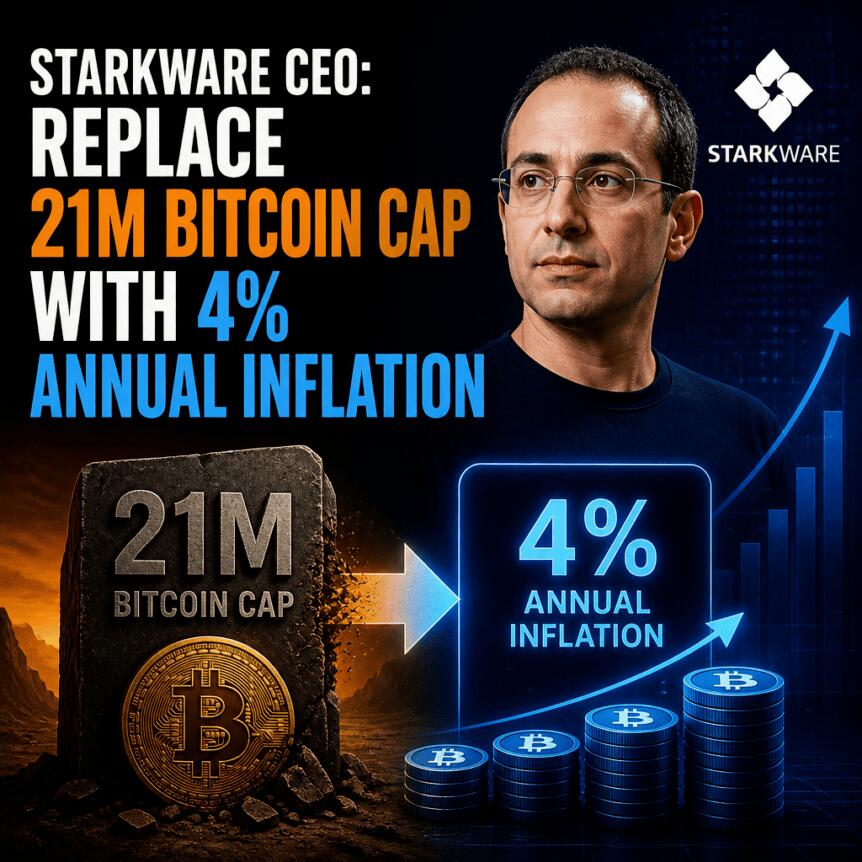
StarkWare CEO Eli Ben-Sasson has reignited a long-running Bitcoin debate by arguing that the network’s fixed 21 million coin cap “doesn’t make sense” and should be replaced with a steady 4% annual issuance model. His position challenges a foundational pillar of Bitcoin’s monetary narrative: that a hard supply limit protects the asset from monetary debasement and preserves purchasing power over time.
In a post on X Tuesday, Ben-Sasson said the cap becomes less meaningful as time passes because private keys are lost, eventually leaving holders unable to access their coins. He linked that concern to the idea that, as the timeline approaches infinity, the usable supply trends toward zero—an argument that directly contrasts with the traditional “digital gold” framing of Bitcoin’s capped issuance. Source: Eli Ben-Sasson on X
Key takeaways
- Ben-Sasson argues Bitcoin’s 21 million cap is undermined over long time horizons by lost private keys.
- He suggested replacing the fixed cap with an issuance rate of about 4% per year, while still maintaining a form of long-term scarcity.
- Ledger has previously estimated that millions of Bitcoin may already be permanently lost, feeding into the “lost keys” argument.
- Critics on X say Bitcoin’s divisibility and fixed supply mechanics still address “not enough to go around,” and that changing the cap would make Bitcoin more like other cryptocurrencies.
- A potential workaround discussed in the Zcash ecosystem—burning with periodic reissuance—highlights how miner economics could be addressed without removing a hard cap, but it would still require broad Bitcoin consensus.
Why Ben-Sasson thinks the cap will fail over time
Ben-Sasson’s core claim is not simply that Bitcoin supply will be inadequate, but that the economic effect of a cap is eroded if a growing share of coins become inaccessible. He pointed to the long-run reality that private keys can be lost, making coins effectively unrecoverable.
To anchor that idea in publicly available estimates, the proposal also echoes figures cited by Ledger. In November, Ledger estimated that up to 4 million Bitcoin have been burned or permanently lost. Ledger estimate (via Ledger Academy)
Ben-Sasson said he still supports a hard upper bound on supply. But rather than relying on a one-time fixed limit, he argued that a consistent 4% annual issuance rate better matches real-world population growth—an analogy meant to address whether Bitcoin’s supply schedule remains economically aligned as adoption expands.
Bitcoin maximalists push back: scarcity, divisibility, and “lost keys”
Ben-Sasson’s proposal met quick and pointed criticism from the Bitcoin community on X. One user challenged the premise that Bitcoin would run out “to go around,” citing Bitcoin’s divisibility into 2.1 quadrillion satoshis (the smallest base unit). Source: X user response
Ben-Sasson replied that satoshis are not a permanent solution if private keys continue to be lost. In his view, even though Bitcoin is divisible, the accessible balance still trends toward zero over time as keys go missing. Source: Ben-Sasson follow-up on X
Other opponents framed the debate around identity: lifting the fixed cap, they argued, would move Bitcoin toward the behavior of other cryptocurrencies that issue supply through inflation. Ben-Sasson countered that Bitcoin would retain scarcity as long as the inflation rate stayed fixed. Source: X user response
The clash reflects a deeper asymmetry in how people interpret Bitcoin’s supply mechanics. For many Bitcoiners, lost keys can be viewed as a feature rather than a flaw: if coins are permanently inaccessible, they effectively reduce circulating supply and reinforce supply-demand dynamics. A prominent example is Michael Saylor, who has said he plans to burn his Bitcoin private keys after his death as a “pro-rata contribution” to other holders—an act intended to make other coins scarcer by reducing the amount of reachable supply.
Looking for a middle path: Zcash’s approach to cap sustainability
As the debate intensified, Zcash founder Bryce “Zooko” Wilcox suggested Bitcoin developers look at a proposal being discussed in the Zcash ecosystem. Zcash also has a fixed supply cap set at 21 million ZEC, and Wilcox argued that Bitcoin could study how Zcash addresses miner incentives without removing its hard limit. Source: Zooko on X
The proposal Wilcox referenced is the “Network Sustainability Mechanism.” Its design aims to keep ZEC’s 21 million cap intact by allowing users to burn tokens, which are then reissued gradually as block rewards over a four-year period. The intent is to relieve pressure on miner incentives without changing the hard supply cap.
While the concept is attractive in theory—seeking to balance network security incentives with a capped supply—Bitcoin would face a different practical environment. Implementing a protocol-level mechanism would require agreement across Bitcoin’s decentralized ecosystem, including developers, miners, and node operators. That coordination challenge is a major reason Bitcoin’s core monetary rules have historically been difficult to change even when a proposal is technically feasible.
What this debate means for Bitcoin’s future trajectory
Ben-Sasson’s argument is likely to keep circulating precisely because it targets a common point of tension: the difference between theoretical supply and economically usable supply over very long time horizons. The discussion also highlights that “hard cap” supporters and critics may not be speaking about the same problem. One side focuses on monetary predictability and the protection against debasement; the other side emphasizes that lost keys reduce the practical share of supply and may eventually distort the cap’s economic assumptions.
For investors and builders, the more immediate takeaway may not be whether a cap change happens, but what kinds of proposals gain traction around the margins of Bitcoin’s monetary design. A cap-preserving mechanism inspired by other networks would still require broad consent, yet it signals a potential direction for future debate: adjusting incentives and usability while trying to preserve the properties Bitcoin is known for.
As this topic continues to trend, watch for whether any proposal gains concrete supporters beyond social commentary—especially ideas that address miner and security incentives without directly abandoning the cap narrative that underpins Bitcoin’s cultural and market identity.

UN condemns Racism after Kylian Mbappé Abuse

New Zealand rules out VPN ban after privacy backlash

Joe Kernen defends Bitcoin by telling Jeremy Grantham he’s been wrong about everything since 2010


-

 Fashion5 days ago
Weekend Open Thread: High Hopes
-
 NewsBeat3 days ago
Taylor Swift and Travis Kelce wedding staffer hilariously struggles to keep her cool while checking in megastars
-
Crypto World7 days ago
Airdrop Registration Becomes Key Focus For Remittix As RTX Launch Updates Approach
-

 Fashion2 days ago
Open Thread: What Great Books Have You Read Recently?
-

 Politics5 days ago
The House | “Reframing the debate from a binary discussion of winners and losers”: Yuan Yang reviews ‘We Are Not Machines’
-

 Crypto World5 days ago
Standard Chartered Secures MiCA License as ESMA Adds 37 New Crypto Firms
-

 Sports7 days ago
Broncos roster: OL Ben Powers (No. 74) entering final year of contract
-

 Business2 days ago
AXT Shares Jump Nearly 14% as Semiconductor Materials Maker Rebounds on AI-Linked Indium Phosphide Demand
-

 Crypto World6 days ago
Binance stock trading tops $1B in first month after launch
-
Crypto World2 days ago
SK hynix (000660.KS) Stock Dips as $28B Nasdaq ADR Offering Drives AI Memory Expansion
-

 Crypto World6 days ago
Alibaba-affiliate Ant Group enters the humanoid robot market with 12 deals
-

 Crypto World3 days ago
South Africa proposes crypto tax guidance under existing rules
-

 News Videos1 day ago
Whats Hidden Inside This Cash Register? #treasure #reselling #money
-

 News Videos2 days ago
Best Time to Enter Small Caps Right Now? Another Bull Run? | Financially Free
-

 Tech3 days ago
Lenovo laptops are now shipping with YMTC SSDs, a sign of Chinese NAND entering the mainstream
-

 Business6 days ago
Meta Platforms Stock Jumps 7% Today as Bloomberg Reports Company Plans to Enter the Cloud Business
-
 NewsBeat6 days ago
New exhibition reflects five decades of movement between island of Ireland and GB
-

 Business5 days ago
What a 10 Percent Drop Means for Buyers, Sellers and Renters
-

 Crypto World5 days ago
Binance Re-Enters Philippines As EU MiCA Rules Restrict Access
-

 News Videos2 days ago
Avoid entering in FOMO #bitcoin #cryptocurrency #trading #scalping
You must be logged in to post a comment Login