


Connect with us
DAPA Banner
DAPA Coin
DAPA
COIN PAYMENT ASSET
PRIVACY · BLOCKDAG · HOMOMORPHIC ENCRYPTION · RUST
ElGamal Encrypted MINE DAPA
🚫 GENESIS SOLD OUT
DAPAPAY COMING

Business

Hippeas launches plant-based protein puffs

Published

on

Hippeas launches plant-based protein puffs
Continue Reading
Click to comment

You must be logged in to post a comment Login

Leave a Reply

Business

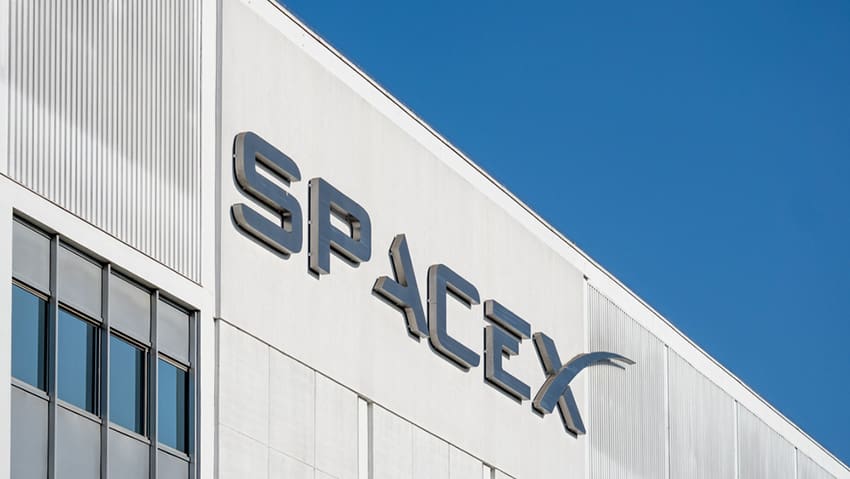
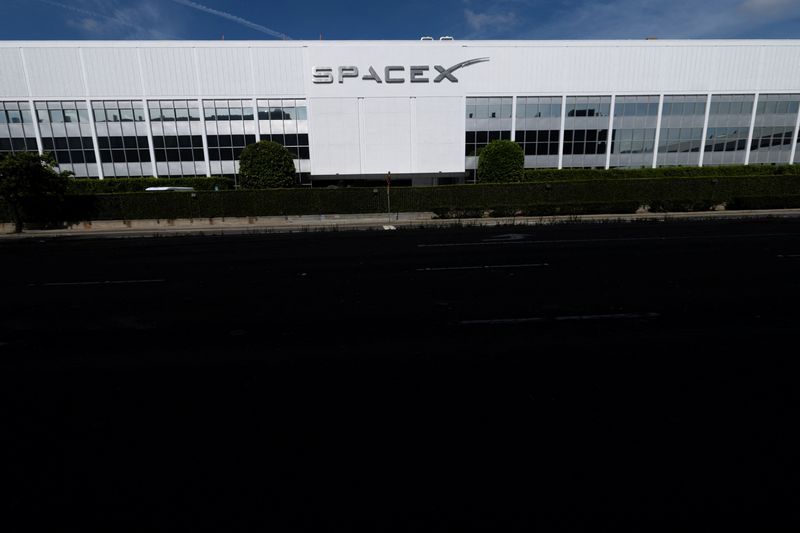
SpaceX Reveals $18.7bn Revenue and $4.9bn Loss Ahead of Record-Breaking IPO

Published

on

SpaceX Reveals $18.7bn Revenue and $4.9bn Loss Ahead of Record-Breaking IPO

For more than two decades, SpaceX has been Silicon Valley’s most closely guarded balance sheet, a privately held empire of reusable rockets and orbiting broadband terminals whose numbers were the subject of feverish speculation but never confirmation.

On Wednesday, Elon Musk’s space and satellite group finally pulled back the curtain, and the figures suggest a company spending astronomical sums to chase an even bigger prize.

In a prospectus filed in preparation for a stock market debut that could rank as the largest in history, SpaceX disclosed revenue of $18.7bn (£14.7bn) for 2025, a 33 per cent leap on the previous year. But the headline numbers also laid bare the cost of Mr Musk’s ambitions. The Hawthorne-based group swung to a loss of more than $4.9bn, against a $791m profit in 2024, as capital expenditure nearly doubled to $20.7bn from $11.2bn the year before. Much of the increase, the company said, was funnelled into artificial intelligence development, satellite manufacturing and the build-out of its Starship programme.

The disclosure, lodged with the Securities and Exchange Commission, marks the first time the world’s most valuable private business has been forced to show its working. According to filings reviewed by CNBC, SpaceX is valuing itself at $1.25 trillion and could float as soon as next month, aiming to raise between $50bn and $75bn — a sum that would dwarf Saudi Aramco’s $29bn record listing in 2019.

For City watchers, the prospectus reads as a study in the trade-offs of frontier capitalism: vertiginous top-line growth bankrolled by equally vertiginous cash burn. Starlink, the satellite broadband arm that now serves several million subscribers worldwide and is fast becoming a fixture in rural Britain, drove the bulk of the revenue expansion. Launch services, including National Aeronautics and Space Administration and Pentagon contracts, contributed the rest. But the cost of staying ahead of rivals such as Jeff Bezos’s Project Kuiper has rarely been steeper. As we reported in October, bankers have been quietly pencilling in a valuation as high as $1.75tn once retail investors are factored in.

Advertisement

The group’s reach now extends well beyond rocketry. Following the acquisition earlier this year of xAI, the artificial intelligence venture behind the Grok chatbot, and the social media platform X, SpaceX has become something approaching a conglomerate of Mr Musk’s pet projects — a structure unpicked in our earlier analysis of the xAI deal. The integration costs of that combination help explain the swing into the red, but they also underline the strategic bet at the heart of the float: that rockets, satellites and large language models are converging into a single, vertically integrated infrastructure play.

A successful debut would all but guarantee that Mr Musk, already the world’s richest person, crosses the threshold to become its first trillionaire. It would also enrich a swathe of Wall Street institutions and long-serving employees whose paper fortunes have been locked up for the better part of a decade.

The flotation, if it lands as planned, looks set to unblock a pipeline of mega-listings that has been jammed since the 2021 boom went bust. Cerebras, the Californian artificial intelligence chip designer, kicked off what bankers are billing as a generational window last week, closing 68 per cent above its issue price on its Nasdaq debut and ranking as the biggest technology offering since Uber went public in 2019. Anthropic is understood to be sounding out advisers, while OpenAI, the maker of ChatGPT, is preparing to file confidentially in the coming weeks.

For all the excitement, the prospectus also signals the risks that come with putting a company of this profile into public hands. SpaceX’s fortunes are tied unusually tightly to a single founder, whose attention has been split across half a dozen ventures and whose political pronouncements have at times unsettled customers and regulators alike. Capital expenditure of $20bn-plus a year is not easily trimmed when Starship development and Starlink’s next-generation constellation depend on it. And the firm’s profit reversal will give pause to fund managers weighing a multi-billion-dollar punt on a stock with limited room for valuation expansion.

Advertisement

Mr Musk and a SpaceX spokesman did not respond to requests for comment. Whether public-market investors share the company’s view of its own worth will be settled in a matter of weeks. What is no longer in any doubt is the scale of the numbers, and the audacity of the bet.


Jamie Young

Jamie Young

Jamie is Senior Reporter at Business Matters, bringing over a decade of experience in UK SME business reporting.
Jamie holds a degree in Business Administration and regularly participates in industry conferences and workshops.

When not reporting on the latest business developments, Jamie is passionate about mentoring up-and-coming journalists and entrepreneurs to inspire the next generation of business leaders.

Advertisement
Continue Reading

Business

Bound for Mars, Elon Musk’s SpaceX unveils filing for blockbuster IPO

Published

on

Bound for Mars, Elon Musk’s SpaceX unveils filing for blockbuster IPO


Bound for Mars, Elon Musk’s SpaceX unveils filing for blockbuster IPO

Continue Reading

Business

OpenAI IPO 2026: ChatGPT Maker Prepares Confidential Filing With Goldman Sachs and Morgan Stanley

Published

on

OpenAI IPO 2026: ChatGPT Maker Prepares Confidential Filing With Goldman Sachs and Morgan Stanley

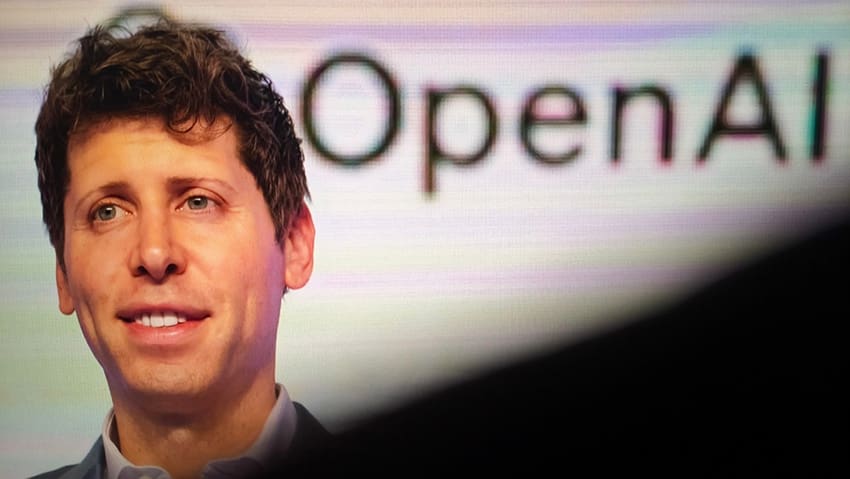
OpenAI, the San Francisco company behind ChatGPT, is preparing to file confidentially for an initial public offering within weeks, in what would rank as one of the largest flotations the artificial intelligence sector has ever seen and a defining moment in the global technology race.

According to two people familiar with the matter, the ChatGPT maker is working with Goldman Sachs and Morgan Stanley on the paperwork and is monitoring market conditions closely before pulling the trigger. The timing remains fluid, but a filing in the coming weeks could pave the way for a listing as early as September. The news, first reported by the Wall Street Journal and confirmed by Bloomberg, sent fresh ripples through a market already braced for a bumper year of technology debuts.

“As part of normal governance, we regularly evaluate a range of strategic options,” an OpenAI spokesperson said. “Our focus remains on execution.”

The most-watched listing in a generation

Few companies have generated as much speculation among bankers, fund managers and policymakers. OpenAI was valued at $730 billion in its most recent private funding round earlier this year, with secondary market trades reportedly pushing the implied valuation closer to $850 billion. A successful listing would dwarf the floats of Facebook, Alibaba and Saudi Aramco in dollar terms and crystallise the AI boom that ChatGPT triggered when it launched in late 2022.

It would also stand as a bellwether for the broader appetite for AI stocks at a moment when revenue multiples across the sector have stretched far beyond historical norms. CNBC reported separately that the company is targeting a public debut in the autumn, with the filing potentially landing within days.

Advertisement

For UK-based investors, founders and SME advisers, the proposed listing carries particular resonance. OpenAI has spent the past 12 months deepening its British footprint, recently signing a long lease on a King’s Cross headquarters as part of plans to more than double its UK workforce. The company has also brought former chancellor George Osborne on board to lead its international Stargate infrastructure programme.

A bumper year for tech mega-floats

OpenAI is not the only Silicon Valley heavyweight queueing up for the public markets. SpaceX, Elon Musk’s rocket and satellite group which has valued itself at more than $1 trillion in recent secondary trades, is widely expected to begin trading as soon as next month. Anthropic, OpenAI’s closest rival in the frontier-model race, has also taken preparatory steps towards a listing.

That trio alone could absorb a meaningful chunk of global IPO capacity in 2026, sucking liquidity away from smaller deals and intensifying competition between New York, London and Hong Kong for blue-chip listings. The implications for the City have not gone unnoticed: Zopa chief executive Jaidev Janardana recently argued that London’s IPO market could thrive as US political instability mounts, with British exchanges working hard to retain growth-stage technology companies.

Musk hurdle cleared, capacity questions remain

OpenAI’s push towards the public markets received a significant boost on Monday, when a federal judge and jury rejected a lawsuit brought by Mr Musk, an OpenAI co-founder turned vocal critic, that had sought to unwind the for-profit structure adopted by the company last year. Had the action succeeded, it would almost certainly have derailed any near-term flotation. With that legal cloud lifted, advisers can press ahead with due diligence and underwriting work.

Advertisement

The company will still need to convince public investors that it can sustain the breakneck infrastructure spending behind frontier models. OpenAI recently inked a $38 billion compute deal with Amazon, on top of multibillion-dollar commitments to AMD and Oracle, raising fresh questions about cash burn, energy availability and the long path to profitability.

What it means for SMEs

For Britain’s small and mid-sized businesses, the significance of an OpenAI IPO extends beyond the share-price headlines. A public OpenAI would be obliged to disclose far more about its commercial pipeline, pricing strategy, enterprise customer base and roadmap than is currently visible — information that procurement teams, technology buyers and competing UK AI start-ups can use to sharpen their own planning. It is also likely to embolden a wave of follow-on listings from smaller AI vendors keen to ride OpenAI’s slipstream, potentially creating new exit routes for British founders and venture capital backers

If the filing arrives on the timetable bankers are now sketching out, the autumn could mark the moment artificial intelligence formally graduated from private-market darling to mainstream public-market asset class. For SME owners weighing their own technology investments, the message is straightforward: the AI economy is about to become a great deal more transparent — and a great deal harder to ignore.


Jamie Young

Jamie Young

Jamie is Senior Reporter at Business Matters, bringing over a decade of experience in UK SME business reporting.
Jamie holds a degree in Business Administration and regularly participates in industry conferences and workshops.

When not reporting on the latest business developments, Jamie is passionate about mentoring up-and-coming journalists and entrepreneurs to inspire the next generation of business leaders.

Advertisement

Continue Reading

Business

Leeds’ North Star Coffee Roasters expand in city following investment

Published

on

Business Live

Next month will see the firm open new sites on George Street and in the Victoria Quarter

(Image: Shaun Flannery Photography Ltd)

The company said to be behind Leeds’ first coffee roastery is expanding into two new city centre locations following six-figure funding.

North Star Coffee Roasters plans to open sites on Great George Street and in the Victoria Quarter in an effort to target high-footfall locations. The loan funding from NPIF II – Mercia Debt Finance, which is managed by Mercia as part of the Northern Powerhouse Investment Fund II (NPIF II), will go towards fit-outs for the new shops.

Eight jobs are being created with the openings, which are due to take place next month. They will add to North Star’s existing sites at Leeds Dock and Sovereign Street, with its roastery in Armley.

The 13-strong B Corp firm also supplies coffee to about 1,200 subscribers and 350 wholesale customers. North Star first opened in the city in 2013 after founders Holly Kragiopoulos and husband Alex had met at Northumbria University and spent three months travelling around Kenya and Malawi working with coffee growers.

Advertisement

Ms Kragiopoulos said: “The new outlets will help us deliver on our growth and impact strategy. While addressing problems in the coffee supply chain, we are also doubling down on our physical stores. After 13 years building the business, we feel the time is right to showcase our brand in high-footfall areas.

“We also want to support job creation in Leeds and highlight the role of baristas. All our baristas receive a living wage and incredible training – we want to show it’s not just a ‘filler job’. Being a barista should be a respected profession, as it is in Australia and New Zealand.”

Gary Whitaker of Mercia Debt added: “Holly and Alex are passionate about quality and ethics. They have built a business they can be proud of and made a real contribution to the coffee scene – both in Leeds and in the wider coffee industry. We are pleased to be able to support North Star’s expansion.”

Sarah Newbould, senior investment manager at the British Business Bank, said: “Hospitality businesses like North Star Coffee Roasters play an important role in creating community spaces, supporting local employment and driving regional growth. It’s great to see NPIF II helping a business with such a strong regional reputation expand its presence even further across Leeds and create new opportunities within the local economy.”

Advertisement

Keiran Taylor of UHY BPR Heaton provided fundraising advice to the company.
Continue Reading

Business

E.l.f. Beauty (ELF) earnings Q4 2026

Published

on

E.l.f. Beauty (ELF) earnings Q4 2026

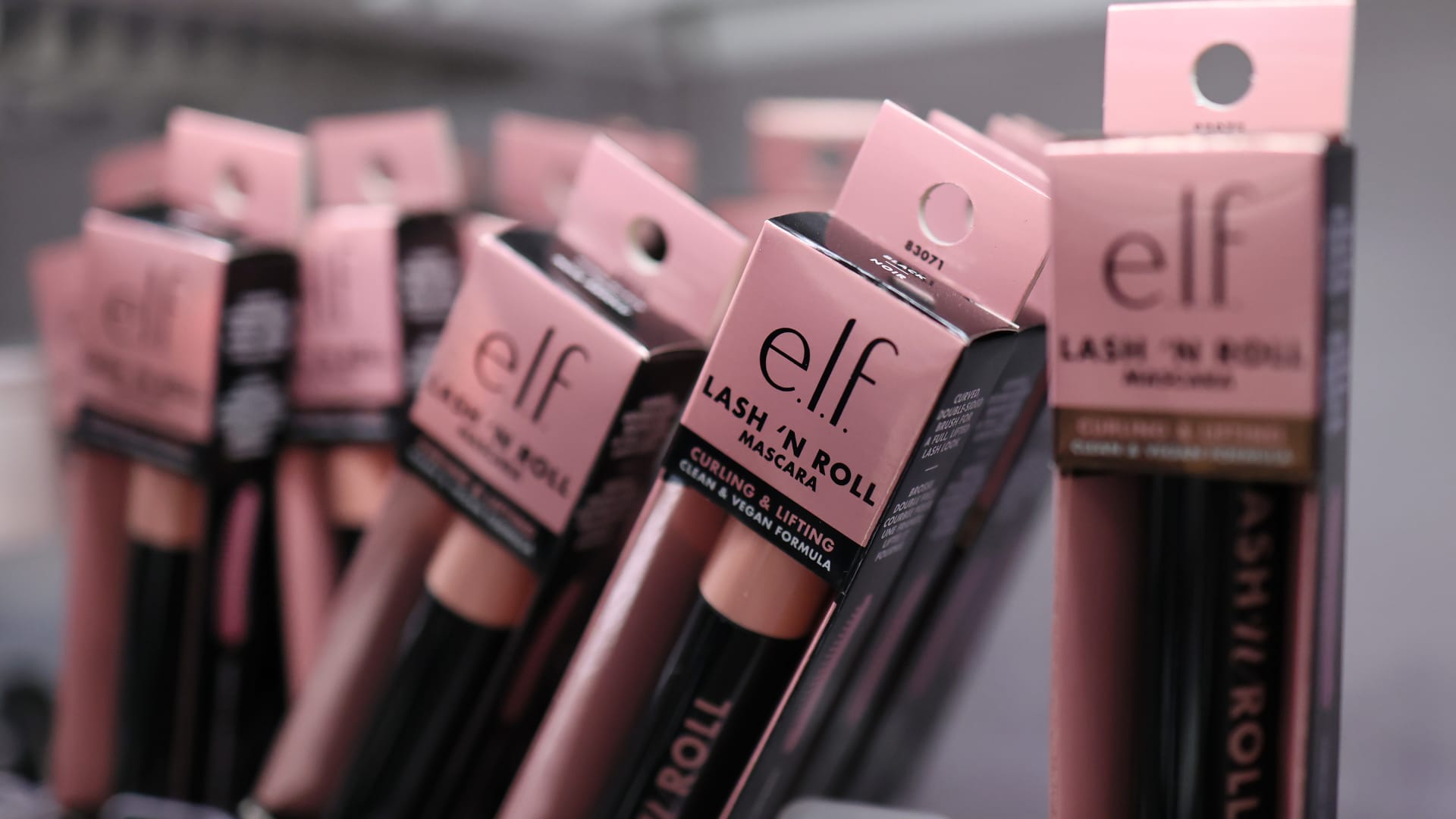
E.l.f. Beauty is planning to walk back some of the tariff-fueled price increases it implemented less than a year ago after the retailer has seen a slide in demand that’s ramped up in recent months as consumers contend with higher gas prices.

“Whenever you take a price increase that’s that big, you’re going to see unit degradation, but I would say we’ve seen units drop off a bit more in the last few months as consumers have particularly been suffering with higher costs,” CEO Tarang Amin told CNBC in an interview. “So it’s one of the reasons why we want to reinforce the value proposition we have.” 

Recently, E.l.f. tested a $4 price reduction on its $18 Halo Glow skin tint and saw a nearly 40% lift in the business, which signaled to the company just how “sensitive” consumers are on pricing right now, Amin said. 

As a result, it plans to test additional price reductions on certain families of products to see if that will drive unit growth. Last August, it raised prices by $1 across its entire E.l.f. assortment.

Advertisement

“There’ll be additional items that we will test lower pricing on to really be able to reinforce our value proposition at a time when the consumer is suffering,” Amin said. 

E.l.f.’s plans to lower prices came as the company announced fiscal fourth-quarter earnings Wednesday that beat Wall Street’s expectations on the top and bottom lines but issued guidance that failed to wow. 

Here’s how the beauty retailer performed during the quarter compared with what Wall Street was anticipating, based on a survey of analysts by LSEG:

  • Earnings per share: 32 cents adjusted vs. 29 cents expected
  • Revenue: $449 million vs. $423 million expected

E.l.f. stock rose roughly 7% in after-hours trading on Wednesday.

In the three months ended March 31, E.l.f. posted a loss of $49.4 million, or 82 cents per share, compared with income of $28.3 million, or 49 cents per share, a year earlier. 

Advertisement

E.l.f’s loss was primarily driven by a $57.6 million cost associated with its acquisition of Rhode that the company incurred under the terms of the deal following better-than-expected performance from the brand. Excluding that charge and other one-time expenses, E.l.f. saw net income of $19.4 million, or 32 cents per share. 

Sales rose to $449 million, up about 35% from $332.6 million a year earlier.

During the quarter, E.l.f. saw its gross margin grow by 1.4 percentage points to 73% — thanks in large part to the higher pricing that the company is now in the process of walking back for some products. When asked what those reductions will mean for margins moving forward, Amin said the company is expecting a $55 million tariff refund, which will offset the impact to profitability. 

Still, the company’s fiscal 2027 guidance came in weaker than expected. E.l.f. said it’s expecting sales of between $1.84 billion to $1.87 billion, which is primarily below expectations of $1.87 billion, according to analysts surveyed by LSEG. 

Advertisement

The profitability picture looks worse. The company said it’s expecting adjusted earnings per share to be between $3.27 and $3.32, well below expectations of $3.61 per share. 

“I’m really proud of the profitability we just delivered that was in the face of 55% tariffs, so the team’s done a really nice job navigating through a pretty crazy tariff environment,” Amin said. “For the year ahead, we’ve guided to gross margins being flat, which we also think is quite strong in the environment we’re operating in. We still have tariffs that we’re facing at the 35% level, which is what we’ve modeled for the year, and then continued the retail expansion of Rhode.” 

Since its acquisition of Rhode, announced about a year ago, the celebrity beauty brand has been the primary engine behind E.l.f.’s overall growth. Over the past year, sales have grown 80%, fueled by its expansion into Sephora North America, Sephora UK and Mecca. Rhode now has the No. 1 brand position in all three retailers. 

This fall, Rhode is expected to launch in 19 European countries with Sephora so there’s still a “huge amount of white space” for the brand, Amin said.

Advertisement

In years past, E.l.f.’s growth was primarily driven by ultra-popular product launches. With Rhode now driving growth, it’s unclear how much runaway the brand still has and what that will ultimately mean for the company. Amin said “balanced growth” will define the story moving forward across its portfolio of brands, which he said he’s open to expanding.  

“Our first priority is realizing the organic growth we have with our existing portfolio. We have a very high bar when it comes to M&A,” Amin said. “But the good news is we’re a destination of choice for the strongest founders in the industry, just given our approach of supporting a founder’s vision and being able to lend our capabilities and continue to accelerate the growth. So I’d say M&A is definitely part of our future.” 

Continue Reading

Business

Roivant Sciences Shares Jump 14.43% to $32.28 on Strong IMVT-1402 Rheumatoid Arthritis Data

Published

on

Guardant Health Stock Jumps 10% to $108 on Momentum From

NEW YORK — Roivant Sciences Ltd. shares rose 4.07 dollars, or 14.43 percent, to $32.28 in morning trading on Wednesday, May 20, 2026, following positive preliminary results from its subsidiary Immunovant’s trial of IMVT-1402 in difficult-to-treat rheumatoid arthritis.

Immunovant reported Week 16 results from the open-label Period 1 of its potentially registrational trial evaluating IMVT-1402 in ACPA-positive difficult-to-treat rheumatoid arthritis patients who failed two or more prior advanced therapies. Among 165 evaluable patients, ACR20 response rate reached 72.7 percent, ACR50 was 54.5 percent and ACR70 was 35.8 percent.

In the subset of 107 patients who failed at least a JAK inhibitor and an anti-TNF inhibitor, response rates were 72.0 percent for ACR20, 53.3 percent for ACR50 and 37.4 percent for ACR70. Baseline disease activity was high, with mean tender joint count of 24.2, swollen joint count of 16.7 and DAS28-CRP score of 6.1.

Roivant reported its fiscal fourth-quarter and full-year 2026 financial results alongside the clinical update. The company posted a GAAP net loss for the quarter, but highlighted Immunovant’s progress and strong cash position across the portfolio.

Advertisement

Immunovant, a Roivant subsidiary, ended the fiscal year with $902.1 million in cash and cash equivalents, providing runway through potential commercial launch of IMVT-1402 in Graves’ disease. The company discontinued development of its first-generation FcRn inhibitor batoclimab after Phase 3 trials in thyroid eye disease failed to meet primary endpoints.

IMVT-1402 is a next-generation anti-FcRn monoclonal antibody designed to deliver deeper IgG reduction with a favorable safety profile. The rheumatoid arthritis data reinforced confidence in its differentiated mechanism for treating autoantibody-driven diseases.

Roivant’s broader pipeline includes brepocitinib in multiple dermatology and rheumatology indications, mosliciguat for pulmonary hypertension associated with interstitial lung disease, and additional programs through its Vant subsidiaries. Topline data from Immunovant’s proof-of-concept trial of IMVT-1402 in cutaneous lupus erythematosus is expected in the second half of 2026.

Other clinical timelines for IMVT-1402 remain on track, including potentially registrational trials in Graves’ disease, myasthenia gravis, chronic inflammatory demyelinating polyneuropathy and Sjögren’s disease. Further updates on the difficult-to-treat rheumatoid arthritis program are planned for the second half of 2026.

Advertisement

Roivant Sciences operates a platform model with multiple subsidiaries developing therapies across immunology, inflammation and other therapeutic areas. The company focuses on identifying undervalued assets and accelerating their development through efficient clinical execution.

The stock’s sharp intraday move reflected investor enthusiasm for the rheumatoid arthritis efficacy signals in a heavily pre-treated patient population. Trading volume was elevated as news of the data spread.

Roivant will host a conference call and webcast at 8:00 a.m. ET on May 20 to discuss financial results and provide a business update. The call is expected to include further details on pipeline progress and financial position.

The company’s market capitalization has grown substantially with recent share price appreciation. Strong cash reserves support continued investment in late-stage clinical programs while maintaining financial flexibility.

Advertisement

Analysts and investors closely monitor Roivant’s pipeline readouts, particularly for IMVT-1402 across multiple indications. Positive data in difficult-to-treat rheumatoid arthritis adds to momentum following earlier advancements in other autoimmune conditions.

As of mid-morning trading on May 20, shares maintained strong gains. The session highlighted continued interest in biotechnology companies advancing novel treatments for autoimmune diseases.

Roivant Sciences, founded by Vivek Ramaswamy, maintains headquarters in Basel, Switzerland, with major operations in London and New York. The company’s Vant model has produced multiple clinical-stage assets through strategic acquisition and development.

The rheumatoid arthritis trial enrolled patients with long disease duration and high baseline activity. The observed response rates in this refractory population support further development of IMVT-1402 in rheumatology indications.

Advertisement

Roivant continues executing across its portfolio while managing capital allocation. Upcoming milestones include additional data readouts in 2026 and 2027 that could influence future regulatory and commercial strategies.

Continue Reading

Business

Fed minutes reveal policymakers worried about Iran war energy price impact

Published

on

Americans see gas price relief as costs fall annually in January 2026 CPI data

Federal Reserve policymakers were concerned about high energy prices contributing to inflationary pressures in the economy when they held interest rates steady last month, the minutes from the meeting show.

The Federal Open Market Committee (FOMC), the Fed panel responsible for monetary policy decisions, released the minutes of policymakers’ April meeting on Wednesday which showed inflation driven by energy prices and tariffs when they kept the benchmark federal funds rate unchanged at a range of 3.5% to 3.75%.

Advertisement

The minutes indicated that the personal consumption expenditures (PCE) index, the Fed’s preferred inflation gauge, was estimated at 3.5% in March. That’s well above the Fed’s 2% inflation target and jumped from 2.8% in February as the Iran war disrupted energy supplies from the Middle East.

“Almost all participants noted that there was a risk that the conflict in the Middle East could persist for an extended period or that, even after the conflict ended, the prices of oil and other commodities could remain elevated for longer than expected,” the minutes explained.

GAS PRICE SURGE HITTING LOW-INCOME HOUSEHOLDS HARDEST, FED STUDY FINDS

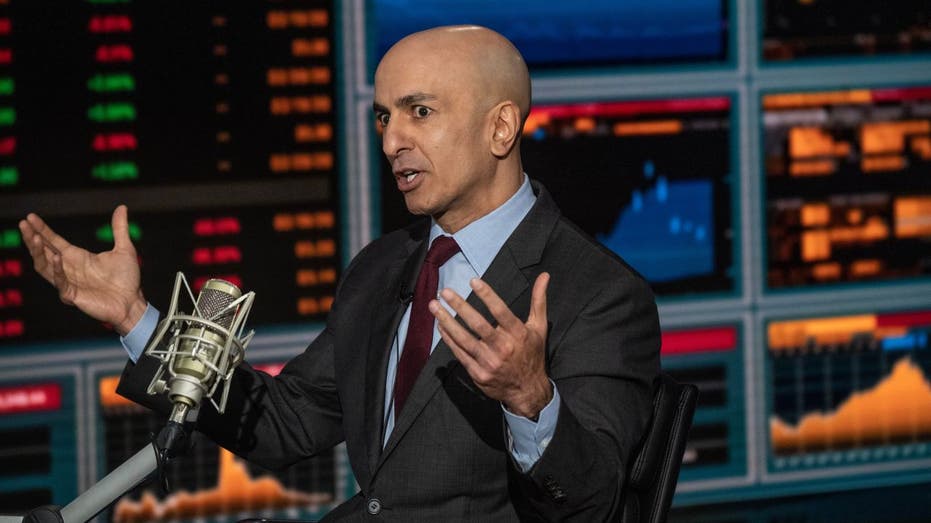
Neel Kashkari Federal Reserve

Minneapolis Fed President Neel Kashkari was among the policymakers who wanted to see the removal of language seen as leaning toward rate cuts amid elevated inflation. (Victor J. Blue/Bloomberg via Getty Images)

“In such scenarios, these participants expected continued upward pressure on inflation arising from supply chain disruptions, high energy prices, or the pass-through of higher input costs to other prices,” the FOMC continued.

Advertisement

“The vast majority of participants noted an increased risk that inflation would take longer to return to the Committee’s 2% objective than they had previously expected,” the minutes said.

Policymakers anticipated that high energy prices will continue to put upward pressure on inflation in the near term, while tariff-induced inflation is expected to diminish this year unless tariff rates rise above their current levels.

FEDERAL RESERVE LEAVES INTEREST RATES UNCHANGED AS POWELL’S CHAIRMANSHIP NEARS END

A man stands at a gas station.

Gas prices surged amid the disruption of oil supplies from the Middle East. (Justin Sullivan/Getty Images)

Oil prices have hovered around or above the $100 per barrel range after trading closer to $70 a barrel before the Iran war. Meanwhile, gas prices have surged over 43% year over year to an average of $4.55 a gallon as of Wednesday, according to AAA data.

Advertisement

Concerns that persistently high oil and gas prices may continue to push inflation higher and contribute to an uptick in inflation for other goods due to transportation costs weighed on the outlook for interest rate cuts.

The Fed’s April policy meeting included a dissent from three FOMC members – Cleveland Fed President Beth Hammack, Minneapolis Fed President Neel Kashkari and Dallas Fed President Lorie Logan – who opposed the inclusion of language they felt showed a bias toward easing interest rates. 

FED’S FAVORED INFLATION GAUGE REMAINED ELEVATED IN MARCH

“A majority of participants highlighted, however, that some policy firming would likely become appropriate if inflation were to continue to run persistently above 2%,” the minutes explained. 

Advertisement

“To address this possibility, many participants indicated that they would have preferred removing the language from the post-meeting statement that suggested an easing bias regarding the likely direction of the Committee’s future interest rate decisions.”

The market’s view of the interest rate outlook has shifted to signal possible interest rate hikes before the end of the year, as the CME FedWatch tool shows a 51% probability that rates will remain at their current level of 3.5% to 3.75% through the Fed’s December meeting. 

It also shows just a 1.6% chance of a 25-basis-point cut by December, compared to a 36.7% probability of a 25-basis-point hike, a 9.5% chance that rates rise by 50-basis-points by December, and a 1.1% chance of 75-basis-points worth of rate hikes.

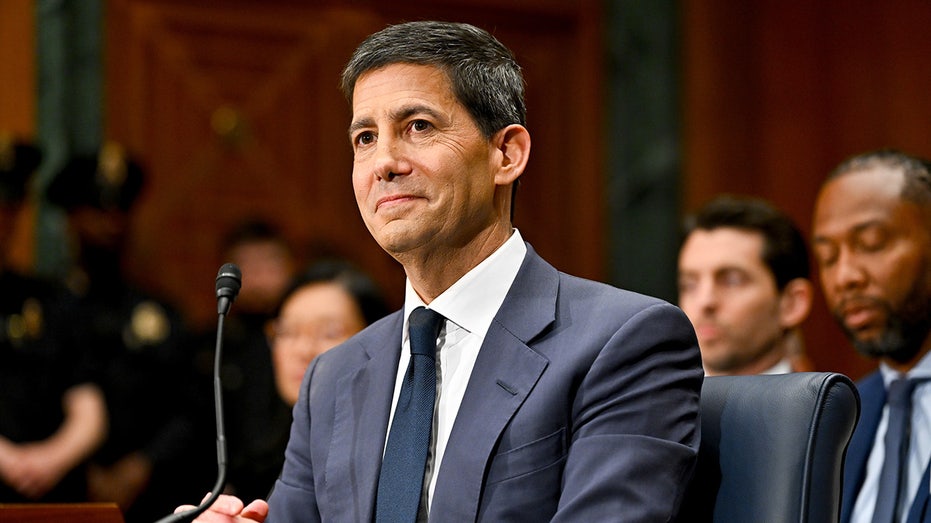
Kevin Warsh at his confirmation hearing

Kevin Warsh was recently confirmed as the new chairman of the Federal Reserve, while outgoing Fed Chair Jerome Powell remains a member of the central bank’s Board of Governors. (Graeme Sloan/Bloomberg via Getty Images)

“Incoming Fed Chair Kevin Warsh faces a challenging backdrop as steady labor market conditions alongside rising inflation risks increase the odds of a rate hike as the next policy move,” said EY-Parthenon chief economist Gregory Daco. “Our expectation remains that the Fed will stay on hold throughout the rest of the year, and we expect more two-sided dissents at upcoming meetings, including from the Fed chair.”

Advertisement

GET FOX BUSINESS ON THE GO BY CLICKING HERE

Heather Long, chief economist at Navy Federal Credit Union, said, “Fed leaders were already talking about the possibility of potential rate hikes in April. It’s inevitable the Fed will shift to a neutral policy stance at the June meeting and will probably hike at some point later this year.”

“There’s no end in sight to the war in Iran, and bond investors are becoming freaked out about inflation risks. New Fed Chair Kevin Warsh must show that he’s committed to keeping inflation in check, no matter what the White House says,” Long added.

Advertisement
Continue Reading

Business

Astera Labs Shares Surge 12.29% to $274.24 on Strong AI Momentum and Analyst Upgrades

Published

on

Nebius Group N.V.

NEW YORK — Astera Labs Inc. shares rose 29.98 dollars, or 12.29 percent, to $274.24 in morning trading on Wednesday, May 20, 2026, extending gains driven by continued investor enthusiasm for the company’s AI connectivity solutions.

The semiconductor company, which designs high-speed connectivity products for data centers and AI infrastructure, has seen strong performance following its fiscal first-quarter 2026 results released on May 5. Revenue reached a record $308.4 million, up 93 percent year-over-year and beating analyst expectations.

Non-GAAP earnings per share came in at $0.61, exceeding estimates of $0.54. The company highlighted robust demand for its Scorpio X-Series smart fabric switches and PCIe 6 retimers, positioning these products as key drivers for AI scale-up networking.

Astera Labs raised its full-year outlook and maintained strong guidance for the second quarter. The company continues to benefit from the rapid expansion of AI clusters and hyperscale data centers requiring high-bandwidth, low-latency connectivity.

Advertisement

Analysts have responded with multiple upward revisions. Recent price targets include levels as high as $297, reflecting optimism around Astera Labs’ leadership in PCIe 6 and CXL technologies critical for next-generation AI systems.

The company shipped its newly announced Scorpio X-Series 320-lane AI fabric switch and expanded its Scorpio P-Series PCIe 6 switch portfolio in early May. Management described these products as central to addressing the growing demands of rack-scale AI infrastructure.

Astera Labs reported strong sequential growth of 14 percent in the first quarter. Gross margins remained healthy, supported by a favorable mix of high-performance AI products. The company emphasized its expanding role in the $20 billion AI fabric switch market projected by 2030.

Trading volume on May 20 was significantly elevated as the stock broke to new intraday highs. The move reflected broad participation from both institutional and retail investors betting on sustained AI infrastructure spending.

Advertisement

Astera Labs focuses on semiconductor-based connectivity solutions for cloud computing, AI, and high-performance computing applications. Its portfolio includes retimers, PCIe switches, and CXL solutions that enable faster data movement within servers and across data center networks.

The company went public in March 2024 and has experienced substantial volatility typical of growth-oriented semiconductor names. Its market capitalization has grown rapidly amid the AI boom, with shares more than tripling from certain 2025 lows.

Astera Labs participates in major industry events and maintains close relationships with leading hyperscalers and AI system developers. Its technology supports the demanding requirements of large language model training and inference clusters.

The stock’s year-to-date performance significantly outpaced the broader semiconductor sector. Analysts cite Astera Labs’ technology differentiation and exposure to secular AI tailwinds as primary drivers of the rally.

Advertisement

The company continues to invest in research and development to maintain its competitive edge in high-speed connectivity. New product introductions, such as expanded Scorpio series offerings, target the evolving needs of next-generation AI servers.

Astera Labs reported solid cash generation and a healthy balance sheet in its most recent quarter. Management has expressed confidence in its ability to scale production and capture additional market share in the AI connectivity space.

As of mid-morning trading on May 20, shares maintained strong gains with active volume. The session contributed to Astera Labs’ position among the top-performing semiconductor stocks in 2026.

The company will participate in upcoming investor conferences during the second quarter of 2026, providing further opportunities to discuss growth strategy and technology roadmap.

Advertisement

Astera Labs operates from San Jose, California, and serves a global customer base. Its solutions address critical bottlenecks in data movement for AI training systems and high-performance computing environments.

Investor sentiment remains bullish, supported by recent analyst actions and strong quarterly execution. The stock’s performance continues to reflect expectations of robust long-term demand for AI infrastructure components.

Continue Reading

Business

US stocks today: Dow soars 600 pts, Nasdaq 1.5% as chip stocks rally eyeing Nvidia results, Iran peace deal hopes

Published

on

US stocks today: Dow soars 600 pts, Nasdaq 1.5% as chip stocks rally eyeing Nvidia results, Iran peace deal hopes
Wall Street’s main indexes closed more than 1% higher on ​Wednesday, bouncing back from a three-day selloff with a boost in sentiment from technology and chip stocks, which rose ahead of Nvidia’s quarterly results.

Investors will look to the latest report from Nvidia , the leading artificial intelligence chipmaker and the world’s most highly valued company, for reassurance that the appetite for spending on AI remains ‌strong enough to ⁠support lofty valuations ⁠across the technology sector.

The Philadelphia SE Semiconductor index rallied sharply ahead of the report with big gainers including Astera Labs and ARM Holdings.

“Technology is driving the bus again ​today, and the AI theme. We’ve swapped back from yesterday’s concerns about rising rates and potential inflation and are leaning more into the all-things-AI story,” said ​Carol Schleif, chief market strategist at BMO Private Wealth in Minneapolis. “It’s actually a little bit unusual because you would expect the market to sit pretty quiet waiting for Nvidia’s results later today. But there’s clearly a lot of optimism.”

Advertisement

The lack of a resolution to the U.S.-Israeli war ​on Iran had sent U.S. indexes lower in the last three days as investors worried ⁠that elevated oil ‌prices would boost inflation enough to lead the Federal Reserve to raise interest rates.


On Wednesday, Iran’s foreign ​ministry spokesperson said the exchange ​of messages between Iran and the U.S. has continued. President Donald Trump said negotiations with Iran were ⁠in the final stages and that the U.S. may have to attack Iran even harder ​but would wait and see if they can reach a deal.
While investors are still ​monitoring fluctuating energy prices and inflation, Schleif said “they really want to look beyond what’s going on in the Middle East” and focus on the potential of AI.Also supporting stocks, the benchmark 10-year Treasury yield eased on Wednesday after rising for three straight days and touching a 16-month high.

According to preliminary data, the S&P 500 gained 79.06 points, or 1.08%, to end at 7,432.67 points, while the Nasdaq Composite gained 398.33 points, or 1.54%, to 26,269.04. The Dow Jones Industrial Average rose 647.44 points, or 1.31%, to 50,011.32.

Stocks gradually added to gains following the release ‌of minutes from the Federal Reserve’s last meeting, which showed more officials saying the central bank should lay the groundwork for a possible rate hike. Bets for a Fed rate hike in December were choppy after the meeting and ​recently showing a 36.8% probability, ​down from 42% on Tuesday, according ⁠to the latest data from CME Group’s FedWatch tool.

Citing uncertainty around issues such as oil prices, tariffs and AI, Brian Jacobsen, chief economic strategist at Annex Wealth Management, said after the minutes that “it’s hard to take any of their forward guidance as more than just ​mere guesswork.”

Advertisement

Among the 11 major S&P 500 sectors, big gainers included consumer discretionary and technology. On the flip side, energy dropped with oil prices.

Consumer staples slipped with pressure from Target . Shares in the retailer declined after it warned of a challenging macroeconomic backdrop even as it doubled its annual sales growth forecast.

Falling oil prices boosted sentiment around airline stocks with Delta Air Lines, United Airlines, Southwest Airlines and Alaska Air advancing.

Intuit shares declined after Reuters, citing an internal memo, reported that the company is laying off about 3,000 employees.

Advertisement
Continue Reading

Business

Xanadu Quantum Shares Climb 11.64% to $13.08 on Photonic Computing Momentum

Published

on

Facebook

NEW YORK — Xanadu Quantum Technologies Limited shares rose 1.36 dollars, or 11.64 percent, to $13.08 in morning trading on Wednesday, May 20, 2026, as investor interest in photonic quantum computing continued amid broader sector enthusiasm.

The Canadian company, which became the first pure-play photonic quantum computing firm to list publicly earlier in 2026 through a SPAC merger with Crane Harbor Acquisition Corp., has experienced significant volatility since its debut on Nasdaq and the TSX under the ticker XNDU.

Xanadu reported its first-quarter 2026 financial results on May 14, showing revenue growth but wider losses typical for a development-stage quantum computing company. The company highlighted progress on its photonic hardware roadmap and partnerships.

Key milestones included completing its public listing, advancing negotiations for up to approximately $285 million ($390 million CAD) in government funding from Canada and Ontario for Project OPTIMISM, and strengthening collaborations with partners including AMD, Lockheed Martin, Mitsubishi Chemical and TELUS.

Advertisement

Xanadu’s open-source PennyLane platform reached more than 35,000 active users with 200,000 monthly downloads. The company also advanced hybrid quantum-classical algorithms through its partnership with AMD.

The company focuses on building scalable photonic quantum computers using light-based qubits, which offer potential advantages in error resistance and room-temperature operation compared with other modalities. Its mission centers on developing useful, accessible quantum computers.

Xanadu operates research and development facilities in Toronto and maintains a strong emphasis on both hardware and software. Its PennyLane software framework has become a widely adopted tool in the quantum computing community.

Since going public in late March 2026, the stock has seen sharp swings. Earlier volatility included a significant drop after a resale registration filing for nearly 294 million shares, followed by recoveries tied to sector momentum and company milestones.

Advertisement

Analysts have initiated coverage with generally positive outlooks. Canaccord Genuity and Northland Securities issued Buy and Outperform ratings with price targets around $45, citing Xanadu’s photonic approach and commercialization potential.

The quantum computing sector has attracted renewed attention in 2026 due to advancements in hardware and growing recognition of potential applications in optimization, simulation and machine learning. Xanadu’s public listing provided investors with direct exposure to a pure-play photonic company.

Xanadu exited 2025 with $4.6 million in revenue, up 188 percent year-over-year, though it reported operating losses. The company raised substantial capital through its public listing, providing runway for research and development.

Construction and scaling of quantum hardware remain long-term challenges across the industry. Xanadu’s photonic platform aims to leverage silicon photonics manufacturing techniques for potential scalability advantages.
Advertisement

The stock’s performance on May 20 reflected broader market interest in quantum and AI-related technologies. Trading volume was elevated compared with recent sessions as the shares moved higher.

Xanadu continues to pursue government and industry partnerships to advance its technology toward commercial applications. Its hybrid quantum-classical approach targets near-term value in areas such as battery simulation and materials science.

As a publicly traded company, Xanadu provides regular financial updates and clinical or technical progress reports. Its next milestones include further hardware demonstrations and potential expansion of its cloud-accessible quantum systems.

The quantum computing field remains in early development stages with significant technical hurdles. Companies like Xanadu focus on error-corrected, fault-tolerant systems that could eventually outperform classical computers on specific problems.

Advertisement

Investor enthusiasm for quantum stocks has varied in 2026, with periods of strong gains followed by corrections. Xanadu’s listing added a new pure-play option for those seeking exposure to photonic approaches.

The company maintains active research programs in photonic architectures, quantum algorithms and software tools. Publications and open-source contributions continue to build its technical reputation.

As of mid-morning trading on May 20, shares held gains with active volume. Market participants monitored for sustained momentum or potential pullbacks typical in high-growth technology names.

Xanadu Quantum Technologies operates with a focus on long-term commercialization while delivering incremental technical progress. Its public status provides transparency into financials and strategic direction for investors evaluating the quantum sector.

Advertisement
Continue Reading

Trending

Copyright © 2025