Connect with us
DAPA Banner
DAPA Coin
DAPA
COIN PAYMENT ASSET
PRIVACY · BLOCKDAG · HOMOMORPHIC ENCRYPTION · RUST
ElGamal Encrypted MINE DAPA
🚫 GENESIS SOLD OUT
DAPAPAY COMING

Business

The young people rejecting a bank-breaking prom

Published

on

The young people rejecting a bank-breaking prom

Teenage entrepreneurs at Huntington School change the way pupils shop for a prom dress.

Continue Reading
Click to comment

You must be logged in to post a comment Login

Leave a Reply

Business

Tactical buying visible in IT, selective opportunities emerging in auto ancillaries: Neeraj Dewan

Published

on

Tactical buying visible in IT, selective opportunities emerging in auto ancillaries: Neeraj Dewan
India’s equity markets continue to witness a tug-of-war between optimism in the broader market and caution around inflationary pressures, elevated crude prices, and uncertain global developments. While frontline indices remain largely range-bound, selective buying in midcaps and smallcaps has resurfaced as investors respond positively to quarterly earnings announcements.

Market expert Neeraj Dewan believes the broader market has started showing resilience again after a brief phase of profit booking earlier in May.

“There was this smallcap, midcap that has done very well in April. Then beginning of May we saw some profit booking but again buying is coming back once the results are getting declared. So, the market may remain range bound till you get absolute clarity. A lot of stocks which are dependent on crude will stay subdued. They will still stay in a range or may correct a bit, but broader market has started participating, that is something which is a welcome thing in the market,” said Dewan in an interaction with ET Now.

Margin Pressure Persists For QSR Players

Advertisement

Among individual stocks, investors closely tracked the earnings performance of Jubilant FoodWorks after the company reported disappointing overall numbers despite margin performance beating estimates.


According to Dewan, disruptions in the food business likely impacted the quarter, even as margins held up relatively well. He noted that elevated crude and raw material costs remain a key concern for food companies, particularly in a highly competitive quick-service restaurant environment.
“Yes, this quarter there were disruptions for the food business, so I think that would have come into the numbers. Because margins are still intact and margins as per what people were expecting, so I feel that if things were to improve as far as crude prices are concerned, as far as raw material prices are concerned, then things may look better,” he said.He added that while seasonal demand during the holiday period may support revenue recovery, inflation continues to threaten profitability across the sector.

Competition has also intensified significantly in the QSR space, limiting the ability of companies to pass higher input costs on to consumers.

“Yes, QSR because there is a lot of competition now. So, earlier there was less competition, so they were able to pass on the price increases easily. But for someone like a Jubilant Food or even McDonald’s now there is competition from local domestic players whether pizzas, burgers you get so many options now. So, it is not so easy to pass on,” Dewan noted.

He cautioned that sustained inflation could continue to weigh on margins and suggested investors remain in a wait-and-watch mode until there is greater visibility on inflation trends and sales momentum.

Advertisement

Auto Ancillaries See Selective Value Buying

The auto ancillary space, which had remained under pressure due to rising crude-linked input costs, is now witnessing selective buying interest.

Dewan highlighted that tyre companies and several ancillary stocks have not reacted strongly despite posting healthy earnings, mainly because of concerns around elevated crude prices. However, he believes a meaningful correction in crude oil prices could trigger sharp buying and short-covering in these counters.

“Yes, I think there was some pressure in the auto ancillaries earlier but slowly some value buying is emerging there. Even if you look at tyre stocks, there is pressure there because crude prices are high and there is a lot of dependence on crude for tyre companies,” he said.

Advertisement

He added that any easing in geopolitical tensions, particularly involving the US and Iran, could significantly improve sentiment for these stocks.

IT Rally Seen More As Tactical Play

On the information technology sector, Dewan described the recent move in IT stocks as largely tactical rather than conviction-driven.

Despite some bargain hunting after steep corrections, he believes weak earnings guidance from major IT companies continues to cap enthusiasm in the sector.

Advertisement

“It is a value buying which is happening. It is more like a tactical play because the kind of guidance that they have given is also so low that you do not expect too much to happen as far as earnings is concerned for them this year also,” he said.

He pointed out that companies with stronger enterprise solutions and differentiated products could outperform peers, though broad-based confidence in the sector remains limited.

Long-Term EV Ecosystem Story Still Intact

Dewan also shared a constructive outlook on the electric vehicle ecosystem, particularly companies investing heavily in energy storage and battery infrastructure.

Advertisement

While he remained cautious on Ola Electric, he expressed optimism about players such as JSW Energy and Adani Green Energy, citing their large-scale investments in battery storage and clean energy solutions.

“The EV based capex has been coming but because it is huge capex that is required for some of these companies, so it is taking time for the execution to happen,” Dewan said.

He believes these companies could benefit meaningfully over the next two to three years as capacities ramp up and economies of scale begin to improve profitability.

Cautious Optimism On Two-Wheelers

Advertisement

Within the automobile space, Dewan maintained a positive long-term view on two-wheelers but advised investors to remain selective in the near term amid inflation concerns and macro uncertainty.

Among key players, he favours TVS Motor Company due to its strong execution and consistent earnings performance over recent quarters.

“I like TVS because they have done very well as far execution is concerned and last so many quarters now they have been showing good results also,” he said.

However, he recommended gradual accumulation rather than aggressive buying, citing concerns around inflation, monsoon progress, and crude price volatility.

Advertisement

ITC, Hospitals In Focus During Earnings Season

In the FMCG space, investors are awaiting earnings from ITC Limited amid concerns over duty hikes and their potential impact on cigarette volumes.

Dewan believes ITC could still deliver healthy volume growth alongside stable FMCG margins, especially after encouraging numbers from peers such as Godfrey Phillips India, Tata Consumer Products and Hindustan Unilever.

Healthcare stocks also continue to remain strong despite elevated valuations. Dewan expects Max Healthcare Institute to report robust numbers in line with the performance of Apollo Hospitals Enterprise.

Advertisement

“Actually, all these hospital stocks though we have been for the last six months, one year that they are expensive but the numbers have been always quite positive and they have been able to declare better numbers and that is why the stocks have also been performing,” he said.

As earnings season progresses, investors are likely to remain focused on management commentary around inflation, input costs, demand recovery, and margin sustainability across sectors.

Continue Reading

Business

IFS Warns of Covid-Era Decline

Published

on

Britain's young workers are quietly slipping out of the labour market at a pace not seen since the pandemic, and economists at the Institute for Fiscal Studies are warning that ministers can no longer treat the slide as a passing wobble.

Britain’s young workers are quietly slipping out of the labour market at a pace not seen since the pandemic, and economists at the Institute for Fiscal Studies are warning that ministers can no longer treat the slide as a passing wobble.

Fresh analysis from the IFS, published ahead of the latest Office for National Statistics labour market release, shows the share of 16- to 24-year-olds on a UK payroll has fallen by 4.3 percentage points since December 2022, a drop of roughly 330,000 young people. Payrolled employment in the age group now stands at 50.6 per cent, down from 54.9 per cent three years earlier.

To put the scale in context, the Covid-19 shock pulled youth employment down by 6.5 points, and the 2008 financial crisis prised away 5.4 points relative to the pre-crisis trend. The current decline, in other words, is no longer a rounding error, it is approaching the territory of a full-blown labour market crisis, but without the obvious headline-grabbing trigger that accompanied the last two.

The consequences are already visible in the so-called Neet figures, those not in education, employment or training. The cohort has swelled from 760,000 at the end of 2022 to roughly 960,000 by the close of last year, closing in on the one-million mark that policymakers had long treated as a symbolic red line.

A scarring effect that outlasts the slump

Jed Michael, author of the IFS report, did not mince his words. “The fall in youth employment across the UK is likely to be setting off alarm bells among ministers, not least because we know that unemployment early in one’s career can have lasting negative consequences,” he said.

Advertisement

That so-called “scarring effect” is well documented. Graduates and school leavers who enter the workforce during a downturn typically earn less, change jobs more often and reach senior pay grades later than peers who began in benign conditions. The hit is not just personal: lost productivity, weaker tax receipts and higher benefits bills follow young people through their working lives.

Michael’s caveat, however, is one ministers ought to dwell on. “While it does not seem to be down solely to a temporary cyclical downturn in the economy, more evidence is needed to understand the roles of minimum wage, youth mental health, AI and other factors,” he added. “Without this evidence, expensive policies to reduce the Neet rate are shots in the dusk, if not the dark.”

An unusually structural shock

The UK has historically been a star performer in the Organisation for Economic Co-operation and Development league tables for youth employment. That advantage is eroding, and the data suggests something more than a standard cyclical slump is at work.

The pain is sharpest among 22- to 24-year-olds, typically graduates and college-leavers stepping onto the first rung of the career ladder. Employment in that group has dropped by 4.8 points in three years. The 18- to 21-year-olds have fared better, down only 1.1 points, while 16- and 17-year-olds have seen a 7.3-point slide that the IFS attributes largely to vanishing casual and part-time work alongside studies.

Advertisement

Geographically, the slump is broad rather than concentrated. Payrolled employment among the young has fallen by at least three points in two thirds of the UK’s regions and nations, and the share of 18- to 24-year-olds claiming out-of-work benefits has risen across the board. Cyclical downturns tend to land unevenly; this one is hitting almost everywhere.

The IFS flags two potential structural culprits worth watching: the rapid uptake of artificial intelligence in white-collar entry-level work, and the well-documented decline in youth mental health. Business Matters has previously reported on how AI and rising employer costs have already wiped out close to a third of UK entry-level vacancies since the launch of ChatGPT, a shift that disproportionately closes the door on first jobs.

On the minimum wage question, a long-standing battleground in the youth employment debate, the IFS is more cautious. Its central estimates do not point to a “sizeable effect” from recent wage floor increases, suggesting that broader structural factors are doing most of the heavy lifting.

A call to action, not a counsel of despair

Jonathan Townsend, UK chief executive at The King’s Trust, which co-funded the report, said the findings should sharpen minds in both Whitehall and the boardroom.

Advertisement

“These findings should concern anyone who cares about young people’s futures,” he said. “Too many young people are already out of work, education or training, and this analysis suggests we cannot simply assume the problem will correct itself as economic conditions improve.”

“This challenge is not impossible to fix. The message is that reversing the rise in young people out of work or education will take concerted action, a better understanding of what is driving it, and the right support for young people at the right time.”

Townsend added: “For an organisation whose vision is to help end youth unemployment, that is a clear call to action. We urgently need to understand what is pulling more young people away from work and education.”

The Government has begun moving in that direction, most recently with £3,000 grants for employers willing to hire unemployed young people who have spent at least six months on benefits. Whether such targeted subsidies are enough to offset what looks increasingly like a structural shift, driven by automation, wage costs and a generation’s fragile mental health, is the question the IFS has now put squarely on ministers’ desks.

Advertisement

For Britain’s SMEs, which collectively employ the lion’s share of young workers, the message is sobering. A generation locked out of the labour market today will be a smaller, less productive, less confident pool of talent tomorrow. The cost of inaction, the IFS suggests, will be paid not in a single Budget cycle but over the working lifetime of an entire cohort.


Jamie Young

Jamie Young

Jamie is Senior Reporter at Business Matters, bringing over a decade of experience in UK SME business reporting.
Jamie holds a degree in Business Administration and regularly participates in industry conferences and workshops.

When not reporting on the latest business developments, Jamie is passionate about mentoring up-and-coming journalists and entrepreneurs to inspire the next generation of business leaders.

Advertisement
Continue Reading

Business

Analysis: Mixed results from education funding boost

Published

on

Analysis: Mixed results from education funding boost

ANALYSIS: Not everyone is happy with the allocated budget for the state’s education infrastructure sector.

Continue Reading

Business

Elon Musk's X fined for not complying with Australia's child protection laws

Published

on

Elon Musk's X fined for not complying with Australia's child protection laws

The social media giant will pay A$650,000 plus legal costs, ending a three-year legal saga.

Continue Reading

Business

AI Is Rewriting The Cybersecurity Stack

Published

on

AI Is Rewriting The Cybersecurity Stack

AI Is Rewriting The Cybersecurity Stack

Continue Reading

Business

Protean eGov Technologies jumps 20% after strong Q4 profit and revenue growth

Published

on

Protean eGov Technologies jumps 20% after strong Q4 profit and revenue growth
Shares of Protean eGov Technologies surged nearly 20% on Thursday to Rs 654.20 after the company reported its strongest-ever quarterly and annual performance, powered by robust momentum across both core and emerging business segments.

For the quarter ended March 2026, Protean eGov posted a 53% year-on-year jump in net profit to Rs 31 crore, compared with Rs 20 crore in the same period last year. Revenue also expanded sharply, rising 38% to Rs 308 crore, reflecting sustained demand and execution strength across its digital governance solutions portfolio.

FY26 Results

The company capped FY26 with its highest-ever consolidated revenue of Rs 998 crore, marking a 19% annual growth over Rs 841 crore in FY25. Profitability also improved, with full-year net profit increasing 14% to Rs 105 crore.Operational performance remained strong, with EBITDA climbing 27% to Rs 188 crore, and margins improving to 18% (up 125 basis points YoY), underscoring better cost efficiency and operating leverage.

Advertisement

Protean continues to maintain a conservative financial position, holding over Rs 850 crore in cash and marketable securities while remaining debt-free as of March 31, 2026.
In a shareholder-friendly move, the board recommended a 100% final dividend of Rs 10 per share (face value Rs 10) for FY26.
The company also announced the appointment of Ajay Rajan as Additional Director (Executive), who will take over as Managing Director and CEO from June 1, 2026, strengthening its leadership team for the next phase of growth.

Market context & technical view

Despite the sharp single-day rally, the stock remains under pressure on a longer horizon, having fallen nearly 48% over the past year, with a current market capitalisation of about Rs 2,227 crore.

On the technical front, momentum signals appear mixed: the stock’s 14-day RSI stands at 50.8, indicating neutral territory. It is currently trading above 6 of 8 key SMAs, but remains below the 150-day and 200-day moving averages, suggesting that while short-term sentiment has improved, broader trend confirmation is still awaited.

(Disclaimer: Recommendations, suggestions, views and opinions given by the experts are their own. These do not represent the views of The Economic Times)

Advertisement
Continue Reading

Business

10 Lechon Belly Business Name Ideas Philippines

Published

on

Lechon Belly Business Name Ideas

Starting a Lechon Belly business in the Philippines can be a profitable opportunity for aspiring food entrepreneurs. Filipinos love lechon for birthdays, fiestas, reunions, office celebrations, and even simple family gatherings. Because of this strong demand, many small food businesses are entering the market hoping to build a recognizable and trusted brand.

But before you start selling your crispy and flavorful lechon belly, one important step is choosing the right business name. A good business name helps customers remember your brand, creates a strong first impression, and makes your business stand out from competitors.
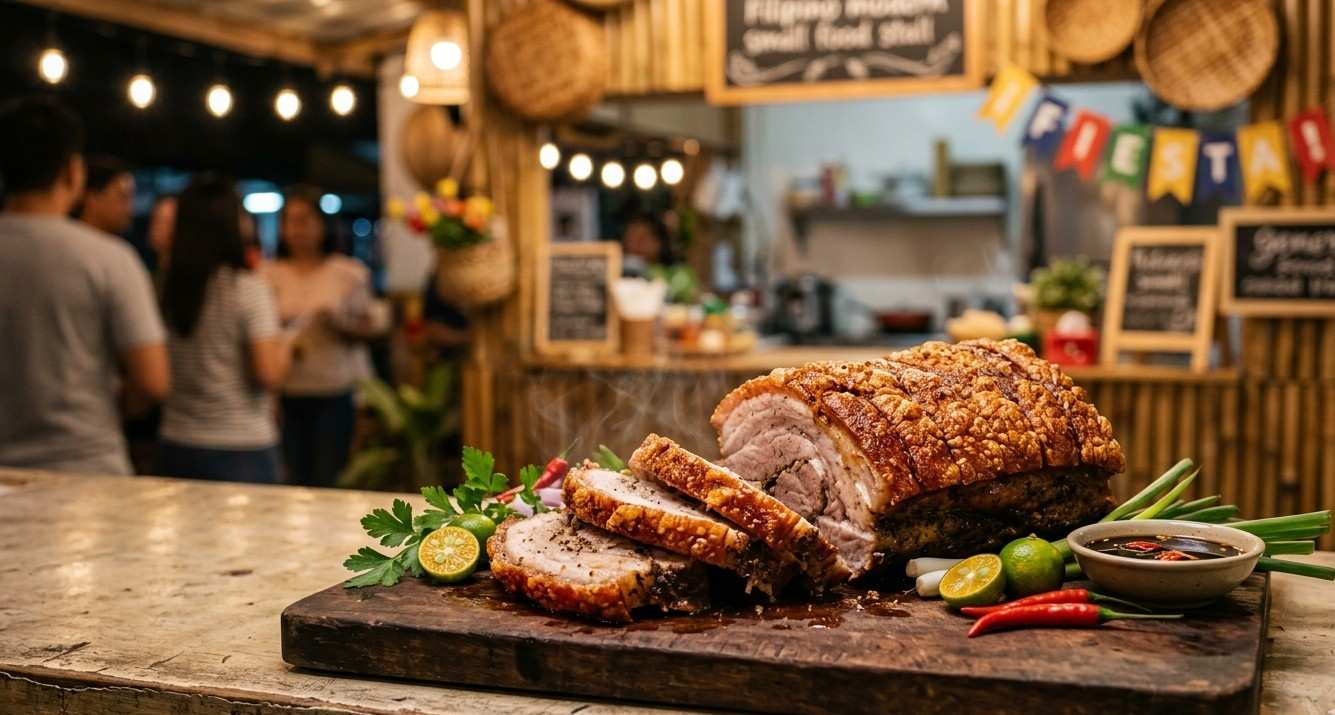
Lechon Belly Business Name Ideas

In this article, we will share 10 unique Lechon Belly business name ideas in the Philippines along with branding tips, marketing suggestions, and practical advice for beginners.

Advertisement

Why Your Lechon Belly Business Name Matters

Your business name is more than just words printed on your signage or Facebook page. It becomes part of your identity as a business owner. A memorable and catchy name can help:

  • Increase brand recall among customers
  • Build trust and professionalism
  • Improve social media visibility
  • Make your business easier to recommend
  • Create a strong emotional connection with customers

In the highly competitive food industry, branding matters just as much as taste. Even if your lechon belly is delicious, customers may forget your business if your name is too generic or difficult to remember.

1. Bellychon Republic

Bellychon Republic sounds modern, premium, and memorable. The word “Republic” gives the impression that your business specializes in different styles or flavors of lechon belly.

This name works well if you plan to expand into multiple branches or offer various menu options like spicy lechon belly, garlic flavor, or stuffed lechon belly.

Branding Tip: Use a bold logo with red, black, and gold colors to create a premium Filipino food identity.

Advertisement

2. Crispy Belly Masters

This business name highlights one of the most important qualities customers look for in lechon belly — crispy skin.

Crispy Belly Masters sounds confident and professional. It suggests expertise and quality, which can attract customers looking for authentic and well-cooked lechon belly.

This name is ideal for businesses that want to position themselves as experts in roasted pork dishes.

3. Juan’s Belly Roast

Adding a Filipino-inspired name like “Juan” creates a local and relatable identity. Juan’s Belly Roast sounds friendly, traditional, and easy to remember.

Advertisement

This type of branding works especially well for neighborhood food businesses and online food delivery services.

Marketing Idea: Use social media storytelling about family recipes and Filipino traditions to strengthen your brand image.

4. Belly Fiesta Lechon

Lechon is commonly associated with celebrations and gatherings in the Philippines. Belly Fiesta Lechon instantly creates a festive and joyful impression.

This name is perfect if your target market includes catering services, party trays, and event orders.

Advertisement

Customers are more likely to remember names connected to positive emotions like celebrations and family occasions.

5. Golden Crackling Belly

One of the best parts of lechon belly is the crunchy skin or “crackling.” Golden Crackling Belly emphasizes texture and premium quality.

This business name sounds more upscale and can appeal to customers willing to pay extra for high-quality lechon products.

Pro Tip: Pair this branding with professional food photography for better Facebook and Google marketing performance.

Advertisement

6. Belly Hub Express

If you plan to focus on delivery services, takeout, or food apps, Belly Hub Express is a modern and flexible business name.

The word “Express” suggests fast service while “Hub” gives the impression of variety and convenience.

This name works well for cloud kitchens, online sellers, or businesses operating through food delivery platforms.

7. Mang Kiko’s Lechon Belly

Traditional Filipino-style names still work very well in the local food industry. Mang Kiko’s Lechon Belly feels authentic, homegrown, and trustworthy.

Advertisement

Customers often associate “Mang” or “Aling” brands with homemade quality and affordable prices.

This is ideal for entrepreneurs who want a classic Filipino business identity.

8. Belly King PH

Belly King PH is short, modern, and easy to remember. The “PH” helps reinforce local identity while also improving online branding opportunities.

This type of name is social media friendly and works well for:

Advertisement
  • Facebook Pages
  • TikTok food content
  • Instagram marketing
  • Food vlog collaborations

Simple business names are often easier for customers to search online.

9. Roast & Crunch Belly Co.

This business name combines two qualities customers love: roasted flavor and crispy texture.

Roast & Crunch Belly Co. sounds trendy and premium, making it suitable for younger audiences and modern food concepts.

If you plan to build a stylish brand with aesthetic packaging and strong online presence, this name may fit your business perfectly.

10. Cebu Belly House

Cebu is famous for its flavorful lechon, so using Cebu-inspired branding can help create instant credibility.

Advertisement

Cebu Belly House sounds authentic and professional while maintaining a Filipino identity.

Even if your business is located outside Cebu, the name can still remind customers of the famous Cebu lechon style.

Reminder: Always ensure your branding remains truthful and does not falsely claim awards, certifications, or origin.

Tips for Choosing the Best Lechon Belly Business Name

1. Keep It Easy to Remember

Avoid overly complicated names. Customers should easily remember and pronounce your business name after hearing it once.

Advertisement

2. Check Social Media Availability

Before finalizing your name, check if the Facebook page name, TikTok username, or domain name is still available.

3. Make It Relevant to Food

Your business name should instantly give customers an idea of what you sell.

4. Avoid Copying Existing Brands

Do not imitate famous restaurant names or existing businesses. Unique branding helps avoid legal problems and builds originality.

5. Think Long-Term

Choose a name that can still work if you expand your menu or open additional branches in the future.

Advertisement

How to Market Your Lechon Belly Business

Even with a great business name, proper marketing is still important for success. Here are some effective strategies:

Facebook Marketing

Create engaging posts with high-quality food photos and customer testimonials. Facebook remains one of the strongest marketing platforms for food businesses in the Philippines.

TikTok Videos

Short videos showing crispy lechon belly slicing, cooking preparation, and customer reactions can attract thousands of views.

Food Delivery Apps

Partner with local delivery riders or food delivery apps to increase convenience for customers.

Advertisement

Google Business Profile

Register your business on Google so nearby customers can easily find your store online.

Important Business Reminder

Before officially operating your Lechon Belly business, make sure to comply with local government permits, food safety regulations, and business registration requirements in the Philippines.

You may also consult the following agencies for guidance:

  • Department of Trade and Industry (DTI)
  • Bureau of Internal Revenue (BIR)
  • Local Government Unit (LGU)
  • Food safety and sanitation offices

Proper compliance helps protect both your business and your customers.

Disclaimer

The business names mentioned in this article are intended for inspiration and informational purposes only. Readers are encouraged to conduct proper business name verification, trademark research, and registration checks with the appropriate government agencies before using any name commercially. Availability of business names may vary depending on existing registrations and intellectual property rights.

Advertisement

A strong business name can help your Lechon Belly business attract attention, build customer trust, and create long-term brand recognition. Whether you prefer a modern, traditional, or premium-style identity, choosing the right name is an important first step toward building a successful food business in the Philippines.

Remember that while branding matters, consistency in taste, customer service, cleanliness, and marketing will ultimately determine your long-term success.

With the right business name and a delicious product, your Lechon Belly business could become the next favorite food brand in your local community.

BN Philippines
Latest posts by BN Philippines (see all)

Continue Reading

Business

Somerset fruit harvesting machinery firm that supplied goods to Royal Family falls into administration

Published

on

Business Live

SFM Technology was founded in 1985 and was awarded a Royal Warrant in 2012

A stock image of green apples in a bin with a tractor in the background

A stock image of green apples in a bin with a tractor in the background(Image: Mark Stebnicki, / Pexels)

An agricultural machinery company in Somerset that once supplied goods to the Royal Family has fallen into administration.

SFM Technology was established in the village of Martock in 1985 as a fruit harvesting equipment business but by the late 1990s had expanded into other sectors, such as aerospace and automotive, as it developed its engineering offering.

In 2012, the firm was awarded a Royal Warrant a document that permits a company to use the Royal Arms in connection with its business and supply goods or services to the royal household.

The company now offers a number of services including design, research and development, manufacturing, 3D printing and powder coating, and counts the Ministry of Defence and Orchard Pig Cider among its customers.

Advertisement

A recent notice on the Gazette – the official public record – states that SFM Technology Limited appointed Andy John and Miles Needham of FRP Advisory as joint administrators on May 15. It follows a petition to wind up the company in October 2025 that was launched by HMRC.

According to Companies House, compulsory action to strike the business off the register was suspended in March. If a company is struck off, it ceases to exist as a legal entity.

SFM Technology’s status on Companies House currently says there is an ‘active proposal to strike off’. Its latest accounts are also overdue.

The director of the company is Richard Whittington who was appointed to the business in 1996 and is based in Yeovil.

Advertisement

Latest available accounts for SFM Technology, which are for the year ending December 2023, show the company had £2.1m owing to creditors falling due within one year of that period – up from £1.75m in 2022. At the time, the company had net assets of £1.76m.

The accounts also reveal there were 33 employees working for the company in 2023 – down from 38 in 2022.

It is not known what will happen to the business following the administration or whether jobs are at risk. FRP Advisory and SFM Technology have not responded to a request for comment from Business Live.

The notice on the Gazette says the company’s address at Martock Trading Estate is in the the process of being changed to c/o FRP Advisory Trading Limited, 2nd Floor, Churchill House, 26-30 Upper Marlborough Road, St Albans, AL1 3UU.

Advertisement

Anyone wanting to get in touch with the business is being advised to contact the joint administrators on 01727 811111 or to email Oliver Mulvaney at cp.stalbans@frpadvisory.com.

Continue Reading

Business

New ‘challenger’ legal arm launched by Dow Schofield Watts

Published

on

Business Live

James Mallender to lead new division formed after DSW’s deal for DR Solicitors

James Mallender, managing director at DSW Legal, part of the Dow Schofield Watts group

James Mallender, managing director at DSW Legal(Image: Dow Schofield Watts)

Business advisory firm Dow Schofield Watts (DSW) is launching its own “challenger” legal platform.

The Daresbury group first entered the legal market with the acquisition of Guildford-headquartered DR Solicitors in 2024. Now it is opening a dedicated new division, DSW Legal, led by new managing director James Mallender.

He called DSW Legal a “true challenger platform” and said he wanted to attract lawyers looking to set up their own businesses rather than joining traditional partnerships.

Mr Mallender qualified as a real estate lawyer with SJBerwin before moving to international firm Womble Bond Dickinson, becoming a partner in 2008.

Advertisement

In 2012 he left the traditional partnership model to help grow legal start-up, The Legal Director, where he ran its recruitment function alongside developing its strategy. By 2025, that business had grown to a team of more than 50 lawyers and turned over some £7m a year.

Guildford’s DR Solicitors focuses on the medical profession, with consultants acting on a flexible basis for people including GPs and dentists. DSW says that since it acquired DR Solicitors the business has added 10 consultants, with revenues rising 11%.

Mr Mallender said: “Having built my career on both sides of the legal profession, I’ve seen first-hand how ambitious professionals are increasingly looking to alternative models to take control of their career. DR Solicitors has already proven itself as a model that can stand up against traditional models, providing the flexibility and control many look for, so the opportunity to expand this track record across DSW Legal provides a true challenger platform for the industry.

“I’m now focused on building out the offering, recruiting ambitious legal professionals who want the opportunity to be more entrepreneurial while still benefiting from a supportive environment with a strong brand and back office.”

Advertisement

Shru Morris, CEO of Dow Schofield Watts, added: “Building on the progress we’ve made in our legal offering through the acquisition of DR Solicitors, DSW Legal provides a strong platform to continue building out that capability and better meeting client demand. It also offers an attractive home for top legal talent seeking an alternative career path, enabling them to establish their own business under a recognised brand, with the benefit of back‑office support, strategic input and start‑up funding.

“With his strength of expertise in growing challenger legal platforms, James is an excellent addition and will be integral to building this new division out further, leveraging the power of DR Solicitors to attract new talent and create a full service offering.”

Continue Reading

Business

Opinion: War fuels US oil market moves

Published

on

Opinion: War fuels US oil market moves

OPINION: Current events in the Strait of Hormuz suggest Australia needs to change its conversation around fuel security.

Continue Reading

Trending

Copyright © 2025