

Politics
Politics Home Article | Vetting System “Needs Improvement”, Senior Green Admits

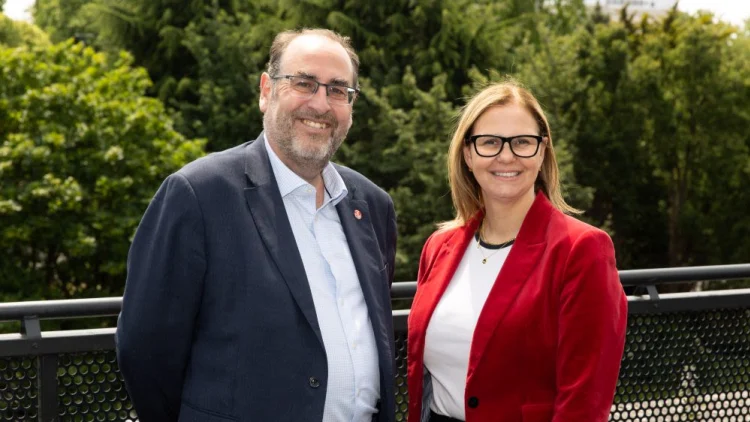
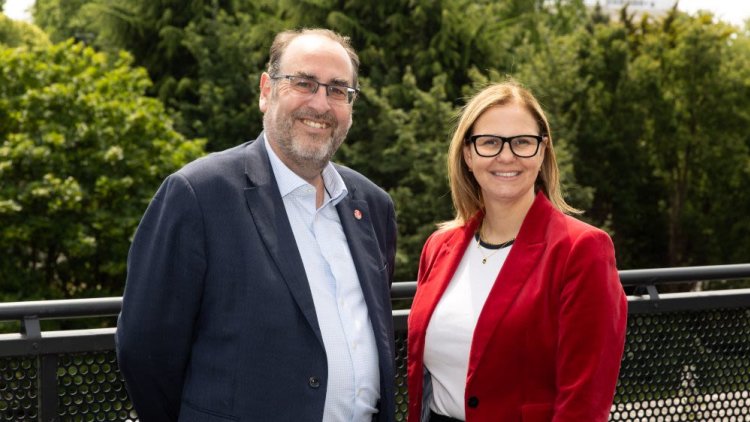
Mayor Helen Godwin has appointed Green councillor Tony Dyer as her deputy (West of England Mayoral Combined Authority/Freia Turland)
6 min read
The Green Party’s vetting system “needs improvement”, a party leader has told PoliticsHome, amid reports of anti-semitism within Zack Polanski’s ranks.
As speculation over Keir Starmer’s future raged in Westminster last week, PoliticsHome travelled to Bristol to speak with West of England Labour mayor Helen Godwin, and her newly-appointed second Tony Dyer: the first appointment of a Green Party politician as deputy mayor of any combined authority.
On Friday, the Green Party said its former Makerfield by-election candidate, who withdrew from the race hours after he had been announced, had apologised for sharing social media posts which described an attack on ambulances run by a Jewish charity as a “false flag”. Before the news broke, Dyer conceded that the party’s vetting system needed work, citing its large membership and the fact that it had fielded 4,500 candidates.
With the recent local elections reinforcing an increasingly fragmented landscape, partnerships between potential rivals such as the one between Dyer and Godwin are likely to increase. Ahead of the local elections, Labour pushed an anti-Green campaign highlighting allegations of antisemitism against councillor candidates. How do the duo still maintain a good working relationship?
Dyer explained, “both parties are as good as each other at dishing out different things” and “unfortunately, it’s just the way electoral politics works sometimes”. However, he believes that their collaboration in the West of England demonstrates “that regardless of the outcome of elections, we are able to work together for the benefit of the region, the city and our residents.”
Godwin added that on a personal level, “WhatsApp is our saviour”, explaining that if something is likely to cause friction between their parties, “we’ll try and get ahead of it by talking to each other first”. Dyer’s appointment followed Godwin appointing a Liberal Democrat deputy mayor in the previous year.
On 7 May, the Greens took control of Hackney, Hastings, Lewisham, Norwich and Waltham Forest. With the party having less experience than others in local authority administration, some have questioned whether there will be a repeat of the Bristol bin scandal, in which Green-run Bristol city council, of which Dyer is leader, proposed a once-a-month bin collection. The idea, proposed as part of a consultation, was later scrapped after intense backlash from residents and opposition parties.
Dyer reflects on this: “The main thing I’ve learned taking over as a Green leader is we were perhaps a little bit naive about some of the things we put into the public domain.”
“We maybe put things into the public domain, possibly too early in the process, before we had eliminated numerous options.”
Dyer told PoliticsHome that the same bin-scandal hit Bristol council would soon be offering training and support to new Green councils nationwide “to give them the benefit of what we’ve learned and done here in Bristol, how to work with other political parties”.
Speaking to PoliticsHome ahead of the local elections, Green leader Zack Polanski acknowledged that the Greens may face issues when it comes to vetting candidates due to the speed of the party’s growth.
Following the admittance, several cases came to light of candidates making antisemitic comments or posts on social media, with former Green leader Caroline Lucas writing on X that some of the statements were “totally unacceptable and require immediate attention”. Then came the news from Makerfield.
Speaking to PoliticsHome, Dyer said, “the vetting system needs improvement”.
“It’s worth pointing out we had 4,500 candidates, so the number of candidates [that have] actually been identified as potentially posting or being involved in antisemitism is a tiny fraction, but that’s still a fraction too much. Where that has happened, that’s then going through an investigation process by the party.”
Does the Green Party have an antisemitism problem?
Dyer said that all parties, particularly those with large memberships, are “almost certain” to have those joining with a “particular agenda”.
“What we have to be clear about is making sure that we make it clear that that is not acceptable, whether it’s antisemitism or whether it’s Islamophobia or whether it’s racism or anything along those lines, not just the Greens, but all political parties, we have to step on that and and stamp it out and make sort of people aware that’s not what we stand for as a party. We cannot accept it within those we choose to be our representatives or candidates, and we shouldn’t accept from any of our members, either.”
While the Greens had a great night on 7 May, the Labour Party suffered catastrophic losses across the country, including in the party’s heartland of London.
On almost 1,500 Labour councillors losing their seats, Godwin said it was “really really sad”, adding “there’s a message there, and that message is for government”.
In the aftermath of the results, close to 100 Labour MPs publicly said they had lost confidence in Starmer’s leadership of the party, with several ministers later resigning, followed by Health Secretary Wes Streeting.
Godwin does not blame Starmer himself for the loss of councils, but feels “this government has taken too long to get up and running”, adding, “we spent too much time diagnosing and explaining how bad things are and not actually saying here’s what we’re going to do.”
The local elections have also left a fragmented reality across most of the country, especially in cities like Birmingham. Godwin told PoliticsHome that working cross-party is something that has been the reality in her part of the world for several years, with Labour, the Liberal Democrats and the Greens all working together.
“What’s interesting for me now as a mayor is seeing for the first time, some of my colleagues up in the North are going to have different party makeup within their combined authorities.”
In the West of England combined authority, Godwin explained, there are no Labour-run councils: “So we have to do things quite differently. So we’re quite keen to demonstrate how that can be done, and share our experience with others, and it does involve putting sometimes party politics aside and just genuine placemaking.”
Dyer also believes that a multi-party political system and working cross-party will give more reassurance about long-term change and policies are less likely to just follow political cycles.

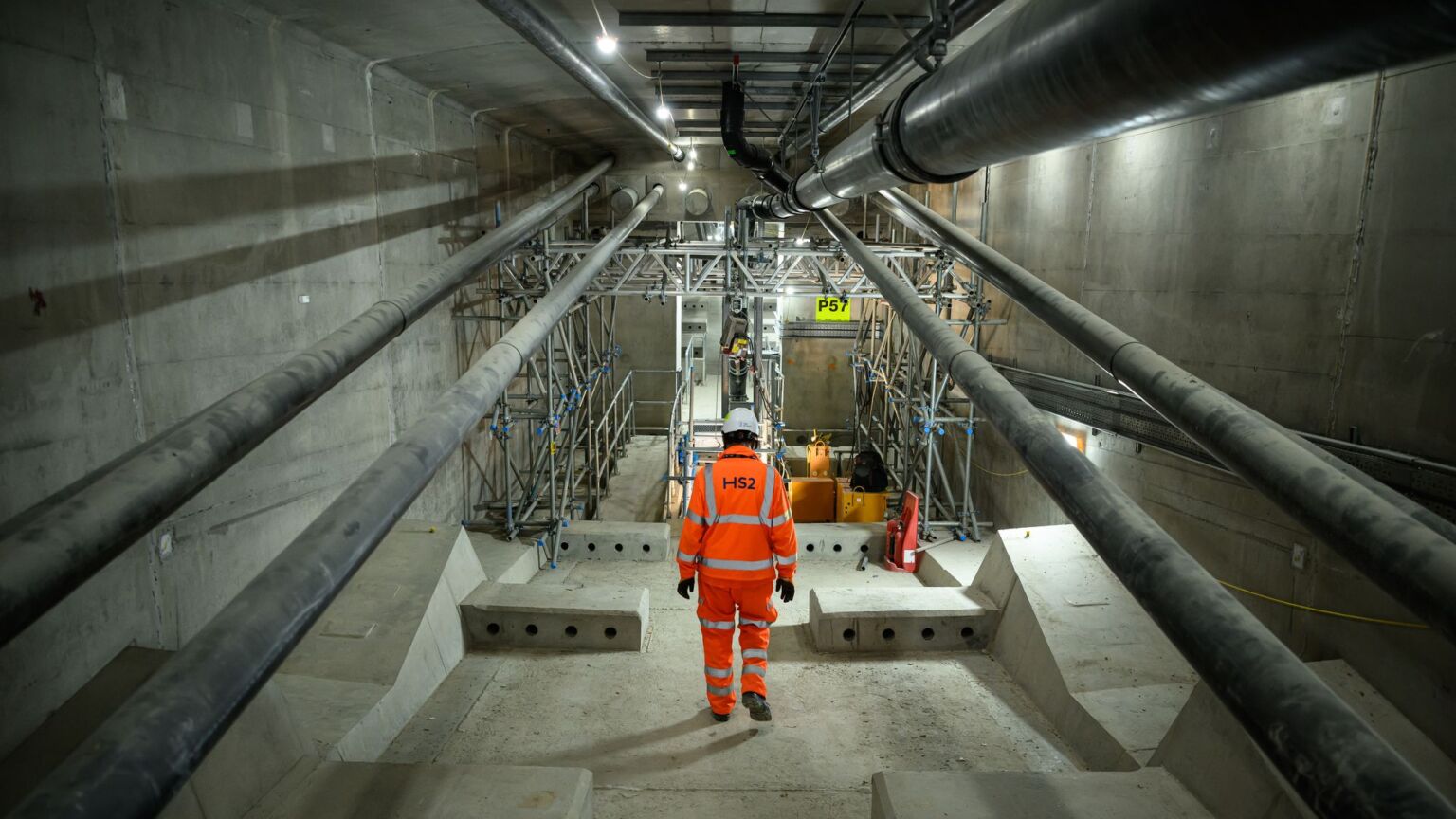
The levels of waste, incompetence and dysfunction inside parts of the modern British state are hard to fathom at times. It consumes extraordinary amounts of money, yet increasingly struggles to perform even its most essential tasks competently. Nothing better illustrates this state failure than HS2, Britain’s high-speed rail project linking London to Birmingham.
Originally proposed by Gordon Brown’s Labour government in 2009, the Tory-Lib Dem coalition confirmed the project was to go ahead in 2012. As it was described at the time, it was to be a high-speed train line connecting London to Birmingham with a Y-shaped section to Manchester and Leeds. The construction of the entire HS2 network was costed at £32.7 billion and was supposed to be completed by 2026 – ie, this year. Neither the projected cost nor schedule has been even close to accurate.
In fact, the UK government declared this week that HS2 will not be finished until possibly the 2040s, and that it could set the taxpayer back up to £102.7 billion. That’s over three times the original projected cost. And according to some sources, even that is a massive underestimate.
What’s more, the scope of HS2 has been massively scaled back since 2012. The northern and eastern legs of the route, taking it to Leeds and Manchester, have been scrapped – a move that has reduced the total length of the line by more than 50 per cent. HS2 will now be slower than promised, too.
With the financial sums involved in HS2 so large, it’s easy to become numb to them. So it’s worth putting the anticipated cost of the project into more comprehensible terms. Assuming it ends up being complete on time at its current proposed length of 230 kilometres, for £102.7 billion, the railway, including associated works like new stations and bridges, is expected to cost up to £446million per kilometre. That’s close to half a million pounds for every metre of track. That’s nearly £4,500 for every centimetre. Oh, and it will have taken over 30 years to finish, from inception to delivery. It beggars belief.
China, by contrast, built the entire Beijing–Shanghai high-speed railway, spanning 1,318 kilometres, in marginally over three years between April 2008 and June 2011. To reiterate, that railway is more than six times as long as HS2’s route, was built for around four times less, at £26 billion. And its trains are faster, too.
Indeed, China has laid approximately 25,000 miles of high-speed track in under 18 years, almost enough to circle the globe. That’s far quicker than we’ve managed to build HS2, which will be under 200 miles long.
Of course, China does have a far larger workforce and is governed by a totalitarian regime. It enjoys certain morally questionable ‘advantages’ over Britain when it comes to undertaking immense construction programmes at breakneck speed. But China isn’t the only nation that is able to execute such schemes more rapidly than the UK – liberal democratic nations including France, Italy and South Korea have all built, or are in the process of building, high-speed train lines and for a fraction of the price.
Britain hasn’t always been in the painfully slow lane. In the past, major public works were often delivered far more cheaply and efficiently than they are today. The 118-mile Great Western Railway, completed in the 1840s, cost £6million to £7million – equivalent to perhaps several hundred million pounds in today’s money, not tens of billions.
HS2 is just the most high-profile example of the modern British state’s incapacity. There are numerous other infrastructure projects that have encountered similar problems. They have either stalled entirely or ended up coming in massively over budget and behind schedule.
Take the Lower Thames Crossing, the long-planned road tunnel linking Essex and Kent. The planning application alone ran to well over 350,000 pages and took years to process before construction even properly began. Huge sums have been spent on environmental assessments, consultations, legal-compliance exercises, regulatory submissions and procedural hurdles… and the crossing itself remains nowhere near completion.
Or look at Hinkley Point C, the nuclear power station in Somerset. When originally given the go-ahead in 2016, it was anticipated to cost £18 billion and open in the mid-2020s. Since then, that sum has risen to over £30 billion, while the completion date continues slipping further into the future.
Or consider the endless delays surrounding airport expansion, road upgrades, housebuilding and energy infrastructure. Britain increasingly appears to be a country that can’t get things done.
HS2 receives plenty of scrutiny, much of it entirely justified. But the deeper issue is what it reveals about modern Britain itself. We feel like a nation that has lost the ability to act decisively, its construction and infrastructural ambitions mired in a swamp of legal process, institutional inertia and ‘progressive’ dogma.
Indeed, the HS2 project team seemed most comfortable producing lengthy equality, diversity and inclusion reports than building anything. Because, as we all know, it’s impossible to build a railway unless the people doing the building have familiarised themselves with ideas of white privilege and gender identity.
HS2 captures well the absurdity and failure of the modern managerial state. It is a state that is happier binding itself in red tape and bureaucratic processes than actually building anything. And we as a society are paying the price.

Reform UK’s success in this month’s Scottish parliament election is proof that the political status quo, like in England and Wales, is crumbling. At last, Reform has given voice to the longing for a real alternative that challenges the sclerotic, anti-democratic nature of political life in Scotland.
As in England and Wales, Scotland’s populist surge coincides with the decline of the establishment parties. For Labour, the recent elections proved just another stage in its long death in Scotland. It picked up just 17 seats. To add insult to injury, Scottish Labour leader Anas Sarwar lost his constituency seat, scraping a return to Holyrood via the regional list. The Scottish Tories, meanwhile, had their worst ever result, losing 19 seats and pushed into fourth place.
Despite winning its fifth consecutive election, the SNP is in dire straits. It remains dogged by allegations of corruption – namely, Operation Branchform, which last year led the former SNP chief executive and ex-husband of Nicola Sturgeon, Peter Murrell, to face court on embezzlement charges. The Sturgeon era, defined by its attacks on women’s rights and freedom of expression, lingers unpleasantly in the minds of many Scots. First minister John Swinney now heads up a government bereft of ideas.
This became painfully apparent in a lacklustre election campaign. Having overseen a deficit that has blown out to £26.5 billion, all the SNP could muster was a cap on grocery prices, free goodie bags to every primary school child and a minimum wage for comedians. It speaks to an exhausted political machine, running on empty after years of decline.
The SNP’s long dominance in Holyrood shouldn’t be interpreted as a sign of slavish loyalty on behalf of the Scottish people. It is much more a result of the anti-democratic character of the devolution settlement imposed on Scotland by New Labour than an accurate reflection of the country’s political beliefs. The electoral system in Scotland is significantly different from that of England and Wales. English council elections involve a straightforward majoritarian first-past-the-post system. In Wales, Senedd members are elected using a closed proportional list system.
Rather than combining the best elements of first-past-the-post and proportional representation, the Scottish system cancels out the democratic benefits of both. The result is a parliament that is neither proportional nor majoritarian in its make-up.
Given the barriers implicit in the electoral system, Reform’s breakthrough illustrates just what a complete game changer it can be in Scotland. Much like its success across England and Wales, Reform’s Scottish breakthrough has been 10 years in the making, giving voice to a populist desire for change that broke surface with the 2016 Brexit vote.
The EU referendum reenergised sections of the Scottish electorate, which became invested in defending the populist mandate. It was not for nothing that the Conservatives doubled their vote in Scotland at the 2017 General Election, winning 13 seats – their most seats since 1983 – despite refusing to make Brexit an election issue. Voters were searching for a vehicle to express their dissent.
For a decade, the Scottish establishment has conspired to ignore Scotland’s populist movement. Reform has now given it an electoral form.
Shortly after the election, Swinney claimed a second independence referendum would be necessary to ‘Farage-proof’ Scotland. That the political establishment should so openly declare war on the party that hundreds of thousands of Scottish people voted for, clearly illustrates that the cosy status quo engineered by devolution has been broken.
New battle lines are being drawn. Next May’s Scottish local council elections will be another chance to take the fight to the political class and drive home the populist message.
Dr Carlton Brick is a sociologist and researcher.
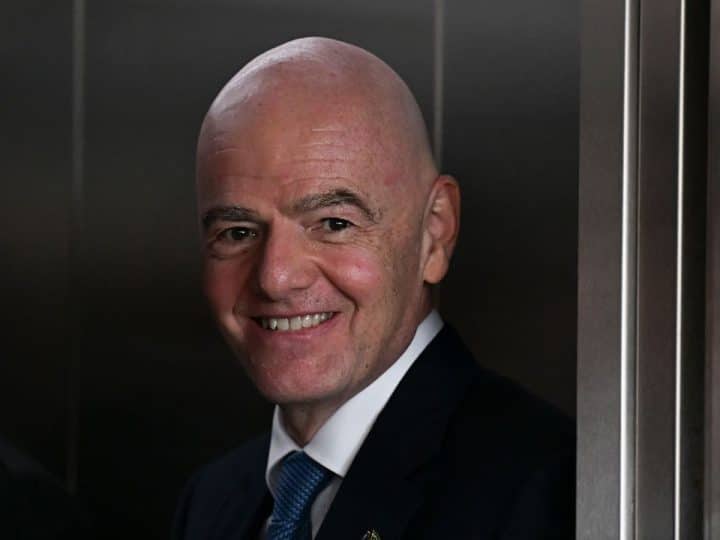

Global football is moving toward a new phase of organisational debate, as the proposal to expand the 2030 World Cup to 64 teams has resurfaced in discussions within the FIFA, a development that reflects a broadening scope of thinking about the future of the world’s most-watched tournament.
According to AS newspaper, the idea, which originated as a proposal from the South American Football Confederation (CONMEBOL), is no longer a fleeting suggestion, but has transformed into a file under discussion within some decision-making circles at FIFA, amidst growing support from parties who believe the World Cup should move toward a more inclusive and expansive model.
This shift comes at a sensitive time, as the first expanded 48-team edition of the World Cup in 2026 has not yet begun, making the discussion about the new expansion a proactive step that reflects a remarkable acceleration in redrawing the shape of the tournament.
Greater inclusivity and a new philosophy driven by FIFA
The newspaper confirms in its report that this trend resonates within the general vision of the International Federation of Association Football, led by its president, Gianni Infantino, who constantly puts forward the idea that the World Cup is not exclusive to traditional powers, but a global platform that should provide an opportunity for the largest possible number of nations.
This philosophy is based on the gradual shift in the landscape of rising national teams, with teams such as Jordan, Uzbekistan, Cape Verde, and Curaçao getting closer to participating in the 2026 World Cup, which is read within FIFA as evidence of the expanding global competition base.
In this context, the idea of 64 teams seems like a natural extension of the desire to transform the tournament into a more “open” space, even if this comes at the expense of some traditional balances in the quality of competition.
World Cup 2030 — the centennial edition
The 2030 edition carries an exceptional character as it celebrates 100 years since the start of the first World Cup in history. Hosting duties are shared by Spain, Morocco, and Portugal, alongside symbolic matches in Argentina, Uruguay, and Paraguay, in a geographically and organizationally unprecedented format.
However, this great ambition collides with clear practical challenges, most notably infrastructure and the pressure of the international calendar, in addition to renewed controversy within Spain regarding the readiness of some host cities.
Although the official structure of the tournament is still based on 48 teams, the report indicates that FIFA has not yet entered the final decision-making phase regarding organizational details, leaving the door open for adjustments that could completely reconfigure the shape of the tournament.
The ‘AS’ newspaper believes that what was viewed years ago as an exaggerated or impractical idea is now part of a realistic discussion within decision-making offices, a clear indication that the next World Cup may not only be a celebration of the centenary but a turning point in the history of the tournament itself.
Featured image via Ton Molina/Getty Images
By Alaa Shamali


Labour has announced some cost of living policies that treat voters as children. Rather than any significant economic strategy for real change, the ruling party is offering voters temporary gimmicks like no import tariffs on chocolate and biscuits for the summer.
Instead, Labour could deliver cost price essentials such as water, energy and telecomms to significantly reduce costs for every person and business.
Labour — The gimmicks
It’s almost laughable. This is the Groupon administration. As well as cutting costs for supermarkets on trivial items, the ruling party is cutting VAT on summer days out for families to 5% from 20%.
The temporary tax cut is from 25 June to 1 September.
Labour says it only ‘expects’ companies running supermarkets not to simply keep the reduced tariff gains. The same seems to be true of the reduced VAT gains on theme parks, zoos and other days out. Companies could just pocket the cost decrease and keep prices the same.
The policies show an affront to democracy
The way Labour is conducting the policies show a further entrenchment of corporatism. The government is proposing policies to supermarkets that the corporations can choose whether or not to accept. Indeed, corporations rejected a proposal on price controls on food staples.
That’s opposed to Labour actually regulating the economy for the public good. That said, it would be easier to do so if the ruling party was working off a democratically-backed manifesto instead of just doing whatever once in government.
“Shield workers”
The secretary general of the TUC, Paul Nowak, told the Guardian Labour needs to be “bolder” than its summer policies:
Any practical steps to help families with the cost of living crisis are a good thing, but we’ve barely begun to experience the economic fallout of the Iran war – and the threat to living standards is going to grow as the war drags on. The government will need to be bolder to shield workers and households from Trump’s illegal war.
Indeed, the huge profits made by corporate middlemen and utilities shows the ‘cost of living crisis’ is manufactured. Labour could do more.
Featured image via Stefan Rousseau-Pool/Getty Images
By James Wright
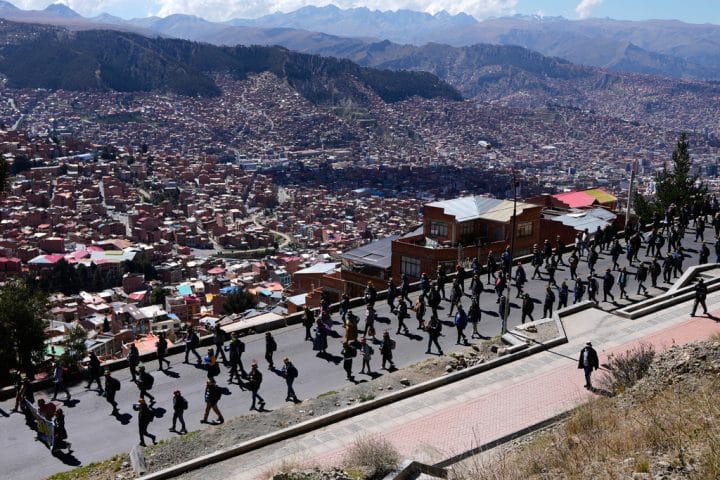

Bolivia is in full-scale political crisis mode over one week into an indefinite general strike. Workers are organising against the neoliberal US-aligned administration led by President Rodrigo Paz.
A massive crowd assembled in La Paz’s working class twin city, El Alto, to demand Bolivian President Rodrigo Paz resign
Indigenous-led demonstrations come as the Bolivian regime was caught preparing to launch a US-backed operation to kidnap Evo Morales with 2,000+ troops & cops pic.twitter.com/DWwwaLGGf8
— Wyatt Reed (@wyattreed13) May 17, 2026
The South American state is fraught with popular mobilisations, fuel and inflationary crises, widespread discontent and blatantly escalating US interference.
Many demonstrators direct their anger against the relatively new Paz-led government. Unions are leading strategic road blockades and walkouts to pressure Paz’s neoliberal regime to not betray the promises which brought him to power.
Security forces have clashed with strikers and protestors in multiple cities, allegedly under government direction to shoot even live ammunition at protestors.
Caravans numbering thousands of marchers are converging on administrative capital La Paz. Unions representing peasant and proletarian workers are leading the charge.
Unions in significant industrial regions, Potosí and Santa Cruz, have now joined. These represent dominant mining and agro-industry regions respectively.
Unionised medical worker Almin Arminda Iglesias explained the situation directly to the Canary:
…the situation here in Bolivia is serious. The workers’ representatives submitted their list of demands as they do every year, but this government turned a deaf ear to our requests, especially the wage increase — in other words, it doesn’t want to raise our salaries.
The cost of the family food basket has gone up, this government is favoring big businessmen by lowering their taxes and allowing free export of certain foods, leaving the population without adequate supply. It has already been several days of strikes and mobilizations.
On top of that, the persecution of workers’ leaders has begun.
Bajan de lo mas profundo de Bolivia los campesinos, indígenas, a sumarse al clamor popular por una Bolivia soberana y rechazar los paquetazos impuestos por el BM, FMI, bajo la anuencia de Rodrigo Paz y sus marionetas serviles en complicidad con el gran capital extranjero. pic.twitter.com/jJ5oc74oFp
— El Fantasma (@AlTopeyPunto891) May 21, 2026
Bolivia — On the edge of revolution?
Bolivia’s staunchly militant indigenous, peasant and industrial working classes have sustained peaceful but effective road blockades in the countryside. Demonstrators in the cities have clashed with police forces.
One militant wing, the ponchos rojos (Red Ponchos), was recorded practicing combat-style formations and promising to take up arms against their right-wing government if necessary. They vow to defend their class, their 36 national communities and their natural world by any means necessary.
This is what Bolivia’s general strike looks like in rural areas. All the villages occupy the stretch of highway nearest to them, cutting off all trade and travel between cities.
This is in Tiraque Province, Cochabamba. pic.twitter.com/QNLL3ZYPU6
— Ollie Vargas (@Ollie_Vargas_) May 18, 2026
Os “Ponchos Rojos” estão liderando ENORMES rebeliões populares contra o governo de extrema direita de Rodrigo Paz na Bolívia

Vídeos mostram a polícia RECUANDO diante de manifestantes armados com chicotes, paus e pedras em El Alto, enquanto bloqueios e greves se espalham… pic.twitter.com/gRTfUyObUS
— O Papo (@O_Papo_) May 17, 2026
The Paz government was elected in 2025 on a promise of what was called “centre-right” reform by the global corporate media. Paz campaigned on a platform of “capitalism for all” and quickly bowed to the US.
One of Paz’s immediate moves in office was to cut fuel subsidies, which were a lifeline for many in the low-income country but which also drained the state’s coffers. Bolivia became dependent on imports following the commodity boom and then sold these imported petro-fuels at a discount.
Speaking directly to the Canary, unionised indigenous Bolivian food seller Vilma Paredes said:
The people endure, the people have memory, they neither forget nor forgive. A people that removed two presidents in this century — do you think they won’t be able to do it now? More and more lies are being exposed, coming to light.
If the president doesn’t come clean with the indigenous peoples and ask for forgiveness, there’s no going back. The government is sinking deeper and deeper…
La policía es corrida a LATIGAZOS por los ponchos rojos de Bolivia.
La revolución obrera y campesina está triunfando.
El régimen de Rodrigo Paz está en sus últimas horas. pic.twitter.com/AXCEwXPPuG— The Chad Grabois gordo geopolítica (@ChadGrabois) May 17, 2026
#Bolivia: Members of the indigenous “Ponchos Rojos” movement have threatened an armed uprising against President Rodrigo Paz amid Bolivia’s worsening economic and fuel crisis and the ongoing nationwide unrest.
The group, historically linked to Aymara mobilizations and allied… pic.twitter.com/RwTgEuwUCL
— POPULAR FRONT (@PopularFront_) May 19, 2026
Not without costs
The popular uprising underway in Bolivia is not without costs. ‘Struggle’ bears its name for a reason.
Unionised psychiatrist Roger Peña told the Canary that, although many understand the Paz administration appears to be set on directing wealth upwards, there is genuine need for some reform around fuel. But the illegal US-Zionist war on Iran has exacerbated fuel crises further, and the people are reacting, Peña said.
Some people understand that Evo Morales and the popular movement are trying to carry out a coup, according to Peña, or see it as sedition by the COB. (I contend that the name of a ‘coup’ driven from below, rather than imposed from above, is rightly called a revolution.) Others support the COB but with great difficulty:
There are people who, if they do not work a day, they cannot eat. … Sadly, it’s the poorest.
Certainly, there are people who are against these mobilisations. …
But it’s the government who are presenting charges for sedition.
Miles de mineros y obreros bolivianos se unieron contra el régimen de Rodrigo Paz, títere de EEUU, que quiere entregar los recursos y privatizar el pais para entregárselo al imperio.
El imperialismo quiere que Bolivia sea otra Argentina, el pueblo mandó a parar y está luchando… pic.twitter.com/ChMd9vfQXU
— Daniel Mayakovski (@DaniMayakovski) May 22, 2026
Yet clearly the mobilisations have drawn out many thousands, if not millions, across the country. Two contacts in Bolivia’s union movement, more and less sympathetic, confirmed to the Canary that it’s led overwhelmingly by indigenous and peasant workers. As white power reasserts itself over the historic progress made by indigenous Americans nationally and regionally, Morales wrote on X:
[Paz,] Being a foreigner, he surely hates Bolivians. He criminalizes, persecutes, and represses indigenous people. He thinks and acts like an imperialist, neoliberal, and neocolonialist.
Separately, Morales wrote of US hypocrisy on X:
The US does not defend democracy nor respect International Law. It finances right-wing coups d’état. It invades countries and steals their natural resources. It defends submissive and sellout governments. The US supported the 2019 coup d’état of the Gringo against the Indian to seize our lithium.
The Bank of Bolivia
Now Bolivians charge, against Paz, that his government seemingly intends to sabotage any potential incoming popular government. Footage emerged of armoured private bank vehicles “vacating” the Bank of Bolivia, with accusations that they seek to empty it like was done to Venezuela under the US-backed anti-democratic Juan Guaidó coup in 2019. The Bank of England holds Venezuelan gold for ransom years later.
In one heart-breaking video shared online, an older man tells viewers that his own son, a policeman, is “there to repress me.” It underscores the structures and divisions that can tear apart a society. See it below:
Bolivian worker on strike: My own son is standing over there to repress me. pic.twitter.com/a00OyIlAFq
— Ollie Vargas (@Ollie_Vargas_) May 20, 2026
There appears to be no end in sight for many until the resignation of Rodrigo Paz. Many doubtless recognise that, whatever the immediate costs of popular revolt, the cost of subservience to US empire are greater.
Day 9 of the general strike in Bolivia. People are composing protest songs while doing night shift at the barricades
pic.twitter.com/FnY5OZYTEa
— Ollie Vargas (@Ollie_Vargas_) May 22, 2026
Featured image taken from X via the Canary

Bolivia — Government targeting leftist leaders
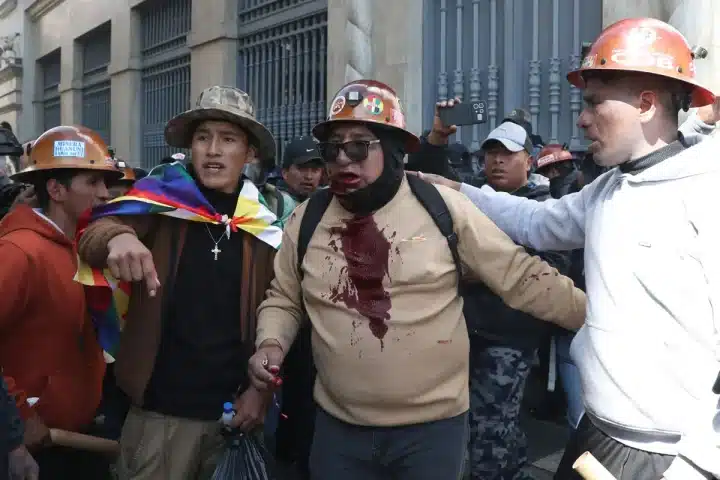
Strikes and police crackdowns across Bolivia have led to at least 90, perhaps over 120, arrests on leftists.
The Bolivian justice department and policing Commander General have issued arrest warrants for the ongoing general strike‘s leadership. This is aimed explicitly at the Bolivian Workers’ Central (COB)-led strikes.
COB strike leaders — David Quispe Machaca, Juan Hector Huacani Guachalla, Justino Apaza Callisaya, Winston Jemio Quispe Gutierrez and Nilton Condori Alanoc — are being charged with:
- “Terrorism;”
- “Financing terrorism;”
- “Instigation of delinquency;”
- “Delinquent association;”
- “Activities against the security of transport routes;” and
- “Activities against the security of public services.”
The government has presented no clear evidence for “terroristic” activities or the financing of them. Meanwhile, “delinquency” can be stretched to cover basically anything. As regards transport routes and public services, the Bolivian people frequently disrupt roads for political action (I experienced these firsthand in July 2025, with zero arrests). Attempts to criminalise this activity now indicate fragility in Paz’s regime.
These targeted attacks come as the indigenous movement, still led from formal political exile by Evo Morales, made the Paz administration an ultimatum of 90 days. They demand a new general election after Paz secured only two governorships out of nine in April’s regional elections — despite his election less than a year ago.
Bolivia’s government has ordered the arrest of all the main leaders of the indigenous movements and mineworkers unions.
They’re being charged for Terrorism for having organised the general strike against hunger. Strike continues regardless, now in day 7. pic.twitter.com/5ISk3KPb68
— Ollie Vargas (@Ollie_Vargas_) May 19, 2026
US imperial involvement
Ex-president of Bolivia and longstanding indigenous socialist leader Evo Morales claimed on 15 May that the US military sought to “detain or kill” him in a military operation. Regional independent journalist Ollie Vargas confirmed the operation with leaked documents detailing over 2,300 troops and DEA (US) involvement. (See the Canary‘s full explainer.)
US Deputy Secretary of State Chris Landau pinned the popular uprising on the “support of organized crime and drug traffickers,” without any supporting evidence. It’s a common tactic of US imperialists to equate coca farmers with narcotics producers, where coca has an ancient connection to indigenous Andean peoples.
Let there be no mistake: those who lost overwhelmingly at the ballot box in Bolivia last year are trying to overthrow President @Rodrigo_PazP by organizing RIOTS and BLOCKADES with the support of organized crime and drug traffickers. I spoke with my friend President Paz this…
— Christopher Landau (@DeputySecState) May 19, 2026
Now US hemispheric hawk, Landau’s boss, Marco Rubio himself has joined in the fray. Absurdly, Marco ‘Narco’ Rubio — whose brother-in-law is a convicted cocaine trafficker — declared on X that the US:
will not allow criminals and drug traffickers to overthrow democratically elected leaders in our hemisphere.
This comes after Trump’s presidential pardons of high-profile convicted drug traffickers, like Honduran ex-president Juan Orlando Hernández. This suggests clear bias in how the US selectively deploys narcotics laws. Deepening US collaboration with the Ecuadorian presidential Noboa oligarch family, credibly accused of drug trafficking, demonstrate how selectively the US weaponises these sentiments.
The US has a long and dark history of doing exactly that, from Panama to Colombia to, most recently, Honduras. The latest is with the direct aid of Benjamin Netanyahu (see: ‘Hondurasgate‘). In every instance the US has happily backed or overlooked drug lords and despots wherever they were an alternative to leftists.

Regional solidarity and hostility
Colombian socialist President Gustavo Petro repeatedly voiced support for the Bolivian workers’ struggles. He denounced weaponised US equation of indigenous coca farming with narcotics production. Petro adds:
An attack on a legitimate former president and indigenous leader like Evo Morales will only fill all of Latin America with blood.
As the flag of the early US proclaims, it is by respecting diversity and dialogue that democracy and liberty will grow in the Americas.
Evo Morales thanked Petro for his messages of solidarity, alongside Honduran socialist ex-president Manuel Zelaya. The latter also voiced support for the Bolivian workers’ struggles.
National governments across the Americas are making clear their entire submission to the imperial control of the US Pentagon complex. They’ve all banded themselves neatly together under the (seemingly Marvel-inspired) name ‘Shield of the Americas‘.
Astonishingly, the US-led ‘Shield’ — note which countries it includes — denounced actions they see as:
subverting the constitutional order and destabilizing the democratically elected government of Bolivia.
…Because the US would never do that to a sovereign Latin American government, right? (See: Cuba, Mexico, Colombia and Venezuela today; Chile, Honduras, Guatemala, Nicaragua, etc. yesterday.)

People rightly mocked Paz‘s Bolivian Foreign Ministry for merely translating and sharing US government statements without any amendments. It’s hard to crystallise subservience to empire much clearer.
There could be no greater confirmation that Paz’s government is captured. Paz, and so Bolivia’s unmatched access to lithium reserves, are entirely bent to US and foreign capitalist interests.

Featured image taken from X via the Canary
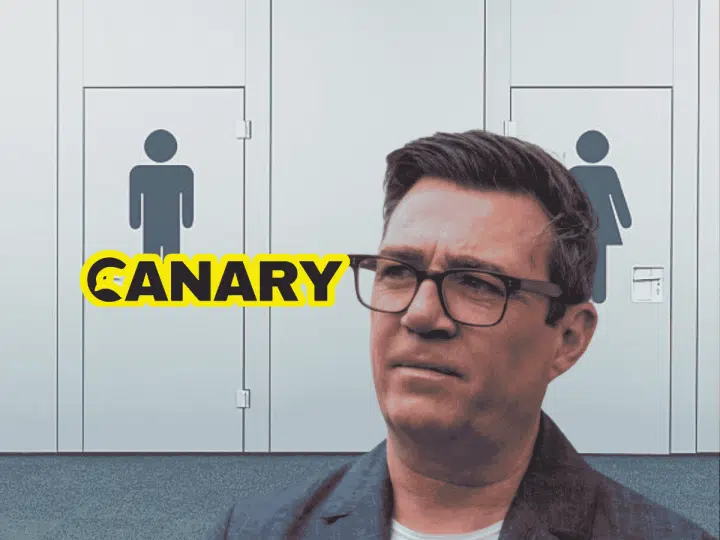

Greater Manchester mayor and Makerfield by-election hopeful Andy Burnham has dumped his past defence of Trans people to protect his bid for Westminster, it seems. Journalist Alex Wickham has revealed that Burnham now backs the Equality and Human Rights Commission (EHRC) restrictions on single-sex spaces. This u-turn appears to be nothing but a transparent bid for Reform votes, something we could have predicted coming a mile off.
NEW: Another Andy Burnham u-turn appeared designed at dropping his past positions to win Reform votes
He says he supports the EHRC guidance on single sex spaces and the Supreme Court ruling
Previously he said trans women should be able to use female toilets — Alex Wickham (@alexwickham) May 22, 2026
A political shapeshifter
This policy shift directly contradicts Burnham’s previous stance and public record. He had previously slammed single-sex restrictions on bathrooms, claiming only a minority of people object to Trans women using female toilets.
However, the EHRC has now laid its 300-page statutory, and very confusing legislation before parliament on Thursday 21 May 2026. The new rules allow providers of services to exclude Trans people from single-sex spaces like hospital wards and bathrooms. And of course, Burnham has bent to government pressure and has toed the line. And not least of all because his bid for Westminster could be scuppered by Reform UK.
This updated code creates a total mess of legalese that simply ignores everyday, lived experiences. As a relatively masculine cis woman, this new code scares me. The thought that I could be stopped going to the toilet by some dude because I have a partially shaved head and a deeper voice is unsettling as hell. And where does this end? Are we going to have genital inspectors on the door, offering you a polo and a spritz of perfume if your body conforms enough to get in? And if this is a scary thought for me, how the hell are our Trans brothers and sisters feeling right now? And what about Intersex people? Urgh, this reeks of misogyny. Any woman who sees this legislation as a positive has no idea the power they have just given to a male dominated society.
Trans rights lead Jess O’Thompson warns it treats trans people as a third sex by forcing them to use separate spaces, which violates human rights law. O’Thompson stated:
It still treats Trans people as a third sex, suggesting they should be made to use separate spaces – entirely ignoring the harm this causes, and human rights law. We will keep fighting this discriminatory approach.
Prioritising legal definitions over reality means the EHRC creates an even more hostile environment for people who just want to live their lives. We need to just learn to leave people alone.
Reform has Burnham running scared, it seems
This ridiculous u-turn comes as Burnham is campaigning as Labour candidate for the Makerfield by-election. The safe-seat was specifically resigned by Josh Simons to give Burnham a clear path to return to Westminster.
But then again, Burnham may have a reason to panic, as Reform candidate Robert Kenyon may actually pose a threat. Burnham needs to win back a fifth of the voters who have drifted to Reform to secure the seat. And what better way to do that than to throw Trans people under the bus?
Look he’s desperate to win the by-election and one day emerge as PM. Principles and previous policy opinions are completely dispensable- 4 U turns this week already. Consistent with how he was when last MP. He will let down his soft left supporters. https://t.co/bFFWGueoeg
— Gwynoro Jones (@Gwynoro) May 22, 2026
Additionally to this, he has pivoted on a number of policies to win those votes back. He used to say he wanted the UK to rejoin the EU in his lifetime. Binned that one on Thursday, claiming it wasn’t a priority. Actually more likely because Makerfield constituents voted overwhelmingly to leave. His previous criticisms of Westminster’s fiscal rules on strict borrowing limits? Binned.
Burnham has proven he’s willing to throw marginalised people under the bus for a sniff of a seat in Westminster. The question is, will the people of Makerfield see through it? Or are they going to be happy to elect a man who shapes his principles around nothing but gaining more power?
Time will tell.
Featured image via Facebook
By Antifabot
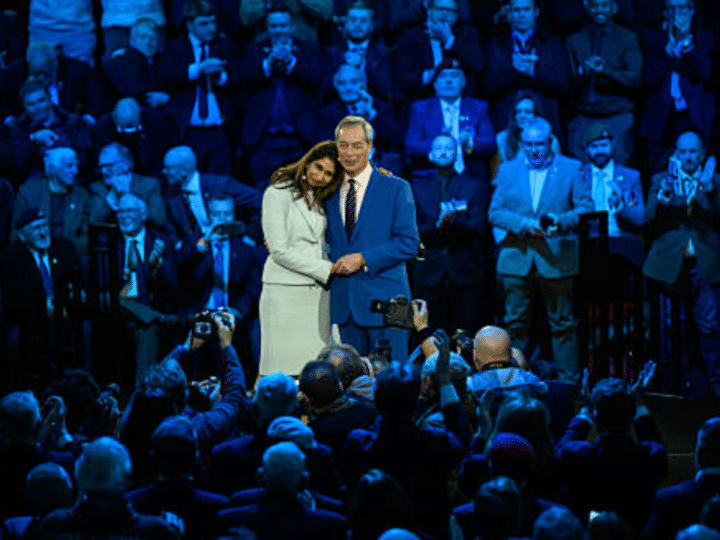

Tory-Reform turncoat, MP Suella Braverman, is angry that Brits are leaving Britain. Falling immigration has not yet filled the void that exists in place of her soul.
“The brightest and the best are leaving the UK,” Suella Braverman wrote in response to a Telegraph report featuring immigration stats from the Office for National Statistics (ONS). She noted that the position was untenable. The Telegraph reported that in 2025, 75,000 more Britons aged 16–34 left the UK — the highest number on record since the ONS changed its methodology in 2021.
The brightest and the best are leaving the UK.
This can’t go on. https://t.co/Z5JKxQtK2Z
— Suella Braverman (@SuellaBraverman) May 21, 2026
The Telegraph’s article — headlined ‘Young Britons turn their backs on Starmer’s high-tax UK’ — implies this was due to Starmer’s high-taxation policies. However, data published by the ONS suggests work and study patterns are likely drivers. Suella Braverman doesn’t seem to agree.
Sharp fall in net migration
Overall, the ONS report found that net migration to the UK fell to an estimated 171,000 in the year ending December 2025. That’s nearly half the revised estimate of 331,000 for the year ending December 2024.
The ONS also cited a 47% drop in non-EU nationals arriving for work-related reasons. This followed government changes restricting skilled worker visa and stopping most foreign students from bringing dependants, as well as closing the Health and Care route for overseas care workers. Critics have argued that these policies were strongly influenced and pedalled during Suella Braverman’s tenure as home secretary.
Even the Telegraph concedes that the fall in net migration stems from Tory policies introduced during her time in office. This included restrictions on workers and students ability to bring dependants, as well as salary increases to and raising the salary threshold for foreign workers.
The former (Tory) home secretary defected to Reform just earlier this year. Since then, Suella Braverman has blamed the Tories for ‘out-of-control immigration‘ and high taxes. But isn’t something missing here — didn’t she loyally serve in the very government she’s now publicly bashing. It’s safe to say that Suella Braverman really is politically homeless.
The real problems of inequality, soaring corporate profits, complicity in genocide are the ones Reform conveniently sidesteps, just like the ‘uniparty’ system they claim to oppose.
Immigration was never the real issue, was it, Suella?
Featured image via the Canary
By The Canary
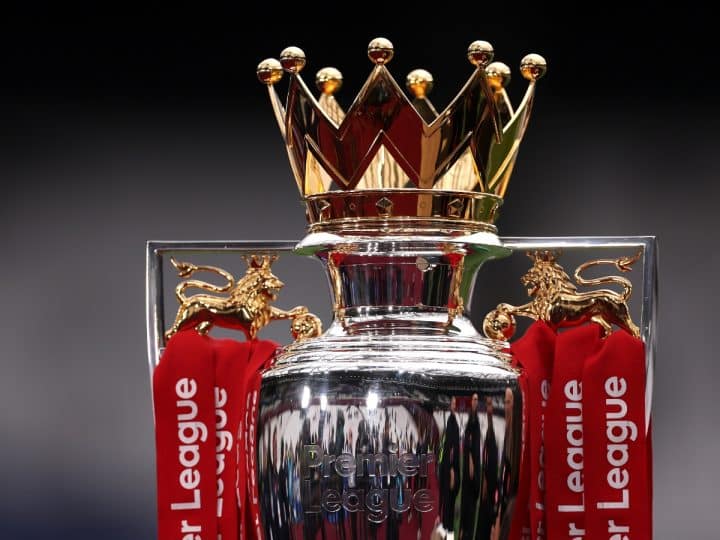

The International Centre of Justice for Palestinians (ICJP) and War on Want have issued letters to 15 Premier League clubs. They’re raising concerns about the clubs’ complicity in Israeli atrocities via their ties to companies linked to Israel’s genocide in Gaza and apartheid across the Occupied Palestinian Territories.
These findings come from War on Want’s latest report: Red Card: English Premier League Sportswashing of Israel’s Atrocities against the Palestinians. ICJP has also supported the report.
The report details the connections of at least 15 Premier League club sponsors to Israel’s devastating military assault and blockade on Gaza, construction of illegal settlements, and wider system of apartheid.
The companies identified include:
- AXA.
- BP.
- Canon.
- Carlsberg.
- Cisco.
- Coca-Cola.
- Eurobank.
- Evelyn Partners.
- Expedia/Hotels.com.
- Hewlett Packard Enterprise.
- HSBC.
- Standard Chartered.
- Oracle.
- Sony.
The report names nine clubs with complicit sponsors:
- Arsenal.
- Chelsea.
- Crystal Palace.
- Everton.
- Fulham.
- Liverpool.
- Manchester City.
- Manchester United.
- Tottenham Hotspur.
- Two others, Brighton and Burnley, have sponsors at risk of complicity.
Premier League itself is complicit
Alarmingly, every single one of the 20 Premier League clubs has indirect sponsorship from Barclays Bank. Barclays is the main sponsor of the Premier League despite decades-long links to systematic racial discrimination. That includes apartheid South Africa and Israel’s apartheid against Palestinians. The sponsorship deal with Barclays makes a mockery of the Premier League’s campaign to ‘kick racism out of football’.
War on Want and ICJP wrote to the clubs in March, as well as to the English Football Association (FA) and the English Premier League (EPL) itself, to inform them of the report’s main findings and the risk of complicity in the atrocities themselves faced by clubs if they do not cease the business relationships as soon as possible.
Israel’s attacks on Palestinian football
Red Card reveals how Israel’s genocide, illegal occupation and apartheid has hit Palestine’s football ecosystem hard. Since October 2023:
- Israel has destroyed or damaged 265 sports facilities.
- Israel has killed at least 565 members of the Palestinian Football Association, including the “Palestinian Pelé” Sulaiman al-Obaid.
- Domestic football leagues in Gaza and the West Bank have collapsed.
- Israel has turned stadiums into detention sites.
- Israel has blocked the import of astroturf for Palestinian teams to play on.
Israel’s attacks on Palestinian football are a microcosm of its wider genocide. Since 2023, at least 72,000 Palestinians have been killed and 172,000 injured in Gaza. 92% of homes in Gaza have been destroyed or damaged. And 93% of schools have been destroyed or severely damaged.
War on Want’s report is calling for:
- The Premier League to introduce an immediate ban on sponsorship from companies linked to genocide, apartheid and illegal occupation.
- Clubs to review and terminate sponsorship agreements identified in the report.
- The UK Government to uphold international law and ensure that UK-based companies are not contributing to illegal occupation, apartheid and genocide.
Órlaith Roe, ICJP’s public affairs and communications officer, said:
Premier League football prides itself on standing against racism and discrimination, but as with so many other areas, Palestinians are the exception, with Israel uniquely being granted impunity for its human rights abuses against Palestinian people. The failure to act is a glaring double standard, standing in sharp contrast to the response taken against other states, including Russia.
The rhetoric of equality and inclusion rings hollow while Palestinian footballers and fans face oppression, and Israel and the Israel Football Association are allowed to continue competing as though nothing has happened. Football’s governing bodies can no longer avoid meaningful action – the case for showing Israel a red card is now overwhelming.
Neil Sammonds, War on Want’s senior campaigner on Palestine, said:
These clubs speak proudly about equality, inclusion and community. Yet behind the branding, some are helping sanitise corporations connected to some of the gravest crimes and humanitarian catastrophes of our time.
Palestinian footballers are being killed. Stadiums are turned into detention camps. Child players are buried beneath rubble. The Premier League has shown before that it can act when sponsorship becomes morally toxic. The question is why Palestinian lives appear to count for less.
Featured image via Alex Pantling / Getty Images
By The Canary
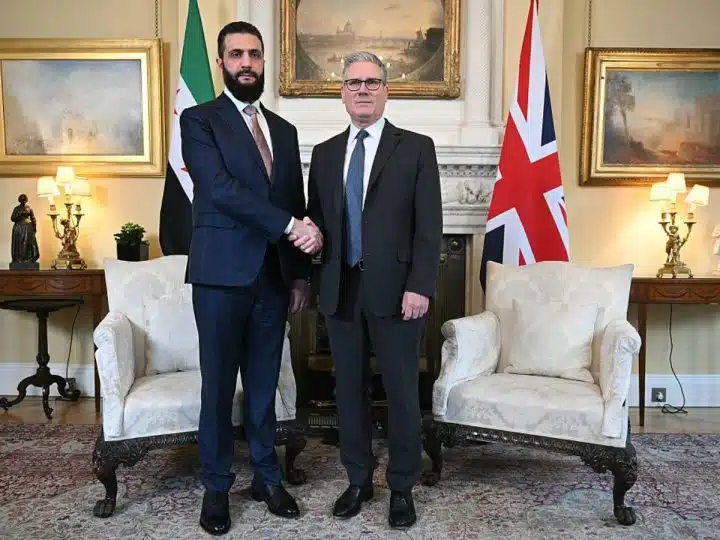

Former Al Qaeda member and US-backed Syrian president Ahmed Al-Sharaa will be a guest at the influential G7 forum. Al-Sharaa’s presence is about Syria’s reintegration into the global capitalist economy. Syria’s use by Western powers as a “potential strategic hub for supply chains” will also be discussed given the Strait of Hormuz is blocked.
The G7 is a multinational economic and political forum made up of Canada, France, Germany, Italy, Japan, the UK and the US. The EU is a non-enumerated member.
It meets annually:
to coordinate policy on global economic, security, and other critical issues, acting as a platform for shaping international responses to challenges like climate change, economic crises, and security threats.
Modern Diplomacy reported on 21 May:
Syria will participate in the upcoming G7 Summit in France as a guest nation, marking its first presence at the forum since its creation in 1975.
The country will be represented by President Ahmed al Sharaa, following an invitation linked to broader discussions on global supply chain stability and post-conflict economic rebuilding.
Economist Joseph Daher told New Arab:
The meeting is part of a continuous process to legitimise this government and reintegrate it regionally and internationally, as evidenced in the last few weeks, for example, by the issuance of visa cards and allowing international transactions.
Al-Sharaa replaced Syrian president Bashar Al-Assad in 2024. He was previously head of Hayat Tahrir al-Sham (HTS), a split from the Syrian wing of Al Qaeda.
Syria — Al Qaeda and the global economy
Al-Sharaa visited the White House in November 2025. It was a bizarre spectacle. The Canary wrote at the time:
for 25 years the US carried out a campaign of world-spanning violence. Entire countries were destroyed, with millions killed, injured and displaced in the process. Unknown and unnamed thousands were imprisoned and tortured. All in the name, as global audiences were told, of defeating Al Qaeda – a sinister network of death. Never mind that we created and turbocharged one of our own, on a far bigger scale, to attempt the task.
Clearly, these narratives still hold a singular power. Al-Qaeda and 9/11 are still cited to justify officially sanctioned use of violence — from bombing Venezuela to repressing the American left in recent months.
But the undeniable fact is that yesterday a former Al-Qaeda leader — until very recently — was in the White House smiling.
Daher felt Al-Sharaa’s guest appearance was less about helping ordinary Syrian’s and more about serving a colonial agenda:
The Syrian people are clearly not on the agenda for these meetings; this is about consolidating a state that serves [foreign] interests.
New Arab reported:
An invitation to Sharaa to attend the 15-17 June summit in Évian-les-Bains, southeastern France, was hand-delivered to Syrian Finance Minister Yisr Barnieh, who attended the group’s financial talks earlier this week in Paris.
The outlet said that the country was seeking to attract economic investment to rebuild. The leadership saw the Hormuz crisis as a chance to do so:
Regional powers, particularly the Gulf Arab states, and international interests, notably Western states, are converging on Syria, all seeking stability and commercial opportunities, facilitated by a government willing to serve their needs.
And:
At the same time, the ruling authority headed by Ahmed al-Sharaa seeks to embed itself within Western hegemonic infrastructure, while hedging its bets by pursuing ties with Russia and other alternatives.
The Western powers have gone a step further than before. Under a former Al Qaeda leadership, Syria is being reintegrated into the global economy.
This is being done under the aegis of Trump’s failing war in Iran. The G7 nations seem to hope that after a decade and a half of brutal civil war, Syria can be a hub for some form of economic workaround, offsetting the impacts of the latest US-Israeli disaster in the region.
Featured image via Justin Tallis – WPA Pool/Getty Images
By Joe Glenton

Andy Roberton, Sir Kenny Dalglish and Liverpool’s Scottish bond

Navitas Semiconductor NVTS Stock Jumps Nearly 20% on AI Power Demand and Analyst Upgrades in 2026

Chinese Economy Is Booming, But Stock Markets Haven’t Recovered in 20 Years


-

 Crypto World2 days ago
Blockchain.com files with SEC for U.S. IPO
-

 Fashion16 hours ago
Holiday Weekend Open Thread – Corporette.com
-

 Crypto World6 days ago
Intesa Sanpaolo’s crypto holdings jump to $235M as XRP enters
-

 Business19 hours ago
Dell Technologies DELL Stock Surges 15% on AI Server Momentum and Analyst Upgrades in 2026
-

 Crypto World19 hours ago
Space X IPO Is ‘Bad News’ for Tech Stocks: But What About Bitcoin?
-

 Fashion6 days ago
On the Scene at Gucci’s Cruise Show in New York City: Mariah Carey, Kim Kardashian, Lindsay Lohan, Iman, and More!
-
 Politics7 days ago
Watch: far-right flag-fanatics run over victim, attack locals – Setup By the Left wing for your entertainment
-

 Fashion7 days ago
Trending Western Style Vests Perfect for Summer
-

 Politics15 hours ago
Makerfield: a tale of two social-media histories
-

 Fashion6 days ago
Amazon Sundays: Memorial Day Hosting
-

 Entertainment6 days ago
Off Campus Easter Eggs Explained: Characters, Stories, More
-
 Tech21 hours ago
A 0.12% parameter add-on gives AI agents the working memory RAG can’t
-
 Crypto World5 days ago
Revolut Launches Dogecoin Debit Card Across UK and EU
-

 Crypto World20 hours ago
AI infrastructure race heats up as IREN pitches full-stack strategy, WhiteFiber lands $160M deal
-
 NewsBeat2 days ago
Charity run by Reform leader Malcolm Offord accused of ‘law breaking’ over Scottish registration
-
 Sports1 day ago
2026 CJ Cup Byron Nelson leaderboard: Brooks Koepka finds putting stroke in Round 1
-

 Crypto World1 day ago
Bitcoin Accumulation Weakens as BTC Realized Losses Hit $600M
-
Business6 days ago
Australia defends property tax changes designed to fix ‘broken’ housing
-

 Crypto World1 day ago
Trump Media’s Bitcoin Stash Shrinks Again as 2,650 BTC Lands on Crypto.com
-

 Tech1 day ago
WhatsApp ads could make Irish debut after discussions with DPC
You must be logged in to post a comment Login