


Connect with us
DAPA Banner
DAPA Coin
DAPA
COIN PAYMENT ASSET
PRIVACY · BLOCKDAG · HOMOMORPHIC ENCRYPTION · RUST
ElGamal Encrypted MINE DAPA
🚫 GENESIS SOLD OUT
DAPAPAY COMING

Tech

AI with Model-Based Design: Virtual Sensor Modeling

Published

on

This webinar explores how AIbased virtual sensors can be used to estimate signals that are difficult or costly to measure, such as battery state of charge (SOC) in Battery Management Systems. Using a practical example, the session demonstrates how AI models can be integrated into systemlevel design and validated against performance, resource, and deployment constraints. 

The workflow shows how to design, verify, compress, and deploy AIbased virtual sensors to embedded processors within a single environment. 

You will learn how to: 

  • Integrate AI models into Simulink® for systemlevel simulation and verification 
  • Apply formal verification to assess neural network behavior 
  • Optimize models for memory footprint and execution speed 
  • Generate and profile libraryfree C code for embedded deployment 
  • Evaluate design tradeoffs across accuracy, performance, and deployment targets 


Click ‘Watch Now’ to explore this webinar.

Source link

Advertisement
Continue Reading
Click to comment

You must be logged in to post a comment Login

Leave a Reply

Tech

US’s big bet on quantum computing may not be entirely legal

Published

on

Last week, the US government announced $2 billion in investments in quantum computing companies, allocating $100 million each to a range of startups in exchange for equity in the companies. Those could be make-or-break investments for many companies that are likely years away from a product that could see widespread use. But a member of the US Congress is now arguing that those deals are illegal, as Congress did not allocate the money for this purpose—instead, it was meant to support public research in semiconductors.

But the biggest chunk of money would go to a company that likely wouldn’t exist if it weren’t for the government’s backing. Anderon will be set up with a billion dollars each from IBM and the government and will inherit personnel and IP from IBM. It will serve as a foundry for fabricating quantum processing units and will contract its services out to IBM and any other company that wants access to cutting-edge hardware.

Is any of this legal?

Zoe Lofgren (D–Calif.), the ranking member of the House Science, Space, and Technology Committee, made it clear that she is not happy with how the government is using its money to support this technology.

“This announcement is illegal and troubling on so many levels,” Lofgren said one day after the announcement, pointing out that the money being used for the deal comes from the CHIPS and Science Act, which was passed during the Biden administration and was allocated “specifically for microelectronics R&D, with a focus on semiconductor technology.”

Advertisement

That technology overlaps only partially, at best, with what’s used in quantum processors. In addition, Lofgren says the money was allocated to foster public/private research partnerships, which these deals most decidedly are not. Finally, she noted that the largest sum of money will go to IBM, and she suggested that a former IBM executive (Dario Gil, current Under Secretary for Science at the Department of Energy) was involved in the negotiations that led to this deal.

None of this, she noted, means that quantum processing technology is a bad investment or that any of these companies are unworthy of support. She just argues that doing so would require Congress to allocate the money to do so.

Source link

Advertisement
Continue Reading

Tech

The Biggest News From Google I/O 2026

Published

on

Gemini wants to talk. All the time.

Google I/O 2026 kicked off this week, and to no one’s surprise, it was almost completely about AI. 

To start with, Google is rolling out its “intelligent, AI-powered Search box” globally. Instead of just autocompleting your text, it uses AI to anticipate your intent and help you formulate questions. You will be able to use images, video files and entire Chrome tabs as direct search inputs. Its AI Mode, now powered by the new Gemini 3.5 Flash, will still live alongside it, for your follow-up questions/corrections.

Google also introduced Gemini Spark. Running in the cloud, Spark is a digital assistant that can autonomously monitor credit card statements for hidden subscriptions, track updates from your kid’s school emails, or pull notes together into a Google Doc. It can even interact with third-party apps like OpenTable and Instacart to complete tasks—though it promises to ask for your confirmation before making any final purchases or sending emails. Google may have figured out a way to take the fun out of shopping.

Advertisement

There were glimpses of future hardware: Google and Samsung teased a collaboration with Gentle Monster and Warby Parker and offered the first look at two models of Android XR smart glasses. The glasses will allow you to chat with Gemini, get real-time audio translation in the speaker’s voice, translate real-world text in your line of sight and snap photos on the go.

Naturally, with all these new features, Google adjusted its AI subscription tiers, adding a new $ 100-per-month mid-range (hah!) tier. The AI Ultra Plan will offer five times higher usage limits than the standard $20 Pro plan, as well as priority access to Google’s Antigravity coding tool and 20TB of cloud storage.

Meanwhile, down from its original $250 price tag, Google’s top-tier Ultra plan features 20 times higher usage limits and exclusive access to Project Genie — Google’s experimental research preview that lets you build interactive 3D worlds using real-world Google Street View imagery.

We dig further into a few more of the biggest announcements below.

Advertisement

— Mat Smith

Xreal’s Project Aura smartglasses are a maximalist take on Android XR

Instead of subtle, normal-looking glasses with some smart features, Xreal’s smartglasses aim for an immersive AR experience, with a focus on entertainment. That approach is very much the same as the company’s Android XR-powered Project Aura, but based on Karissa Bell’s time with these new smartglasses, they may offer more than just another wearable screen.

Compared with the low-key (arguably lower-spec) audio-only smartglasses from Warby Parker and Gentle Monsters, Xreal’s Project Aura packs in three cameras, a 70-degree field of view and hand-gesture navigation. The main gesture is a pinching motion that will feel pretty familiar to anyone who has used other AR setups, such as Apple’s Vision Pro.

Advertisement

Speaking of which, Project Aura comes with a tethered puck, just like Apple’s wearable display. It comes with a trackpad and a fingerprint sensor, although neither worked on the demo model we tested. The company hasn’t revealed pricing details yet (expect those alongside the formal launch later this year), but they’re likely to exceed Xreal’s One Pro glasses, which cost $650.

Continue reading.

Google’s Gemini Omni can generate ‘anything from any input,’ starting with video

Gemini Omni is Google’s new gen-AI model that can “create anything from any input”. Gemini Omni Flash is rolling out now to the Gemini app, Google Flow and YouTube Shorts. It’s apparently the next evolution of Nano Banana and, presumably, its current video generator, Veo 3.1. It lets you “combine images, audio, video and text as input and generate high-quality videos grounded in Gemini’s real-world knowledge.”

Advertisement

Apparently, Omni also better understands physical forces such as gravity, kinetic energy and fluid dynamics, making scenes more realistic.

Continue reading.

Advertisement

Spotify is adding more AI gunk for podcasts and audiobooks

Announced on its investor day, Spotify is expanding a feature that enables users to generate “personal podcasts.” It announced this tool last month, with the option to use AI agents such as OpenClaw and Claude Code to whip up synthetic audio. The company says it’s adding a feature that lets users generate personal podcasts directly within Spotify. It notes that after you enter a prompt, it will generate audio that draws on factors such as your Spotify taste profile and world knowledge. You can also feed in text, PDFs and links to give the tool more context for what you’d like to hear about. Spotify says eligible Premium users in the US will get access to personal podcasts next month. The Roman Empire, Final Fantasy VII Remake and Liverpool FC, please. In under 30 seconds. Go.

Continue reading.

Meta’s latest attempt to copy its rivals is a Reddit clone

Meta has launched a new app called Forum. Social media consultant and analyst Matt Navarra spotted Forum in the App Store, where it is described as “a dedicated space for the conversations that matter most to you,” created specifically for Facebook Groups. As Navarra notes, Meta seems to be pushing the idea that the app can help users get “real answers” from “real people,” making it sound very similar to Reddit, offering an escape from the atrocious genAI search results we’ve all been suffering from recently. (Did we mention Google I/O was this week?)

Continue reading.

Advertisement

Source link

Continue Reading

Tech

Westone Audio and Etymotic Acquired by Fidelity Collective in Major IEM Market Move

Published

on

The consumer A/V industry keeps consolidating, and the headphone category is no longer watching from the cheap seats. Sony’s acquisition of Audeze made that clear in 2023, AXPONA changed ownership almost before the elevators at the Schaumburg Renaissance had recovered from the 2026 show, and now Fidelity Collective has acquired Westone Audio and Etymotic. That puts two of the most respected names in professional and enthusiast IEMs under one newly formed company, and it is another reminder that even niche audio brands with fiercely loyal followings are now very much in play.

Who is Fidelity Collective?

This is where the story gets more interesting.

Most recent A/V industry acquisitions have followed a familiar pattern: one established company, investment group, or brand owner buying or partnering with another established player. This one appears to be different. Fidelity Collective is not an old name with a deep catalog of legacy brands. It is a newly formed holding company that seems to have been created specifically to bring Westone Audio and Etymotic under one roof.

Fidelity Collective is led by CEO Sam Roney, known for his work with Dekoni Audio and Grell Audio, and COO Tal Kocen. The deal was finalized on Friday, May 15, 2026, with both Westone Audio and Etymotic now operating under their leadership.

Advertisement

That distinction matters. This is not simply another large A/V company adding a respected audio brand to the shelf. It is a new entity built around two very specific names in the IEM and earphone categories. That suggests a more targeted play, and one that could have real consequences for professional audio users, hearing-health customers, musicians, and personal audio enthusiasts who have followed these brands for decades.

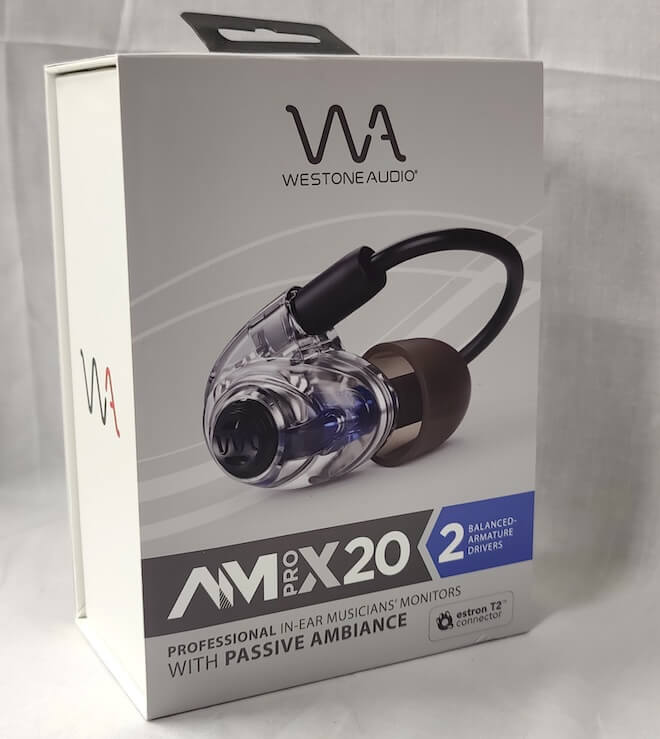
Westone Audio AM PRO X20 IEM Package Front Angle

What Westone Audio and Etymotic Bring To The Table

This strategic move opens a new chapter for Westone Audio and Etymotic, two brands with deep roots in in-ear audio, hearing protection, professional monitoring, and precision listening. Together, they represent decades of work in products used by touring musicians, audio professionals, hearing specialists, and serious listeners who care about what actually reaches their ears. Imagine that.

The new leadership team also brings direct familiarity with both brands, which matters. Tal Kocen previously worked with Westone Audio and Etymotic, while Gary Boyer will remain on board as EVP, providing some continuity as both companies move under the Fidelity Collective umbrella.

CEO Sam Roney also brings broader audio industry experience through his involvement with Dekoni Audio, Grell Audio, and Dark Matter Audio Labs. Combined, the leadership team appears to understand the history, product philosophies, and customer bases behind both Westone Audio and Etymotic. That does not guarantee success, but it is a better starting point than handing two specialist IEM brands to people who think “balanced armature” sounds like a yoga injury.

Westone Audio was founded in 1959 and has been a major influence in the development and manufacturing of custom in-ear monitors for musicians, with its background in hearing protection and acoustics helping shape products used on stage, in studios, and by serious listeners. 

Advertisement

Etymotic, founded in 1983, is known for its research-led approach to hearing and sound. They helped define the category for high-isolation, precision in-ear listening, with products developed from a foundation in auditory research, diagnostics, and hearing protection. Its ER4SR and XR series became a reference point for accurate in-ear sound, while its wider product range continues to serve musicians, professionals, and listeners who value clarity and faithful sound reproduction. Etymotic’s hearing protection products are also widely recognized for providing solutions for one of the biggest frustrations with traditional earplugs by maintaining clarity and balance while simply reducing volume.

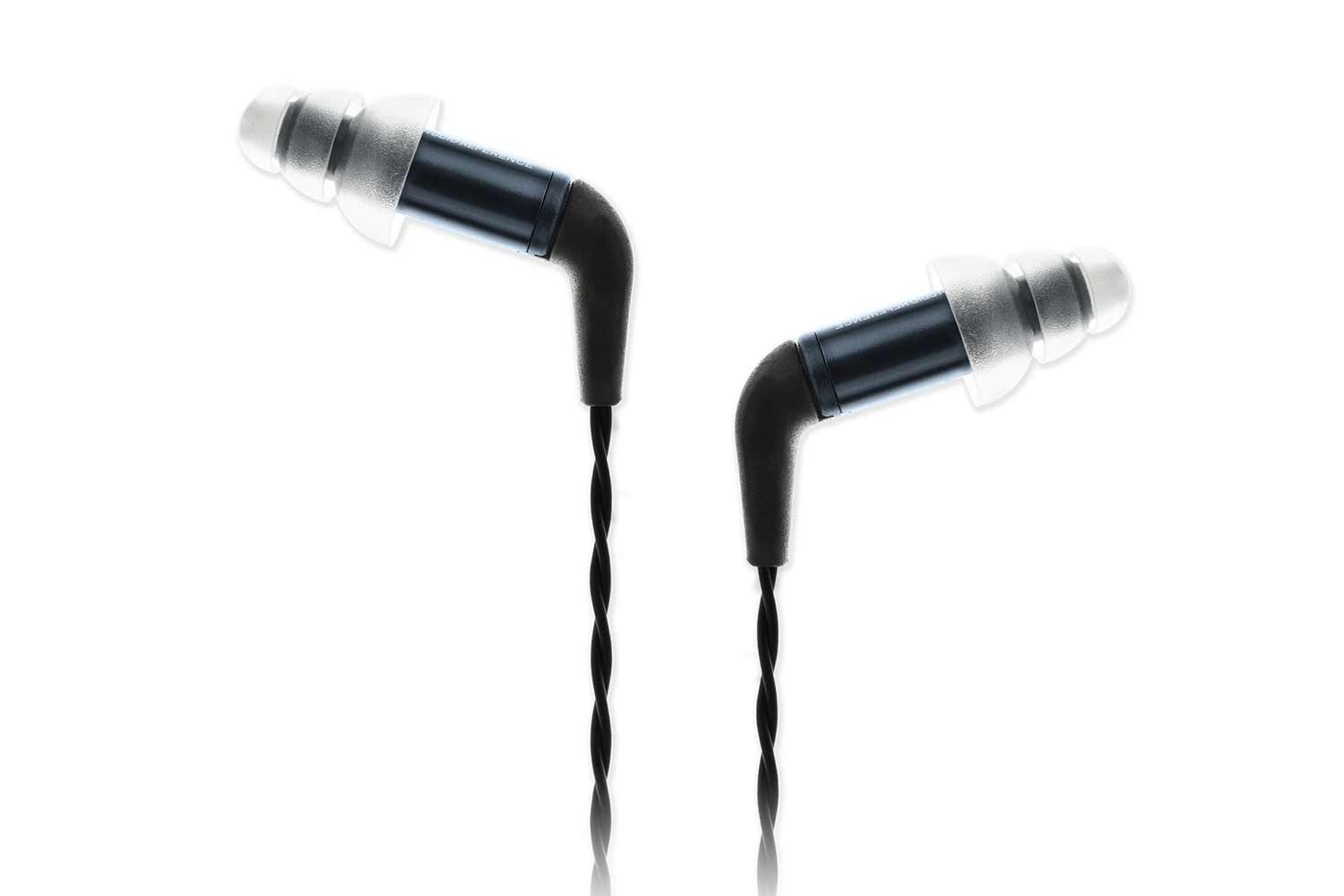
Etymotic Research ER4SR

The Fidelity Collective Umbrella

Under Fidelity Collective umbrella, Westone, and Etymotic will continue their research and product heritage. The company’s focus will be on maintaining the distinct identities and core values that made Westone Audio and Etymotic trusted names.

Advertisement. Scroll to continue reading.

At the same time, the new group is expected to bring fresh energy, expanded R&D, renewed product development, and long-term investment into both brands and their passionate user base.

Fidelity Collective says the goal is not to abandon or reinvent what made the brands successful, but to build on their foundation with new momentum, modern innovation, and long-term vision across both professional and consumer audio categories.

Advertisement

Westone Audio and Etymotic are brands with genuine history and credibility,” said Sam Roney, CEO of Fidelity Collective. “Tal and I share a vision of bringing startup-level energy to these epic legacy brands while fully respecting the heritage they’ve built over decades serving musicians, audio professionals, and hearing protection users.

Tal Kocen, COO of Fidelity Collective, added: “For me, this is incredibly personal because these are brands I already know closely. There’s already a strong foundation here, and our role is to build on that with fresh ideas, modern product development, and long-term commitment to the communities around both brands.”

Fidelity Collective also confirmed that they will be investing in staffing, engineering, product development, and operational infrastructure as both brands move into this next phase, including the re-establishment of sales operations in Dallas and engineering and lab facilities in Chicago.

Both brands will continue serving existing users, including professional musicians, stage performers, engineers, hearing-conscious listeners, and music enthusiasts, while expanding into new product categories and market opportunities.

Advertisement

Further product announcements from both Westone Audio and Etymotic are expected in the coming months of 2026 and beyond.

The Bottom Line 

Fidelity Collective’s acquisition of Westone Audio and Etymotic matters because it gives a newly formed company two established IEM brands at a time when wired earphones are clearly gaining momentum again.

Recent CanJam shows in New York, Singapore, and Dubai made that obvious, with brands like Noble, Shure, DUNU, Astell&Kern, Meze Audio, and Sennheiser fighting for the same serious listener. Westone brings professional IEM credibility, while Etymotic brings accuracy, isolation, and hearing-focused design.

What is missing are the details: new products, updated lineups, and how much engineering or distribution overlap we will actually see. But the intent is clear. Fidelity Collective is not entering the IEM market quietly. It now has two respected names, and the rest of the category should be paying attention.

Advertisement

Pricing & Availability

While we wait to see what new initiatives and products result from these new company relationships, here are some currently available products from Westone and Etymotic. 

Westone Audio Earphones

Advertisement. Scroll to continue reading.

Etymotic Earphones

Advertisement

Source link

Continue Reading

Tech

Drone speed record falls again as Blackbird hits 453 mph using custom carbon fiber propellers

Published

on


The Blackbird, built by the Drone Pro Hub duo, hit 730 km/h, or about 453.6 mph, during a downwind run on the second day of testing. Its return leg into heavy wind topped out at 640 km/h, giving the pair a two-way average of 685 km/h, or about 425.6 mph.
Read Entire Article
Source link

Continue Reading

Tech

What does EHS look like in today’s working landscape?

Published

on

Amgen’s Helena Mulvihill explores how organisations in 2026 are navigating issues of environment, health and safety in the workplace.

“I often hear EHS (environment, health and safety) described as a broad discipline, but it really comes down to protecting people while supporting safe and reliable operations,” explained Helena Mulvihill, an EHS manager at biotech Amgen. 

She told SiliconRepublic.com, “It brings together environmental compliance, occupational health and safety, and in practice connects every part of the site. That means working closely with operations and support teams, often across multiple departments in the same day.” 

Her work largely involves the implementation of EHS management systems such as risk assessments, incident management, training, auditing and performance metrics; a big part of the role is also communication, making sure expectations are clear and that teams feel supported in applying EHS principles.

Advertisement

She said, “There isn’t really a typical day, which is something I enjoy. While I can plan my week, priorities often shift depending on operational needs. That balance between planned and reactive work keeps things varied and means I need to stay adaptable.”

How important is it to involve everyone in EHS and does that work in practice?

Involving everyone is essential because EHS cannot operate in isolation. It must be embedded across all levels of the organisation, from leadership to the people carrying out day-to-day tasks. I’ve found that the colleagues closest to the work have the clearest understanding of how tasks are actually performed. They’re making real-time decisions, so their input is critical.

While EHS teams provide guidance and structure, it’s important that individuals take ownership of applying those principles in practice. That’s what makes procedures meaningful.

I build that through collaboration and engagement. I spend time in operational areas, listen to feedback and learn about challenges from different perspectives. When people feel involved and see the reasoning behind decisions, EHS becomes part of how work is done rather than something separate.

Advertisement
What does a strong EHS culture feel like when you’re part of it?

You really notice it in the everyday decisions people make. Safety and operational impact are considered as part of the task, rather than something that’s addressed afterwards. It also comes down to trust. People need to feel comfortable raising concerns, asking questions or even stopping work if something doesn’t seem right. That openness is what allows issues to be picked up and addressed early.

When that culture is in place, you see people take responsibility, look out for one another and think about the wider impact of what they’re doing. Over time, that consistency makes a real difference to both safety performance and how effectively the site operates.

How can employees support EHS in their day-to-day roles, even if it’s not their main focus?

Supporting EHS often comes down to simple, consistent behaviours. One approach used at Amgen is ‘Take Five’, which encourages people to pause before starting a task and assess the situation. That might mean reviewing the environment, thinking through the task, identifying potential risks and choosing the safest way to complete the work. It also involves putting the right controls in place and communicating clearly with anyone who could be affected.

I’ve seen how effective that can be in practice. It helps people stay aware of their surroundings and think about the impact of their actions. Even if EHS isn’t their main role, those small actions make a real difference in reducing risk and supporting a safer workplace.

Advertisement
How does the work you do in EHS contribute to wider organisational goals at Amgen?

My role focuses on implementing the EHS management system onsite, which supports wider organisational goals by helping the site operate safely, consistently and in line with regulatory expectations. A key part of the role is anticipating and controlling risks before they lead to incidents, while working closely with different teams to identify and implement improvements effectively. Strengthening the EHS management system, while helping to build an inclusive, high-performing safety culture, supports reliable manufacturing operations and continuous improvement. 

What kind of opportunities are there for people working in this field?

One of the most appealing things about EHS is the range of opportunities it offers. You have the chance to specialise in areas like safety, environmental compliance, industrial hygiene or process safety, depending on where your interests lie. It also gives you exposure to various parts of the business from manufacturing and laboratory environments to supply chain and supporting functions. That helps build a broader understanding of how everything connects, and over time, many people move between these areas to develop a well-rounded skill set. You also get the chance to collaborate with global colleagues and learn from other sites, which brings fresh perspectives and helps you continue developing over time.

What skills are best suited to professionals in this space?

I’ve come to realise that adaptability and patience are core skills because priorities can change quickly and you’re often responding to different situations. Being able to adjust and stay focused is key. Communication is just as important. A large part of the role involves listening, asking questions and understanding how work is conducted in practice so risks can be identified early. It also means explaining things clearly, so expectations are aligned.

Curiosity and initiative are also central. Taking the time to engage with people, understand processes and build relationships makes a real difference. Combined with a willingness to keep learning, these skills help you develop in a field that is constantly evolving.

Advertisement

Don’t miss out on the knowledge you need to succeed. Sign up for the Daily Brief, Silicon Republic’s digest of need-to-know sci-tech news.


Source link

Advertisement
Continue Reading

Tech

Microsoft’s quiet Claude Code retreat and the real cost of enterprise AI

Published

on

In December of last year, Microsoft told thousands of its engineers, product managers and designers that they could use Claude Code, Anthropic’s command-line coding agent, on the company dime.

By spring, the tool had spread well beyond engineering: into the kind of non-technical roles that, in earlier waves of enterprise software, would have waited years for a seat. Inside Microsoft, the rollout was framed as a learning exercise. Outside it, the surface signal was simpler.

The world’s largest software company, the one with its own foundation models and its own coding assistant, had just paid a competitor to put a rival product in front of its workforce.

Six months later, that experiment is being wound down. According to reporting in Windows Central and other outlets following The Verge’s original scoop, Microsoft is cancelling most direct Claude Code licences inside its Experiences and Devices group, the division that builds Windows, Microsoft 365, Outlook, Teams and Surface.

Advertisement

Affected engineers have been told to migrate to GitHub Copilot CLI by 30 June, the last day of Microsoft’s fiscal year. The official reason is toolchain unification. The unofficial reason is in the calendar.

The 💜 of EU tech

The latest rumblings from the EU tech scene, a story from our wise ol’ founder Boris, and some questionable AI art. It’s free, every week, in your inbox. Sign up now!

The Claude pullback is the most credible signal yet that the unit economics of enterprise AI coding do not, at current token prices, work. Not because the tools are bad. The opposite: they are good enough that engineers use them constantly, and the constant use is what breaks the maths.

Advertisement

The clearest evidence is at Uber, which is not Microsoft and does not have Microsoft’s financial cushion. Praveen Neppalli Naga, Uber’s chief technology officer, told The Information in April that the company had burned through its entire planned 2026 AI coding budget in four months.

By March, Naga’s own figures had Claude Code use jumping from 32 per cent to 84 per cent of his roughly 5,000-engineer organisation. Individual engineers were spending between $500 and $2,000 a month on tokens. Around 70 per cent of code committed at Uber now originates with AI, and on the order of one in ten live backend updates is shipped by an agent with no human in the loop.

“I’m back to the drawing board,” Naga said, “because the budget I thought I would need is blown away already.”

That sentence is the whole story in miniature. The forecast was wrong because the variable being forecast, token consumption, behaves nothing like the licences and seats that finance teams know how to model. A traditional enterprise software deal is denominated in users.

Advertisement

A token-priced deal is denominated in how much the model has to think. Agentic coding makes the model think a lot. Sessions run for hours, spawn parallel threads and generate volumes of context that bear no resemblance to the autocomplete interactions that shaped the original pricing structure.

We have been tracking this fracture for months. In November, GitHub paused new Copilot Pro and Pro+ sign-ups because the agentic workloads of paying customers were generating costs that exceeded their monthly plan price.

Cost structures built for lightweight assistance, the company conceded, no longer held.

This is not an Uber problem or a Microsoft problem. It is an industry condition. Bryan Catanzaro, vice-president of applied deep learning at Nvidia, told Axios in April that, for his team, the cost of compute is now far beyond the cost of the employees using it.

Advertisement

This is the chip company saying it. Fortune followed in May with reporting that token-based AI tooling, when used heavily, can cost more per task than the human engineer it was supposed to augment.

A 2024 MIT analysis circulated widely in finance circles since then suggests that, on current pricing, AI automation pencils out as cheaper than human labour for roughly a quarter of the jobs people thought it would replace.

Set that against the spend forecasts. Gartner expects worldwide AI spending to reach $2.5 trillion this year, up 69 per cent on 2025.

The same firm now places generative AI squarely in what it calls the trough of disillusionment, predicting in a May press release that 25 per cent of planned 2026 AI budget will slip into 2027 as proofs of concept die in the procurement pipeline.

Advertisement

A separate Gartner read from April found that only 28 per cent of AI infrastructure projects fully deliver against their business case. That is not the curve of a technology going through an awkward adolescence. That is the curve of a market repricing itself.

Microsoft’s retreat lands inside this repricing, and not by accident. There are two ways to read the move. The first is the one Microsoft has briefed: that Copilot CLI is the strategic destination, that engineers will continue to have access to Claude models inside Copilot, and that the company simply wants a product it can shape directly with GitHub. That story is true.

It is also a story that Microsoft could have told at any point in the past six months and chose not to. What changed was not the strategic logic. What changed was the bill.

The second reading is harder to discount. Microsoft is uniquely positioned to know what enterprise-scale Claude usage actually costs, because its own engineers were the heaviest users outside Anthropic’s customer base. Inside Experiences and Devices, Claude Code had become, by several accounts, the preferred tool.

Advertisement

If the maths had improved with scale, this would be the moment Microsoft locked in a multi-year deal at favourable terms. Instead, it is unwinding the experiment in a window that conveniently closes the books on a fiscal year.

When the company with the most leverage in the room walks away from a vendor whose product its own staff prefer, the signal is not about preference.

Whether this constitutes a bubble depends on definitions. Token-level pricing will fall, as it has fallen at roughly a factor of ten every eighteen months for the past three years. The more interesting question is whether per-task token consumption falls faster than per-token cost.

The evidence so far runs the other way. Each generation of agentic system, by design, consumes more tokens per unit of work, because it reasons longer, plans more elaborately and verifies itself against the world.

Advertisement

Anthropic’s own infrastructure team has spoken publicly about reasoning workloads generating order-of-magnitude more compute per query than chat. That is the bet baked into the next twelve months of model releases. It is also the bet that put Uber back at the drawing board.

There is a worked example in TNW’s own coverage. In April, Anthropic banned a popular open-source agentic framework called OpenClaw from running on consumer Claude subscriptions, after discovering that single instances could chew through the equivalent of $1,000 to $5,000 in API costs in a day of autonomous operation. The framework was running on a $200-a-month Max plan.

The economic transfer was so blatant that Anthropic had to write a new clause into its terms of service. Multiply that pattern across a Fortune 500 engineering organisation, and you have the Uber budget memo.

The counterargument is real and worth stating. The cost of a working AI coding agent compared to the cost of an additional senior engineer is, even at current prices, often favourable on a per-feature basis. The productivity uplift is documented; the substitution is happening. What is breaking is not the value proposition.

Advertisement

It is the procurement model. Companies that signed up for a productivity tool are discovering they signed up for a metered utility, and the meter runs when nobody is looking. The fix may be straightforward: capped budgets per engineer, tiered access for high-leverage roles, agent runtime quotas.

Many of the larger buyers are already there. But the implication is that the era of “give every employee a Claude Code seat” is closing, and what replaces it will look more like AWS billing than like Office licences.

That is what Microsoft’s quiet email to its Windows and Surface teams really announces. Not the end of AI coding. Not even the end of Anthropic at Microsoft, given that Claude models will continue to be reachable through Copilot CLI.

It announces the end of the experimental phase, the phase in which the world’s largest software companies were willing to absorb arbitrary token costs in exchange for learning. The learning is done.

Advertisement

What comes next is the harder part. Enterprises will keep buying AI coding tools, because the productivity is real and the competitive pressure is unforgiving. But they will buy them the way they buy electricity, with usage caps, with shadow meters, with a finance team in the room.

Somewhere in a Microsoft conference room earlier this spring, someone looked at a Claude Code invoice and did the arithmetic against a Copilot CLI roadmap, and made a decision.

The same arithmetic is now being done in every CFO’s office that bought into the December 2025 rollout. The retreat will not be loud. It will be a series of fiscal-year-end emails, sent on a deadline nobody noticed until the budget was already gone.

Advertisement

Source link

Continue Reading

Tech

Pope Leo Calls For AI To Serve Humanity And Not Concentrate Power

Published

on

Pope Leo XIV has taken a stronger stand against AI. On Monday, Leo released his first papal encyclical — an almost 400-year-old tradition in which the Catholic Church shares its perspective on an issue. In this case, over about 42,300 words (in the English version), the Pope warned of “the misconception of equating this type of ‘intelligence’ with that of human beings.”

“These systems merely imitate certain functions of human intelligence. In doing so, they often surpass human intelligence in speed and computational capacity, offering tangible benefits across many fields,” Pope Leo stated.

He continued: “So-called artificial intelligences do not undergo experiences, do not possess a body, do not feel joy or pain, do not mature through relationships and do not know from within what love, work, friendship or responsibility mean. Nor do they have a moral conscience, since they do not judge good and evil, grasp the ultimate meaning of situations, or bear responsibility for consequences. They may imitate language, behavior and analytical skills, or even simulate empathy and understanding, but they do not understand what they produce, for they lack the affective, relational and spiritual perspective through which human beings grow in wisdom.”

Notably, the Pontiff presented the remarks alongside Anthropic co-founder Christopher Olah.

Advertisement

The Pope stated that it’s necessary to “establish adequate regulatory tools capable of upholding justice and curbing the distorting effects of technological power.” He emphasized that wealth is already concentrated in the hands of very few people and that it’s up to governments to ensure it doesn’t become even more so. In that vein, he added that leaders must ensure that humans, not AI, make all decisions related to weapons in the future.

He also called for “an educational alliance for the digital age” that encourages teaching young people to think critically about AI, to guard against “apathy for seeking the truth.” Regulations should also protect young people against “violent or degrading” AI-generated content, along with grooming and sexual exploitation.

Leo warned that such technology — and any profits that come with it — shouldn’t be used to justify systematic job loss. As such, he encouraged retraining and employment protections for workers whose jobs are at risk due to AI.

Pope Leo’s remarks weren’t made against AI as a whole, stating that it shouldn’t be seen “as a force antagonistic to humanity.” If carefully managed, he said, it could “open up a horizon extending in all directions.” In February, the Vatican teamed up with language service provider Translated to offer AI-powered live translations to Holy Mass attendees.

Advertisement

Source link

Continue Reading

Tech

Just How Bad Was The Intel IAPX432?

Published

on

Processor design over the last few decades has moved toward RISC processors that aim to implement a few simple operations very efficiently. For a while, though, the trend was toward ever-more-complex CISC designs that let programmers implement complex behaviors using as few instructions as possible. Few processors took this approach further than the Intel iAPX432. This hyper-CISC processor was a commercial failure, largely due to its notoriously poor performance, but [MarkTheQuasiEngineer]’s benchmark suggests that this notoriety wasn’t totally deserved.

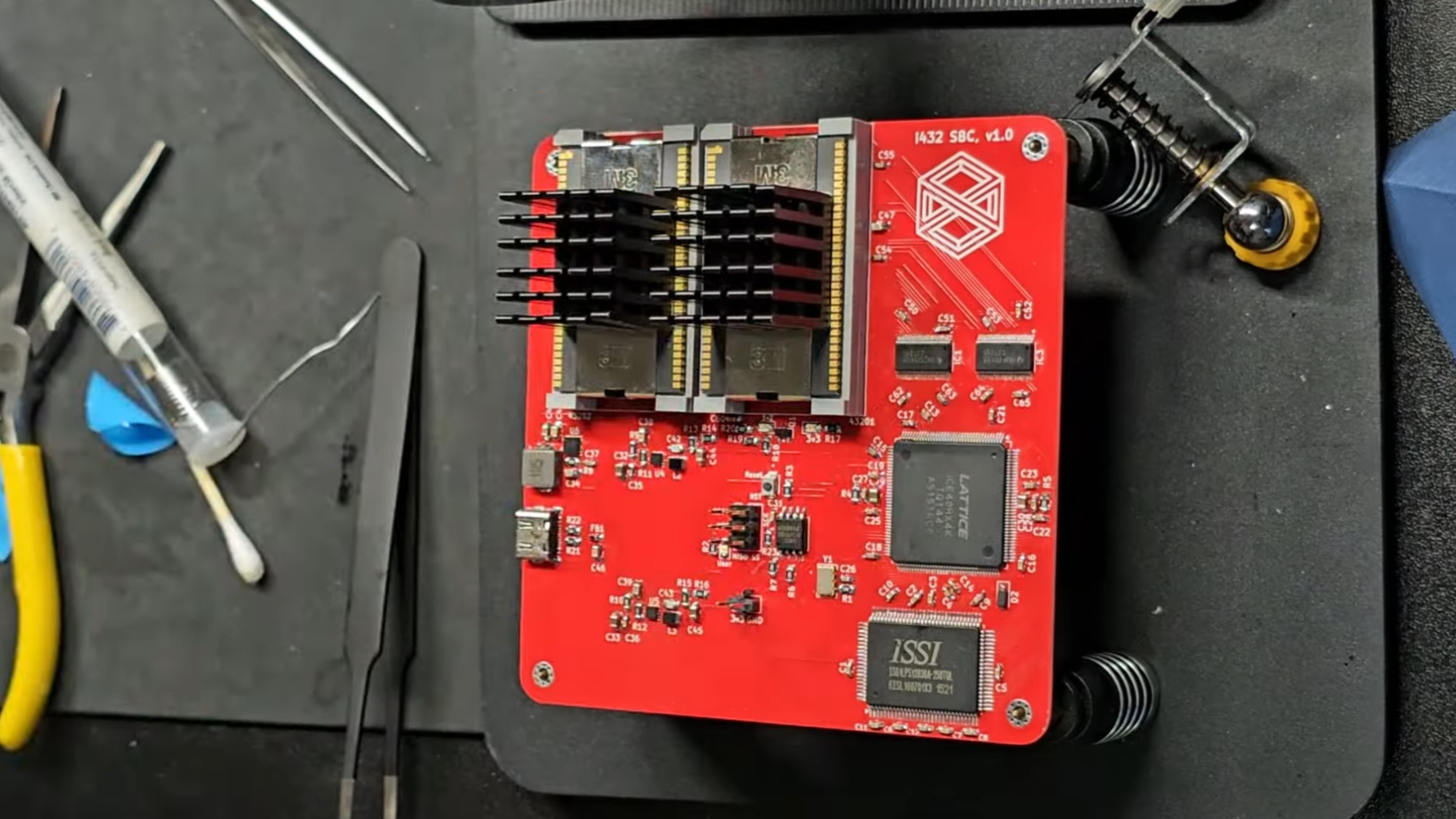
The first step before running a benchmark was to build a computer around the processor. The iAPX432 was implemented in three chips, two of which acted as the general data processor (GDP), and one of which handled input and output. [Mark] built an SBC (design and code here) that houses the two GDP chips and an FPGA for I/O. The 432 did have a well-deserved reputation for efficiently turning electricity into heat, and the original voltage regulator failed rather quickly.

The 432 was designed to use machine code which was almost a high-level language, with built-in object-oriented programming. It had over 200 operators, some of which implemented complex object-oriented operations, and a wide variety of data types, but it had no directly-accessible general-purpose registers. In addition to the lack of registers, it also had a very complex addressing system, allowing both direct and indirect addressing. For better performance, [Mark] used direct addressing.

For the benchmark, [Mark] implemented the Spigot algorithm to calculate the value of Pi. The results were somewhat surprising: calculating 2048 digits, it beat his previous retro-processor benchmarks; an Intel 8086 running the same algorithm took 2.5 times as long. Based on the results of this hand-written code, [Mark] speculates that the 432’s poor performance had more to do with poor compiler optimization than with the fundamental design.

Advertisement

We’ve covered some of the history of this troubled chip before. For a similarly ambitious but ill-fated Intel project, check out the history of Itanium.

Source link

Advertisement
Continue Reading

Tech

I tried Amazon’s Bee wearable and am both intrigued and slightly creeped out

Published

on

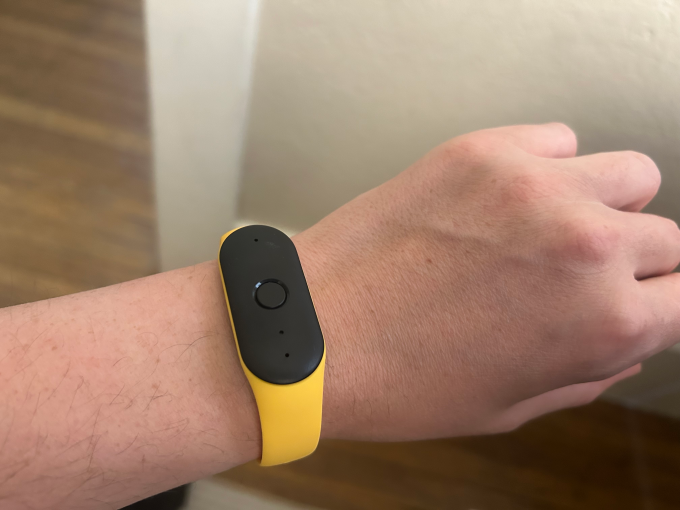
I recently had the opportunity to test out a wearable from Bee, the AI wrist gadget that Amazon acquired last year and has since updated with a number of new features.

Like other AI wearables, Bee is designed as a kind personal assistant: it records, transcribes, and summarizes the user’s conversations throughout the day, providing an ongoing note-taking capability that’s useful if you’re forgetful or just want to be more organized about your life. If you sync it with your calendar, it can also send you alerts and reminders about things you’re supposed to do throughout the day.

TechCrunch has written about Bee before, and the way it works is pretty simple: the user powers it up, puts it on, syncs it with the Bee mobile app, and enters some basic personal information. Bee has a built-in recorder that can be turned on and off by clicking the wearable’s button. When Bee is recording, a green light flashes. When it’s not, that green light goes off. After a conversation has been recorded, the app will create an automated summary that is easy to read, as well as an entire transcription of the conversation.

Your mileage may vary on how exciting (or not) this whole conceit is. The problem for me is that I am something of a privacy enthusiast. In a world where the average person is beset from all sides by constant digital surveillance, I appreciate any opportunity I can get to not be recorded. Therefore, the idea of walking around with an eavesdropping gizmo strapped to my wrist 24/7 was not particularly appealing.

Advertisement

Yet, even I have to admit that — in the right context — Bee could have a lot of potential to help organize your life.

Bee really comes through in the context of professional engagements. If your day is full of meetings and you have trouble keeping it all straight, Bee could be a moderately competent assistant.

During a business-related phone call this week, I activated Bee after getting confirmation that I could record our meeting. Afterward, the app faithfully regurgitated a summary of the conversation, helpfully breaking down each segment of our talk so that I could review it later without having to re-listen to our entire conversation. This was undeniably helpful, although it should be noted that this isn’t something that’s markedly different than those offered by other transcription services, like Otter or Granola and others, which also offer transcriptions and auto-generated summaries.

That said, you could envision a situation in which a professional who has to navigate between various meetings throughout the day would be well-served by this device. You could just keep Bee running throughout the day and, later, review the conversation summaries for anything you’re not clear about.

Advertisement
Image Credits:TechCrunch

Bee does a relatively good job at summarizing conversations, but the actual transcripts offered by the wearable can be a bit of a mess. Previous critics have noted that you usually have to manually enter the names of other speakers, as Bee doesn’t always know who is talking. During my conversation, I noticed that it had also omitted certain sections of our chat — nothing huge, but it wasn’t a complete account of everything that had been said.

I also took Bee to my semi-weekly movie night with my friends and left it running throughout the night. Given the fact that we watched Reservoir Dogs, I was mildly afraid that the wearable would mistake all of the vulgar carnage for real-life bloodshed and potentially trigger some sort of internal alarm. However, Bee knew — basically — what was happening. The wearable figured out that we were watching a movie and, in the summary of events afterward, the wearable labeled the conversation “Tarantino Film Scene Analysis.”

While Bee shows early promise as a professional tool, I would not want this thing recording me in my personal life. Weirdly enough, Bee has largely been marketed as a product for personal use. To be comfortable with that, you have to be comfortable with Bee having access to a majority of both your offline and digital life.

Indeed, to work well, Bee needs expansive mobile permissions — including access to your location, photos, phone contacts, calendar, and mobile notifications. You can also share your health data with it — should you, for whatever reason, want it to know about your sleep patterns or your resting heart rate.

The large accumulation of data Bee collects is stored in the cloud, which — again, for the digital privacy enthusiast — presents its own concerns. In a message to tech YouTuber Becca Farsace, Bee apparently unveiled a demo of the device running entirely locally. Were the company able to produce such a device, I would be thoroughly impressed — and might even consider buying one. That said, Amazon hasn’t offered any update on those plans.

Advertisement

As for Bee’s digital privacy protections, the company says that it offers encryption to protect user data — both at rest and in-transit. In its privacy policy, the company states that it has “implemented technical and organizational security measures designed to protect the security of any personal information” that the company processes. Bee also claims that it undergoes “rigorous third-party security audits” and employs continuous security monitoring. That all sounds quite good, although it’s worth noting that Amazon — like many large tech companies — has been subject to the occasional data security issue or two (not exactly surprising for a company that governs as much of the global cloud environment as it does, but still).

In short, Bee is a curious piece of hardware that, given some time and some tweaking, could have some promising professional applications further down the road. As a digital assistant for your personal life, however, it might prove to be a little too invasive for some users.

When you purchase through links in our articles, we may earn a small commission. This doesn’t affect our editorial independence.

Source link

Advertisement
Continue Reading

Tech

15 Useful Hand Tools Every Milwaukee Fan Will Want For Their Home

Published

on


We may receive a commission on purchases made from links.

Milwaukee’s distinctive red tools can be found at jobsites all over the country, and they’re a popular choice among discerning do-it-yourself enthusiasts too. Even if you’re not a keen DIYer, you might still want to keep some Milwaukee tools in your everyday tool kit. A good set of hand tools is arguably the foundation of any good collection, and Milwaukee’s current selection of hand tools covers both the essentials and niche products for a wide array of jobs.

Advertisement

Most homeowners are unlikely to need the brand’s most niche products, but regardless of whether you’re an avid DIY enthusiast or are simply looking for a great basic tool kit, Milwaukee’s best-rated essentials shouldn’t be overlooked. These 15 hand tools have all received consistently strong ratings from reviewers at Home Depot, and they should all be just as useful for homeowners as they are for professionals. Some of these hand tools are also made in the USA, and most are covered by Milwaukee’s generous limited lifetime warranty.

Advertisement

Milwaukee Compact Hack Saw with 10-Inch Blade

You can buy the toughest hack saw with the sharpest blade, but it still won’t be much use if it’s too unwieldy to reach the material you need to cut in a tight workspace. With Milwaukee’s compact hack saw, limited space shouldn’t be a problem, since its extendable blade reaches up to 10 inches while its frame is much more compact than a conventional hack saw. It’s sharp enough to cut through a wide variety of materials too, from metal tubing to wood and plastics.

A tool-free blade change is designed to minimize downtime, while the rubberized handle should help keep the saw comfortable in hand on longer jobs. Like most of the other products here, this compact hack saw is backed by a limited lifetime warranty and can also be returned for up to 90 days if you purchase it from Home Depot. The retailer currently offers the tool for $17.97.

Advertisement

Milwaukee 6 Foot Keychain Compact Tape Measure

If you’re relatively new to the world of Milwaukee tools, you might be surprised to discover just how many different types of measuring devices the brand sells. Out of all of them, the humble tape measure is the device that will appeal to the widest group of homeowners. Even the most DIY-averse family members will probably need to use one sooner or later, but because they’re so useful, they’re also easy to lose.

If you regularly find yourself searching your home for your tape measure after absent-mindedly putting it down and forgetting about it, Milwaukee has the answer. The brand’s 6-foot keychain compact tape measure is designed to be carried around either with a set of keys or attached to a belt loop, making it less easy to misplace than a regular tape measure. It’s available for $6.97 and features both metric and SAE measurements. Of course, carrying around your tape measure with your keys is only useful if you don’t also lose your keys. If you’re prone to losing them too, it might be worth investing in an AirTag or one of the many Android-compatible alternatives.

Advertisement

Milwaukee 17-Key Folding SAE/Metric Hex Key Sets

Tape measures are far from the only hand tools that can easily get lost. Hex keys are also equally easy to misplace, but Milwaukee’s 17-key folding hex key set shouldn’t suffer such problems. Each key is integrated and folds away back into the body of the tool, so there’s no need to worry about losing a loose key. Each can also rotate up to 270 degrees.

Milwaukee’s set includes two tools, one 8-key tool and one 9-key tool, with the body of each tool being made of metal rather than plastic. The keys themselves are also designed to be tough, and are manufactured with heat-treated steel with a black oxide finish.

Advertisement

While the 9-key tool includes SAE hex keys ranging in size from ¼ inch to 5/64 inch, the 8-key metric tool has keys from 8mm to 1.5mm. The set costs $31.97 at Home Depot and is covered by a limited lifetime warranty.

Advertisement

Milwaukee 15-Inch Pry Bar

Tools don’t get much simpler than a pry bar, and Milwaukee offers various sizes of the tool in its current range. A small 12-inch version is available for $10.97 and a large 21-inch variant costs $20.97, but at the middle of the range is the 15-inch pry bar. It’s available at Home Depot for $16.97, and like all the tools here, it has received consistently high review ratings from buyers at the retailer.

The tool features a beveled nail pulling slot next to a sharpened claw at one end, with a shepherd’s hook at the other. In the middle of the tool is a grip made with Milwaukee’s ShockShield technology, which is designed to help cut down the amount of vibration that’s transmitted to the user when the tool is hit with a hammer. Milwaukee makes each pry bar with forged steel then uses induction hardening to keep the claws sharper for longer.

Advertisement

Milwaukee 22 Oz Milled Face Framing Hammer

The Milwaukee 22-ounce milled face framing hammer is just one of many different hammers that the brand sells, but its strong review ratings help it stand out from the crowd. The tool retails for $32.97 and features a milled face, which is sometimes known as a waffle-head hammer. The waffle-like pattern on the face helps make it grippier than a smooth-faced equivalent, which comes in particularly handy for anyone working outdoors in damp conditions.

Even in drier conditions, the milled face is preferable for longer, repetitive carpentry jobs where it doesn’t matter if there’s a mark left on the wood. For finishing jobs, a hammer with a smooth face is a better bet. Regardless of the type of hammer you need and the weight you want it to be, it’s safe to assume that Milwaukee has what you’re looking for. Alongside the milled face hammer, Home Depot also carries a smooth face version of the same tool which retails for $29.97.

Advertisement

Milwaukee 7-Inch Rafter Square

Available in either 7-inch or 12-inch sizes, Milwaukee’s rafter square is a useful tool for many different DIY jobs. The 7-inch version retails for $20.97 at Home Depot, and it’s backed by the same limited lifetime warranty that covers many other Milwaukee hand tools. It’s made from aluminum and features a 1 inch cut-out to prop pipe so it’s simple to cut, as well as featuring scribe notches from 1 inch to 6 inches. The tool’s markings are all laser etched, and so they should remain clear even after the square has been extensively used.

The rafter square is one of a number of Milwaukee hand tools that are made in the USA. Only a few major tool brands still make tools domestically, with Snap-On, Craftsman, and Makita being among them. Milwaukee isn’t shy about showing this off, decorating the rafter square with prominent “USA” lettering as well as etching the brand’s famous logo into the top of the tool.

Advertisement

Milwaukee 8-Inch Long Needle Nose Pliers

Take a dive into Milwaukee’s list of patents and you’ll get a glimpse of the brand’s future plans. In 2025, we covered a number of cool Milwaukee patents that we hoped would become a reality, from a robot mower to a cordless snow blower, with the blower actually launching to customers later that year.

Advertisement

Milwaukee’s hand tools also feature plenty of patented or patent-pending technology, like the 8-inch long needle nose pliers. The tool features unique, patent-pending reaming ridges in the head to help remove burrs from pipes, setting them apart from similar pliers from rival brands. Also included is a built-in fish tape puller and a wire cutter.

The pliers retail for $22.97, making them an affordable addition to any homeowner’s tool kit. Home Depot also offers a slightly cheaper pair of Milwaukee needle nose pliers with a dipped grip instead of a molded comfort grip, but it’s the pricier pair that has achieved bestseller status thanks to its high number of consistently positive reviews.

Advertisement

Milwaukee Phillips/Slotted Flat Head Hex Drive Screwdriver Set

A new set of screwdrivers might not be as much of an exciting addition to your tool kit as a new power tool, but it’ll still be just as useful. Milwaukee offers various individual screwdrivers and combo sets, but the Phillips/slotted flat head hex driver screwdriver set is one of the top rated of the bunch.

It’s available for $24.97 and includes a trio of Phillips #2 screwdrivers and a trio of slotted flat head screwdrivers. Each one features a magnetic tip and a lanyard hole for easy transportation. The tool’s shank is designed to be compatible with wrenches, while the grip features a tri-lobe design to help users apply maximum force with minimal discomfort.

Milwaukee’s familiar limited lifetime warranty covers each tool in the set, with the brand promising to repair or replace any hand tool that it deems to be defective, regardless of when it was purchased. There are a few caveats: Milwaukee’s technicians determine whether or not they think a tool is defective rather than operating a no-questions-asked policy, and the warranty is invalidated if its technicians deem the tools to have been subject to misuse. Buyers looking to take advantage of the warranty will also need to provide proof of purchase when they ship the tool back to Milwaukee’s service center. These caveats aren’t unique to the screwdriver set, but instead are applicable across every Milwaukee hand tool with a lifetime warranty.

Advertisement

Milwaukee 12-Inch Digital Measuring Wheel with 100 Foot Closed Reel Long Tape Measure

A handheld tape measure might be enough for shorter distances, but when it comes to measuring longer runs, Milwaukee’s 12-inch digital measuring wheel is the superior choice. It retails for $130.94 and is bundled with a 100 foot close reel long tape measure to give you multiple measuring options. The 100-foot tape measure includes a system that Milwaukee calls Grime Guard, which stops dirt and debris from getting into the reel.

Advertisement

Pair that with the measuring wheel and the result is a 2-piece set that can generate accurate measurements of both outdoor and large indoor spaces in all weathers. The 100-foot tape measure is the best choice for the worst climate conditions, but the digital measuring wheel’s IP54-rated LCD screen means it’s suitable for showery weather or dusty yards as well. The screen can also display both imperial and metric measurements, and can save measurements so you can reference them later.

Advertisement

Milwaukee 7.75 Inch Combination Electricians 6-in-1 Wire Stripper/Cutter Pliers

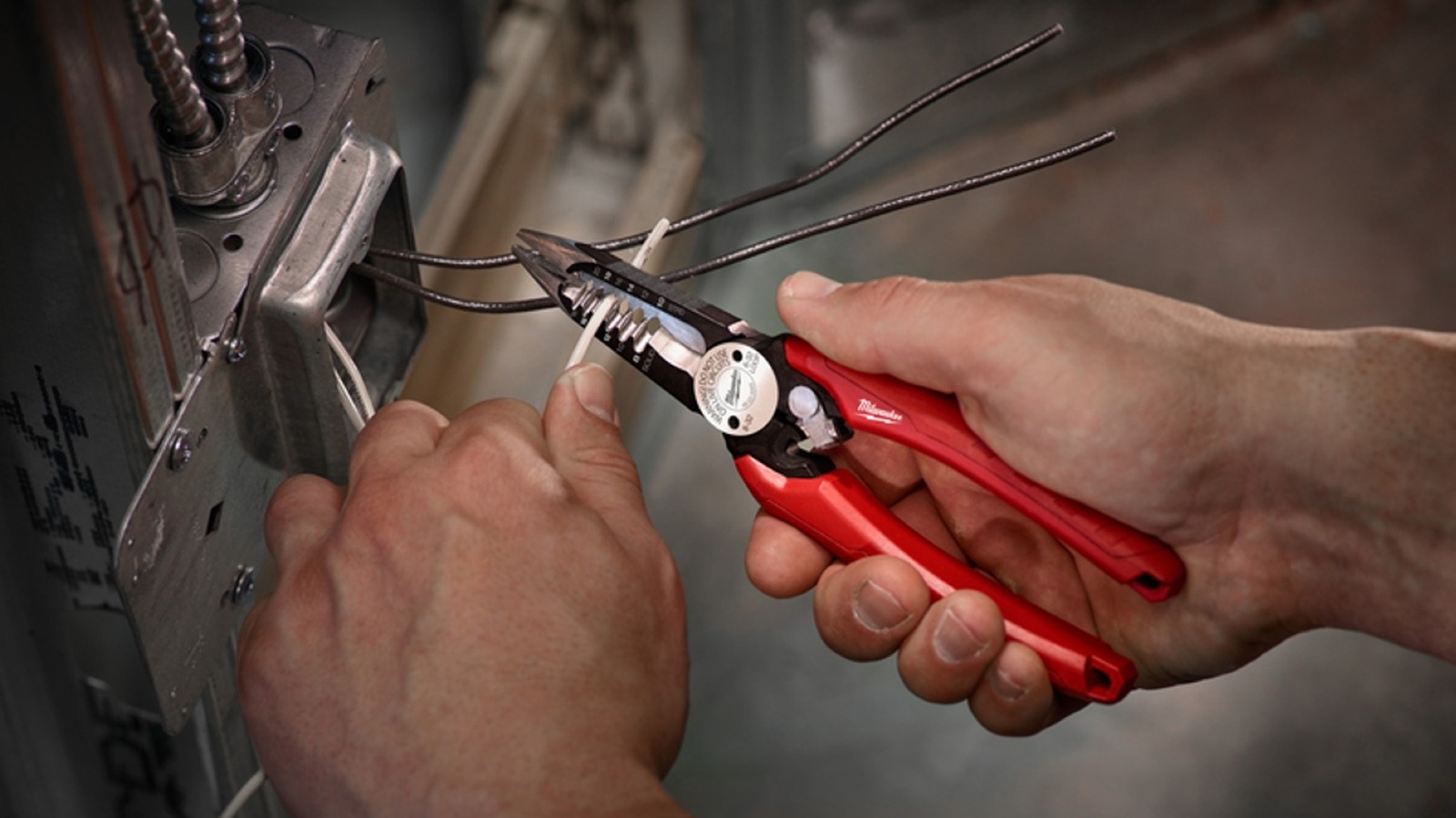
Tools that promise multiple functions in one can run the risk of being a jack of all trades but a master of none. However, the impressively high user ratings accrued by the Milwaukee 6-in-1 wire stripper and cutter pliers prove that it doesn’t promise more than it can deliver. It certainly promises a lot; Milwaukee says that the tool is a reamer, a wire stripper, a wire cutter, a bolt cutter, a loop maker, and a pair of pliers all in one.

It can strip 10-20 AWG stranded wire and 8-18 AWG solid wire, while its built-in bolt cutter can cut #6 and #8 bolts. The tool is made from forged alloy steel for long-term durability, and it’s designed to be corrosion resistant. That’s a whole lot of capability considering that the pliers can be bought for under $20 — specifically, they retail for $19.97 at Home Depot at the time of writing.

Advertisement

Milwaukee 9-Inch Nail Puller

Much like the Milwaukee pry bar, the brand’s 9-inch nail puller is another simple but useful tool. Home Depot sells the unit for $16.97, and like any tool with only one job, it needs to do that job extremely well if it’s going to please buyers. Judging by the very high star rating it achieves from Home Depot reviewers, it does indeed do its core job very well.

Milwaukee claims that part of the tool’s impressive performance comes down to its head design, which is shaped slightly differently to its competition. According to the brand, that unique design helps users pull nails out more quickly and efficiently than nail pullers from other brands. The tool can pull 6D, 8D, 10D, and 12D nails. The same wear-resistant grip that can be found on many other Milwaukee tools is present and correct here, and the brand says that it won’t peel even after long-term use.

Advertisement

Milwaukee 6-Inch and 10-Inch 2-Piece Adjustable Wrench Set

If you’re a professional that frequently needs to use wrenches of various sizes, buying a full wrench set is the most efficient way to ensure you have all the tools you need. If you’re a homeowner and don’t need to use wrenches so frequently, then an adjustable one is a great way to save space in your tool kit. They can adapt to a wide range of nut and bolt sizes, and they’re cheaper than buying a larger traditional set of wrenches.

Home Depot offers a Milwaukee 2-piece adjustable wrench set for $34.97, comprising one 6-inch and one 10-inch adjustable wrench. Both tools are chrome plated, which not only increases their rust resistance but also gives them a premium look that’s befitting of the Milwaukee brand. A unique screw design ensures that the wrench stays at the correct size once it’s been adjusted, while the parallel jaws reduce the chance of marking surfaces. Each wrench features laser-etched markings that won’t fade over time.

Advertisement

Milwaukee 5-Inch Mini Flush Cutting Pliers

You might want to use the Milwaukee 5-inch mini flush cutting pliers to slice through wires, but even if you’re not planning any electrical work, they’re still potentially very useful. They’re just as good at cutting through cable ties, with their small blades able to fit into spaces with tight fits. They’re also one of the cheapest Milwaukee hand tools, retailing for $10.97 after Home Depot permanently dropped its retail pricing permanently, having previously sold the tool for $12.97.

Advertisement

The pliers are built with the same quality that fans of the brand will expect, with molded grips and durable, rust-resistant blades. Just in case any examples of the tool don’t live up to the brand’s usual high standards, Milwaukee’s limited lifetime warranty is also included as standard for extra reassurance. As well as being cheap and durable, the pliers also won’t take up much room in your tool kit, as they’re only 2 inches in width and 5 inches in length.

Advertisement

Milwaukee Fastback Folding Utility Knife and Compact Folding Utility Knife 2-Piece Set

Another Milwaukee product that has undergone a permanent price drop is the Fastback 2-piece utility knife set, which now retails for $15.97. Previously, it retailed for $21.97, with the new price equating to a 27% saving. Yet even at the old price, the set was arguably a good buy; now it’s even better.

One of the two knives included with the set is a more traditional folding utility knife design, while the second knife has some less conventional features. This latter knife also includes a built-in wire stripper, a gut hook, and additional blade storage for up to 5 extra blades. Both tools feature the same tool-free blade change.

Buyers can use the knives with multiple different types of blades, making them useful for many different jobs around the house. Equipping one of the knives with a carton blade makes it particularly useful for opening and dismantling cardboard packaging. Alternatively, equipping it with a drywall blade makes it well suited for cutting both drywall and sheet metal. These additional specialty blades will need to be bought separately.

Advertisement

Milwaukee 13-in-1 Multi-Tip Cushion Grip Combination Screwdriver

Most Milwaukee tools are well received by buyers, but there are a few that owners say it’s best to avoid buying. One of those tools that’s best avoided is Milwaukee’s 27-in-1 multi-bit screwdriver, which has been subject to a large number of reviews claiming that the ball bearing inside the tool can fall out. Other similar Milwaukee tools, like its 13-in-1 combination screwdriver, aren’t known to suffer the same problem.

As a result, homeowners looking for a useful multi-bit Milwaukee screwdriver will want to stay well clear of the 27-in-1 tool and head straight for this 13-in-1 version instead. It features slotted, square, Phillips, ECX, and nut driver bits, and it retails for only $19.97. According to the brand, the bits were selected based on demand from professionals, but the large range of sizes and types makes it a good all-in-one tool for homeowners too.

Advertisement

How we picked these useful Milwaukee hand tools

Plenty of hand tools might look useful at first glance, but they also need to perform over the long run in actual working conditions you’re likely to experience every day. To make sure that each of our picks’ real-world performance lived up to their billing, we sourced feedback from reviewers at Home Depot. Each pick has an average rating of 4.5 stars or higher from at least 200 reviews at the time of writing. All prices listed refer to the retail price at Home Depot and do not account for discounts or limited-time promotions.

Advertisement


Source link

Advertisement
Continue Reading

Trending

Copyright © 2025