In 2019, a mid-sized electronics components manufacturer based in Shenzhen was producing entirely for the US market. In 2020, US tariffs made that model borderline unviable. So the company moved part of its production to Vietnam.
By 2023, rising Vietnamese labour costs and tightening rules-of-origin scrutiny prompted another rethink. This time, the answer was Thailand — specifically, a plot in the Thai-Chinese Rayong Industrial Park in the Eastern Economic Corridor, where over 100 Chinese manufacturers had already set up before them.
Thailand has long prided itself on being Southeast Asia’s industrial backbone, the “Detroit of the East,” as boosters like to call it. For decades, Japanese giants like Toyota, Honda, and Isuzu built the kingdom’s auto industry into the tenth-largest vehicle producer on the planet.
Advertisement
Now, a seismic shift is underway. Chinese capital is pouring into Thai industry with a velocity and breadth that is reshaping supply chains, upending established hierarchies, and raising questions that Bangkok’s policymakers have yet to fully confront.
Since the start of 2025, China has accounted for close to 40% of Thailand’s total approved foreign direct investment applications, with the majority channelled into metals, electronics, and digital sectors. In manufacturing alone, China now dominates, contributing an additional $917 million annually compared to pre-pandemic averages and accounting for 44% of total manufacturing FDI in 2024, a remarkable rise for a country where Chinese capital was barely a rounding error a decade ago. Meanwhile, Japan, Thailand’s historic industrial patron, has retreated, cutting its manufacturing investment by $1.5 billion annually. This is not an accident. It is the product of two interlocking forces, geopolitical pressure and industrial strategy, and understanding both is essential to grasping what Thailand is becoming.
The geopolitical catalyst
The US–China trade war pushed Chinese manufacturers to relocate production to ASEAN starting in 2018 .
ASEAN’s open trade rules and Thailand’s Eastern Economic Corridor (EEC) made Thailand a prime destination, with industrial land absorption tripling by 2024 .
US tariffs on China have surged 145% since early 2025 , making Thailand’s tariff-free access under ACFTA strategically essential.
The story begins in 2018. When the first Trump administration fired the opening salvo of the US-China trade war, Chinese manufacturers faced an urgent calculation: absorb tariffs on exports, or find new production geographies. ASEAN, with its open trade frameworks, lower labour costs, and geographic proximity, was the obvious answer. Chinese manufacturing FDI in the region nearly doubled year-on-year in 2018 alone, and levels remained elevated in the years that followed, roughly three times above the 2014 to 2017 average.
Thailand was well-positioned to benefit. Its Eastern Economic Corridor (EEC), a government-backed industrial zone spanning Chonburi, Rayong, and Chachoengsao provinces, offered tax incentives, upgraded infrastructure, and a seasoned industrial workforce. Industrial estate absorption soared to over 1,170 hectares in 2024, nearly triple the 2019 figure, as Chinese firms scrambled for factory floor space.
Post-pandemic, the logic of China+1 supply chain diversification grew more strategic, not less. US tariffs on China escalated dramatically since the beginning of 2025, reaching an additional 145% from early-January levels by mid-April. For Chinese exporters, manufacturing in Thailand, which benefits from zero tariffs under the ASEAN-China Free Trade Agreement, is not merely attractive. It is, increasingly, essential.
Advertisement
The EV Sector: The Most Visible Transformation
Chinese EV makers have invested over $3 billion in Thailand .
BYD opened a $900 million factory in Rayong in July 2024, producing up to 150,000 vehicles/year .
In 2024, 85% of EVs sold in Thailand were Chinese-made .
BYD alone holds 40% of the Thai EV market .
Ultra-low-cost EVs (≈ THB 250,000) are reshaping consumer behavior, undercutting gasoline cars priced around THB 815,000
Nothing illustrates the transformation more vividly than the electric vehicle sector. China’s EV giants, locked out of the United States and facing escalating barriers in Europe, have made Thailand their regional production beachhead.
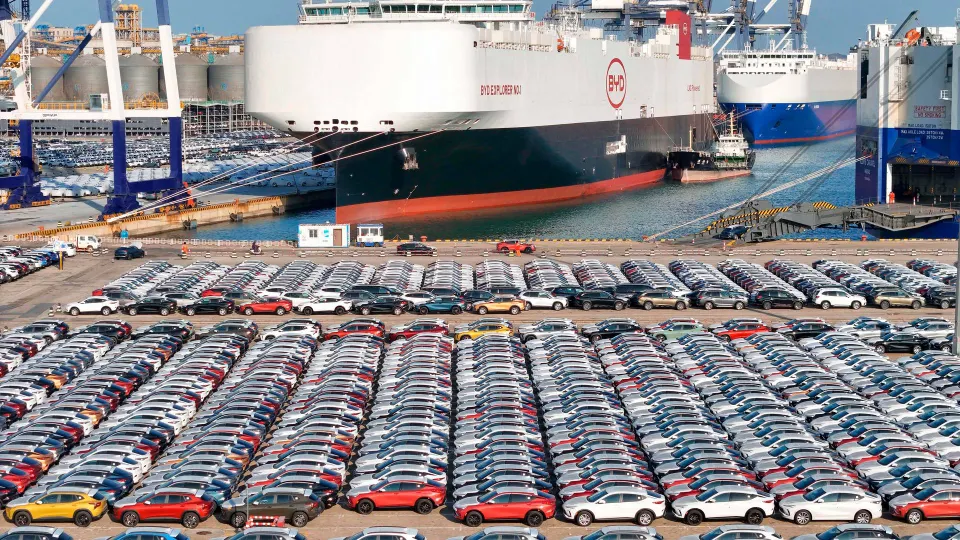
On 4 July 2024, BYD opened a $900 million factory in Rayong’s Eastern Economic Corridor, its first outside China, designed to produce up to 150,000 vehicles annually for the Thai and ASEAN markets. It was joined by Great Wall Motor, SAIC Motor, GAC Aion, Changan Automobile, and Chery Automobile, all establishing or expanding production facilities across the region. In total, Chinese EV makers have poured over $3 billion into Thailand in recent years.
Meanwhile, CATL, the world’s dominant EV battery maker, announced an initial investment of over $100 million to set up an assembly plant in partnership with a Thai state-owned company, following high-level diplomatic outreach by Bangkok officials who personally travelled to Fujian and Guangdong to court the firm.
The market impact has been equally dramatic. In 2024, 85% of electric car sales in Thailand were Chinese-made. BYD alone captured a 40% share of the Thai EV market. The lowest-priced Chinese EV models entered at roughly THB 250,000, far below the average gasoline car price of THB 815,000, fundamentally altering consumer calculus in a market that, just three years ago, was overwhelmingly dominated by Japanese internal-combustion vehicles. With Chinese EV producers facing domestic oversupply and market saturation at home, Thailand and Southeast Asia have become the pressure valve and the proving ground for a global expansion strategy.
The supply chain within the supply chain
The EV surge is just the most visible dimension of a broader industrial reconfiguration. Chinese firms are not merely assembling finished goods in Thailand; they are constructing integrated supply chains that span multiple layers of production.
Advertisement
Thailand is now seeing significant inward FDI in the manufacturing of printed circuit boards and copper-clad laminates, driven by its booming auto and consumer electronics industries. SVOLT Energy Technology, in partnership with Thai company Banpu Next, began producing EV battery packs domestically in March 2024. Changan announced procurement partnerships with Thai parts manufacturers AAPICO Hitech and Thai Summit Group as part of a localisation effort worth THB 20 million. Computer and electronics manufacturing has seen 68% growth compared to pre-pandemic averages. Electrical equipment manufacturing grew 70%, attracting $859 million annually. From 2019 to 2024, Greater China’s share of Thailand’s total FDI portfolio grew by ten percentage points, reaching 26%.
From a bird’s-eye view, this looks like textbook industrial development: capital flowing in, technology transferring, local supply chains deepening, and employment rising. Foreign investor hiring by licensed companies reached 2,394 Thai workers in the first eight months of 2025 alone, a 96% increase from the same period in 2024.
⚠️ The Shadow Side: Disruption, Dependency, Distortion
Thailand has been losing 100+ factories per month since 2021 .
Cheap Chinese imports create oversupply and price wars, squeezing local firms .
2. “Zero-dollar” exports
A significant portion of Thai export growth is actually Chinese goods re-routed through Thailand, adding little domestic value
3. Auto sector decline
Vehicle production fell 20% in 2024 .
Domestic sales hit a 15-year low, down 26% .
Subaru and Suzuki exited Thai production in 2024 .
At least a dozen Thai auto parts firms shut down after BYD’s Rayong plant opened .
But the view from ground level is more complicated, and more troubling.
Thailand is losing more than 100 factories a month since 2021. Analysts point to a structural crisis in which Chinese finished goods flooding local markets are creating oversupply and price wars that squeeze local firms to the breaking point.
Advertisement
Traditional manufacturing supply chains are being disrupted, forcing many small and medium enterprises to exit. A significant share of what passes for Thai export growth turns out to be Chinese goods re-routed through Thailand, so-called “zero dollar” exports that inflate statistics while adding little real domestic value. Several Thai ministers have acknowledged this distortion publicly.
The auto sector tells a painful story of transition costs. Overall vehicle production dropped by 20% in the first eleven months of 2024 compared to the previous year. Domestic auto sales plunged 26% in 2024, the lowest in fifteen years. Japanese automaker Subaru ceased production in Thailand in 2024; Suzuki followed. Since BYD’s Rayong factory opened in July 2024, at least a dozen Thai auto parts firms have shut down, firms that built their business supplying the Japanese brands that Chinese EVs are now displacing.
The human geography of Chinese investment is also raising eyebrows. In Chonburi province, strips of Chinese restaurants and massage shops have appeared near factory zones, serving a Chinese expatriate workforce that locals say spends little in the broader Thai economy. The social compact between investment and community benefit, long taken for granted with Japanese FDI, which is deeply integrated with Thai supplier networks, is not reproducing itself automatically with Chinese capital.
There is also a strategic tension at the heart of Bangkok’s EV gamble. ASEAN governments, Thailand’s included, seek to leverage Chinese FDI to build genuine domestic industrial capabilities and move up the value chain over time. But reports emerged in 2024 that Beijing was advising its automakers to ensure key technology and production stayed in China, while exporting knock-down kits to foreign plants for assembly overseas. At the July 2024 opening of its Rayong plant, BYD promised to bring technology from China to Thailand. Whether that promise reflects reality or aspiration remains to be seen.
🌍 Geopolitical Risk: The Tariff Trap
Much Chinese FDI in Thailand is designed to circumvent US/EU tariffs:
If the US imposes 30%+ tariffs on ASEAN auto exports, Thailand would be among the hardest hit .
The US is scrutinizing Chinese value-added in ASEAN exports .
Solar panels made in ASEAN by Chinese firms already face 21–271% US tariffs .
One further complication looms. Much of the rationale for Chinese investment in Thailand has been the ability to export to third markets, notably the United States and Europe, without the full weight of tariffs applied to China-origin goods. But US trade policy is catching up with the strategy. Washington has signalled increasing scrutiny of the Chinese value-added embedded in ASEAN exports. The US has already imposed preliminary tariffs of 21% to 271% on solar panels manufactured in ASEAN countries by Chinese firms. In the auto sector, SAIC is openly discussing plans to use its Thailand plant to circumvent EU EV duties. US policymakers are watching closely.
If tariffs of more than 30% are imposed on ASEAN exports to the United States, as has been threatened, it would deal a major blow to the region’s diversification boom and to Chinese FDI across ASEAN. Thailand would be among the hardest hit, given how much of its new Chinese investment is explicitly export-oriented.
Thailand’s EV sector has already experienced a preview of this fragility. EV makers missed their 2024 local production requirements because of weak sales, forcing the government to extend deadlines for firms facing penalties of up to THB 400,000 per car. The government forecasts only 1.8% GDP growth in 2025, with high household debt dampening domestic consumption. The underlying economic foundation is shakier than the headline investment numbers suggest.
Advertisement
Steps Bangkok Needs to Take
None of this means that Thailand is wrong to welcome Chinese investment. The capital is real, the factories are being built, and the technology, however carefully Beijing tries to ring-fence it, is arriving. China now accounts for nearly half of ASEAN’s manufacturing FDI growth, and for a developing economy seeking to industrialise rapidly, that is not a relationship to squander.
But the Thai government must be clear-eyed about what it is managing. Chinese FDI of this scale and character requires active industrial policy, not passive attraction. Bangkok must enforce meaningful localisation requirements, including genuine technology transfer, not merely assembly of imported kits. It must protect Thai SMEs from predatory pricing and supply chain displacement through targeted support, retraining programmes, and procurement preferences. It must diversify its FDI sources so that reliance on any single country, China, Japan, or anyone else, does not harden into structural dependency.
Most critically, Thailand must develop a credible answer to the geopolitical exposure embedded in its new industrial structure. Supply chains that exist to circumvent US-China trade tensions are, by definition, vulnerable to the resolution, or escalation, of those tensions. The Eastern Economic Corridor cannot afford to become a pawn in a trade war it has no power to influence.
The investment is transformative. The risks are real. And the decisions Bangkok makes in the next few years will determine whether Thailand emerges from this moment as an industrial power in its own right, or as a sophisticated assembly platform for someone else’s ambitions.
Tony Patrizi-led GR Engineering Services has secured multiple EPC contracts, with one of these enacted courtesy of Brightstar Resources’ Goldfields Hub reaching FID.
All the businesses included are headquartered in the West Country
The team at Goughs Solicitors which is headquartered in Wiltshire(Image: Goughs)
A South West brewery group, law firm and free range egg producer have been named among the best places to work in the UK. The annual rankings are compiled by the Sunday Times and its research partner – employee experience platform WorkL – and recognise the country’s top employers.
There were 22 South West companies included for 2026, with businesses across a range of industries such as hospitality, technology, legal, financial services and education.
The list – now in its fourth year – highlights the best small, medium, big and very big organisations for workplace culture – from those with hybrid working policies and career development opportunities to unique initiatives that support staff.
Inclusion is determined by an independent survey that covers six aspects of employee engagement, such as wellbeing, empowerment and job satisfaction, and is voted for by a company’s staff.
Advertisement
West Country pub operator and brewer Butcombe was recognised for the second year running. The Wrington-based group – formerly known as Liberation– said its inclusion reflected “the environment we have worked hard to create”.
Jonathan Lawson, chief executive of Butcombe Group, said: “At the heart of our success is the dedication and collaboration shown by our people every day, whether they are welcoming guests, creating memorable moments, or supporting one another behind the scenes.
“In what continues to be a challenging environment for the hospitality sector, their commitment to delivering exceptional experiences for our customers continues to make a real difference.”
Wiltshire-based law firm Goughs Solicitors, which employs some 130 staff across seven offices, was included for the third year in a row.
Advertisement
“We are incredibly proud to receive this recognition from The Sunday Times,” said Matthew Drew, managing partner at Goughs Solicitors. “To be acknowledged consistently in this way is a real reflection of the firm’s culture and the values that guide us.
“As our people are at the centre of everything we do, we strive to creating a workplace where colleagues feel valued, supported, and empowered to achieve their full potential, both professionally and personally.”
Elsewhere, Cheltenham-based business transformation firm Commercial also made the list. The company employs nearly 300 people and generates an annual turnover of around £98m.
Recent employee-focused developments include the refurbishment of its headquarters, with workspaces tailored to support neurodiverse staff. It also has a multi-faith room and dedicated spaces for employees with children or dogs.
Simone Hindmarch, co-founder and managing director of Commercial, said the recognition was “especially meaningful” because it reflected the culture the business had worked to build over more than three decades.
“This means a huge amount to us because it’s based on what our people think and feel about working at Commercial. Right from the start, we wanted to create a company where people genuinely wanted to come to work, felt connected to the business and each other, and knew their voice mattered,” she said. “To have that recognised in this way is incredibly special.”
In other parts of the South West, Cornwall-based egg producer St Ewe Free Range Eggs also made the list, along with Swindon marketing agency Mole Digital and Exeter construction group Coreus.
Zoe Thomas, editor of The Sunday Times Best Places to Work, added: “In an evolving world of work Britain’s leading employers are helping staff forge careers that count today – and in the future. In turn, the Best Places to Work have the resilience to weather the current economic storms baked in, thanks to engaged workers who go above and beyond with a smile.
Advertisement
“Our winning employers span sizes and sectors – from tiny charities and specialist law firms, to multinational fast-food chains and utility giants, and everywhere in between. The thread joining them is the belief that a happy workforce is a stepping stone to better performance, faster growth, and bigger profits.”
The South West companies on the Sunday Times best places to work list 2026
In alphabetical order…
Awdry Law, Legal Services, Devizes, Wiltshire
Butcombe Group, Hospitality, Bristol
Commercial, Business and Management Services, Cheltenham, Gloucestershire
Compass CHC, Legal Services, Barnstaple, Devon
Coreus Group, Construction and Building Materials, Exeter
Family Adventures Group, Education and Research, Weston-super-Mare, Somerset
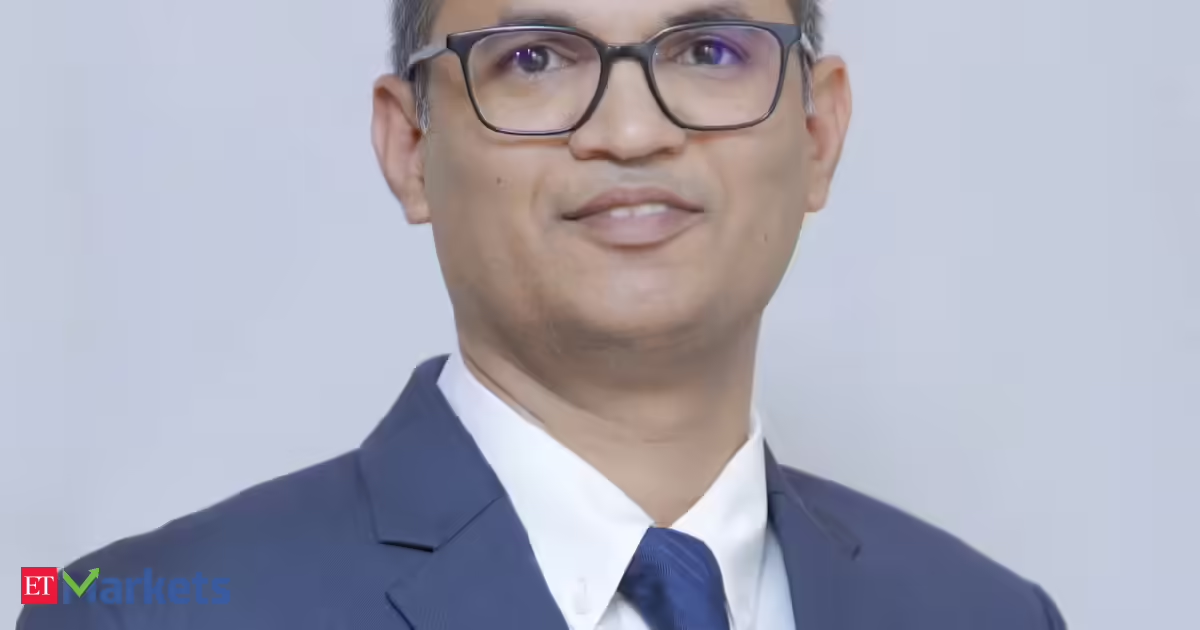
India’s manufacturing sector is shifting from basic assembly to deep tech localization, driven by massive domestic demand and targeted policy incentives. In this exclusive interview, Rakesh Sethia, Fund Manager at HDFC AMC, breaks down the multi-year supercycle by explaining where the real structural winners lie across EMS, aerospace, and auto ancillaries, and how to navigate increasingly expensive valuations.
Edited excerpts from a chat with Rakesh Sethia:
How compelling is the India manufacturing story over the next 5–10 years, and what are the biggest structural triggers that can sustain this cycle? We remain positive on India manufacturing over the next 5–10 years. The biggest structural advantage is India’s large domestic market. Outside China, India is now one of the few large demand pools across categories such as autos, mobiles, air conditioners, solar modules, motors, cement and steel. This scale allows companies to build volumes, localise vendors and gradually become cost competitive.The second driver is policy support through Production Linked Incentive (PLI), capex incentives, infrastructure spending and supply-chain realignment. The story is no longer only about low labour cost. It is now about domestic scale, improving technology depth, better infrastructure, targeted policy support and India’s gradual integration into global supply chains.
Live Events
Which manufacturing sub-sectors currently offer the best risk-reward — capital goods, industrials, defence, EMS, auto ancillaries, railways, or chemicals? Most of these manufacturing sub-sectors have structural tailwinds, but the risk-reward differs by valuation and execution visibility. While we are selectively positive on capital goods and industrials because the cycle is supported by renewables, transmission, electrification, automation and data centres however valuations in general has become very expensive In Electronics Manufacturing Services (EMS), the opportunity is large, but we prefer companies that can move beyond assembly into components, design, testing and exports. In auto ancillaries, we like powertrain-agnostic businesses with higher content per vehicle, premiumisation and export relevance.
Defence and railways are structurally attractive, but valuations and execution cycles need to be watched carefully. Chemicals are more mixed. Commodity chemicals remain cyclical, while specialty chemicals and Contract Research, Development and Manufacturing Organisation still have long-term opportunities from supply-chain diversification.
Advertisement
At the portfolio level, we are not buying only because a sector is attractive. We are focused on bottom-up selection: quality of business, return ratios, execution track record, margins, cash flow, balance sheet strength and valuation comfort.
EMS has emerged as a major market theme over the last two years. Do you believe the opportunity is still underpenetrated, or are valuations now running ahead of fundamentals? We believe that the EMS opportunity is still underpenetrated, but stock selection is now very important.
The first phase of growth was largely around assembly. The next phase of value creation should come from backward integration into components. Some consumer EMS areas such as mobiles and AC assembly are now relatively more mature. But the component ecosystem is still at a very early stage. For example, PCB manufacturing in India is less than 1% of the US$100bn global market, while import dependence remains above 90%.
This is where the next growth leg can come from. Under the Electronics Manufacturing Services (EMS) scheme, ~₹55,000 crore of investment has already been committed across 46 applications. This should support deeper localisation and higher domestic value addition over time. The opportunity is large, but valuations already reflect a lot of optimism in some names.
Advertisement
Are Indian EMS players now moving up the value chain beyond assembly into design, exports, and higher-margin manufacturing? Yes, Indian EMS players are moving up the value chain, but this remains a gradual process.
India has moved beyond basic assembly in several areas. Companies are now doing PCB assembly, testing, box-build, tooling, plastics, chargers, battery packs, supply-chain management and early Original Design Manufacturer work. But India is still far from China or Taiwan, where component ecosystems, supplier clusters and design capabilities were built over decades.
The positive change is that policy support is becoming more targeted. ECMS is focused on components and sub-assemblies, while the India Semiconductor Mission is supporting fabs, display fabs, compound semiconductors, ATMP/OSAT and chip design.
The direction is positive, but value creation will be selective. Pure assemblers can grow revenues, but sustainable margins will come from companies that build localisation, design capability, testing depth, vertical integration and export relationships.
Advertisement
Auto ancillaries remain a core manufacturing theme. How are you positioning the portfolio amid EV transition, premiumisation, and export opportunities? Auto ancillaries remain a core manufacturing theme for us, but we are selective. Our positioning is towards companies benefiting from premiumisation, higher content per vehicle and exports.
We are not playing EV as a binary theme; we prefer powertrain-agnostic businesses. We also like segments where India has a durable advantage, such as forging, casting, machining and precision engineering. So, the focus is on durable growth, export relevance, execution quality and valuation comfort — not just the EV narrative.
Aerospace stocks have seen significant traction in the last 1–2 months. How strong is the tailwind for the sector and are valuations still attractive? We like aerospace from a top-down perspective. India is one of the fastest-growing aviation markets globally, and local manufacturing of components is still at an early stage. Over time, this can become a meaningful opportunity as global Original Equipment Manufacturers (OEMs) diversify supply chains and Indian companies build precision manufacturing capabilities.
However, listed opportunities are still limited. A large part of the deeper aerospace manufacturing ecosystem is currently in private entities, including certain conglomerates that have stronger integration with OEM supply chains. In the listed space, there are only a few names. Some are too small, while valuations in others have already become expensive. So, the sector tailwind is strong, but public-market risk-reward is not uniformly attractive.
A serious lack of Indigenous businesses operating in the mining industry presents a compelling case for entrepreneurship to plug the gap in the Kimberley.
Premier Roger Cook has told a conference of global defence industry and military leaders that Western Australia is planning to build a manufacturing facility that could produce guided missiles and be located in Collie.
























































You must be logged in to post a comment Login