

Tech
Apple vs US antitrust case sees more discovery roadblocks


The DOJ spent years threatening to bring antitrust charges against Apple, and now that it finally has, the US government seems incapable of participating in its own case.
The United States Department of Justice brought antitrust claims against Apple in June 2024. After a year of appeals, the case was pushed into going forward.
In the months since, things have been at a standstill as no one seems ready to budge on discovery requests. The DOJ complained of Apple refusing document requests in September, then Apple complained similarly about Samsung in April, and now a joint filing viewed by AppleInsider shows more pointing fingers.
In this instance, it’s Apple accusing the United States government and the 14 agencies being subpoenaed of halting the case.
From the filing:
The United States, having brought this action, cannot avoid its discovery obligations by putting Apple through an endless procedural runaround. The parties have discussed these issues repeatedly over the past year, but those efforts have not resulted in a resolution. Apple is entitled to obtain relevant, narrowly targeted materials from a small subset of the United States’ own agencies, and Apple therefore respectfully requests that the Court order the United States to produce the materials requested in Apple’s final compromise proposal, attached as Appendix A.
The DOJ’s arguments can be whittled down to “it’s too hard to provide these documents that have little relevance anyway.” It’s not a very good argument when Apple’s requests appear relevant.
If the United States is suing Apple on antitrust grounds, then how the agencies view Apple within the US government has some relevance. They choose iPhones for government use for a reason, and Apple believes, rightly, that those reasons would contradict the grounds of the antitrust case.
Round and round we go
I’m not a lawyer, but I would wager that the US government’s refusal here is an obvious attempt to avoid looking foolish. The case is very thin as it is, and federal agencies rely on Apple’s technology because of its closed and secure nature.
As a reminder, here’s Apple’s rebuttal against the five claims made by the DOJ:
- DOJ says Apple stifles the success of “super apps,” despite the fact that Apple’s rules allow and support such apps, and indeed a multitude of “super apps” exist on the App Store today
- DOJ says Apple blocks cloud streaming games, even though Apple allows streaming-games both over the web and in the App Store where they can stream games directly to users
- DOJ says Apple degrades third-party messaging apps, even though they are widely available and enormously popular on iPhone already
- DOJ says Apple limits the functionality of third-party smartwatches, even though they can effectively pair with iPhone, share data to and from the iPhone via a companion app, and take advantage of certain functionalities Apple has developed which are expanding over time
- DOJ says Apple withholds access to iPhone hardware necessary for third-party digital wallets to use tap-to-pay technology, however, Apple developed and provides a mechanism that protects user
These were barely credible claims when they were first made by the DOJ in 2024, but they’re less so today. Even the smartwatch one has changed with iOS 26.3 thanks to notification forwarding to third-party smartwatches.
If this becomes a debate of “yeah, Apple does these things but not in a way we like,” I doubt it’ll make it very far. However, since everyone involved is dragging their feet through discovery, including Apple, Samsung, and now the US government, I have no doubt we’ll be talking about this case for years to come.



Xbox CEO Asha Sharma, roughly 100 days into her tenure, delivered a blunt assessment of Microsoft’s gaming business in a memo to employees Wednesday, saying that heavy spending with thin profit margins and declining revenue “cannot continue.”
The memo, posted publicly on the Xbox blog, came as Bloomberg News reported that the division is planning major job cuts next month, soon after the close of Microsoft’s fiscal year on June 30. Xbox is also planning significant cuts to marketing and other budgets, according to the report.
The exact scale of the layoffs is not yet clear. Microsoft declined to comment. The Verge also reported that Xbox “will be hit with significant layoffs next month,” citing people familiar with the plans.
Sharma’s memo did not mention layoffs but described a business that needs a sweeping reset. She and Xbox content chief Matt Booty, who co-signed the memo, cited rising hardware component costs, an overextended studio system, and aging platform infrastructure among the challenges facing the division.
Xbox will end the fiscal year at about a 3% “accountability margin,” an internal metric Microsoft uses to measure the profitability of the business, according to the memo.
“Excluding Activision Blizzard King, over the past five years, we have spent over $20 billion on ongoing investments in our content, platform, and hardware subsidy, but our annual revenue has declined nearly half a billion during that time,” Sharma and Booty wrote. “Going forward, this cannot continue.”
Microsoft’s most recent quarterly filing illustrates the challenge. Gaming revenue fell 7% to $5.3 billion in the quarter ended March 31, with Xbox hardware revenue down 33% on lower console sales, and Xbox content and services revenue down 5%.
The memo follows Sunday’s Xbox Games Showcase, where Sharma reversed course on the company’s multiplatform strategy, announcing that Gears of War: E-Day and Clockwork Revolution will be Xbox console exclusives. Bloomberg reported Wednesday that a PlayStation 5 version of the new Gears of War game had been in development, and was canceled, before the announcement.
Sharma took over in February from Phil Spencer, the longtime Xbox leader who announced his retirement after 38 years at Microsoft. A former Instacart COO and Meta product executive, she previously ran Microsoft’s CoreAI product organization.

Samsung’s next rugged smartwatch could be getting one of the biggest battery upgrades we’ve seen on a Wear OS device.
According to a new report, the Galaxy Watch Ultra 2 will feature a battery with a rated capacity of 784mAh. This would likely be marketed as an 800mAh cell when the watch launches. If accurate, that would represent a jump of more than 30% over the current Galaxy Watch Ultra’s already sizeable 590mAh battery.
Battery life has become one of the biggest battlegrounds for smartwatch makers. This is especially true in the Wear OS world, where many devices still struggle to make it comfortably through multiple days of use. That’s what makes this rumoured upgrade stand out.
For comparison, reports suggest Samsung will equip the upcoming 40mm Galaxy Watch 9 with a 382mAh battery. Meanwhile, Google’s latest Pixel Watch 4 models pack 325mAh and 455mAh cells, depending on size. On paper at least, the Galaxy Watch Ultra 2 would offer almost double the battery capacity of many mainstream Wear OS watches.
Of course, battery size doesn’t automatically translate into battery life. Factors such as display efficiency, software optimisation and processor performance all play a major role. However, the original Galaxy Watch Ultra already ranks among the better-performing Wear OS watches for endurance. As a result, a larger battery could make its successor even more appealing for users who prioritise longevity over slim designs.
The report also suggests Samsung will pair the new watch with Qualcomm’s Snapdragon Wear Elite platform. This platform will power several upcoming flagship smartwatches. If the chip delivers meaningful efficiency gains alongside the larger battery, Samsung could be looking at a substantial real-world improvement.
It’s also shaping up to be the first major refresh of the Ultra line since the original model launched. While last year’s update focused largely on refinements, the Galaxy Watch Ultra 2 is beginning to look like a more significant upgrade. This could be especially true if battery life becomes its headline feature.
Samsung is widely expected to unveil the Galaxy Watch Ultra 2 in July alongside the Galaxy Z Fold 8.

It’s no secret that Asus knows how to make gaming laptops. But what if you’re tired of the conventional gaming laptop that has a screen on top and a keyboard on the bottom? That’s exactly the problem Asus wants to solve, as it has just opened pre-orders for its latest premium gaming product in India. The new lineup is headlined by the flagship ROG Zephyrus Duo, which features two screens and an NVIDIA GeForce RTX 5090 graphics card. Along with that, the company has also announced refreshed versions of the Zephyrus G14 and G16, the TUF Gaming A14, and the creator-focused ProArt PZ14. Here’s everything you need to know about them.
What’s Up With The Zephyrus Duo?

The biggest announcement is the new ROG Zephyrus Duo, ASUS’s latest take on the dual-screen gaming laptop concept. The laptop features two 16-inch 3K OLED touch displays, allowing users to run games, editing tools, livestream controls, or AI applications simultaneously. ASUS says the system is powered by up to an Intel Core Ultra 9 Series 3 processor and an NVIDIA GeForce RTX 5090 graphics card.
The secondary display can be used for multitasking, while a 320-degree hinge and detachable wireless keyboard allow the laptop to be used in multiple modes. ASUS has also included its Intelligent Cooling system with liquid metal thermal compound and a tri-fan setup to keep temperatures under control. The ROG Zephyrus Duo starts at ₹5,49,990, while the top-end RTX 5090 variant costs ₹6,99,990.
Zephyrus and TUF Series Get RTX 50-Series Upgrades

ASUS has also refreshed its popular Zephyrus G14 and G16 gaming laptops with NVIDIA’s latest RTX 50-series GPUs. The Zephyrus G14 continues to target users who want a powerful gaming laptop in a compact package. It weighs just 1.5kg and features a 3K ROG Nebula HDR OLED display with 100% DCI-P3 color coverage. ASUS pairs the display with Intel Core Ultra processors and up to RTX 5070 Ti graphics.
The larger Zephyrus G16 is aimed at users looking for more screen real estate without sacrificing portability. Despite packing a 16-inch display and a 90Wh battery, the laptop weighs under 2kg. It comes with Intel Core Ultra 9 processors and up to RTX 5080 graphics, depending on the configuration.
ASUS has also announced the TUF Gaming A14, a more affordable gaming laptop that weighs just 1.46kg. The laptop runs on AMD’s new AI-powered Gorgon Point processor paired with NVIDIA GeForce RTX 5060 graphics. ASUS says it has been designed for students, gamers, and creators who need a portable machine without giving up gaming performance.
Pricing starts at:
- TUF A14 – ₹1,99,990
- Zephyrus G14 Refresh – ₹2,59,990
- Zephyrus G14 RTX 5070 – ₹3,69,990
- Zephyrus G16 RTX 5070 Ti – ₹4,19,990
- Zephyrus G16 RTX 5080 – ₹5,09,990
ProArt PZ14 for Creators

For creators, ASUS has introduced the new ProArt PZ14, a lightweight 2-in-1 device with a detachable keyboard. The laptop features a 14-inch 3K ASUS Lumina Pro OLED touchscreen with 100% DCI-P3 coverage and Pantone validation. It is powered by Qualcomm’s Snapdragon X2 Elite processor and offers up to 80 TOPS of AI performance. ASUS says the device can deliver up to 22 hours of battery life and supports the ASUS Pen for creators who sketch, design, or edit on the go. The ProArt PZ14 is priced at ₹2,69,990.

As the US war with Iran continues to roil the Middle East, new research shared exclusively with WIRED shows that YouTube is hosting and possibly profiting from dozens of channels linked to US-sanctioned groups linked to the Iranian government, including many with direct ties to the country’s Islamic Revolutionary Guard Corps (IRGC).
The research, from the nonprofit Tech Transparency Project, identified more than 75 channels that appear to be run by entities that have been officially sanctioned by the Treasury Department’s Office of Foreign Assets Control (OFAC), which has been enforcing sanctions against Iran for decades.
The channels have been monetized, meaning that YouTube runs ads on their videos that generate revenue. The researchers documented ads for companies ranging from Subaru to Verizon, TurboTax, the weight-loss drug Ozempic, and fast-food outlet KFC. In one case, the researchers observed an ad for the US Customs and Border Protection running on a video produced by Iran’s Ministry of Cultural Heritage, Tourism, and Handicrafts.
“That means YouTube placed an ad paid for with US tax dollars on a channel for an Iranian government ministry,” the researchers wrote. US Customs and Border Protection did not respond to a request for comment.
“The numerous holders of all these YouTube channels include Iranian individuals and entities that aren’t just subject to the comprehensive US embargo on Iran, but sanctioned by OFAC under a variety of its sanctions programs, including counterterrorism, nonproliferation, human rights abuses, or those specific to the Iranian government more generally,” Kian Meshkat, an attorney specializing in US economic sanctions who reviewed the research, tells WIRED.
“Google is committed to compliance with applicable sanctions and trade compliance laws,” says Google spokesperson Nate Funkhouser. “If we find that an account violates our policies, we take appropriate action.”
YouTube was officially banned in Iran in 2012, but it continues to be used by the regime to share propaganda. Google’s own publisher policies, which apply to YouTube, make it clear that the company’s ad tools “may not be used for or on behalf” of parties in Iran.
In 2024, YouTube did take some action, shutting down an account associated with Iran’s foreign ministry. ”Due to established US sanctions, Iran’s state-owned channels are not permitted on YouTube,” the company said at the time.
TTP’s researchers trawled the platform for the names of individuals directly sanctioned by the US as a threat to national security, as well as for accounts seemingly run by Iranian government officials, identifying a total of 84 channels. All showed ads in the videos on their channels, including in-feed ads, in-stream ads, and YouTube Shorts ads.
Among the sanctioned individuals identified were Babak Zanjani, a businessman helping Iran’s Islamic Revolutionary Guard Corps evade sanctions; Ali Akbar Velayati, an adviser to Iran’s new supreme leader who threatened US forces in the region; and Naji Sharifi Zindashti, who is accused of targeting Iranian dissidents abroad for assassination, including two residents of Maryland.
Al-Mustafa International University, an Iranian Islamic seminary school sanctioned in 2020 for indoctrinating and recruiting foreign intelligence sources, has at least four YouTube channels, according to the researchers, including English- and French-language channels. The channels, which feature video courses and lectures, were monetized with in-stream and in-feed ads, including ads for BJ’s Wholesale Club and Warner Bros.’ horror film They Will Kill You.
Among the government entities identified as having YouTube channels showing ads was Iran’s Counterterrorism Special Forces unit, which has been accused of using lethal force on unarmed protesters. Iran’s state broadcaster, the Fars News Agency, which is well known for spreading disinformation and propaganda, also has a YouTube channel showing ads.
Opendoor, the San Francisco-based online home-buying platform, is shutting down its India operations less than two years after expanding its presence in the country. The decision has become a flashpoint in the debate over whether AI is starting to alter the economics of offshore work.
In announcing the decision on Wednesday, CEO Kaz Nejatian cited a push to bring operational work back to the U.S., where Opendoor’s customers are, and a shift toward smaller AI-native teams. The company did not respond to requests for comment on how many employees were affected or how much of the decision was driven by AI efficiency. But the announcement quickly gained traction across Silicon Valley, where founders, investors, and outsourcing experts see it as an early example of how AI is reshaping the economics that made India a global hub for back-office operations.
To understand why they care, it helps to know what’s at stake for India. It has evolved far beyond its roots as a destination for outsourced back-office work. The country is now the world’s largest Global Capability Center market — a term for dedicated offshore units multinationals set up to handle everything from IT and finance to R&D — with more than 2,100 centers employing about 2.36 million people and generating nearly $100 billion in annual revenue.
Opendoor itself had built a large team in India to handle manual workflows across fragmented systems, Nejatian said. The company had nearly 250 employees in India when it opened offices in Chennai and Bengaluru in 2024. But the entire company has been scaling back in recent years. Securities filings show Opendoor employed 1,042 people globally at the end of last year, compared with 1,470 a year earlier. Similarly, its non-U.S. workforce declined to 184 employees at the end of last year, compared with 342 employees at the end of 2024.
Those broader workforce reductions make it difficult to view the India closure solely through the lens of outsourcing. Opendoor has been cutting costs across the business after a difficult period for the U.S. housing market that hit online home-buying companies especially hard. Still, the language Nejatian used to explain the move resonated with investors and outsourcing analysts who see AI reshaping how companies organize operational work.
Some investors viewed the decision as a sign of what AI could mean for India’s vast outsourcing workforce. “As manual work gets replaced by AI, a lot of jobs will be lost in India,” wrote Sheel Mohnot, co-founder of Better Tomorrow Ventures.
Others viewed Opendoor as evidence of a larger shift in how companies are organized. Keshav Lohia, a venture capitalist at Emergent Ventures, described the decision as a “watershed moment” for AI-driven operations, arguing that advances in AI are beginning to challenge the cost-arbitrage model that made India a popular offshoring destination.
Phil Fersht, chief executive of HFS Research, an advisory firm that tracks the global outsourcing and business services industry, told TechCrunch that the development should not be viewed simply as jobs moving from India to the U.S. The more important shift, he said, is that AI is reducing the amount of operational labor companies require in the first place, allowing firms to run leaner organizations regardless of location.
“This is not an isolated restructuring,” Fersht said. “It is part of a much broader pattern we are starting to see as companies redesign operations around AI, automation, and much leaner workflows.”
Fersht argued that the winners would be companies that combine AI, software and human expertise to deliver outcomes without continually adding headcount, a model he described as “Services-as-Software.” While Opendoor may be one of the first high-profile examples, he said it is unlikely to be the last.
Some investors are already extrapolating beyond individual companies. Varun Rekhi, a venture capitalist at Speedinvest, argued that if AI reduces demand for labor-intensive services, it could eventually pressure one of India’s most important export industries, which is built around supplying talent and expertise to global corporations.
For now, Opendoor remains a complicated case study — a company that has been cutting headcount broadly for years, and whose India exit may say as much about its own struggles as it does about the future of AI and offshore work.
When you purchase through links in our articles, we may earn a small commission. This doesn’t affect our editorial independence.


CYBER-CRIMe
Great Marlow restricts network access while it investigates suspected infection
Great Marlow School in Buckinghamshire, England, has entered its second day of a shutdown following “a suspected malware incident.”
Only students sitting their GCSE and A-level exams – those in Years 11 and 13 – were permitted to attend on Wednesday, in line with their exam timetable, and the same goes for Thursday.
Students in other years (Years 6-10 and Year 12) were told to stay at home and access what revision materials they can via Microsoft Teams as teachers are currently unable to set them any work.
Those scheduled to take internal mock exams, students in Years 10 and 12, will sit them later in the year. Some extracurricular activities, such as Year 7’s learn-to-row session, have been rearranged, although the 7 and 8 athletics event will go ahead on Thursday as planned.
Great Marlow School’s statement suggests it remains in the containment stage of its recovery, with limited access to systems.
“As a precautionary measure, we have restricted access to elements of our network while we investigate the issue thoroughly and take the necessary steps to ensure the security and integrity of our systems and data,” headteacher Guy Pendlebury said in a statement on the school’s website on Tuesday evening.
“We are responding in line with guidance from the Department for Education (DfE) and the National Cyber Security Centre (NCSC). Immediate action has been taken to contain the incident, and we are working closely with specialist IT and cybersecurity professionals to fully assess the situation and restore normal operations as quickly and safely as possible. Appropriate reporting procedures have also been followed.”
The school did not comment on whether the attack involved ransomware or if any of its data was presumed compromised.
It adds to a grim week for cybersecurity in the education sector. A high school in Illinois also closed for two days this week due to a ransomware attack, but reopened on Wednesday, although its phone lines are still down. And Nottingham Uni confirmed it was the victim of Shiny Hunters.
In Wales, 13 schools across the Powys region were affected by a cyberattack that is thought to have led to data theft from only one of these institutions.
Powys council disclosed the attack on June 4, saying it was originally identified in April, and sensitive data belonging to students and school staff is suspected of being compromised.
None of the 13 schools have closed, however. ®
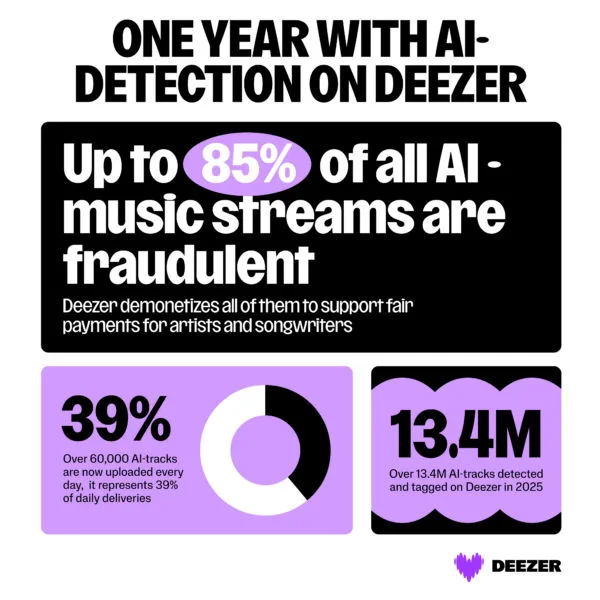
Deezer has launched a free online AI music detector that checks playlists from 20 major streaming platforms for AI-generated tracks. It uses the same technology Deezer has been using to detect and tag synthetic music on its own service.
The tool is available in 27 languages, and it arrives as Deezer says nearly 75,000 AI-generated tracks are being delivered to it every day. That volume gives the launch a sharper edge than a simple playlist cleanup feature. It’s a way to put synthetic-song detection in front of listeners before the rest of streaming settles on common rules.
How much AI music is hiding in playlists
Deezer says 43% of people arriving from other streaming services already have AI-generated music in their playlists. For listeners, the new scanner answers a basic question that most platforms still don’t surface clearly.

Users connect a streaming account, choose playlists, and review the results. Because the scanner works across 20 common services, Deezer can get its detection system in front of people who don’t use its app.
That stance lands while major music apps are testing how far they want to go with generative tools, including Spotify’s experiments around AI-made covers and remixes. Deezer is focusing on the cleanup job that follows, identifying AI songs after they’ve already entered a library.
Why would the industry license Deezer’s detector
Deezer says its detection technology can identify tracks from major generative music models, including Suno and Udio. It can also be expanded when the company has enough data examples from other tools.
The company says it has made progress on a broader system designed to catch synthetic content without a model-specific training set. That gives Deezer a business case beyond the public playlist scanner. It wants platforms, labels, distributors, and rights groups to use the same underlying technology to spot machine-made tracks before they distort discovery or payment systems.

What happens after AI tracks are tagged
Deezer says fully AI-generated music makes up only 1% to 3% of streams on its service, but it also says as much as 85% of those streams were fraudulent in 2025. When Deezer finds stream manipulation, it excludes those plays from royalty payments.
The company has already removed AI-generated tracks from algorithmic recommendations and editorial playlists. Broader steps, including supplier policy changes or demonetization, are still under review. For listeners and the industry, Deezer’s practical message is clear. Detection has to happen before trust, royalties, and recommendations can be cleaned up.


Lincoln has placed a compact portable structure on Manhattan’s High Line at the 14th Street section. Anyone walking the elevated park between June 12 and 14 can step inside for a five or ten minute session built around coordinated sound, scent, lighting, and touch.

The exterior of the finished Sunrise Copper and White Platinum variation is visually appealing due to its flowing lines and delicate contours. The vertical windows, Satin Elysian trim, and big Lincoln emblem stand out alongside them. At first glance, you’d think this was a mobile house on wheels rather than a static construction, which pretty much sums up its purpose as a traveling show.

LEGO Architecture New York City – The Big Apple Building Set for Adults, Ages 18+ – Decor for Bedroom…
- THE CITY THAT NEVER SLEEPS – Construct the ultimate souvenir with the LEGO Architecture New York City – The Big Apple (21066) building set for…
- CREATE 6 ICONIC LANDMARKS – Builders can create six NYC architectural icons in minimalist white, including the Brooklyn Bridge, Empire State…
- DISCOVER HIDDEN DETAILS – As they construct their city skyline, builders can discover details that are uniquely New York, such as yellow taxi cabs…

Step inside and you’ll be met by a well-thought-out environment centered on one feature: a 30 way adjustable seat lifted directly from a Navigator. It’s coated in Warm Horizon leather and comes with everything you need, including an active motion massage feature and some fantastic positioning options. You get the idea. Add some wood trim to make the cabin appear neat and confined, as well as a wide panoramic screen that dominates the forward view.

A Revel audio system, designed specifically for this compact space, provides the sound. The scents are released via a diffuser using Lincoln’s Digital Scent technology, just like in their current line of automobiles, and you may choose between Cloud Balsam, Mystic Forest, Ozonic Azure, Serene Seashore, Sunlight Retreat, Twilight Embers, and the stunning Violet Cashmere.

Lighting adapts to meet the mood, and a sophisticated motion sensor allows each visitor to simply choose their preferred Rejuvenate mode. These modes mix aroma, sound, lighting, and massage in a unique way inspired by the Nautilus and Navigator systems, but they are more than just a set of pre-programmed settings.

Christine Park Cheng, Lincoln’s global design director, noted that the goal was to transform the Rejuvenate atmosphere into a physical area so guests could experience it for themselves. Every feature strives to generate a sense of tranquility and relaxation akin to that found in their vehicle interiors, but with Lincoln’s distinct sanctuary feel. The show will take place from June 11th to June 13th, coinciding with Global Wellness Day, and all attendees will get complementary refreshments. After that, it will pack up and go to other cities for additional dates later this year.

Update
Added new Buid a Zoo Codes on June 11, 2026.
Build a Zoo is a fun Roblox experience where players collect animals, hatch eggs, and expand their own wildlife park. As you expand your collection, you’ll need plenty of cash and valuable eggs to unlock new creatures. Fortunately, the game regularly offers redeemable codes that provide free rewards. These rewards can include cash, pet eggs, and other useful bonuses that help speed up your progress. Below, you’ll find all the latest Build a Zoo codes available this month, along with steps to redeem them.
Active Build a Zoo Codes
- MERRYTIMES2026: 500 Diamonds and 3 Lucky Tickets (NEW)
- RABBITHAT30: 1 Sacred Deer Egg (NEW)
- OCEANHEART0: 2 Ocean Heart
- TUESDAYFUN1: Free Rewards
- CHRISTMAS12: Free Rewards
- XMASADVENT5: Free Rewards
- FRIDAYGIFT5: 10 Tickets and 1 Pineapple
- ZooFarmers: 800 Gems and 1 Pineapple
- BLACKFRIDAY: Lucky Tickets
- WAEX662ERC3: Lucky Tickets
- 9WC77XXCM5A: Gems, Fruits, and Tickets
- LandCompensation: 2000 Gems, 1 Dragon Fruit, and 3 Turkey Eggs
- BHNR9CB9TNC: Gems, Fruits, and Tickets
- A38JBJ3TSSE: Gems, Fruits, and Tickets
- 9HDARHCQMWS: Gems, Fruits, and Tickets
- N5HZKRRT2DF: Gems, Fruits, and Tickets
- ZTWPH3WW8SJ: 5 Lucky Tickets and $20,000
- ADQZP3MBW6N: 5 Lucky Tickets and $20,000
- DS5523YSQ3C: 5 Lucky Tickets and $20,000
- 3XKK8Z2WB6G: 5 Lucky Tickets and $20,000
- N7A68Q82H83: 5 Lucky Tickets and $20,000
- 4XW5RG4CHRY: 5 Lucky Tickets and $30,000
- DelayGift: 1 Pet Egg and $20,000
- 60KCCU919: 8 Lucky Tickets and $30,000
- 50KCCU0912: 2 Pet Eggs and $20,000
- ZooFish829: 1 Pet Egg and $20,000
- FIXERROR819: 1 Pet Egg and $30,000
- BugFixes: $30,000
- U2CA518SC5: 1 Pet Egg
- X2CA821BA3: 1 Pet Egg
- 55PA21N8y2: 1 Pet Egg
Found an expired or missing code? Please let us know, and we’ll update the article as soon as possible.
Expired Build a Zoo Codes
| ROMANCEBLOOMS | WEEKENDJOY5 | SANTAGIFT25 |
| HOLIDAYFUN1 | SANTASWORKS | FIXTHEBUGS1 |
| ADMINABUSE1 | ACORN251204 | E5GSDBK7ATX |
| NA5Y874BAGG | CE8CWQDFZSH | CFJXEH4M8K5 |
| SeasonOne | MagicFruit | WeekendEvent89 |
| BugFix829 | SurpriseGift | UPD18DINO |
How to Redeem Build a Zoo Codes?
To redeem Build a Zoo codes and claim free rewards, follow these steps:
- Open Build a Zoo in Roblox.
- Select the Shop option from the side menu.
- Scroll down and enter an active code in the text field.
- Press the Redeem button.

- Your rewards will be added to your account instantly.
And that’s it! Your exclusive rewards will automatically be added to your inventory. In the meantime, also check out our other guides on Blue Lock Rivals, Volleyball Legends, and Anime Paradox codes.
How to Get More Codes?
The easiest way to get more codes is by staying connected with the game’s official communities. Most new codes are posted on the official Build a Zoo Discord server, where the developer shares updates and milestones. If you prefer a quicker way, just bookmark this page. We keep it updated often so that you won’t miss any new codes.
Why Are My Build a Zoo Codes Not Working?
Often, when a Build a Zoo isn’t working, it’s simply due to a typo. To avoid this, use copy and paste rather than typing by hand. Restarting the game can also help if your server isn’t up to date. Keep in mind that some codes expire quickly, so a code that worked earlier may no longer be valid. Moreover, the code may have expired after the article was updated but before you tried to use it. If that’s the case, let us know by filling out the Google Form, and we’ll update the article as soon as possible.
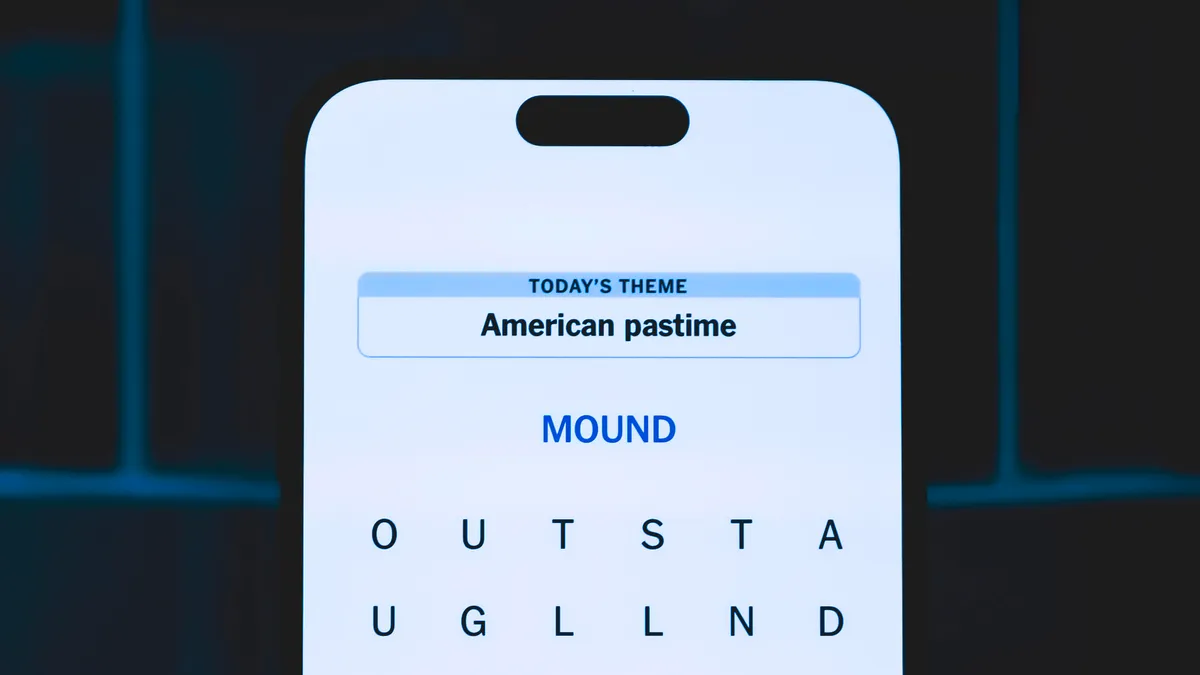
Looking for the most recent Strands answer? Click here for our daily Strands hints, as well as our daily answers and hints for The New York Times Mini Crossword, Wordle, Connections and Connections: Sports Edition puzzles.
Today’s NYT Strands puzzle was actually pretty fun. Once you understand the theme, the answers are easy to unscramble — a rare treat for Strands. If you need hints and answers, read on.
I go into depth about the rules for Strands in this story.
If you’re looking for today’s Wordle, Connections and Mini Crossword answers, you can visit CNET’s NYT puzzle hints page.
Read more: NYT Connections Turns 1: These Are the 5 Toughest Puzzles So Far
Hint for today’s Strands puzzle
Today’s Strands theme is: Oozing
If that doesn’t help you, here’s a clue: Words that sound alike.
Clue words to unlock in-game hints
Your goal is to find hidden words that fit the puzzle’s theme. If you’re stuck, find any words you can. Every time you find three words of four letters or more, Strands will reveal one of the theme words. These are the words I used to get those hints but any words of four or more letters that you find will work:
- SOUR, SITE, SITES, BITE, BITES, CITE, CITES, FUSS, CUSS, YOUR, HOUR, HOURS, ECHO
Answers for today’s Strands puzzle
These are the answers that tie into the theme. The goal of the puzzle is to find them all, including the spangram, a theme word that reaches from one side of the puzzle to the other. When you have all of them (I originally thought there were always eight but learned that the number can vary), every letter on the board will be used. Here are the nonspangram answers:
- FUSE, BLUES, BREWS, SHOES, CHOOSE, CRUISE, SCHMOOZE
Today’s Strands spangram
The completed NYT Strands puzzle for June 11, 2026.
Today’s Strands spangram is RHYMETIME. To find it, start with the R that’s three letters to the right on the top row, and wind down.
Toughest Strands puzzles
Here are some of the Strands topics I’ve found to be the toughest.
#1: Dated slang. Maybe you didn’t even use this lingo when it was cool. Toughest word: PHAT.
#2: Thar she blows! I guess marine biologists might ace this one. Toughest word: BALEEN or RIGHT.
#3: Off the hook. Again, it helps to know a lot about sea creatures. Sorry, Charlie. Toughest word: BIGEYE or SKIPJACK.

Dolphins vs Sydney Roosters Tips, Odds, Teams & Predictions – NRL Round 15 2026

‘This cannot continue’: Microsoft Xbox CEO calls for reset amid reports of looming job cuts
Digital Asset Holdings Secures Another $355 Million in Funding Round Led by a16z



-

 Fashion6 days ago
Weekend Open Thread: Evereve – Corporette.com
-
 Crypto World6 days ago
Jensen Huang Approves Samsung, SK Hynix, and Micron for NVIDIA (NVDA) HBM4 Memory Supply
-
 Entertainment4 days ago
The Best Mystery Series of All Time Is Surging on Streaming 30 Years After It Ended
-

 Crypto World3 days ago
Anatomy of the June crypto crash: Fed, Iran, Saylor
-

 NewsBeat3 days ago
Alexander Zverev wins the French Open to finally earn a 1st Grand Slam title
-

 Tech5 days ago
Suspicious Polyfill login prompts pop up on Toshiba, Muji websites
-
 Crypto World5 days ago
Senator Cynthia Lummis Calls CLARITY Act the Most Consequential Financial Legislation of This Generation
-

 Tech4 days ago
Microsoft unveils seven homegrown AI models in new bid for ‘long term self-sufficiency’
-

 Tech6 days ago
Microsoft launches MXC, an OS-level sandbox for AI agents, with OpenAI and Nvidia already on board
-

 Business6 days ago
(VIDEO) Justin Bieber Delivers Surprise Happy Birthday Serenade to Diners at Los Angeles Mexican Restaurant
-
 Business4 days ago
The Pain Points Taking a Fragile Tech Rally Down a Notch
-

 Business3 days ago
High Stakes for Wembanyama as New York Pushes for 3-0 Lead
-
 Crypto World3 days ago
Eli Lilly (LLY) Stock Surges 4% Following Breakthrough Sleep Apnea Trial Results
-

 Tech5 days ago
Von der Leyen’s AI envoy pick draws conflict-of-interest fire
-
Crypto World6 days ago
LBank Surpasses 25 Million Users Worldwide as AFA Partnership Continues to Drive Global Growth
-

 Tech6 days ago
Meta steals a tactic from Tesla and builds data centers in tents
-

 Tech5 days ago
Hackers now exploit SolarWinds Serv-U flaw to crash servers
-

 Crypto World4 days ago
Trump’s AI Ownership Plan Could Benefit Anthropic at OpenAI’s Expense
-
 NewsBeat4 days ago
Alexander Zverev conquers demons and outlasts Flavio Cobolli to win French Open for first major title
-
 Sports2 days ago
Bangladesh beat Australia after 20 years in ODIs, register only their second win over six-time world champions | Cricket News
You must be logged in to post a comment Login