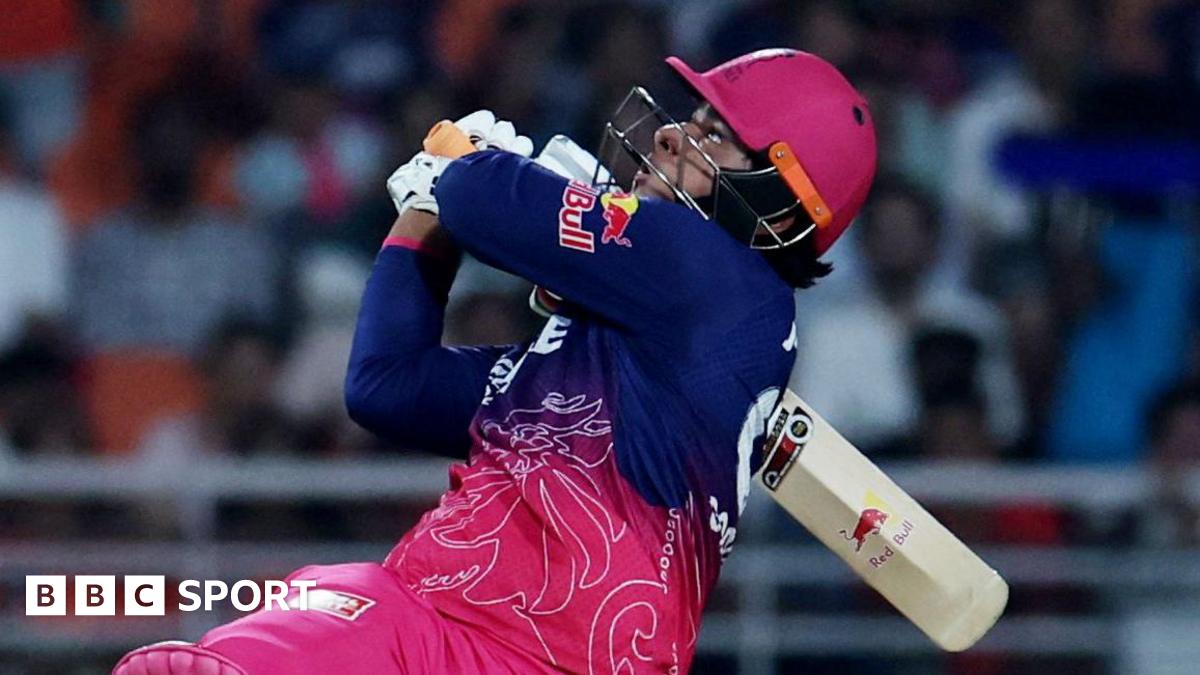
Teenage sensation Vaibhav Sooryavanshi produced his latest extraordinary innings by hitting 97 from just 29 balls in the Indian Premier League eliminator against Sunrisers Hyderabad.
The 15-year-old struck 12 sixes, including three in a row off Australia captain Pat Cummins, before he was dismissed in the eighth over.
After hitting boundaries off seven balls in succession, he had one delivery to break Chris Gayle’s record for the fastest IPL century but was caught at deep third attempting an upper cut.
Sooryavanshi, who had reached 50 in 16 balls, looked crestfallen in the middle but was congratulated by his opponents and given a standing ovation by the crowd.
Advertisement
His Rajasthan Royals side were 125-1 after eight overs, with opening partner Yashasvi Jaiswal, an India international across formats, on 25 from 20 balls at the other end.
“What an innings. What a player,” said India legend Sunil Gavaskar, commentating.
“That is an innings to remember. An innings to savour.”
Sooryavanshi’s knock also took him to the top of this year’s run-scorers’ list in the IPL.
Advertisement
His seventh six, hit in only the fourth over, broke the record for the most sixes in a single IPL season – a record previously held by former West Indies international Gayle with 59.
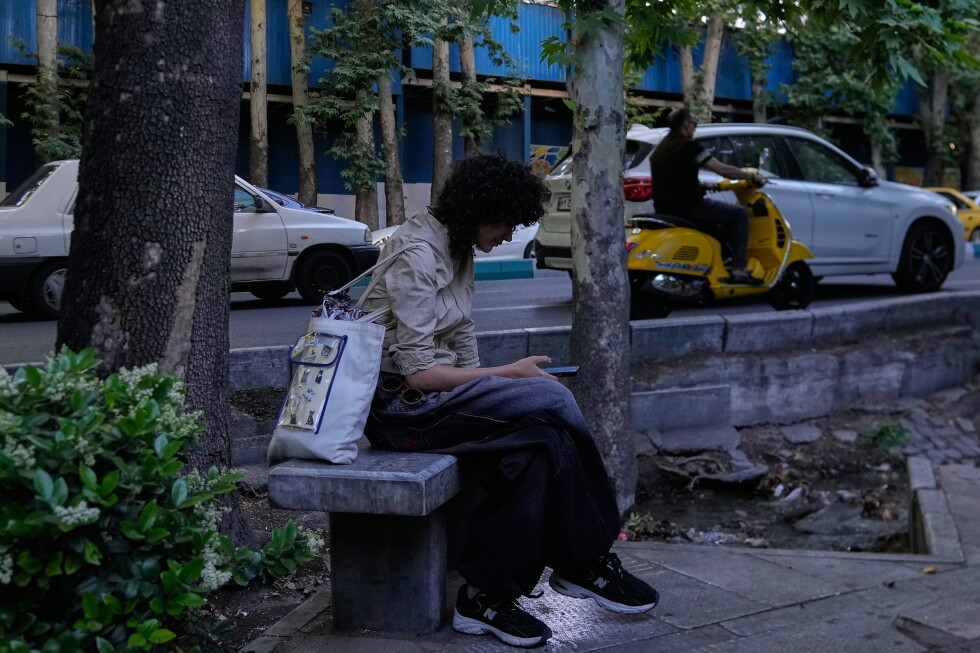
CAIRO (AP) — Iranians began to regain internet access on Wednesday after authorities ended a monthslong shutdown. But users said service was slow and spotty in some areas, with apps like YouTube and Instagram heavily restricted, as they were before the cutoff began during nationwide protests in January.
Authorities justified the outage as a military imperative after the United States and Israel attacked Iran on Feb. 28. Their decision to lift some restrictions this week came as negotiators appeared to be closing in on a more permanent truce. But many Iranians feared access could be cut off again at a moment’s notice.
Internet tracking company Netblocks said Iran’s connectivity, which measures the ability of devices to connect to the internet, is at around 86% of capacity from before the cutoff. Internet analysis firm Kentik said internet traffic, which measures the amount of data transferred and is a good illustration of usage, was at around 40%.
Amir Rashidi, an Iranian cybersecurity analyst, said there were still widespread disruptions. “It’s too early to say the shutdown is over,” he wrote on X.
Advertisement
An unprecedented shutdown
Iran’s roughly 90 million people have been cut off from the internet for most of 2026, one of the world’s longest and strictest national shutdowns. Young people with online careers saw their incomes evaporate. Job losses and the closure of online businesses added to the war’s steep economic costs.
The cutoff made it difficult for Iranian families to communicate through months of unrest and war. At some points, phone lines were also cut off, though they were later restored.
A woman living in Tehran said that for months she was barely able to speak to her sons living abroad. She couldn’t believe authorities had restored access, saying she had assumed they would find some justification to prolong the outage.
A taxi driver said service was restored but weak. He expressed hope it would improve so he could use messaging apps with family and friends. Both spoke on condition of anonymity for security reasons.
Advertisement
Prices spiked during the shutdown, with residents in Tehran at times paying around $7.50 per gigabyte. Prices are back down to around $2.25 for 30 gigabytes, roughly where they were before the protests.
Even then, Iran tightly controlled access to popular social media sites, leading many to rely on virtual private networks, or VPNs. The cost of those workarounds soared during the shutdown, making them unaffordable for many as the economy was battered.
A slow return to service
Businesses have started reappearing online, announcing their return with posts on sites like Instagram and Telegram.
A gamer and tech influencer in the central city of Isfahan said the shutdown had caused him to lose a lot of his audience on YouTube and Instagram, where he had spent years building up a large following.
Advertisement
“All my views and interactions are way down. I’ve been erased from the algorithm,” he said in a voice note sent by WhatsApp, adding that his internet connection was still slower than before the shutdown.
“The situation is such that many content producers have had their income reduced to zero, have moved on to other jobs, or have been forced to sell their equipment to survive,” he said. He spoke on condition of anonymity for fear of reprisal.
Iran claimed the shutdown was a wartime necessity
Iranian authorities first shut down the internet in January during mass anti-government protests that were eventually stamped out in a violent crackdown. Thousands of people were killed and tens of thousands detained.
That cutoff was just starting to ease when the government imposed a complete internet blackout after the start of the war, when U.S. and Israeli strikes killed Iran’s supreme leader and other top officials.
Advertisement
The government faced criticism for the prolonged shutdown, which caused even more harm to an economy devastated by inflation, strikes on key industries and a U.S. blockade on Iranian ports.
The internet cutoff cost an estimated $30-40 million daily, with indirect losses likely twice that much, a member of Iran’s Chamber of Commerce, Afshin Kolahi, told a local newspaper last month. About 10 million people have jobs that depend on internet connectivity, according to Communications Minister Sattar Hashemi.
Iranians still had access to a national net, but that has a far narrower reach, and users complained of poor service and heavy censorship. Senior government officials are given SIM cards granting them access to the global internet. Under pressure, the government expanded access to the SIM cards to some professions during the shutdown.
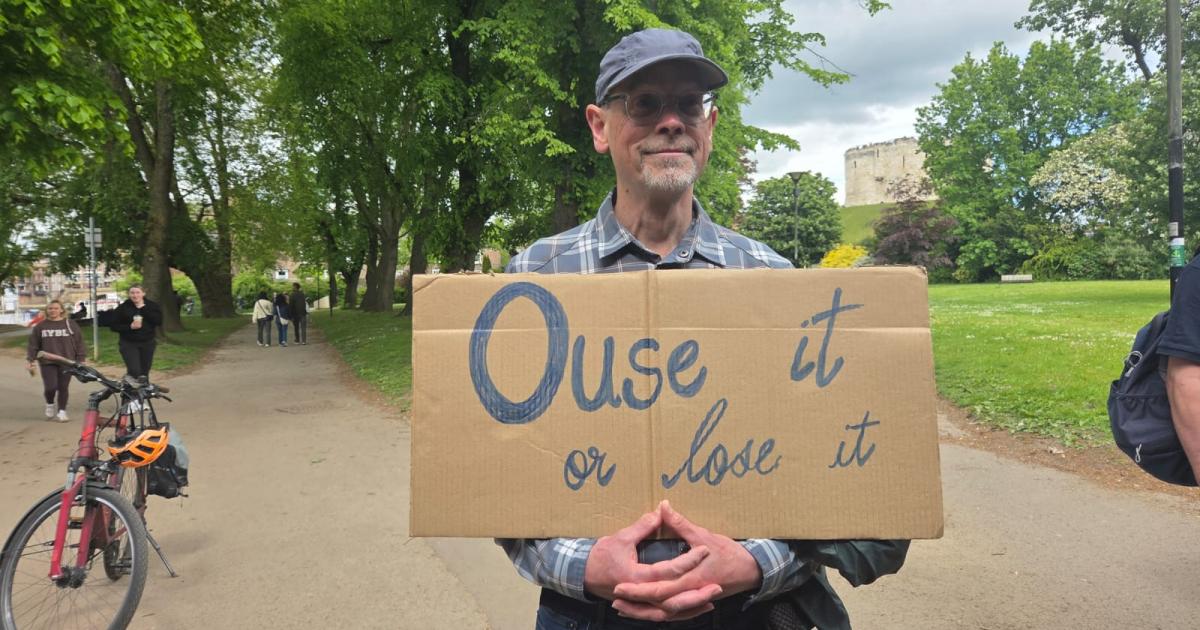
Ouse it or Lose it, a newly formed community group in York, is launching a campaign to improve water quality, raise public awareness and involve residents in protecting the city’s rivers.
The group is bringing together residents, river users, scientists and campaigners to encourage informed, community-led action.
RECOMMENDED READING:
Advertisement
Emilie Flower, a participant in the project, said: “York’s rivers are a huge part of the city’s identity, but many people feel disconnected from them or concerned about water quality.
“This is about bringing people together to understand the issues, including the risks better and to explore what positive action might look like locally.”
The group’s launch event, taking place on Friday (May 30) at Clements Hall, features a screening of the documentary Rave on for the Avon, which tells the story of a community reclaiming and protecting their river.
The group are working with York City Rowing Club, academics from the University of York, Surfers Against Sewage and the River Foss Society, after a protest held earlier this month to raise awareness of pollution on the city’s rivers.
Advertisement
Campaigners said that the Ouse had been chosen as it was the third most polluted river in England and Wales, with over 18 thousand hours of sewage discharged each year – something that Yorkshire Water has said it is ‘determined’ to play its part in addressing.
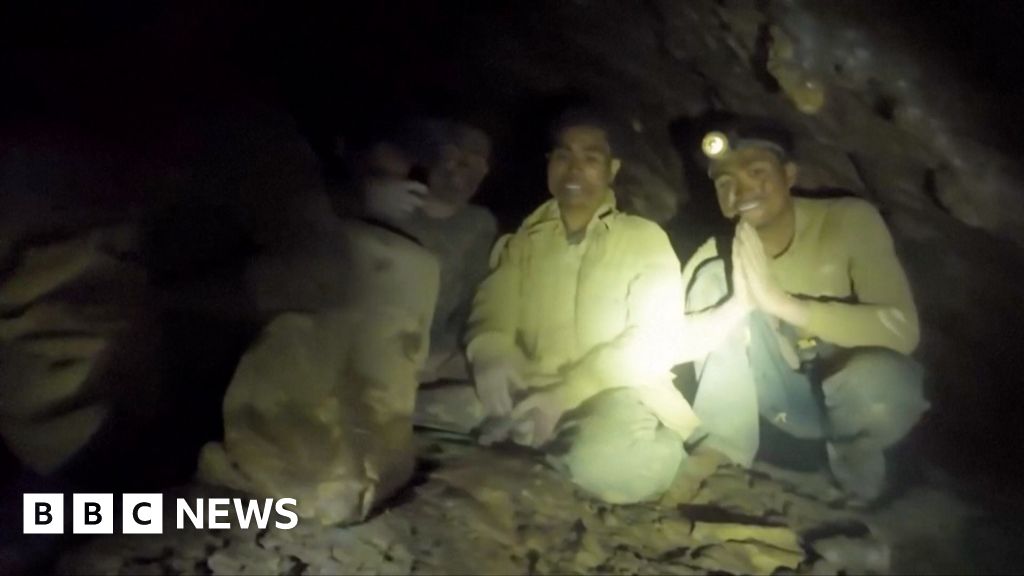
Footage shared by the rescuers showed cave divers crawling through narrow, muddy passageways.
The seven people were part of a group of villagers who had gone into the cave in search of gold deposits and wildlife, but could not get out as the cave’s entrance was blocked.
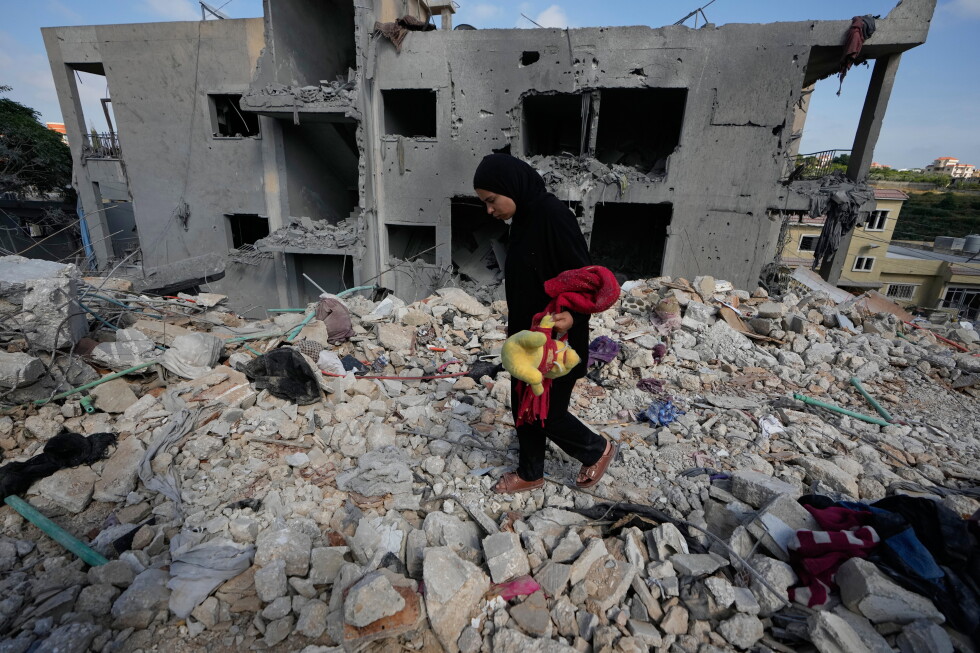
Wednesday’s warning is the first that orders the Lebanese to relocate from the south since a ceasefire went into effect on April 17 and follows an escalation in the Israel-Hezbollah war.
Israeli Israeli troops have crossed the Litani River, edging closer to the southern city of Nabatiyeh. Israel and Hezbollah have had near-daily exchanges lately, though Israel has not struck Beirut or areas near the capital since the truce started.
Advertisement
The war started on March 2 after Hezbollah fired rockets towards northern Israel in solidarity with Iran. Over one million people in Lebanon have since been displaced, and over 3,200 people killed in Israeli strikes according to Lebanon’s health ministry.
Earlier, the Israeli military had called on the residents of southern cities of Nabatiyeh and the city of Tyre along the Mediterranean coast to leave and stay away from it, saying there were Hezbollah members and military posts there.
Hezbollah claimed responsibility for several attacks on both Israeli troops in Lebanon and northern Israeli border villages.
Also, amid a surge in Hezbollah’s exploding drone attacks, Israeli Prime Minister Benjamin Netanyahu announced that the Israeli military will expand the scope of its attacks against Hezbollah in Lebanon.
Advertisement
Hezbollah has vowed to fight until the war ends in Lebanon and Israel withdraws its troops that operate across large swaths of the country’s south. The Iran-backed group has dismissed Lebanon’s direct talks with Israel and has backed Iran’s talks with Washington to their war. Among Tehran’s conditions is ending the war in Lebanon as well.
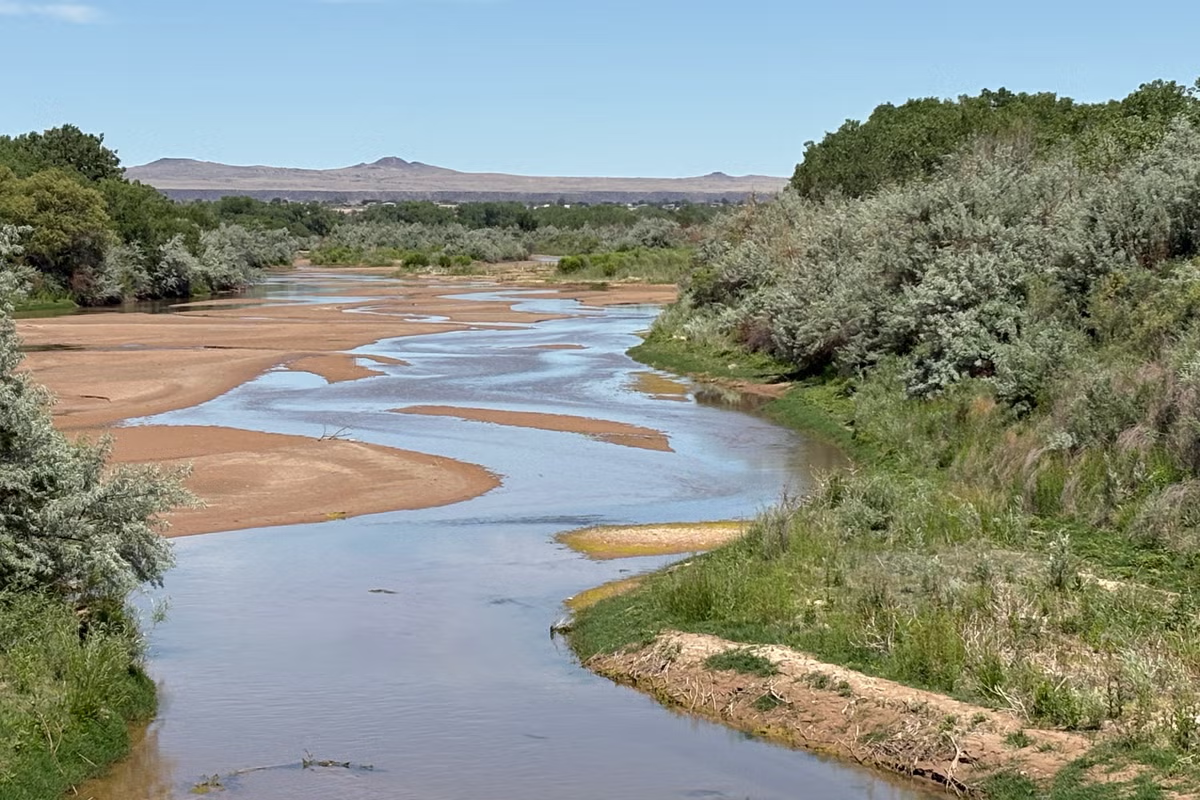
The U.S. Supreme Court has approved a settlement package designed to rein in groundwater pumping along one of North America’s longest rivers and ensure enough water reliably makes it from New Mexico to Texas, ending a long-running dispute over management of the Rio Grande.
In a brief order Tuesday, the court accepted the recommendation of a special master to move forward with agreements first proposed last year by New Mexico, Texas and Colorado.
The settlement calls for reducing groundwater pumping along the dwindling river and retiring water rights from irrigated farmland in southern New Mexico. The states held up the proposal as a promise to restore order to an elaborate system of storing and sharing water between two vast irrigation districts in southern New Mexico and western Texas.
Researchers have warned that unsustainable use of the Rio Grande — which originates in Colorado and stretches south into Mexico — threatens water security for millions of people who rely on the binational river basin.
Advertisement
Farmers in southern New Mexico increasingly have turned to groundwater to irrigate pecan orchards and chile crops as hotter, drier conditions have reduced river flows and storage over recent decades. That pumping is what prompted Texas to sue in 2013, claiming the practice was cutting into water deliveries.
While the Colorado River gets all the headlines, experts say the situation along the Rio Grande is just as dire. Stretches of the river as far north as Albuquerque are expected to go dry again this year, marking the third time in five years.
Officials with the New Mexico Department of Justice and the state engineer’s office did not immediately answers emails Wednesday about the court’s order. They have previously said the agreements will allow water conservation decisions to be made locally while avoiding a doomsday scenario of billion-dollar payouts on water shortfalls.
The settlement package provides for a detailed accounting system for sharing water with Texas. New Mexico could rely on credits and debits from year to year to navigate through drought and wet periods, though it could be responsible for additional water-sharing obligations if deliveries are deferred too long.
Advertisement
Under the settlement, New Mexico must reduce annual groundwater depletions by 18,200 acre-feet, or about 5.9 billion gallons (22.3 billion liters).
Officials expect to achieve most of the necessary reductions from buying water rights from willing sellers, meaning more than 14 square miles (36 square kilometers) of farmland would be retired.
Other details — and the price tag — still are being worked out, but top water managers have repeatedly told New Mexico lawmakers that it will take “an all hands on deck approach.”
“The problems that we face with water are problems we can’t face unless we work together,” Hannah Riseley-White, director of the Interstate Stream Commission, told a group of water experts during a meeting in March.
Advertisement
She mentioned a combination of long-term fallowing programs, water conservation and more efficient irrigation infrastructure.
A man was captured stealing a victim’s handbag while she was having breakfast at a hotel in Toft Green at approximately 8am on Thursday (April 23).
The thief then used credit cards taken from her stolen handbag to buy items at shop in York Railway Station before boarding a train, North Yorkshire Police has said.
Recommended reading:
Advertisement
A force spokesperson said: “Please contact us if you recognise the man pictured, as he may have information that will assist our investigation.
“Please email Nicola.manning@northyorkshire.police.uk if you recognise the man pictured or have any information that could help our investigation. Alternatively, you can call North Yorkshire Police on 101.
“If you would prefer to remain anonymous, you can contact Crimestoppers on 0800 555 111 or make an online report.
“Please quote reference 12260072800 when passing on information.”
Children were left in tears as the suspects demanded goods during the ‘terrifying’ attempted robbery
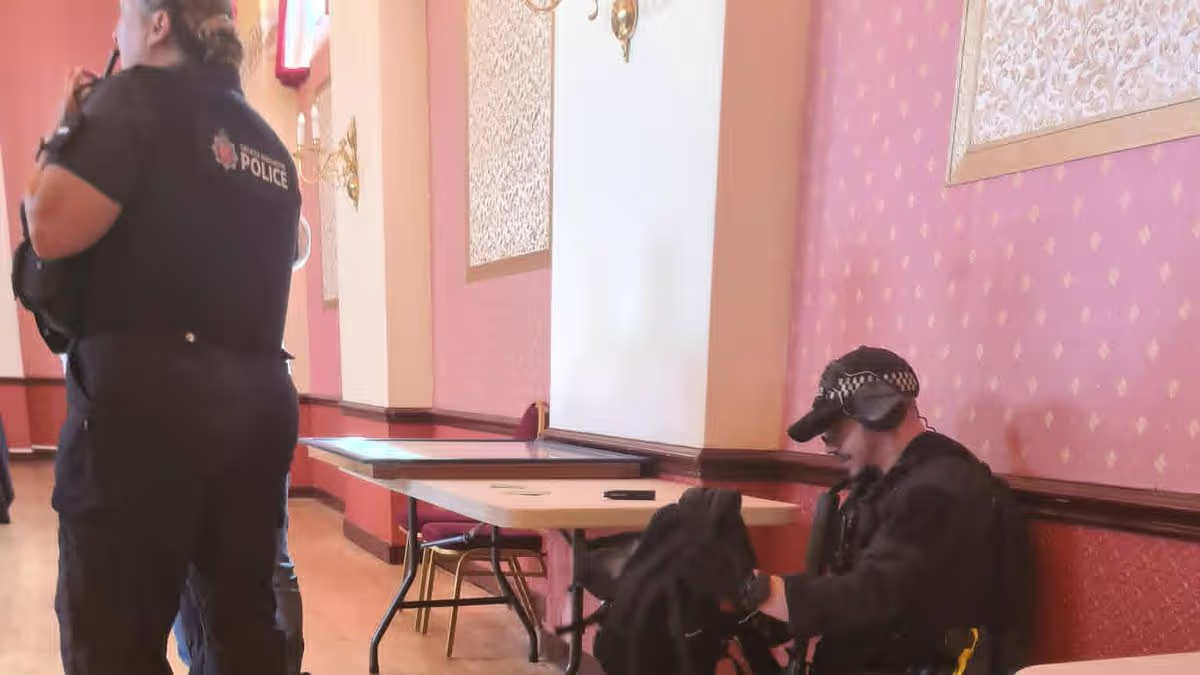
Armed police were called to an antiques event in Salford after the event was held up by three suspects ‘with a BB gun’. Officers raced to the Masonic Hall in Swinton on Wednesday (May 27) which was hosting the jewellery and antiques event throughout the day.
Witnesses saw a large police presence in the car park outside the venue on Hospital Road at around 11.30am, which was temporarily locked down. Those attending the event said three men barged in, one holding a gun, shouting ‘don’t move’. Children were said to be in tears.
Greater Manchester Police confirmed the suspects threatened those in attendance at the event and ‘demanded goods’. An altercation took place between one of the suspects and members of the public in attendance, in which a BB gun was recovered.
Advertisement
Click here to get the biggest stories straight to your inbox in our Daily Newsletter
“Three lads ran in,” one witness told the M.E.N. “One with a gun, one with a baseball bat, and then one who waited in the hallway. The guy with the gun shouted ‘don’t anyone move’.
“There was a guy buying gold and silver who jumped up, grabbed the guy with the gun and then shouted out to his mate, who hit his head with the bat. Then I ran at them, picked up a chair and threw it at the lad. Then they ran out.”
The witness, who asked to remain anonymous, said the three suspects were wearing balaclavas and in all black clothing. “There were children crying, and old ladies,” he added.
Greater Manchester Police are appealing for information as they continue their investigations into the attempted robbery. One member of the public sustained a minor injury, and no arrests have yet been made after the suspects fled the scene.
Detective Inspector Paul Davies, from GMP’s Salford district, said: “This was a terrifying incident for those in attendance at the hall, and I want to commend the members of the public who acted incredibly bravely during this incident. We could easily have had more serious consequences, and I am glad that no-one was seriously injured.
“While only several hours have passed since this incident, we have launched a thorough investigation to establish the full circumstances, and I would urge anyone who has any information to please get in touch”
Advertisement
You can contact police via 101 or Live Chat at gmp.police.uk, quoting log 1334 of 27/05/26.
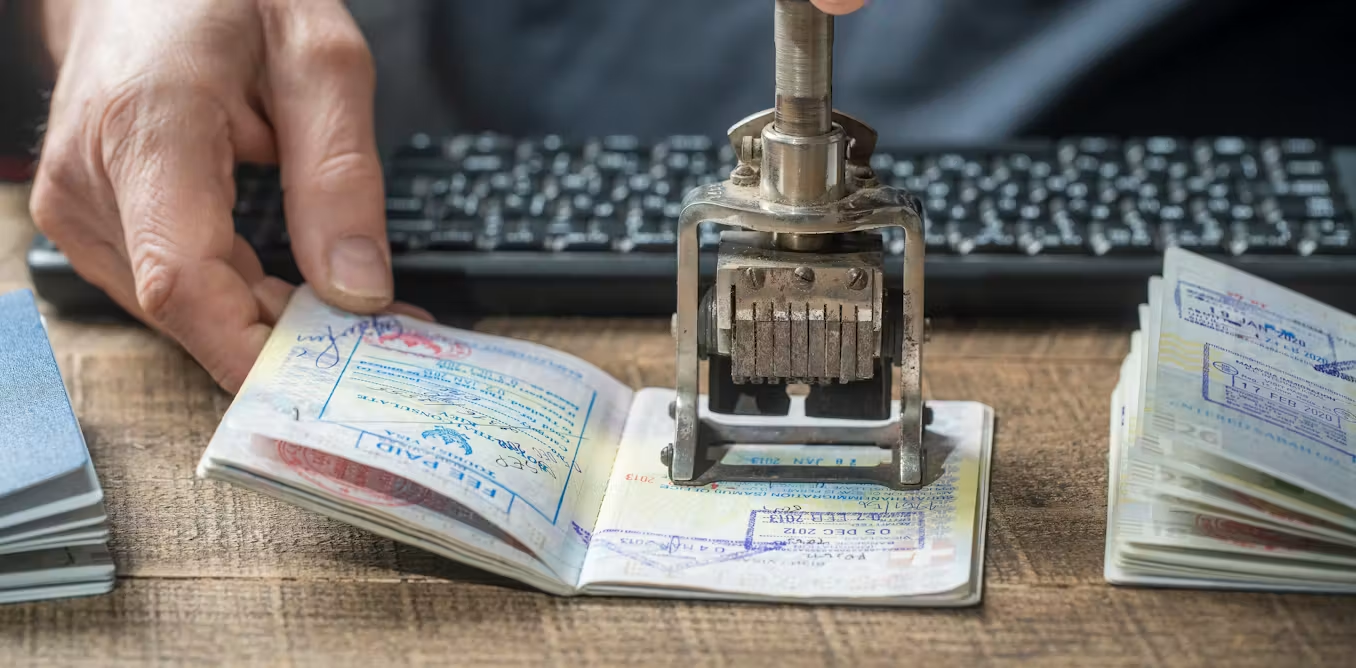
International tourism sells the promise of a borderless world: open skies, new horizons, the freedom to explore. But for the holder of a weak passport, that promise rings hollow.
The Henley Passport Index (HPI) ranks the world’s passports by the number of destinations their holders can visit visa-free. This may be affected by factors like a country’s economic and political stability, colonial history and association with risks or terrorism. Singaporean passport holders currently top the list, enjoying visa-free access to 192 destinations worldwide. Afghan nationals, at the other end – only 23.
In a recent study, my co-author Samira Zare and I explored the challenges that tourists with low-ranking passports face at airport borders.
Travelling with a weak passport is costly and time-consuming. Before a holiday even begins, tourists with a weak passport navigate visa applications months in advance. They may attend interviews, provide extensive documentation and still be rejected.
Advertisement
Crossing a border is one of the most charged moments in any trip. Our research reveals that tourists regularly encounter both subtle and overt challenges at border control, which they perceive to be influenced by assumptions about their passport, nationality, race, gender and class. These experiences leave real emotional marks.
We found that tourists, particularly those with weak passports, often adopt certain qualities – softening their tone, smiling more than feels natural and overexplaining their itinerary – to project what we call “performed innocence or docility”. In other words, taking steps to demonstrate that they are bona fide tourists.
Participants described being asked “patronising” or “condescending” questions by border control agents, or asked more questions than their travel companions with different passports. Others described how they “have developed coping strategies which include using my title, making sure I speak quite articulately to the person”, and “[playing] up your intelligence and big words, the higher chances they’ll treat you better”.
Another explained that “there is safety in subservience. Why pick a fight during my holiday? I don’t have enough resources to take on such an elaborate infrastructure of ‘passport apartheid’.” Several said they have become “desensitised to” the extensive border scrutiny.
Advertisement
In particular, tourists of certain nationalities, ethnic minorities and women travelling alone reported being subjected to extended questioning, secondary screening and what they described as a baseline suspicion. The emotional impact was profound. Participants reported embarrassment, shame, anxiety, self-doubt, blame and anger that lingered after the border crossing, sometimes tainting the entire trip. One described his feeling of powerlessness:
There’s no dignity because you’re in front of everyone who are thinking … [that] I’ve done something illegal, dodgy … You lose your agency in that moment because you are completely at their mercy.
Tourism research has long focused on the positive restoration that travel offers – relaxation, adventure and escape. Our study suggests that for some tourists, the journey to their holiday begins with dread: “Even with the right paperwork and visas, there is always a lingering fear that you may not be allowed into the country.”
Tightening borders, shrinking mobility
Globally, borders are becoming more complex, more digitised and, for many tourists, more restrictive. The introduction of the EU’s entry-exit system, which requires biometric border checks for non-EU visitors, suggests that borders will increasingly operate through automated surveillance, pre-arrival data checks and algorithmic risk profiling, rather than human discretion.
Decisions about who can cross are now embedded in visa application portals, electronic travel authorisations and advance passenger data systems. Digitalisation may streamline borders, but it comes with risks. When discrimination is embedded in an algorithm rather than human decision, it becomes far more difficult to see, challenge or overturn.
Advertisement
The burden of proof for travellers is increasing. From February 2026, the UK’s new Electronic Travel Authorisation system came into full effect, with unexpected implications for British dual nationals. British citizens who hold another nationality are now required to present a valid British passport. A British citizen with an expired UK passport could be denied boarding.
Changing border requirements are affecting many tourists. 1000 Words/Shutterstock
Increasing document requirements already affect tourists with weak passports. As one participant said: “You must carry [a lot] of documents. I still have a habit of carrying unnecessary documents … just everything to prove that I am who I say I am, and I can travel.”
Yet what counts as sufficient proof is not necessarily a settled issue. Passport strength and travel access is relative and constantly shifting, shaped by geopolitics, diplomacy and political will. The goalposts for who must prove themselves, and how, are always moving.
International tourism generates trillions of dollars annually and depends on the flow of people across borders. Yet there is a lack of recognition of the structural inequality that shapes who can participate in that flow, and the emotional toll on those who navigate it at a disadvantage. Research shows visa restrictions alone deter tourism inflows by around 20%.
Advertisement
An industry that measures success in arrivals and revenue appears to have little incentive to care about who gets left behind at the border. But this isn’t entirely true. When a tourist arrives after hours of questioning, suspicion, and unwelcoming treatment, that experience also becomes part of how they perceive the destination. It shapes whether they return, what they tell others and how they see themselves as travellers.
But the effects of three months of conflict have been seismic, with an estimated 7,000 people killed in the region, major disruption to global economy and more than a million people displaced from their homes – without delivering on any of Donald Trump’s stated objectives.
And while the Pentagon has priced the conflict at around $29 billion – just shy of $400 million a day – analysts say the true cost could swell to $1 trillion once hidden costs are tallied.
Advertisement
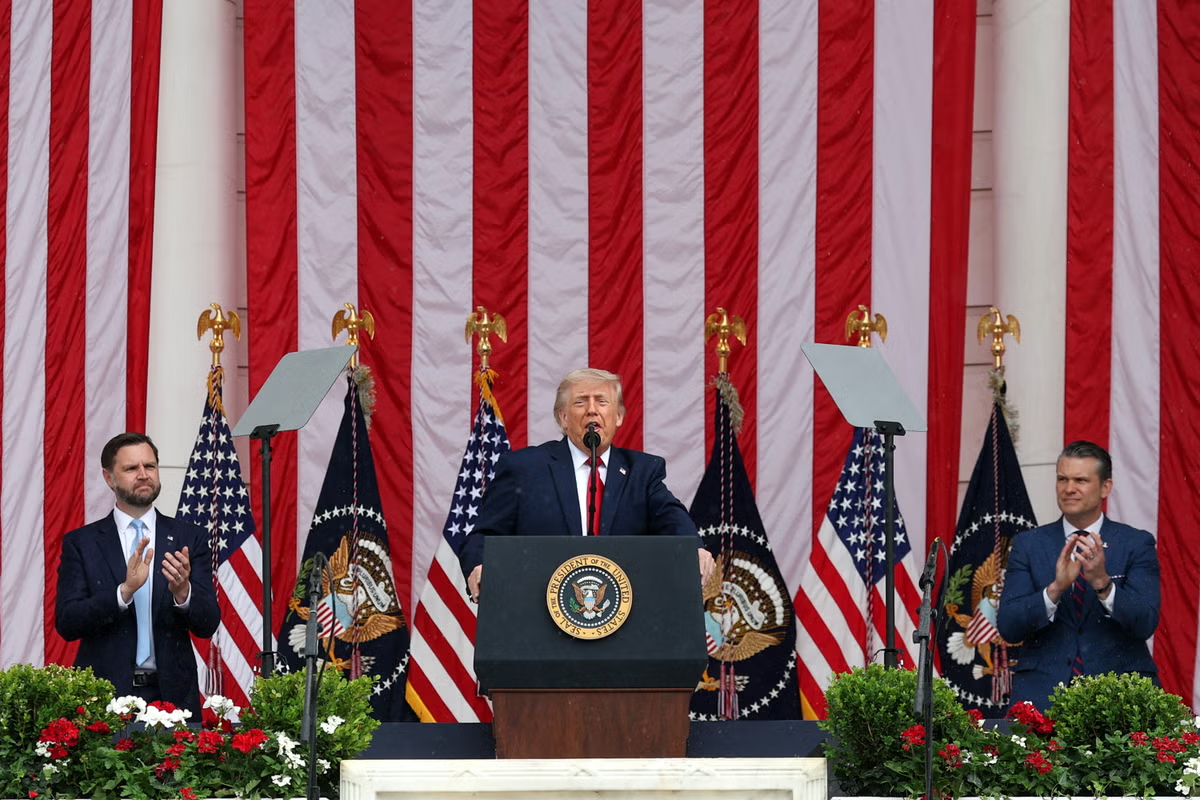
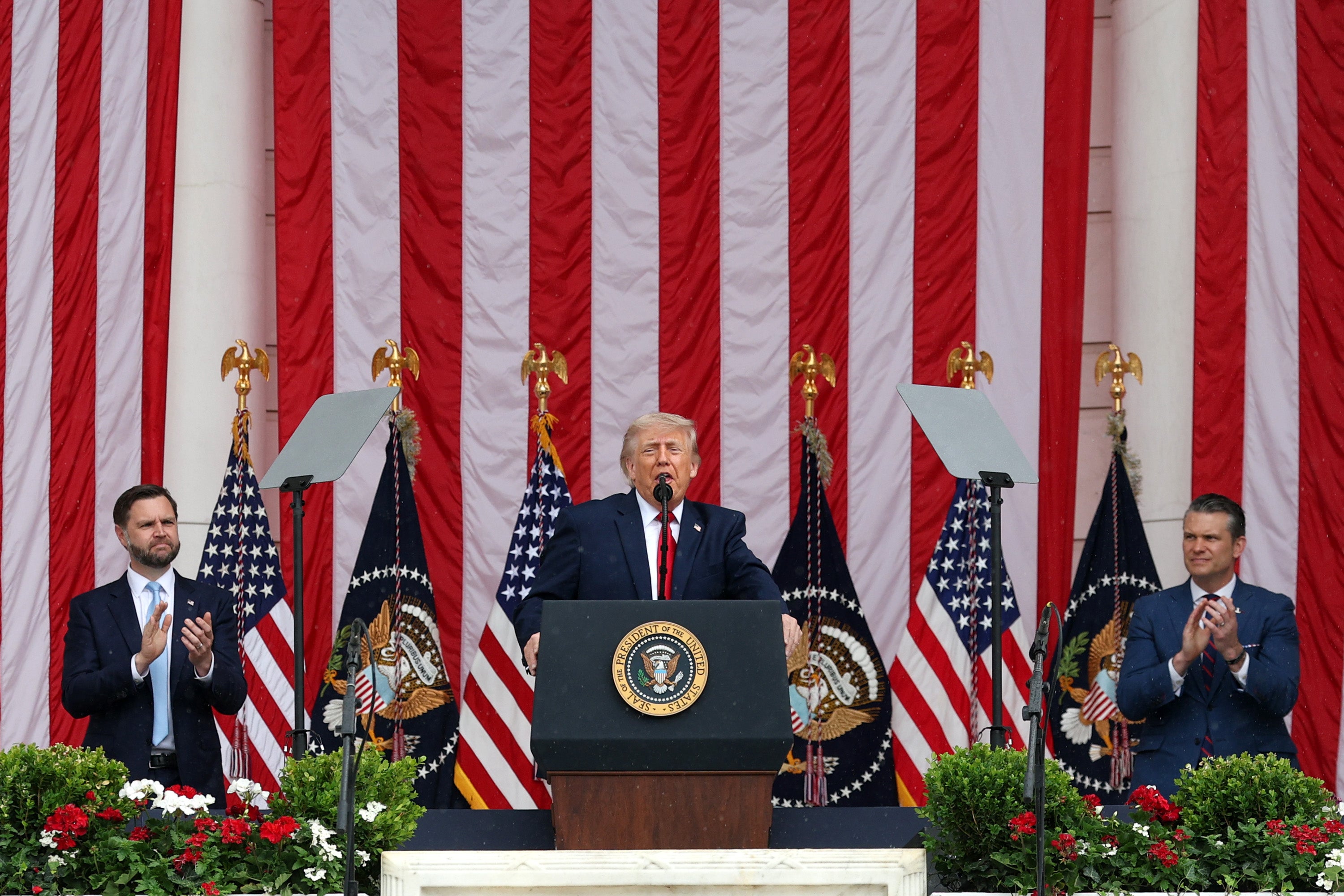
Donald Trump flanked by his defence secretary Pete Hegseth (R) and vice president JD Vance (L) on 25 May (Getty)
The financial cost of war
Jules Hurst III, the chief financial official for the Pentagon, said on 12 May that the US war on Iran has cost around $29bn so far, a increase of $4bn from the end of April due to repair and replacement costs, as well as the “general operational costs to keep people in theatre”.
The Pentagon has been reluctant to share a detailed breakdown of costs, but the latest figures yield a mean average spend of $386.67m per day – quite a departure from the $2bn a day the Pentagon was said to be spending in March, according to Republican lawmakers.
Professor Linda Bilmes, senior lecturer in public policy at Harvard Kennedy School, told The Independent that the reported upfront costs are just the “tip of the iceberg”.
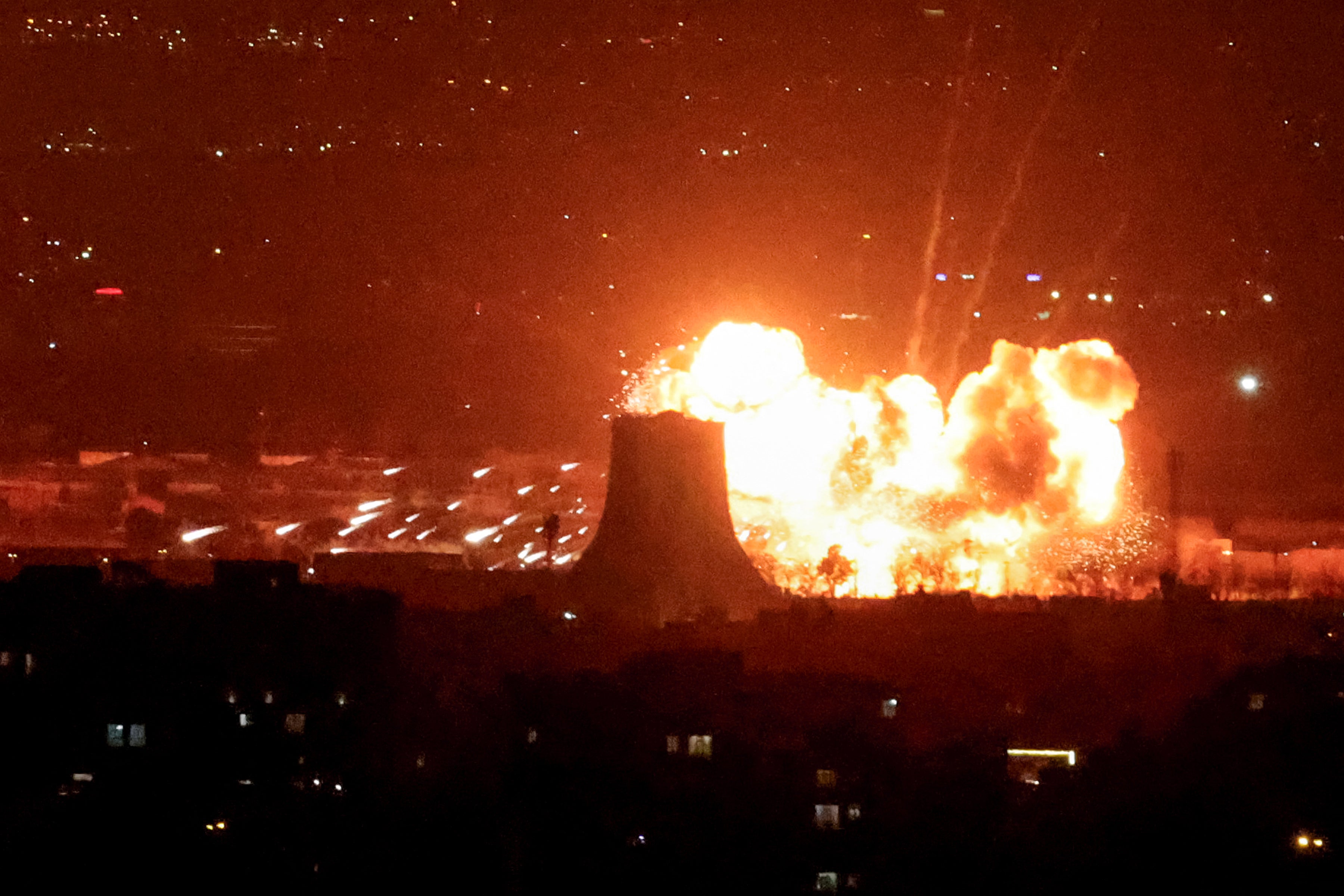
An explosion following strikes near Mehrabad International Airport in Tehran on 7 March (AFP/Getty)
“When the Pentagon talked about their figures of $29bn, they systematically underestimate the cost because they are basing this on the historical cost of inventory of munitions. But the actual replacement costs are much higher.”
A Tomahawk missile may be valued at around $2m each in inventory, she said, but replacement today would cost between $3m and $3.5m. Patriot missiles are priced at $1m to $2m, but the newer models cost $4m to $5m.
Advertisement
Late last month, and after the ceasefire took effect, the Center for Strategic & International Studies assessed that the United States had used upwards of 1,000 Tomahawks and between 1,060-1,430 Patriots since 28 February.
Professor Bilmes said the $29bn figure could be double or “probably three times as much” with accrual accounting.
But behind that figure, the United States will still have to make repairs to damaged military sites and facilities, like embassies, spread across the region, she added, giving a ballpark figure of an additional $300bn.
Advertisement
Longer term, the US will also have to contend with veteran benefits, disability claims and the interest of financing the war through debt. A bolstered Pentagon budget and the cost of huge new military contracts on an expedited delivery schedule will add billions more to longer-term costs of the war.
“When you put together the replacement costs … the obligations we have for rebuilding … and the long-term cost of caring for veterans, benefits, the paying debt service on all the borrowing and the increases to the base that come as a consequence of this war, you very quickly reach a trillion dollar figure,” Professor Bilmes said. “When I look at it, there’s no way it can end up costing less than that.”
The human cost of war
At least 7,053 people have been killed since 28 February, according to an aggregate of local tallies.
Advertisement
The war in Iran has been held to a tenuous ceasefire agreement since 8 April. Both sides have accused each other of violating the truce, but reports of strikes across the region have fallen massively since the height of the conflict in March.
A parallel ceasefire between Israel and Hezbollah in Lebanon emerged on 17 April, but both sides have continued attacks, also accusing each other of breaking the terms of the agreement.
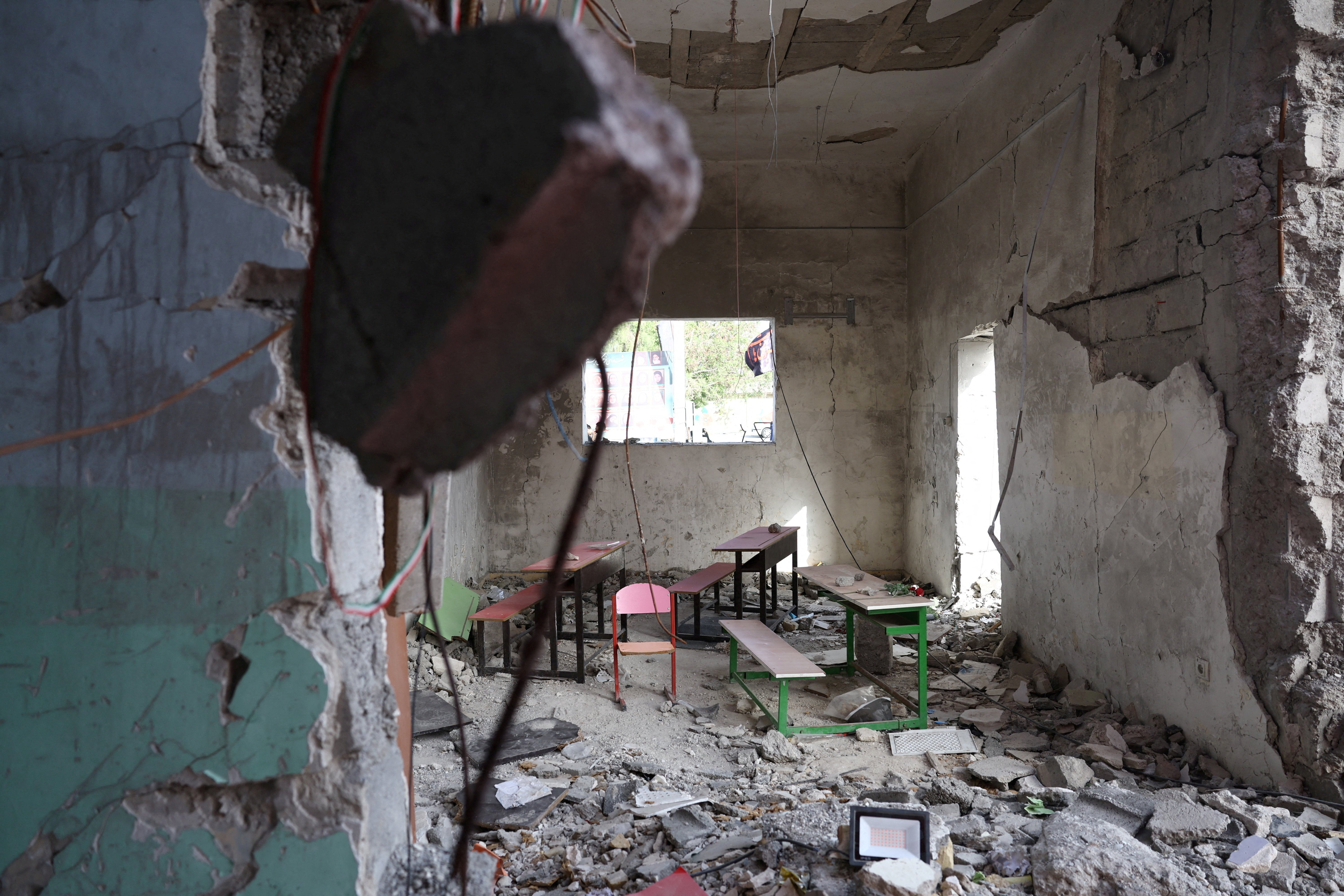
The United States is still expected to present its findings from an investigation into a strike at a girls’ school in Iran on the first day of the war that killed more than 175 children and teachers, according to Iranian officials. (Reuters)
The US-based rights group Human Rights Activists in Iran (HRA) has documented at least 3,636 fatalities, including 1,701 civilians, 1,221 military personnel, and 714 people whose identity or status could not be confirmed, between 28 February and 8 April. It said the figures should be taken as minimum estimates.
Gabriel Karlsson, the British Red Cross’s Middle East country cluster manager, said the Iranian Red Crescent Society has rescued more than 7,300 people and are providing medical care to tens of thousands more.
“The psychological impact is also deepening, with demand for psychological support services rising by over 200% since the escalation, underlining how this crisis is affecting not only physical safety, but long-term wellbeing,” he added.
Advertisement
The Lebanese health ministry reported on Tuesday that 3,213 people have been killed there since 2 March, when Israel and Hezbollah reopened hostilities. They said 9,737 people have been wounded.
By the end of March, more than a million people had been displaced across Lebanon, Mr Karlsson said. With clashes ongoing, people continue to be driven from their homes, with the Lebanese Red Cross supporting “tens of thousands” of patients.
Thirteen US military service personnel have also been killed, with more than 300 injured, according to US Central Command. Six were confirmed dead after a US military refuelling plane crashed over Iraq, while seven others were killed in action during operations against Iran.
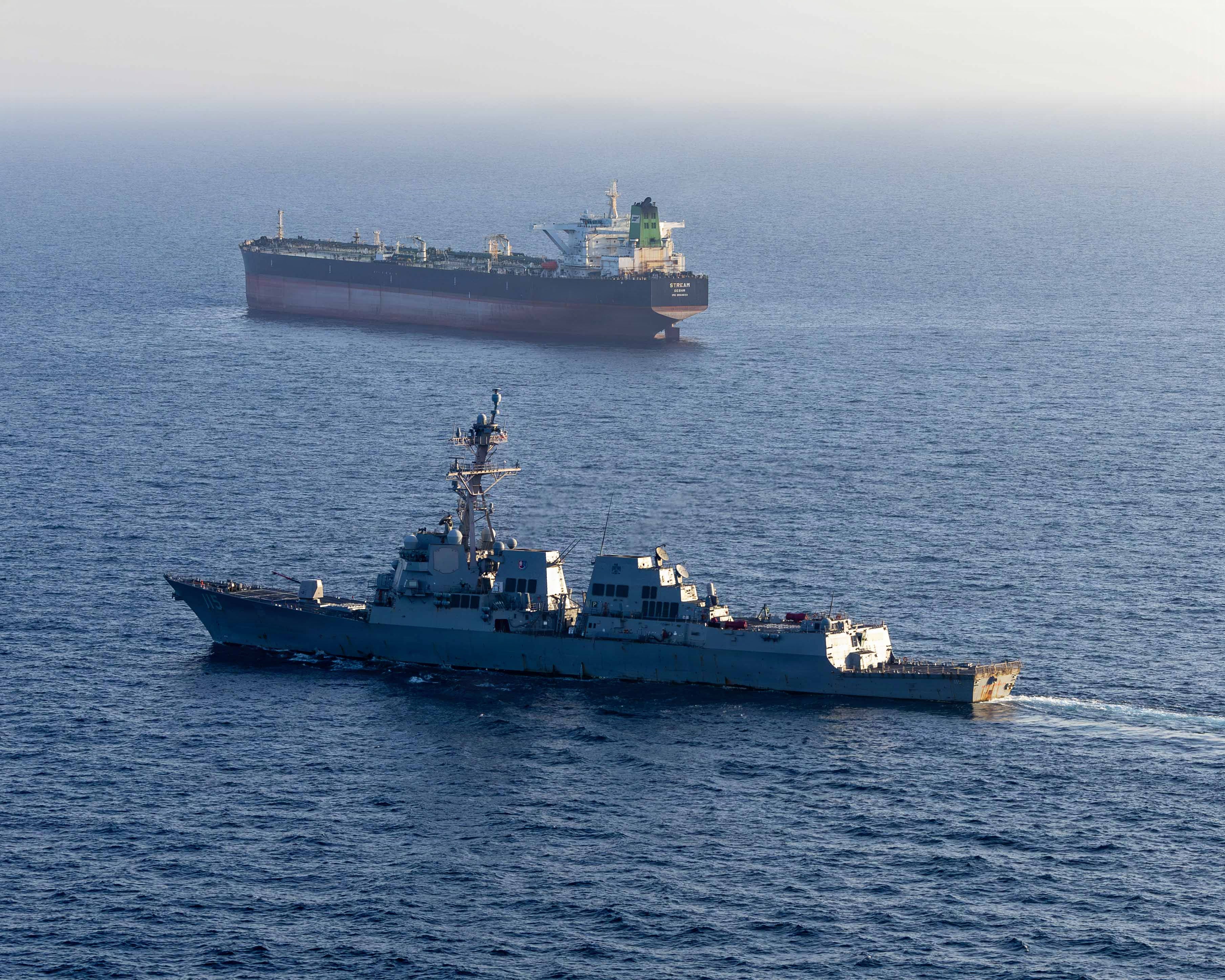
The Arleigh Burke-class guided-missile destroyer USS Rafael Peralta (DDG 115) enforces a blockade against an Iranian-flagged ship attempting to sail toward an Iranian port, on April 26 (Getty)
Missiles launched from Iran and Lebanon have killed 23 people in Israel, the ambulance service reported last month.
The conflict has resulted in further deaths across the broader Middle East, including 118 people killed in Iraq, 12 killed in the UAE, and seven killed in a helicopter crash in Qatar’s territorial waters, according to respective local authorities.
Advertisement
The UNestimates that four million people across the region could be pushed into poverty as a result of unemployment spiking at four per cent. Around the world, a further 30 million people could be pushed into poverty as the war causes disruptions to fuel and fertiliser supplies vital to agriculture.
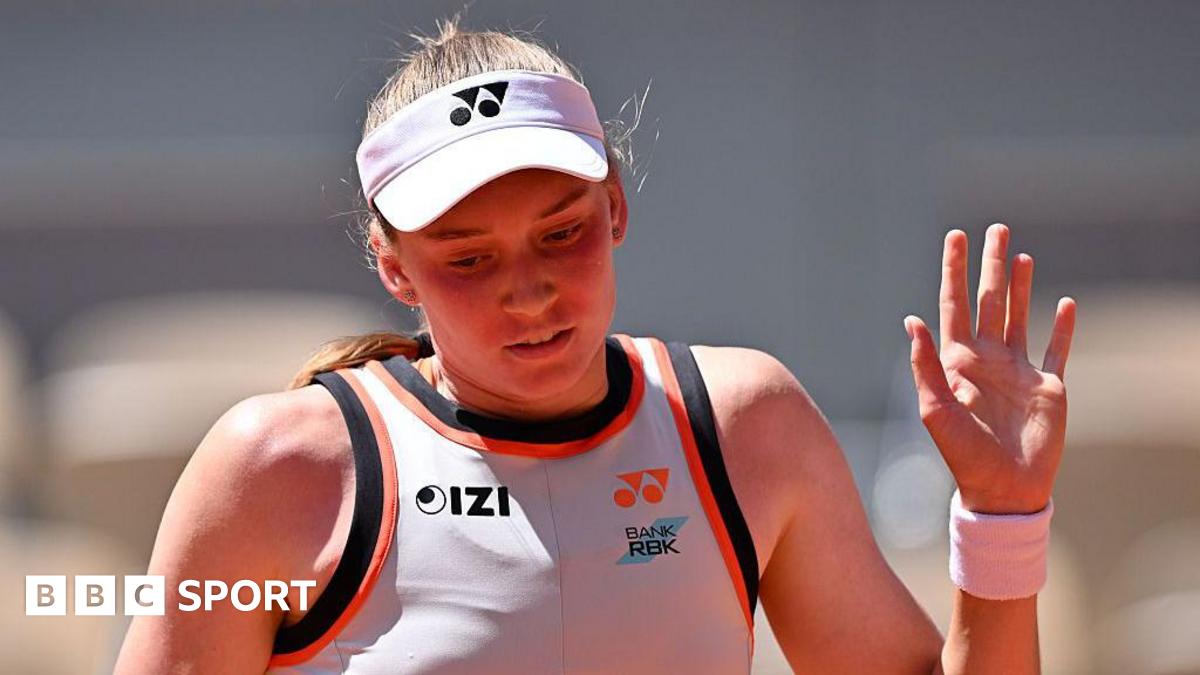
World number two Elena Rybakina suffered a surprise second-round defeat by world number 55 Yuliia Starodubtseva in the biggest French Open upset so far.
Despite winning the opening set, Rybakina looked far from her clinical best as Starodubtseva mounted an impressive comeback to win 3-6 6-1 7-6 (10-4).
Known for her big serve and precise hitting, reigning Australian Open champion Rybakina committed 71 unforced errors and landed just 53% of her first serves.
It is the first time Kazakhstan’s Rybakina has failed to reach the third round at Roland Garros since 2020.
Advertisement
Rybakina’s early exit also means Aryna Sabalenka will keep her world number one ranking regardless of her result at Roland Garros.










































You must be logged in to post a comment Login