

Crypto World
NAKA Down About 65% YTD and Over 99% From its All-Time High

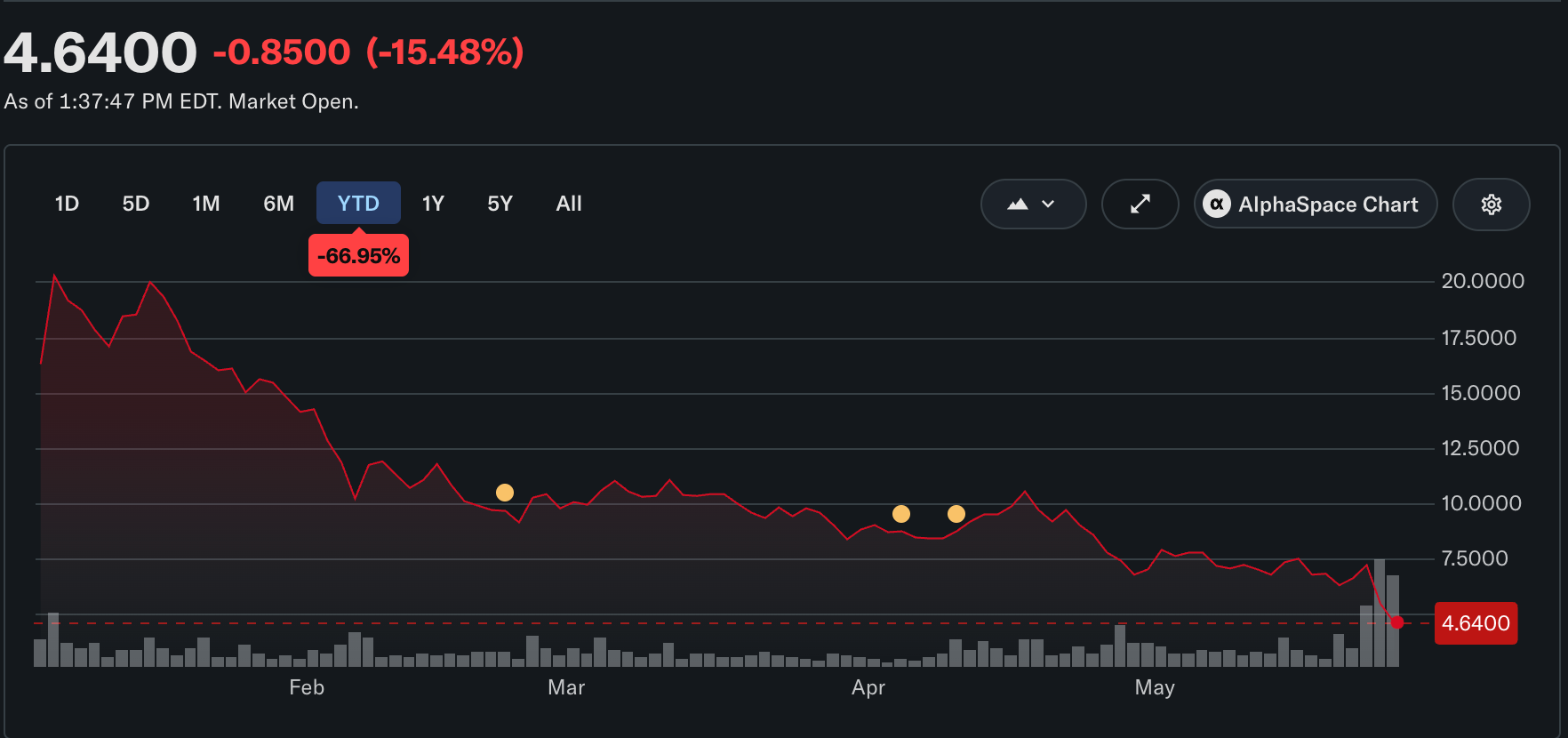
Nakamoto (NAKA) is trading down more than 10% on Wednesday just days after the Bitcoin treasury company completed a 1-for-40 reverse stock split undertaken to stay compliant with the Nasdaq stock exchange’s listing criteria.
NAKA stock is down by about 67% year-to-date (YTD) and by more than 99% since its May 2025 peak of about $34 per share, reaching a low of about $0.16 per share in April before the reverse stock split on Friday.
Nasdaq warned the company in December that its shares would be delisted after trading below $1 for at least 30 consecutive days, according to a Securities and Exchange Commission (SEC) filing.
The reverse split reduced the number of outstanding shares to about 17.4 million from about 696 million, according to the company.
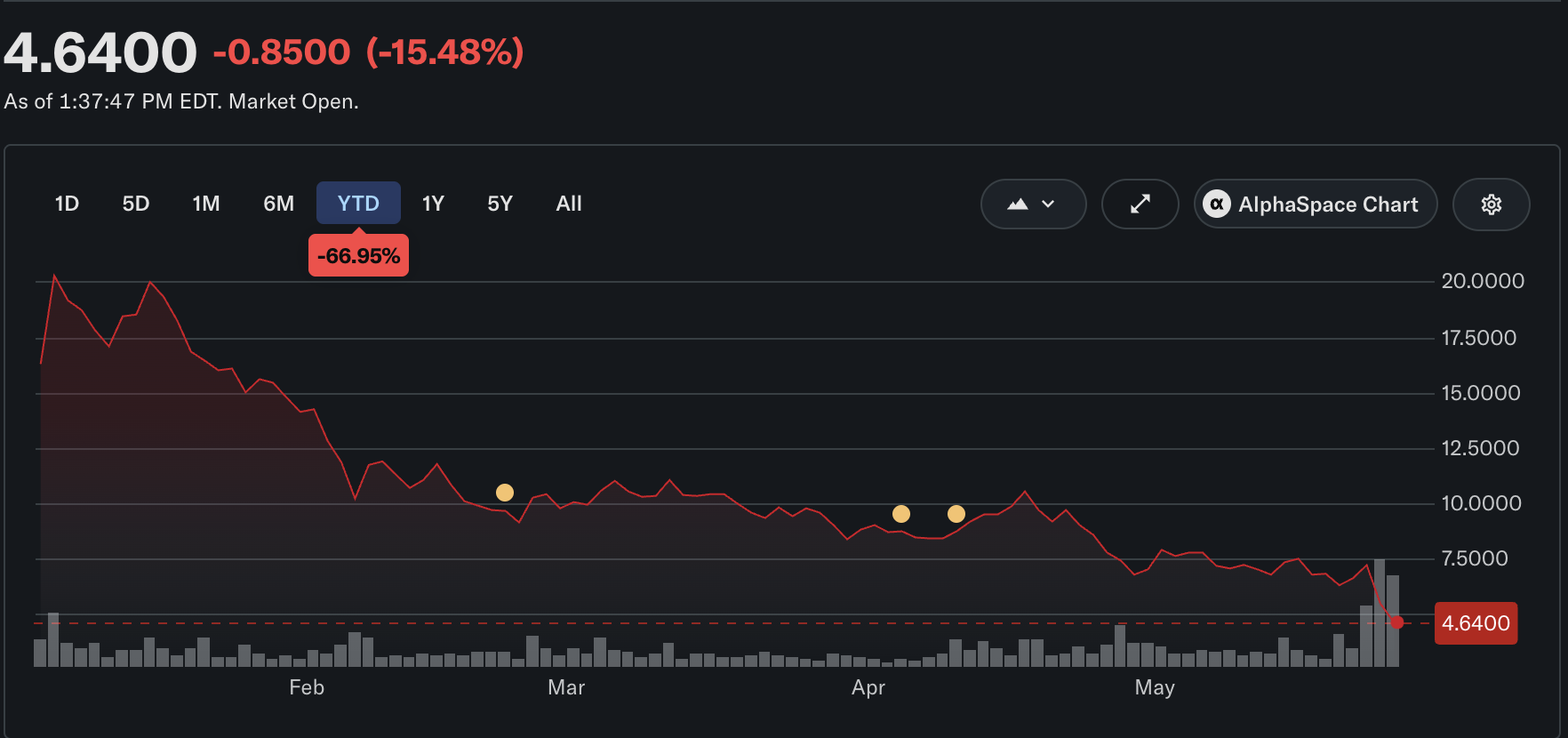
NAKA stock price is down by nearly 67% year-to-date. Source: Yahoo Finance
Cointelegraph reached out to NAKA for comment but did not receive a response by the time of publication.
The decline in NAKA’s value comes amid a broad downturn in the Bitcoin treasury sector that started in 2025; however, the company has also underperformed the industry’s top players, including Strategy (MSTR), Twenty-One Capital (XXI) and Strive Asset Management (ASST).
Related: Bitcoin firm Nakamoto records net loss in Q1 despite sixfold revenue growth
BTC treasury companies show signs of recovery, but market remains challenging
Strategy, the biggest Bitcoin treasury company as measured by its BTC holdings, is up about 2.5% YTD, and is trading at about $155 per share.
Twenty-One Capital, the second-largest publicly traded BTC treasury, with 43,514 coins, is down by more than 17% YTD, and is trading at about $7.26 per share.
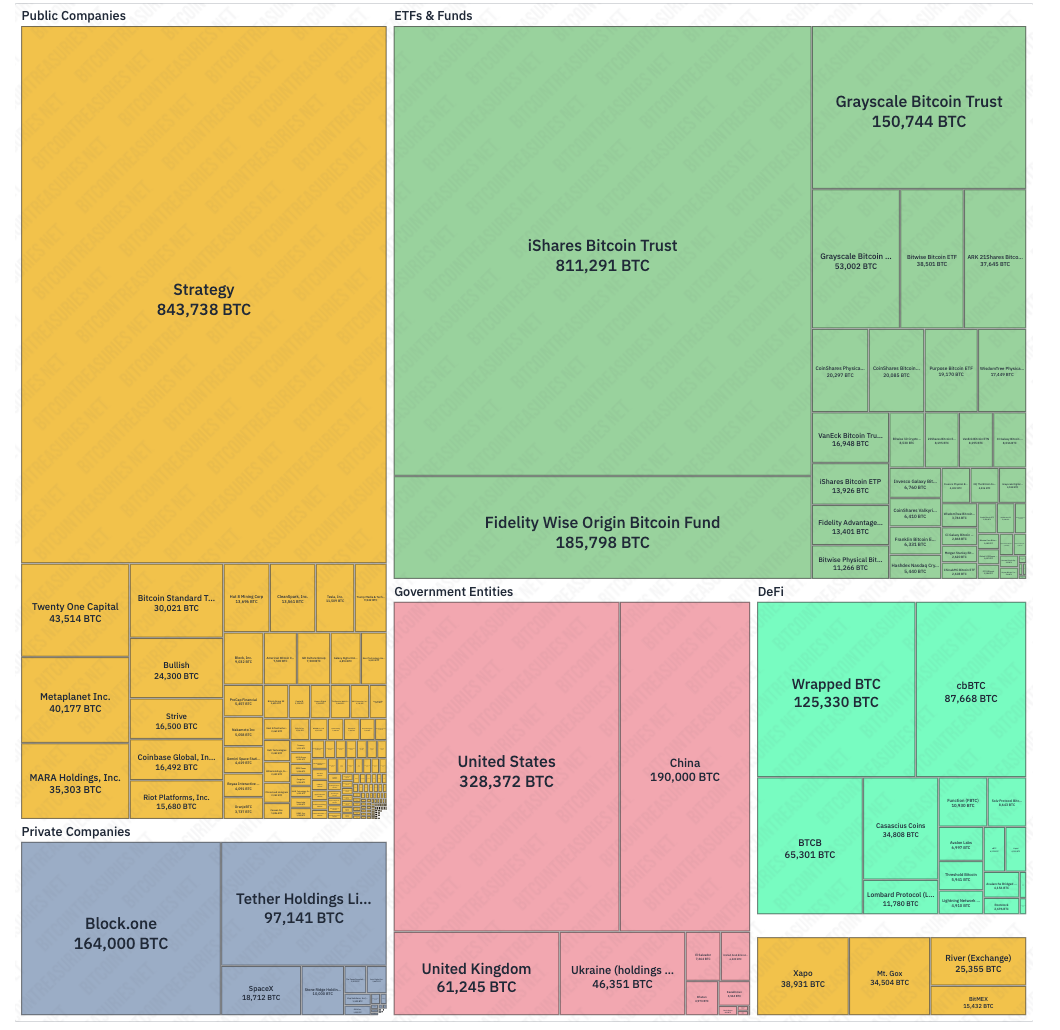
The current distribution of Bitcoin among publicly traded BTC treasury companies, private enterprises, government entities and investment funds. Source: Bitcoin Treasuries
Strive is also up by over 20% YTD, last trading at about $17.72 a share.
The digital asset treasury space is likely to experience consolidation in 2026, as bigger companies eat up smaller firms, according to venture firm Pantera Capital.
“2026 will see brutal pruning. In each major asset class, only one or two players will dominate. Everyone else gets acquired or left behind,” analysts at Pantera forecast in January.
Magazine: Bitcoin will not hit $1M by 2030, says veteran trader Peter Brandt


TLDR:
- Nium joins Circle Payments Network as a global payout partner across 190+ countries and 100 currencies.
- Financial institutions can now access USDC settlement and last-mile fiat payouts through a single integration.
- The partnership reduces prefunding requirements across corridors while adding real-time onchain transaction tracking.
- CPN has reached $8.3 billion in annualized volume, reflecting rising institutional adoption of USDC-based rails.
Circle Payments Network (CPN) has added Nium as a global payout partner, linking USDC settlement with last-mile delivery across more than 190 countries.
The partnership gives financial institutions on CPN direct access to Nium’s payout infrastructure in 100 currencies through a single integration.
This move addresses a long-standing gap between fast stablecoin settlement and reliable local currency delivery worldwide.
Nium Joins CPN to Streamline Cross-Border Payments
Financial institutions using CPN can now route payments directly through Nium’s real-time payout rails. This removes the need to manage multiple local providers across different corridors.
Institutions gain access to Nium’s full country and currency portfolio without building separate integrations for each market.
The partnership also brings integrated FX optimization and smart routing to CPN transactions. Funds can be converted and delivered efficiently without institutions sourcing individual providers.
This reduces both operational complexity and the capital tied up in prefunding accounts across multiple corridors.
Prajit Nanu, Founder and CEO of Nium, pointed to the broader shift happening across the payments industry. “Traditional and onchain payment rails are converging, and that convergence demands infrastructure that banks, fintechs, and global enterprises can rely on at scale,” he said.
Nanu added that the deal combines Circle’s regulated settlement instrument with Nium’s global payout reach for a more seamless cross-border experience.
The partnership targets a key challenge that has long slowed institutional adoption of stablecoin rails. Bridging fast, transparent settlement with dependable last-mile delivery has remained difficult at scale. CPN and Nium now tackle both sides of that equation through one connected network.
USDC Settlement Meets Real-Time Last-Mile Delivery
Circle brings regulated USDC-powered settlement to the partnership, with built-in compliance and a governed network for institutional use.
Nium handles the final step, delivering funds in local currency into accounts, wallets, and cards worldwide. Together, the two companies offer a unified foundation for end-to-end global payments.
Kash Razzaghi, Chief Commercial Officer at Circle, explained what the integration means for institutions exploring stablecoin payments. “Financial institutions are increasingly looking for ways to use stablecoins to solve persistent payments pain points,” he said.
Razzaghi added that the Nium integration extends USDC from a settlement instrument into a complete payments flow, offering greater speed, transparency, and capital efficiency.
CPN has reached $8.3 billion in annualized transaction volume, based on trailing 30-day activity as of March 31, 2026.
Circle notined that CPN participants can expect faster end-to-end payments, reduced prefunding across corridors, and local fiat payouts through a single integration. That figure reflects growing institutional demand for USDC-based payment infrastructure.
Institutions on CPN can also track transactions in real time through onchain transparency. This visibility supports both payment operations teams and compliance functions managing multi-jurisdiction reporting.
The Nium integration marks a broader step in CPN’s growth as a governed network for institutional stablecoin payments at scale.


Trading infrastructure in digital assets is no longer judged only by speed, liquidity, or exchange volume. Institutions now need reliable execution, custody separation, collateral flexibility, transparent market data, and infrastructure that can scale under pressure.
KuCoin is building around that requirement. The exchange is nominated for Best Trading Infrastructure at the BeInCrypto Institutional 100 Awards 2026.
Infrastructure Metric
Latest Verified Data
Partner ecosystem
Approximately 1,000 professional partners across brokers, fintech platforms, market makers, and asset managers
Institutional connectivity
200+ active institutional API integrations
Account and trading infrastructure
Unified account and trading connectivity across key market functions
Custody and OES framework
Off-Exchange Settlement and third-party custody integrations, including BitGo Singapore Go Network, Cactus Custody / Cactus Oasis, and Ceffu MirrorX
RWA collateral infrastructure
RCMS with UBS uMINT and Asseto CASH+
Market data integration
KuCoin Futures market data on TradingView
Operational reliability and security
24/7 security operations, multi-layer defense, real-time risk monitoring, WAF and DDoS protection, DNS security, centralized logging, backup and recovery readiness, cloud-native scalability, and recognized security and privacy standards
Trust-First Infrastructure as the Foundation
For KuCoin CEO BC Wong, the definition of trading infrastructure has expanded.
In the past, trading infrastructure was defined primarily by speed and liquidity. Today, we believe infrastructure must also be measured by trust, transparency, resilience, and accountability,” BC said in an interview with BeInCrypto.
That view sits behind KuCoin’s “Trust First. Trade Next.” philosophy. Matching engines, APIs, and liquidity access remain important, but they are no longer enough on their own.
Professional traders, institutions, and everyday users need confidence that the venue they trade on is secure, transparent, resilient, and operationally reliable.
For KuCoin, trust is not a supporting function around trading infrastructure. It is part of the infrastructure itself. That means combining high-performance execution with transparent asset safeguards, Proof of Reserves, institutional-grade custody and settlement options, and a platform architecture designed to support both professional and retail users.
Building for Professional-Grade Demand Without Leaving Retail Behind
The nomination focuses on institutional infrastructure, but KuCoin’s architecture is not designed for institutions at the expense of retail users. Its underlying approach is to support professional-grade demand while preserving the accessibility, responsiveness, and ease of use expected by everyday traders.
This reflects what KuCoin describes as asymmetric resilience. Institutional clients typically require low latency, high determinism, scalable account structures, advanced risk controls, and reliable execution under complex market conditions.
Retail users care most about availability, responsiveness, intuitive product design, and a smooth experience during periods of high market activity.
Both user groups are supported by the same trusted market foundation. Retail users may never see the underlying architecture, but they experience its impact through tighter spreads, more stable execution, and greater platform reliability. This is why KuCoin’s infrastructure case should be framed not only as an institutional story, but as a broader market infrastructure story.
Deterministic Scalability for Partner and Institutional Growth
KuCoin’s infrastructure case also rests on scale. The platform supports approximately 1,000 professional partners across brokers, fintech platforms, market makers, and asset managers, and has more than 200 active institutional API integrations.
BC described this as a shift in how exchanges operate.
“As crypto markets evolve, exchanges are no longer serving only end users. They are increasingly becoming infrastructure providers for brokers, fintech platforms, market makers, and asset managers,” he said.
Supporting this ecosystem requires more than raw system capacity. It requires deterministic scalability: the ability to maintain stable execution quality, predictable latency, and operational certainty as market demand grows.
KuCoin supports this through proactive simulation, capacity planning, and early-warning mechanisms designed to identify potential bottlenecks before localized pressure becomes broader platform stress. It also isolates critical trading flows through dedicated pathways for high-frequency trading, market making, broker connectivity, and other professional use cases.
Modular system expansion, dynamic traffic balancing, and real-time resource optimization further help maintain stable execution quality as partner activity increases.
Plug-and-Play Institutional Connectivity
For institutional firms, connectivity is not merely a technical feature. It is part of the trading infrastructure itself.
In this context, “plug-and-play” does not mean turning institutional infrastructure into a basic connection. It means reducing unnecessary integration friction while preserving the flexibility, control, and customization that professional firms require.
KuCoin has improved its connectivity layer through a more unified API framework, standardized documentation, SDK support across major programming languages, WebSocket-based market data, testing tools, and partner dashboard capabilities.
These improvements help institutional engineering teams move more efficiently from technical evaluation to production deployment.
Broker Fast API and Broker Dashboard upgrades also support a more streamlined onboarding process, including authorization, API creation, user management, trading visibility, and commission tracking.
For brokers, asset managers, and trading technology firms, this turns KuCoin integration from a one-off engineering project into a repeatable infrastructure connection.
Custody Separation and RWA Collateral
KuCoin’s Off-Exchange Settlement framework is another core part of the nomination.
Institutional clients can trade on KuCoin while keeping assets with qualified custodians. Its custody integrations include BitGo Singapore Go Network, Cactus Custody, and Ceffu MirrorX. This helps reduce counterparty concentration risk while maintaining access to KuCoin’s liquidity.
The same logic applies to KuCoin’s RWA Collateral Mirroring Solution, or RCMS.
Through RCMS, institutions can use tokenized real-world assets as trading collateral without moving the underlying assets out of their regulated structures. UBS uMINT and Asseto CASH+ are both supported inside this framework.
That matters because tokenized assets are moving from passive holdings into trading workflows. KuCoin’s infrastructure allows a tokenized money market fund position to remain inside its qualified wrapper while being mirrored as usable collateral.
Data as Trading Infrastructure
KuCoin’s TradingView integration adds another layer to the nomination.
With KuCoin Futures market data integrated into TradingView, professional traders can analyze derivatives markets through familiar charting tools, alerts, indicators, Pine Script strategies, and research workflows.
“The value is not simply better charting,” BC said. “The integration allows professional traders to incorporate KuCoin’s market data into their existing analytics infrastructure, making it easier to benchmark liquidity, monitor market quality, and build more data-driven trading strategies.”
Security, Resilience, and Operational Reliability
Institutional-grade infrastructure also requires operational resilience. For KuCoin, reliability is built through multiple layers rather than a single certification, system claim, or point solution.
At the platform level, KuCoin has invested in 24/7 security operations, multi-layer defense mechanisms, real-time risk monitoring, WAF and DDoS protection, DNS security, centralized security logging, backup and recovery mechanisms, and ongoing system upgrades.
Its infrastructure approach also emphasizes cloud-native scalability, distributed system monitoring, capacity planning, resource redundancy, and tested operational procedures.
The result is a more resilient infrastructure model: security protects the system, transparency verifies it, and custody and settlement design reduce structural risk.
That is why KuCoin’s nomination fits the Best Trading Infrastructure category. The exchange is being assessed as a trading stack: execution, settlement, custody connectivity, collateral design, partner infrastructure, and market data.
The BeInCrypto Institutional 100 Awards recognize firms building the systems that could define the next phase of digital finance.
KuCoin’s nomination reflects its role in building the rails that enable brokers, institutions, and professional traders to access digital asset markets with greater control, improved connectivity, and clearer operational safeguards.
The post BeInCrypto 100 Institutional Awards Nomination: KuCoin for Best Trading Infrastructure appeared first on BeInCrypto.
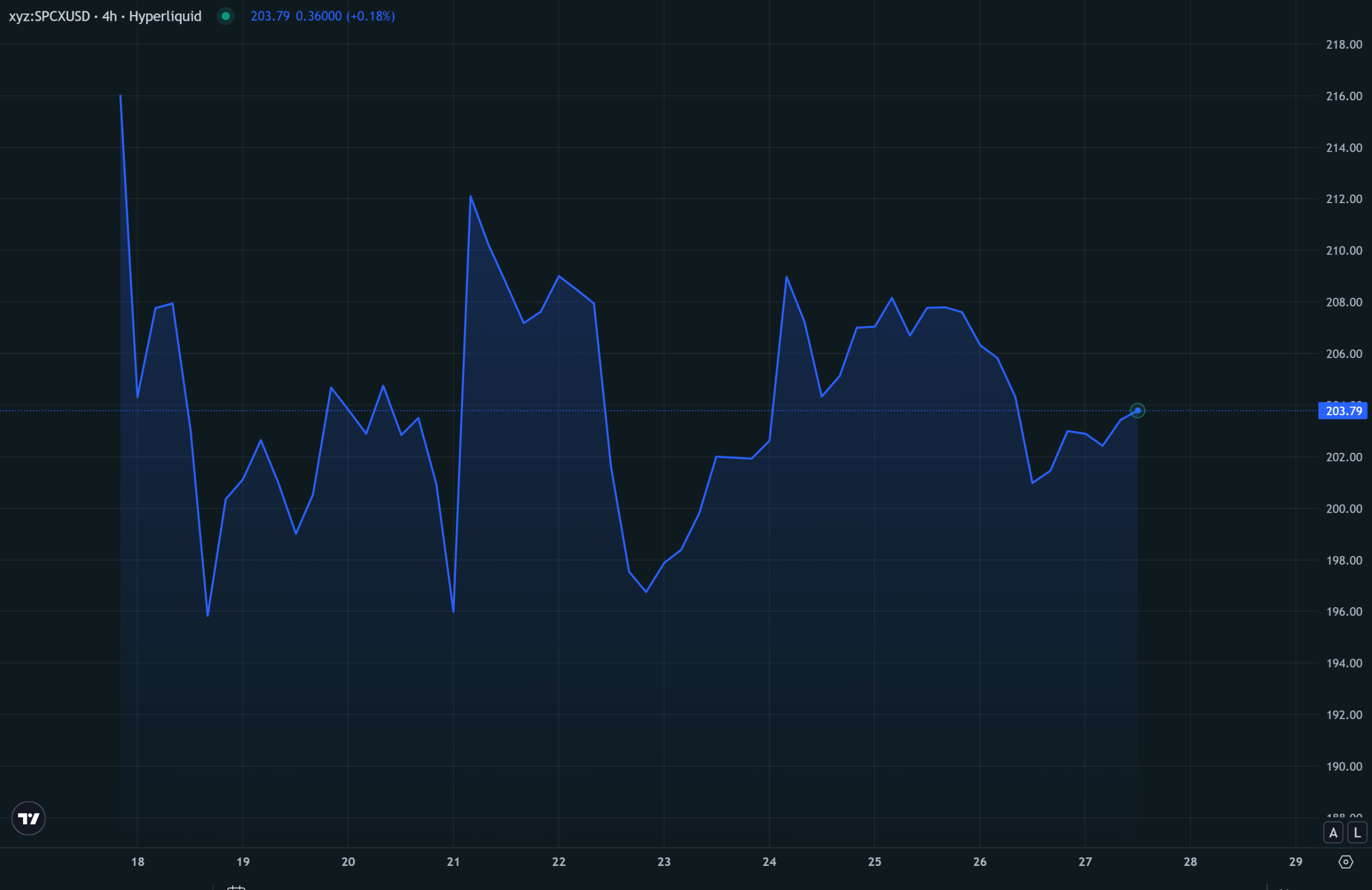
SpaceX’s June 12 listing is triggering a parallel pricing race in crypto. Synthetic perpetuals on Hyperliquid already imply a $2 trillion valuation for the rocket and satellite-internet group.
Three forward-looking calls now define the trade. The IPO targets $1.75 trillion and a $75 billion raise, the largest float ever attempted.
1. Perp Convergence Within Six Hours
Hyperliquid’s SPCX-USDC contract, launched May 18 at a $150 reference, spiked to $216 before settling near $203. Funding rates have run steeply positive since launch.

Arbitrageurs are expected to short the perp and buy real shares the moment SPCX opens on Nasdaq. That trade should pull the synthetic back toward the listed price.
“SPCX perps trading $216 on Hyperliquid vs $525 predicted Nasdaq IPO on June 12. That 60% gap exists because the arbs [Arbitrageur] is structurally broken…CBRS proved convergence happens violently in the final 72 hours before listing,” one user noted.
Arbitrageurs are traders who make money by spotting tiny price differences for the same thing in different places.
They buy low in one market and sell high in another at the same time, locking in risk-free profit as prices snap together.
In the CBRS example, they shorted expensive pretend shares on crypto, bought real shares on Nasdaq, and profited when prices converged.
A 100 to 250 basis-point gap is the most plausible convergence window. The bulk of that move should land in the first six trading hours of June 12.
Prior grey-market resets on Reddit and ServiceTitan closed in four to six hours. The crypto pricing race gives arbs a clean entry at the open.
2. Smaller Venues Face 90-Day Delisting Risk
Synthetic pre-IPO products from Binance, OKX, Bitget, BingX, and Hyperliquid have no precedent in US securities law. The rationale for the synthetics fades the moment SPCX trades publicly.
Regulators have not opened a formal inquiry yet. If the SEC or CFTC starts asking questions, the smallest venues are the most exposed.
BingX and OKX run lighter compliance benches than Binance, while Hyperliquid’s on-chain architecture limits its surface area.
BTCC’s SpaceX futures and other mid-tier venues do not have that cushion if a subpoena lands during the post-IPO window.
At least one venue restricting or delisting SPCX within 90 days is the base case.
That risk weighs heaviest on platforms that followed Bitget’s pre-IPO product onto the trade.
3. Bitcoin Treasury Becomes the Next IPO Playbook
SpaceX’s S-1 disclosed 18,712 Bitcoin (BTC) at a $661 million cost basis. That position is worth roughly $1.42 billion at the current BTC spot price of $75,690.
The 18,712 figure puts the company ahead of Tesla, which holds about 11,509 BTC.

The disclosure landed alongside Starlink revenue in the prospectus, signaling a marketing pitch to BTC-correlated allocators rather than a Musk-only quirk.
OpenAI and Anthropic are the most likely candidates to copy the SpaceX template before year-end. Anthropic’s pre-IPO valuation already crossed $1 trillion on private markets.
The OpenAI IPO filing is reportedly being drafted at an $852 billion post-money mark.
Either company could disclose a BTC position to secure a 5 to 8% premium from crypto-correlated allocators on the book.
What to Watch Next
SpaceX’s roadshow opens June 4, with pricing on June 11 and first Nasdaq trading on June 12. The first hour of SPCX activity will decide the trade.
A clean convergence inside six hours validates crypto’s pre-IPO experiment.
A wider gap, or any regulatory action against a venue, would say the opposite.
The post 3 Massive Things That Could Happen After SpaceX Goes Public in June 2026 appeared first on BeInCrypto.
TLDR:
- WLD surged 15.72% in 24 hours, trading at $0.3813 while most altcoins posted losses on the same day.
- Whale transactions hit 64 in one day, marking the highest level of 2026 according to Santiment on-chain data.
- Oku Trade integration into World App launched swap competitions, pushing trading volume up 266% to $768 million.
- New wallet creation reached 379 in a single day, setting a 2026 record as retail interest in WLD accelerated.
Worldcoin (WLD) recorded a 15.72% price gain in 24 hours, trading at $0.3813 on a broadly red market day. On-chain data from Santiment showed whale transactions, active addresses, and new wallet creation all reaching their highest or second-highest levels of 2026.
Trading volume climbed 266% to $768 million. Open interest in WLD futures rose to $281 million from $217 million the previous day.
Whale and Retail Activity Reach Record Levels in 2026
Santiment data recorded 64 whale transactions within a single 24-hour window. That figure marked the highest whale activity for WLD so far in 2026.
Active addresses also jumped to 1,309 during the same period, which ranked as the second-highest reading of the year.
Network growth, measured by new wallet creation, reached 379 addresses in one day. This figure also set a 2026 record for the project.
Together, these three metrics rising at once pointed to growing participation from both large and small investors.
However, Santiment noted that the spikes appeared tied to the price surge itself. The data provider flagged the activity as potentially FOMO-driven rather than organic accumulation. That distinction matters when assessing whether the engagement will persist beyond the rally.
Still, the convergence of whale moves and retail interest in a short window is relatively uncommon. When both groups enter a market simultaneously, it can reflect broader shifts in sentiment around a project.
DeFi Integration and AI Narrative Drive WLD Momentum
The immediate catalyst behind the price move was the integration of DeFi aggregator Oku Trade into the World App.
The aggregator routes transactions through Worldchain and launched weekly swap competitions. Winners can earn up to 100 WLD per competition round.
According to BSCNews, the competition mechanics encourage repeat swap behavior from participants. That pattern showed up directly in spot volume figures, which more than tripled over the prior session. The structural incentive behind the volume spike differs from purely speculative buying.
Beyond the DeFi integration, WLD also benefits from its positioning within the AI narrative. Worldcoin is a crypto and digital identity project co-founded by OpenAI CEO Sam Altman. The project uses biometric verification through Orb devices to build a global proof-of-personhood system.
As AI adoption accelerates through 2026, concerns around bots, fake identities, and AI-generated content have grown. That backdrop keeps WLD relevant in news cycles tied to AI fraud and digital identity.
On a day when Bitcoin sat near $76,006 and Ethereum traded around $2,072, WLD stood out as one of the few assets posting gains across the broader altcoin market.
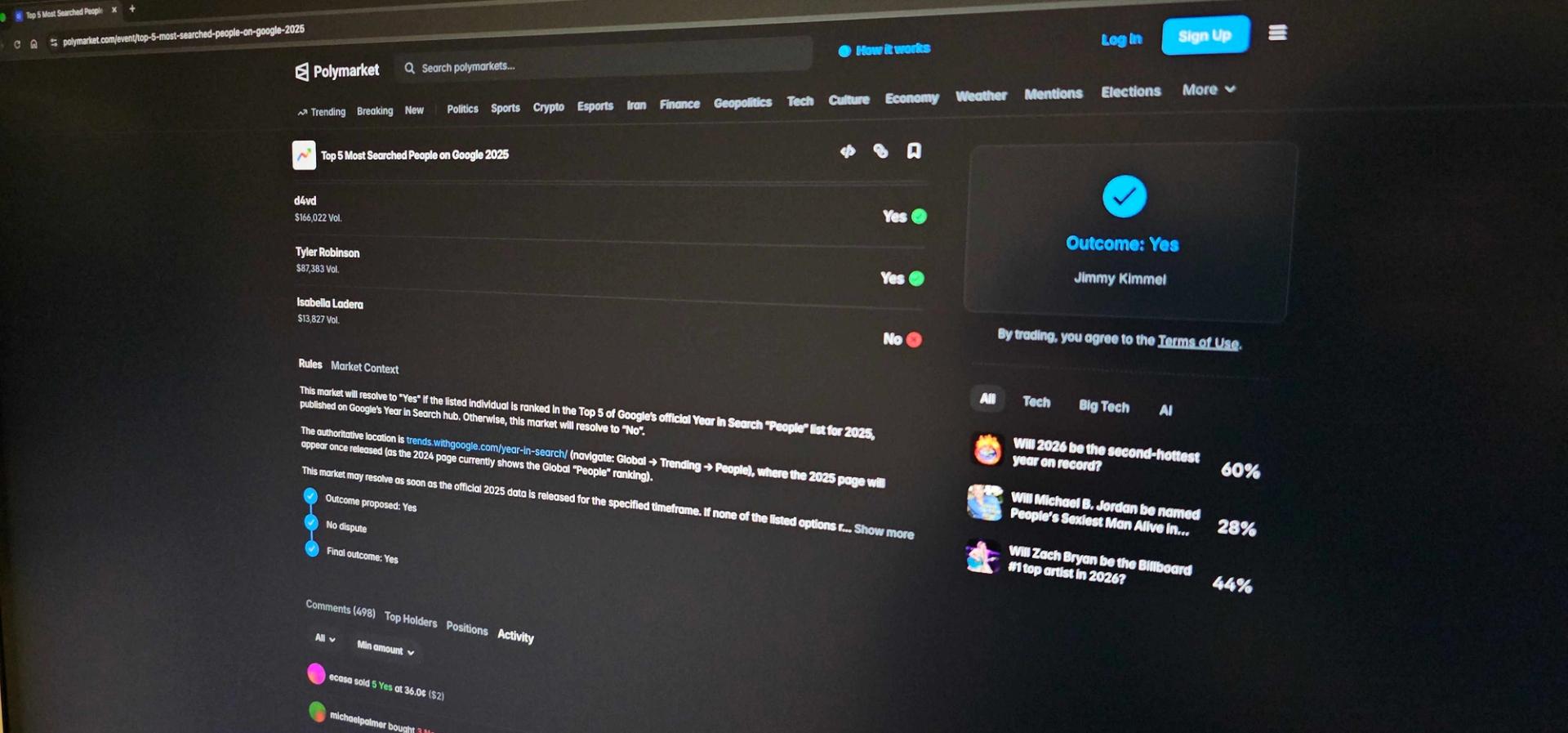
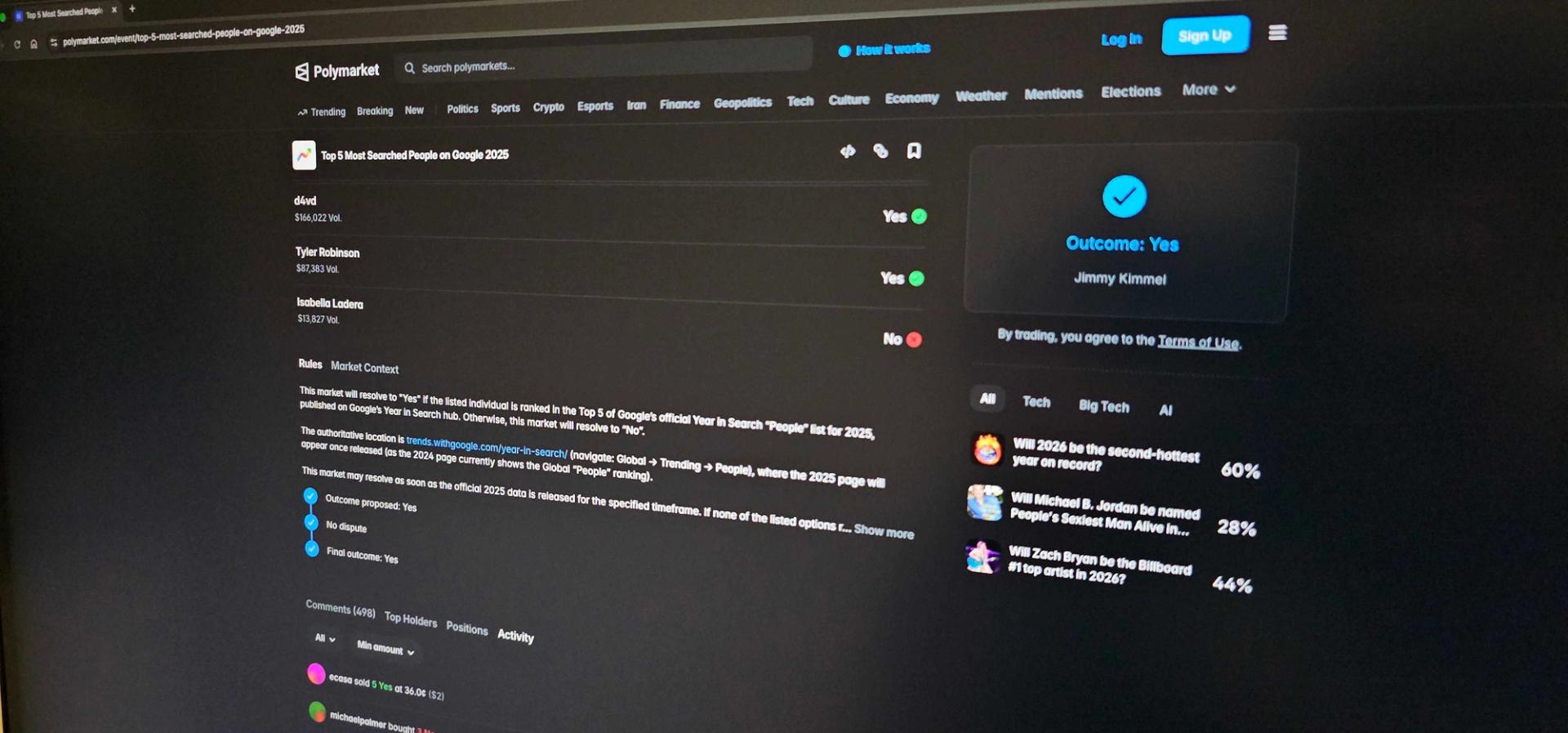
A Google security engineer, Michele Spagnuolo, was arrested and charged over alleged insider trading by placing bets on Polymarket about what Google users were searching, U.S. officials alleged on Wednesday.
According to a complaint unsealed by the U.S. Attorney’s Office for the Southern District of New York, Spagnuolo used “material nonpublic information” to place bets on who would appear on Google’s list of most-searched for individuals for 2025, after Polymarket began offering these markets last fall.
Spagnuolo allegedly used an internal Google tool to track who the most-searched-for individuals were and transferred some $3.8 million in USDC to a Polymarket address, said the complaint, which was signed by FBI Special Agent Brandon Racz.
The account, which used the username “AlphaRaccoon,” bet that D4vd (a rapper recently charged with murdering a 14-year-old girl) would be one of the most-searched for individuals in late November. Spagnuolo allegedly accessed Google’s internal tool, which showed D4vd trending, a few hours before the AlphaRaccoon account placed the bet.
The user AlphaRaccoon moved 5 million USDC.e from their Polymarket account to a wallet, before moving the funds through a swapping service and a privacy tool, the complaint said. Some of the funds were ultimately moved to an account at a payment processor in Italy, which had been opened by someone using Michele Spagnuolo’s government identification card.
“Unlike the counterparties to his trades, Spagnuolo knew the outcome of these wagers before the trading public did because he had accessed Google’s confidential, commercially valuable internal data,” the complaint said. “Spagnuolo personally profited more than approximately $1,200,000 from his trades based on nonpublic information. Once he won, Spagnuolo then took deliberate steps to conceal his unlawful use of nonpublic information by attempting to obscure the source and ownership of his unlawful proceeds.”
Spagnuolo is being charged with commodities fraud, wire fraud and money laundering, according to the complaint.
Wednesday’s charges mark the second major arrest of someone who allegedly traded on Polymarket using insider information, following an earlier arrest of a U.S. Army soldier who allegedly bet on the Nicolas Maduro raid he was part of.
Crypto World
Cash App Goes Live With Fee-Free USDC Transfers, Framing Stablecoins as a Path to Bitcoin
Cash App, the payments platform owned by Block, the financial technology company co-founded by Jack Dorsey, launched support for sending and receiving USDC on Wednesday, offering fee-free stablecoin transfers across four blockchain networks with no separate wallet or crypto setup required. Users… Read the full story at The Defiant


Banca Sella said it became the first Italian lender to secure a crypto services license from the Bank of Italy under the European Union’s Markets in Crypto-Assets (MiCA) regulation.
The private bank, which has 50 billion euros ($54 billion) in assets under management and more than 3.1 million customers, said it completed a formal 40-day notification process, clearing it to roll out crypto services to clients later this year.
“Being approved as a crypto-asset services provider will enable Banca Sella to launch in 2026 a solution dedicated to the custody, transfer and receipt of digital assets aimed at selected categories of customers,” the bank said in a website statement.
While the bank’s initial retail crypto plans were routed through its mobile-banking venture, Hype. This new corporate-facing infrastructure relies on a compliance partnership with blockchain intelligence firm Chainalysis and an internal digital asset pilot initially built alongside Fireblocks.
Sella joins the roughly 20 major European banks offering crypto asset services under MiCA, including Germany’s Commerzbank and LBBW, France’s Société Générale FORGE and Spain’s BBVA.
The bank is among the founders of Qivalis, a group of 37 European banks aiming to issue a euro-denominated stablecoin this year.
Sella said it is involved in EU tokenization of deposits and payments projects such as Pontes and Appia projects, which are aimed at bolstering the bloc’s financial autonomy.
“The evolution of payments toward instant, interoperable, and programmable models – also driven by the tokenization of currencies and assets – is redefining financial infrastructures at European and global level,” said Andrea Tessera, the bank’s managing director of digital banking.
Crypto World
Crypto’s biggest exchanges back push for token disclosure standards as industry courts institutional capital


Coinbase, Kraken, Binance.US and more than 40 crypto firms launched an industry alliance Wednesday backing standardized token disclosures, an effort to bring stock market-style transparency to digital asset markets where investors often have limited visibility into what they are buying.
The Transparency Alliance, organized by Blockworks, will use the company’s Token Transparency Framework as a shared benchmark for evaluating token projects. Founding members include some of the largest exchanges and infrastructure providers in crypto, including Coinbase, Kraken, Binance.US and MEXC; custodians Anchorage Digital, BitGo and Copper; market makers GSR, FalconX and Auros.
“When investors buy a stock, they understand what they own. When they buy a token, they do not,” Blockworks co-founder Jason Yanowitz told CoinDesk. “Critical information is often scattered, incomplete, or unavailable.”
A total of 44 protocols have completed Token Transparency Framework filings since the standard launched in June 2025, including Morpho, Jupiter, Spark and dYdX.
The framework includes two filing types: a one-time disclosure for new token launches, modeled loosely on an S-1 registration filing, and a continuously updated filing for mature protocols. Both cover items such as entity structure, insider token allocations, market maker agreements, exchange listing terms and buyback programs.
“The exchanges recognize that crypto is entering its institutional phase, and that token markets need a unified disclosure infrastructure to support serious capital flows,” Yanowitz said.
Blockworks has also discussed the framework with staff at the Securities and Exchange Commission and Commodity Futures Trading Commission, Yanowitz said.
“It’s clear that regulators want better classification, better disclosure, and more market integrity in crypto,” he added.
The framework is free for issuers and platforms, with Blockworks instead monetizing data, research and software products built around the ecosystem.
The initiative is not intended to police speculation. Memecoins and experimental tokens will remain part of crypto culture, Yanowitz argued, but investors should still understand what they are buying.
“It’s not our job to decide if a token is ‘good’ or ‘bad,’” Yanowitz said. “There will be tokens that do disclosures and tokens that don’t do disclosures.”
Its long-term impact, however, may depend on whether participating firms move beyond endorsement and normalize disclosures around the information investors have historically struggled hardest to obtain: insider allocations, liquidity arrangements, and listing terms.
“The market can decide what it values, but it should not have to decide in the dark,” Yanowitz said.
Crypto World
Ethereum Price Prediction: ETH Faces $1.8K Risk Unless Bulls Reclaim This Critical Level
Ethereum is trading at $2,080 and grinding lower into a zone where the technical picture is bleak on the surface, but quietly building something more interesting beneath the surface.
The 100-day moving average sits just above as a lost reference point; the ascending channel floor is on the verge of a breakdown, yet the 4-hour chart is sketching out what may be a genuine bullish reversal pattern.
Whether it develops into something real or simply unwinds into another leg lower is the central question heading into June.
Ethereum Price Analysis: The Daily Chart
On the daily chart, the price has continued to drift lower since the mid-May rejection from the $2.4K area. ETH is now trading at $2,080, with the 100-day moving average sitting just above at approximately $2.2k, which is close enough to be relevant but is acting consistently as resistance. The ascending white channel’s lower boundary is barely holding, and the RSI has deteriorated into the 35–40 range, indicating selling pressure without yet reaching an oversold extreme.
The $1.8K demand zone is now the primary downside reference, sitting roughly $280 below.
This distance could be covered quickly if the channel floor were to fail. A recovery above the 100-day moving average, on the other hand, is the minimum requirement to stabilize the daily structure. Further above, reclaiming $2,400 would genuinely change the mid-term narrative for Ethereum. Until one of these scenarios happens, the daily chart is simply a map of tightening support with shrinking room for error.

ETH/USDT 4-Hour Chart
The more interesting development is on the 4-hour chart, where a potential inverse head-and-shoulders pattern has been forming over the past week. The left shoulder printed near $2.1k, the head formed at the low around $2k, and the price is currently carving out what appears to be the right shoulder near $2.8k.
The neckline sits at approximately $2.15k, and the pattern’s measured move, should the neckline break, projects a rebound at least toward $2.25k, but could move further higher toward the key $2.4K supply zone once more.
The pattern is unconfirmed and needs to be treated as such.
A right shoulder that holds above the $2k support zone and then drives a 4-hour close above the $2.15K neckline would be the trigger. This would represent the first technically meaningful reversal signal since the correction began in early May. A failure of the right shoulder, however, would lead to a drop below $2k, invalidate the setup entirely, and open a potential path toward the $1,800 zone below.

On-Chain Analysis
Ethereum’s exchange reserve currently stands at 14.8M ETH. This figure places current sell-side availability near its lowest level in the past few years. The current reserve level has been reached despite the price sitting at $2k. This means that the drawdown from $4.8k has not produced the kind of exchange inflows that would indicate mass capitulation or distribution by long-term holders.
Yet, the modest uptick from 14.4M in early May to 14.8M is worth monitoring. A continued rise would suggest holders are beginning to move supply back onto exchanges at current levels, which could add selling pressure to an already fragile price structure. However, for now, the reading remains historically thin, and the implication is that when buyers eventually do step in, they will find an order book with less available supply than at almost any point in recent history, which could make a recovery more likely.

The post Ethereum Price Prediction: ETH Faces $1.8K Risk Unless Bulls Reclaim This Critical Level appeared first on CryptoPotato.
Crypto World
Market Movers: Memory Chip Giants Hit $1 Trillion as Goldman Sees S&P 500 Reaching 8,000
Key Highlights
- Micron Technology jumped 19.3% to $895.88 following a UBS price target increase to $1,625, elevating its valuation beyond $1 trillion
- SK Hynix achieved a $1 trillion market capitalization milestone as memory chip valuations doubled during Q1
- Marvell Technology climbed more than 5% before its earnings release, benefiting from its AI networking and custom chip exposure
- Abercrombie & Fitch exceeded profit forecasts with $1.47 EPS while revenue came in marginally below expectations
- Goldman Sachs elevated its S&P 500 year-end projection to 8,000, citing AI sector earnings as a primary catalyst for roughly 50% of anticipated gains
May 26 brought significant market action across Micron Technology, SK Hynix, Marvell Technology, Abercrombie & Fitch, and Goldman Sachs. The trading session featured notable movements in AI memory manufacturers, retail sector updates, and optimistic market forecasts.
Below is a comprehensive analysis of each major development.
Micron Technology Rallies 19% on UBS Upgrade
Micron Technology delivered an exceptional trading performance with one of its strongest single-day gains. Following UBS’s dramatic price target revision from $535 to $1,625, shares climbed 19.3% to close at $895.88.
This substantial rally propelled Micron’s valuation past the $1 trillion threshold for the first time in company history. UBS analysts pointed to extended customer contracts, constrained memory supply, and escalating artificial intelligence demand as primary catalysts behind their bullish stance.
AI infrastructure deployments require substantial quantities of DRAM, NAND flash, and high-bandwidth memory solutions for training and operating advanced language models. Market analysts anticipate that ongoing memory supply constraints will support elevated pricing power and expanded profit margins for semiconductor manufacturers.
SK Hynix Achieves Historic $1 Trillion Valuation Milestone
SK Hynix reached the $1 trillion market capitalization benchmark for the first time during the same trading session. The stock advanced 9.3% as institutional interest in AI-focused memory manufacturers intensified.
Reuters data indicated that memory chip valuations doubled throughout the first quarter. Industry analysts project additional price appreciation during the current quarter.
The Korean semiconductor giant has emerged as a primary beneficiary of expanding AI infrastructure investments. Its specialized high-bandwidth memory products power Nvidia’s cutting-edge AI processing units.
The simultaneous achievement of trillion-dollar valuations by both Micron and SK Hynix signals an evolution in investor perception of AI opportunities. Memory technology has emerged as a recognized constraint in AI data center expansion efforts.
Marvell Technology Gains Momentum Before Earnings Report
Marvell Technology advanced over 5% on May 26, reaching approximately $207 per share. The semiconductor company specializes in custom processors, optical networking infrastructure, and data center interconnect solutions.
Market participants await the company’s upcoming financial results to determine whether performance can justify recent valuation expansion. Advanced networking capabilities and rapid data transmission infrastructure represent essential components of contemporary AI data center architecture.
Marvell offers investors diversified exposure to AI infrastructure growth beyond dominant chip manufacturers. Custom semiconductor solutions and optical connectivity are gaining strategic importance as data center requirements escalate.
Abercrombie & Fitch Delivers Strong Earnings Despite Revenue Shortfall
Abercrombie & Fitch announced adjusted earnings of $1.47 per share, surpassing analyst consensus of $1.28. Net revenue reached $1.11 billion, falling marginally short of projections.
Shares advanced despite the revenue miss as market participants emphasized the earnings beat and management’s reaffirmed annual guidance. The outcome demonstrates evolving retail market dynamics, where profitability and forward outlook carry greater weight than revenue figures alone.
Goldman Sachs Elevates S&P 500 Forecast to 8,000
Goldman Sachs increased its year-end S&P 500 projection to 8,000 from the previous 7,600 target. The investment bank anticipates S&P 500 earnings of $340 for 2026 and $385 for 2027.
Goldman analysts indicated that AI infrastructure businesses will contribute approximately half of this year’s aggregate earnings growth. This forecast reinforces the bullish market narrative despite persistent consumer spending headwinds.
Space Sector Stocks Surge on SpaceX Speculation
Rocket Lab, AST SpaceMobile, and Redwire all posted gains amid speculation surrounding a possible SpaceX public offering, NASA lunar program developments, and short-covering activity.
Certain market analysts have highlighted elevated valuations within the sector, drawing parallels to the electric vehicle speculation bubble. Nevertheless, the space industry remains among the most actively traded speculative segments currently.
The trading session underscored continued market focus on three dominant investment themes: AI memory technology, AI infrastructure buildout, and high-growth space exploration stocks. Across these sectors, valuations and investor expectations maintain upward momentum.

LARRY KUDLOW: Trump on the economy: I wish the media would talk about it.
Circle Payments Network Adds Nium to Bridge USDC Settlement With Global Payouts

Crystal Palace secure first European trophy with Conference League glory


-

 Crypto World6 days ago
Blockchain.com files with SEC for U.S. IPO
-

 Fashion5 days ago
Holiday Weekend Open Thread – Corporette.com
-
 Crypto World6 days ago
Bitcoin Accumulation Weakens as BTC Realized Losses Hit $600M
-

 Tech2 days ago
Microsoft’s quiet Claude Code retreat and the real cost of enterprise AI
-

 Crypto World5 days ago
Robinhood crypto COO Tanya Denisova exits
-
 Business5 days ago
Dell Technologies DELL Stock Surges 15% on AI Server Momentum and Analyst Upgrades in 2026
-

 Politics5 days ago
Makerfield: a tale of two social-media histories
-

 Business3 days ago
NYT Strands Answers May 24 2026 Revealed for Puzzle No. 812 Theme Summer Essentials
-

 Crypto World5 days ago
Space X IPO Is ‘Bad News’ for Tech Stocks: But What About Bitcoin?
-

 Business6 days ago
Trump Invests $1M-$5M in Kura Sushi USA Chain With 27 California Locations
-
 Crypto World6 days ago
MicroStrategy’s Saylor Says Miners No Longer Set Bitcoin Price, Another Force Has Taken Over
-

 Tech6 days ago
WhatsApp ads could make Irish debut after discussions with DPC
-
 NewsBeat6 days ago
Charity run by Reform leader Malcolm Offord accused of ‘law breaking’ over Scottish registration
-
Tech10 hours ago
The Samsung pay deal is the moment Korean unions changed register
-

 Crypto World5 days ago
AI infrastructure race heats up as IREN pitches full-stack strategy, WhiteFiber lands $160M deal
-
 Crypto World3 days ago
Nvidia (NVDA) CEO Calls on Super Micro to Strengthen Export Controls Amid Smuggling Probe
-
 Tech5 days ago
A 0.12% parameter add-on gives AI agents the working memory RAG can’t
-

 Tech2 days ago
Westone Audio and Etymotic Acquired by Fidelity Collective in Major IEM Market Move
-

 Tech6 days ago
You Can Now Add ChatGPT To PowerPoint
-

 Sports6 days ago
2026 CJ Cup Byron Nelson leaderboard: Brooks Koepka finds putting stroke in Round 1
You must be logged in to post a comment Login