








Business
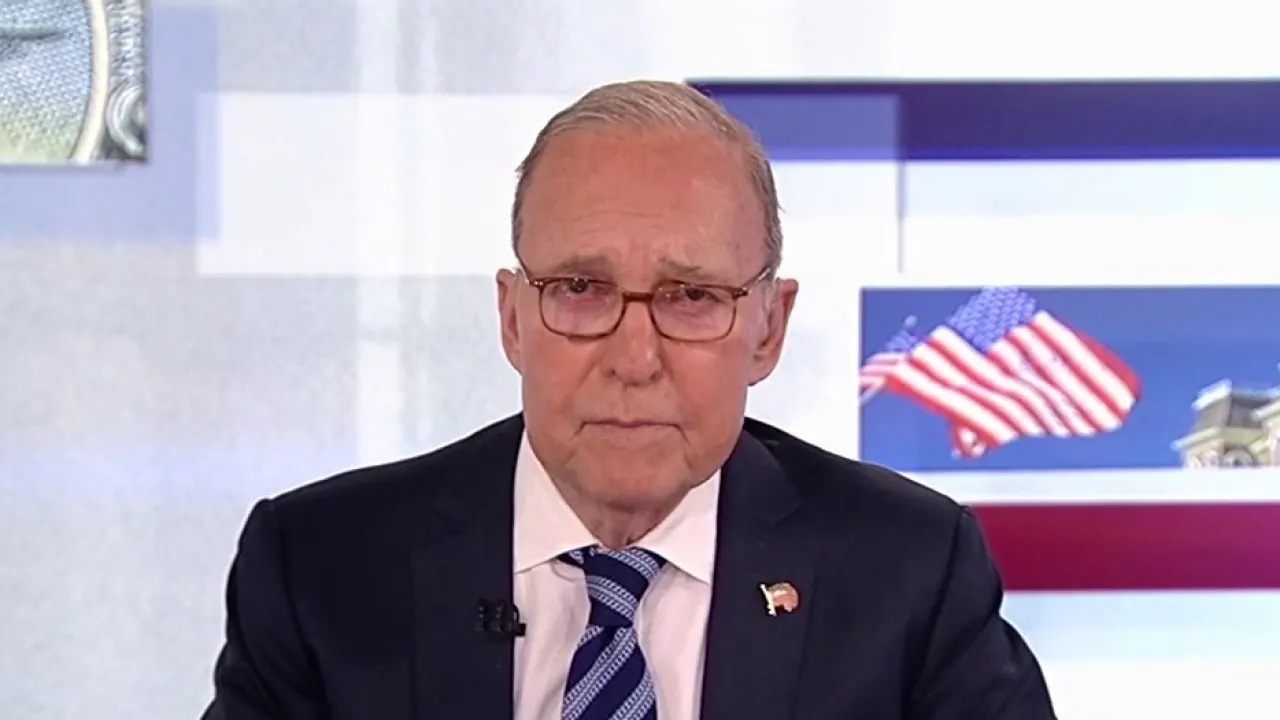
LARRY KUDLOW: Trump on the economy: I wish the media would talk about it.
FOX Business host Larry Kudlow discusses the media’s coverage of the Trump economy on ‘Kudlow.’
Everybody is talking about $4.50 gasoline at the pump. And all the usual suspects from the lefty press, and of course the Democratic party, and even the business press that ought to know better, anyway, they’re all talking about recession.
Of course they’re against President Trump. They’re against the Iran war. And they love to crow about high energy prices destroying the Trumpian economy.
Only trouble is, not only are we not going into a recession — the economy is booming. It is picking up steam. Profits are the mothers’ milk of stocks and the lifeblood of the economy. And right now profits are soaring by 15 percent.
Mike Dickson, Horizon head of research and quantitative strategies, joins ‘The Claman Countdown’ to discuss earnings reports from major tech and AI-related companies like HP, Salesforce, Marvell, Synopsys, and Snowflake.
Here’s Mr. Trump earlier today on the subject: “So the Americans are benefiting. Working today we have the most working and we have 401k’s that their all time high, highest they’ve ever been.”
Mr. Trump added: “And that goes along with the stock market, which is the highest it’s ever been under my most favored nation agreements. This is something that I wish the media would talk about, because to me, it’s one of the biggest things ever to happen in our country.”

Now I do feel everyone’s pain regarding gas and diesel prices, and fertilizer prices on the farm. Yet it is a small price to pay to get ride of the Gestapo in Iran. Actually, less than 5 percent of consumer spending is affected by gas prices.
Meanwhile, the Atlanta Fed is looking at a huge 4.3 percent increase in second-quarter real GDP. That is a big number.
Niles Investment Management founder and CEO Dan Niles discusses the S&P 500’s push toward a ninth straight week of gains and where investors should look for post-Iran war opportunities on ‘The Claman Countdown.’
Under the hood, consumer spending, despite gas prices, is estimated to rise by 2.9 percent annually, and business capital investment by 9.4 percent annually. Wages, which mean more to working folks’ kitchen tables than GDP, are rising above 4 percent when you include hours worked.
Output per person or productivity is up a whopping 2.9 percent over the past year. Almost 3 percent.
And unit labor costs, which is the most basic price indicator in the whole economy, wages less productivity, is up only 1.2 percent over the past year.
The AI footprint is now bigger than the dotcom boom, according to John Carney.
And yes, topline prices are up by around 4 percent, but actually core goods prices, excluding food and energy, only 1.1 percent. So the tariff-flation craze never panned out.
Actually, if it weren’t for a one off bad import number last quarter, GDP would’ve been up 3.2 percent. That’s going to reverse this quarter and will drive the economy even faster. Here’s Treasury Man Scott Bessent earlier today:
“Sir, on the economy, two words: resilience and prosperity. The continued resilience of the economy speaks for itself even during the Iran conflict.”
BNY Investments and Wealth global head Jose Minaya discusses what investors should keep in mind on ‘The Claman Countdown.’
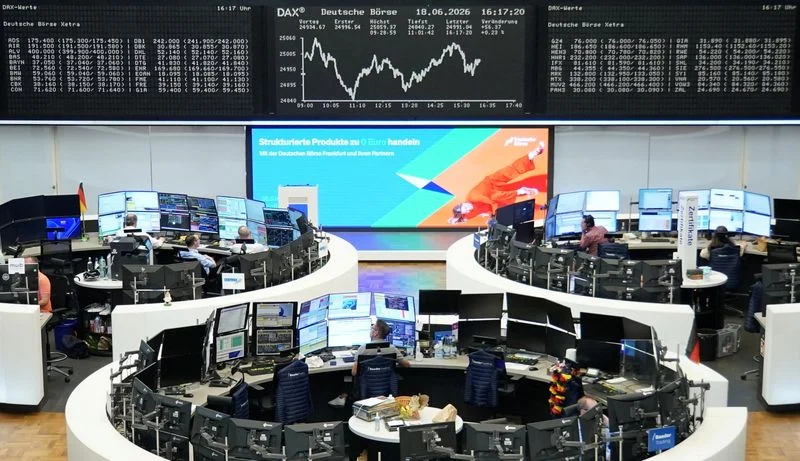
Meanwhile, the stock market is just booming across the board. The Dow is holding above 50,000. And all the other stock indexes are making record highs, which is a sign of confidence in the future economy.
Did you know, by the way, that in America, total household wealth, which includes mainly stocks, bonds, real estate, and cash, is about $180 trillion. Which is about six times larger than our gross domestic product, or our federal debt in public hands. $180 trillion folks. It’s remarkable.
No country is even remotely close to that number. And on a per person basis, our GDP is more than $90,000. In Communist China, it’s less than $14,000.
The Chinese stock market hasn’t moved in years. And the United States is producing more oil and gas than anyone could ever imagine. We are the biggest supplier in the world today. This is the Trumpian economy. If only somebody would write about it.
Just think of it.
Business
What a Good Agency Onboarding Process Looks Like
The first few weeks of working with a new marketing agency set the tone for everything that follows. Get the onboarding right, and both sides hit the ground running with shared expectations. Get it wrong, and the relationship starts with confusion, misaligned goals, and early friction that can compound over time.
Yet for something so consequential, onboarding is sometimes treated as an afterthought. Many agencies jump straight into execution without laying the foundation, and many clients let them, eager to see results as quickly as possible. That urgency is understandable. But skipping the building blocks almost always costs more time than it saves.
Why Onboarding Matters
A common misconception is that onboarding is just admin. Signing contracts, exchanging logins, and scheduling a kickoff call. Those things are part of it, sure. But genuine onboarding goes far deeper.
It’s the process through which an agency learns how a business operates. Not just what products or services it offers, but how decisions get made internally, what the brand sounds like when it’s at its best, where previous marketing efforts have failed, and what success might look like. Without that understanding, even a technically skilled agency is working with one hand tied behind its back.
From the client’s side, onboarding is also the first real test of how the agency functions. Are they organised? Do they ask thoughtful questions? Do they listen? The quality of an agency’s onboarding process reveals more about its capabilities than any pitch deck ever could.
The Discovery Phase
Strong onboarding begins with discovery, and discovery should feel more like a conversation than an interrogation. The best agencies approach this phase with genuine curiosity. They want to understand the competitive landscape, the customer journey, the internal politics that might affect campaign approvals, and the historical context behind past marketing decisions.
This is where specificity matters. Good agencies tailor their discovery around the client’s industry and business model. They’ll ask a SaaS company different questions than they’d ask an eCommerce brand, because the marketing challenges are fundamentally different.
One often overlooked element of discovery is understanding what hasn’t worked before. Clients carry baggage from previous agency relationships, failed campaigns, and internal initiatives that never gained traction. Surfacing those experiences early helps an agency avoid repeating mistakes and builds trust by showing they care about context, not just deliverables.
Setting Expectations
This is where many agency relationships quietly start to unravel. Expectations around timelines, communication, reporting, and results get discussed loosely in a kickoff meeting and then never revisited until someone is disappointed.
A well-structured onboarding process puts these conversations front and centre. How often will the agency report on progress? What does the approval workflow look like? Who on the client’s side has final sign-off, and how quickly can they turn things around? These aren’t glamorous questions, but they prevent the kind of low-grade frustration that erodes relationships over the course of months.
A reputable Digital Marketing Agency in London will formalise these expectations in a shared document during the first week. It doesn’t need to be elaborate. A simple one-page overview covering communication cadence, key contacts, deliverable timelines, and escalation processes gives both sides something concrete to refer back to when things inevitably get busy.
Access, Tools, and the Boring Stuff
There’s a practical side to onboarding that’s easy to underestimate. Agencies need access to analytics platforms, ad accounts, CMS systems, brand guidelines, previous campaign assets, and often CRM data. Getting all of that sorted in the first week prevents killing early momentum.
The best agencies send a detailed access checklist before the first meeting. They know from experience that chasing logins and permissions can chew through days if it’s not handled proactively. Some will even assign a dedicated onboarding contact whose sole job during that first fortnight is making sure everything runs smoothly.
On the client side, there’s a responsibility here too. Agencies can only move as fast as the information they’re given. If brand guidelines live in someone’s inbox from 2019 and nobody can find the Google Analytics login, that’s not an agency problem. Clients who prepare for onboarding with the same diligence they expect from their agency tend to get better results, faster.
What Separates Good Onboarding from Great Onboarding
It’s incredibly simple and can be summarised as such: Good onboarding is thorough and professional. Great onboarding makes the client feel like the agency genuinely cares about their business, not just their budget.
Business
Palestinians mourn slain Hamas militant chief as Israel escalates Gaza attacks

Palestinians mourn slain Hamas militant chief as Israel escalates Gaza attacks
Business
Synopsys, Inc. 2026 Q2 – Results – Earnings Call Presentation (NASDAQ:SNPS) 2026-05-27
Seeking Alpha’s transcripts team is responsible for the development of all of our transcript-related projects. We currently publish thousands of quarterly earnings calls per quarter on our site and are continuing to grow and expand our coverage. The purpose of this profile is to allow us to share with our readers new transcript-related developments. Thanks, SA Transcripts Team
Business
Russia says US did not grant visa for official to attend UN meeting

Russia says US did not grant visa for official to attend UN meeting
Business
Americans split on Social Security reform as 2032 insolvency looms
Ronald Reagan Presidential Foundation Director Dan Rothschild joins ‘Varney & Co.’ to discuss a new survey showing most Americans still agree with President Ronald Reagan on government, inflation and AI fears.
Social Security is projected to become insolvent in 2032 and trigger automatic benefit cuts according to the most recent estimates, and Americans are split on the best way to reform the entitlement program to secure its future, a new nonprobability-based poll finds.
The Ronald Reagan Institute’s Reagan National Economic Survey, reviewed exclusively by FOX Business, asked voters how they think Social Security’s shortfall should be closed to prevent benefits from being cut when the program is no longer to pay out full benefits in 2032.
“Americans fall into two different camps: those who want to do something about it and those who want to push this off to the next generation,” Dan Rothschild, director of the Center for Civics, Education, and Opportunity at the Reagan Institute, told FOX Business in an interview.
The survey asked registered voters about three specific policy options that could improve Social Security’s fiscal outlook – raising taxes on workers, reducing benefits and raising the retirement age – each of which encountered opposition.
SOCIAL SECURITY’S MAIN TRUST FUND FACES DEPLETION IN 2032, TRIGGERING BENEFIT CUTS

Social Security is projected to face insolvency in 2032, according to recent projections. (iStock)
Payroll taxes on current workers and their employers are the primary way funding is provided for Social Security, but the prospect of higher taxes was opposed by 80% of voters, with similar findings across party-lines and age groups.
Reducing Social Security benefits faced even stronger opposition among registered voters, with 90% opposed, according to the poll. Notably, the youngest age cohort had the most support for benefit cuts, with 22% of 18-to-29-year-olds in favor, compared to 78% in opposition.
Borrowing money and adding to the national debt also faced broad opposition, with just 24% of voters in favor and 76% opposed.

Social Security reforms could include higher taxes, lower benefits, or a mixture of the two with other changes to the entitlement program. (Mark Felix/The Washington Post)
Raising the retirement age was viewed as a slightly more favorable reform option, with 26% support to 74% opposition among registered voters.
There was a modest partisan split, with 31% of Republicans and 25% of Independents in favor, compared with 21% of Democrats. Additionally, the youngest and oldest age cohorts were the most supportive of a higher retirement age, with 30% of 18-29-year-olds and 33% of those 65 and up in favor.
NEW PROPOSAL WOULD CAP SOCIAL SECURITY BENEFITS AT $100K FOR WEALTHY COUPLES
When asked to choose between increasing taxes by $1,500 per year; cutting benefits to existing retirees by $5,000 per year; and cutting benefits to retirees with a net worth over $1 million, including the value of their homes, by $15,000 per year.
Respondents were in favor of the latter option with 71% in favor. That’s compared with 20% in favor of the tax increase and 9% supporting the benefit cuts.

If Social Security’s main trust fund is depleted, federal law requires benefits be cut to match incoming payroll tax revenue. (Jeffrey Greenberg/Education Images/Universal Images Group via Getty Images)
AMERICANS OPTIMISTIC ABOUT INNOVATION ADDRESSING MAJOR CHALLENGES, SURVEY FINDS
Medicare is also facing insolvency in 2033, and the poll found 43% of voters favored raising taxes on workers by about $2,400 per year, compared with 33% who favored hiking premiums on Medicare beneficiaries by $1,000 per year and the 24% who supported reducing the services covered by Medicare to lower costs.
“A really significant number of people did not want to make any changes at all. That was driven by a large degree by the perception that Social Security and Medicare have had a effectively mythical trust fund raided, that the money has been spent somewhere else, that this is the result of waste, fraud and abuse – not that it’s a problem inherent to a pay-go-system like this,” Rothschild said.
“I see a massive gap between the way that Americans understand the way that entitlement programs are funded and the way that entitlement programs are actually funded,” he added.
Business
Salesforce revenue forecast disappoints amid AI disruption fears

Salesforce revenue forecast disappoints amid AI disruption fears
Business
Lebron Cleveland Homecoming Rumors Center on Complex Lakers Sign-and-Trade Deal
NEW YORK — LeBron James’ potential return to the Cleveland Cavaliers has intensified in the wake of the team’s Eastern Conference Finals sweep by the New York Knicks, with reports suggesting a sign-and-trade agreement with the Los Angeles Lakers could serve as the most realistic path for a homecoming.
The 41-year-old superstar, who is entering unrestricted free agency with a $52.6 million expiring contract, has not publicly commented on his future plans. However, NBA analysts and insiders have begun mapping out scenarios that would bring James back to the franchise where he won his first championship in 2016.
According to reports, any reunion would likely require a sign-and-trade structure due to the Cavaliers’ position as a second-apron team under the NBA’s collective bargaining agreement. Such a deal would hard-cap Cleveland and necessitate significant salary relief, with Jarrett Allen frequently mentioned as a key piece heading to Los Angeles.
Proposed Trade Framework
A potential framework floated in recent discussions would see James sign a new contract with the Lakers before being traded to Cleveland. In exchange, the Lakers could receive Jarrett Allen, a 6-foot-11 center known for his elite rim protection and rebounding. Allen, who earns approximately $28 million annually, has been a target for the Lakers in past rumors as they seek to bolster their frontcourt alongside star players.
The Cavaliers would also need to manage additional salary obligations, potentially involving forward Dean Wade or other roster pieces to satisfy cap rules. James is reportedly unwilling to accept a significant pay cut, complicating Cleveland’s ability to fit him under current constraints without creative financial maneuvers.
The structure would allow both sides potential benefits. Cleveland would add a generational talent for what could be a final championship window, while the Lakers would acquire a proven defensive anchor to complement their roster.
Cavaliers’ Recent Struggles and Motivation
Cleveland’s postseason exit highlighted ongoing needs in the frontcourt and overall experience. Despite strong regular-season performance, the team struggled against the Knicks’ physicality and star power. Bringing back James, who previously led the franchise to four straight Finals appearances, could provide the leadership and scoring punch many believe is missing.
However, the Cavaliers already carry one of the league’s highest payrolls. Fitting James without shedding substantial salary would be difficult, making the sign-and-trade route nearly essential for any serious pursuit.
Lakers’ Perspective and Roster Needs
For the Lakers, parting with James after several seasons would represent a major transition. The team has been linked to roster upgrades aimed at building around younger talent. Acquiring Allen would address long-standing interest in a mobile, defensive-minded center capable of protecting the rim and finishing in transition.
The move would also free up future flexibility for Los Angeles, potentially allowing them to pursue additional pieces in free agency or future drafts.
LeBron’s Career Context
James has spent significant portions of his career with both franchises. He played his first seven seasons with Cleveland before joining the Miami Heat, then returned for four more years from 2014 to 2018. His 2018 departure to the Lakers marked the beginning of a new chapter that included another championship in 2020.
At 41, James remains one of the league’s most productive players, though questions about his workload and longevity persist. A return to Cleveland would represent a sentimental homecoming for the Akron native, potentially closing his playing career where it began.
Salary Cap and CBA Complications
The NBA’s current collective bargaining agreement, with its apron thresholds and luxury tax penalties, significantly complicates star movement for teams like the Cavaliers. Cleveland would need to navigate these rules carefully, possibly requiring additional players to be moved or creative contract structures to remain compliant.
League sources have indicated that while challenging, such a deal is not impossible if all parties are motivated. However, the second-apron restrictions mean any James acquisition would limit Cleveland’s future flexibility for several seasons.
Broader NBA Implications
A LeBron James move would send shockwaves through the league. It would reshape Eastern Conference dynamics, potentially elevating the Cavaliers back into title contention while forcing the Lakers into a rebuild or retooling phase. Other teams would also adjust their free agency and trade strategies in response.
The situation remains fluid. James has not indicated his intentions, and both the Cavaliers and Lakers have yet to comment publicly on any discussions. NBA rules prohibit teams from negotiating with free agents until the official moratorium period begins in early July.
As the offseason progresses, James’ decision will be among the most closely watched storylines. Whether he chooses to return to Cleveland, stay with the Lakers, or explore other options will shape not only his legacy but also the competitive balance across the NBA for years to come.
For Cleveland fans, the possibility of James’ homecoming represents hope for a new era of contention. For the Lakers, it marks a potential end of an era and the beginning of a new chapter. The coming weeks will reveal whether these rumors translate into concrete action or remain speculative discussions in what promises to be one of the most intriguing offseasons in recent NBA history.
Business
Brazil presidential hopeful Bolsonaro adds Rubio, Vance talks to Washington trail

Brazil presidential hopeful Bolsonaro adds Rubio, Vance talks to Washington trail
Business
Erasca Shares Jump 9% to $12.53 on Continued Momentum from Promising Pan-RAS Cancer Drug Data
NEW YORK — Erasca Inc. shares rose sharply on Wednesday, climbing 8.96 percent to $12.53 in midday trading as investors continued to reward the clinical-stage oncology company for progress with its experimental pan-RAS inhibitor and broader pipeline advancements in targeted cancer therapies.
The precision oncology developer, focused on RAS/MAPK pathway-driven cancers, has seen extraordinary gains in 2026, with the stock up more than 700 percent year-to-date in some tracking periods. Wednesday’s move reflects sustained enthusiasm following positive early clinical data for its lead candidate ERAS-0015 and strategic collaborations aimed at accelerating development.
Erasca reported encouraging preliminary Phase 1 dose escalation results for ERAS-0015 in April, showing robust monotherapy responses in patients with KRAS-mutant solid tumors, particularly non-small cell lung cancer. The data demonstrated objective response rates reaching 62-75 percent in certain heavily pretreated patient groups, positioning the molecular glue as a potential best-in-class therapy in the competitive RAS-targeting space.
Positive Clinical Momentum Drives Interest
The company’s ERAS-0015 program has generated significant attention for its “home run profile” in early testing, according to analysts. The drug’s ability to inhibit multiple RAS mutations while maintaining a manageable safety profile has fueled optimism about its potential across various tumor types.
In May, Erasca announced a clinical trial collaboration and supply agreement with Merck to evaluate ERAS-0015 in combination with KEYTRUDA (pembrolizumab). This partnership is expected to provide valuable insights into combination strategies, potentially expanding the drug’s utility in immunotherapy settings.
The company is scheduled to present at the Jefferies Global Healthcare Conference on June 3, where management is likely to provide further updates on its RAS franchise and upcoming milestones. Such appearances often serve as catalysts for biotech stocks with active clinical programs.
Strong Analyst Support
Wall Street has responded favorably to Erasca’s progress. Multiple firms maintain Buy ratings, with price targets ranging from $18 to $26. Analysts highlight the company’s focused approach to RAS pathway inhibition and its potential to address significant unmet needs in oncology.
The stock’s dramatic rise this year has attracted both momentum investors and longer-term biotechnology specialists. While some funds have trimmed positions after the massive run-up, others have added to holdings, citing confidence in the pipeline’s future value.
Pipeline and Strategic Focus
Erasca is advancing a portfolio of programs targeting oncogenic drivers in the RAS/MAPK pathway. Beyond ERAS-0015, the company is developing additional candidates aimed at specific mutations and resistance mechanisms that limit current treatment options.
The company’s strategy centers on precision medicine approaches that match therapies to patients with specific genetic alterations. This focus aligns with broader industry trends toward personalized cancer treatments and could support premium pricing and faster regulatory pathways if clinical data continue to impress.
Financially, Erasca maintains a solid cash position following earlier financing activities, providing runway to advance its clinical programs through key data readouts. The company reported its first-quarter 2026 results in May, detailing progress across its pipeline while managing operating expenses typical for a development-stage biotech.
Competitive Landscape in Oncology
The RAS space has become increasingly competitive, with several companies pursuing inhibitors of KRAS and related mutations. Erasca’s pan-RAS approach aims to offer broader activity than mutation-specific drugs, potentially addressing a larger patient population.
While patent disputes and safety considerations have created occasional volatility, the company has maintained that its programs are on track. Management has emphasized rigorous safety monitoring and data-driven development as it advances toward later-stage trials.
Market Reaction and Outlook
Wednesday’s trading volume was elevated as investors reacted to ongoing positive sentiment in the biotechnology sector. Small- and mid-cap oncology stocks with promising clinical assets have attracted renewed interest amid a favorable environment for innovation-driven healthcare investments.
Looking ahead, key catalysts for Erasca include additional data readouts from ERAS-0015, progress in combination cohorts, and potential regulatory interactions. Successful execution on these milestones could further validate the company’s platform and support additional upside.
Risks remain typical for clinical-stage biopharmaceutical companies, including trial delays, regulatory hurdles, and competition. However, Erasca’s singular focus on RAS-driven cancers and strong early signals have helped differentiate it within the crowded oncology field.
As the company continues to mature its pipeline, it represents a high-risk, high-reward opportunity in the precision oncology space. Investors will closely monitor upcoming presentations and data updates for further evidence of ERAS-0015’s potential and the broader platform’s viability.
The surge on Wednesday underscores the market’s appetite for companies demonstrating tangible progress toward addressing difficult-to-treat cancers. With several meaningful milestones on the horizon, Erasca is well-positioned to remain in focus as it works to translate scientific innovation into potential new treatment options for patients with RAS/MAPK pathway alterations.
Business
Salesforce: Nobody Dares Buy It But I Will
-
Crypto World6 days agoBlockchain.com files with SEC for U.S. IPO
-
Fashion5 days agoHoliday Weekend Open Thread – Corporette.com
-
Crypto World6 days agoBitcoin Accumulation Weakens as BTC Realized Losses Hit $600M
-
Tech2 days agoMicrosoft’s quiet Claude Code retreat and the real cost of enterprise AI
-
Business5 days agoDell Technologies DELL Stock Surges 15% on AI Server Momentum and Analyst Upgrades in 2026
-
Crypto World5 days agoRobinhood crypto COO Tanya Denisova exits
-
Politics5 days agoMakerfield: a tale of two social-media histories
-
Business3 days agoNYT Strands Answers May 24 2026 Revealed for Puzzle No. 812 Theme Summer Essentials
-
Crypto World5 days agoSpace X IPO Is ‘Bad News’ for Tech Stocks: But What About Bitcoin?
-
Business6 days agoTrump Invests $1M-$5M in Kura Sushi USA Chain With 27 California Locations
-
Crypto World6 days agoMicroStrategy’s Saylor Says Miners No Longer Set Bitcoin Price, Another Force Has Taken Over
-
Tech6 days agoWhatsApp ads could make Irish debut after discussions with DPC
-
Tech11 hours agoThe Samsung pay deal is the moment Korean unions changed register
-
NewsBeat6 days agoCharity run by Reform leader Malcolm Offord accused of ‘law breaking’ over Scottish registration
-
Crypto World5 days agoAI infrastructure race heats up as IREN pitches full-stack strategy, WhiteFiber lands $160M deal
-
Crypto World3 days ago
Nvidia (NVDA) CEO Calls on Super Micro to Strengthen Export Controls Amid Smuggling Probe
-
Tech5 days agoA 0.12% parameter add-on gives AI agents the working memory RAG can’t
-
Tech2 days agoWestone Audio and Etymotic Acquired by Fidelity Collective in Major IEM Market Move
-
Tech6 days agoYou Can Now Add ChatGPT To PowerPoint
-
Sports6 days ago2026 CJ Cup Byron Nelson leaderboard: Brooks Koepka finds putting stroke in Round 1

You must be logged in to post a comment Login