

Business
Thailand’s Bold Move with Chinese Automakers in the Electric Vehicle Revolution


Walk into a major car dealership strip in Bangkok today and count the badges. A few years ago, you would have found Toyota, Honda, Isuzu, and Mitsubishi dominating every forecourt. Today, you will find BYD, MG, Great Wall Motor, Changan, GAC Aion, and Chery competing aggressively for the same space — and, in many cases, outselling the Japanese brands they sit next to. The cars are sleek, well-specified, and priced at levels that legacy automakers struggle to match. The buyers are noticing.
This is not just a showroom story. It is a story about industrial strategy, national ambition, and a $28 billion bet that Thailand can reinvent itself as the electric vehicle capital of Southeast Asia — with China as its primary partner in doing so.
Key takeaways
- China now dominates Thailand’s EV market with a force that has no precedent in Thai automotive history. By 2025–2026, Chinese brands hold between 70 and 80 percent of EV market share, with 7 of the top 10 EV brands in Thailand being Chinese. This is not a trend — it is a structural realignment of the market.
- Thailand’s 30@30 target is ambitious, but China’s capital and technology are what make it plausible. BYD, Great Wall Motors, and Changan have collectively committed over $1.4 billion to Thai EV manufacturing. Chinese firms have supplied the capital, technology, and production speed that Thailand needed to leapfrog into the EV era. Without them, the 30@30 goal would remain a policy document.
- The opportunity is real, but so are the headwinds. Domestic auto sales fell to a 15-year low in 2024. Chinese EV makers face oversupply, price wars, and high household debt among Thai consumers. Investors and executives who treat Thailand’s EV story as guaranteed upside are misreading the risk profile. The kingdom is betting big — and the outcome is not yet decided.
The 30@30 ambition
In 2022, Thailand’s government announced one of the most aggressive electrification targets in Southeast Asia: 30 percent of all vehicles produced in the country to be electric by 2030. The policy, known as 30@30, was backed by a suite of incentives — production subsidies, consumer purchase rebates, tax exemptions for manufacturers, and BOI incentive packages targeting EV assembly, battery production, and EV charging infrastructure.
The scale of ambition was not accidental. Thailand had spent five decades building Southeast Asia’s most sophisticated automotive manufacturing ecosystem — the so-called “Detroit of Asia” — largely on the back of Japanese investment and Japanese technology. By the early 2020s, it was clear that the global automotive industry was shifting toward electrification at a pace that threatened to strand that entire ecosystem. Japanese automakers, dominant in internal combustion engine vehicles, were moving more slowly toward EVs than their Chinese counterparts. Thailand had to decide whether to wait for its existing partners to catch up, or to actively recruit a new generation of EV investors who were already ahead. It chose the latter.
The decision was pragmatic rather than ideological. Chinese EV manufacturers — facing intensifying domestic competition, rising tariff barriers in the US and Europe, and a strategic imperative to globalise — were looking for exactly what Thailand offered: a stable manufacturing base, favourable trade access, government support, and proximity to Southeast Asia’s 680 million consumers.
The interests aligned. The investments followed.
How Chinese brands captured the Thai market
The speed of Chinese EV brands’ market penetration in Thailand has been remarkable even by the standards of fast-moving consumer industries.
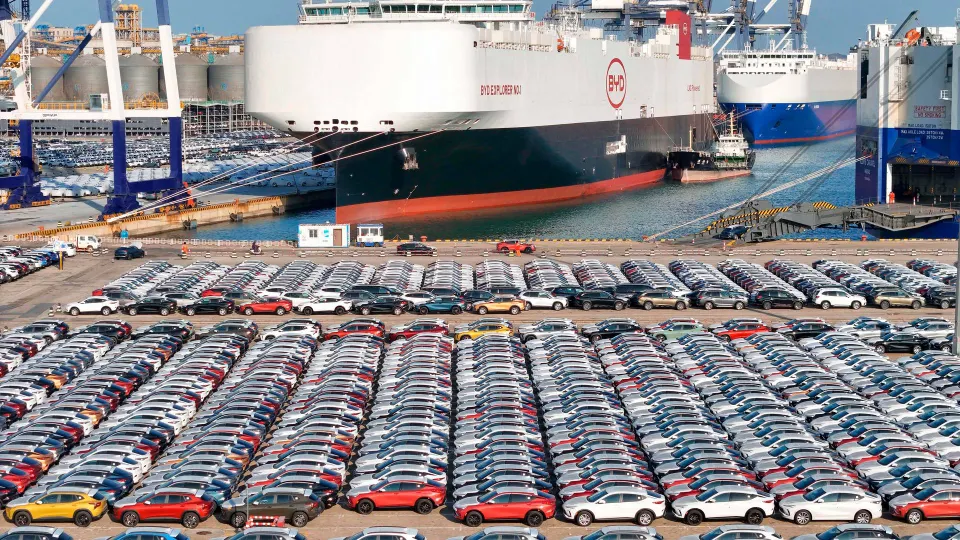
BYD, Great Wall Motor, and SAIC’s MG brand established early footholds, investing in local manufacturing, building dealer networks, and pricing aggressively against both each other and the Japanese incumbents. BYD opened a manufacturing plant in Rayong with an annual capacity of 150,000 units. Great Wall Motors converted its existing facility — originally built for ICE vehicles — to EV production. Changan committed 9.8 billion baht to a dedicated Thai production facility targeting 100,000 EVs annually. GAC Aion, Chery, and Hozon followed with their own investment commitments.

The consumer response has been significant. EV registrations in Thailand quadrupled from under 25,000 units in 2022 to nearly 90,000 in 2024. In the January–April 2024 period, Chinese brands — led by BYD, MG, and NETA — accounted for 89 percent of all EV sales, leaving Tesla and all other non-Chinese brands competing for the remaining 11 percent. By 2025–2026, 7 of the top 10 EV brands in Thailand are Chinese. The market transformation, measured in years rather than decades, is the fastest segment shift in the history of Thai automotive retail.
Seventy-two percent of Thai consumers now hold generally favourable perceptions of Chinese cars, according to research by Vero and WeBridge — citing affordability, technology, and design as the primary drivers. That figure would have been unthinkable a decade ago, when “Chinese car” was synonymous with low quality in the minds of most Thai buyers. The reputational turnaround is one of the most significant marketing achievements of the Chinese auto industry’s internationalisation push.
The Japanese dilemma
No honest account of Thailand’s EV transition can avoid the uncomfortable question it raises for Japan.
Japanese automakers built Thailand’s car industry. Toyota, Honda, Isuzu, and Mitsubishi have invested collectively tens of billions of dollars in Thai manufacturing over five decades, creating hundreds of thousands of jobs, establishing deep supplier networks, and making Thailand the region’s largest automotive exporter. That legacy is not disappearing overnight. Toyota remains the overall market leader in Thai vehicle sales. Japanese brands still dominate the ICE segment.
But the ICE segment is shrinking. And in EVs, Japan has been consistently slower to move than China — a consequence of its deep commitment to hybrid technology, its reliance on legacy powertrain supply chains, and a corporate culture that historically favours incremental over disruptive change.
The response is now underway. Toyota has announced substantial investments in hybrid production expansion in Thailand. Honda has committed to launching new EV models. Mitsubishi is partnering with Nissan on shared EV platforms. But the timeline matters. Chinese manufacturers are already at scale in Thailand. They are producing, exporting, and competing on price. The window for Japanese brands to reclaim dominance in the EV segment is narrowing, and it will not stay open indefinitely.
For executives from other industries watching this dynamic, the lesson is transferable: a market position built over decades can be disrupted in years when the underlying technology changes and a better-capitalised competitor is willing to move fast.
Battery supply chain: the next frontier
If EV assembly is the visible part of Thailand’s electric transition, the battery supply chain is the strategic foundation — and it is being built, largely, with Chinese capital.
China’s Sunwoda Electronic received approval to invest over $1 billion in EV and energy storage system battery production facilities in Thailand, with its first factory under construction in Chonburi Province. This is significant not just for the investment quantum, but for what it represents: the beginning of a vertically integrated EV supply chain in Thailand, extending upstream from vehicle assembly into the core technology components that determine competitive advantage in the EV era.
Thailand’s government has actively promoted this development. BOI incentives for battery cell manufacturing are among the most generous in the ASEAN region, and the government has extended timelines for local battery production requirements to give manufacturers time to build supply chains rather than simply import finished cells from China.
The long-term vision is clear: Thailand as ASEAN’s lithium processing and battery manufacturing hub, leveraging its geographic centrality, its established logistics infrastructure, and its relationships with Chinese technology partners to create a regional centre of gravity for EV supply chain activity. Whether that vision is realised depends on whether Thailand can attract the upstream mining and refining investment — lithium, cobalt, manganese — that battery production requires. That piece of the puzzle is still being assembled.
The headwinds executives must price in
Thailand’s EV ambitions are real, and the Chinese investment backing them is substantial. But the business environment is more complicated than the headline numbers suggest, and executives entering this market need a clear-eyed view of the challenges.
Oversupply is the most immediate concern. Production mandates tied to BOI incentives require manufacturers who received subsidies to produce locally — whether or not domestic demand absorbs that production. As multiple manufacturers ramp up simultaneously, the market faces a structural imbalance between supply and demand. The result has been an aggressive price war, with Chinese brands cutting prices sharply to move inventory, compressing margins across the sector, and creating a difficult operating environment for new entrants.
Consumer demand has been softer than projected. Thailand’s domestic auto market hit a 15-year low in 2024, driven by high household debt levels, tightening consumer credit, and economic uncertainty. EV adoption has grown impressively in percentage terms, but from a smaller base than originally forecast. The 30@30 goal requires significant demand-side acceleration that the market has not yet demonstrated it can sustain.
Regulatory uncertainty adds another layer of complexity. Import tariff structures for EV components, rules-of-origin requirements for export market eligibility, and evolving subsidy frameworks have all shifted since the initial investment wave. Manufacturers who built their business cases on specific incentive assumptions are navigating a policy environment that continues to evolve.
What investors and executives should watch
The 2026 production recovery. Thailand’s Federation of Thai Industries is forecasting automotive production of 1.5 million units in 2026, following a 2025 dip. Whether that target is met — and how much of it comes from EV versus ICE production — will be an important indicator of whether the transition is on track.
Battery localisation progress. The Sunwoda investment and others like it will determine whether Thailand builds genuine supply chain depth or remains an assembly-dependent hub. Watch for additional upstream investments in battery materials processing as the leading indicator.
Japanese response strategy. How Toyota, Honda, and their tier-one suppliers adapt to the Chinese competitive challenge in Thailand will shape the broader competitive dynamics of the sector. A credible Japanese EV response would increase competition and ultimately benefit Thai consumers and the market’s long-term health.
Export performance. Thai-made Chinese-brand EVs are already reaching markets from Indonesia to Europe. If export volumes grow significantly, it validates Thailand’s value proposition as a manufacturing base and justifies the investment levels already committed.
The bottom line
Thailand has placed a large, deliberate bet on electric vehicles and on China as the partner to help it win that bet. The wager has already changed the face of Thai automotive retail, attracted billions in new manufacturing investment, and begun to build a supply chain infrastructure that could underpin a generation of industrial growth.
The risks are real: oversupply, soft demand, price wars, and policy uncertainty are not trivial challenges. But the strategic logic is sound. A country that successfully transitions from ICE manufacturing hub to EV manufacturing hub — with a deep-pocketed, technology-leading partner backing that transition — will be one of the most important industrial economies in Asia by 2030.
The kingdom is making its move. The question for investors and executives is not whether to pay attention, but how quickly they can afford not to.
Next in the series — The Digital Silk Road: E-Commerce, Fintech, and AI Connecting Thailand and China
Other People are Reading

Business
Gold, silver slide up to 2% as fresh US strikes on Iran fuel inflation fears, hurt peace hopes

Spot gold fell 0.8% to $4,419.60 per ounce, while U.S. gold futures for June delivery declined 0.7% to $4,417.10. Among other precious metals, spot silver dropped 1.7% to $73.34 per ounce, platinum eased 0.5% to $1,909.15 and palladium declined 0.7% to $1,381.64.
The dollar also strengthened, making dollar-priced bullion more expensive for buyers holding other currencies.
A U.S. official said the American military launched new strikes in Iran targeting a military site believed to threaten U.S. forces and commercial shipping through the Strait of Hormuz. The development came hours after President Donald Trump rejected an Iranian report claiming a deal had been reached to restore traffic through the strategic waterway.
Investors are now awaiting the release of U.S. Personal Consumption Expenditures data later in the day for further signals on the Federal Reserve’s policy direction.

A Reuters report stated that Federal Reserve Governor Lisa Cook said that the U.S. central bank should keep short-term interest rates unchanged for now. However, she added that tariffs, the Iran conflict and rising AI-linked investments were increasing price pressures, and the Fed could raise rates if required. Federal Reserve Vice Chair Philip Jefferson also said the current monetary policy stance remained appropriate given ongoing upside risks to inflation.
Investors are now awaiting the release of the U.S. Personal Consumption Expenditures data later in the day for further signals on the Federal Reserve’s policy direction.As for levels, COMEX Gold is consolidating within the $4,500–$4,540 range, maintaining a cautious undertone. Immediate resistance is placed at the $4,560–$4,600 zone; a sustained move above this band could strengthen upside momentum and push prices toward the $4,660–$4,700 range.
“On the downside, immediate support remains at $4,500–$4,460, and a break below this zone could trigger corrective weakness toward the $4,400–$4,350 levels. Overall, the structure remains cautious, with prices needing to sustain above the $4,500 support level, while a decisive break below immediate support could weaken momentum and increase downside pressure,” Ponmudi R, CEO of Enrich Money said.
Meanwhile, the Multi Commodity Exchange of India will remain shut during the morning session on May 28 and resume trading in the evening session. As per MCX’s annual trading calendar, the exchange has 16 trading holidays in 2026, including partial and full-day closures.
(Disclaimer: Recommendations, suggestions, views and opinions given by the experts are their own. These do not represent the views of The Economic Times)

The case centres on contamination caused by PFAS in the foam at dozens of defence sites.

Growing firms are under pressure to improve digital services more quickly, but without adding operational risk. Continuous deployment is becoming a business priority, as it gives teams a more reliable way to release software updates.
Software releases were once planned around fixed windows, internal calendars, and long checklists. A new feature, bug fix, pricing change, or security patch could wait for the next planned release window. For many growing businesses, that pace no longer fits the way customers, teams, and digital products operate.
More businesses now depend on software, even when they do not describe themselves as technology companies. Retailers, for instance, rely on ecommerce platforms. Logistics firms rely on tracking tools. Professional services firms use client portals. Hospitality businesses depend on booking and payment systems. When those systems fall behind, the impact is felt by customers as well as internal teams.
There is also a wider productivity question. The UK government’s SME Digital Adoption Taskforce has pointed to evidence that firm-level productivity improvements can reach 7 to 18% per technology adopted, depending on the product. Software delivery is part of that picture. As firms digitise more of their operations, they need a safer and more reliable way to release improvements.
Software delivery has become a business issue
In practical terms, continuous deployment allows the most recently developed software changes to move into production automatically after required checks are passed. Rather than bundling many changes into a large release, teams can move smaller updates into production more frequently.
For business owners and managers, the benefit of continuous development is not automation for its own sake. The practical value is a clearer route from an idea, fix, or compliance requirement to a live product. A checkout improvement, customer portal update, or urgent bug fix does not need to wait behind a large manual release cycle.
This becomes more important as additional teams, systems, and customer groups are involved. Early software habits often rely on personal knowledge, informal checks, and a few people knowing how everything works. That can be manageable in a small team, but it becomes less dependable when more products, integrations, departments, and stakeholders are in the picture.
Faster development needs stronger release discipline
AI is changing the pace of software work. The 2025 DORA report found that AI adoption among software development professionals has reached 90%, with more than 80% saying AI has increased their productivity. AI-assisted coding is helping firms move faster, but it also increases the need for clear delivery controls.
Faster coding does not automatically mean faster or safer release. Many developers still lose time to organisational inefficiencies, fragmented workflows, and difficulty finding information.
This is where the release process starts to matter beyond the technical team. It gives the business a repeatable workflow for checking, releasing, and monitoring software changes. Automated tests, approval rules, deployment records, and rollback plans help teams avoid turning every release into a special case.
Customers expect faster fixes
Customers rarely think about deployment processes, but they notice the results. Issues such as a failed payment, broken forms, slow account pages, or delayed booking updates can quickly affect trust. In competitive markets, customers may not give a growing firm much time to explain why a fix is still waiting for release.
Continuous deployment helps businesses release smaller improvements more often. That can make it easier to respond to feedback, correct defects, and test product changes without turning each update into a major event. Smaller releases can also make problems easier to trace, since fewer changes are introduced at once.
This is especially useful for firms that run customer-facing digital services. A business may not need to deploy every day, but it does need the capability to update software without unnecessary delay when customers or operations require it.
Risk management is part of the case
Faster releases only help if the business can still see, test, and reverse changes when needed. For many managers, “continuous deployment” may sound like code moving into live systems too easily. In practice, a mature deployment process should make software changes easier to track.
Good deployment practices define what checks must pass, who owns a service, how issues are monitored and what happens if a release causes a problem. This gives finance, operations, support, and compliance teams a clearer view of software change. It also reduces reliance on undocumented manual steps.
The same logic applies to security. This approach is not a substitute for secure development, access control, or vulnerability management. It can, however, help a business release urgent fixes more reliably once a problem has been identified. For firms handling customer data, payments, or partner integrations, that responsiveness has commercial value.
Growing firms need repeatable systems
Many growing firms reach a point where early processes become too fragile for the size of the business. Software release is one of those areas. A process that once felt flexible can begin to slow down product improvements, delay fixes, and create uncertainty across teams.
A mature release process gives businesses a more consistent way to manage software change. It supports faster updates, but its deeper value is repeatability. Teams know which checks apply, managers have better visibility, and customers receive improvements in smaller, safer increments.
The shift does not need to happen all at once. Firms can start by improving automated testing, cleaning up release documentation, strengthening monitoring, and deciding which changes still require human review. From there, they can move towards more frequent deployment at a pace that suits the business.
For growing firms, software delivery is now closely tied to customer experience, productivity, and operational resilience. Continuous deployment is becoming a business priority because it helps companies keep digital services moving without relying on improvised release habits.


The Trend Investing group includes qualified financial personnel with a Graduate Diploma in Applied Finance and Investment and well over 20 years of professional experience in financial markets. They search the globe for great investments with a focus on trending and emerging themes. The current focus is on electric vehicles, the EV metals supply chain, stationary energy storage and AI.They lead the investing group of the same brand name, Trend Investing. Features of the service include: Access to the Trend Investing portfolio, 7 monthly news updates, a monthly macro trends update, stock watchlist, CEO interviews, and direct access to the community and group leaders in chat.
Analyst’s Disclosure: I/we have a beneficial long position in the shares of SYRAH RESOURCES [ASX:SYR], ZENTEK LTD [TSXV:ZEN] either through stock ownership, options, or other derivatives. I wrote this article myself, and it expresses my own opinions. I am not receiving compensation for it (other than from Seeking Alpha). I have no business relationship with any company whose stock is mentioned in this article.
This article is for ‘information purposes only’ and should not be considered as any type of advice or recommendation. Readers should “Do Your Own Research” (“DYOR”) and all decisions are your own. See also Seeking Alpha Terms of Use of which all site users have agreed to follow. https://about.seekingalpha.com/terms
Seeking Alpha’s Disclosure: Past performance is no guarantee of future results. No recommendation or advice is being given as to whether any investment is suitable for a particular investor. Any views or opinions expressed above may not reflect those of Seeking Alpha as a whole. Seeking Alpha is not a licensed securities dealer, broker or US investment adviser or investment bank. Our analysts are third party authors that include both professional investors and individual investors who may not be licensed or certified by any institute or regulatory body.

The longtime Google employee was charged in New York for allegedly breaking insider trading laws.

Futu Holdings reports $418 million in share buybacks to date


New Zealand forecasts narrower budget deficit for 2025/26

Diamond Hill Capital Management, Inc. is a wholly owned subsidiary of Diamond Hill Investment Group, Inc. Diamond Hill Investment Group is a publicly traded company, and its shares trade on the NASDAQ (Ticker: DHIL). Note: This account is not managed or monitored by Diamond Hill Capital Management, and any messages sent via Seeking Alpha will not receive a response. For inquiries or communication, please use Diamond Hill Capital Management’s official channels.

Treasurer Jim Chalmers introduced the landmark bill to parliament that includes changes to capital gains tax and negative gearing, as well as a $250-a-year rebate for workers.

The federal government is suing global industrial science company 3M for $2 billion over the costs of past and ongoing damage to defence sites, including RAAF Pearce, caused by PFAS chemicals.
Gold, silver slide up to 2% as fresh US strikes on Iran fuel inflation fears, hurt peace hopes

Bitcoin’s 35% Crash Signal Just Returned But a Whale Bought $66 Million Anyway

Patrick Brammall leads Apple TV thriller Last Seen’


-

 Crypto World6 days ago
Blockchain.com files with SEC for U.S. IPO
-

 Fashion5 days ago
Holiday Weekend Open Thread – Corporette.com
-

 Crypto World6 days ago
Bitcoin Accumulation Weakens as BTC Realized Losses Hit $600M
-

 Tech3 days ago
Microsoft’s quiet Claude Code retreat and the real cost of enterprise AI
-

 Business6 days ago
Dell Technologies DELL Stock Surges 15% on AI Server Momentum and Analyst Upgrades in 2026
-

 Crypto World5 days ago
Robinhood crypto COO Tanya Denisova exits
-

 Business3 days ago
NYT Strands Answers May 24 2026 Revealed for Puzzle No. 812 Theme Summer Essentials
-

 Politics5 days ago
Makerfield: a tale of two social-media histories
-

 Crypto World6 days ago
Space X IPO Is ‘Bad News’ for Tech Stocks: But What About Bitcoin?
-

 Business6 days ago
Trump Invests $1M-$5M in Kura Sushi USA Chain With 27 California Locations
-

 Crypto World6 days ago
MicroStrategy’s Saylor Says Miners No Longer Set Bitcoin Price, Another Force Has Taken Over
-

 Tech6 days ago
WhatsApp ads could make Irish debut after discussions with DPC
-
Tech15 hours ago
The Samsung pay deal is the moment Korean unions changed register
-
 NewsBeat7 days ago
Charity run by Reform leader Malcolm Offord accused of ‘law breaking’ over Scottish registration
-
 Tech6 days ago
A 0.12% parameter add-on gives AI agents the working memory RAG can’t
-

 Crypto World6 days ago
AI infrastructure race heats up as IREN pitches full-stack strategy, WhiteFiber lands $160M deal
-
 Crypto World3 days ago
Nvidia (NVDA) CEO Calls on Super Micro to Strengthen Export Controls Amid Smuggling Probe
-

 Tech6 days ago
You Can Now Add ChatGPT To PowerPoint
-

 Tech3 days ago
Westone Audio and Etymotic Acquired by Fidelity Collective in Major IEM Market Move
-

 Sports6 days ago
2026 CJ Cup Byron Nelson leaderboard: Brooks Koepka finds putting stroke in Round 1
You must be logged in to post a comment Login