

Politics
Trump’s Negotiation Tactic In Iran War Exposed By BBC Expert

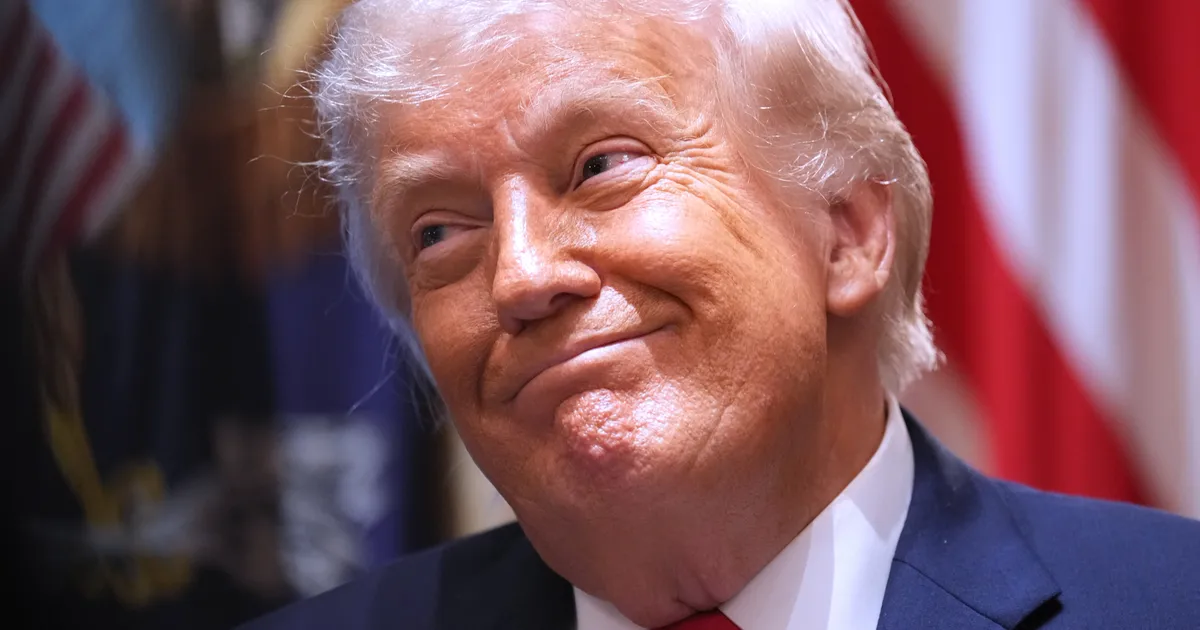
Donald Trump is trying to play it cool with the Iran war by insisting he does not feel any political pressure to hurry up the peace process, experts have said.
The US carried out strikes on Iran overnight, targeting a military site in Bandar Abbas.
Iran claims to have responded by striking a US air base.
The fresh attacks threaten to undermine the fragile ceasefire between the warring countries.
It’s the second time in three days that the US has launched such strikes.
But the US has insisted this is self-defence, while Iran called it a “grave violation of the ceasefire” and vowed not to leave “any act of hostility unanswered”.
The war began when Trump worked with his Israeli allies to bomb Iran at the end of February.
Iran responded by effectively closing the major shipping lane, the Strait of Hormuz, causing oil prices to spike around the world.
This economic impact means Trump has faced intense pressure from international and domestic allies to find an off-ramp for the war.
But he is bizarrely pretending he is not under kind of strain and that it is Iran who needs to make a deal.
As the BBC’s North America editor Sarah Smith told Radio 4′s Today programme: “He wanted to stress that he doesn’t feel under political pressure to hurry this up.”
During a cabinet meeting on Wednesday, the president insisted Iran is “negotiating on fumes”.
He insisted the November midterms would not impact his negotiations, adding: “Maybe we have to go back and finish it, may be we don’t.”
Smith said: “He obviously thinks that Iran thinks they can run out the clock here, that Donald Trump has less time than they do to get to a position where the Strait of Hormuz can be reopened, because they think it’s putting so much political pressure on the president.
“He was keen to say that’s not the case, and he will take as long as he needs to to get the deal he wants.
“And the US is making it clear they’re not held back from striking Iranian facilities if they think they pose some kind of threat.”
Kirsten Fontenrose, senior director for the Gulf at the National Security Council during Trump’s first administration, also told Today: “Both sides are trying to stay to lines they think will prevent super-escalation.”
She said this was effectively “sabre-rattling with a little bit of active fire”.
Fontenrose said she thinks the negotiations are “stuck” right now.
“There seems to be as many differences about how this war should end within Iran and the US as there are between Iran and the US,” Fontenrose said.
“You’ve got a regime in Tehran which is divided into multiple factions, you’ve got the IRGC opposing any concessions or something even talks with the US.
“You have the diplomats, president, vice-president in Iran arguing in some cases that making concessions could save the regime.
“And in Washington you’ve got the US administration divided into several factions, some saying there should be no deal with Iran, and that military strikes should resume, and others saying the blockade should be allowed to do its job with a slow, sustained squeeze that strangles the regime.”
“The debates that are going on on either side of the negotiating table are just as intense as the talks that are going on between the two sides,” she said.
“It does not look like a deal is close,” she added, despite both countries trying to push their opponent to a negotiation.
Subscribe to Commons People, the podcast that makes politics easy. Every week, Kevin Schofield and Kate Nicholson unpack the week’s biggest stories to keep you informed. Join us for straightforward analysis of what’s going on at Westminster.

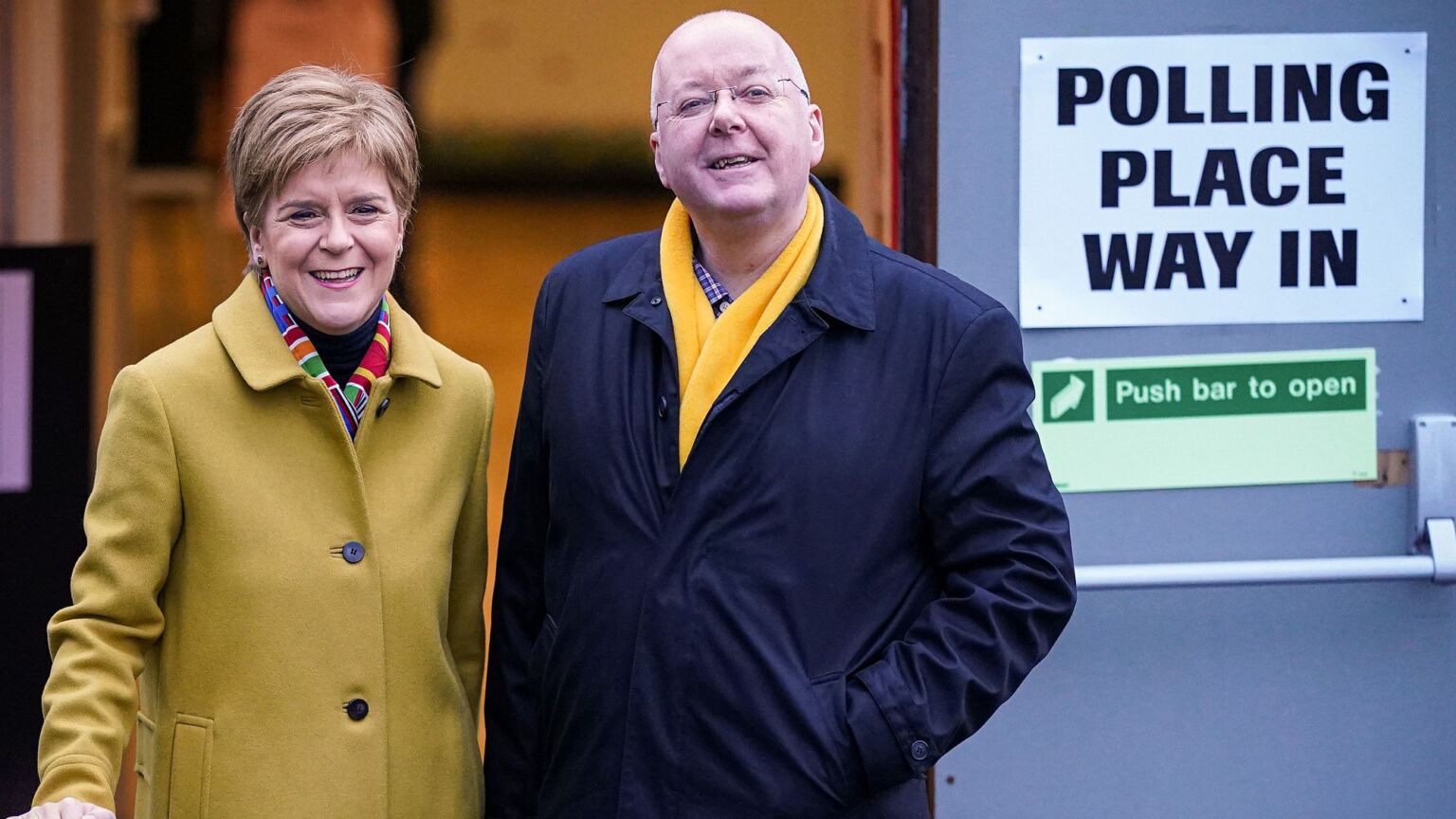
I must say that I hugged myself with glee when I heard that Nicola Sturgeon’s husband of 15 years, Peter Murrell, had been caught sitting on a bumper haul of luxury goods that made Aladdin’s cave look like a food bank.
Imagine the tongue-lashings he’ll be getting! Tracey Ullman’s brilliant parody of Sturgeon as a cruel Bond villain torturing innocent Scots celebrities for not being Scottish enough has never come more to mind. There is a distinct ‘You won’t like me when I’m angry’ feeling about her; if the walls of the Murrell dwelling could talk, what colourful Gaelic wrath might they reveal? I wonder if poor Peter might have been accused of being a ‘bampot’ or a ‘bawbag’ and even informed that ‘Yer bum’s oot the windae’?
Sturgeon’s lawyer has snootily implied that such frivolous things as shopping sprees are beneath the former first minister: ‘There appears to be an assumption that as FM, when Mr Murrell was busy buying multiple pens or pepper pots etc, she was with him. Ms Sturgeon was not, as unsurprisingly she was busy with other matters.’
I’m not totally convinced. She’s always been ready to stick that sharp little nose of hers into everybody’s business. If there’s one thing Sturgeon isn’t, it’s hands-off. Think of her Hate Crime and Public Order (Scotland) Act, which came into force on April 1 2024, prompting JK Rowling to write on X: ‘If you genuinely imagine I’d delete posts calling a man a man, so as not to be prosecuted under this ludicrous law, stand by for the mother of all April Fools’ jokes.’ You can’t imagine Sturgeon saying, ‘You do you, hun!’, to a husband, no matter how long they were asunder (they separated in 2025 and his ‘hobby’ started in 2010). If someone presents themselves as being efficient to the point of being a pocket calculator with a pixie cut, it’s hard to accept them as a ditsy broad who doesn’t notice that her husband is apparently attempting to set up a Caledonian branch of Harrods.
People used to call Mrs Thatcher ‘bossy’. But she just felt strongly about things – and she had a sense of humour about her dominant personality. ‘I’ve only got time to lose my temper and get my way!’, she is reputed to have said on walking into an EU meeting. When one looks at Sturgeon, the word is difficult to avoid, even if one is a rad-fem like myself. And to make it worse, she seems utterly humourless. The only vision she ever had was tunnel vision; she seemed to exist as a politician only to stop people doing things they wanted to do, and then to make their lives worse, while insisting that she’s making them better.
The Scottish people voted to stay in the United Kingdom; she demanded another referendum. The British people voted to leave the EU; she wanted to rejoin. She posed as a public-health crusader, advocating for strict lockdown, masking and vaccine passports; Scottish death rates for the Delta and Omicron variants of Covid-19 rose above those of England. More die of drug overdoses in Scotland than in any other European country, percentage-wise. By 2019, this figure had doubled from 2014, the year she came to power. More homeless people die on the street in Scotland than in any other country in the Union. She has no children, yet sought to impose a state guardian on every child in Scotland from before their birth until the age of 18; thankfully, her Named Person scheme was struck down by the UK Supreme Court.
She once claimed to be ‘a feminist to my fingertips’ and vowed she ‘would never support anything that I thought was an erosion of women’s rights’. But under her rule, the Hate Crime Act effectively shut down debate over whether men in frocks should be allowed to ruin everything women have, from sports trophies to toilets. Until the Isla Bryson case came to public notice, rapists were sent to female prisons if they had spent a mere six months ‘living as woman’ – this statement was even sillier in Scotland than in England, where the national dress for men is the kilt and thus men in skirts are everywhere.
Of course, Sturgeon would find such a comment ‘simplified and lurid’ – the phrase she used when asked to define what a woman is. She was accused of shutting down debate about self-anointed gender-recognition after saying, ‘We should focus on the real threats to women, not the threats that, while I appreciate that some of these views are very sincerely held, in my view, are not valid’. Ideas being ‘not valid’ often lead to the people who hold them being cast as non-people, and therefore perfectly okay to persecute.
Religion in Scotland always ran deeper than it did in England. Under the reign of Witchfinder Sturgeon, the woke trials were in full swing for many years. Sturgeon conducted them in an oddly bloodless way; she was the Joan of Arc of admin, who never saw a pint pot she didn’t want to penalise for not being metric. The only time she showed herself as truly human was when she was caught on camera celebrating Jo Swinson losing her seat.
Sturgeon’s resignation speech in 2023 seemed as Uncanny Valley as the rest of her output, with ‘burnout’ and the funeral of Scots independence activist Allan Angus cited, as well as tranny-related embarrassment. I never bought it; she’d been a tireless political zealot since she was a youngster in CND – and now, all of a sudden, she needed a wee rest, and ‘spend more time with her niece and nephews’? This seemed extra unlikely coming just weeks after she told the BBC that she still had ‘plenty in the tank’.
Something didn’t add up – and I don’t just mean that missing £400,000 that went astray from the SNP coffers. There had also been mounting curiosity about the loan of more than £100,000 given to the SNP by – yes! – Peter ‘I’m the man with the money’ Murrell in 2021 to help it out with ‘cash flow’ issues. (He must have flogged a few salt cellars?) ‘Robbing Peter to pay Paul’ takes on a whole new meaning here, with Robbing Peter being far from the innocent party.
Historically, the Scots are an admirable people. But when JM Barrie opined of his compatriots that ‘There are few more impressive sights than a Scotsman on the make’, I doubt whether he had splashing so much moolah that you make a pre-prison P Diddy look self-denying in mind. Once the chuckles have abated (and it will take quite a long time, as this is the funniest political scandal I can recall in my entire lifetime), perhaps the best thing about this whole glorious mess is that brave and gifted Scots politicians who came to grief under Sturgeon’s rule may come to the fore again, now that the stranglehold of the McMafia has been unravelled.
However this plays out, her reputation is ruined. As the hundreds of revellers in George Square put it as they reacted to her resignation with drinking and dancing: ‘Conga, conga, conga, Nicola’s no longer!’
Julie Burchill is a spiked columnist. Follow her Substack, ‘Notes from the Naughty Step’, here.


On 26 May, Scotland’s parliament voted for the powers to hold an independence referendum, while Downing Street has rejected the request.
A “golden opportunity” that would “put Scotland’s future in Scotland’s hands,” is how SNP leader and First Minister John Swinney described independence.
Members of the Scottish parliament, MSPs, agreed on the second referendum by a strong margin. The motion passing 72 votes to 55. Support from the Scottish Greens gave the SNP enough votes to defeat opposition from the unholy London-centric alliance between Labour, Reform, Tories and Lib-Dems. Keir Starmer said he wouldn’t give Scots what they want.
Pro-independence supporters have gathered outside Holyrood

It comes after the Scottish Parliament voted to call on Westminster to devolve the powers which would allow it to hold a second independence referendum pic.twitter.com/WgRBnYvnxi
— The National (@ScotNational) May 26, 2026
Scotland and the promise of devolution
On 7 May the SNP secured their fifth consecutive election win which — for many Scots — reinforces a pro-independence mandate. Speaking after this week’s vote, Swinney emphasised that Holyrood had:
clearly expressed its view that Scotland should have the powers to arrange an orderly referendum on independence.
But in 2022 the British Supreme Court ruled that any future referendum could only be held with the consent of the UK Government. No consent has been granted, nor does it appear likely.
One Downing Street spokesperson said this week that the British Government neither supports independence, or another referendum.
Speaking to the Canary in early May, now-elected Greens noted that this was not the first time a Scottish constitutional matter has been vetoed a MSPs. Kate Nevens and Q Manivannan pointed to a 2021 child rights motion, blocked when it sought to adopt a UN resolution. This set a precedent for UK courts to slap-down similar efforts.
Scottish voters, particularly pro-independence voters, often point out that England pushed Brexit onto Scotland despite an overwhelming 62% pro-EU majority, north of the border. Some even believe that Brexit may have swayed the independence vote had it happened before the referendum.
This is a bitter point for many given that the ‘Better Together’ — pro-union, Labour- and Tory-led — campaign often touted EU membership as a key reason to remain in the UK. That was dashed just two years later.
Scotland is not alone in their democratic deficit. Wales too, now governed for the first time by pro-independence Plaid Cyrmu, also lacks constitutional means for secession.
However, the North of Ireland retains the Good Friday constitutional right to many referenda when it decides. Ruled by for the first time by anti-unionists Sinn Fein since 2022, they arguably have the strongest hand.
Whether a formal coalition — a union against the Union — will form across Celtic nations remains possible.
Untied Kingdom: anti-unionist parties take power across the Celtic nations
How popular is independence?
At the original Scottish independence referendum in 2014, around 55% of voters opposed independence.
That percentage hovered around there since, although pro-‘yes’ reportedly peaked at 53% in mid-2020 and again in late 2022. Another polling scheme suggests that 2019–2021 saw sustained pro-independence support, hovering between 51-53%, but more recently this dropped.
Pro-independence politicians from the SNP and Scottish Greens suggested to the Canary a major factor in pro-independence sentiment slipping away. They blame an overall material impoverishment caused by the UK’s sustained cost-of-living crisis. Now-elected SNP MSP Kate Campbell, for instance, said:
People are focused on bread-and-butter issues right now. …
Housing, the cost-of-living, making sure people are just surviving and getting through at the moment — that has to be the priority for government.
However, indy support has not dropped below 43% since 2014, meaning that only the unionist camp shrank over time. Pro-unionists consistently hold less strong beliefs than pro-independence counterparts.
Demographic changes since 2014 might suggest that the figure could be much lower now, given that — like Brexit — age demographics reflected voter opinion. Younger Scots largely supported the pro-independence vote and still do, with clear pro-indy leanings for all Scots under 50.
Featured image via the Canary

spiked is funded by readers like you. Only 0.1% of regular readers currently support us. If just 1% did, we could grow our team and step up the fight for free speech and democracy.
Become a spiked supporter and enjoy unlimited, ad-free access, bonus content and exclusive events – while helping to keep independent journalism alive.
Monthly support makes the biggest difference. Thank you.
Laurence Fredricks, is Senior Researcher at Onward.
Britain could be on the verge of a Burnham building problem. It would be easy to believe Andy Burnham, the potential PM-in-waiting as many now see him, could be a positive for pro-development circles. After all, Manchester’s skyline has transformed under his mayoralty, driven in part by a relatively competitive, pro-growth and developer friendly planning regime, especially compared to London. But his recent comments on housing policy are concerning if not borderline catastrophic should they translate into policy, and this should worry anyone serious about the delivery of the homes that Britain needs.
“Since the 1980s, housing has increasingly been treated as a commodity to be bought and sold,” Burnham said. “If you see housing purely like that, you end up with a housing crisis – and that’s exactly where we are.”
Let’s be absolutely clear: housing is a commodity.
Housing is a private good. Housing is a store of wealth. And housing is an investment vehicle. This is a good thing!
These are the foundations of a functioning housing market which is integral to a functioning economy. It lends itself to economic activity as individuals can borrow against the value of their house, and use the store of wealth to support themselves in hard times and old age rather than relying on the state, amongst many other benefits. And yes, housing can be all of these things and still be a home. The two are not in conflict.
Let’s also be clear about the second half of the quote: the commodification of homes is not what leads to a housing crisis. Too few homes leads to a housing crisis.
Perhaps the rebuttal is that commodification is a product of too few homes pushing up house prices, which incentivises buying and selling. But surely this would incentivise developers to deliver more homes to buy and sell: this would happen if we allowed the markets to respond to market signals, and the shortage of homes would be resolved. But we do not, and this is where the housing crisis really stems from.
England has one of the lowest housing supply elasticities in the developed world: when house prices go up, signaling that people want more homes, almost nothing gets built in response. In a healthy market, rising prices attract more developers, supply increases, and price growth stabilises. In England, the planning system acts as a brake on that process. Developers cannot get the permissions they need to respond, and when they can, they are hit with an increasingly thick pile of costly obligations – add in sharply rising build costs driven by materials inflation and labour shortages, and schemes that looked profitable quickly become unviable.
The evidence is clear. Berkeley Homes has halted land acquisition in London. Only 52 per cent of homes granted planning consent in England since 2012/13 have actually been built. The problem is predominantly viability, the point at which the costs of building make development unworkable as a business proposition.
To suggest otherwise is a clear misunderstanding of how markets work. And this comes back to one of the core problems we currently face in Britain. Development is too often treated as a public service, something that can be ordered into action by politicians, burdened with social obligations, and still deliver with little regard for the costs. Development is a business. Business runs on profit, to survive, crucially, but also to grow and deliver more homes. This is true at every scale, from SME housebuilders to the major developers. Without a profit incentive, homes do not get built.
Burnham’s “housing first” platform centres on social housing as an alternative to the housing market: “We really haven’t had that approach in this country since the post-war years.” But post-war Britain was not a world without markets or private development. The difference was that homes could still be built at scale. What changed later was the emergence of an increasingly restrictive planning system that chokes supply. That, far more than the commodification of housing, is what created today’s crisis.
The direction of travel being set by the PM-in-waiting should be a grave concern. Instead of recognising the planning system and the mounting burdens placed on developers as the real barriers to housebuilding, Britain risks drifting toward a state led housing model where the delivery of housing comes at any cost – with the taxpayer ultimately footing the bill.
The answer is not to berate the commodification of housing, or treat housing as a public service to be commanded into existence. It is to fix the planning system, restore viability, and give the market the conditions it needs to deliver.


At exactly 9:00 AM on 22 May 2026, a digital ping cut through the frantic static of southern Lebanon’s emergency frequencies. It was a message from Ahmad Hariri – a young man who carried both a camera to bear witness to his homeland’s agony and the uniform of the Al-Risala Civil Defense to soothe it. The text was brief, accompanying a photograph he had just captured from the window of an ambulance: a plume of black smoke rising from the village of Deir Qanoun al-Nahr in the Tyre district.
It was the second strike of a calculated “double-tap” bombardment. Sitting alongside his brothers-in-arms, Ali Abboud and Hussein Kassir, Ahmad sent the image to explain the destruction unfolding ahead of them. Believing the immediate danger had passed, the team pressed the accelerator, rushing toward the burning horizon because they believed it was finally “safe” to save lives. They had no way of knowing that the smoke was a trap, or that high above the clouds, the mechanical hum of a terror drone had already locked onto their white vehicle. Seconds later, a precision missile tore through the ambulance, freezing Ahmad’s final message in time and transforming three young saviors into the very victims they had set out to rescue.
Medicide
This devastating strike was not an isolated tragedy, nor was it a mistake of military coordinates. It was a microcosm of a horrifying broader reality: the systematic, intentional execution of medicide – the deliberate dismantling of Lebanon’s humanitarian framework by targeting the very people who document the war and pull its survivors from the rubble.
The killing of paramedics is not a byproduct of overlapping coordinates, but rather a text-book manifestation of this phenomenon. Under the framework of medicide, the objective transitions from fighting an armed adversary to completely dissolving the healthcare infrastructure that allows human beings to survive on their land.
In stripping a territory of its first-responders, the strategy effectively weaponizes aid-denial, leaving remaining civilians with a catastrophic reality: a landscape where the wounded are left to die beneath the debris, because the hands that would have pulled them out have been systematically eliminated.
A deliberate military strategy
The systematic assault on Lebanon’s healthcare framework has evolved into one of the most lethal campaigns against humanitarians in modern conflict. According to data from the Lebanese Ministry of Public Health and the World Health Organization (WHO), Israeli strikes have killed at least 123 healthcare workers and paramedics, and injured more than 260 others just since Israeli aggression brutally escalated on 2 March 2026.
This targeted violence is defined on the ground by tactical aggression: over 100 ambulances and emergency vehicles have been destroyed, multiple hospitals have been forced to close entirely, and rescue teams have been repeatedly subjected to “double-tap” strikes, or hit more than twice, as happened with the Risala Civil Defense team that Ahmad Hariri accompanied.
By converting highly visible civil defense symbols, their gear, and paramedics into combat targets, this campaign transcends individual casualties; it functions as a deliberate military strategy to dismantle the civilian safety net, paralyzing emergency operations and enforcing mass depopulation.
A psychological ultimatum
In southern Lebanon, paramedics and civil defense volunteers are the glue that allows a community to withstand bombardment. When a military systematically hunts down ambulances and kills the very personnel trained to extract families from the rubble, it issues a stark psychological ultimatum to the remaining population: if you choose to stay, and your home is targeted, no one is coming to save you.
The destruction of the rescue apparatus accelerates mass displacement far more effectively than indiscriminate shelling alone, cleansing strategic geographic zones by intentionally removing the civilian safety net. Moreover, the targeting of paramedics creates a psychological fear of the double-tap that extends beyond the strikes’ immediate casualties. It paralyzes the entire emergency response loop, forcing dispatchers to make agonizing calculations about whether sending an ambulance to a fresh strike site is a rescue mission or a death sentence.
Redefining the battlefield
Ultimately, this weaponized denial of aid redefines the battlefield. By treating the high-visibility vest not as a symbol of legal protection, but as indicators of high-value targets, the military apparatus successfully transforms emergency medical care from a humanitarian right into an impossible act of resistance.
Under Article 24 of the First Geneva Convention, medical personnel and those engaged in the search, collection, and transport of the wounded are granted absolute protection. They are deemed neutral actors on the battlefield. Yet, on the ground, this immunity has been entirely neutralized when it comes to terrorizing a colonial entity such as Israel, which has a long history in violating human rights and international agreements.
No accountability in Gaza has given a green light for Lebanon
How does Israel explain these inhumane acts of terror? Simple:
members of Hezbollah are using the civil defense vehicles and centers for military actions against the state of Israel.
It’s the same line used by IOF spokespersons on multiple occasions, as they have done in Gaza <during the genocide. Since the previous “ceasefire” and until today, however, the IOF makes no such excuses. Instead, they deliberately target the vehicles and centers without hesitation, whether it be for the first time, a double-tap, a triple-tap, or even a quadruple-tap, as the world has seen in the Mayfadoun attack in mid-April.
This strategy, carried out with impunity, is a direct extension of the structural blueprint established during the devastating campaigns in Gaza. For months, the systematic targeting of hospitals, the killing of over 150 journalists, and the routine execution of ambulance drivers were met with diplomatic shielding – particularly from the US, the EU, and the UK – and hollow calls for “internal military investigations” by Israel, proceedings that global watchdogs note are quietly closed or left unresolved in most cases. This calculated lack of accountability sent a green light to the theater of war in Lebanon.
It proved that the rules of global humanitarian law could be bypassed without consequence. When the international community – led by the silence and weapon shipments of Western powers – failed to enforce red lines over the bodies of healthcare workers in Gaza, it fundamentally reshaped the theater of war. By failing to protect the high-visibility vest and the “PRESS” helmet, the international community is complicit in allowing these universal symbols of safety to be transformed into literal targets by its colonial extension in the Middle East.
Old strategies with drone precision
Ultimately, the double-tap strike that took the lives of Ahmad Hariri, Ali Abboud, and Hussein Kassir in Deir Qanoun al-Nahr was its intended output. The strategy is as old as conflict itself, yet modernized with drone precision: blind the world by killing the storyteller, and abandon the wounded by executing the savior.
By targeting individuals who possess the dual courage to both pull victims from the rubble and capture the crimes on film, the military apparatus attempts to enforce absolute monopoly over the narrative and the space of southern Lebanon.
Yet, this campaign of intimidation inherently carries the seeds of its own failure. While Ahmad Hariri’s camera was shattered and his pulse was stopped on the asphalt of Deir Qanoun, the final story he documented was his own. The collective grief and fierce defiance displayed during the funeral processions in Tyre and his hometown stand as proof that a community cannot be easily terrorized into oblivion.
Ahmad’s life and death left behind an unerasable record – an indictment written in fabric and digital memory. The rubble may bury the buildings, and precision missiles may claim the medics, but they cannot erase the truth that Ahmad Hariri died ensuring the world would see what happened to his land.
Featured image via Carl Court/Getty Images
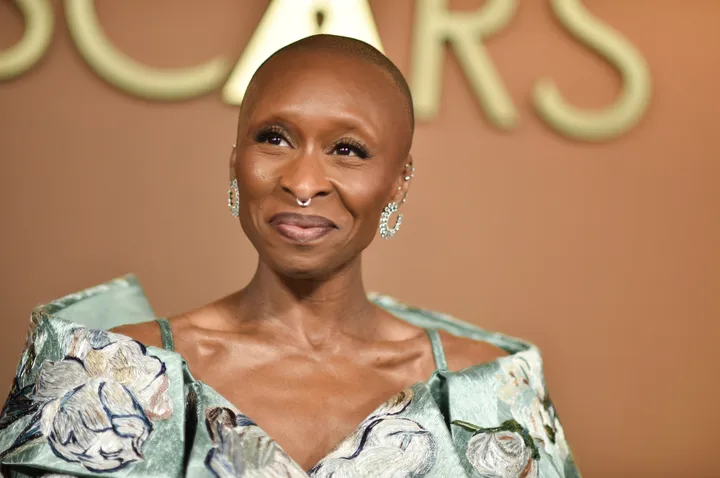
Cynthia Erivo is reflecting on the fall-out from an incident that took place at the premiere of the second Wicked film in Singapore last year.
In November 2025, Cynthia and her co-star Ariana Grande were attending the Wicked: For Good premiere when a man leapt over a barrier and grabbed the No Tears Left To Cry singer, before jumping up and down.
Viral footage of the incident showed the British performer stepping in to protect her co-star, which inspired jokes and memes referring to her as Ariana’s “bodyguard”.
However, in a new interview with Variety, Cynthia suggested that these jokes were evidence that society has not yet “come to terms with the insidious nature of how we view Black women”.
“I’m sure people will read this and think, ‘Oh, for goodness’ sake, it’s not about that.’ But it is,” she said.
Cynthia continued: “That’s what was being made fun of. It was my physique; it was my shape; it was the fact that I was bald; it was about what I looked like. And because of that, there was this assumption that I was bigger than my co-star and so I had to be controlling or protecting, and that was my role.
“I would hazard a guess that it would not have been the same had it been the other way around.”

Later in the interview, Cynthia claimed that the incident in Singapore put her off campaigning for an Oscar for her work in Wicked: For Good.
She lamented: “I just felt like my humanity had been bastardised. I felt like something I did instinctively had been made to be something that it simply was not because of the way people see women who look like me, and because of the assumptions that are made, and I just didn’t want to be a part of that, really and truly.”
Cynthia added that people’s preconceptions about the second Wicked film being inferior to the first contributed to her not wanting to campaign for an Oscar.
In the end, Wicked: For Good was completely snubbed at the 2026 Oscars, despite the first film receiving 10 nominations (and two wins) a year earlier.
Speaking to Variety, Cynthia also spoke about the impact that the grueling Wicked promotional tour took on both herself and Ariana.
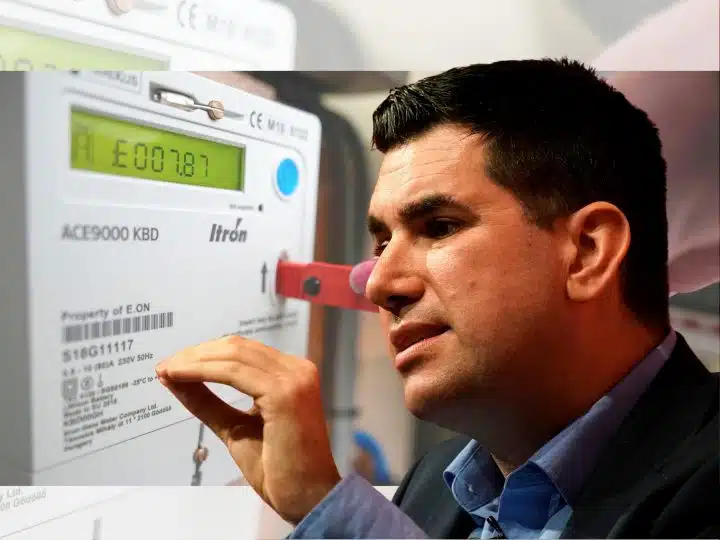

Labour MP Richard Burgon has spoken out against Ofgem’s price cap rise, labelling it a “total con”:
Ofgem’s so-called energy price cap is a total con. Bills are going up again
We need a real price cap that protects ordinary people, paid for through the profits of energy giants.
We need to replace expensive gas with cheaper renewables. And energy back in public ownership!
— Richard Burgon MP (@RichardBurgon) May 27, 2026
Ofgem energy price cap
Reporting on the latest Ofgem price hike, the Canary’s Rose Cocker explained:
On 27 May energy regulator Ofgem announced that it will raise the energy price cap for 1 July to 30 September 2026 by a massive 13%. That’s the sharpest hike in household energy prices of any summer in the past four years.
Bill-payers under the cap will now pay the equivalent of £1,862 a year from 1 July to 30 September for gas and electricity. That’s up from the current equivalent of £1,641 a year – an increase of around £18 a month, based on typical use.
Cocker added that Ofgem is blaming Trump and Israel’s war on Iran for the price increase. It should be noted, however, that while most of us are facing price increases, Shell just saw “first-quarter profits surge by 115%”. It’s a similar phenomenon to supermarkets experiencing record profits as the rest of us suffer record prices.
As Burgon notes, public ownership would improve things. Instead of losing money to shareholder profits, we could re-invest money into the network. We could also stabilise prices whenever an event like the current oil shock occurs.
On this topic, Cat Hobbs of We Own It said:
It is also time to rethink the private ownership of our energy grid. Across the sector, energy companies made £23.1 billion in profits last year, at a time when household energy bills were going up, and families were being squeezed on all fronts. Reinvesting profits that are currently being paid out to shareholders into cutting bills could go a long way to cut our energy bills and save people from falling further into fuel poverty.
Burnham to the rescue?
Many are hoping that Andy Burnham is the man to renationalise Britain’s utilities. The problem is that Burnham’s statements on the matter have been wishy-washy and conflicting:
Andy Burnham says we could have a "localised public control option" for Thames Water
What does that mean? Who is in charge? Where do the profits go?
We need nothing less than permanent PUBLIC OWNERSHIP of Thames Water with households, workers and anti sewage groups on the board pic.twitter.com/0s1OT1mMzz — Cat Hobbs (@CatHobbs) May 23, 2026
As we reported, Burnham has not committed to ‘renationalising’ anything as far as we’ve seen. Instead, he’s talked about putting utilities under “stronger public control”. Burnham also said:
He has also spoken of stronger public control over utility companies. “I use that phrase advisedly. People then shorthand it as nationalisation; it’s not the same thing,” he said, pointing to Greater Manchester’s bus services, which are run by private operators.
When we suggested this means Burnham has no plans to renationalise, he responded as follows:
I’m not doing anything of the kind. Just got to be realistic about how quickly it can be done.
— Andy Burnham (@AndyBurnhamGM) May 24, 2026
How quickly ‘what’ can be done, we don’t know, because he’s still not explained what he has in mind.
Reading between the lines, he seems to be suggesting that ‘stronger public control’ would be a stepping stone to full-on re-nationalisation? We don’t know, Andy — sounds like another centrist half-measure to us!
Hot air
Should Burnham come forwards with a clear plan for renationalisation, we’ll be sure to update you. Until then, we need to keep the pressure up. And this shouldn’t be difficult, because the public is massively in favour of nationalisation:

It’s almost like your average Briton doesn’t like being ripped off by private companies.
Featured image via Christopher Furlong / Getty Images
By Willem Moore
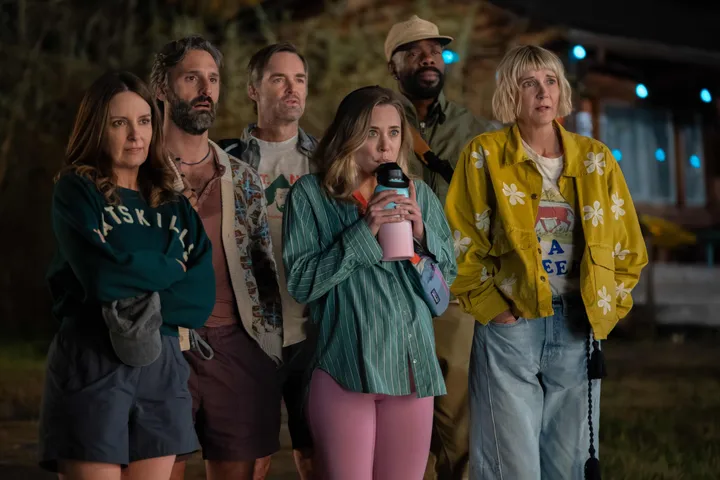
As was the case with season one, the new episodes follow a group of middle-aged friends over the course of one year in their lives, as they deal with the highs and lows of marriage, parenthood, friendship and grief.
Season one was a huge hit with audiences and critics, and judging by the overwhelmingly positive reviews, the second – which reunites showrunner Tina with Colman Domingo, Will Forte, Kerri Kenney-Silver, and Marco Calvani – looks set to be just as loved.
Here is what critics are saying about the second series of The Four Seasons….
“Poignant, hilarious, loaded with a super-sharp script … the second outing for this midlife comedy is even more fantastic than the first […] This is a dark and difficult world in which good men smash up vintage snack shacks, regrets must be lived with, sacrifices made, childhood traumas kept buried, and people who love each other want completely different things.”
“The freshman season of The Four Seasons worked because it was so willing to pull the rug from under the daily lives of a group of fifty-somethings, but season two, which has less wit and seemingly lower stakes, never quite reaches the breezy, banter-filled charm.
“Yet, with several new locations, including the Italian Alps in all of their winter glory, and a group of utterly talented actors whose chemistry leaps off the screen, the show remains a world very much worth checking out.”

Emily V. Aragones/Netflix
“The writing is tack-sharp and the ensemble is full of underappreciated comic performers – Kenney-Silver, for example, has always been great in shows such as Reno 911! and 2 Broke Girls.
“Writers and cast realise that the humour here comes from the group interactions, not just quirky individuals saying funny lines.”
“When it isn’t making you laugh, The Four Seasons will break your heart, only to put it back together again when the clime next changes.”
“The Four Seasons is a love letter to honest friendships, the one constant in life through the day-to-day grind. Making the time to get together even once a season is a needed reset because sometimes, your friends are the calm amidst the chaos.”

Emily V. Aragones/Netflix
“While it can be unbearably gooey and the characters hugely annoying, their dynamic sucks you in, which is testament to the skill of Fey and her co-screenwriters. In life, friendship groups can feel horribly excluding, especially if you are a stray outlier who is not quite in what Jack calls the ‘core group’.
“But the show has fun with its ensemble, pricks at their failings when it needs to and allows you to care. And while we don’t necessarily come to TV for life lessons, The Four Seasons offers plenty.”
“Like season one, The Four Seasons succeeds because it depicts middle age in ways television rarely attempts. These characters carry decades of friendship, compromise, resentment, and love. They care deeply for one another, but that love does not magically solve anything.
“Season two develops that idea even further, allowing grief and uncertainty to coexist with awkward holidays, disastrous flirtations, and the exhausting messiness of long-term friendship.”
“The ‘Core Group’ is not facing traditional midlife crisis moments, and yet that sword hangs over the cast at all times.
“Forte, Fey, Calvani, Kenney-Silver, and Domingo bring authenticity and empathy to their characters, and enrich the screenplays as a result. With fewer stereotypical moments, we dig deeper into these characters and their struggles. The cast is too good to ignore, and Domingo is poised for another Emmy nomination with his sweet performance.”

Emily V. Aragones/Netflix © 2025
“Fey leads the cast of seasoned pros making it all look easy. Standout turns remain Colman Domingo and Will Forte, with Marco Calvani enjoying a well-deserved push to the front. Erika Henningsen slots in well as new mum Ginny, but doesn’t have that much to do, while spiky, eccentric Anne once again takes a while to warm to but gets there in the end.
Fey is her usual persona at first as Kate, the savvy, sarky, capable New Yorker keeping everything and everyone together. However, such is the quality of the writing, Kate doesn’t stay that way for long. In one brief scene, set in flashback during Covid times, Kate and Danny are both sick. With a couple of sentences, a feverish Kate recalls something from her past that changes entirely how we will look at her from now on.”
“While The Four Seasons doesn’t quite reach the emotional heights of a show like Shrinking, there’s still a warmth to the story that makes it easy to breeze through and be moved by along the way, resulting in a vacation I wouldn’t mind going on again next year.”
Both seasons of The Four Seasons are available to stream on Netflix now.
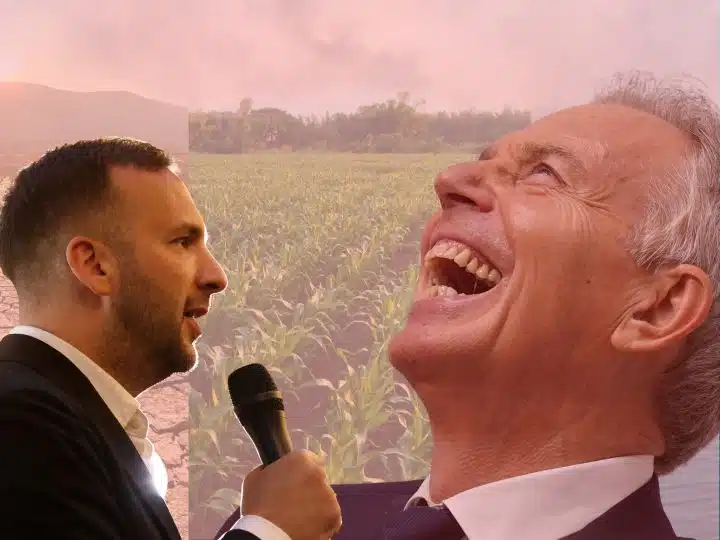

Tony Blair is being rightly slammed for his disappointingly common ‘rare’ interventions into British politics. This time, Green Party leader Zack Polanski had a sharp response:
This country has heard enough from Tony Blair. pic.twitter.com/SIC6hzxFEU
— Zack Polanski (@ZackPolanski) May 27, 2026
Polanski was far from the only figure in British political life to speak out.
Blair is “grotesque”
In full, Polanski said the following about Blair’s lengthy essay:
I think it was 5,600 words too many. Tony Blair is a former prime minister who dragged this country into an illegal war in Iraq.
I think it’s pretty grotesque to see him selling the future of our children and grandchildren down the river through the kind of climate delay tactics, talking down clean energy and the security that we need.
I just don’t think this is a sensible intervention in a day where we’re speaking in these extreme temperatures, to have someone who should hold a position of responsibility or a former position of responsibility to be speaking like this.
Polanski wasn’t the only Green to slam the slimy toad:
Whatever world Tony Blair inhabits appears to be one without climate change & where UK temperature record for May hasn’t just been smashed by over 2C. How else to explain his extraordinary dismissal of net zero & erroneous claim that fossil fuels are cheaper than renewables? — Caroline Lucas (@CarolineLucas) May 27, 2026

The idea that “every honest sensible person” agrees that – for example – we should abandon our belief in climate science and drill the North Sea, and that those who don’t say it are all dishonest populists, is just a form of centre-right conspiracy theory. https://t.co/ZAJh0CwqTP
— Adam Ramsay (@AdamRamsay) May 27, 2026
Polanski did receive some pushback from the dead-eyed media shills who fawned over Blair’s rambling right-wing screed:
I’m pretty sure at least nine out of ten randomly chosen punters would agree with the Green Party leader and not the eldritch, night-stalking terror here, but since when did anyone care what they think about anything pic.twitter.com/LffTrU3Gbf
— Flying_Rodent (@flying_rodent) May 27, 2026
And, this is what the man himself looked like when he later defended his call to ramp up fossil fuel production:
really good timing to wheel out this ghoul in the middle of a record breaking heatwave to complain about net zero lmao https://t.co/HfMkXgCPfx
— adam (@resurrecti0ns) May 27, 2026
Media fawning
On 27 May, we reported:
Historically, people in Britain said there is ‘nothing certain but death and taxes.‘ At this point, the third inevitability we can add is ‘disgraced war criminal Tony Blair will stick his oar in, and the media will describe it as an ‘unprecedented intervention.”
You’re not going to believe this, but the mainstream media would spend much of yesterday describing the predictable intervention as being somewhat unpredictable.
how can you be employed as a political editor and write that tony blair having an unsolicited opinion on anything that aligns with his funding sources is 'unusual' https://t.co/Rw1MSDcfP4
— P.G. Chodehouse (@mynnoj) May 26, 2026
Tony Blair: Wow, get a load of AI. We should probably cut welfare somewhat. Also, we should be involved in the Iran War for some reason.
Broadsheet columnist: Say what you like about the man, but the sophistication of his analysis is unparalleled.
— Ben Sixsmith (@BDSixsmith) May 27, 2026
As an alternative, here’s what our analyst William Kedjanyi said:
Tony Blair has staged another intervention, our political analyst William Kedjanyi has read it so that you don't have to pic.twitter.com/posg9Ew5Od
— Canary (@TheCanaryUK) May 27, 2026
Kedjanyi explained:
The most important part of Tony Blair’s essay that he wrote on his website yesterday is arguably what he didn’t say. The ex-prime minister accused the current one of having no plan, but he didn’t talk about a massive issue in Britain: housing—something which exacerbates so many of the problems we are dealing with today.
I thought that was extraordinary, considering the scope of a 5,700-word piece. Now there’s an awful lot to go into, but crucially we have to acknowledge that the lack of housing impacts everything else, and for him to omit it is a very big thing.
Blair really should be talking about this issue too. House prices quadrupled under him, thanks in part to buy-to-let. This left us with permanently expensive housing, because Blair failed to use the housing boom to build more houses – creating a political issue which has hamstrung every PM since.
The shifting centre
It wasn’t just the media fawning over Blair, tbf – there was also the occasional dipshit like this:
Tony Blair is possibly the only person on earth that makes people instantly reach for the dislike button whilst secretly knowing deep inside that he’s absolutely right and no one has come anywhere near his level of seriousness since.
— Brendan May (@bmay) May 27, 2026
Yes, mate – everyone secretly loves Blair as much as you do; it’s not that your supposedly ‘centrist’ ideology is now a fringe belief in British politics.
Making this point in more detail, Scarlett Maguire noted in April that the political ‘centre’ today is not what it was in 1997:
The 'centre' of British politics in 2026 looks a bit different. The median voter:
– distrusts politicians — Scarlett Maguire (@Scarlett__Mag) April 20, 2026
-wants change
– backs deportations
-wants large reduction in legal migration
– pro wealth tax
– pro wage ratios
-anti big-business
She added that your modern centrist also:
-dislikes rhetoric that seems too inflammatory
– opposes Trump
– worries about an unstable world and doesn’t want a leader that makes that worse
– wants to see solutions over political point scoring
This is all particularly notable in the case of Tony Blair, because he literally just said the UK should be closer to Trump.
Yo, Blair!
Blair’s insistence that the UK should suck up to Trump is grim but unsurprising. After all, this is the PM who let George W. Bush treat him like his manservant.
Activist Andrew Feinstein described Blair as follows:
Tony Blair promotes the corrupt, money-grubbing warmonger Trump because he is a corrupt money-grubbing warmonger & believes the world should genuflect before people like him & Trump so that they can kill & loot unhindered https://t.co/W6LWQXRPeA
— Andrew Feinstein (@andrewfeinstein) May 27, 2026
Zarah Sultana said this about the sweaty war monger:
The only statement Tony Blair should be making is a plea of "guilty" from the dock at The Hague.
He is a war criminal with the blood of over a million Iraqis on his hands. https://t.co/bJ8yOylich
— Zarah Sultana MP (@zarahsultana) May 26, 2026
Diane Abbott said:
Blair has no coherent plan for the country. His policy framework is support every US war, cut welfare and pensions, deregulate and privatise, continue anti-migrant policies. Labour has no coherent plan for country, says Blairhttps://t.co/eHMuyhUvgj — Diane Abbott (@HackneyAbbott) May 27, 2026
A hopeless, failed project.
Faiza Shaheen questioned why anyone would ever listen to Blair given the gravity of his crimes in Iraq:
.@faizashaheen: "Firstly on Blair, he should be held accountable for what he did with the Iraq War, when he lied to all of us, I just find it shameful that he can come out & expect to give us advice on anything"
Spot on. pic.twitter.com/YJgBYMcaep
— Saul Staniforth (@SaulStaniforth) May 27, 2026
While many have rejected Blair’s Trumpism the British media is trying to sell it as sensible politics:
this is an insane bit of "saying the quiet part out loud"
journalists & the former prime minister openly saying "Britain is not a sovereign state, our democracy is a sham, and we're all lying to you about it… and that's a good thing!" https://t.co/OcC4naM5PY pic.twitter.com/wyYW3yP7fK
— Archie Woodrow (@SamuraiApology) May 27, 2026
AI
If you’re wondering why war criminal Tony was so enthusiastic about AI in his essay, we can name at least 200 million reasons:
sometimes stuff doesn't need a complicated explainer pic.twitter.com/A9WbEFcyuL
— P.G. Chodehouse (@mynnoj) May 27, 2026
Sorry, make that £257 million:
I'm not interested in any coverage of Tony Blair's views that makes no mention of the fact the Tony Blair Institute (TBI) is bankrolled by billionaire Larry Ellison, founder of Oracle.
From 2021-2025, Ellison donated or pledged £257m to the TBI. Of course he's an AI evangelist!
— Aisha Nicole Malik-Smith (@ANMalikSmith) May 27, 2026
Dan Hodges suggested the essay may literally only exist to promote AI, with the non-AI stuff simply there to attract eyeballs:
Someone just pointed out to me, Blair’s article is actually a classic example of “Client Laundering”. He has a number of major AI clients, and if you read the “essay”, it’s peppered with AI references. So he writes an article ostensibly about Labour, gets a huge response, then contacts his clients and says “See, got a really good response to my AI article. All our top lines are in there”.
Jeremy Corbyn, meanwhile, said the following:
Tony Blair thinks the answer to this country’s problems is AI, welfare cuts and endless spending on war.
Who benefits? Arms companies and tech billionaires.
Once again, Blair is wrong. The answer is a redistribution of wealth and power and the relentless search for peace.
— Jeremy Corbyn (@jeremycorbyn) May 27, 2026
Phony Blair
Economist Yanis Varoufakis was among those who highlighted what Tony Blair’s real priority is – namely Tony Blair. In his response, Varoufakis noted that Blair’s “real innovation” was:
the financialisation of the ex-premiership itself. The Tony Blair Institute, fuelled by £130 million from Oracle’s Larry Ellison—coincidentally, the largest individual donor to the Friends of the IDF—became a shadow state, brokering governance contracts for autocrats and companies like Palantir that weaponise AI to produce mega-death abroad and full-on surveillance of Western populations.
Many added to Varoufakis’s argument, including Feinstein:
Blair, who Thatcher described as her greatest achievement because he turned Labour into a corrupt, warmongering, neoliberal party just like the Tories, is a war profiteer & at best a sociopath at worst a psychopath who feels nothing for the slaughter & immiseration he has caused,… https://t.co/ONaDX0AK7r
— Andrew Feinstein (@andrewfeinstein) May 27, 2026
It’s crystal clear Tony Blair does not care about the lives of working class people.*
And, this intervention definitely does not speak on their behalf
He speaks for the billionaire class, vested interests and the status quo with the aim of protecting their wealth and power, much like his great friend Peter Mandelson.
His institute are bankrolled by big tech and corporate interests, not the 99% struggling through austerity, insecurity and inequality.
Completion
We’re going to end with the following from Richard Burgon:
Tony Blair once said: “My project will be complete when the Labour Party learns to love Peter Mandelson.”
That quote is worth remembering given The Times is reporting that Blair plans more interventions on Labour’s future. — Richard Burgon MP (@RichardBurgon) May 28, 2026
This is why Blair’s project will never be complete, and it’s also why he will keep feeling a need to intervene.
The only positive in all this is that the backlash against him only seems to be growing with each new intervention.
Featured image via Pool (Getty Images) / Ryan Jenkinson (Getty Images)
By Willem Moore
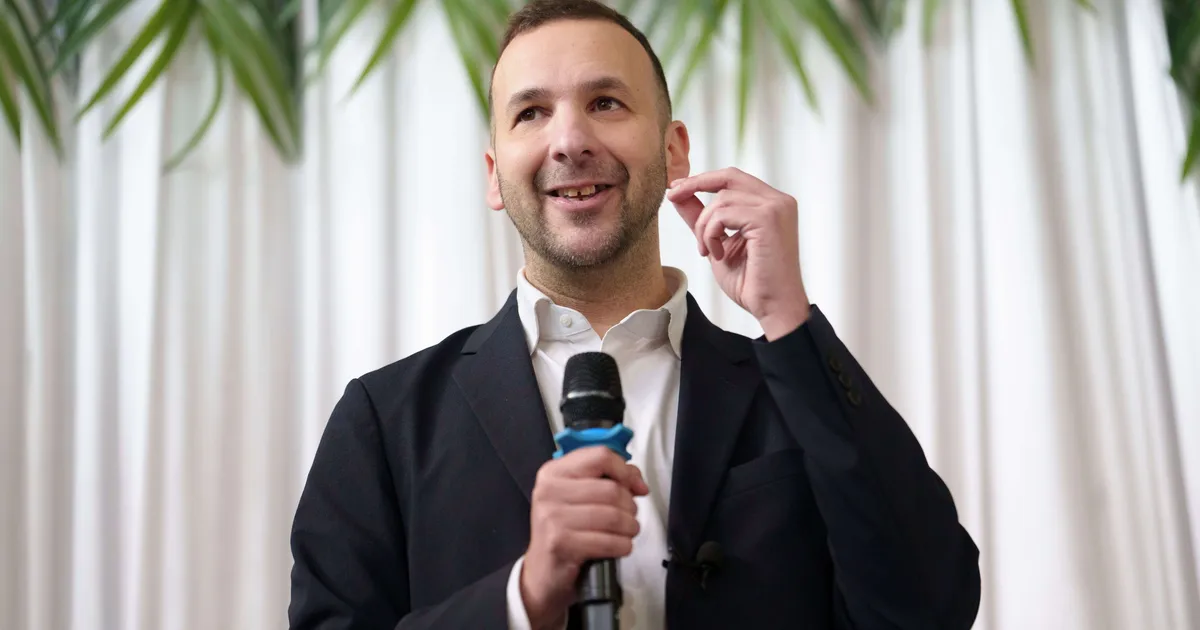
Green Party leader Zack Polanski has claimed he gets more media scrutiny than Reform UK’s Nigel Farage.
It recently emerged he did not pay council tax when he lived on a narrowboat in London, though Polanski says he is taking steps to remedy the issue.
The politician has also been attacked for not voting in the local elections after he “fell short of time” to update his address on the electoral register after moving to a new home.
Speaking to Sky News, the London Assembly member said: “It’s right that I’m scrutinised, it’s right that I’m asked questions.
“But the disproportionality at which I am scrutinised, and a council tax bill, for instance, that it still turns out I might not even owe, has been scrutinised, compared to the £5 million [donation to] Nigel Farage.”
The Reform leader received the hefty lump sum from a crypto billionaire shortly before he decided to run to be Clacton MP in the 2024 general election.
He then failed to declare the donation to parliament, insisting the money was not used for political purposes but his own personal safety.
Farage is now facing a sleaze probe from the parliamentary standards commissioner.
When Sky News’ Rob Powell pointed out that such a donation was also uncovered due to journalistic scrutiny, Polanski said: “If you compare the scrutiny I receive to what Reform receives, it is incredibly disproportionate.
“In the same breath, I should receive scrutiny as should Nigel Farage.
“Far too often, as with right-wing politicians… we’re talking about £5 million here compared to a council tax bill!”
I think there’s been a targeted smear campaign [against me],” he also claimed.
Polanski later replied to footage of the interview on social media: “What’s really striking about this clip is that I laid out some of the nonsense against me – and why it was disproportionate. Journalist agrees some of it is ‘overcooked.’
“But none of my explanation nor the danger around my personal safety has made the cut….!”
In response to the interview, a Reform source told HuffPost UK: “I can say with some certainty that he doesn’t.”
The right-wing party has often accused the media of being rigged against them, with Farage alleging last year that the BBC has been “institutionally biased for decades”.
Subscribe to Commons People, the podcast that makes politics easy. Every week, Kevin Schofield and Kate Nicholson unpack the week’s biggest stories to keep you informed. Join us for straightforward analysis of what’s going on at Westminster.

Will Bitcoin fall to $70K as over $6.2B options expiry and ETF outflows hit markets?

Netflix’s New 8-Part Sci-Fi Mystery Series Officially Earns Stephen King’s Stamp of Approval

Why I’m relishing the downfall of Nasty Nicola


-

 Crypto World7 days ago
Blockchain.com files with SEC for U.S. IPO
-

 Fashion6 days ago
Holiday Weekend Open Thread – Corporette.com
-

 Politics3 days ago
Bridgerton Season 5: Cast, Release Date And Everything We Know So Far
-

 Crypto World6 days ago
Bitcoin Accumulation Weakens as BTC Realized Losses Hit $600M
-

 Tech3 days ago
Microsoft’s quiet Claude Code retreat and the real cost of enterprise AI
-

 Business6 days ago
Dell Technologies DELL Stock Surges 15% on AI Server Momentum and Analyst Upgrades in 2026
-

 Crypto World5 days ago
Robinhood crypto COO Tanya Denisova exits
-

 Business4 days ago
NYT Strands Answers May 24 2026 Revealed for Puzzle No. 812 Theme Summer Essentials
-

 Business6 days ago
Trump Invests $1M-$5M in Kura Sushi USA Chain With 27 California Locations
-

 Politics6 days ago
Makerfield: a tale of two social-media histories
-

 Crypto World6 days ago
Space X IPO Is ‘Bad News’ for Tech Stocks: But What About Bitcoin?
-

 Business1 day ago
Selena Gomez Reportedly Upset Over Benny Blanco’s Comments on Her ‘Terrible’ Diet
-

 Crypto World6 days ago
MicroStrategy’s Saylor Says Miners No Longer Set Bitcoin Price, Another Force Has Taken Over
-

 Tech6 days ago
WhatsApp ads could make Irish debut after discussions with DPC
-

 Business3 days ago
BTS Sells Out Four Las Vegas Shows at Allegiant Stadium for ARIRANG World Tour
-
Tech22 hours ago
The Samsung pay deal is the moment Korean unions changed register
-
 NewsBeat7 days ago
Charity run by Reform leader Malcolm Offord accused of ‘law breaking’ over Scottish registration
-
 Tech6 days ago
A 0.12% parameter add-on gives AI agents the working memory RAG can’t
-

 Tech3 days ago
Westone Audio and Etymotic Acquired by Fidelity Collective in Major IEM Market Move
-

 Crypto World6 days ago
AI infrastructure race heats up as IREN pitches full-stack strategy, WhiteFiber lands $160M deal
You must be logged in to post a comment Login