

Business
Bharat Dynamics Q4 Results: Net profit tumbles 59% to Rs 113 crore; dividend announced


Revenue from operations more than halved, dropping nearly 73% YoY to Rs 480 crore during the quarter under review, as against Rs 1,777 crore reported in the year-ago period.
Total expenses also sharply declined to Rs 445.47 crore in Q4 FY26 from Rs 1,498 crore in the year-ago period. Total income fell to Rs 599 crore in the January-March quarter of FY26, from Rs 1,876 crore in the same period last year.
Along with the Q4 results, Bharat Dynamics said that its board of directors have recommended a final dividend of Rs 0.40 per equity share with a face value of Rs 5 each for the financial year which ended on March 31. This is however subject to shareholders’ approval at its upcoming Annual General Meeting (AGM).
BDL FY26 Results

For the entire financial year which ended on March 31, 2026, Bharat Dynamics reported a standalone net profit of Rs 420 crore, marking a 23% YoY drop from the Rs 550 crore net profit reported in FY25. The firm’s revenue from operations meanwhile fell 27% YoY to Rs 2,442 crore in FY26.
Total expenses also reduced to Rs 2,298 crore, while total income fell to Rs 2,866 crore during the financial year. Earnings per share (EPS) meanwhile fell to Rs 11.47 per share in FY26, from Rs 14.99 per share in FY25.
BDL share price
Bharat Dynamics announced its earnings on March 28, when markets were closed on account of Bakrid. The stock will be in focus tomorrow when markets reopen. The stock has fallen over 1% in one week, 7% in one month and are down 13% so far in 2026.
The shares of the defence player have declined 33% in one year, but gained over 145% in three years and 621% in five years.
(Disclaimer: Recommendations, suggestions, views and opinions given by the experts are their own. These do not represent the views of The Economic Times)


Jin Yan, Tri-continental portfolio manager, sells $87,175 in stock

Operator
[Interpreted] Forward-looking statements and non-IFRS measures. Today’s presentation may contain forward-looking statements, which are any predictions, projections or other statements about future events based on current expectations and assumptions.
Actual results could differ materially from these forward-looking statements because of a variety of risks and uncertainties, known and unknown. You can consult BRP’s public disclosures on SEDAR+, EDGAR and VRP’s website, including its management’s discussion and analysis for the fiscal year ended on January 31, 2026, and in other continuous disclosure materials filed from time to time with Canadian Securities regulatory authorities and the Securities and Exchange Commission for a description of the risks, uncertainties and other factors that could influence actual results. BRP does not undertake any duty to update forward-looking statements.
In addition, some of the financial measures discussed over the course of this presentation are not recognized measures under IFRS. You can refer to BRP’s management’s discussion and analysis for the fiscal year ended on January 31, 2026, and for the first quarter of the fiscal year ending January 31, 2027, for a complete definition and complete reconciliation of such measures to the IFRS measures.
[Presentation]
Pierre Beaudoin
[Interpreted] Good morning. Welcome to BRP’s Annual Meeting of Shareholders. My name is Pierre Beaudoin, and I am the Chair of the Board of Directors of BRP. On behalf of the Board, I would like to thank you for being here today. If you will allow me, I would like to first address our English-speaking audience, and then I will continue in French.
Good morning. Welcome to BRP’s Annual Meeting

For Ovik Mkrtchyan, the lawsuit he has brought with Gor Investment against Straife is not only about money. It is also about reputation, family harm and what he describes as an effort to bring transparency to an alleged campaign that damaged his business and placed “at least thousands of false publications online.”
In a statement, Mkrtchyan said: “The events described in the complaint caused profound and lasting harms to me and my family that no amount of money can fully repair. In addition, the ongoing smear campaign against me has now placed at least thousands of false publications online in an effort to cause further harm. By seeking justice in the courts, I hope to bring appropriate transparency to what happened and to ensure that others do not suffer in the way that we did.”
Mkrtchyan added: “I stand behind the lawsuit and there is nothing I wish to add to the detailed complaint, as those matters will be addressed through the legal process.”
The complaint, filed in the United States District Court for the District of Columbia, names Straife, a corporate intelligence firm with a Washington presence; its chief executive, Joseph Fleming; and Stephen Payne, a Washington lobbyist who, according to the complaint, has marketed his Washington connections and experience working in the George W. Bush White House. The plaintiffs bring claims including defamation, tortious interference, injurious falsehood and civil conspiracy.
At the heart of the case is Mkrtchyan’s allegation that people he once dealt with as advisers or associates later helped his adversaries damage him. According to the complaint, Straife and Fleming advised Mkrtchyan and Gor from 2022 on sensitive strategic and risk matters, receiving more than $100,000 in fees. Payne, who allegedly worked with Mkrtchyan and his companies from around 2016, is said to have introduced him to Fleming and Straife.
According to the complaint, the dispute arose from what the plaintiffs describe as a sanctions-related demand. The complaint alleges that Uzbek businessman Ulugbek Shadmanov and his team demanded that Mkrtchyan use his US relationships to help place two Uzbek nationals, Dmitry Lee and Komil Allamjonov, on the US sanctions list in order to prompt their prosecution in Uzbekistan. Mkrtchyan claims he refused, saying he viewed the demand as unlawful.
The plaintiffs allege that the consequences were severe. After the refusal, the complaint says Shadmanov began what the plaintiffs characterise as a campaign of retaliation. The complaint alleges that Mkrtchyan’s projects in Uzbekistan stalled, official support weakened and counterparties became reluctant to proceed.
In January 2024, according to the complaint, Mkrtchyan and his daughter were detained by officers of Uzbekistan’s State Security Service. His daughter was released, but he remained in detention for several months. The complaint alleges he was confined in harsh conditions, repeatedly interrogated, denied access to medication and pressured to confess to crimes he denied. He was released on April 12, 2024, and the complaint says official records confirm he was cleared of all charges.
The lawsuit says the damage continued after his release. According to the complaint, Straife and Fleming had proposed a course of action to secure Mkrtchyan’s release that Gor rejected on legal grounds. After the relationship ended, the plaintiffs allege Straife and Fleming agreed to assist Shadmanov and United Cement Group, or UCG, in interfering with Mkrtchyan’s projects, contracts and reputation.
One of the most detailed allegations involves an unsigned multi-page report titled “Report on the Nefarious Activities of Uktam Aripov.” The complaint alleges Straife and Fleming prepared the document, which focused on Aripov, an associate of Mkrtchyan, but also included allegations about Mkrtchyan and his wider network. The plaintiffs allege the report was left unsigned in order to conceal Straife’s and Fleming’s involvement in preparing it.
According to the complaint, former US ambassador Stephen Akard later sent the report, together with a cover letter, to Uzbekistan’s president, Shavkat Mirziyoyev, and Uzbekistan’s ambassador in Washington, Furqat Sidikov, on August 16, 2024. The plaintiffs allege this placed damaging claims before senior Uzbek officials while obscuring Straife’s role in preparing the material.
The complaint places particular emphasis on Payne’s alleged role. According to the complaint, in April 2024, while Mkrtchyan was detained, Payne wrote in support of his release, attesting to his innocence and blaming Shadmanov and UCG. The complaint says Payne later reversed course after Fleming approached him and persuaded him to change his position.
The plaintiffs allege Payne acted at Fleming’s and UCG’s direction when he sent an August 23, 2024 letter retracting his earlier support. According to the complaint, that letter set out allegations against Mkrtchyan that included references to purported links to Russian organised crime, extortion and unethical conduct—allegations Mkrtchyan denies and which the complaint describes as false.
The complaint alleges Payne worked with Fleming to draft the letter, copied Fleming on related correspondence, requested confidentiality and separately contacted Ambassador Sidikov in Washington in connection with the letter. The plaintiffs allege that Payne’s reversal was, in their characterisation, connected to subsequent lobbying and consulting arrangements.
The complaint also alleges that Payne later provided information about Mkrtchyan, Gor and Aripov to a journalist, with the aim, the plaintiffs say, of encouraging publication of material aligned with the August 2024 letter and the Straife report. The complaint states that the journalist responded sceptically to one of the items Payne had sent.
For Mkrtchyan and Gor, the complaint alleges that the reputational campaign had commercial consequences. The complaint says the defendants’ alleged conduct helped disrupt major projects and damage relationships involving companies including BASF, CC7 and CITIC. The plaintiffs claim CITIC had indicated a willingness to invest more than $1.5 billion in one of the projects and that total losses exceed $1 billion.
The lawsuit also points to a later retraction. On October 29, 2025, Akard and his firm wrote to Uzbekistan’s president and ambassador retracting the August 2024 letter and report. According to the complaint, Akard said the material had been sent at UCG’s request, that the report had been prepared for UCG by Straife, and that neither he nor his firm had independently verified or could substantiate the allegations.
The allegations concerning Payne also come against the backdrop of a separate arbitration involving NRCO Engineering S.A., a company owned by Mkrtchyan, Payne and Linden Energy. In a May 1, 2026 Final Award, an ICDR arbitrator found in NRCO’s favour, and NRCO has petitioned the Southern District of Texas to confirm the award and enter judgment for more than $2.19 million.
In the award, the arbitrator examined Payne’s August 2024 letter to the President of Uzbekistan, in which Payne retracted his earlier letter supporting Mkrtchyan. The award states that the August letter included allegations against Mkrtchyan and Aripov, including alleged ties to Russian organised crime, threats and extortion. The arbitrator found that Payne and Logan Somera, who the award says assisted in drafting the letter, did not produce credible evidence supporting the assertions in the August retraction letter. The award also found that Payne actively attempted to conceal the existence of the letter from Mkrtchyan and Aripov.
The allegations in the D.C. complaint remain unproven. The defendants will have the opportunity to contest the complaint, challenge the plaintiffs’ account, and present their own evidence. The separate NRCO arbitration award has already made findings against Payne and Linden in a different dispute, but it does not determine the defendants’ liability in the D.C. proceedings.

Rep. Russell Fry, R-S.C., commends Vice President JD Vance’s leadership of the federal anti-fraud task force on ‘The Evening Edit.’
The anti-fraud task force being led by Vice President JD Vance may balance the budget and could help save Social Security, President Donald Trump said during Wednesday’s Cabinet meeting at the White House.
“I think we have a chance to save Social Security without doing anything to it,” Trump said. “We’re going to make our Social Security so strong.”
Trump stated Vance had uncovered enough fraud that it may be able to fund the program. This comes as the federal government has warned that Social Security could be depleted by the 2030s.
FEDS MISTAKENLY GAVE AWAY $692M IN DUPLICATE PPP LOANS
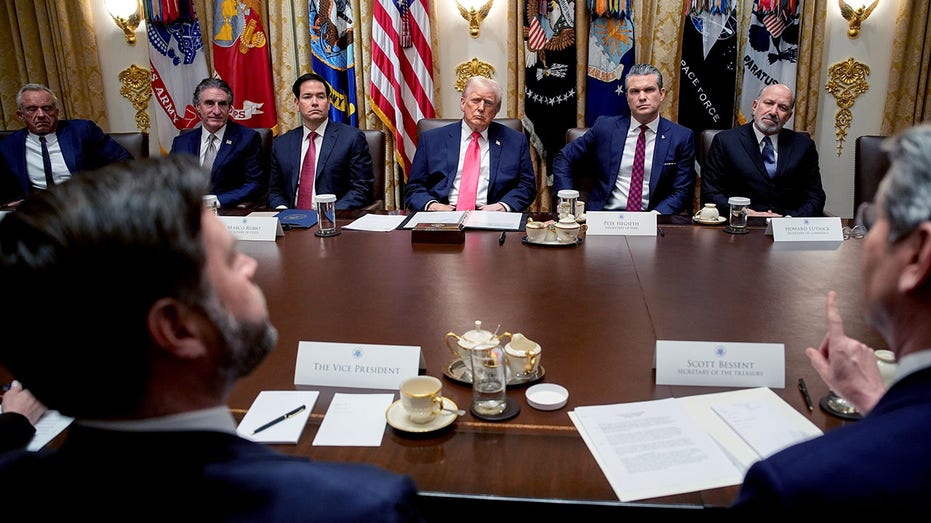
Robert F. Kennedy Jr., secretary of Health and Human Services (HHS), from left, Doug Burgum, US secretary of the interior, Marco Rubio, US secretary of state, US President Donald Trump, Pete Hegseth, US secretary of defense, and Howard Lutnick, US co (Getty Images / Getty Images)
“The numbers that we’re finding out — we have great people in Social Security. We’re going to make our Social Security so strong, so good, that you’ve never seen anything like it,” Trump said. “We’re going to protect, I said right from the beginning, we’re going to protect our people in Social Security.”
Trump reiterated that he wants to protect the crucial entitlement program, while Vance credited Trump for the task force’s success.
“The fact that we have dedicated presidential leadership is really what’s made this possible, because it does require — we’ve got great people around the table — but sometimes these agencies don’t know how to work together at the lower level, and that’s one of the things we’ve had to turn on and force with the fraud task force,” Vance said.

President Dona;ld Trump said his anti-fraud task force could help save Social Security during Wednesday’s Cabinet meeting. (Getty Images / Getty Images)
According to the most recent estimates, Social Security is projected to become insolvent in 2032, which could trigger automatic benefit cuts. The program is primarily funded by payroll taxes on current workers and their employers.
During Wednesday’s meeting, Trump said the task force has already identified “billions and billions and billions” worth of fraud, noting that if the initiative “does really great, we’ll have a balanced budget without having to do anything.”
“Everybody was getting rich, and I think we have a chance to save Social Security without doing anything to it,” Trump said. “Just the numbers of fraudulent people on Social Security — people that are 115 years old, 125 years old, getting payments. It’s funny.”

The Trump administration is reportedly considering “everything” when it comes to avoiding Social Security insolvency, Social Security Administration Commissioner Frank Bisignano says. (Getty Images/iStock / Getty Images)
GET FOX BUSINESS ON THE GO BY CLICKING HERE
Vance was named to head the anti-fraud effort in March. The Trump administration has stated that the initiative was launched as some states have failed to combat entitlement fraud that has benefited illegal immigrants.

For years, the default move for a small business needing to take card payments was simple: go to your bank and rent a terminal. It seemed logical at the time.
Your bank already handled your business account, so why go elsewhere? The problem is that for a lot of SME owners, that decision has quietly cost them more than they ever expected.
Complaints about bank-issued card machines have been building up for a while. Slow settlements, locked-in contracts, clunky hardware and support teams that treat you like a ticket number. Carry on reading to find out what’s driving small businesses to make the switch and what they’re moving to instead.
What’s Wrong With Your Bank’s Terminal
The hardware issue alone is enough to put people off. Most bank-issued terminals are running on ageing technology, with slow boot times, limited connectivity options and interfaces that haven’t changed meaningfully in years. For a busy café or independent retailer, a terminal that takes 30 seconds to process a payment is frustrating, it also holds up the queue, and affects the customer experience.
Then there’s settlement speed. Some providers still operate on a T+3 basis as standard, with deferred settlement arrangements pushing that even further for certain merchants. That means money from card transactions may not reach your account for several business days, even though faster settlement is now available across much of the market.
For a small business managing tight cash flow, that kind of lag can cause real problems. It’s not unusual for an SME to take a significant Friday evening in sales and still be waiting for that money on Wednesday.
Contracts That Favour the Provider, Not the Business
One of the biggest frustrations among business owners is the contract structure. Bank payment solutions have often come with fixed-term agreements of up to 18 months, and early termination fees and auto-renewal clauses can still make switching feel difficult once you’re locked in.
Some business owners have reported paying monthly rental fees for terminals they barely use during quieter periods, with no flexibility to pause or reduce costs. When business is seasonal, a market trader in winter, for instance, or a pop-up that only operates at events, paying a flat monthly fee for hardware that’s sitting in a drawer makes very little sense.
A New Generation of Payment Terminals
The fintech sector has stepped into the gap left by legacy providers, and the options available to UK businesses have expanded considerably in recent years. These providers tend to offer faster settlement, transparent transaction fees, no monthly hardware rental costs, and much more intuitive devices.
Zeller is a fintech platform used by over 100,000 businesses internationally, offering UK merchants a modern approach to payments infrastructure.Their terminal range connects via Wi-Fi, 4G or Ethernet, supports split billing and custom VAT rates, and comes without lock-in contracts or subscription fees.
It also pairs with a business account and expense cards in a single setup, which reduces the need for multiple financial tools, the kind of integrated approach that appeals to businesses that have previously had to stitch together a payment provider, a current account and a separate expense management tool.
What to Look for When Switching
If you’re thinking about moving away from your bank’s terminal, a few things are worth checking before you commit to a new provider:
- Settlement speed: Does the provider offer next-day or same-day payouts?
- Contract terms: Are there lock-in periods or early exit fees?
- Transaction fees: Do you understand them at first glance? Or do you need to dig through fine print to find them?
- Hardware costs: Is the terminal purchased outright, or rented monthly?
- Support availability: Can you reach a real person quickly if something goes wrong?
Support: Where Legacy Providers Often Fall Short
Ask any small business owner what frustrates them most about their current payment provider, and support quality will come up more often than you’d expect. Legacy bank providers typically route queries through large call centres, and getting through to someone with the authority to actually resolve an issue can take hours. For a business mid-service, that’s not good enough.
Newer providers tend to invest more heavily in customer support, partly because their model depends on retention instead of locking people in through contracts. When your customers can leave more easily, you have a stronger incentive to make sure they don’t want to.
Concluding Remarks
The bank card machine made sense in a market where there weren’t many alternatives. That’s no longer the case. The combination of outdated hardware, slow settlement, inflexible contracts and poor support has pushed a growing number of SMEs to look elsewhere, and the fintech sector has responded with products built specifically around how small businesses actually operate.
If you’re still renting a terminal from your bank on a rolling contract, it’s worth doing a proper cost comparison. In many cases, switching to a newer provider will save money, speed up access to your funds and give you a better experience when things go wrong.

Richard Drury/DigitalVision via Getty Images

Listen below or on the go on Apple Podcasts and Spotify

U.S. GDP growth slowed as inflation pressures remained elevated. (0:15) Drone stocks up on Trump administration defense funding. (1:29) Lamborghini defends abandoning EV plans as luxury buyers favored hybrid vehicles. (2:35)
This is an abridged transcript of the podcast:
Our top story so far, GDP was revised lower for Q1 to a 1.6% annual rate, versus 2% in the initial estimate and 0.5% in the prior quarter.
The downward revision primarily reflected weaker investment and consumer spending.
Overall, GDP was supported by increases in government spending and exports, along with faster investment growth, partly offset by slower consumer spending.
David Laut of Kerux Financial said the stability in economic growth “suggests that interest rates at their current levels are justified.”
Meanwhile, the April core PCE price index showed inflation remains well above the Fed’s 2% target.
The index rose 0.2% for the month, a touch below the 0.3% estimate, but increased 3.3% annually, in line with consensus and slightly hotter than March’s 3.2% pace.
Consumers continued to spend despite persistent inflation, though income growth was flat.
Economist Joseph Brusuelas said Americans are “so upset right now” because of three straight monthly declines in disposable income growth and weakness in that same measure over the past year.
“Real wages are falling as disposable income declines and households are drawing down savings,” he said. “With rising inflation not having yet peaked this will get worse before it gets better and real spending is likely to decline in May.
Among active stocks, drone-related stocks are rallying after The Wall Street Journal reported that the Trump administration is considering funding agreements with several companies as part of a broader push to expand domestic production and reduce costs for the increasingly important defense technology.
Unusual Machines (UMAC) is up 50%, while Red Cat Holdings (RCAT), AeroVironment (AVAV), Kratos Defense & Security Solutions (KTOS), AgEagle Aerial Systems (UAVS), ZenaTech (ZENA), Ondas Holdings (ONDS) and Airo Group (AIRO) are also moving higher.
Best Buy (BBY) is rallying after beating estimates with its Q1 earnings report and issuing solid full-year guidance.
Best Buy sees full-year revenue of $41.2 billion to $42.1 billion, versus the $41.8 billion consensus estimate, and adjusted EPS of $6.30 to $6.60, versus $6.48 expected.
And Dollar Tree (DLTR) is rallying after reporting Q1 sales growth of 7.3%.
Same-store sales for the Dollar Tree banner rose 3.5%, topping the 3.2% consensus estimate.
The gain was driven by a 4.5% increase in average ticket, partly offset by a 1% decline in traffic.
And in other news of note, Lamborghini CEO Stephan Winkelmann said the automaker’s decision to scrap its EV plans was “the right way to go” after Ferrari’s new electric vehicle faced backlash over its design.
“The decision to go from the internal combustion engine to plug-in was a very important one for us, and it worked out,” he told CNBC.
“We don’t speak about our competitors… but everybody has their own strategy.”
Lamborghini, which is owned by Volkswagen (VWAGY), abandoned plans for an all-electric Lanzador and a fully electric version of its Urus SUV.
“By observing the market… we saw that the acceptance curve (of EVs) for our type of customers is not increasing, and therefore, we decided to move away from a full-electric car into a plug-in hybrid,” Winkelmann said.
Editor’s Note: This article discusses one or more securities that do not trade on a major U.S. exchange. Please be aware of the risks associated with these stocks.
Business
Dollar Tree Shares Surge 16 Percent After Strong Q1 Earnings Beat and Raised Full-Year Outlook

NEW YORK — Dollar Tree Inc. shares jumped more than 16 percent on Thursday, reaching $111.67, after the discount retailer delivered a strong first-quarter earnings beat and raised its full-year profit guidance, signaling improving consumer trends and successful merchandising initiatives.
The company reported fiscal first-quarter net sales of $5.0 billion, up 7.2 percent from the prior year and surpassing Wall Street expectations of $4.97 billion. Comparable store sales rose 3.5 percent, driven by a 4.5 percent increase in average ticket size despite a slight 1 percent decline in traffic. Adjusted earnings per share reached $1.74, comfortably beating consensus estimates of $1.55.
Dollar Tree also raised its fiscal 2026 adjusted EPS guidance to $6.70–$7.10 from the previous range of $6.50–$6.90, reflecting confidence in sustained momentum. The company opened 113 new Dollar Tree stores during the quarter and continued expanding its multi-price format to nearly 5,900 locations.
CEO Mike Creedon highlighted operational improvements and better merchandising as key drivers. “We are pleased with our progress in the first quarter and remain focused on delivering value to our customers while driving profitable growth,” Creedon said in prepared remarks.
The strong results triggered a sharp rally in pre-market trading that carried into the regular session. Volume spiked as both retail and institutional investors reacted positively to the earnings surprise and upward revision. The move marked one of Dollar Tree’s largest single-day percentage gains in recent years.
Strategic Progress and Market Position
Dollar Tree has been navigating a challenging retail environment marked by cautious consumer spending and inflationary pressures. The company’s focus on value positioning has helped it maintain relevance among budget-conscious shoppers, while initiatives to optimize store layouts and product assortments are beginning to yield results.
The partnership with DoorDash announced earlier this year has also enhanced delivery capabilities, expanding reach beyond physical stores. This omnichannel approach has contributed to improved customer engagement and sales growth.
Analysts generally welcomed the results. Several firms raised price targets following the report, though the consensus remains a Hold with an average target around $122. Some more optimistic voices see potential for further upside if traffic trends continue improving and margin expansion accelerates.
Challenges in the Discount Retail Sector
Despite the positive quarter, Dollar Tree faces ongoing industry headwinds. Competition from dollar stores, mass merchants and online retailers remains intense. Higher commodity and transportation costs continue to pressure margins, though the company has offset some of these through efficiency gains and selective price adjustments.
Consumer behavior has been selective, with shoppers trading down on certain items while seeking value in essentials. Dollar Tree’s ability to balance affordability with compelling product offerings will be critical to sustaining momentum.
The company plans to open approximately 400 new stores and close about 75 locations in fiscal 2026, focusing on optimizing its footprint and improving productivity in underperforming sites.
Long-Term Investment Considerations
For investors evaluating Dollar Tree as a long-term holding, the case rests on its strong brand recognition, extensive store network and focus on value retail. The company benefits from a resilient customer base that tends to remain loyal even during economic uncertainty.
Potential buyers may view current levels as attractive following any post-earnings consolidation, particularly given the raised guidance and operational progress. The stock offers exposure to essential consumer spending with a defensive quality in uncertain economic times.
Those considering selling or remaining on the sidelines cite ongoing margin pressures, competitive intensity and the risk of further consumer pullback if inflation persists. However, the majority of analysts maintain a constructive outlook, supported by improving fundamentals and strategic initiatives.
Diversification remains important. While Dollar Tree provides solid exposure to discount retail, pairing it with other consumer staples or growth sectors can help balance portfolio risk.
Broader Retail Landscape in 2026
The discount retail sector has shown resilience amid economic pressures. Consumers continue seeking value, benefiting chains like Dollar Tree and its competitors. However, the environment remains competitive, with success depending on execution in merchandising, supply chain efficiency and digital capabilities.
Dollar Tree’s performance this quarter suggests the company is making meaningful progress on its transformation efforts. If these trends continue, the stock could see further re-rating as investors gain confidence in sustained profitability improvements.
As the company navigates the remainder of 2026, key focus areas will include same-store sales trends, margin management and successful integration of new initiatives. Upcoming quarterly results will provide further insight into the sustainability of recent momentum.
Thursday’s surge reflects renewed investor optimism around Dollar Tree’s trajectory. While challenges remain, the company’s value proposition and operational improvements position it favorably in a value-conscious retail environment.
Investors should monitor consumer spending data, inflation trends and competitive dynamics closely. Professional financial advice tailored to individual circumstances is recommended before making investment decisions in this sector.

BP’s ousted Chairman Albert Manifold hit out at what he described as lies about his behavior at the oil major, days after its board fired him citing “serious concerns” about his conduct.
The London-based company abruptly dismissed Manifold earlier this week after its board received whistleblower reports that he was bullying and verbally abusive toward staff, according to people familiar with the matter.
Copyright ©2026 Dow Jones & Company, Inc. All Rights Reserved. 87990cbe856818d5eddac44c7b1cdeb8
Business
Agilent Technologies Stock Surges 15 Percent on Strong Q2 Earnings Beat and Raised AI Outlook

NEW YORK — Agilent Technologies Inc. shares jumped more than 14 percent on Thursday, reaching $132.85, after the analytical instruments and life sciences company reported robust second-quarter results that exceeded Wall Street expectations and raised its full-year guidance amid growing demand for artificial intelligence-related applications.
The life sciences and diagnostics giant posted fiscal second-quarter revenue of $1.78 billion, up 6 percent from the prior year and beating consensus estimates of $1.73 billion. Adjusted earnings per share came in at $1.48, surpassing analyst forecasts of $1.39. The strong performance was driven by solid growth in its Agilent CrossLab and Diagnostics and Genomics segments, with particular strength in biopharma and semiconductor testing markets.
Agilent also lifted its full-year revenue outlook to a range of $6.85 billion to $6.95 billion, reflecting confidence in sustained demand for its precision measurement and workflow solutions. The company cited accelerating opportunities in AI-driven research, drug discovery and advanced materials testing as key growth drivers.
CEO Mike McMullen highlighted the company’s strategic positioning in high-growth areas. “Our teams delivered excellent results this quarter, demonstrating the strength of our differentiated portfolio and the value we provide to customers across life sciences, diagnostics and applied markets,” McMullen said in prepared remarks.
The earnings-driven rally marked one of Agilent’s strongest single-day gains in recent memory, with trading volume spiking significantly above average. The move reflected renewed investor confidence in the company’s ability to capitalize on long-term secular trends in biotechnology, semiconductor manufacturing and environmental testing.
Strong Demand Across Key Markets
Agilent’s performance underscores the resilience of its diversified business model. The company’s instruments and software are critical for pharmaceutical research, clinical diagnostics, food safety testing and semiconductor quality control. Growing investment in AI infrastructure has increased demand for high-precision measurement tools used in chip development and advanced materials research.
The Diagnostics and Genomics segment posted particularly strong growth, benefiting from expanded adoption of next-generation sequencing and companion diagnostics. Meanwhile, the CrossLab segment, which provides services and consumables, continued to deliver stable recurring revenue.
Analysts reacted positively to the results. Several major firms raised price targets following the report, with consensus moving toward a Moderate Buy rating. Average 12-month targets now cluster around $145–$155, implying additional upside from current levels.
Valuation and Investment Considerations
Even after Thursday’s surge, many analysts consider Agilent attractively valued relative to its growth prospects. The company trades at a forward price-to-earnings multiple that remains reasonable compared to high-growth life sciences peers, supported by consistent free cash flow generation and a solid balance sheet.
For investors considering buying Agilent stock, the case centers on its leadership in critical measurement technologies and exposure to multiple high-potential end markets. The company’s focus on innovation and recurring revenue provides visibility and stability.
Potential buyers may view current levels as a solid entry point following the post-earnings momentum. Long-term holders benefit from Agilent’s history of disciplined capital allocation, including regular dividend increases and opportunistic share repurchases.
Those leaning toward selling or remaining on the sidelines cite risks from cyclical exposure in semiconductor and industrial markets, as well as potential slowdowns in biopharma spending. However, the majority view remains constructive, supported by strong execution and positive secular tailwinds.
Diversification remains important. While Agilent offers high-quality exposure to life sciences and advanced manufacturing, balancing it with other sectors can help manage volatility inherent in technology-driven industrials.
Broader Life Sciences and Semiconductor Context
Agilent’s results reflect strength across the analytical instruments sector. Increased R&D spending by pharmaceutical companies and semiconductor manufacturers has driven demand for precision tools. The rise of AI applications has further accelerated this trend, as companies require sophisticated testing and validation capabilities.
The company continues to face competition from peers such as Thermo Fisher Scientific and Danaher, but has maintained strong market share through focused innovation and customer relationships. Its global footprint provides resilience against regional economic fluctuations.
As enterprises and research institutions increase investment in AI and biotechnology, Agilent is well-positioned to benefit from sustained capital expenditure in these areas. Analysts expect the company’s order backlog and visibility to remain healthy through the remainder of 2026.
Outlook for Remainder of 2026
Management’s raised guidance signals confidence in continued momentum. Key upcoming catalysts include progress on new product launches, major customer wins and further margin expansion initiatives.
Risks to the outlook include potential softening in biopharma funding, cyclical weakness in industrial markets or broader macroeconomic headwinds affecting capital spending. Geopolitical factors and supply chain disruptions could also introduce volatility.
Overall, analysts project mid-single-digit revenue growth for Agilent through 2026, with potential for acceleration if AI-related demand exceeds expectations. The company’s ability to execute on its innovation roadmap will be critical to sustaining investor enthusiasm.
As of late May 2026, Agilent Technologies represents a high-quality opportunity for investors seeking exposure to life sciences, diagnostics and advanced manufacturing. Thursday’s earnings-driven surge validates the market’s optimism around its strategic positioning and execution capabilities.
Investors should monitor quarterly results closely, particularly metrics around order growth, margin trends and segment performance. Professional financial advice tailored to individual circumstances is recommended before making investment decisions in this sector.
Business
Intel Shares Fall 3 Percent Amid Valuation Concerns Despite Strong AI Partnerships and Turnaround Progress
NEW YORK — Intel Corp. shares declined 3.05 percent to $118.05 on Thursday, extending recent volatility as investors weighed valuation concerns against the chipmaker’s aggressive foundry expansion, major customer wins and ongoing recovery efforts in a highly competitive semiconductor landscape.
The drop came after Northland Capital Markets downgraded Intel from Outperform to Market Perform, citing rich valuation even after accounting for optimistic scenarios around its 18A process node and foundry ambitions. The stock has surged dramatically in 2026, rising more than 190 percent year-to-date from early lows, but has pulled back from recent highs near $130 as some analysts question whether the easy gains have already been realized.
Despite the daily decline, Intel has delivered one of the strongest performances among major semiconductor names this year, fueled by partnerships with Tesla, Google, Nvidia and others, as well as progress on its turnaround plan under CEO Lip-Bu Tan.
Strong Momentum Earlier in 2026
Intel’s recovery story gained significant traction in early 2026. The company secured a major foundry deal with Tesla for 14A chips and a multiyear partnership with Google for custom ASIC IPUs. It also benefited from a $5 billion equity investment from Nvidia and $5.7 billion in CHIPS Act funding.
These developments helped push the stock more than double in April alone, marking its best month in decades. CEO Lip-Bu Tan has emphasized Intel’s role in the next wave of AI, shifting focus toward inference and agentic computing that requires advanced CPUs, wafer services and packaging.
However, recent analyst notes have introduced caution. Northland’s downgrade highlighted concerns that hyperscalers may slow data center spending in 2027 due to high AI infrastructure costs and debt levels. While Intel has made progress on server CPUs and advanced nodes, some investors worry the stock has gotten ahead of near-term fundamentals.
Competitive Pressures and Industry Context
Intel continues to face stiff competition from TSMC in foundry services and from AMD and Nvidia in data center processors. ByteDance is reportedly developing custom CPUs for AI workloads, further intensifying the battle for market share.
Despite these challenges, Intel has shown signs of stabilization. The company returned to profitability in recent quarters and has raised guidance on multiple occasions. Its foundry business, long a drag on results, is beginning to attract meaningful external customers as governments and companies seek supply chain diversification.
The CHIPS Act funding and new U.S. and European manufacturing facilities position Intel as a key player in efforts to strengthen domestic semiconductor production. These investments, while costly in the short term, are viewed by supporters as critical to long-term competitiveness.
Analyst Views and Valuation Debate
Wall Street remains divided. While many firms maintain Buy ratings and have raised price targets, others have grown more cautious on valuation. Citigroup recently maintained a Buy rating but adjusted its target upward to $130, reflecting confidence in Intel’s technology roadmap.
The stock trades at elevated multiples compared to historical averages, though supporters argue this is justified by its strategic importance and potential market share recovery. Bears point to execution risks in the foundry business and the possibility of delayed returns on heavy capital expenditures.
For investors considering Intel stock, the case rests on belief in a successful turnaround and U.S. semiconductor resurgence. The company’s cash position, government support and partnerships provide a foundation for recovery, though near-term volatility is likely.
Potential buyers may look for pullbacks toward the $110–$115 range for better entry points. Long-term holders benefit from Intel’s dividend and exposure to both traditional computing and emerging AI infrastructure.
Those leaning toward selling cite competition, high valuation and the risk of further delays in process technology leadership. However, the overall sentiment among most covering analysts remains constructive, supported by recent operational progress.
Broader Semiconductor Sector Trends
Intel’s performance reflects mixed dynamics across the chip sector. While AI demand has boosted companies like Nvidia and TSMC, traditional CPU makers have faced more challenges. Intel’s dual role as both a product designer and foundry operator creates unique opportunities and risks.
The U.S. government’s push for semiconductor self-sufficiency through the CHIPS Act has provided tailwinds, but global competition remains fierce. Intel’s ability to execute on its 18A and future nodes will be closely watched by customers and investors alike.
As the year progresses, key focus areas include progress on major foundry deals, margin improvement and competitive positioning against AMD and others in data center markets. Upcoming earnings reports will provide further clarity on the pace of recovery.
Thursday’s decline represents a healthy pullback in a stock that has run significantly higher in 2026. While concerns over valuation are valid, Intel’s strategic initiatives and government backing provide a foundation for potential long-term outperformance.
Investors should monitor industry trends, customer announcements and execution on capital projects. Professional financial advice is recommended before making decisions in this volatile sector.
Jin Yan, Tri-continental portfolio manager, sells $87,175 in stock

Israel detains assaults journalists and worshippers during Al-Aqsa Eid prayers

Elon Musk Grok AI Predicts XRP Price by The End of 2026


-

 Crypto World7 days ago
Blockchain.com files with SEC for U.S. IPO
-

 Fashion6 days ago
Holiday Weekend Open Thread – Corporette.com
-

 Politics3 days ago
Bridgerton Season 5: Cast, Release Date And Everything We Know So Far
-

 Crypto World6 days ago
Bitcoin Accumulation Weakens as BTC Realized Losses Hit $600M
-

 Crypto World5 days ago
Robinhood crypto COO Tanya Denisova exits
-

 Business6 days ago
Trump Invests $1M-$5M in Kura Sushi USA Chain With 27 California Locations
-

 Tech3 days ago
Microsoft’s quiet Claude Code retreat and the real cost of enterprise AI
-

 Business6 days ago
Dell Technologies DELL Stock Surges 15% on AI Server Momentum and Analyst Upgrades in 2026
-

 Business4 days ago
NYT Strands Answers May 24 2026 Revealed for Puzzle No. 812 Theme Summer Essentials
-

 Business2 days ago
Selena Gomez Reportedly Upset Over Benny Blanco’s Comments on Her ‘Terrible’ Diet
-

 Politics6 days ago
Makerfield: a tale of two social-media histories
-

 Crypto World6 days ago
Space X IPO Is ‘Bad News’ for Tech Stocks: But What About Bitcoin?
-
 Crypto World2 days ago
Micron Crosses $1 Trillion Market Cap as AI Demand Reshapes Memory Sector
-

 Business3 days ago
BTS Sells Out Four Las Vegas Shows at Allegiant Stadium for ARIRANG World Tour
-

 Tech7 days ago
WhatsApp ads could make Irish debut after discussions with DPC
-

 Crypto World7 days ago
MicroStrategy’s Saylor Says Miners No Longer Set Bitcoin Price, Another Force Has Taken Over
-
Tech1 day ago
The Samsung pay deal is the moment Korean unions changed register
-
 Tech6 days ago
A 0.12% parameter add-on gives AI agents the working memory RAG can’t
-

 Crypto World6 days ago
AI infrastructure race heats up as IREN pitches full-stack strategy, WhiteFiber lands $160M deal
-

 Tech3 days ago
Westone Audio and Etymotic Acquired by Fidelity Collective in Major IEM Market Move
You must be logged in to post a comment Login