

Crypto World
What crypto and stock traders should compare before choosing one



Disclosure: This article does not represent investment advice. The content and materials featured on this page are for educational purposes only.
AI trading robots evolve in 2026 as traders compare tools for stocks, crypto, automation, and market analysis.
Summary
- No-code AI trading robots are gaining popularity by helping beginners automate trading workflows without programming skills.
- These platforms typically offer guided strategy selection, risk-setting reviews, and automated execution through user-friendly dashboards.
- While no-code tools lower technical barriers, traders still need to understand strategy risks and review settings before activating automation.
AI trading robots have become one of the most searched topics among traders who want faster market monitoring, more structured execution, and better control over emotional decisions. In 2026, the phrase no longer refers to a single type of tool. Some platforms focus on AI stock scanning. Some are built for crypto bots. Others help traders automate technical alerts, build no-code strategies, or manage multi-market trading workflows.
That is why choosing an AI trading robot is not as simple as picking the most popular name on Google.
A stock trader looking for real-time market scanners may need a very different platform from a crypto trader who wants 24/7 automated execution. A beginner may prefer a simple dashboard and guided workflow, while an advanced trader may want backtesting, custom alerts, exchange integrations, or API-based strategy control.
This guide explains the main types of AI trading robot platforms in 2026, how traders compare them, which features matter most, and how beginners can approach automated trading tools more carefully.
What is an AI trading robot?
An AI trading robot is a software-based trading tool that uses market data, automation, algorithmic rules, and, in some cases, artificial intelligence models to support trading decisions or execute trading strategies.
Some AI trading robots scan the market and send alerts. Some generate trade ideas. Some connect to exchanges or brokers. Some allow traders to build automated strategies without writing code. Others focus on portfolio monitoring, risk settings, or execution support.
In practical use, an AI trading robot may help traders:
- Monitor markets in real time
- Identify possible trading conditions
- Follow predefined strategy rules
- Receive alerts when market patterns appear
- Automate parts of trade execution
- Backtest strategies before using them live
- Reduce emotional decision-making
- Review risk settings before activating automation
However, an AI trading robot should not be viewed as a guaranteed profit system. Markets remain uncertain, and automated tools can still produce losses. The real value of an AI trading robot is its ability to support a more organized trading workflow.
Why AI trading robots are getting more attention in 2026
The demand for AI trading robots has grown because financial markets have become faster, more data-heavy, and harder to monitor manually.
Crypto markets trade 24 hours a day. Stock markets react quickly to earnings, economic data, interest-rate expectations, and sector rotation. Forex markets move across global sessions. For retail traders, this creates a difficult environment: too much information, too many charts, and too little time.
AI trading robot platforms try to solve part of this problem by helping traders organize data, automate repetitive tasks, and follow rules more consistently.
For crypto traders, the appeal is especially clear. Bitcoin, Ethereum, and other digital assets can move sharply overnight or during weekends. A trader who relies only on manual chart watching may miss important changes. Automated tools can help track markets continuously and respond to predefined conditions.
For stock traders, AI tools are often used for scanning, alerts, idea generation, and technical analysis. Instead of searching through hundreds of tickers manually, traders can use AI-powered scanners or automated research tools to narrow down potential opportunities.
In both cases, the goal is not to remove risk. The goal is to create a more structured trading process.
The main types of AI trading robot platforms
Not all AI trading robots serve the same purpose. Before choosing one, traders should understand the different categories.
Platform Type
Common Use Case
Typical User
AI stock scanners
Finding stock trade ideas, alerts, and market signals
Active stock traders
Chart automation tools
Technical analysis, strategy alerts, chart-based workflows
Technical traders
Crypto trading bots
24/7 crypto automation, grid bots, DCA bots, exchange-connected strategies
Crypto traders
No-code strategy platforms
Building trading logic without programming
Beginners and semi-active traders
Multi-market AI trading workflows
Managing crypto, forex, and stock automation from a simplified interface
Users who want broader market access
Backtesting-focused tools
Testing strategies before live use
Strategy-driven traders
This distinction matters because a platform that is excellent for AI stock scanning may not be the best choice for crypto automation. A crypto bot platform may not offer the same technical charting depth as a dedicated analysis tool. A no-code automation platform may be easier for beginners but less flexible for developers.
The best choice depends on the trader’s market, experience level, risk tolerance, and preferred workflow.
AI stock scanners and market research platforms
Some of the most visible AI trading tools are stock-focused platforms. These tools are usually designed to help traders find opportunities in the stock market through real-time scanning, alerts, backtesting, and AI-assisted signals.
Platforms in this category may be useful for traders who want to scan large numbers of stocks quickly. Instead of manually checking hundreds of charts, users can rely on automated filters, market scanners, and alerts.
This type of tool may be suitable for:
- Day traders looking for stock movement
- Swing traders watching technical setups
- Traders who want real-time alerts
- Users who focus mainly on equities
- Traders who need market scanning more than full automation
However, stock scanner platforms are not always built for crypto-first automation. Traders who mainly want 24/7 crypto execution should check whether the platform supports digital assets, exchange connections, and crypto-specific strategy tools.
Chart automation and technical analysis tools
Another category includes platforms focused on chart automation, technical analysis, alerts, and strategy testing. These tools are often used by traders who already understand technical indicators but want a faster way to monitor setups.
Chart automation platforms may allow users to create alerts based on trendlines, indicators, price levels, or multi-factor conditions. Some also support strategy bots or automated execution through connected brokers or exchanges.
This type of platform may be useful for traders who want:
- Automated technical alerts
- Cloud-based chart monitoring
- Strategy testing
- Technical pattern recognition
- Chart-driven trade timing
- More control over custom conditions
The advantage is flexibility. Traders can build workflows around their own technical setups. The downside is that beginners may need time to understand how to configure alerts, indicators, and strategy logic properly.
For users who want a simpler starting point, a no-code AI trading robot workflow may be easier to understand than a fully customized technical setup.
No-code ai trading robots for beginners
One of the biggest changes in 2026 is the growth of no-code AI trading robot platforms. These tools are designed for users who want to explore automation without programming knowledge.
A no-code platform may allow users to choose a market, select a strategy direction, review risk settings, and activate an automated workflow from a dashboard. Instead of writing code or connecting complex APIs manually, beginners can interact with a more guided interface.
This type of platform may appeal to users who want:
- A simpler dashboard
- Guided strategy selection
- Automated strategy execution
- Risk review before activation
- Crypto, forex, or stock market access
- A lower technical barrier
- A more beginner-friendly trading workflow
No-code does not mean no risk. It simply means the user does not need to build the system from scratch. Traders should still understand the strategy, review settings, and avoid assuming that automation removes market uncertainty.
For beginners who do not want to code, an AI-assisted automated trading platform can be a more practical entry point than advanced bot-building software.
What traders should compare before choosing an AI trading robot
Choosing an AI trading robot should be based on features, risk controls, market coverage, and usability rather than hype.
Here are the most important factors to compare.
1. Market Coverage
Some platforms focus only on stocks. Others focus on crypto. Some support multiple markets such as crypto, forex, and stocks.
Traders should first ask: does the platform actually support the market I want to trade?
A stock scanner may not be useful for a crypto trader who needs exchange-connected automation. A crypto bot may not be useful for a stock trader who wants equity alerts and broker integration.
2. Automation Style
Different platforms automate different things. Some automate alerts. Some automate strategy testing. Some automate execution. Some only provide trade ideas.
Before choosing a platform, users should understand whether the tool is designed for:
- Market scanning
- Signal generation
- Technical alerts
- Strategy backtesting
- Trade execution
- Portfolio monitoring
- Full or partial automation
This distinction is important because many tools use the phrase “AI trading,” but their actual functions can be very different.
3. Ease of Use
A powerful platform is not always the best platform for beginners. Some tools require technical knowledge, API setup, advanced charting skills, or strategy-building experience.
Beginners may prefer platforms with:
- Clear dashboards
- Simple activation steps
- No-code settings
- Guided workflows
- Plain-language explanations
- Easy risk review
- Trial access or demo-style exploration
If a platform is too complex, users may make mistakes before they understand how the system works.
4. Risk Controls
Risk controls are one of the most important parts of any AI trading robot.
Users should check whether they can review position size, exposure limits, stop-loss behavior, take-profit settings, asset selection, strategy conditions, and pause options.
Automation without risk controls can be dangerous. A system that trades quickly can also lose quickly if the strategy is unsuitable for current market conditions.
A responsible trader should always review risk settings before using automated strategy execution tools.
5. Backtesting and Strategy Review
Backtesting allows users to test how a strategy may have performed under historical market conditions. It does not guarantee future performance, but it can help traders understand strategy behavior.
A good AI trading robot platform should help users evaluate whether a strategy is designed for trend-following, mean reversion, volatility, breakout trading, or another market condition.
Traders should be cautious with platforms that provide automation without helping users understand strategy logic.
AI trading robot platform comparison by use case
The best AI trading robot depends on what the trader needs. Instead of asking which platform is “best” overall, it is more useful to compare by use case.
Trader Need
Better Platform Type to Explore
Finding stock trade ideas
AI stock scanner
Creating technical chart alerts
Chart automation platform
Automating crypto strategies
Crypto trading bot platform
Testing rule-based strategies
Backtesting-focused platform
Avoiding code and complex setup
No-code AI trading robot
Managing multiple markets
Multi-market AI trading workflow
Learning automation step by step
Beginner-friendly dashboard
This approach is more practical because traders have different goals. A day trader, long-term investor, crypto user, and beginner will not always need the same tool.
How beginners can start with ai trading robots more carefully
Beginners should approach AI trading robots with patience. The goal should not be to activate automation immediately and expect fast results. The goal should be to understand the workflow.
Step 1: Learn the Platform Category
Before choosing a tool, users should identify whether they need a stock scanner, crypto bot, chart automation tool, or no-code trading workflow.
This prevents beginners from choosing a platform that does not match their real needs.
Step 2: Start With Simple Market Monitoring
Beginners can first use AI trading tools to observe markets, alerts, and strategy behavior. This helps users understand how automation reacts to changing conditions.
Step 3: Review Strategy Logic
Users should understand whether a strategy is based on trend-following, momentum, grid trading, DCA, breakout conditions, or another trading concept.
If the user cannot explain the basic logic, they should be cautious before activating automation.
Step 4: Check Risk Settings
Before using live automation, users should review position size, stop-loss behavior, asset exposure, and how to pause or adjust the system.
Risk settings are not optional. They are part of responsible trading.
Step 5: Use Trial Access or Small Exposure First
Beginners should avoid committing too much capital too quickly. A trial, demo, or small starting amount can help users learn the platform without rushing into larger decisions.
This is especially important in crypto, where sudden volatility can affect results quickly.
Common mistakes when choosing an AI trading robot
Many traders choose AI trading robots based on marketing claims rather than actual workflow. This can lead to poor decisions.
The most common mistakes include:
- Choosing a platform only because it appears in search results
- Assuming “AI” means guaranteed profits
- Using a stock-focused tool for crypto automation without checking support
- Ignoring risk controls
- Starting with too much capital
- Not understanding strategy logic
- Relying on automation without monitoring results
- Believing every trading bot works the same way
A better approach is to compare tools by market, automation style, risk controls, transparency, and ease of use.
Are AI trading robots worth using in 2026?
AI trading robots can be useful when they help traders improve structure, consistency, and market awareness. They may help users monitor markets, follow strategy rules, test ideas, and reduce emotional decision-making.
However, they are not suitable for everyone.
Traders who expect guaranteed profits may be disappointed. Traders who ignore risk settings may face serious losses. Traders who do not understand the platform may misuse automation.
AI trading robots are worth exploring when users treat them as tools, not promises.
A responsible user should ask:
- Does this platform fit my market?
- Do I understand the strategy?
- Can I control risk?
- Can I monitor performance?
- Is the dashboard clear enough for my experience level?
- Does the platform explain what the automation actually does?
When these questions are answered carefully, AI trading robots can become part of a more disciplined trading workflow.
Final thoughts
AI trading robot platforms in 2026 are not all the same. Some are built for stock scanning. Some focus on chart automation. Some are designed for crypto trading bots. Others provide no-code workflows for users who want easier access to automated strategy execution.
The best platform depends on the trader’s market, experience level, risk tolerance, and need for control.
For stock traders, AI scanners and technical analysis tools may be useful for identifying market opportunities. For crypto traders, 24/7 automation, exchange support, and risk settings may matter more. For beginners, a simple dashboard and no-code workflow can make the first step easier.
The smartest way to choose an AI trading robot is not to follow hype. It is to compare platforms based on real use cases: market coverage, automation style, transparency, risk controls, and usability.
AI trading robots can help traders become more organized, but they cannot remove market risk. Used carefully, they can support better trading workflows. Used blindly, they can create new problems.
In 2026, the traders who benefit most from AI trading robots will likely be those who combine automation with discipline, risk awareness, and realistic expectations.
FAQs about AI trading robot platforms
What is an AI trading robot?
An AI trading robot is a software-based trading tool that uses automation, market data, algorithmic rules, or AI-assisted models to support trading analysis or strategy execution.
Are AI trading robots only for crypto trading?
No. AI trading robots can be used in stocks, crypto, forex, and other markets. However, each platform has different market coverage, so users should check whether the tool supports the assets they want to trade.
Can AI trading robots guarantee profits?
No. AI trading robots cannot guarantee profits. They may help traders follow strategies more consistently, but all trading involves risk, especially in volatile markets like crypto.
What type of AI trading robot is best for beginners?
Beginners may prefer no-code AI trading robot platforms with simple dashboards, clear strategy workflows, risk settings, and trial access. Complex tools may be better for experienced traders.
What should traders compare before choosing an AI trading robot?
Traders should compare market coverage, automation style, risk controls, ease of use, backtesting tools, transparency, platform category, and whether the workflow fits their trading goals.
Are crypto trading bots different from AI stock scanners?
Yes. Crypto trading bots often focus on 24/7 digital asset automation and exchange-connected strategies. AI stock scanners usually focus on equities, alerts, market scanning, and trade idea generation.
Is no-code automation enough for serious traders?
No-code automation can be useful for beginners and users who want a simpler workflow. More advanced traders may still prefer custom strategy tools, API access, or deeper backtesting features.
How should beginners start with AI trading robots?
Beginners should start by learning the platform category, reviewing strategy logic, checking risk settings, using trial access or small exposure first, and monitoring performance over time.
Disclosure: This content is provided by a third party. Neither crypto.news nor the author of this article endorses any product mentioned on this page. Users should conduct their own research before taking any action related to the company.


Key Takeaways
- Michael Saylor shared a suggestive “Looks better with more dots” post on X, signaling a potential new Bitcoin acquisition by Strategy
- The firm just acquired 1,587 BTC valued at approximately $100 million, pushing its total reserves to 846,842 BTC
- A small 32 BTC transaction earlier in the month raised questions, though Blockstream’s Adam Back dismissed bearish interpretations
- JPMorgan analysts project Strategy’s Bitcoin acquisitions could total around $32 billion throughout 2026
- Bitcoin surged past $64,000 amid positive sentiment surrounding scheduled US-Iran diplomatic discussions in Switzerland
Michael Saylor has once again ignited speculation across crypto social media. The Strategy chairman shared a brief post on X featuring the firm’s iconic Bitcoin acquisition tracker, with a simple caption: “Looks better with more dots.”
For those monitoring Strategy’s movements, the pattern is familiar. Saylor has deployed similar messaging before revealing additional Bitcoin acquisitions, and the dot visualization represents each individual purchase the corporation has executed. The crypto community interpreted it as a clear indicator.
This suggestive message emerged mere days following Strategy’s confirmation of acquiring 1,587 BTC for approximately $100 million, elevating their cumulative position to 846,842 BTC. This positions Strategy as overwhelmingly the world’s premier corporate Bitcoin accumulator.
The acquisition came on the heels of an unexpected 32 BTC transaction earlier this month. For an organization fundamentally committed to perpetual Bitcoin holding, even a minimal sale generated considerable attention.
Strategy characterized it as a procedural verification. Blockstream CEO Adam Back dismissed concerns during a Bloomberg appearance, explaining the transaction demonstrated the firm’s capability to leverage Bitcoin within standard treasury operations without indicating any strategic pivot.
JPMorgan’s Perspective on Future Moves
Not all observers share this calm assessment. JPMorgan highlighted that Strategy might need to maintain dollar liquidity to satisfy dividend commitments associated with its preferred equity. The apprehension centers on whether these dividend requirements could necessitate additional Bitcoin liquidations.
Nevertheless, the financial institution maintained its broader forecast regarding Strategy’s acquisition trajectory. JPMorgan estimated Strategy would allocate approximately $32 billion toward Bitcoin purchases throughout 2026.
Saylor directly addressed the company’s financial positioning this week. He emphasized that Strategy’s combined Bitcoin and cash assets now approximately equal its $48 billion debt obligations, and that the firm has secured over $60 billion in fresh capital since 2022, channeling the majority into Bitcoin.
He referenced 2022, when Bitcoin traded around $20,000 and Strategy’s debt burden surpassed its asset values. The company’s equity declined from roughly $24 to $13 that year on a split-adjusted basis. His emphasis was that current circumstances represent a fundamentally different landscape.
Geopolitical Developments Lift Bitcoin
Bitcoin’s price movement has simultaneously captured market attention. The cryptocurrency had retreated and was hovering near $64,000 before reports emerged that Iran confirmed participation in discussions with US representatives in Switzerland. The negotiations, initially scheduled for June 19, faced postponement but are now proceeding, with Qatar and Pakistan facilitating.
Optimism regarding a potential diplomatic resolution propelled Bitcoin back beyond $64,000.
Saylor also leveraged this opportunity to advocate for cohesion within the Bitcoin ecosystem. In another X message he stated, “Bitcoiners agree on the 99% that matters,” contending that internal disagreements regarding technical vulnerabilities or quantum computing concerns shouldn’t eclipse the broader potential.
“The opportunity is bigger than the argument,” he stated.
At publication time, Strategy has not issued an official statement verifying a new acquisition. The corporation routinely submits regulatory filings with the SEC following any purchase, and investors are anticipating such documentation potentially early this week.


Bitcoin peaked at over $126,000 last October, which now appears to be a lifetime ago since it trades below $65,000, representing a near 50% decline.
Although this sounds pretty painful, and it is, especially for those who entered at $120,000+, the reality might be more positive. Here’s why.
Is BTC Doing Better?
While most analysts are still focused on determining whether the cryptocurrency has bottomed yet or there’s another leg down in the cards, Michaël van de Poppe noted that the asset holds the 200-Week Moving Average and “refuses to drop deeper.” Moreover, he believes there’s not enough sell pressure at the moment despite all the negative developments surrounding the broader market (and mostly BTC) ecosystem.
First, he mentioned the war in Iran. The conflict that started on February 28 was supposed to have finished by now following the initial reports and comments by Trump. Progress was seemingly made over the past week as the POTUS announced a deal with Iran, which both sides confirmed. However, they failed to sign it, and the negotiations in Switzerland reportedly broke down on Sunday. The Strait of Hormuz remains closed, and Trump is back to making big threats.
Second, van de Poppe outlined the growing industry fears about STRC – Strategy’s shares used to raise funds and buy more BTC. The shares trade well below their par level, and there are some speculations that Strategy could become this cycle’s FTX or at least would have to sell a significant portion of its bitcoin fortune.
Third, there are the massive net outflows from the spot Bitcoin ETFs. As we have repeatedly reported, investors are on a substantial selling spree, as the funds have ended in the red for six straight weeks, during which the cumulative total has declined by about $5 billion.
Lastly, the popular analyst highlighted the macroeconomic inflationary topic, as US inflation (and in many other regions) is increasing again, and there is a lack of rate cuts from the Fed. Furthermore, the central bank’s new Chairman remained highly hawkish after the most recent FOMC meeting.
We Are Done Already?
Given the aforementioned factors, BTC’s 50% drop from its top might not seem as bad as many think, especially since it has been able to hold above the $60,000 support. Consequently, van de Poppe noted that this is a sign that “we’re done already.” Additionally, he believes many altcoins are “showing resilience for the past month,” which is another “great” signal.
My thesis is:
If #Bitcoin holds the 200-Week MA and refuses to drop deeper, there’s clearly not enough sell pressure despite:
– Iran war
– STRC Michael Saylor doomposting about FTX
– Outflows of the ETF
– Macroeconomic inflationary topics and no rate cutsThat’s the sign that… https://t.co/nVCk9CMIsL
— Michaël van de Poppe (@CryptoMichNL) June 20, 2026
The post Unpopular Opinion: Bitcoin Faces Relentless Headwinds, Yet It Refuses to Break appeared first on CryptoPotato.
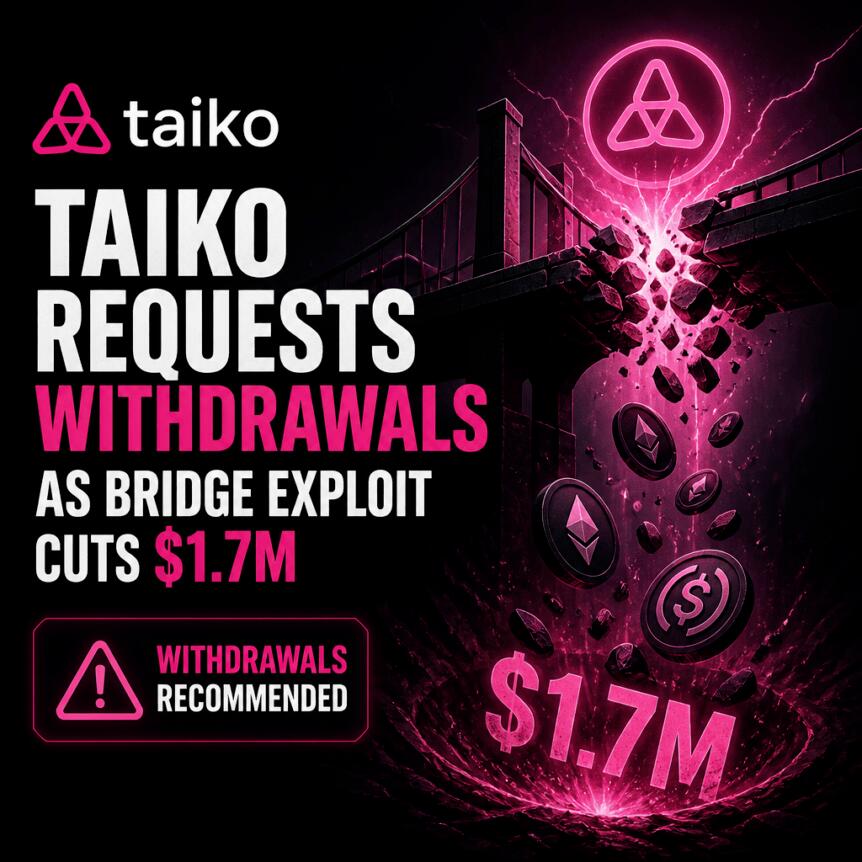
Taiko, an Ethereum layer-2 network, has asked users to immediately withdraw any assets held on bridges connected to its ecosystem after it confirmed a compromise affecting a core verification component. The incident follows a run of high-profile decentralized finance (DeFi) exploits in June, with DeFiLlama reporting at least 23 hacks across the sector so far this month.
In an update posted to X on Monday, Taiko said it “confirmed a compromise of Taiko’s chain state verification mechanism,” adding that the security assumptions underlying all bridges deployed on Taiko “can no longer be relied upon.” The team urged users to “withdraw their funds from all bridges deployed on Taiko immediately.”
Key takeaways
- Taiko has confirmed a compromise of its chain state verification mechanism and is treating bridge security guarantees as unreliable.
- Security firm Blockaid attributes the exploit to a bridge validation weakness that allowed fraudulent message proofs to be accepted.
- Estimated losses differ by analyst: Blockaid suggested at least $1 million, while others put the figure as high as $1.7 million.
- Blockchain monitoring tools show the exploiter moving value, with Arkham reporting roughly $1.5 million in ETH in associated wallets.
- The incident adds to a June cluster of major DeFi breaches, including losses tied to Humanity Protocol and Syscoin Bridge earlier this month.
Taiko warns bridge users after verification compromise
The warning is aimed specifically at bridge risk rather than at general activity on Taiko itself. Taiko framed the problem as a breach in how it verifies chain state and validates the messages bridges rely on to release assets on the other side.
Taiko also said it was coordinating with partners to contain the issue and that it had paused affected systems, signaling that bridge operations tied to the compromised verification path may require additional remediation before normal user withdrawals resume.
For users, the practical implication is straightforward: bridges are designed to move funds across trust boundaries, and if the verification assumptions behind those bridges fail, withdrawals become time-sensitive. Taiko’s instruction to withdraw immediately reflects that risk assessment.
Why the exploit worked, according to Blockaid
Blockaid said the root cause appeared to be a flaw in how the Taiko bridge validated source signals. In its explanation, the issue centered on message proofs: proofs were reportedly accepted as valid on Ethereum even when they lacked corresponding legitimate proofs on Taiko.
Blockaid described how this could let an attacker register and later retrieve fraudulent bridge messages, enabling unauthorized asset releases from an ERC20 vault. That mechanism matters because it points to a verification mismatch rather than, for example, a simple smart-contract logic error limited to a single bridge instance.
Blockaid estimated that at least $1 million was stolen, while other analysts pointed to a higher potential value. PeckShield and Lookonchain suggested the amount taken could reach about $1.7 million.
Stolen funds, wallet activity, and token transfer signals
PeckShield reported that the exploiter had already transferred 1.99 million Taiko (TAIKO) tokens—worth around $189,000 at the time of reporting—to MEXC.
PeckShield’s wallet-tracking aligns with broader on-chain monitoring. Arkham’s explorer data, as cited in the report, shows exploiter-linked wallets holding roughly $1.5 million, primarily in Ether (ETH). The presence of significant ETH balances is relevant for traders and investigators because it suggests the attacker may hold liquidity that can be deployed across exchanges or other swaps, depending on operational intent and timing.
Separately, CoinGecko data cited in the source notes TAIKO was trading down sharply versus its 2024 peak—an indication of broader market repricing for the token, though the article does not connect that move causally to this specific exploit.
June’s exploit tally keeps rising
Taiko’s incident arrives during a busy stretch for crypto security. DeFiLlama data, cited in the report, indicates at least 23 decentralized finance exploits this month.
The Taiko hack follows other notable breaches in June, including:
- Humanity Protocol, which reportedly lost over $30 million earlier in the month
- Syscoin Bridge, reported losses of about $8 million
- A Secret Network smart contract exploit discovered on Friday, resulting in theft valued at $4.67 million
- An alleged drainage of around $1.1 million from a PancakeSwap liquidity pool involving OLPC/LABUBU
The accumulation of these events matters because it highlights a recurring sector vulnerability: the bridge and cross-chain messaging layer is repeatedly targeted. Even when individual hacks differ in technical cause, the economic effect is similar—assets can be released or transferred when the conditions that should validate legitimacy fail.
For users, the repeated pattern makes operational guidance more important than ever. When bridge operators issue emergency withdrawals—like Taiko did—investors and liquidity providers should treat it as a risk-management instruction rather than a routine status update.
Looking ahead, readers should watch for Taiko’s next technical briefing on what must change for bridges to be considered safe again, whether affected systems remain paused long-term, and how quickly analytics firms confirm the final scope of stolen funds as attacker wallets are tracked and assets move.
TLDR
- ETH currently trades around $1,731, hovering near price points first reached in March 2021
- Market analyst Ali Martinez identifies $1,060 as critical downside support if current levels fail
- Bulls eye $2,850 and $4,630 as primary upside objectives, though $1,960 represents immediate resistance hurdle
- June 2026 witnessed significant Binance withdrawal activity, indicating holders relocating ETH to private wallets
- Corporate accumulator Bitmine has amassed 5.54 million ETH, representing approximately 4.58% of circulating tokens
After half a decade of market turbulence, Ethereum finds itself in a remarkable position: essentially unchanged from its March 2021 valuation. This reality has become a focal point for market participants monitoring the critical $1,700 price region.
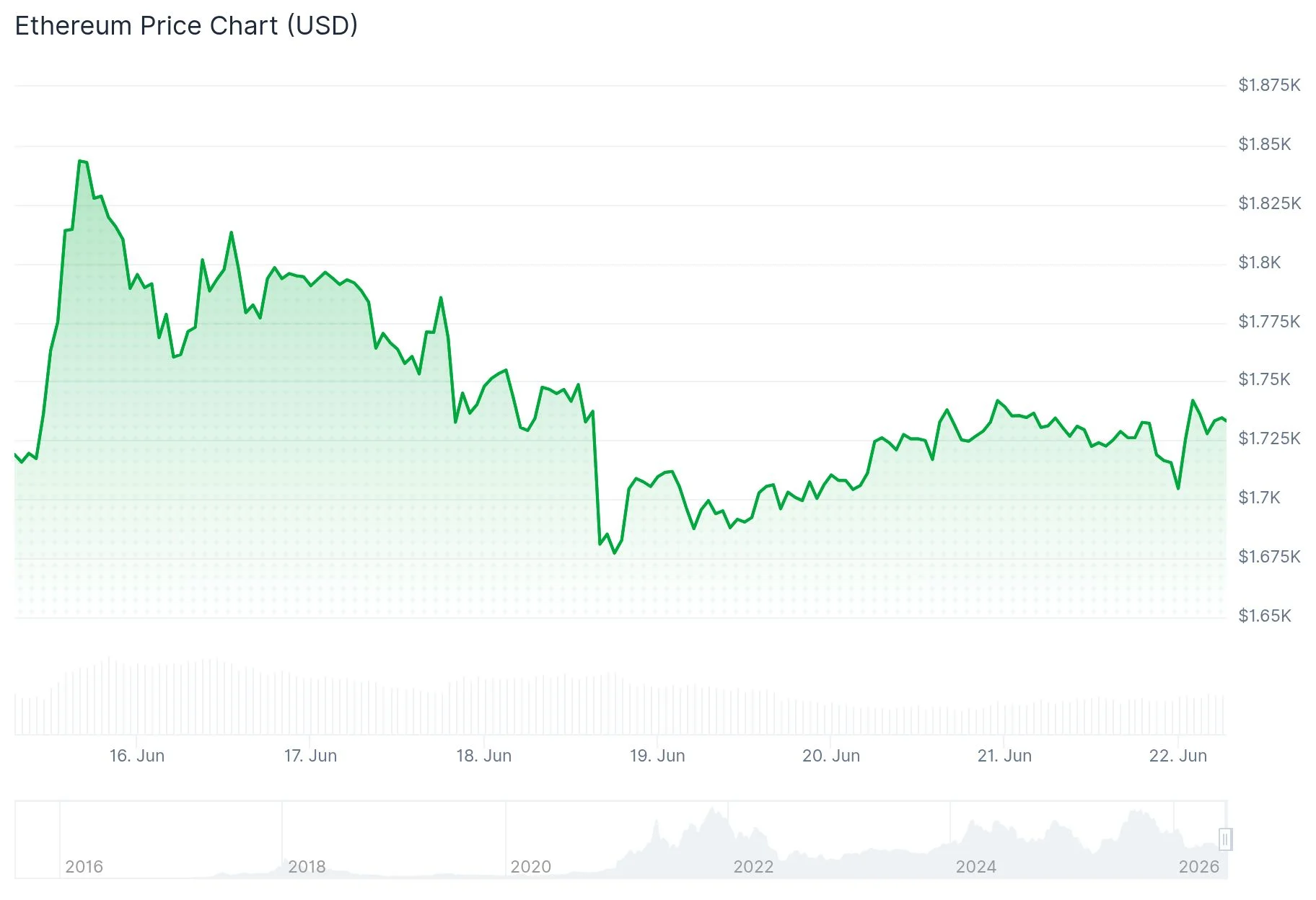
At press time, ETH changed hands at $1,731, registering a modest 0.48% gain across the previous 24-hour period. Daily price action ranged from $1,708 to $1,742. The digital asset remains remarkably close to its March 2021 valuation despite experiencing multiple dramatic bull cycles and prolonged bear markets in between.
Market commentator Ali Martinez highlighted this stagnation bluntly: “A $10,000 investment made five years ago would still be worth approximately $10,000 today.” Martinez emphasized that “severe volatility, explosive bull runs, and deep bear-market liquidations” have ultimately resulted in “zero net gains from that baseline.”
This historical backdrop influences current trading strategies significantly. Market participants prioritize technical price levels over fundamental narratives.
Technical analyst Daan Crypto identified $1,750 as a crucial battleground for near-term momentum. In his assessment of $ETH shared on X, he stated: “That $1750 level is pivotal for me to determine the short term strength. If price can’t manage to retake it, then that’d be a sign of weakness.” His analysis observed that ETH struggled to sustain momentum after briefly piercing above February peaks, though another attempt appeared underway.
Critical Price Zones Under Scrutiny
Technical charting reveals ETH positioned beneath a notable price gap around $1,709.50. Should prices retrace to fill this void before stabilizing, bulls could establish a more solid foundation. Failure to maintain $1,700 would likely shift attention toward $1,650 as the subsequent support target.
Looking upward, $1,960 emerges as the primary resistance barrier on monthly timeframes. ETH has yet to achieve a monthly close exceeding this threshold. Successfully breaching $1,960 would establish a runway toward $2,850. Beyond that zone, $3,740 and $4,630 represent subsequent objectives. According to Trader Symba’s extended-term charting analysis, a breakout above $4,862 could theoretically target $10,000.
The MACD histogram currently reads positive at 21.25, with the MACD line positioned above its signal counterpart. Nevertheless, both metrics remain in negative territory. Meanwhile, the RSI registers 40.45, surpassing its moving average though staying beneath the neutral 50 threshold. These technical indicators have not yet confirmed a definitive trend reversal.
Corporate Accumulation and Exchange Withdrawal Patterns
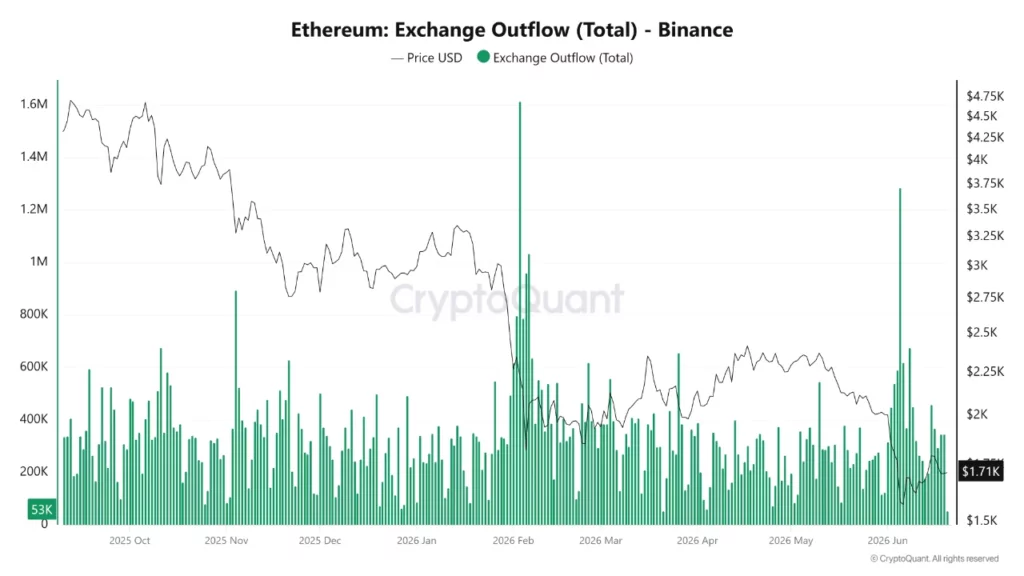
Blockchain metrics indicate substantial withdrawal activity from Binance during June 2026 while Ethereum traded near $1,710. CryptoQuant analyst Rei Researcher documented this movement, observing substantial ETH volumes departing the trading platform. Reduced exchange balances typically correlate with diminished immediate selling pressure.
In parallel developments, corporate entity Bitmine has accumulated more than 1.4 million ETH since December 2025. The institution’s current ETH holdings total 5.54 million tokens, valued at approximately $9.40 billion. This cache constitutes 4.58% of available supply, placing the organization at 91.7% completion toward its announced objective of controlling 5% of all circulating Ethereum.
Ethereum’s aggregate market capitalization continues exceeding $200 billion, securing its position among cryptocurrency’s largest assets by valuation.

For decades, financial products have been designed and distributed through centralized institutions such as banks, brokerages, insurance companies, and payment processors. While these institutions have played a vital role in global economic growth, they often operate within systems that can be slow, costly, exclusive, and opaque.
Decentralized Finance (DeFi) is challenging this traditional model by introducing an open, programmable, and transparent financial ecosystem powered by blockchain technology. Rather than relying on intermediaries, DeFi enables financial services to be delivered through smart contracts that execute automatically according to predefined rules.
This raises an important question: Can DeFi build better financial products than traditional finance?
The answer depends on how we define “better.” If accessibility, transparency, efficiency, and innovation are the criteria, DeFi has already demonstrated significant advantages. However, challenges remain before it can fully replace traditional financial systems.
What Makes a Financial Product “Better”?
A high-quality financial product should ideally possess several characteristics:
- Accessibility for a broad range of users
- Low costs and efficient execution
- Transparency and trustworthiness
- Security and reliability
- Flexibility to meet diverse user needs
- Innovation that creates new opportunities
Traditional financial institutions often struggle to optimize all of these factors simultaneously because they operate within complex regulatory frameworks and legacy infrastructure.
DeFi offers a different approach.
DeFi’s Key Advantage: Programmability
One of the most transformative features of DeFi is that financial products become programmable.
Smart contracts allow developers to create financial services that automatically execute predefined actions without requiring manual approval from banks or financial institutions.
Examples include:
- Automated lending and borrowing platforms
- Decentralized exchanges
- Yield-generating savings products
- Synthetic assets
- Prediction markets
- Insurance protocols
Because these products are built from code, they can evolve faster than traditional financial offerings and often introduce entirely new financial mechanisms.
Greater Accessibility and Financial Inclusion
Traditional finance excludes billions of people worldwide due to geographic, economic, or bureaucratic barriers.
Opening a bank account may require:
- Government-issued identification
- Minimum deposits
- Credit history
- Access to banking infrastructure
DeFi significantly lowers these barriers.
Anyone with:
- An internet connection
- A crypto wallet
- Digital assets
can access a wide range of financial services.
This accessibility creates opportunities for individuals in underserved regions to participate in global financial markets without needing permission from centralized institutions.
In many cases, DeFi products are available 24 hours a day, seven days a week, regardless of location.
Transparency Creates Trust
Traditional financial systems often operate behind closed doors.
Users rarely have complete visibility into:
- How funds are managed
- Risk exposure
- Liquidity positions
- Operational processes
DeFi operates differently.
Transactions, smart contracts, and protocol reserves are generally visible on public blockchains.
Users can verify:
- Total value locked (TVL)
- Lending activity
- Liquidity pool balances
- Protocol revenue
- Governance decisions
This transparency reduces information asymmetry and allows participants to make more informed decisions.
Lower Costs Through Automation
Financial intermediaries add value, but they also add costs.
Banks, payment processors, clearing houses, brokers, and custodians each introduce fees and operational overhead.
DeFi replaces many of these functions with automated smart contracts.
Potential benefits include:
- Reduced transaction costs
- Faster settlement times
- Lower operational expenses
- Fewer intermediaries
For example, cross-border transfers that may take days in traditional finance can often be completed within minutes through blockchain-based systems.
Innovation Through Composability
A unique feature of DeFi is composability.
Developers often describe DeFi as “money legos” because protocols can interact with one another.
A single application can combine:
- Lending protocols
- Decentralized exchanges
- Stablecoins
- Yield strategies
- Insurance solutions
This modular architecture accelerates innovation and enables developers to create entirely new financial products by integrating existing components.
Traditional finance generally lacks this level of interoperability and openness.
Better Yield Opportunities
DeFi has introduced new ways for users to earn returns on digital assets.
Examples include:
Lending
Users lend assets to borrowers and earn interest.
Liquidity Provision
Participants provide liquidity to decentralized exchanges and receive a portion of trading fees.
Staking
Users secure blockchain networks and earn rewards.
Yield Aggregation
Protocols automatically optimize capital allocation across multiple opportunities.
These mechanisms create a more competitive environment where capital can flow efficiently toward productive uses.
Personalized Financial Products
Artificial intelligence and DeFi are increasingly converging.
Future DeFi products may offer:
- Personalized lending rates
- Automated portfolio management
- AI-powered risk analysis
- Dynamic yield optimization
- Autonomous investment strategies
Because DeFi systems are programmable and open-source, customization can occur at a much greater scale than traditional finance.
This could lead to financial products tailored to individual needs rather than one-size-fits-all offerings.
Challenges That Still Need to Be Solved
Despite its advantages, DeFi is not without limitations.
Smart Contract Risk
Bugs or vulnerabilities can lead to significant financial losses.
Regulatory Uncertainty
Many jurisdictions are still developing frameworks for decentralized finance.
User Experience
Managing wallets, private keys, and blockchain transactions can be intimidating for newcomers.
Market Volatility
Crypto asset prices can fluctuate dramatically, creating additional risk.
Liquidity Fragmentation
Assets and liquidity are often spread across multiple blockchains and protocols.
Addressing these challenges will be essential for mainstream adoption.
The Future of Financial Products
Rather than completely replacing traditional finance, DeFi may evolve alongside it.
A hybrid future could emerge where:
- Banks integrate blockchain infrastructure
- Traditional assets become tokenized
- DeFi protocols provide backend financial services
- AI agents automate financial decision-making
- Global financial markets operate continuously
In this scenario, users benefit from both the security and regulatory protections of traditional finance and the efficiency and innovation of decentralized systems.
Conclusion
DeFi has already proven that financial products can be more transparent, accessible, programmable, and innovative than many traditional alternatives. Through smart contracts, open networks, and composable infrastructure, DeFi enables entirely new forms of lending, trading, investing, and wealth creation.
However, building better financial products is not solely about technology. Security, usability, regulation, and trust remain critical factors that DeFi must continue to improve.
The most likely outcome is not a world in which DeFi replaces traditional finance, but one in which decentralized technologies become a foundational layer of the global financial system. As the industry matures, DeFi has the potential to create financial products that are not only more efficient but also more inclusive and adaptable to the needs of a digital-first world.
REQUEST AN ARTICLE

Key Takeaways
- Altura has initiated the shutdown of its USDT stablecoin vault following more than $8.5 million in redemptions within a 24-hour period
- The vault’s total value locked had reached $39 million on HyperEVM prior to the mass withdrawal event
- Main Street’s msUSD stablecoin plummeted more than 70% from its peg following Accountable’s termination of verification services
- While Altura utilized Accountable as a verification partner, it maintained no direct financial ties to msUSD
- Altura’s CEO Ranveer Arora attributed the withdrawal spike to market panic and false information spreading online
The weekend of June 20-21 witnessed Main Street’s msUSD stablecoin plunge by over 70% from its dollar peg. The dramatic collapse followed Accountable’s sudden decision to terminate its proof-of-solvency services, citing Main Street’s failure to satisfy its verification requirements.
Accountable functions as a third-party verification mechanism that validates whether a protocol’s asset reserves align with its outstanding obligations. Its withdrawal triggered an immediate loss of investor confidence across connected platforms.
Altura had contracted with Accountable for the same verification services. Despite maintaining no financial exposure to msUSD or any of Main Street’s investment strategies, depositors rushed to withdraw funds without seeking clarification.
22% of Total Value Locked Vanished in 24 Hours
Within a single day, depositors pulled more than $8.5 million in USDT from Altura’s vault. This represented approximately 22% of the platform’s total locked value disappearing virtually overnight.
The vault operated on the ERC-4626 standard architecture. Depositors contributed USDT in exchange for proportional vault shares. Altura then allocated these assets across various strategies including funding-rate arbitrage operations, market-making activities, and real-world asset investments.
Withdrawal mechanisms offered depositors flexibility. They could choose immediate redemption with a 0.1% processing fee, or opt for epoch-based withdrawals without any charges.
On June 21, CEO Ranveer Arora announced via X that Altura would begin shutting down the vault. He emphasized that this proactive measure aimed to safeguard depositor assets and facilitate orderly redemptions, preventing a full-scale bank run situation.
“Our priority remains the protection of user capital and ensuring all redemptions are completed in a fair, transparent, and efficient manner,” Arora wrote.
CEO Challenges Spread of False Information
Arora voiced his disappointment regarding what he characterized as baseless rumors fueling user panic. He maintained that Altura has consistently prioritized transparency in its operations, and that the withdrawal surge resulted from speculation rather than substantiated concerns.
Prior to Arora’s personal statement, Altura’s official channels had already released a clarification confirming the protocol held zero direct exposure to Main Street or its msUSD stablecoin.
“Our HyperEVM lending vault, the associated USDT/AVLT market, and borrowers utilizing our Ethereum vault remain unaffected,” the protocol stated.
Altura notified all counterparties and business partners about the shutdown decision. The platform commenced liquidating positions across centralized exchanges, private credit arrangements, and real-world asset portfolios. According to company communications, certain positions may require extended timeframes for complete redemption.
Altura’s remaining product offerings, including its HyperEVM lending facility and Ethereum vault, continue functioning without disruption and were excluded from the wind-down process.
The Accountable incident highlighted a critical infrastructure weakness. Platforms depending on a single external entity for solvency attestation face concentrated risk exposure that can spark depositor panic even when their financial position remains fundamentally secure.
Key Highlights
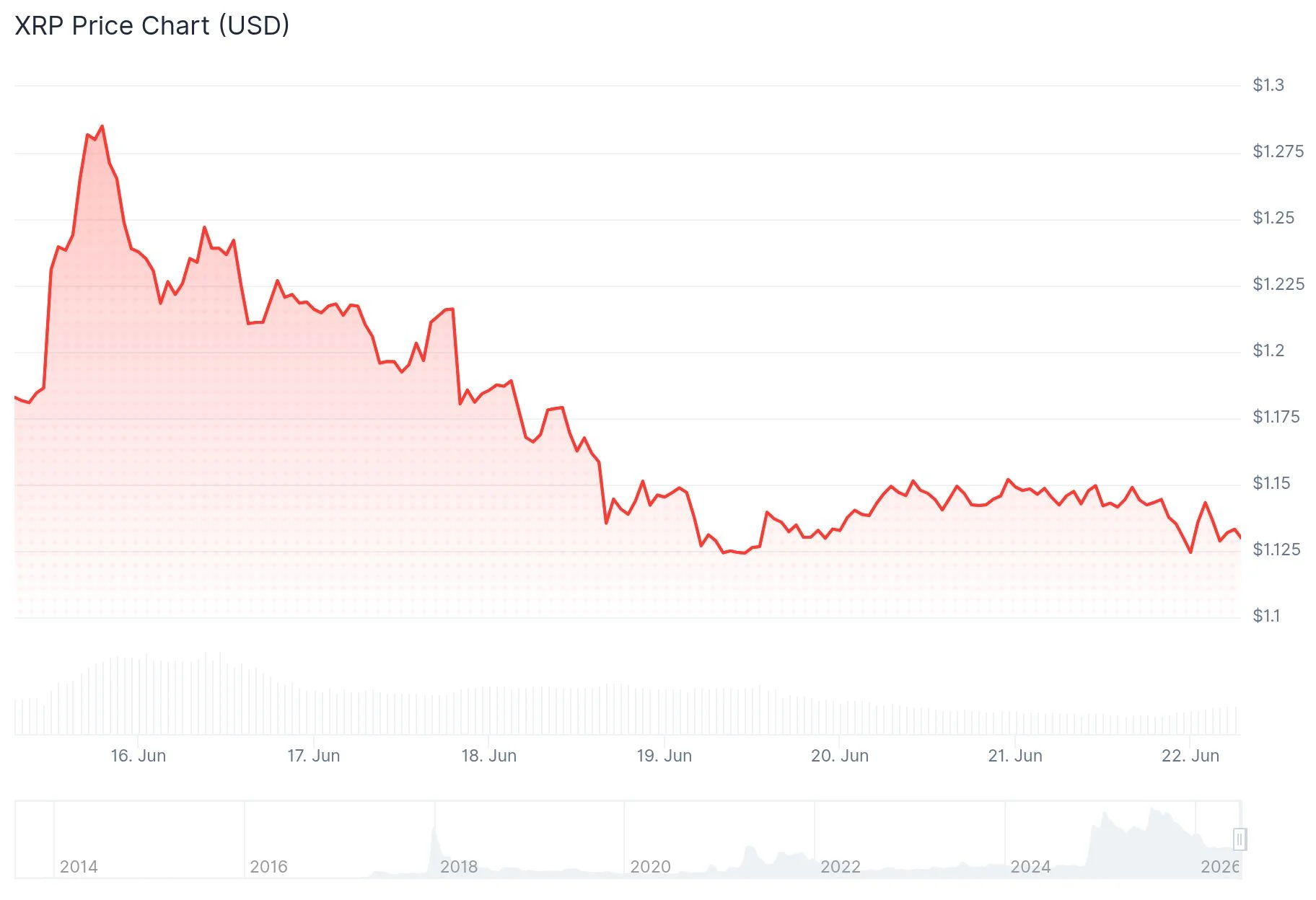
- XRP maintained trading activity around $1.14 during June 21–22, staying within the $1.10–$1.30 corridor
- Support at $1.10 held firm following a temporary decline to $1.12 accompanied by elevated trading volume
- Exchange-held XRP supply dropped to approximately 1.6 billion tokens, marking the lowest level in seven years
- Investment products tied to XRP attracted roughly $10.66 million in net capital during the weekly period
- Ripple advanced RLUSD integration through Mastercard infrastructure, African payment corridors, and AI-powered transaction systems
Throughout much of June 2026, XRP has exhibited constrained price movement, oscillating between $1.10 and $1.30. On June 21, the digital asset was valued at approximately $1.14, reflecting a modest 24-hour decline of -0.34%.
Daily trading volume registered around $872 million, while XRP’s total market capitalization remained near $70.97 billion. This valuation secured its position as the sixth-largest cryptocurrency by market cap.
The monthly perspective reveals more volatility. XRP has declined over 16% across the 30-day timeframe, despite recent evidence of demand at critical price thresholds.
On June 22, XRP experienced a brief downturn to approximately $1.12 during elevated trading activity. Near 21:00 UTC, transaction volume spiked to 85.8 million XRP, driving the asset to an intraday low around $1.1213.
Buyers responded rapidly to the dip. XRP rebounded toward $1.148, recovering nearly 80% of the session’s losses in a matter of hours.
The recovery encountered resistance between $1.147 and $1.149, establishing this zone as a near-term ceiling. The established range of $1.10 to $1.30 continues to define the current market structure.
Cryptocurrency analyst EGRAG CRYPTO shared technical analysis on X, characterizing the two-month price formation as “E is the battlefield.” The commentary emphasized that sustained defense of current levels is necessary before any meaningful upward movement can develop. EGRAG’s long-term cycle projections include targets ranging from $9.50 to $17.23, with $13 highlighted as a key milestone — though these levels remain distant while XRP trades beneath $1.20.
Developments in the Ripple Ecosystem
Ripple has maintained momentum across its product development and strategic partnership initiatives. The company extended RLUSD stablecoin integration into additional payment infrastructure and participated in Flutterwave’s Series E funding round to facilitate stablecoin adoption across African markets.
Ripple collaborated with Bitso on MXNB, a peso-denominated stablecoin operating on the XRP Ledger. Additionally, RLUSD achieved integration with Mastercard’s stablecoin settlement infrastructure.
The XRP Ledger introduced an AI Starter Kit designed to enable AI agents to execute automated transactions using XRP and RLUSD through the x402 protocol framework.
On-Chain Metrics and Investment Flows
XRP tokens held on centralized exchanges declined to approximately 1.6 billion — representing a seven-year low and roughly a 50% reduction from October 2025 levels. Reduced exchange-held supply can amplify price volatility when buying pressure emerges.
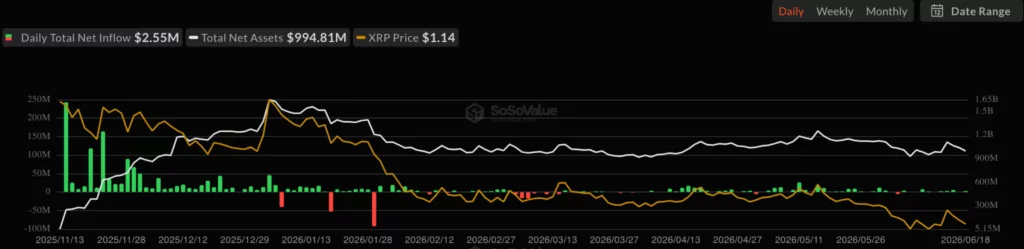
Institutional product flows remained constructive. XRP products generated approximately $10.66 million in net inflows during the week concluded June 18. Total cumulative inflows have now approached $1.45 billion.
Conversely, large holders distributed over 30 million XRP across a five-day window, while on-chain activity metrics softened during the corresponding period.
The CLARITY Act, legislation designed to establish clearer regulatory definitions for digital commodities, has advanced through committee stages and now awaits Senate floor consideration, requiring 60 votes for passage.
Exchange-held XRP reserves registered at approximately 1.6 billion tokens according to the latest available data, marking the lowest level recorded in seven years.
Following a period of heightened volatility in early June, investor attention in Ethereum has once again shifted towards institutional demand and the development of the spot ETF market in the United States. The funds launched last year continue to serve as one of the key channels for capital inflows into digital assets, while their daily flow statistics remain an important indicator of sentiment among major market participants. Expectations regarding the future direction of Federal Reserve monetary policy may also influence Ethereum’s price dynamics. Changes in interest-rate projections traditionally affect investors’ appetite for risk assets, including the cryptocurrency market.
Technical Picture
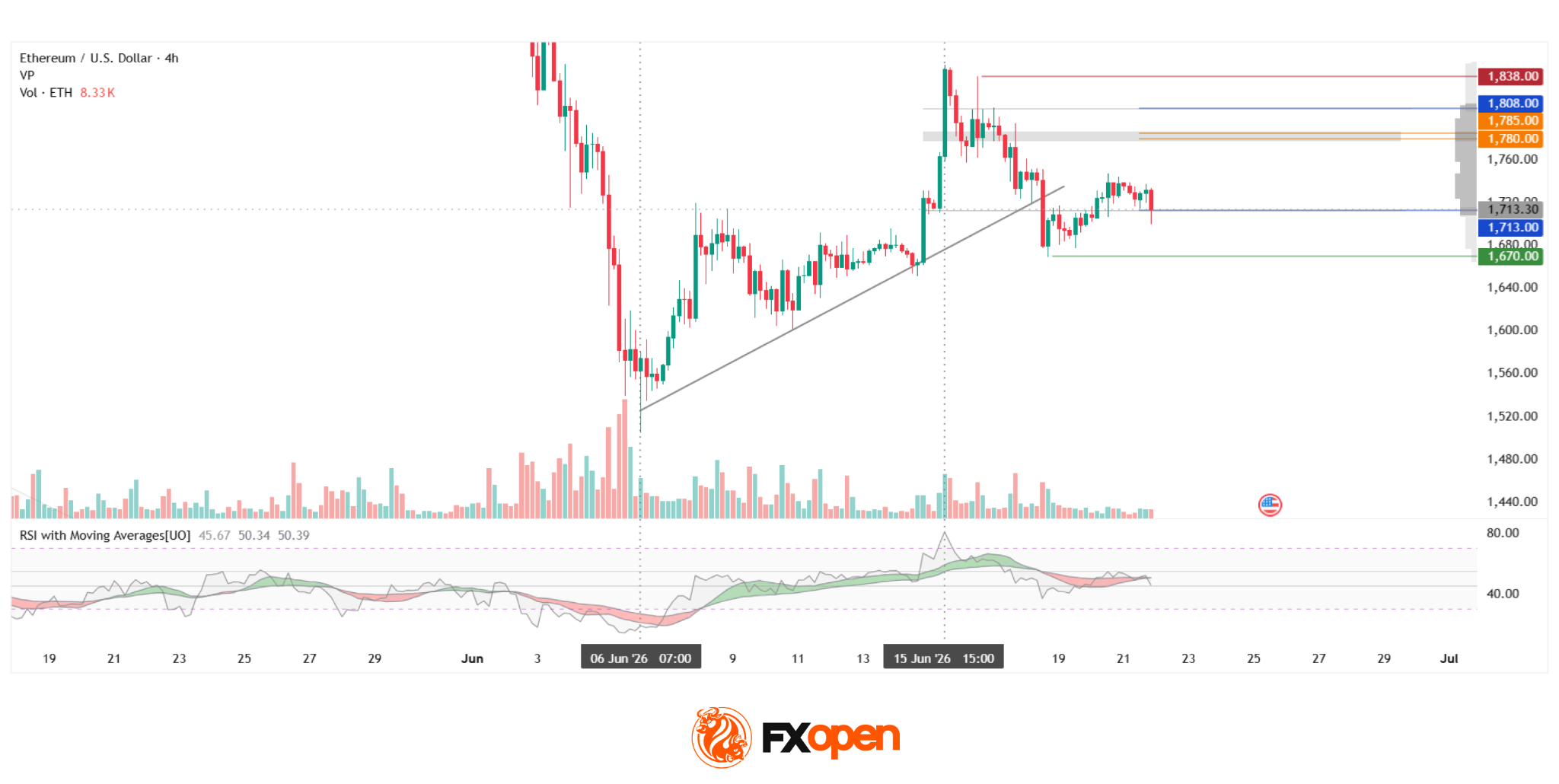
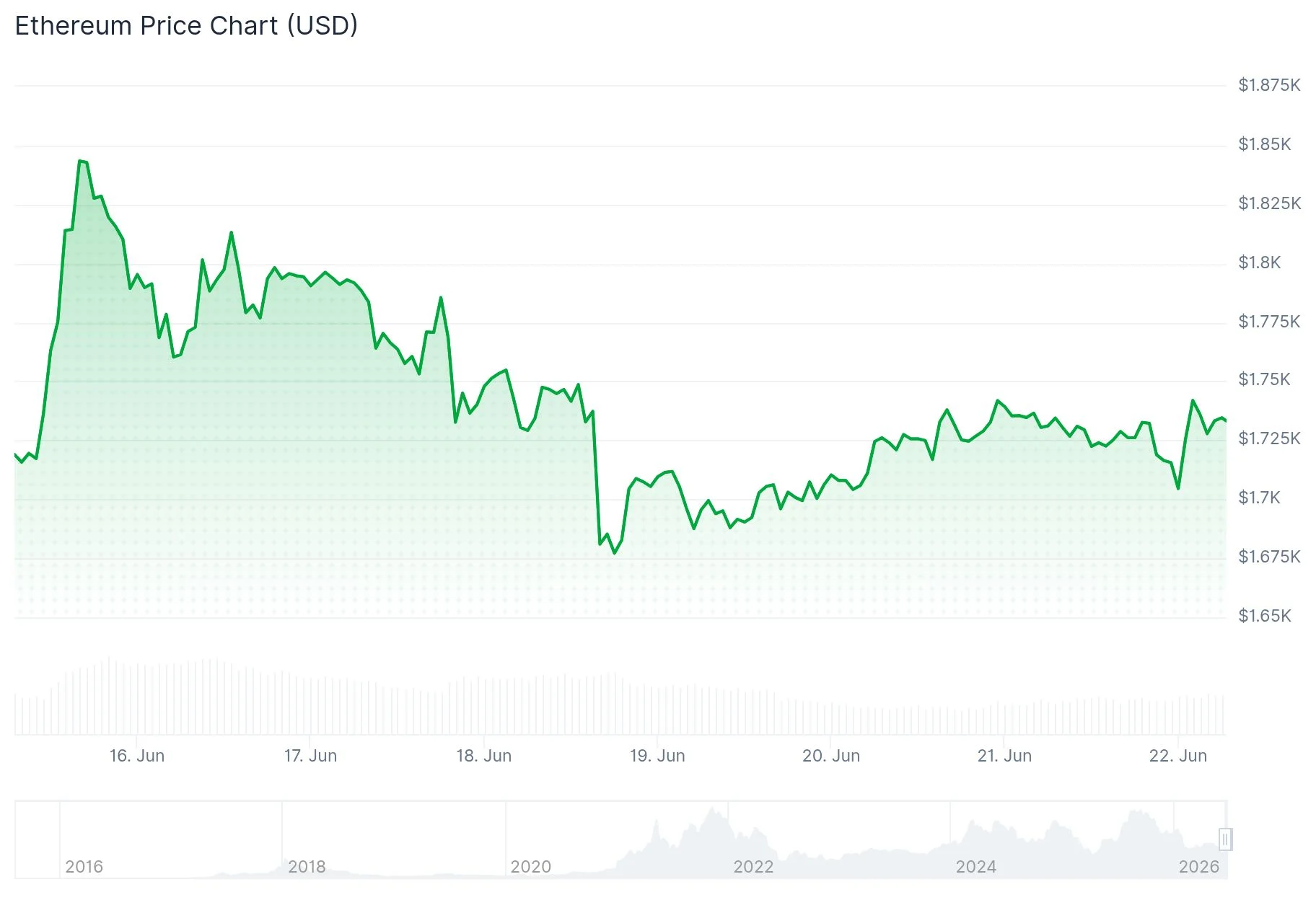
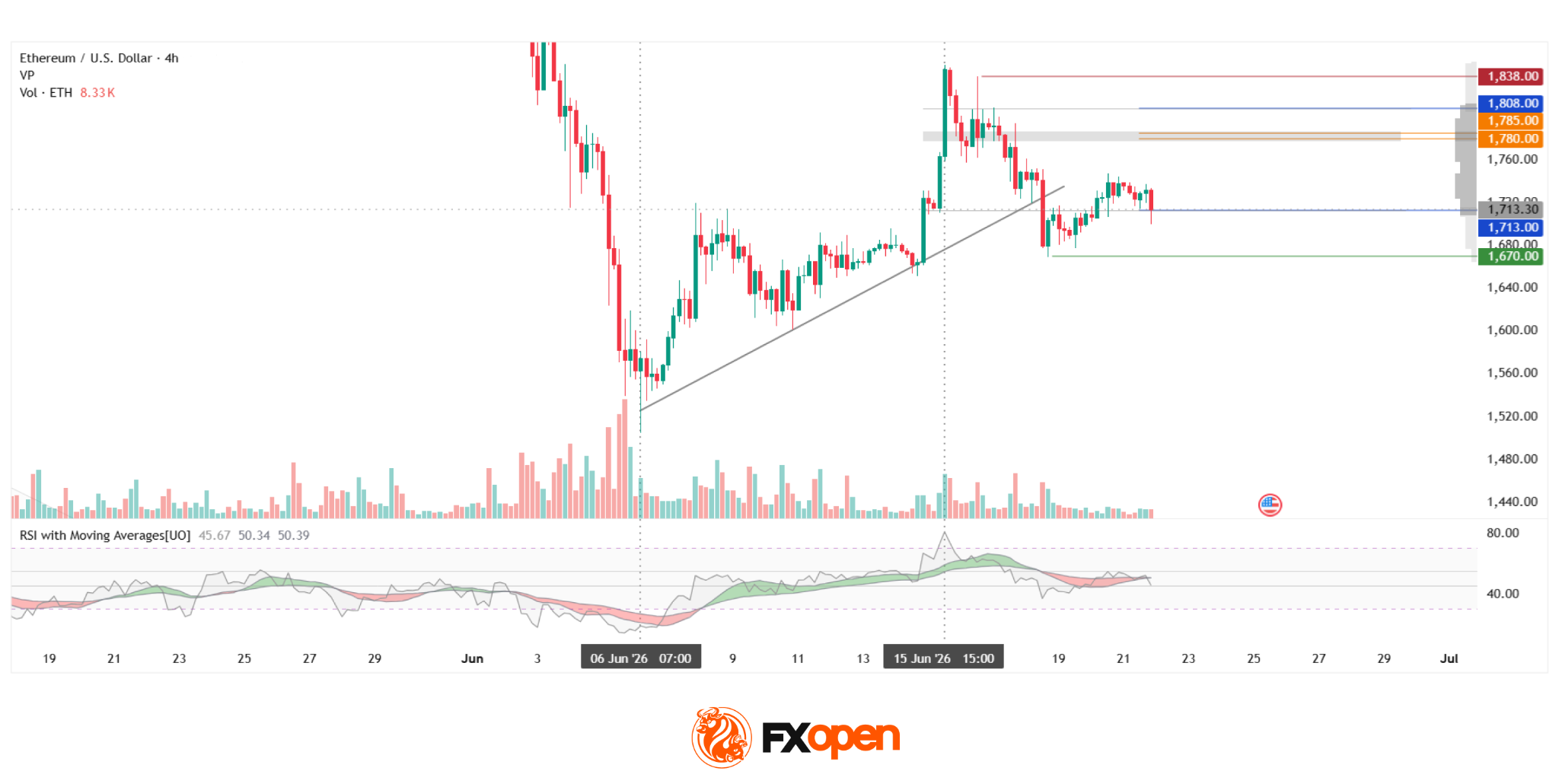
On the four-hour chart of ETH/USD, a corrective recovery can be observed from the June low, followed by the formation of a local high near the $1,838 resistance level. After reaching this area, buyers lost momentum and the price moved below the ascending trendline. The attempted trend break currently appears unconvincing and has so far been limited to a single bearish candle on 18 June, the impact of which was subsequently offset by the following candles.
Should selling pressure persist, the $1,670 area may come into focus for market participants. If the asset manages to establish itself above the lower boundary of the profile at $1,713 and continues its recovery within the current profile, the primary target could be the POC zone at $1,780–$1,785, followed by the upper boundary of the profile at $1,808. If the current profile density is overcome, the red resistance level may gain further significance. The RSI + MAs indicator shows readings of 46, 50 and 50. The main oscillator line and both moving averages remain in the middle of the neutrality zone, suggesting that the instrument currently has no clear directional bias.
Key Takeaways
Ethereum’s technical picture remains neutral, with RSI + MAs showing no signs of a clear directional impulse. In the coming weeks, additional volatility may be driven by capital flows into spot Ethereum ETFs and by changing expectations regarding the Federal Reserve’s next policy moves.
FXOpen offers the world’s most popular cryptocurrency CFDs*, including Bitcoin and Ethereum. Floating spreads, 1:2 leverage — at your service (additional fees may apply). Open your trading account now or learn more about crypto CFD trading with FXOpen.
*Important: At FXOpen UK, Cryptocurrency trading via CFDs is only available to our Professional clients. They are not available for trading by Retail clients. To find out more information about how this may affect you, please get in touch with our team.
This article represents the opinion of the Companies operating under the FXOpen brand only. It is not to be construed as an offer, solicitation, or recommendation with respect to products and services provided by the Companies operating under the FXOpen brand, nor is it to be considered financial advice.
Bitcoin price traded near $64,000 on Monday, even as Asian equities and technology shares rose after fresh progress in U.S.-Iran talks.
Summary
- Bitcoin price stayed near $64,000 despite Asian stock gains and softer oil after U.S.-Iran progress Monday.
- Spot Bitcoin ETFs saw $227 million in weekly outflows, extending the selling streak to six.
- Analysts remain split, with bearish targets near $48,000 and cycle support around $53,000 to $55,000.
According to crypto.news data, Bitcoin traded at $64,188 at press time, with a 24-hour range between $63,232 and $64,543.
The move left Bitcoin down about 2% on the week and still below the levels it held at the start of June. The price action looked stable, but not strong. Buyers defended the lower end of the range, yet BTC failed to match the risk-on move seen across parts of Asia.
Bitcoin fails to rally despite macro relief
The macro backdrop improved after Qatar and Pakistan said the U.S. and Iran had agreed on a roadmap toward a final peace deal within 60 days. Market reports showed Asian stocks rising, with technology names leading gains, while Brent crude fell below $80 as the oil risk premium eased.
That shift would normally help risk assets. Lower oil can reduce inflation pressure and support the case for easier liquidity. Bitcoin, however, stayed soft, showing that traders are still treating crypto as a weaker part of the risk trade.
The broader market was mixed. Solana held firmer near $74, while Tron added modest weekly gains. Ethereum traded near $1,733 and stayed roughly flat. Larger losses showed up in BNB, XRP and Dogecoin, while HYPE cooled after a strong early-June run.
ETF outflows keep demand weak
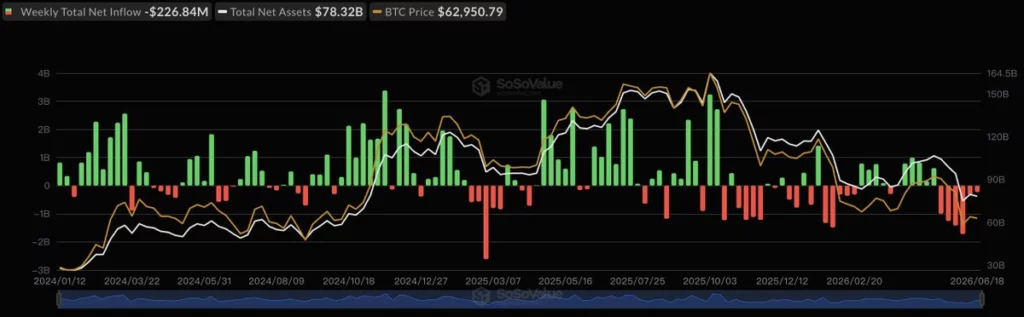
Spot Bitcoin ETF flows remain a key pressure point. SoSoValue data showed U.S. spot Bitcoin ETFs recorded about $227 million in net outflows from June 14 to June 18, marking the sixth straight week of withdrawals.
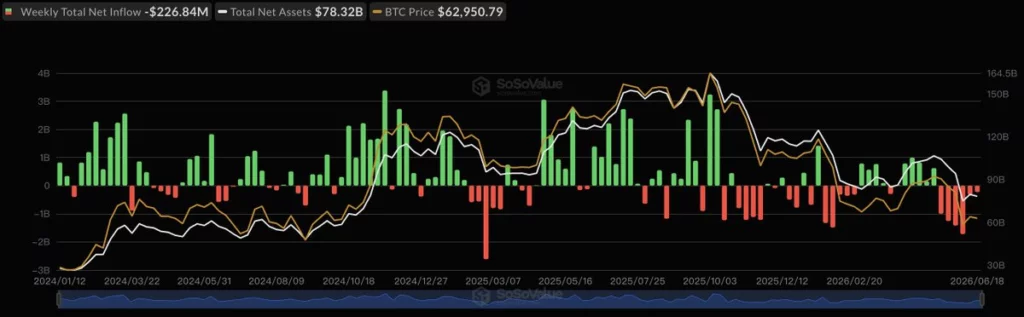
Those outflows do not guarantee a deeper price drop, but they remove a steady source of demand. Earlier parts of the cycle relied heavily on ETF buying and corporate treasury flows. With those flows weaker, BTC needs more spot demand before a move above resistance looks durable.
As crypto.news earlier reported, Bitcoin ETFs also saw a record $6.35 billion net outflow across the latest 30-day window. That keeps attention on whether withdrawals slow enough to let BTC rebuild momentum.
Analysts split on next Bitcoin move
Crypto Lens gave one of the more bearish views, saying Bitcoin is “perfectly mirroring the 2022 Bear Market pattern.” The analyst warned that BTC could move from “$64K → $66K → $53K → $48K” if the current relief bounce fails.
EGRAG Crypto took a longer-cycle view. The analyst said a bearish cross between the 21 EMA and 55 EMA on the two-week chart has historically marked a cycle-bottom window. He placed a possible macro bottom zone near “$53K–$55K” around September to November 2026 if history repeats.
Those calls remain projections, not confirmed outcomes. Bitcoin would first need to lose nearby support before deeper targets become active. The key downside levels remain $62,000, $60,000 and the June low near $59,100. A break below those levels would bring $55,000 and then the $53,000-$55,000 zone into focus.
On the upside, BTC needs to reclaim $64,500 and then $67,000 with stronger volume. A clean close above $67,000 would weaken the bearish case and open room toward $70,000 to $73,000. Until then, the market remains range-bound.
Bitcoin outlook depends on flows and geopolitics
The near-term Bitcoin price analysis remains balanced but cautious. The macro story improved, oil eased and equity markets found support, yet crypto did not fully follow. That gap suggests investors are still waiting for stronger evidence before adding risk.
Meanwhile, the next test is whether the U.S.-Iran roadmap holds and whether energy prices stay below stress levels. If the peace track continues, Bitcoin could benefit from calmer inflation expectations. If talks stumble, oil could rise again and pressure risk assets.
ETF flows may matter even more. A seventh week of outflows would reinforce the view that institutional demand has not returned. Slower withdrawals or fresh inflows would give buyers a better setup.
For now, Bitcoin is holding the range rather than breaking it. The $62,000 area remains the line bulls need to defend. The $67,000 area remains the level they need to reclaim. Until one side wins, BTC may keep drifting near $64,000 while traders wait for a stronger signal. That leaves the market sensitive to daily headlines, fund-flow data and any break of the short-term technical range. Volatility could rise quickly if leverage builds near support or resistance.
Disclosure: This article does not represent investment advice. The content and materials featured on this page are for educational purposes only.


Altura is unwinding its multi-strategy stablecoin vault after processing millions in user withdrawals over 24 hours. CEO Ranveer Arora cited sustained redemption demand and market sentiment as the drivers behind the decision.
The shutdown comes shortly after Altura denied exposure to Main Street USD (msUSD), a stablecoin that recently lost its dollar peg.
Altura CEO Ranveer Arora Cites Withdrawal Pressure in Vault Closure
Arora said that Altura had processed more than 8.5 million in Tether (USDT) redemptions over 24 hours. That figure topped the $5 million cited a day earlier.
The executive noted the firm had notified counterparties and begun unwinding positions across exchanges, private credit, and real-world asset strategies. He mentioned that safeguarding user funds remained the firm’s focus, with each redemption handled in a “fair, transparent, and efficient manner.”
“While some positions can be redeemed immediately, others require standard settlement and redemption periods, and we are working closely with all counterparties to accelerate the process wherever possible,” he stated.
Follow us on X to get the latest news as it happens
Altura Defends Its Record Against Speculation
The CEO also said he is “deeply disappointed” by how quickly unverified claims spread through the sector. He pointed to no particular source. Earlier, Altura had said it cleared more than $5 million in withdrawals.
“Altura has always operated with transparency and integrity, and it is unfortunate to see unfounded narratives contribute to market fear and withdrawal pressure,” he added.
Altura also addressed the msUSD depeg on its official account. It said the event sat entirely outside its operations. The protocol said its HyperEVM lending vault and associated markets remained unaffected.
Subscribe to our YouTube channel to watch leaders and journalists provide expert insights
The post Altura Begins Orderly Vault Wind-Down as Withdrawal Demand Surges appeared first on BeInCrypto.

The House Article | How Well Do You Remember Brexit? Take Robert Hutton’s Quiz

Salah, Egypt down New Zealand 3-1 for first win

Epic’s E1000 AX Turns a Fast Turboprop Into One With Real Backup Brains


-
 Crypto World7 days ago
Crude Oil Plunges Over 4% as US-Iran Agreement Reopens Hormuz Strait
-
 Tech6 days ago
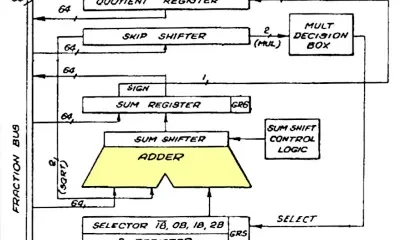
The Adder At The Heart Of Intel’s 8087 FPU
-

 Fashion3 days ago
Weekend Open Thread: Miami – Corporette.com
-
 Business2 days ago
Wall Street Week Ahead: Investors see Micron earnings as pulse check of AI rally momentum
-

 Crypto World2 days ago
HIVE shares jump as $220M AI deal speeds Bitcoin mining pivot
-

 Sports3 days ago
FIFA World Cup 2026: Canada beat 9-men Qatar 6-0 to register first ever win | FIFA World Cup 2026
-

 Crypto World2 days ago
Jake Chervinsky accuses CME of protecting derivatives monopoly
-

 Business1 day ago
MHP SE 2026 Q1 – Results – Earnings Call Presentation (OTCMKTS:MHPSY) 2026-06-20
-

 Crypto World4 days ago
Anthropic’s Dario Amodei Urged AI Unity at G7, Even as US Banned His Models
-

 Business3 days ago
Brexit cost 6% of UK economy, Bank of England company data suggests
-

 Business1 day ago
Soccer-U.S. defends Iran World Cup travel restrictions, says discussions ongoing
-
 Crypto World2 days ago
Can Charles Hoskinson Really Rescue Cardano?
-

 Tech5 days ago
Weeks Of In-The-Field Testing And A Verdict
-

 Tech4 days ago
Adobe adds its AI assistant to Premiere, Illustrator and InDesign
-

 Politics2 days ago
Andy Burnham and the meaning of Makerfield
-
 Crypto World4 days ago
Iren (IREN) Stock Surges on Jefferies Buy Rating: AI Infrastructure Play Gains Momentum
-

 Entertainment1 day ago
Renter of Home in Anne Heche Crash Denies Settlement With Son
-

 Politics4 days ago
BBC Reporter Discusses Cross Party Criticism Of Trumps Iran Deal
-

 Tech3 days ago
Instagram Now Lets You Add A Unique Caption To Each Carousel Slide
-

 News Videos3 days ago
Nightcore – MONEY ON THE DASH (Soft Rock Version) (Lyrics)
You must be logged in to post a comment Login