

Business
Focus on structural trends, ignore market noise: Hiren Ved

Speaking on the current investment landscape to ET Now, Hiren Ved, from Alchemy Capital Management, argued that while markets are efficient in pricing news, they often struggle to accurately assess the long-term implications behind those headlines.
Responding to a question from Ayesha Faridi from ET Now on whether markets have already factored in the repercussions likely to unfold over the next six months, Ved highlighted the distinction between narratives and reality.
“In today’s day and time, news gets discounted very quickly. But there is a difference between discounting news and trying to discount reality. And sometimes there is a gap between the two because, as I said, the narrative builds up, and the narrative may be right or it may be wrong. Only with time and in hindsight do you get to know that.”
Ved noted that investors frequently react sharply to headlines, often overlooking broader structural developments. He cited the market’s reaction following the 2024 general election as an example.

“In mid-2024, when the expectation was that this government would get a complete majority and they did not, while they had to take support from their NDA partners, suddenly the theme on defence and capex just gave way because people immediately reacted to that news to say that ab to capex nahi hoga. Everybody, if you remember, went and bought consumer stocks.”
However, he pointed out that the reality eventually reasserted itself.”Maybe these sectors or companies underperform for a year, but the reality caught on and the trend reasserted itself.”
According to Ved, successful long-term investing requires patience and conviction rather than reacting to every headline.
“I do not think long-term investing works that way. You have to sometimes step back, think, and really understand. Finally, what I have seen over the years in the markets is that numbers speak for themselves. Narratives can come and go, news can be good or bad, but it is finally the numbers that matter.”
Using oil prices as an example, Ved said markets often reveal reality more effectively than political commentary.
“Trump may flip and flop every morning and evening, but whether we are coming closer to a resolution of the war or not, the oil price will tell you the story because that is the reality. All the wisdom and all the risk-taking will get reflected in that one variable.”
A Global Capex Supercycle
When asked about the long-term structural story driving markets, Ved identified what he believes is one of the defining investment themes of the decade: a global capital expenditure supercycle.
“In my view, we are in a global capex supercycle. Whether it is because of disruption, geopolitics, wars, or oil shocks, it is very clear that every country has realised that certain foundational capabilities are critical.”
He explained that countries are increasingly prioritising defence, semiconductor technology, energy security, and supply-chain resilience.
“Every large country that has an ambition to become big is today trying to figure out how it can be self-sufficient or hedge itself. How do you hedge your supply chains? That is driving a large global capex cycle, and that is a reality.”
Ved believes these investments will continue regardless of short-term geopolitical developments.
“Even if the war stops tomorrow and oil prices come down, as a country we cannot stop investing in electrification. We cannot stop trying to do capex to achieve energy security because once you have been hurt, you have to address it at a very fundamental level.”
India’s Hidden AI Opportunity
One of the most debated narratives in recent months has been whether India has a meaningful role to play in the artificial intelligence revolution. Ved challenged the common perception that AI opportunities are limited to the United States.
“The big narrative today in India is that India has no AI play. Agar aap ko AI khelna hai toh you have to go to the US. We are an anti-AI play.”
He argued that investors often overlook the infrastructure ecosystem supporting AI development.
“Currently in AI, most of the spending is happening at the infrastructure level. People are setting up data centres and related infrastructure.”
To illustrate the point, Ved shared findings from a custom index created by his team.
“I told my team to build a custom India AI index. These are all physical businesses like power equipment, cooling equipment, cables, and everything that goes into building a data centre. An equal-weighted 12-stock India AI index, in three years, in dollar terms, has delivered a 52% compounded return versus the Magnificent Seven plus Nvidia, which has delivered a 24% compounded return.”
For Ved, the lesson is straightforward.
“If you look hard enough and if you are creative, there is always a way to play a trend. Narratives are narratives. The more narratives there are, the more opportunities there are to make money because you can find an anti-narrative. You can find the reality that the narrative does not represent, and that is where the profit-making opportunity is.”
Earnings Fears May Be Overstated
The discussion also touched on investor concerns surrounding corporate earnings amid global uncertainties and rising energy prices.
Sajeet Manghat pointed out that despite supportive policy measures and external tailwinds such as currency movements, markets remain unconvinced about the growth outlook.
Ved acknowledged that memories of previous shocks continue to influence investor behaviour.
“If you look at what happened in 2022 when the Russia-Ukraine war broke out, we had a similar geopolitical shock, an energy shock, and a supply-chain shock. For about two quarters, we had a significant earnings slowdown. So that playbook is still very fresh in the minds of investors.”
While he expects some margin pressure in the near term, Ved believes the corporate sector is much better prepared today.
“It is fair to say that there will be some compression in margins. But I also believe that a depreciation of the currency and a little bit of pick-up in inflation are actually very good for corporate profitability.”
He noted that businesses have learned from previous inflationary cycles and are likely to pass on higher costs more effectively.
“My sense is that this time, learning from the 2022 cycle, corporates are going to become much smarter in terms of passing on higher costs to the end consumer.”
Ved also challenged fears that inflation will spiral uncontrollably.
“One of the narratives was that because of tariffs, US inflation would spike. But US inflation did not spike. It only picked up recently because of the energy shock. The latest readings were largely driven by energy prices.”
Focus on Reality, Not Headlines
While uncertainty remains a constant feature of markets, Ved’s overarching message was that investors should focus on enduring structural trends rather than getting distracted by daily news flow.
“Because of an old playbook and correlations that are still fresh in the minds of investors, people feel ki earnings mein bahut bada impact aayega. I think the jury is still out. My feeling is that we will be okay with earnings, and once the market is convinced about that, it will respond.”
As markets navigate geopolitical uncertainty, technological transformation, and shifting economic conditions, the distinction between narrative and reality may prove to be one of the most important factors determining investment success in the years ahead.

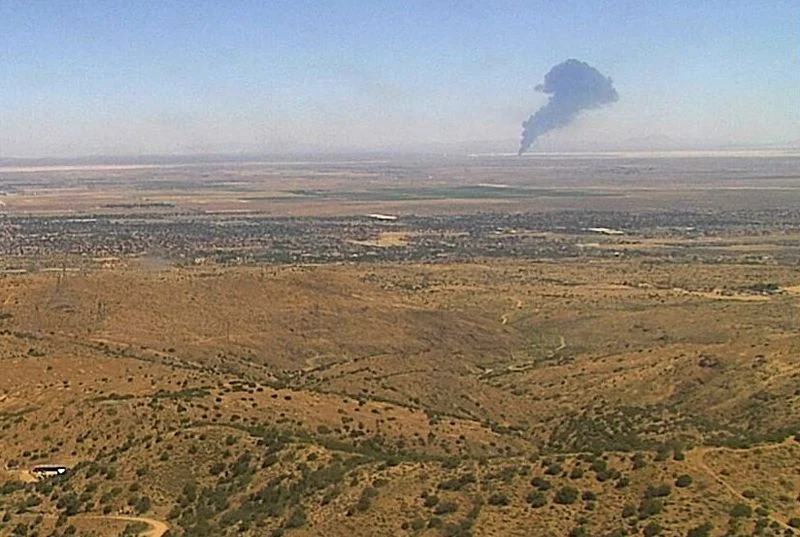

Eight crew believed dead in California B-52 bomber crash, CNN reports
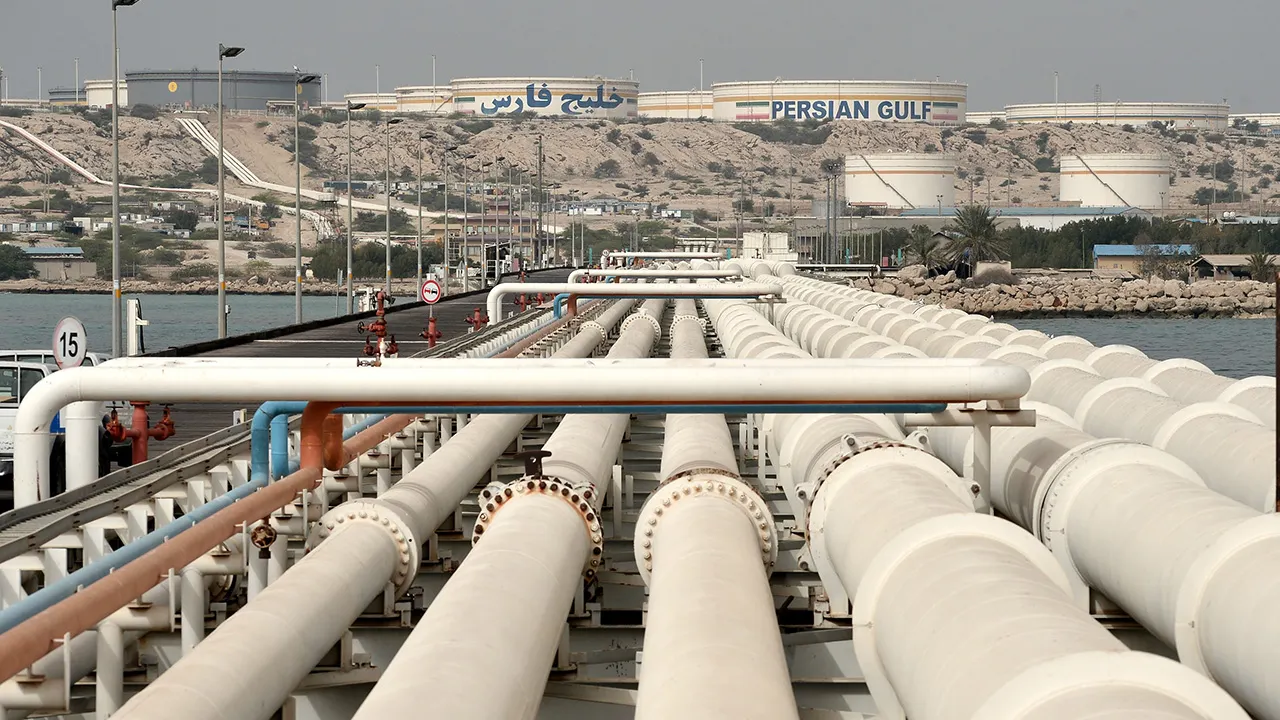
Prime Capital Financial CIO Will McGough discusses market reactions to the U.S.-Iran peace deal, causing oil prices to drop and airline stocks to soar.
Oil prices fell on Monday to the lowest levels since early March following the announcement of a preliminary agreement between the U.S. and Iran to end the war that has strained the energy market.
West Texas Intermediate (WTI) crude oil prices were down over 5% during Monday’s trading session on the news, trading just above $80 a barrel.
Despite that decline, prices for the U.S. oil benchmark remain well above their pre-war levels, as oil prices were between $60 and $70 a barrel in the month leading up to the beginning of the conflict.
Prices for Brent crude, the global benchmark, were down over 3.6% on Monday and were trading below $80 a barrel for the first time since early March.
US OIL RESERVES DROP TOWARDS REAGAN-ERA LOWS, ‘SIGNIFICANT IMPACT AT THE PUMP’ COMING, EXPERTS WARN
President Donald Trump said a deal with Iran has been signed and will take effect this week. (Fatemeh Bahrami/Anadolu Agency/Getty Images)
The decline in oil prices occurred after President Donald Trump said that he signed a memorandum of understanding with Iran that aims to end the war, which has disrupted the flow of oil shipped via tankers transiting the Strait of Hormuz.
The vital chokepoint has had tanker traffic reduced substantially during the war, pushing oil prices higher and raising supply concerns in regions with limited oil production.
“The deal’s all signed. And the Strait is already partially opened,” Trump said after he arrived in France for the G7 summit.
ZELDIN TOUTS US ENERGY FUTURE, SAYS INDO-PACIFIC NATIONS INCREASINGLY INTEREST IN AMERICAN SUPPLY

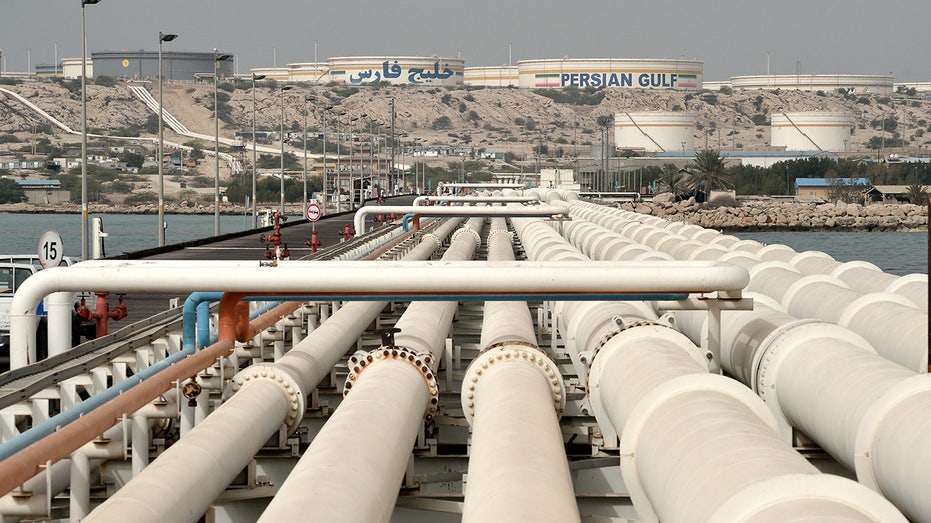
Oil prices remain above their pre-war levels. (Reuters/Todd Korol)
An official signing ceremony is planned for Friday in Geneva, which is about an hour away from the summit’s location in Evian-les-Bains in the French Alps.
Trump was asked about when the Iran memorandum will be published publicly and said, “I think pretty soon, I would say. I mean, I want it to be released because it’s a very powerful document. It’s not like the Obama document, which was just a terrible document.”
“So probably pretty soon, I would say sometime after Friday, because the Strait opens – it’s open now, but it opens completely, we’ll have all the mines knocked out for the most part. We have a lot of lanes right now,” Trump said.
The president added that the agreement is “really a behavioral thing” when it comes to Iran because if “they do what they’re supposed to do, that starts taking effect.”

The disruption of oil flows from the Middle East has pushed consumer prices higher in the U.S., driving a jump in inflation. (Giuseppe Cacace/AFP via Getty Images)
The deal to end the war with Iran is expected to ease pressure on the Federal Reserve to raise interest rates to curb inflation, which surged to a three-year high in May as gas prices hit consumers’ budgets.
BMO’s U.S. rates strategist, Vail Hartman, said that the “oil shock is not over, and we are not at the point of reviving hopes of interest rate cuts this year. We would need more concrete changes in the macro outlook.”
GET FOX BUSINESS ON THE GO BY CLICKING HERE
Reuters contributed to this report.
Business
Stephen A. Smith Backs Rare Championship Ring Honor for Spike Lee After Knicks’ 2026 Title Triumph
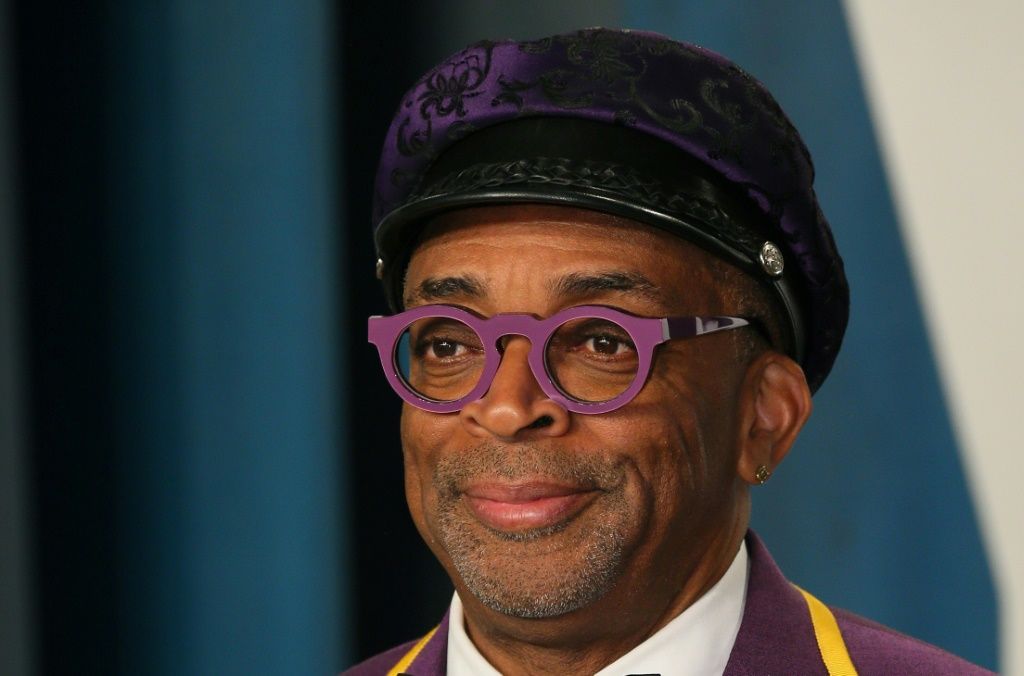
NEW YORK — ESPN personality Stephen A. Smith has thrown his support behind awarding filmmaker Spike Lee a New York Knicks championship ring, praising the longtime season-ticket holder’s decades of unwavering loyalty following the franchise’s first NBA title in 53 years.
The Knicks defeated the San Antonio Spurs in the 2026 NBA Finals, ending a championship drought dating back to 1973. Lee, one of the team’s most recognizable fans, has occupied courtside seats at Madison Square Garden since 1985 — the same year Patrick Ewing was drafted. His passionate support through years of heartbreak and rebuilds has made him a cultural symbol of Knicks fandom.
Smith, a prominent Knicks supporter himself, publicly endorsed the idea of presenting Lee with a ring in recognition of his extraordinary commitment. “I completely support this for Spike Lee. No Knicks’ fan deserves this more than him,” Smith stated.
The suggestion has sparked debate about the boundaries between players, staff and dedicated fans in championship celebrations. While championship rings are traditionally reserved for those directly involved in on-court or organizational roles, Lee’s four-decade investment and public advocacy have elevated his status to something closer to an honorary team member in the eyes of many supporters.
Lee’s Enduring Knicks Legacy
Spike Lee became a Knicks season-ticket holder in 1985 and has rarely missed home games, even during the franchise’s most difficult periods. Reports estimate he has spent more than $10 million on courtside seats over the years, with annual costs averaging around $300,000 in recent seasons. His presence at games, often captured in broadcasts wearing iconic Knicks gear, has become part of the Madison Square Garden experience.
Lee’s fandom extends beyond attendance. The Oscar-nominated director has used his platform to celebrate the team, criticize management during lean years, and champion players through highs and lows. From the Ewing era to the recent resurgence led by Jalen Brunson, Lee has embodied the resilience of Knicks supporters.
The 2026 title run, capped by a hard-fought series victory over the Spurs, represented the payoff for generations of fans. Lee’s emotional reaction to the clinching win was widely shared, symbolizing the catharsis felt across New York.
Smith’s Endorsement and Fan Reaction
Stephen A. Smith’s comments added significant weight to the ring discussion. Known for his passionate Knicks commentary, Smith has long highlighted Lee’s dedication as exceptional. During Finals coverage, he noted that while he personally would not seek a ring as a broadcaster, Lee’s unique position warranted special consideration.
The proposal has resonated with fans, many of whom view Lee as an extension of the organization itself. Social media erupted with support, with hashtags celebrating the idea of honoring “the ultimate Knicks fan.” Others cautioned that rings should remain exclusive to contributors on the court and in the front office to preserve their meaning.
Knicks ownership and leadership have not publicly commented on the suggestion. However, the franchise has a history of recognizing super fans and longtime supporters through various honors, including banner raisings and ceremonial events.
Historical Context of Fan Honors in Sports
Championship rings carry deep symbolic value in professional sports, representing sacrifice, achievement and belonging. While rare, precedents exist for extending honors beyond players and staff. Some teams have presented customized rings or equivalent memorabilia to legendary broadcasters, longtime season-ticket holders and community icons.
In basketball, the NBA has occasionally recognized exceptional contributions through ceremonial gestures. Lee’s case stands out due to the length of his commitment and his role in shaping the public image of Knicks basketball. His courtside presence has become as much a part of game-day tradition as the Knicks City Dancers or the signature blue and orange color scheme.
Critics of the idea argue that creating such exceptions could diminish the exclusivity of championship rings. Supporters counter that Lee’s financial and emotional investment over 41 years represents a different but equally meaningful form of contribution to the franchise’s cultural fabric.
The Knicks’ Championship Journey
The 2026 title marked a triumphant return to glory for the Knicks. Led by Brunson’s Finals MVP performance and a balanced roster featuring stars like Mikal Bridges and Karl-Anthony Towns, the team overcame early-season doubts to deliver New York its first championship since the early 1970s.
The victory triggered massive celebrations across the city, with the Empire State Building lit in Knicks colors and parades planned. For Lee, who had witnessed numerous false starts and painful playoff exits, the moment carried particular significance. His visible joy during the clinching game became one of the defining images of the championship run.
Broader Implications for Fan Culture
The discussion around Lee highlights evolving perspectives on fan engagement in modern sports. As ticket prices rise and access to elite seating becomes more exclusive, superfans like Lee represent a bridge between the organization and its loyal base. Honoring such dedication could strengthen community ties and enhance the fan experience.
Sports franchises increasingly recognize the value of cultivating deep emotional connections with supporters. Whether through personalized experiences, Hall of Fame inductions for fans or symbolic gestures like a championship ring, these acknowledgments can boost loyalty and brand strength.
For the Knicks, presenting Lee with a ring — or a customized equivalent — would send a powerful message about the importance of sustained fandom. It would also generate positive publicity and reinforce the team’s identity as one deeply rooted in New York culture.
Looking Ahead
As the Knicks begin their title defense, attention will turn to roster moves and preparations for the new season. The ring debate for Spike Lee adds an engaging subplot to the championship aftermath, reflecting the passion that defines Knicks basketball.
Regardless of the final decision, Lee’s place in franchise lore is secure. His four decades of support through triumph and tribulation embody the spirit of New York sports fans. Stephen A. Smith’s endorsement has amplified the conversation, ensuring that one of the most visible symbols of Knicks resilience receives due consideration.
The 2026 championship already stands as a landmark achievement. Whether or not Spike Lee receives a physical ring, his legacy as one of the greatest fans in NBA history remains firmly intact, a testament to loyalty that helped carry the franchise through its longest championship drought.
Business
Dow Surges 634 Points to Record High as US-Iran Peace Deal Sparks Broad Market Relief Rally

NEW YORK — The Dow Jones Industrial Average soared more than 600 points on Monday, closing at a record 51,835.82 after gaining 633.56 points or 1.24%, as investors cheered the U.S.-Iran peace agreement and the reopening of the Strait of Hormuz, easing fears of prolonged energy disruptions and boosting confidence across global markets.
The sharp advance marked one of the strongest sessions of the year, driven by relief over de-escalation in the Middle East and expectations of steadier oil prices. The S&P 500 and Nasdaq Composite also posted solid gains, reflecting broad-based buying as geopolitical risk premium faded from asset prices.
President Donald Trump’s announcement that the deal with Iran is complete and the immediate lifting of the naval blockade triggered a swift positive reaction. The prospect of unrestricted shipping through the critical Strait of Hormuz removed a major overhang that had weighed on energy markets and broader economic sentiment in recent months.
Peace Deal Fuels Risk-On Sentiment
The agreement, set for formal signing in Switzerland, includes an end to military operations and technical talks on Iran’s nuclear program. Oil prices fell sharply on the news, providing relief to consumers and industries while supporting sectors sensitive to energy costs.
Financial stocks led the Dow’s advance, with major banks benefiting from improved economic outlook and lower volatility expectations. Technology and industrial shares also gained ground as investors rotated into cyclical names. Energy stocks showed mixed performance, with some producers trimming gains as crude prices moderated.
Market participants welcomed the development as a significant step toward regional stability. “This removes a major source of uncertainty that had been hanging over markets,” one senior trader noted in floor commentary. The Dow’s record close reflects growing optimism that the ceasefire can hold and lead to normalized trade flows.
Broader Economic Context
The rally comes amid a resilient U.S. economy showing steady growth despite earlier concerns over inflation and interest rates. Corporate earnings have largely met or exceeded expectations, with particular strength in technology and financial services. The Federal Reserve’s measured approach to policy has provided a supportive backdrop for equities.
Analysts highlighted the deal’s potential to stabilize energy prices, which could help moderate inflationary pressures and support consumer spending. Lower fuel costs benefit transportation, manufacturing and household budgets, creating positive ripple effects across the economy.
The session also reflected continued confidence in the Trump administration’s ability to deliver on major foreign policy initiatives. The timing, coinciding with other positive developments including strong corporate results and easing global tensions, amplified the positive momentum.
Sector and Stock Highlights
Industrial giants such as Boeing and Caterpillar posted notable gains, benefiting from expectations of improved global trade. Financial names including Goldman Sachs and JPMorgan Chase advanced on lower volatility and stronger economic growth prospects. Technology components like Apple and Microsoft contributed steadily to the index rise.
Energy majors showed more muted moves as the market digested falling oil prices. The broader materials and consumer discretionary sectors also participated in the advance, signaling widespread relief across the economy.
Smaller companies and the Russell 2000 index outperformed on the session, indicating that investors were embracing risk and betting on broader economic participation beyond mega-cap names.
Global Market Reactions
European and Asian markets followed Wall Street higher in subsequent trading, with gains in energy-sensitive and export-oriented shares. The euro and other currencies strengthened modestly against the dollar as risk sentiment improved.
Oil futures declined several percent, easing pressure on import-dependent economies and supporting global growth forecasts. Gold and other safe-haven assets saw modest pullbacks as investors reduced defensive positioning.
Analyst Perspectives
Market strategists described the move as a classic risk-on reaction to geopolitical de-escalation. “Removing the Hormuz uncertainty is a big positive for global growth expectations,” one chief investment strategist said. “It allows markets to focus more on fundamentals like earnings and monetary policy.”
Some cautioned that implementation details and verification mechanisms would be key to sustaining the rally. Questions remain around long-term nuclear arrangements and regional security, which could introduce renewed volatility if talks stall.
Nevertheless, the consensus leaned optimistic. The Dow’s ability to push to new highs demonstrates underlying strength in the U.S. economy and corporate sector. Year-to-date performance remains robust, with the index on track for strong annual returns if current momentum holds.
Historical Significance
Monday’s gain adds to a series of record closes for the Dow in 2026, reflecting the market’s resilience amid shifting geopolitical and economic landscapes. The index has benefited from corporate innovation, resilient consumer spending and periodic relief from international tensions.
The current environment contrasts with periods of heightened uncertainty earlier in the year. Sustained progress on trade, energy security and domestic policy could support further upside, according to many observers.
Investor Implications
For individual investors, the session reinforces the importance of maintaining diversified portfolios capable of navigating both risks and opportunities. Those with exposure to cyclical sectors and international markets likely benefited most from the relief rally.
Financial advisers recommend focusing on companies with strong balance sheets, pricing power and exposure to long-term growth themes such as energy transition and technology. While geopolitical developments can drive short-term moves, underlying fundamentals remain the primary driver over time.
The Dow’s performance also highlights the interconnected nature of global markets. Developments in the Middle East continue to influence U.S. equities, underscoring the need for awareness of international events.
Looking Ahead
Attention now turns to upcoming economic data releases, corporate earnings and any further details on the Iran agreement implementation. The Federal Reserve’s next policy meeting will also be closely watched for signals on interest rate trajectory.
As markets digest the latest geopolitical breakthrough, the focus remains on whether the positive momentum can be sustained. Strong corporate fundamentals and easing external risks provide a constructive backdrop, though volatility is likely to persist given the fluid nature of international relations.
Monday’s record close for the Dow Jones Industrial Average represents a vote of confidence in the resilience of the U.S. economy and the potential for reduced global tensions to support growth. Investors will continue monitoring developments in the Middle East and their implications for energy prices, inflation and broader market sentiment in the weeks ahead.
The session serves as a reminder of markets’ sensitivity to geopolitical headlines while also showcasing their capacity for rapid recovery when major risks recede. For now, the Dow’s milestone underscores a cautiously optimistic outlook as 2026 progresses.
JHVEPhoto/iStock Editorial via Getty Images
Fast Facts
REX NVDA Growth & Income ETF (NVII) is an actively managed ETF launched on 05/28/2025 with a primary objective of weekly income and a secondary objective of leveraged exposure to the common stock of NVIDIA Corporation (NVDA) with a daily factor between 1.05 and 1.5. NVII has a total expense ratio of 1.49% and an extremely high distribution rate: 48.12%. Distributions are paid on a weekly basis. NVII is a small but quite liquid ETF, with $102 million in assets under management and an average daily trading volume of $3.6 million. The fund’s issuer, REX Shares, specializes in alternative strategy ETFs and ETNs, in particular thematic, leveraged, and options income products.
Strategy
As described in the prospectus by REX Shares, the fund maintains notional exposure to the common stock of Nvidia between 105% and 150% of NAV using derivatives such as options, swap agreements, and leveraged ETFs on Nvidia, and may also hold the stock itself. The exact leverage factor may change based on real-time technical analysis. The portfolio is rebalanced on a daily basis to attain the targeted exposure every single day.
Additionally, the fund writes covered call options to generate income from premiums. These options may limit participation in the upside potential of the underlying stock. The fund also holds treasuries and cash equivalents as collateral for derivatives.
The fund may use a synthetic covered call strategy, with exposure in Nvidia obtained by a “synthetic long” using a combination of options designed to replicate the asset’s price return. A synthetic long consists of buying call options and selling put options on the underlying asset with the same expiration date and strike price.
There is no guarantee that the objectives of exposure and weekly distributions will be met. Distributions may have a high rate of ROC (return of capital), reducing NAV and therefore the amount of future distributions. Moreover, the daily rebalancing generates leveraged drift (“beta-slippage”), making unpredictable the leverage factor measured on a period longer than one day.
Portfolio
NVII has a 1.25 leverage factor, 120% of net asset value in cash equivalents and treasuries, and three positions in NVDA options, which currently are:
- A long call and a short put corresponding to a synthetic long expiring on 6/18/2026 with a strike price of 235.74.
- A short call (covered call) expiring the same day with a strike price of 208.97.
This is an example from 6/12/2026. Portfolio constituents and leverage may have changed by the time you read this and will, of course, change over time.
Fundamentals
Nvidia is the publicly traded company with the largest market capitalization in the world at the time of writing (about $5 trillion) and is classified by GICS in the Information Technology sector and in the Semiconductors industry. Its share price has been multiplied by 13 since January 2023, propelled by the company’s leadership in AI chips and market sentiment. Based on Seeking Alpha’s quantitative factor grades, NVDA has excellent growth and profitability characteristics, but stretched valuation.
NVDA quantitative factor grades (Seeking Alpha)
Seeking Alpha’s aggregate quantitative ranking puts NVDA in 28th position in its industry among 69 companies, with Micron Technology, Inc. (MU), Intel Corporation (INTC), and Advanced Micro Devices, Inc. (AMD) in the top ranks. As the tech environment changes, so can these rankings.
Historical Performance
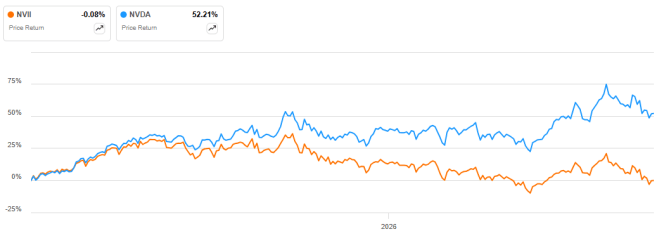
Currently, NVII is 9% ahead of Nvidia in total return between its inception and 6/12/2026. It is encouraging, but the fund has a short history, and this gap may not be representative of its long-term potential.
NVII vs. NVDA total return (Seeking Alpha)
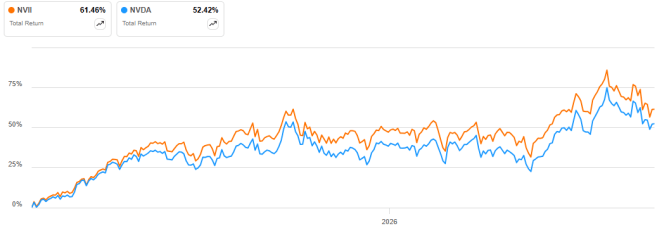
In this time frame, the share price is close to flat, all the gains coming from distributions.
NVII price return (Seeking Alpha)
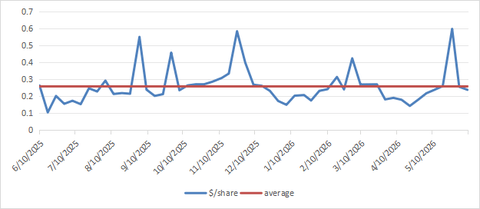
The weekly distributions have been very variable, with an average of $0.26 per share, as plotted below.
Distribution history (Chart: author; data: REX Shares)
For 2026 until 6/12, distributions have been classified as 97.7% return of capital (“ROC”). High ROC may have a negative impact on a shareholder’s tax. For example, non-resident aliens (“NRA accounts”) may be initially submitted to withholding tax, with an adjustment at year-end that is not always automatic, depending on the broker. High return of capital over time can also indicate potential NAV decay.
NVII Vs. Competitors
The next table compares characteristics of NVII and four derivative income ETFs based on NVDA:
- YieldMax NVDA Option Income Strategy ETF (NVDY).
- Roundhill NVDA WeeklyPay™ ETF (NVDW).
- GraniteShares YieldBOOST NVDA ETF (NVYY).
- GraniteShares Autocallable NVDA ETF (ANV).
NVII has the highest expense ratio and the lowest yield, but the best total return.
Market Interest
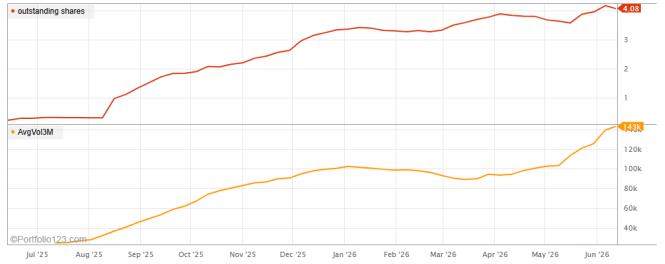
The fund had a solid start in asset growth and investor interest, represented by outstanding shares and average volume on the next chart. As the popularity of the underlying (Nvidia) changes, this ETF could be affected. Waning investor interest would hurt NVII in terms of asset growth, and AUM could shrink. If implied volatility falls, this would diminish its income generation potential. Additionally, due to the leverage factor, price drops in Nvidia would be magnified.
Outstanding shares in million and 3-month average daily volume (Portfolio123)
Strengths And Risks
The strengths of NVII are:
- A very high yield.
- Weekly distributions.
- Sufficient liquidity.
- Outperformance compared to peers.
The risk factors of investing in the fund include:
- High expense ratio.
- Low AUM.
- Short history.
- Single stock exposure (company-specific risk).
- Active management (limited transparency).
Takeaway
NVII is best suited for investors who are bullish on Nvidia and seek to combine income and capital appreciation. The latter may only be achieved by reinvesting a part of distributions. Due to the risk factors listed above, this ETF is better used as a satellite rather than a core holding.
This article answers these three main questions about NVII:
- How does NVII incorporate income and Nvidia’s price action?
- How has NVII performed compared to its underlying stock and similar ETFs?
- What type of investor is NVII best suited for?
Editor’s note: This article is intended to provide a general overview of the ETF for educational purposes only and, unlike other articles on Seeking Alpha, does not offer an investment opinion about the ETF.
NEW YORK — The Nasdaq Composite climbed more than 600 points on Monday, closing at 26,498.53 after gaining 609.69 points or 2.36%, as investors embraced the US-Iran peace agreement and the reopening of the Strait of Hormuz, driving strong gains in technology and growth stocks amid reduced geopolitical uncertainty.
The session marked one of the strongest performances of the year for the tech-heavy index, reflecting broad relief that a potential prolonged energy crisis had been averted. Major technology companies led the advance, with semiconductor, software and internet stocks benefiting from improved risk sentiment and expectations of stable global economic conditions.
The US-Iran ceasefire announcement, which includes the immediate lifting of the naval blockade and reopening of the critical oil shipping lane, removed a significant overhang that had weighed on markets in recent weeks. President Donald Trump’s confirmation of the deal triggered a sharp positive reaction across equities, particularly in sectors sensitive to energy costs and global trade.
Tech Sector Powers Nasdaq Advance
Heavyweight technology names posted solid gains as lower oil prices eased inflationary concerns and supported spending on innovation and capital equipment. Companies with exposure to artificial intelligence, cloud computing and digital infrastructure were among the top performers, continuing a trend of strength in growth-oriented stocks.
The rally extended to broader growth names, with semiconductor manufacturers and electric vehicle-related shares advancing on expectations of steadier supply chains and consumer demand. The peace deal is seen as particularly beneficial for technology firms with global operations, reducing risks around international shipping and energy expenses.
Financial and industrial stocks also contributed meaningfully, rounding out a broad-based advance. The strong performance underscored the market’s sensitivity to geopolitical developments and its capacity for swift recovery when major risks recede.
Broader Market Context
The Nasdaq’s surge aligned with gains in the Dow Jones Industrial Average and S&P 500, creating a synchronized rally across major US indices. The move reflected improved global risk appetite following the diplomatic breakthrough, which analysts described as a significant de-escalation in one of the world’s most volatile regions.
Oil prices declined sharply on the news, providing relief to consumers and businesses while supporting corporate margins across multiple sectors. Lower energy costs are expected to help moderate inflationary pressures, potentially giving central banks more flexibility in future policy decisions.
The session came amid a resilient US economy showing steady growth and solid corporate earnings. Technology companies have been at the forefront of recent market gains, driven by advancements in artificial intelligence and strong demand for digital services. Monday’s performance reinforced confidence in the sector’s long-term growth prospects.
Analyst and Investor Perspectives
Market strategists viewed the rally as a classic risk-on response to geopolitical relief. “The removal of Hormuz-related uncertainty is a clear positive for global growth expectations and corporate profitability,” one chief market strategist noted. “Technology stocks, with their high sensitivity to economic conditions and global trade, stand to benefit disproportionately.”
Some observers cautioned that the sustainability of the gains would depend on the durability of the ceasefire and progress in subsequent nuclear negotiations. However, the immediate market reaction highlighted investors’ willingness to price in a more stable outlook.
Institutional investors appeared to add to positions in growth stocks, with inflows into technology-focused funds reported during the session. Retail participation was also strong, with trading volumes elevated as individual investors reacted to the positive headlines.
Economic and Policy Implications
The peace agreement could have meaningful implications for US monetary policy. Lower energy prices may help keep inflation in check, potentially supporting a more accommodative stance from the Federal Reserve. This environment generally favors growth stocks that dominate the Nasdaq.
Corporate America stands to benefit from reduced uncertainty around international operations and supply chains. Technology firms with significant overseas revenue and exposure to global markets are particularly well-positioned to capitalize on improved conditions.
The rally also reflected confidence in the broader economic outlook. Strong consumer spending, robust labor markets and continued innovation in key sectors provide a solid foundation for equities even as markets navigate periodic volatility.
Historical Perspective
Monday’s gain adds to the Nasdaq’s strong performance in 2026, as the index continues to benefit from technological innovation and corporate adaptability. The current environment contrasts with periods of heightened geopolitical tension earlier in the year, demonstrating markets’ resilience when major risks ease.
Technology-led rallies have been a defining feature of recent market cycles, driven by artificial intelligence, cloud computing and digital transformation trends. The Nasdaq’s ability to reach new highs underscores the sector’s enduring appeal to growth-oriented investors.
Investor Considerations
For individual investors, the session reinforces the importance of maintaining diversified portfolios capable of capturing opportunities across market conditions. Those with exposure to technology and growth stocks likely benefited most from Monday’s advance, while balanced allocations helped mitigate volatility.
Financial advisers recommend focusing on companies with strong competitive advantages, robust balance sheets and exposure to long-term secular trends. While geopolitical developments can drive short-term movements, underlying fundamentals and innovation cycles remain the primary drivers over time.
The Nasdaq’s performance also highlights the interconnected nature of global events and US equities. Investors are encouraged to stay informed about international developments while maintaining a long-term perspective.
Looking Ahead
Attention now shifts to upcoming economic data releases, corporate earnings reports and any further details on the implementation of the Iran agreement. The Federal Reserve’s communications and policy path will also be closely monitored for signals on interest rates.
As markets digest the latest geopolitical breakthrough, the focus remains on whether the positive momentum can be sustained. Strong corporate fundamentals, easing external risks and continued technological progress provide a constructive backdrop, though periodic volatility is likely given the fluid nature of international relations.
Monday’s strong close for the Nasdaq Composite represents a clear vote of confidence in the resilience of the US economy and the potential for reduced global tensions to support innovation and growth. Investors will continue monitoring developments in the Middle East and their implications for energy prices, inflation and broader market sentiment in the weeks ahead.
The session serves as a reminder of markets’ sensitivity to headline news while also showcasing their capacity for rapid recovery when major uncertainties diminish. For now, the Nasdaq’s performance underscores a cautiously optimistic outlook as 2026 continues to unfold.
Business
LARRY KUDLOW: Because We Never Trust Iran, That’s All the More Reason To Verify, Verify, Verify
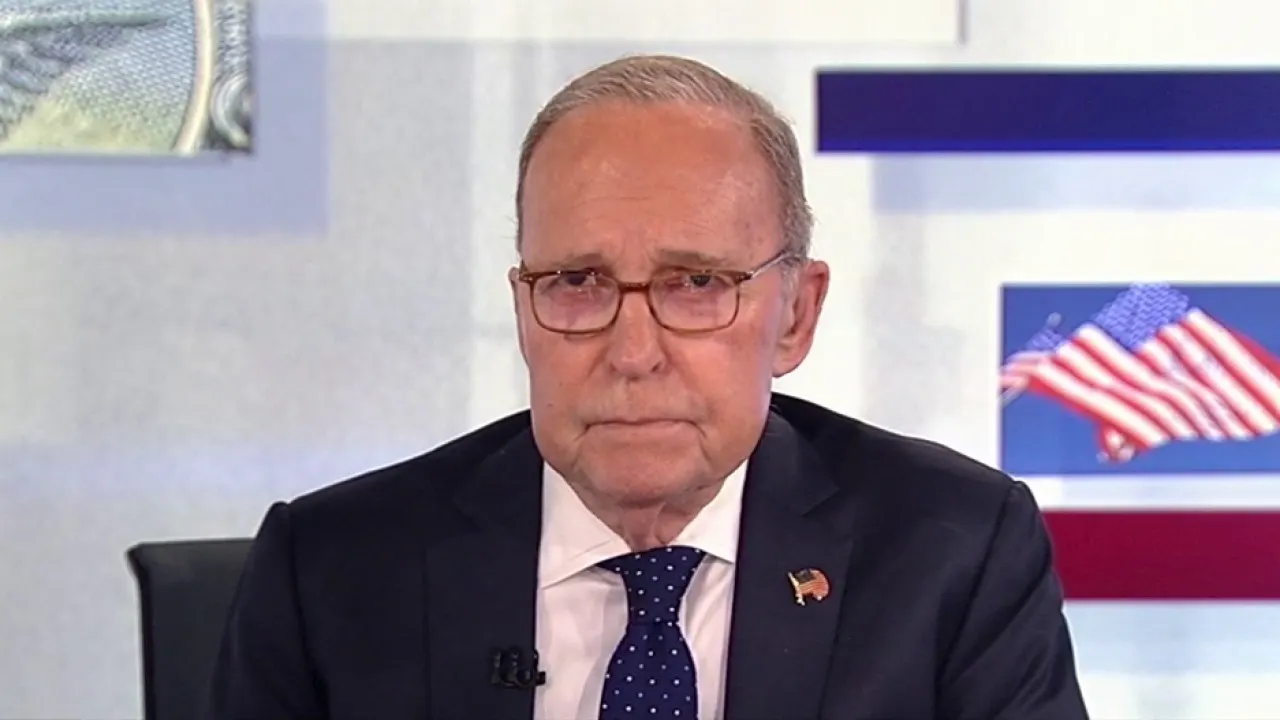
FOX Business host Larry Kudlow discusses efforts to end the conflict in Iran on ‘Kudlow.’
Give at least a couple of cheers for coercive diplomacy, which is to say diplomacy through bombing. As the Prussian military strategist Carl von Clausewitz told us a couple hundred years ago, “war is the continuation of politics,” or diplomacy, “by other means.”
Last week’s bombing may well have finally pushed Iran and all their internal factions to at least signing a memo of understanding that represents at least the beginning of the end of the war.
President Trump is a master at coercive diplomacy. He’s also a master of psychological warfare diplomacy with his threats to destroy Iran’s infrastructure, such as power, bridges, water, etcetera. He even kept Kharg island, the apex of Iran’s energy industry, in play as well.
The full text of the memo might come at the end of the week with a formal signing ceremony, as Mr. Trump said today at the G-7 meeting in France.
After the Trump Iran Deal opens the Strait of Hormuz, markets rally & oil plunges to a 3-month low. Brian Brenberg, Dagen McDowell, Taylor Riggs, and David Bahnsen discuss economic implications, midterms, and business investment.
Asked by a reporter “when will the text of the MOU be released,” Mr. Trump replied: “I think pretty soon I would say I mean, I want it to be released because it’s a very powerful document. It’s not like the Obama document, which was just a terrible document. This is a very powerful document and I want it to be released. So probably pretty soon, I would say after sometime after Friday, of course, the Strait opens.”
And though we await all of the details, it seems that the president is keeping all his promises to the American people. And, for that matter, to the defeated and surrendering Iranians. They may never acknowledge their surrender, but they are surrendering.
Mr. Trump has said no nuclear weapons for Iran, and that’s in the deal. He has said that the nuclearized enriched uranium must be transferred out of Iran or destroyed altogether. White House sources maintain that’s in the deal.
He has promised a free navigation reopening of the Strait of Hormuz without any Iranian tolls, and that’s in the deal. Here’s what the president said today on Iranian nukes, again from the G-7 in France: “the main thing is that Iran will not have a nuclear weapon. They fully agreed to that with strong policing powers, and they won’t have a nuclear weapon, which is what it was all about, because they probably would have used it if they had it.”
Now Mr. Trump has also said no money for Iran unless and until they completely change their behavior. And there will be strict performance metrics for all these Trumpian red lines. Again, here’s the president earlier today on this point.
Mr. Trump was asked by a reporter whether the deal will “involve any sanctions relief for Iran?” and if so, “when would that go into effect?”
The president replied: “No it doesn’t. Well, they have to. It’s really a behavioral thing. If they do what they’re supposed to do, that starts taking effect.”
Now all the administration people keep talking about verification. Verify, verify, verify.
House Judiciary Committee Chairman Rep. Jim Jordan, R-Ohio, discusses concerns over high NFL streaming costs and President Donald Trump announcing that the deal with Iran is complete on ‘Varney & Co.’
I understand in all these areas the devil is in the operational details necessary to execute this memorandum of understanding. All that has to be worked out.
We all know Iran has absolutely no credibility on any of these points. That’s why I don’t think anyone can say the war is yet over. Yet I will amend Ronald Reagan, we never trust Iran. And that’s even more reason why we must verify, verify, and verify.
I also recognize that Israel, our great ally and comrade in arms, may still have a lot more work to do to defend its freedom.
Let’s step back a moment, though, and recognize that Mr. Trump has crushed Iran militarily through Epic Fury. Mr. Trump and the Treasury secretary, Scott Bessent, have crushed Iran financially through economic fury. And special mention to our United States Navy for their steel-door blockade of Iranian ports.
Lots of former presidents have railed against Iran. But no one has remotely done what Mr. Trump has done to curb the gruesome, diabolical, evil, radical Islamist outlaws that Mr. Trump has done. No one.
And that’s why I believe people of good faith who want to see freedom truly come to the middle east should support the Trumpian memorandum of understanding and turn that into an actual verifiable agreement.

Investing wisely does not have to be rocket science. It is about discipline and running the numbers. You don’t have to be like a grandmaster chess player playing the game twenty moves ahead of your opponent, you just need to understand how the pieces work.
Analyst’s Disclosure: I/we have no stock, option or similar derivative position in any of the companies mentioned, and no plans to initiate any such positions within the next 72 hours. I wrote this article myself, and it expresses my own opinions. I am not receiving compensation for it (other than from Seeking Alpha). I have no business relationship with any company whose stock is mentioned in this article.
Seeking Alpha’s Disclosure: Past performance is no guarantee of future results. No recommendation or advice is being given as to whether any investment is suitable for a particular investor. Any views or opinions expressed above may not reflect those of Seeking Alpha as a whole. Seeking Alpha is not a licensed securities dealer, broker or US investment adviser or investment bank. Our analysts are third party authors that include both professional investors and individual investors who may not be licensed or certified by any institute or regulatory body.
The World Thinks The War Is Over – Why It's Not
NEW YORK — The Russell 2000 index advanced 22.96 points, or 0.79%, to close at 2,943.99 on Monday, as small-cap stocks participated in a broad market rally fueled by the US-Iran peace agreement and the reopening of the Strait of Hormuz, easing geopolitical tensions and boosting investor confidence in domestic economic growth.
The gain extended recent strength in smaller companies, which often outperform in risk-on environments as reduced uncertainty encourages investment in domestically focused businesses less exposed to international supply chain disruptions. The Russell 2000’s performance aligned with advances in the Dow Jones Industrial Average, S&P 500 and Nasdaq Composite, creating a positive day across major US equity benchmarks.
The US-Iran ceasefire announcement, which includes the immediate lifting of the naval blockade and restoration of shipping through the critical oil waterway, removed a major risk premium that had weighed on markets. President Donald Trump’s confirmation of the deal triggered widespread buying, with small-caps particularly benefiting from expectations of lower energy costs and improved consumer and business sentiment.
Small-Caps Benefit from Domestic Focus
Smaller companies, represented by the Russell 2000, tend to derive more revenue from the domestic economy compared to their large-cap counterparts. The prospect of stable or declining energy prices supports sectors such as consumer discretionary, industrials and financials — areas with heavy small-cap representation. Regional banks, homebuilders and retailers were among the session’s stronger performers as investors bet on improved economic conditions.
The index’s advance reflects renewed optimism about the US economy’s resilience. With inflation pressures potentially easing due to lower oil costs, the Federal Reserve may maintain a more accommodative policy stance, which historically favors smaller companies that rely on borrowing for growth and expansion.
Analysts noted that small-caps had lagged large technology names for much of the year but showed signs of catching up as broader economic tailwinds emerged. Monday’s outperformance suggests investors are rotating toward value and cyclical stocks in anticipation of a more balanced market environment.
Broader Market and Economic Context
The Russell 2000’s gain came amid record closes for the Dow and strong advances in other major indices. Technology stocks continued their recent run, while industrial and financial shares posted solid results. The session highlighted improving risk appetite as concerns over prolonged Middle East disruptions faded.
Lower energy costs are expected to provide relief to households and businesses, supporting consumer spending and corporate margins. Small businesses, which form the backbone of the Russell 2000, stand to benefit from reduced input costs and greater economic stability. This environment could encourage hiring, investment and expansion among smaller firms.
The peace agreement also carries positive implications for global trade and supply chains. Reduced shipping risks through the Strait of Hormuz should help stabilize commodity prices and support industries reliant on international commerce, providing indirect benefits to many small-cap companies.
Sector Performance and Key Movers
Financial stocks within the Russell 2000 posted notable gains as lower volatility and improving growth prospects supported lending activity. Regional banks, in particular, benefited from expectations of steady loan demand and reduced credit risk concerns.
Industrial and materials names advanced on improved manufacturing outlook and commodity price stabilization. Consumer discretionary stocks rose as lower fuel costs were seen as supportive of spending on goods and services. Healthcare and technology components within the index also contributed to the advance.
The session’s broad participation indicated healthy market breadth, a positive signal for sustained momentum. Volume was elevated as investors repositioned portfolios in response to the geopolitical breakthrough.
Analyst Views on Small-Cap Outlook
Market strategists described the move as consistent with historical patterns following major risk reductions. Small-caps often thrive when economic uncertainty declines and borrowing conditions remain favorable. With the Federal Reserve likely to monitor incoming data closely, the current environment appears conducive to further small-cap strength.
Some analysts cautioned that while the immediate reaction was positive, implementation details of the Iran agreement and progress on nuclear talks would determine the longevity of the rally. Nevertheless, the consensus leaned constructive, with many highlighting attractive valuations in the small-cap space relative to large-caps.
The Russell 2000’s price-to-earnings ratio remains below that of the S&P 500, offering potential value for investors seeking exposure to domestic growth stories. Dividend-paying small-caps also provide income opportunities in a still uncertain rate environment.
Investment Implications
For individual investors, Monday’s performance underscores the importance of diversification across market capitalizations. While large-cap technology names have driven much of the market’s recent gains, small-caps offer exposure to different economic drivers and potential for outperformance during periods of economic normalization.
Financial advisers recommend evaluating small-cap funds or ETFs for those seeking broader market participation. Focus should remain on companies with strong balance sheets, competitive advantages and exposure to secular growth themes such as domestic manufacturing resurgence and technological adoption.
The Russell 2000’s movement also highlights the interconnected nature of global events and US equities. Investors are encouraged to stay informed about international developments while maintaining a long-term perspective on domestic opportunities.
Looking Ahead
Attention now turns to upcoming economic data releases, including inflation figures, retail sales and manufacturing surveys. Corporate earnings from small-cap companies will provide further insight into the health of the domestic economy and the sustainability of recent gains.
The Federal Reserve’s communications and any policy signals will also influence small-cap performance, particularly regarding borrowing costs and credit availability. Positive developments on the Iran agreement implementation could provide additional support in coming sessions.
As 2026 progresses, the Russell 2000 remains a key barometer for the health of smaller US businesses and overall economic breadth. Monday’s advance suggests improving conditions and investor willingness to embrace risk following a period of geopolitical uncertainty.
The index’s performance contributes to a constructive market backdrop, with reduced external risks allowing focus to shift toward fundamentals. For now, the Russell 2000’s solid gain reflects confidence in America’s domestic economy and the potential for small companies to thrive in a more stable global environment.
Investors will continue monitoring developments in the Middle East alongside domestic indicators to assess the durability of the current positive momentum. The session serves as a reminder of markets’ capacity for swift recovery when major uncertainties diminish, setting an optimistic tone as the week unfolds.

What early modern literature can teach us about neurodivergence

Eight crew believed dead in California B-52 bomber crash, CNN reports

How Trump’s Iran Deal Breaks Sharply From Obama’s 2015 JCPOA

BloFin War of Whales 2026 Grand Prix opens registration for $5M trading championship

Blockchain.com files with SEC for U.S. IPO

Israel says it has killed new Hamas military leader in Gaza City airstrikes

Stablecoins Exposed! #shortsviral #crypto #digitalassets #cryptocurrency

Bitcoin Cycle: Predictable Bitcoin Phases and Halving Events #shorts

Radhika Merchant enjoys life using her father-in-law’s money. #radhikamerchant #mukeshambani #shorts
-

 Business1 day ago
No Jackpot Winner as $257 Million Prize Rolls Over to $269 Million Monday Draw
-

 Crypto World4 days ago
Oppenheimer backs SpaceX as $70 billion retail frenzy builds
-

 Crypto World4 days ago
Markets Rally as SpaceX IPO Looms Amid Iran Tensions and Inflation Surge
-

 Fashion3 days ago
Weekend Open Thread: Tuckernuck – Corporette.com
-
 Crypto World23 hours ago
Zimbabwe Requires Crypto Businesses to Register Annually Under New FIU Regulations
-

 Entertainment6 days ago
The Ryan Gosling True Crime Thriller On Netflix That Gets Even Stranger, Stream It Now
-
 Sports6 days ago
Bangladesh beat Australia after 20 years in ODIs, register only their second win over six-time world champions | Cricket News
-

 Tech3 days ago
NanoClaw integrates JFrog registries to secure AI agent downloads
-

 Crypto World3 days ago
Bitget enters Argentina’s regulated crypto market through PSAV registration
-

 Tech3 days ago
This Week In Security: Microsoft On Microsoft, Register Your Domains, Linux On ARM, And FreeBSD Joins The File Cache Club
-
 Tech4 days ago
Dutton Ranch star claims they ‘didn’t see any disruption’ on set following Chad Feehan’s exit from Yellowstone spinoff fueled by Taylor Sheridan clash rumors
-

 Politics4 days ago
Politics Home | Healey Resignation Is “Colossal Failure Of Government”, Says Former Labour Defence Secretary
-

 NewsBeat4 days ago
El Nino has formed in the Pacific and could set records, forecasters say
-
 Tech6 days ago
‘This is Seattle’s position on AI’: City Council votes unanimously to pause big new data centers
-
 Entertainment4 days ago
Donnie Wahlberg & More Heat Up Las Vegas at Circa’s Barry’s Downtown Prime
-

 Sports4 days ago
First Time Since 1971: Australia Register Historic Low In ODI Cricket
-
 Tech4 days ago
Opendoor Ends India Operations, Fueling a Bigger Conversation About AI and Outsourcing
-

 Politics4 days ago
Belfast burns, while Met chief points finger at Iran and Russia
-

 Business6 days ago
Thailand Ranks Second Worldwide for AI Adoption Growth, Microsoft Reports
-

 NewsBeat3 days ago
FBI searches office of Ohio voter registration group
You must be logged in to post a comment Login