


Connect with us
DAPA Banner
DAPA Coin
DAPA
COIN PAYMENT ASSET
PRIVACY · BLOCKDAG · HOMOMORPHIC ENCRYPTION · RUST
ElGamal Encrypted MINE DAPA
🚫 GENESIS SOLD OUT
DAPAPAY COMING

NewsBeat

Why people in the world’s most populous country are choosing to have fewer children

Published

on

Why people in the world’s most populous country are choosing to have fewer children

Sharon Michael was around 30 when the decision crystallised in her mind, quietly. There was no dramatic moment, no single life event that changed everything. Instead, it emerged through years of work, reflection and a growing sense that motherhood was not a future she wanted.

For generations, having children in India was less a choice than an expected chapter of adult life. Marriage was followed by parenthood, often with little discussion of alternatives. Today, that certainty is fading among married couples and single professionals alike; conversations around children are becoming more deliberate, more cautious and, in some cases, more sceptical.

“Having kids was never a priority,” says Michael, 36. “I have PCOD and I didn’t want to go through the whole process because of how much effort it takes and all of that,” she says, referring to polycystic ovarian disease, a hormonal condition that affects how the ovaries work and can cause irregular periods.

Michael, who works in the corporate sector, says parenthood would require sacrifices she is unwilling to make. “I do not see that lifestyle fitting in with a child specifically,” she says. “I would not be doing justice to either.” After taking a career break to pursue an MBA, she says she remains uncertain about stepping away from work again. “I still don’t feel ready myself to take up responsibility of that scale.”

Advertisement

She is an example of a highly-educated woman weighing up the balance of her options, rather than following what for previous generations was an assumed path through life. Such personal choices are now reflected in national statistics.

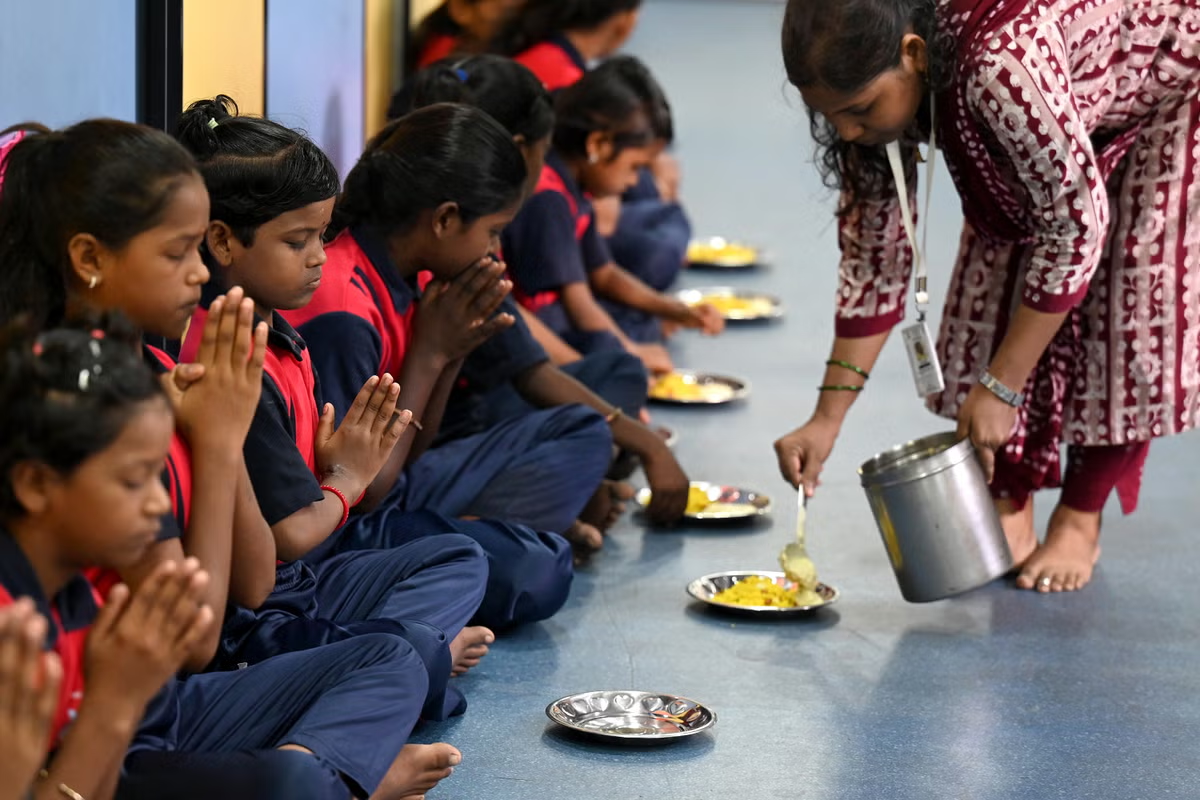
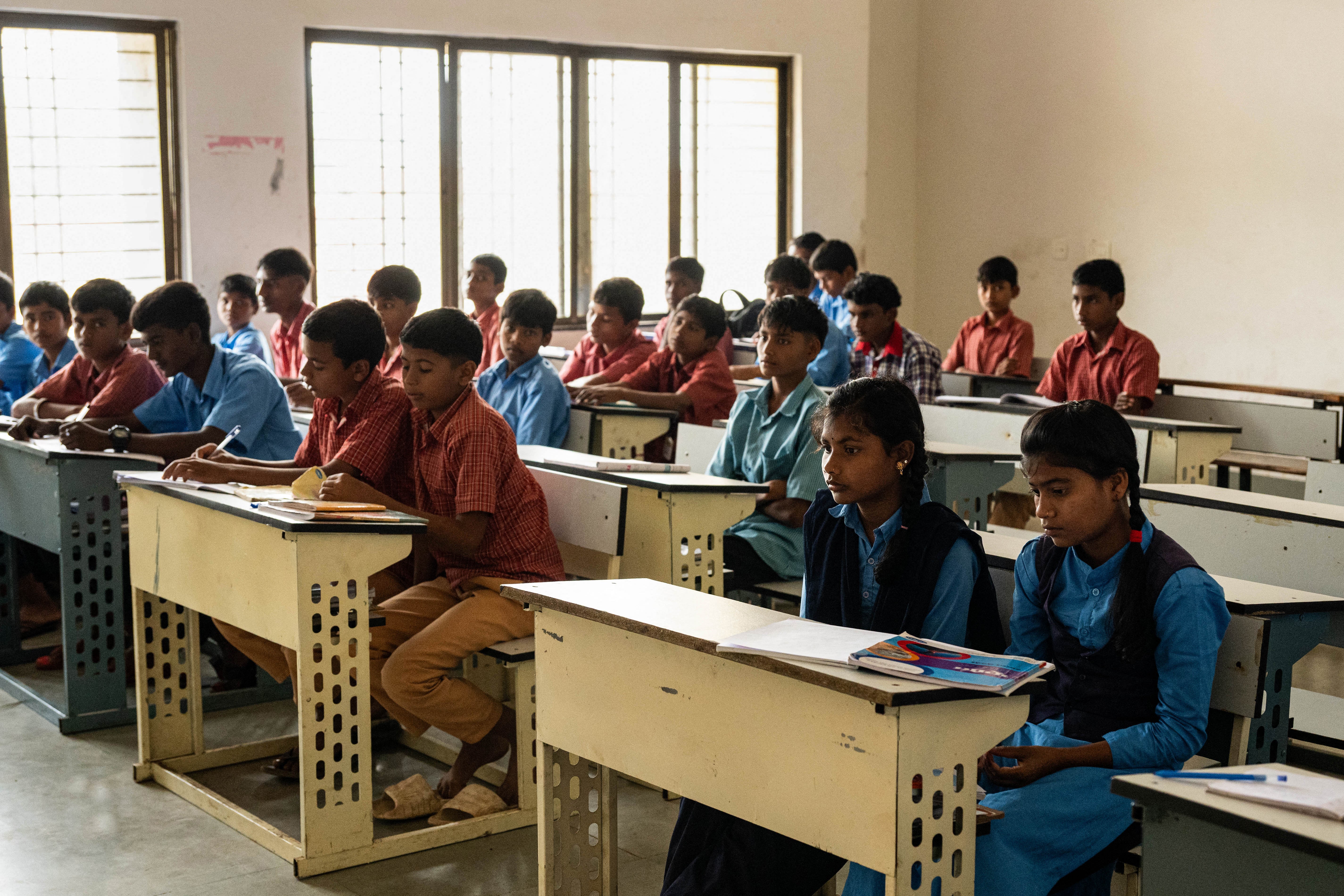
Children attend a class at the government-run Netaji Subhas Chandra Bose residential school that houses tribal students from drought-ridden villages
Children attend a class at the government-run Netaji Subhas Chandra Bose residential school that houses tribal students from drought-ridden villages (AFP/Getty)

India’s total fertility rate – the average number of children a woman is expected to have during her lifetime – has for the first time fallen to 1.9, below the replacement level of 2.1 required to maintain a stable population, according to the latest Sample Registration System report.

The shift marks a remarkable demographic transformation for a country that spent decades worrying about rapid population growth. In the early 1990s, when women had an average of 3.4 children, family planning campaigns became part of public life and, at times, took controversial forms, including the forced sterilisation programme during the Emergency in 1970s.

Later campaigns encouraged couples to have no more than two children, and were popularised through slogans such as “Hum do, humare do”, loosely translating from Hindi as “We two, ours two”.

For decades, Indian governments worried about overpopulation.

Advertisement

Economists say that India should avoid viewing fertility decline as a crisis. Alicia García-Herrero, the chief economist for Asia Pacific at Natixis, explains the decline should not be viewed as a demographic failure.

“India’s fertility decline is not a failure – it’s a sign of progress,” she tells The Independent. “As women gain education, economic options and decision-making power, they are choosing smaller families.”

“The immediate impact is still positive,” says Garcia-Herrero. “India continues to benefit from a large working-age population.”

Behind the statistics lie millions of unique and intimate stories, a generation rethinking what family, success and fulfilment should look like.

Advertisement
A Kashmiri woman shelters from the rain under an umbrella with a child while a man paddles a boat along Dal Lake in Srinagar
A Kashmiri woman shelters from the rain under an umbrella with a child while a man paddles a boat along Dal Lake in Srinagar (AFP/Getty)

The forces reshaping Indian families, she says, are the same ones that transformed societies across Europe and East Asia: rising female education, urbanisation, changing aspirations and the growing cost of raising children.

Sociological patterns visible across India’s geography support that argument. New Delhi records one of the country’s lowest fertility rates at 1.2 births per woman, while Kerala and Tamil Nadu stand at 1.3. Bihar, among India’s poorest states, records the highest rate at 2.9. In other words, birth rates closely mirror differences in education, healthcare, infant mortality and women’s economic participation.

For Akshita Gupta, a 35-year-old Mumbai resident and mother of a 21-month-old son and now pregnant with their second child, becoming a parent was always something she imagined for herself. “I’ve always felt maternal,” she says. “I have always felt I wanted a child.”

But before she and her husband started a family, they spent years discussing not just whether to have children, but how they would raise them. Financial security mattered alongside emotional stability and familial support.

“I feel our base was secure financially, emotionally,” she says. “And we both had our families. So I feel one is of course the inherent desire, but I also feel the fact that, you know, we had the support system.”

Advertisement

Even then, timing weighed heavily on her mind. Having watched friends undergo IVF treatment, Gupta was determined to try to conceive naturally. After consulting her gynaecologist, she set herself a goal of having children before the age of 35. “I wanted to have both my children before 35,” she says. “I had a few friends who were going through IVF and I saw their struggles.”

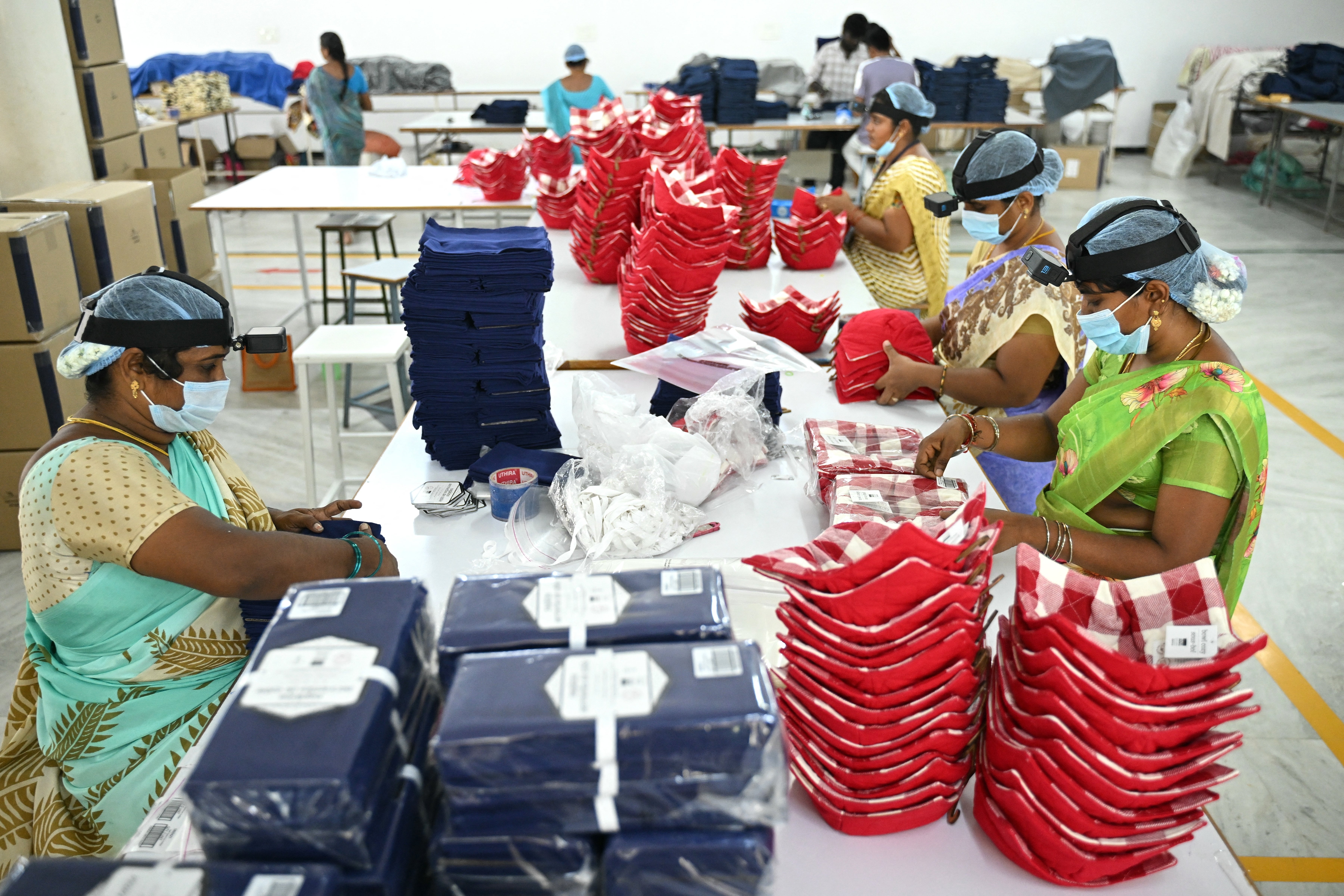
This photograph taken on 12 May 2026 shows women working inside a factory in Tamil Nadu's Karur district
This photograph taken on 12 May 2026 shows women working inside a factory in Tamil Nadu’s Karur district (AFP/Getty)

Demographers describe India’s falling fertility rate as part of a broader demographic transition seen across much of the world. As child mortality falls, healthcare improves, women gain greater access to education and people marry later, family sizes typically shrink.

Government data suggests several long-term changes have converged at once. Infant mortality has fallen sharply, dropping from 30 deaths per 1,000 live births in 2019 to 24 in 2024. At the same time, women are marrying later than previous generations. Nationally, 73.5 per cent of women now marry after the age of 21, while the figure rises to 82.2 per cent in urban India. In 2018, 64.5 per cent of women married in their 20s across the country.

A newlywed couple looks on during the marriage of 20 Hindu couples in Ahmedabad on 11 February 2023
A newlywed couple looks on during the marriage of 20 Hindu couples in Ahmedabad on 11 February 2023 (AFP/Getty)

“Higher levels of education, particularly among women, have played a key role, along with urbanisation, later marriages and delayed childbirth,” says development economist Dipa Sinha. “Improved access to health care and a sharp fall in infant mortality have also contributed.”

“More recently, you also see that the opportunity cost of having children is high.”

García-Herrero agrees that education sits at the centre of the transformation.

Advertisement

“The biggest drivers are female education and economic pressures,” she says. “Educated women marry later, use contraception more effectively and prioritise investing in fewer children.”

She argues that the decline reflects a broader expansion of female agency rather than a rejection of family life.

“This is the same story seen across developed and rapidly developing societies,” she says. “Female education is one of the strongest forces lowering fertility because it changes aspirations and gives women real choices.”

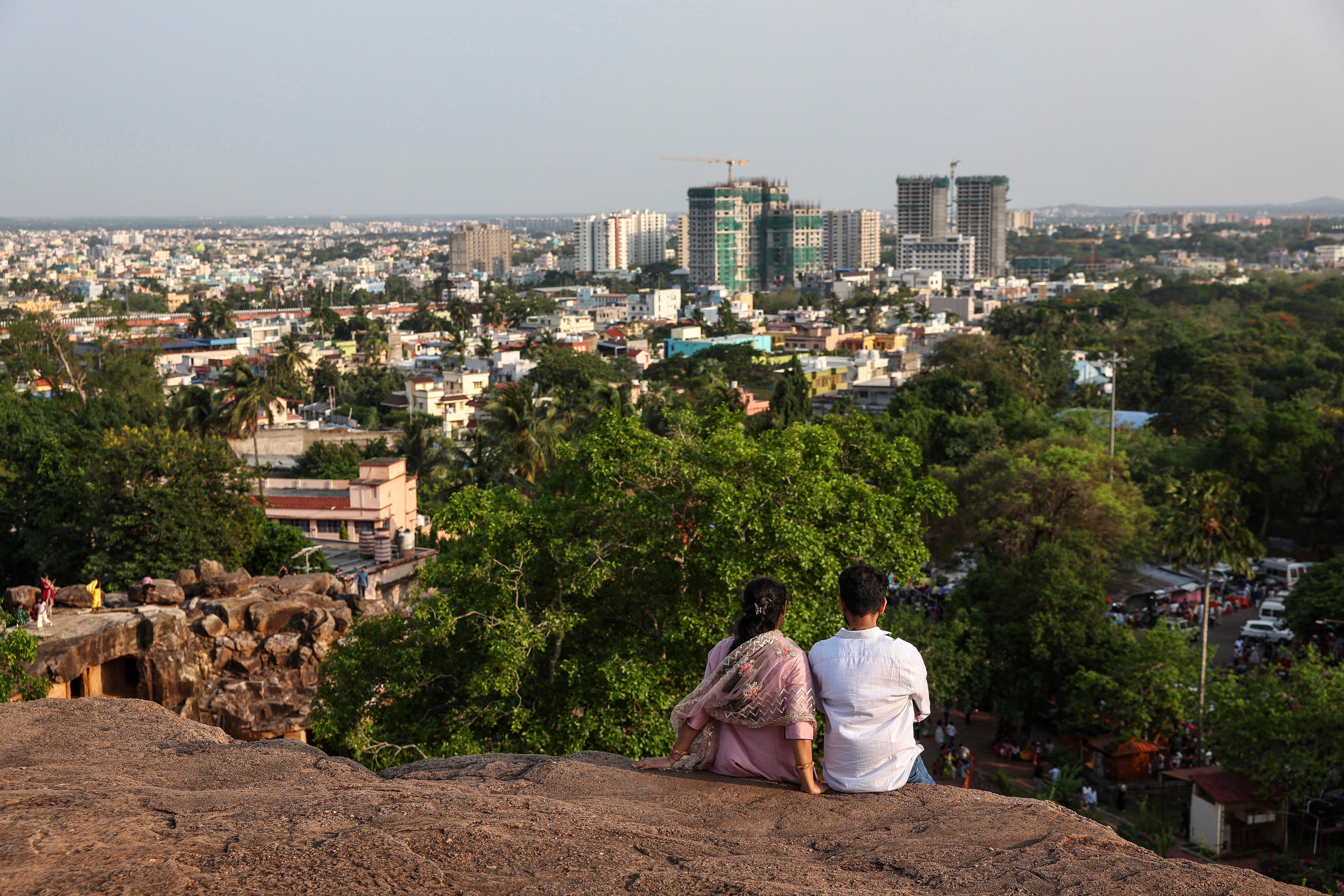
A couple looks at the city view while visiting the Udayagiri and Khandagiri Caves in Bhubaneswar on 3 May 2026
A couple looks at the city view while visiting the Udayagiri and Khandagiri Caves in Bhubaneswar on 3 May 2026 (AFP/Getty)

For some, the choice is about autonomy. Abhimanyu Sinha says he has never wanted children.

“That was a fairly unpopular opinion when I first used to say this when I was like 16-17,” he says. “I’ve noticed it’s sort of becoming essentially the norm now among people I speak to.”

Advertisement

The 28-year-old dismisses affordability as the primary explanation. “I think a lot of people hide behind claims like affordability, the rising cost of private school or housing,” he says. “In my social position, those aren’t as much of a concern. I just don’t want to tie myself down to that kind of thing.”

Looking ahead, he expects a longer and healthier life than previous generations experienced. “I don’t think that I wanna spend like… 70-80 years focused on one or two relationships, of children.”

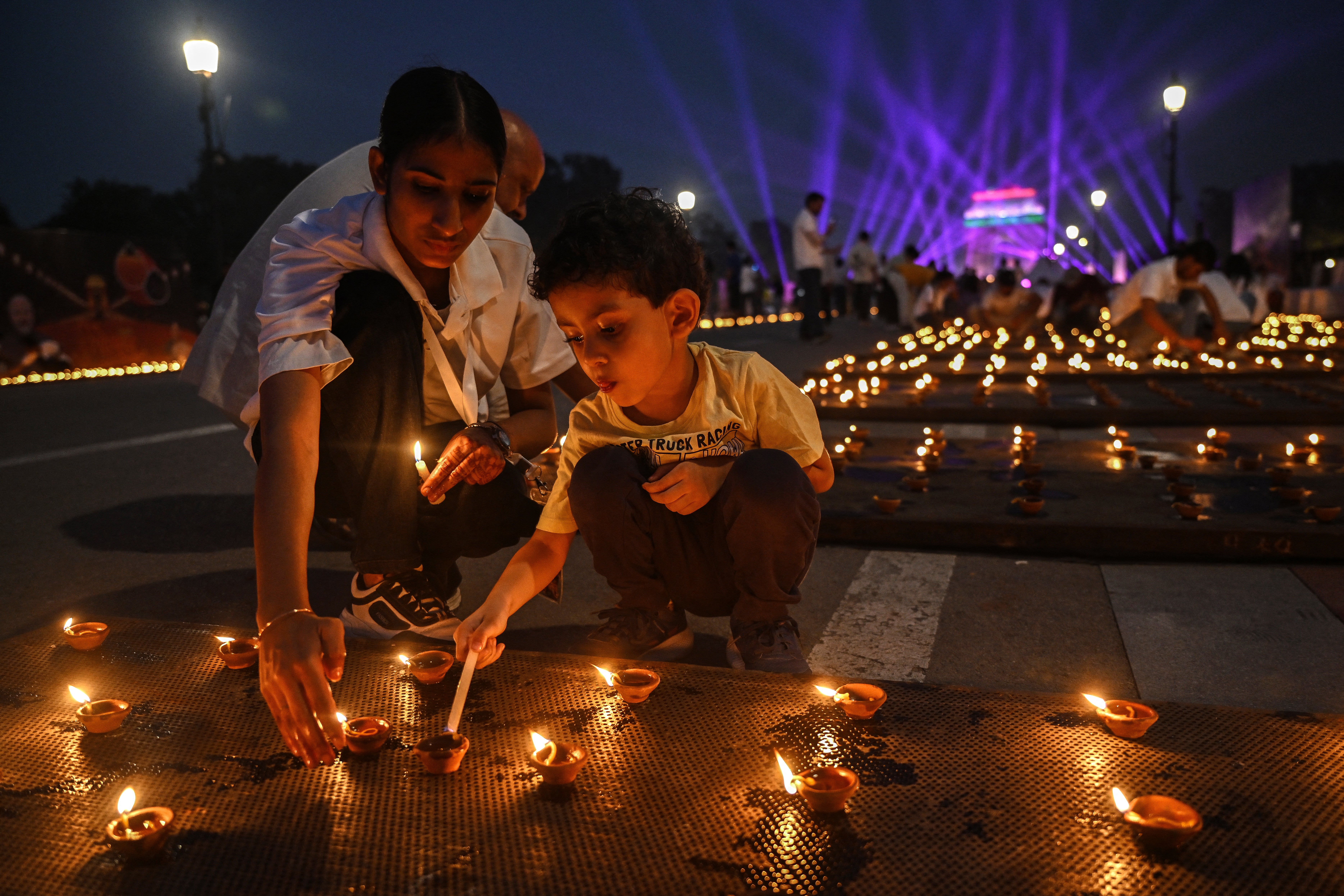
People light diyas, or traditional earthen oil lamps, as a drone laser show is organised at the India Gate memorial as part of the Diwali celebrations, the Hindu festival of lights, at Kartavya Path in New Delhi on 18 October 2025
People light diyas, or traditional earthen oil lamps, as a drone laser show is organised at the India Gate memorial as part of the Diwali celebrations, the Hindu festival of lights, at Kartavya Path in New Delhi on 18 October 2025 (AFP/Getty)

His view reflects a broader cultural shift that researchers are observing globally. Parenthood is increasingly being weighed against other aspirations including travel, education, careers, relationships and personal freedom rather than treated as an inevitable destination.

García-Herrero says cultural changes are reinforcing the demographic transition. “This is not just economics,” she says. “It reflects women gaining agency and societies becoming more modern.”

The contrast with previous generations is striking. “When I think of myself having a kid,” Michael says, “I want that kid to have the best life possible.”

Advertisement

Her parents saw children as part of a social script, she says. “Their idea was that, OK, this is a rite of passage.” Today’s prospective parents often approach the decision differently. They want more involvement, more emotional awareness and more resources dedicated to each child.

Gupta sees that change in her own parenting. “Parents now are a lot more conscious,” she says. “About parenting styles, about what they are talking in front of their kids, what they’re exposing their children to.”

The result is that many families are choosing quality over quantity.

“Children have become more expensive,” says Sinha, the economist. Not only because costs have risen, she argues, but because parents increasingly want to invest more heavily in each child’s wellbeing and future.

Advertisement

India entered its demographic-dividend phase in 2005, when the share of working-age adults exceeded the combined number of children and elderly people. According to UN estimates, that demographic window is expected to last until around 2055.

The country’s median age remains just 29.8 years, younger than the global average of 31 and far below countries such as Britain, where the median age is more than 40. Economists argue that this gives India a rare opportunity to generate growth, create jobs and increase productivity before ageing becomes a more serious challenge.

“The real challenge will come in 15 to 20 years with a shrinking workforce and rising elderly dependency,” García-Herrero says.

“If there are fewer children born, then in about 30 to 40 years, India will have more older people who cannot participate in the labour force as much,” Sinha adds.

Advertisement

That raises questions about pensions, healthcare, elderly care and the future workforce.

It may also reshape politics. Southern states, which already have lower fertility rates and slower population growth, have expressed concerns that future redistribution of parliamentary seats based on population could reduce their political influence relative to faster-growing northern states.

Economists say the priority now should be making the most of India’s demographic dividend while it lasts.

Around the world, governments from South Korea to Singapore and China have spent billions trying to encourage people to have more children through subsidies, cash incentives, housing support and fertility programmes. But the outcomes have been mixed.

Advertisement

“No Asian country has successfully reversed a low fertility rate despite massive spending,” García-Herrero says. “South Korea poured hundreds of billions into incentives with almost no lasting effect.”

The reason, she argues, is that policymakers often misunderstand why people are having fewer children. “These programmes have largely failed because they treated low fertility as a financial problem rather than a structural and cultural one.”

In countries such as Japan and South Korea, marriage remains closely linked to traditional gender roles. Women continue to carry most childcare and domestic responsibilities, even when both partners work.

“Many young women and increasingly men, no longer see marriage as an attractive proposition,” García-Herrero says. “Women often face intense pressure to either give up or severely compromise their careers once they marry and have children.”

Advertisement

Sinha similarly argues that meaningful support requires more than one-off payments. “Free childcare. Free schooling. They have free healthcare,” she says of some European systems. “All these services, I think should anyway be there.”

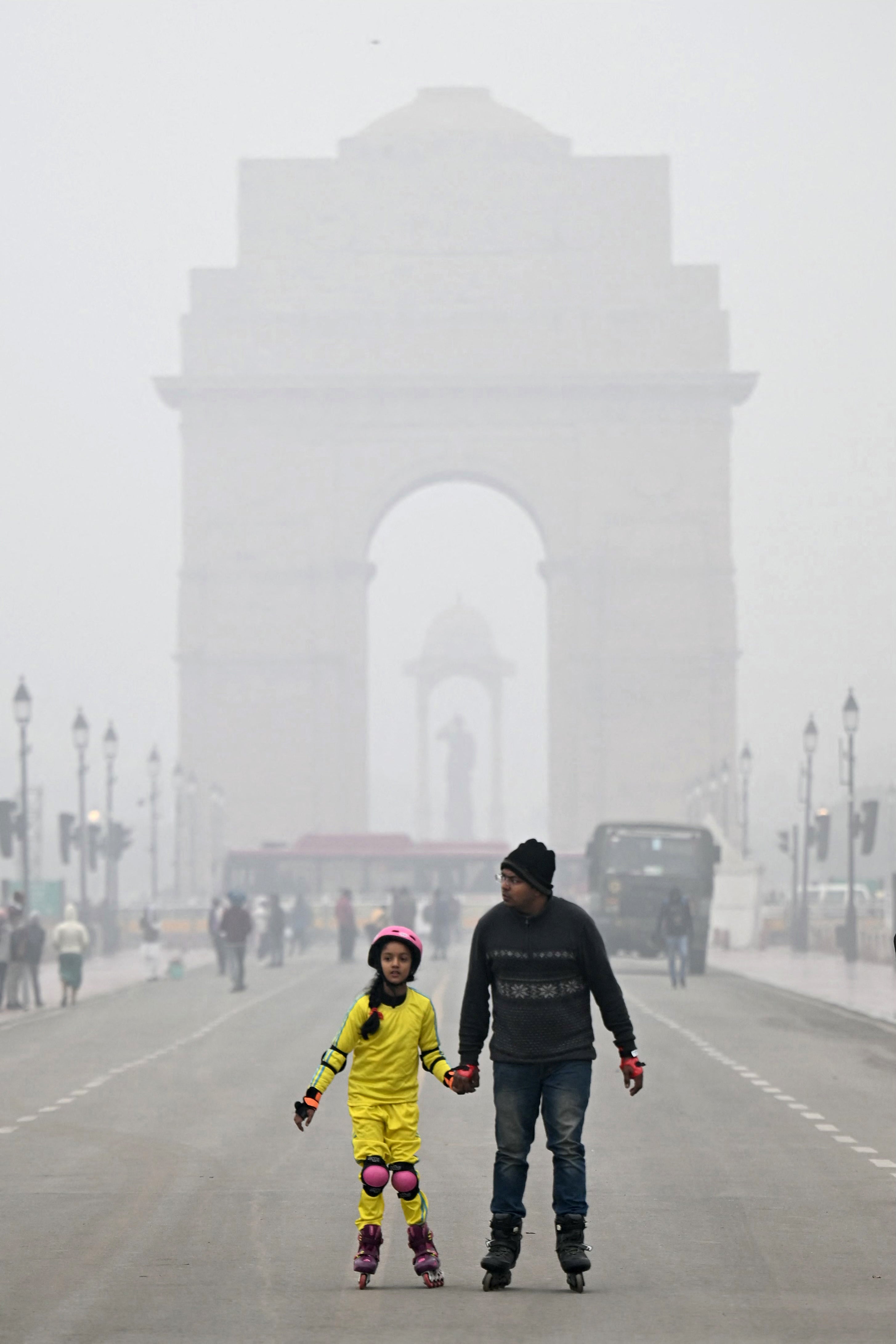
People skate in front of India Gate on a cold foggy winter morning in New Delhi on 3 January 2024
People skate in front of India Gate on a cold foggy winter morning in New Delhi on 3 January 2024 (AFP/Getty)

The challenge, Sinha suggests, is not persuading people to have children through incentives but creating conditions that make parenthood compatible with modern life.

Sinha says, that means affordable childcare, better parental leave, flexible work arrangements and reducing the costs of housing and education.

For Gupta, it means rethinking expectations around work and caregiving. Even in households committed to equal parenting, she says, mothers still shoulder a disproportionate burden. “When you give birth, you are the one who’s basically going through pregnancy,” she says. “You are the one delivering the child. You are the one who has to breastfeed the child.”

After becoming a mother, she stepped away from her family’s business and began considering a new career path. “There’s definitely a sacrifice,” she says.

Advertisement

Source link

Continue Reading
Click to comment

You must be logged in to post a comment Login

Leave a Reply

NewsBeat

Ten years after the referendum, how Brexit could have been done differently

Published

on

Ten years after the referendum, how Brexit could have been done differently

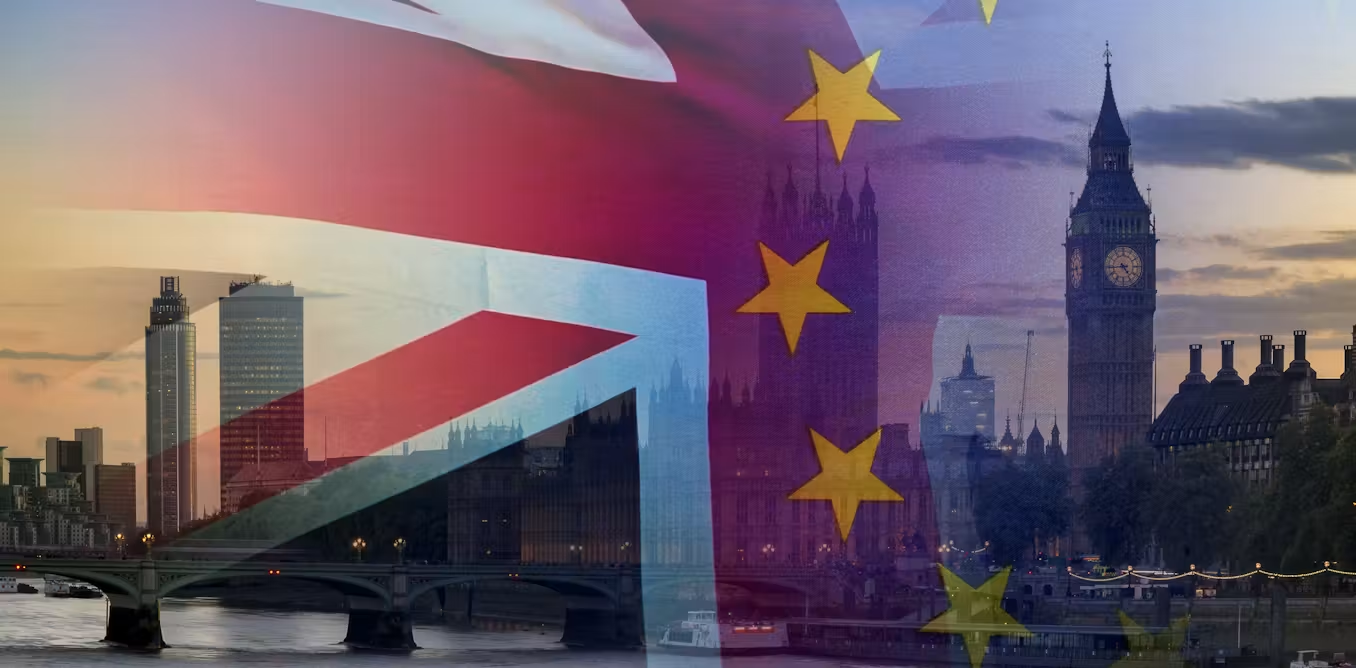
A ten-year anniversary is a good opportunity to look back on an important decision. Whether that was a marriage, a career move or a decision to leave the EU, a decade feels like an important moment for reflection.

When the UK voted (narrowly) for Brexit on June 23 2016, nobody really knew what would happen next. After all, it had never been done before.

So, what versions of leaving the EU were available at that time?

One option was for the UK to leave the EU but remain in the single market, like Norway. Or there was the chance to follow a more radical path and seek to mirror the economic example of Singapore. Another alternative was to move for much greater alignment with the US, like Canada or Mexico.

Advertisement

None of these things happened – but what if they had?

The Singapore version

Turning the UK into “Singapore-on-Thames” would have seen Brexit turn to an economic model of low taxes and light regulation. This radical-but-simple idea called for global unilateral free trade, with the UK removing tariffs so it could buy the cheapest possible goods and services from all around the world.

As one of its key proponents acknowledged, this option would have marked the end of most UK manufacturing. There would have been no need for a car factory in Sunderland or British steel plants, when both products could be made much cheaper elsewhere.

Nor would there be much need for British farmers, other than for produce that is cheaper to source in the UK, like root vegetables and cabbages.

Advertisement

But importing cheap goods might have provided the UK economy with a valuable opportunity to specialise in sectors such as financial services, AI or bio-technology.

A similar thing happened to the UK after China’s exports started to fill the world when it joined the World Trade Organization in 2001. It has even been argued that Chinese imports helped British firms produce more affordable goods and services – and so created more jobs than they destroyed.

If it worked, Singapore-on-Thames would have had a genuine competitive advantage in a world stuck in escalating trade wars. And the UK economy would be driven by new technologies, delivering much-needed growth.

Singapore has low taxes and tall buildings.
Rasto SK/Shutterstock

But it also would have been incredibly risky. The UK’s largest trading partner, the EU, has strict regulations on product safety and rules of origin. It is likely that unilateral-free-trade Britain would only be able to export its services and intellectual property. And Donald Trump would have probably tried to punish the UK for trading freely with China.

Advertisement

UK citizens would also need to be comfortable with foreign standards on health and safety, including for food (like chlorinated chicken) – or, indeed, no standards at all.

But in terms of potential gains from Brexit, this is probably the only version that would have provided the possibility of economic benefits over EU membership.

The Norway way

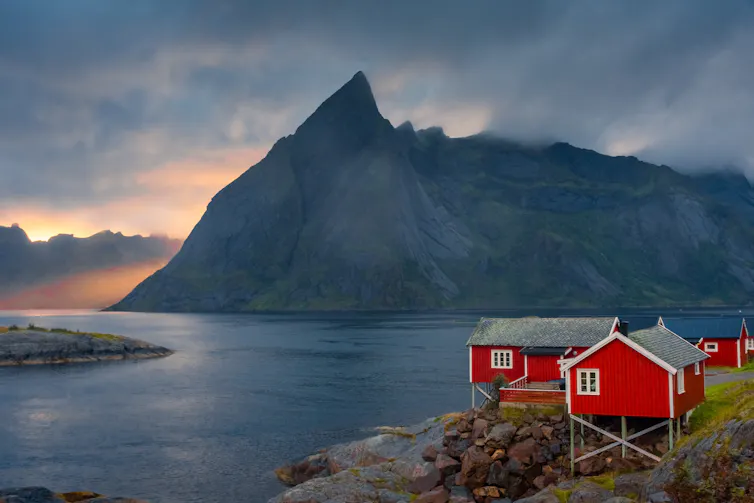
This option, often described as a “soft Brexit”, would have focused on the gains of sovereignty on non-economic issues while minimising the economic costs. The prospect of being more like Norway was even floated by Nigel Farage.

As members of the European Economic Area (EEA), the UK would own its own fish, sign its own trade deals and not be bound by further EU integration. But it would also continue to trade almost as before with its neighbours.

Advertisement

In some ways, this Brexit would have been the easiest one. EEA membership involves following EU rules and regulations without having a say on them, but this is largely what the UK has done since Brexit anyway.

Following Norway could have made the UK a richer and more efficient country. All of the time and energy that British politicians and civil servants now spend on finding ways to work with the EU could have been redirected to domestic policies.

British industries would now be busy with Europe’s rearmament effort as Norway’s already are. They would have first-tier access to the EU’s new €150 billion (£130 billion) defence fund – into which the UK can, in reality, only negotiate in piecemeal fashion.

British supermarkets and manufacturers would be seamlessly plugged into ever more integrated European supply chains, while tourists from the UK could cross EU borders easily.
Advertisement
Norwegian landscape with red timber houses.
Neither in nor out?
Stefano Zaccaria/Shutterstock

However, as much as EEA membership gives access to the single market, it is not quite the same access that EU members enjoy. In some ways, the Norwegian version is just a bit boring. The UK would have lost some of the benefits of EU membership in exchange for some (mostly symbolic) sovereignty.

American dream

The paths to a Singaporian or Norwegian version of Brexit are effectively still available. But the world has changed so much since 2016 that many assumptions made back then are now way past their expiry date.

For example, the referendum was held during a time of extremely cordial relations between Europe and the US. Since 2011, the two blocs had been working on a trade and investment partnership, and Barack Obama was an incredibly popular figure in Europe.

If the 2016 US election had gone differently, it’s easy to imagine Brexit Britain having become a valuable bridge between the two continents. The UK could have been a booming financial hub, helping Europe and the US find their joint interests. The UK could have tried to be like Canada or Mexico, part of the North American free trade area, while also seeking close relations with Europe.

But with President Trump’s views on tariffs and Europe, this scenario is simply not available anymore.

Advertisement

The actual version

Instead of these alternatives, Brexit ended up following the path of least resistance.

Former prime minister Theresa May started out by setting up the UK’s red lines of leaving all European institutions. Her successor, Boris Johnson, formalised them in a withdrawal agreement, which was then softened by Rishi Sunak.

More recently, the current prime minister, Keir Starmer, has started a process to rejoin some EU agreements such as veterinary rules and the academic exchange programme Erasmus+.

Meanwhile, the UK has sent envoys to sign a raft of new trade agreements with the likes of Australia, New Zealand and India. But almost everywhere they went, they found a group of EU officials busy negotiating similar deals.

Advertisement

Even with these British trade deals, most analysis finds that the UK is now between 4% and 8% poorer than if it had remained in the EU.

More British voters appear to believe in ghosts (36%) than think, in hindsight, that Brexit was a good idea (30%). But while some wish to rejoin the EU, the tradeoffs today are different from ten years ago.

The need for a common security policy on military procurement has become acute, because all of Europe faces a common threat from Russia.

The reality of Brexit has also made Europeans more confident in the EU, and the bloc more open to bespoke deals. In 2016, only 33% of European citizens trusted the EU. Now, 51% of them do – much more than they do their own governments. Eurosceptic parties in France and Italy have changed their discourse.

Advertisement

Then there is the cost of borrowing money, which is much more expensive now than it was in 2016.

Arguably, one of the most frustrating features of governing Britain today is that the bond markets have made doing so a very expensive business. Further EU integration instead of Brexit could have made borrowing cheaper, to the extent that some have suggested the UK should start borrowing in euros, even without adopting the currency.

But the EU also misses Britain. While there is consensus in Europe that increasing the freedom to trade within the old continent is a priority to keep its economic relevance, the UK is missing from the table to make that happen.

If a British prime minister ever sits down in Brussels to negotiate rejoining, voters will be told the price in detail. The UK would have time to redefine its place in Europe, and try to reshape it in its image.

Advertisement

The other option – staying out – still has no definitive price tag attached to it. No one was honest enough to discuss what leaving the EU really meant – which may be why, ten years on, the ghost of Brexit still haunts UK politics.

Source link

Advertisement
Continue Reading

NewsBeat

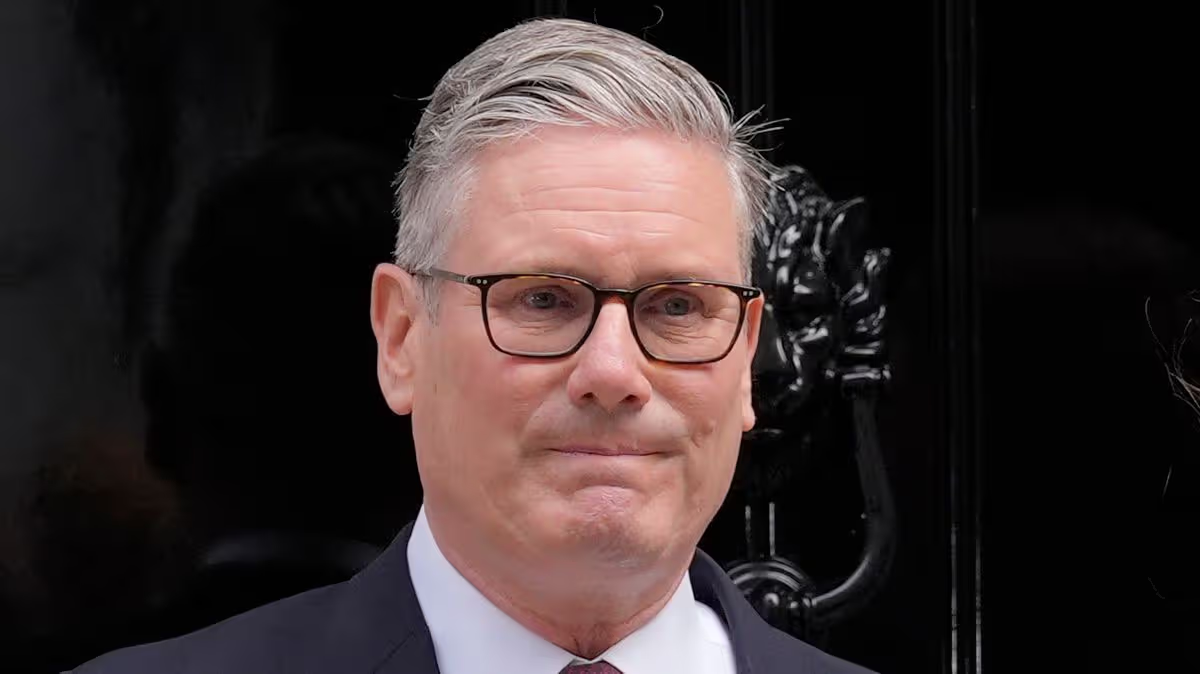
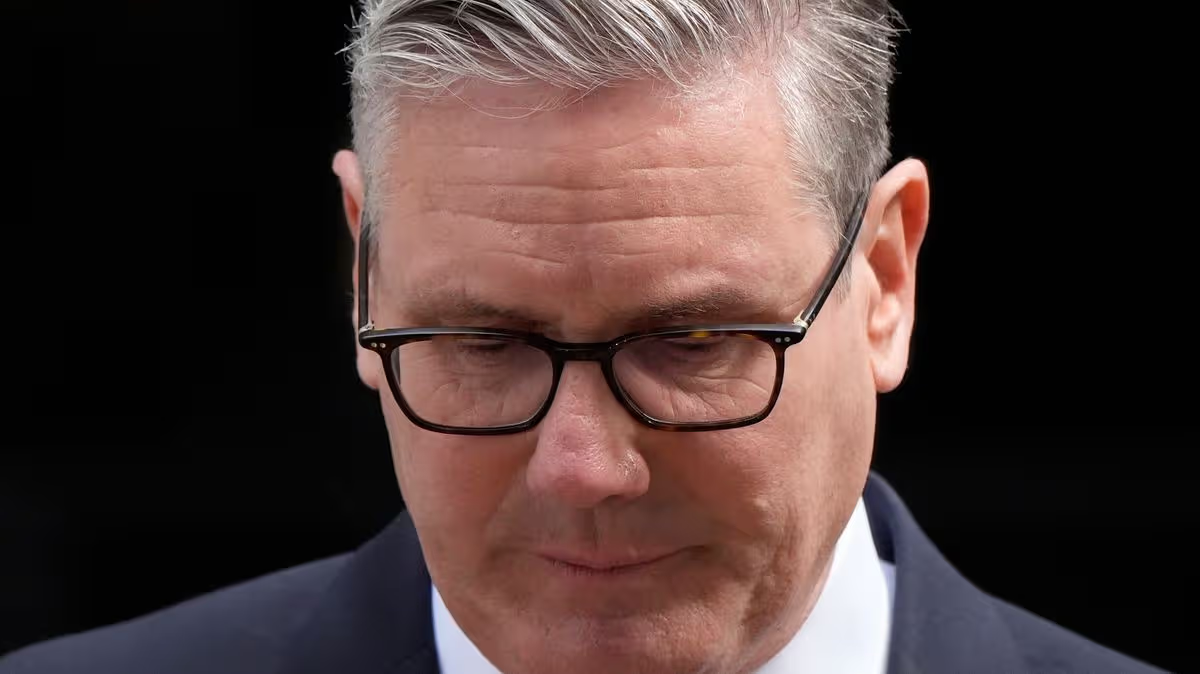
Keir Starmer resigns: Tearful Prime Minister sets out timeline to leave number 10

Published

on

Daily Mirror

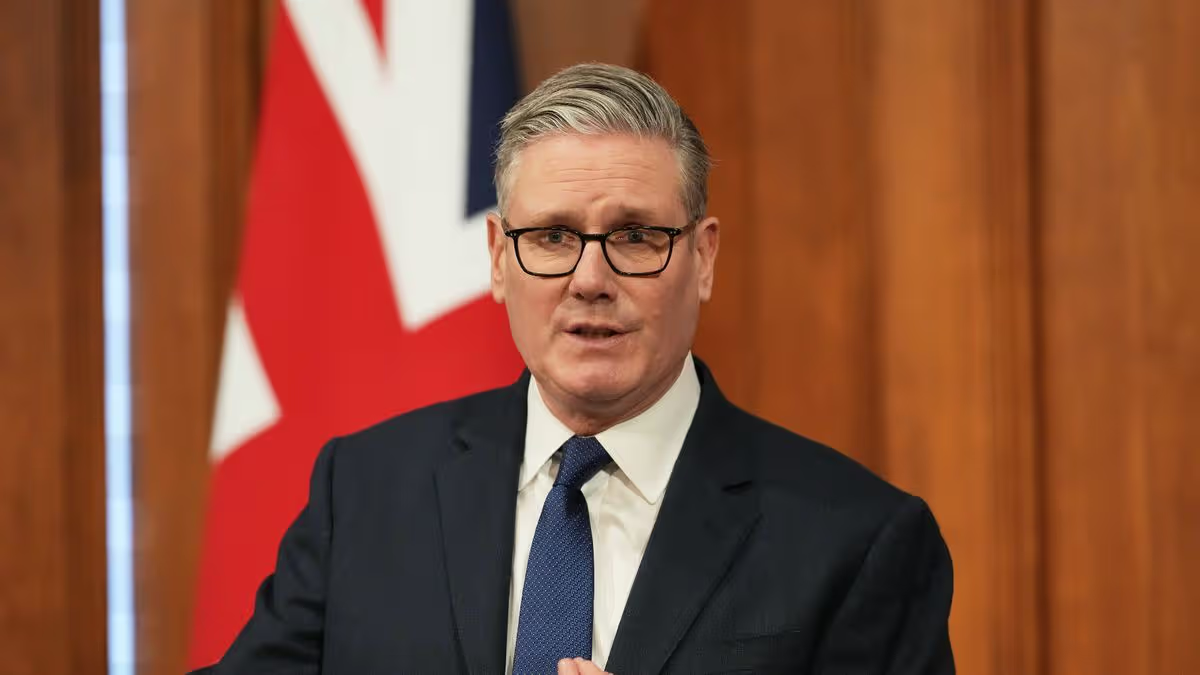
Here is Sir Keir Starmer’s resignation speech in full: “Thank you. Thank you. Walking up this street two years ago was the proudest moment of my life. A new Labour government. The first in 14 years. A page in our country’s history turned after years of disappointment and despair.

“The chance to change the lives of millions of people for the better. That’s what I came into politics for. The journey to that point was not easy. Six years ago, I inherited a Labour Party that was politically, financially and morally bankrupt. I was told, time and time again, that my party was finished.

“That we were consigned to history, that a majority at the general election, let alone a landslide majority, was impossible. But we proved those people wrong because we changed our party. Ripping out the poison of antisemitism, restoring trust on the economy, defence, and national security.

Advertisement

“And becoming a party that, once again, stood proudly with, not against, our national flag. The hard work of change was with a singular purpose. Not power for power’s sake but to change Britain for the better.

“To build a fairer country, with dignity and respect, where everyone is seen, everyone is valued. Wealth and opportunity for all, not just the privileged few. And look at what we’ve achieved in just two years.

“An economy that is stronger, growing faster than our peers. Wages rising faster than inflation in every single month since we came to power. Investment secured, infrastructure being built. An end to austerity, with the fastest fall in NHS waiting lists for 17 years.

“The biggest improvement in rights for workers and renters in a generation. The biggest uplift in defence spending since the Cold War. Small boat crossings falling, asylum hotels closing, protecting young people from social media, and half a million children being lifted out of poverty because of the choices that I made.

Advertisement

“Our reputation in the world restored, with Britain once again standing up for decency, respect and the rule of law. Securing trade dues, standing with Ukraine, standing up for our values, and rebuilding our relationship with our allies in Europe. Change promised by a Labour government. Change fought for by a Labour government, change delivered by a Labour government.

“But I know the question being asked now is not who was best placed to change the Labour Party, to take us into power, and to begin the vital work of improving lives for millions of people. Those questions have been answered.

“The question my party is asking now is whether I am best placed to lead us into the next general election. I have heard the answer of my parliamentary party to that question. And I accept that answer with good grace.

“Every decision I’ve taken has been about putting the country I love first. That is why I will resign as leader of the Labour Party. I have spoken to His Majesty the King this morning to inform him of my decision.

Advertisement

“I will ask the National Executive Committee of the Labour Party to set out a timetable with nominations opening on the 9th of July and completed by the summer recess. In the case of a contest, this will ensure a new leader is in place before Parliament returns in September.

“I will remain in post as Prime Minister until the contest is complete. And I will do everything I can to ensure an orderly handover of power. I will also give my successor my full and unequivocal support, knowing that they will inherit a Britain that is far stronger and fairer than the one I inherited two years ago, better prepared for the challenges ahead, and better able to ensure the Labour Party secures a second term in office.

“I want to thank all of those friends and colleagues who have been at my side for these past six years or so for their incredible commitment, service and support. I want to thank the brilliant Number 10 staff and our country’s extraordinary civil service, who dedicate their lives to public service.

“And when I leave, the biggest job in the country. I shall spend more time on the most important job. Being the best husband I can to my fantastic wife, Vic, who has been a rock by my side, through good times and bad. And being the best dad I can to my beautiful children, who are my pride and my joy. Thank you very much.”

Advertisement

Source link

Continue Reading

NewsBeat

Man suffers facial injuries after assault in town centre street

Published

on

Cambridgeshire Live

Police captured a man on CCTV that they would like to speak to about the assault

A man suffered facial injuries after being assaulted. The victim was assaulted in Broad Street, Stamford, near Peterborough, at around 10.50pm on Friday, May 29.

Advertisement

Lincolnshire Police would like to speak to a man captured on CCTV who may be able to help with their enquiries. A police spokesperson said: “The man is described as having a slim build, grey hair and spoke with a soft West Midlands accent.”

Anyone with information should email PC Jamie Flint at jamie.flint@lincs.police.uk and quote crime number 26000316092 in the subject line.

Do you want more of the latest Cambridgeshire news as it comes in from across the county? Sign up to our dedicated newsletter to make sure you never miss a big story from Cambridge or anywhere else in the county. You can also sign up to our dedicated Traffic and Crime newsletters for the latest updates on the topics you are most interested in .

Source link

Advertisement
Continue Reading

NewsBeat

Why did Keir Starmer resign as Prime Minister

Published

on

Manchester Evening News

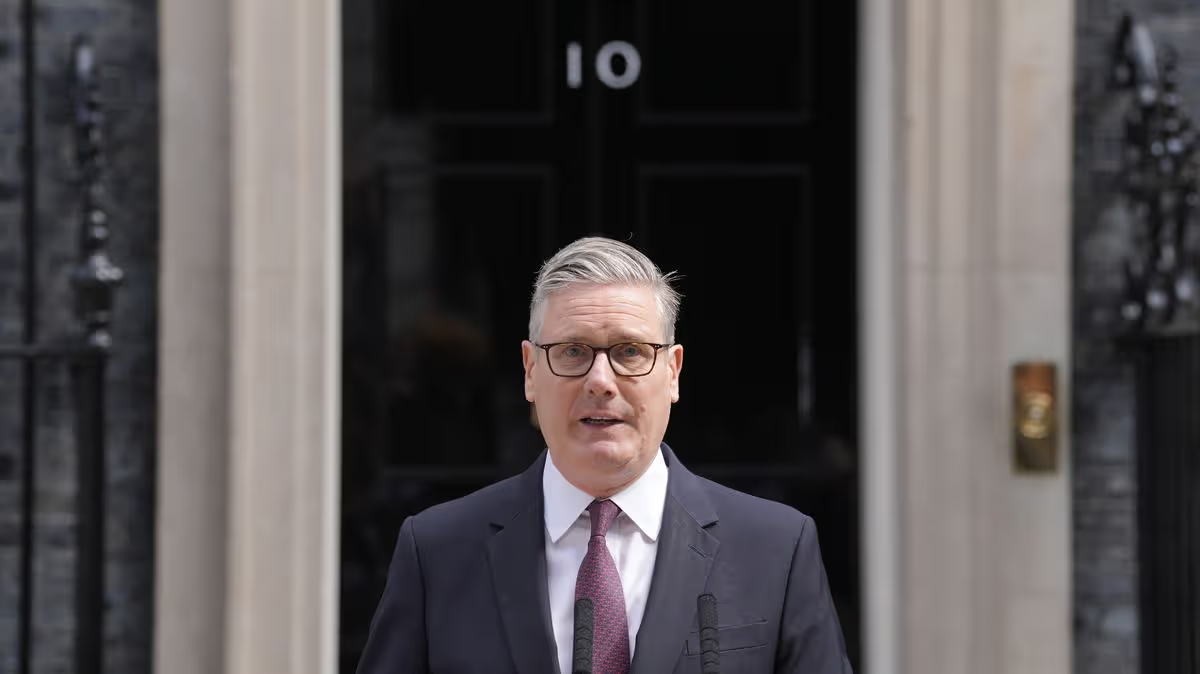
Sir Keir Starmer announced his resignation outside Downing Street on Monday morning

After weeks of mounting pressure, Sir Keir Starmer has officially resigned as prime minister.

Advertisement

The news came on Monday morning (June 22), just days after Greater Manchester mayor Andy Burnham won the Makerfield by-election, paving the way for an expected leadership challenge in the coming weeks or months.

Calls for Sir Keir to go have been building since Labour took a hammering in May’s local elections, and now marks around a quarter of the party’s 403 MPs.

Click here to get the biggest stories straight to your inbox in our Daily Newsletter

Until now Sir Keir repeatedly vowed to fight any leadership challenge, insisting he will not “walk away”. But as of Saturday, June 20, the number of MPs to call on Sir Keir to quit reached 100 and the Prime Minister said that was why he was now stepping down.

Advertisement

Announcing his resignation on Monday morning, Sir Keir Starmer said: “The question my party is asking now is whether I am best placed to lead us into the next general election.

“I have heard the answer of my parliamentary party to that question, and I accept that answer with good grace. Every decision I have taken has been about putting the country I love first. That is why I will resign as leader of the Labour Party.”

He started his speech by saying: “Walking up this street two years ago was the proudest moment of my life. A new Labour government. The first in 14 years. A page in our country’s history turned after years of disappointment and despair.

Advertisement

“The chance to change the lives of millions of people for the better. That’s what I came into politics for. The journey to that point was not easy. Six years ago, I inherited a Labour Party that was politically, financially and morally bankrupt. I was told, time and time again, that my party was finished.”

Sir Keir continued: “That we were consigned to history, that a majority at the general election, let alone a landslide majority, was impossible. But we proved those people wrong because we changed our party. Ripping out the poison of antisemitism, restoring trust on the economy, defence, and national security.

“And becoming a party that, once again, stood proudly with, not against, our national flag. The hard work of change was with a singular purpose. Not power for power’s sake but to change Britain for the better. To build a fairer country, with dignity and respect, where everyone is seen, everyone is valued. Wealth and opportunity for all, not just the privileged few. And look at what we’ve achieved in just two years.

“An economy that is stronger, growing faster than our peers. Wages rising faster than inflation in every single month since we came to power. Investment secured, infrastructure being built. An end to austerity, with the fastest fall in NHS waiting lists for 17 years.

Advertisement

“The biggest improvement in rights for workers and renters in a generation. The biggest uplift in defence spending since the Cold War. Small boat crossings falling, asylum hotels closing, protecting young people from social media, and half a million children being lifted out of poverty because of the choices that I made.

“Our reputation in the world restored, with Britain once again standing up for decency, respect and the rule of law. Securing trade dues, standing with Ukraine, standing up for our values, and rebuilding our relationship with our allies in Europe.

“Change promised by a Labour government. Change fought for by a Labour government, change delivered by a Labour government. But I know the question being asked now is not who was best placed to change the Labour Party, to take us into power, and to begin the vital work of improving lives for millions of people. Those questions have been answered.

“The question my party is asking now is whether I am best placed to lead us into the next general election. I have heard the answer of my parliamentary party to that question. And I accept that answer with good grace.

Advertisement

“Every decision I’ve taken has been about putting the country I love first. That is why I will resign as leader of the Labour Party. I have spoken to His Majesty the King this morning to inform him of my decision.

“I will ask the National Executive Committee of the Labour Party to set out a timetable with nominations opening on the 9th of July and completed by the summer recess. In the case of a contest, this will ensure a new leader is in place before Parliament returns in September.

“I will remain in post as Prime Minister until the contest is complete. And I will do everything I can to ensure an orderly handover of power.

“I will also give my successor my full and unequivocal support, knowing that they will inherit a Britain that is far stronger and fairer than the one I inherited two years ago, better prepared for the challenges ahead, and better able to ensure the Labour Party secures a second term in office.

Advertisement

“I want to thank all of those friends and colleagues who have been at my side for these past six years or so for their incredible commitment, service and support.

“I want to thank the brilliant Number 10 staff and our country’s extraordinary civil service, who dedicate their lives to public service.

“And when I leave, the biggest job in the country. I shall spend more time on the most important job. Being the best husband I can to my fantastic wife, Vic, who has been a rock by my side, through good times and bad. And being the best dad I can to my beautiful children, who are my pride and my joy.”

Source link

Advertisement
Continue Reading

NewsBeat

Live updates: Keir Starmer announces resignation as UK prime minister

Published

on

Live updates: Keir Starmer announces resignation as UK prime minister

The popular ex-mayor of Greater Manchester planned to challenge Starmer for the Labour leadership.

Starmer spent the weekend pondering his future following Burnham’ victory last week in a special election for a seat in Parliament. Burnham ran with the aim of challenging Starmer for leadership of the party and the country.

Burnham is due to be sworn in as a member of Parliament on Monday.

It’s unclear whether Burnham would face a coronation or a challenge, if Starmer steps aside. Wes Streeting, who resigned as health secretary last month to protest Starmer’s leadership, has said that he will run in a contest if there is one.

Advertisement

Source link

Advertisement
Continue Reading

NewsBeat

What happens next after Sir Keir Starmer resigns as Prime Minister

Published

on

Manchester Evening News

Sir Keir Starmer has announced his resignation, paving the way for the UK to get a new prime minister.

The Labour party leader stepped out of Number 10 Downing Street at 9.30am on Monday morning to deliver a statement to the nation. Accompanied by his wife Victoria, Sir Keir took to the podium to confirm he would be stepping down.

Arriving to cheers and applause from his team, he said that becoming prime minister was the “proudest moment of my life”.

Click here for the latest on Greater Manchester’s politics in our newsletter

Advertisement

He said his party had changed since he became leader six years ago by “ripping out the poison of antisemitism, restoring trust on the economy, defence, and national security, and becoming a party that once again stood proudly with, not against, our national flag”.

Announcing his resignation, he said: “The question my party is asking now is whether I am best placed to lead us into the next general election. I have heard the answer of my parliamentary party to that question, and I accept that answer with good grace.

“Every decision I have taken has been about putting the country I love first. That is why I will resign as leader of the Labour Party.”

The prime minister said he would do all he can to ensure an “orderly” transition of power take place. But how will the new leader be chosen? Here’s what you need to know.

Advertisement

Who is prime minister now?

Sir Keir will remain as prime minister until a new leader is selected.

Over the coming weeks, MPs will be able to put themselves forward for leadership and a contest will take place to choose who will be the next Labour leader and prime minister.

Sir Keir said in his speech that he has asked Labour’s governing body to set out a timetable to replace him, beginning on July 9, and ending by the summer recess to “ensure a new leader is in place before Parliament returns in September”.

Who can stand in a leadership contest?

Only Labour MPs can stand in a Labour leadership contest. To stand, a candidate needs nominations from 20 per cent of the standing Labour MPs – that’s a total of 81.

Nominations must be in written form and submitted to the general secretary of the party, a position currently held by Hollie Ridley.

Who might stand in a contest?

Andy Burnham is now an MP and has made his intention to stand in a leadership contest clear. His decision to stand in the Makerfield by-election suggests he already has the necessary backing from his fellow MPs.

Advertisement

Former health secretary Wes Streeting has also insisted he has the 81 names required to mount a leadership bid. Former Royal Marines officer Al Carns, who quit as armed forces minister in a row over defence funding and the treatment of Northern Ireland veterans, has also hinted he would seek to enter a leadership race, but whether he has the nominations needed remains unclear.

What happens if only one candidate wants to stand?

If only one candidate gets the required nominations then they will become the new Labour leader and a contest does not need to take place.

A timetable will be set out for a transition of power to take place.

Advertisement

How does the voting work?

Only Labour Party members and affiliated trade union supporters are allowed to vote in a Labour leadership contest.

The party uses a one-person-one-vote system, meaning that the same person cannot vote both as a trade union member and as a Labour Party member.

Eligible voters then cast their votes using a preferential voting system. Each voter ranks the candidates in order of preference by marking their ballot 1, 2, 3 and so on.

The winner is the first candidate to secure over 50 per cent of the vote. If a candidate does not win on the first round, then the candidate in last place is removed, and the votes are redistributed and counted again.

Advertisement

Several rounds can take place until a candidate wins the 50 per cent needed.

Source link

Continue Reading

NewsBeat

World Cup 2026: How do you stop Lionel Messi, Kylian Mbappe, Erling Haaland and Harry Kane?

Published

on

A collage of Lionel Messi of Argentina, Kylian Mbappe of France, Erling Haaland of Norway and Harry Kane of England

Next game: Senegal, Tuesday 01:00 BST

Haaland had to wait until the age of 25 not just to make his World Cup debut, but his international tournament bow too.

And the Leeds-born striker is clearly eager to make up for lost time.

“He’s the opposite of Mbappe and Messi,” Williams said. “He’ll beat you without the ball, which makes it even more dangerous.

Advertisement

“You want to help your midfield by squeezing up, so they don’t have to cover too much distance.

“But as soon as you leave the space in behind, he’s going to exploit that straight away.”

One of the keys to limiting Haaland’s influence, Williams says, is to prevent his team mates getting the ball to him.

“You’ve got to stop the balls in behind first and foremost,” Williams said. “Stop the supply going into him.

Advertisement

“If you can play your distances between your midfield and limit his chances, you’ve got half a chance.

“There’s not many times when he actually drops in, gets the ball, beats four players, and scores his own goal, so he does feed off what he’s getting served.”

Haaland is the most clinical of the four, with 57 goals in just 51 caps.

“He’s more lethal,” Williams added. “If he gets a chance, it’s probably going to be a goal.”

Advertisement

What about dealing with Haaland one on one?

“Around the box, you’ve got to get tight and try to get him on his right foot,” Williams said.

“Then you’re just going to have to be as strong as you can, don’t be clever, just get the ball away and buy time.”

Source link

Advertisement
Continue Reading

NewsBeat

Sir Keir Starmer resigns after two years Prime Minister

Published

on

Cambridgeshire Live

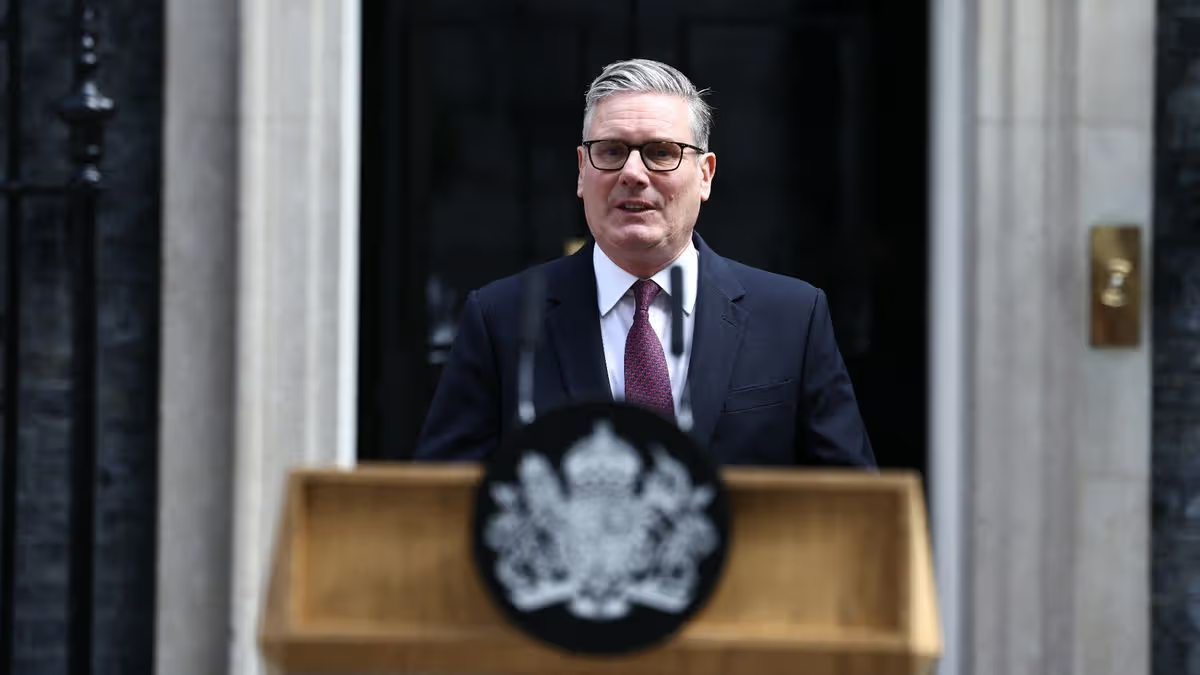
Sir Keir Starmer announced his resignation in an emotional statement outside 10 Downing Street

Prime Minister Keir Starmer has announced his resignation – marking an end to his leadership of the Labour Party after six years and as PM after two years. Speculation has stirred over the last few days that Sir Keir Starmer would leave 10 Downing Street.

Advertisement

The Labour Party leader is the UK’s seventh Prime Minister in the last 10 years. He will remain as Prime Minister until a new leader of the Labour Party is appointed.

Speaking in an emotional statement outside Number 10 this morning (Monday, June 22), Sir Keir Starmer said winning a landslide victory at the 2024 General Election was the “proudest moment of my life”.

He also said that the Labour Party’s victory was a “page turned after years of disappointment and desperation”. He added: “The question my party is asking now is whether I’m best placed to lead us into the next General Election.

“I have heard the answer of my parliamentary party to that question and I accept that answer with good grace. Every decision taken is about putting the country I love first. That’s why I will resign as leader of the Labour Party.”

Advertisement

Do you want more of the latest Cambridgeshire news as it comes in from across the county? Sign up to our dedicated newsletter to make sure you never miss a big story from Cambridge or anywhere else in the county. You can also sign up to our dedicated Traffic and Crime newsletters for the latest updates on the topics you are most interested in.

Source link

Continue Reading

NewsBeat

Staggering amounts of fentanyl hit streets as the DEA watched and took no action, records show

Published

on

Staggering amounts of fentanyl hit streets as the DEA watched and took no action, records show

ALBUQUERQUE, N.M. (AP) — Even as it battled the deadliest drug epidemic in American history, the U.S. Drug Enforcement Administration permitted hundreds of thousands of fentanyl pills to hit the streets of New Mexico between 2023 and 2025, according to three current and former DEA agents and government records reviewed by The Associated Press.

DEA agents repeatedly monitored shipments of fentanyl pills — but did not seize them — as federal prosecutors sought to bring bigger criminal cases against traffickers of a synthetic opioid that the White House last year designated a “ weapon of mass destruction.”

Agents and experts, however, said the tactic amounted to a gamble with public safety that potentially imperiled communities in and around Albuquerque and may have violated U.S. Justice Department rules intended to safeguard the public.

“We poisoned our community to make cases,” DEA Special Agent David Howell told AP in a series of interviews in New Mexico. “Through our own willful blindness, we get to say, ‘We don’t really know what happened to the drugs.’ But we 100% got people killed.”

Advertisement

The DEA has long contended it would not be plausible to seize every shipment of every drug. But the strategy of allowing staggering amounts of counterfeit painkillers to hit the streets shocked several veteran agents who spoke with AP.

Ridding the streets of illicit fentanyl, manufactured mostly in Mexican labs, became DEA’s top priority over the past decade as overdose deaths surged. At the same time, its lethality — a few milligrams can kill the average adult — upended time-tested tactics that had been used to combat drugs like cocaine and heroin. Those methods have included allowing drug transactions to be completed so agents might follow the narcotics through the supply chain. Fentanyl, however, is so dangerous that the U.S. Justice Department developed guidelines for agents in such circumstances, encouraging them to seize the opioid whenever “practicable.”

Albuquerque, which has a neighborhood so besieged by drugs it’s known as “War Zone,” and other regions in New Mexico remain at the epicenter of the fentanyl epidemic. While overdose deaths nationwide fell 14% last year, government data show New Mexico tallied a 21% spike.

Alex Uballez, who served as U.S. attorney in New Mexico from 2022 through last year, said authorities at times allowed drug shipments to go unseized as part of a broader effort to gather intelligence and build cases against major drug traffickers. He said the approach reflected his office’s limited resources and his belief that prosecuting larger organizations can have a bigger impact than interdicting every suspected drug transaction.

Advertisement

Last year, DEA recorded the largest fentanyl bust in its history in Albuquerque.

“The bigger fish are worth catching,” Uballez said, “and that will save more lives.”

Advertisement

The DEA said in a statement that “the investigative decisions at issue were lawful, reasonable under the circumstances and consistent with Department guidance.”

“Public descriptions suggesting that DEA knowingly permitted fentanyl to reach communities are false and fundamentally mischaracterize the facts,” DEA spokesperson Amanda Wozniak wrote in an email. She said the investigations involved court-authorized wiretaps “in which agents and prosecutors conducted real-time surveillance, intelligence gathering, and operational analysis targeting larger drug trafficking organizations.”

Precise intelligence on drug deliveries

In some cases, the DEA had such detailed intelligence about drug deliveries that agents were able to tally precise pill counts, according to reports reviewed by AP.

Advertisement

Agents, for example, deciphered coded chatter over cellphones and closely surveilled a transaction at a mobile home park in Albuquerque in June 2023, according to a 66-page report reviewed by AP. Agents wrote in the report that traffickers delivered 74,000 pills as part of that deal, a figure federal prosecutors later confirmed in a court filing.

Days earlier, another DEA report showed, investigators watched the same distribution ring deliver a spare tire hiding another suspected fentanyl shipment that similarly went unseized.

“We did nothing, but sit back and watch,” said Howell, who filed an official whistleblower complaint in 2023 to bring attention to what he thought was a tactic that risked public safety.

Advertisement
This June 12, 2026 photo shows a mobile home park where federal agents monitored, but did not seize, a shipment of fentanyl in Albuquerque, N.M. (AP Photo/Susan Montoya Bryan)

This June 12, 2026 photo shows a mobile home park where federal agents monitored, but did not seize, a shipment of fentanyl in Albuquerque, N.M. (AP Photo/Susan Montoya Bryan)

Advertisement
This photo provided by the U.S. Drug Enforcement Administration shows pills containing fentanyl which were seized by the DEA in New Mexico, on April 28, 2025. (DEA via AP)

This photo provided by the U.S. Drug Enforcement Administration shows pills containing fentanyl which were seized by the DEA in New Mexico, on April 28, 2025. (DEA via AP)

Advertisement

Months passed before federal authorities busted the traffickers, and Howell, who participated in the surveillance, said authorities today cannot account for the unseized shipments.

“It’s outrageous to put that many lives at risk in hopes of making a big case,” said Tristan Leavitt, president of Empower Oversight, a whistleblower advocacy group that has asked the Senate Judiciary Committee and Justice Department’s Office of Inspector General to investigate Howell’s claims.

A former DEA supervisor, speaking on condition of anonymity for fear of retaliation, said he and his Albuquerque colleagues allowed “millions” of pills to go unseized during a multi-state investigation last year.

Advertisement

Howell reported in his whistleblower disclosures that agents on that case permitted the delivery of at least 1.8 million fentanyl pills.

That investigation, the former supervisor and Howell told AP, culminated in the largest fentanyl bust in DEA history, a takedown announced in May 2025 by then-Attorney General Pam Bondi that resulted in the seizure of more than 3 million pills.

“The amount we ultimately seized was hitting the streets every month while that case was going on,” the former supervisor said, adding that the DEA could have dismantled the organization six months earlier.

The U.S. Attorney’s Office in Albuquerque did not answer questions about the unseized fentanyl shipments but, in a statement to AP, said the “conduct” Howell brought to light happened during the prior administration.

Advertisement

“The current leadership of this office is focused on aggressively investigating and prosecuting fentanyl trafficking and disrupting the criminal organizations responsible for distributing these drugs,” Tessa DuBerry, a spokesperson for the office, wrote in an email.

Uballez, the former U.S. attorney, said estimated pill counts “based on intercepted phone calls are not reliable.”

“I don’t think I’d contest that drugs are ‘walked,’” he said, referring to the law enforcement tactic of allowing contraband to go unseized to further an investigation. “How much and how frequently — and with what certainty — is incredibly difficult to answer in retrospect.”

To seize or not to seize

As fentanyl overdoses became an epidemic over the last decade, the U.S. Justice Department developed an internal playbook for combatting the deadliest drug ever to cross the Mexican border. The game plan coincided with a publicity campaign that warned Americans that “One Pill Can Kill,” a DEA effort to highlight fentanyl’s unique dangers.

Advertisement

Adopted in 2017, the department’s two-page “Fentanyl Protocols” called on agents to “seize or otherwise prevent the distribution” of fentanyl “as soon as practicable.” The rules, which have not previously been made public, said that “protecting public safety is paramount,” irrespective of whether seizures compromise investigations.

The Justice Department rewrote the rules in 2024 to afford law enforcement more discretion in such cases. The updated protocols say investigators “may exercise discretion in determining whether to take action to prevent the trafficking of fentanyl,” balancing public safety risks against “the benefits to be achieved through preserving the investigation.”

The DEA rarely discusses the tactic of allowing drugs to go unseized. Its agent manual describes taking drugs off the street as “the usual course of action” but adds “there may be instances where the investigative objectives can be better achieved by not doing so.”

The agency has long used “controlled deliveries” in which constant surveillance of the drugs — and often replacing them with fake narcotics — is followed by a takedown to recover them, according to current and former agents.

Advertisement

In interviews, several current and former agents likened the decision to permit fentanyl to hit the streets to the infamous “Operation Fast and Furious,” a 2011 gun-walking scandal in which straw buyers smuggled some 2,000 assault weapons into Mexico with the intent of tracing the firearms to cartel leaders.

Advertisement

The Bureau of Alcohol, Tobacco, Firearms and Explosives was savaged with bipartisan criticism after two of those guns surfaced at the scene of the fatal shooting of a Border Patrol agent, and the Justice Department explicitly forbid agents from allowing firearms to be trafficked.

Blowing the whistle

Howell became so unnerved by his agency’s failure to seize fentanyl that he began flagging overdose deaths that might have been caused by the very pills DEA permitted to flow to dealers. One of those cases included a 15-month-old toddler who died after ingesting burned fentanyl residue last year in Española, a New Mexico town ravaged by grinding poverty and addiction.

Howell, who joined DEA 19 years ago after a decade in the Navy, took his allegations to the U.S. Office of Special Counsel. The agency, tasked with protecting whistleblowers, initially found a “substantial likelihood of wrongdoing” and asked the Justice Department to investigate.

In early 2024, Howell told the Justice Department’s Office of Professional Responsibility that DEA agents had observed — yet not seized — separate deliveries of 150,000 and 50,000 fentanyl pills.

Advertisement

DEA and federal prosecutors, he added, “are placing themselves in a precarious position where they will not be able to prove that the fentanyl they could have stopped did not result in the death of a person.”

The Justice Department’s Office of Professional Responsibility found in 2024 that the DEA and U.S. attorney’s office had made reasonable decisions in deciding to allow drugs to go unseized and that their inaction posed no “specific danger to public health.”

The Office of Special Counsel, which critics say rarely pushes back on agency findings, deemed the Justice Department’s report reasonable.

Howell, meanwhile, paid a price after coming forward. The DEA relegated him to desk duty for more than a year and docked his performance evaluations, according to Howell and DEA records. Internal records also show prosecutors barred him from testifying in federal court, citing his “pattern of refusing to heed” admonitions to allow drugs to go unseized during long-term investigations.

Pointing to DEA’s own “One Pill Can Kill” campaign, current and former agents said they could not understand the watchdog’s finding that the tactics had not put the public in danger. They noted the drug is so dangerous it has to be handled in a specialized laboratory.

Advertisement

___

Goodman reported from Miami.

Advertisement

Source link

Continue Reading

NewsBeat

Sir Keir Starmer resigns as Prime Minister

Published

on

Belfast Live

Starmer became Prime Minister in July 2024

Keir Starmer has announced plans to step down as Prime Minister.

Sir Keir Starmer became Prime Minister in July 2024 after leading Labour to a landslide general election victory, ending 14 years of Conservative government. The former Director of Public Prosecutions entered Downing Street with a large parliamentary majority and a promise to deliver economic stability, rebuild public services and restore trust in politics.

Advertisement

However, his premiership has come under increasing pressure in recent months amid falling poll ratings, internal party unrest and a series of political setbacks. Labour suffered disappointing results in local elections and by-elections, while a growing number of MPs publicly questioned whether Starmer remained the right person to lead the party into the next general election.

One of the most damaging episodes for his government was the fallout from the appointment of former Labour grandee Peter Mandelson as ambassador to the United States. The controversy triggered the resignations of several senior aides and prompted calls from some Labour figures, including Scottish Labour leader Anas Sarwar, for Starmer to step aside.

More recently, tensions within the government deepened over defence spending, culminating in the resignation of senior ministers who accused the Prime Minister of failing to provide adequate funding for the armed forces. The dispute fuelled further speculation about his leadership and highlighted divisions within Labour’s parliamentary ranks.

Pressure intensified following the recent Makerfield by-election, won by Andy Burnham, who returned to Westminster and quickly emerged as the focal point for MPs seeking a change of leadership. Reports suggest dozens of Labour MPs have backed Burnham as a potential successor, with some estimates putting support for him well into three figures.

Advertisement

Over the weekend, multiple reports indicated Starmer had been holding discussions with cabinet ministers, donors and trade union leaders about his future.

Labour now face a leadership contest or an agreed succession process to determine Britain’s next prime minister. Burnham is considered the frontrunner, although figures including Wes Streeting and Yvette Cooper have also been mentioned as potential contenders.

Source link

Advertisement
Continue Reading

Trending

Copyright © 2025