

Business
Trump Freedom 250 sponsors include companies with federal business

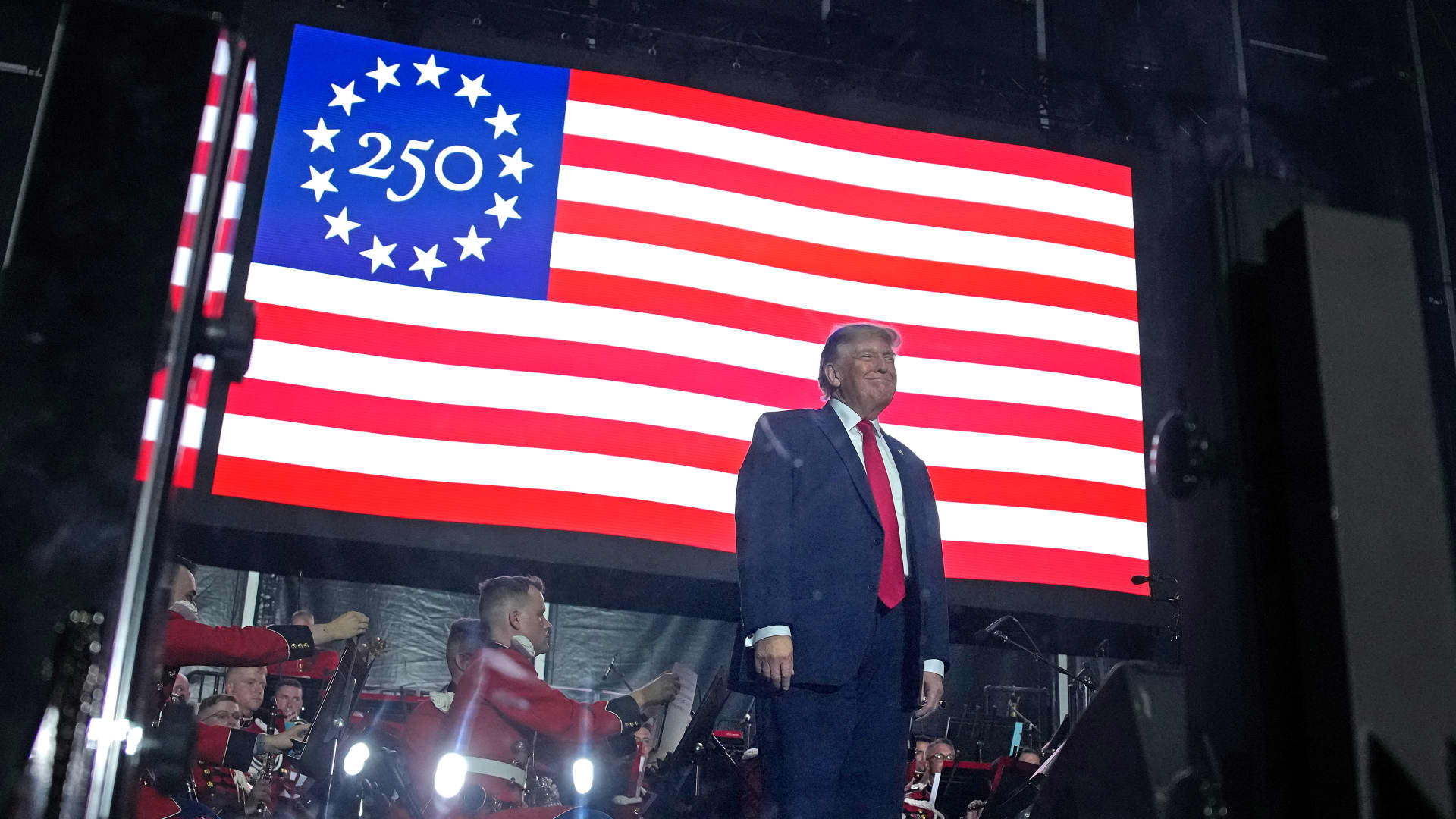

WASHINGTON — On the National Mall this week, Freedom 250 signs pointed visitors toward temporary state pavilions, a Ferris wheel and mobile, transitory history exhibits. Sponsor names appeared beside Trump-aligned programming. Some states were represented by official delegations. Others had opted out, leaving replacement displays or stripped-down booths in their place.
As the country prepares to mark its semiquincentennial, or 250th birthday, the splashiest celebrations in Washington are being shaped by corporate money.
A CNBC analysis found 14 companies backing both America250, the nonprofit supporting the congressionally created U.S. Semiquincentennial Commission, and Freedom 250, the Trump-backed public-private partnership behind some of the administration’s most visible anniversary events.
The companies listed online as backing both are: Boeing, Deloitte, Exiger, John Deere, Lockheed Martin, Northrop Grumman, Oracle, Palantir, Phorm Energy, RTX SAP, Scotts Miracle-Gro, UFC and United Airlines.
Of those companies, only John Deere responded to a CNBC request for comment, but it did not address specific questions about its sponsorship of both organizations. John Deere said it was eager to celebrate the people whose work helped “build power, feed and sustain” the U.S.
Several of those companies have major business before the federal government, including defense contracts, technology contracts, regulatory interests, merger considerations, tax issues and other policy matters shaped by the Trump administration.
CNBC did not find any evidence of a connection between the Freedom 250 sponsorships and the companies’ dealings with the administration.
But it’s another example of the complex intersection of corporate America and politics under a president who’s been increasingly close with companies.
Watchdogs and ethics experts have said the structure gives companies with business before the administration a new way to seek access to President Donald Trump, with much of the money hidden from public view.
“The concern is not that companies are sponsoring a national celebration. The concern is that this celebration appears to offer access to the president while some of those companies have business before his administration,” said Bruce Freed, the president and co-founder of the Center for Political Accountability that advises companies on political spending.
Democrats on the House Natural Resources Committee released a report this week criticizing the president and Freedom 250, accusing it of diverting funds and misleading sponsors.
Freedom 250 fundraising materials, first reported by The New York Times, described tiered sponsorship: Donors giving at least $500,000 were offered VIP access, invitations and preferred seating at events, according to the New York Times. A $1 million contribution came with an invitation to a private “thank you” reception hosted by Trump and a photo opportunity, the Times reported, and donors giving $2.5 million or more were offered speaking roles at a July 4 event in Washington.
For $10 million or more, companies got VIP access to all Freedom 250 events, logo rights, a tailored press release, a July 4 speaking role and a private Trump-hosted reception with a photo opportunity, according to the Times report.
Those kinds of tiered benefits are common in major event sponsorships. Watchdogs said Freedom 250 is different because some sponsors have business before the administration, the donor structure is opaque and the perks were attached to events built around Trump.
“For a million bucks, you get a meet and greet with the president, and what we’ve seen is when you get in the room with Donald Trump, it tends to be very beneficial for your business,” Matt Dallek, a political historian at George Washington University, told CNBC.
Freedom 250, America250 and the White House did not respond to multiple requests for comment.
A visitor takes a photo of a replica of the planned Triumphal Arch on the first day of the “Great American State Fair” on the National Mall on June 25, 2026 in Washington, DC.
Al Drago | Getty Images
Dual celebrations
Two separate groups have been planning celebrations for the big July 4 holiday.
The first, America250, grew out of a bipartisan commission Congress created in 2016 to plan the country’s 250th anniversary. Its work has focused on civic programming, including student contests, volunteer initiatives and events around the country.
Freedom 250 emerged after Trump returned to office and sought to put his own stamp on the anniversary. When Trump announced the effort on social media in December, he promised “the most spectacular birthday party you’ve ever seen.”
Freedom 250 and associated events have become the vehicle for some of Trump’s most touted anniversary events: the Great American State Fair on the National Mall, a model of a planned arch overlooking Washington, an IndyCar race through the capital, a UFC fight at the White House and more.
Congress set aside $150 million for the anniversary, but America250 had received only $25 million as of early June, according to a report obtained by Washington, D.C., based digital news outlet NOTUS. The Trump-aligned effort has received far more: nearly $80 million in 250th-related grants to the National Park Foundation, NOTUS first reported.
One possible explanation for why companies would back both groups, Freed and other experts said, is that America250 offered traditional patriotic branding, while Freedom 250 put sponsors closer to Trump’s preferred version of the celebration.
“If you’re a company with federal contracts, regulatory issues or merger interests, being in the room with the president can be worth far more than the sponsorship itself,” Freed told CNBC.
UFC may be the clearest example of how Freedom 250 blurred corporate money, Trump’s personal network and policy interests.
The company helped stage a Freedom 250 mixed martial arts event at the White House during Trump’s birthday weekend. UFC President Dana White, a longtime Trump ally, also sent Trump a May 11 letter asking him to reverse a provision in the “Big Beautiful Bill Act” that capped gambling-loss deductions at 90%, ESPN reported. That provision is still in effect.
UFC declined to comment on its listing on the Freedom 250 and America250 sites. CNBC did not find any evidence that UFC’s corporate sponsorship affected the government’s decisions.
Fireworks during the UFC Freedom250 fight on the South Lawn of the White House in Washington, DC, US, early on Monday, June 15, 2026.
Saul Loab | Bloomberg | Getty Images
Business rationale
Corporate money has long been part of national anniversaries.
The 1976 Bicentennial drew so much corporate sponsorship that critics derided it as the “buy-centennial.” Former President Richard Nixon, too, was accused of trying to steer the commemoration through the executive branch during the run-up to celebrations before resigning in 1974.
One high-profile Bicentennial project, the American Freedom Train was funded by five companies — Pepsi-Cola, Atlantic Richfield, General Motors, Prudential and Kraft Foods — that contributed around $5 million each in initial grants to the project, according to Ford Library records. Adjusted for inflation, that would be worth roughly $20 million.
But historians and watchdogs said Freedom 250 raises a different set of concerns because of the access-style sponsorships, opaque funding structure and the degree to which the anniversary has been built around Trump.
“There’s the America250 for everyone else, and then there’s this small shadowy organization [Freedom 250] doing essentially Trump rallies and things for Trump supporters,” Dallek said. The structure, he added, “doesn’t really play to the idea of unity very much.”
America250 publicly lists dozens of sponsors. Freedom 250 has referred to some backers as “strategic partners.” And the National Park Foundation’s president has told Congress that donors who request anonymity will not be disclosed, according to congressional Democrats.
That opacity is another part of the appeal, corporate political consultants said.
“Companies are hedging,” Freed said. “They want the safe patriotic branding of America250, but they also don’t want to be absent from the president’s preferred celebration.”
The blurred lines extend beyond corporate sponsorship.
According to NASA employee sources and materials reviewed by CNBC, a department-wide NASA email sent in June encouraged employees to shop the Freedom 250 store. The link resolved to the Trump campaign website, according to those materials.
U.S. President Donald Trump arrives to speak during a rally to kick off the Great American State Fair on the National Mall on June 24, 2026 in Washington, DC.
Andrew Harnik | Getty Images
A rocky start
The anniversary rollout has also been plagued by problems on the ground.
The Great American State Fair on the National Mall was billed as a 16-day centerpiece of the celebration. But at least eight states, most led by Democratic governors, declined to participate officially, citing exhibit costs ranging from $100,000 to $1 million and concerns about the event’s partisan tone.
The fair has also faced sparse crowds, power outages, an intermittently broken Ferris wheel and a model triumphal arch whose covering had begun to buckle, according to media reports.
Several artists, including Martina McBride, Young MC, the Commodores and Bret Michaels, pulled out after being announced or associated with Freedom 250 events. Some said they had been misled about the partisan nature of the celebration.
Trump responded by suggesting in a Truth Social post the concerts be replaced with a “MAKE AMERICA GREAT AGAIN RALLY” and later moved to headline the fair’s opening himself.

Business
Dow Hits All-Time Record Close of 52,900 as Apple and Jobs Miss Send Blue Chips Soaring Before Holiday Weekend

NEW YORK — The Dow Jones Industrial Average climbed to a record closing high Thursday, surging nearly 595 points and firmly establishing itself as the market’s standout performer heading into the Fourth of July holiday weekend, even as the Nasdaq Composite slid for a second consecutive session and the semiconductor sector endured another wave of sharp selling that reopened questions about how much of the AI trade’s extraordinary first-half gains can be sustained.
The blue-chip index added 594.83 points, or 1.14%, to close at a record 52,900.07, also touching a new all-time intraday high of 52,903.85 during the session. The S&P 500 rose less than one point to finish essentially flat at 7,483.24, while the Nasdaq Composite dropped 0.8% to settle at 25,832.67. U.S. markets will be closed Friday in observance of Independence Day, which falls on Saturday this year, ending a holiday-shortened trading week that produced one of the more divergent performances between the Dow and the technology-heavy indexes in recent memory.
The Dow Jones Industrial Average scaled to record highs on Thursday as investors reacted to a weaker-than-expected nonfarm payrolls report for June.
The June employment report, released Thursday morning, delivered a notable miss against expectations. The U.S. economy added 57,000 jobs in June, well below the Dow Jones consensus estimate of 115,000. The unemployment rate, however, edged down to 4.2% from 4.3%, a reading that reflects a falling labor force participation rate rather than a surge in employment, and one that investors interpreted through the lens of Federal Reserve policy rather than labor market health.
Chris Zaccarelli, chief investment officer at Northlight Asset Management, framed the market’s reaction to the soft jobs number in terms of what it means for the Federal Reserve’s next move.
“This morning’s report is a stark reversal from recent reports because there were a lot fewer jobs created than expected, and prior months’ numbers were revised lower,” Zaccarelli said. “While the headline may be negative, slowing job growth, there could be a silver lining for markets, as it could force some of the more hawkish Fed officials to reconsider additional rate hikes to fight inflation.”
He added that the shift in emphasis could benefit equities broadly: “The employment mandate being brought back into focus could increase the odds of rates remaining on hold, which, all things being equal, would be better for markets than further tightening.”
The Dow’s strength was broad-based but concentrated in its more traditional, defensive and consumer-facing members rather than its technology components. 24 of the 30-strong holdings in the index rose today, enough to offset poor performances from Caterpillar (-3.20%) and UnitedHealth (-0.64%), which hold more influence in the price-weighted index. Apple (+4.46%) leads the index today, joined by McDonald’s (+3.34%) and others.
Apple’s gain was by far the most significant contribution to the index’s record close. Shares of the iPhone maker climbed nearly 5%, adding the equivalent of roughly 40 Dow points on its own, after Bloomberg reported the company had instructed component suppliers to prepare for a large-scale rollout of its first foldable iPhone this fall. The expected production target for the new form factor was reported at approximately 10 million units, up from earlier estimates of 7 to 8 million, a volume increase that investors read as a signal of strong consumer demand expectations for a product category Apple has not previously addressed.
The divergence between the Dow’s record performance and the Nasdaq’s decline illustrated in concentrated form the rotation trade that has defined much of the market’s narrative since the second quarter began. “The ‘Great Rotation’ trade persists into the third quarter as the blue boring names of the Dow Jones Industrials continue to attract inflows directly from recent profit taking money from tech stocks,” Jeff Kilburg, founder and CEO of KKM Financial, told CNBC. “This is extremely healthy and underscores the broadening breadth of equities for this continued bull market in its fourth year.”
The semiconductor sector bore the heaviest losses for the second consecutive session. Semiconductors fell for a second day in a row, weighing on the latter two benchmarks. The VanEck Semiconductor ETF dropped 4.5%, led by a 13.6% decline in Teradyne and a 11.5% slide for KLA. Nvidia shares also pulled back 1.4%, while Micron shares lost 5.5%. The two-day pullback in chip stocks follows an 82% first-half gain across the sector broadly, making some degree of consolidation expected even if the speed of Thursday’s decline surprised some observers.
CNBC also noted that Tesla fell despite strong delivery numbers, and Netflix jumped 5% in afternoon trading as a notable outlier within the otherwise struggling Nasdaq-100.
Alphabet fell roughly 1% after a European court upheld the 4.1 billion euro antitrust fine stemming from a 2018 European Commission ruling that Google had given its own applications unfair advantages in Android products, removing any lingering hope the company retained of overturning the penalty after years of legal challenges.
One notable new corporate development added another element to the session’s AI narrative. Reports indicated that OpenAI had opened discussions about selling a 5% stake to the U.S. government, a development that circulated through technology trading desks during the session without producing a decisive directional move for AI-adjacent stocks but adding to the sense of an AI trade in active reassessment rather than straightforward continued accumulation.
Ed Yardeni, the president of market advisory firm Yardeni Research and former chief investment strategist, said he expects the stock market to continue its rise over the second half of this year, forecasting a further 9% gain in the S&P 500.
With markets now closed until Monday, investors have the long weekend to assess the accumulated signals of an abbreviated first week of July: a Dow at a fresh all-time record, a Nasdaq in a two-day decline, a jobs market that may be softening faster than many expected just a month ago, and an Apple foldable iPhone narrative that has given one corner of the technology sector a reason to rally even as semiconductors cool.
Business
SL Science Holding Shares Surge 35% on Nasdaq Debut After SPAC Merger as Biotech Investor Interest Builds

SL Science Holding Limited shares soared more than 34% to close at $5.99 Thursday following its recent listing on the Nasdaq Global Market through a business combination with a special purpose acquisition company, highlighting strong investor appetite for innovative cell therapy platforms in the competitive biotechnology sector.
The Taiwan-headquartered company, formerly known as SL BIO Ltd., completed its merger with Horizon Space Acquisition II Corp. and began trading under the ticker SLBT on June 15. The transaction valued the combined entity at approximately $5.6 billion, providing substantial capital to advance its pipeline of gamma delta T cell therapies targeting solid tumors.
SL Science focuses on developing off-the-shelf cellular and gene therapies, with particular emphasis on gamma delta T cells for treating challenging cancers such as pancreatic and brain tumors. The approach aims to overcome limitations of traditional autologous cell therapies, including scalability, cost and manufacturing consistency.
The company’s platform also includes research into armed T-cells and exosome-based products derived from plant and milk sources for regenerative medicine applications. These diversified efforts position SL Science at the intersection of immuno-oncology and regenerative therapies.
SPAC Merger and Nasdaq Transition
The business combination with Horizon Space Acquisition II provided SL Science with access to public markets and additional funding through a PIPE investment. The listing marks a significant milestone for the preclinical-stage biotechnology firm seeking to accelerate clinical development.
Proceeds from the transaction will support research and development activities, manufacturing scale-up and potential strategic acquisitions. Management has outlined plans to advance lead candidates toward investigational new drug applications and early-stage clinical trials.
Biotechnology companies often pursue public listings via SPACs to expedite capital raising amid volatile traditional IPO markets. SL Science’s debut reflects continued investor interest in innovative cell and gene therapy platforms despite sector-wide challenges.
Pipeline and Scientific Approach
SL Science’s gamma delta T cell technology leverages a unique subset of immune cells with potential advantages in targeting solid tumors. Unlike conventional CAR-T therapies that have shown limited efficacy against solid cancers, gamma delta approaches may offer better tumor infiltration and reduced toxicity.
The company is also exploring exosome therapies using milk-derived and plant-based sources for applications in skin care, wound healing and broader regenerative medicine. These products complement the oncology focus while generating potential near-term revenue through cosmetic and wellness channels.
Preclinical data has demonstrated promising results in various models, though clinical validation remains essential for regulatory approval and commercial success. The firm aims to establish standardized manufacturing processes to enable scalable production.
Market Context and Challenges
The cell therapy sector has experienced rapid growth but faces hurdles including high development costs, manufacturing complexities and reimbursement uncertainties. SL Science’s off-the-shelf approach seeks to address some of these challenges compared to personalized therapies.
Competition in immuno-oncology is intense, with major pharmaceutical companies and specialized biotech firms pursuing similar targets. Differentiation through proprietary technologies and combination approaches will be critical for market positioning.
Regulatory pathways for cell and gene therapies have become more defined in major markets, though requirements for safety and efficacy data remain stringent. SL Science will need to navigate clinical trial requirements and manufacturing standards carefully.
Investor enthusiasm for biotechnology stocks fluctuates with broader market sentiment and clinical data readouts. SL Science’s post-listing volatility reflects typical patterns for newly public development-stage companies.
Financial Position and Strategy
As a preclinical company, SL Science currently generates limited revenue primarily from research services and early cosmetic products. The SPAC merger and associated financing provide runway for advancing its pipeline through key milestones.
Management has emphasized disciplined capital allocation focused on high-potential programs while exploring partnerships to accelerate development. Strategic acquisitions or licensing deals could expand the technology platform.
The company’s leadership team includes executives with experience in biotechnology and public company operations. Recent appointments have strengthened capabilities in clinical development and regulatory affairs.
Long-term success will depend on clinical trial outcomes, regulatory approvals and commercialization strategies. The biotechnology sector rewards companies that deliver transformative therapies while managing development risks effectively.
SL Science’s Nasdaq listing provides visibility and access to capital markets that can support ambitious research programs. As the company progresses its pipeline, upcoming clinical data and regulatory interactions will be closely watched by investors and industry observers.
The debut performance underscores market appetite for novel cell therapy platforms amid growing interest in immuno-oncology and regenerative medicine. SL Science joins a cohort of companies aiming to address significant unmet medical needs through innovative approaches.

Most online businesses set up their payment processing the same way: pick a well-known provider, integrate it, and move on. For a while, that works. But as a business grows, that single-provider setup starts to show its limits in ways that are easy to miss until they become expensive.
Failed transactions, provider outages, weak approval rates in specific markets, no fallback when something breaks, reporting spread across systems that don’t talk to each other. These are not edge cases. They are predictable consequences of scaling a business on payment infrastructure that was not designed to handle complexity.
The businesses solving this problem early are the ones moving to payment orchestration.
What Payment Orchestration Actually Means in Practice
Payment orchestration is a layer that sits above your payment providers and manages how transactions flow between them. Instead of being locked into one gateway, you connect multiple providers through a single integration and define rules for how your payments move.
That might mean routing UK card transactions to one acquirer, European payments to another, and automatically retrying a failed transaction through a backup provider before the customer ever sees a decline. It might mean applying different fraud rules by region, or having clean consolidated reporting across every provider in one place rather than logging into five dashboards separately.
The practical result is more control over what happens to each transaction, less dependency on any single provider, and a payment setup that can grow without requiring a new integration every time something changes.
Where the Revenue Leakage Hides
One of the less obvious costs of basic payment infrastructure is authorisation rate loss. Most businesses track revenue, but not the gap between attempted transactions and successful ones. That gap is often larger than expected.
A checkout that converts well but sends every transaction to a single provider will still lose a meaningful percentage to declines that have nothing to do with the customer’s ability to pay. Wrong routing for the card type, the currency, or the region accounts for a lot of those failures. So does having no retry logic when a provider returns a soft decline.
For a business doing a few hundred transactions a month, the numbers are small. For a business processing at scale, closing even a two or three percentage point gap in authorisation rates translates into real revenue recovered without changing anything about the product or the marketing.
The Multi-Provider Argument Is Not Just About Redundancy
Businesses often add a second payment provider primarily for resilience. If one goes down, the other keeps transactions running. That is a valid reason, but it undersells what a multi-provider setup actually makes possible.
Different providers perform differently across card types, currencies, and geographies. An acquirer with strong performance for UK Visa cards may not be the best option for cross-border transactions or for certain local payment methods. When you have only one provider, you have no choice but to accept their performance across every scenario. When you have several, and the routing logic to direct transactions appropriately, you can optimise for approval rates rather than just accepting the average.
For businesses expanding into new markets, this becomes increasingly important. Payment behaviour varies by country in ways that are not always obvious until the decline data starts coming in. Having the infrastructure to respond to that data, by adjusting routing rules without a new integration project, is a real operational advantage.
Why Startups and Scale-Ups Are Paying Attention
Payment orchestration used to be something only large enterprises could access, either by building it internally or by negotiating custom arrangements with major processors. That has changed. Modern platforms have made orchestration accessible to businesses at much earlier stages of growth.
For a startup that is expanding from one market to several, or a scale-up that has outgrown its first payment setup, a payment orchestrator can replace a significant amount of bespoke engineering work. Rather than building routing logic, retry mechanisms, provider failover, and consolidated reporting from scratch, the infrastructure is already there. The business configures it for their needs and connects the providers they want to work with.
The time-to-value argument is particularly relevant for teams without large payment engineering resources. Getting a more resilient, better-performing payment setup does not have to mean a six-month build project.
What to Look for When Evaluating Options
Not all orchestration platforms are built the same way, and a few things are worth thinking through before committing to one.
Connector coverage for your actual markets. The list of supported providers matters less than whether the specific providers and payment methods you need are properly supported. That includes the full flow: authorisations, refunds, recurring payments, 3DS, chargebacks. A technically available connector that only handles basic authorisations will leave gaps.
Routing flexibility. The ability to define routing rules yourself, understand why a transaction was routed a certain way, and adjust rules without raising an engineering ticket is what makes orchestration genuinely useful. A black-box approach to routing undermines the whole point.
Reporting across providers. If the platform consolidates transaction data from all your providers into one place, your operations team saves significant time. If it does not, you have added a new tool without solving the fragmentation problem.
Integration with fraud tools. Payment fraud management works better when it is connected to the routing layer rather than bolted on separately. Orchestration platforms that include fraud tooling, or integrate cleanly with specialist providers, give you more options.
Simplicity of setup. The best orchestration platforms are designed so that getting connected and configuring your first routing rules does not require months of work. If the onboarding process is complex enough to require significant internal resource, that cost should be factored into the comparison.
The Bigger Picture for Business Owners
The way payments are set up in a business reflects assumptions made early, often when the business was much smaller. A single payment provider made sense at the start. It usually does not make the same sense once a business is operating across multiple markets, processing meaningful volume, and competing in environments where checkout conversion rates matter.
The businesses that perform best on payment metrics tend to be the ones that treat the payment layer as something worth actively managing, not just a cost of doing business to be set up once and forgotten. That means understanding where transactions are failing, which providers are performing, and having the infrastructure to act on that information.
For UK startups and growing online businesses, the tools to do that are now much more accessible than they were a few years ago. The question is not really whether payment orchestration is worth it. It is whether the cost of not addressing it, in lost revenue, operational inefficiency, and slow market expansion, is worth accepting.
For most businesses that have hit the growth stage, it is not.
Business
Explained: Why Tesla shares crashed 7% to record worst single-day fall in 1 year despite record Q2 sales

Tesla shares closed at $393.45 per share on Thursday to record its steepest single-day plunge since July last year. This came after a 12% rally in the stock price earlier in the holiday-shortened week.
Tesla Q2 business update
Tesla on Thursday reported record second-quarter deliveries of 480,126 vehicles for the April–June period, up about 25% from a year earlier and well above analysts’ average estimate of 402,776 vehicles, according to Visible Alpha data cited by Reuters.
Tesla meanwhile produced 451,758 vehicles during the quarter. The deliveries exceeded production by more than 28,000 vehicles, driving the company to draw down inventory that it built up during the first quarter. A key driver of its strong business update was growth in Europe, while US sales appeared to be down.
Also read: Ferrari and BMW join Tesla, China in switch from copper to cheaper aluminium
The Elon Musk led company’s China-made EV sales have risen this year, buoyed by production of the refreshed Model Y, despite strong competition from BYD and domestic automakers. The company said it will report quarterly results on July 22 after markets close.
Why did Tesla shares fall after record Q2 update
Tesla shares had rallied 12% during the week till before Thursday amid strong expectations from the EV carmaker’s business update. Analysts and investors said optimism had already been priced in, which may have led to some profit booking after the business update.

“The stock price is still riding a bit of a rollercoaster. Investors are hyped about the bounce-back, but the big money is still waiting to see if Tesla can actually deliver on Elon Musk’s promises around AI, robotaxis, and self-driving tech,” Reuters quoted David Wagner, head of equity at Tesla shareholder Aptus Capital Advisors, as saying.
Also read: Elon Musk-owned EV giant posts record second-quarter sales deliveries
Tesla launches 6-seater version of Model Y
Along with the business update, Tesla on Thursday launched the six-seater variant of its best-selling Model Y SUV in US, as it aims to boost sales of its electric vehicles after the removal of a key tax credit. According to its website, the price of the launch version of the car starts from $61,990.The EV maker said its Model Y with extended wheelbase is now also available in the United Arab Emirates, in a separate post on social media platform X.
Also read: Market Skepticism | Why Tesla’s best delivery quarter still triggered a sell-off
(Disclaimer: Recommendations, suggestions, views and opinions given by the experts are their own. These do not represent the views of The Economic Times)


China’s Chery takes over former Nissan car factory in South Africa

The changes come after representations from the Brokers’ Industry Standards Forum, which sought revisions to reflect current regulatory and market conditions. SEBI said the decision was taken to improve ease of doing business for brokers and ease of investing for clients.
Under the revised framework, for trades not covered under the margin trading facility, unpaid securities will be directly credited to the client’s demat account. After that, an auto-pledge will be created in favour of a separate account opened by the trading member, called the “client unpaid securities pledgee account,” or CUSPA. The pledge will carry the reason “unpaid” and will not need any specific instruction from the client.
The broker will also have to inform the client through email or SMS about the pending payment obligation and its right to sell the securities if the client does not pay. SEBI has asked trading members to frame a clear policy for handling such unpaid securities. This policy must explain the process, reasons, manner and timing for release or invocation of the pledge and liquidation of securities. The client must be given a maximum period of five trading days from the payout date to meet the payment obligation.
From WhatsApp chats to food orders: How Sebi cracked a Rs 144 crore stock manipulation scheme
Sebi has also clarified that while such unpaid securities pledged to the broker’s CUSPA may be considered for reporting client margin collection to the clearing corporation, the broker cannot give fresh exposure to the client on the basis of these securities. This means the securities may support margin reporting, but cannot be used to allow additional trading limits.
The circular also lays down how excess pledged securities should be released. Brokers must check the value of pledged securities daily against the client’s ledger balance, margin obligation or other factors that may be specified by exchanges. If the pledged value is higher than what is allowed, the broker must release the excess securities by the next trading day.
If the client does not pay within the prescribed period, the broker may invoke the pledge and sell the unpaid securities after giving reasonable notice. The sale will be done in the market using the client’s unique client code. Any surplus funds left after settling the client’s obligation must be credited to the client’s ledger.
A key investor protection measure is the auto-release provision. If the pledge is neither invoked nor released within five trading days after payout, depositories will automatically release the pledge at the end of the sixth trading day. The securities will then become free balance in the client’s demat account, without any encumbrance.
Sebi has also barred brokers from further pledging or transferring CUSPA-pledged securities to banks or non-bank lenders to raise funds. In exceptional cases, such as lower circuit stocks with only sellers, trading suspension, halt due to surveillance or other valid reasons recognised by market infrastructure institutions, brokers may seek an extension of the pledge by up to one additional calendar week.
Stock exchanges have been asked to issue operational guidelines within 30 days. Most amended provisions will take effect three months from the date of those guidelines, while provisions on extension of pledge in exceptional cases will come into force six months from the circular date.
(Disclaimer: Recommendations, suggestions, views and opinions given by the experts are their own. These do not represent the views of Economic Times)
Business
Nasdaq Drops 0.8% for Second Straight Session as AI Chip Stocks Suffer Worst Two-Day July Selloff in Months
NEW YORK — The Nasdaq Composite fell for a second consecutive session Thursday, declining 0.8% to close at 25,832.67 as semiconductor stocks endured their steepest two-day selloff since early June, even as the Dow Jones Industrial Average surged to a record high and Apple’s near-5% gain underscored just how sharply investor sentiment has divided between the technology sector’s winners and losers heading into the Independence Day holiday weekend.
The Philadelphia Stock Exchange Semiconductor Index fell as much as 6% Thursday, putting it on pace for a two-session decline of roughly 12%, the most since the early June rout that preceded the sector’s subsequent recovery. The VanEck Semiconductor ETF dropped 4.5%, led by a 13.6% decline in Teradyne and an 11.5% slide for KLA. Nvidia shares pulled back 1.4%, while Micron gave up 5.5%, extending a broader pullback from levels near all-time highs that the stock had been trading around just days earlier.
Semiconductor stocks are starting the third quarter with their worst two-day selloff in nearly a month, according to Bloomberg, with the Philadelphia index coming off its best quarter ever, an 88% advance in the second quarter. That context matters: when a sector has appreciated that much, that fast, even modest shifts in the underlying investment thesis can translate into significant price corrections as investors who bought at much lower levels begin locking in profits.
The catalyst for the two-day pullback is a combination of valuation concerns, profit-taking at historically elevated price levels and a genuine reassessment of how much more the artificial intelligence infrastructure spending narrative can drive semiconductor earnings per share higher from their already extraordinary recent levels. The Roundhill Memory ETF was pacing on Thursday to end the holiday-shortened week down nearly 15%. Micron was tracking to end the week down more than 12%, while Sandisk’s two-day decline totaled more than 20%.
Those declines arrived even as the companies’ underlying fundamentals have remained largely intact. No negative earnings pre-announcement from any major chip company has triggered the selling, and no concrete data point suggesting AI data center orders are slowing has surfaced during the week. What has shifted is investor psychology: after an 82% first-half gain across chip stocks broadly, the bar for continued appreciation has risen sharply, and multiple compression in richly valued growth names can be rapid when momentum turns.
Adding a new element to the AI investment debate, reports emerged Thursday that OpenAI had entered discussions about selling a 5% stake to the U.S. government, a development that circulated through technology desks during the session. The report, while not immediately negative on its face, added to a broader reconsideration of the AI trade’s near-term dynamics rather than its long-term direction.
Meta Platforms delivered another complication for the sector. Reports Wednesday that the social media giant would begin renting out its excess computing infrastructure, effectively entering the cloud business, initially boosted Meta’s shares by nearly 9%. But by Thursday, JPMorgan analyst Doug Anmuth had cautioned clients about the strategic implications, arguing the company’s AI capital should be focused elsewhere. “We’d much prefer that Meta develop core AI products, leverage them over its base of around 4 billion users, and require massive compute for its own inference rather than selling access to its infrastructure,” Anmuth wrote. Meta fell nearly 5% Thursday as investors processed that caution, reversing a portion of Wednesday’s cloud-announcement surge.
The striking divergence within Thursday’s session illustrated in concentrated form the rotation that has defined the market’s character since the third quarter began. While semiconductor names fell broadly, Apple’s 4.84% advance, driven by reports the company had instructed parts suppliers to prepare for 10 million foldable iPhones this fall, added enough Dow points to push the blue-chip average to an all-time closing record. McDonald’s, Walt Disney, Visa and Walmart also posted gains, reflecting the rotation into more defensive and consumer-facing names that has characterized the Dow’s outperformance during each of the chip sector’s recent down sessions.
“This is a rotation potentially out of a sector that’s been red hot for the last few months and into other areas, but I also do think that there’s a little bit of a revaluation of the AI trade in itself,” one analyst told CNBC, capturing the dual dynamic at play.
Netflix offered the most prominent exception to tech’s Thursday struggle, gaining 5% in afternoon trading for its best day since late February. The streaming company’s advance made it a notable outlier within the Nasdaq-100 as the broader index fell more than 2% at its worst intraday point, suggesting some investors are selectively rotating within the technology sector rather than leaving it entirely. Palantir Technologies also bucked the trend, adding 4% after D.A. Davidson analyst Gil Luria upgraded the stock to Buy from Neutral, citing competitive advantages in government AI software and what he described as an attractive valuation following the stock’s steep June decline.
The market’s response to the June jobs report, which showed 57,000 positions added against expectations of 115,000, provided the macro backdrop that helped cushion some of the chip sector’s losses by reducing near-term expectations of additional Federal Reserve rate increases. Treasury yields declined on the soft employment data, with the rate-sensitive dynamic benefiting defensive and dividend-paying sectors even as it did relatively little to arrest the momentum-driven selling in high-multiple semiconductor names.
With U.S. markets closed Friday for Independence Day, the pre-holiday close leaves investors with a bifurcated picture to consider over the long weekend: a Dow at all-time highs powered by traditional sector strength and Apple’s foldable iPhone narrative, alongside a Nasdaq that has now declined in each of the first two sessions of the third quarter as the great AI chip trade of 2026 encounters its most sustained period of investor doubt since the sector’s remarkable first-half run began earlier this year.

FOX Business correspondent Grady Trimble reports as Millions are traveling for America’s 250th birthday, setting record numbers despite increased airfare and gas prices on ‘Varney & Co.’
The federal government is urging state attorneys general to probe and prosecute any illegal activities contributing to high fuel costs for Americans.
“Although crude oil prices are now dropping rapidly, far too much of that price cut is being withheld from Americans when they pay for gasoline,” the letter, signed by Associated Attorney General Stanley Wodward, Jr. and Federal Trade Commission Chair Andrew Ferguson, claims.
The document includes a screenshot of a Truth Social post that President Donald Trump issued last week.
In that June 24 post, Trump asserted, “The big Oil Companies are not dropping their price at the pump commensurate with the sharply lower prices they are paying for Oil. Those prices are dropping like a rock! In other words, customers are being ‘gouged.’ I have instructed the DOJ to immediately start looking into this. Gasoline prices better start going down a lot faster than what I’m seeing!”
BESSENT WARNS GAS STATIONS ‘WE’RE WATCHING’ AS TRUMP DEMANDS IMMEDIATE PRICE CUTS
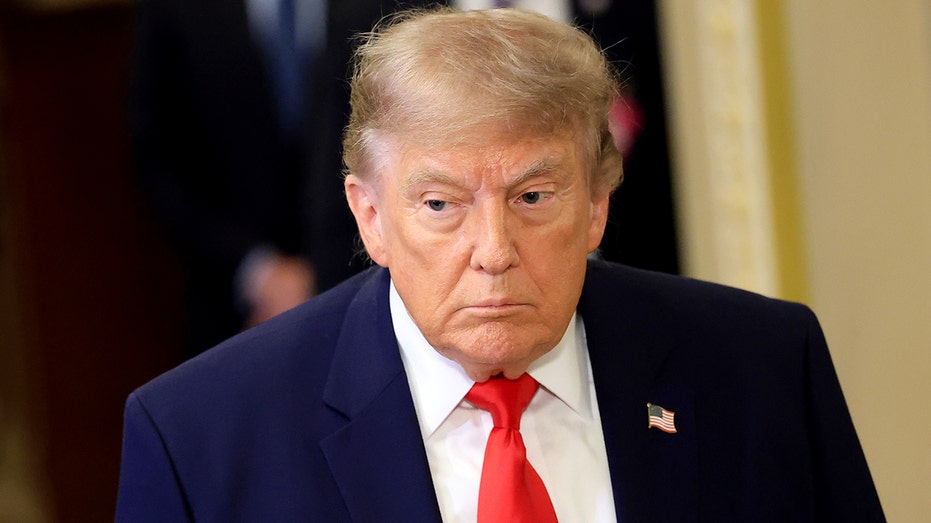
President Donald Trump speaks to the media as he arrives at the U.S. Capitol on June 24, 2026, in Washington, DC. (Anna Moneymaker/Getty Images / Getty Images)
The letter to the state attorneys general states, “As the Department of Justice (DOJ) answers the President’s call to action, both the DOJ and the Federal Trade Commission (FTC) are closely monitoring petroleum markets.”
“We urge state law enforcers to join us in investigating illegal practices. Recent volatility in crude oil prices does not suspend either the antitrust laws or state consumer protection laws, and it does not authorize companies to manipulate retail prices or collude with their competitors,” the letter declares.
“We also encourage State Attorneys General to use all tools available under your state laws to investigate and prosecute any misconduct causing unjustified price increases — particularly conduct that violates state antitrust and consumer protection statutes. Although the Division and the Commission do not enforce any laws aimed specifically at price gouging rather than anticompetitive conduct, many States have also enacted laws specifically targeting price gouging during periods of market disruption or emergency, and we urge those states to review whether enforcement is warranted under those laws,” the federal officials noted.
Gas prices spiked considerably after the U.S. launched the war effort against Iran earlier this year, but have been declining more recently.
TRUMP ALLEGES GAS PRICE GOUGING, CALLS FOR DOJ INVESTIGATION

A driver reaches for the pump at a gas station in Carolina Beach, N.C., on Wednesday, July, 1, 2026. (Allison Joyce/Bloomberg via Getty Images / Getty Images)
The AAA national average price for regular gas is $3.823 as of July 3, down from the month-ago average of $4.261.
“Gasoline Retailers must get their Prices down, IMMEDIATELY! They’re too high considering that Oil is now at $68 a Barrel, and heading south. The Retailers must quickly react to this statement, and do what they know is right — DROP YOUR PRICE FOR OUR GREAT AMERICAN PEOPLE! There will be no gauging, which is totally illegal. If Retailers don’t do this, big problems lie ahead!” he warned in part of a Monday Truth Social post.
In part of a post on Wednesday he declared, “Just as I promised, Oil Prices are plummeting FAST, and Gas Prices at the pump are dropping too, but not as fast as they should be.”
TRUMP DEMANDS GAS STATIONS LOWER PUMP PRICES IMMEDIATELY AND RENEWS PUSH FOR $2.50 GASOLINE
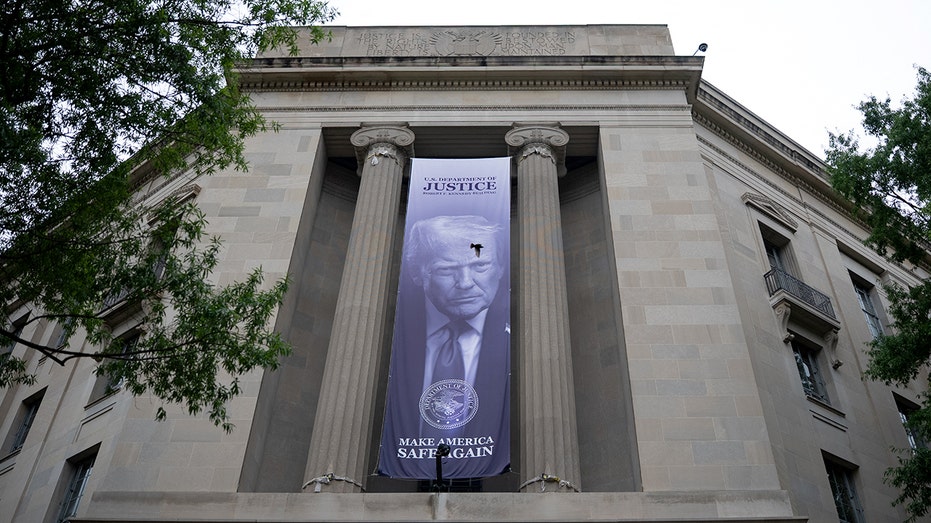
A banner featuring President Donald Trump hangs outside of the Department of Justice headquarters ahead of a press conference with Acting Attorney General Todd Blanche announcing annual healthcare fraud takedown results in Washington, D.C. on June 23 (Ken Cedeno / AFP via Getty Images / Getty Images)
GET FOX BUSINESS ON THE GO BY CLICKING HERE
“Affordable energy is essential to a thriving American economy. The Antitrust Division is committed to working alongside state law enforcement partners to provide resources and support to protect consumers from anticompetitive behavior that raises the price of gas,” Woodward said in a statement provided to Fox News Digital. “The Antitrust Division will use all available tools to ensure that companies are held accountable for unlawfully manipulating the market”

Services PMI and ISM non-manufacturing PMI among economic data due Monday
Business
Russell 2000 Slips Thursday After Its Best First Half Since 1991 as Chip Selloff Weighs on Small-Cap AI Names
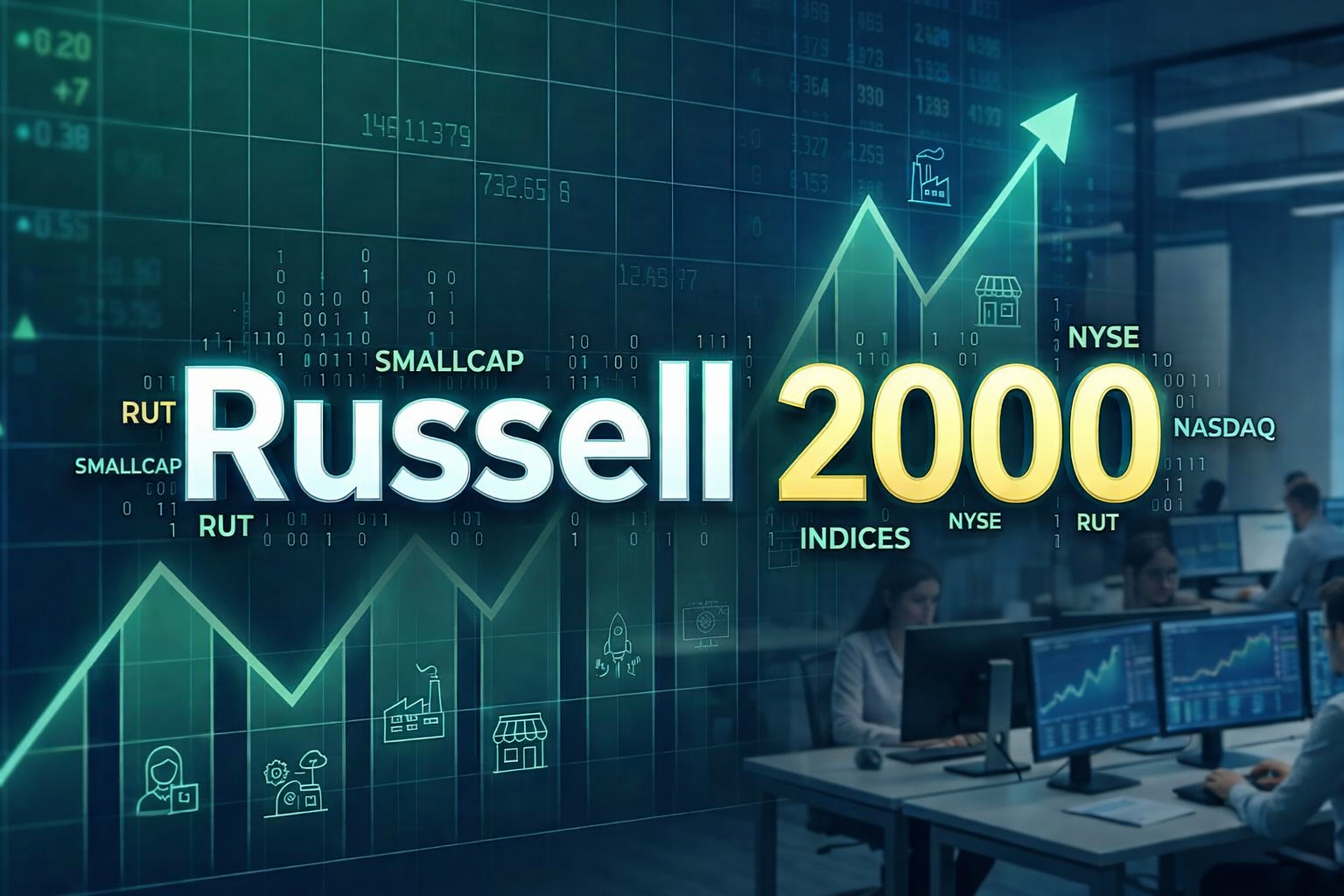
NEW YORK — The Russell 2000 Index, which just completed the strongest first half of any year since 1991, closed Thursday with a modest decline of 0.55%, settling at 2,996.11 and finishing just below the psychologically significant 3,000-point level as the broad chip sector selloff that rattled the Nasdaq for a second consecutive session weighed on small-cap technology and semiconductor-adjacent names even as the Dow Jones Industrial Average hit a fresh all-time record.
The day’s pullback for small-cap stocks came on the final trading session before the Fourth of July holiday weekend, with U.S. markets closing Friday in observance of Independence Day. The small decline capped a week that itself followed one of the most remarkable six-month stretches for American small-cap equities in a generation.
The Russell 2000 gained 22% in the first half of 2026, its best performance since 1991 and well above the S&P 500’s 9.6% first-half advance. The rally also outpaced the Dow Jones Industrial Average’s 8.9% gain and the Nasdaq’s 12.8% climb, a reversal of the large-cap-heavy pattern that had defined much of the prior three years when megacap technology stocks captured nearly all of the headline performance.
“It’s both a valuation catch-up story and a fundamental story,” said Amy Zhang, portfolio manager at Alger. “The valuation gap was so wide that a truck can drive through it. At the same time, fundamentals are improving in small-caps and I think that’s why it’s causing the broadening trade.”
Consensus forecasts for Russell 2000 companies’ 2026 earnings growth have climbed to 38% from about 23% at the start of the year, according to LPL Financial, reflecting growing optimism that profit growth is broadening beyond the largest technology companies. Bottom-up analyst estimates suggest the Russell 2000 could deliver around 43% year-over-year earnings growth over the next 12 months, a figure that outpaces projections for the S&P 500 and has underpinned much of the institutional interest in the asset class through the first half of the year.
Semiconductor and semiconductor equipment companies were the biggest winners within the Russell 2000 during that period, underscoring how the artificial intelligence investment boom has rippled through the broader market well beyond the large-cap names that dominate most AI coverage. Chip-related companies accounted for 16 of the Russell 2000’s 50 best-performing stocks in the first half of the year, including Aehr Test Systems, Ichor Holdings and MaxLinear, which all rallied more than 400%. Rather than competing directly with industry leaders like Nvidia, many of these smaller companies have benefited from rising demand across the AI supply chain, supplying testing equipment, materials, components and specialized subsystems.
Those same names, however, have shared in this week’s semiconductor sector correction, which has wiped out meaningful short-term gains across the chip space broadly as investors who accumulated large positions during the sector’s extraordinary first-half run have taken profits ahead of the holiday. The VanEck Semiconductor ETF fell 4.5% Thursday alone, and the Philadelphia Semiconductor Index has posted its worst two-day decline since early June, with many of the smaller, more speculative names in the sector experiencing even steeper percentage drops than the large-cap bellwethers.
Small cap stocks are having a moment, according to Schwab’s market open report. The Russell 2000 gained 22% during the first half of the year, its best since 1991 and well above the S&P 500’s 9.6% gain. The index also topped the S&P 500 for two consecutive quarters, the first time that had happened since 2021, a milestone that has attracted fresh institutional attention to the small-cap universe and driven significant inflows into small-cap focused exchange-traded funds throughout the year.
Despite Tuesday’s chip-driven dip, broader small-cap market dynamics remain constructive for investors with a longer time horizon. The Russell 2000’s composition spans financials, industrials, healthcare, energy, biotech and technology, a diversification that gives the index exposure to domestic economic strength across multiple sectors simultaneously. Small-cap stocks generate roughly 70 to 80 percent of their revenue domestically, making the index particularly sensitive to U.S. economic conditions and comparatively insulated from global trade tensions that have periodically complicated the earnings outlooks of larger multinationals.
Bank of America analyst Jill Carey Hall said in a recent note that the bank still sees upside opportunities within small caps for less rate-sensitive stocks, especially because Russell 2000 performance has been concentrated this year and the broader universe has room to participate more fully in the rally.
The Federal Reserve interest rate outlook remains the most consequential variable for the small-cap outlook heading into the second half of 2026. Higher borrowing costs pose a particular challenge for smaller companies, which generally carry more floating-rate debt and face greater refinancing needs than large-cap peers. Bank of America has estimated that every additional 25 basis point rate hike would reduce Russell 2000 operating earnings by approximately 2%, a meaningful sensitivity given that the Fed’s next meeting is scheduled for July 28-29 and that some market participants had been pricing in the possibility of further tightening before this week’s soft employment report shifted that calculus.
“This should allow the Fed to take a patient approach to any shift in its policy over the next few months, seeing how the incoming economic data comes in rather than rushing to a decision to hike,” said Collin Martin, head of fixed income research and strategy at the Schwab Center for Financial Research.
The June nonfarm payrolls report, which showed just 57,000 jobs added against expectations of 115,000, has provided the most direct macro support for small-cap stocks this week by reducing near-term rate hike fears, even as the soft headline reading raised fresh questions about whether economic momentum is slowing more quickly than the consensus had anticipated.
For now, Thursday’s modest decline represents a pause in a larger story rather than a reversal, with the index barely off a recent all-time high reached on Wednesday of this week at 3,033.75 and well positioned, by most analysts’ assessments, to resume its outperformance once the semiconductor profit-taking cycle runs its course and attention shifts back to the improving earnings trajectory across the small-cap universe heading into the second half of 2026.

Open USD is lying about its 149 partnerships, report

Trump Claims Nato ‘Was Not There For US’ In New Tirade

5 reasons I love traveling and discovering new golf courses


-

 Tech6 days ago
Claude Code turned every engineer into three. Now companies need more product thinkers
-

 Crypto World4 days ago
Strategy authorizes up to $1.25B in Bitcoin sales under new capital plan
-

 Politics7 hours ago
The House | “Reframing the debate from a binary discussion of winners and losers”: Yuan Yang reviews ‘We Are Not Machines’
-

 News Videos5 days ago
MAJOR BITCOIN & MARKET UPDATE!!!! (MUST WATCH ASAP!!!)
-

 Tech4 days ago
Anonymous researcher drops 0-day ‘exploitarium’ repo
-

 Crypto World6 days ago
Coinbase, Circle Deepen Crypto Stock Losses Despite Resilient S&P 500
-

 Business4 days ago
Australia treasurer says alleged access of prime minister’s bank data ’incredibly concerning’
-

 Crypto World7 days ago
Kraken's xStocks Opens Bending Spoons IPO Registration to EEA Retail
-

 Sports7 days ago
FIH Pro League: India defeat Pakistan 7-1, register biggest win of campaign | Other Sports News
-

 Tech6 days ago
Bluekit phishing kit adopts browser-in-the-middle for login theft
-

 Tech6 days ago
Russian hackers now target Signal backup recovery keys
-
 Business4 days ago
The AI boom won’t burst all at once. It will pop in ‘rolling bubbles’: Macquarie
-

 Sports2 days ago
Broncos roster: OL Ben Powers (No. 74) entering final year of contract
-

 Tech6 days ago
Silicon Valley paid to kill AI regulation, now it wants the rules back
-

 NewsBeat3 days ago
Presenter Caroline Flack’s brother Paul Flack dies aged 55
-

 Crypto World2 days ago
Binance stock trading tops $1B in first month after launch
-
 Tech6 days ago
OpenAI mulls delaying IPO over valuation concerns
-
 NewsBeat1 day ago
New exhibition reflects five decades of movement between island of Ireland and GB
-

 Crypto World2 days ago
Alibaba-affiliate Ant Group enters the humanoid robot market with 12 deals
-

 News Videos3 days ago
How to Build INSANE Live Financial Dashboards With Claude
You must be logged in to post a comment Login