

Business
China Is Devastating the Last Stronghold of German Industry

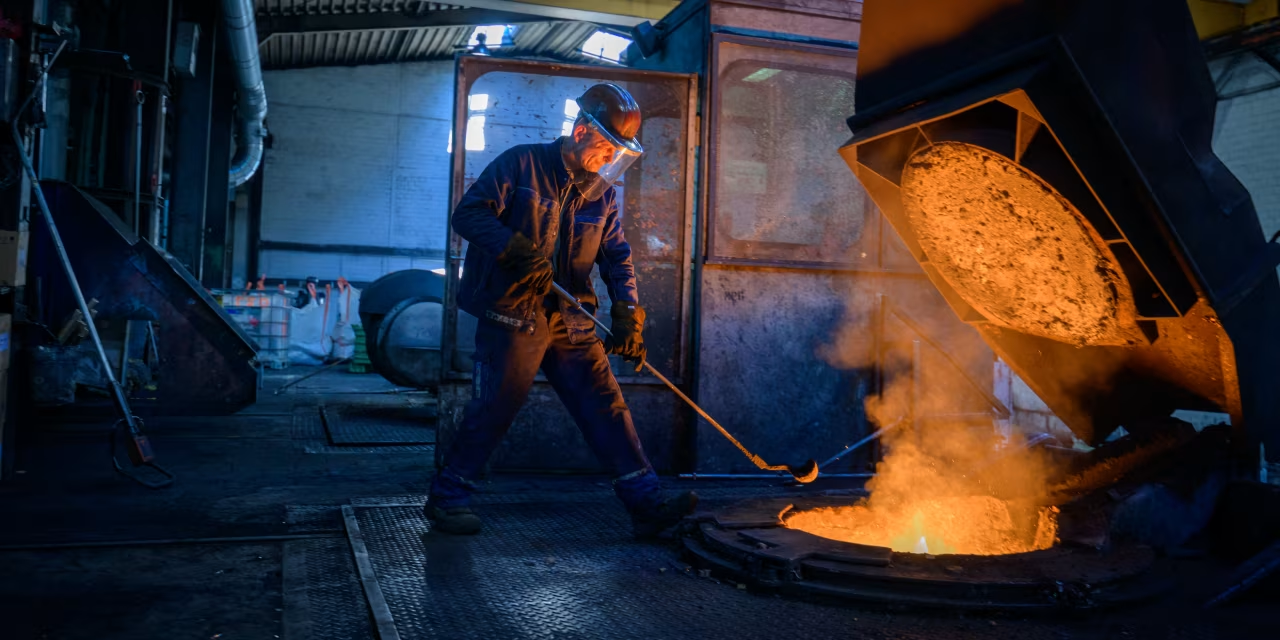
FRANKFURT—For decades, thousands of niche, world-class manufacturers that form the backbone of the German economy relied on an unassailable moat: unmatched quality. Now that moat is drying up.
The Mittelstand—a broad tier of midsize manufacturers, mainly specialized in capital and intermediate goods and reliant on exports—once thrived by making machines for factories everywhere. But China is now closing the quality gap and offering prices as low as half those of their European rivals.
Copyright ©2026 Dow Jones & Company, Inc. All Rights Reserved. 87990cbe856818d5eddac44c7b1cdeb8

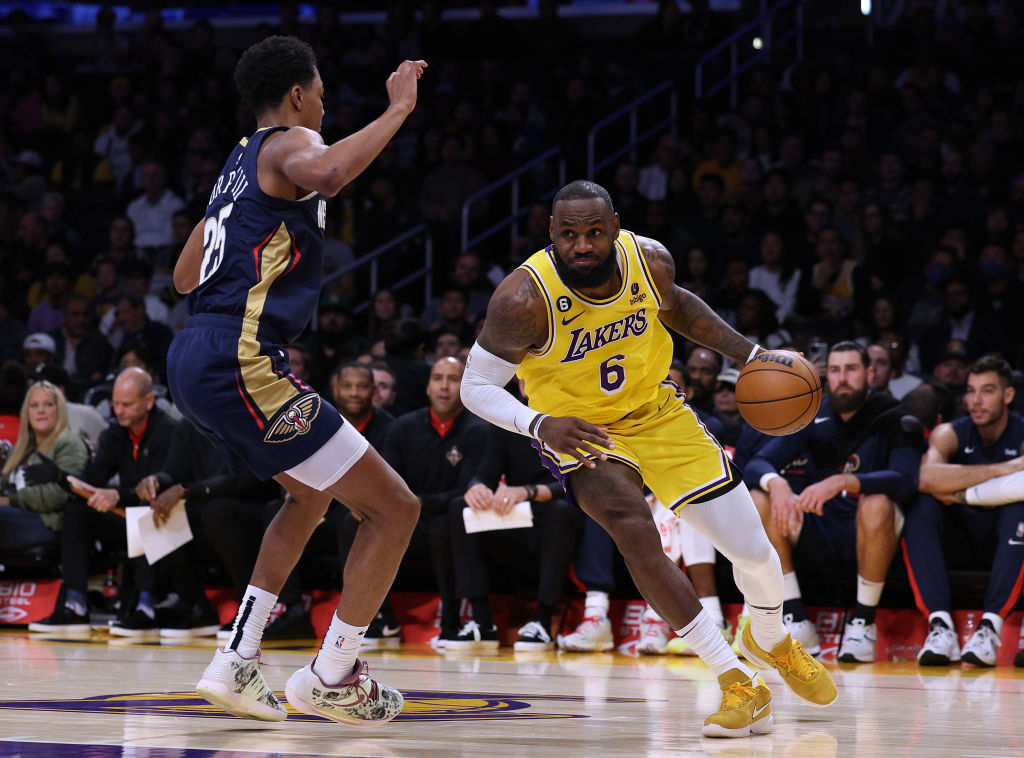
The NBA offseason’s most consequential chapter is unfolding in real time, with LeBron James’ destination decision still unresolved and a second wave of trades and signings continuing to reshape the league’s competitive landscape ahead of the 2026-27 season. Here are the five most significant stories circulating through league circles this weekend.
1. Minnesota Timberwolves emerge as a genuine LeBron contender with a unique legacy pitch. The Minnesota Timberwolves believe they have a strong shot at signing LeBron James, according to The Athletic’s Jon Krawczynski, an emergence that has surprised many league observers who assumed the race was down to Cleveland, Miami and Philadelphia. Minnesota is making a pitch built around two pillars: the star-powered core of Anthony Edwards, LaMelo Ball, Jaden McDaniels and Rudy Gobert, and a legacy argument that no other franchise can make. The Timberwolves have never won an NBA championship. If James helped lead them to one, the argument goes, that achievement would stand alone in his already unprecedented collection of accomplishments.
The Timberwolves’ pitch gained considerable momentum this past week after Rich Paul, James’ agent and the CEO of Klutch Sports, confirmed he has spoken to all but one or two NBA teams about his client’s availability. On his podcast “Game Over,” Paul laid out the emotional landscape of the decision with uncommon candor.
“Every day things change. This is the first time that LeBron James is making a decision pressure-free. He’s won already. He’s made good on his promise — he won in L.A. This is strictly for his happiness,” Paul said.
The whiteboard Paul revealed during the podcast listed 10 teams, and Minnesota’s presence alongside Cleveland, Miami, Philadelphia, Golden State, Denver, Dallas, Boston, New York and San Antonio reflected the genuine breadth of a market that has attracted interest from every tier of the league’s competitive pyramid.
Paul also addressed the New York Knicks directly, noting that a James move to Madison Square Garden would have happened had the Knicks not won the 2026 title.
“The last thing you want to do is mess up something like that. The Knicks has a good thing going. If the Knicks hadn’t of won, there would be no board. He’d be going to the Knicks,” Paul said.
2. Philadelphia 76ers have transformed themselves into one of LeBron James’ most attractive destinations. The Jaylen Brown trade, described by Paul as something that “changed everything,” has reshaped the Eastern Conference landscape and made the 76ers the offseason’s most aggressive front office in a way that now has James’ circle paying genuine attention. The Sixers added Brown from Boston, signed Anfernee Simons, Rayan Rupert and Caleb Love in the days since, and are now being run by a front office led by former Golden State Warriors general manager Bob Myers and Mike Gansey, who spent years working alongside James during his second stint with Cleveland. That institutional familiarity with James and his preferences is a meaningful intangible in a free agency process where relationship and trust carry significant weight.
3. Jalen Duren’s standoff with the Detroit Pistons is hardening into something that could produce a blockbuster. The Detroit Pistons and restricted free agent center Jalen Duren are “far apart” in contract negotiations, according to multiple reports, creating a genuine possibility of a sign-and-trade that would send one of the league’s most promising young big men to a new franchise. Duren, named third-team All-NBA last season, can earn up to 30% of the salary cap from Detroit as a qualifying offer, a number the Pistons have reportedly been unwilling to match given concerns about his postseason performance relative to his regular-season form. Sacramento remains among the teams expressing interest, and any sign-and-trade would likely require the Kings to assemble a package of players and picks that the Pistons, fresh off a 60-win Eastern Conference regular season, consider sufficient value in return.
4. The Lakers completed the Deandre Ayton trade and are still actively reshaping their roster. Los Angeles sent Ayton to the Washington Wizards in exchange for guard Jaden Hardy and a pair of future second-round picks, clearing the center position following the Walker Kessler acquisition and continuing the franchise’s pivot toward building around Luka Doncic and Austin Reaves rather than maintaining any continuity from the LeBron era. The move added a $13 million trade exception to Los Angeles’ financial toolkit, providing the front office with additional flexibility as the LeBron situation resolves itself. Hardy, a 23-year-old shooting guard who was traded midseason to Washington, gives the Lakers a young wing to develop in a lower-stakes role as the team transitions into its next competitive chapter.
5. The Bronny James trade remains a realistic possibility once LeBron picks his destination. ESPN’s Dave McMenamin reported this week that the Lakers could move Bronny James to whatever franchise LeBron ultimately chooses, keeping the historic father-son playing partnership alive for a third NBA season. The Lakers fully guaranteed Bronny’s $2.3 million salary for 2026-27 the day before LeBron informed the team he was leaving, a sequence that created a logistical oddity the team is now trying to resolve. Bleacher Report noted the Lakers have reasons to keep Bronny as young, affordable depth regardless of LeBron’s destination, but McMenamin’s reporting suggests the franchise is open to facilitating a reunion if LeBron’s choice and the right deal structure create the conditions for one.

TUCSON, Ariz. — Five months after Nancy Guthrie vanished from her Tucson home, leaving behind her medication, wallet and cellphone, federal investigators are still pursuing the case as a kidnapping for ransom, one arrest has been made in connection with fraudulent communications, and experts outside the investigation are increasingly skeptical that any of the ransom notes publicly reported so far are genuine.
The 84-year-old mother of “Today” show co-anchor Savannah Guthrie disappeared in the early hours of February 1 after being dropped off at her Catalina Foothills home the previous evening. Blood found on her front porch was confirmed by DNA testing to belong to her. Surveillance footage recovered from corrupted camera data showed a masked individual tampering with her doorbell camera that night. Her pacemaker app disconnected from her phone at 2:28 a.m., a timestamp investigators believe may correspond to when she was forcibly removed from the home.
Despite that physical evidence, no suspects or persons of interest have been publicly named in connection with the actual disappearance, and the investigation now enters its sixth month without a confirmed account of what happened or where Guthrie is.
Criminal defense attorney and trial lawyer Mark Geragos told NewsNation’s “Cuomo” program that he believes the FBI has consolidated its control over the investigation and that any breakthrough is most likely to come from inside the alleged criminal network rather than from external tip lines or media pressure.
“The FBI now, I think, has pretty firm control over the investigation, and they believe at this point that if it’s going to be solved, it’s going to be solved by somebody who I always call a confederate or somebody who’s going to give some information,” Geragos said.
Criminologist Casey Jordan offered a blunter assessment of the ransom notes that have circulated through media channels since February, telling NewsNation she believes none of them are credible based on a fundamental absence of verification.
“The No. 1 reason, and this is probably 90% of it, is that nothing, no communication is offered, any proof of life, proof of death, evidence of anything,” Jordan said.
She elaborated on why the absence of verifiable details undermines the notes’ credibility even when they contain accurate-sounding information about the case.
“The bottom line is, whatever they’re mentioning that we know of is stuff they could have just learned online or picked up from AI and, you know, the satellite images of the scene and everything else. So, without any proof of life or death, there is no reason to believe that they’re real. But I agree with Mark, the FBI is just kind of hedging their bets,” Jordan added.
The FBI itself struck a careful balance in its most recent public statement on the ransom notes, declining either to fully authenticate or entirely dismiss the body of communications it has received.
“The FBI and its task force partners have received several ransom notes over the course of this investigation. Some have been deemed to be extortion attempts without legitimacy. Other ransom demands may potentially be legitimate and are still being investigated as such. This case continues to be investigated as a kidnapping for ransom case. The FBI has and will continue to offer all assistance possible in the investigation — however, local authorities remain the lead,” the agency said.
The one concrete enforcement outcome from the ransom note investigation came Thursday, July 2, when Derrick Callella, 42, of Hawthorne, California, pleaded guilty to two counts of harassment using a telecommunication device. The U.S. Attorney’s Office for the District of Arizona confirmed the plea, which addressed Callella’s decision to call and text members of the Guthrie family on February 4, just days after Nancy’s disappearance, demanding a Bitcoin transfer in exchange for information about her return. Callella acknowledged in his plea that he knew an earlier ransom demand had already been made and that his goal was to harass the family and attempt to extract details about the investigation rather than to provide genuine information. He faces a maximum of two years in federal prison and a fine of up to $250,000 at a sentencing scheduled for September.
The broader chronology of communications in the case is complicated. Tucson television station KOLD-TV received two notes, one demanding millions in Bitcoin for Guthrie’s safe return and another claiming she had died. Entertainment outlet TMZ separately confirmed it had received a ransom note and subsequently reported receiving additional emails from what appeared to be the same sender. The FBI said its anonymous official’s earlier characterization to Reuters, which suggested all three widely publicized notes had been deemed fraudulent, was an incomplete representation of the bureau’s actual assessment, which distinguishes between notes fully dismissed as extortion attempts and others still under active investigation. Pima County Sheriff Chris Nanos had already expressed skepticism about the most recent TMZ note publicly, calling it consistent with the pattern of fake ransom demands the FBI had seen throughout the case.
The Callella guilty plea is the only confirmed criminal outcome so far. FBI special agent Heith Janke had disclosed at a February 5 press conference that someone had been arrested for sending an “imposter ransom demand” to family members, with Callella having initially pleaded not guilty before changing his plea this week.
The investigation has produced several pieces of physical evidence without leading to a named suspect. Blood confirmed as Nancy Guthrie’s was found on her front porch. A strand of hair was recovered inside the home. DNA from a glove found roughly two miles from the property failed to match any profile in the FBI’s national CODIS database, prompting investigators to pursue genetic genealogy testing. A separate human bone found near the property in May was ruled unrelated to the case. The masked individual seen on doorbell footage remains unidentified.
The Guthrie family’s combined reward for information remains at $1.1 million, covering both a $1 million family pledge and the FBI’s existing $100,000 offer. Savannah Guthrie has continued anchoring “Today” during much of the investigation while making periodic on-air appeals for public assistance, most recently describing the experience as “five months of agony and unending trauma” for her family as the investigation shows no sign of imminent resolution despite the substantial evidence collected and the federal resources deployed since February 1.

IHS Holding validates Fair Value analysis with 84% return in 29 months


Leo Nelissen is a macro-focused equity strategist and long-term investor with more than a decade of experience on Seeking Alpha, where he has built a following of over 50,000 readers. His work combines big-picture macro analysis, geopolitical insight, and bottom-up research to identify high-quality businesses and long-term investment opportunities. He is the founder of Main Street Alpha, a Seeking Alpha Investing Group focused on macro strategy, real portfolios, dividend investing, and disciplined capital allocation for long-term investors.
Analyst’s Disclosure: I/we have no stock, option or similar derivative position in any of the companies mentioned, and no plans to initiate any such positions within the next 72 hours. I wrote this article myself, and it expresses my own opinions. I am not receiving compensation for it (other than from Seeking Alpha). I have no business relationship with any company whose stock is mentioned in this article.
Seeking Alpha’s Disclosure: Past performance is no guarantee of future results. No recommendation or advice is being given as to whether any investment is suitable for a particular investor. Any views or opinions expressed above may not reflect those of Seeking Alpha as a whole. Seeking Alpha is not a licensed securities dealer, broker or US investment adviser or investment bank. Our analysts are third party authors that include both professional investors and individual investors who may not be licensed or certified by any institute or regulatory body.

The proposed issue is structured entirely as an offer for sale (OFS), according to the draft papers.
Cube Highways Trust (Cube InvIT), which owns a portfolio of highway assets across India, had 27 operational assets spanning 8,754 lane kilometres across 12 states and one Union Territory as of March 31, 2026, with an average residual concession life of 18 years.
In a message to unitholders in the FY26 annual report, its Chief Executive Officer Vinay C Sekar said the trust’s strategy remains focused on disciplined acquisitions, predictable distributions, financial prudence and operational efficiency.
About 85 per cent of the portfolio comprises toll road assets that benefit from traffic growth and inflation-linked toll revisions, and the remaining 15 per cent consists of annuity assets backed by contracted payments from the National Highways Authority of India (NHAI).

Cube InvIT declared a distribution per unit of Rs 13.77 for FY26, taking total distributions for the year to Rs 1,851 crore.
Its net debt stood at Rs 17,768 crore at the end of March, while its net debt-to-enterprise value ratio was 46.82 per cent. Moreover, assets under management rose to Rs 36,842 crore, supported by nine acquisitions during the fiscal year.
The trust has also signed commitment letters for four highway projects with a combined enterprise value of about Rs 7,300 crore, which would expand its portfolio to 31 assets across 13 states and one Union Territory. It has also secured a right of first offer on three sponsor assets, providing an additional pipeline for future growth.

Buy These 2 Durable Income Hedges Against The AI Sell-Off

OneMain Holdings: I Still Like This 7% Yield In My Portfolio

Mag 7 Stocks: Risk Or Opportunity In The Making?

Stand at Becketts this weekend as the historic demonstration runs howl past and you could be forgiven for thinking the calendar has slipped.
The blue-and-gold of a Rothmans Williams, the screaming yellow of a Benson & Hedges Jordan, a Tyrrell in Elf colours, a McLaren still wearing its day-glo Marlboro chevrons: to a certain generation these liveries are as evocative as the engine notes. Yet look closely at those sidepods and you are not looking at a paddock. You are looking at a corporate graveyard.
The British Grand Prix that surrounds them could not be more different. A record crowd of well over half a million, a sprint format, a global streaming audience raised on Drive to Survive, and a sport that, as Business Matters reported this week, is now worth £12bn a year to the UK economy. But in the 1980s and 1990s Formula One was a very different commercial proposition: a rolling billboard held together by tobacco money, corporate vanity and the occasional fraudster. The teams, Williams, McLaren, Jordan, Tyrrell, survived, evolved or were absorbed. Many of the companies whose logos paid the bills did not. Their fates read like a potted history of three decades of business upheaval.
The tobacco giants: regulated out, swallowed up
No sector defined the era like tobacco. By 1995, nine of the top ten drivers in the world championship carried a cigarette brand on their overalls, and the sport’s aesthetic was effectively designed in the marketing departments of London and Winston-Salem.
Rothmans is the most instructive case. The brand arrived at Williams in 1994 and turned the FW16 into what one Italian commentator called “a cigarette packet on four wheels”, white, blue and gold, and utterly unmistakable throughout the seasons that carried Damon Hill and Jacques Villeneuve to their world titles. Yet within two years of leaving the sport’s front line, Rothmans International plc ceased to exist as an independent business. In 1999 it was swallowed by British American Tobacco in a merger waved through by the European Commission, and the Rothmans, Dunhill and Player’s brands disappeared into BAT’s portfolio, where they remain. The company that once wrote some of the biggest cheques in world sport is now a line item in someone else’s annual report.
Benson & Hedges followed a similar arc. Eddie Jordan’s masterstroke in 1996 was persuading Gallaher to paint his cars gold, then yellow, spawning the Buzzin’ Hornets and Bitten & Hisses workarounds when national advertising bans began to bite. B&H stayed with Jordan until 2005, by which time the FIA had already decreed that tobacco branding would be gone by the end of 2006. Gallaher, the last great independent British tobacco house, did not long outlive the ban that ended its motor racing adventure: in April 2007 it was acquired by Japan Tobacco for around £7.5bn, then the largest ever foreign takeover by a Japanese company.
Camel, which had splashed its yellow across Lotus, Benetton and Williams, read the regulatory runes earlier than most. When France banned tobacco advertising in motorsport in 1992, R.J. Reynolds began its retreat, and by the end of 1993 the desert dromedary had largely vanished from the grid. The lesson for any business built on a single, regulation-exposed revenue stream is timeless: the writing appears on the wall long before the wall falls on you.
Only Marlboro defied gravity. Philip Morris outlasted every rival, moved its money quietly to Ferrari, and kept paying long after its name could legally appear on the cars, proof that in sponsorship, as in business, the deepest relationships survive even when the logo cannot.
The technology names: disrupted at full speed
If tobacco was regulated out of existence, the technology sponsors of the era were simply out-innovated, an irony for brands that attached themselves to the fastest-moving sport on earth.
Consider the Williams FW15C of 1993, arguably the most technologically sophisticated F1 car ever built, with its active suspension and traction control. On its flanks sat Sega, then the swaggering champion of the console wars, which even had Sonic the Hedgehog’s feet painted below the cockpit and supplied a Sonic-shaped winner’s trophy, famously lifted not by a Williams driver but by Ayrton Senna at Donington, after which McLaren mischievously painted a squashed hedgehog on his car. Sega was at its absolute commercial peak. Within eight years it was gone from the hardware business entirely: bruised by the 32X and Saturn missteps and unable to sustain the Dreamcast against Sony and Nintendo, it exited consoles in 2001 to become a software publisher. The company survives, indeed, in a pleasing footnote, Sega returned to the grid last year as a gaming partner of McLaren, the very team that once taunted its Williams deal with a squashed-hedgehog sticker, but the colossus that sponsored world champions does not.
Compaq tells the same story at corporate scale. The Texan PC maker became a principal sponsor of the BMW Williams team in 2000, its logo carried by Ralf Schumacher and a young Juan Pablo Montoya. In May 2002, mid-season, Compaq was consumed by Hewlett-Packard in one of the most contentious mergers in tech history, and, in a neat piece of symbolism, the branding on the Williams cars was changed from Compaq to HP at that year’s British Grand Prix at Silverstone. A brand that had been one of the world’s biggest computer companies was reduced to a mid-race livery swap, and eventually retired altogether.
The telecoms adventure: two crashes for the price of one
The dot-com era brought a new breed of sponsor, and no partnership captured its giddiness better than Orange and Arrows. The mobile operator’s papaya livery made the 2000 Arrows A21 one of the best-looking cars on the grid, but the relationship delivered a double collapse. Arrows, run by the flamboyant Tom Walkinshaw, ran out of money and folded during 2002, its cars famously failing to appear at races while lawyers argued. Orange declined to renew and retreated from the sport. The sponsor fared better than the team, but not as an independent company: it had already been bought by France Télécom in 2000 at the very top of the telecoms bubble. The twist is that the brand ultimately devoured its owner, France Télécom judged the Orange name so much stronger than its own that in 2013 it renamed the entire group Orange S.A. Sometimes the sponsorship asset outlives the balance sheet that acquired it.
The cautionary tale: when the money was never real
And then there were the sponsors who were not what they seemed. Leyton House, the Japanese property and leisure group whose turquoise March cars very nearly won the 1990 French Grand Prix with Ivan Capelli, collapsed in scandal when founder Akira Akagi was arrested in 1991 over a fraud involving Fuji Bank. The team died with him, and F1 learned, not for the last time, as anyone who remembers more recent crypto logos will attest, that due diligence on a sponsor’s money matters as much as the size of the cheque.
What the survivors teach us
It would be wrong to paint the whole era as a graveyard. Canon, which backed Williams through its Mansell-Piquet pomp, remains a global imaging power. Elf, the French fuel brand on every Tyrrell and Renault of the period, lives on inside TotalEnergies, still in the sport today. And the teams themselves proved remarkably durable assets: Tyrrell’s entry was sold to BAT and became BAR, then Honda, then Brawn, and is today Mercedes-AMG F1; Jordan’s Silverstone factory now houses Aston Martin’s title challengers. In Formula One, as sponsorship strategist and author Jackie Fast, whose best-selling book PINPOINT chronicles what actually works in sponsorship, might observe, the platform has consistently outlived the brands that paid for it.
That, perhaps, is the real business story hiding in this weekend’s nostalgia. A grid livery is a leading indicator: it tells you which sectors have cash, confidence and something to prove. In 1986 that meant cigarettes; in 1993, video games; in 2000, PC makers and telecoms; today it is crypto exchanges, cloud computing and logistics giants, sectors whose own thirty-year survival is anything but guaranteed. The sport’s £12bn UK footprint suggests Formula One itself has never been healthier. History suggests the same cannot be assumed of the names painted on its cars.
So when the old Rothmans Williams crackles past the pits this afternoon, spare a thought not just for the drivers who wrestled it, but for the marketing directors who signed the deals, men and women who believed, entirely reasonably, that their brands were as permanent as the sport they adorned. Formula One is still here. Rothmans, Gallaher, Compaq, Leyton House and Sega’s console empire are not. In business, as at Becketts, nothing stays flat-out forever.

Paul Jones
Harvard alumni and former New York Times journalist. Editor of Business Matters for over 15 years, the UKs largest business magazine. I am also head of Capital Business Media’s automotive division working for clients such as Red Bull Racing, Honda, Aston Martin and Infiniti.

It isn’t just the rank-and-file facing return-to-office crackdowns. The co-founder of an $8 billion asset-management firm was ousted for not complying with his own in-office policy—and now he is suing.
William Nieporte ran the firm Bramshill Investments with two high-school classmates for about a decade before they fired him in 2022. The reason: “You have willfully and deliberately failed to report to ‘in-person’ work,” the other co-owners wrote in a termination letter reviewed by The Wall Street Journal.
Copyright ©2026 Dow Jones & Company, Inc. All Rights Reserved. 87990cbe856818d5eddac44c7b1cdeb8

LeBron Watch Intensifies as Timberwolves Make Surprise Pitch This Weekend

Applied Optoelectronics (AAOI) Stock Plunges 17% Following Meta CEO’s AI Investment Remarks
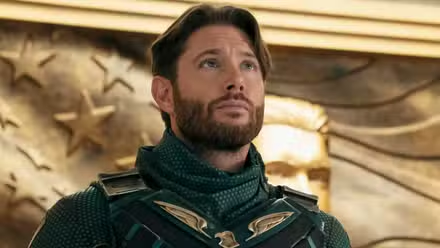
‘Supernatural’ Is Ready To Return, but There’s a Catch

No Jackpot Winner as $257 Million Prize Rolls Over to $269 Million Monday Draw

Renter of Home in Anne Heche Crash Denies Settlement With Son

Weekend Open Thread: Staud – Corporette.com

Jio Finance Latest News | Jio Finance Share News | Jio Finance Breaking News | Jio News Today

HOW DOES DMO AFFORD ALL THOSE SUPERCARS? #automobile #motivation #cars #lifestyle #money #fyp

Trump’s cryptocurrency gains#shorts #shortvideo #trending #actress #celebrity
-

 Fashion2 days ago
Weekend Open Thread: High Hopes
-

 Politics2 days ago
The House | “Reframing the debate from a binary discussion of winners and losers”: Yuan Yang reviews ‘We Are Not Machines’
-

 Crypto World5 days ago
Strategy authorizes up to $1.25B in Bitcoin sales under new capital plan
-

 News Videos7 days ago
MAJOR BITCOIN & MARKET UPDATE!!!! (MUST WATCH ASAP!!!)
-

 Tech5 days ago
Anonymous researcher drops 0-day ‘exploitarium’ repo
-

 Business5 days ago
Australia treasurer says alleged access of prime minister’s bank data ’incredibly concerning’
-

 News Videos5 days ago
How to Build INSANE Live Financial Dashboards With Claude
-
 NewsBeat8 hours ago
Taylor Swift and Travis Kelce wedding staffer hilariously struggles to keep her cool while checking in megastars
-
 Business6 days ago
The AI boom won’t burst all at once. It will pop in ‘rolling bubbles’: Macquarie
-

 Sports4 days ago
Broncos roster: OL Ben Powers (No. 74) entering final year of contract
-

 NewsBeat5 days ago
Presenter Caroline Flack’s brother Paul Flack dies aged 55
-

 Crypto World3 days ago
Binance stock trading tops $1B in first month after launch
-

 Crypto World3 days ago
Alibaba-affiliate Ant Group enters the humanoid robot market with 12 deals
-
 NewsBeat3 days ago
New exhibition reflects five decades of movement between island of Ireland and GB
-
 Crypto World4 days ago
Airdrop Registration Becomes Key Focus For Remittix As RTX Launch Updates Approach
-

 Business2 days ago
What a 10 Percent Drop Means for Buyers, Sellers and Renters
-

 Business4 days ago
Meta Platforms Stock Jumps 7% Today as Bloomberg Reports Company Plans to Enter the Cloud Business
-

 Crypto World3 days ago
Binance Re-Enters Philippines As EU MiCA Rules Restrict Access
-

 Crypto World2 days ago
Standard Chartered Secures MiCA License as ESMA Adds 37 New Crypto Firms
-

 Tech6 days ago
The attack that hijacked Claude Code came through Sentry. Datadog, PagerDuty, and Jira have the same exposure.
You must be logged in to post a comment Login