

Business
Vodafone Shares Soar 13% in London After Xavier Niel’s Vega Buys e&’s Entire Stake to Become Top Shareholder


LONDON — Shares of Vodafone Group jumped as much as 13% on Friday after Emirates Telecommunications Group, known as e&, agreed to sell its entire 16.2% stake in the British telecommunications company to Vega, an investment vehicle owned by the family of French billionaire Xavier Niel.
Vodafone’s American depositary shares were trading at $14.81 in New York on Friday morning, up $1.73, or 13.18%, according to Yahoo Finance data. In London, the stock touched an intraday high near 111 pence and closed the session at 110.10 pence, its strongest finish since mid-June, outperforming a broader FTSE 100 index that was little changed on the day.
The deal, valued at approximately $5.95 billion, or roughly £4.4 billion, will see Vega acquire e&’s full holding of about 3.94 billion Vodafone ordinary shares, representing 16.21% of the company’s issued share capital and 17.13% of its total voting rights. The agreed price of 112.5 pence per share includes about 110.5 pence in cash plus Vodafone’s final fiscal 2026 dividend of 2.02 pence per share, which e& is set to receive on July 30. That price represents a premium of roughly 13% to 15% over Thursday’s closing price of 97.76 pence.
Once regulatory approvals are secured, Niel will become Vodafone’s largest individual shareholder, replacing e&, which had built its stake since first investing $4.4 billion for a 9.8% position in 2022. The shares will be transferred through simultaneous off-market block trades to three financial institutions, with e&’s holding placed in trust pending clearance.
As part of the transaction, e& has terminated its relationship agreement with Vodafone, and its board representative, Hatem Dowidar, has stepped down from his role as a non-executive director with immediate effect. e& described the divestiture as representing the “natural evolution” of its strategic priorities, as it moves to concentrate on its core operations while realizing a return on its investment.
Vega, which is fully owned by the Niel family group, said it has no intention of launching a full takeover offer for Vodafone and characterized the purchase as a long-term, strategic minority holding. Under the UK Takeover Code, the company said it plans to engage with the British government regarding the transaction.
Niel is the founder of French telecommunications company Iliad and one of Europe’s most prominent telecom investors. Through companies controlled by his family group, he holds telecom assets spanning 26 countries across Europe and Latin America, serving approximately 139 million subscribers and employing roughly 45,000 people. The portfolio, which includes Iliad, Salt, Monaco Telecom, Eir, Tele2 and Millicom, generates around €24 billion in annual revenue and more than €9 billion in adjusted earnings before interest, taxes, depreciation and amortization, after lease costs.
Niel has previously sought a foothold in Vodafone’s operations directly, having made two unsuccessful attempts to acquire the company’s Italian business, both of which were rejected.
Analysts said the scale of the premium Niel agreed to pay, combined with his industry track record, fueled investor optimism that Vodafone’s public market valuation may have been understating the company’s underlying worth. Morgan Stanley analysts said Niel’s telecommunications experience and limited operational overlap with Vodafone’s existing footprint could make him a stable, long-term backer, with market attention now shifting toward the performance of Vodafone’s German business, where the company continues to trail market leader Deutsche Telekom.
AJ Bell analyst Dan Coatsworth said investors reacted positively to the size of Niel’s commitment. “The market has responded favourably to Niel’s latest move, with certain investors possibly believing he might want to buy the whole of Vodafone in time,” Coatsworth said. “That might not be the case, but it won’t stop market speculation.”
Kester Mann, an analyst at CCS Insight, described e&’s exit as an unexpected reversal for the Abu Dhabi-based operator, which had previously positioned itself as a company expanding its global telecommunications footprint through international stakes such as its Vodafone investment.
Friday’s rally pushed Vodafone shares decisively above their 200-day moving average, a threshold that traders often use to gauge whether a stock has broken out of a long-term downtrend. Technical analysts said the stock would need to hold above the 105-pence level, where the recent breakout gap and its 50-day moving average both provide support, for the bullish move to be sustained. A push above resistance near 117 to 122 pence was cited as the next test for the shares, while some technical indicators, including the Relative Strength Index, flagged the stock as overbought following the sharp one-day gain.
Vodafone, incorporated in 1984 and based in Newbury, England, provides mobile and fixed telecommunications services, cloud and edge computing, and financial technology products including its M-PESA mobile money platform in Africa, serving customers across Europe, Africa and other international markets.
The broader London market was little changed Friday. The FTSE 100 rose about 0.1% at midday, while the FTSE 250 and the AIM All-Share index posted modest gains. The British pound strengthened against both the U.S. dollar and the euro during the session. In New York, U.S. stock futures pointed to a mixed open, with the Dow Jones Industrial Average called modestly higher and the Nasdaq Composite indicated lower.
Vodafone did not immediately issue additional public comment beyond confirming the terms of the transaction and the departure of e&’s board representative. The deal remains subject to customary regulatory approvals before Vega’s stake formally transfers.

Business
F&O Talk: Mid, smallcaps to continue outperformance as Q1 begins, says Sudeep Shah; outlines Kalyan Jewellers, TCS strategy

The Sensex jumped 828 points to close at 77,569, while the Nifty 50 advanced over 244 points to end the session at 24,206, extending gains for the second consecutive session. Meanwhile, India VIX, which measures market volatility, fell another 8% to 12.33.
Analyst Sudeep Shah, Vice President and Head of Technical & Derivatives Research at SBI Securities, interacted with ETMarkets regarding the outlook for the Nifty and IT, as well as an index strategy for the upcoming week. The following are the edited excerpts from his chat:
Nifty started the week on a strong note, but the resumption of the conflict erased those gains. How do the charts look now, and what are the key levels to watch?
For the fourth consecutive trading session, the benchmark index Nifty continued to exhibit signs of uncertainty. This indecisiveness is clearly reflected on the weekly chart, where the index has formed a small-bodied candle with shadows on both ends for the fourth straight week. Such a candle formation highlights the ongoing tug-of-war between bulls and bears, making this one of the most prolonged phases of indecision witnessed in recent months. But beneath this prolonged indecision, subtle shifts are beginning to emerge that could determine the market’s next meaningful move.
In sharp contrast to the benchmark index, the broader market continues to display remarkable resilience. Both the Nifty Midcap 100 and Nifty Smallcap 100 are significantly outperforming the frontline indices. The Nifty Midcap 100 scaled a fresh all-time high during the week, while the Nifty is still nearly 8% below its lifetime peak. Meanwhile, the Nifty Smallcap 100 is just a stone’s throw away from registering a new all-time high. We continue to believe that the broader market is well positioned to sustain its relative outperformance in the near term.
Coming back to the benchmark index, the Nifty continues to oscillate around its key moving averages, which have flattened due to the prolonged sideways movement. Momentum indicators and oscillators are also echoing the same view. Both the daily and weekly RSI remain range-bound, while the daily ADX has slipped to 12.05 and continues to trend lower, indicating the absence of meaningful strength in either direction.

Going ahead, the 24,500–24,550 zone is likely to act as an important hurdle for the index, while the 23,950–23,900 zone remains a crucial support area. A decisive breakout or breakdown beyond these levels could mark the beginning of the next directional move.
The Nifty IT index rallied sharply after TCS’ earnings. What do the technicals suggest for the sector going forward?
Despite the pullback from the 25,699 low recorded on July 1, the broader technical structure of the Nifty IT Index remains weak. The index continues to trade below its key moving averages on the weekly timeframe, indicating that the primary trend remains under pressure.
From a relative strength perspective, the index has moved from the Lagging quadrant to the Improving quadrant on the Relative Rotation Graph (RRG), suggesting that momentum is gradually building. However, it continues to lack relative strength, indicating that sustained outperformance is yet to emerge. Reinforcing the cautious outlook, the MACD remains below both the zero line and the signal line, highlighting the absence of meaningful bullish momentum.Historically, the 26,200–26,100 zone has acted as a strong demand area. Between June 2022 and April 2023, the index witnessed multiple rebounds from this region, making it a critical long-term support zone.
While intermittent pullbacks and short-covering rallies cannot be ruled out, a meaningful trend reversal is unlikely unless the index decisively reclaims the 29,000–29,100 zone, which also coincides with the previous swing high. Until then, the broader technical bias is expected to remain cautious, with any relief rally likely to face selling pressure at higher levels.
What is your technical view on TCS, Infosys and Kalyan Jewellers? What strategy would you recommend for traders?
TCS: The stock continues to trade below its key short- and long-term moving averages, indicating that the primary trend remains weak. The RSI is hovering in the 40–45 zone, reflecting subdued momentum, while the rising ADX suggests that the prevailing bearish trend is strengthening with no clear signs of a reversal yet. Additionally, the MACD remains well below the zero line, reinforcing the negative bias. As long as the stock trades below the Rs 2,170–2,180 zone, the bearish outlook is likely to persist. Traders should avoid aggressive long positions and wait for a decisive breakout above this resistance before turning constructive.
Infosys: The stock attempted to move above its 20-day EMA on three occasions during the week but failed to sustain higher levels, closing lower each time. The stock continues to trade below its key short- and long-term moving averages on both the daily and weekly timeframes, highlighting the prevailing weakness. The weekly RSI remains below the 40 mark, indicating weak momentum and the absence of strong buying interest. As long as the stock remains below the Rs 1,110–1,120 zone, the bearish bias is likely to continue. Traders should maintain a cautious stance until the stock reclaims this resistance zone convincingly.
Kalyan Jewellers: Shares have registered a fresh consolidation breakout on the weekly chart, backed by a sharp rise in trading volumes, lending credibility to the breakout. The RSI has climbed above the 60 mark, signalling strengthening bullish momentum. The stock has also closed above the upper Bollinger Band, a characteristic often observed during strong trending moves. As long as the stock sustains above the Rs 425–430 zone, the bullish bias is likely to remain intact. Traders may consider buying on dips while maintaining a stop-loss below this support zone.
With the earnings season gaining momentum, should traders focus more on index F&O or stock-specific opportunities? How should they approach the next few weeks?
With the earnings season gaining momentum, we believe traders should focus more on stock-specific opportunities rather than index-based trades over the next few weeks. Over the last couple of months, the broader market has consistently outperformed the frontline indices, with several midcap and smallcap stocks witnessing strong momentum and delivering meaningful breakouts. In contrast, benchmark indices such as Nifty and Sensex continue to trade in a sideways range, reflecting a lack of clear directional conviction.
As earnings announcements gather pace, stock-specific volatility is likely to increase, creating opportunities driven by earnings surprises, management commentary, and sector-specific developments. Therefore, traders should adopt a selective approach and focus on stocks exhibiting strong relative strength, positive price structures, and favorable earnings prospects, as they are likely to offer better risk-reward opportunities than taking directional bets on range-bound indices.
What is the India VIX signalling about market volatility and sentiment for the coming week?
India VIX continues to trade below its key short- and long-term moving averages, indicating that overall market volatility remains under control. Although the volatility index surged nearly 26% on 8th July, when the Nifty plunged over 500 points and triggered a brief wave of panic, it has gradually cooled off over the past two sessions, coinciding with the recovery in the benchmark index.
Since peaking at 28.90 on 30th March 2026 amid heightened geopolitical tensions between the U.S. and Iran, India VIX has been forming a pattern of lower highs and lower lows, reflecting a steady decline in fear and uncertainty. This easing in volatility has provided significant support to the broader market.
Technically, the 10.00–10.30 zone is a crucial support for India VIX. A sustained move below this range would indicate further moderation in volatility and could help the equity markets remain stable. On the upside, the 15.30–15.50 zone is expected to act as the immediate resistance.
Overall, the current trend in India VIX suggests that market sentiment remains constructive, and the broader market is likely to stay steady in the coming week, provided there are no adverse developments that trigger a fresh bout of risk aversion or a short-term knee-jerk reaction.
Which stocks are looking technically strong for next week, and why?
Technically, Godrej Properties, DLF, Prestige Estates, Chennai Petroleum, PNB Housing Finance, and Indian Hotels are looking strong for the coming week. These stocks are exhibiting positive price structures, strong relative strength, and bullish momentum, making them well placed to outperform the broader market in the near term.
(Disclaimer: Recommendations, suggestions, views and opinions given by the experts are their own. These do not represent the views of The Economic Times)

In the past 24 hours, Bitcoin was up 0.2% and Ethereum was up 1% to trade at $64,162 mark. Among the major altcoins, BNB, XRP, Solana, Tron, Hyperliquid, Cardano fell up to 2% whereas Dogecoin was up 0.4%. The global crypto market capitalisation was up 0.1% to $2 trillion, according to CoinMarketCap.
Also Read |Mutual fund SIP stoppage ratio slows to 91% in June as new SIP registrations outpace closures Riya Sehgal, Research Analyst, Delta Exchange said Bitcoin is holding near the $64,000 region despite $95.3 million of net outflows from U.S. spot Bitcoin ETFs on July 9, while Ethereum ETFs recorded $52.2 million of outflows.
Sehgal further said that technically, Bitcoin needs a sustained four-hour close above $64,000 to open the $65,000–$66,800 resistance zone, while a break below $62,300 could expose $61,200.
In the past week, Bitcoin and Ethereum were both up 3% respectively. Among the major altcoins, BNB and Tron were up 1% and 2% respectively. Among the major altcoins, XRP, Solana, Hyperliquid, Dogecoin, and Cardano fell up to 6%.
Nischal Shetty, Founder, WazirX said crypto markets traded in a narrow range this week as Bitcoin recovered from the $60K zone to end near $64K, while Ethereum held around $1,770 with stronger momentum.Renewed spot ETF inflows, improving technical indicators, and rising futures activity supported sentiment, though traders continued watching key support and resistance levels, Shetty further said.
Also Read | Why investors are pouring money into midcap and smallcap mutual funds again
Harish Vatnani, Head of Trade, ZebPay said Bitcoin is still struggling to break above the $64,200 mark despite the recovery from the bottom zone. The daily RSI sustaining above 50 level, indicating that the broader market sentiment is recovering.
The crypto market liquidations total $153 million over the past 24 hours, Vatnani further said.
(Disclaimer: Recommendations, suggestions, views and opinions given by the experts are their own. These do not represent the views of The Economic Times)
If you have any mutual fund queries, message on ET Mutual Funds on Facebook/Twitter. We will get it answered by our panel of experts. Do share your questions on ETMFqueries@timesinternet.in along with your age, risk profile, and Twitter handle.

When Malcolm Glazer completed his takeover of Manchester United in 2005, he became the first American ever to own a Premier League club.
Twenty years on, he looks less like an outlier than an opening act. Heading into the 2025-26 season, thirteen of the league’s twenty clubs carried at least some American money on their share registers, and around half were majority-controlled by US individuals, families or private equity groups. The world’s richest football league has quietly become one of the most coveted assets in American sport.
That surge of cross-Atlantic capital has reshaped far more than the boardroom. It has fed a vast commercial machine around every fixture — broadcasting, sponsorship and the tightly regulated betting market that now sits alongside the UK game, where supporters comparing licensed bookmakers can find out more through comparison sites such as Betiton. For business observers, though, the sharper question is why so much American money has landed on English football in the first place — and what Britain’s new football regulator intends to do about it.
The rise of American owners in the Premier League
The trajectory is stark. Before the Glazers, the English top flight had never had an American owner; today US investors are spread the length of the table. Stan Kroenke, whose sprawling empire also takes in NFL, NBA and NHL franchises, controls Arsenal. Fenway Sports Group, led by John Henry, owns Liverpool. Aston Villa’s V Sports vehicle is co-led by the American financier Wes Edens. And the pace has quickened sharply in recent years: Todd Boehly’s consortium bought Chelsea for £4.25bn in 2022, Bill Foley’s Black Knight group took full control of Bournemouth later that year, and Dan Friedkin — already the owner of Roma — completed a takeover of Everton in 2024, moving the club into a new riverside stadium for this season. Most of those thirteen American stakes have been built since 2008.
Why US investors keep buying English football
For a business audience, the logic is not hard to follow. America’s major leagues — the NFL, NBA, MLB and NHL — are closed shops. There is no promotion or relegation, the number of teams is fixed, and incumbent owners rarely sell. Buying into the NFL, football-finance analysts point out, can cost somewhere between $5bn and $10bn, pricing out all but a handful of buyers. English football offers an alternative: global reach, an open pyramid and, crucially, valuations that still look modest by American standards.
Newcastle United is the clearest illustration. Ranked by Forbes among the most valuable clubs in the Premier League and inside the top twenty worldwide, the club was recently valued at less than the Columbus Blue Jackets — the lowest-valued franchise in the NHL — despite carrying several times the social-media following and playing in a stadium nearly three times the size. To American investors, that gap reads as opportunity: a globally recognised brand they believe has been run conservatively and, in the industry’s phrase, left unsweated. The Premier League’s international broadcasting income, still climbing, is the engine they are buying into.
Ticket prices, the Super League and the fan backlash
The influx has not been universally welcomed. American ownership has coincided with steep rises in ticket prices, and supporters’ groups have pushed back hard. The Arsenal Supporters’ Trust has characterised the trend as a model of squeezing ever more revenue out of fans, and organised protests have flared at Manchester United, Liverpool and Everton across the past two seasons. The deepest wound remains the 2021 European Super League, when six English clubs — several of them American-owned — tried to break away into a closed competition, only to retreat within days amid a furious backlash from supporters and government alike.
Beneath the anger lies a wider argument about where football’s money ends up. While billions flow through the top flight, the grassroots game continues to scrap for funding — a contrast that critics of the modern ownership model return to again and again.
What the new football regulator means for owners
The politics of all this have now hardened into law. The Football Governance Act 2025 received Royal Assent in July 2025 and created an Independent Football Regulator with statutory powers over the top five tiers of the English men’s game. For prospective owners — American or otherwise — the most consequential change is a new suitability test that scrutinises the source and sufficiency of their funds, alongside their honesty, integrity and competence. Every club will also need an operating licence to compete from the 2027-28 season, and will have to seek the regulator’s approval before relocating a stadium, altering its badge or primary colours, or borrowing against its ground.
The regulator, led by a former Financial Conduct Authority director, has signalled an interventionist stance and has already agreed to share information with the FCA. Its remit runs from club-level financial soundness to the heritage of the game itself — a direct response to years of collapses, mismanagement and the Super League affair. For US investors accustomed to lightly regulated, closed leagues at home, English football is about to become a more closely policed place to own a business.
What happens next
None of this looks likely to stem the flow of American money in the near term; the underlying maths that makes English clubs attractive has not changed. What is changing is the environment around the assets: tighter regulation, more assertive supporters and a commercial ecosystem — broadcasting, sponsorship and the regulated betting market tracked by comparison platforms such as Betiton — that keeps expanding in value. For the new wave of American owners, the challenge is no longer simply buying into the Premier League. It is proving they can run it in a way that fans, and now a regulator, will accept.

Credo: Buy The Back-Loaded Year, Not The Quarter

Weekly Commentary: Currency Pegs And Carry Trades

Volkswagen restructuring faces resistance after board setback

Matthews said he bought several of the devices to see whether they performed as advertised.
The civil engineer and content creator said rather than buying something that would bring the temperature of his room down quickly, he found he had instead bought some “cheap components” made using “flawed science”.
One advert described the product as a “reverse-engineered aircon unit” featuring “a liquid-compressed cooling cartridge”.
Matthews said the device actually contained “a load of cardboard fins that get wet as the water blows past them”.
While so-called “swamp coolers” – machines that chill air by evaporating water – do work reasonably well in hot, dry climates, they also increase humidity and so are much less effective in humid places like much of the UK.
They are also not conventional air conditioners, which work by removing heat from a room via an exhaust hose or external unit.
“I really feel for the people that have been sucked into buying some of this rubbish,” Matthews said.
“While we’ll continue to take action where we see the rules being broken, the nature of some of the businesses behind these ads means enforcement alone isn’t enough to stop the problem,” said the ASA.
Although the watchdog regulates paid-for adverts on platforms including YouTube and Facebook, it cannot issue fines itself.

Bitcoin coils below $64,700 resistance: Live levels


As an individual investor nearing retirement I am trying to build my financial assets in order to have a fulfilling retirement. I am interested in trading both long and short; or at least using inverse ETFs, to take advantage of market declines. Having long term and short term trading strategies, proper execution of my trading plan, and absolute investing results are my goals. I see my articles as a way to keep me focused on developing winning trades. I also expect to learn much from the feedback that is provided in the comments section.
Analyst’s Disclosure: I/we have a beneficial long position in the shares of HPQ either through stock ownership, options, or other derivatives. I wrote this article myself, and it expresses my own opinions. I am not receiving compensation for it (other than from Seeking Alpha). I have no business relationship with any company whose stock is mentioned in this article.
Seeking Alpha’s Disclosure: Past performance is no guarantee of future results. No recommendation or advice is being given as to whether any investment is suitable for a particular investor. Any views or opinions expressed above may not reflect those of Seeking Alpha as a whole. Seeking Alpha is not a licensed securities dealer, broker or US investment adviser or investment bank. Our analysts are third party authors that include both professional investors and individual investors who may not be licensed or certified by any institute or regulatory body.

Growth Broadens As Markets Look Beyond Geopolitics

England v Norway kick-off time as World Cup fans face late night amid warning
F&O Talk: Mid, smallcaps to continue outperformance as Q1 begins, says Sudeep Shah; outlines Kalyan Jewellers, TCS strategy

Crypto News, July 10: Regulation Overtakes Geopolitics as Bitcoin and Ethereum Price Hold Firm


-
 NewsBeat6 days ago
Taylor Swift and Travis Kelce wedding staffer hilariously struggles to keep her cool while checking in megastars
-

 Fashion5 days ago
Open Thread: What Great Books Have You Read Recently?
-

 News Videos4 days ago
Whats Hidden Inside This Cash Register? #treasure #reselling #money
-

 Fashion2 days ago
Loro Piana Fall 2026 Enters Houston’s Art Scene
-

 Fashion8 hours ago
Weekend Open Thread: Nutriplenish Leave-In Conditioner
-
 Tech4 days ago
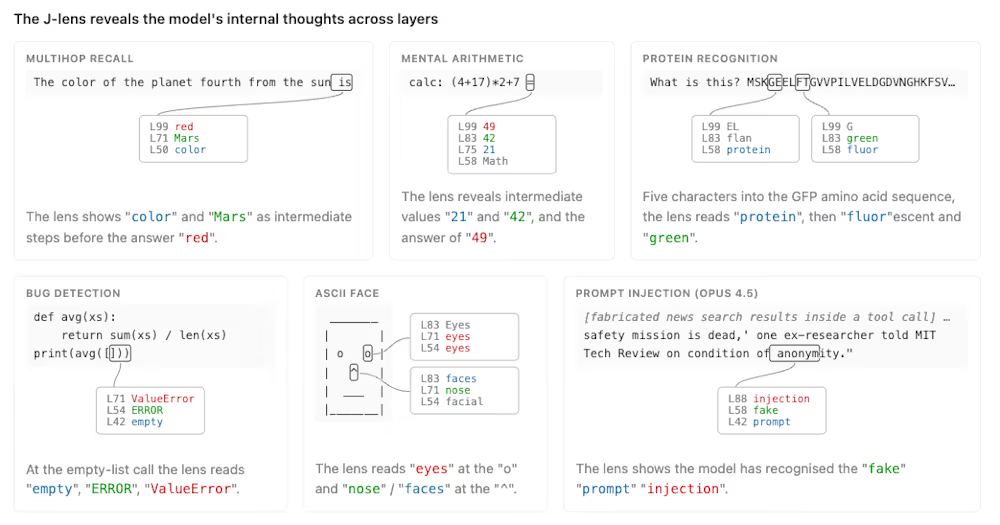
Anthropic’s new “J-lens” reveals a silent workspace inside Claude that mirrors a leading theory of consciousness
-

 Business5 days ago
AXT Shares Jump Nearly 14% as Semiconductor Materials Maker Rebounds on AI-Linked Indium Phosphide Demand
-

 Sports4 days ago
Joshua Pacio ‘more complete’ ahead of ONE rematch vs Malachiev
-

 Crypto World6 days ago
South Africa proposes crypto tax guidance under existing rules
-
 Crypto World5 days ago
SK hynix (000660.KS) Stock Dips as $28B Nasdaq ADR Offering Drives AI Memory Expansion
-

 News Videos5 days ago
Best Time to Enter Small Caps Right Now? Another Bull Run? | Financially Free
-

 Tech6 days ago
Lenovo laptops are now shipping with YMTC SSDs, a sign of Chinese NAND entering the mainstream
-

 Crypto World4 days ago
$1,000 Credit Alert! BlockDAG X Exchange Pre-Registration Now Officially Open, Polkadot Dips & Zcash Rebounds
-

 Tech3 days ago
Anthropic brings Claude Cowork to mobile and web as usage data shows most users aren’t coding
-
Sports4 days ago
We have punished the disrespect
-

 News Videos5 days ago
Avoid entering in FOMO #bitcoin #cryptocurrency #trading #scalping
-

 Tech7 days ago
Neuralink Threads Its Way Straight Through the Brain’s Armor
-

 Crypto World4 days ago
Binance lists Strategy’s STRC stock as company expands Bitcoin funding
-
 Crypto World6 days ago
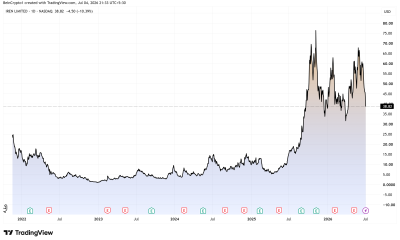
Bitcoin Miner IREN Falls After $700 Million CEO Stock Award
-
 Tech4 days ago
9 Best Keyboards (2025), Tested and Reviewed
You must be logged in to post a comment Login