

Crypto World
Bitcoin, ether little changed as U.S. launches fresh Iran strikes



The muted response is the pattern now. When Iran first closed the Strait of Hormuz in early March, Brent crude jumped past $100 a barrel for the first time in four years and later peaked near $120, and bitcoin sold off sharply on each escalation.
Part of that is timing. Oil, equities and bonds are closed for the weekend, so bitcoin is the only large market open to price the strikes in real time, and it is treating them as close to a non-event.
The fuller cross-asset reaction, in crude especially, might not show until Monday. Roughly a fifth of the world’s seaborne oil moves through Hormuz, and Brent had already carried a risk premium into the weekend after tanker traffic through the strait stayed below normal.
The real test comes Monday, however, if crude reopens with a sharp gap higher while bitcoin holds its ground. A calmer oil open would say the strait closure is being read as a threat Tehran has made and walked back before.

A record Nasdaq listing, a meme-fueled trading boom, and the largest corporate Bitcoin (BTC) holder selling its coins are set to define this quarter. These 5 companies across AI and crypto carry the stories investors will follow through September.
Each faces a key test this quarter, from debut earnings to defending market dominance. Here are the top 5 companies to watch.
1. SK Hynix (SKHY)
SK Hynix is South Korea’s second-most valuable company and the world’s leading supplier of high-bandwidth memory (HBM) chips. The company has emerged as one of the biggest beneficiaries of the AI infrastructure boom, with demand for its advanced memory chips continuing to outpace supply.
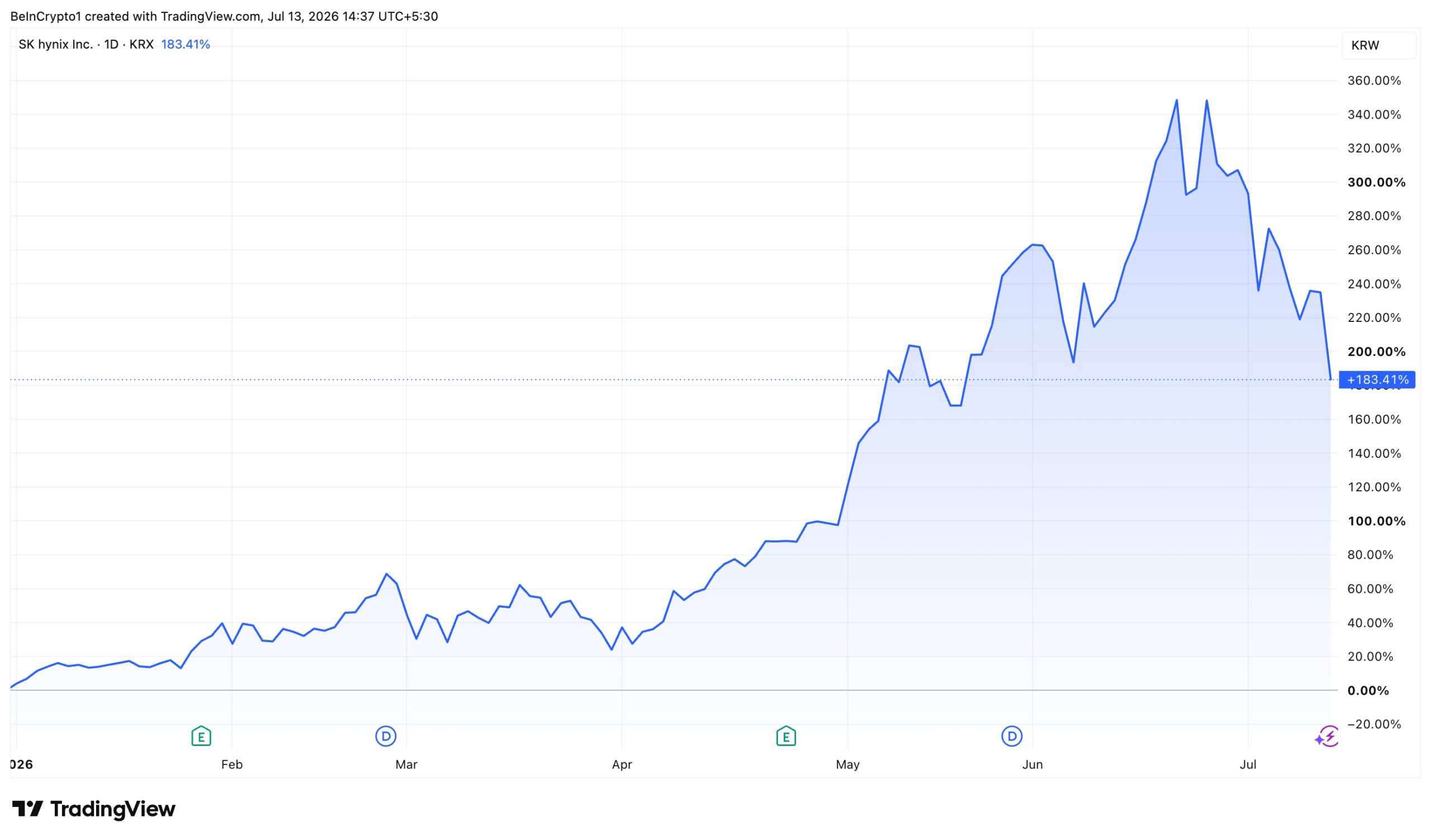
Last year, SK Hynix said its entire planned supply for 2026 had already been sold out, highlighting the strength of long-term AI demand. That momentum has helped propel its Seoul-listed shares by more than 180% year to date.

Last week, SK Hynix made its Wall Street debut. The company began trading on Nasdaq on Friday, pricing its shares at $149 to raise over $26 billion in the largest foreign listing ever on a US exchange.
The ADRs debuted strongly, opening near $170, before closing their first session almost 13% higher.
Despite the strong fundamentals, volatility has also been a defining feature. The company’s Seoul-listed shares fell 15.4% in a single session today.
How the stock trades through this quarter will be worth watching, especially after a notable decline following SpaceX’s record IPO.
Analysts remain firmly bullish. Goldman Sachs raised its 2028 operating profit forecasts for SK Hynix by 24% to 454 trillion won ($299.62 billion).
Citi lifted its target to 3.1 million won in May, roughly 68% above the current price of 1.8 million won. Meanwhile, UBS told clients to buy the new US depositary receipts while selling the Seoul-traded stock.
2. SpaceX (SPCX)
Elon Musk’s SpaceX is an aerospace, connectivity, and artificial intelligence company, which absorbed xAI ahead of its market debut. The company went public in June with the biggest IPO on record.
SpaceX priced its shares at $135 and opened at $150 on June 12. The stock touched $225 in its first week before seeing a continuous drawdown.
The slide has persisted despite the Nasdaq-100’s inclusion, a milestone that attracts passive investment flows from index-tracking funds. On Friday, it closed at a record low of $145.30, down 9.7% from its debut closing price.

Even so, at least six major brokerages, including Morgan Stanley, Goldman Sachs, and UBS, have initiated coverage with buy-equivalent ratings, Bloomberg reported.
Attention now turns to the company’s first earnings report as a public company. SpaceX has not announced a date, though analysts expect it in early August.
Analysts are bullish but far apart. Morgan Stanley set a target at $300, roughly 106% above current levels, with a bull case of $600 and a bear case of $75.
RBC and Banco BTG Pactual both set $225 targets, UBS sits at $210, Goldman Sachs at $205, and Stifel at $190. Even the lowest of those implies about 31% upside from Friday’s close.
Follow us on X to get the latest news as it happens
3. Robinhood (HOOD)
Robinhood grew from a retail trading app into a global brokerage with more than 27 million funded accounts. The company expanded its crypto business through the acquisition of Bitstamp and launched its own Layer-2, Robinhood Chain, in July.
The stock is down year to date amid a market downturn. Yet, it has gained significantly since May with a 51% rally.

Its DEX volumes and agentic AI push have also captured attention. Robinhood Chain DEX volume reached a record $893 million on July 11, per Dune data, driven by a renewed meme coin frenzy led by Cash Cat.
At the same time, the company is expanding its agentic AI trading from stocks into crypto. Prediction markets have become another growth engine. Event contracts traded on Robinhood jumped from 300 million in Q1 2025 to 8.8 billion in Q1 2026, according to Artemis.
Wall Street repriced the stock at notable speed this month. Mizuho raised its target on HOOD shares to $130 from $115 while maintaining an Outperform rating.
Barclays lifted its target 48.8% to $122 from $82 and reiterated its Buy rating. Morgan Stanley also raised its target by 30.5% to $124 from $95.
4. Strategy (MSTR)
Strategy or MicroStrategy is the largest corporate holder of Bitcoin, with 843,775 BTC purchased at an average price of $75,653. With Bitcoin below $63,000, the position sits deep underwater.
The company’s famous flywheel has reversed. Its market premium to net asset value has compressed below 1x, making new share sales dilutive. Meanwhile, MSTR, like the rest of the crypto stocks, is flashing red, down 37.7% so far in 2026.

Strategy sold 32 BTC in late May to fund preferred dividends, its first sale since a tax-related move in December 2022. The board then approved a Digital Credit Capital Framework on June 29, which authorizes the sale of up to $1.25 billion in Bitcoin. Further larger sales followed in July.
Q2 earnings are scheduled for July 30. Investors will watch whether the company leans further into Bitcoin sales under its $1.25 billion authorization.
Analysts are split on the recovery path. Citi kept a Buy rating but cut its target to $136 from $260, nearly halving its forecast. Mizuho lowered its target to $213 from $340. At the same time, Barclays initiated coverage with an Equal Weight rating and a $130 target.
5. Circle (CRCL)
Circle issues USDC (USDC), the second-largest stablecoin. The company went public last year, riding on favorable regulatory momentum and surging crypto prices.
Nonetheless, the crypto market drawdown has weighed on stock returns. BeInCrypto’s analysis revealed that Circle is trading lower from its $69 open.
Measured against the $31 offer price, however, Circle is still up by more than 100%. This makes it one of only two recent debuts still trading above their offer prices.

Competition struck hard in late June when Stripe, Visa, and BlackRock launched a rival stablecoin called Open USD, crashing Circle shares 17% in a single day. The stock is now down 16.6% year to date.
However, Circle has secured major regulatory wins. The company received final approval from the Office of the Comptroller of the Currency (OCC) to establish a national trust bank.
It also holds MiCA compliance for both USDC and its euro-denominated EURC, giving it licenses that its consortium rival lacks. Q2 earnings on August 12 offer the next test of whether that moat is holding.
Analysts hold the widest range of targets on this list. Goldman Sachs cut its target to $96 with a Neutral rating, roughly 47% above current levels. Bernstein reaffirmed its Outperform rating with a $190 target, while Clear Street called the selloff overdone.
Subscribe to our YouTube channel to watch leaders and journalists provide expert insights
The post Top 5 Companies To Watch in Q3 For Stock Market Traders appeared first on BeInCrypto.


President Donald Trump has urged the Senate to pass the CLARITY Act in honor of the late Senator Lindsey Graham as lawmakers face a narrowing window before the August recess.
Summary
- Trump has urged the Senate to pass the CLARITY Act in honor of the late Senator Lindsey Graham.
- Senate negotiators are racing to finalize a merged draft before Congress begins its August recess.
- Ethics disputes over Trump’s crypto business interests continue to complicate the bill’s path forward.
Trump links crypto bill to Graham’s legacy
In a Truth Social post, President Trump called on senators to pass the CLARITY Act in memory of Senator Lindsey Graham, whom he described as a strong supporter of the legislation. Graham died over the weekend after a brief illness.
While making his appeal, Trump argued that the United States must not lose ground to China in either digital assets or artificial intelligence. He claimed the U.S. is leading in both sectors and warned that China and other countries would like to control what he called a major financial development if Congress fails to act.
The latest appeal adds to Trump’s repeated calls for lawmakers to advance the CLARITY Act, which forms part of his administration’s push to establish the United States as a global center for the crypto industry. As crypto.news previously reported, Senate negotiators are working against a tight legislative calendar before lawmakers leave for their August recess.
Senate staff are expected to release a merged version of the CLARITY Act during the week of July 13. The draft combines proposals from the Senate Banking and Agriculture committees and reportedly adds more than 70 pages, including stronger consumer protections and revisions made during bipartisan negotiations.
White House crypto adviser Patrick Witt also described the current week as critical for the legislation. In a July 13 X post, Witt noted that the week coincides with the first anniversary of the GENIUS Act becoming law and argued that lawmakers have already lost valuable time. He said Congress can no longer afford further delays as work on the crypto framework enters its final stages.
Ethics dispute remains the biggest hurdle
Support for the bill continues to run alongside a dispute over ethics rules tied to President Trump’s personal cryptocurrency business interests.
As crypto.news reported last week, Democratic senators Elizabeth Warren, Richard Blumenthal, Gary Peters, Dick Durbin, and Ron Wyden called for congressional hearings into the national security implications of Trump’s crypto holdings before lawmakers move ahead with the CLARITY Act.
According to the senators’ joint statement, Trump’s latest financial disclosure showed that his family’s crypto ventures generated roughly $1.4 billion in income while unidentified outside investors continue to hold interests in the World Liberty Financial project. The lawmakers argued those financial ties deserve closer examination before Congress approves legislation that would reshape U.S. crypto regulation.
Separately, Coinbase Chief Policy Officer Faryar Shirzad recently rejected claims that the CLARITY Act would weaken national security. Shirzad argued that regulatory uncertainty leaves room for bad actors to operate outside clear federal oversight, whereas the proposed legislation would move more crypto activity into a defined compliance framework.
Shirzad added that the bill would require crypto brokers, dealers, and exchanges to comply with Bank Secrecy Act obligations, including anti-money laundering programs, customer identification checks, suspicious activity reporting, sanctions compliance, and procedures allowing platforms to pause suspicious transfers when requested by law enforcement.
He argued these requirements show the legislation imposes stronger safeguards rather than reducing oversight.
Support for the measure also came from Senator Cynthia Lummis, who said Graham believed the United States should remain at the forefront of digital assets. Lummis urged fellow senators to approve the CLARITY Act and send it to President Trump for his signature.


Strategy (MSTR) has not purchased any bitcoin since June 22, when it acquired just 520 BTC for approximately $35 million. Since then, the company has shifted its immediate focus from bitcoin accumulation to strengthening its liquidity position.
During the week ending July 5, Strategy sold 3,588 BTC in two transactions. It sold 1,363 BTC for approximately $80.8 million on June 30, followed by another 2,225 BTC for $135.2 million. The sales generated roughly $216 million and reduced Strategy’s holdings to 843,775 BTC.
The company said the proceeds would help fund distributions on its preferred stock and replenish the portion of its U.S. dollar reserve used to make those payments. The reserve stood at approximately $2.55 billion following the sales.
On Monday, Strategy increased its U.S. dollar reserve to approximately $3 billion. Based on annualized preferred-stock dividends and debt interest of roughly $1.76 billion, the reserve now provides about 20.4 months of coverage.
This liquidity buffer should give Strategy sufficient flexibility to navigate an extended bitcoin downturn without being forced to sell significant amounts of bitcoin at lower prices or raise capital under unfavorable conditions.
Crypto World
Iran Just Struck 5 Countries, and Cardano Dropped to $0.16: But Kraken Quietly Staked $1B

Cardano (ADA) is trading near $0.1616 on July 13, retesting the 20-day EMA as an overnight geopolitical shock, Iran launching coordinated strikes across five regional countries, rattled crypto markets broadly, and pushed ADA to an intraday low of $0.1572 before a partial recovery.
The move matters because it defines whether this is a controlled pullback to structure or the start of another leg lower. What the chart reveals about that question is less ambiguous than the headlines suggest.
Kraken quietly registered 12 Cardano stake pools in June with approximately $1 billion in ADA delegated, infrastructure commitment at a scale that requires deliberate operational planning, not an automated backend toggle.
— Stake with Pride
 Kraken registered 12 Cardano pools with ~ $1B cardano:native in June! pic.twitter.com/r1NR6eSMAZ
 Midnight + Cardano (@StakeWithPride) July 11, 2026
Simultaneously, Cardano logged 233 GitHub commits over the past seven days, placing it fifth among all Layer-1 networks and accounting for roughly 6.2% of total L1 development activity across approximately 3,700 commits.
That combination of institutional staking posture and developer momentum is the kind of quiet accumulation signal that tends to be ignored amid geopolitical noise and then remembered in hindsight. Broader altcoin flows remain tilted toward Bitcoin and Ethereum for now, keeping ADA rangebound despite the underlying activity.
Can Cardano Price Reclaim $0.19 This Week?
ADA price at $0.16, down 3.60% over 24 hours and off 13.10% over the past seven days, with a short-term bounce of 4.89%, the spread reflecting the extent of intraday volatility the geopolitical event injected. The 7-day range runs from roughly $0.1623 to $0.1922, putting spot price near the bottom of that band.
Technically, the 20-day EMA near $0.1667 is the line in the sand. The RSI sits at 43.04 with a bullish divergence structure still technically active from June lows, though momentum has clearly faded from the 60-level peak seen after the initial bounce. The 50-day EMA at $0.1811 and the 100-day at $0.2111 cap upside meaningfully, the former resistance band at $0.20–$0.22 is now supply, not floor.
Three scenarios structure the near-term read. Bull case: ADA holds the 20-day EMA zone on a closing basis, geopolitical fear subsides, and price grinds back toward $0.19 over 3–5 sessions.
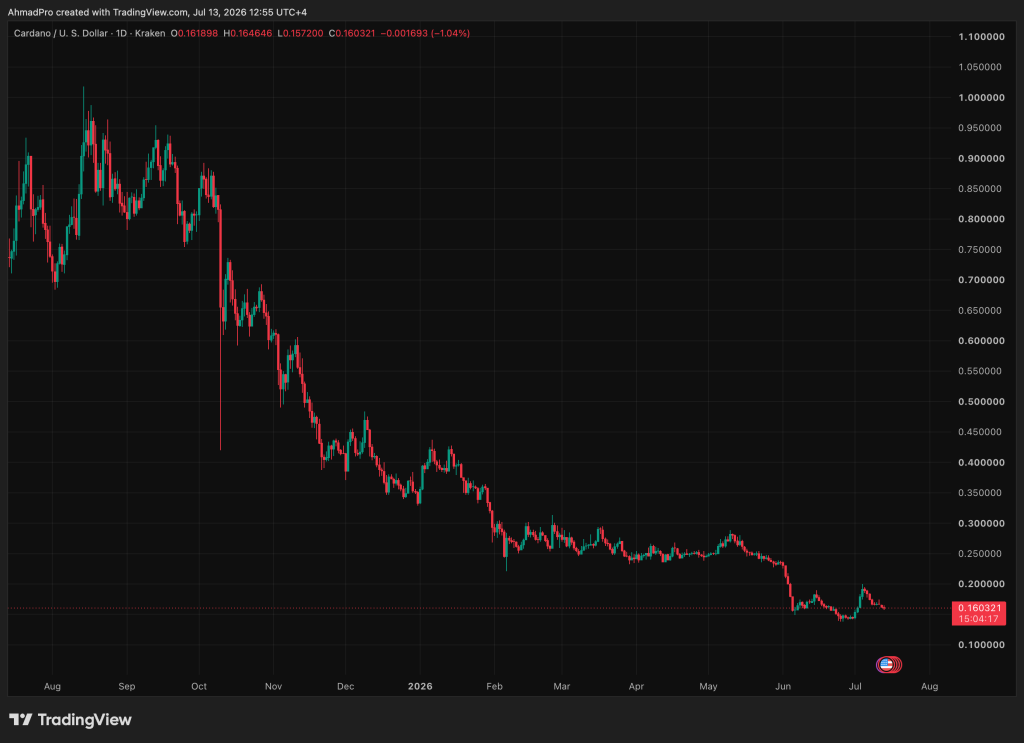
Base case: consolidation between $0.16 and $0.1811 as macro uncertainty keeps risk appetite suppressed, no breakdown, no breakout.
Bear case: a daily close below $0.155 opens a retest of the $0.14 region, invalidating the bullish divergence structure entirely. Broader market conditions remain the dominant variable — ADA does not cleanly diverge from the macro direction at this stage of the cycle. (The Kraken staking news is constructive, but institutional staking yield generation is not the same as a price catalyst.)
Is $0.19 achievable this week? Only if risk appetite recovers faster than the geopolitical situation warrants. The probability distribution skews toward the base case.
LiquidChain Targets Early Mover Positioning as Cardano Tests Critical Support
ADA’s range compression illustrates the core problem with established Layer-1s at this stage: the market cap is large enough to require significant capital inflows to move price, but narrative momentum has stalled below key moving averages with no near-term catalyst to force institutional re-rating.
That’s the structural dynamic pushing some active traders toward earlier-stage infrastructure plays where the asymmetry is still intact.
LiquidChain (LIQUID) is a Layer 3 infrastructure project positioning itself as a cross-chain liquidity layer, its core thesis being that Bitcoin, Ethereum, and Solana liquidity pools remain siloed, and that unified execution across all three represents an unsolved infrastructure problem worth solving.
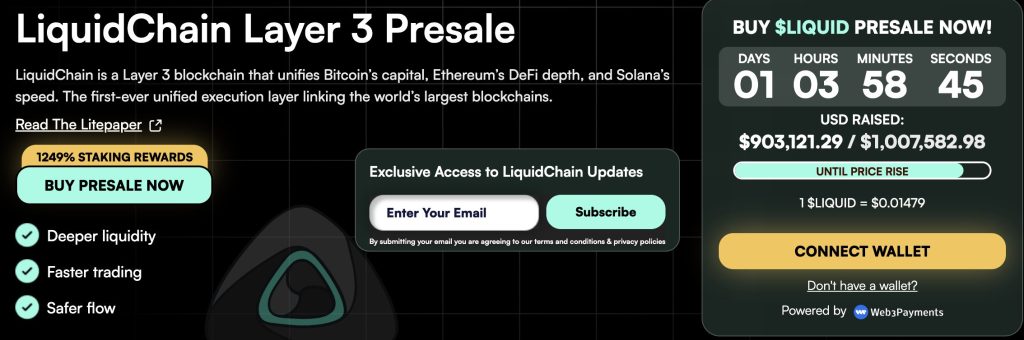
The project’s Unified Liquidity Layer and Deploy-Once Architecture are the headline technical differentiators: developers deploy once and access BTC, ETH, and SOL ecosystems simultaneously through single-step execution with verifiable settlement. The presale is currently priced at $0.01479 with $903,121.14 raised to date, early stage by any measure.
Early-stage presales carry real risk of project non-delivery and illiquidity; that caveat is non-negotiable. Research LiquidChain’s presale terms before allocating.
The post Iran Just Struck 5 Countries, and Cardano Dropped to $0.16: But Kraken Quietly Staked $1B appeared first on Cryptonews.
Bitmine has expanded its Ethereum treasury by another 27,801 ETH, lifting its holdings above 5.77 million ETH, while Chairman Tom Lee has identified the Robinhood Chain as a fresh driver of Ethereum adoption.
Summary
- Bitmine bought another 27,801 ETH, increasing its holdings to 5.77 million Ethereum.
- Tom Lee called Robinhood Chain a new catalyst driving real-world demand for ETH.
- Despite continued accumulation and staking growth, BMNR shares fell nearly 2%.
According to a press release from Bitmine, the company purchased 27,801 ETH over the past week, bringing its total holdings to 5,770,038 ETH, or about 4.8% of Ethereum’s circulating supply of roughly 120.7 million coins.
Tom Lee reiterated that the company still expects to own 5% of the total ETH supply before the end of the year, extending an accumulation strategy it has maintained throughout 2026.
Ethereum treasury continues to expand
Recent buying has kept Bitmine’s pace of accumulation intact. Just last week, blockchain intelligence platform Arkham Intelligence tracked another acquisition of 40,000 ETH, valued at roughly $70 million, through two wallet addresses linked to FalconX and Kraken hot wallets.
Although the company did not publicly confirm that purchase, it has consistently published weekly updates detailing additions to its Ethereum treasury.
Bitmine has also continued putting a large share of its holdings to work. The company disclosed that 4,917,189 ETH have now been staked, generating projected annualized staking revenue of approximately $242 million. The latest filing also shows that the firm’s Ethereum position carries an average acquisition price of $3,374 per coin.
Despite the continued buying, market data provider DropsTab estimates that Bitmine remains at an unrealized loss of roughly $9.2 billion based on current market prices.
Still, the company has not slowed its purchases, having previously acquired 42,197 ETH between June 29 and July 3, around the same period that Bitcoin treasury company Strategy sold more than $200 million worth of Bitcoin.
Robinhood Chain strengthens Ethereum’s utility case
Alongside the latest treasury update, Lee pointed to Robinhood Chain as an important development for Ethereum’s long-term value proposition. He argued that the network embeds Ethereum directly into user activity because ETH serves as the native gas token, transaction fees are paid in ETH, and final settlement occurs on the Ethereum blockchain.
“Robinhood Chain uses ETH as the native gas token. And transaction fees are denominated in ETH, and the finality is settled on Ethereum. Robinhood’s 27 million users are paying crypto fees denominated in ETH. In other words, everyday users are starting to see ETH as money.”
Lee added that Robinhood Chain has already surpassed $1 billion in dollar-denominated trading volume and now processes more trading volume than any decentralized exchange, which he described as evidence of strong product-market fit built around Ethereum.
Separate market reports recently noted that the network reached 7.6 million daily transactions, overtaking Base in daily activity.
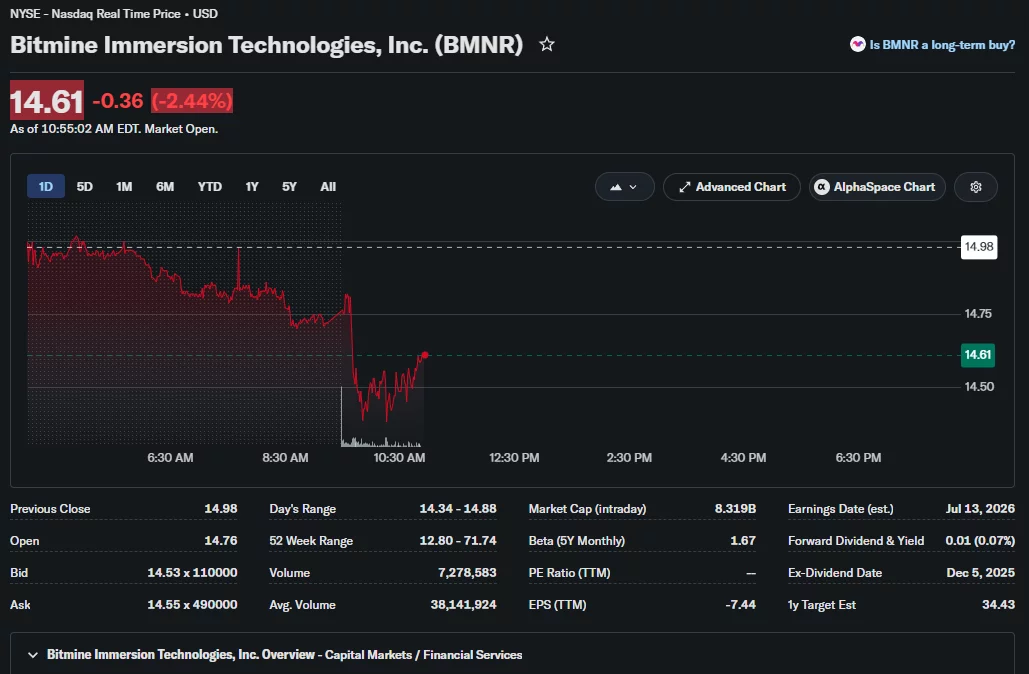
While Bitmine continued increasing its Ethereum exposure, investors reacted cautiously to the latest announcement. Shares of the company’s stock, BMNR, traded around $14.61, down nearly 2.4% on the day, according to data from Yahoo Finance.
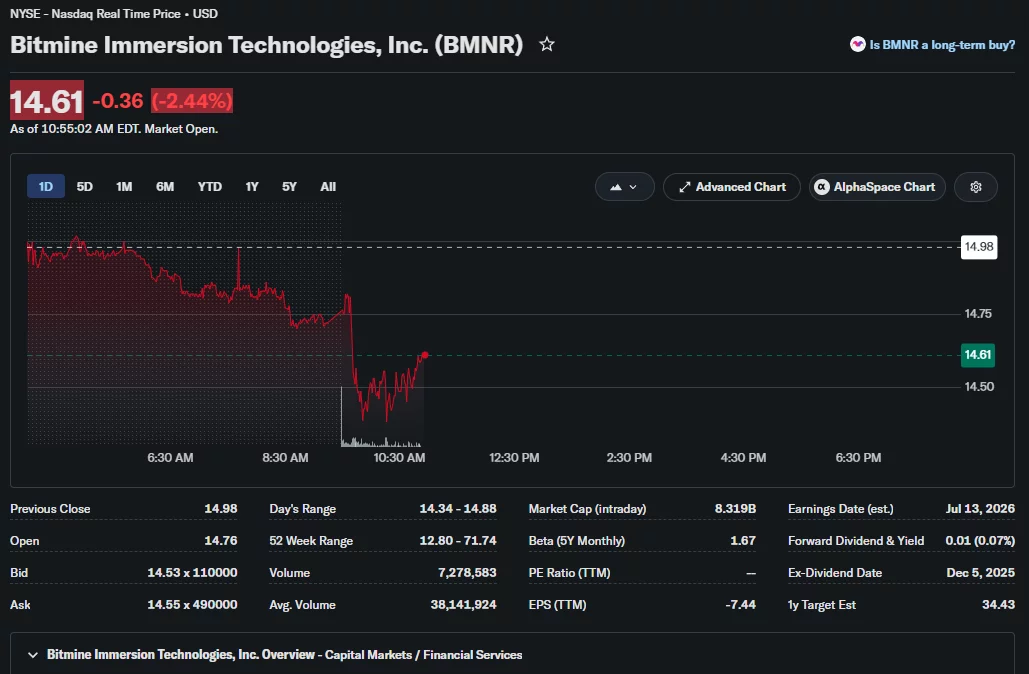
The decline came even as Bitmine reaffirmed its aggressive accumulation strategy and continued moving closer to its stated goal of controlling 5% of Ethereum’s circulating supply.
Crypto World
3 Years After The Key Ripple-SEC Ruling: How XRP Went From SEC Target to Institutional Asset
It has been three years since Judge Analisa Torres delivered her landmark ruling that Ripple’s programmatic sales of XRP on crypto exchanges did not constitute securities transactions. This decision remains one of the most important legal moments in the history of the industry that had long been vilified by regulators.
Issued on July 13, 2023, the ruling distinguished between XRP sold to institutional investors, which the court found violated securities laws, and tokens sold on public exchanges, which it said did not constitute securities transactions.
The decision triggered an immediate market reaction. The asset, for one, soared more than 70% in a single day as major US exchanges such as Coinbase, Kraken, and Gemini quickly relisted it after previously suspending trading following the SEC’s lawsuit.
The token staged a powerful rally in late 2024 and subsequently climbed above $3 in early 2025 before it tapped a new ATH in July that year. Although XRP later gave up part of those gains amid a broader market downturn, it stood above $1 on the ruling’s third anniversary.
Following the Torres ruling, Ripple continued expanding beyond XRP and launched its US dollar-backed stablecoin, RLUSD, in December 2024.
From Partnerships to Acquisitions
Ripple partnered with African payments network Onafriq to facilitate cross-border payments between Africa and the rest of the world, using Ripple Payments months after the ruling. The following year, the company added the Axelar Foundation to its growing roster of strategic partners to support interoperability within XRP Ledger (XRPL).
It partnered with Clear Junction to ramp up euro payment rails for Ripple Payments and improve payout capabilities across Europe as well. Later that year, it collaborated with Archax to bring tokenized RWAs onto the XRPL. Ripple also worked with OpenEden to bring tokenized US Treasury bills to the network.
In 2025, South Korean institutional custody firm BDACS signed a strategic partnership with the company. An alliance was also made with the tokenization platform Ctrl Alt to support the Dubai Land Department’s (DLD) Real Estate Tokenization Project. Meanwhile, BNY Mellon was appointed the primary custodian for RLUSD reserves.
On the acquisitions front, Ripple first announced the purchase of Standard Custody & Trust Company to strengthen its regulatory compliance. The acquisition officially closed in June 2024.
The next major acquisition came in April 2025 with the $1.25 billion purchase of global prime broker Hidden Road. The transaction expanded the company beyond payments into institutional prime brokerage, clearing, and financing, while positioning RLUSD and the XRP Ledger at the center of Hidden Road’s post-trade infrastructure.
Entering the ETF Era
The Torres ruling also paved the way for XRP’s entry into the US exchange-traded fund market in a major milestone for institutional adoption. While several asset managers, including Bitwise, Franklin Templeton, Grayscale, Canary Capital, and 21Shares, filed applications for spot XRP ETFs over the following months as regulatory clarity around the asset improved, the products did not begin launching until late 2025.
Since they went live, these funds have dominated crypto ETF flows and have only recently suffered a setback. So far in July, XRP ETFs have recorded an outflow of $2.50 million after an impressive nine-week green-only streak.
The post 3 Years After The Key Ripple-SEC Ruling: How XRP Went From SEC Target to Institutional Asset appeared first on CryptoPotato.
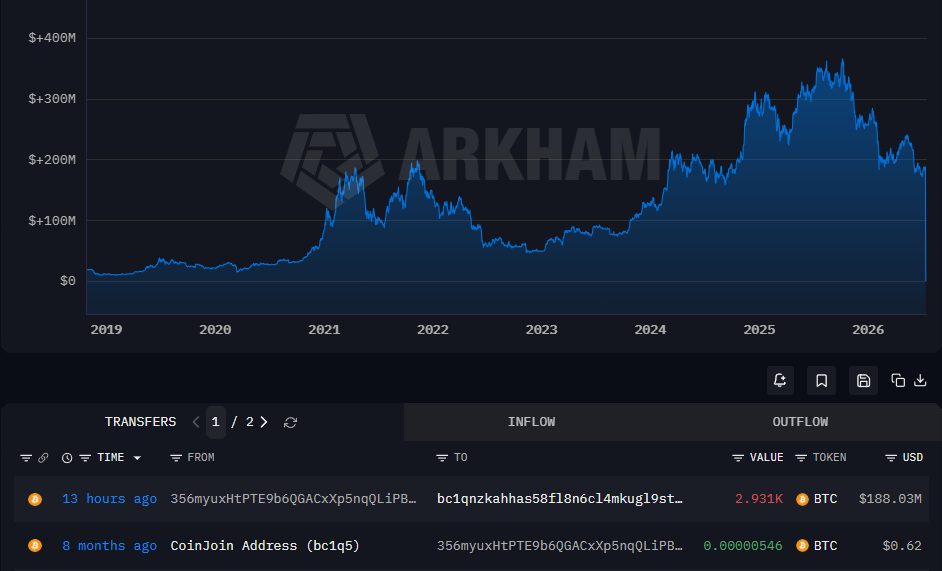
A wallet last active when Bitcoin was trading near $6,500 transferred $188 million of its holdings in recent days, its first onchain movement in seven years.
With the biggest cryptocurrency now trading at around $64,000 apiece, the whale transferred 2,931 Bitcoin (BTC) from wallet “356my” to wallet address “bc1qn” on Sunday, according to blockchain data platform Arkham.
The whale is likely looking at a nearly 10-fold gain on the long-dormant holdings, according to blockchain analytics platform Onchain Lens.
The transaction comes during a period when whale transfers — those at a minimum of $10 million per Coinglass — are accounting for the majority of Bitcoin flowing to cryptocurrency exchanges. Large whale transfers to exchanges often precede sales, which can place additional pressure on Bitcoin’s price.
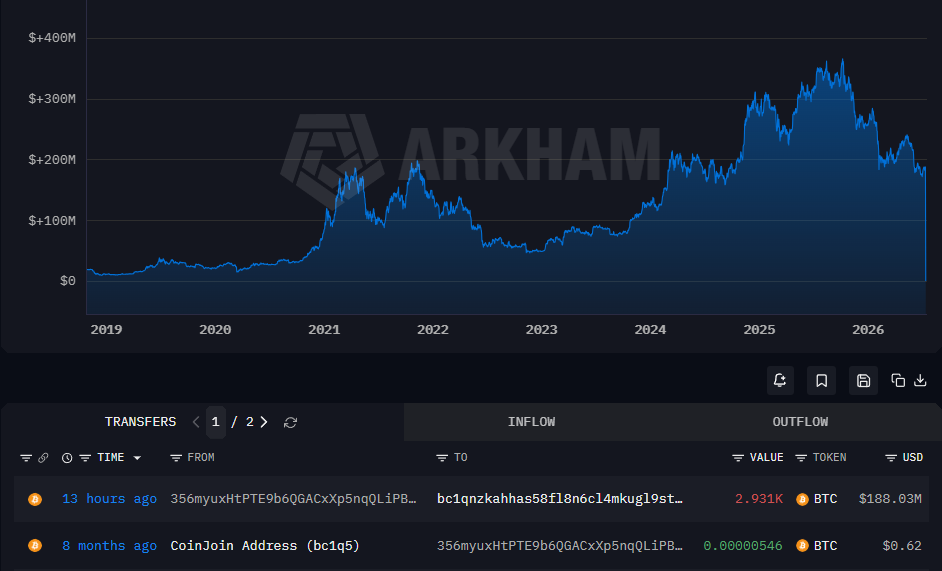
Crypto wallet address 356my, transactions and token balance history. Source: Arkham
Fast becoming year of the whale
Whales have been driving most of the Bitcoin inflows to cryptocurrency exchanges since the beginning of the year.
About 99% of BTC deposited to exchanges is currently from the 10 largest individual transfers, according to CryptoQuant’s chart tracking the ratio of whale transfers to exchanges, which stood at 0.99 at press time.
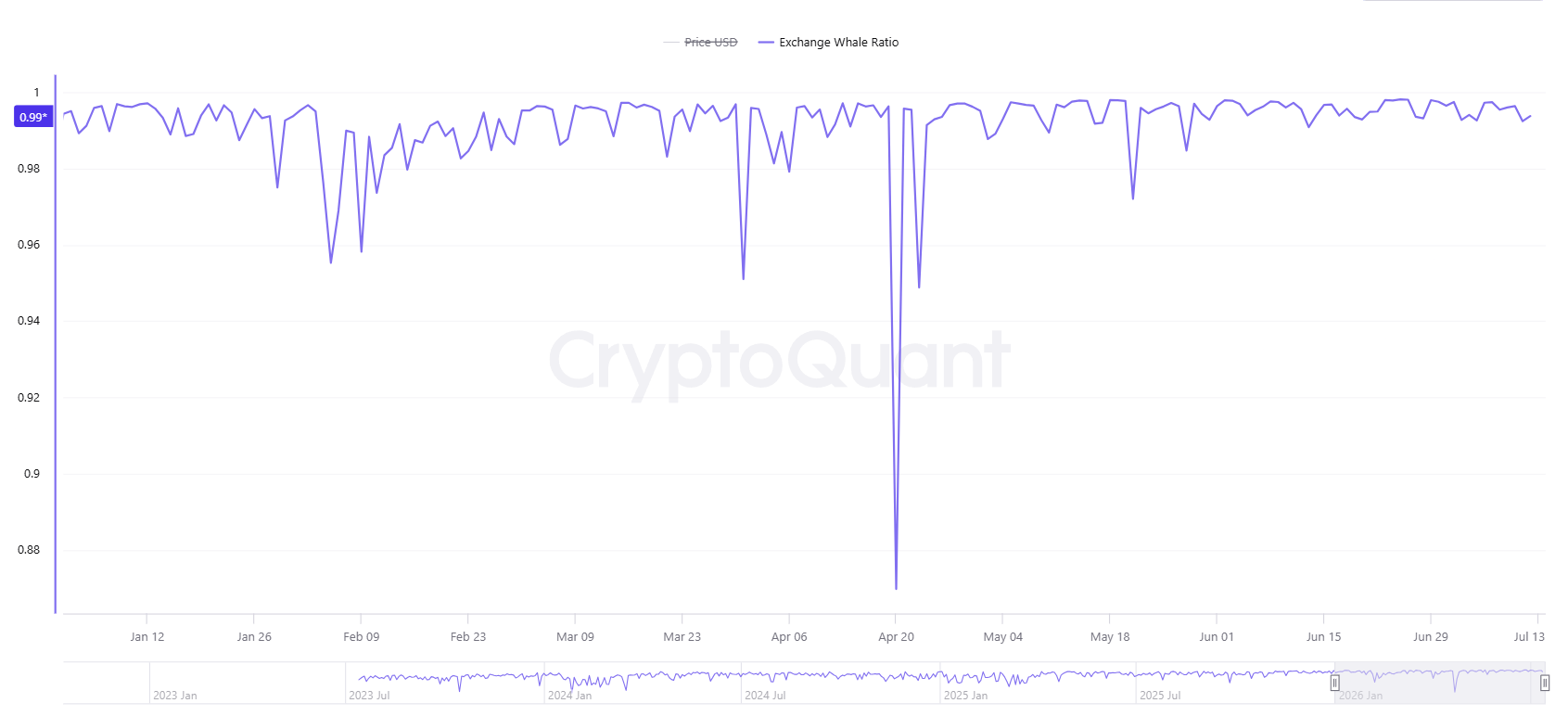
Bitcoin: Exchange Whale Ratio – all exchanges, year-to-date chart. Source: CryptoQuant
A high exchange ratio means that whales account for a disproportionate share of inflows, which is “historically a bearish signal” as these large deposits are more likely to precede significant sell orders than routine retail activity, according to the analytics platform.
Related: Strategy sells 3,588 Bitcoin for $216M to fund dividends, keeps $2.55B reserve intact
The whale transfers may add to the persistent Bitcoin selling pressure from spot Bitcoin exchange-traded fund (ETF) holders.
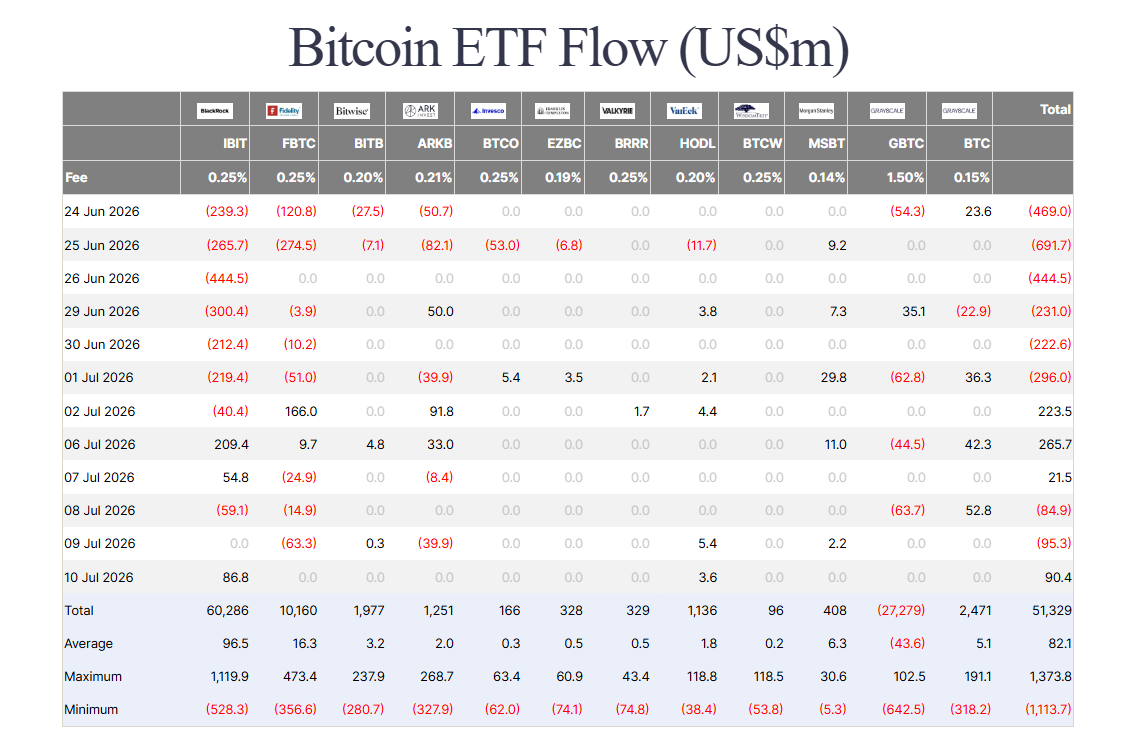
Bitcoin ETF Flow (USD, million). Source: Farside Investors
US-traded spot Bitcoin ETFs registered $197 million in net weekly inflows leading up to Friday, but saw $4.51 billion in net outflows in June, marking their worst month on record, according to Farside Investors data.
Magazine: Bitcoin nearing late stages of bear market: Jamie Coutts, Real Vision
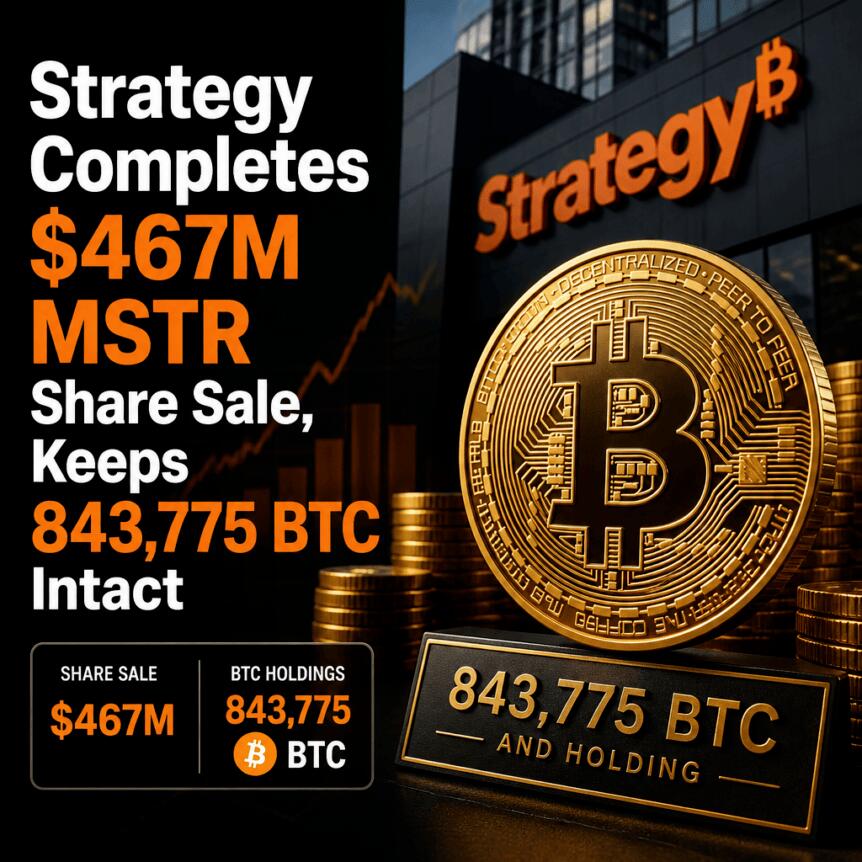
Strategy, the largest corporate holder of Bitcoin, has raised additional capital by selling shares under its at-the-market (ATM) program while keeping its Bitcoin treasury unchanged during the latest reporting window. In its most recent SEC update, the company detailed the size of the equity issuance and reaffirmed that no BTC trades occurred in the period.
According to an 8-K filing dated Monday, Strategy sold 4.8 million shares of its Class A common stock for $466.7 million between July 6 and July 12. The filing also states that Strategy held 843,775 BTC at an average purchase price of $75,476 per BTC, with no Bitcoin purchases or sales reported during the same timeframe.
Key takeaways
- Strategy raised $466.7 million by selling 4.8 million shares through its ATM offering from July 6–12, without altering its BTC holdings.
- The company reported 843,775 BTC at an average purchase price of $75,476 and disclosed no BTC transactions in the period covered by the filing.
- Strategy’s reported US dollar reserve increased to $3 billion as of July 12, supporting preferred dividends and debt interest obligations.
- The company continues to expand its equity-capacity runway, citing $23.8 billion of remaining ATM capacity, including capacity from a $21 billion additional offering announced earlier this year.
- Strategy is preparing its first semi-monthly dividend cycle for preferred shareholders, with near-term payment dates tied to new record-date rules.
Equity funding without touching the Bitcoin treasury
Strategy’s latest SEC filing highlights a deliberate split between raising fiat liquidity and managing its Bitcoin inventory. During the July 6–12 window, the company used its ATM program to issue shares and generate cash, but it reported no spot BTC activity.
The reported balance of 843,775 BTC suggests Strategy continues to treat its Bitcoin treasury as a long-horizon asset rather than a pool to be actively traded in response to short-term liquidity needs. That approach matters for investors watching whether Strategy’s BTC exposure remains steady while it scales the rest of its capital structure.
As investors monitor day-to-day market dynamics, the filing also landed while MSTR shares were reportedly down roughly 3% near the Nasdaq open to about $91.80 per share, according to Yahoo Finance. Bitcoin was trading around $62,580, down more than 2% over the prior 24 hours.
Cash buffer climbs to $3 billion
Beyond the share-sale figures, the 8-K update focused on Strategy’s liquidity position. The company reported its US dollar reserve at $3 billion as of July 12, up from $2.55 billion one week earlier.
Strategy said this cash reserve is used for operational obligations tied to its preferred stock dividends and interest payments on its outstanding debt. Importantly for readers tracking settlement mechanics, the reserve is also described as including expected proceeds from ATM share sales that had not yet settled as of the reporting date.
The update reinforces that Strategy’s financing strategy is not solely reliant on selling Bitcoin. Instead, the company is using equity issuance—at least in this period—to increase its USD buffer, potentially reducing the need for BTC sales to meet near-term payment requirements.
ATM capacity remains significant, with more runway available
Strategy also disclosed remaining capacity under its ATM framework. The company said it has $23.8 billion of available capacity, which includes capacity related to a new $21 billion offering announced on March 23. Strategy noted it may begin selling shares under this additional capacity once the existing offering has been substantially depleted.
That matters because the ATM program effectively functions as a flexible funding channel. For investors, the key question is how quickly Strategy can draw on this capacity while still maintaining its broader Bitcoin-oriented corporate posture.
In a separate development referenced in the update, Strategy previously sold BTC to replenish its US dollar reserve. The company announced it sold 3,588 BTC for about $216 million to fund preferred dividend payments, with the transactions described as:
- 1,363 BTC sold at an average price of $59,256 between June 29 and June 30
- 2,225 BTC sold at an average price of $60,773 between July 1 and July 5
In the same earlier June 29 8-K filing, Strategy reportedly stated it made no BTC purchases and disclosed the sale of 12.7 million shares through its ATM offering, generating $1.15 billion in net proceeds. Together, those disclosures show an ongoing balancing act between equity issuance and selective BTC sales to meet liquidity targets.
Earlier coverage from Cointelegraph discussed the rationale behind the company’s $216 million BTC sale, framing the decision in the context of Strategy’s preferred dividend obligations and its overall capital strategy.
Preferred dividends shift to a semi-monthly rhythm
Strategy’s equity and cash management also intersects with its dividend schedule. The company is preparing for its first semi-monthly dividend payment to holders of its STRC preferred stock on Wednesday.
In an announcement from June 8, Strategy said the new schedule would use record dates on the 15th and the last day of each month, with payments made on the following record date. The first semi-monthly record date was June 30, 2026, and the first payment date was scheduled for July 15, according to Strategy’s release.
With dividends arriving more frequently, the importance of Strategy’s updated cash reserve could rise. For preferred investors, the operational question becomes how consistently Strategy can fund distributions through a mix of ATM proceeds, reserve management, and—when necessary—BTC sales.
What to watch next
With Strategy now drawing on substantial remaining ATM capacity while preparing a more frequent preferred dividend timetable, market participants will likely focus on whether the company continues to keep BTC holdings static during future funding windows—and how quickly its USD reserve translates into predictable dividend coverage as semi-monthly payments roll forward.
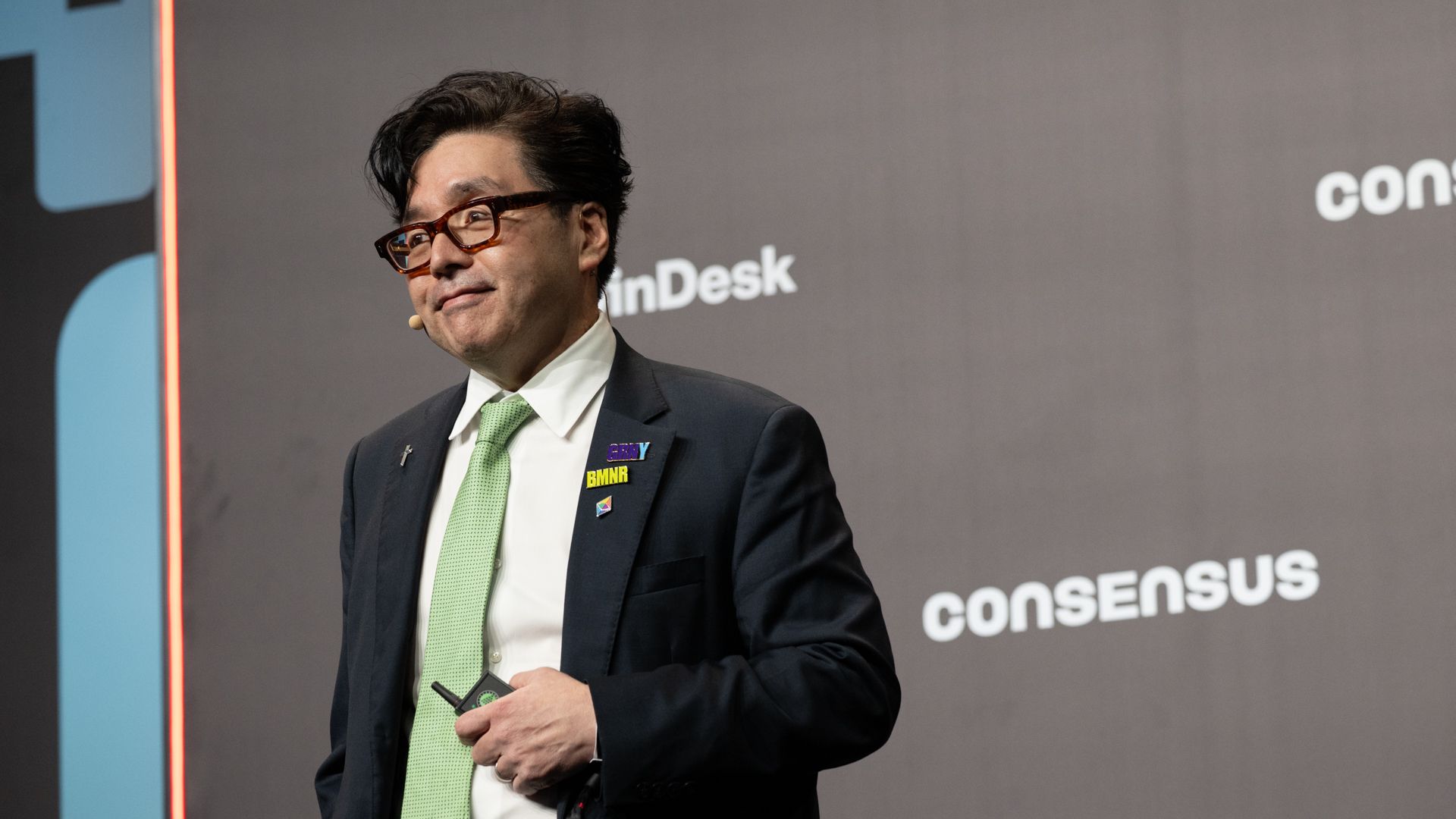
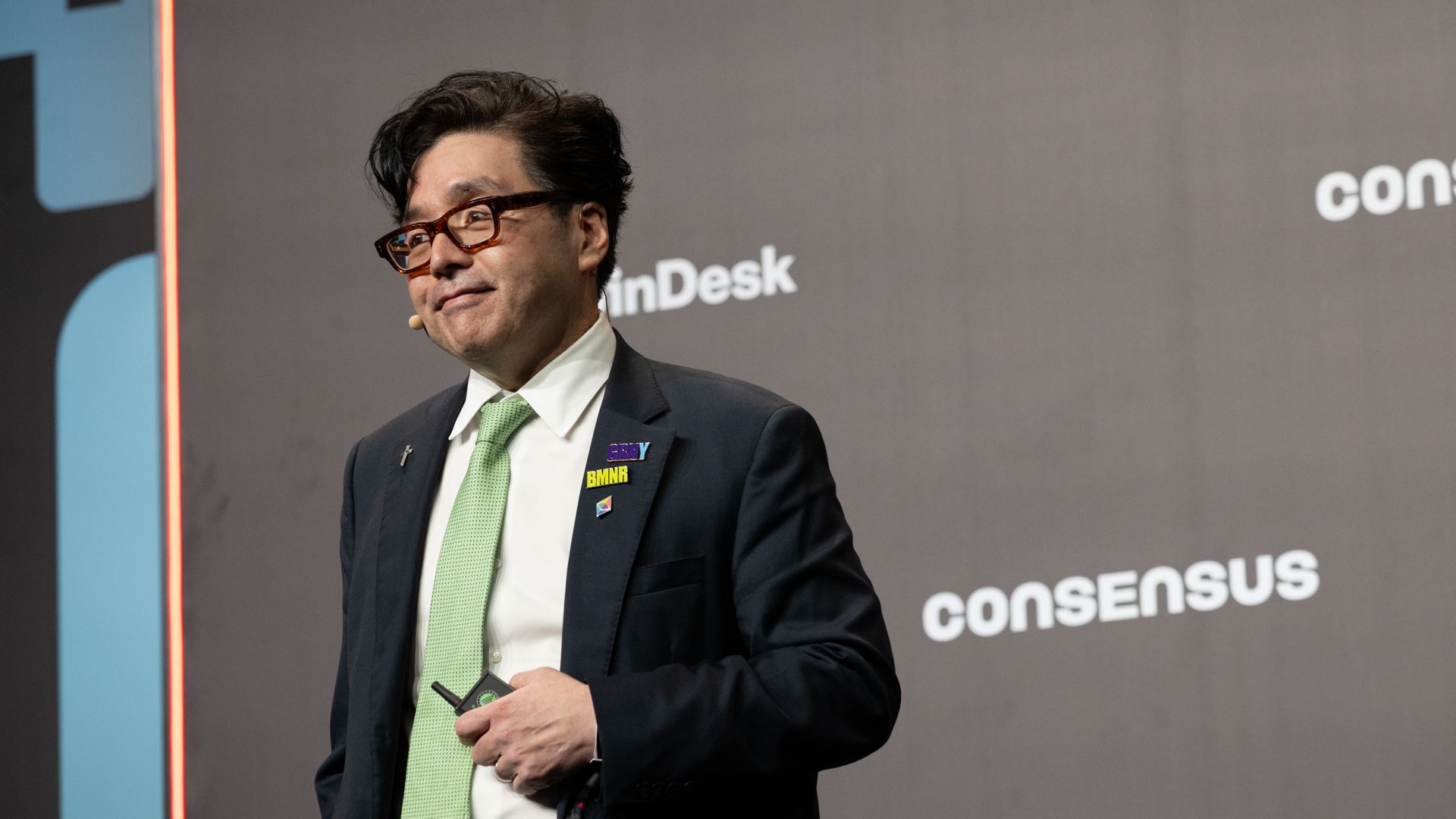
BitMine Immersion (BMNR) added to its Ethereum treasury last week, bringing its total holdings to 5.77 million ether (ETH), or about 4.8% of Ethereum’s circulating supply of 120.7 million tokens, according to a Monday press release.
The company said nearly five million of its ETH holdings are staked, allowing it to earn staking rewards while maintaining one of the largest corporate Ethereum treasuries.
Beyond ether, BitMine’s balance sheet includes 206 bitcoin , a $180 million stake in Beast Industries, a $69 million stake in Eightco Holdings (ORBS) and about $482 million in cash and marketable securities.
Chairman Tom Lee pointed to growing activity on Ethereum’s layer-2 networks as a key reason for the company’s continued focus on ETH.
“One of the biggest crypto success stories in 2026 is the breakaway success of the Robinhood Chain L2 mainnet on July 1, built on Arbitrum,” Lee said in the release. “Already, dollar volumes have exceeded $1 billion, and Robinhood Chain now has more trading volume than any other decentralized exchange (DEX), demonstrating the outstanding utility and product market fit for Ethereum, which is the underlying chain.”
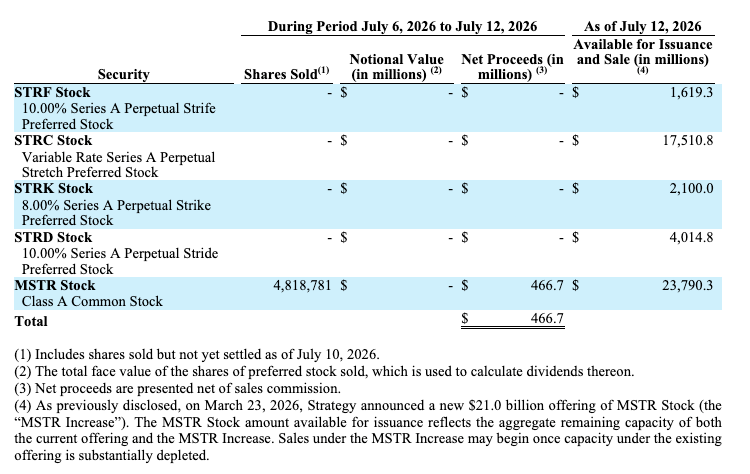
Strategy, the largest corporate holder of Bitcoin, raised fresh capital by selling MSTR shares through its at-the-market (ATM) offering last week while leaving its BTC treasury unchanged.
Strategy sold 4.8 million shares of its Class A common stock for $466.7 million between July 6 and July 12, according to a Monday 8-K filing with the US Securities and Exchange Commission.
The company did not buy or sell any Bitcoin during the period and reported holdings of 843,775 BTC at an average purchase price of $75,476 per BTC.
The update comes as investors continue to watch how Strategy balances equity issuance, Bitcoin accumulation and its growing preferred stock offerings as it expands its BTC-focused corporate strategy.
Ahead of Monday’s Nasdaq open, MSTR shares were trading down roughly 3%, to $91.80 apiece, according to Yahoo Finance. Bitcoin was trading at about $62,580, down more than 2% in the past 24 hours.
Cash buffer grows to $3 billion
Strategy increased its US dollar reserve to $3 billion as of July 12, up from $2.55 billion a week earlier. The reserve is used to fund dividend payments on its preferred stock and interest payments on its outstanding debt.
The reserve includes expected proceeds from MSTR shares sold through the company’s ATM offering that had not yet settled as of the reporting date.
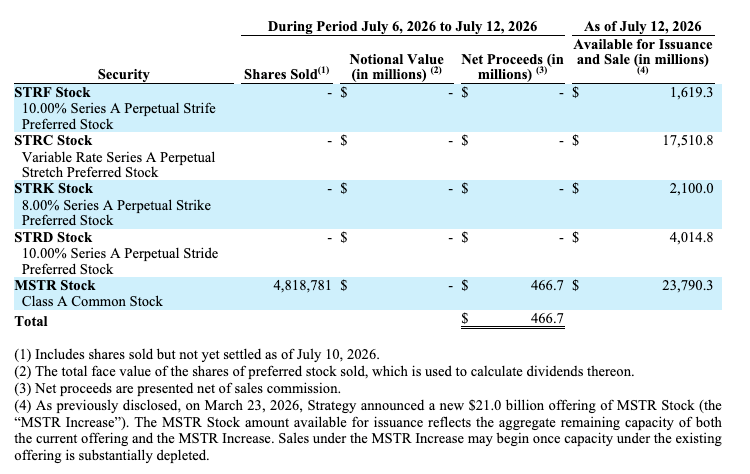
Source: SEC
Strategy has $23.8 billion of remaining capacity under its MSTR ATM offering, including capacity from a new $21 billion offering the company announced on March 23. The company said it may begin selling shares under the additional capacity once the existing offering is substantially depleted.
Last week, Strategy announced it sold 3,588 BTC for about $216 million to replenish its US dollar reserve and fund preferred stock dividend payments.
Related: Lyn Alden says Bitcoin needs no savior as Strategy sells $216M of BTC
The transactions included the sale of 1,363 BTC at an average price of $59,256 between June 29 and June 30, followed by another 2,225 BTC at an average price of $60,773 between July 1 and July 5.
In the same June 29 8-K filing, Strategy also reported no BTC purchases, while disclosing the sale of 12.7 million MSTR shares through its ATM offering, generating $1.15 billion in net proceeds.
STRC moves to twice-monthly dividend schedule
Strategy is boosting its USD reserve as it readies its first semi-monthly dividend payment to its STRC preferred stock holders on Wednesday.
Under a new schedule announced on June 8, STRC will use record dates on the 15th and the last day of each month, with payments made on the following record date.
The first semi-monthly record date was June 30, 2026, with the first payment date scheduled for July 15.
Magazine: Bitcoin nearing late stages of bear market: Jamie Coutts, Real Vision

Diamondbacks place Zac Gallen on 15-day IL with elbow inflammation

As TV-tracking app TV Time shuts down, its founder builds Bingers, a new home for fans
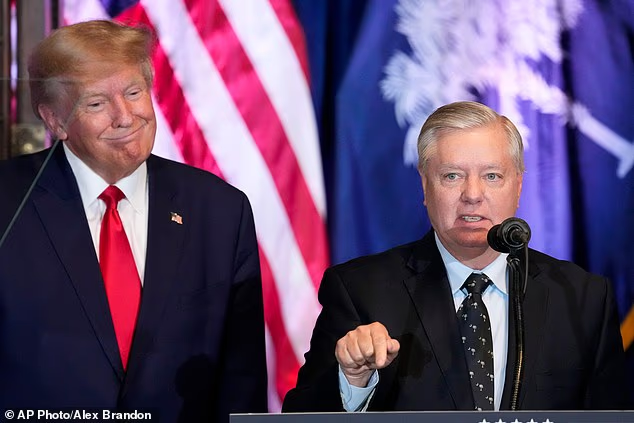
Trump unveils surprise candidate to fill Lindsey Graham’s shoes


-

 Fashion7 days ago
Open Thread: What Great Books Have You Read Recently?
-

 News Videos6 days ago
Whats Hidden Inside This Cash Register? #treasure #reselling #money
-

 Fashion4 days ago
Loro Piana Fall 2026 Enters Houston’s Art Scene
-

 Fashion3 days ago
Weekend Open Thread: Nutriplenish Leave-In Conditioner
-

 Crypto World7 days ago
$1,000 Credit Alert! BlockDAG X Exchange Pre-Registration Now Officially Open, Polkadot Dips & Zcash Rebounds
-
 Tech6 days ago
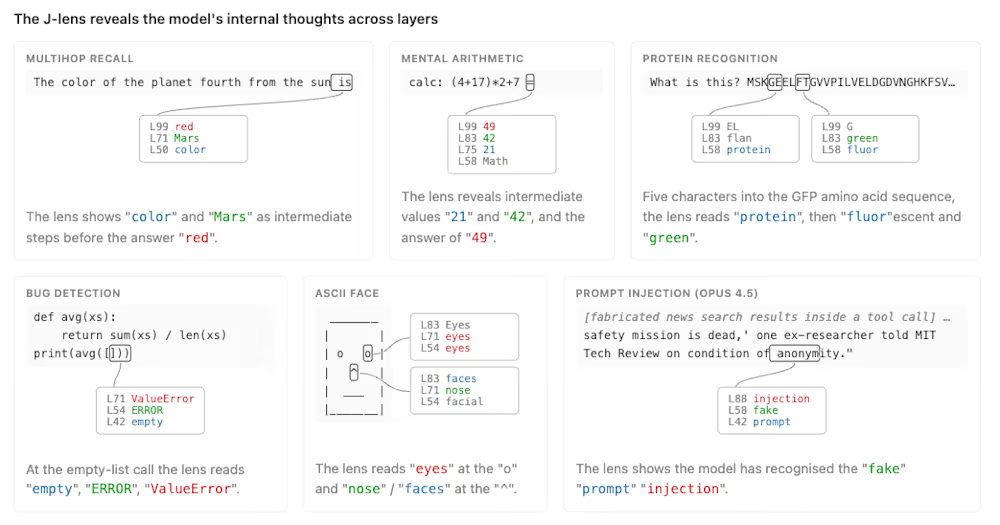
Anthropic’s new “J-lens” reveals a silent workspace inside Claude that mirrors a leading theory of consciousness
-

 News Videos7 days ago
Best Time to Enter Small Caps Right Now? Another Bull Run? | Financially Free
-

 Business7 days ago
AXT Shares Jump Nearly 14% as Semiconductor Materials Maker Rebounds on AI-Linked Indium Phosphide Demand
-

 Sports6 days ago
Joshua Pacio ‘more complete’ ahead of ONE rematch vs Malachiev
-
 Sports4 days ago
2026 Genesis Scottish Open Thursday TV coverage: Round 1
-

 Tech6 days ago
Anthropic brings Claude Cowork to mobile and web as usage data shows most users aren’t coding
-
 Crypto World7 days ago
SK hynix (000660.KS) Stock Dips as $28B Nasdaq ADR Offering Drives AI Memory Expansion
-

 Sports3 days ago
Super Eagles star Moses Simon opens up on Liverpool transfer regret
-
Sports6 days ago
We have punished the disrespect
-

 Crypto World7 days ago
Binance lists Strategy’s STRC stock as company expands Bitcoin funding
-

 Tech4 days ago
Character.AI enters the microdrama arena with its own productions, but there’s a twist
-

 Tech7 days ago
9 Best Keyboards (2025), Tested and Reviewed
-
 Business7 days ago
Enbridge: AI Tailwind Priced In (Rating Downgrade)
-
 Crypto World6 days ago
Claude AI Created Something Anthropic Never Designed
-

 Crypto World6 days ago
Nasdaq arthritis company holding Moshe Hogeg crypto hits all-time low
You must be logged in to post a comment Login