Greenhill Forge wanted to find out whether solar air heating could handle actual laundry drying without relying on a big electric heating element. The short answer from his latest build and test is yes, and the numbers make a strong case for it. He connected an upgraded solar air collector panel directly to a standard clothes dryer. The panel supplies heated air that replaces the usual 2,400-watt electric element. In the real-world trial, a test shirt came out completely dry after one hour. The only electricity consumed during that hour went to spinning the drum. Total draw sat around 155 watts.
This corresponds to more than ten times less power as a standard electric dryer. The heating burden just evaporated, replaced by free solar energy harvested on-site. Greenhill Forge has been experimenting with solar air heating on his little rural homestead for a long time. Previously, he conducted side-by-side studies on five distinct collection designs, each measuring approximately two square meters square. The panels used insulated boxes with clear polycarbonate on top to trap heat, and dark absorber surfaces like black painted corrugated steel or dark insect netting pushed air past or through them.
Advanced Performance: BigBlue 28W portable solar charger provides 20% more power from every ray, thanks to shadow-free surface design (No metal lines…
Upgraded Triple-Port: Dual USB-C and one USB-A ports deliver a maximum output of 5V/3A each, collectively achieving 5V/4.8A. This solar panel charger…
High-Efficiency & IP44 Waterproof: 28W USB solar panel phone charger converts 25.4% sunlight into free energy – industry-leading efficiency. Our…
These tests made it clear that performance varied substantially. The versions with transpired designs (in which air passes through small holes in the absorber) and many layers of black bug net screen functioned remarkably well regardless of sun angle or flow rate. When conditions were good, peak output was around 1400 to 1500 watts of useable heat, with overall collector efficiency ranging from 70 to 80 percent under full sun. This research influenced the design of the new collector for the dryer duty. They built it with a plywood frame, appropriate insulation, a black absorber surface (sheet metal or the better insect net solution), and windows. New fans were placed to double air flow over earlier generations, and they even incorporated some extra instruments like a data logger and temperature probes to get a true picture of how it was working rather than speculating.
Air enters the collector, gathers up heat from the sun-warmed absorber, and exits at a usable temperature. A duct then transports the air to the dryer. The only item needed on the dryer side was a modified flange that could handle warm air, and a blower fan was removed or repurposed to accomplish the job. The electric heating element was pulled out of the circuit. Temperature control was critical since clothing can easily be scalded if the air is too hot, and efficiency suffers if the air is too cold. Greenhill Forge created a custom controller using an Arduino board to fix this. It simply monitors the temperature of the air entering the dryer and changes the fan speed to keep the air at the appropriate drying temperature without requiring constant adjustment.
During the test run, the system maintained the heat levels exactly where they needed to be while the drum tumbling the load. 60 minutes later, the clothing were completely dry. The collector did all the hard lifting on the heat side, while the drum motor and controller required only 155 watts in total. This method avoids the losses associated with initially creating power and then converting it back to heat. A solar air collector simply absorbs heat energy and circulates it using a fan. The materials are basic and inexpensive; previous panels cost roughly $100 to construct. The improved version maintained the same down-to-earth approach while ticking boxes to improve durability and output consistency. [Source]
Modern cars are no longer machines that stay the same after they leave the showroom. Increasingly, they’re becoming software-defined vehicles that receive new features, bug fixes, and security patches wirelessly, much like smartphones. But while over-the-air (OTA) updates have made vehicle maintenance easier and cheaper, cybersecurity experts are warning that the same technology could also become one of the automotive industry’s biggest security challenges.
Researchers and policymakers are now calling for stronger oversight as connected vehicles become increasingly dependent on remote software updates. Their concern isn’t just about hackers stealing personal data. It’s about someone potentially interfering with the operation of a moving vehicle.
The convenience of wireless updates comes with new risks
OTA technology allows manufacturers to remotely deliver software updates, firmware upgrades and security patches without requiring owners to visit a dealership. Tesla popularized the concept more than a decade ago when it began rolling out wireless updates for the Model S in 2012. Today, the feature has become commonplace across premium and mainstream vehicles alike.
For consumers, the advantages are obvious. Carmakers can quickly fix software bugs, improve battery management, add new infotainment features or even enhance driving performance without issuing expensive recalls. According to a CNBC report quoting Siraj Ahmed Shaikh, Professor of Systems Security at Swansea University, OTA updates have become an attractive alternative to traditional servicing because they reduce costs and shorten deployment times. Instead of waiting for scheduled maintenance, manufacturers can address issues almost instantly.
Advertisement
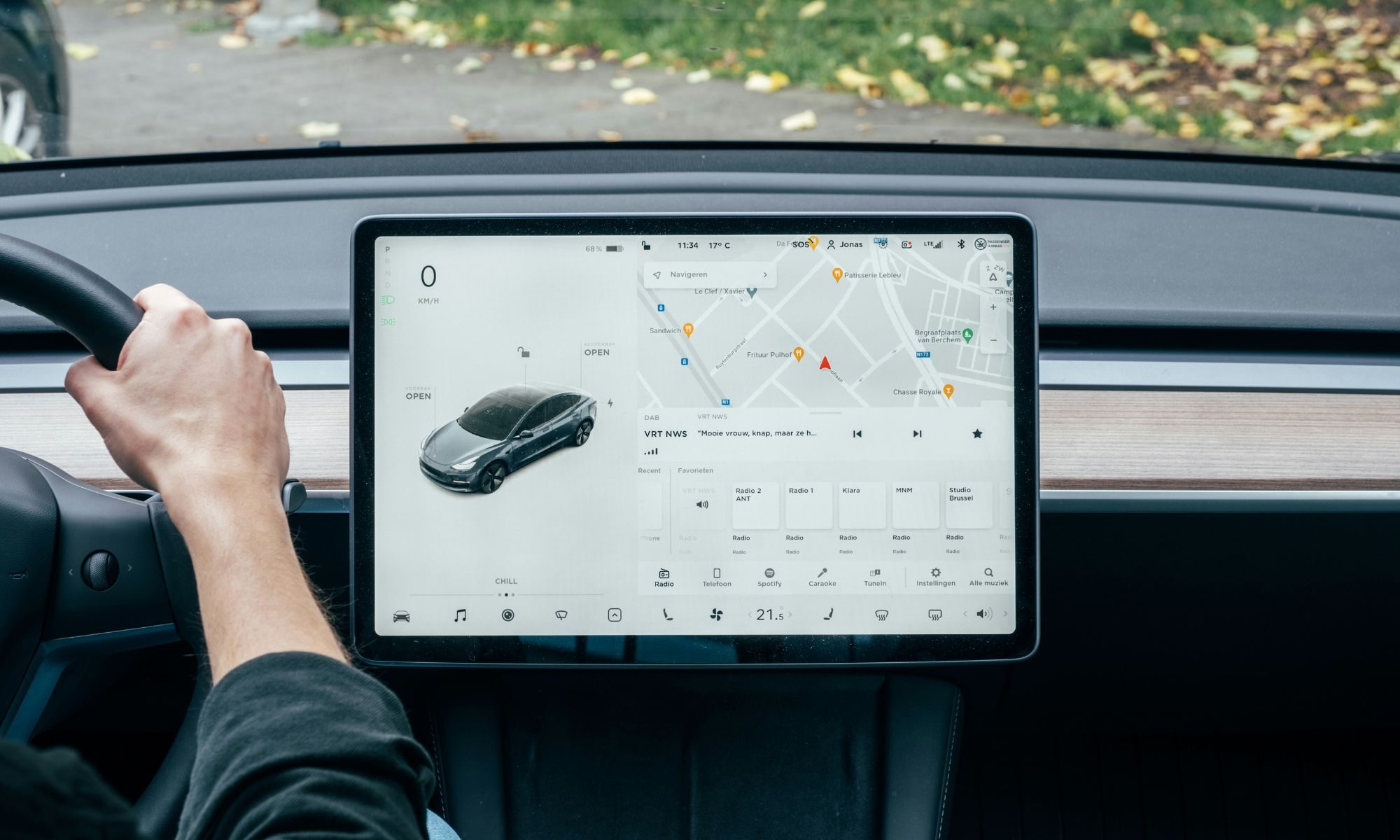
Cybersecurity analysts argue that internet-connected vehicles effectively function as rolling computers.Unsplash
However, the same always-connected architecture that enables these updates also creates a larger attack surface. Cybersecurity analysts argue that internet-connected vehicles effectively function as rolling computers. If attackers were to compromise the update infrastructure or gain privileged access to vehicle software, the consequences could extend well beyond data theft.
Gabriel Lim, Senior Analyst at Singapore’s S. Rajaratnam School of International Studies, told CNBC that the issue represents a potential national security concern. Beyond questions surrounding user privacy, governments are increasingly examining whether foreign manufacturers or hostile actors could theoretically interfere with vehicle systems remotely. Those concerns have prompted several countries to reassess how connected vehicles should be regulated.
Governments are beginning to take the threat seriously
The debate intensified after Norwegian public transport operator Ruter conducted security tests on electric buses last year. The company reported that one vehicle’s battery and power management system could be accessed remotely through a mobile network connection. In theory, it concluded, the manufacturer could disable or immobilize the bus remotely.
Although the investigation focused on buses manufactured by Chinese company Yutong, experts caution that the problem isn’t unique to any single automaker or country. Instead, they see it as an industry-wide challenge tied to the growing adoption of connected vehicle platforms. The findings prompted authorities in both the United Kingdom and Denmark to launch their own investigations, with the UK’s Department for Transport working alongside the National Cyber Security Centre to examine potential vulnerabilities.
As cars become smarter, hackers may get smarter tooUnsplash
Similar concerns are also beginning to shape policy discussions in the United States. Earlier this year, the American Enterprise Institute argued that protecting connected vehicles from foreign espionage should become a strategic priority. The think tank recommended stronger security reviews, greater transparency around vehicle data collection, and tighter restrictions on certain foreign-made automotive software and hardware.
The implications stretch well beyond passenger cars. OTA technology is increasingly finding its way into buses, commercial fleets, rail systems, ships, industrial robots and drones. As more critical infrastructure becomes remotely updateable, experts say cybersecurity can no longer be treated as an afterthought. Wireless updates are undoubtedly making vehicles smarter and more capable. But they’re also changing the definition of automotive safety. In the software-defined era, protecting a car increasingly means protecting the code running inside it, because the next cyberattack may not target your laptop or smartphone. It could target the vehicle you’re driving.
Building a PC used to be a fun adventure — what’s the latest, what’s the greatest, what can I afford? Well, that last question seems to have taken over and sucked all the fun out for a lot of people. [Matt] from [DIY Perks] on YouTube has hit upon a solution that’s brought back the fun, at least for him: recycling! The video is embedded below, and he runs a forum whose thread has more details.
Long story short, though, he’s flagging recycled laptop components as both good value for money and a fun rabbit hole to go down researching parts. The best part, of course, is that you can get a mobo with 32GB of RAM soldered on, and embedded RTX graphics, and a decent processor for about what you’d pay for that RAM on sticks these days. The big hack is getting the dang thing started: he needed to make a single-pin ribbon cable after identifying which pin on the keyboard membrane hit the power button. If you can score a laptop that does not power on from the keyboard, you’ll have an easier time in that regard.
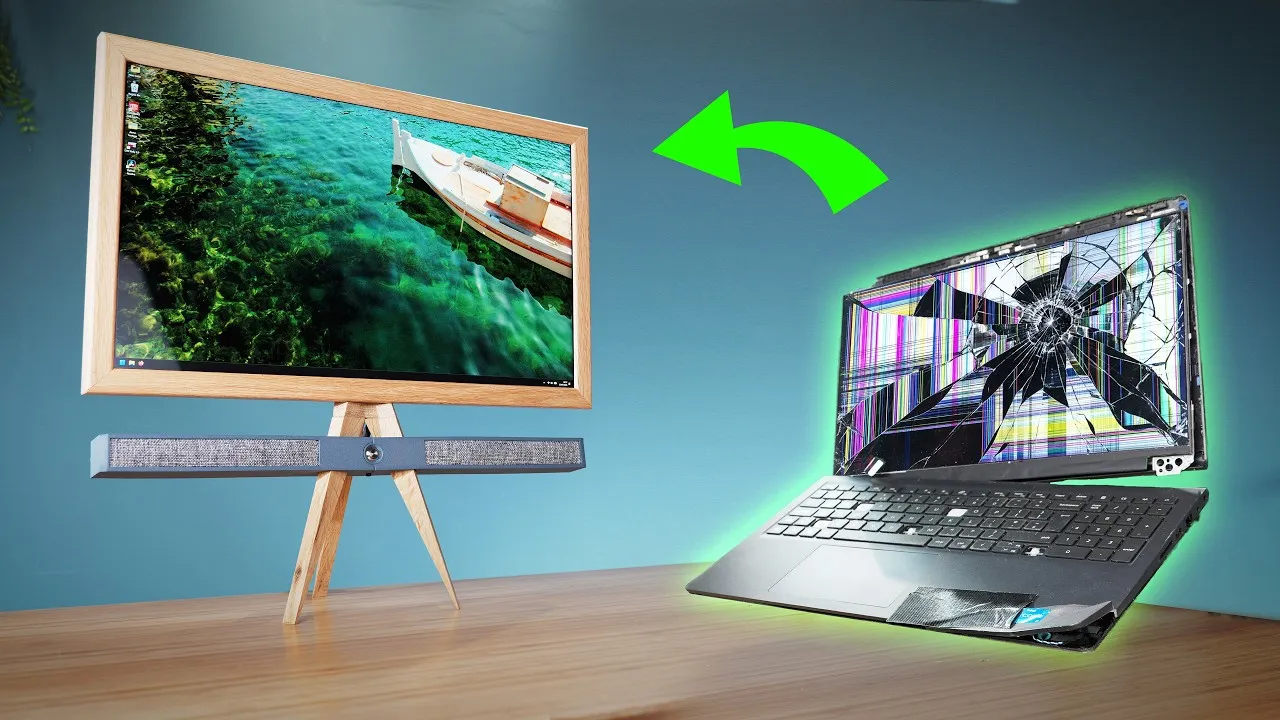
To take recycling further, he shows how to delaminate cracked glass from an old Intel iMac to get a better-than-4K retina screen for nothing but sweat equity. The unit was heading for the bin, and his only cost was the effort it took to extract the LCD panel. Some of us might be able to skip the laptop and just use the iMac; it depends on how much compute is enough for your use case. Maybe a 10-year-old iMac’s guts will do; maybe last year’s gutted laptop isn’t enough.
We have to admit, the oak-and-aluminum all-in-one tripod he makes is very snazzy, though it may have too little brass to be on-brand for [DIY Perks]. The speakers, in case you were wondering, are also e-waste, recovered from an old TV. Perhaps the accent colour should have been green instead of blue!
Welcome back to TechCrunch Mobility, your hub for the future of transportation and now, more than ever, how AI is playing a part. To get this in your inbox, sign up here for free — just click TechCrunch Mobility!
Last week, I wrote aboutUber and Waymo and how their partnership appears to be deteriorating. I predicted the two companies would end up on opposing sides of autonomous vehicle policy. That wasn’t a guess.
For the past several weeks, I’ve been talking to sources and digging through correspondence Uber sent to the D.C. Council, which is evaluating a proposed bill that would allow autonomous vehicles to operate in Washington, D.C.
What I found: Uber and Waymo are already on opposite sides of the proposal, sparring behind the scenes and in public. Uber has made a particularly interesting argument in its effort to shape the rules that govern autonomous vehicles.
Advertisement
Uber, which opposes the D.C. bill, argues it would displace for-hire human drivers and hand Waymo a de facto monopoly. Instead, it has lobbied for a system that would require robotaxis to operate on a ride-hailing network alongside human drivers.
Insiders tell me the “hybrid” approach has little chance of becoming law. But if it did, it would leave AV developers like Waymo with two suboptimal choices: either put their robotaxis on ride-hailing apps like Uber or employ human drivers alongside fleets of robotaxis that took years and hundreds of millions of dollars to develop.
A D.C. Council hearing on Monday drew representatives from Lyft, Tesla, Uber, and Waymo, along with dozens of disability rights and accessibility advocates, local business and industry groups, highway safety organizations, government officials, labor unions, and think tanks.
My takeaway — based on the public testimony and the calls and texts I received afterward — is that Waymo is one of the few companies that generally likes the bill. Much of the rest of the industry does not.
Advertisement
Tesla’s senior policy adviser, India Herdman, echoed concerns I’ve heard from multiple AV developers, including objections to the 180-day, 250,000-mile mandatory testing requirement; the $1 million application fee; the $5 million permit fee; and the $0.15-per-mile tax. Tesla, along with other companies, argued that testing miles accumulated in other jurisdictions should count toward the mileage threshold.
Waymo, which has been testing its AVs with human safety operators in Washington, D.C., has already surpassed the 180-day and 250,000-mile requirements. That means if the bill passed as written today, Waymo would enter the market with at least a six-month head start.
Deals!
Image Credits:Bryce Durbin
Uber is considered a ride-hailing and delivery giant. It is now cementing that status through a $14.8 billion deal to acquire Germany’s Delivery Hero.
If the deal closes — and it will absolutely take time to overcome the regulatory hurdles — Uber will get access to nearly 100 markets across Europe, the Middle East, Latin America, and Asia. The upshot: Uber’s delivery footprint will double.
Delivery Hero also made a separate agreement to sell its business in 14 markets, where Uber Eats is already operating, to New York-based investment firm SSW Partners for $1.6 billion.
Advertisement
Other deals that got my attention …
Self Inspection, a San Diego-based startup trying to disrupt the vehicle inspection process, raised $10 million in a round led by the family office of Sheryl Sandberg. Tire distributor U.S. AutoForce and automotive lender Westlake Financial made strategic investments. Early-stage funds Costanoa Ventures, Rebellion Ventures, and BrightCap Ventures also invested.
Senra, a startup modernizing how wire harnesses are made, raised $65 million in a Series B round co-led by Lowercarbon and Interlagos with participation from General Catalyst, Sequoia Capital, Andreessen Horowitz, and Founders Fund, among others.
Zepto, the Indian fast-delivery company, is seeking a valuation in an initial public offering well below its $7 billion peak, Bloomberg reported, citing anonymous sources.
Advertisement
Notable reads and other tidbits
Image Credits:Bryce Durbin
Chip Motors, a Miami-based startup, revealed a low-speed small EV designed for short errands and families, and with some automated driving capabilities.
The Los Angeles Police Department is reportedly ending its deal with Flock Safety, a surveillance company that helps law enforcement track vehicles using thousands of its license plate cameras placed across the United States.
Lucid Motors is pushing back — and hard — on a report that claimed the EV maker was weighing whether to file for Chapter 11 bankruptcy. The company’s comms team, its CEO, and a filing with the U.S. Securities and Exchange Commission all say the same thing: The rumors are false. The initial report sent the company’s stock down more than 50% on Tuesday, its biggest intra-day drop ever. The stock has since recovered and is now trading about 28% higher than it was prior to the big drop.
Lyft CEO David Risher says it’s the “Good Uber,” per Wired.
Manual, or standard, transmission vehicles are a dying breed, according to preliminary government data that shows just 0.6% of new vehicles made for the U.S. in 2025 had stick shifts, the Washington Post reported. I own two manual vehicles. Does that make me a driving unicorn?
Advertisement
The National Transportation Safety Board said the driver of a Tesla who crashed into a house in June had pressed the accelerator pedal to 100%, overriding the company’s Full Self-Driving (Supervised) software.
San Francisco mayor Daniel Lurie has urged state regulators to toughen rules on autonomous vehicles after Waymo robotaxis became immobile in heavy July 4 traffic, ran out of power, and blocked key streets, further compounding the gridlock. In a letter (parts of which are excerpted here) Lurie outlined four core requirements he would like to see enacted to ensure robotaxi companies can “perform reliably” during extraordinary events.
SpaceXabruptly aborted the second attempted launch of its upgraded Starship rocket system on Thursday, just moments after the booster ignited at the company’s complex in South Texas.
Zoox issued a software recall after one of its robotaxis got confused by smoke emitting from an emergency fire scene in June.
Advertisement
One more thing …
Uber chief product officer Sachin Kansal talks to TechCrunch EIC Connie Loizos about travel, AI agents, and playing both sides of the robotaxi race, in the latest Strictly VC podcast episode. If you’d rather read the interview, check out the Q&A.
When you purchase through links in our articles, we may earn a small commission. This doesn’t affect our editorial independence.
US Federal workers must install an app powered by a Russian-founded software vendor
Security researchers discovered outside code controlling parts of the government application
Elfsight’s Russian operations continued growing despite global geopolitical tensions
The FAA and other federal employees must now install a $1.4 million White House app containing code built by Elfsight, a Russian-founded vendor.
Elfsight was founded in 2016 in the Russian city of Tula by chief executive Andrey Yusupov and chief technology officer Vladimir Fedotov.
The company now markets itself as a European software provider headquartered in Andorra, though its original Russian entity remains active and growing.
Latest Videos From
Business ties that persist
In 2025, the Russian entity reported revenue of about 126.5 million rubles, roughly $1.6 million, marking a 71% increase year on year.
Advertisement
The company’s headcount also grew to 61 employees, and job postings show continued hiring of Russian developers into 2026.
One 2026 job posting sought a Moscow-based support specialist, offering between 60,000 and 100,000 rubles per month for full-time work.
Under Russian law, companies handling user data can be compelled to store that data locally and hand it over to state authorities.
Advertisement
Sign up to the TechRadar Pro newsletter to get all the top news, opinion, features and guidance your business needs to succeed!
However, an Elfsight customer support specialist claims that the company has “never received any request” from Russian authorities for user data or access.
Security review and data practices
A network analysis by the security firm Atomic Computer found that Elfsight’s servers determine which JavaScript files run inside the White House app.
Advertisement
The same session also accepted more than ten cookies from Elfsight, alongside Google DoubleClick advertising domains loaded through the app’s YouTube sections.
Olivia Wales, a White House spokeswoman, said the app “does not request or collect any user locations” and called all its information “safe and secure.”
A White House official later said Elfsight’s only remaining script loads a tax calculator inside a sandboxed webview, disconnected from cookies or files.
Advertisement
The official added that Elfsight passed a full security review and is used widely by brands including UFC, FIFA, the NBA, and Cartier.
That same security clearance sits uneasily alongside records showing Elfsight’s founders retained accounts at sanctioned Russian banks and kept traveling to Russia.
One founder wrote in a private message that Russian tax authorities had summoned him for questioning tied to a separate investment platform.
That legal exposure means a Russian-rooted vendor still effectively controls code running inside a mandatory application on federal government devices.
Advertisement
Since the Russia-Ukraine conflict started in 2022, the United States and its allies have imposed sanctions on numerous Russian companies and individuals.
It remains unclear why an app with such ties to Russia was cleared for use on White House and federal government devices in the first place.
So far, neither Elfsight nor the White House has offered a clear justification for that approval decision.
Avoiding the “lethal trifecta” – access to private data, exposure to untrusted content, and an external communication path – is difficult enough when working with AI agents.
But the use of connectors – integrations with third-party services like Gmail or Slack – expands the scope of concern in a way that makes it exceedingly difficult to reason about defensive due diligence.
Advertisement
PromptArmor, an AI security biz, recently looked at how OpenAI’s ChatGPT and Anthropic’s Claude work with connectors. The results are not reassuring.
Shankar Krishnan, co-founder of PromptArmor, told The Register in an email that enterprise adoption of connectors and the rate of change among connectors helped focus concern on the connector ecosystem.
Connectors share some of the risks of MCP servers, upon which connectors are based. “For connectors, the risks are mostly about the type of tools, what they can do, where the data is going, and what is being done with the data,” said Krishnan.
Introduced about a year ago, connectors (for Claude or ChatGPT) have been going through a lot of changes recently. According to PromptArmor, 931 of 2,517 connectors (37 percent) changed over the six-week period from mid-May to the end of June. So any security assumptions based on declared capabilities may no longer be valid.
Advertisement
PromptArmor found that 1,686 new tools were added to connectors that were already live, creating new ways for AI models to operate on user data and interact with third-party services.
It also found that 1,127 tool descriptions were rewritten, potentially changing how and when an AI model decides to invoke a tool.
And there are a variety of other changes, all of which potentially could raise data security concerns or invalidate governance assumptions.
PromptArmor cited the Dropbox connector as an example, noting that at the start of the study it exposed eight tools and by the end of the study that number had risen to 24. It went from having three write-capable tools to 10, and from zero potentially destructive tools to four. Permission scopes changed and injected instructions for the model were added.
Advertisement
If that weren’t enough to worry about, connectors can behave like intrusive websites that run dozens of tracking scripts: connectors commonly send data to additional AI services.
PromptArmor evaluated all 7,517 tools used by 487 Claude connectors and found that 189 of the connectors, or about 2 in 5, are likely to call additional AI services.
“As an example, if your Claude agent activates Zoom’s connector tool to search meetings with natural language, and passes in a query containing sensitive data, Zoom AI may send that data to any of its ten AI subprocessors in order to generate a response from one of eight different model families it uses,” the security company said.
“The issue is that most teams approving connectors are evaluating and considering the connector – unaware that the vendor is calling more AI services, adding new subprocessors and terms,” explained Krishnan. “So someone concerned about AI risks who has evaluated Claude may not be aware of AI services that the connector is calling externally.”
Advertisement
Anthropic’s connector documentation acknowledges that its security controls don’t necessarily cover third-party data processing.
“Connected services process data on their own infrastructure, under their own terms, which may be located outside the United States,” the AI biz explains. “Settings that control where Claude’s inference runs, like the US-only inference setting on Enterprise plans, don’t change where third-party services operate.”
Krishnan said that connectors vastly expand the risk surface for attacks.
“Bringing agents new sensitive data, new untrusted data, and new sensitive actions to take, the blast radius of an attack explodes,” he said. “We recently highlighted a risk in Codex where even with one connector – email – the combination of sensitive and untrusted data enables exfiltration of legal and financial communications.” ®
Victoria proposes “demasking” powers to force platforms to identify anonymous accounts in vilification cases. It would also make it easier for families to sue platforms for harm to children.
Victoria’s premier Jacinta Allan announced on Sunday that the state would propose laws granting the Victorian civil and administrative tribunal power to order social media and AI platforms to reveal the identities of anonymous account holders accused of online vilification. The “demasking” powers would be the first of their kind for an Australian state. Allan said families needed new ways to protect their children online.
The proposed reforms go beyond identity disclosure. Victoria would also scrap the legal threshold that currently requires families to prove a child has suffered a permanent impairment of at least 10% before suing platforms for negligence causing psychiatric harm. That threshold, assessed by medical practitioners using standardised calculations, has made it effectively impossible for most families to pursue damages. Removing it for suits brought on behalf of minors would open a new litigation channel against platforms in Australian courts.
The timing is tight. Victoria has four sitting weeks before a November state election, and the opposition said the laws were unlikely to pass in time. Shadow attorney general James Newbury said the Coalition supported the effort in principle but that “I don’t think Elon Musk is looking at Jacinta Allan’s announcement today and quaking in his boots.” Australia’s world-leading under-16 social media ban is already struggling with enforcement, with testers finding that age verification systems are easy to bypass. Adding demasking powers to a regime that cannot yet verify who is under 16 raises questions about whether the infrastructure exists to enforce them.
Advertisement
The 💜 of EU tech
The latest rumblings from the EU tech scene, a story from our wise ol’ founder Boris, and some questionable AI art. It’s free, every week, in your inbox. Sign up now!
Marilyn Bromberg, a social media regulation specialist at the University of Western Australia, called the reforms “a brave start” but said they should extend beyond vilification to cover defamation and cyberbullying. The Australian Senate delayed fixes to the social media ban earlier this year, and the federal government is still working on an enforcement framework that would compel platforms to comply. Victoria’s move adds a state-level litigation tool to a federal regulatory structure that remains incomplete. Whether platforms respond to the threat of tribunal orders in a single Australian state depends on whether the political signal outlasts the election cycle.
Windows 10 still runs on 16.9% of the Windows devices monitored by asset-tracking service Lansweeper. That’s more than one in six, The Register points out.
A year ago, the operating system accounted for about half of the machines in its dataset, falling to the low-to-mid 40% range by the time Microsoft ended standard support. The decline continued after that, reaching 18.6% in June, but Lansweeper says migration has now slowed to a crawl… Small and medium-sized businesses are particularly exposed. Lansweeper reckons that 21.4% of machines at small and medium-sized business still run Windows 10, with cost usually being the constraint that keeps the legacy operating system running. The exposure is greater in some sectors, with 23% of healthcare and pharmaceutical systems sticking with Windows 10, while consumer and retail devices hover at 22.7%.
According to Lansweeper’s data, “a Windows 10 device carries an average of 1,903 active CVEs against 652 on Windows 11. That’s a 2.9x gap.” Esben Dochy, principal technical evangelist at the company, told The Register that “the Windows 10 average also includes devices that have Extended Security Update patches applied.” [According to Lansweeper’s figures, 14% of Windows 10 assets have applied Extended Security Update patches.] Part of the problem, according to Lansweeper, is “patch diffing,” in which Windows 11 fixes can be reverse-engineered to find flaws in Windows 10. “The supported OS effectively hands attackers a map into the unsupported one,” Lansweeper said…
Advertisement
Looking at other market share measures such as Statcounter, there was little change in the share of Windows 10 and its successor over the last few months after a surge following the end of support. As Lansweeper noted: “The easy migrations are done. What’s left is the hard core: devices that haven’t moved because they can’t or won’t.”
Lansweeper’s evangelist noted that in some cases there is no Windows 11-certified version yet for many medical devices and industrial or retail systems.
The new TV season is in full swing and we at Trusted Reviews are getting into the nitty gritty of reviewing as many models as we can (our test room overflows with new models).
We’ve highlighted RGB TVs as this new display technology has been built up by brands for a couple of years now.
Sony has been building up to RGB, with previews and black box events as they teased the True RGB line-up. Hisense has looked to RGB in its attempts to become a market leader in the TV field, while Samsung – as it always does – sees RGB as another method of delivering its bright and colourful picture quality.
Despite being in the early throes of the technology, there isn’t quite the level of positivity that even I was expecting.
Advertisement
The Hisense UR9 that I reviewed was ultimately a disappointment. The Bravia 9 II and Bravia 7 II seem to deliver on the expectations that Sony set for themselves, although to some they’re still not better than OLED. Samsung’s R95H delivered “unprecedented colour response”, though there have been reports of motion blur and, well, strangely, there haven’t been many reviews for it, and we’re well into July, which is unlike Samsung.
Advertisement
So while I wouldn’t say that something is amiss – these are the first-generation models after all – but expectations need to be reined in. These RGB models aren’t (yet) the coming of the TV Gods.
Might TCL have been right?
Image Credit (Trusted Reviews)
TCL, surprisingly, gave RGB backlit technology a body swerve, putting the emphasis on its new SQD Mini LED technology. It’s a similar concept to RGB (and indeed Mini LED) but uses more advanced Quantum Dots to deliver a broader range of colours. Essentially, TCL wanted a larger degree of control that it felt it could not get with RGB Mini LED.
To add to that point, TCL has also stated that it doesn’t see RGB as technology to pursue in the here and now. It has two RGB models in its 2026 line-up, but its SQD models are what it wants customers to buy. RGB is viewed as having potential and the future, but that future could be two or three years away.
LG hasn’t particularly embraced RGB, sticking with its OLED models as being its TV of choice. The same with Philips, who have positioned its RGB model within the middle of its range and stated that OLED remains better for picture quality.
Advertisement
The mixed messaging is something I’ve written about before, which is odd to me as you’d think the TV industry as a whole might come together and deliver similar, if not quite the same messages and impressions of the technology.
Advertisement
There’s no doubting that OLED has its issues and will continue to have them, but so far, RGB Mini LED hasn’t managed to shove OLED out of the way. If anything, it might have made OLED’s positioning even stronger. Maybe RGB is here a little too early.
Is RGB Mini LED better than OLED?
Image Credit (Sony)
There’s an argument to be made that TV brands have made claims that suited them as to why RGB is needed rather than what suited customers. The market has always made noise about TVs getting brighter and more colourful, but most people after a new TV will probably have a look at your bog standard QLED model. There’s not the attraction, at least for the masses, to trade up to a better kind of TV experience that requires significant investment.
But with such hype behind it, and competing against OLED (despite what some may choose to think), RGB Mini LED has made the case that it is comparable to its OLED cousin, but hasn’t yet delivered the compelling evidence that it is better than OLED. That has allowed OLED to state it’s actually still very much in the game, and not worried about what RGB brings to the table.
Sure, RGB TVs will likely be better for rooms where there’s lots of ambient light, but why would you have a room where lights and daylight would wash out the colour and detail from TV. You’d swivel the TV so it doesn’t face direct sunlight (which you should do anyway). You might close the curtains (especially during this hot summer).
Advertisement
And on top of that, is there a pronounced superiority of RGB Mini LED over OLED? Comparisons with the two would suggest that RGB is better in some instances, but weaker in others; and you’d only be able to tell if you had an OLED and RGB TV sitting side-by-side. And how likely is that going to happen for customers?
Advertisement
Most content that’s mastered isn’t done so at 4000 nits – at least only in terms of peaks – and the launch of RGB TVs could (as Sony wishes) lead to films and TV series being mastered at higher brightness. But that is a chicken-and-egg situation – would that cause an increase in brightness with actual content because right now, to take advantage of RGB’s colour performance, there’s nothing you can watch that truly takes advantage of its performance.
And then there’s artistic intent, and in many cases this is not to deliver searing 3000 nit levels of brightness but, in more cases than you might think, less than 300 nits.
Might it be that the TV industry needs RGB TVs more than the customers who buy it, and those who create content that’s watched on TVs?
Advertisement
I like what I’ve seen of RGB TV technology so far, and I’ll be seeing the Bravia True RGB TVs close up in the near future, so I don’t want to cast my own opinion in stone just yet. But it’s worth remembering this is a new technology – if it’s good now, it can only get better, not worse.
Any device you buy is an investment. You want the reassurance that it’s going to meet your short- and long-term needs for a while before you have to buy a new one. That’s true for smartphones, laptops and especially TVs.
Upgrading your TV means deciding on which brand is worth your hard-earned bucks. Picture quality, sound, smart features and the display panel are just some of the specifications you may consider. And CNET readers have opinions on all of that and more.
CNET’s People’s Picks gives readers a chance to share their opinions on their TV brand. Many of you love LG, but some readers have opinions on other brands that you may not have considered before now. Here’s which brands won readers over and what our experts think.
Advertisement
LG/J. Hazelwood/CNET
LG is well-known among TV brands for its OLED screens, and it’s a favorite among CNET editors and readers. LG earns high marks in many of CNET’s People’s Picks categories and wins three awards from readers: picture quality, fast-moving content and OLED/QD-OLED.
CNET editors give LG several nods for recent OLED TVs, lauding the contrast in the new C6H, the color accuracy of the G5 — recipient of a CNET Lab Award — and the contrast and brightness of G6 for movie buffs. The LG OLED G4 is one of the best gaming TVs for its top-notch gaming features, especially as a more cost-effective option compared to the LG G6.
Advertisement
Picture quality
Runner-up: Sony
CNET readers crown LG as a winner for picture quality. More than 3 out of 5 (61.7%) of CNET readers who own an LG TV reported an “Excellent” experience with their LG TVs in bright rooms and during the day. Readers say there’s no glare and it’s beautifully bright, and 65.1% of readers with LG TVs report perfect dark scenes with inky blacks and zero light bleed — performance that’s common on OLED models and can really improve the look of movies and TV shows. That brings LG’s picture quality to 63.4%.
Sony is a runner-up for picture quality, based on nearly half (49.8%) of readers with a Sony TV saying the brand has inky blacks with no bleed and great daylight performance.
Fast-moving content
Runner-up: Sony
Advertisement
LG wins for flawless, fast-moving content. Of readers, 71% say LG TVs are perfectly smooth, are without blur and are without weird, artificial artifacts with fast-moving content, whereas 28% say LG’s fast-moving content quality is natural but occasionally slightly blurry. When it comes to gaming, CNET readers (59.8%) who have an LG TV say fast-moving content is flawless and incredibly responsive and that the TV has great gaming menus.
Sony is the next top pick, with 60% of readers saying its fast-moving content is flawless on Sony TV screens.
OLED/QD-OLED
Runner-up:Samsung
Lastly, LG sweeps the OLED/QD-OLED category with 82.4% of readers with an LG TV preferring the brand for its OLED displays. If you’re considering an LG OLED TV, the latest LG OLED G6 has excellent contrast, an improved antireflective coating and good brightness for gaming. One of CNET’s lab-tested favorites is the previous LG OLED G5. CNET editors say it has the best color accuracy. The C4 is still a favorite, but if you want the latest and greatest, LG’s C6 and C6H are standout OLED picks. The C6 is the ultra version of the C6 TV, and it comes in larger sizes with higher brightness and better colors.
Advertisement
Samsung trails behind LG with 45% of readers who own a Samsung TV have an OLED or QD-OLED model. That’s not surprising because Samsung has only been selling OLED TVs since 2022 after a single model in 2013, whereas LG’s OLED models have been on sale for more than a decade. Both the S90F and S95F are Samsung OLED TVs that get praise from CNET for image quality and glare reduction.
Roku
Roku/J. Hazelwood/CNET
Budget TV
Runner-up: Vizio
Roku wins three categories in CNET’s People’s Picks — budget, smart TV ecosystem and standard LED/LCD. Roku has several affordable TVs. Most CNET readers (72%) have purchased a Roku TV that’s under $500. And nearly half of readers with Roku TVs have purchased their TV within the past year.
Roku has a few popular TV picks under $500, including the TCL 4-Series, the Pioneer 50-inch 4K smart Roku TV and the Roku – 40″ Class Select Series Full HD (1080p) LED Smart RokuTV. Roku’s cost-effective options don’t skimp on quality. For instance, the Pioneer 4K Roku TV is an LED TV with 4K resolution and a smart TV interface, and it supports High Dynamic Range to improve your picture quality.
Advertisement
Vizio is next up to Roku, with 45% of readers having Vizio TVs costing less than $500. If you’re in the market for a mini-LED TV, Vizio has its Mini LED Quantum Series 4K TV for under $500 in two sizes (65 and 75 inches). Interestingly, 40.8% of CNET readers with Vizio TVs have had them the longest (over five years) — speaking to its quality and longevity for the price.
Smart TV ecosystem
Runner-up: TCL
Trust me, a smart TV’s interface can make or break your day-to-day experience. Roku understands that and wins over 59.1% of CNET readers.
Most readers with a Roku TV say its interface is fast, clean and very easy to navigate. No readers reported the interface being cluttered, slow or frustrating to use — the only TV brand to do so. Roku recently released a new interface that includes a “For You” section, which combines AI suggestions, saved entertainment and what you’re already watching. And the new interface has a “Quick Access” section to get to your most used apps faster, but we have a guide if you’re not a fan and want to turn it off.
Advertisement
TCL is a runner-up for the Smart TV ecosystem category. Over half (56.5%) of readers who own a TCL TV say the interface is fast, clean and easy to navigate, while 22.5% say the interface is good but has too many ads or sponsored recommendations.
Readers say Vizio is the next top pick for LED/LCD TVs, with 32.7% owning an LED or LCD Vizio TV.
Advertisement
Hisense
Hisense/J. Hazelwood/CNET
Sound quality
Runner-up: Sony
Hisense wins CNET’s People’s Picks for its sound quality. Nearly half of readers (45.7%) with Hisense TVs rate the internal audio as “great.” And that’s nearly double CNET readers’ satisfaction with popular brands like Sony (25.2%), Samsung (23.8%) and Vizio (22.2%). One of the perks of Hisense’s latest U7 and UR8 models is Dolby Atmos, which uses surround sound to deliver 3D audio. The U7 models also have a built-in 2.1.2-channel speaker system for more immersive sound. CNET’s favorite budget TV, the Hisense QD7 TV, also supports Dolby Atmos.
Sony is next up for the sound quality category, with 25.2% of owners saying Sony TVs have great sound quality with clear dialogue and decent bass. Some (41.7%) say it’s adequate for casual watching.
TCL
Advertisement
TCL/J. Hazelwood/CNET
Mini-LED/QLED
Runner-up: Hisense
Mini LED TVs use tiny LEDs to give you better brightness, blacks and contrast compared to most standard LED TVs. When it comes to mini-LED and QLED TV panels, TCL wins, with 57.5% of readers owning mini-LED/QLED TCL TVs and naming it their primary TV brand. TCL has been producing mini-LED TVs longer than most TV makers, and many of them have earned CNET’s praise.
According to CNET editors, the TCL QM8K is nearly comparable to an OLED TV in terms of picture quality for less money. TCL’s QM8L is another mini-LED QLED TV that CNET loves for its brightness, color and contrast, too.
Over half (52.1%) of readers with a Hisense TV have a mini-LED/QLED TV, with its model ranking second to TCL. Hisense has a few mini-LED models, including the U6, U7 and the new RGB mini-LED UR8, which we got a glimpse of at CES 2026. It’s around $1,300 and comes with better-than-before color reproduction.
Don’t buy a new TV without reading this first
Many TVs have similar features that may make it seem like the best deal is the biggest screen for your buck. Of everything to consider, CNET’s TV expert Ty Pendlebury advises looking at price, size and picture quality to help narrow down your options.
Advertisement
“It’s always what fits their budget, so not necessarily a ‘budget’ model. If an OLED is within your budget, get it, that’s the quickest shortcut,” said Pendlebury.
And don’t worry about perfecting your TV’s sound quality during your upgrade. Pendlebury says that most TVs sound tinny, so you should consider a soundbar as a separate purchase for better audio.
CNET’s editor-in-chief, David Katzmaier, has 26 years of experience reviewing TVs and has some practical advice to help you feel more satisfied with your purchase years later. For instance, bigger doesn’t always mean better.
“A bigger TV is great, but it can expose lower-quality sources,” said Katzmaier. The reason is that a bigger screen can show imperfections more than a smaller one. If you still want a bigger screen, consider subscribing to 4K plans to streaming services like Netflix and YouTube TV for better picture quality. You can also try adjusting your picture settings, such as putting the TV in Filmmaker Mode, but Katzmaier says that’s not a cure-all.
Advertisement
Watch this: TV Jargon Demystified: Here’s What You Need to Know About Color and Brightness
Instead of screen size, focus on getting a picture quality you’re satisfied with. “The biggest improvement would be getting a new display technology, especially QD-OLED/OLED,” said Katzmaier. “TVs with those kinds of screens deliver clear improvements in contrast and viewing angle that the others can’t match.”
CNET editors and readers highly recommend LG. But other brands were close runners-up. If you’re looking for deep black levels and strong color reproduction, readers recommend Sony as a second contender. Or if you’re struggling to watch TV in a room with a big window, consider TCL or Samsung — all CNET favorites.
“I’ve always liked Roku and Google TV better than proprietary systems from Samsung and LG, and I’m happy to see that CNET readers took our advice and bought LG and Samsung OLED TVs — because they’re the picture-quality champs,” said Katzmaier.
Advertisement
CNET has plenty of reviews of some of the latest TVs, like the TCL QM8L, if you’re looking for a brighter TV, or the Samsung S90F, if you’re looking for the best value for overall picture quality. Regardless, there are also guides to help narrow down your TV choice, like choosing between LCD and OLED TVs, what to know about micro-LED and a list of everything to look for when buying a new TV.
Did you like these findings? CNET’s People’s Picks is community-driven and helps us spread the word about the tech and services you love. Take our ongoing mobile carriers survey to tell us what you love about yours.
The big picture: A 21-year-old Florida resident was arrested last week for allegedly stealing more than $220,000 in cryptocurrency through malware hidden in video games. Although the indictment does not identify the storefront that hosted the infected games, it mentions several titles that were listed on Steam until recently.
The suspect, identified by the FBI as Zyaire Dontaevious Zamarion Wilkins, is accused of running a sophisticated cybercrime operation with unnamed co-conspirators for nearly two years. The group allegedly infected around 8,000 PCs by embedding malware in at least eight video games. Investigators believe they stole at least $220,000 from roughly 80 cryptocurrency wallets between May 2024 and February 2026.
The FBI charged Wilkins and his associates with several cybercrime offenses, including conspiracy to distribute malware. According to investigators, the suspects promoted the infected games on popular social media and messaging platforms such as Discord, Telegram, X, and LinkedIn. They also allegedly targeted users with large cryptocurrency holdings by identifying them with bots and contacting them directly.
The malware was designed to extract passwords and other sensitive data from victims’ computers, then use that information to steal cryptocurrency from their online wallets. The FBI ultimately tracked the suspects by linking the stolen bitcoin to more than 150 Bitrefill gift cards, which were reportedly used primarily to pay for Uber Eats orders.
Advertisement
According to the FBI’s complaint, the list of infected games includes BlockBlasters, Dashverse, Lunara, and PirateFi. All of them remained available on Steam until earlier this year, when the FBI announced it was investigating malware on the platform and urged anyone who had downloaded the infected games to come forward and assist with the investigation.
According to forensic cryptocurrency researcher ZachXBT and the online malware repository vx-underground, BlockBlasters alone accounted for roughly $150,000 of the stolen cryptocurrency from between 261 and 478 victims. That included $32,000 stolen from Twitch streamer RastalandTV in September 2025. The streamer, who was undergoing cancer treatment, had received the money as donations from viewers to help cover medical expenses.
The FBI believes Wilkins financed the entire operation and marketed the malware to underground cybercriminals. Investigators also identified the developer suspected of writing the malware and searched the individual’s property for additional evidence. According to Miami news station WPLG Local 10, Signal chats recovered from the developer’s devices linked Wilkins to the operation.
The messages reportedly revealed that Wilkins, who allegedly operated under the dark web alias Sibel.eth, purchased a $10,000 remote access trojan and discussed the best ways to trick victims into approving fraudulent cryptocurrency transactions. The suspected malware developer was not identified in the report and has yet to be formally charged.
































































You must be logged in to post a comment Login