Connect with us

Politics

Politics Home | Safely, securely, and responsibly managing the UK’s low-level radioactive waste

Published

on

Safely, securely, and responsibly managing the UK’s low-level radioactive waste

Unloading aggregate for the Southern Trench Interim Membrane project

If the UK is to deliver a new generation of nuclear power, strengthen energy security and support clean growth, it must also answer a fundamental question often asked in Parliament. How do we manage radioactive waste safely, securely and responsibly for the long term?

Advertisement

At Nuclear Waste Services (NWS), that question sits at the heart of everything we do. On the West Cumbrian coast, between the Lake District fells and the rugged west coast of Cumbria, the UK’s Low Level Waste Repository has been performing a nationally significant role for more than six decades.

Since 1959, it has supported the safe disposal of around one million cubic metres of low-level radioactive waste, protecting people, the environment and the future of the UK’s nuclear programme.

With Government recognising new nuclear as a cornerstone to help grow the economy with clean energy, the ability to manage radioactive waste safely now and in the future is key.


Advertisement

Making waste permanently safe, sooner

NWS is part of the Nuclear Decommissioning Authority (NDA) group whose mission is to decommission the UK’s nuclear sites safely, securely, and responsibly, taking care of the environment and the communities living and working near its sites. Our work provides the endpoint in the nuclear journey and is critical to the NDA’s mission.

Bringing together the UK’s expertise in radioactive waste management to drive our mission of making waste permanently safe, sooner, we’re tackling the legacy of decades of waste from civil and defence sector activities, while also preparing for the waste that will arise from new nuclear as part of the government’s ‘golden age of nuclear’.

Advertisement

Every decision our team makes is focused on the safe, secure, and permanent disposal of nuclear waste. And as a nuclear licensed site, our work at the Repository is underpinned by a comprehensive and robust Environmental Safety Case (ESC), which addresses environmental safety during operations and over timescales extending to thousands of years. 

Laying the Geosynthetic Clay Liner at the Repository site
Laying the Geosynthetic Clay Liner at the Repository site.

Long-term protection – capping the site

Disposing of low-level radioactive waste is a long-term mission, and we’re now carrying out important work on the final capping of the site which will eventually lead to the permanent closure of the legacy disposal trenches and vaults.

Capping is a key part of the disposal lifecycle and involves placing an engineered protective barrier over the trenches and vaults, where waste is already in its final disposal location and ready for permanent closure.

Comprising of layers of material, totalling up to 10m thick, this ‘cap’ will permanently protect the waste, people and the environment by layering natural aggregates, as well as engineered materials. Installed to the highest engineering standards, the multi-layered cap reflects our commitment to quality, durability and long-term environmental protection.

Advertisement

As part of our preparatory works for capping, we’re currently completing our Southern Trench Interim Membrane (STIM) project, which involves replacing the protective membrane (liner) over the southern part of our legacy waste disposal trenches that require a new, robust cover to withstand changing weather patterns.

A key component of the four-year STIM contract is collaboration with Nuclear Transport Solutions’ rail division, Direct Rail Services (part of the NDA group) with each train making the journey from Shap quarry to the Repository to deliver over 750 tonnes of aggregate to the Repository site – the equivalent of 36 HGVs. In total, more than 300,000 tonnes of aggregate will be delivered to the site between February 2025 and August 2026. As of 10 July 2026, 325 trains have transported over 285,000 tonnes of aggregate, and by using rail instead of road, we’ve avoided more than 15,000 HGV journeys. This reduces traffic and minimises disruption for the local community, which is important to us. This is an example of how the NDA group model is facilitating collaboration across operating companies to manage the UK nuclear legacy safely, securely and sustainably. We’re making great progress with this work which will see the interim liner remain in place for up to 100 years.

Rail deliveries are currently scheduled for completion in mid-August 2026. The STIM works are due to be completed in 2028 and the procurement process for the next phase of capping is now under way, which will provide comprehensive construction and design services over a 10-year framework.

Repository capping is one of our key projects and fulfils key requirements from our ESC and obligations under our site permit.

Advertisement
Train delivery of aggregate as part of the Southern Trench Interim Membrane work
Train delivery of aggregate as part of the Southern Trench Interim Membrane work.

Diverting waste to protect capacity

The Repository site receives waste from a range of customers such as the nuclear industry, the Ministry of Defence, non-nuclear sectors such as educational, medical and research, where alternative treatment or disposal routes are not suitable. 

NWS helps to drive sustainable waste management for the UK nuclear industry by applying the waste hierarchy – avoid, reduce, reuse, recycle and only dispose as a last resort.

By re-using or recycling where possible, we now divert 98% of waste away from disposal at the Repository site protecting constrained national capacity and improving efficiency.

Community and environment

Advertisement

We have a responsibility to be a ‘good neighbour’ and reduce the impact of operations on our Repository site community where possible. Any potential impacts are always a key consideration when planning our activities and operations.  

Neighbouring a Site of Special Scientific Interest (SSSI) and a Special Area of Conservation (SAC), the Repository site is ecologically rich and sensitive. We host a range of species including roe deer, great-crested newts, badgers and pipistrelle bats.

Ecology on a site like ours is about both protection and improvement. It means surveying species, understanding how they use the land, and taking decisions that avoid unnecessary disturbance. It also means creating new opportunities for wildlife to thrive. 

So, while nuclear waste management is about ensuring we meet our safety and legal obligations first and foremost, it’s also about working alongside our local community and caring for the environment.

Advertisement

Source link

Advertisement
Continue Reading
Click to comment

You must be logged in to post a comment Login

Leave a Reply

Politics

Pakistan blocks Al Jazeera over Kashmir protest coverage

Published

on

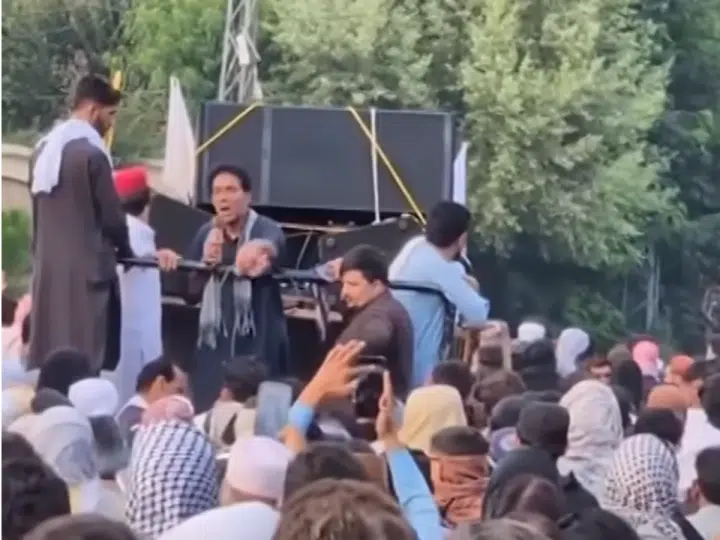
al jazeera censored in pakistan over coverage of kashmir protests

al jazeera censored in pakistan over coverage of kashmir protests

Pakistan’s Ministry of Information and Broadcasting has accused Al Jazeera of using “handpicked polling stations” and “scripted statements” in Muzaffarabad to “delegitimise”  the electoral process in Azad Jammu and Kashmir (AJK).

Jammu Kashmir Joint Awami Action Committee (JAAC) posted on X that Pakistan had blocked the site following its reporting:

Al Jazeera reporting on Kashmir

Over the weekend, Al Jazeera had reported that residents of Muzaffarabad in AJK boycotted the election amid a strike. Protesters on camera were questioning how voting could proceed after unrest that had killed at least 80 people since June, according to local estimates. The network’s coverage highlighted widespread discontent and the tense atmosphere surrounding the polls.

Journalist Kamal Hyder said in the video report that many residents viewed the low turnout as an expression of solidarity with the protest movement.

Rights groups intervening

Previously, Al Jazeera had reported that JAAC, a banned activist group, had boycotted the vote and staged protests over the abolition of 12 assembly seats reserved for Kashmiri refugees. This key demand, supporters say, is used by major Pakistani political parties to tip the composition of the local parliament in their favor with representatives who mostly live outside the region.

Advertisement

They also reported that Pakistani authorities had banned JAAC under anti-terrorism laws in June and that banking, roads, and internet services had been largely disrupted since then, hindering the flow of information. Rights groups had raised concerns over the ban and urged authorities to restore communications access and allow media and independent observers into the area.

And, as Al Jazeera reported:

Rights group Amnesty International called the reports of lethal force against protesters in the area “disturbing” and urged an investigation.

Pear Pandya, a senior analyst at conflict monitor ACLED, said the violence in Pakistan-administered Kashmir “is bound to overshadow the legitimacy of the entire electoral exercise”.

View this post on Instagram

A post shared by Canary (@thecanaryuk)

At the time of writing, Al Jazeera’s website remained inaccessible in Pakistan, with no official confirmation from the government on when or whether access would be restored.

Advertisement

Featured image via YouTube screenshot/Al Jazeera English

By The Canary

Source link

Advertisement
Continue Reading

Politics

“Outrageous abuse” of office: Truth Social sells access to “market-moving” posts for $100k a month

Published

on

Truth Social app displayed on a smartphone

Truth Social app displayed on a smartphone

On Saturday 1 August, Donald Trump’s Truth Social launched a subscription-based service that gives paying customers “real-time” access to posts from its largest accounts. The social media platform is charging up to $100,000 a month for what it calls “market-moving” insights.

Critics have called the move an act of “brazen corruption”. Trump, a sitting US president, stands to profit by giving traders early access to the Truth Social posts. Those same traders could then profit from acting on subsequent changes in bonds, interest rates and stock prices.

‘Market-moving Truths’

Trump holds majority ownership of Truth Social via Trump Media & Technology Group Corp. He also happens to be the platform’s most significant user, with nearly 13 million followers. The president frequently posts major policy decisions on the site, often with profound implications for global markets.

Truth Social is calling its new feature ‘Truth API’ (i.e., application programming interface). Interim CEO Kevin McGurn stated that it provides:

Advertisement

a direct, licensed, real-time feed of the platform’s most market-moving Truths.

Trump’s often posts news of his administration to the platform before making it public elsewhere. Particularly when his posts have related to the war on Iran or tariffs, they’ve cause massive fluctuations in markets around the world.

‘Outrageous abuse of the President’s office’

On Tuesday 28 July, Democratic senators Adam Schiff and Elizabeth Warren requested that the Securities and Exchange Commission (SEC) examine the service. In a letter to the SEC boss Paul Atkins, the two wrote:

This appears to be an outrageous abuse of the President’s office for his personal benefit that undermines everyday investors and the integrity of our markets, while enriching Wall Street and other wealthy insiders.

The senators are far from the only figures to highlight Trump’s corruption. Financial journalist James Surowiecki voiced his belief that the feature violates insider trading laws. He explained:

Trump is disclosing information (in this case, information about some of his future public statements as president, including statements about policy) that belongs to the US government in exchange for money. That violates his duty of trust and confidence to his employer (the govt), and is illegal. And anyone who pays for the feed is knowingly paying for misappropriated information, which is illegal as well.

Professor Kathleen Clark, of the Washington School of Law, said:

Advertisement

He’s selling expedited, privileged access to information about what he is doing as president. It’s yet more brazen corruption, an improper exploitation of government power to enrich himself.

Dean Baker, one of the founders of the Center for Economic and Policy Research, stated that:

the money that insider traders pocket is money taken from the 401(k)s and IRAs of normal people who work for a living.

Trump’s profiteering presidency

Of course, this level of profiteering and (alleged) corruption is hardly new for Trump’s presidency. On 15 July, Forbes reported that Trump:

took in $2.4 billion last year, according to a Forbes analysis, which overlayed his financial disclosure report with bond filings, securities documents and court records to pinpoint a more specific number than the “at least $2.2 billion” widely reported in recent weeks. The $2.4 billion figure, a combination of operating revenue and proceeds from asset sales, dwarfs the estimated $760 million Trump received in 2024. It is also 6,000 times the current U.S. presidential salary of $400,000.

The business magazine also stated that Trump Media shares rose 5.5%, landing at $10.39 just before closing. Since Trump’s return to office in 2025, shares in Trump Media plummeted by over 70%, equating to a loss of around $6bn for its shareholders.

Featured image via Britannica

Advertisement

By Grace

Source link

Continue Reading

Politics

AIPAC front and center in Bell-Bush rematch

Published

on

AIPAC front and center in Bell-Bush rematch

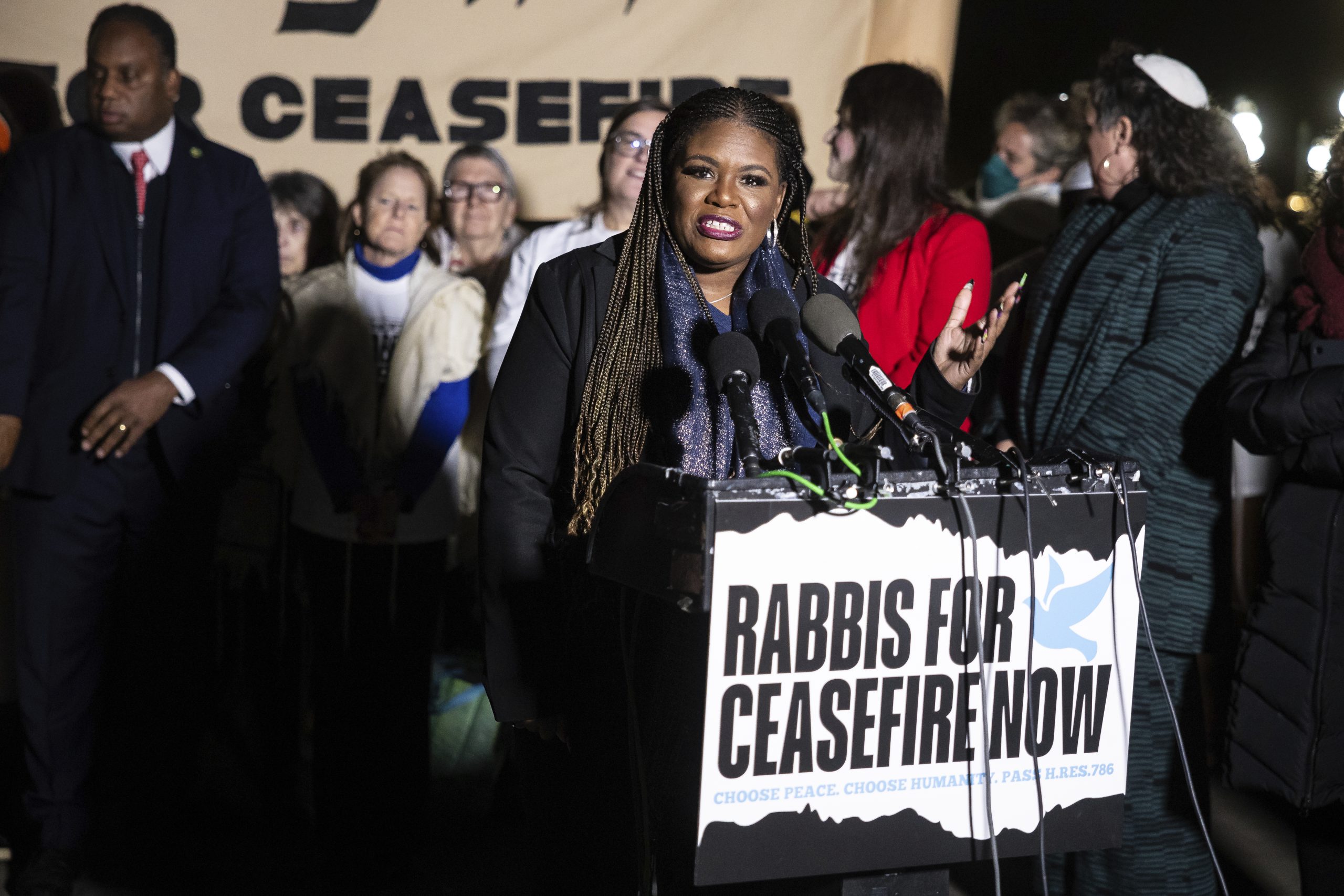
Cori Bush’s 2024 primary loss to Wesley Bell was heralded as a major defeat for the insurgent progressive movement.

Now, their rematch for Missouri’s 1st District two years later comes at a time when Bush and her allies seem to be winning the battle for the future of the Democratic Party.

The dueling factions in St. Louis highlight the growing tension over not just the domestic ideological divide in the Democratic Party, but the party’s — and country’s — stance on the U.S.’s longrunning relationship with Israel.

The former representative was among the first sitting members of Congress to call Israel’s actions in Gaza a “genocide” — and now she’s betting that her progressive bonafides and her criticism of the top U.S. ally will boost her to victory with the same electorate that punished her last cycle.

Advertisement

“One of us is of the people, by the people and for the people,” Bush said in a recent interview. “The other one is paid for by AIPAC. That’s the difference.”

Like two years ago, a group aligned with the American Israel Public Affairs Committee is the largest outside spender in the race. The organization’s super PAC, United Democracy Project, has spent at least $2.1 million on advertising in the primary, according to ad tracking firm AdImpact.

Roughly half of all adults who identify as Democrats believe that Israel has committed genocide against Palestinians, according to a July AP-NORC poll, an accusation that some human rights organizations have made but both the Israeli and American governments strongly deny.

And from Colorado to New York, several progressives have already tapped into voters’ frustrations with party leadership and successfully wielded their criticism of Israel’s government in order to win.

Advertisement

St. Louis is only one of several races on Tuesday testing the Democratic Party’s establishment: voters will also hit the polls in Michigan to cast their ballots for the progressive, Abdul El-Sayed, or the moderate Rep. Haley Stevens for an open Senate seat.

That race has also become a check for voters’ opposition to AIPAC. And some potential 2028 Democratic contenders have already sworn off accepting funding from AIPAC, another sign of the growing unwillingness to be aligned with the organization.

AIPAC and some Democrats have hit back, saying its critics within the Democratic Party have increasingly made the party inhospitable to those generally supportive of Israel.

In response to requests for comment, AIPAC shared a series of ads knocking Bush for her missed votes and her criticism of the Biden administration and former Vice President Kamala Harris’s 2024 presidential bid. (In a recent debate, Bush claimed Bell delayed his endorsement of Harris, but both endorsed the former vice president on July 21, 2024, the same day she announced her candidacy.)

Advertisement

Bell unseated Bush two years ago with heavy financial backing from AIPAC, the country’s preeminent pro-Israel lobby. They’ve once again spent heavily on his behalf, and this time, he also comes into the race with establishment support — including endorsements from House Minority Leader Hakeem Jeffries and the Congressional Black Caucus PAC.

Bell and his allies have absolutely swamped Bush on the airwaves this year. In addition to UDP’s $2.1 million in ad spending, Bell’s campaign has followed closely behind at over $2 million, according to AdImpact, with over $700,000 more from another super PAC called New Democrat Majority.

Bush, meanwhile, has spent less than $200,000, according to the ad tracker. She boasts the backing of a progressive coalition that includes the Democratic Socialists of America, Sen. Bernie Sanders (I-Vt.) and fellow “Squad” member Rep. Rashida Tlaib (D-Mich.).

Bell has brushed aside the attacks that he’s being bolstered by AIPAC money.

Advertisement

“I think we all can agree that there’s too much money in politics, and I’m a vocal and public supporter of campaign finance reform,” Bell said in an interview. “What I’m not a fan of or a supporter of is singling out certain Americans and saying that they should not participate in our democratic process. That is where I would absolutely draw the line.”

Bell added that the difference between himself and Bush is that he can offer both support and criticism of allies.

“While I’m not the biggest fan of [Israeli Prime Minister Benjamin Netanyahu], I still believe that we have to stand with our allies,” Bell said. “That doesn’t mean we’re not going to disagree at times with our allies.”

Bell’s and Bush’s showdown in 2024 was arguably the biggest ideological battlefield for the party that year, outside of the discontent surrounding Biden and then Harris’ presidential bids from progressives critical of Israel.

Advertisement

But two years later, it is just one of many fights that has sprawled across the country. Progressive candidates have been racking up primary victories against establishment figures in a trend that some are calling the “Mamdani effect” after democratic socialist New York Mayor Zohran Mamdani took down Andrew Cuomo in both the 2025 primary and general elections.

Still, this year’s St. Louis rematch isn’t quite the marquee fight it was in 2024. Spending has trended down: Collectively nearly $20 million was dropped on the 2024 contest on advertising, according to AdImpact. That’s roughly four times more than this year’s total.

Usamah Andrabi, spokesperson for Justice Democrats, the progressive group that endorsed Bush earlier this cycle, attributed the broader, nationwide ideological fight to a base that has been “pushed to the edge of desperation by the Democratic Party itself.”

“The Democratic Party’s base woke up in January 2025 realizing that their party’s establishment was unfit, unprepared and frankly unwilling to fight back against Donald Trump and Republican extremists with the urgency the moment demanded,” Andrabi said.

Advertisement

Now, as St. Louis voters head to the polls on Tuesday, Bush cast the eventual outcome in dire terms.

“What is at stake,” Bush said, “is the affordability and the peace of every single person in this country.”

Source link

Advertisement
Continue Reading

Politics

Tate brothers’ lawyer spreads misinformation about alleged victims

Published

on

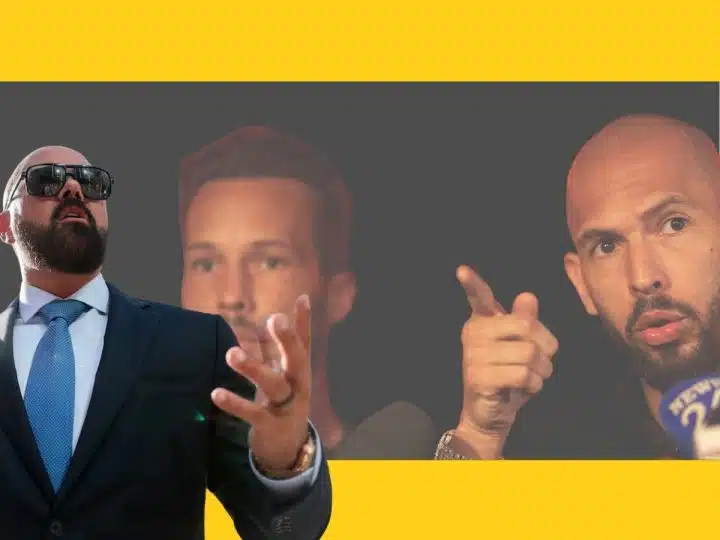
Tate brothers' lawyer Joseph McBride and Andrew Tate and Tristan Tate together in a separate picture in the background

Tate brothers' lawyer Joseph McBride and Andrew Tate and Tristan Tate together in a separate picture in the background

Brothers Andrew and Tristan Tate are facing extradition to the UK over alleged sexual offences, trafficking and assault occasioning actual bodily harm.

As the Canary has covered, the pair’s lawyer has been behaving in disturbing and erratic ways in his efforts to defend them. This has now seen him spreading misinformation about the Tates’ alleged victims.

Tate brothers await extradition proceedings to the UK

The lawyer in question is Joseph McBride, who recently said:

Even if you accept all the allegations against them is true, the amount of good they’ve done for the world tremendously outweighs the bad.

On the allegations in question, the UK’s Crown Prosecution Service announced:

Advertisement

The CPS has decided to prosecute Andrew Tate, 39, with seven further counts of rape, three counts of arranging or facilitating trafficking for sexual exploitation, three counts of assault occasioning actual bodily harm and 19 additional charges for offences relating to indecent images of a child and extreme pornography.

The CPS has decided to prosecute Tristan Tate, 38, with one count of sexual assault, two counts of rape and three counts of arranging or facilitating trafficking for sexual exploitation.

In the video at the top, McBride says:

And the thing is, there’s a pattern that’s been going on for years. In England, they were accused of [sexual assault] a long time ago. And in England, when you’re accused of [sexual assault], the government will take the phones of the accusers as evidence. So they went through the girls’ phones and they found, basically, let’s extort Andrew Tate. And they declined to prosecute. They closed the case.

As journalist and YouTuber Gadget noted, however, there are multiple problems with this.

‘Tate propaganda’

The first problem is the voice note McBride is referencing. In it, the alleged victims discussed whether or not they should share the fact that Andrew Tate provided them with alcohol. The women were worried that if they did share this information, the police would use the fact that they were drinking to discredit them. According to Gadget, “This is what ended up happening”.

Advertisement

The second problem is that the women from the voice note have nothing to do with the alleged crimes the Tates may be extradited over. This is a pretty massive thing to be aware of, obviously.

Gadget also noted:

When McBride says they “tossed the case,” he is omitting some important context.

Earlier this year, Hertfordshire Police re-opened their criminal investigation into these allegations against Tate which had previously been “tossed.” And the Independent Office for Police Conduct (IOPC) launched an investigation into the conduct of the detectives behind the initial botched investigation.

Again, these four women are reportedly separate to the seven connected to the current charges for which the Tates are facing extradition to the UK.

Advertisement

Whether McBride likes it or not, his clients have a case to answer in the UK. He clearly seems to be worried about this too. If he wasn’t, he wouldn’t be relying on slander and misinformation.

Featured image via Associated Press/ Vadim Ghirda

By Willem Moore

Advertisement

Source link

Continue Reading

Politics

The House Article | No one should spend their final months fighting for financial support

Published

on

No one should spend their final months fighting for financial support


4 min read

Dignity at the end of life cannot depend on whether a clinician knows about the relevant form or a family has the strength to keep chasing help.

Advertisement

When someone is living with a terminal illness, time becomes particularly precious. Their final weeks and days should be spent in dignity and comfort, with the people they love, not lost to paperwork and phone calls proving they are ill enough to receive essential benefits.

As Andy Burnham puts social care reform back at the centre of Westminster debate, he is right that palliative and end-of-life care urgently need fixing. The government’s promised Modern Service Framework for Palliative and End of Life Care should set out how the NHS delivers the right care, in the right place and at the right time. This ambition must include financial security, because people cannot die with dignity if they cannot afford to live safely and comfortably.

The Special Rules for End of Life are designed to give dying people quicker access to benefits without unnecessary assessments or delays. A terminal diagnosis can bring an income shock, as people may have to leave work while facing higher household costs, including heating and medical equipment. Fast-tracked benefits can help families to manage those pressures and support people to remain safely at home for as long as possible.

Advertisement

Yet the Special Rules are still failing to reach too many people they are supposed to protect. Research funded by Marie Curie and led by King’s College London found that, in England and Wales, more than one in three people who died from a chronic illness did not receive the disability benefits they were eligible for through this route, around 120,000 people each year. With more than 100,000 people dying in poverty annually across the UK, this cannot be dismissed as a narrow benefits problem. It is a moral failure spanning health, social care and welfare policy.

The research also helps to explain why people are missing out. Interviews with patients, carers and healthcare professionals found that uncertainty around prognosis and low awareness of the Special Rules can delay access, while discomfort discussing money and difficulties completing the relevant forms create further barriers.

For families already facing an extremely difficult time, missing out can mean being unable to heat their home or afford transport to appointments. It can make receiving care safely at home harder, even when that is where someone would like to be, while carers may feel forced to choose between taking time off work and paying household bills.

These problems are solvable, but they require coordinated action. The Department for Work and Pensions (DWP) should work with the Department of Health and Social Care and the NHS to make the Special Rules easier to understand and use. This should include raising awareness among clinicians, providing clearer guidance on Special Rules forms and embedding questions about financial hardship and eligibility into advance care planning, hospital discharge planning and GP palliative care registers, so people are offered help before reaching crisis point. The DWP should also collect better data on who completes the forms, consider expanding the group of approved clinicians who can confirm eligibility, such as hospice paramedics, and allow completion to be delegated once eligibility has been confirmed.

Advertisement

Ministers should also review the 12-month prognosis requirement used in England, Wales and Northern Ireland. Prognosis can be uncertain, particularly for conditions with less predictable trajectories, such as heart failure or HIV, both of which are linked to lower take-up under the Special Rules. Scotland has moved to a more flexible model without a fixed time limit, and the DWP should examine what can be learned from that approach.

Everyone deserves a good death, and dignity at the end of life cannot depend on whether a clinician knows about the relevant form or a family has the strength to keep chasing help. The government has accepted that terminally ill people should receive fast-tracked benefits; it must now deliver on that commitment before financial hardship adds to the distress of their final days.


Dr Sam Royston Executive Director of Research and Policy at Marie Curie 

Advertisement

Source link

Continue Reading

Politics

Rod Liddle’s death is a terrible blow to public life

Published

on

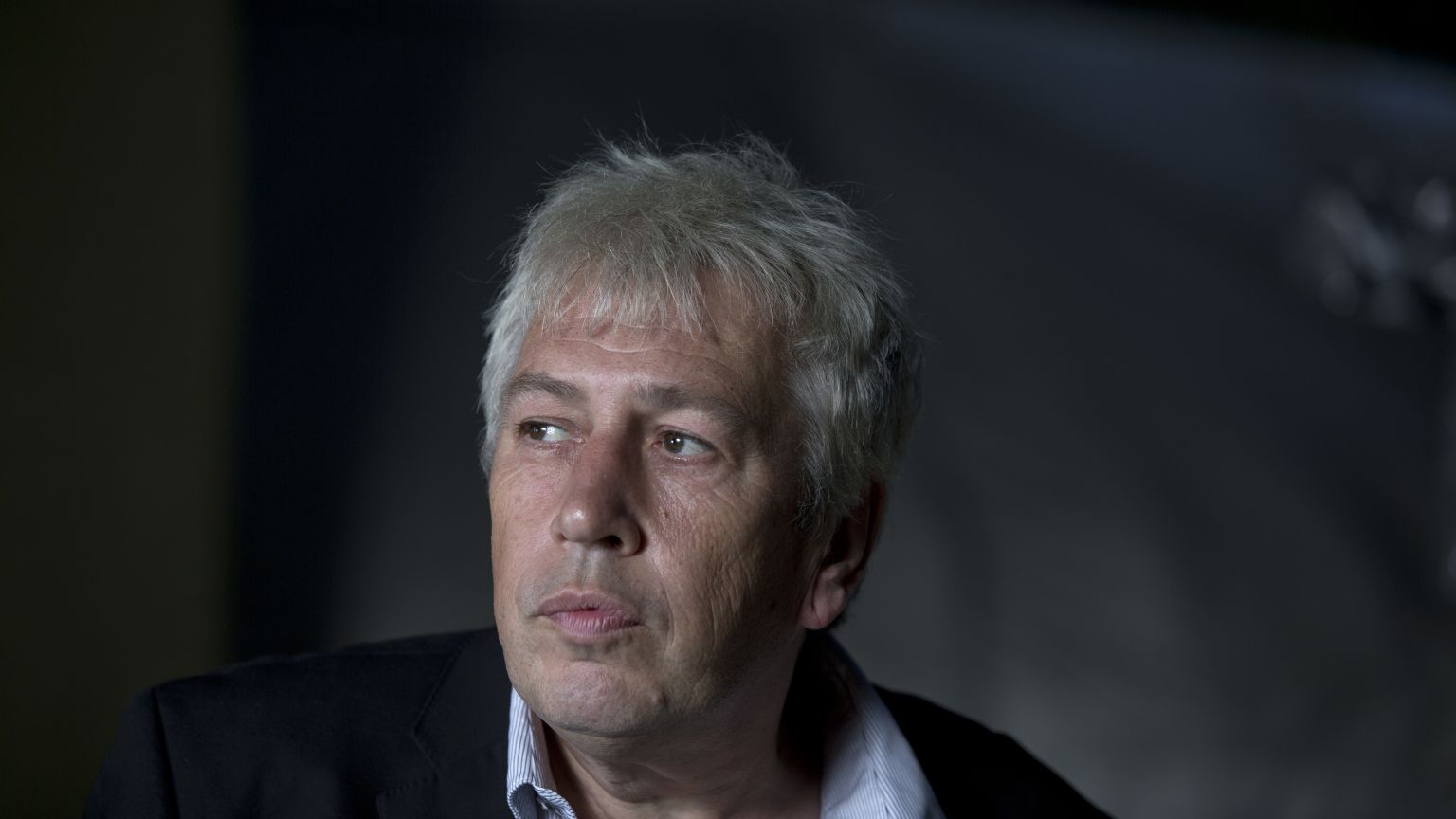
Rod Liddle’s death is a terrible blow to public life

Every death leaves a hole in someone’s life. But it’s a rare death that leaves a hole in public life. Rod Liddle’s does. His passing has robbed us of the finest, funniest and most sardonic chronicler of the absurdities of the 21st century. His writing was brilliant: sometimes brutal, always truthful. He was the only newspaper scribbler of our times whose name could be justly uttered in the same breath as Swift’s. You can feel his loss already. You just know the next time something mad or ridiculous happens, you’ll find yourself thinking: What would Rod have written about this?

He died on Sunday evening after a short illness. Until about six weeks ago – when he backed out of work – he’d been a prolific, heroic columnist. He wrote for the Spectator, the Sun and The Sunday Times. He hosted a Saturday morning show on Times Radio, which I loved appearing on. He was once a speechwriter for the Labour Party. He made TV documentaries and wrote books – my favourite was The Great Betrayal, his stirring defence of the ‘uneducated thickos’ who voted for Brexit against those posh twats malingering in the ‘Brexit Derangement Syndrome intensive care ward, wired up to saline drips, attended to day and night, occasionally afforded a few thousand volts of ECT when things get really bad, but still foaming, still beside themselves with apoplexy’.

His journalism career included four years as editor of the Today programme on Radio 4. A man who went from editing the morning show beloved of the Beeb’s leafiest listeners to being nominated for Islamophobe of the Year Award by the nutters of the Islamic Human Rights Commission (sic)? Truly we shall not see his like again. He and I were nominated for that award in the same year, and we often shared our dismay that neither of us won, not least since the prize-giving ceremony was at the Holiday Inn in Wembley, which would have been a great night out.

Advertisement

It was for his columns – dry, acerbic, profound – that he became best known. His prose sparkled like a jagged diamond in a media world dominated by privileged pricks more interested in being ‘correct’ than candid, honest or funny. He was the only columnist who could make you laugh out loud on the Tube. He once said the Severn Bridge between Wales and England connects Wales to the ‘First World’. Back in 2018, when even many feminists were going along with the trans lunacy, he temporarily identified as a ‘young, black, trans chihuahua’. Hilariously, Pink News published a thundering editorial accusing him of ‘dehumanising trans people’ illustrated with a split pic of Liddle and a black chihuahua.

He was an implacable foe of what most people call ‘woke’ but which he called ‘wank’. He heaped derision on the fake left that dominates our institutions. He once said the reason he used the term ‘bien-pensants’ is because it’s more acceptable than ‘cunt’. He ripped the piss out of leftish elites who are ‘aloof from the country’ and understand neither ‘its aspirations’ nor ‘its gripes’. Like many of us, he was heartened by Brexit, which he viewed as a ‘rebellion of the poor’. ‘One can be on the wrong side of history until history suddenly and rather capriciously switches sides, as it did on 23 June [2016]’, he said of the EU referendum and the working classes’ wrestling of the historic narrative from the bien-pensants / cunts. I once gave a talk on Brexit in Kent and heard wheezing whoops of approval from the audience: it was Rod.

Advertisement

Enjoying spiked?

Why not make an instant, one-off donation?

We are funded by you. Thank you!

Advertisement


Please wait…

Advertisement
Advertisement

Naturally, he fell foul of the tyranny of literalism. When Islamist extremist Anjem Choudary said radical Muslim Brits should become suicide bombers, Liddle agreed – so long as ‘they blow themselves up… a decent distance from where the rest of us live. Tower Hamlets, for example.’ The media fury was intense, as if he were literally inciting suicide bombings rather than, you know, making a joke. When he wrote a column wondering whether he’d sleep with Harriet Harman, a Guardian columnist said his ‘diatribe’ was ‘so disgusting’ that it caused her to ‘flush violently all the way from my breastbone to my forehead’ until she ‘looked like [she] had German measles’. Rarely had the narcissistic insanity of cancel culture been so starkly on display.

What ‘progressives’ really hated about Rod is that he met their earnestness not with indulgence but with scoffing. He was the nation’s cocked eyebrow. He was the irreverent guffaw of everyday Britain. He was a bawdy iconoclast of the northern working class, wielding his unflashy, quite Methodist scepticism against the crank ideologies of the rich and dumb who had colonised the left. The fools called him ‘far right’ but he was more properly left than any of them – a lifelong Thatcher sceptic and devotee of the Social Democratic Party who longed for the restoration of the common sense of our once great kingdom.

Advertisement

To my mind, his ribald humour and natural-born non-conformism made him the heir to the likes of John Wilkes, the pamphlet-publishing tearaway of the 18th century. He carried a flickering candle for the great English traditions of satire and ‘lower-class’ heresy in an era in which you could find yourself cast out for saying lesbians don’t have todgers. Rod worried about lesbians. He once told me that, courtesy of the trans madness, lesbians seem to be an endangered species, like red kites. Truth is, the likes of Rod were the true endangered species: Englishmen who speak as they see, and damn the consequences.

A little-known fact about Rod is that he was kind. He was fantastic company. His throaty laugh could carry an entire night. He was a great friend of spiked, often appearing on our podcasts and bigging up our writers. He and I were due to speak about anti-Semitism in Leeds just six weeks ago. He messaged me to say he couldn’t do it, because ‘I’m not in a good way’. ‘Get well’, I replied, and now I wish I’d said more. Everyone at spiked is deeply saddened by his death and we offer our heartfelt condolences to his wife, Alicia, and his children, Wilder, Tyler and Emmy.

Brendan O’Neill is spiked’s chief political writer and host of the spiked podcast, The Brendan O’Neill Show. Subscribe to the podcast here. His latest book – After the Pogrom: 7 October, Israel and the Crisis of Civilisation – is available to order on Amazon UK and Amazon US now. And find Brendan on Instagram: @burntoakboy.

Advertisement

Source link

Advertisement
Continue Reading

Politics

Behind the glamour of the West End, theatre workers are pushing for better conditions

Published

on

Theatre Royal Drury Lane in London's West End

Theatre Royal Drury Lane in London's West End

It’s easy to assume that the theatre is a world of glitz and glamour. A place where performers have their names in lights and live lives of luxury.

But many theatre workers face the same challenges common across all sectors. Unpredictable hours and pay, difficulty achieving work-life balance, a general sense of precarity.

Performers and other staff in the Equity union have been pushing for an improvement in their terms. And they’ve already had success.

A new deal for theatre workers

Equity members have voted to ratify a new three-year agreement with the Society of London Theatre (SOLT). It covers pay and conditions for performers and stage management working in the West End.

Advertisement

The agreement runs from April 2026 to April 2029. It got approval from 98% of members voting, on a turnout of 75%.

Under the agreement, minimum rates will rise by at least 13.5% over three years. It also improves holiday entitlement and family leave, supports better work-life balance, strengthens equality and inclusion provisions, and recognises additional responsibilities.

Alongside improved notice and scheduling guarantees for theatre performers and stage management, the agreement provides producers and managers with more modern scheduling arrangements, simplifies tour planning, and gives both sides greater certainty over its three-year term.

SOLT and Equity thank the members of their respective negotiating committees, and all those who contributed to reaching the agreement.

Advertisement

Paul W Fleming, general secretary of Equity, said:

For over a decade, Equity has sought to increase annual leave, reduce rehearsal weeks, and improve work-life balance on the West End.

Not only does this agreement achieve these objectives for the first time, but it also lifts minimum pay to a record high in real terms.

We’re encouraged by SOLT’s stated aspiration to use this agreement as a starting point for more regular high-level exchanges on terms and conditions. There is no reason this cannot be the start of modern terms and conditions, and the beginning of the end of low pay on the West End.

Hannah Essex, co-chief executive of the Society of London Theatre, said:

Advertisement

This agreement delivers meaningful improvements to pay and working conditions, strengthens work-life balance, and gives the West End a clear and stable framework through to 2029.

It represents a significant commitment from producers at a time when costs are rising faster than inflation and higher employers’ National Insurance contributions are compounding the strain on theatres.

Even as average ticket prices remain below pre-pandemic levels in real terms, theatres have once again been excluded from targeted business rates relief.

Government must now recognise the cumulative pressure on the sector and ensure policy supports continued investment in the workforce, in productions, and in audiences.

At the opera too

Opera singers are also demanding improved pay, work-life balance and clarity of their terms and conditions.

Advertisement

Negotiations between Equity, represented by a working group of members together with union officials, and UK Theatre / SOLT are set to begin, after Equity submitted its claim on 30 July.

Equity is demanding improvements to the agreement that sets minimum standards on pay, terms and conditions for opera singers, and covers principals, covers and freelance singers working in UK Theatre / SOLT member opera companies.

The claim calls for improved weekly pay, especially to support the lowest paid, and to reflect changing performance patterns in the industry.

It also includes demands for improved notice of scheduling for a better work-life balance and family friendly working, and calls for clearer terms and conditions for artists and engagers.

Advertisement

Commenting on the claim, Equity Singers & Dancers official Lottie Stables said:

The demands from Equity’s membership are clear – for too long they have seen their pay stagnate, whilst being expected to show ever more flexibility with their working patterns.

This needs to stop. If managers are serious about artists’ wellbeing and dignity, they must address the demands of this claim and ensure fair weekly pay, improved scheduling and transparent terms for all singers.

Equity will submit a claim for improvements to terms and conditions for stage management across opera and ballet later in 2026.

Featured image via the Canary

Advertisement

By The Canary

Source link

Continue Reading

Politics

Canadian-Palestinian activist charged with terrorism

Published

on

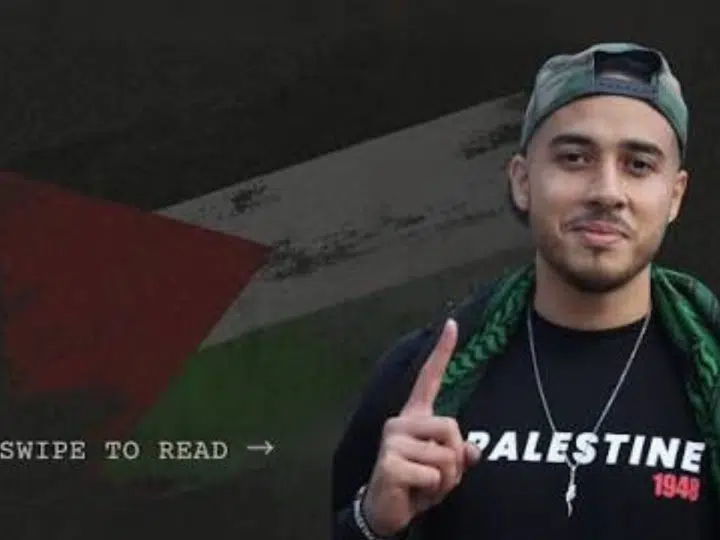
Ahmad Hajahmad Jarrar, a pro-Palestine activist, smiles with his index finger pointing up in a baseball cap turned backwards and a scarf draped on his shoulders. His jumper has 'Palestine' printed on it

Ahmad Hajahmad Jarrar, a pro-Palestine activist, smiles with his index finger pointing up in a baseball cap turned backwards and a scarf draped on his shoulders. His jumper has 'Palestine' printed on it

Canadian-Palestinian activist, Ahmad Hajahmad Jarrar, has been charged under terror laws after a speech in Toronto against Israel’s genocide in Gaza.

Meanwhile, charges have been dropped against three Israel supporters who committed or threatened actual harm to pro-Palestine protesters.

Canada is following the UK in its lawfare war on anti-genocide speech and protest.

The charges against the pro-Palestine activist

Jarrar was arrested for supposedly making “public statements that advocated for the detestation and harm against members of the Israeli and Jewish communities”, Toronto police said.

Advertisement

The force added that he “acted for the benefit of, and in association with, Hamas, a designated terrorist group”. His reported actual words did not mention the banned group:

Teach your children the Zionist entity is the enemy. Teach your children that the resistance is an honour.

Jarrar’s lawyer said his client was innocent and being targeted for speaking against the murder of civilians. He added that Jarrar had not been charged with what the police said he was arrested for.

He faces a single charge arising from speaking at public demonstrations. No violence, no weapon, no one harmed. Speaking out at a protest about the killing of civilians is protected expression, not terrorism.

The police told the media he ‘advocated for detestation and harm’ but he is not charged with that. We’ll be looking closely at how and why this case came to be, and we’re confident it won’t hold up when measured against the law.

Police have provided no additional details or evidence, citing court restrictions for reporting on the case.

Advertisement

Impunity for the opposite side

Meanwhile, the Canadian double standard is no less clear than its equivalent in the US. In 2024, Ilan-Reuben Abramov attacked anti-genocide demonstrators with a nail gun while screaming:

Every fucking Palestinian will die.

Abramov was charged but has never been brought to trial, leading campaigners to suspect the charges have been quietly dropped.

In February 2025, far-right extremist Eli Schwarz was arrested after threatening anti-genocide protesters. He admitted to police that he was a member of the terrorist group, Jewish Defence League.

When arrested, he was wearing a t-shirt praising Zionist terrorist Meir Kahane. Police found a rifle with scope at his home, along with 10 boxes of ammunition.

Advertisement

Schwarz was charged with making threats and improperly storing ammunition but has not been prosecuted.

In December 2025, Gabriella Bodis was charged with assault after threatening anti-genocide protesters with ‘reagent grade’ (high strength) ammonium hydroxide, which is capable of severe damage to the eyes and skin. She has not yet been prosecuted.

Students in Canada have denounced the charges against Ahmad Jarrar.

Featured image via wearthepeace/ Instagram

Advertisement

By Skwawkbox

Source link

Advertisement
Continue Reading

Politics

Snack Lovers Are Learning The Sweet Meaning Behind Snickers’ Name

Published

on

Snack Lovers Are Learning The Sweet Meaning Behind Snickers' Name

We’ve written before at HuffPost UK about how Hobnobs’ name actually has a meaning ― the “hob” refers to their homemade look, while the “nob” part (ooer missus) has to do with its knobbly texture.

Even Twix has a surprisingly clever name.

So you’d expect Snickers to have a similarly self-referential or witty brand, right? Maybe the “snick” is like “sneak”, because of the hidden peanut layer?

Advertisement

No. It was named after a horse.

What?

Yep! According to none other than Mars, the owner of Snickers, “The very first SNICKERS Bar, named after the family horse, was manufactured in Chicago, US, and sold for five cents.”

And per Mars Equestrian (yep, they’re the same Mars ― seems they really like horses), “Frank C. and Ethel V. Mars’ Milky Way Farm in Tennessee was well known for producing Thoroughbred racing champions, including the 1940 Kentucky Derby Winner, Gallahadion.”

Advertisement

The Mars family still breed thoroughbred horses and even has an equestrian sponsorship across multiple disciplines.

And you might not have known this ― I didn’t ― but Mars is actually a huge pet food manufacturer and owns brands like Pedigree and Whiskas.

What about the specific Snickers horse?

Per The Equine Chronicle, the family had good reason to appreciate Snickers the animal ― he was a winning racehorse.

Advertisement

Unfortunately, Snickers passed away “less than a month” before the launch of the bar in 1930. Hence the family named the iconic bar after their recently-departed horse (aww).

Well, sad as that is, I’m struggling to think of a better legacy…

Source link

Advertisement
Continue Reading

Politics

Animal Experts Reveal Stark Reason Why You Should Be Friendly To Crows

Published

on

Animal Experts Reveal Stark Reason Why You Should Be Friendly To Crows

According to National Geographic, crows are some of the most intelligent birds in the world. They have also always been held in incredibly high esteem and are considered to be symbols of prophecy, transformation, change, and freedom.

However, as majestic and revered as these birds are, they are also not to be messed with.

According to Science World: “Crows are incredibly territorial during May and June. They are known to dive and strike humans not just once, but repetitively until the human in question has moved a good distance away from the nest.”

In fact… you may actually want to be a little more friendly with crows and even befriend one. Yes, really.

Advertisement

Why you should befriend a crow

So, maybe you don’t need to specifically befriend a crow but you definitely need to stay on their good side.

This is because a five-year study by scientists at the University of Washington has found they possess an unusually good memory for human faces linked to a stressful event.

Not only do crows remember the faces of humans for five years, but these clever corvids can also warn their friends and family about you, too. I don’t know about you but being the target of a murder of local crows sounds bloody terrifying.

Advertisement

However, if you do choose to buddy up with a crow, they’ll actually bring you gifts. They may be fiercely protective and hold a hell of a grudge but they are generous souls, too!

John Marzluff, conservation ecologist at the University of Washington said that crows take part in “gifting” by leaving behind keys, lost earrings, bones, or rocks, for the people who feed them.

How to befriend a crow

According to Pet Helpful, following these steps can help you to become friends with a crow:

Advertisement
  • Find food that the crows seem to like and keep it in stock. Crows tend to like nuts and seeds
  • Establish a regular feeding schedule so they know when to expect you and can create a rhythm with them
  • Don’t overdo it — you don’t need to feed them meals, just enough for them to know that you care and want to befriend them
  • Don’t overdo it. Don’t feed them so much or so often that they become dependent—just a handful of something to show you care.
  • Don’t just throw the food out there and walk away. Stay at a respectful distance to watch them eat. You may see them eat it on the spot, or they might choose carefully and fly off to cache it for later
  • Don’t get too close to them as they prefer to be standoffish and may feel threatened

Brb, off to invest in some nuts and seeds.

Source link

Continue Reading

Trending

Copyright © 2025