Meghan Markle rang in her 45th birthday Tuesday with a playful splash, sharing a series of black-and-white photos and a video on Instagram that showed the Duchess of Sussex leaping into a pool surrounded by birthday balloons.
The As Ever founder turned 45 on Aug. 4, marking the occasion with a carousel post that captured both the jump and its aftermath. In the images, Meghan is seen mid-air in a black one-piece swimsuit and sunglasses, arms raised as a cluster of balloons floats behind her, followed by a second shot showing the splash as she crashed into the water.
A multi-part celebration
Beyond the pool photos, Meghan’s birthday post included several additional glimpses into her celebration. One slide featured an arrangement of her signature As Ever jams alongside a candle and a bucket chilling a bottle of Champagne. Another offered a personal touch, a throwback childhood photo showing a young Meghan sitting cross-legged in what appeared to be her childhood bedroom, wearing a white turtleneck, a multicolored striped skirt and her hair styled in pigtail braids. The final slide of the post carried the caption, “A birthday worth celebrating.”
Advertisement
Alongside the photos, Meghan also shared a video showing her dancing during the festivities. In the caption accompanying her post, she offered a simple message of gratitude to fans. “Thank you for the birthday love,” Meghan wrote, adding a red balloon emoji.
For that earlier post, captioned “Summer Holiday,” Meghan opened with a black-and-white photo of herself and Prince Harry sitting at a dining table, laughing over glasses of wine, with Harry’s arm resting behind her chair as she covered her face mid-laugh. The rest of the carousel showed the family’s time together during the trip, including beach days and sunset walks through grassy fields with Archie and Lilibet. One particularly striking image captured Harry tossing Lilibet into a pool, with water droplets frozen mid-air as she flipped into the water.
Advertisement
A relatively quiet public presence
Despite the family’s reunion with King Charles during their England trip, Meghan did not make any public appearances during that visit, keeping the reunion largely private aside from the photos she later chose to share. Her latest birthday post follows that same pattern of offering fans curated glimpses into her personal life through social media rather than public events, a approach that has become increasingly characteristic of how the Duchess of Sussex shares moments from her life with the public.
A recent turn in front of the camera Down Under
Meghan’s 45th birthday also comes during a period of increased public visibility in other areas of her career. Earlier this year, she made her debut appearance as a guest judge on MasterChef Australia, filling in for regular judge Andy Allen while he was on paternity leave. During that appearance, Meghan described her visit to the country as a “full circle” moment, having previously traveled to Australia with Harry nearly eight years earlier during the same trip when the couple announced their pregnancy with Archie.
Advertisement
A birthday tradition that has evolved over the years
Meghan’s approach to marking her birthday publicly has shifted noticeably over the past several years. Last year, for her 44th birthday, she shared a more intimate glimpse of a private dinner celebration at Funke, an upscale pasta restaurant in Beverly Hills helmed by chef Evan Funke, describing the meal as among the top five of her life. That post also included messages of gratitude to her husband, friends and family, along with a photo of her blowing out candles on a flower-topped birthday cake.
That earlier celebration also drew tributes from friends within Meghan’s circle, including former “Suits” co-star Abigail Spencer, who shares the same birthday and posted an effusive tribute crediting Meghan with having a significant, positive impact on her life.
A milestone year for the Duchess
Advertisement
Turning 45 marks another milestone for Meghan, whose public profile has continued to evolve since she and Harry stepped back from their roles as senior working royals in 2020. In the years since, she has built out a business focused on lifestyle products through her As Ever brand, taken on new media and entertainment opportunities including her MasterChef Australia appearance, and continued to share curated updates about her family life with Harry, Archie and Lilibet through social media.
With her birthday celebrations now shared publicly, attention is likely to remain on how Meghan continues to balance her public-facing business ventures with the more private, family-focused glimpses she has increasingly chosen to share with followers. Her latest post, much like the family photos shared following the England trip, offered fans a warm, personal look at her life without straying into the more heavily scrutinized territory of formal royal engagements, continuing a pattern that has come to define how the Duchess of Sussex presents herself publicly in the years since leaving royal life.
California gubernatorial candidate Steve Hilton slams the state’s homelessness crisis as a ‘total failure of the ruling class’ under Gov. Gavin Newsom. Hilton criticizes the billions spent with no results as Skid Row conditions worsen.
California Republican gubernatorial candidate Steve Hilton is warning that a proposed billionaire tax would further strain the state’s economy, arguing that California is already losing businesses, investment and tax revenue as residents grapple with high costs.
California gubernatorial candidate Steve Hilton joined FOX Business’ Maria Bartiromo on “Mornings with Maria” to discuss the proposal, which opponents say could drive more wealthy residents and employers out of the state if enacted.
Advertisement
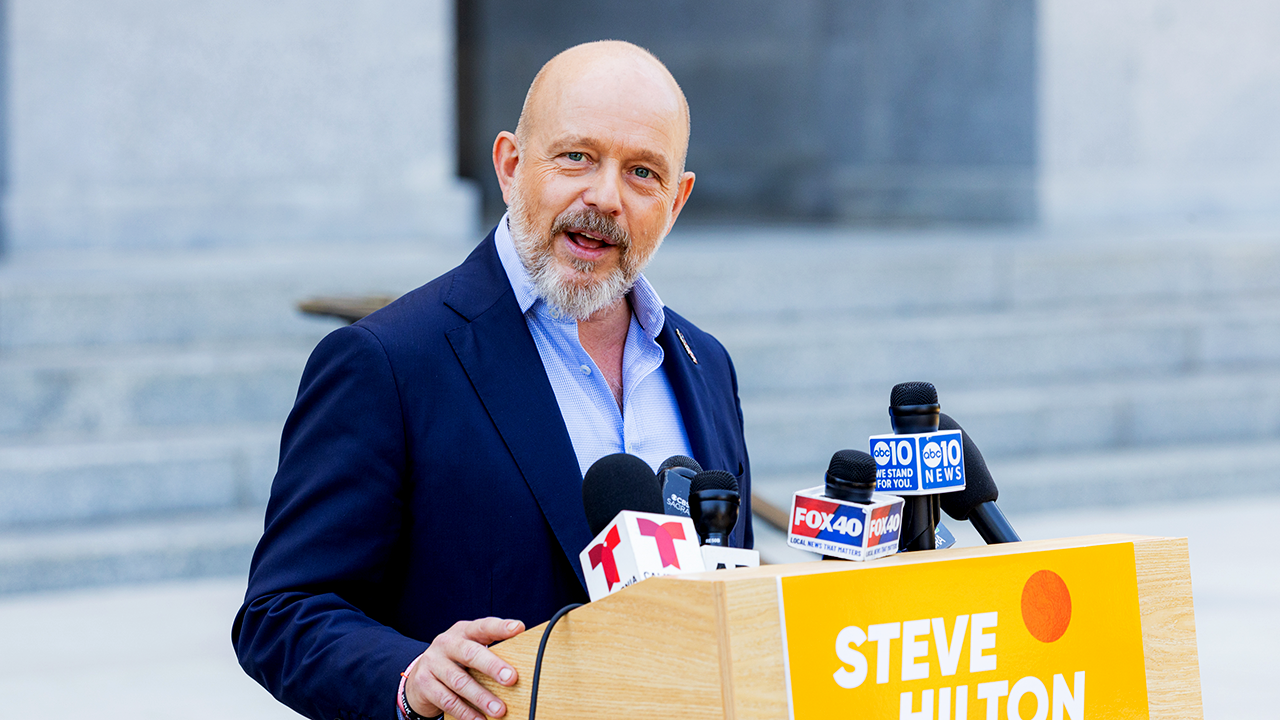
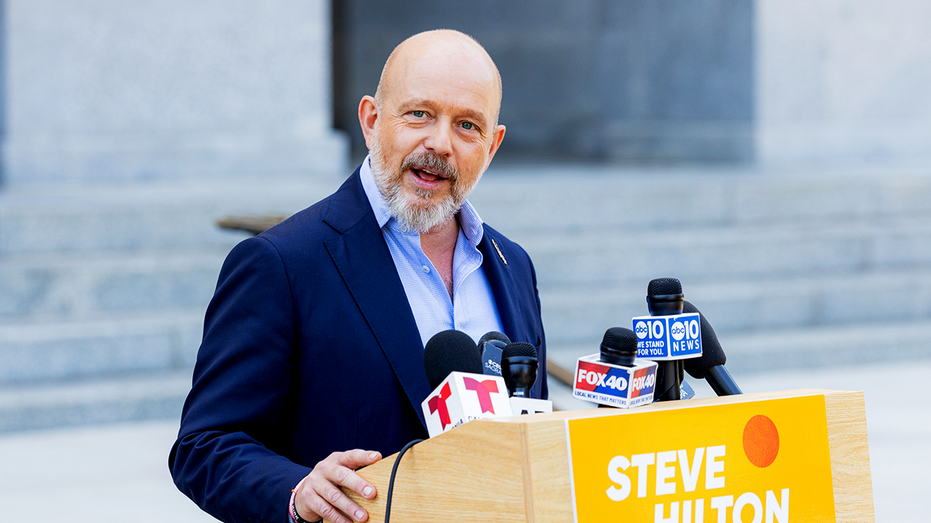
Steve Hilton, Republican gubernatorial candidate for California, speaks to members of the media outside the California State Capitol in Sacramento, California. (Jason Henry/Bloomberg / Getty Images)
“It’s already cost California billions of dollars in lost tax revenue because of the amount of wealth that’s already left the state,” Hilton said. “Just because of the threat of this insane tax.”
Lawmakers backing the proposal argue the state’s wealthiest residents should contribute more, while opponents contend California’s existing tax burden is already encouraging people and companies to relocate. Hilton argued the state’s top earners already shoulder a significant share of California’s income tax collections and questioned whether higher taxes would improve public services.
California gubernatorial candidate Steve Hilton discusses the state’s economic challenges, including the billionaire tax fight, minimum wage increases, the homelessness crisis, and energy debates surrounding tech data centers.
Advertisement
Beyond the billionaire tax debate, Hilton said rising labor costs, energy prices and regulations are making California less competitive. He argued repeated minimum wage increases create “a kind of doom loop” by raising business costs, which are then passed on to consumers.
Hilton also warned that businesses are scaling back hiring, increasing automation or leaving the state altogether because operating costs have become too high.
FOX Business contributor Josh Schafer discusses the California Democratic Party’s endorsement of a billionaire tax and raises questions on the revenue on ‘The Big Money Show.’
Hilton said he would instead pursue lower taxes, reduced government spending and fewer regulations, arguing those policies would help attract employers, expand investment and make California more affordable for residents.
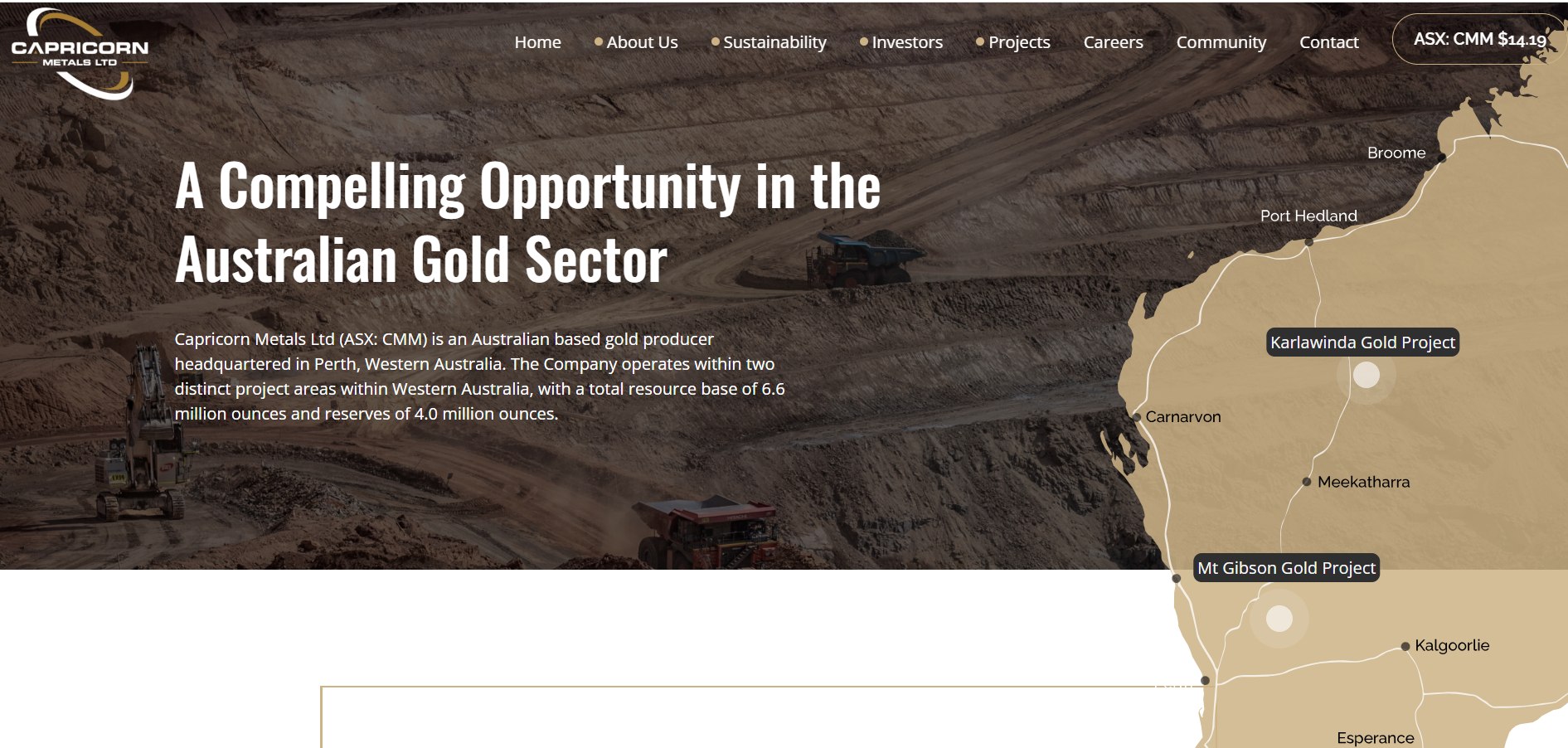
PERTH — Shares of Capricorn Metals Ltd surged 8.16% on Wednesday to close at $14.115, extending one of the standout rallies among Australian gold producers this year, as the Western Australian miner continues to benefit from a combination of strong operational execution, rising bullion prices and a substantial upgrade to its mineral reserve base.
The gain builds on a remarkable run for Capricorn shares in 2026, with the stock climbing more than 100% over the trailing 12 months, according to recent trading data, comfortably outpacing both the broader S&P/ASX 200 index and the wider Australian metals and mining sector. Over the past six months alone, the stock has outperformed the ASX All Ordinaries Index by more than 50 percentage points, reflecting sustained investor demand for exposure to the company’s growing gold production base.
A Major Reserve Upgrade
A key catalyst behind the company’s recent strength was an announcement of a 33% increase in group ore reserves to 5.24 million ounces, alongside a 29% lift in group mineral resources to 8.66 million ounces. The upgrade spans both the company’s flagship Karlawinda Gold Project and the emerging Mt Gibson Gold Project, materially extending mine life and production potential across its portfolio.
Advertisement
At Karlawinda, reserves now stand at approximately 1.57 million ounces, underpinning a planned expansion of production capacity to 150,000 ounces per year and supporting a mine life of around ten years at that elevated production rate. The reserve growth has given investors greater confidence in the durability of Capricorn’s production profile at a time when gold miners across the sector have faced questions about the sustainability of near-term output given rising development and operating costs.
Riding a Broader Gold Sector Rally
Capricorn’s gains this week have also come against the backdrop of a broader rally across Australian gold equities, with elevated bullion prices continuing to support margins for unhedged producers such as Capricorn. As a pure-play gold producer with limited exposure to other commodities, unlike more diversified miners, Capricorn’s share price performance tends to track closely with both broader gold sector fundamentals and the company’s own ability to convert those favorable conditions into operational execution and production growth.
Wednesday’s move outpaced the broader materials sector, which also finished the session higher, with the S&P/ASX 200 index climbing 1.40% to close at a fresh record. The S&P/ASX 200 Materials index added a further 1.08%, providing a supportive backdrop for mining stocks more broadly, though Capricorn’s gains notably exceeded the sector average, reflecting company-specific enthusiasm on top of the broader tailwind.
Advertisement
Analysts Point to More Than Just Commodity Prices
Market analysts have cautioned that commodity price appreciation alone is insufficient to fully explain the scale of Capricorn’s outperformance relative to peers, noting that equity valuations tend to expand more significantly when producers demonstrate operational resilience combined with favorable macro conditions. Capricorn’s consistent delivery against production guidance, disciplined portfolio management and its recent reserve upgrades have all been cited as factors that have helped the company command a premium among investors relative to some of its Australian gold sector peers.
A Strong Balance Sheet
The company’s financial position has continued to strengthen alongside its operational growth, with rising free cash flow generation supporting further investment in exploration and development activity across its project portfolio. That financial flexibility has been viewed by analysts as an important factor in the company’s ability to fund the kind of reserve growth demonstrated in its most recent update without requiring significant additional external capital.
Advertisement
With gold prices remaining elevated and Capricorn continuing to deliver on both production targets and resource growth, the company’s shares are likely to remain closely watched by investors seeking exposure to the Australian gold sector. The durability of the current rally will likely depend on the company’s ability to continue translating its expanded reserve base into sustained production growth, as well as the broader trajectory of gold prices in the months ahead.
eHealth, Inc. (EHTH) Q2 2026 Earnings Call August 4, 2026 5:00 PM EDT
Company Participants
Eli Newbrun-Mintz – Senior Investor Relations Manager Derrick Duke – CEO & Director John Dolan – Senior VP & CFO Michelle Barbeau – Senior VP & Chief Revenue Officer
Advertisement
Conference Call Participants
Maxi Ma – Deutsche Bank AG, Research Division Logan W Lillehaug – Craig-Hallum Capital Group LLC, Research Division Jonathan Yong – UBS Investment Bank, Research Division Michael Murray – RBC Capital Markets, Research Division George Hill – Deutsche Bank AG, Research Division
Presentation
Advertisement
Operator
Hello, everyone. Thank you for joining us, and welcome to the Q2 2026 eHealth, Inc. Earnings Conference Call.
[Operator Instructions]
I will now hand the conference over to Eli Newbrun-Mintz, Senior Manager of Investor Relations. Eli, please go ahead.
Advertisement
Eli Newbrun-Mintz Senior Investor Relations Manager
Good afternoon. Thank you all for joining us. On the call today, Derrick Duke, eHealth’s Chief Executive Officer, and John Dolan, Chief Financial Officer, will discuss our second quarter 2026 financial results. Following these prepared remarks, we will open the line for a Q&A session with industry analysts. As a reminder, this call is being recorded and webcast from the investor relations section of our website. A replay of the call will be available on our website later today. Today’s press release, our historical financial news releases, and our filings with the SEC are also available on our investor relations site. We will be making forward-looking statements on this call about certain matters that are based upon management’s current beliefs and expectations relating to future events impacting the company and our future financial or operating performance.
Forward-looking statements on this call represent eHealth’s views as of today. Actual results could differ materially. We undertake no obligation to publicly address or update any forward-looking statements except as required by law. The forward-looking statements
Genesis Minerals says a $5.1 billion offer by Regis Resources to merge with Vault Minerals was not the driving factor in its successful $5.6 billion bid for the company.
Seeking Alpha’s transcripts team is responsible for the development of all of our transcript-related projects. We currently publish thousands of quarterly earnings calls per quarter on our site and are continuing to grow and expand our coverage. The purpose of this profile is to allow us to share with our readers new transcript-related developments. Thanks, SA Transcripts Team
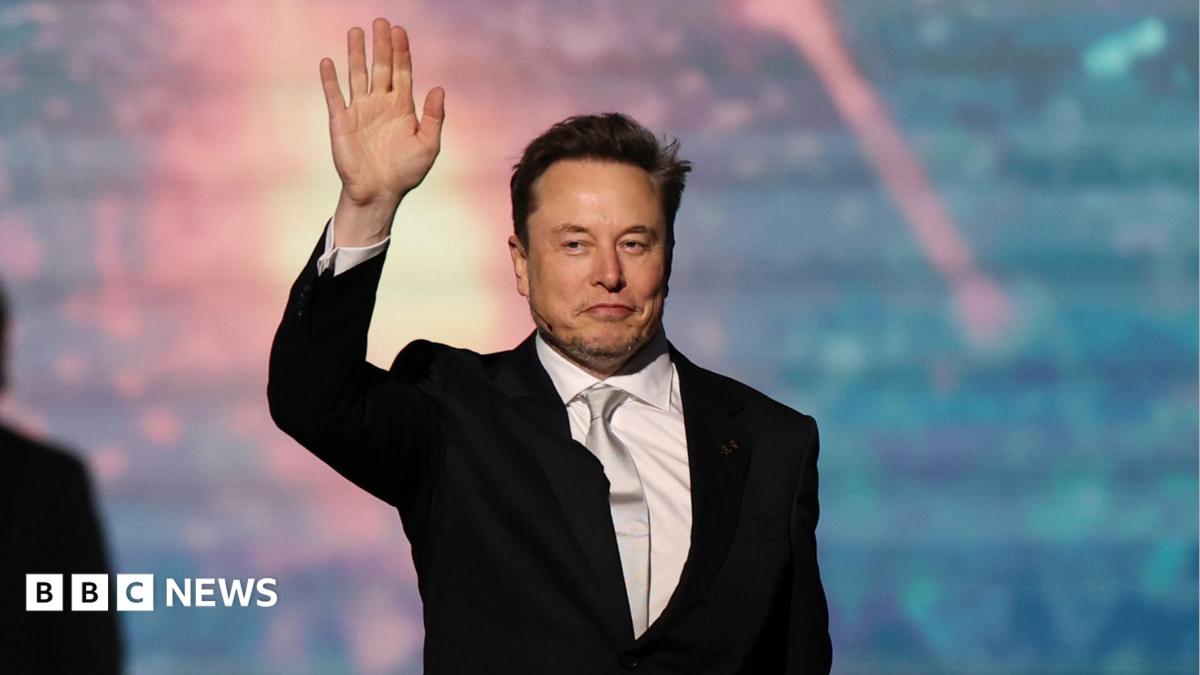
SpaceX has delivered its first-ever quarterly business report, which showed revenue nearly doubled but its spending skyrocketed.
The company, run by Elon Musk, builds space rockets and Starlink internet satellites and owns the social media platform X. It began trading on the US stock market in June.
SpaceX said its revenue had grown 92% to $7.8bn (£5.8bn) compared with a year ago, but its spending was up more than 550% to $18.3bn, on top of a net loss of $2bn during the first six months of the year.
Its stock fell nearly 9% in after-hours trading. Musk said during a call with financial analysts and investors afterwards that people seemed to be “underestimating” SpaceX.
Advertisement
He cites Starlink, the one part of the company that is currently making a profit, bringing in $1.6bn in the second quarter. Musk said he expects that business to grow exponentially in the coming years.
“It’s not out of the question that, at some point, Starlink will operate most of the world’s internet,” Musk said.
He also spoke of an expected and rapid growth of SpaceX’s emerging line of business selling compute power needed for artificial intelligence (AI) projects to other companies, which currently include Google and Anthropic.
Although SpaceX currently has 1.4 gigawatts of such compute power ready to use, Musk said that sometime next year that capacity should hit at least 10 gigawatts through its ongoing development of data centres.
Advertisement
Musk said during the call: “Data centres are a trivial problem compared to making reusable rockets.”
Making rockets is SpaceX’s core business, but the company’s space segment showed a $542m net loss against $962m in revenue for the second quarter.
SpaceX’s AI business also lost $1.2bn during the quarter, on revenue of $2.5bn.
Bret Johnson, head of finance for SpaceX, said during the call that the company’s capital spending would continue at a “very similar” level for the rest of the year.
Advertisement
Nevertheless, Musk said that SpaceX would likely hit $1tn in revenue by 2030, a year earlier than he thought just six weeks ago.
Despite this optimism, shares of SpaceX fell by more than 7% in after hours trading on Tuesday, wiping out gains made during the day.
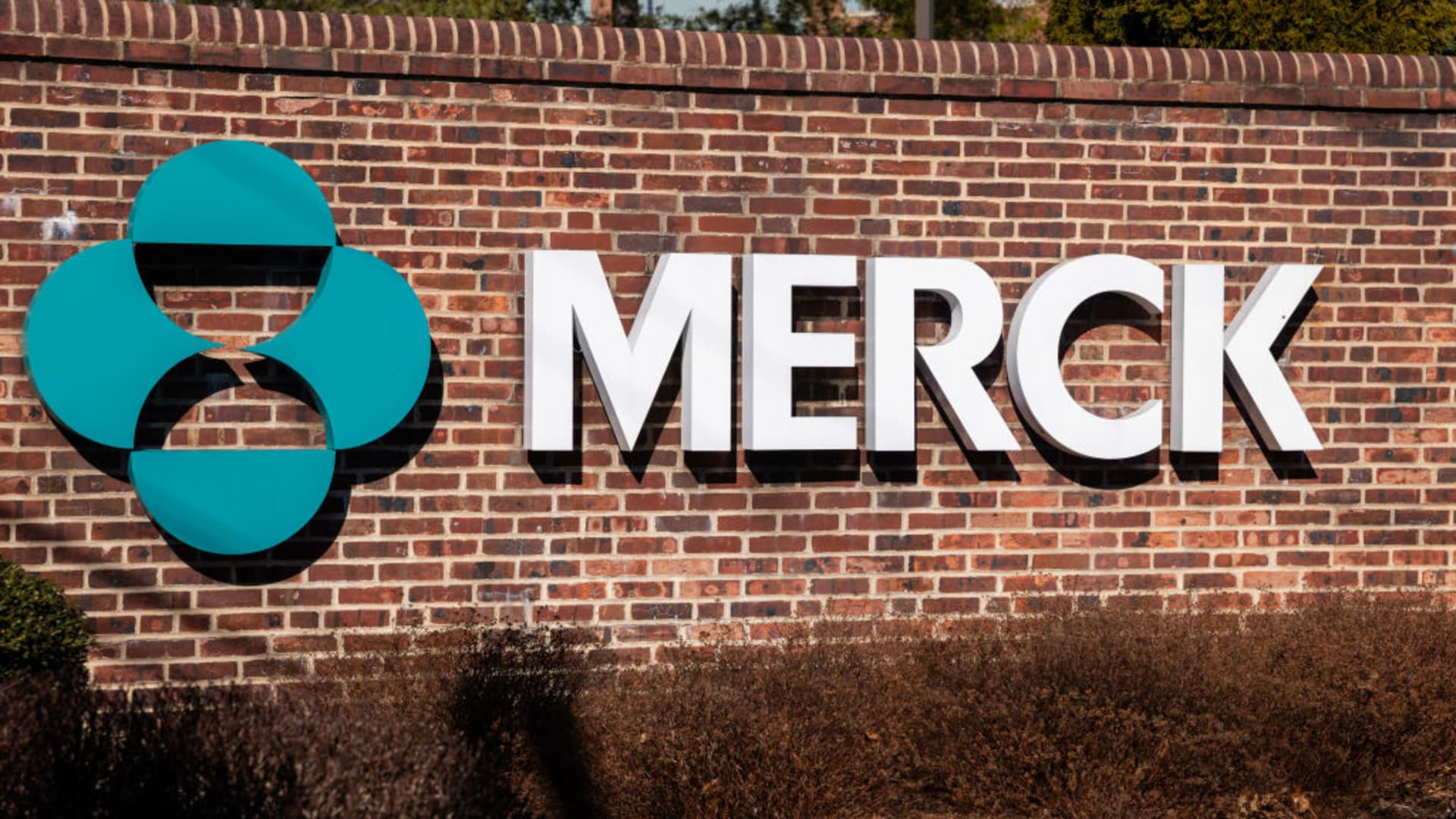
The exterior view of the entrance to Merck headquarters in Rahway, New Jersey, on Feb. 5, 2024.
Spencer Platt | Getty Images
Merck on Tuesday beat second-quarter estimates and hiked its revenue outlook, as a slate of new products showed strong growth.
Advertisement
But the pharmaceutical giant cut its profit guidance due to a charge tied to its acquisition of biotech company Terns Pharmaceuticals.
Merck now anticipates its 2026 revenue will come in between $66.3 billion and $67.3 billion, up from a previous guidance of $65.8 billion to $67 billion.
The company also expects adjusted earnings to be between $2.66 and $2.76 per share, which now includes a one-time charge of $5.7 billion, or $2.31 per share, related to the Terns deal. It also includes a $9 billion, or $3.62 per share, charge related to Merck’s acquisition of Cidara Therapeutics in January.
That adjusted profit outlook is down from a previous range of $5.04 to $5.16 per share.
Advertisement
Merck has been on a buying spree as it races to offset generic competition for a few drugs, including Type 2 diabetes medications Januvia and Janumet later this year, and blockbuster immunotherapy Keytruda in 2028. The company is also betting on newer drugs to replenish potential losses in revenue, including the first PCSK9 pill designed to lower bad cholesterol, which was approved in July.
Here’s what Merck reported for the second quarter compared with what Wall Street was expecting, based on a survey of analysts by LSEG:
Loss per share: 13 cents adjusted vs. 27 cents expected
Revenue: $16.61 billion vs. $16.36 billion expected
The company posted a net loss of $1.34 billion, or 54 cents per share, for the quarter. That compares with net income of $4.43 billion, or $1.76 per share, for the year-earlier period.
Excluding acquisition and restructuring costs, Merck posted a loss of 13 cents per share for the second quarter.
Merck raked in $16.61 billion in revenue for the quarter, up 5% from the same period a year earlier.
Advertisement
Keytruda generated $8.37 billion in sales for the second quarter, up 5% from the same period a year ago. Analysts were expecting revenue of $8.27 billion, according to StreetAccount estimates.
The reported second-quarter total includes $463 million from the new, more convenient injectable version of Keytruda. That form is key to Merck’s efforts to offset likely declines in revenue after the original intravenous version of the drug goes off patent.
Merck’s other newer products also showed strong growth.
Winrevair, which is used to treat a rare, deadly lung condition, generated $588 million in sales for the quarter, up 75% from the same period a year earlier. Analysts were expecting sales of $565 million.
Advertisement
Merck’s pneumococcal vaccine, Capvaxive, also booked $184 million in sales for the quarter, up 42% from the year-earlier period.
Meanwhile, Merck’s animal health business posted $1.78 billion in sales for the second quarter, which came in above analysts’ estimates.
















































You must be logged in to post a comment Login