



Connect with us

Business

Merck (MRK) earnings Q2 2026

Published

on

Merck (MRK) earnings Q2 2026

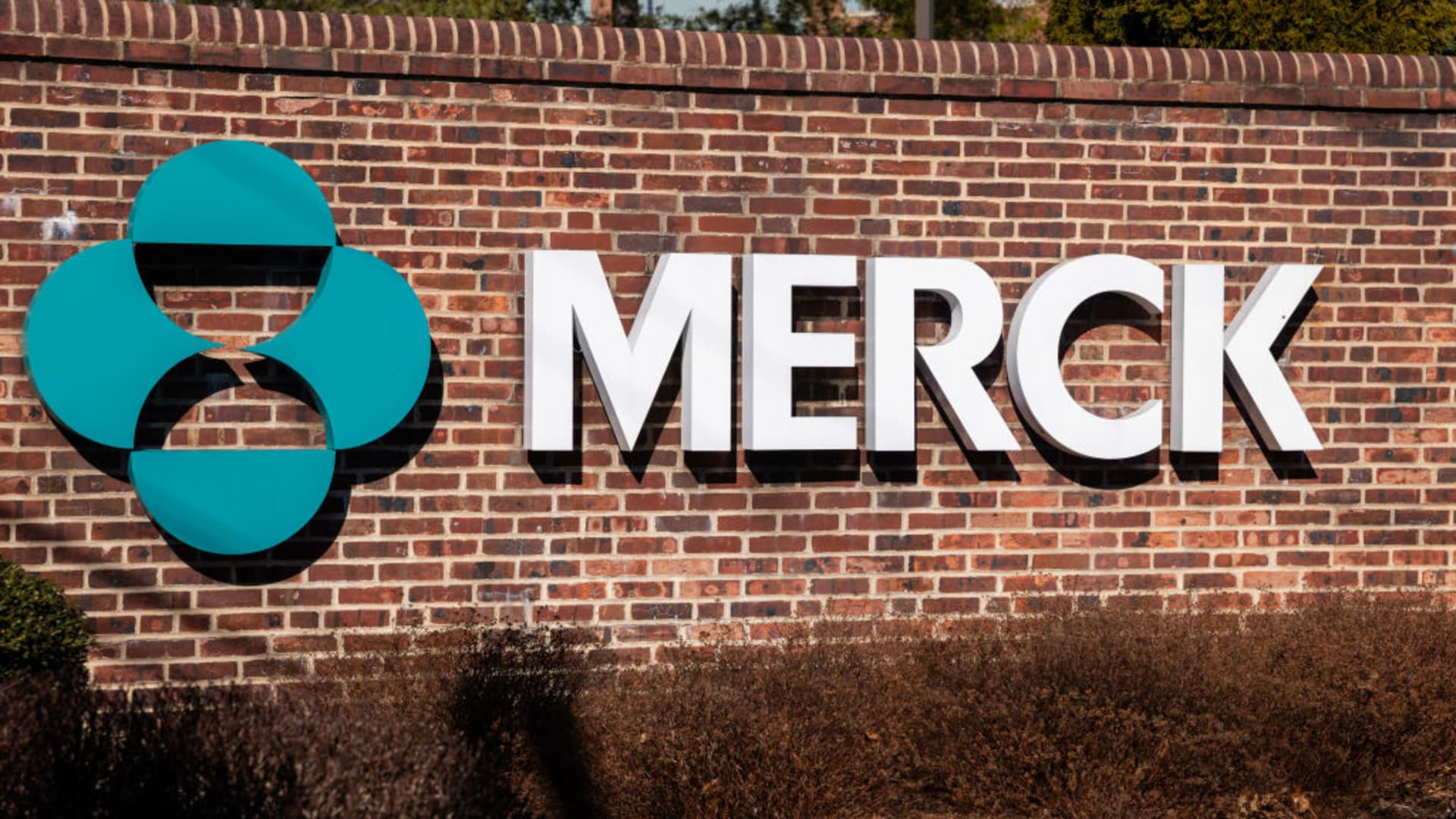
The exterior view of the entrance to Merck headquarters in Rahway, New Jersey, on Feb. 5, 2024.

Spencer Platt | Getty Images

Merck on Tuesday beat second-quarter estimates and hiked its revenue outlook, as a slate of new products showed strong growth. 

Advertisement

But the pharmaceutical giant cut its profit guidance due to a charge tied to its acquisition of biotech company Terns Pharmaceuticals. 

Merck now anticipates its 2026 revenue will come in between $66.3 billion and $67.3 billion, up from a previous guidance of $65.8 billion to $67 billion. 

The company also expects adjusted earnings to be between $2.66 and $2.76 per share, which now includes a one-time charge of $5.7 billion, or $2.31 per share, related to the Terns deal. It also includes a $9 billion, or $3.62 per share, charge related to Merck’s acquisition of Cidara Therapeutics in January. 

That adjusted profit outlook is down from a previous range of $5.04 to $5.16 per share. 

Advertisement

Merck has been on a buying spree as it races to offset generic competition for a few drugs, including Type 2 diabetes medications Januvia and Janumet later this year, and blockbuster immunotherapy Keytruda in 2028. The company is also betting on newer drugs to replenish potential losses in revenue, including the first PCSK9 pill designed to lower bad cholesterol, which was approved in July. 

Here’s what Merck reported for the second quarter compared with what Wall Street was expecting, based on a survey of analysts by LSEG: 

  • Loss per share: 13 cents adjusted vs. 27 cents expected

  • Revenue: $16.61 billion vs. $16.36 billion expected

The company posted a net loss of $1.34 billion, or 54 cents per share, for the quarter. That compares with net income of $4.43 billion, or $1.76 per share, for the year-earlier period. 

Excluding acquisition and restructuring costs, Merck posted a loss of 13 cents per share for the second quarter.

Merck raked in $16.61 billion in revenue for the quarter, up 5% from the same period a year earlier.

Advertisement

Keytruda generated $8.37 billion in sales for the second quarter, up 5% from the same period a year ago. Analysts were expecting revenue of $8.27 billion, according to StreetAccount estimates. 

The reported second-quarter total includes $463 million from the new, more convenient injectable version of Keytruda. That form is key to Merck’s efforts to offset likely declines in revenue after the original intravenous version of the drug goes off patent.

Merck’s other newer products also showed strong growth. 

Winrevair, which is used to treat a rare, deadly lung condition, generated $588 million in sales for the quarter, up 75% from the same period a year earlier. Analysts were expecting sales of $565 million. 

Advertisement

Merck’s pneumococcal vaccine, Capvaxive, also booked $184 million in sales for the quarter, up 42% from the year-earlier period. 

Meanwhile, Merck’s animal health business posted $1.78 billion in sales for the second quarter, which came in above analysts’ estimates.

Choose CNBC as your preferred source on Google and never miss a moment from the most trusted name in business news.
Continue Reading
Click to comment

You must be logged in to post a comment Login

Leave a Reply

Business

Steve Hilton warns California billionaire tax risks economic collapse

Published

on

Steve Hilton warns California billionaire tax risks economic collapse

California Republican gubernatorial candidate Steve Hilton is warning that a proposed billionaire tax would further strain the state’s economy, arguing that California is already losing businesses, investment and tax revenue as residents grapple with high costs.

California gubernatorial candidate Steve Hilton joined FOX Business’ Maria Bartiromo on “Mornings with Maria” to discuss the proposal, which opponents say could drive more wealthy residents and employers out of the state if enacted.

Advertisement
California Gubernatorial Candidate Steve Hilton

Steve Hilton, Republican gubernatorial candidate for California, speaks to members of the media outside the California State Capitol in Sacramento, California. (Jason Henry/Bloomberg / Getty Images)

“It’s already cost California billions of dollars in lost tax revenue because of the amount of wealth that’s already left the state,” Hilton said. “Just because of the threat of this insane tax.”

CALIFORNIA DEMOCRATIC PARTY BACKS CONTROVERSIAL BILLIONAIRE WEALTH TAX PROPOSAL THAT’S ON STATE’S 2026 BALLOT

Lawmakers backing the proposal argue the state’s wealthiest residents should contribute more, while opponents contend California’s existing tax burden is already encouraging people and companies to relocate. Hilton argued the state’s top earners already shoulder a significant share of California’s income tax collections and questioned whether higher taxes would improve public services.

Beyond the billionaire tax debate, Hilton said rising labor costs, energy prices and regulations are making California less competitive. He argued repeated minimum wage increases create “a kind of doom loop” by raising business costs, which are then passed on to consumers.

CALIFORNIA LOSES FORTUNE 500 CROWN TO TEXAS AS BILLIONAIRE TAX THREAT LOOMS

Hilton also warned that businesses are scaling back hiring, increasing automation or leaving the state altogether because operating costs have become too high.

“If we don’t face up to the reality, California’s economy is going to absolutely collapse,” Hilton said.

Hilton said he would instead pursue lower taxes, reduced government spending and fewer regulations, arguing those policies would help attract employers, expand investment and make California more affordable for residents.

GET FOX BUSINESS ON THE GO BY CLICKING HERE

Advertisement
Continue Reading

Business

KeyBanc cuts McDonald’s stock price target to $305 on soft sales

Published

on


KeyBanc cuts McDonald’s stock price target to $305 on soft sales

Continue Reading

Business

Capricorn Metals Shares Jump Over 8% as Gold Miner Lifts Reserves 33% to Fuel Blistering Rally This Year

Published

on

Capricorn Metals Shares Jump Over 8% as Gold Miner Lifts

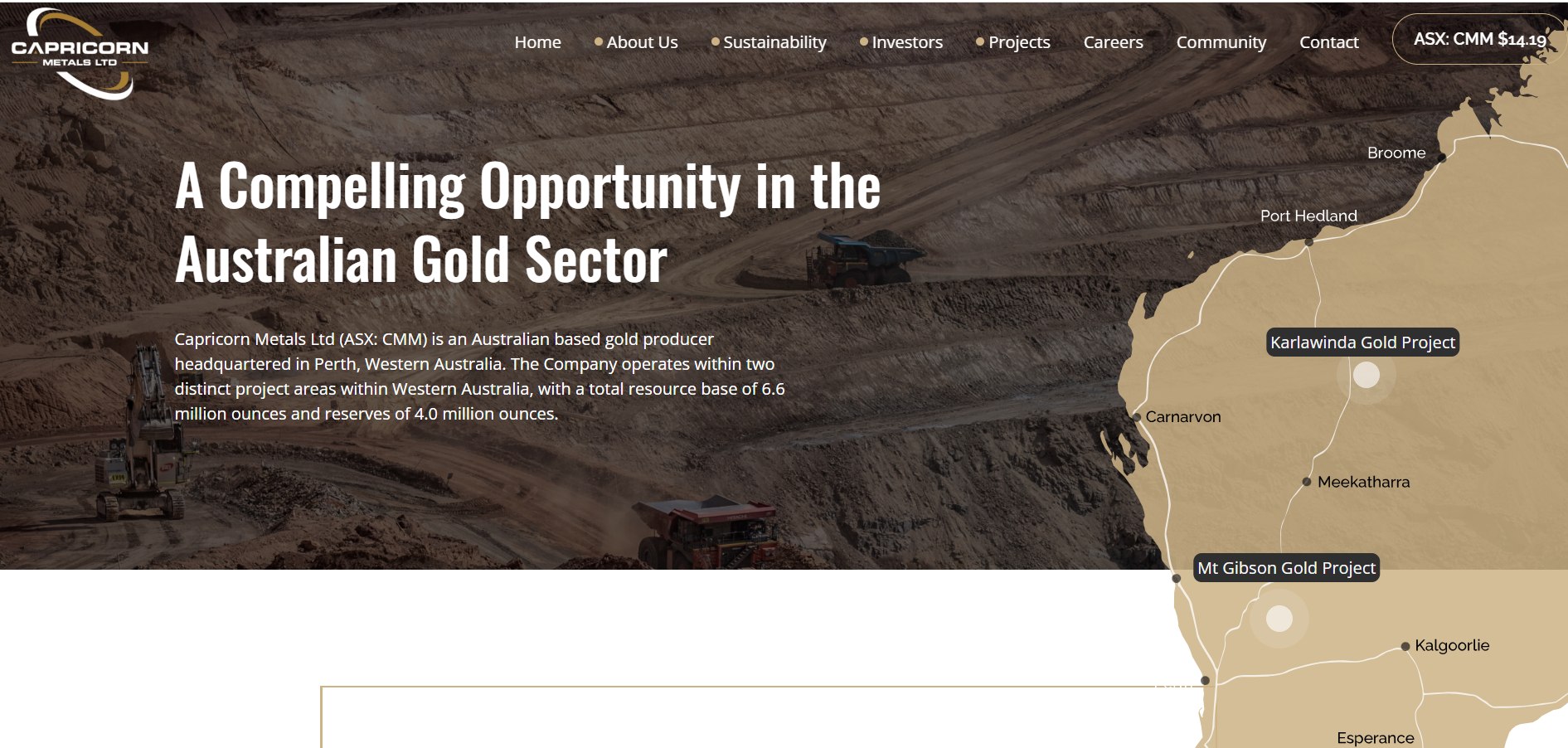
PERTH — Shares of Capricorn Metals Ltd surged 8.16% on Wednesday to close at $14.115, extending one of the standout rallies among Australian gold producers this year, as the Western Australian miner continues to benefit from a combination of strong operational execution, rising bullion prices and a substantial upgrade to its mineral reserve base.

The gain builds on a remarkable run for Capricorn shares in 2026, with the stock climbing more than 100% over the trailing 12 months, according to recent trading data, comfortably outpacing both the broader S&P/ASX 200 index and the wider Australian metals and mining sector. Over the past six months alone, the stock has outperformed the ASX All Ordinaries Index by more than 50 percentage points, reflecting sustained investor demand for exposure to the company’s growing gold production base.

A Major Reserve Upgrade

A key catalyst behind the company’s recent strength was an announcement of a 33% increase in group ore reserves to 5.24 million ounces, alongside a 29% lift in group mineral resources to 8.66 million ounces. The upgrade spans both the company’s flagship Karlawinda Gold Project and the emerging Mt Gibson Gold Project, materially extending mine life and production potential across its portfolio.

Advertisement

At Karlawinda, reserves now stand at approximately 1.57 million ounces, underpinning a planned expansion of production capacity to 150,000 ounces per year and supporting a mine life of around ten years at that elevated production rate. The reserve growth has given investors greater confidence in the durability of Capricorn’s production profile at a time when gold miners across the sector have faced questions about the sustainability of near-term output given rising development and operating costs.

Riding a Broader Gold Sector Rally

Capricorn’s gains this week have also come against the backdrop of a broader rally across Australian gold equities, with elevated bullion prices continuing to support margins for unhedged producers such as Capricorn. As a pure-play gold producer with limited exposure to other commodities, unlike more diversified miners, Capricorn’s share price performance tends to track closely with both broader gold sector fundamentals and the company’s own ability to convert those favorable conditions into operational execution and production growth.

Wednesday’s move outpaced the broader materials sector, which also finished the session higher, with the S&P/ASX 200 index climbing 1.40% to close at a fresh record. The S&P/ASX 200 Materials index added a further 1.08%, providing a supportive backdrop for mining stocks more broadly, though Capricorn’s gains notably exceeded the sector average, reflecting company-specific enthusiasm on top of the broader tailwind.

Advertisement

Analysts Point to More Than Just Commodity Prices

Market analysts have cautioned that commodity price appreciation alone is insufficient to fully explain the scale of Capricorn’s outperformance relative to peers, noting that equity valuations tend to expand more significantly when producers demonstrate operational resilience combined with favorable macro conditions. Capricorn’s consistent delivery against production guidance, disciplined portfolio management and its recent reserve upgrades have all been cited as factors that have helped the company command a premium among investors relative to some of its Australian gold sector peers.

A Strong Balance Sheet

The company’s financial position has continued to strengthen alongside its operational growth, with rising free cash flow generation supporting further investment in exploration and development activity across its project portfolio. That financial flexibility has been viewed by analysts as an important factor in the company’s ability to fund the kind of reserve growth demonstrated in its most recent update without requiring significant additional external capital.

Advertisement

With gold prices remaining elevated and Capricorn continuing to deliver on both production targets and resource growth, the company’s shares are likely to remain closely watched by investors seeking exposure to the Australian gold sector. The durability of the current rally will likely depend on the company’s ability to continue translating its expanded reserve base into sustained production growth, as well as the broader trajectory of gold prices in the months ahead.

Continue Reading

Business

eHealth, Inc. (EHTH) Q2 2026 Earnings Call Transcript

Published

on

OneWater Marine Inc. (ONEW) Q1 2026 Earnings Call Transcript