Connect with us

Business

SpaceX’s first-ever earnings show higher revenues and huge spending

Published

on

SpaceX chief executive Elon Musk walking onto a stage and waving, wearing a black suit, white collared shirt and shiny off-white neck tie.

SpaceX has delivered its first-ever quarterly business report, which showed revenue nearly doubled but its spending skyrocketed.

The company, run by Elon Musk, builds space rockets and Starlink internet satellites and owns the social media platform X. It began trading on the US stock market in June.

SpaceX said its revenue had grown 92% to $7.8bn (£5.8bn) compared with a year ago, but its spending was up more than 550% to $18.3bn, on top of a net loss of $2bn during the first six months of the year.

Its stock fell nearly 9% in after-hours trading. Musk said during a call with financial analysts and investors afterwards that people seemed to be “underestimating” SpaceX.

Advertisement

He cites Starlink, the one part of the company that is currently making a profit, bringing in $1.6bn in the second quarter. Musk said he expects that business to grow exponentially in the coming years.

“It’s not out of the question that, at some point, Starlink will operate most of the world’s internet,” Musk said.

He also spoke of an expected and rapid growth of SpaceX’s emerging line of business selling compute power needed for artificial intelligence (AI) projects to other companies, which currently include Google and Anthropic.

Although SpaceX currently has 1.4 gigawatts of such compute power ready to use, Musk said that sometime next year that capacity should hit at least 10 gigawatts through its ongoing development of data centres.

Advertisement

Musk said during the call: “Data centres are a trivial problem compared to making reusable rockets.”

Making rockets is SpaceX’s core business, but the company’s space segment showed a $542m net loss against $962m in revenue for the second quarter.

SpaceX’s AI business also lost $1.2bn during the quarter, on revenue of $2.5bn.

Bret Johnson, head of finance for SpaceX, said during the call that the company’s capital spending would continue at a “very similar” level for the rest of the year.

Advertisement

Nevertheless, Musk said that SpaceX would likely hit $1tn in revenue by 2030, a year earlier than he thought just six weeks ago.

Despite this optimism, shares of SpaceX fell by more than 7% in after hours trading on Tuesday, wiping out gains made during the day.

Continue Reading
Click to comment

You must be logged in to post a comment Login

Leave a Reply

Business

MapMyIndia shares drop 8% despite strong Q1 earnings; PAT jumps 8% YoY

Published

on

MapMyIndia shares drop 8% despite strong Q1 earnings; PAT jumps 8% YoY
Shares of MapMyIndia (C.E. Info Systems) fell nearly 8% on Wednesday, hitting a low of Rs 1,048 against the previous close of Rs 1,139, despite the company reporting strong Q1 earnings on Tuesday, with revenue rising 15% and profit after tax (PAT) increasing 8%.

According to a filing with the exchange, India’s leading deeptech digital map data, geospatial software and location-based IoT products, platforms, APIs and solutions company announced a year-on-year jump of 14.9% in its revenue from operations to Rs 139.7 crore in Q1FY27 against Rs 121.6 crore in Q1FY26.

The profit after tax (PAT) was recorded at Rs 49.7 crore in Q1FY27 against Rs 45.8 crore in the same quarter a year ago.

Also Read | Bharti Airtel shares jump 4% after Q1 results. Here’s what Jefferies, CLSA, others are saying

Advertisement

In the first quarter of FY2027 ended June 30, 2026, the total income was recorded at Rs 159 crore indicating a growth of 17.8% on yearly basis. EBITDA was reported at Rs 56.1 crore whereas the EBITDA margin was recorded at 40.2%. EBITDA margin impacted due to change in product mix during this quarter and one-time Rs 4 crore write off for a specific government customer.


Cash and cash equivalents grew to Rs 745 crore from Rs 685 crore in this quarter. Q1F2Y27 Contribution of Automotive, Enterprise, Government is 42%, 46%, 12% respectively, of the total revenue.
The company said that their two product category pillars – Map-led and IoT-led – continue to complement each other in addressing a broad range of customer requirements and use cases across our Automotive, Enterprise and Government verticals. While the Map-led business continues to deliver strong profitability, the IoT-led business is scaling rapidly with increasing adoption of IoT-led solutions.IoT-led business revenue grew 75% YoY to ₹41.1 crore, reflecting strong adoption of connected mobility and logistics solutions; and the EBITDA margin improved to 13.1% in Q1 FY27 from 8.7% in Q1 FY26, representing a 440 bps year-on-year improvement.

Market segment – Automotive

Automotive business grew at 29% during Q1FY27 on a YoY basis from Rs 45.7 crore in Q1FY26 to Rs 59 crore in Q1FY27. This growth was driven by continued momentum across map-led connected mobility solutions.

The product strategy continued to prioritise building innovations around AI-powered cockpit, in-vehicle intelligence, SDV platforms, and EV charging network integration and range optimisation.

Market segment – Enterprise

In Q1FY27, the Enterprise business grew at 6% on a YoY basis, with multiple wins and go-lives across sub-verticals. Mobility & Logistics won a leading online bus booking platform for Video Telematics and expanded API deployments with a major logistics player to improve routing and delivery efficiency.

Advertisement

Market segment – Government

In Q1FY27, the Government business grew at 11% on a YoY basis, with multiple wins and go-lives across sub-verticals. The company also said that Q1 is seasonally weakest quarter for Government business.

Also Read | Experts advise caution as CAS fuels arbitrage fund NAV volatility

“We began FY2027 with another quarter of profitable growth while continuing our evolution into India’s leading AI-powered deep-tech digital map data, geospatial software, and location-based IoT company. Revenue from Operations grew 15% year-on-year to Rs 139.7 crore, while EBITDA remained strong at ₹Rs 56.1 crore with EBITDA margin at 40.2%, and PAT increased 8.6% YoY to Rs 49.7 crore with PAT margin at 31.2%. Our performance reflects the continued strength and moat of our products, platforms, APIs and solutions, alongside disciplined execution and continuously growing trust of customers across Automotive, Enterprise and Government segments,” said Rakesh Verma, Chairman & Managing Director, MapmyIndia.

“As our business evolves, to help investors and analysts understand our business better, we are refining the way we present our segmental revenue. Beginning this quarter, we are reporting our market-wise segmental revenues across three customer-focused verticals – Automotive, Enterprise and Government – instead of the previously reported A&M and C&E market segments. This clearly reflects our revenue from these specific customer segments, and also how we organise our operations and pursue growth opportunities. We continue to report product-wise segmental revenue and profitability under the Map-led and IoT-led categories, as these remain the core pillars of our offerings across all our customer verticals,” Verma said.

Advertisement

In the last one month, the MapMyIndia stock rallied 1.79% whereas in the last one year it went up 4.03%. In the last three years, the stock went up 40.42%, and in the last five years, the stock went up 69.64%.

(Disclaimer: Recommendations, suggestions, views and opinions given by the experts are their own. These do not represent the views of The Economic Times)

Continue Reading

Business

Steve Hilton warns California billionaire tax risks economic collapse

Published

on

Steve Hilton warns California billionaire tax risks economic collapse

California Republican gubernatorial candidate Steve Hilton is warning that a proposed billionaire tax would further strain the state’s economy, arguing that California is already losing businesses, investment and tax revenue as residents grapple with high costs.

California gubernatorial candidate Steve Hilton joined FOX Business’ Maria Bartiromo on “Mornings with Maria” to discuss the proposal, which opponents say could drive more wealthy residents and employers out of the state if enacted.

Advertisement
California Gubernatorial Candidate Steve Hilton

Steve Hilton, Republican gubernatorial candidate for California, speaks to members of the media outside the California State Capitol in Sacramento, California. (Jason Henry/Bloomberg / Getty Images)

“It’s already cost California billions of dollars in lost tax revenue because of the amount of wealth that’s already left the state,” Hilton said. “Just because of the threat of this insane tax.”

CALIFORNIA DEMOCRATIC PARTY BACKS CONTROVERSIAL BILLIONAIRE WEALTH TAX PROPOSAL THAT’S ON STATE’S 2026 BALLOT

Lawmakers backing the proposal argue the state’s wealthiest residents should contribute more, while opponents contend California’s existing tax burden is already encouraging people and companies to relocate. Hilton argued the state’s top earners already shoulder a significant share of California’s income tax collections and questioned whether higher taxes would improve public services.

Beyond the billionaire tax debate, Hilton said rising labor costs, energy prices and regulations are making California less competitive. He argued repeated minimum wage increases create “a kind of doom loop” by raising business costs, which are then passed on to consumers.

CALIFORNIA LOSES FORTUNE 500 CROWN TO TEXAS AS BILLIONAIRE TAX THREAT LOOMS

Hilton also warned that businesses are scaling back hiring, increasing automation or leaving the state altogether because operating costs have become too high.

“If we don’t face up to the reality, California’s economy is going to absolutely collapse,” Hilton said.

Hilton said he would instead pursue lower taxes, reduced government spending and fewer regulations, arguing those policies would help attract employers, expand investment and make California more affordable for residents.

GET FOX BUSINESS ON THE GO BY CLICKING HERE

Advertisement
Continue Reading

Business

KeyBanc cuts McDonald’s stock price target to $305 on soft sales

Published

on


KeyBanc cuts McDonald’s stock price target to $305 on soft sales

Continue Reading

Business

Capricorn Metals Shares Jump Over 8% as Gold Miner Lifts Reserves 33% to Fuel Blistering Rally This Year

Published

on

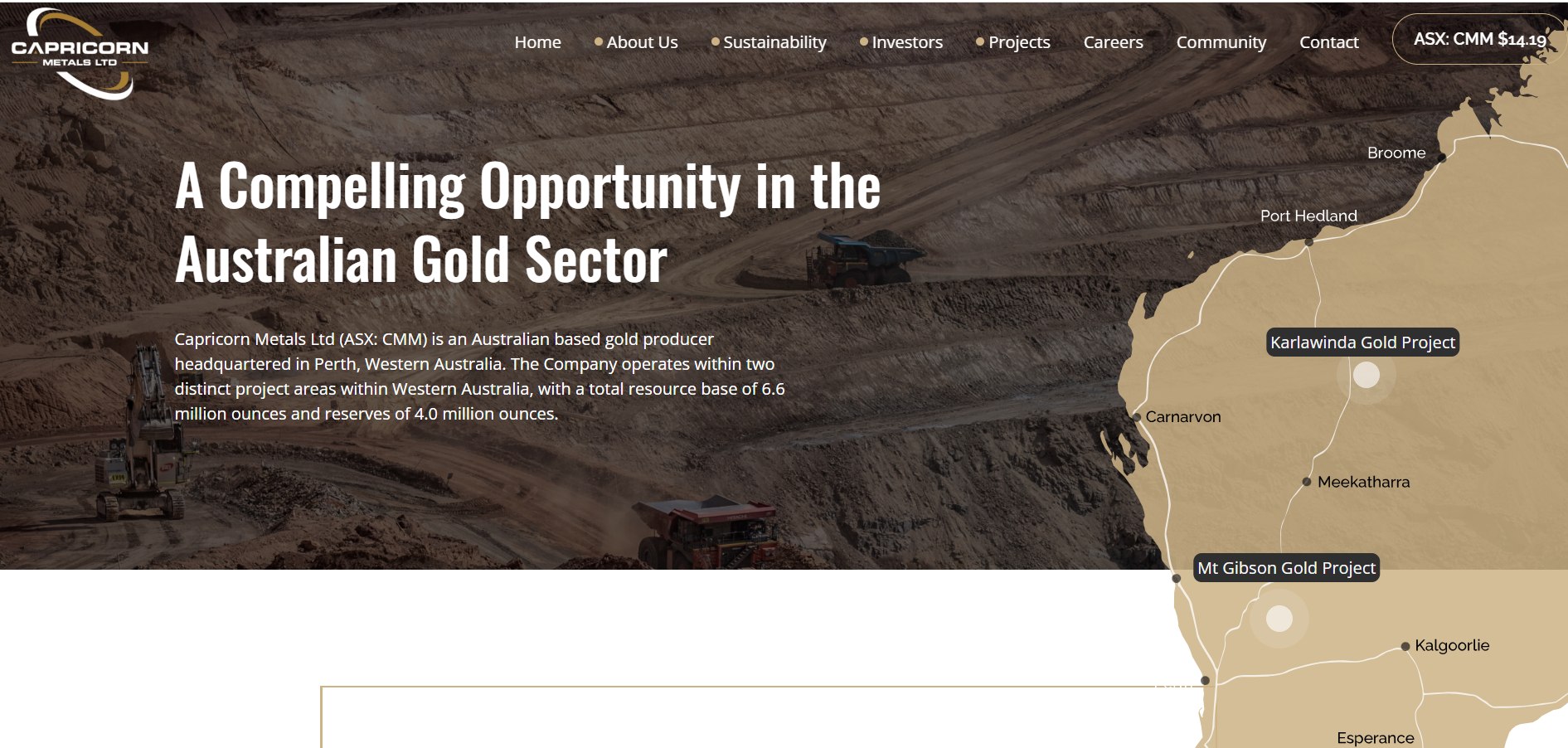
Capricorn Metals Shares Jump Over 8% as Gold Miner Lifts

PERTH — Shares of Capricorn Metals Ltd surged 8.16% on Wednesday to close at $14.115, extending one of the standout rallies among Australian gold producers this year, as the Western Australian miner continues to benefit from a combination of strong operational execution, rising bullion prices and a substantial upgrade to its mineral reserve base.

The gain builds on a remarkable run for Capricorn shares in 2026, with the stock climbing more than 100% over the trailing 12 months, according to recent trading data, comfortably outpacing both the broader S&P/ASX 200 index and the wider Australian metals and mining sector. Over the past six months alone, the stock has outperformed the ASX All Ordinaries Index by more than 50 percentage points, reflecting sustained investor demand for exposure to the company’s growing gold production base.

A Major Reserve Upgrade

A key catalyst behind the company’s recent strength was an announcement of a 33% increase in group ore reserves to 5.24 million ounces, alongside a 29% lift in group mineral resources to 8.66 million ounces. The upgrade spans both the company’s flagship Karlawinda Gold Project and the emerging Mt Gibson Gold Project, materially extending mine life and production potential across its portfolio.

Advertisement

At Karlawinda, reserves now stand at approximately 1.57 million ounces, underpinning a planned expansion of production capacity to 150,000 ounces per year and supporting a mine life of around ten years at that elevated production rate. The reserve growth has given investors greater confidence in the durability of Capricorn’s production profile at a time when gold miners across the sector have faced questions about the sustainability of near-term output given rising development and operating costs.

Riding a Broader Gold Sector Rally

Capricorn’s gains this week have also come against the backdrop of a broader rally across Australian gold equities, with elevated bullion prices continuing to support margins for unhedged producers such as Capricorn. As a pure-play gold producer with limited exposure to other commodities, unlike more diversified miners, Capricorn’s share price performance tends to track closely with both broader gold sector fundamentals and the company’s own ability to convert those favorable conditions into operational execution and production growth.

Wednesday’s move outpaced the broader materials sector, which also finished the session higher, with the S&P/ASX 200 index climbing 1.40% to close at a fresh record. The S&P/ASX 200 Materials index added a further 1.08%, providing a supportive backdrop for mining stocks more broadly, though Capricorn’s gains notably exceeded the sector average, reflecting company-specific enthusiasm on top of the broader tailwind.

Advertisement

Analysts Point to More Than Just Commodity Prices

Market analysts have cautioned that commodity price appreciation alone is insufficient to fully explain the scale of Capricorn’s outperformance relative to peers, noting that equity valuations tend to expand more significantly when producers demonstrate operational resilience combined with favorable macro conditions. Capricorn’s consistent delivery against production guidance, disciplined portfolio management and its recent reserve upgrades have all been cited as factors that have helped the company command a premium among investors relative to some of its Australian gold sector peers.

A Strong Balance Sheet

The company’s financial position has continued to strengthen alongside its operational growth, with rising free cash flow generation supporting further investment in exploration and development activity across its project portfolio. That financial flexibility has been viewed by analysts as an important factor in the company’s ability to fund the kind of reserve growth demonstrated in its most recent update without requiring significant additional external capital.

Advertisement

With gold prices remaining elevated and Capricorn continuing to deliver on both production targets and resource growth, the company’s shares are likely to remain closely watched by investors seeking exposure to the Australian gold sector. The durability of the current rally will likely depend on the company’s ability to continue translating its expanded reserve base into sustained production growth, as well as the broader trajectory of gold prices in the months ahead.

Continue Reading

Business

eHealth, Inc. (EHTH) Q2 2026 Earnings Call Transcript

Published

on

OneWater Marine Inc. (ONEW) Q1 2026 Earnings Call Transcript