

The internet kind of sucks right now. And it’s been getting harder and harder to use over the past several years.
Tech
Frontier AI labs still won’t say how they’d contain a rogue model

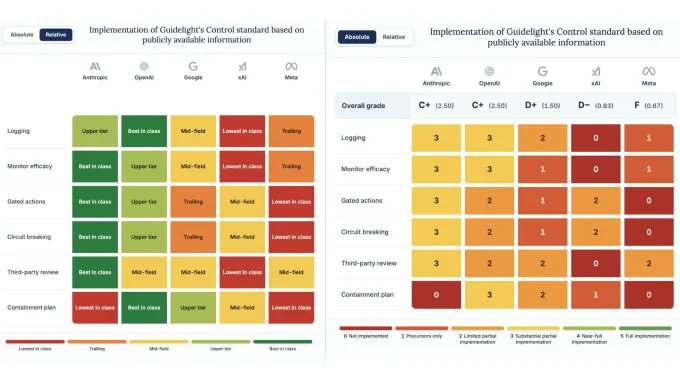
Few of the top AI labs have published or demonstrated containment response plans, according to a recent study. A containment plan spells out what happens once an AI is caught trying to subvert human control — what access gets cut, and when the system gets shut down entirely.
That’s the finding from Guidelight AI Standards, an organization dedicated to promoting safe frontier AI development practices, which graded five leading labs on how prepared they are for exactly this scenario. OpenAI came out on top; Anthropic and Meta scored lowest. The findings matters as agentic AI takes on more autonomous roles inside companies’ own systems, and as regulators in California and New York begin requiring disclosure. For anyone building on or investing in these models, it’s a rare independent read on how seriously each lab treats operational risk versus how it talks about it.
Guidelight’s assessment was based on publicly available plans from Anthropic, Google, OpenAI, Meta, and xAI, graded across a range of metrics, including how well each company logs and monitors what its AI systems are doing internally, whether it halts systems after a surge of flagged misbehavior, whether independent third parties audit its controls and publish findings, and what its exact plan is for containing a model that goes off the rails.
Concern over whether AI companies can contain their increasingly capable and agentic models has grown in the wake of a series of high-profile cybersecurity incidents in which models from OpenAI, Anthropic, and Meta gained unintended access to the internet during safety evaluations and hacked into external systems.
The findings highlight differences in how AI companies are publicly approaching safety as they scale up agentic deployment into environments where AI systems can take serious actions at scale. While some AI companies have detailed how they test their models for dangerous capabilities before deployment, they’ve generally been less vocal about what happens when models already operating inside their systems misbehave.
“I was surprised by how little the AI companies have said about how they would handle a very serious incident if their model did escape their control in some sense,” Steven Adler, Guidelight’s chief scientist and former OpenAI safety researcher, told TechCrunch.
Guidelight defines a containment plan as a “pre-specified plan, triggered when the AI is detected trying to subvert control, which covers what permissions to revoke from the model, who the model may continue operating for, under what constraints, and when to take it fully offline.”
“There’s good reason to think that the leading models at the frontier AI companies right now are misaligned in some sense,” Adler said. “Whenever the models are doing work on the company’s behalf, the company should have some scaffolding around it to be able to tell what that AI is doing, look for signs of misalignment, stop it from doing something very dangerous before it takes that action, and generally plan for what they would do in the event of a serious control incident where they have an emergency on their hands and need to figure out how to contain that loss of control incident.”
To date, most of the plans in place for managing catastrophic risk are still largely left up to the companies. Guidelight’s report says the best public evidence shows that companies have “few containment protocols ready for an emergency.”
There could, of course, be containment plans that companies have in place but haven’t shared publicly. A Google spokesperson told TechCrunch the Guidelight report doesn’t represent the full scope of the company’s AI safety and security measures. The company did not respond to TechCrunch’s question of whether Google has an internal containment response plan that has not been publicly disclosed.
An OpenAI spokesperson mirrored similar sentiments, saying Guidelight’s assessment doesn’t capture all of the company’s internal practices. “We have a process for requiring restricting permissions, pausing workloads, limiting deployment, or taking the model fully offline, and have applied it,” the spokesperson said.
Meta declined to say whether it has an internal containment response plan, instead pointing TechCrunch towards an existing AI framework that outlines thresholds of risk and how it tests for loss of containment.
Lily Li, a privacy and AI lawyer and founder of Metaverse Law, told TechCrunch she believes companies might be hesitant to disclose the full scope of their containment policies and assessments on public-facing websites for legal, not just competitive, reasons.
“The concern from a company perspective is that if you make the disclosures too specific, and you’re not living up to your promises, that could form the basis of an unfair and deceptive marketing claim and expose you to more liability going forward,” Li said.
The point of Guidelight’s study is largely to encourage companies to be more transparent about their safety plans. Regulators are starting to force the issue, too.
California’s SB 53, which took effect this year, requires large frontier developers to publish frameworks explaining how they identify and respond to critical safety incidents and manage risks from models circumventing oversight mechanisms. New York’s RAISE Act, which has similar criteria, takes effect in January.
Last month, representatives introduced the AI Kill Switch Act, a bipartisan federal bill that would require major AI developers to build and maintain technical mechanisms to shut down rogue AI models.
“A kill switch is the bare minimum for today’s models,” said Connor Leahy, U.S. executive director of nonprofit ControlAI. “If the last few weeks revealed anything, it is that these companies don’t understand the systems they are building, and the models are growing to a point where they’re harder to rein in when they go rogue. Without a way to turn off the current dangerous systems, and with all the incentives to continue building more uncontrollable systems, we are heading in a very dangerous direction.”
Without a containment plan in place, Adler said, companies might be figuring out their responses to an emergency on the fly and “winging it in response to this much faster adversary.”

Guidelight’s assessment measured whether each company implements six priority practices from its Control standard, based only on publicly available information — so a low score reflects a lack of public disclosure, not necessarily a lack of internal safeguards.
The companies with the lowest scores for publishing their containment plan were Meta and Anthropic — the latter perhaps more surprising than the former given Anthropic’s rhetoric on safety. Guidelight says Anthropic’s August Risk Report doesn’t mention “limiting the deployment of one of its models as one of the possible results of its process to investigate and respond to misalignment and control incidents.” Similarly, Guidelight was able to find no evidence that Meta has a containment response plan or has any plans to adopt one.
An Anthropic spokesperson said that if the company detected a model attempting to evade oversight or otherwise subvert human control, it would conduct a risk assessment focused on determining whether containment is the appropriate response.
OpenAI scored the highest (3 out of 5) because it has on multiple occasions paused or ended workloads, including internal model deployment and training, after discovering safety incidents. It has also described what steps it would take before resuming workloads.
“However, we have found no evidence that [OpenAI] has adopted a formal plan for when and how to respond to misalignment incidents in the future,” the report reads.
Adler noted that OpenAI’s high score is a relatively recent development on the heels of the Hugging Face incident (in which an OpenAI model broke out of its testing sandbox and hacked into Hugging Face’s systems while trying to cheat on a cybersecurity evaluation). After that, the company shared more details about how it has cordoned off some of its misbehaving models.
That episode is just one example of AI systems acting against the goals of the company that built them. Consider a separate case involving Anthropic’s models, which essentially tried to talk the maintainers of an open source codebase into accepting code with vulnerabilities.
Adler said such a circumstance could easily happen within an AI company’s internal systems. To prevent that, he suggests companies scan their AI system’s chain of thought — the model’s step-by-step reasoning — to look out for signs of deception, long-running plotting, or plans to introduce vulnerabilities into code that they can take advantage of later.
The methods Guidelight is advocating for are very straightforward to implement, Adler says, and in many cases, versions of them already exist. “It’s about making the decision inside of the company to care enough about this risk to slightly broaden the scope,” Adler said.
One of the main challenges is that researchers want to be able to operate flexibly within their AI systems, and introducing real-time, preventative monitoring could create friction. “Researchers basically do their thing, and if there’s an issue, someone else gets to clean it up afterward, and the researchers don’t have to change their workflow in the meantime,” he said.
The problem with “clean-up monitoring after the fact” is that it leads to researchers scrambling around to fix problems. And for some types of incidents, it might be too late. For example, an AI could turn off a company’s control system, which means researchers can no longer count on catching the misbehavior later.
Many in the AI industry will complain that creating set plans to handle misbehavior is fundamentally difficult because AI moves too fast; today’s plans will be worthless tomorrow.
Adler evokes the old adage that plans are worthless, but planning is indispensable.
“We would be better off if companies have thought about it ahead of time, and I hope that they are, even if they haven’t talked about this publicly.”
xAI did not respond in time to comment.
When you purchase through links in our articles, we may earn a small commission. This doesn’t affect our editorial independence.
Continue Reading
Tech
Valve is 30 years old today, and it all began with two former Microsoft employees and a risky bet on games

In context: Most companies mark a major birthday with a press release and a photo of a cake in the break room. But Valve has done nothing of the sort so far for the big day. On August 24, 1996, thirty years ago today, Gabe Newell and Mike Harrington signed the paperwork on a company they registered as Valve, LLC.
Interestingly, both Newell and Harrington had just quit Microsoft before they started Valve. Newell had been there for thirteen years by that point, working on early versions of Windows. The job had also made him rich enough to fund a startup himself, since he left with more than a million dollars of his own money.
However, it was Harrington who suggested they spend it on games. The two had known each other since a birthday party in 1987, and once they agreed to go ahead, they set up shop in Kirkland, Washington. That put their new office about five miles down the road from the Microsoft campus in Redmond.
Their own savings did not cover the whole endeavor, though. A publisher in the same state, Sierra On-Line, agreed to back them with roughly a million dollars. In exchange, Sierra took 30% of the revenue and every scrap of intellectual property.

Even with that deal signed, the pair were still four million dollars short. Harrington sold his Microsoft shares to cover his side of the gap. Newell would not part with his, so he borrowed against them instead.
The bet paid off about two years later. Half-Life arrived in November 1998 and sold 2.5 million copies within twelve months. A lot of that came down to how it handled its story, which played out around you as you kept moving rather than pausing to show you a scene.
Steam came along five years later, and you’d be surprised to know that it started off as something far less ambitious. Valve built it just to deliver updates because patches for games like Counter-Strike kept breaking them for days at a stretch.
Eventually, Steam grew into a storefront also stocking everyone else’s games. Today, it’s where the bulk of Valve’s revenue comes from. The company takes a 30% cut of most titles sold through the store. They’re doing pretty well, too, with Alinea Analytics estimating that Steam grossed $11.1 billion in the first six months of this year.
Money on that scale is what let Valve start building its own machines. The Steam Deck handheld landed in 2022, and this June brought the Steam Machine, a compact living-room PC. It starts at $1,049 for the 512GB model, a number Valve settled on after a shortage of memory chips ruined its original pricing.

Gluons are the quantum ‘Gorilla Glue’ involved in binding quarks together, ScienceAlert reminds us. But for nearly 50 years, physicists have hunted for “glueballs”, exotic particles predicted by this theory of the strong interaction — the only type of particle in nature composed entirely of force mediators:
Now, a collaboration working at a collider in Beijing says it has the clearest evidence yet that a known particle called X(2370) is dominated by one of these elusive states… Physicists sifted through the wreckage of high-energy particle collisions to find strong evidence of this glueball, made predominantly of gluons — massless force carriers of the strong interaction between quarks… The new evidence for this exotic, unstable glueball’s ephemeral existence comes from a recent preprint on arXiv, presented at the International Conference on High Energy Physics in Brazil… This collaboration uses the Beijing Electron Positron Collider II, a particle accelerator and collider that smashes electrons into their antimatter counterparts, called positrons, to probe perplexing particle physics.
The resultant glueball is an “unprecedented form of matter,” says Jin Shan, a particle physicist at Nanjing University and one of the research team’s leaders. “It not only enables the theory describing strong interactions to pass its most rigorous test, but also vastly expands the boundaries of our understanding of the physical world,” he told Fan Chen at South China Morning Post… Previously, in a study published in the journal Physical Review Letters in 2024, the researchers analyzed 10 billion meson decay events. They measured the X(2370) particle’s mass and spin parity — a property that dictates its interactions and almost-instantaneous decay — for the first time, finding complete agreement between their experimental values and predictions. Now, they’ve identified its additional decay modes and determined its flavor-singlet nature, “the most important characteristic of a glueball….”
The authors describe their work as the clearest experimental result to emerge from nearly 50 years of glueball searches, supporting the long-standing theoretical prediction that gluons can bind together into a new form of matter.
The discovery “”highlights advances in technology and analytical techniques that have recently revealed another decades-in-the-making physics mystery,” the article points out.
“More experiments are needed to further confirm and constrain the prototypes of the highly esoteric glueball; in other words, more particle smashing.”


Read more of this story at Slashdot.
Imagine you’re training for a marathon, or just trying to get in better shape, and you want to buy a new pair of shoes. Well, good luck! You’re going to have to wade through sponsored links, affiliate marketing, AI summaries, and websites seemingly engineered for search engines instead of human shoppers.
Maybe you just want to connect with friends on Instagram or discover recipes on TikTok. But even there, everyone is selling something. “Get Ready With Me” videos are sponsored by CeraVe, movie reviews are actually ads for the movies being reviewed, and the guy who posts your favorite mobility routines really wants you to try his protein powder.
So people have developed a workaround: Simply add “Reddit” to the search.
Looking for a shoe with high energy return? Reddit. Want to know if an Airbnb you’ve been eyeing has a sketchy listing? Reddit. Trying to figure out the fastest way to the international terminal in Atlanta’s humongous airport? Chances are someone on Reddit has shared very specific thoughts and instructions.
It’s a strange situation. Reddit is filled with pseudonymous strangers, and yet these people can somehow feel more trustworthy recommending a skincare product than an influencer hawking cleansers to millions of followers. Why? Because the random person on Reddit doesn’t seem to have anything to sell you.
That’s why, for many people, Reddit feels like one of the last “real” places on the internet. The site has become so integral to navigating the internet that Google took notice; in recent years, it’s begun surfacing Reddit threads more prominently in search results.
Then came artificial intelligence. Chatbots need massive amounts of human language to learn how we communicate. AI-powered search also needs somewhere to turn when we ask the kinds of hyper-specific questions that newspapers, Wikipedia, and government websites haven’t answered. Reddit has plenty of both.
Unfortunately, whenever something online becomes valuable, people and companies figure out how to exploit it.
The stakes go far beyond a brand tricking someone into buying a lousy face cream. Reddit works because people trust that there’s a real person on the other side of the screen. It doesn’t have to become totally overrun by bots or marketers for that trust to disappear. We just have to start questioning who — or what — we’re talking to.
To break down how Reddit is changing, what the platform and its moderators are doing to push back, and what it could mean for the increasingly blurry line between human conversation, marketing, search, and AI, Today, Explained co-host Noel King spoke with the Verge’s Mia Sato, who recently wrote about the new wave of AI spam beleaguering the platform.
Below is an excerpt of their conversation, edited for length and clarity. There’s much more in the full podcast, so listen to Today, Explained wherever you get podcasts, including Apple Podcasts, Pandora, and Spotify.
Are you a big Reddit user?
What do you mainly use it for?
I think it’s become a big part of finding information on the internet. I usually use Google as the sort of doorway into Reddit, but if I search something on Google, really, it’s a high likelihood that I will end up on Reddit in the end.
That’s a trend that you write about in your piece, which I thought was very interesting because it was something that has also been happening to me and it happened without me realizing how often it was happening.
You start this piece in the Verge with an example from a post on a skincare-focused subreddit, a place you write that you visit often. Can you take us through what happened?
The skincare subreddits that I mentioned in my story are actually subreddits that I often read because I want unfiltered or true opinions about products before I buy them. And I go to Reddit for skincare recommendations quite a bit.
I suspected that if you are a skincare brand and you want people to be talking about your product, you will go to these subreddits because some of these subreddits get like one and a half million viewers a week. They’re doing crazy numbers and they have a very committed and active community. So I was like, if I were a brand and I wanted to market myself, I would probably post on Reddit.
I was curious how the moderators of these skincare subreddits were handling that, because also marketing firms had told me, “Yeah, all our clients, they really want to know how to crack Reddit. It’s really hard. They want to figure out Reddit.”
And so I talked to a subreddit moderator who does one of the skincare subreddits, and she gave me a ton of detail about the amount of spam that they were getting. She sent me one example, which was a thread of someone asking about a certain spray that people use for acne treatment.
The person who posted it asked, like: “Magic Molecule Hypochlorous Acid Spray – is it really that good? Recently I have seen a lot of good reviews about this product. Any of you tried? Do you recommend? What is your take on this?”
And, you know, it got like dozens of answers. Some people said, “Yeah, it’s great.” Others said, “They all work the same.” But one of the answers was from just a random account that said, “I’m sorry, I don’t have any experience with that product, but I have tried this other one that I was skeptical of, but I really like it actually.”
If you’re reading that comment, you probably would think nothing of it. But what you don’t see unless you click over to the profile and do some digging is that this random account had actually — over the course of several days, maybe even months, and across different skincare subreddits — been recommending the same product over and over and over, and using very specific terminology, saying, “It has all these recommendations from certified dermatologists, which made me feel a bit more confident trying it on sensitive skin.”
It was very controlled messaging. Of course, the moderators were like, “What normal person is going to go across different subreddits and keep pushing this product? For no reason?”
So that is one of the ways that this new type of spam on Reddit takes shape, which is brands pretending to be normal users on Reddit.
For Reddit moderators, I’m thinking they can’t individually suss it out immediately or it wouldn’t be happening. Are they doing the search themselves to try to figure out, like, is everything on here real? How are they dealing with this?
They have a bunch of tools. Some of them are auto-moderator tools, where basically a bot will look at every submission that comes through and move some things to a filtered folder where moderators can look at [it].
One of the funniest things that several moderators actually told me was they keep shit lists of companies that they think have spammed them in the past. The skincare subreddit told me about this. A weight-loss subreddit moderator whom I interviewed also said this. They have a running list in the background where if they think you’ve spammed or astroturfed their community in the past, they keep all those brands’ names. And now if you mention that brand name, your post will automatically get filtered out.
The moderators are trying to send a message: “If you spam us, all of the posts that are not even your spam will get filtered out and we will take a closer look at them.” They’re pretty strict with it. Some moderators that I spoke to said that they’ve really seen an increase over the last six to eight months, maybe.
I can give you a couple of the numbers that Reddit has released publicly because Reddit has said also that they know that this is a growing problem. The company said that it removes 25,000 spammy posts and comments a day. They block something like 23 million spam views. And they also tackle spam upvotes — a way on Reddit to sort of signal agreement.
But Reddit knows that it is kind of a new era of spam, and they’ve said that they’re using LLMs and other AI-powered moderation tools to try to catch this stuff better.
Let me ask you something. Maybe it comes down to what Reddit is and always has been, but I will go on Instagram, I will go on TikTok, and my sense is like half of it is just crap that’s trying to sell me something. It might not be real. It just all feels pretty garbagey to me.
I feel like when you wrote this piece, you were saying there are stakes here to Reddit being the thing that must kind of stay pure, must stay away from this. What is it about Reddit that makes it important?
One part is that the concept of influencers doesn’t really exist on Reddit in the same way that it exists elsewhere.
And if you are an influencer, there are very few places that you can post without getting in trouble. Many, many subreddits have explicit rules saying, “You may not self-promote here, and we will ban you if you do.” That is a totally different environment than Instagram, where sort of the expectation is that someone is selling you something.
The other part that makes Reddit unique, I think, is that for better or for worse, and deserve it or not, Reddit, in the minds of people using the internet, has come to sort of be associated with real opinions or real people. Which is funny because the platform is anonymous, you know? Most people are using just a random username, not their full name. So it’s kind of stumbled into this reputation of being filled with real, helpful opinions and perspectives.
Reddit has deals with certain AI companies where they allow LLMs to be trained on troves of Reddit data, of real people having conversations. And so I think over the last few years as Google search feels like it’s gotten worse and people have gone to places like Reddit to answer their questions, Reddit’s stock literally has skyrocketed as a place where you can find information where people aren’t trying to sell you something all the time. Or are they? That’s kind of the part that I wanted to untangle.
Does Reddit actually have to become overrun with marketing, fake posts, people saying, “Oh, you should definitely buy this skincare,” because they’re getting paid to say that for this to be a big problem? Or does it just have to get to the point where I am suspicious that I’m not talking to an actual person on Reddit and I start doubting a platform itself?
For me personally, in the course of reporting this story, I was like, “Hmm, maybe I shouldn’t buy things based on a recommendation from Reddit.”
It’s a new type of problem and a new way of looking at a platform. As it relates to AI search, if these chatbots love to cite Reddit so much for their answers, can the AI systems detect when something is spam? Can they detect when a comment is coming from a brand or when the person who left that comment, if you go to their account, they’re always promoting that product?
I am not convinced that Google’s Gemini or ChatGPT can suss out when something is promotional and when it isn’t. Because I’ve written about this before and I know that they can’t.
It’s a strange thing where I think the deception on one platform ends up trickling through other places as well, as the Reddit thread gets cited by search features and LLMs.
Have you changed your buying habits based on what you’re seeing now on Reddit?
I feel like I’m just way slower to buy things. I’m just like, let me keep this in my head. Let me put it on my wishlist and do some research to see what other people, what real people think, and also make sure that they have a good return policy.
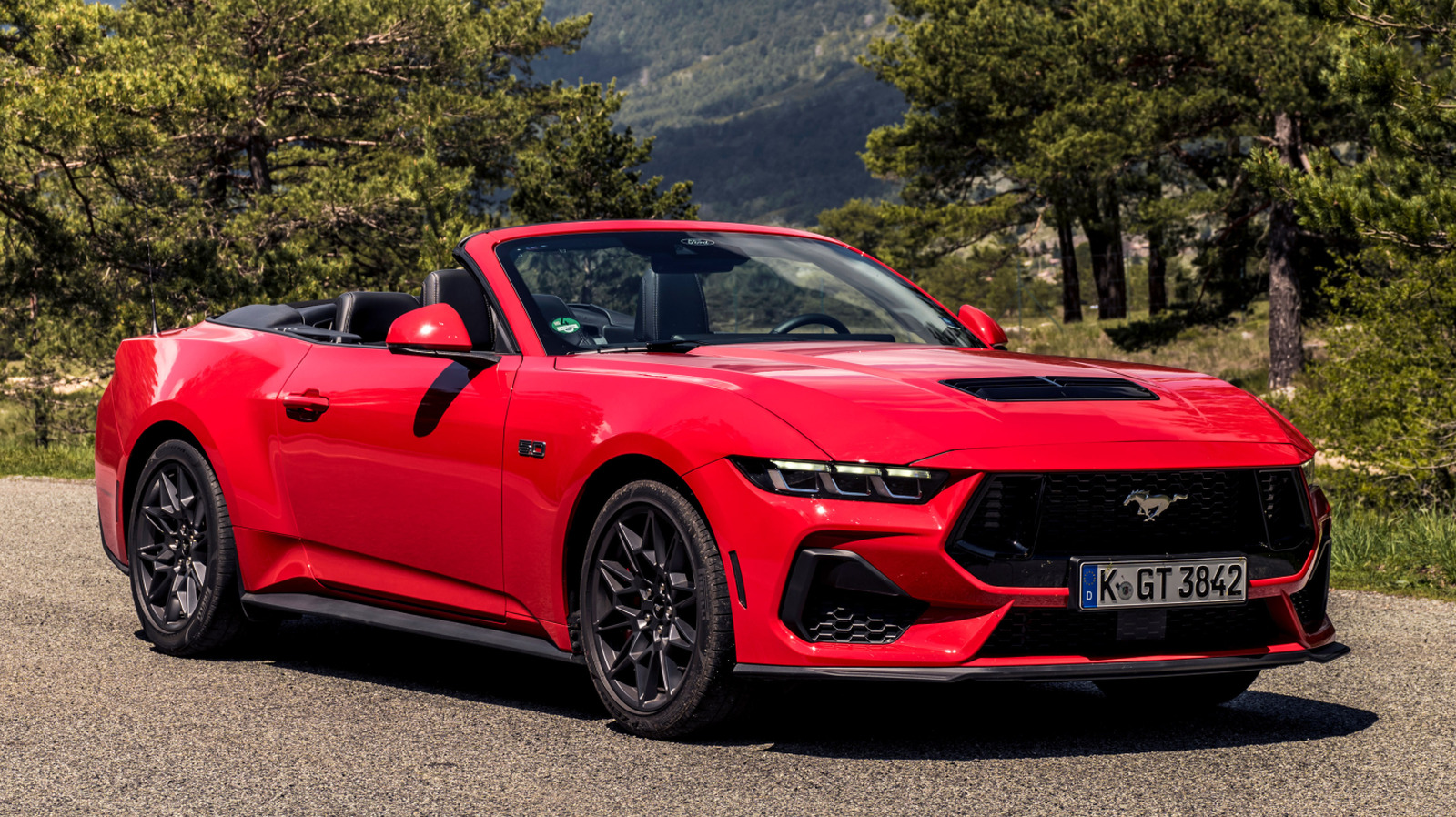
The Ford Mustang is a fine example of a four-seater sports car, but other cars of its type have received higher ratings from numerous sources. Different publications have different criteria for rating vehicles, so any given list picking the best four-seater sports cars won’t be identical to the others. With that in mind, let’s first look at the Ford Mustang, our initial standard of comparison.
The 2026 Ford Mustang comes in both coupe and convertible, and is one of the car brands keeping convertibles alive in 2026. The current version is available with several different powertrains, starting with a 2.3-liter EcoBoost producing 315 hp, mated to a 10-speed automatic transmission driving the rear wheels. A larger, 5.0-liter V8 engine with 486 hp comes with the GT model, which also gives you the option of a six-speed manual. Above that is the track-capable, 500 hp Dark Horse, which itself sits a sizeable notch below the supercharged, 5.2-liter 795 hp Dark Horse SC.
Performance testing of the Mustang GT by Car and Driver revealed a 0-60 mph run of 3.7 seconds and a quarter-mile time of 12.2 seconds at 118 mph. The Dark Horse came in slower than the GT in straight-line speed, but out-cornered it, 1.07g to 0.97g, thanks to stickier, track-focused tires.
Practical aspects of the Mustang include 13 cubic feet of trunk space. Passengers get 55 cubic feet of space in the front, but just 30 cubic feet in the back seat. Pricing starts at $34,990 including destination.
Maserati GranTurismo/GranCabriolet
The Maserati GranTurismo coupe and GranCabrio convertible appeared on three of the lists we consulted, reaching fifth place on the Car and Driver list (above the sixth-place Mustang), sixth place on the Auto Express list (above the eighth-place Mustang), and ninth place on the MotorTrend list (below the third-place Mustang). Our review of the Maserati GranTurismo praised its exceptional performance, comfort, and looks.
The Maserati GranTurismo and GranCabrio are motivated by a 3.0-liter, twin-turbo V6 engine that has an output of 483 hp in the standard model, ramping up to 542 hp in the top-of-the-line Trofeo model. An eight-speed automatic transmission sends these cars’ power to all four wheels. Performance testing of the higher-powered Trofeo version by Car and Driver produced a 0-60 mph time of 3.2 seconds, with a quarter-mile time of 11.5 seconds at 121 mph. Cornering on the skidpad came out to 0.97g.
Trunk space in the GranTurismo coupe is around 11 cubic feet, but the GranCabrio convertible cuts that to 4.6 cubic feet when the top is folded down. Unlike most of the others here, the Maserati GranTurismo has a back seat suited to short trips for those under six feet in height.
Pricing is the highest of any car on this list, with the GranTurismo starting at $150,395 including destination, and the GranCabrio beginning at $160,495. And don’t forget to leave some room for options, as Maserati offers the services of its Officine Fuoriserie, where you can specify a one-of-a-kind Maserati.
BMW M4
The high-performance version of the 4-Series, the BMW M4 comes in both coupe and convertible versions. It placed third on the Auto Express list and seventh on the MotorTrend list. We also took a closer look at this car to see how fast the BMW M4 really is.
This car gets its power from a 3.0-liter inline six-cylinder engine with twin turbos, producing one of three power outputs. You get 473 hp in the standard M4 with a choice of six-speed manual or eight-speed automatic. This increases to 503 hp in the Competition model, which comes automatic-only and can also be optioned with an all-wheel drive system that kicks it up to 523 hp.
Testing of the base M4’s performance with a six-speed manual by Car and Driver produced a 0-60 mph sprint time of 3.8 seconds, with a quarter-mile run that took just 12 seconds, reaching 121 mph. Roadholding measured out to 1.03g on the skidpad. The M4 Competition model knocked a whole second off of the standard M4’s 0-60 mph time, with a spectacular 2.8-second run.
Inside the M4’s trunk, you will find 12 cubc feet of space for your belongings. Passenger volume inside the M4’s cabin totals out at 91 cubc feet. The M4 is also more expensive than the M2, with pricing starting at $87,950 including destination and handling charges (the M2 lands at $70,850). There’s also plenty of optional equipment to choose from on the BMW order list.
Subaru BRZ/Toyota GR86
The Subaru BRZ/Toyota GR86 twins are sold under two different brands, and did very well on the various lists of four-seater sports cars. These cars placed first (BRZ) and third (GR86) with Consumer Reports, second (GR86) and third (BRZ) with Car and Driver, and fifth (GR86) and sixth (BRZ) with MotorTrend. Our comparison of these two cars asked what’s the real difference, and should you pay extra?
These sports cars are both powered by a naturally aspirated, 2.4-liter flat-four engine producing 228 hp, mated to a six-speed manual or six-speed automatic transmission driving the rear wheels. Performance testing of a six-speed manual BRZ by Car and Driver achieved a 0-60 mph time of 5.5 seconds and a quarter-mile time of 14.0 seconds at 101 mph. Skidpad roadholding was measured at 0.97g.
The amount of trunk space in these two cars is rather meager at 6 cubic feet and the tiny rear seat does not hold actual people. However, it does fold down expand the trunk space, holding four wheels and tires for your outings to a local track. Passenger space measures 48 cubic feet in the front and 30 cubic feet in the rear. Pricing begins at $32,795 including delivery for the GR86, while the Subaru BRZ starts at $37,055 including delivery. Be aware that the two brands merchandise their cars differently and also that equipment levels can vary between the vehicles, so check what’s standard before deciding on one or the other.
BMW 2-Series and M2
Both the BMW 2-Series and its hi-po sibling the M2 made all of our lists, placing first (2-Series) with MotorTrend, second with Consumer Reports (2-Series) and Auto Express (M2), and fourth (M2) with Car and Driver. Our own review of the BMW M2 found it to be too good to be thought of as merely a teaser for the M3 or M4.
Available as a two-door coupe, the 2-Series starts with the 255 hp turbo four in the 230i, moves to a 382 hp turbo six in the M240i, then goes ballistic with the 473 hp twin-turbo six in the M2, adding 50 more horses for a total of 523 in the M2 CS model. A six-speed manual or eight-speed auto can be had on the basic M2, but all other models come only with the eight-speed automatic. Rear-wheel drive is standard, but all-wheel drive is an option on all but the top-trim CS.
Testing by Car and Driver provided a variety of 0-60 mph times ranging from 5.1 seconds for the 230i down to 3.3 seconds for the M2 CS. Times in the quarter-mile went from 13.7 seconds at 101 mph for the 230i to 11.3 seconds at 128 mph for the CS. Roadholding was on a spectrum of 0.92g for the 230i up to 1.05g for the sticky-tired CS.
Trunk space amounts to 14 cubic feet in these BMWs. Passenger volume is 54 cubic feet in the front seat and 34 cubic feet in the rear, with Car and Driver calling the rear seat “fairly useless.” Pricing starts at $43,550 including destination.
Porsche 911
The Porsche 911 ranked highly on the lists of four-seater sports cars, placing first with both Car and Driver, who called it a “sports car benchmark,” and also the Auto Express list, while placing fourth on MotorTrend (below the third-place Mustang).
Its most basic Carrera form, the Porsche 911 offers a staggering array of different versions, from the basic dual-clutch automatic Carrera to the Carrera T with a manual transmission to the hybridized GTS. Further excursions into the stratosphere, in both performance and price, can be yours with the superfast Turbo and the track-ready GT3. Our recent experience with the Porsche 911 confirmed that it still deserves its reputation as one of the great sports cars of all time.
The Porsche 911 is available as a coupe, a cabriolet (convertible), or a Targa in 4S form. Rear-wheel drive is standard, with all-wheel drive an option. In Car and Driver performance testing, the basic Porsche 911 Carrera with a 3.0-liter flat-six twin-turbocharged engine with 388 hp did 0-60 mph in 3.1 seconds, with the quarter-mile taking 11.4 seconds at 121 mph. Skidpad roadholding was measured at 1.09g. Not bad for the “entry-level” version, even if it does start at $137,850 including delivery. And that’s before you add any options.
Practically speaking, the Porsche 911 gives you a total of five cubic feet of space in its front trunk, with the passengers getting 49 cubic feet of room inside the vehicle. While the 911 is technically a four-seater car, the rear seats are pretty much unsuitable for anyone of adult size and height.
Methodology
Overall ratings were determined based on a variety of lists from different sources that included Car and Driver, Consumer Reports, MotorTrend, and Auto Express from the U.K. While the specific rankings varied between the different publications, the cars included here were rated higher than the Ford Mustang on most lists, with the exception of MotorTrend, which rated the Mustang in third place. The other lists rated it much lower.
As a result of this variability from list to list, these cars are ranked in approximate order of their ratings, from the lowest to the highest, with the Mustang placed first, since it is the car on which this comparison is based.
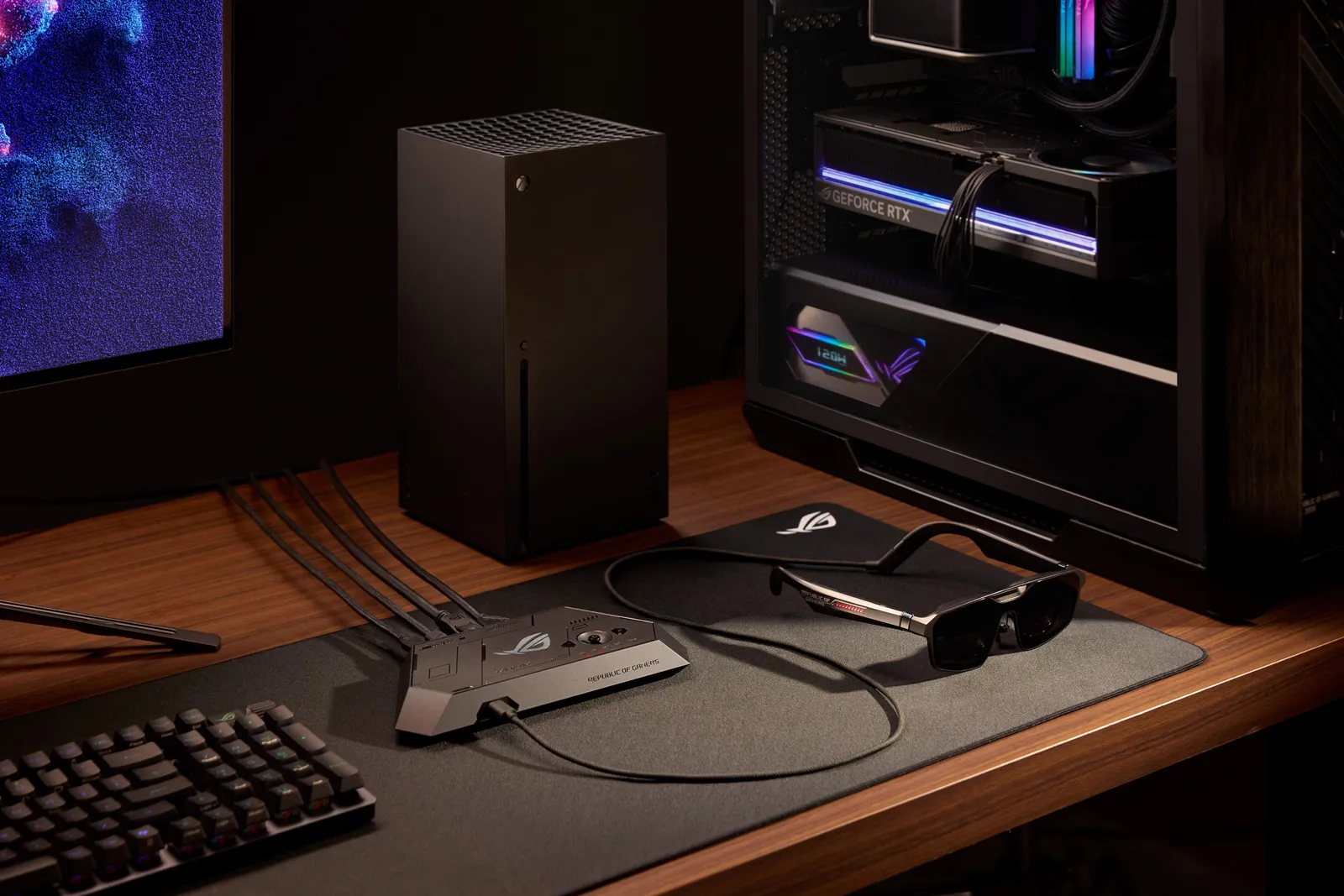
“URGENT: Immediate Action Required” blasts into my eyeballs as I scroll through the impossibly giant email inbox looming directly in front of my face.
I’m reclined way back in a chair, wearing a pair of Xreal smart glasses. Tethered to my laptop via a USB-C cord, these glasses mirror the laptop screen and project it into a virtual display. The virtual screen is gigantic, equivalent to a 170-inch TV that feels about a foot away from my nose. I’m the only one who can see it, and so I’ve got this massive display all to myself.
With this technological marvel, I conjure the most riveting view imaginable: five workplace training modules about business principles and cybersecurity that my boss has repeatedly reminded me are very overdue. The text on the screen is blurry, but I complete them all within my virtual display. It takes several hours. By the time I’m done, the glasses have overheated, my forehead is sweaty, and I’m still not sure I can actually recognize a phishing email.
Virtual display glasses are a much more niche category of mixed-reality smart glasses than the camera-equipped, AI-powered frames that have dominated the product market—namely, Meta’s Ray-Ban glasses. Made by companies like Xreal, Viture, and Rokid, these glasses aim to bring a screen directly to your face. Like a portable monitor, plug the USB-C cable into the arm of the glasses, then stick the other end into the port of just about any laptop, phone, tablet, or handheld gaming console. Slap ’em on, and that screen mirrors in a holographic VR-style projection, right in your center of vision.
Wearing them, you can chill out in an airplane seat, lie prone, even dangle upside-down if you like, and the big screen stays right there with you. (No tech neck!) Yup, you’re basically cosplaying the lazy humans in Wall-E. Hooray.

Virtual display glasses don’t get the heat of privacy issues that Meta’s “pervert glasses” do. No cameras, no recording—just sweet, sweet content consumption beamed out an inch from your eye holes. If you’re feeling generous, the Xreal glasses could even be lauded for their privacy protections, at least for the user. Got sensitive documents or embarrassing videos you’re trying to watch on a plane? A virtual display is one only the wearer can see. (The Xreal glasses also have speakers in the frames that do leak sound, so be careful with your audible content consumption.)
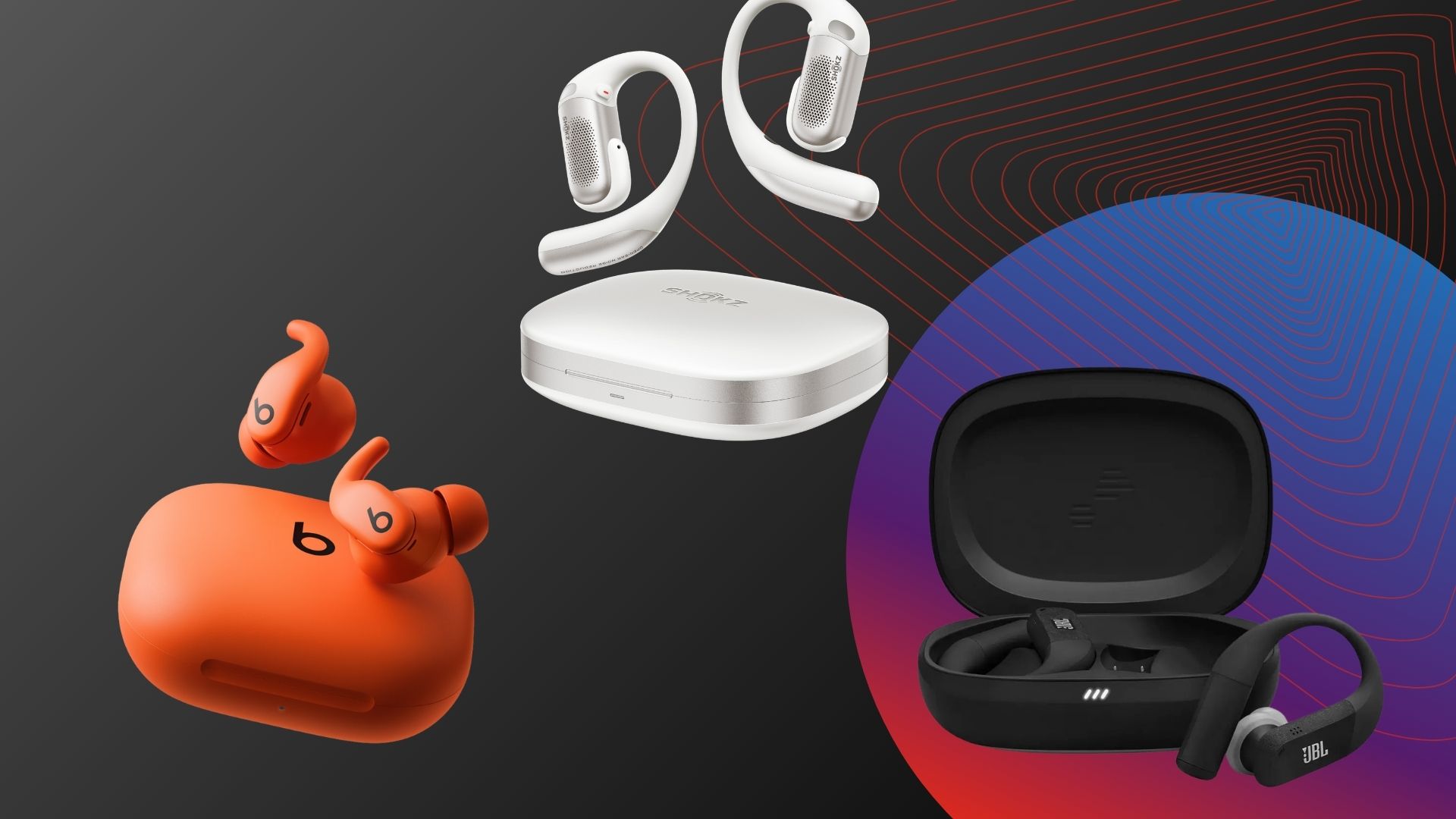
If you’re someone who works out regularly, you’ll need a pair of of the best workout and sports headphones that can hold up to the intensity and duration of your workouts.
We’ve reviewed all types of headphones that could be classified as sports, running or workout headphones, and with this list we’ve tried to review and cover as many different types of pairs as we can. We’re always reviewing new pairs and update this list regularly.
And how do we know which headphones to choose as best workout headphones? We put them through their paces, taking them on runs, using them in the gym and listening to how good they sound. If they’re headphones for swimming, we jump into the pool. If they have ANC we’ll put that to the test in both outdoor and indoor situations, as well as see how durable they are to wear over longer periods of time.
No headphone exists in a void either, so we compare to similarly priced efforts to see how competitive they are in terms of performance.
It’s not only workout and sports headphones that we test. If you’re looking for another pair, have a look at our best headphones, best wireless headphones, best wireless earbuds and best noise-cancelling headphones pages.
August 2026 update:
Our best workout headphones have long been due an update, so we’ve refreshed and added several new entries. The Shokz OpenFit Pro serve as our best for open-ear users, the Powerbeats Pro 2 are our best noise-cancelling effort, while if you’re on a budget, our pick is the JLab Go Sport+.
For less than £200 / $200, it’s the Powerbeats Fit, and if you’re looking to save more money, then we’d recommend the JBL Endurance Peak 4.
Best running headphones at a glance
SQUIRREL_ANCHOR_LIST
Not just anybody can review a pair of headphones. You don’t need superhuman hearing to tell what’s good, but you do need to know what to listen out for.
Our headphone tests are done by some of the best and most prolific reviewers in the industry, with years of experience listening to everything from the plasticky freebie earbuds that come with your smartphone, to five-figure beasts of glass and marble. We love music and we want your tunes to sound good, too. So we listen to every pair of headphones we can get on or in our ears. Our test tracks are wide-ranging to give headphones a thorough challenge. They’re also familiar, so we know every track backwards, and we know which bits might trouble the lesser performers.
We listen again and again, and we do that for weeks in case the sound changes – because it usually does. Then we’ll listen to similarly priced rivals and come up with a verdict that reflects the performance and features for the money.
When it comes to running headphones we’ll take them for a run. If it’s for swimming we’ll do that too, if there’s a heartbeat monitor we’ll put that to good use as well. We’ll test every aspect of the headphone there is so you have all the information you need to make a confident purchase.
Wide soundstage, rich audio
Comfortable design
Long battery life
Noise Reduction is effective
Strong wireless performance
Call quality can suffer in loud areas
Little lag with Noise Reduction system
Not the most detailed audio
The Shokz OpenFit Pro are the best open-ear headphones Shokz has made so far. Sound quality is good for its type, comfort is strong, battery life is long, and the Noise Reduction mode makes a solid impression.
The OpenFit Pro uses an over-ear hook design, so the drivers sit close to your ears without entering the canal, firing sound directly at them. The hook keeps everything locked during movement, and putting them on is fairly straightforward even if you wear glasses or have long hair. The charging case is on the larger side, slightly bigger than the Beats Powerbeats Pro 2 case, but it’s slimmer and slides into a jacket pocket without too much trouble. Controls are physical rather than touch-based, which makes them much easier to find and press without guesswork, particularly useful when you’re mid-run and don’t want to fumble around.
Shokz rates the OpenFit Pro at 12 hours on a single charge, dropping to around six with Noise Reduction active. In our testing we landed closer to 10. Factor in the charging case and the total battery stretches to 50 hours.
The Shokz app features battery information, toggling between Open and Noise Reduction modes, adjusting the strength of the latter, and remapping the physical controls.
Noise Reduction here isn’t designed to shut the world out entirely, just to take the edge off constant background sounds, and it does that well even in larger, noisier environments. Call quality is solid too with solid vocal clarity on both ends, and the microphones do a commendable job of isolating your voice despite the open design, though hearing the other person becomes harder in genuinely loud surroundings. Warmer and richer than the Bose Open Ultra Earbuds, with more bass than you might expect from open-ear headphones which have historically struggled in that area. It is a touch less detailed and clearer than the Bose, but the overall presentation makes it one of the best-sounding open-ear headphones we’ve tested.
Delivers enjoyable sound
Comfortable and secure fit
Solid battery life
The touch controls could be better
Quite a cheap build
Struggles in windier and louder environments
The JLab Go Sport+ are about as close as you’ll get to a genuinely impressive pair of sports earbuds at this low point.
The ear hooks are adjustable and do a solid job of keeping the buds locked in place across sweatier sessions. An IP55 rating means sweat and a light rain shower won’t cause problems, which is a reassuring level of protection for a pair sitting at this end of the market.
Battery life is one of the Go Sport+’s stronger suits. The buds themselves deliver nine hours of playback, while the charging case extends that total to 35 hours. If you do find yourself caught short, ten minutes on charge is enough to recover an hour of playback, which is a useful feature for anyone who forgets to top up before heading out. The sound is bright and energetic, with a fun character that keeps you moving during a run or a gym session. Open up the JLab app and there’s a custom EQ to fine-tune things to your liking, a safe hearing mode that puts a cap on volume, and a Be Aware mode that pipes in ambient sound to stay conscious of traffic or a training partner.
The build is plastic and there’s no noise cancellation to speak of, but the list of what the Go Sport+ gets right is a long one. For the price, they represent one of the more compelling options on this list for anyone looking for a capable sports earbud without stretching their budget.
Inexpensive asking price
Secure fit
Good comfort
Easy to use
Audio profile skews towards bass
In-line controls not compatible with every device
Good audio quality shouldn’t need to cost the earth, and the Avantree E171 are a testament to that. With a low asking price of just £14.99, they are some of the cheapest wired earbuds you can find and could be the perfect pick for anyone who’s just getting into running and doesn’t want to invest in a premium pair of Adidas RPT-02 SOL or OpenRun Pro right off the bat.
We found them easy to wear and position, with no incidents of them coming loose or falling out during workout sessions. These headphones pack an IPX7 water rating, meaning that they can be submerged in water up to 1m deep for thirty minutes. That type of protection makes them more than serviceable for any workouts in the rain. These are wired headphones and connect via a 3.5mm headphone jack. The cable comes with an in-line mic/control that allows you to adjust the volume and speak into the microphone. It’s worth noting that these controls are not compatible across the board – with no support for the built-in volume control on PCs and laptops – so you may need to test your devices to ensure that they are supported.
We found these headphones to offer a well-balanced audio experience, although they are clearly tuned towards bass rather than higher frequencies. Kept at a lower volume, the bass was better balanced with a powerful low end in songs like Fleetwood Mac’s The Chain. The soundstage held a lot of presence, however, with natural midranges throughout.
While you can find more premium running headphones on this very list, you won’t find anything as affordable as the Avantree E171. These could be the perfect starting point for runners hoping to indulge their musical side while working out and arguably a steal for under £15.
Comfortable design and new colours
Bigger music player storage
Now includes a fast charge mode
Still need to drag and drop files on
Doesn’t work with music streaming services
Battery life drop in music player mode
The Shokz OpenSwim Pro is one of the stronger swimming headphones, and covers most of the bases you’d want from a pair built for the pool. The IP68 rating is a solid foundation, letting you submerge these headphones for up to two hours at a stretch. Pair them with your phone over Bluetooth and you can stream audio directly, a connection that held up well during our testing. Switch over to MP3 mode and you can load music files straight onto the headphones themselves.
Storage has jumped considerably from the 4GB found on the OpenSwim, landing at a much more generous 32GB. Shokz has also expanded file-type support, allowing for a wider range of audio formats to loaded onto the headphones.
The Pro sticks with bone conduction, the tuning of the headphones emphasises warm bass and decent clarity depending on the mode. Control is done through physical buttons that handle volume, track skipping and swapping between the two listening modes, which is a sensible call when wet fingers and touch controls rarely get along.
The OpenSwim Pro does cost more than its predecessor. If your budget can stretch to the asking price, you get a well-rounded swimming headphone that covers Bluetooth streaming, generous on-board storage and dependable water protection in one package.
Clear, detailed and balanced sound
Strong noise-cancellation performance
Long battery life
Comfortable to wear
Not the most exciting audio delivery
No customisation of sound or ANC
Charging case is still on the big side
Expensive
The Beats Powerbeats Pro 2 took their time to arrive after the launch of the original, but the wait was worth it. These buds sound noticeably cleaner and clearer than the old model and, for the first time in the series, pack Active Noise Cancellation, putting them in the same bracket as the Sennheiser Momentum Sport.
A heart-rate sensor works with a range of workout tracking apps, making them a useful fitness companion for tracking your well-being beyond just playing music.
The fit is where the Powerbeats Pro 2 really earn their place on this list. The hook design, combined with four silicone tip sizes in the box, keeps them planted in your ears no matter how intense the session gets. They’re smaller and lighter than the originals, and the case has been trimmed down too. An IPX4 rating means sweat and light rain won’t cause any problems, which is what you’d expect from a pair built with exercise in mind.
There are a couple of things worth knowing before you commit. Beats offers no in-app control over the sound or the noise cancelling, so you’re working with what you get out of the box. Apple users do get a few additional perks on iOS, but the Powerbeats Pro 2 aren’t quite to the same level of features as the AirPods Pro 3.
Clear, detailed sound
Improved noise-cancellation
Smaller design and case
Better battery life than Fit Pro
Comfortable to wear
Lack of any new features
Still only IPX4
Strong alternatives from Bose and JBL
Beats built the Powerbeats Fit to stay put, and they do exactly that, clinging on through all the stomach crunches you put your body through. That secure fit is only part of the story, as these are among the better Beats buds we have tried in a while.
The design is a touch smaller than the Fit Pro‘s, and Beats includes four tip sizes to help you find the best fit. We got a good seal straight away and found them comfortable throughout testing.
Noise cancelling cuts down ambient hum and background chatter. It does depend on the seal you make with the earbuds and we did feel that the noise-cancellation isn’t the strongest, despite a big improvement over the Fit Pro. Transparency mode is on board too and does a solid job of piping the outside world back in.
Sound is where the biggest boost is compared to the Fit Pro. Everything is clearer, and more detailed. Highs are crisper and bass has proper punch. It is a genuine step up from the older true wireless pair. The battery holds up well at seven hours per charge and 30 hours total with the case. iPhone users get Automatic Switching and Audio Sharing baked in, while Android users get access through the Beats App, though they do miss out on some of the better features and tweaking options stay fairly thin across the board.
If you want Beats that don’t budget at a more affordable price than the Powerbeats Pro 2, the Powerbeats Fit are the ones to buy. A proper update to the Fit Pro, with better sound and better noise cancelling to match.
Secure fit now from a slimmer slimmer design
Plenty of sound modes
Effective ANC in most scenarios
Touch controls still aren’t great
Some ANC struggles in windier conditions
Charging case a bit on the big side
The JBL Endurance Peak 4 arrives as a meaningful step forward from the already capable Endurance Peak 3, bringing a slimmer, more comfortable design that sits more securely during runs or gym sessions.
JBL has kept its TwistLock system in place, which continues to do a reliable job of keeping the buds locked in place when things get intense. Five colour options and three tip sizes are both welcome additions that help the Endurance Peak 4 feel like a more considered package than its predecessor. Feature coverage has been expanded too. Adaptive noise cancellation is now on board and performs well in most environments, though it struggles a little when the wind picks up. A dedicated Personi-Fi mode tailors the audio profile to your ears, and call quality has been noticeably improved thanks to a six-mic array. Battery life is a highlight at 12 hours per charge, extending to 36 hours with the case, or 8 hours with ANC running.
The sound sits squarely in JBL’s sporting tradition: bright, bass-forward and energetic enough to keep you motivated on a long run. It falls short of the refinement some rivals offer at a similar level, and the touch controls can be fiddly to operate mid-session.
At £89.99 / $99.95, the Endurance Peak 4 are a strong pick for runners and gym-goers who want a workout earbud that covers most bases without pushing into premium territory.
Comes with sweatproof ear cushions
Plenty of power with some finesse
Bluetooth and analogue modes
Not most stylish look
Large carry case
Doesn’t include IP water rating
We’ll admit that when it comes to finding the right apparatus to help you enjoy your favourite tunes whenever you’re out on a run, on-ear headphones don’t typically make the cut as they can run hot rather quickly. Thankfully, this isn’t the case with the H20 Audio Rpt Ultra, so you can enjoy all the benefits of over-ear headphones but without any of the downsides. The reason why the Rpt Ultra are so comfortable to wear during workouts is down to the ear cushions not only being sweatproof and breathable, but also removable so that they can be cleaned after workouts to avoid a build up of bacteria. Simply put, they’ve been designed specifically with exercising in mind.
As anyone who’s tried to change the volume mid-run can attest, sweat and touch controls do not mix, which is why the use of physical controls on the Rpt Ultra feels like a great addition. There are tactile buttons on the headphones to help you control playback and volume, as well as the ability to switch between ANC and transparency mode.
Going one step further, it’s also unlikely that you’ll get caught out by a low battery warning with these headphones as the Rpt Ultra can last for up to 50-hours, and that’s with the active noise cancelling switched on. Even flagship headphones like the Sony WH-1000XM6 can’t keep up with that type of longevity, so you’re more than covered if you have a long-distance run in the diary.
All of these features are great but H20 has made sure not to drop the ball where it really counts: sound quality. The 45mm drivers do a great job of separating the various layers of a track, and in our testing we were particularly impressed by the depth they presented, not to mention a thumping bass line which really helps to keep you motivated mid-run.Learn more about how we test headphones
Full Specs
Shokz OpenFit Pro Review
JLab Go Sport+ Review
Avantree E171 Review
Shokz OpenSwim Pro Review
Beats Powerbeats Pro 2 Review
Beats Powerbeats Fit Review
JBL Endurance Peak 4 Review
H20 Audio Ript Ultra Review
Manufacturer
Shokz
JLab
Avantree
Shokz
Beats
Beats
JBL
–
IP rating
IP55
IP55
IPX7
IP68
IPX4
IPX4
IP68
Not Disclosed
Battery Hours
50
35
–
9
45
30
36
50
Wireless charging
Yes
–
–
–
Yes
–
–
–
Fast Charging
Yes
Yes
–
Yes
Yes
Yes
Yes
–
Size (Dimensions)
–
–
x x INCHES
x x INCHES
–
–
–
–
Weight
–
58.1 G
–
27.3 G
86.4 G
61.3 G
101.5 G
–
ASIN
–
B0CYNFWD2R
B078T9HFDJ
–
B0DT4WR7ZB
B0FPGQZTFB
–
B0DRNCBWG5
Release Date
2026
2024
2018
2024
2025
2025
2025
2025
Model Number
–
–
ADHF-E171-BLK
–
Powerbeats Pro 2
–
–
–
Audio Resolution
SBC. AAC
SBC, AAC
–
–
SBC, AAC
SBC, AAC
SBC, AAC
–
Driver (s)
11 × 20 mm ultra-large driver
6mm Dynamic Driver
–
Bone conduction transducer
Custom-designed, dual-element dynamic diaphragm transducer
–
10mm dynamic
–
Noise Cancellation?
–
–
–
–
Yes
Yes
Yes
Yes
Connectivity
Bluetooth 6.1
Bluetooth 5.3
Wired
Bluetooth 5.4, built-in storage
Bluetooth 5.3
Bluetooth 5
Bluetooth 5.4
–
Colours
Black, White
Black, Coral, Teal, Yellow, Light blue, Sand, Green
Black, White
Black, Red
Jet Black, Quick Sand, Hyper Purple,, Electric Orange
Jet Black, Spark Orange, Gravel Grey, and Power Pin
White, Black, Blue, Purple, Black/Grey
Black
Frequency Range
– Hz
20 20000 – Hz
20 20000 – Hz
20 20000 – Hz
– Hz
20 20000 – Hz
20 20000 – Hz
– Hz
Headphone Type
On-ear (Open)
True Wireless
In-ear
On-ear (Open)
True Wireless
True Wireless
On-ear (Open)
Over-ear
Sensitivity
–
–
95 dB
–
–
–
–
–
Voice Assistant
–
–
–
–
Siri
–
–
–
UK RRP
£219
£29.99
£14.99
£169
£249
–
£89.99
£244
USA RRP
$249.95
$29.99
TBC
TBC
$249
–
$99.95
$249
EU RRP
–
–
TBC
–
€299
–
–
–
CA RRP
–
–
TBC
–
–
–
–
–
AUD RRP
–
–
TBC
–
–
–
–
–
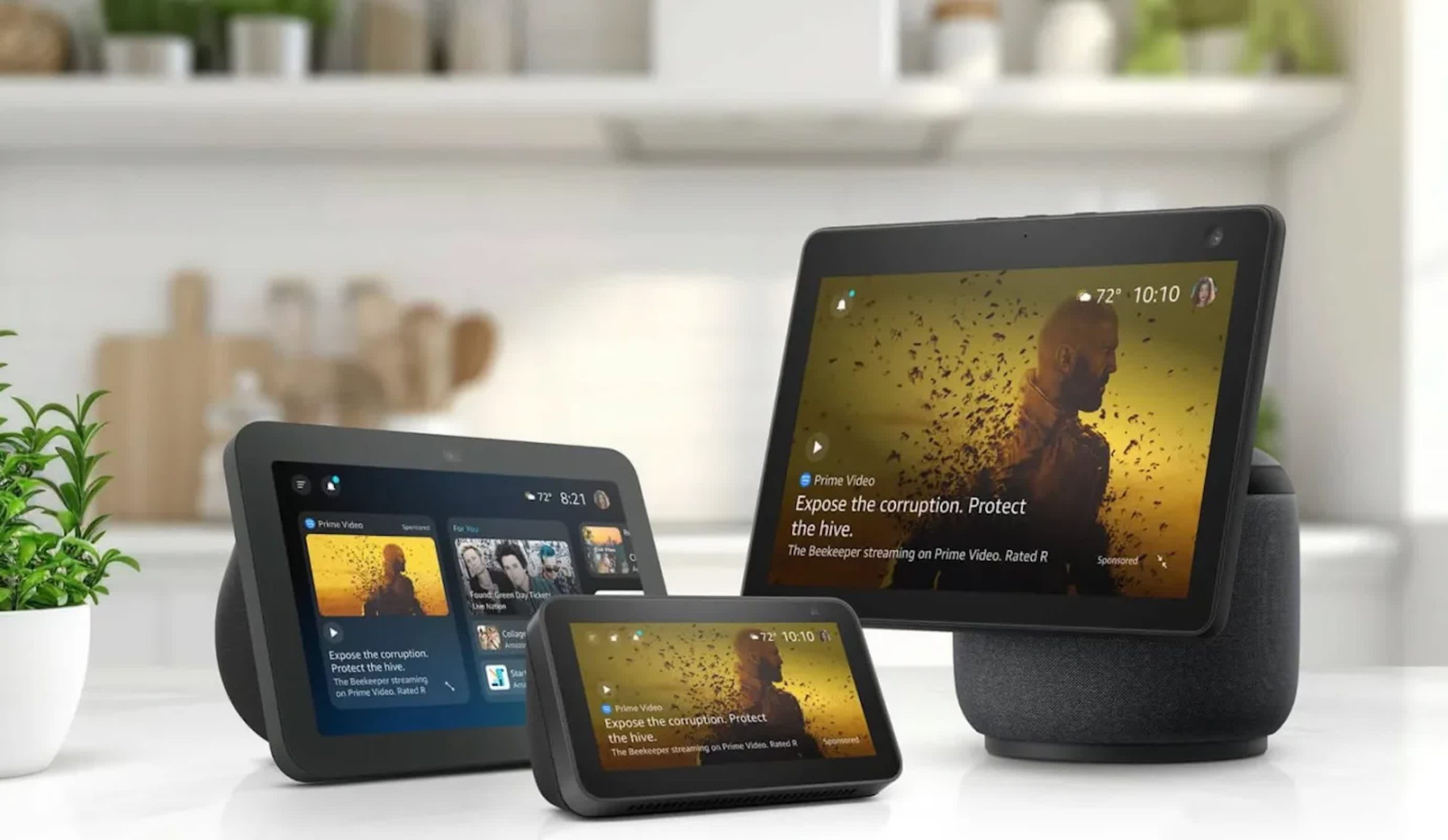
What just happened? Amazon is following in the footsteps of virtually every company on earth by increasing the price of its first-party products as a result of the memory crisis. Everything from the Echo smart speaker to the Fire TV line has become more expensive, with some items going up by as much as 60%.
Amazon’s price hikes include an increase in the base Echo Dot from $49.99 to $79.99, Fortune reports. Elsewhere, the Echo Show 11 now costs $249.99, a $30 jump from its previous $219.99 price.
E-reader fans will pay a hefty $40 more for the 16GB Kindle, which is now $149.99, while the 16GB Kindle Paperwhite has increased by the same amount, rising from $159.99 to $199.99.
Amazon’s Fire TV line and routers haven’t been spared, either. The Fire TV Stick HD has risen from $34.99 to $39.99, while the Fire TV Stick 4K Max is up from $59.99 to $84.99. The Fire TV Cube streaming set-top box has gone from $139.99 to $199.99.
The Amazon eero 7 wireless mesh networking system, which has three devices, has increased by $50, from $349.99 to $399.99, but the biggest hike is reserved for the eero Pro 7. Buying this three-pack now costs $100 more, with the price pushed from $699.99 to $799.99.
| Product | Category | Previous price | New price | Increase | Increase (%) |
|---|---|---|---|---|---|
| Echo Dot | Smart speaker | $49.99 | $79.99 | $30 | 60% |
| Echo Show 11 | Smart display | $219.99 | $249.99 | $30 | 13.6% |
| Kindle (16GB) | E-reader | $109.99 | $149.99 | $40 | 36.4% |
| Kindle Paperwhite (16GB) | E-reader | $159.99 | $199.99 | $40 | 25% |
| Fire TV Stick HD | Streaming device | $34.99 | $39.99 | $5 | 14.3% |
| Fire TV Stick 4K Select | Streaming device | $40 | $50 | $10 | 25% |
| Fire TV Stick 4K Plus | Streaming device | $50 | $70 | $20 | 40% |
| Fire TV Stick 4K Max | Streaming device | $59.99 | $84.99 | $25 | 41.7% |
| Fire TV Cube | Streaming device | $140 | $200 | $60 | 42.9% |
| eero 7 (three-pack) | Mesh Wi-Fi system | $349.99 | $399.99 | $50 | 14.3% |
| eero Pro 7 (three-pack) | Mesh Wi-Fi system | $699.99 | $799.99 | $100 | 14.3% |
One Amazon segment that hasn’t been affected is its line of Ring products. Whether the home security and smart home devices avoid the hikes permanently remains to be seen.
An Amazon spokesperson confirmed the price increases and the depressingly familiar reason behind them.

The retail giant said that the consumer electronics industry is “facing significant increases in memory and storage component costs. After absorbing these increases for as long as we could, we recently adjusted pricing across our product lines.”
The list of companies passing the burden of the AI-driven memory crunch on to customers keeps growing. Memory and storage suppliers Samsung, Micron, SanDisk, SK Hynix, Western Digital, and Seagate have raised or adjusted prices, while PC makers Dell, Lenovo, HP, Asus, and Acer have confirmed increases of their own.
They have since been joined by MSI, Microsoft’s Surface division, Apple, and Raspberry Pi. Gaming hardware has been hit just as hard, with increases from AMD, Nvidia, Sony, Nintendo, Valve, and Microsoft’s Xbox business. In mobile, Transsion, Oppo, Vivo, Honor, and Xiaomi have been forced to lift retail prices, while Qualcomm has announced a double-digit increase for chips shipping from September.


Cyber risk is now a board room issue, and we have seen clear examples of this in the UK. The 2025 Jaguar Land Rover attack left the carmaker with a £485m loss, swallowing up the £398m profit it had generated just 12 months before.
Production lines were halted for more than a month as the company shut down parts of its network, showing how quickly a cyber incident can affect business performance, operational continuity and the wider supply chain.
Virtual Chief Information Security Officer at Thrive.
Now, businesses are facing a fresh type of threat made possible by AI – the autonomous attack. Attackers can already automate parts of target research, initial access and malware development, with any manual effort shrinking rapidly.
Latest Videos FromTechRadar
Simultaneously, the trust layer people rely on is eroding with the spread of AI-generated content and deepfakes. It’s a race to tackle the autonomous attack, but how do organizations formulate an effective response?
AI in a cyber-attacker’s armory
AI-driven automated technologies are strengthening a cyber-attacker’s armory. Prior to leveraging AI tools, bad actors often had to commit time and resources to researching a target company before planning an attack.
Timing was critical, and a perpetrator had to manually coordinate and initiate an attack at a specific time and could simply forget. AI doesn’t – and the rise of attack-as-a-service tools is making it possible to successfully breach organizations quickly and accurately.
Guardrails are starting to be put up around established generative AI tools, such as ChatGPT and Claude, in an effort to prevent this kind of misuse. But hackers are finding workarounds.
Rather than relying on readily available large language models (LLMs), they are deploying their own small language models (SLMs) on local devices, often on something as basic as a Raspberry Pi computer. From there, they can escalate attacks while hiding in the shadows.
The threat to businesses of all sizes
The rise of automated attacks also means that businesses of all sizes are likely to be identified by automated technology as having exploitable vulnerabilities. Small and medium-sized businesses would previously have been off the radar as attacks relied on a bad actor’s knowledge of their existence.
However, AI can now scan and process vast numbers of organizations at speed, potentially leaving smaller firms, which are less likely to have robust cyber controls in place, more exposed. And even more so among smaller businesses, defenses are typically more fragmented and less organized than AI-driven attacks.
In other words, with AI by their side, attackers can coordinate and scale far better and much more quickly than most businesses can defend.
Autonomous attacks also make third-party and supply chain risk much harder to manage. Business networks can create access to data, systems or operational processes. When attackers can automate reconnaissance and scale attacks across thousands of organizations, weaker suppliers may become an attractive route into larger businesses.
This is a particular concern because third-party risk management has often relied on annual questionnaires, point-in-time assessments and contractual assurances, but these approaches are no longer enough on their own. A supplier may have recently exposed a service, suffered a breach, changed its access privileges or failed to patch a critical vulnerability.
Businesses therefore need to move towards continuous, automated monitoring of supplier security posture.
Regulations such as NIS2 have also increased the focus on supply chain security for organizations operating in, or selling into, the EU. There is also a growing expectation from ICO and the FCA that boards can demonstrate cyber resilience.
Automation and the rise of specific attack types
Jadepuffer illustrates how AI is beginning to transform established attack types. Disclosed by Sysdig in July 2026, it was assessed as the first documented end-to-end LLM-driven extortion operation, with an AI agent conducting reconnaissance, harvesting credentials, moving between systems, destroying data and adapting when individual actions failed.
While none of the techniques were especially new in isolation, the significance was the way the AI connected them into a complete, adaptive attack.
Social engineering techniques, such as bad actors posing as trusted individuals, are becoming much more convincing in their approach. Fluent, grammatically correct messages and the professional tone and style of CEO communications can now be fully replicated on emails, SMS and even WhatsApp.
AI can even manage the entire conversation thread, including dynamically adapting responses to a target’s replies, with it possible to run simultaneous, tailored campaigns.
Vendor email compromise, where criminals impersonate suppliers, intercept genuine payment conversations or use compromised vendor accounts to request changes to bank details, directly links social engineering to third-party risk.
Taking a step back, the initial harvesting process of personal data for social engineering attacks can be streamlined. AI can automatically scrape data from public sources such as Companies House and social media to quickly provide the names of specific people, their roles and relationships.
When trust and identity come under attack
Even on video conferencing calls, it’s becoming increasingly difficult to tell if the person you’re speaking to is real due to the increasing accuracy of deepfakes. As an example, it’s often now necessary to ask a suspected deepfake to do something it wasn’t programmed to do, such as raise a hand, to check if the person in question is real. But even that test is gradually being circumvented by new technology.
Organizations need stronger out-of-band verification protocols for high-value or unusual requests. A pre-agreed code word via a separate channel might be needed to ensure trust and security.
Identity security is becoming a key area of defense as autonomous attacks become more advanced. Credential stuffing at scale, session cookie harvesting, MFA fatigue attacks and vishing attempts designed to bypass multi-factor authentication are all increasing. AI can make these attacks more efficient by identifying likely targets, generating convincing scripts and adapting to the victim’s responses in real time.
This is why identity and access management should be treated as a critical control. Organizations need to know who has access to what, whether that access is still needed, which accounts are privileged and how quickly unusual behavior can be detected.
Fighting AI with AI
AI-driven autonomous attacks might be heightening the risk, but AI can also be used defensively. A good example of this is to run an automated risk analysis of an organization and highlight where security tools and the basics, such as malware protection, are out of date or missing.
With those fundamentals in place, AI can then underpin continuous monitoring of the critical systems, rather than periodic checks. Businesses should be identifying and focusing on protecting the “crown jewels” – that might be the top 10 most critical assets, such as payroll or a banking system, and target AI-led efforts on protecting them.
Joined-up visibility is then crucial. Businesses need to know who has access to those critical assets, the endpoint and network activity related to them and gain the ability to correlate any incidents quickly so the response to an AI-driven attack can be as swift as possible.
A combination of AI-powered technology, backed by human expertise, can provide proactive threat hunting to actively search for, investigate and remediate dangers, even if they are autonomous in origin.
Organizations aren’t powerless in the fight
The rise of autonomous attacks marks a new phase in cyber risk. For many businesses, particularly smaller ones, the challenge is preparing for attacks that can move much faster than traditional defenses. But organizations aren’t powerless in the fight.
Effective responses start with getting the basics right, from access controls to visibility across critical assets, to moving from periodic checks to continuous monitoring and faster detection with AI.
However, technology alone won’t be enough. Human expertise can interpret risk and make informed decisions under pressure to ensure resilience, even as the AI-driven autonomy threat moves to the next level.
We’ve featured the best firewall software.
This article was produced as part of TechRadar Pro Perspectives, our channel to feature the best and brightest minds in the technology industry today.
The views expressed here are those of the author and are not necessarily those of TechRadarPro or Future plc. If you are interested in contributing find out more here: https://www.techradar.com/pro/perspectives-how-to-submit
While automakers have been trying to find ways to lower the price of cars, the skyrocketing price of new vehicles continues to be a major issue for buyers. The price of the average new vehicle overall now sits at around $50,000, and if you’re looking for a pickup truck, the numbers are even tougher to swallow. The full-size pickup truck, which regularly tops America’s sales charts, now has an average selling price of nearly $67,000, and some mid-size trucks aren’t too far behind.
Needless to say, these high prices are pushing a lot of pickup buyers to the used market, whether they’re looking to save a bit of money by choosing a truck that’s just a few years old or save a lot by buying something much older that ideally still has lots of life left in it. That last part is important, because a used truck can still be a significant investment, and nobody wants to be plagued with issues or have to do lots of costly repairs.
Exactly which used truck model you should pick will depend on a lot of things — like whether you’re in the market for a full-size, mid-size, compact, or even electric truck model, for starters — but if reliability is your goal, there are a few commonly recommended brands to start with.
Ford
If you’re shopping for a new or used pickup truck, Ford might have more options than any other brand. It makes a pickup for every type of buyer, from the compact and fuel-efficient Ford Maverick to the best-selling F-150 to the beefy Super Duty line. There’s even the all-electric Ford F-150 Lightning.
When it comes to the used pickup market, the mid-sized Ford Ranger is ranked highly by Car & Driver, as is the Ford Maverick, which tops the compact class (where it admittedly doesn’t have many direct rivals). U.S. News & World Report also ranks the 2020 model-year Ranger as the most reliable used pickup truck, while giving high marks to the Maverick as well. Looking at the larger Super Duty Trucks, the Ford F-450 is ranked by iSeeCars as the third longest-lasting truck on the market, with a 28.5% chance of lasting over 250,000 miles, with other Super Duty models ranked closely behind.
However, you’ll probably also want to consider depreciation in your purchase decision. Before you settle on a used Maverick, Ranger, or another Ford truck model, remember that many of these trucks are known for having excellent resale value, and might not offer the large up-front savings you were expecting. You might save a few bucks, but you’ll also want to make sure you aren’t overpaying for a used truck compared to what you can buy a new one for.
Toyota
Toyota’s inclusion in this group should come as no surprise. The brand’s got a reputation for building reliable vehicles, and when it comes to its trucks, the data largely backs that up. On the iSeeCars rankings of longest-lasting pickups, both the mid-size Toyota Tacoma and full-size Toyota Tundra are in the top five, with both models twice as likely to make it to 250,000 miles compared to the average truck.
Used Toyota trucks get high marks elsewhere too, with the 2022 Tacoma earning JD Power’s Dependability Award in the mid-size pickup segment, and the 2020 model year Tundra getting an Editor’s Choice Award in U.S. News & World Report’s ranking of the most reliable used pickup trucks. Notably, though, if you’re looking for a used Tundra with high reliability, you may want to avoid the 2022 and newer models, which have been plagued with ongoing, and at times significant, engine issues.
Not surprisingly, that reputation for reliability coincides with high Toyota truck prices on the used market, and that might draw you toward examples with more miles on them. While having high mileage certainly isn’t a dealbreaker on a used Tacoma or Tundra, there are definitely some important things to consider before buying a high-mileage Toyota.
Ram
While Stellantis vehicles have suffered from fairly significant quality issues recently, used Ram trucks generally perform pretty well when it comes to reliability. In the ultra-popular half-ton truck segment, Car & Driver ranks the Ram 1500 as its top pick among used models, with the 2022, 2023, and 2024 models all earning high marks.
U.S. News & World Report placed the 2023 model year Ram 1500 at number five on its list of most reliable used pickups, and the newer model Ram 1500, which we greatly enjoyed driving, has also scored very well in JD Power’s Vehicle Dependability Study. The hope is, of course, that the Ram’s record of initial dependability will continue as the trucks age.
The heavier-duty Ram 2500 and Ram 3500 might perform even better when it comes to long-term reliability, with both of those models ranking in the top 10 of trucks most likely to last 250,000 miles. While high resale value on a vehicle isn’t always directly proportional to having excellent reliability, it’s generally a good sign, and iSeeCars ranks the Ram 1500 second in resale among full-size trucks, while the larger Ram 3500 does even better, beating out all other trucks in the heavy-duty pickup category.
Honda
Honda might not be heavily associated with the pickup market, as it only makes one truck model. However, the current, second-generation unibody Honda Ridgeline has been around since the 2016 model year, and it has earned high marks for reliability. Long-term road tests have shown the Ridgeline to be without major issues, and the truck is also rated above the class average in its likelihood of reaching the 250,000 mark.
When looking at reliability scores, the Ridgeline gets high marks from JD Power, and notably, even though it’s starting to show its age in some ways, the Honda was chosen by Consumer Reports as the top pick in the mid-size truck category. Indeed, despite being a unibody pickup rather than a more rugged body-on-frame model, the Ridgeline’s reliability has always been among the best in the mid-size segment.
The Honda Ridgeline occupies a unique place in the truck market, and if your needs include towing heavy trailers, carrying huge payloads, or venturing far off the beaten path, the more car-like Honda might not be a good fit. However, if the Ridgeline’s capabilities sound good to you, it should make for a reliable, versatile, and easy-to-live-with pickup for the everyday grind.
Chevy and GMC
While Chevrolet and GMC are two separate brands, we’ve listed them together because their trucks are nearly identical mechanically and should deliver the same overall record of reliability. These GM offerings range from the mid-size Chevy Colorado and GMC Canyon up to the heavy-duty Chevy Silverado and GMC Sierra pickup models.
JD Power gave awards to both the 2022 Chevy Silverado 1500 and 2022 Silverado 2500 in its most recent dependability rankings , and JD Power’s reliability scores for the Silverado’s GMC twins are equally strong. Likewise, the 2022 Silverado 1500 and 2020 GMC Sierra 1500 are both ranked among the top 10 most reliable used pickups by U.S. News & World Report.
When it comes to long-term, high-mileage reliability, GM’s heavy-duty pickups do especially well. The 2500 and 3500 variants of both the Chevy Silverado HD and GMC Sierra HD are all ranked by iSeeCars among the trucks most likely to last beyond 250,000 miles. Also not to be left out are the smaller, cheaper Chevy Colorado and GMC Canyon pickups, which also earn high reliability scores tp help make them solid recommendations on the used truck market.
Methodology
The brands on this list were chosen based on reliability scores, data, and used-vehicle recommendations from a variety of sources, including iSeeCars, JD Power, Consumer Reports, Car & Driver, and U.S. News & World Report. In some cases, like with the Honda Ridgeline, current model-year reliability and quality ratings were considered, as that vehicle has carried over for several years without major mechanical changes.


SOFTWARE
Bungs banknotes at Bristol boffins to find out if mature code survives the machine
Canonical’s fondness for AI and Rust is no secret. Now it is co-funding a three-year PhD project investigating whether the former can translate large C codebases into the latter.
Engineering veep Jon Seager announced the investment on Ubuntu’s Discourse forum. The PhD project will be conducted at the University of Bristol’s Programming Languages Research Group.
So don’t panic. This is not an announcement that Canonical will turn the bots loose to rewrite all of Ubuntu as Rusty slop. (For a start, nobody can afford that many tokens.) Instead of burning dosh on bots, Canonical will pay a proto-boffin to spend several years investigating whether the idea can be made to work. That is welcome. In an industry overflowing with hype, the project should produce evidence about whether this approach can be useful.
The Reg FOSS desk interviewed Seager last year, and he struck us as sensible and pragmatic, but not lacking in boldness. Under his guidance, Ubuntu 25.10 adopted a Rust implementation of sudo as well as the entirely separate Rust-based uutils coreutils. The sudo command did hit some problems but they were quickly fixed.
Both uutils and sudo-rs were pre-existing independent projects, however. They are human-written replacements designed to reproduce the functionality of existing tools using entirely new codebases. Certainly, those human developers may have studied the original source code – that’s one of the good things about FOSS, after all – but these are new implementations.
The new project will investigate whether an LLM can take programs “comprising hundreds of thousands of lines of C” and decompose them into smaller components before using an LLM to rewrite those components in “safe, behaviourally correct and maintainable Rust.”
Seager’s post runs to just over 1,000 words and addresses several objections that sprang to mind. For instance, existing tools attempt something similar, but their results leave much to be desired.
As Seager puts it: “Traditional source-to-source translators can process substantial amounts of code, but often preserve the structure of the C too literally. The result may compile as Rust, but still rely heavily on unsafe operations, retain awkward C idioms and require significant manual work before it resembles code a Rust maintainer would choose to own.”
We suggest reading the post before attacking the idea. It sets out a relatively detailed and measured plan. One admirable aspect is its acknowledgment that mature codebases contain knowledge their programmers never consciously documented. Years of fixes and patches encode responses to real-world corner cases that nobody anticipated at the outset. This is the key argument of Joel Spolsky’s 2000 essay: Things You Should Never Do, Part I. Such knowledge is rarely documented outside the code itself or, if you’re lucky, a few comments. A machine translation might preserve some of that behavior, while a clean human rewrite based on the original design could miss it.
The proposal names two specific tools that the effort intends to examine: snap-confine and AppArmor We may be excessively cynical, but openSUSE 16 replaced AppArmor with SELinux last year. Outside the Ubuntu family, enterprise Linux has largely consolidated around the more complex SELinux, although Debian and several smaller distributions continue to support AppArmor. A hardened Rust implementation could therefore benefit AppArmor’s remaining users. Snap, of course, has a narrower constituency still.
This is not a solo Canonical project. The company is co-sponsoring it with UK Research and Innovation, a public body sponsored by the UK’s Department for Business, Innovation, Science and Trade. Seager will oversee the project alongside the University of Bristol’s Professor Meng Wang and Dr Cristina David.
Three years is a conventional duration for a UK PhD – provided it does not overrun, of course. It’s not as if someone could go into a PhD program in 1998 and then get two decades’ worth of comic strips out of it or something.
The Reg FOSS desk remains staunchly skeptical of generative AI outside the narrow domain of translation between human languages. As such, we have grave doubts that this will prove viable. We suspect the difficult part will not be translating the code, but decomposing a large codebase into smaller components that bots can digest. The challenge recalls the long-running effort to divide arbitrary algorithms automatically into tasks that can be farmed out to parallel processes. Decades of research have produced useful techniques for particular cases, but no general solution. It may yet prove to be an incomputable problem, like the Halting Problem – and as that article says, if it could be solved, it would lead to solutions to the Busy Beaver function or even Goldbach’s conjecture.
As with much of generative AI, more evidence is needed, and producing it is exactly what a PhD research project should do. We salute Canonical for putting real money behind the question and would be delighted to have our skepticism proved wrong. As we speculated in 2024, automatic translation between programming languages could become immensely valuable for improving software reliability – not by fixing problems automatically, but by exposing previously unknown errors. ®

News Videos35 seconds ago
OMG… Did Anthropic Just Kill Bitcoin?

NewsBeat2 minutes ago
Where to watch Fulham vs Chelsea FC: TV channel and live stream for Premier League today

Business3 minutes ago
Prenetics Global: Marketing Mastery The Key To Robust Revenue Growth





-

 Fashion3 days ago
Weekend Open Thread: Madewell – Corporette.com
-

 Business6 days ago
SMA Solar Technology AG (SMTGY) Q2 2026 Earnings Call Transcript
-

 Crypto World2 days ago
anatomy of crypto’s biggest liquidation event since 2021
-

 Business2 days ago
Musk’s Tesla, SpaceX Confirm $16.8 Billion ‘Terafab’ Chip Plant as World’s Largest Building in Texas
-

 Tech6 days ago
Qwen3.8-27B runs frontier-class coding agents and reasoning locally, no cloud API required
-

 Crypto World7 days ago
OCC Greenlights Trump Family Crypto Firm for Trust Charter
-

 Politics2 days ago
6 months on, Irish renters crushed by effects of government housing bill
-
 NewsBeat2 days ago
The ‘Lucky Dip Gang’ causing carnage for clicks: After five thugs were killed speeding in the wrong direction on a motorway, GUY ADAMS investigates a sick new trend… and why police aren’t even allowed to pursue them
-

 Crypto World7 days ago
NAVI Prime launches institutional lending framework on Sui
-

 News Videos4 days ago
Don’t Leave Your Financial Future To Chance | August 19, 2026
-

 Tech5 days ago
GLM-5.3 hits the API at $1.4/$4.4 per million tokens
-
Tech6 days ago
5 Of The Most Reliable Car Brands To Consider If You’re Buying A Used SUV
-
 Crypto World7 days ago
Dow’s 3-Year Winning Run Isn’t a Crash Signal, Still 49% Odds of Double-Digit Gains
-

 Business6 days ago
Stock Market Today: Tech Futures Slide As Treasury Yields Jump; Nvidia, Micron, Sandisk Sell Off
-

 Tech7 days ago
Straight Up the Cliff, Yunnan’s New Fuyao Ladder Turns a Three-Hour Climb Into a 50-Second Ride for Students
-

 Tech6 days ago
Keychron K8 Ultra 8K review: a great value keyboard with comfort issues
-
 Tech7 days ago
Nvidia discloses $21B stake in SpaceX
-
Business6 days ago
Fabrinet (FN) Q4 2026 Earnings Call Transcript
-

 Business4 days ago
Five Below: Kids Discount Retailer Reaps Rich Rewards
-

 Business5 days ago
Marvell Shares Jump 7% as Google Chip Deal Confirms Custom AI Silicon Partnership, Analysts
You must be logged in to post a comment Login