
Business
5 Ways Sydney Commercial Lawyer Is Helping Business Owners Navigate Deals in 2026


Sydney commercial lawyer Joanna Oakey has built her professional profile around a part of business law that can have consequences well beyond the signing of a contract: helping owners buy, grow and sell businesses.
As managing director of Aspect Legal, Oakey works in commercial law with a particular emphasis on business sales and acquisitions, while the firm also advises on contracts, intellectual property, trademarks, brand protection, procurement, employment and disputes. Her current professional profile describes her as a commercial lawyer and deal maker with more than 20 years of experience.
Her work has also expanded beyond conventional legal practice. Oakey hosts The Deal Room and Talking Law podcasts, writes about commercial issues affecting business owners and is the author of Buy Grow Exit: The Ultimate Guide to Using Your Business as a Wealth Creation Vehicle.
1. Business sales and acquisitions sit at the center of her practice
For an entrepreneur, selling a business can be the financial culmination of years of work. For a buyer, acquiring an established company can represent a major investment with significant legal and commercial risks.
Oakey’s practice has a substantial focus on these transactions.
Aspect Legal says it provides specialist advice to buyers and sellers throughout business and share sales and acquisitions, including preparation, legal due diligence, transaction structuring, drafting, negotiation and completion. The firm also says it has advised thousands of local and national business owners as they acquire and exit businesses.
That work can begin well before a sale agreement is drafted.
For sellers, legal preparation may involve reviewing existing customer and supplier contracts, employment arrangements, leases, intellectual property and other assets. The purpose is to identify potential problems before a prospective buyer’s lawyers uncover them during due diligence.
For buyers, the process can involve examining whether the business actually owns the assets it appears to own, whether important contracts can be transferred, whether there are unresolved disputes and whether regulatory or employment issues could create liabilities after completion.
Oakey’s recent writing reflects this emphasis on preparation.
In June 2026, she wrote about six contract problems that business owners should address before selling. The article warned that problems identified during a buyer’s legal review can affect negotiations, including warranties, money held back at completion or earn-out structures.
The broader message is straightforward: The legal preparation for a business sale should not necessarily begin when a buyer appears.
2. She emphasizes getting a business ready before the deal begins
A recurring theme in Oakey’s work is that business owners should prepare for an eventual transaction rather than waiting until a buyer is already at the table.
That can be particularly important because buyers and their advisers can examine a business in considerable detail.
Aspect Legal says its work for sellers can include an independent review of a company’s legal strengths and weaknesses, preparation of documents, confidentiality agreements, sale agreements and negotiation of transaction terms.
For a business owner, seemingly minor legal housekeeping can become significant when the company is being sold.
A customer contract may not contain the rights the seller assumed it did. A lease may have restrictions on assignment. An employee agreement may be outdated. A trademark may not be properly protected. A key supplier arrangement may not transfer automatically to a purchaser.
None of these issues necessarily prevents a transaction. But they can create additional negotiations, delays or uncertainty.
Oakey’s recent article on preparing contracts before a sale makes that point directly, arguing that problems are generally easier to address before a buyer becomes involved.
For business owners thinking about an eventual exit, that approach turns legal preparation into part of the broader business strategy.
It also changes the timing of the lawyer’s role.
Instead of appearing only when documents need to be signed, a commercial lawyer can become involved earlier, helping an owner identify legal issues that could affect the value or attractiveness of the company.
3. Privacy compliance has become a new transaction issue in 2026
One of the most current aspects of Oakey’s work is her focus on changing privacy obligations and how they can affect business transactions.
In July 2026, Aspect Legal published analysis of changes taking effect during the year and their implications for businesses preparing to sell. The firm said changes taking effect July 1 expanded the number of businesses affected by privacy obligations, while further changes scheduled for Dec. 10 would introduce additional disclosure requirements concerning the use of artificial intelligence in decision-making for covered businesses.
For sellers, the issue is not simply regulatory compliance.
Privacy practices can become part of the buyer’s due diligence process.
A prospective purchaser may want to know what customer information the business holds, how that information was collected, whether privacy policies are appropriate, whether data is transferred offshore and what obligations apply to the business.
That means a privacy problem can become a transaction problem.
Aspect Legal made a similar point in July when discussing the buyer’s perspective, saying privacy compliance is increasingly an issue to examine during due diligence.
The development is particularly relevant as more businesses adopt cloud services, artificial intelligence tools and digital customer-management systems.
For an owner planning to sell, the lesson is that the legal value of a business can be affected by how well its information, contracts and compliance systems are organized.
Privacy may once have been treated as an administrative issue. In a transaction, it can become part of the commercial risk assessment.
4. Oakey has made legal education part of her professional identity
Oakey’s public profile extends beyond traditional client work.
She hosts Talking Law, which Aspect Legal describes as a podcast offering legal tips to business owners without the jargon. She also hosts The Deal Room, which focuses specifically on business sales and acquisitions.
The Deal Room has become a significant part of her professional positioning because it focuses on the people and advisers involved in transactions rather than limiting discussion to legal doctrine.
Aspect Legal describes the podcast as Australia’s first podcast dedicated to business sales and acquisitions and says it features industry advisers as well as owners and managers involved in buying and selling organizations.
Oakey is also the author of Buy Grow Exit, a book focused on using a business as a wealth-creation vehicle. Her firm’s profile identifies her as a lawyer, author and podcaster.
That educational focus may matter to business owners because many commercial legal decisions arise before a formal legal engagement.
An entrepreneur considering an acquisition may first want to understand how due diligence works. A business owner preparing for an exit may want to know what buyers look for. Someone negotiating a shareholders agreement may need to understand the practical consequences of different structures.
Providing accessible information can help owners recognize those questions earlier.
Oakey’s LinkedIn activity also shows that she continues to discuss current business issues, including artificial intelligence, business brokerage and the practical challenges involved in buying and selling companies. Her recent posts include commentary around AI adoption among advisers and a 2026 masterclass on buying and selling businesses.
5. Her approach connects legal work with the business lifecycle
Oakey’s career is built around more than isolated legal transactions.
Aspect Legal describes its model as helping growing businesses acquire companies, consolidate and protect their assets and eventually exit in a way designed to preserve business value.
That approach treats legal advice as something that can follow a business through different stages.
At the growth stage, the issues may include contracts, employment arrangements, intellectual property and brand protection.
During expansion, the company may acquire another business or enter a joint venture.
As the owners prepare to exit, the focus can shift to legal due diligence, transaction structures, sale agreements and negotiations.
The same legal foundations can matter at each stage.
A company with well-managed contracts and clearly protected intellectual property may be easier to review during due diligence. A business with unresolved legal problems may face more questions from prospective buyers.
Aspect Legal says it can assist sellers from early planning and structuring through the transaction itself, while buyers can receive assistance with due diligence, structuring, negotiations and post-acquisition planning.
This lifecycle perspective is particularly relevant for small and mid-sized business owners, who may not have in-house legal teams.
The bottom line on Joanna Oakey
Joanna Oakey has built a professional identity around the intersection of commercial law and business transactions.
As managing director of Aspect Legal, her practice covers business sales and acquisitions alongside broader commercial services, including contracts, intellectual property, trademarks, procurement, employment and disputes.
Her current work also reflects emerging issues affecting Australian businesses. Recent publications from Aspect Legal have focused on privacy compliance, AI-related obligations, contract preparation and the practical challenges facing buyers and sellers in 2026.
For business owners, perhaps the most relevant feature of Oakey’s practice is its focus on the period before a transaction becomes urgent.
A business sale is rarely just about signing a contract. It can involve years of preparation, legal housekeeping, negotiations, due diligence and decisions about how risk should be allocated between buyer and seller.
For owners considering their next stage of growth — or an eventual exit — understanding those issues early can make the legal side of the process considerably easier to navigate.
Disclaimer: This article is for general informational purposes only and is not legal advice. Business owners should obtain independent legal, financial and tax advice based on their individual circumstances before entering into a transaction.


FTSE 100 today: Stocks reverse losses as Iran sanctions loom

Prenetics Global: Marketing Mastery The Key To Robust Revenue Growth
Business
‘Economic D-Day’ on Iran puts trading partners in crosshairs as Tehran threatens retaliation
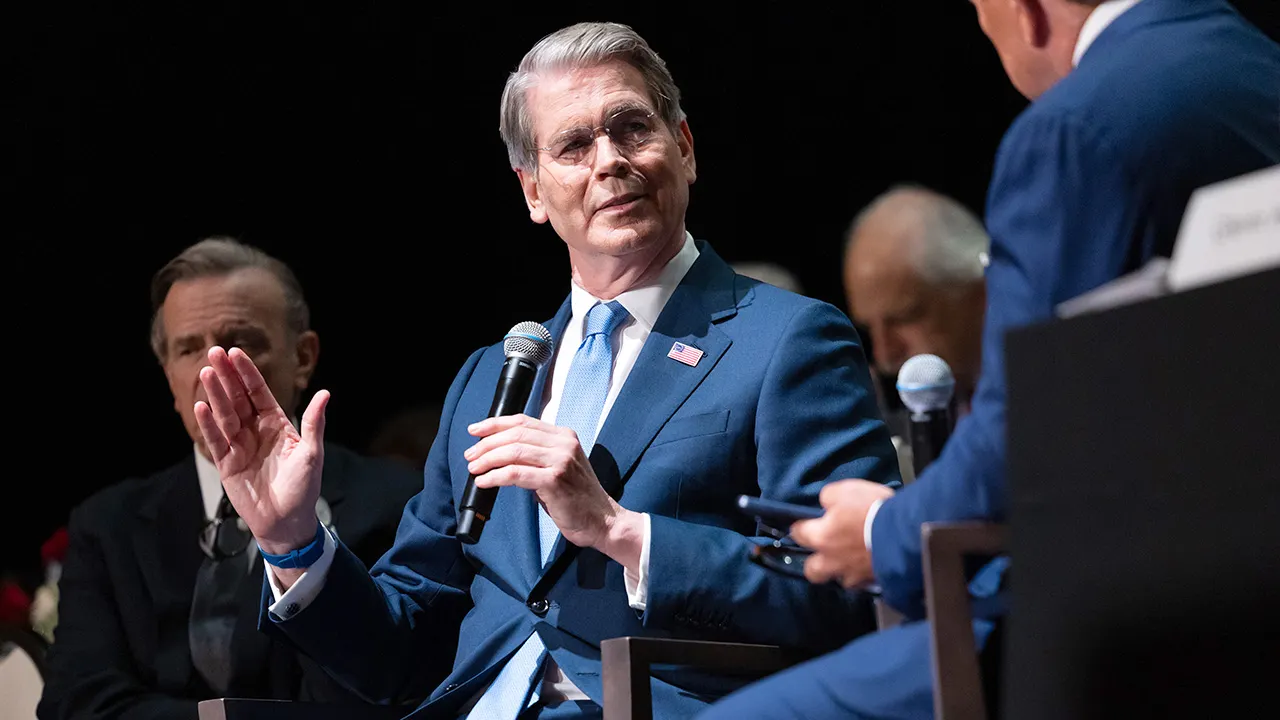
Former Deputy National Security Advisor Victoria Coates discusses the strategic importance of the Strait of Hormuz and the U.S. economic pressure campaign against Iran on ‘The Bottom Line.’
The Trump administration is preparing to launch what Treasury Secretary Scott Bessent called an “economic D-Day” against Iran, escalating pressure not only on Tehran but also on foreign governments, financial institutions and businesses that continue providing the country with economic lifelines.
The campaign could raise the stakes for companies and countries with financial, shipping and energy ties to Iran, as Tehran threatens to treat participation in the U.S. pressure campaign as an “act of war” and potentially disrupt oil exports across the Persian Gulf.
“At dawn begins an economic D-Day — the single greatest financial offensive ever marshalled against an adversary,” Bessent wrote in a Financial Times op-ed published Sunday ahead of planned remarks Monday.
Bessent said the administration intends to target the remaining commercial and financial links sustaining Iran, including countries and entities involved in purchasing and transporting Iranian petroleum, moving money through exchange houses and free-trade zones, maintaining ship registries and facilitating other financial activity.
US WARNS OF ACTIVE CYBER THREAT TARGETING CRITICAL INFRASTRUCTURE
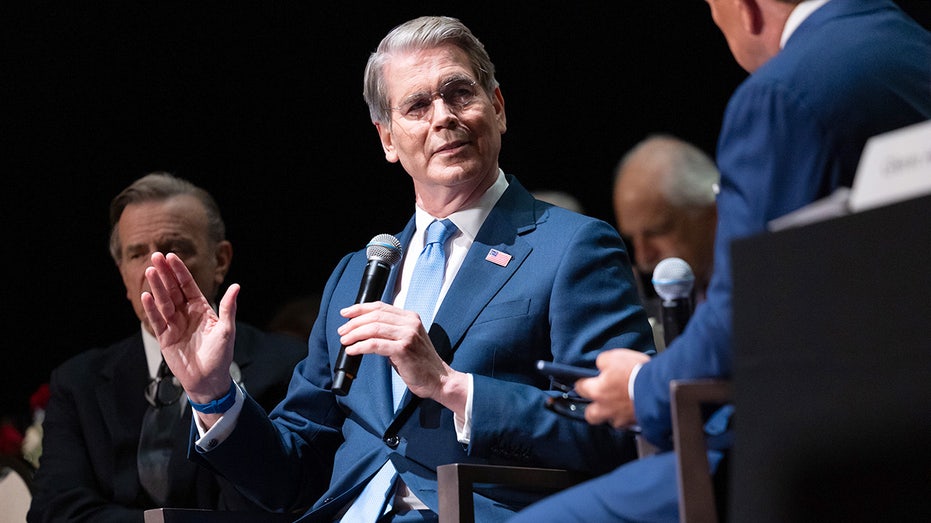
Scott Bessent, U.S. Treasury secretary, and Bret Baier, Fox News anchor, speak during an Economic Club of New York (ECNY) event in New York on Tuesday, June 23, 2026. (Krisanne Johnson/Bloomberg via Getty Images / Getty Images)
“Any nation that serves as a financial artery of a withering regime should expect to share in its isolation,” Bessent wrote.
President Donald Trump has separately described the campaign as the “MOST CRUSHING ECONOMIC OPERATION EVER TAKEN AGAINST ANY COUNTRY,” warning that countries allowing their banks, businesses, airports or government entities to provide Iran with an economic “lifeline” could face U.S. economic consequences.
A POWERFUL COUNTRY ON THE OTHER SIDE OF THE WORLD IS QUIETLY SHAPING TRUMP’S LATEST TRADE FIGHT
Trump specifically cited oil smuggling, swap lines, cash transfers, exchange houses, ship registries and front companies among the activities Washington is targeting.

Trump stands at the lectern alongside a group of tech and crypto executives on Aug. 19, 2026. (Al Drago/The Washington Post/Bloomberg via Getty Images / Getty Images)
Iran, meanwhile, is seeking to raise the potential cost for countries that align with Washington’s campaign.
Mohsen Rezaei, secretary of Iran’s Supreme National Security Council, warned Sunday that Tehran could move against oil exports from the region if the pressure continues.
“If the economic war continues, not a single drop of oil will be exported, neither through the Strait of Hormuz nor from anywhere in the Persian Gulf,” Rezaei wrote on X. “Iran will regard any country’s participation in or support for America’s economic war against the Iranian people as an act of war.”
The dueling warnings are increasing pressure on governments and companies weighing whether to maintain economic ties with Iran and risk consequences from Washington or distance themselves from Tehran amid threats of Iranian retaliation.

The Iranian flag in rubble and debris in Tehran, Iran. (ATTA KENARE / AFP / Getty Images)
China said Monday that sanctions and pressure would not resolve the dispute and that Beijing would take necessary steps to protect its rights and interests, according to reporting from Reuters. Chinese Foreign Ministry spokesperson Lin Jian also urged the parties to act with restraint.
Pakistan, meanwhile, has continued its efforts to mediate between Washington and Tehran. Pakistani army chief Asim Munir arrived in Tehran Monday for talks that Pakistan’s military said were part of efforts to promote regional peace and stability.
Bessent has not yet publicly detailed the full legal and financial measures that will make up the new campaign. His op-ed said the administration is prepared to use “every agency, every authority” to isolate Iran economically.
CLICK HERE TO GET FOX BUSINESS ON THE GO
FOX Business has reached out to the Treasury Department for additional details on the scope of the planned measures. Bessent is expected to provide additional details on the administration’s Iran strategy later Monday.

While the tariffs could mean changes for the Paloma Clothing company, other American companies are facing the same battle they have faced since Trump returned to office and began imposing his levies.
Bill Easton, owner of Terre Rouge Wines in Plymouth, California, has been unable to ship his wine north to Canada for the past year and a half due to a boycott of US alcohol.
He is currently paying $2,400 a month to store that wine in a warehouse in the hope that he will one day be able to ship it to the Canadian markets he sells to.
“The wine has just gotten better in the warehouse, but I can’t expect my customer in Canada to pay that extra cost that I’ve assumed over the last year and a half as part of the price, if I was able to sell it tomorrow,” Easton told the BBC.
And then there are the American businesses impacted by proximity to the Canadian border.
The number of Canadian customers travelling across the border to shop at Heather Seevers’ craft shop, Northwest Yarns and Mercantile in Bellingham, Washington, has gone down some 20% since the tariff war began over a year ago. What has further irked Canadians has been Trump musing on Canada becoming a 51st US state.
The shop sits 25 minutes from the US-Canada border and since the “war” ensued Seevers said her business received emails from Canadian customers saying they could not patronise her business “due to anti-Canadian rhetoric”.
“We completely understood that,” she said.
But the combined impact of fewer customers and higher prices has left the shop asking for help from the community recently via a fundraising initiative to stay afloat.
And then, over the weekend, when the new tariffs struck, Seevers saw another hurdle appear.
“It’s going to get worse before it gets better,” she said. “It’s going to take years and years and years to get a relationship back with Canada, and I think these new tariffs are digging us deeper into a hole.”
Additional reporting from Nadine Yousif
Business
Laura Ward’s Vision for R.I.S.E.: Building an Immigration Organization Designed to Outlast Its Founder

Laura Ward does not simply want R.I.S.E. Immigration Services to become bigger. She wants it to become better. That distinction sits at the center of how Ward thinks about growth, leadership, and the organization she is building. Her ambitions extend beyond increasing the volume of work or expanding the reach of a founder-led business. She is focused on a harder question: How can an organization grow while preserving the standards, knowledge, culture, and sense of responsibility that gave it purpose in the first place?
For Ward, the answer begins with infrastructure. Stronger operations, better technology, employee development, educational resources, consistent processes, clearer communication, and dependable client experiences are not secondary administrative concerns. They are part of the service itself. Her view is that an organization serving immigrant families cannot rely on good intentions alone. It needs systems capable of turning those intentions into consistent action.
That philosophy reflects Ward’s professional background as well as her ambitions for R.I.S.E. Before starting the project, she had more than 15 years of service as a social worker, an experience that her approved biography connects to a longstanding concern for the well-being of people in Latin America and the United States. Her leadership philosophy now brings that service orientation into an organizational context, where compassion must operate alongside accuracy, accountability, and professional discipline.
Excellence and Compassion as Operating Principles
Ward aims to implement a unique culture at R.I.S.E. combining excellence with compassion. Ward asserts that, in the area of immigration, both are crucial.
It is particularly important in immigration as clients are dealing with complex processes involving paperwork, deadlines, courts, systems, and languages. At the same time, the issues involved in immigration are often of a personal nature: family issues, job-related, emotional, and financial.
Compassion is relevant to understanding clients. Excellence is relevant to carrying out the agencies’ work. Ward believes that compassion cannot replace excellence and vice versa. In other words, technical process knowledge without compassion can leave people even more traumatized. On the other hand, compassion without professionalism may create problems as clients rely on the agency to take care of things.
Ward thus looks for certain qualities when hiring staff – not just those mentioned in CVs. She values accountability, discipline, communication, compassion, and willingness to learn which all affect how the agency works.
Exactness matters in a situation when processes require it. Communication matters in a situation when clients need to know what needs to be done. Compassion determines whether people are treated with patience. However, accountability and discipline are needed to ensure everything that should be done is carried out. Finally, willingness to learn becomes important because immigration issue processes and technologies are constantly developing.
This is the reason why Ward cares about teaching employees instead of just filling positions. In the long term, she wants the employees to evolve into qualified professionals.
Building an Organization That Does Not Depend on One Person
Founder dependence is a familiar challenge in entrepreneurship. In an organization’s early development, the founder can become the keeper of its relationships, standards, knowledge, decisions, and problem-solving habits. That concentration may work at a smaller scale, but it can also become a structural weakness as complexity increases.
Ward’s three-to-five-year vision for R.I.S.E. addresses that problem directly. She wants to strengthen operations, develop the team, improve technology and internal systems, expand educational reach, and create greater consistency in the client experience. Her interest in growth is therefore closely connected to organizational capacity.
Technology has a practical role in that vision. Ward sees appropriate systems as tools for improving communication, tracking responsibilities, reducing administrative mistakes, preserving institutional knowledge, and giving clients greater transparency. Her focus is not on technology for its own sake. It is on what stronger systems can make possible inside an organization where details and communication matter.
This is where Ward’s preference for “better” over merely “bigger” becomes most consequential. More activity creates more complexity. Serving more people or developing a larger organization would also create more responsibilities to coordinate, knowledge to preserve, employees to prepare, and standards to maintain. Sustainable growth therefore requires stronger foundations behind the visible work.
Ward’s own description of leadership reinforces that incremental approach. She views successful organizations as the product of thousands of decisions: improving a process, training someone, solving a problem, learning from a mistake, and repeating the work. Institution-building, in that sense, is less about a single expansion milestone than about steadily making quality reproducible.
Professional Development From the Founder Outward
Laura Ward’s recent accreditation by the U.S. Department of Justice adds another dimension to that emphasis on development. In July 2026, she was announced as a DOJ Accredited Representative. According to the accreditation announcement, she is authorized through the Department of Justice’s Executive Office for Immigration Review to provide qualified immigration legal services through a recognized organization.
The credential is significant within Ward’s professional development, but it also fits a larger pattern in how she describes R.I.S.E. She expects employees to remain teachable, develop competence, understand their responsibilities and limitations, and continue educating themselves. Her own continued professional development applies that same expectation to the founder.
That alignment matters for the culture Ward wants to establish. Leadership development is difficult to make credible if continuous learning is expected only from employees. Ward’s approach instead suggests that stronger organizations are built as people throughout them expand their capabilities, including the person at the top.
Her background in social work also helps explain why competence and service are so closely linked in her thinking. Ward advises people entering service-oriented careers to listen first, develop competence, respect the dignity of those they serve, and recognize that good intentions are insufficient when others depend on them. Those principles now inform her approach to organizational leadership.
Education as Institutional Capacity
Education is another component of Ward’s vision that reaches beyond individual client interactions. She wants people to become informed participants in their immigration journeys, with a clearer understanding of procedures, documentation requirements, deadlines, responsibilities, and when qualified legal advice may be necessary.
Her broader ambition includes community education, digital content, social media, and accessible educational resources, with particular attention to making information understandable for Spanish-speaking communities and people who may not know where to begin. These are presented as areas of continued development rather than a catalogue of completed programs.
The distinction is important because Ward sees education as a form of empowerment rather than simply information distribution. Her goal is for people to understand enough to ask better questions, identify potential problems earlier, and advocate more effectively for themselves and their families.
Education also serves an institutional purpose. Knowledge captured in useful resources can travel beyond a single conversation. Knowledge transferred to employees can become organizational capability. Employees who gain knowledge, judgment, confidence, and responsibility can eventually become leaders. In each case, value becomes less dependent on one person’s direct involvement.
That is the deeper thread connecting Ward’s interest in technology, processes, education, client communication, and employee development. Each can help turn individual expertise into organizational capacity.
A Definition of Legacy Built Around Continuity
Ward’s definition of success has evolved beyond conventional measures of organizational growth. She wants R.I.S.E. to be financially strong, operationally effective, respected, and capable of growing, but she does not consider numbers sufficient. Success, as she describes it, also means creating an organization people trust, developing capable professionals and leaders, establishing systems that function consistently, and producing educational resources that remain useful beyond the walls of an office.
Her view of leadership is particularly revealing: one of its greatest measures is whether an organization becomes stronger because someone led it, rather than permanently dependent on that person.
That idea brings the bigger-versus-better distinction full circle. Becoming bigger can be measured through scale. Becoming better requires examining whether an organization is more capable, whether employees are developing, whether knowledge is being preserved, whether clients receive consistent experiences, whether communication is improving, and whether the institution can uphold its purpose as responsibilities increase.
Ward ultimately describes herself as someone who wants to build. Her stated legacy includes organizations, opportunities, leaders, educational resources, and systems that continue creating value for other people.
For R.I.S.E. Immigration Services, that makes the long-term ambition larger than the founder without diminishing the founder’s importance. Ward’s role is to establish the standards, develop the people, strengthen the infrastructure, and create the conditions under which the organization can eventually carry its knowledge and purpose forward.
The clearest measure of that work may come much later. If R.I.S.E. can continue educating communities, creating opportunities, developing leaders, employing people, and serving immigrant families without requiring Laura Ward to remain at the center of every decision, it will have achieved the kind of growth she considers most meaningful. It will not simply have become bigger. It will have become strong enough to endure.
Business
Suspect in Oregon Quintuple Murder Found Dead in Washington a Day After Bodies Discovered on Rural Property

FOREST GROVE, Ore. — A suspect in the killings of five people found on a rural property outside Forest Grove, Oregon, was found dead in a vehicle in Enumclaw, Washington, on Sunday, authorities said, a day after the victims’ bodies were discovered following a report of a vehicle fire.
The Washington County Sheriff’s Office identified the suspect as 36-year-old Benjamin Charles Parker. Investigators believe Parker died by suicide, according to a news release from the sheriff’s office issued Sunday evening. “Officers from the Enumclaw Police Department located Parker’s vehicle and found him deceased inside,” the sheriff’s office said in its statement. “It is believed he died by suicide.” Officials said there was no ongoing threat to the public.
Authorities have not disclosed how investigators were led to Parker or detailed his connection to the victims, though Washington County Sheriff Caprice Massey said Parker was known to the people killed. “Detectives do not believe there is a danger to the public,” Massey said, according to Portland CBS affiliate KOIN. Massey separately told reporters that investigators believe Parker “was known to the subjects,” according to NBC News. Detectives have said they do not believe the killings were random, though authorities have not publicly disclosed a possible motive.
Parker’s vehicle, with his body inside, was located behind a Safeway store in Enumclaw, a small city roughly 50 miles southeast of Seattle, according to the Enumclaw Police Department.
The case began early Saturday morning, Aug. 22, when the sheriff’s office responded to a report of a vehicle fire at a property on Northwest Otis Lane, a dead-end street off Hillside Road in a rural, unincorporated area of Washington County outside Forest Grove, roughly 25 to 30 miles west of downtown Portland. Responding sheriff’s deputies and fire personnel discovered the remains of five people, along with what officials described as “several domestic animals,” at the scene. Authorities have not disclosed the ages, genders or identities of the victims, how they died, what connections they had to one another, or what types of animals were found dead at the property.
Washington County Sheriff’s Detective Shannon Wilde addressed the ongoing effort to identify the victims during a news conference Sunday afternoon, before Parker’s death was confirmed. “Any time you have one person deceased, let alone five, that’s a logistical challenge,” Wilde said, describing the scope and complexity of the investigation. When asked by reporters about the time that passed between the initial discovery of the bodies and the release of public information the following afternoon, Wilde explained that authorities were working simultaneously to identify the victims, notify their next of kin, and manage what she described as a “very active investigation with a lot of moving pieces,” while ensuring that information released to the public was accurate.
Wilde also offered a limited description of the property itself when pressed by reporters for additional detail, describing the location broadly rather than specifying exactly where on the property the bodies were found. “Rural area, and there are other homes out there, but there’s a lot of vegetation and and land and hills and and forests out there. So I’ll just say it’s a rural area that’s got a lot of various various properties on it,” Wilde said, according to Portland ABC affiliate KATU.
Investigators formally characterized the case as a quintuple homicide, with Wilde reiterating during Sunday’s news conference that all five victims had been murdered. Before Parker’s death was confirmed later that evening, Wilde had emphasized the active and unresolved nature of the case. “There is someone that we don’t have in custody that committed this act,” Wilde said, according to KATU, referring to the still-unidentified suspect at that point in the investigation.
Sheriff Massey, addressing the scale and complexity of the investigation, described it as among the most challenging cases she has encountered during her decades in law enforcement in the region. “I will say that in my 22 years here, I have not been a part of or witnessed a scene quite this complex involving this type of an investigation,” Massey said.
Massey urged members of the public who may be familiar with the property or the people who lived there to come forward with any relevant information they might have, as investigators continue working to fully piece together the circumstances surrounding the killings.
The investigation has involved coordination among multiple law enforcement agencies spanning two states, given that the crime scene itself was located in Oregon while the suspect was ultimately found dead across the state line in Washington. Authorities have not indicated whether the investigation into the full circumstances of the killings, including establishing the precise nature of Parker’s relationship to each of the five victims and determining a specific motive, has been concluded now that the suspect has been confirmed dead, or whether significant investigative work remains ongoing despite the absence of any surviving suspect to charge or prosecute.
As of this report, the Washington County Sheriff’s Office had not released the identities of the five victims, pending notification of next of kin, a standard practice followed in cases involving multiple fatalities while families are formally informed before public identification occurs. Authorities also had not provided additional detail regarding the specific cause of death for any of the five victims, nor had they clarified the nature or number of domestic animals found dead at the property alongside the human victims.
With Parker’s death confirmed and no ongoing threat to the public identified by investigators, attention is likely to shift toward the broader work of formally identifying all five victims and establishing a clearer public account of what led to the killings, even as the case itself, absent a surviving suspect, will not proceed toward criminal prosecution in the traditional sense. The Washington County Sheriff’s Office has indicated the investigation remains active and ongoing as authorities continue working to provide a fuller account of the circumstances surrounding what officials have described as one of the most complex cases the department has handled in more than two decades.
Business
Ex-FBI Agent Pushes Back on Unfounded Online Theories Blaming Nancy Guthrie’s Family for Her Disappearance

TUCSON, Ariz. — A retired FBI agent has publicly pushed back against conspiracy theories circulating online that have falsely implicated Nancy Guthrie’s daughter and son-in-law in her disappearance, calling the claims unsupported by facts and describing the case in stark terms as a kidnapping for ransom.
Nancy Guthrie, the 84-year-old mother of NBC “Today” show co-anchor Savannah Guthrie, was reported missing from her Tucson-area home on Feb. 1, with investigators believing she was abducted. In the more than six months since her disappearance, some corners of social media have circulated unverified theories suggesting Guthrie’s daughter, Annie, and son-in-law, Tommaso Cioni, were somehow connected to her disappearance, or even responsible for her death. Authorities have strenuously denied any such connection.
Retired FBI Special Agent Jennifer Coffindaffer addressed those theories directly in a post on the social platform X, expressing frustration over what she described as baseless speculation targeting the family. Coffindaffer instead emphasized the close relationship Nancy Guthrie shared with her daughter and son-in-law, who she said served as her primary caregivers. “She loved playing Mahjong and eating Saturday night dinners with them,” Coffindaffer wrote. She went on to describe the couple’s role in supporting Nancy Guthrie’s independence in her later years. “Annie and Tommaso were her caregivers who made sure Nancy could stay in the house she loved and purchased 50 years ago to raise her family.”
Coffindaffer argued that the online speculation has transformed a genuine and painful missing-person case into what she characterized as content designed primarily to generate attention rather than to reflect any credible investigative basis. She specifically referenced circulating claims that Nancy Guthrie had accumulated gambling debts tied to a cartel, or had declined to extend a loan to someone, as examples of theories she said had been fabricated. “All of this was made up for clicks and views by YouTubers and Streamers and proliferated by those who want clicks and views,” Coffindaffer wrote.
Coffindaffer closed her remarks with a direct, unambiguous statement regarding what she believes actually occurred. “Nancy was kidnapped for ransom. That’s the truth. No facade. No fake kidnapping,” she wrote.
Coffindaffer has been an active and closely watched voice throughout the broader Guthrie case, previously raising her own pointed questions about the scope of the search effort conducted by the Pima County Sheriff’s Department, including criticism over how extensively investigators searched the Sonoran Desert surrounding Guthrie’s home following the recent discovery of unrelated human remains roughly 15 miles from the property. Her latest comments, however, focused specifically on defending Guthrie’s immediate family against what she characterized as unfounded and harmful online speculation, rather than on the broader conduct of the official investigation itself.
Authorities investigating Guthrie’s disappearance have not publicly named any suspects, persons of interest, or identified vehicles connected to the case as of this report, despite the investigation now stretching more than six months since she was first reported missing. The Pima County Sheriff’s Department, working alongside the FBI, has continued pursuing a range of investigative leads, including DNA analysis and doorbell camera footage, while periodically releasing information, including the full contents of ransom-related communications, in an effort to generate new public tips.
Guthrie’s family has continued to publicly appeal for information leading to her safe recovery, with a combined reward pool exceeding $1 million contributed by Savannah Guthrie, the FBI and outside nonprofit organizations. That continued, active family involvement in the search effort stands in direct contrast to the unfounded theories Coffindaffer sought to debunk, which had speculated about the family’s own culpability rather than acknowledging their documented role in supporting both Nancy Guthrie’s independence before her disappearance and the broader search effort since.
The spread of unverified conspiracy theories surrounding high-profile missing-person cases has become an increasingly common and challenging dynamic for both investigators and affected families to navigate, particularly as social media platforms and independent content creators have increasingly built substantial audiences around real-time speculation and amateur analysis of unresolved criminal cases. Cases involving public figures or their family members, such as the Guthrie case given Savannah Guthrie’s prominent national television role, tend to draw a disproportionate share of this kind of online speculation, given the significant public interest and media attention the case has generated since Nancy Guthrie’s disappearance first became national news in February.
Coffindaffer’s intervention reflects a broader pattern in which retired law enforcement professionals and other credentialed figures have periodically stepped in publicly to correct what they view as damaging or factually baseless online narratives surrounding active missing-person and criminal investigations, aiming to protect the reputations and emotional wellbeing of family members who are already coping with the trauma of an unresolved disappearance without also having to contend with unfounded public accusations circulating about their own involvement.
As of this report, neither the Pima County Sheriff’s Department nor the FBI has issued a statement specifically addressing the conspiracy theories Coffindaffer sought to debunk, though authorities have consistently maintained throughout the investigation that Guthrie’s disappearance is being treated as an abduction rather than any scenario involving her immediate family. With the case remaining active and unresolved more than six months after Nancy Guthrie was first reported missing, both the investigation itself and the surrounding online speculation, including efforts like Coffindaffer’s to counter unfounded claims, appear likely to continue drawing significant public attention in the weeks ahead.

WA water infrastructure specialist Flow Water Services has been acquired by global equipment and critical services provider Centurion Group.

KXI: International Exposure Offers Limited Benefits

For people facing separation, divorce or a complicated property dispute, choosing a family lawyer can be one of the most consequential decisions in an already difficult period.
The issues can extend far beyond the end of a relationship. Families may need to resolve questions involving children, property, businesses, trusts, investments, financial agreements and international assets. In higher-value cases, legal disputes can also involve business valuations, taxation, restructuring and complex financial arrangements.
Mark Parker, a partner at Lander & Rogers in Melbourne, has built his practice around family and relationship law, with particular experience in complex financial and property disputes. He has been an Accredited Family Law Specialist since 1991 and is currently listed by Doyle’s Guide as the 2026 market leader for Melbourne family and divorce lawyers.
1. Parker has decades of specialist family law experience
Family law encompasses a wide range of disputes, from relatively straightforward separations to cases involving substantial assets and complicated financial structures.
Parker’s professional career has been heavily concentrated in the field. Rogers says he has been an Accredited Family Law Specialist since 1991. The firm’s current profile also identifies him as a partner in its Family & Relationship Law team.
The specialist accreditation is relevant because it is not simply another professional title. Rogers says accreditation requires lawyers to have practised predominantly in the relevant field for at least five years and to complete a rigorous assessment process involving written work, a complex mock file, client interviewing, an examination and professional references.
Parker’s professional recognition has also continued into 2026.
Rogers says Doyle’s Guide named Parker the Market Leader for Melbourne’s Leading Family & Divorce Lawyers in 2026. He was also ranked Preeminent nationally and in Victoria for high-value and complex property matters and listed as a leading prenuptial agreement lawyer in Australia.
The firm says Parker has also been recognised in Best Lawyers in Australia since 2012.
Professional rankings do not guarantee an outcome in an individual case. Family law matters depend on their facts, evidence and the applicable law. But for a prospective client, a long record of specialist practice can be one factor when assessing a lawyer’s experience.
2. His practice focuses heavily on complex property and financial disputes
For many separating couples, property settlement may involve more than deciding what happens to the family home and bank accounts.
Financial disputes can involve investment portfolios, companies, trusts, professional practices, farms and partnerships. Determining the value and ownership of those assets can become a central issue in negotiations or litigation.
Parker’s professional profile identifies complex property disputes as a major part of his practice. The International Academy of Family Lawyers says his work focuses exclusively on complex property disputes and includes cases involving commercial issues, valuations, taxation and restructuring.
Lander & Rogers similarly lists his experience with trusts, large manufacturing companies, trading entities, professional practices, farming properties and partnerships.
That background can be particularly relevant where one or both parties own a business.
A business can be one of the largest assets in a relationship, but establishing its value may not be straightforward. The company may have retained earnings, intellectual property, property, debts or other interests that need to be assessed.
There can also be disagreement about how a business should be treated following separation.
For example, one person may want to continue operating a company while the other seeks a financial settlement reflecting their interest in the business. That can raise questions about valuation, ownership, control and the practical structure of any settlement.
Rogers has also published guidance on business valuation in family law matters, noting that business valuation can become important where former partners built and operated a business together and only one will retain it after separation.
3. Trusts, valuations and taxation can make a family law case more complicated
Family wealth is not always held directly in an individual’s name.
Trust structures, companies and other arrangements can create additional questions when a relationship ends. The legal treatment of those structures depends on the particular circumstances and the evidence available.
Parker’s practice includes cases involving family trusts and other complex financial structures. His profile specifically identifies experience involving trusts, commercial entities, valuations and restructuring disputes.
Taxation can also become relevant to property settlements.
Rogers has published guidance discussing tax and stamp duty considerations in family law property settlements, noting that the structure of a settlement can have implications for the parties and that appropriate legal and tax advice may be required.
For clients, this highlights why a complex financial dispute cannot necessarily be approached as a simple calculation of assets and liabilities.
A settlement that appears straightforward on paper may have practical consequences involving taxes, transfer costs, business structures or future ownership.
That is particularly important for families with substantial wealth or business interests.
The lawyer’s role may include understanding the financial structure, identifying relevant legal issues and working with other professional advisers where specialist financial, tax or valuation input is required.
Parker’s professional profile reflects this type of multidisciplinary experience, identifying complicated commercial issues, valuations, taxation and restructuring disputes among his areas of expertise.
4. Parker also has experience in international family law
Family disputes increasingly can cross national borders.
A separated couple may have property in different countries. One parent may live overseas. Children may have connections to more than one jurisdiction. Financial agreements may have been signed outside Australia.
These circumstances can introduce additional legal questions, including jurisdiction, recognition of agreements and orders, overseas assets and international parenting disputes.
Parker’s practice includes international family law. Rogers says he has experience with international disputes involving Australian family law and matters connected with Singapore and Hong Kong.
The International Academy of Family Lawyers also lists Parker as a member and describes his practice as having an international dimension.
International cases can be especially sensitive to timing and legal procedure.
For example, someone considering moving overseas with children after separation should obtain appropriate advice before taking action. Rogers has published guidance warning that parents considering international relocation with children should obtain legal advice about the relevant requirements and proper channels for seeking consent or court orders.
The same principle applies to international property and financial disputes. The laws governing an asset or agreement in another country may differ from Australian law.
For a client with cross-border circumstances, experience in international family law can therefore be an important consideration when choosing representation.
5. His practice covers parenting, child support and financial agreements
Although Parker is particularly associated with complex financial and property matters, his practice extends across other areas of family law.
Lander & Rogers lists parenting arrangements, family violence cases, child support, spousal maintenance, financial agreements and alternative dispute resolution among his areas of expertise.
Parenting disputes can require a different approach from financial litigation.
Separated parents may need to resolve where children live, how time is shared, schooling, travel and other issues affecting day-to-day care. Some matters can be addressed through negotiation or mediation, while others may proceed to court.
Parker’s profile says his experience includes alternative dispute resolution, private mediation and litigation involving parenting arrangements.
Child support is another area of his work. The firm says he has experience with applications under child support legislation and the preparation of Binding Child Support Agreements designed around children’s educational and developmental needs.
Financial agreements can also play an important role before or during a relationship.
Parker advises on Binding Financial Agreements for couples contemplating or already in a marriage or de facto relationship. His profile says these agreements can address property settlements, succession planning and intergenerational family wealth.
For families with significant assets, these agreements can be an important part of long-term financial planning, although their suitability and enforceability depend on individual circumstances and legal requirements.
What should clients consider when choosing a Melbourne family lawyer?
Parker’s professional background illustrates why prospective clients may want to look beyond a lawyer’s general title when selecting representation.
His current professional profile identifies him as an Accredited Family Law Specialist, a member of the International Academy of Family Lawyers and a partner at Rogers. In 2026, Doyle’s Guide again listed him as Market Leader for Melbourne family and divorce lawyers and Preeminent for high-value and complex property matters in Victoria.
His experience spans property settlements, business and trust interests, valuations, taxation-related issues, international disputes, parenting arrangements, child support and financial agreements.
For a prospective client, that combination is most relevant where a family law matter involves more than a conventional separation.
At the same time, professional recognition should be considered alongside the specific needs of a case. No lawyer can guarantee a particular result, and family law disputes are determined according to their individual facts, evidence and applicable legal principles.
For people considering legal representation in Melbourne, understanding a lawyer’s specialization, experience and approach can be an important first step before deciding how to proceed.
Disclaimer: This article is for general informational purposes only and does not constitute legal advice. Family law matters are fact-specific. Anyone dealing with separation, parenting, property, financial agreements or related issues should obtain independent legal advice based on their circumstances.

Sharing dangerous driving videos is ‘truly reprehensible’, PM says
FTSE 100 today: Stocks reverse losses as Iran sanctions loom
Strategy Adds $1.9B to USD Reserve but Buys No Bitcoin as BTC Position Turns Green





-

 Fashion3 days ago
Weekend Open Thread: Madewell – Corporette.com
-

 Business6 days ago
SMA Solar Technology AG (SMTGY) Q2 2026 Earnings Call Transcript
-

 Crypto World2 days ago
anatomy of crypto’s biggest liquidation event since 2021
-

 Business2 days ago
Musk’s Tesla, SpaceX Confirm $16.8 Billion ‘Terafab’ Chip Plant as World’s Largest Building in Texas
-

 Tech6 days ago
Qwen3.8-27B runs frontier-class coding agents and reasoning locally, no cloud API required
-

 Crypto World7 days ago
OCC Greenlights Trump Family Crypto Firm for Trust Charter
-

 Politics2 days ago
6 months on, Irish renters crushed by effects of government housing bill
-
 NewsBeat2 days ago
The ‘Lucky Dip Gang’ causing carnage for clicks: After five thugs were killed speeding in the wrong direction on a motorway, GUY ADAMS investigates a sick new trend… and why police aren’t even allowed to pursue them
-

 Crypto World7 days ago
NAVI Prime launches institutional lending framework on Sui
-

 News Videos4 days ago
Don’t Leave Your Financial Future To Chance | August 19, 2026
-

 Tech5 days ago
GLM-5.3 hits the API at $1.4/$4.4 per million tokens
-
Tech6 days ago
5 Of The Most Reliable Car Brands To Consider If You’re Buying A Used SUV
-

 Crypto World7 days ago
Dow’s 3-Year Winning Run Isn’t a Crash Signal, Still 49% Odds of Double-Digit Gains
-

 Business6 days ago
Stock Market Today: Tech Futures Slide As Treasury Yields Jump; Nvidia, Micron, Sandisk Sell Off
-

 Tech7 days ago
Straight Up the Cliff, Yunnan’s New Fuyao Ladder Turns a Three-Hour Climb Into a 50-Second Ride for Students
-

 Tech6 days ago
Keychron K8 Ultra 8K review: a great value keyboard with comfort issues
-
 Tech7 days ago
Nvidia discloses $21B stake in SpaceX
-
Business6 days ago
Fabrinet (FN) Q4 2026 Earnings Call Transcript
-

 Business4 days ago
Five Below: Kids Discount Retailer Reaps Rich Rewards
-

 Business5 days ago
Marvell Shares Jump 7% as Google Chip Deal Confirms Custom AI Silicon Partnership, Analysts
You must be logged in to post a comment Login