Connect with us

NewsBeat

Immigration ‘critical’ in filling job gaps in Scotland, minister insists

Published

on

Daily Record

The Scottish Government has proposed a distinct Scottish visa system with immigration key to filling skills gap areas.

The Scottish Government has proposed a distinct Scottish visa system and believe immigration is “critical” to fill skills gaps in areas where the population is falling.

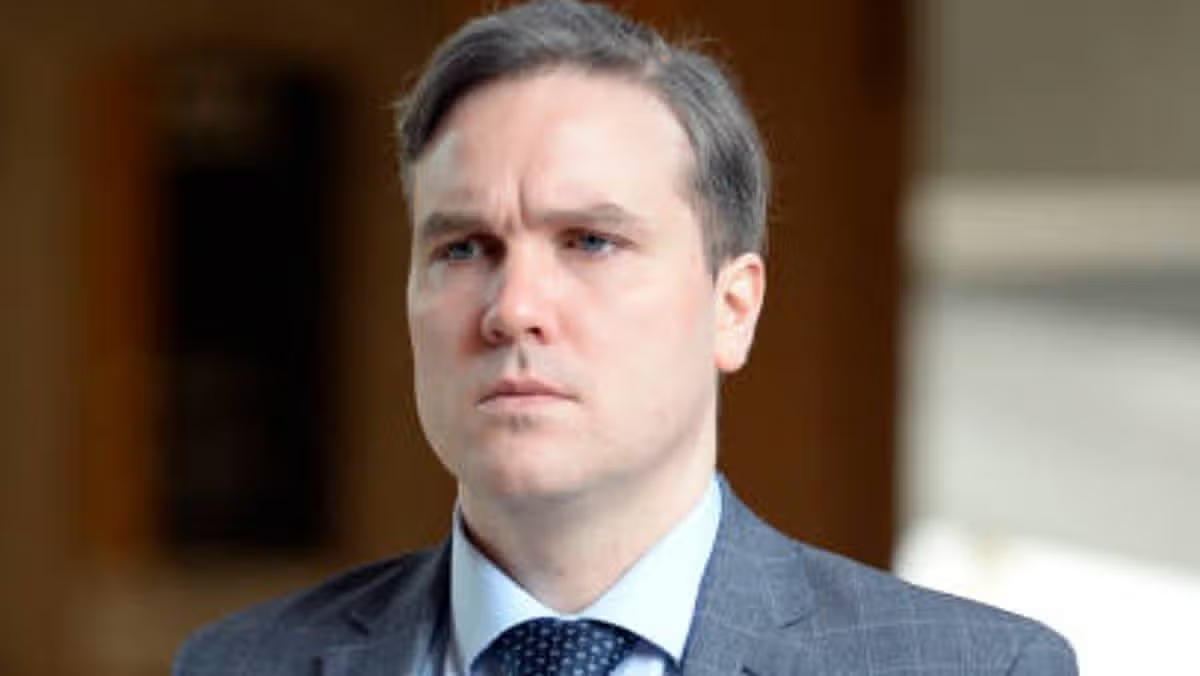
The SNP’s Business Minister Tom Arthur has set out proposals in a new policy paper. This includes plans for a Scottish visa, a rural visa and Scottish graduate visa to address the needs of different sectors.

Current immigration rules are reserved to Westminster and Arthur highlighted the UK Government’s closure of the adult social care visa route, saying it had created workforce shortages.

Advertisement

He said: “Mirroring a trend in many countries throughout the world, Scotland has an ageing population and areas where the population is falling.

“This makes immigration ever-more critical in ensuring we have working-age people to fill skills gaps, sustain public services, support communities and grow the economy.”

He continued: “A migration system designed around UK-wide averages, which is what we have now, cannot adequately respond to Scotland’s demographic and geographic circumstances.

“In the spirit of the Prime Minister’s public commitment to reset relationships with devolved governments, I have invited the UK Migration Minister to engage with me in constructive discussions to ensure that the immigration system is tailored to Scotland’s needs.”

Advertisement

Get more Daily Record exclusives by signing up for free to Google’s preferred sources. Click HERE.

Advertisement

Source link

Continue Reading
Click to comment

You must be logged in to post a comment Login

Leave a Reply

NewsBeat

Delivery driver killed after train crashes into van at Lancashire level crossing as passengers watch in horror

Published

on

Manchester Evening News

Sophie Cassidy was at the front of the train as she saw a van driver cross in front and collide with it

A young mum has told of the moment that she saw the train she was travelling on crash into a delivery van, killing the driver and leaving those on the train ‘screaming and crying’.

Advertisement

British Transport Police confirmed earlier today that the driver of a van died when his vehicle collided with a Northern Rail train at a level crossing in Burscough around 3pm.

A large emergency services presence arrived on the scene near Martin Lane and images showed the stationary train close to the wreckage of the van.

Click here to get the biggest stories straight to your inbox in our Daily Newsletter

The ECHO has now spoken to an eyewitness who was on the train and witnessed the horror up close. Young mum Sophie Cassidy was at the front of the train as it crashed into the van at the level crossing.

Advertisement

Sophie, 26, who had been attending the Southport Airshow with her one-year-old son and four-year-old daughter, was making her way back to her home in Burscough.

She said the man was driving a supermarket delivery van and she saw him approaching the level crossing from the window of the train as she was sat right at the front behind the driver’s cab with her children.

Sophie explained: “As the train was heading towards the level crossing, I was talking to my little boy and then out of the window I saw the driver of the delivery van heading towards the crossing. I couldn’t believe what I was seeing, I was thinking oh my god we are about to hit him. Surely he can see us?”

Describing the shocking moment the train ploughed into the van, she added: “When the train hit the van, it took out the whole front window of the train, if the driver hadn’t ducked out of the way he would have been killed. He was very lucky.

Advertisement

“The door that separates the driver from the carriage flew off as well. I was really worried we might derail with my kids. Everyone was screaming and crying. It was the most horrible thing I have ever experienced.”

The young mum shared images with the ECHO which showed the huge damage done to the front of the train, with the front window smashed in and the door hanging off. Debris can be seen all over the floor.

Sophie is adamant the driver of the train was not at fault in any way and said he “did everything in his power” to avoid hitting the van as it crossed the level crossing.

Advertisement

She said: “The train driver was actually amazing. After what he went through in the crash he came out to make sure the passengers were ok and offered us water and things. I hope he gets the recognition he deserves.”

She also praised the efforts of emergency workers who helped to treat some passengers for minor injuries and eventually were able to help people off the train after around two hours of waiting. She also said Northern train staff were “spot on.”

Speaking about the driver of the van, Sophie said tragically from her vantage point at the front of the train she was aware he could not have survived the crash. She said: “I was sat at the front when it happened, I knew he was going to die.”

A spokesperson for the British Transport Police said: “We were called to a level crossing in Burscough, West Lancashire following reports at 3:18pm today (29 August) that a train had struck a van. Paramedics and the fire service also attended.

Advertisement

“One person was in the van and sadly a man was pronounced dead at the scene. Two people who were passengers on the train received treatment for minor injuries. The incident is not being treated as suspicious.

“Enquiries are ongoing to establish the full circumstances of what happened, any witnesses who haven’t already spoken to police are asked to text BTP on 61016 quoting the reference 373 of 29 August.”

Source link

Advertisement
Continue Reading

NewsBeat

Why holding elections now may not be the best safeguard for Ukrainian democracy

Published

on

Why holding elections now may not be the best safeguard for Ukrainian democracy

A recent call by Ukraine’s former defence minister, Mykhailo Fedorov, for new national elections in Ukraine – which would be the first to take place in the country since 2019 – has sparked a renewed debate about whether it is possible to hold a legitimate vote in wartime.

Under normal circumstances, Ukraine’s parliamentary elections would have been held in October 2023. Presidential elections would have followed in March 2024. But the circumstances are, of course, far from normal.

Almost a fifth of Ukraine is occupied by Russian troops, millions of people are displaced and citizens across the country are subject to daily missile and drone attacks.

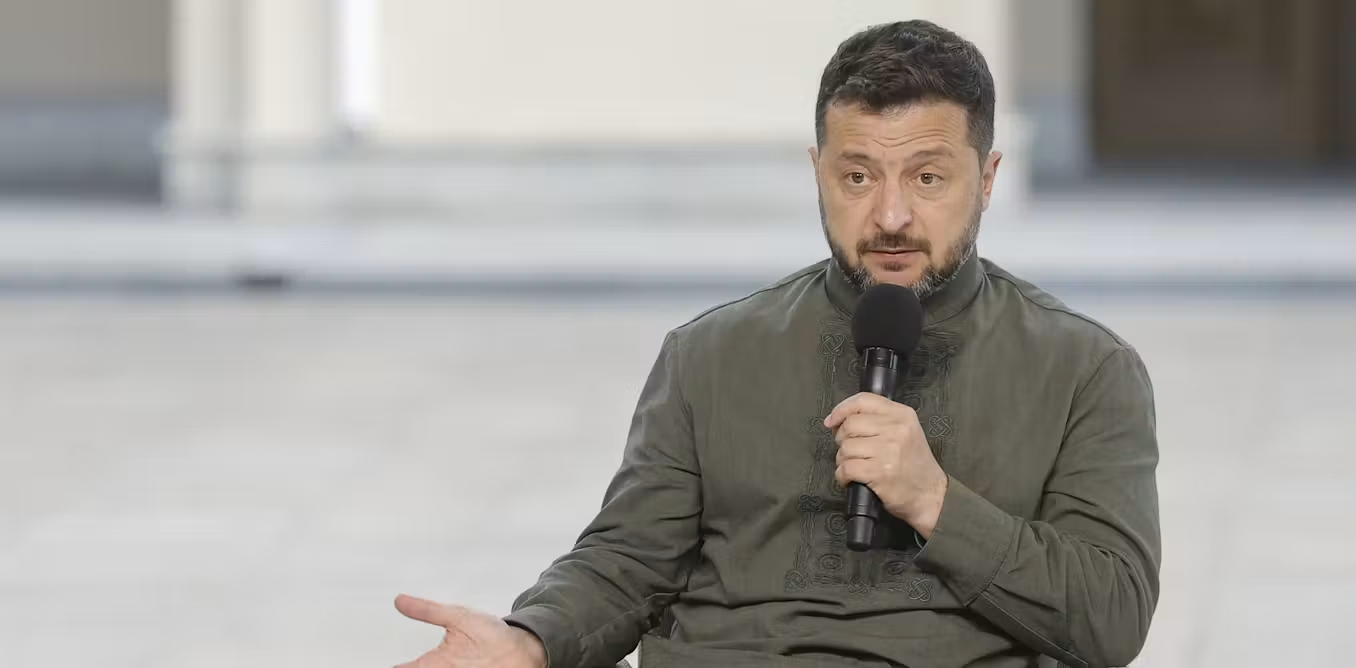
Fedorov’s argument is that Ukraine is a free European state fighting to defend democracy. It should not be the Russian president, Vladimir Putin, who decides when Ukrainians get to choose their leaders, he argues.

Advertisement

On the face of it, it seems a simple argument. What sets a democracy aside from an autocracy is that its leaders are genuinely accountable to the electorate and periodically face the voters in open, free and fair elections. But is it as simple as that?

Fedorov’s dismissal in July sparked protests in Kyiv and other Ukrainian cities.
Olivier Matthys / EPA

Fedorov’s argument has reignited a debate that has echoes of talking points routinely aired by Putin, who has questioned Ukrainian president Volodymyr Zelensky’s continued legitimacy. The US president, Donald Trump, has also claimed that Ukraine is “using war not to hold an election”.

But in international terms, it is in fact not unusual for elections to be postponed when a country is under attack. Postponing elections in emergency situations until it is possible to hold them with full integrity can sometimes be justified on democratic grounds. During the second world war, for example, Britain postponed its 1940 election until 1945, focusing instead on defeating the threat to democracy itself from Nazi Germany.

The Ukrainian constitution declares that the state’s most important task is to defend the country’s sovereignty and territorial indivisibility. According to Zelensky, this is precisely what would be endangered by holding elections now.

Advertisement

Should Ukraine hold elections?

The arguments against holding elections while the war is still ongoing are threefold.

First, elections would rest on shaky legal ground. Article 83 of Ukraine’s constitution automatically extends parliament’s term under martial law. Article 19(1) of the Law on the Legal Regime of Martial Law also prohibits presidential, parliamentary and local elections during wartime.

Any election held against these provisions would almost certainly be challenged as illegal by the losing side. Despite Putin and Trump’s insinuations, the mandates of Zelensky and the current parliament remain fully legal.

Second, as the Council of Europe noted in 2022, it is doubtful that Ukraine could currently hold elections that meet domestic and international democratic standards. This is not due to any lack of desire to do so, but due to the war itself.

Advertisement

Elections require functioning infrastructure, accurate voter rolls, clearly defined electorates and territorial boundaries, fair competition and genuine opportunities to vote and stand for election. These are hard to guarantee while under full-scale attack.

With millions internally displaced or abroad, and Ukrainians in the Russian-occupied regions unable to vote and in many cases stripped involuntarily of their Ukrainian citizenship by Russia, accurate voting lists would be hard to compile. Voting itself would also be challenging, as around a quarter of polling stations and nearby public buildings have been damaged.

Ukrainians living abroad may also struggle both to vote and to stand for election. Many military personnel would find this similarly difficult as they would not be able to leave the front line. These issues would need time to resolve fairly and proportionately.

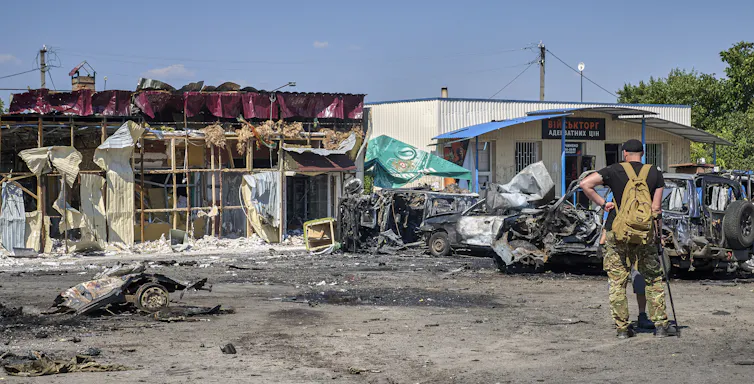
A man observing a building destroyed by a Russian missile strike.
Ukraine remains under Russian bombardment, posing a major logistical challenge to holding an election.
Sergey Kozlov / EPA

Third, holding an election would require Ukrainians to redirect political energy and economic and military resources away from the struggle for state survival to ensuring the security of the electoral process.

One of Russia’s war aims is the removal of the Ukrainian government from power. And it is unlikely to watch passively while an election unfolds. Russia continues to fire hundreds of missiles at Ukraine each day that could target polling places or campaign events. This makes it impossible to hold a genuinely open election campaign and ensure the safety of candidates and voters.

Advertisement

It is also highly likely that Russia would attempt to influence the process through disinformation, propaganda and tacit support of certain candidates – as it has done in other neighbouring countries.

Ahead of elections in 2025, Moldovan president Maia Sandu warned of a Russian-backed operation to interfere with the vote. This included recruiting orthodox priests to sway voters towards supporting Russia-aligned political parties, as well as extensive algorithm manipulation on TikTok. Moldova’s ruling pro-European Party of Action and Solidarity ultimately won the election.

It perhaps seems paradoxical, but Ukrainian democracy may be stronger in the meantime without elections. There has been a wide political agreement from all parts of the Ukrainian political spectrum since Fedorov made his remarks that the legitimacy of the government would not be strengthened if it was elected through elections deemed illegal under national law, incomplete in terms of the people enfranchised and potentially manipulated by outside forces.

Securing state sovereignty remains Ukraine’s first priority for the preservation of a democratic European future.

Advertisement

Source link

Continue Reading

NewsBeat

the secret of this pioneering series was its exploration of humanity, not aliens

Published

on

the secret of this pioneering series was its exploration of humanity, not aliens

When Star Trek first appeared on television screens 60 years ago, audiences expected science fiction to offer aliens, monsters and futuristic technology. What they encountered was something far more ambitious.

From its very first broadcast episode on September 8 1966, Star Trek established that its true subject was the exploration of humanity itself. For all its reputation as an action-packed space adventure, the franchise has endured because it repeatedly returned to a universal question: what does it mean to be human?

In that first episode, entitled The Man Trap, the alien antagonist survives by appearing to each observer as the person they most wish to see. Dr Leonard “Bones” McCoy meets a lost love from his past; others see figures shaped by memory, expectation, desire and longing.

The creature, soon dubbed the “salt vampire” by fans of the series, is not simply a shape-shifter. Its power lies in exploiting human perception. Rather than asking viewers to fear an alien with superior strength or advanced weaponry, the episode asks a more profound question: can we trust our experience of reality?

Advertisement

Preview of The Man Trap, the first Star Trek episode to air in September 1966. Video: RetroAlexander.

Sixty years on, this question looks remarkably prescient. Modern neuroscience increasingly suggests that perception is not a passive recording of the external world. According to theories of predictive processing, the brain continually generates expectations and compares them with incoming sensory information.

The philosopher Andy Clark has described the brain as a “prediction machine”. Neuroscientist Anil Seth argues that our experience of reality can be understood as a form of “controlled hallucination”, generated by the brain but constrained by evidence from the senses.

Long before such ideas were articulated, The Man Trap imagined a world in which people confront the same reality, but perceive it in profoundly different ways – based not only on what they see, but what they want to see.

Advertisement

This insight links the episode to a much older intellectual tradition. The ancient Greek philosopher Plato’s allegory of the cave imagined people mistaking shadows for reality, confusing appearance with truth.

The USS Enterprise crew’s first alien encounter offers a 20th-century variation on the same theme. They actively participate in their own deception because the creature reflects their hopes, memories and desires.

This helps explain why The Man Trap feels strikingly contemporary. In today’s world, shaped by algorithmically curated information, political polarisation and increasingly personalised media environments, disagreement is often less about opinions than competing versions of reality itself.

The nature of humanity

Star Trek’s memorable debut was not an isolated exploration of a philosophical problem. It was the beginning of a broader inquiry into the nature of humanity.

Advertisement

The Devil in the Dark (first aired March 1967) explores empathy and the challenge of understanding the unfamiliar. The apparently monstrous Horta is revealed to be an intelligent life-form protecting its offspring, forcing viewers to reconsider assumptions about difference and otherness.

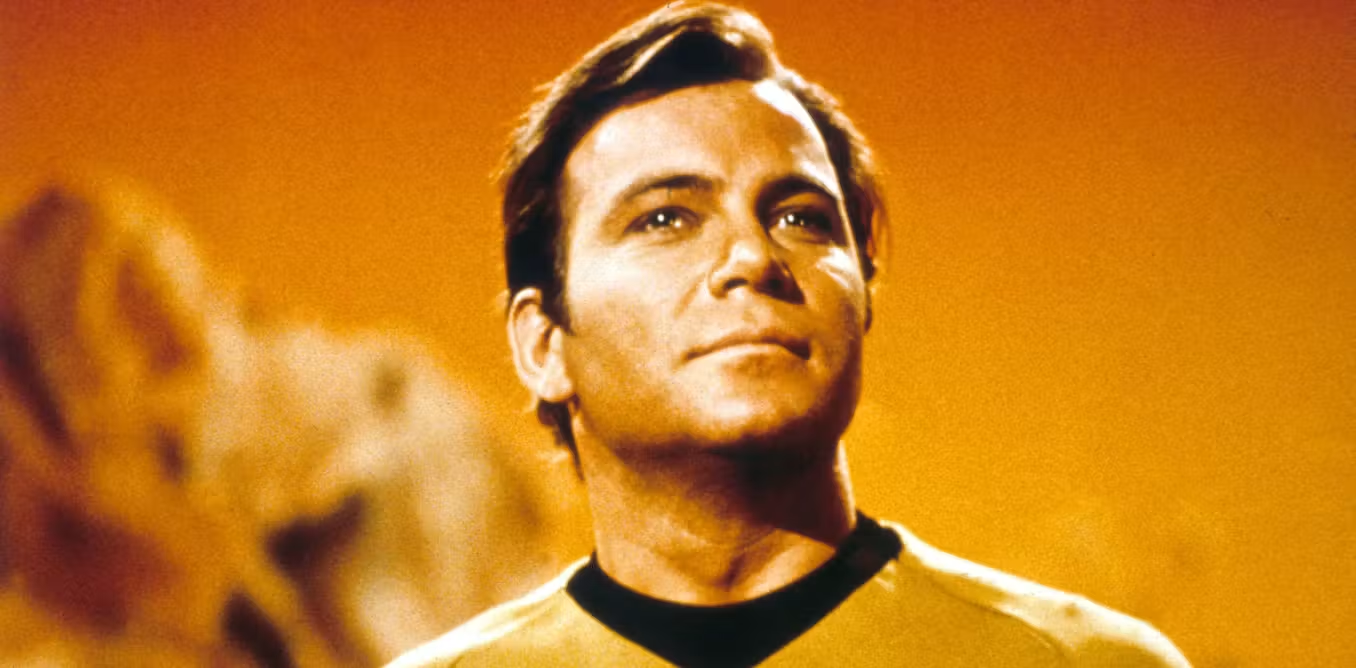
The Enemy Within (October 1966) shifts the inquiry inward, splitting Captain James T. Kirk into opposing aspects of his personality and challenging the assumption that human beings can divide their virtues from their vices.

The episode argues that the qualities that make Kirk an effective leader – courage, decisiveness and resolve – are inseparable from darker instincts such as aggression and desire. Rather than presenting humanity as a triumph over these impulses, the episode suggests that human identity itself depends upon their integration.

The City on the Edge of Forever (April 1967), regarded by many as the series’ masterpiece, shifts the focus to ethics. Kirk discovers that saving the woman he loves would alter history catastrophically, forcing him to choose between personal happiness and moral responsibility.

Advertisement

Together, these and many more of the 79 original Star Trek episodes form a remarkable investigation into human nature. The progression reveals a series less interested in strange new worlds than the human beings who encounter them.

The City On the Edge of Forever is regarded as one of the series’ finest episodes. Video: Robin Sellex.

Philosophical inquiry

While many science-fiction programmes have aged with their technologies, Star Trek has endured because its deepest questions remain unresolved. We still debate perception, identity, empathy, consciousness and moral responsibility, because they are permanent features of human existence.

At its best, Star Trek engaged science fiction as a form of philosophical inquiry. Alien civilisations became thought experiments about prejudice and empathy. Time travel became a vehicle for exploring ethics. Artificial intelligence became a means of questioning consciousness and identity. The future it imagined served as a laboratory for understanding ourselves.

Advertisement

The closing moments of The Man Trap illustrate this perfectly. Reflecting on the death of the salt vampire, Kirk recalls his conversation with the archaologist Robert Crater, who has long been working on the planet, about the fate of the American bison – driven to the brink of extinction by humans.

This comparison transforms what might have been a conventional monster story into something morally complex. The creature is dangerous yet is also the last of its kind. Is it merely a predator, or the victim of a larger tragedy?

The episode, like many others, offers no simple answer. Crater views the creature from a perspective of compassion and preservation. Kirk simply sees an immediate threat to his crew. Both are responding to the same reality, yet they arrive at different conclusions.

The original Star Trek’s lasting legacy is not technological prophecy, but a sustained exploration of what it means to be human. Its enduring achievement lies not in predicting mobile phones, iPads or video calls, but in recognising that the most fascinating and vexing mystery remains humanity itself.

Advertisement

The final frontier, it suggests, lies not among the stars but within ourselves.

Source link

Advertisement
Continue Reading

NewsBeat

James Martin reveals surprising twist on KFC-style chicken

Published

on

James Martin reveals surprising twist on KFC-style chicken

The celebrity chef took to the stage three times today (August 29), demonstrating his culinary skills while keeping audiences entertained with plenty of jokes along the way.

One of the dishes saw James recreate the fast-food favourite using his own unusual addition – cornflakes.

James spoke about KFC’s famously guarded blend of herbs and spices, telling the audience he had found a version of the recipe online after it was reportedly revealed by a relative of the chain’s founder, Colonel Harland Sanders.

He used the seasoning to create his own version of the chicken but swapped a conventional breadcrumb coating for crushed cornflakes to give it a crispy finish.

Advertisement

James also made homemade mayonnaise to serve alongside the chicken, demonstrating how to make it from scratch for the audience.

Another dish he managed to demonstrate in just under 35 minutes was a French onion tart, made using puff pastry and chopped onions cooked in butter before being finished with crème fraîche.

The fast-paced cooking was mixed with stories, tips and jokes from James, who has become one of the festival’s most familiar celebrity faces.

Reflecting on his long association with the event, he told the crowd: “We’re back here, 16 years I have been doing this.”

Advertisement

“It’s great to be here.”

This year’s appearance also marked a change from his usual festival routine.

James has traditionally appeared on bank holiday Monday but was instead on stage on Saturday this year – something he was more than happy to joke about.

He said: “It’s so nice to have the bank holiday off, it will be the first one in ages.

Advertisement

“They got me in today instead – and after last night, now I know why, because I was cooking hundreds of starters for last night’s gala dinner!”

His appearances followed a busy Friday evening at the festival, when he was among the chefs cooking for the gala dinner.

The Yorkshire-born chef, who now lives in Hampshire, also found himself back in more familiar northern weather.

He joked that he had not seen rain for four months at home, only to arrive in Bolton as the rain poured down outside.

Advertisement

Speaking to The Bolton News ahead of his demonstrations, James praised the event and explained why he has continued returning to Bolton over the years.

He said: “It’s the biggest and the best.”

Bolton Food and Drink Festival continues until Monday, August 31, with food and drink stalls, live entertainment and demonstrations taking place across the town centre.

Advertisement

Source link

Continue Reading

NewsBeat

Mikaela Mayer v Chantelle Cameron: Brit wins to become unified light-middleweight champion

Published

on

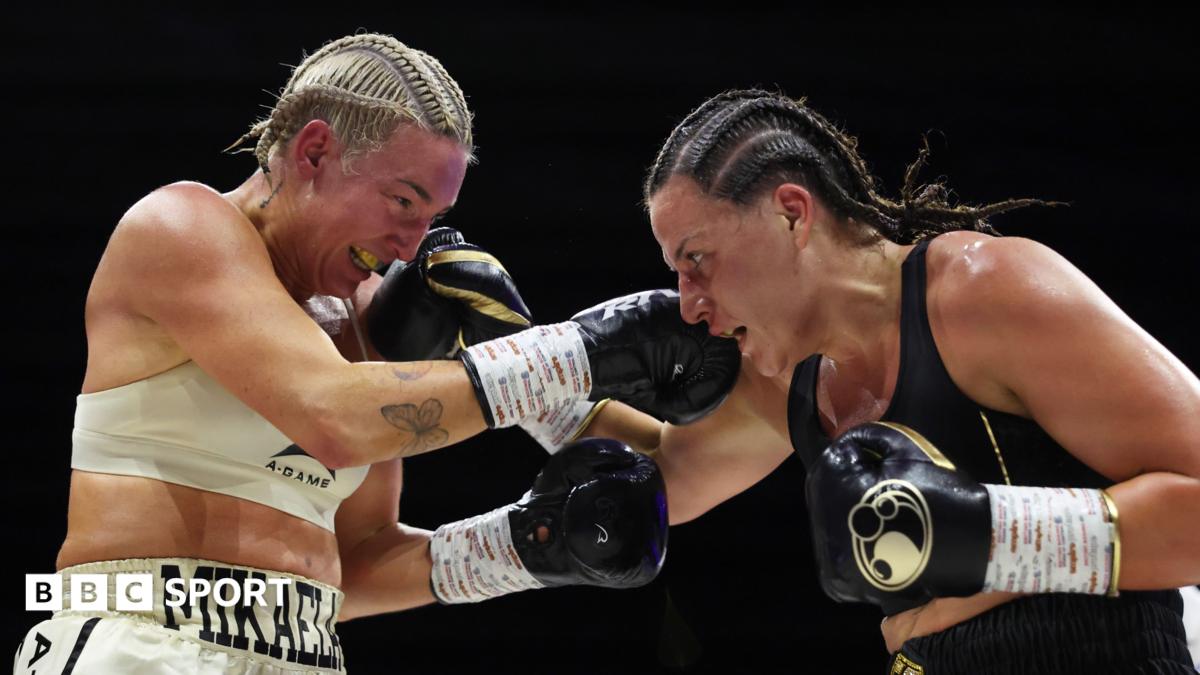
Mikaela Mayer (left) and Chantelle Cameron

Chantelle Cameron produced one of the finest displays of her career to beat Mikaela Mayer and add the WBA and WBC light middleweight titles to her WBO belt.

An engrossing encounter was narrowly won by the British fighter by unanimous decision – 97-93 on two scorecards and 96-94 on the other.

American Mayer disagreed with the decision, claiming she “outboxed” Cameron – leading to an angry exchange of words in the ring.

The possibility of a rematch was also floated, with Mayer also suggesting Cameron had benefited from home advantage – to the champion’s chagrin, as she said “talk is cheap”.

Advertisement

It means Cameron remains unbeaten since her second fight with Katie Taylor in 2023, and with 23 victories in 24 professional encounters.

And this was one of her best displays. These fighters were evenly matched in every metric – from punch rate to height and weight, even hairstyle.

But Cameron won out thanks to her unrelenting pressure, which never allowed the usually adaptable Mayer to figure out a winning gameplan.

Mayer was the more imposing figure early on, but Cameron played counterpuncher until she could get onto the front foot.

Advertisement

Cameron forced Mayer against the ropes in round four, and again at the start of the fifth. Increasingly confident to take the initiative, she was roared on by a partisan but disappointingly small home crowd.

Mayer was unable to get in behind her jab for long periods and was bleeding and breathing heavily by round six.

The home favourite was cut in the final rounds but pushed through and was lifted shoulder high by her team before her biggest win since beating Taylor in Dublin three years ago was announced.

For three-weight world champion Mayer, this is the third defeat of her 25-fight career and costs her the WBA and WBC belts, which Cameron now puts with her WBO title.

Advertisement

Source link

Continue Reading

NewsBeat

Andy Burnham the social chameleon? Why a leader with different personas can still be authentic

Published

on

Andy Burnham the social chameleon? Why a leader with different personas can still be authentic

Shortly before entering Downing Street, Andy Burnham made a promise that appeared to be reassuring in its simplicity. “I won’t change,” he said. “I have a style. It’s my style.”

Burnham’s political appeal partly rests on the impression that there is little distance between the politician and the person. His black T-shirt and jacket, attachment to Everton football club and the band New Order, ease with crowds and habit of speaking without notes all reinforce a recognisable persona. After the more reserved Keir Starmer, Burnham’s informality has been part of the attraction.


À lire aussi :
No lectern and the promise of a ‘new model’ – what we can learn from Andy Burnham’s speech


Burnham has also been described as a people pleaser, raising questions about whether he would be willing to disappoint or anger people when a decision requires it. Conservative leader Kemi Badenoch used the same label in questioning his fitness to make difficult choices.

Advertisement

Yet the description is difficult to reconcile with his record. His campaigning for the Hillsborough families suggests a politician prepared to pursue difficult causes. His first instruction as prime minister launched a drive to end rough sleeping, and he has pledged to spend “political capital” on social care.

Social care in particular raises unavoidable questions about who should bear the cost. Choosing it as an early priority sits uneasily with the idea that Burnham is mainly concerned with approval.

The problem with the label is that it frames the leadership test too narrowly. The sharper question is how Burnham’s instincts will operate in government. A leader driven to correct what he feels is wrong may create energy and direction. But a prime minister must also decide which problems to address first, how much political capital each can consume, and what must wait.

His promise therefore prompts a larger leadership concern. Does staying authentic require him to behave as he always has?

Advertisement

Time to start disappointing people?

A recognisable style can help to build trust, while abrupt changes may invite accusations of opportunism. Yet governing creates demands that do not exist when you’re campaigning, in opposition or a regional leader.

As mayor of Greater Manchester, Burnham built much of his reputation by not being part of the political centre. He could press Westminster for more money, criticise national policy and speak for a region that felt overlooked. In Downing Street, he is at the centre. He must now arbitrate among competing claims, accept responsibility for trade-offs and disappoint groups whose demands cannot all be met.

The identity that has served him well is that of the campaigner who identifies a neglected problem, mobilises attention and presses for action. Campaigning provides immediate and visible feedback through public response, media attention and a clear sense of momentum. In government, the results are slower and dispersed across institutions. Often they only become apparent several years later.

Under pressure, returning to campaign mode may therefore feel familiar and productive for Burnham. But repeated appeals to urgency or a preoccupation with worthy causes could produce too many initiatives competing for limited capacity.

Advertisement

The prime minister must sometimes be the approachable listener – it appears that Burnham already knows how to do this. At other times, he must slow down an initiative, defend an unpopular compromise, create distance, absorb criticism or tell supporters that a worthy proposal cannot yet be funded. The politician who prospered by challenging authority now must exercise it.

Psychologists use the term self-monitoring to describe the capacity to notice social and situational cues and adjust behaviour accordingly. It has sometimes implied a lack of authenticity. Someone who self-monitors becomes a social chameleon, changing colours to suit the audience.

But the evidence is more complicated; self-monitoring is different to seeking approval. It involves recognising what a situation requires and adjusting accordingly. Burnham can read an audience, but the test in Downing Street is whether he can respond as readily to less visible cues – things like capacity issues, competing claims for funds and the need to achieve things in a short space of time.

A better description of what leaders need is repertoire. This accords with the idea of multiple selves. People behave differently across roles and relationships without assuming that one version is false or inauthentic. A leader may be decisive in a crisis, curious in discussion, supportive when a colleague is struggling and demanding when standards slip. Each can be a genuine capacity of the same person, with context determining which should come to the fore.

Advertisement

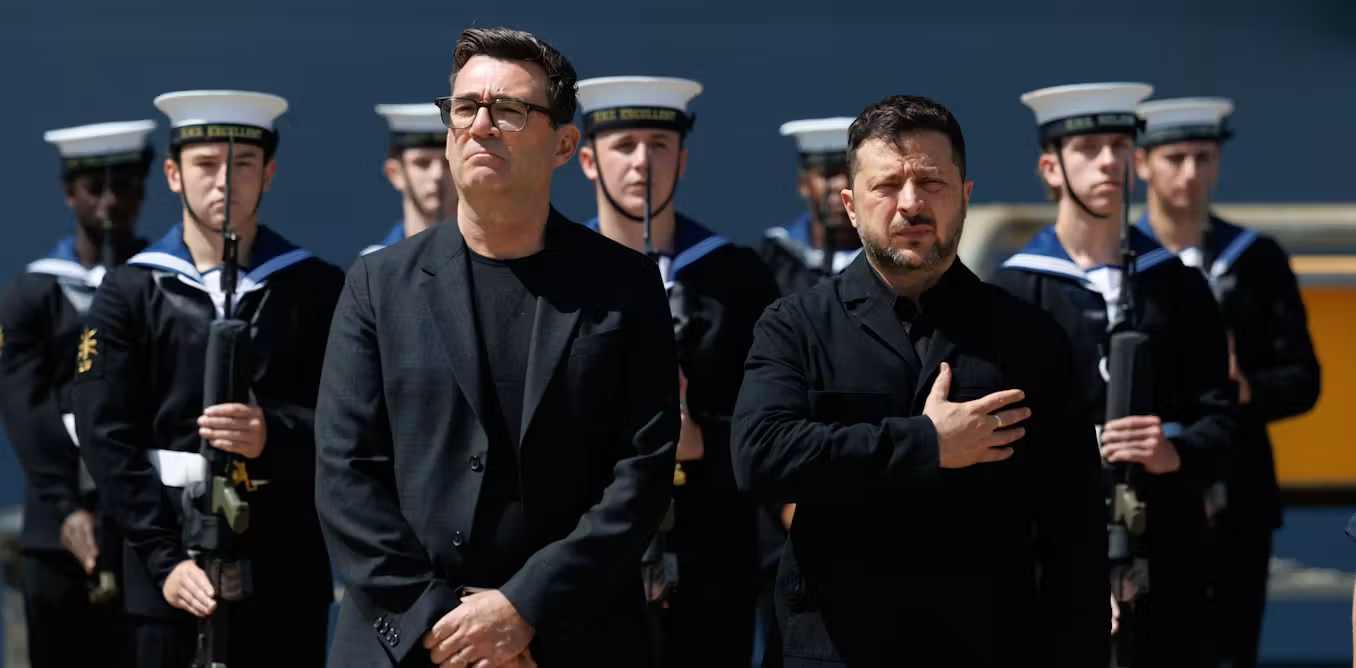
Burnham’s first overseas trip, to Ukraine, expanded his repertoire.
EPA/STRINGER

An indication that Burnham’s repertoire is wider than he has perhaps been given credit for is the way he showed he can adopt a more statesmanlike role in his first overseas trip to Ukraine in August 2026. The evidence is in his formal attire, chairing the “coalition of the willing” meeting, and firm tone in declaring continuing UK support for Ukraine.

At the same time, he rebuffed Russian criticism that the UK was adding fuel to the fire with the no-nonsense response: “Who started the fire? That’s the question isn’t it?” There will be much tougher tests, of course.

A prime minister needs to remain close to public sentiment while creating distance from it, press for change while pacing reform, and advocate a cause while arbitrating among competing claims. This implies Burnham will need to bring forward a less visible part of his repertoire, the patient institutional leader who delegates, sets priorities and accepts that lasting reform rarely moves at campaign speed.

Advertisement

We already know that he can connect with people, recognise their frustrations and draw attention to causes he believes deserve action. What remains unclear is whether he can convert those instincts into a coherent and sustainable programme of government. In that sense, Burnham’s authenticity will be tested by whether he can expand his leadership and change his style when necessary without losing the moral and political identity that brought him to office.

Source link

Advertisement
Continue Reading

NewsBeat

Arthur Fery beaten in Winston-Salem Open final by Ignacio Buse

Published

on

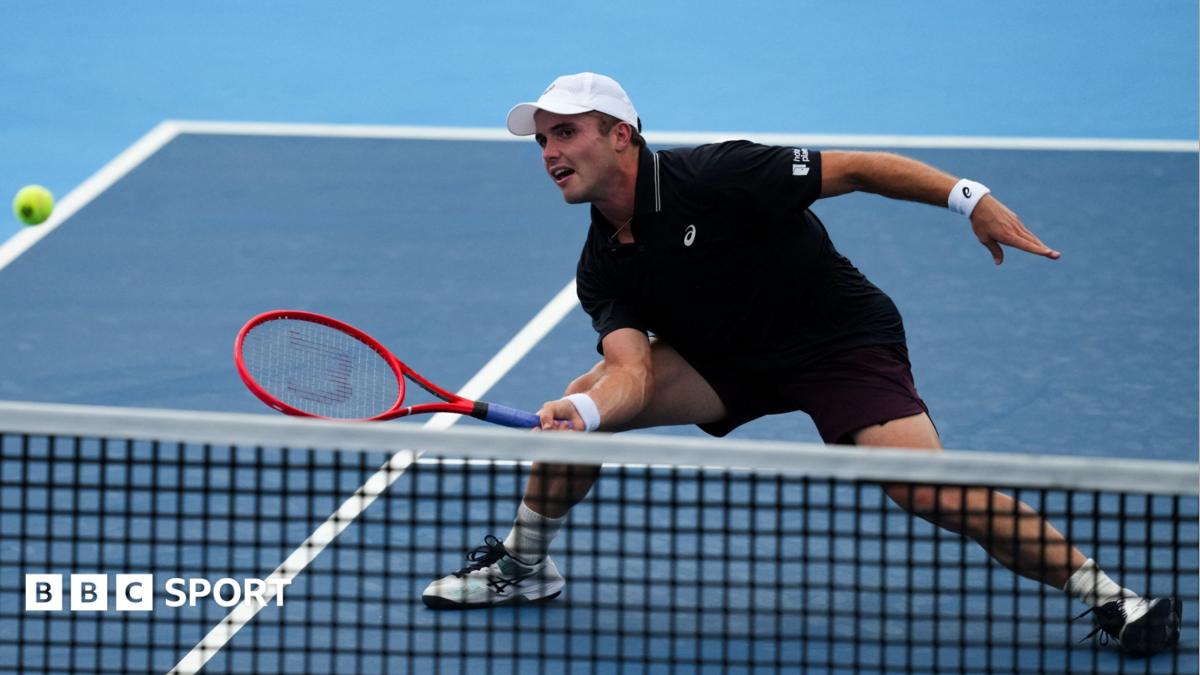
Arthur Fery in action

Arthur Fery missed out on his first ATP Tour title with a straight-set defeat by Ignacio Buse in the final of the Winston-Salem Open.

Fery, who was the talk of Wimbledon as he reached the semi-finals of his home major in July, lost 6-3 6-2 to Peru’s Buse.

The 24-year-old was the first Briton to reach the final of the ATP 250 tournament in North Carolina and will rise to 33 in the world rankings as a result – overtaking Cameron Norrie as British number one.

Only eight weeks ago, before his astonishing run to the last four at the All England Club, he was ranked outside the top 100.

Advertisement

Little could separate Fery and Buse in the early stages of their match on Saturday, before the Peruvian took control with a break to love for a 5-3 lead.

Fery quickly fell further behind in the second set as Buse opened up a double break cushion with no reply, and while he pulled back one of those breaks, it proved to no avail as his opponent reeled off three straight games to seal the win.

For 22-year-old Buse, victory makes him the youngest ever winner of Winston-Salem and marks a second career title after he beat American Tommy Paul at the ATP 500 event in Hamburg in May.

With little time to reflect on his Winston-Salem run, Fery will now head to New York for the US Open, which starts on Sunday.

Advertisement

Set to play at Flushing Meadows for the first time, he faces a tough opening tie against Italian 13th seed Lorenzo Musetti.

Fery is one of nine British players set to feature in the main draws at the US Open, the final Grand Slam of the season.

Joining him in the men’s draw are Norrie and Jan Choinski, qualifiers Toby Samuel and Harry Wendelken, and lucky loser Jacob Fearnley.

Katie Boulter is joined by qualifiers Fran Jones and Harriet Dart in the women’s draw, but both Jack Draper and Emma Raducanu are missing through injury.

Advertisement

Source link

Continue Reading

NewsBeat

Thousands of mourning Norwegians lay seas of flowers outside Oslo’s Royal Palace after Europe’s oldest monarch King Harald died aged 89

Published

on

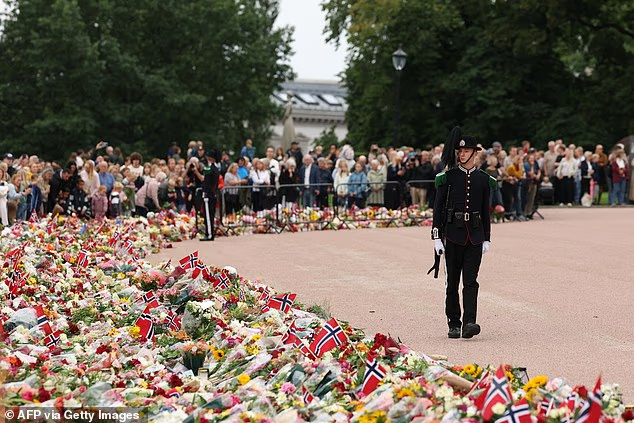
Thousands of mourning Norwegians laid hordes of flowers outside the royal palace in Oslo as they bid farewell to Europe's oldest monarch

Thousands of mourning Norwegians laid hordes of flowers outside the royal palace in Oslo as they bid farewell to Europe’s oldest monarch, who died earlier this week. 

Throngs of well-wishers stood outside the palace, where King Harald lies in state, as they remembered his sense of inclusiveness and tolerance. 

Late on Friday, droves of mourners also lined the streets of Norway’s capital city in the pouring rain, as they watched the 89-year-old’s funeral cortege travel from Oslo University Hospital to the palace. 

Before his death, King Charles‘s cousin was being treated for haemolytic anaemia, a disorder that causes red blood cells to be destroyed at an abnormally fast rate. 

Advertisement

The palace said his health had ‘deteriorated’ after he contracted an infection, with members of the Norwegian Royal Family rushing to his bedside on Thursday.

Flags were flying at half-mast throughout the country, as portraits of the late king in gala uniform were displayed everywhere, from metro stations to public buildings. 

As Norway grieved King Harald, who became Europe’s oldest-reigning monarch after the death of Queen Elizabeth II in 2022, attention soon turned to the line of succession.

Yesterday, his son – now King Haakon VIII – was announced as the new monarch with a portrait of the former Crown Prince.

Advertisement

Meanwhile today, the main avenue in central Oslo was packed with Norwegians clutching flowers, handwritten cards, drawings and small national flags.  

Thousands of mourning Norwegians laid hordes of flowers outside the royal palace in Oslo as they bid farewell to Europe’s oldest monarch

A woman and a child pay their respects to the late King Harald outside Royal Palace in Oslo on August 29, 2026

A woman and a child pay their respects to the late King Harald outside Royal Palace in Oslo on August 29, 2026

Advertisement

King Harald of Norway, cousin of King Charles III, has died at the age of 89 after a brief stay in hospital

King Harald and Queen Sonja posing at the Royal Palace after their wedding ceremony in August 1968

King Harald and Queen Sonja posing at the Royal Palace after their wedding ceremony in August 1968

On what should have been the 58th wedding anniversary of Harald and Queen Sonja, who survives him, they praised the late king’s spirit of inclusiveness.

‘He meant a lot to us immigrants … We felt really very included. So, thanks to him, I feel so Norwegian,’ Bulgarian teacher, Veselina Vitanova, 43, said.

Advertisement

Another attendee spoke of his 2016 viral speech, where he said: ‘Norwegians are girls who love girls, boys who love boys and girls and boys who love each other.’

‘It embodies the way he felt about people and the way he wanted us Norwegians to feel about each other,’ Mari Eidsvaag, 32, said.

Wearing a t-shirt emblazoned with the same very sentence, she added: I think it’s a very important statement, especially these days.’

It comes as the new monarch was announced alongside a photo of Haakon, 53, the former Crown Prince, who is now officially His Majesty King Haakon VIII.

Advertisement

He is set to address the nation at 7pm local time today, and on Tuesday, he will take the oath in front of Parliament where he will swear to defend Norway’s constitution and laws. 

King Haakon shares two children with his wife Mette-Marit, 22-year-old Princess Ingrid Alexandra and 20-year-old Prince Sverre Magnus.

With Ingrid now second in line to the throne, she would be the first female monarch in Norway for more than 600 years if she were to become queen – the last being Queen Margaret I, who died in 1412.

Mette-Marit, 53, faced intense scrutiny following the release of the Epstein Files, which revealed she stayed at paedophile Jeffrey Epstein’s Palm Beach residence in 2013 – after he was convicted for soliciting sex from girls as young as 14.

Advertisement

One email released suggested she was still in contact with the billionaire financier just months before his death.

The new queen claimed this year that she had been misled by the late sex offender as she sought to contain the fallout.

Flowers and children's drawing lay outside the Royal Palace square as mourners gather to pay tribute

Flowers and children’s drawing lay outside the Royal Palace square as mourners gather to pay tribute

Flags were flying at half-mast throughout the country, as portraits of the late king in gala uniform were displayed everywhere, from metro stations to public buildings

Flags were flying at half-mast throughout the country, as portraits of the late king in gala uniform were displayed everywhere, from metro stations to public buildings

Advertisement
On what should have been the 58th wedding anniversary of Harald and Queen Sonja, who survives him, they praised the late king's spirit of inclusiveness

On what should have been the 58th wedding anniversary of Harald and Queen Sonja, who survives him, they praised the late king’s spirit of inclusiveness

'He meant a lot to us immigrants ... We felt really very included. So, thanks to him, I feel so Norwegian,' said Veselina Vitanova, a teacher from Bulgaria

‘He meant a lot to us immigrants … We felt really very included. So, thanks to him, I feel so Norwegian,’ said Veselina Vitanova, a teacher from Bulgaria

King Haakon VIII has taken the throne in Norway following the death of Harald V at 89

King Haakon VIII has taken the throne in Norway following the death of Harald V at 89

Fresh scandal also came in June when Mette-Marit’s son, Marius Borg Høiby, was convicted on two counts of rape and jailed for four years following a six-week trial that laid bare allegations of violence, drug abuse and sexual misconduct.

Advertisement

An Oslo court also found him guilty of assaulting his former girlfriend, Nora Haukland, issuing threats and committing traffic offences, although he was acquitted of two other rape charges.

The 29-year-old had been charged with sexually assaulting four women who were asleep or otherwise unable to resist between 2018 and 2024.

The conviction marked a fall for Høiby, who grew up in the public eye after his mother married the then Crown Prince Haakon in 2001 when he was just four.

Although he does not hold a royal title or carry out official duties, he has long been closely associated with the Norwegian Royal Family.

Advertisement

On Friday, the Norwegian Royal Family announced in a statement that Europe’s oldest-reigning monarch had passed away.

‘It is with deep grief that we announce that His Majesty King Harald has passed away,’ Norway’s Royal Court said.

‘King Harald died peacefully at Oslo University Hospital, Rikshospitalet, Friday, August 28 at 6.35am.’

Mette-Marit (pictured) has faced increased scrutiny following the release of the Epstein Files, which revealed she stayed at Jeffrey Epstein's Palm Beach residence in 2013 - after he was convicted for soliciting sex from girls as young as 14

Mette-Marit (pictured) has faced increased scrutiny following the release of the Epstein Files, which revealed she stayed at Jeffrey Epstein’s Palm Beach residence in 2013 – after he was convicted for soliciting sex from girls as young as 14

Advertisement
In June, Mette-Marit's son, Marius Borg Høiby (pictured), was convicted on two counts of rape and jailed for four years

In June, Mette-Marit’s son, Marius Borg Høiby (pictured), was convicted on two counts of rape and jailed for four years 

On Friday, King Charles said he had extended his ‘deepest and most heartfelt condolences’ to the Norwegian Royal Family following the death of his ‘dear cousin’.

The pair were second cousins once removed, sharing great-great-grandparents Edward VII and Alexandra of Denmark.

‘As Norway mourns the loss of so towering a figure, my whole family join in remembering a much-loved kinsman and friend whose kindness, compassion and deep sense of duty echoed from across the sea and across the decades,’ King Charles III said.

Advertisement

‘The Queen and I extend our deepest and most heartfelt condolences to Queen Sonja and all her family, as Britain shares in Norway’s grief at this time of such heartbreaking loss.’

Born on February 21, 1937, Harald was the third child and only son of King Olav V of Norway and Princess Martha of Sweden.

He is a great-grandson of Edward VII and his godparents included Queen Mary and her son George VI (grandmother and father respectively of the late Queen Elizabeth).

Source link

Advertisement
Continue Reading

NewsBeat

Fears for communities near the great Colorado River as drought means future is uncertain

Published

on

Fears for communities near the great Colorado River as drought means future is uncertain

Located on the outskirts of Phoenix, a small town hugely reliant on the Colorado River has restricted development, reopened disused wells and negotiated new water agreements.

Yet Cave Creek Mayor Robert Morris fears these efforts will prove insufficient to sustain the desert enclave of roughly 5,000 residents long into the future. Furthermore, a recent federal initiative intended to tackle the worsening crisis across the river basin will offer no help.

Cave Creek draws almost all its supply from the river, which provides water to 40 million people across the US West but has been shrinking due to climate change, demand and excessive use. The town was compelled to reduce consumption this year and stands to lose even more under the new federal proposal.

Morris likened the situation to planning for a meteor strike.

Advertisement

“You can see it coming, but you can’t get out of the way and you don’t know what the damage is going to be,” he said.

A person stands at an overlook near the Wahweap Marina on Lake Powell at the Glen Canyon National Recreation Area
A person stands at an overlook near the Wahweap Marina on Lake Powell at the Glen Canyon National Recreation Area (Copyright 2026 The Associated Press. All rights reserved.)

The uncertainty stretches across seven U.S. states, tribal nations and Mexico. Farmers are deciding which crops are worth the investment. Phoenix could lose some municipal and industrial water for the first time and turn to backup supplies. And residents could face even more costly water.

Nevada raised the stakes this week by suing the Interior Department and the U.S. Bureau of Reclamation, saying basic needs in the Las Vegas region will go unmet if the area has to absorb planned reductions of up to 70% of its Colorado River water in the next decade.

The bureau said Thursday it does not comment on litigation.

“The uncertainty is going to continue to build in the wrong direction,” said Tom Buschatzke, director of the Arizona Department of Water Resources.

Advertisement

Western reservoirs see record lows

In the U.S. West, water is stored primarily in reservoirs, aquifers and snowpacks. But a record snow drought means there’s far less water to recharge those sources.

The two largest reservoirs in the country serve as barometers of health for the Colorado River system: Lake Mead and Lake Powell. Both hit record lows this month.

Eight other reservoirs operated by the Bureau of Reclamation recently recorded the lowest levels in at least the last 30 years. Among them is Elephant Butte Lake in New Mexico that’s critical for supplying water for crops in southern New Mexico, Texas and Mexico. The Green Mountain Reservoir serves the western part of Colorado, and the Guernsey Reservoir in Wyoming funnels water to farmers in the eastern part of the state and western Nebraska.

Advertisement

Under the Bureau of Reclamation’s plan, California, Nevada and Arizona will collectively reduce water use by 1.25 million acre-feet (about 1.54 billion cubic meters) — enough to fill over 600,000 Olympic-sized swimming pools — annually in the next two years, with the possibility of larger cuts depending on conditions. Colorado, Utah, Wyoming and New Mexico are not required to make cuts for now but could voluntarily reduce water.

While El Niño could bring intense moisture to the northern Rockies and the Southwest in the coming months, it won’t erase decades of drought.

Tom Brundy looks over his field that is being prepared for planting near Calexico, California
Tom Brundy looks over his field that is being prepared for planting near Calexico, California (Copyright 2023 The Associated Press. All rights reserved)

“Drought is a slow-moving phenomena and it can take some time to come into it and also come out of it,” said David Mocko, senior research scientist who authored a recent U.S. Drought Monitor map.

Farmers are reluctant to plant

John Boelts grows vegetables, melons, durum wheat and other crops in Yuma, Arizona — a region that produces about 90% of leafy greens eaten in North America during the winter.

Advertisement

Farmers there have high-priority rights and may avoid cuts to their Colorado River supply over the next two years but, Boelts said, the reprieve isn’t enough to make longer-term plans. That makes farmers reluctant to plant new acreage.

Citrus, date and other orchard crops that thrive in the region take years to become commercially productive, he said.

“There’s no food that we grow in a hurry,” said Boelts, the Arizona Farm Bureau president. “Beef takes years to produce. The lettuce you eat today? A farmer was working on how they would grow that crop six plus months ago.”

Ray Martinez grows alfalfa on a reservation that’s home to the Colorado River Indian Tribes. The tribe holds some of the river’s oldest rights, and while its Arizona allocation is huge, an old irrigation system and the lack of infrastructure have kept much of the water out of reach.

Advertisement

Martinez and the water department are concerned about having enough water to finish this growing season. He has left some fields unplanted for years to help prop up Lake Mead. If the reservoir keeps dropping, he said, surface water coming to him and neighboring farms will be further limited.

“Unfortunately, Mother Nature has its own way of doing things, and we have no control of that,” he added.

Source link

Advertisement
Continue Reading

NewsBeat

North Carolina opens Bill Belichick’s second season with 15-10 win over TCU in Ireland

Published

on

North Carolina opens Bill Belichick's second season with 15-10 win over TCU in Ireland

DUBLIN (AP) — New North Carolina quarterback Billy Edwards Jr. threw for 232 yards, Aeron Burrell kicked two field goals and the Tar Heels opened coach Bill Belichick’s second season with a 15-10 win over TCU on a rainy Saturday in Ireland for the Aer Lingus Classic.

TCU didn’t score again after going up 10-3 on its first two drives. The Horned Frogs got the ball eight more times, and were stopped on fourth-and-short deep in Tar Heels territory on their last two drives.

The 74-year-old Belichick, who won six Super Bowls coaching the New England Patriots, was 4-8 in his college debut with the Tar Heels last year. That season began with a 48-14 home loss to TCU in prime time on Labor Day.

“I’m just happy for the players. They’ve worked really hard,” Belichick said. “To have positive results back up that hard work, reinforces it. I think they’ve been believing in what we’re doing, but I think this just gives everybody a little bit more belief and we’ve just got to keep building.”

Advertisement

The Tar Heels ran out the final 4:05 after new TCU quarterback Jaden Craig threw an incompletion when rolling left on fourth-and-2 from the 10, when the Harvard transfer may have been able to run for a first down. Craig finished 20-of-32 passing for 175 yards.

Jeremy Payne, who ran for 142 yards, was stuffed on fourth-and-1 from the 5 on TCU’s previous drive.

“Looking back now obviously, I wish we had kicked the two field goals, but at the time, it makes sense to try,” TCU coach Sonny Dykes said. “When you’re not moving the football, you’ve got to try to get the ball in the end zone.”

After Payne was stopped, the Frogs got the ball for the last time after North Carolina had a 13-play drive that ended with Burrell missing a 42-yard field goal attempt.

Advertisement

Payne had a 48-yard run on TCU’s opening drive and the Frogs had 111 yards on the ground by halftime. They had only 26 after halftime.

“Once we kind of got settled down a little bit on the outside runs … we kind of forced him to cut back and those guys did a good job inside,” Belichick said about his defensive front. “They hit the quarterback, they didn’t really let him step up in the pocket and throw much.”

Advertisement

North Carolina last season never had a halftime lead against a Power Four opponent, but went ahead 12-10 on a safety with 1:49 left in the first half of the first major college football game this season. TCU punter John Hoyet Chance kicked the ball out of the back of the end zone after the snap sailed over his head.

Edwards, a transfer from Wisconsin, completed 16 of 28 passes. Jordan Shipp had five catches for 71 yards and Jaylen McGill had the Tar Heels’ only TD, on a 9-yard run in the first quarter after they had converted a fourth-and-7.

Heels strong on defensive front

Burrell’s second field goal, a 28-yarder that made it 15-10 early in the second half, was set up by Melkart Abou Jaoude’s blindside sack of Craig that forced a fumble recovered by Jaylen Harvey at the TCU 31. Abou Jaoude had 10 1/2 sacks last season.

Xavier Lewis had 4 1/2 tackles for loss with two sacks.

Advertisement

Big game for Small

TCU’s only touchdown was set up by Ed Small’s 33-yard punt return to the UNC 25, then he had a 13-yard catch. Jon Denman scored on a 2-yard run for a 10-3 lead with four minutes left in the first quarter. Small had nine catches for 65 yards.

The takeaway

North Carolina had 10 points and 141 total yards in the first quarter with new offensive coordinator Bobby Petrino. The Tar Heels scored 10 points in the first quarter only once last year but never had more yards. They finished with 322 total yards.

TCU had scored at least 30 points in its last 10 season openers, which was the longest active FBS streak.

Up next

Both teams have an open date before their home openers Sept. 12. North Carolina hosts East Tennessee State, and TCU plays Grambling State.

Advertisement

___

Sign up for Top 25 poll alerts here. Visit the Top 25 here and see AP’s full college football coverage here.

Advertisement

Source link

Continue Reading

Trending

Copyright © 2025