



Connect with us

Business

Health Care Roundup: Market Talk

Published

on

Health Care Roundup: Market Talk

The latest Market Talks covering the Health Care sector. Published exclusively on Dow Jones Newswires at 4:20 ET, 12:20 ET and 16:50 ET.

0817 GMT – Novartis’s latest clinical-trial failure suggests the company might need more dealmaking to deliver on its ambition for steady growth beyond 2030, Jefferies analysts say in a research note. The Swiss drugmaker maintained its 2025-30 sales guidance as it said its neuromuscular drug del-desiran missed the main goal in a late-stage study. However, no comment was provided on the ambition to grow by mid-single percentage digits beyond 2030, the analysts say. Even with the recent success of a new multiple-sclerosis pill, it will be challenging to get confidence on the company’s growth for the 2030s without del-desiran and del-brax, two drugs Novartis acquired from Avidity Biosciences, Jefferies says. As a result, dealmaking will likely remain part of Novartis’s story, the analysts add. Shares fall 10%. (adria.calatayud@wsj.com)

Copyright ©2026 Dow Jones & Company, Inc. All Rights Reserved. 87990cbe856818d5eddac44c7b1cdeb8

Continue Reading
Click to comment

You must be logged in to post a comment Login

Leave a Reply

Business

Trifast plc (TFSTF) Shareholder/Analyst Call Transcript

Published

on

OneWater Marine Inc. (ONEW) Q1 2026 Earnings Call Transcript

Christopher Morgan
Company Secretary

Good afternoon, everyone, and welcome to the 2026 Annual General Meeting for Trifast plc. My name is Christopher Morgan, and I am the Company Secretary.

Before we start the formal business of the meeting, just a couple of housekeeping points for everyone. There is no planned fire drill during the course of this meeting and not even today. So should the alarm — fire alarm sound, you can you make your way through the doors, steps — back up the stairs and exit on the side door, which is straight in front of you as you go up the stairs, and follow the lit up exit signs on the way.

The team here from [indiscernible], the company that run this building will ensure that we exit the building safely, and there’s a congregation point outside. So thank you.

Advertisement

If I could now please introduce you to the company’s Chair, Serena Lang.

Serena Lang

Thank you very much, Christopher. And good afternoon to you all, and a warm welcome from me as well for those both here in the room and for everyone online.

Advertisement

So the last 12 months has been another step in the rebuild process, and we’ve continued with the company’s transformation, establishing a more resilient and sustainable business. And I spent the last 12 months going around the business, visiting our people and seeing our operations, and I continue to be extremely impressed by all the good work that our people are doing. And, of course, now we’re working in this environment where there’s always something else that we have to contemplate or another bit of tariff or something that we’re looking at. And yet despite

Continue Reading

Business

5 Wild Tech Predictions Elon Musk Says Will Reshape The World Within The Next 10 Years Including 1B Robots

Published

on

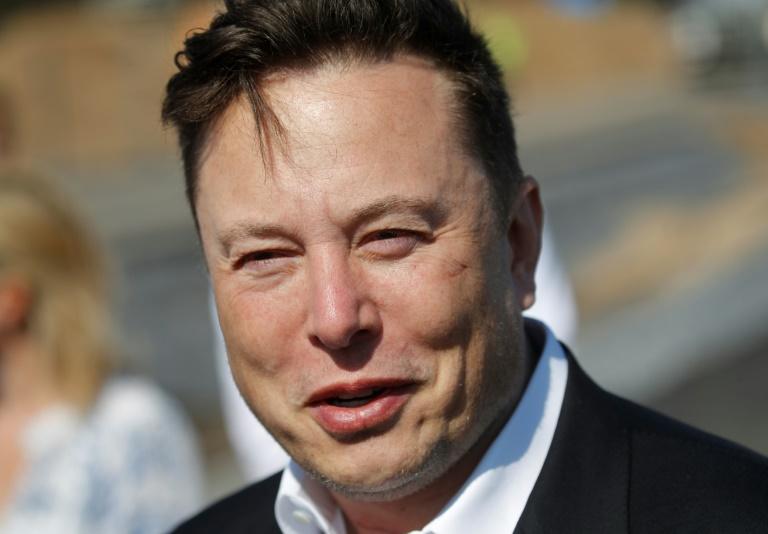
Elon Musk

AUSTIN, Texas — Elon Musk continues to make sweeping predictions about how artificial intelligence and robotics will reshape the global economy over the next decade, offering forecasts ranging from a billion-strong robot workforce to a future in which human labor becomes entirely optional. Here are five of his most striking recent predictions.

More than 1 billion humanoid robots operating within 10 years. Speaking virtually at the G20 Innovation Ministerial in Chapel Hill, North Carolina, on Sept. 1, Musk predicted that advances in AI software, onboard AI chips and electromechanical dexterity would eventually allow robot manufacturing to become recursive, with robots building more robots at an accelerating pace.

“Ten years from now, I would say there are well over a billion humanoid robots,” Musk said, according to a transcript of his remarks. He described the productivity of each robot as “probably five times that of a human,” calling the overall forecast “a conservative estimate” he would “put serious money betting on.” Musk said a fleet of that scale would ultimately be “more productive than all humans combined.” Global humanoid robot shipments totaled just 19,100 units in the first half of this year, according to figures cited alongside Musk’s remarks, illustrating how dramatic the projected 10-year growth curve would need to be for his prediction to materialize.

Artificial intelligence adding $20 trillion to $30 trillion to the global economy annually. During the same G20 address, Musk offered a specific estimate for how much digital AI alone could boost worldwide economic output, separate from the additional gains he expects from physical robotics.

Advertisement

Musk said digital AI could lift the global economy by 20% to 30%, translating to roughly $20 trillion to $30 trillion in additional annual output, according to Bloomberg TV’s coverage of his remarks. He argued that robotics represents a separate and potentially even larger source of future economic growth, given the physical labor tasks robots could eventually perform that purely digital AI systems cannot.

AI reaching “Stockfish-level” software coding capability within 12 to 18 months. Musk offered a specific near-term timeline for when he expects AI systems to become superhuman at software engineering tasks, drawing a comparison to the dominant chess-playing computer program Stockfish.

According to CNBC’s coverage of the G20 session, Musk predicted AI would reach “Stockfish-level” coding ability within about 12 to 18 months, invoking five-time world chess champion Magnus Carlsen as a point of reference for what it means for a machine to definitively surpass the best human performers in a given domain. Musk said that same general timeline applies more broadly to AI becoming extremely capable across engineering and other digital work, predicting that by the end of next year, AI should be able to handle any digital task that does not require physically manipulating atoms by hand.

Human labor becoming largely “optional” within 10 to 20 years. Beyond his predictions about robots and AI’s direct economic impact, Musk has repeatedly forecast a future in which most people will no longer need to work for economic survival, describing a shift toward work as a personal choice rather than a necessity.

Advertisement

Speaking in an interview with Zerodha co-founder Nikhil Kamath, Musk laid out his timeline directly.

“My prediction is, in less than 20 years, working will be optional, working at all will be optional, like a hobby pretty much,” Musk said, adding that the shift could arrive in “less than 20 years, maybe even as little as 10 or 15 years.” He compared the choice to whether someone works in that future to a person’s decision to grow their own vegetables despite being able to simply buy them from a store, framing continued labor as something people would pursue by preference rather than economic pressure.

Not everyone views Musk’s optional-work prediction as realistic. Kaz Hassan, principal of community and insights at the AI-powered employee experience platform Unily, has argued that Musk’s framing measures human work through an outdated, purely task-based model.

“For the last centuries, we’ve measured work through task completion and time investment,” Hassan said. “How many projects delivered? How many hours logged? How many emails sent? We’ve treated human contribution like machine output: quantifiable, replicable and scalable.” Hassan has suggested AI will ultimately expose the limits of that model, given its inability to replicate the kind of contextual judgment and strategic intuition that often drives genuine organizational success.

Advertisement

Humans reaching Mars within 10 years, and possibly as soon as five. Musk’s predictions extend beyond Earth-bound technology to his longtime ambition of establishing a human presence on Mars through SpaceX. Speaking on the Lex Fridman podcast, Musk offered a specific timeline for when he expects SpaceX to be capable of carrying humans to the Red Planet.

“Best case is about five years. Worst case, 10 years,” Musk said, citing continued development of SpaceX’s Starship vehicle as the key remaining engineering challenge standing in the way of that goal. Musk has described Starship as “the most complex and advanced rocket that’s ever been made,” and has framed the broader Mars effort as central to his long-term vision of humanity becoming what he calls a “multiplanetary species,” a goal he has said is essential to ensuring humanity’s survival should a catastrophic event ever threaten life on Earth.

Musk’s willingness to attach specific, often aggressive timelines to his predictions has become a defining and frequently scrutinized feature of his public commentary over the years, with some forecasts, including earlier predictions about electric vehicle adoption and Mars colonization dates, having already come and gone without materializing on Musk’s original schedule. Even so, his continued influence over major technology companies spanning AI, robotics and space exploration, through Tesla, SpaceX, xAI and Neuralink, has kept his predictions closely watched by investors, policymakers and technologists alike, regardless of how consistently his specific timelines have historically held up against subsequent developments.

Advertisement
Continue Reading

Business

US-Canada tariffs: Canada braces for prolonged trade war as counter-tariffs on US take effect

Published

on

Palestinian kids walk to school. They are wearing blue school uniforms.

Canada’s retaliatory tariffs on a range of US goods came into effect on Tuesday, with no sign of a trade deal on the horizon.

The counter-tariffs will apply to nearly C$28bn ($20bn; £15bn) worth of American products, from steel to furniture to cotton T-shirts, and will be as high as 50%.

Fresh fish and lobster were also on the list, but Canada later omitted them after pushback from its seafood industry – a sign of the tricky balance it has to strike as it retaliates against its largest trading partner.

Both US and Canadian officials have said they would like to strike a deal, but no movement has been made to resume talks after they collapsed in late August.

Advertisement

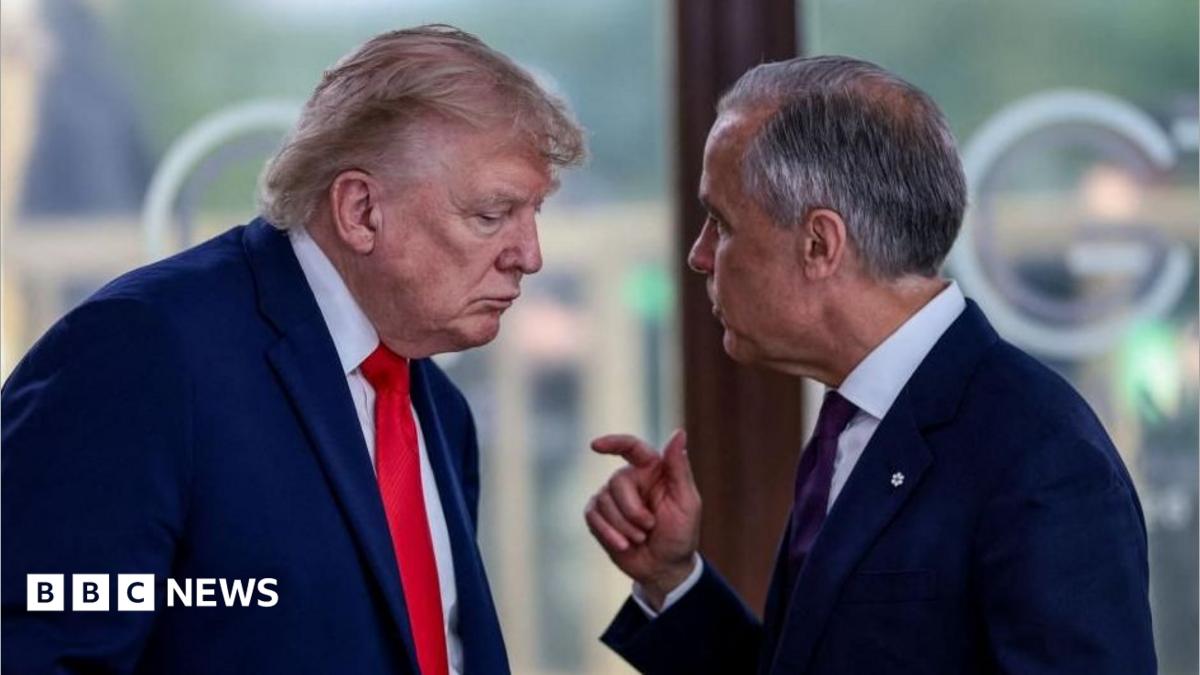
Speaking to reporters last week, Prime Minister Mark Carney said that Canada is still in search of a deal with the US that is “durable” and in the best interests of both countries.

“We’re ready to sit down and strike that deal when the Americans are ready,” Carney said.

US trade representative Jamieson Greer said on Thursday the ball is in Canada’s court.

“We offered them the best deal, they looked at it square in the face and turned around,” Greer said in an interview with Fox News, adding that there has been sparse communication with the Canadians since talks collapsed.

Advertisement

In a separate interview with Canadian broadcaster CBC, Greer cautioned against retaliation and suggested the US might hit back by banning the import of some Canadian products.

President Donald Trump threatened on Monday to halt all US business with Canada-based airplane maker Bombardier unless it moved its manufacturing south.

The aerospace giant is one of the largest in the country, contributing over C$7bn to Canada’s annual GDP in 2024, according to a report by accounting firm PwC.

Advertisement
Continue Reading

Business

Quantum Computing Stocks: IonQ Hosts Investor Day; SkyWater Deal In Focus

Published

on

IonQ Stock: IonQ Earnings Top Views. Raised Guidance Excludes SkyWater Deal.

When IonQ (IONQ) hosts an investor day on Tuesday, Wall Street analysts will look for an update on the company’s strategy in the wake of its acquisition spree, including the $1.8 billion purchase of SkyWater Technology. If IonQ unveils new technology advances, that could move quantum computing stocks, which have struggled in 2026. Heading into the investor day, IonQ stock…

Copyright ©2026 Investor’s Business Daily, LLC. All rights reserved. 87990cbe856818d5eddac44c7b1cdeb8

Continue Reading

Business

Newcastle’s Advanced Healthcare Group expands further into Scotland with acquisitions

Published

on

Business Live

The deals are part of Advanced Healthcare’s bid to become a leading healthcare and mobility group

Advanced Healthcare Group is based in Newcastle.

James Oates, director at Advanced Healthcare Group (left) and Michael Williams, investment executive at NEL Fund Managers.(Image: Simon Williams)

A Newcastle-based healthcare and mobility investor has acquired two Scottish businesses using a six-figure backing from the Northern Powerhouse Investment Fund.

Advanced Healthcare Group bought mobility equipment providers Able Care and City Mobility serving communities in Scotland. Both companies will continued to operate under their existing brands with workforces remaining in place.

The investment, which comes from NPIF II – NEL Debt Finance, managed by NEL Fund Managers as part of the Northern Powerhouse Investment Fund II (NPIF II), follows Advanced Healthcare’s acquisition of Dundee-based Allardyce Healthcare last year.

By bringing the businesses into the stable, the group hopes to drive efficiencies and support future expansion. Advanced Healthcare is led by Gary Lynch, alongside healthcare investors James Oates and Ross Tomkins, and David Lynch, who co-founded NEL-backed Lynch Healthcare in 2009 before a private equity exit the following year.

Advertisement

Mr Oates said: ” These acquisitions represent another important milestone in our strategy to build a leading healthcare and mobility group with the scale, expertise and resources to serve customers across the UK and beyond. Able Care and City Mobility have built exceptional reputations over many decades, and we’re committed to supporting their continued success while preserving the values and customer relationships that have made them so highly regarded.

“It was a pleasure to work with James, Michael and the wider NEL team on this transaction. The process was seamless from start to finish and the support throughout was exceptional. I would highly recommend NEL as an investment partner.”

Mr Lynch added: “Adding Able Care and City Mobility to the Advanced Healthcare Group allows us to honour the fantastic legacy of both businesses while helping them continue to evolve and grow across Scotland. I’ve worked with NEL on a number of investments over the years, so I knew they would be the right partner for this transaction.”

The investment was led by Michael Williams, investment executive at NEL Fund Managers. He said: “The Advanced Healthcare team combines significant sector expertise with a clear strategy for growth. They understand how to build successful businesses while preserving the heritage, reputation and customer relationships that have made companies such as Able Care and City Mobility successful.

Advertisement

“We’re delighted to have supported these acquisitions and look forward to seeing the business continue its ambitious growth journey.”

Sarah Newbould, senior investment manager at the British Business Bank, said: “The Northern Powerhouse Investment Fund II is helping Advanced Healthcare Group take an important step forward in its growth journey. Through investments like this, we’re supporting ambitious businesses to grow, strengthening regional economies and helping to create new opportunities across the North.”

The investment opportunity was referred to NEL by Abu Ali of FRP Advisory and the legal side of the transaction was supported by Sophie Bailey of Sheppard & Wedderburn acting for Advanced Healthcare Group, Thomas Pullar of CMS acting for NEL, and Thomas McGahie of BBM Solicitors acting for the sellers.

The £660m Northern Powerhouse Investment Fund II is operated by the British Business Bank and covers the entire North of England, proving loans of between £25,000 to £2m and equity investments of up to £5m.


Advertisement
Continue Reading

Business

Borrowers expecting mortgage rates to drop have hopes dashed

Published

on

Palestinian kids walk to school. They are wearing blue school uniforms.

Aaron Strutt, of broker Trinity Financial, said: “Hopefully this will be the end of the rate rises for a while, but there are certainly no guarantees.

“Multiple small mortgage price rises add up and ultimately deter people from buying homes.”

Potential buyers and borrowers are being urged to seek advice and plan early.

Latest data from the Bank of England, external shows that more buyers are taking loans with smaller deposits, leaving them more exposed to rate changes.

Advertisement

The proportion of mortgages where the loan is more than 90% of the value of the home has reached its highest level in 18 years.

The latest moves on mortgage rates will be a further blow to those who are coming off much cheaper five-year deals.

However, rates are still some way short of their peaks of recent years, and how much people can borrow, and at what rate, depends considerably on their circumstances.

Moneyfacts said that, as of Tuesday, the average rate on a new, two-year deal was 5.65%. On a five-year product, the average was 5.70%.

Advertisement

Continue Reading

Business

City of Perth to invest $1.2m in arts over three years

Published

on

City of Perth to invest $1.2m in arts over three years

Yes. Corporate subscriptions are available for teams and organisations, with discounted rates as user numbers increase. Pricing starts from $1,625 + GST per user.
Get in touch
to discuss the right option for your organisation.

Business News subscriptions are used by executives, investors, consultants and professionals who need to stay informed and make better decisions about the WA market. When you subscribe you’ll get

  • Unlimited access to WA’s most trusted business journalism
  • Data & Insights — detailed profiles of WA companies, people, projects and deals
  • MyBN — a personalised feed based on the companies, people and sectors you follow
  • Special publications and industry reports
  • Daily and weekly email newsletters

Data & Insights is a research tool built specifically for the WA market. It draws on more than 30 years of Business News reporting, updated regularly to reflect what’s happening now. Use it to:

  • Look up detailed profiles of WA companies, including financials, directors and ownership
  • Find decision-makers and track their career movements
  • Research live and completed projects across WA industries
  • Monitor deals, appointments and market activity
  • Access industry rankings and league tables

Data & Insights is updated daily by our dedicated research team, which uses the latest announcements, ASX filings and editorial coverage to keep our person, company, list and project records up to date.

Business News welcome all opportunities to make our dataset accurate, complete and current, so if you have an update request, please email the team at
general@businessnews.com.au, and we’d be happy to assist.

Advertisement

MyBN
is part of every subscription. It’s your personalised view of Business News. You can follow the companies, people, sectors and projects that matter to you, and get a news feed and alerts tailored to your interests. You can save articles to read later and retain only what you need.

Only subscribers have full access to all content on the Business News website.

Advertisement

If staying informed about the WA economy is part of your job, and/or you’re looking for networking opportunities in WA, Business News is built for you.

Business News subscribers are:

  • Executives and directors tracking competitors, clients and market movements
  • Investors and advisers researching companies, deals and industry trends
  • Consultants and professionals staying across sectors relevant to their clients
  • Business owners looking for leads, context and market intelligence

Most Business News publications cover national or global markets. Business News is focused entirely on Western Australia, which means the journalism, the data and the intelligence are all built around WA companies, people and projects — not adapted from a national feed. Data & Insights, included with every subscription, combines more than 30 years of WA-specific editorial research with live business data. There’s no comparable product for the WA market.

Advertisement

The Morning Digest Email provides a comprehensive wrap of the major headlines, relevant to WA business, and includes with a snapshot of the overnight news covering oil, gold and ASX-listed companies.

The Afternoon Wrap Email focuses on the news covered by our team of journalists during the course of the working day, including exclusive stories and analysis, all of which relates to WA business and the local economy.

The BN Weekender Email contains a wrap of the Business News from the week that was, highlighting the top stories in each area of WA business.
Sign up for free.

Advertisement

We’re happy to help.
Get in touch
and our team will come back to you.

Advertisement
Continue Reading

Business

Here’s where the U.S. is behind China on battery technology

Published

on

Here's where the U.S. is behind China on battery technology
How much it will take for the U.S. to catch up to China's battery lead

The Trump administration has been trying to build up the U.S. battery supply chain and reduce its reliance on China. But the funding it has set aside for the effort is small compared with what would be needed to substantially loosen China’s grip on the industry, according to analysts and executives who spoke with CNBC. 

The Department of Energy awarded $500 million this August to seven companies related to battery minerals or materials, manufacturing or recycling. It is part of a much larger push by the administration to secure critical minerals and other materials. It also follows the cancellation of many Biden-era policies that supported battery manufacturing and funding for electric vehicles — by far the largest market globally for battery tech.

This is the first round of funding by the Trump administration under two $3 billion DOE battery technology and materials programs that were created through the Biden-era Infrastructure Investment and Jobs Act. Boosting the U.S. battery supply chain had been a high priority for the Biden administration, said Richard Wang, CEO of Voya Energy, a battery technology company.

“A lot of those policies have reversed themselves under the Trump administration and/or shifted,” he said.

Advertisement

The efforts come as China has a majority of the global share of several points along the battery supply chain — from raw minerals and chemicals all the way to finished products like electric vehicles and energy storage systems.

“It takes decades and tens, if not hundreds of billions of dollars” to achieve the kind of comprehensive scale across the supply chain that China now has, said Tu Le, founder and managing director of Sino Auto Insights. “We don’t have decades. We have five, six, seven years to try to become competitive.”

China’s dominance in refining

China is a major supplier of several critical minerals used in batteries, including graphite. But its real strength is in refining and processing. The country’s share of mineral refining has grown since 2020, according to the International Energy Agency. 

China used that position as leverage in 2025, when it imposed strict export controls on rare earths and a range of other minerals and processing equipment. 

Advertisement

Several companies receiving DOE funds target spots where China has a strong presence. Coreshell Technologies, which was awarded $50 million by the department, makes battery anodes — an essential battery component — from domestically sourced silicon, rather than Chinese-sourced graphite.

Lilac Solutions, meanwhile, received $100 million. That company has a method for extracting lithium from salt water brine, skipping a common refining process typically needed to get the material from hard rock.

The global lithium market grew from about 150,000 metric tons in 2015 to 1.5 million metric tons in 2025, said Raef Sully, CEO of Lilac Solutions. The bulk of that growth came from lithium extracted from hard rock mines in the form of a mineral called spodumene. That rock needs to be processed to extract lithium, and 95% of spodumene processing happens in China, Sully said. 

“If you use our technology, you’re producing battery grade lithium carbonate or hydroxide at the site of production,” Sully said. “And you’re bypassing that important step, that processing step that China has a chokehold on today.”

Advertisement

China’s dominance continues further down the supply chain. It produces about 85% of the world’s EV battery cathode active material and more than 90% of anode active material, according to the IEA. Then it makes 80% of the world’s battery cells.

The IEA said the lack of investment in these midstream stages in countries like the U.S. “poses a growing risk to global supply security.”

Scale is one of China’s biggest advantages, said Wang, pointing to CATL, the world’s largest EV and energy storage battery manufacturer, which is based in China.

“They have built up an incredible lead in terms of technology and manufacturing capabilities across the world,” he said. “They are one of the only battery companies in the world that’s not only high in revenue, but is significantly profitable because of how strong their manufacturing and supply chain capabilities are.”

Advertisement

That is the competition that any U.S. firm faces. 

“We have a ton of innovation coming out of the United States,” Le said. “These small fledgling companies are super innovative, but getting and building prototypes of what they’re trying to sell is one thing. Being able to mass produce them at a high quality level, repeatably in the millions of units is another thing entirely.”

Batteries and EVs

EVs are prepared for export overseas through frame transportation in Taicang Port Area, Suzhou Port, Jiangsu Province, China, on May 11, 2026.

Costfoto | Nurphoto | Getty Images

Advertisement

Batteries have become important to China as it has focused on scaling EVs domestically and started exporting more of those vehicles overseas.

New energy vehicles,” which include hybrids, EVs and extended-range EVs, were 65% of China’s new car sales in July, according to the China Passenger Car Association.

The U.S. hasn’t seen that same level of interest, as EVs, hybrids and plug-ins accounted for about 24% of sales in the U.S. in the second quarter of 2026, according to the Energy Information Administration. The U.S.’s total new car sales volume in 2025 was about 16.3 million, according to Cox Automotive, compared with 23.7 million in China. 

Despite the DOE grants that have been putting some money in the battery space, the Trump administration ended federal tax credits for EVs and other funding for those vehicles and batteries. 

Advertisement

Since January 2025, when Trump took office, nearly $24 billion in announced battery projects have been canceled, according to Atlas Public Policy, a think tank. 

“When you look at China, they are incredibly dominant in EVs at a time when the U.S. is slowing down its EV development,” Voya Energy’s Wang said. “What this is really jeopardizing is the ability of U.S. automakers to compete globally, where China is taking the lion’s share of all the growth globally.”

Energy storage demand is growing, averaging 70% growth since 2022, according to the EIA. EVs still account for more than 70% of total lithium-ion battery deployment, the IEA said.

Sully, of Lilac Solutions, said even though China has a big lead, he thinks the U.S. needs to start somewhere.

Advertisement

Over the next decade, he said, the U.S. could see more domestic lithium, cathode material and battery cell production.

“So early days, but a step in the right direction,” he said.

Choose CNBC as your preferred source on Google and never miss a moment from the most trusted name in business news.
Continue Reading

Business

Affirm: The Affirm Card Engine Is Kicking Off

Published

on

Affirm: The Affirm Card Engine Is Kicking Off

Affirm: The Affirm Card Engine Is Kicking Off

Continue Reading

Business

Boston Scientific ‘Unlikely to Meet’ Earnings Guidance After Cyberattack. Stock Falls.

Published

on

Boston Scientific ‘Unlikely to Meet’ Earnings Guidance After Cyberattack. Stock Falls.

Boston Scientific ‘Unlikely to Meet’ Earnings Guidance After Cyberattack. Stock Falls.

Continue Reading

Trending

Copyright © 2025