Connect with us

Tech

A 1024 Byte Python Interpreter

Published

on

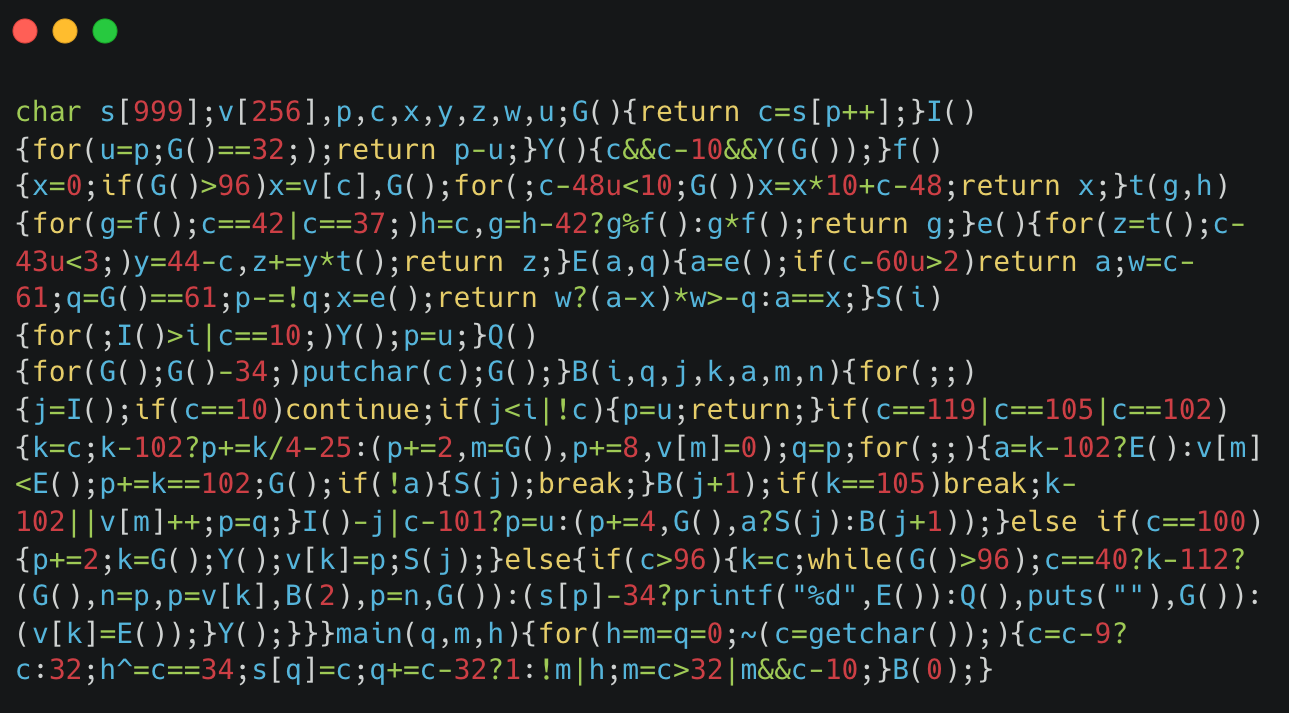
Like many of us, [Austin] finds writing code satisfying — especially if it is challenging. His latest challenge: shoehorn something that looks like Python into 512 bytes. Ok, that didn’t work out, but would you believe 1024 bytes of source code?

The goal was to properly execute a fizzbuzz program using a decidedly Python-like syntax. Since he is only interpreting Python, some things were simplified. In addition, he tried hard to minimize things like whitespace and variable names. Still, there were other things to do, and he borrowed from tips for code golfing.

The resulting code is essentially illegible, but it handles integer variables and literals, assignment, arithmetic, many control structures, functions, and even print. Not bad for 1 K.

Advertisement

Despite being tiny, the parser does a lot, but it does cut corners. No bytecode, no syntax tree, and no error handling. Variables have to be a single lowercase letter. So, ok, it isn’t really Python. But it is something.

Naturally, this reminded us of the obfuscated C code contest. If you really want to go small, we appreciate small Forth.

Advertisement

Source link

Continue Reading
Click to comment

You must be logged in to post a comment Login

Leave a Reply

Tech

Logitech’s new $99 MX Keypad puts AI coding at a developer’s fingertips

Published

on


  • Logitech unveils $99 MX Keypad accessory
  • Sitting alongside your keyboard, it offers nine customizable keys to give access to AI tools and agents
  • Users can even create and share their own integrations

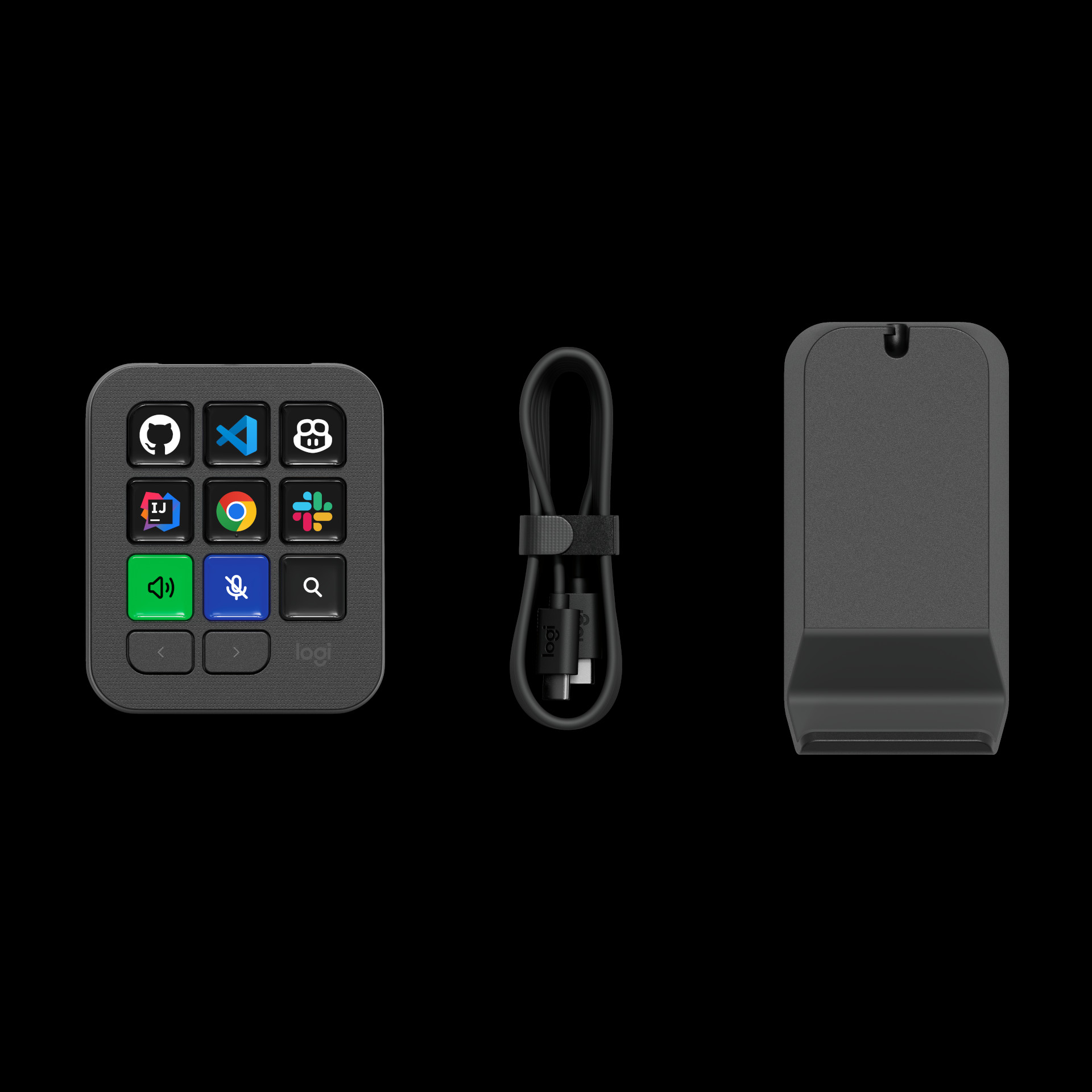
Logitech has launched a new $99 accessory it says will help programmers and coders work faster and more effectively than ever before.

The new MX Keypad offers nine customizable full-color LCD keys which can be assigned to launching commands, running macros, and accessing AI tools.

Source link

Advertisement
Continue Reading

Tech

Amazon drops 15-inch M5 MacBook Air to season low at $1,349

Published

on

Amazon’s $1,349 15-inch MacBook Air deal delivers the lowest price of the season. Upgraded models are $150 off as well.

Save $150 on Apple’s 2026 15-inch MacBook Air, bringing the price of the M5 model with 16GB of RAM and 512GB of storage down to $1,349.

Buy M5 15″ MacBook Air for $1,349

The limited-time deal is available in the Midnight finish only, and units are shipping within 1-2 days, suggesting stock may be limited.

Advertisement

Amazon’s $150 discount extends to several upgraded configurations as well, with the M5/16GB/1TB model also marked down to $1,649 in the Midnight finish.

Our M5 MacBook Air Price Guide offers easy price comparison across popular retailers on dozens of configurations. Here are today’s highlights from the guide:

13-inch MacBook Air deals

15-inch MacBook Air discounts

You can also browse the best MacBook Air deals throughout the week in our dedicated roundup.

Advertisement

Source link

Continue Reading

Tech

Best Sonos Speakers 2026: The top choices reviewed and ranked

Published

on

Best Sonos speaker 2025

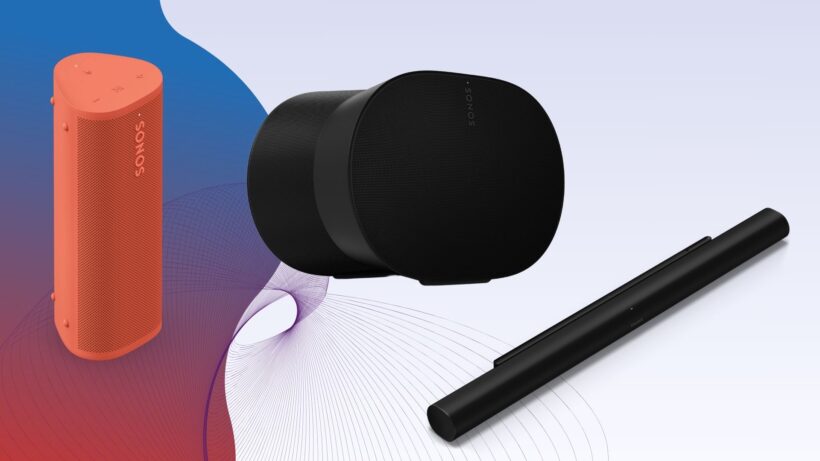
Sonos makes products from portable speakers, to home cinema soundbars and wireless speakers, so there’s plenty of variety in their product line-up.

If you’re new to Sonos, this guide serves as a helpful way of figuring out what you to look out for and understanding what Sonos can do for you.

Whether it’s a soundbar, a subwoofer, or a wireless speaker; we’ve tested pretty much all of the speakers that Sonos has released.

All the speakers have been fully tested and reviewed by our experts, and they’re tested for their sound, design and build, how easy each product is to use, and whether they’re good value for money.

Advertisement

As always, click the review link below the entry to read an in-depth look at the products. 

If a Sonos speaker is not the only type of speaker you’re considering, we’ve got other guides that cater for portable speakers such as our best outdoor and best Bluetooth speaker lists, while we also have our best smart speaker ranking and our best soundbar list if you’re after indoor speakers.

Advertisement

Best Sonos speakers at a glance

SQUIRREL_ANCHOR_LIST

Learn how we test Sonos wireless speakers

We play a lot of music, and we play it loud. We play it everywhere – in the house, in the garden, and even in the bath if a speaker is waterproof.

We don’t just listen to the speakers; if there are special features then we make sure we fiddle with them until we’re satisfied. A number of Sonos wireless speakers have smart functionality with the integration of Amazon Alexa, Google Assistant or multi-room, and as a result we start talking to our speakers as well as connecting them together.

Advertisement

Of course, it always comes back to the music. Speakers are tested by reviewers who have a love of music, a knowledge of sound quality, as well as a context of the market. We’ll listen to Bluetooth speakers alongside similarly priced rivals, so when we recommend a particular model, it’s among the best you can buy for the money.

Obviously, we know not everyone has the same taste in music, so we won’t only test with the same perfectly mastered album, but with a variety of genres and file qualities, from MP3 to Hi-Res FLAC.

Advertisement

The post Best Sonos Speakers 2026: The top choices reviewed and ranked appeared first on Trusted Reviews.

Advertisement

Source link

Continue Reading

Tech

Memory prices are slowing because buyers ran out of money

Published

on

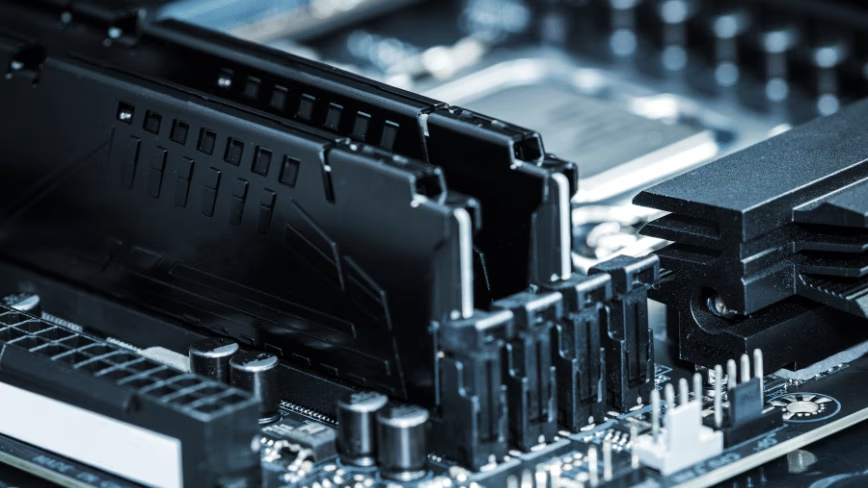
Memory prices are finally slowing down, and the reason is not that supply improved. It is that buyers ran out of money.

TrendForce expects conventional DRAM contract prices to rise 13% to 18% quarter on quarter in Q3. Dan Robinson reported the forecast for The Register. He paired it with separate European shipment numbers that show what the squeeze has done to the market.

The Taiwanese analyst calls that growth rate a moderation, and by recent standards it is. Rising contract prices drove a 59.5% quarter-on-quarter jump in DRAM industry revenue in Q2, to $154.73bn.

Why it is slowing

TrendForce gives two reasons, and the second is the interesting one.

Advertisement

Demand is shifting away from high-capacity RDIMMs towards lower-capacity parts. And then there is what the analyst calls “the limited ability of PC and smartphone customers to absorb further price increases”.

That is a market hitting a ceiling rather than finding a balance. Supplier inventories are still at historic lows and bit shipments are expected to grow only modestly. Nothing about the supply side has eased. Prices are rising more slowly because the people at the end of the chain cannot pay any more.

Note who TrendForce names as the constraint: PC and smartphone customers. Phones use the same memory and face the same maths, and the handset market has spent a decade training buyers to expect more storage each year for roughly the same money. That expectation is now colliding with the price of the parts.

And 13% to 18% in a single quarter is not relief. It is a smaller increase on top of a year of increases.

Advertisement

Europe is where the bill lands

The market intelligence firm Context expects European PC shipments to fall hard as component costs push system prices up.

Laptop shipments are forecast to drop 6.4% year on year in Q3, then 20% in Q4. Desktops look worse: down around 20% in Q3 and almost 30% in Q4.

Those are severe numbers for a mature market, and they describe a straightforward mechanism. Memory got more expensive, so machines got more expensive, so European buyers stopped replacing them.

Corporate buyers are stretching refresh cycles and buying only when they have no choice, according to Context. “The PC refresh cycle has not disappeared, but the economics around it have changed,” said senior analyst Marie-Christine Pygott.

Advertisement

Stretching a refresh cycle is not free, though it looks free on a budget line. Older machines run slower, fail more often, and eventually fall off support, which is a security problem rather than a productivity one. European IT departments are taking that risk because the alternative costs more today.

Falling volumes, rising profits

PC makers are not suffering, which is the part that explains why nothing corrects.

Higher prices have more than covered the lost volume so far. The Register reported in May that Lenovo had dodged the worst of the memory crisis by pushing customers towards premium devices. The strategy worked.

That is a rational response to scarcity and it also removes the pressure to fix it. If selling fewer, dearer machines makes more money than selling more cheap ones, a manufacturer has no reason to fight for volume.

Advertisement

The same logic has been visible up and down the market for months. AMD raised Radeon prices in August, days after Nvidia did the same. Nvidia is putting up AI server prices by more than 15% from next year, citing memory costs. Everyone passes it on.

The AI PC did not save anyone

Manufacturers spent two years promising that AI-capable PCs would trigger a mass upgrade. Context says that is not what happened.

The end of Windows 10 support drove recent buying, not artificial intelligence. AI PCs are taking a growing share of machines entering the European supply chain. That is mostly because the capability is becoming standard, though, rather than because anyone is choosing it.

So the upgrade wave came from a support deadline, and it has now largely passed. What is left is a market with higher prices, no compelling reason to buy, and a stack of machines that will stay in service longer.

Advertisement

Who the memory is going to instead

None of this is happening to the AI industry. It is happening because of it.

The three big memory makers are concentrating on high-end products for AI buyers. Samsung has benefited from moving early into HBM4 mass production. SK hynix had the highest proportion of HBM in its bit shipments of the three. Micron is prioritising higher-priced server DRAM.

That leaves the mature-process business to second-tier manufacturers such as Nanya, Winbond and PSMC, who are supplying DDR4 and DDR3. The squeeze has already reached parts nobody expected, including DDR2, a standard from 2003, and the capacitors that carmakers need.

Europe watches most of this from the outside. SK hynix chose Indiana for its $4bn memory packaging hub after a Polish plant fell through, which means the continent absorbs the price rises without hosting much of the capacity.

Advertisement

What would actually change it

Two things, and neither is close.

The first is supply. Inventories are at historic lows and bit shipments are growing modestly, so relief needs new capacity, which takes years to build and is currently being pointed at HBM rather than at the parts in a laptop.

The second is AI demand cooling, which nobody in the industry expects and which would bring its own problems.

Until one of those happens, the pattern holds. AI buyers pay a premium for the memory they want. Everyone else pays a premium for the memory that is left. And the moderation TrendForce is forecasting is a description of European buyers reaching their limit, not of the shortage ending.

Advertisement

Source link

Continue Reading

Tech

You should be able to live without a smartphone

Published

on

Here’s a non-exhaustive list of things that, as recently as seven years ago, we could reliably do without a smartphone:

  • Read a restaurant menu while seated inside, and pay your check.
  • Enter a concert or sporting event
  • Use a parking garage or park your car on the street
  • Receive packages or retrieve purchases
  • Complete the sign-in process for work, banking, or government services
  • Attend school events or communicate with your kid’s school
  • Access health care and other kinds of appointments
  • Take public transit
  • Get a taxi
  • Get into a gym or fitness class

I’ve been thinking about this drift toward mandatory apps and QR codes a lot lately, as a new millennial parent unhappy with my addictive tendency to mindlessly scroll near my baby. I also know that, parent or not, the research on ways that heavy smartphone use negatively affects our own well-being, attention spans, and relationships has become near-impossible to ignore. And people don’t need meta-analyses to be convinced: It’s why so many are turning to tools and hacks that aim to help us limit our phone use, or at least time spent scrolling on certain apps. It’s also why we’re seeing a wave of new clubs and social events that are proudly phone-free.

I think these “digital detoxes” are encouraging, and I’ve been researching so-called dumb phones myself. But none of these trends will really matter if we’re continually forced into a world of apps for every element of daily life.

Late last month, Meta agreed to pay at least $12.1 billion to settle claims that it deliberately designed Facebook and Instagram to addict children, and announced it would be redesigning the platforms for younger users to include daily time limits, overnight lockouts, and restrictions on like counts and beauty filters.

It’s a start, but we have to think bigger than just the algorithms that keep us glued to our phones. Because they’re not the only forces that make quitting so hard. Increasingly, it’s just basic access to services and companies and public institutions that are making a smartphone exit feel elusive.

Advertisement

You should not have to have an addictive device in your pocket at all times in order to do ordinary things. We should be pushing for a world where adults can meaningfully reduce their smartphone use, or quit it altogether if they want.

And it’s not just about personal self-improvement. The status quo has already been long untenable for many people, especially the elderly, the disabled, the unhoused, and anyone who just can’t afford a data plan.

Pushing for a non-smartphone option is about accessibility, affordability, and agency. It’s about demanding the kind of freedom in a society we deserve to have. There should never be any essential service that requires phones as the only way in.

We can fix this, and some people are already showing how.

Advertisement

Even if it takes us another decade to unwind, it’s important to remember these changes are less than ten years old.

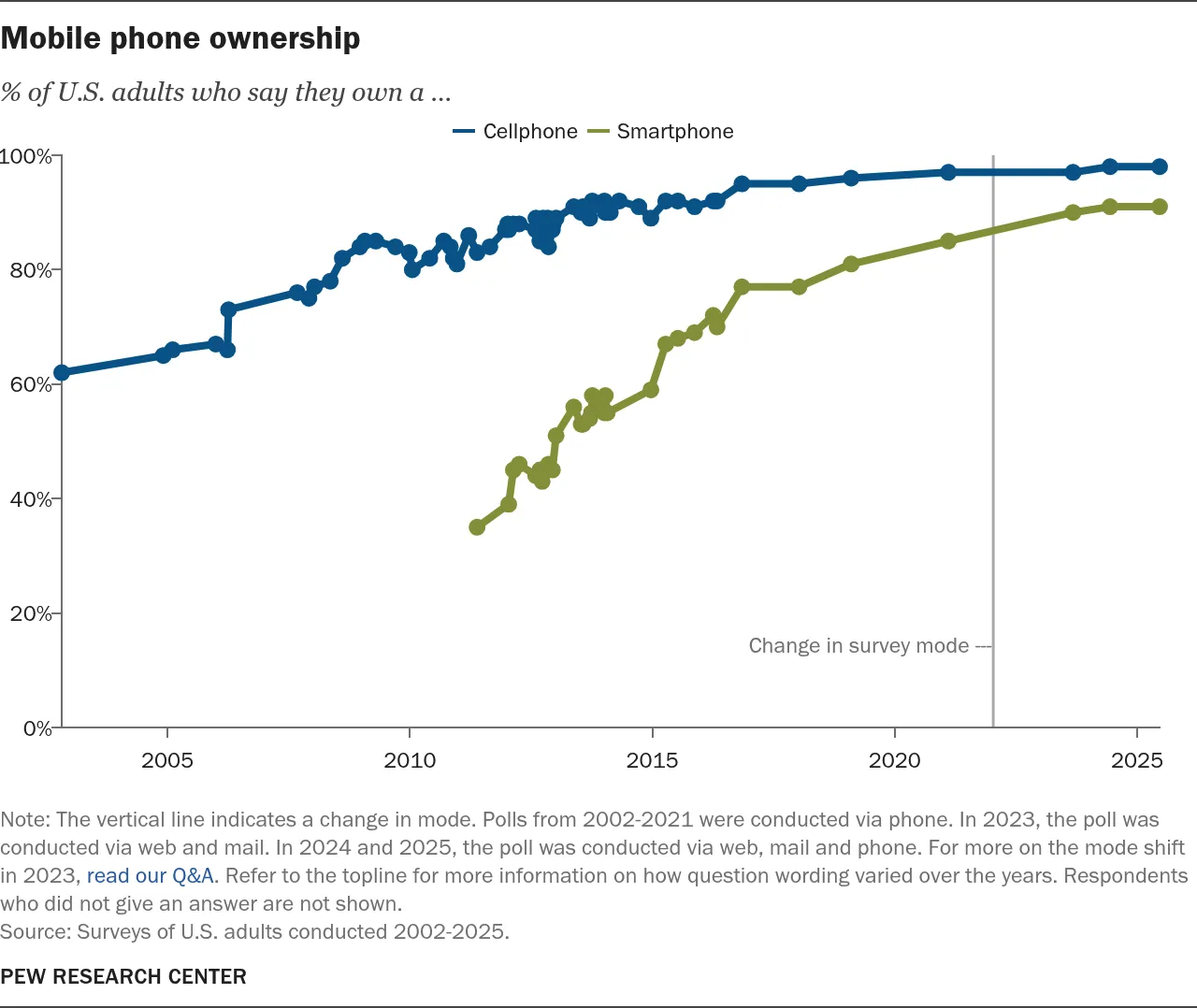
Smartphone ownership exploded over the 2010s, rising from 35 percent of US adults in 2011 to 81 percent in 2019, according to Pew. It has since climbed to roughly 9 in 10.

In other words, smartphones stopped being a device many people had and started becoming a device every institution could assume you had. What happened next was part real improvements in convenience, part cost-cutting that pandemic-era policy made easier to justify, and part what sociologists call “isomorphism” — organizations converging on a practice not because it works best, but because everyone else has adopted it.

Isomorphism is one of my favorite concepts I learned in college, and you know it when you see it. For example, you’re planning a conference, and somewhere along the way it became true that a “good” conference has its own app, even though nobody wants to download an app to learn when lunch is on the schedule. Or it’s the way every mission statement sounds like every other mission statement.

I’d say the charitable reason we drifted toward handling so much by smartphone is that a lot of it genuinely is better, faster, and harder to lose. Tapping a turnstile with my phone, and never wondering whether I left my DC metro card at home, has made my life easier.

Advertisement

The less benign reasons are that digital systems let companies and governments cut labor and operating costs. Apps and QR codes replace cashiers, waitstaff, printed materials, and customer service reps, and shift new work onto us, the customer. The smartphone systems also generate a lot of personalized data which companies love to collect, and sometimes sell.

Then there’s control, which companies certainly like. Not all of it is sinister. (Think blocking tickets from being resold, or prices and menus being updated instantly.) But when sellers control the interface and know a lot about us, two people can open the same app at the same moment and see different prices. Economists call this price discrimination, and it’s much easier to pull off when there’s no posted price we can compare against.

But just because inertia is leading us toward a universal smartphone society, that doesn’t mean it’s where we’ll end up. We have options to push back.

Let’s protect the non-smartphone option

Advertisement

Smartphones aren’t going anywhere. But it’s eminently reasonable to demand that whatever cost a company or government pays to keep a viable non-smartphone option is a cost worth paying.

While the “march of digitization” might feel inevitable, Clare Morell and Brad Littlejohn of the conservative Ethics and Public Policy Center remind us that Americans have a long history of taking on technology in the name of humanity, from automobiles to firearms, and forcing some reasonable accommodations. There has been a push in recent years to preserve paper options for people who struggle to apply for benefits online. Some cities also have laws requiring businesses to accept cash. New York state just passed a ban on “cashless establishments,” which ensures people will still be able to dine out or shop without needing to go through a QR code or app.

Morell and Littlejohn point to other solutions, like the Americans with Disabilities Act, which they say could be read to require businesses to serve customers who don’t use apps, or adding smartphone ownership to state anti-discrimination statutes.

Europeans have gotten further with this than we have. In 2023, the Council of Europe’s Parliamentary Assembly urged member states to keep non-digital access to public services available, and in early 2025, a coalition of anti-poverty, disability, and digital-rights groups delivered an open letter asking the European Parliament to guarantee offline access to all essential services. Their argument is that the EU wants everything online by 2030 while more than 40 percent of Europeans still lack basic digital skills.

Advertisement

In the US, we’re also learning that Big Tech isn’t unstoppable. On top of the Meta settlement, school phone bans have spread to at least 40 states, with school districts now considering policies to limit laptop and tablet time, too.

Focusing on child safety first makes sense both morally and politically. Reformers have amassed a decent track record of getting companies and governments to redesign products around children’s vulnerability, and such redesigns rarely stay confined to kids. In 1997, cigarette mascot Joe Camel was dropped under federal pressure over marketing to kids, but the advertising restrictions that followed reshaped how cigarettes were ultimately sold to everyone. I’d be surprised if Meta keeps a chronological feed and a nighttime cutoff walled off for teens alone.

And yet, we shouldn’t rely solely on osmosis from kid reforms to fix our adult problems. For starters, reforms don’t always trickle down. Congress passed COPPA in 1998 to keep companies from harvesting kids’ data online, and the rest of us still have no equivalent federal safeguard.

Not every fix would require regulation. Afreka Ebanks, a spokesperson for Dumb.co, which sells smartphone alternatives, told me she’s optimistic that pressure on individual businesses can spark change, in part because marketing has shifted so heavily toward community and belonging in recent years. Companies that want to seem grounded in their neighborhoods, she argued, are more susceptible to locals asking for a non-phone option. She’s been asking her own gym to bring back the key fobs it used to issue, so members can leave their phones at home while they exercise.

Advertisement

Dumb.co is also betting that if enough people give up smartphones — not a majority, but a large enough minority — businesses won’t want to lose those customers. She cited Capital Bikeshare in Washington, DC, which still makes it easy for riders to unlock bikes with a physical key even as most users go through the app. “They do want to serve those people who aren’t carrying around phones,” she said.

At the end of the day, we’re not going to restore less phone-dependent childhoods for our kids if we can’t also build a less phone-dependent society for the rest of us. And we deserve to have that choice. Opting out just cannot be functionally impossible.

Source link

Advertisement
Continue Reading

Tech

The Pros And Cons Of Diesel Engines

Published

on


Shopping for a car can be a daunting challenge at the best of times, and having a bunch of different fuel types doesn’t help. Do you get a car that takes regular gas, premium, flex fuel, E85, a hybrid, and so on? Then you have diesel, a fuel type normally associated with commercial vehicles, full-size pickup trucks, and strange European cars. What’s the deal with those?

If you’re just buying a car with no consideration to how it works, not much changes if you end up with a diesel, apart from which nozzle you use at the gas station — diesel is the green one, by the way. For the most part, a modern diesel car will behave just like any other car in traffic, albeit with a lower tachometer and a deeper, droning sound to it. But let’s say you’re shopping for something specific — why would you want to buy or avoid a diesel car?

Advertisement

While their function may be the same, diesel engines function very differently from gasoline engines, and therefore have different strengths and weaknesses. A diesel operates on compression alone rather than spark — basically you’re compressing the fuel so much that it spontaneously ignites. Diesel fuel is actually very stable, meaning it takes a lot of energy to ignite it. So you get a piston with a long, heavy stroke, which is great for torque, but lacks high-end RPM, hence why so many trucks use diesels. However, that comes at the cost of factors like emissions, specialized parts, and expensive fuel costs, at least in the States. Let’s explore more.

Advertisement

Pros of diesel engines

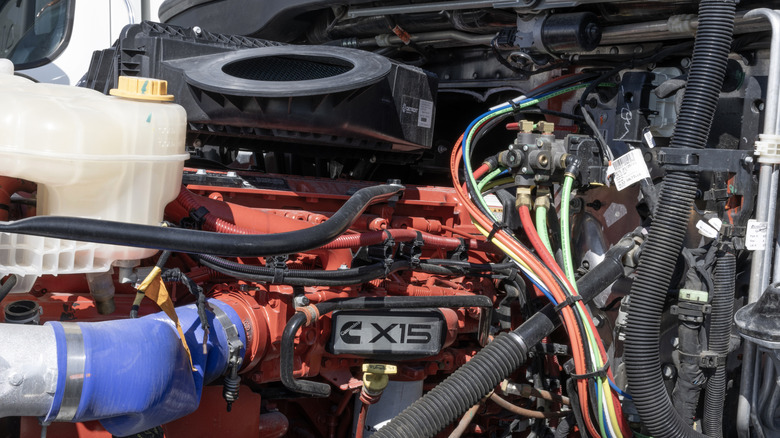
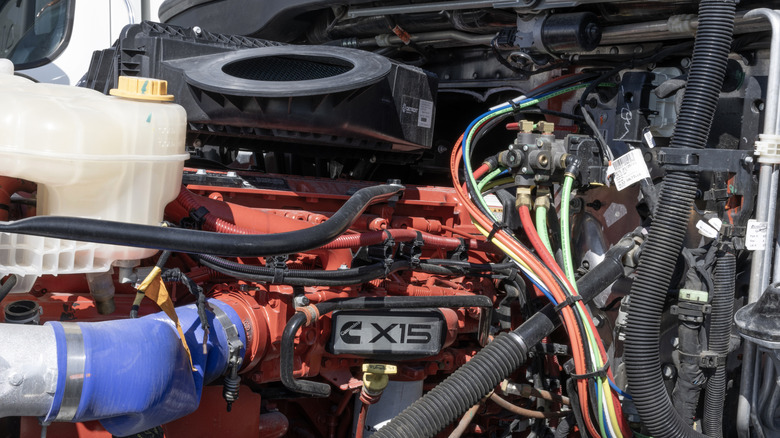
A diesel engine’s operating principle means that the engine itself is somewhat simpler and more robust than an equivalent gasoline-powered variant. For one, diesels don’t have spark plugs, but rather glow plugs acting kind of like the heating element in an induction stove. The engine blocks themselves are also more resilient, with diesel engines typically lasting far longer than gasoline engines — sometimes 30 years or more. Their low RPM and high torque load requirements make for a vastly understressed design, which is why so many classic Power Strokes are still around today.

High torque also means the engine can accept high loads, hence why they’re so good for towing. This is because of the relationship between torque and horsepower — put simply, horsepower is how fast the wheels can spin, but torque is how easily they spin. To put it another way, picture riding a bike. A low gear means you’re able to get going easier because the bigger gear acts like a torque multiplier. The higher gear means you go faster, but you have less leverage to get up to speed, so your legs struggle. The same principle applies to your engine.

Lastly, there’s the matter of fuel efficiency, which diesel engines in particular excel with. Diesel fuel is more energy-dense than gasoline, meaning you don’t need as much of it to produce the same amount of power. Combined with lower RPMs — less times fuel gets injected into the cylinder — makes for a far more efficient design. Then you add in multifuel diesels; in short, these engines are truly exceptionally flexible.

Advertisement

Cons of diesel engines

Unfortunately, for every upside, diesel engines have at least one downside. To start with, diesel fuel produces a ton of emissions, enough that governments all over the world mandate specialized parts on the exhaust to keep the soot from polluting the air, mainly all the harmful greenhouse gases like nitrogen oxide emissions.

Moreover, that means that diesel engines have bonus maintenance costs tacked onto the already generally more expensive sticker price — stuff like diesel exhaust fluid (DEF), DPF canisters, EGR valves, and so on, which all need periodic servicing. That service life shortens if you don’t consider diesel regen – the diesel particulate filter gets clogged up if you take a lot of short trips without the engine running at operating temperature for long, and has to regenerate. All of this compounds with fuel costs as well, meaning driving diesels can be a double-edged sword on your wallet.

Then there’s the operation of a diesel engine. Diesels are generally noisier and more rumbly than gasoline engines; all the moving parts are going slower and travel longer distances, so you notice those vibrations more. Older diesel engines also have the problem of cleanliness. Without modern emissions equipment, diesels spew smelly black soot at high loads, which was such a problem, the U.S. government enacted policies to improve emissions across the board — hence the DPF, DEF, etc. These changes weren’t kind to every diesel, either. The most infamous creature from the Diesel Emissions Reduction Act lagoon was the 6.0 Power Stroke, nicknamed ‘Six Point Blow’ because it’s so bad.

Advertisement


Source link

Advertisement
Continue Reading

Tech

Stoke Space raises another billion to rival SpaceX at re-flying rockets

Published

on

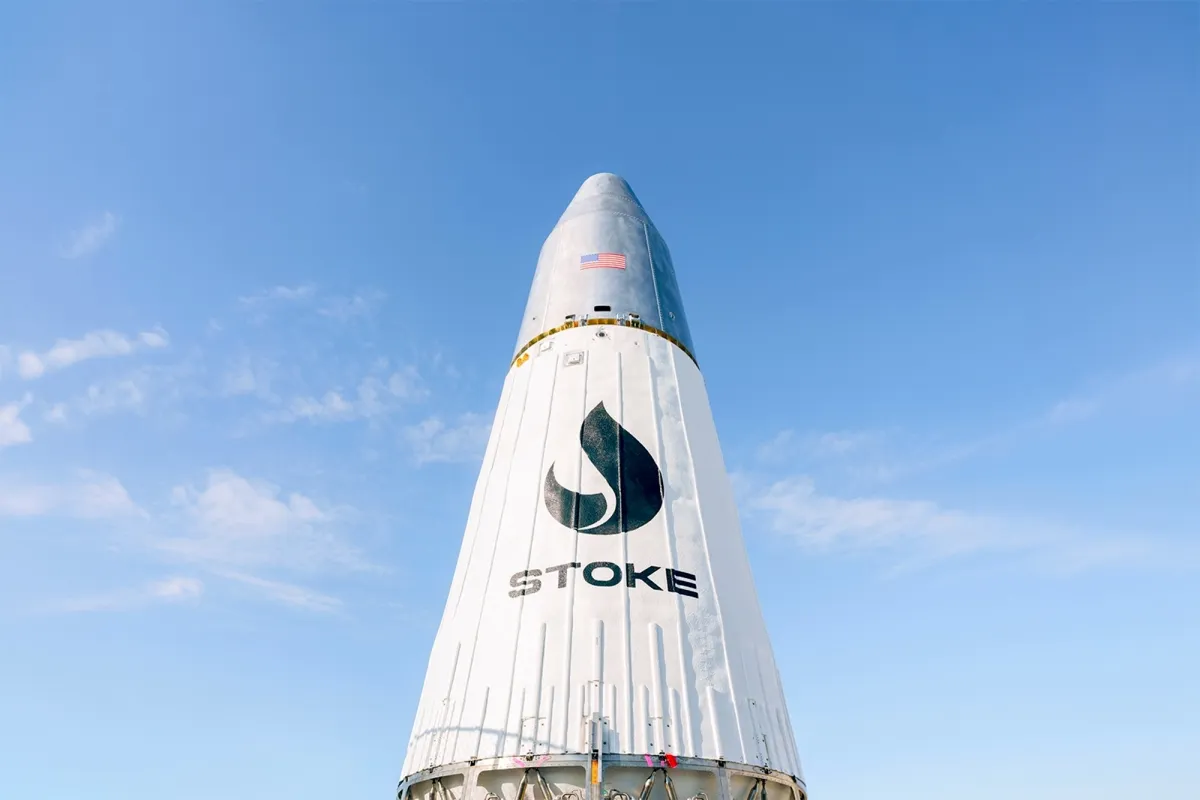
The fuel for a fully reusable rocket that can unlock truly low-cost access to space isn’t methane or liquid oxygen. It’s cash, and Stoke Space Technologies is tanking up. The company has now “completed the initial closing” of a $1 billion Series E round intended to help it reach orbit and prepare a new, larger rocket for operations.

“This round is really to scale,” CEO Andy Lapsa told TechCrunch. “To lay the infrastructure, to scale in production and flight frequency, and importantly to fund the development of the second generation vehicle.”

The round was led by Point72 Ventures (hedge fund billionaire Steve Cohen’s tech investment vehicle), and Spark Capital, and included investment from General Innovation, Glade Brook Capital, US Innovation Technology, Washington Harbour Partners, Woven Capital and Y Combinator, among others.

Stoke is one of a handful of startups attempting to compete with Elon Musk’s SpaceX in the low-cost rocket launch space. SpaceX was built around the Falcon 9, which has a reusable booster stage, and now Musk and company are trying to field a huge, fully-reusable rocket, Starship.

Advertisement

But unlike its rivals Rocket Lab, Relativity Space or Firefly Aerospace, Lapsa’s company is aiming straight at that holy grail: A rocket where both the booster stage and the payload-carrying second stage come back to Earth so they can be reused cheaply. It’s never been done before.

Such ambition and technical feats require capital. SpaceX has spent well over $10 billion on Starship over the last decade, and the vehicle still hasn’t yet reached orbit, although that may change on its next flight. Now, Stoke has raised $2.3 billion in total.

In particular, SpaceX has struggled to identify the right materials and configuration for the components that shield the second stage of the rocket from the extreme heat caused when it is reentering the atmosphere. Stoke instead flows super-cooled liquid hydrogen through its thermal shielding, a unique active cooling solution that Lapsa says has been tested exhaustively on the ground and will be deployed on the first flight.

“We can flow excess coolant — more than we think we need in order to overcool the surface of the vehicle — and take a conservative stance from that perspective in early flights,” he said.

Advertisement

Lapsa said that he expects Stoke’s first vehicle, the Nova Pathfinder, to take flight in early 2027. In a business known for delays, he’s confident sharing that target following a series of structural and operational tests on the rocket’s first stage at the company’s Moses Lake facility. Next up is test-firing each stage of the rocket on the ground to ensure they are ready for flight.

“The ground system is checked out to the extent that we can do it without the rocket, and the rocket’s checked out to the extent that we can do it without the launch pad,” Lapsa said. “So the next step is to do them together.”

The startup has already sold launch contracts on the vehicle, which can carry three metric tons to low-Earth orbit — that will be, Lapsa believes, the largest debut vehicle of any U.S. rocket maker. That said, few rockets get off the ground on time or with total success, and simply getting to orbit would be an achievement.

“We have multiple Pathfinder vehicles in production, and we have confidence that we will bring Pathfinder to market and into orbit regardless of this round,” Lapsa said.

Advertisement

Stoke also revealed plans for an even bigger rocket, the Nova Block 2, that has been under development for the past few years. Based on the same technologies as the Pathfinder, including the engines and the company’s novel heat shield, that vehicle will be able to bring 15 metric tons to low-Earth orbit, slightly more than the Falcon 9.

The goal is to deploy it in 2029, right when, according to Musk, the Falcon 9 will be phased out. Is Lapsa drooling at the possibility of picking up increasingly desperate launch customers just as SpaceX pulls back?

“It amplifies the mismatch between launch supply and demand for launch, there’s no question about that,” he admits. “Regardless of Falcon 9 retiring or not retiring, the space industry and the space economy scales exactly as fast as rockets get off the ground, particularly rockets that serve third-party customers.”

That last remark is a dog whistle that satellite operators will surely hear: When SpaceX’s Starship takes flight, companies and government agencies looking to buy tickets will be competing with the space company’s internal projects, and might have to pay a premium to use the big rocket. Stoke, on the other hand, has not revealed plans to operate its own space assets.

Advertisement

“Now is the time to get moving […] so that we can finally start deploying a lot of the constellations and applications that we aspire to as an industry but have been stuck on the ground,” Lapsa said.

When you purchase through links in our articles, we may earn a small commission. This doesn’t affect our editorial independence.

Source link

Advertisement
Continue Reading

Tech

New Irish dispute body to tackle illegal online content launched

Published

on

Appeals Centre Europe began providing dispute resolution services in Ireland in 2024.

UK-based independent press regulator Impress is launching a new service in Ireland to help take down illegal content, such as AI-generated deepfakes, from social media.

Impress Dispute Resolutions Services – Impress’ Dublin subsidiary – is an out-of-court dispute settlement (ODS) body certified by Ireland’s media regulator Coimisiún na Meán.

Launching today (8 September), it is offering a free of charge, independent mechanism for EU citizens to contest harmful content and platform decisions under the EU’s Digital Services Act (DSA). IDR’s scheme is available to users in Ireland and the EU and covers major platforms including Instagram, Facebook, TikTok and YouTube.

Advertisement

The DSA mandates that online platforms must provide a clear and accessible means to lodge complaints against illegal content. They must also allow users to request a review if they disagree with a platform’s decision.

In addition, the law also provides users the ability to turn to ODS bodies, which offer a faster and more cost-effective way to settle disputes with social media platforms when compared to the much more tedious judicial routes. These bodies are generally provide services at a low or no cost.

While ODS bodies cannot impose a binding settlement, platforms and users are required to engage with them in good faith.

“Over the past decade, we’ve supported thousands of people harmed in the media – and demand has never been higher,” said Impress Dispute Resolutions co-founder Gia Thom. “We’re non-profit by design, which keeps IDR independent, credible and focused on strengthening the information ecosystem.”

Advertisement

The EU has 11 listed ODS services spread across the bloc, including the Appeals Centre Europe, which began providing ODS services in Ireland in 2024.

Safety on social media has come to a head in recent years, with parents and lawmakers moving to shield children from the provable harms posed online by banning popular platforms.

Meanwhile, the proliferation of illegal content is getting compounded by AI, which enables bad actors to generate realistic-looking (often non-consensual and sexual) images and videos in seconds.

IDR, in addition to dealing with AI deepfakes, can also help users navigate disputes around illegal or harmful speech, the negative impacts on civic discourse or elections, and data protection, among other areas.

Advertisement

“Impress has delivered independent and effective redress for the public harmed by the media for over a decade, and we are very pleased to extend our proven service to those harmed by decisions of tech platforms,” said Impress CEO Lexie Kirkconnell Kawana.

“We know intimately and rise to the challenge of balancing the rights of individuals, groups and organisations while upholding the law and protecting free speech. Impress represents integrity in all that we do, and we will continue to embody this principle in providing fair outcomes for all participants to our scheme.”

Don’t miss out on the knowledge you need to succeed. Sign up for the Daily Brief, Silicon Republic’s digest of need-to-know sci-tech news.

Advertisement

Source link

Continue Reading

Tech

Apple TV may be planning a ‘Silo’ spinoff

Published

on

A rumored “Silo” spinoff could keep Apple TV’s dystopian franchise alive beyond its planned finale, but the books’ author is pushing back on the claim.

“Silo” is a dystopian science-fiction drama about a society living underground after humanity has been driven from the surface. The Apple TV series is based on the bestselling “Silo” trilogy, “Wool,” “Shift,” and “Dust,” by Hugh Howey.

While it was well liked, Apple TV had told the creators that the series would end after the fourth season. The third season just returned to the small screen in July, with the fourth season anticipated to release in Summer 2027.

Even though the series is facing down its inevitable end, it may not be time to say goodbye just yet.

Advertisement

Allegedly, there’s a chance “Silo” may be getting its own spinoff, set to begin pre-production in late 2026. It is expected to tie into Hugh Howey’s upcoming “Silo 40” trilogy, which is set to release in 2027.

This tantalizing tidbit was shared by Apple TV enthusiast Sigmund Judge on Threads.

One minute later, however, a very significant figure refuted the claim. Speaking up was the “Silo” author, Hugh Howey.

“Yo, this is news to me,” Howey says in the replies. “So probably not true.”

Advertisement

“I appreciate you wanting to keep a surprise,” Judge says in response. “Love everything you do.”

Judge says that he’s got some further evidence in response to “a denial,” presumably Howey’s. Judge says that hires for the upcoming project have begun, and that the main sets used for “Silo” have remained, even after production on the fourth season wrapped in March.

Source link

Advertisement
Continue Reading

Tech

How Bats Prevent Doppler Acoustic Interference

Published

on

https://commons.wikimedia.org/wiki/File:Bat(20070605).jpg
Lesser horseshoe bat. (Credit: Lylambda, Wikimedia)

As great as echolocation is, things can get rather messy once it’s not just you chirping away, but also hundreds of your buddies in roughly the same area. This is the scenario that the typical colonies of bats have to deal with. In a recent study by [Haruhito Matsumoto] et al. in Journal of Comparative Physiology they investigated how colonies of greater Japanese horseshoe bats deal with this issue.

Echolocation in animals can use a variety of methods, including frequency modulation (FM, varying the pitch) or constant frequency (CF), with both having their uses during hunting as well as obstacle avoidance. One big advantage of CF is that it can be used for Doppler shift, giving very precise information about location and velocity of objects in the environment, but if used in a busy colony the acoustic interference would effectively render them blind.

What researchers have found is that the CF component frequencies differ per bat colonies, with the mixing of wild-caught and resident horseshoe bats in this experiment showing them adjusting the dominant second harmonic (CF2) to match, with bats using a lower frequency CF2 adjusting it upwards. In this way frequency convergence is used as a strategy to avoid acoustic interference using a so-called ‘silent spectral window’.

As this spectral window for effective Doppler tracking is found above the CF2 frequency, it therefore makes sense that the bats at a lower CF2 harmonic would adjust their CF upwards to match that of their neighbors. Although more research is required to fully confirm these findings, it sheds some more light on the use of echolocation by these amazing flying mammals.

Advertisement

Source link

Advertisement
Continue Reading

Trending

Copyright © 2025