
Crypto World
Tracking cocoa may be just the beginning for PwC, Merck, Hashgraph provenance system



The firms say their combination of physical authentication, digital traceability and enterprise process design has no precedent in supply chains, and cocoa is just the start.

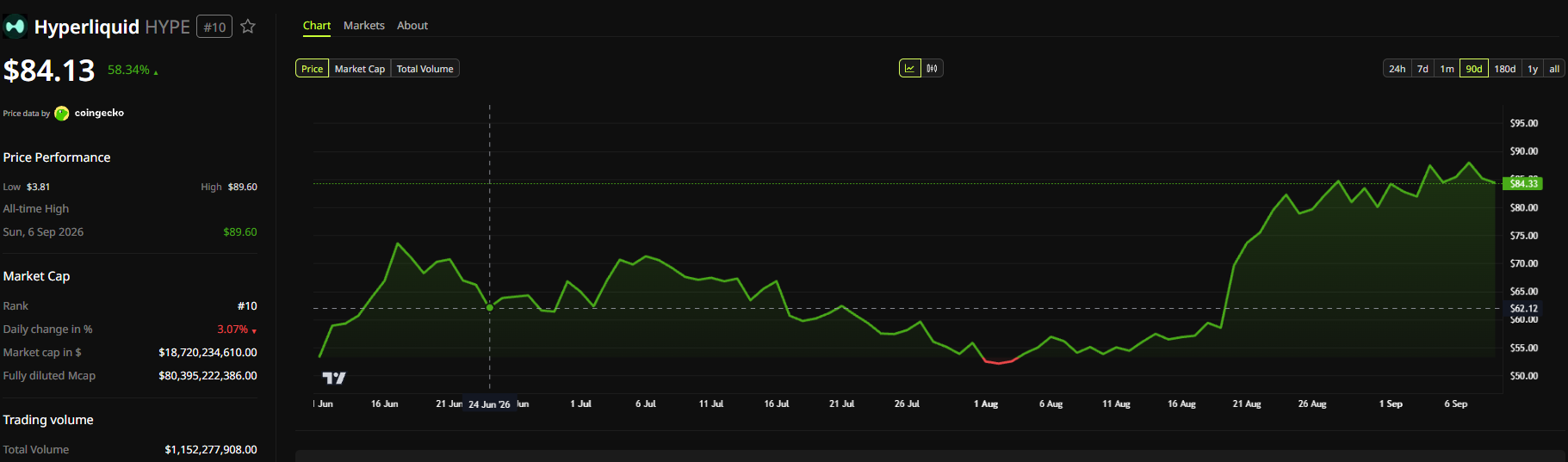
Everyone is waiting for the Hyperliquid Season 3 airdrop, Machi Big Brother posted on Monday. His fix is a Solana meme coin called Season 3 (S3), and he says it pays HYPE to holders.
Jeffrey Huang is the Taiwanese-American entrepreneur behind the account. His pick spiked early Tuesday, then gave back about three-quarters of the move within hours.
Machi Big Brother Says He Is Not the Dev
Huang framed the coin as a way to skip the wait. He also borrowed a phrase, “let’s dance,” from trader Ansem, who had used it days earlier for a different coin. Then he stepped back from the project itself.
That disclaimer matters given his record. In March, he absorbed roughly $75 million in liquidations on Hyperliquid. Days ago, he pulled his $1M Friend.tech offer.
The Hyperliquid Season 3 Airdrop Nobody Announced
Hyperliquid ran two-point phases, both before its Genesis Event. Farmers label them Season 1 and Season 2. The protocol never used the word season.
Nobody learned the exact rules either. Hyperliquid said only that its criteria changed on a recurring basis, and it never confirmed that points set the payouts.
That event released 310 million HYPE, or 31% of supply. No campaign and no payout have followed it.
Hope rests on the treasury. Another 388.88 million HYPE stays unminted for future emissions and community rewards.
HYPE itself trades around $84 after approaching record highs last weekend. Season 3 buyers are pricing a distribution that has no schedule.

The payout pitch does have a mechanism. Raydium lets token creators claim a cut of trading fees once liquidity reaches its main pools. Fees on the HYPE-quoted launchpad pool, therefore, arrive in HYPE.
S3 copies a template that is already running. Anonymous Cat, a Solana coin quoted in Zcash, opened on August 30 and now carries a $95 million market cap. Zcash, meanwhile, crossed $1,000 last week. Ansem promoted that one.
Neither coin runs on the chain it borrows from. S3 sits on Solana, not HyperEVM.
Liquidity stays thin. The HYPE pool carries about three-quarters of all S3 trading, near $3.6 million over 24 hours. It holds just $175,000 of depth. Total liquidity across every pool sits near $500,000.
Pools disagree on the price by more than 60%. Buyers are paying up for a claim that no named developer has confirmed.
The post Hyperliquid Season 3 Airdrop Wait Fuels a Meme Coin Machi Big Brother Promotes appeared first on BeInCrypto.

To generate and scale innovative AI solutions, leaders rely on a repertoire of interrelated roles, what we refer to as the “ABCs” of leadership: architects, bridgers, and catalysts.
Architects know they cannot mandate innovation; they foster the culture and capabilities that enable co-creation. These leaders start by raising their organization’s collective aspirations through a shared sense of purpose and values. By re-shaping the social environment of their organizations, these leaders encourage their colleagues to work through the inevitable conflicts of collaborating with others and the fear of failure. They reward thoughtful risk-taking, treat intelligent failures as learning opportunities, and provide people the tools, data, and perhaps most importantly, the permission to try.
Bridgers work at the boundaries of their enterprises, building trust-based partnerships with those outside their walls. No company, no matter how well-resourced, has all the talent and tools they need for innovation given the unprecedented pace at which technology is advancing. With AI, I hear that there is a shortage of individuals who know how to translate and work across technology and business. Technical experts who are developing AI solutions typically do not have the contextual intelligence about the realities of business and what customers want, while the businesspeople do not appreciate the opportunities and risks of implementing the technology.


Visa said on Sept. 8 that more than 160 stablecoin-linked card programs were operating globally during its fiscal second quarter of 2026, while their payment volume increased nearly 200% year over year.
Summary
- 160 stablecoin-linked Visa card programs were live globally during the company’s fiscal second quarter 2026.
- Payment volume across Visa’s stablecoin-linked card programs increased nearly 200% from the previous year globally.
- Visa’s stablecoin settlement volume surpassed a $20 billion annualized rate, rising more than fifteenfold year-over-year.
- Credit Coop says its platform financed $2.5 billion cumulatively since 2023 without recording any defaults.
- Participating card programs reduced borrowing costs by up to 30%, according to Visa’s published figures.
The payments company also reported that its stablecoin settlement volume had surpassed a $20 billion annualized run rate. That represents growth of more than 15 times from the corresponding period one year earlier.
Visa disclosed the figures while announcing expanded work with Credit Coop. The companies are using stablecoin-denominated revolving credit facilities to help card programs finance daily settlement obligations.
The statistics come from Visa and Credit Coop rather than independently audited transaction reports. An annualized run rate also projects recent activity over a full year. It does not mean Visa has already processed $20 billion in stablecoin settlement during 2026.
Visa stablecoin cards reach 160 live programs
Stablecoin-linked cards connect a customer’s crypto wallet or stablecoin account with Visa’s existing merchant network. The digital assets are converted or used to fund the transaction while the merchant receives payment through familiar card infrastructure.
Visa said payment volume across these programs grew nearly 200% year over year. The company did not publish the underlying dollar value, regional breakdown or transaction count in its announcement.
The latest disclosure updates figures Visa presented in June. At the time, it said more than 160 programs were either live or in development and that stablecoin settlement had reached a $7 billion annualized rate as of March.
The latest $20 billion figure suggests the settlement run rate has nearly tripled since March. However, the two figures cover Visa’s stablecoin settlement activity, not necessarily consumer purchases made through stablecoin-linked cards alone.
Card payment volume and settlement volume measure different processes. Payment volume covers purchases initiated by cardholders. Settlement volume covers money transferred between Visa and participating financial institutions or program operators. Visa previously placed its stablecoin settlement run rate near $7 billion while expanding pilots across more regions, blockchains and currencies.
Credit Coop finances the daily settlement gap
Visa’s announcement focused on a working-capital problem facing new stablecoin card programs. Operators must fund settlement obligations before receiving all corresponding payments from cardholders.
Large, established card portfolios can use warehouse credit lines or securitizations. Smaller programs may need only several million dollars, drawn and repaid daily. Legal and administrative costs can make conventional facilities uneconomical at that scale.
Credit Coop’s structure uses a stablecoin-denominated revolving credit facility secured by settlement receivables. Borrowers draw from the facility to meet their daily Visa obligations and repay the credit line as cardholder proceeds arrive.
Incoming receivables pass through Credit Coop’s Spigot smart contract. The contract automatically directs part of the proceeds toward principal and interest before transferring the remaining funds to the borrower’s operating account.
The process resembles a controlled bank lockbox. The difference is that the routing and repayment instructions execute through smart contracts, creating publicly visible transaction records.
Visa said Credit Coop receives authorized programs’ daily settlement files through a secure data connection. Credit decisions, facility sizes and repayment checks can therefore use both Visa records and onchain transaction history.
According to Visa, stronger access to settlement data helped reduce borrowing costs for some participating programs by as much as 30%. The company did not disclose individual interest rates or identify every program that received lower pricing.
Rain provides the first operating case
Rain, a Visa principal member offering stablecoin card infrastructure, has used a Credit Coop revolving facility since August 2023. The facility finances Rain’s daily Visa settlement requirements.
Credit Coop transfers funds to Rain based on the relevant Visa settlement file. Rain then funds its settlement obligation. Cardholder payments subsequently pass through smart contracts that service interest and replenish the facility.
Visa said every settlement obligation covered by the facility had been funded on time. Credit Coop reported more than $2.5 billion in cumulative financing since 2023, covering over 3,000 borrowing events and 9,000 repayment events.
Credit Coop also reported zero defaults across the platform. Those performance figures are company claims and have not been supported by a published independent audit.
Rain accounted for approximately $2 billion of the reported cumulative settlement financing. Visa said the arrangement had processed more than 2,000 borrowing events and 7,000 repayment events for Rain, generating at least $1.58 million in interest.
Rain previously confirmed that it joined Visa’s stablecoin settlement pilot. The company said it settles Visa card obligations in USDC seven days a week, including weekends and holidays.
Visa has also described Rain’s use of USDC-backed receivables financing in its broader work on onchain credit. The structure is intended to reduce the need for issuers to hold idle settlement capital.
U.S. card programs test the financing route
Karta, a U.S.-issued premium Visa card operating under Rain’s bank identification number, also launched using Credit Coop financing while developing its performance record.
Visa said Karta later announced $140 million in financing in June 2026. The package included a $15 million Series A led by Galaxy Ventures and a $125 million institutional credit facility from Community Investment Management.
Visa presented Karta as an example of an early card program moving from a smaller revolving facility to institutional financing. The company said Karta’s daily settlement history contributed to the record available to larger lenders.
Moto and Xplace also use Credit Coop financing under Rain’s issuing infrastructure, according to the announcement. Visa did not disclose their facility sizes, borrowing costs or settlement volumes.
The partnership adds a credit layer to Visa’s wider stablecoin strategy. In March, Visa and Stripe-owned Bridge announced that their card programs were live in 18 countries and planned to reach more than 100 countries by the end of 2026.
Bridge-enabled cards can be used through platforms including Phantom and MetaMask. Visa said customers could spend their balances across more than 175 million merchant locations, while merchants continue receiving conventional payments.
Visa linked cards and stablecoins with its wider programmable commerce strategy, including settlement pilots and payment tools for AI agents.
Visa plans just-in-time settlement funding
Visa and Credit Coop are now working toward just-in-time funding. Under the planned model, a program’s daily settlement file would trigger a stablecoin disbursement matching the exact net amount owed.
The funds would move directly to the relevant Visa settlement address. Programs would avoid drawing a full facility in advance and holding unused capital between settlement cycles.
Visa said this model could shorten borrowing periods from days to hours. Lenders could also align their exposure more closely with actual daily obligations instead of committing the entire credit line continuously.
The model remains dependent on accurate settlement data, reliable smart contracts and sufficient stablecoin liquidity. Operational failures could prevent a program from meeting a settlement deadline even when the credit facility remains adequately funded.
Credit Coop’s zero-default record does not guarantee future performance. Stablecoin depegging, contract vulnerabilities, borrower failures and changing regulations remain potential risks.
Visa has not announced a deadline for launching just-in-time funding across all 160 programs. It also has not disclosed which stablecoins or blockchains future facilities will support.
The next stage will involve extending the model to additional issuers and determining whether their onchain repayment records can support larger institutional facilities. Visa said it expects more programs to follow Karta’s path, but that remains a company forecast.
Crypto World
Stablecoins could save South Korean merchants up to $3.8 billion a year, budget office says


South Korea’s budget office warned that stablecoin adoption could reduce banks’ roles as credit intermediaries and potentially destabilize token pegs during mass redemptions.
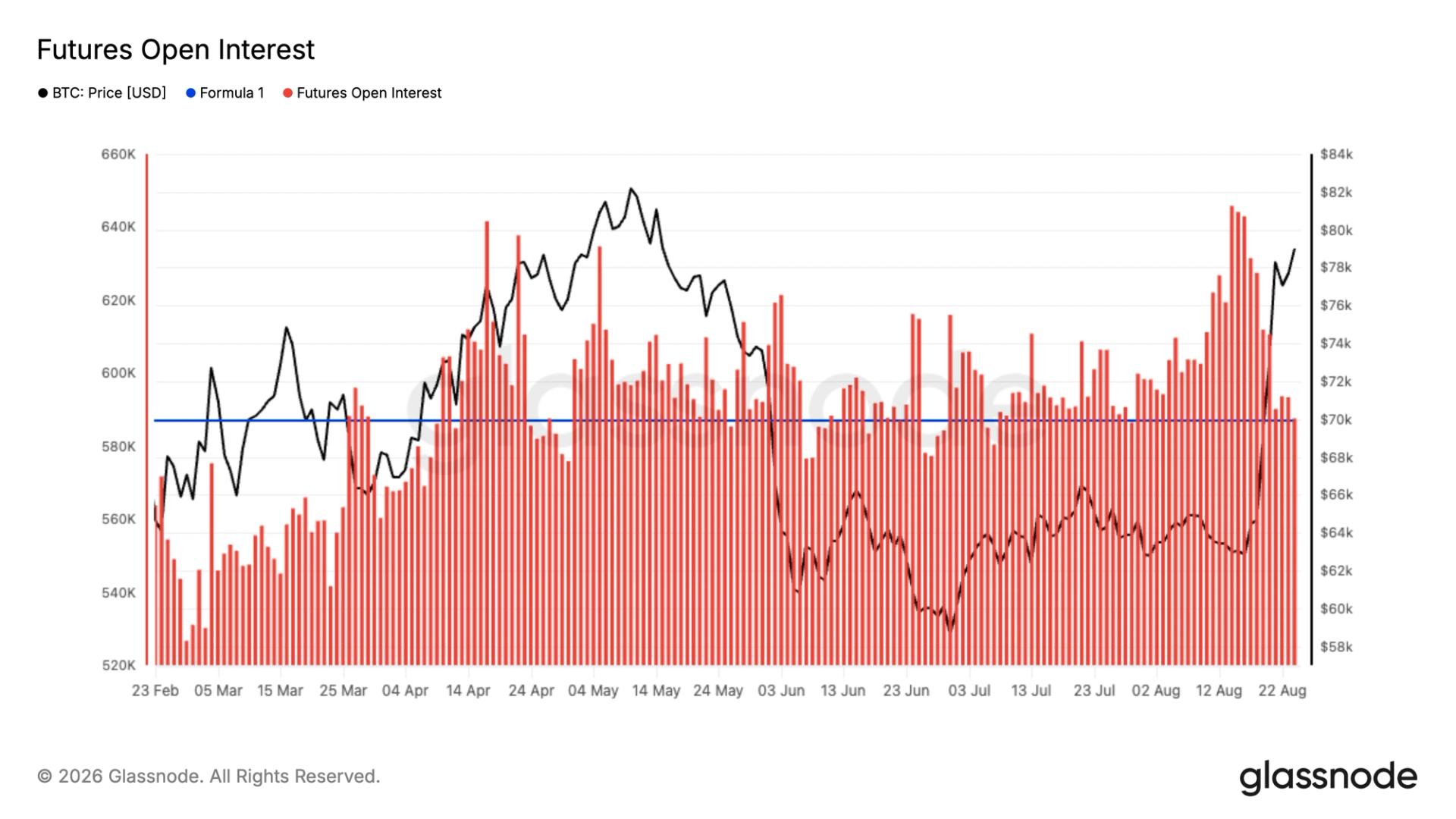
Falling open interest and subdued funding rates suggest the rally remains structurally healthy.
Crypto World
Bitcoin's surging price faces 1 key level that could signal if the bear market is really over
Your day-ahead look for Aug. 25, 2026


When governments ask people what truly matters to them, they cite things like being healthy, having a secure and affordable home, enough income to live with dignity, and time for the people they love. As the former leaders of Iceland and Scotland, we have heard concerns first-hand.
But these people-first priorities are not abstract ambitions. They are the conditions for a decent life, and ensuring they are met should be the first priority of any government.
And yet none of this is captured in the number that most economists, the media, and indeed, governments use to measure a country’s success: Gross Domestic Product (GDP), commonly referred to as economic “growth.”
To be sure, GDP has its uses as a measure of many of the goods and services a country exchanges and produces. But today, it is typically used in a way its architects never intended. For instance, a country’s GDP rises when a forest is felled and when an oil spill is cleaned up. It rises with financial speculation. But it does not rise when a parent cares for a child or a child for an elderly parent, when the forest is left standing, when a woman can walk home at night without fear, when voters turn out because they trust their institutions, or when a patient sees a doctor in days rather than months.
A new UN Framework, Beyond GDP, promises to change this by offering a dashboard of more meaningful indicators to complement GDP. Governments must now put this framework into action. Not simply by publishing new statistics, but by using them to set priorities, shape budgets, assess policies and be held to account publicly on whether people’s lives are genuinely improving.
Eight years ago, we set out to put the wellbeing of our people ahead of the narrow pursuit of economic growth. Together with New Zealand’s Jacinda Ardern, we founded the Wellbeing Economy Governments partnership, later joined by Wales and Finland, with Canada actively participating. We shared practical lessons about developing national wellbeing indicators, embedding them in government decision-making and ensuring that economic policy considers social and environmental outcomes alongside financial ones.
In Iceland, we introduced 39 wellbeing indicators, built on what people themselves told us they valued, and used them to inform policy. GDP became one measure among many, alongside life expectancy, unmet healthcare needs, material deprivation and work-life balance. Parental leave shows what this means in practice. We extended leave to 12 months, with six months reserved for each parent and six weeks transferable. In doing so, we recognized that care, family life, gender equality, and the economy are inseparable, and that fathers’ time with their children is worth protecting. The reform strengthened families and shifted expectations about work and who does the caring.
In Scotland, a Wellbeing Economy Monitor showed us how the economy was really performing for people, alongside a National Performance Framework of outcomes written into law and aligned with the Sustainable Development Goals. Policies followed: the doubling of early years education, a Baby Box to equalize children’s starts in life, the Scottish Child Payment to reduce child poverty directly, and Community Wealth Building to ensure public spending, land and assets create lasting value locally—an approach Scotland has since made the subject of the first national legislation of its kind anywhere in the world.
While these efforts are still evolving and not perfect, they represent an important shift in how governments understand prosperity. Changes in economic systems take time, but progress begins by changing—and being more explicit about—what we value. Our experience taught us that measuring what matters is only the beginning: wellbeing indicators must also shape budgets, policy decisions and how governments are held accountable. Legal systems need to support this too.
We were, and we still are, far from alone in this endeavor. Bhutan, for example, has been making the argument for more than 50 years. Its Gross National Happiness framework focuses on nine different dimensions of well-being such as living standards, health, education, and ecological diversity. Last year, Malaysia introduced a bold new roadmap that embeds public health, environmental sustainability and economic resilience. The National Planetary Health Action Plan moves away from a narrow focus on economic growth to prioritize the health of people and planet, replacing the short-term idea of return on investment with a “return on values.”
It is worth noting that wellbeing economy approaches often mirror the ways many Indigenous Communities have been providing for collective needs for generations. For example, Buen Vivir—living well together—comes from the Quechua peoples of the Andes, and has been written into the constitutions of Ecuador and Bolivia since 2008. And Aotearoa New Zealand’s wellbeing budget draws on Māori understandings of intergenerational wellbeing.
These ideas are finally moving from the margins into mainstream economic policy. A landmark UN report, written by a high-level expert group appointed by the UN Secretary-General after the Pact for the Future, proposes a dashboard of 31 indicators to sit alongside GDP, with recommendations for governments, business, academia, and civil society on how to bring this agenda to life.
Earlier this year, a roadmap for eradicating poverty without relying on endless growth was launched in Geneva, developed with more than four hundred contributors from governments, trade unions, social movements, UN agencies and universities. It sets out measures that already work in different places, from social protection and care; to tax, universal basic services, and the rights of nature; to the governance of trade, debt, and finance. That work and the work on measurement are currently proceeding separately. Bringing them together would be a valuable contribution of the intergovernmental process now underway.
The greatest risk now is a process in which governments agree in principle and move slowly in practice. New indicators alone will not be enough. The pursuit of growth at any cost is embedded far beyond the statistics: in how credit agencies rate a country’s debt, how finance ministries deem a budget responsible, and in the rarely-questioned assumption that more is always better.
What is needed is not further consensus but more early adopters: countries willing to pilot implementation and share honestly what they learn, supported by civil society, business and the UN itself.
The 2015 Sustainable Development Goals ask every country to sustain economic growth per person. As governments begin to design what will follow them, we have a chance to change the instruction and create a different approach.
After all, the responsibility of every leader is to ensure the wellbeing and safety of his or her people, and to do that, we need to go beyond GDP and think about what truly matters


Bitwise has launched three automated portfolios of Coinbase tokenized stocks for eligible non-U.S. investors, combining self-custody and automatic rebalancing for a 0.15% methodology fee.
Summary
- Bitwise’s first portfolios cover the Magnificent 7 plus SpaceX, robotics companies and artificial intelligence leaders.
- Glider automatically adjusts users’ wallet holdings to match model weights published by Bitwise.
- Investors retain the tokenized stocks in non-custodial wallets instead of transferring them into a pooled fund.
- U.S. persons cannot access the portfolios, and the SEC has not approved or endorsed them.
Bitwise tokenized stock portfolios begin with three themes
Bitwise said in an Aug. 25 announcement that its Automated Token Portfolios, known as ATPs, will let eligible users copy professionally designed stock models inside their own wallets.
Built by Bitwise Investment Manager, the rules-based models use Coinbase’s recently launched tokenized U.S. stocks. Glider, an independent platform, handles purchases and rebalancing after a user authorizes its session credentials.
The first three portfolios will become available through Glider over the coming weeks. Bitwise set a 0.15% methodology access fee, which does not include trading costs or separate platform charges collected by Glider.
One option, the Bitwise Mag7X ATP, gives equal weight to Apple, Microsoft, Nvidia, Alphabet, Amazon, Meta and Tesla, alongside privately held SpaceX. The Bitwise Robotics ATP will hold equal-weighted positions in companies involved in robotics and autonomous systems, including Tesla, Nvidia and Amazon.
For artificial intelligence exposure, the Bitwise AI Leaders ATP will include Nvidia, Microsoft, Alphabet, Meta, Amazon, SpaceX, Tesla and Sandisk. Bitwise identified the companies as leaders in developing or supporting AI products and infrastructure.
Unlike a conventional fund, each ATP publishes a target allocation rather than pooling capital under the asset manager’s control. Glider then executes the required transactions and adjusts the wallet when its holdings move away from Bitwise’s stated weights.
Self-custody replaces the pooled-fund structure
Under the arrangement, investors keep the tokenized shares in non-custodial wallets throughout the process. Bitwise does not hold the assets, initiate trades, or exercise discretion over an individual user’s account.
“For over a century, getting a professional model meant handing your assets to a fund. ATPs mean you can keep the assets in your own wallet, and the model comes to you,” Bitwise Chief Investment Officer Matt Hougan said.
Hougan added that the structure gives users direct ownership of the tokens while applying portfolio models normally offered through managed products. According to Bitwise, participants do not enter an advisory, fiduciary or contractual relationship with the company by selecting an ATP.
Because the stocks remain in compatible wallets, investors may be able to use them as collateral or deploy them through decentralized finance protocols. Bitwise cautioned that lending or borrowing against the tokens carries additional risks, including full liquidation of a position.
Glider co-founder and CEO Brian Huang said the product gives international users access to models designed by established investment managers through onchain infrastructure.
“Finally, we have global access to the same institutional managers we respect in traditional finance, but now in digital assets,” Huang said, adding that blockchain-based delivery offers functions unavailable through conventional brokerage accounts.
Coinbase stock tokens provide the underlying assets
Coinbase’s stock tokens operate on Base and represent beneficial interests in shares held through a segregated custody structure. As crypto.news reported on Aug. 25, the initial public rollout covered Apple, Nvidia, Meta and Alphabet under the B20 token standard.
Coinbase Onchain SPV Ltd., an entity incorporated in the Abu Dhabi Global Market, issues the securities. For each token issued, the special-purpose company initially holds one corresponding share through a segregated account, according to the product prospectuses.
Alpaca Securities, a U.S. broker-dealer registered with the Securities and Exchange Commission and a member of FINRA and SIPC, buys, sells and holds the underlying shares. Coinbase represents that the tokens are backed one-to-one and carry shareholder rights, subject to eligibility checks and the terms of the ADGM-approved prospectuses.
Bitwise said it has not independently verified Coinbase’s statements concerning the assets’ backing, shareholder rights or redemption terms. The manager also does not issue the stock tokens used by the ATPs.
Certain verified tokenholders may submit voting instructions to the Coinbase issuer, although the prospectuses state that voting remains subject to legal, timing and operational limits. Distributions may also face fees and tax deductions before their value is reinvested into additional tokens.
U.S. investors remain excluded from Bitwise ATPs
Despite tracking companies listed in U.S. markets, the ATPs and their underlying Coinbase securities are available only to eligible non-U.S. persons in supported jurisdictions. Bitwise defines the restriction by reference to Regulation S under the Securities Act of 1933.
The company said the products have not been registered for sale to U.S. persons. Bitwise’s registration as a U.S. investment adviser applies to its separate advisory business and does not mean the SEC has reviewed, approved or endorsed the ATP models.
Coinbase’s stock-token prospectuses also state that the securities have not been registered under the Securities Act or state securities laws. For non-U.S. holders, dividends are generally subject to a 30% U.S. withholding rate unless an applicable tax treaty reduces it, while the issuer charges a distribution fee equal to 5% of the gross payment before withholding and reinvestment.
The restrictions contrast with Dinari’s August U.S. rollout, which gave eligible American users access to tokenized S&P 500 shares through self-custody wallets. Dinari said its dShares are backed one-to-one by securities held in regulated custody and provide rights tied to dividends, voting and corporate actions.
Regulatory treatment in the United States remains under review. In June, reports indicated that the SEC was considering an exemption for tokenized stocks that could allow firms to test blockchain-based securities products under modified requirements, though no exemption covers the Bitwise portfolios announced on Aug. 25.
Bitwise adds ATPs to its onchain product lineup
The launch follows several additions to Bitwise’s onchain and model-portfolio business during 2026. In January, the company introduced its first Morpho vault, a non-custodial USDC lending strategy targeting annual returns of up to 6%, depending on market conditions.
Bitwise expanded its model-portfolio service for financial advisers in February with seven professionally constructed crypto allocations supported by systematic monitoring and rebalancing. During the summer, the company made its crypto models available to retail users through Parrot’s investment platform.
Earlier in August, Bitwise also partnered with Superstate on a separate plan to record ownership of selected Bitwise fund shares on a blockchain. The companies identified the Bitwise Solana Staking ETF as the first fund under consideration, although Bitwise said there was no assurance that tokenized shares of the ETF would launch.


Brent Kovar has been found guilty of running a crypto Ponzi scheme, defrauding at least 400 investors out of $24 million.


One wallet bought heavily into a yield token, which pushed the price of its paired principal token down just enough to trigger liquidations across borrowers using it as collateral.

Hyperliquid Season 3 Airdrop Wait Fuels a Meme Coin Machi Big Brother Promotes

Lindermann back to his best in 2026 Chelmsford Stakes

AMD GPUs are climbing the sales charts as Radeon beats Nvidia on Amazon and in Germany





-
 Tech17 minutes ago
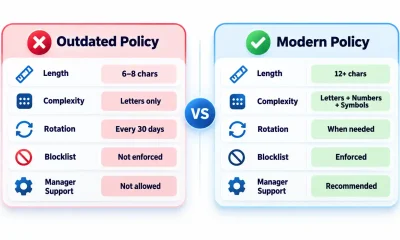
Strong Password Policy and Password Manager Guide
-

 Business27 minutes ago
model backs CBD drinks brand
-
 NewsBeat26 minutes ago
‘Shocking, disappointing, woeful’: Reaction to Wales’ fall in the global schools Pisa scores – live
-

 Entertainment22 minutes ago
Chiefs Reporter Reveals Patrick Mahomes Message After Dad’s Death
-

 Crypto World14 minutes ago
Visa expands stablecoin card network to 160 programs
-

 Crypto World28 minutes ago
Stablecoins could save South Korean merchants up to $3.8 billion a year, budget office says
-
 News Videos11 minutes ago
MASSIVE XRP RECORD SET! EVERYTHING CHANGES TODAY!!!
-
 NewsBeat19 minutes ago
I’ve spotted this luxury luggage brand in The Gentleman season 2
-
 NewsBeat12 minutes ago
Manchester United fans announce ticket protest before Manchester derby
-
 Entertainment9 minutes ago
5 Artists Who Need to Sing the Next James Bond Theme Song
-
 Sports16 minutes ago
India’s para archers shine with twin golds, silver at World Archery Para Series | More sports News
-

 Crypto World7 minutes ago
The Leaders AI Innovation Needs
-

 NewsBeat6 minutes ago
They’re resilient, low-effort and beautiful: how to plant a rubble garden
-
 Tech4 minutes ago
AMD GPUs are climbing the sales charts as Radeon beats Nvidia on Amazon and in Germany
-

 Business13 minutes ago
Qatar Warns Of ‘Industrial Catastrophe’ As Hormuz Crisis Deepens Amid Houthi Attacks On Saudi Arabia
-
 Sports3 minutes ago
Lindermann back to his best in 2026 Chelmsford Stakes
-
 Crypto World57 seconds ago
Hyperliquid Season 3 Airdrop Wait Fuels a Meme Coin Machi Big Brother Promotes
-
 Business20 minutes ago
LIC, HDFC Life, other stocks rise up to 3% as Aug new business premium jumps 33% YoY. What Nuvama, others are saying
You must be logged in to post a comment Login