
Crypto World
NFT investor Adam Weitsman’s X account hacked to shill ‘Clawed Ape Yacht Club’

The X account of scrap-metal billionaire and NFT investor Adam Weitsman was hacked on Thursday and used to promote a fake forex trading course and phony “Clawed Ape Yacht Club” memecoin.
The account has since been recovered by one of Weitsman’s associates, X user “@Gabrielesm1,” after an email exchange with an undisclosed party.
“I’ve secured it and everything is under control. I just hope his team doesn’t change the password again,” Gabriel said.
After other X users questioned what caused the hack, Gabriel explained that “Adam’s team changed the account passwords fours days ago so I wasn’t able to see the suspicious login notification.”
Users caught the account sharing two different scams. One was a forex coaching scam that promised it would be able to turn $800 into $50,000 within two hours.
Read more: ‘Biggest NFT trading platform on TRON,’ AINFT, has $6 in volume
The second was a screenshot of a phony Bored Ape Yacht Club (BAYC) memecoin called Clawed Ape Yacht Club (CAYC). The name is a riff off Open Claw, an AI agent project that also got its name from Anthropic’s AI project, Claude.
The post claimed to have put $100,000 worth of solana into the project and encouraged others to trade the CAYC token.
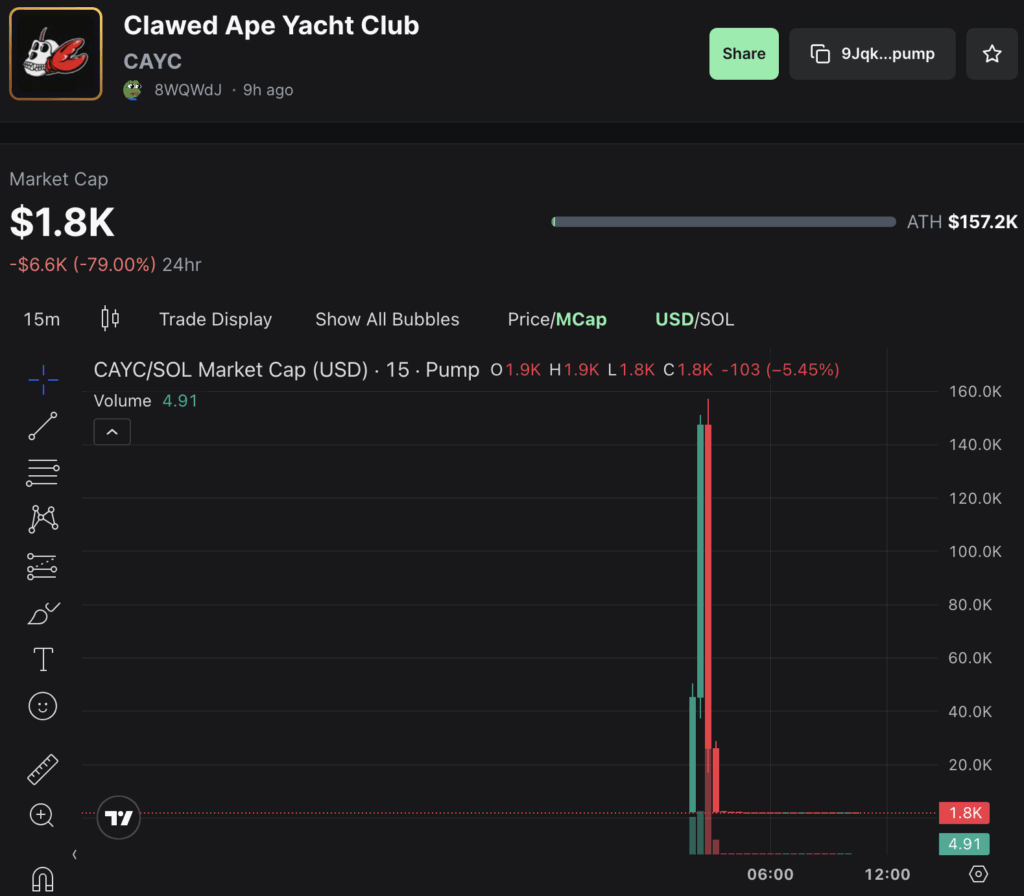
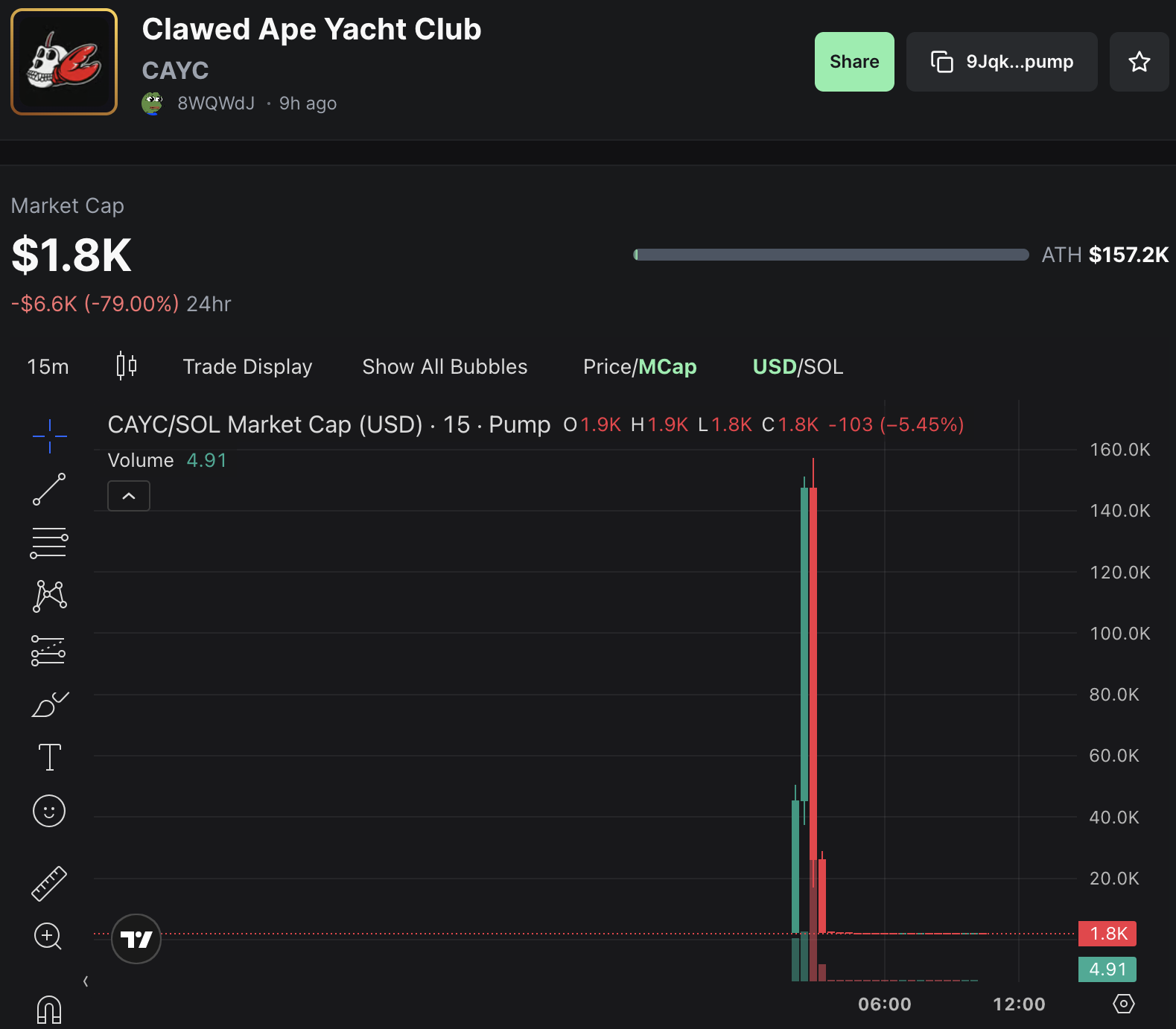
It correlates with a Pump Fun-launched memecoin that started trading late on Thursday. CAYC’s market cap jumped over 200% to $157,000 before plummeting to $16,000 minutes later.
Read more: Paul brothers business partner claims ‘0% rug pull risk’ with new memecoin
Weitsman’s NFT investment is down 71%
Weitsman made most of his riches founding and growing the scrap metal recycling firm Upstate Shredding — Weitsman Recycling back in 1997.
In 2025, Weitsman began to heavily invest in NFTs. He reached a multi-million-dollar deal with Yuga Labs, the owners of BAYC, to acquire 5,000 Otherdeed NFTs and make other acquisitions.
These NFTs are essentially digital plots of land that correlate with the Otherside, a so-called “metaRPG” created by Yuga Labs.
The Otherdeed NFTs have fallen 98.3% in price since the highs they saw at launch in 2022. Its market cap was worth over $1 billion in those first few days after launch, but it’s now worth just shy of $8 million.
Read more: Here’s what’s behind the fall of the Bored Ape Yacht Club
On the day Weitsman announced the deal with Yuga Labs, the market cap of Otherdeeds was $28 million, representing a 71% decrease to today’s value.
Weitsman told Now Media that his contract stipulates that he can’t sell the NFTs. He said, “I felt that would help with liquidity for other people, because they know that the biggest question is, ‘Are these going to come on the market?’ I want to stabilize that.”
Got a tip? Send us an email securely via Protos Leaks. For more informed news and investigations, follow us on X, Bluesky, and Google News, or subscribe to our YouTube channel.



The decentralized autonomous organization (DAO) behind Ethereum layer-2 network Scroll said it will propose a plan to dissolve its Security Council and transfer control of the network to an account managed by an internal team.
The proposal announcement comes two months after Scroll’s top fee-generating decentralized application (dapp), crypto neobank Ether.fi, moved to Optimism’s OP mainnet. That saw roughly 300,000 user accounts and more than $160 million in total value locked move away from the network.
In a governance update, a Scroll core contributor said the Security Council was simply too expensive. Scroll is laying off several contributors within the DAO and reducing the capacity of its operational committees. The handover is targeted for the next 10 days, pending support from the current council.
“After evaluating the Security Council’s cost relative to its actual usage over the past quarters, we believe continuation is no longer justified,” the post reads.
The project said all contract changes would be executed transparently and remain verifiable onchain.
Adding to the network’s turbulence, a recent surge in Scroll’s network fees appeared to be artificially manufactured rather than a sign of organic demand.
Over six days in early April, the network raised the amount it charges to publish data to the Ethereum mainnet by a factor of 1,280, creating the illusion of a massive spike in 30-day chain fee momentum, according to analysis from L2BEAT.
The adjustment forced users to pay over $50,000 in excess transaction fees for data posting that ordinarily would have cost roughly $280. The extreme, temporary repricing was rolled back on April 9.
Ether.fi’s migration moved around $13 million in annualized fees away from Scroll, according to DeFiLlama data, and trimmed the network’s TVL to around $23 million.
The XRP Ledger (XRPL) used by blockchain payments company Ripple has tapped Boundless, a zero-knowledge infrastructure provider, to let banks and asset managers execute confidential yet compliant transactions directly on the network, according to a Tuesday release shared with Cointelegraph.
Boundless chief executive Shiv Shankar told Cointelegraph the design aims to shield details like transaction size, frequency and counterparties from public view, while still allowing regulators to audit activity via selective disclosure and role-based access controls.
Boundless’ integration is meant to enable a range of institutional use cases that have historically been challenging to run on fully transparent ledgers. Those include cross-border business-to-business payments, treasury and capital management, over-the-counter positions, tokenized asset issuance and decentralized exchange or lending activity, where order flow and positions are highly sensitive, according to Shankar.
For public blockchains, that trade-off between transparency and confidentiality has become a central barrier to institutional adoption, as banks and asset managers seek to protect trading strategies and client activity without falling out of step with regulatory oversight.
The move positions XRPL in an increasingly competitive race to deliver bank-grade privacy on public blockchains, as institutions push to avoid what Shankar described as the “transparency tax” of fully visible onchain activity.
Privacy race expands across ZK and FHE approaches
In March, cryptography company Zama integrated its fully homomorphic encryption (FHE) stack with institutional tokenization platform T-REX, pitching its technology as a confidentiality layer for ERC-3643 securities (tokenized financial instruments that embed compliance rules into the token standard) on upcoming T-REX public networks.
Related: Moody’s brings credit ratings onchain with Canton Network integration
Other projects are betting on different flavors of zero-knowledge technology, including zkSync’s Prividium environment, which aims to anchor private institutional execution to Ethereum via ZK proofs while keeping raw transaction data off public view.
Shankar said that projects like zkSync require institutions to launch their own layer-2s, which involves greater investment and overhead. In contrast, Boundless deploys solutions via smart contracts, which he said allows institutions to “stay where the liquidity is” (on Ethereum), and “gain more flexibility on where they deploy their products.”
Shankar said the design aims to replicate the selective disclosure controls of traditional finance in an onchain environment, rather than forcing institutions to choose between privacy and compliance.
Privacy shifts from feature to core infrastructure
The rollout highlights how privacy is becoming a feature of base-layer and tokenization infrastructure rather than an optional add-on.
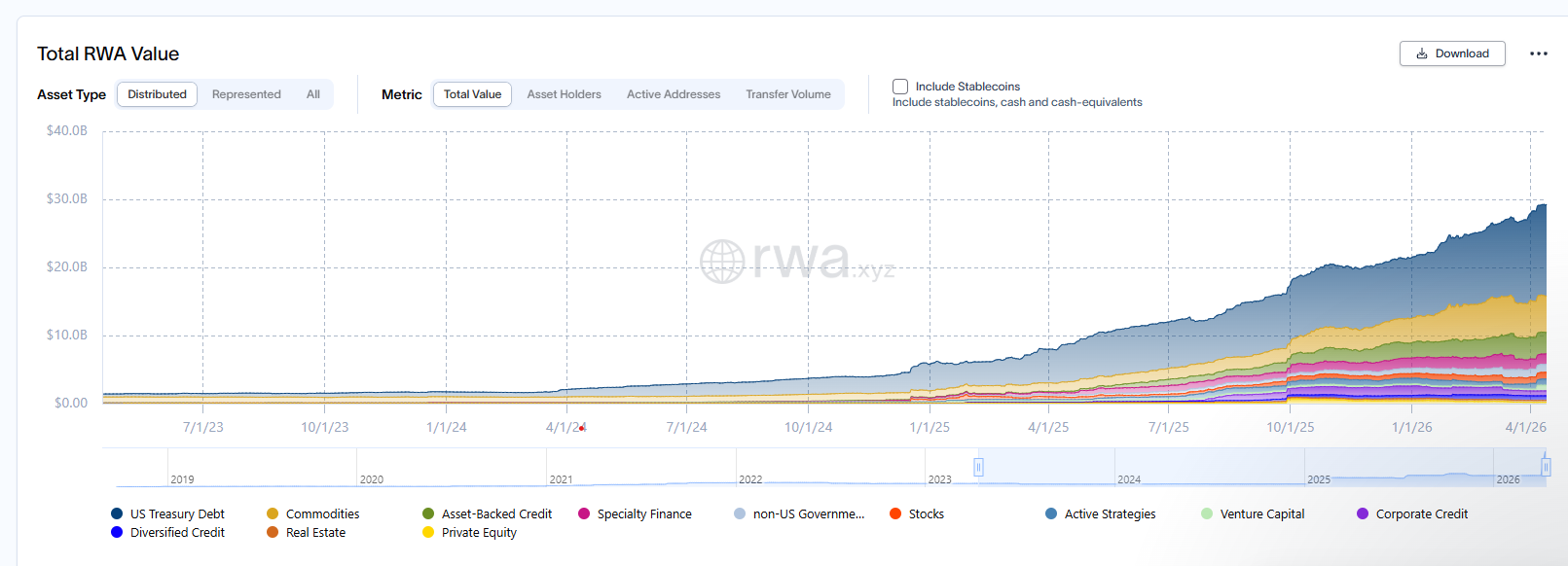
The tokenized asset market reached $29.25 billion in April 2026, up 7.9% in a month, according to data from RWA.xyz.

As more real-world assets migrate onchain and traditional players experiment with tokenized funds, deposits and securities, pressure is mounting on networks to accommodate both institutional secrecy and supervisory oversight.
Magazine: XRP yet to ‘price in’ 3 bullish catalysts, Bitcoin to $80K? Trade Secrets
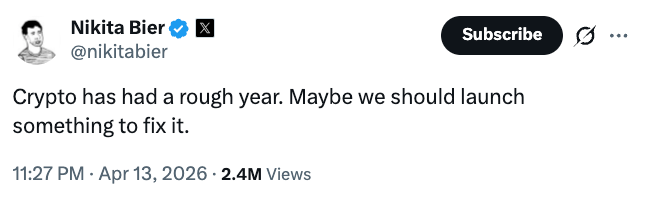
X’s head of product Nikita Bier hinted Tuesday that the platform could launch a crypto-related product, prompting speculation across the industry.
The post drew attention because it came just weeks before the expected launch of X Money, a payments and digital wallet product that Elon Musk has presented as part of his plan to expand X into a broader financial platform.
The post quickly drew responses across the crypto industry, prompting immediate speculation around X’s potential Bitcoin (BTC) revival, Solana-related initiatives, stablecoins as well as prediction markets.
Some users also questioned whether Bier’s ties to Solana could shape how any crypto initiative at X is perceived.
Cointelegraph asked X for comment but had not received a response by publication.

Bitcoin payments return to focus
Coinbase was among the accounts that floated Bitcoin as one possible direction, suggesting X could consider bringing the asset back into the platform’s product mix.
Though speculative, the idea echoes Bitcoin payment concepts previously explored under Twitter’s original leadership, when founder Jack Dorsey oversaw the rollout of Bitcoin tipping via the Lightning Network in 2021.

The feature was later phased out as Twitter’s creator monetization strategy shifted following Musk’s $44 billion acquisition of the company in 2022.
X Money launch expected this month
Bier’s post came as X prepares to roll out X Money, which has been in development since Musk acquired the social media platform. The project has faced pushback from US lawmakers, including Senator Elizabeth Warren, largely over concerns about access to users’ personal financial data and broader regulatory oversight.

Still, Musk said in March that X Money would launch in April.
Bier’s role at Solana Foundation
Nikita Bier joined X as head of product in June 2025, months after taking on an advisory role at the Solana Foundation in March.
Bier said he joined the project to help “select companies launch and grow their apps,” focusing on consumer-facing mobile products built on the network.
He said Solana had reached a stage where “apps can now top the charts,” adding that his role would involve helping promising companies scale and achieve mainstream mobile adoption.

Some community members have expressed skepticism about X’s potential “fix crypto” move, citing Bier’s ties to Solana.
Related: X mulls new rules for first-time crypto posts amid tortoise scam
“No clue what he’s launching, but my intuition is that it’s not good,” Pledditor wrote on X, pointing to Bier’s role at Solana.
Some users also noted Musk’s repeated public support for Dogecoin (DOGE), adding to skepticism around X’s plans.
Magazine: Should users be allowed to bet on war and death in prediction markets?
Pi Network has completed a major protocol update that brings it even closer to launching full smart contract capabilities on the network.
Summary
- Pi Network rolled out mainnet v21, moving closer to full smart contract support and improved network performance.
- Launch of a testnet RPC server will allow developers to build and test dApps ahead of mainnet deployment.
- Despite upgrades, Pi Network price remains under pressure, with a bearish breakdown pointing to a potential drop toward $0.131.
In an April 14 X post, the Pi Network team revealed that the Pi mainnet has successfully been upgraded to version 21, which introduces several critical performance enhancements.
This milestone is part of a series of strategic improvements intended to expand the ecosystem’s functionality. The most important one will be the introduction of smart contracts to the network, which will enable developers to build decentralized applications in a more efficient and scalable manner.
As such, the Pi team urged node operators to update their systems to the latest software version immediately. It also promised to share more details regarding the upcoming version 22 update soon, which is expected to further refine the network infrastructure.
Another major development shared by the development team is the launch of an RPC server on the Pi Testnet. This tool will enable developers to build, test, and deploy smart contracts before they go live on the main network. Besides this, it will also enable smoother integration with third-party wallets and analytical tools.
Once fully implemented, the upgrade will make Pi Network a direct competitor to other popular chains such as Ethereum or Solana, with the aim of boosting Pi token utility over time as new applications continue to be built on the network.
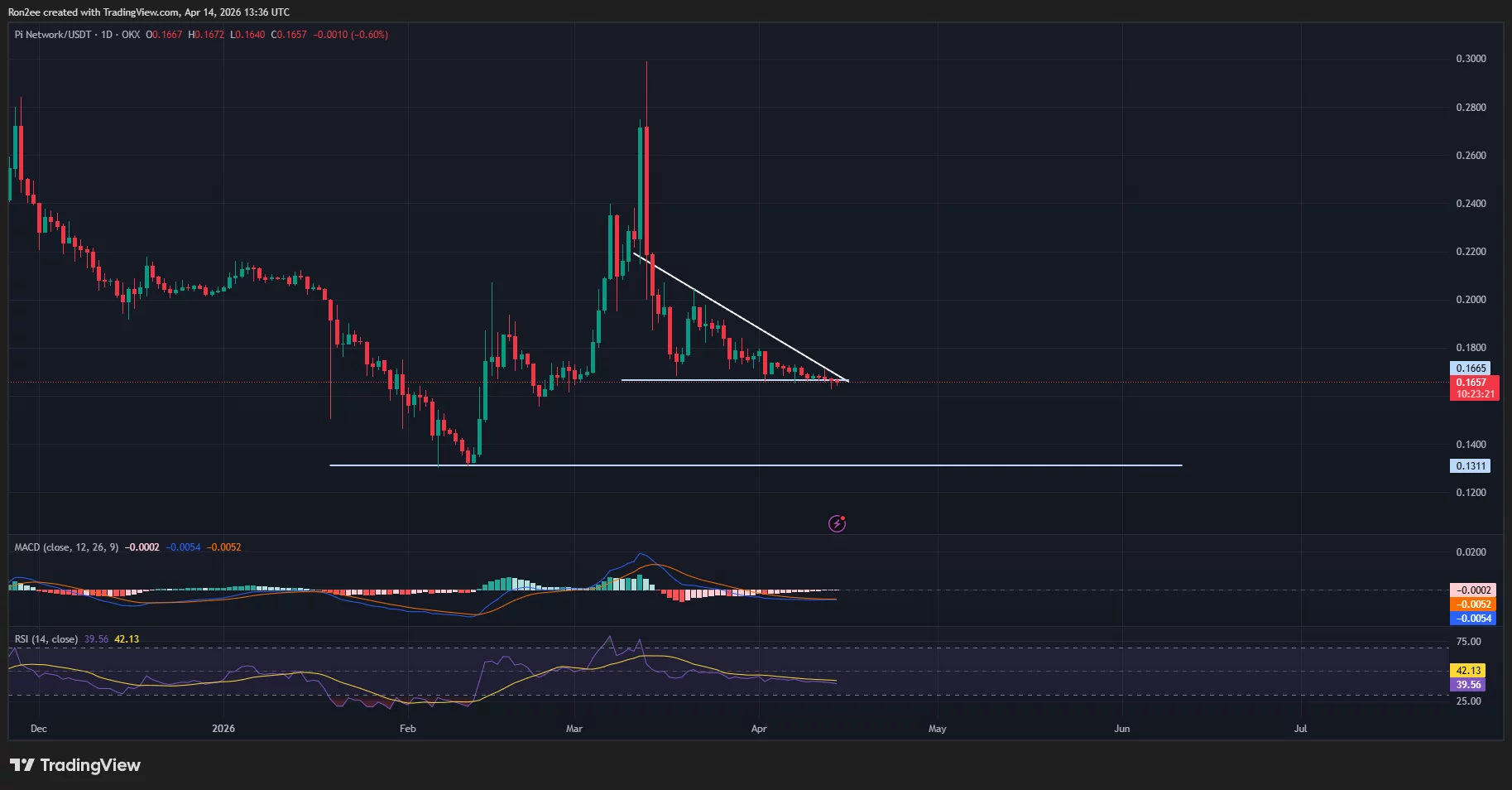
Pi Network (PI) price initially rose slightly higher to $0.167 on the day before paring off with all of its gains and settling at $0.165 at the time of writing. The token has been in a steady downtrend since late March, during which it fell by approximately 15%.
On the daily chart, Pi Network price has formed a descending triangle, a highly bearish pattern, over the past month. It confirmed a bearish breakout from the pattern as it fell below the lower horizontal trend line at $0.166.
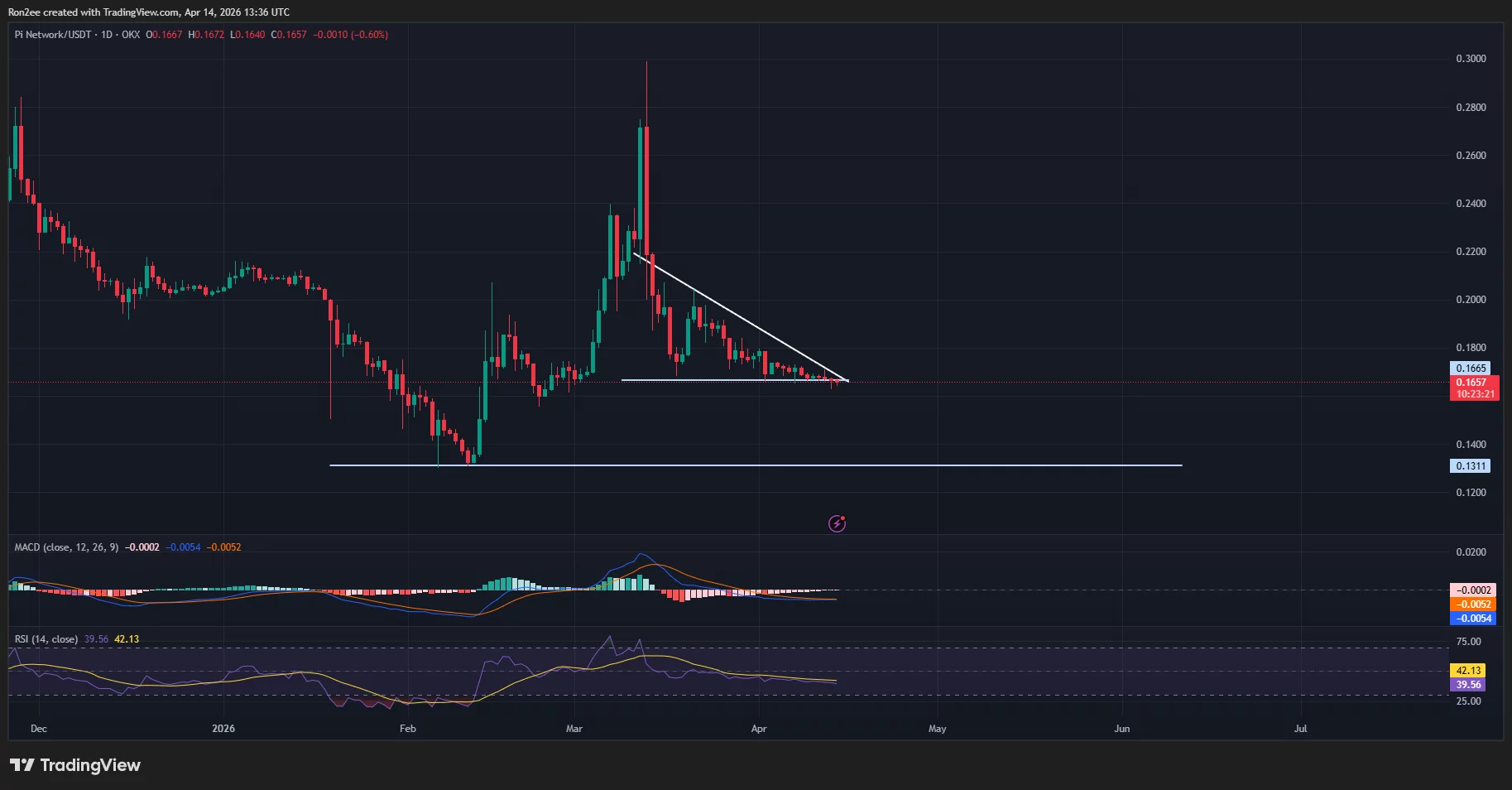
Hence the path of least resistance for Pi Network price suggests a move downwards towards the Feb. 11 low of $0.131.
Momentum indicators such as the MACD and RSI strongly support the bearish forecast as they pointed downwards, suggesting that selling pressure remains dominant for now.
Disclosure: This article does not represent investment advice. The content and materials featured on this page are for educational purposes only.
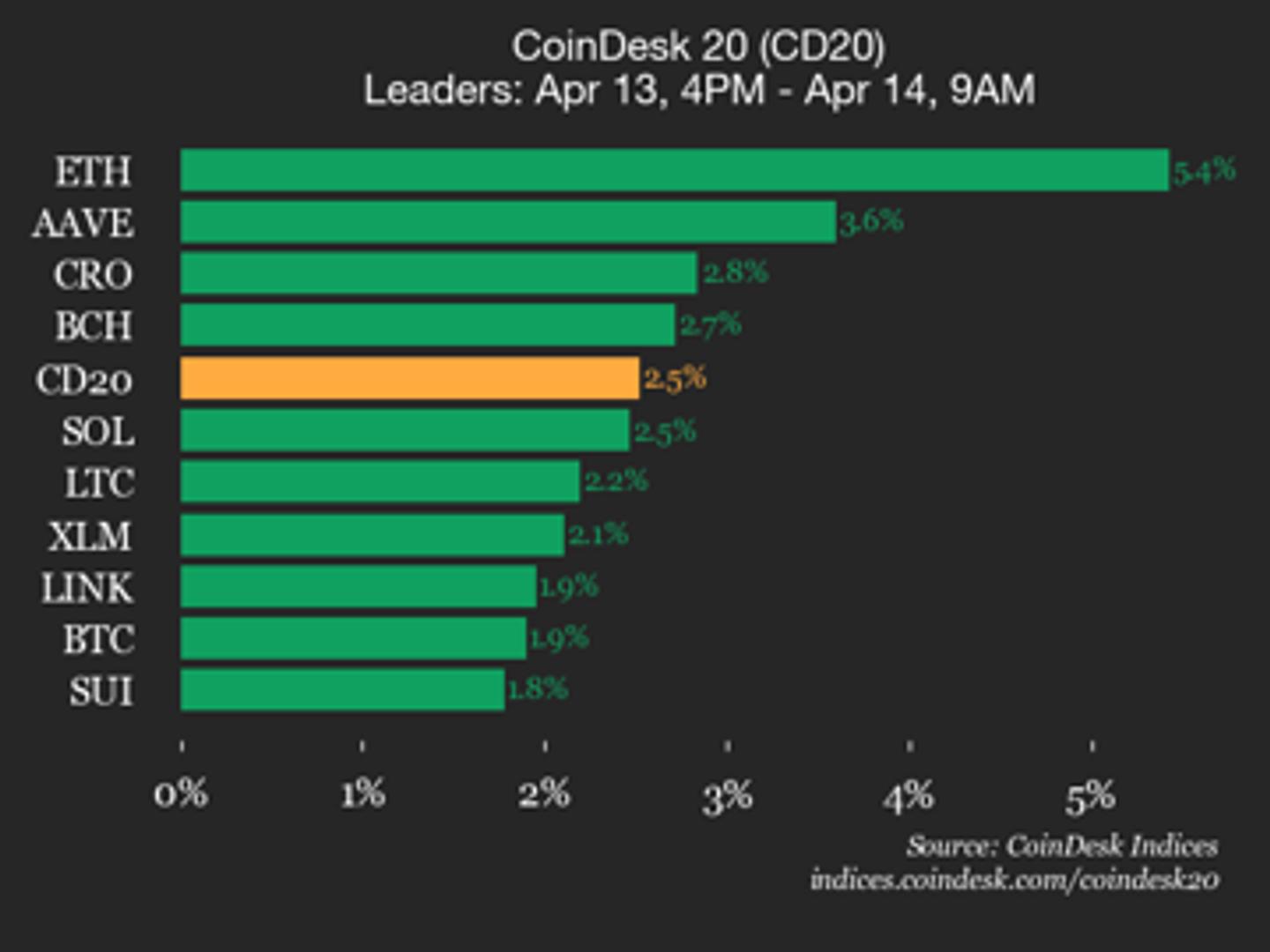
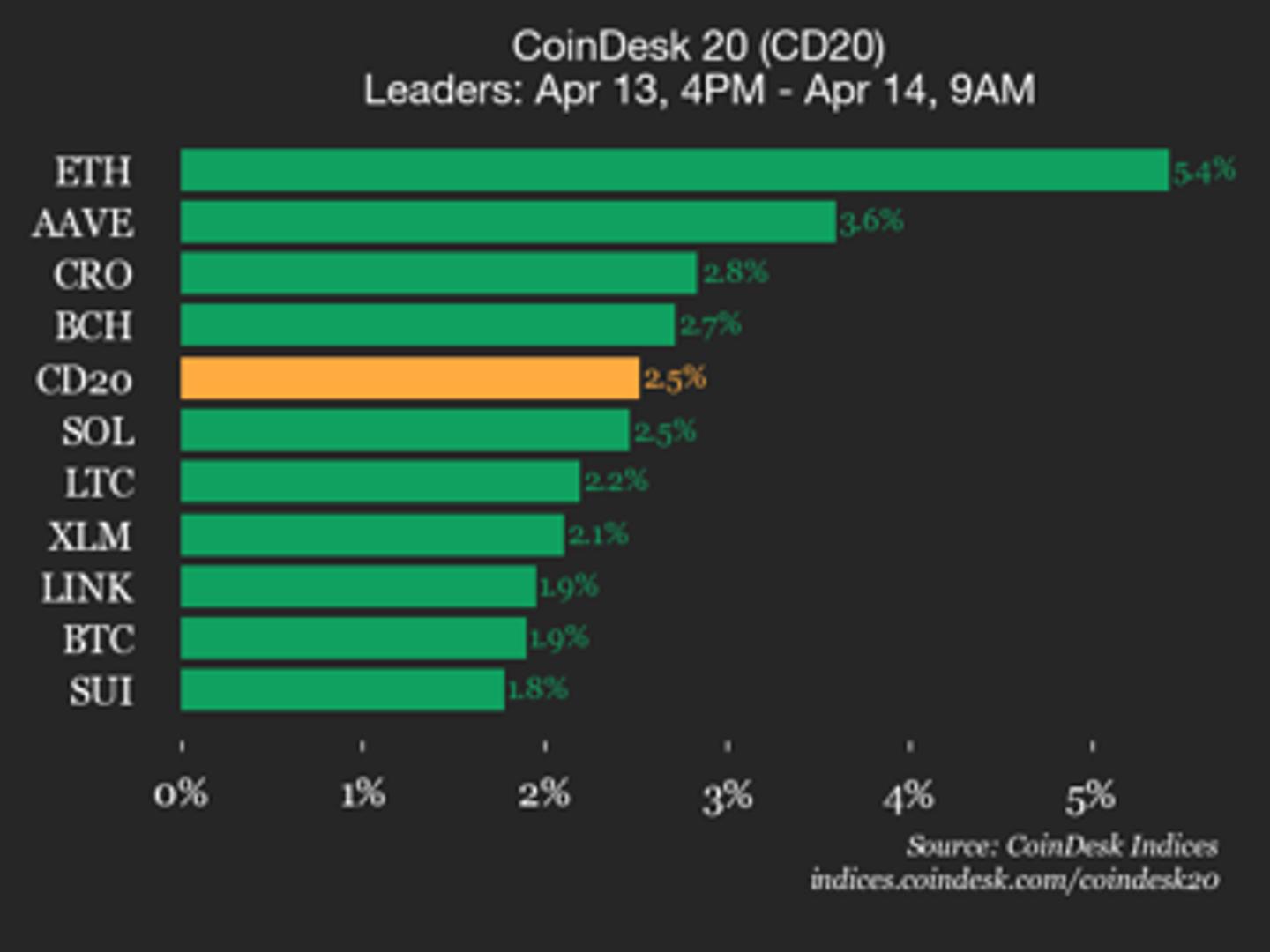
Aave (AAVE), up 3.6% from Monday, joined Ethereum as a top performer.


The crypto market rose 4.3% on Tuesday, moving above the $2.6 trillion mark after reports emerged that Iran could be considering ending the war, as the U.S. naval blockade on Iranian traffic through the Strait of Hormuz continues to apply pressure.
Summary
- Crypto market cap jumped 4.3% above $2.6T as easing U.S.-Iran tensions boosted risk appetite.
- Bitcoin hit a 4-week high near $74.8K while $430M in short liquidations accelerated the rally.
- Cooling U.S. inflation data strengthened rate cut hopes, further supporting crypto prices.
Bitcoin (BTC) price rallied nearly 6% to a 4-week high of $74,788 today before paring off some of its gains and settling at $74,279 at the time of writing. Ethereum (ETH) was up 8%, perched at $2,363, while other major crypto assets such as BNB (BNB), XRP (XRP), Solana (SOL), and Dogecoin (DOGE) saw gains ranging between 2–5%.
Some of the top gainers of the day were RaveDAO (RAVE) with 86%, Algorand (ALGO) with 9%, and Canton (CC) with 8%. As crypto prices surged, it triggered over $430 million in short liquidations across crypto leveraged markets, forcing bearish traders to buy back crypto assets from the market, which further added upside momentum to the crypto market rally.
The Crypto Fear and Greed Index showed a reading of 54 in the neutral threshold, a sign that market sentiment has relatively eased as signs of potential de-escalation in the Middle East conflict appear.
Crypto prices moved higher today after reports emerged that Iran may be considering abandoning its uranium enrichment plans to negotiate for an end to the U.S.-Iran war. Notably, US President Donald Trump revealed that Iranian officials have called his administration and “want to work a deal.”
This comes just a day after the U.S. enforced a naval blockade on the Strait of Hormuz in an attempt to intercept military vessels moving to and from Iranian ports. However, the blockade excludes non-Iranian vessels, which helped calm immediate fears of a total global supply chain collapse.
The Iranian government, for its part, had earlier accused the US of committing piracy as thousands of Iranians rallied in Tehran against the blockade. They further warned that they would retaliate if any threats were directed against civilian ships and vessels.
Iran’s fresh attempt at diplomacy has reignited hope of a more concrete ceasefire being put in place, which could potentially lead to an end of the war and reopen the strait to normal traffic. Pakistan is reportedly offering to host the next round of talks between te in Islamabad.
Shortly following the news, crude oil prices fell from above $119 yesterday to approximately $88 as G7 and IEA reserve releases hit the market, reducing global inflation fears and favoring risk assets like crypto.
U.S. macro data points to cooling inflation
Crypto prices also benefited from recent macroeconomic data that pointed to moderating inflation trends. Notably, the PCE Price Index, the Federal Reserve’s preferred inflation gauge, released earlier this month, showed inflation holding relatively steady and offered some relief to markets.
Furthermore, JOLTS Job Openings came in below expectations, suggesting a softening labor market, while GDP growth remains steady but controlled.
Taken together, these indicators suggest that inflation pressures may be gradually easing, increasing the likelihood that the Federal Reserve could consider adjusting its policy stance later this year, a backdrop that tends to support risk assets like crypto.
Disclosure: This article does not represent investment advice. The content and materials featured on this page are for educational purposes only.
Crypto World
Nexo Becomes the official digital asset partner of Argentina’s national football team in LATAM


Disclosure: This article does not represent investment advice. The content and materials featured on this page are for educational purposes only.
Nexo partners with the Argentine Football Association (AFA) ahead of the 2026 FIFA World Cup, reinforcing the company’s expansion in South America.
Summary
- Nexo partners with Argentina’s national team as regional digital asset sponsor ahead of 2026 World Cup
- The deal strengthens Nexo’s expansion in Argentina following Buenbit acquisition and local hub launch
- Nexo and AFA formalize partnership in Buenos Aires, marking push into South American crypto market
BUENOS AIRES, Argentina, April 14, 2026 — Nexo, the premier digital assets wealth platform, today announced a partnership with the Argentine Football Association (AFA), becoming the Official Regional Digital Asset Partner of the Argentine National Football Team across South America ahead of the 2026 FIFA World Cup.
The agreement deepens Nexo’s expansion in Argentina, where the company recently acquired the leading platform Buenbit and is establishing Buenos Aires as a regional hub with its local team.
Federico Ogue, CEO at Buenbit by Nexo, said: “Argentina’s national team represents the highest level of sporting excellence, built on talent, conviction, and an unrelenting will to win. At Nexo, we share that standard. As we grow our presence in Argentina and across South America, partnering with AFA is a statement of commitment to this region and the clients we serve here.”
Official partnership ceremony
The partnership was officially launched at a gala ceremony in Buenos Aires, where Nexo and AFA executives signed the agreement before invited guests, media, and partners. The event marks the formal beginning of the collaboration ahead of the 2026 FIFA World Cup.
Leandro Petersen, Chief Commercial & Marketing Officer of the AFA, said: “We are excited to announce a new partnership with a strong global reach that aligns with the Argentine
Football Association’s international growth strategy, which we have been building in recent years through agreements with leading companies in innovation and technology. In this context, Nexo’s arrival as the Official Digital Assets Partner of the Argentine National Team reflects not only the growth of our brand globally but also the growing interest of international companies in partnering with Argentine soccer and one of the world’s most prominent national teams.
Success in elite sports, just as in business, is based on a clear strategy, discipline, and the ability to perform at the highest level when it matters most. Collaborating with partners who share this mindset allows us to continue expanding our ecosystem and create meaningful opportunities to connect our players, our brand, and millions of fans around the world.
Partnership activations
Nexo is starting a global ticket giveaway campaign for Argentina’s World Cup matches, open to new and existing clients. Signed squad shirts and co-created player content with Messi, Lautaro Martínez, Julián Álvarez, and Nico Paz will be distributed across the campaign window running from May through the end of the tournament. Nexo’s program will incorporate match-day experiences and squad merchandise, such as tier-linked rewards, connecting platform activity directly to the campaign.
Nexo is committed to global premium sport, serving as the Official Crypto Partner of the Australian Open and Summer of Tennis, the Official Digital Wealth Platform of the DP World Tour, and the Official Partner of the Audi Revolut Formula 1 Team.
Ahead of 2026 FIFA World Cup
The partnership adds a further dimension to Nexo’s U.S. relaunch. In February 2026, Nexo re-entered the United States market under a regulated framework, marking its first operational return to the country. Argentina arrives at the World Cup as reigning champions, competing across North American stadiums.
About Nexo
Nexo is a premier digital assets wealth platform designed to empower clients to grow, manage, and preserve their crypto holdings. Our mission is to lead the next generation of wealth creation by focusing on customer success and delivering tailored solutions that build enduring value, supported by 24/7 client care.
Since 2018, Nexo has provided unmatched opportunities to forward-thinking clients in over 199 jurisdictions. With over $8 billion in AUM and over $403 billion processed, we bring lasting value to millions worldwide. Our all-in-one platform combines advanced technology with a client-first approach, offering high-yield flexible and fixed-term savings, crypto-backed loans, sophisticated trading tools, and liquidity solutions, including the first crypto debit/credit card. Built on deep industry expertise, a sustainable business model, robust infrastructure, stringent security, and global licensing, Nexo champions innovation and long-lasting prosperity.
For more information, visit the official website.
About the Argentine Football Association (AFA)
Founded in 1893, the Argentine Football Association (AFA) is the governing body of football in Argentina and one of the oldest football associations in South America. AFA oversees the Argentine national team — the Albiceleste — three-time FIFA World Cup champions and current title holders, as well as the structure of Argentine club football.
Disclosure: This content is provided by a third party. Neither crypto.news nor the author of this article endorses any product mentioned on this page. Users should conduct their own research before taking any action related to the company.
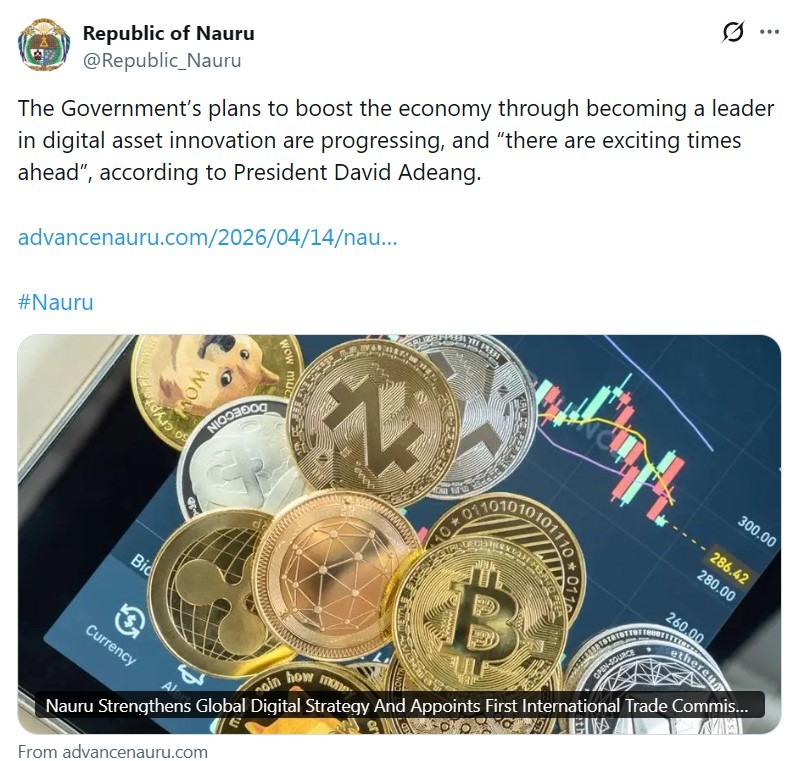
Nauru has appointed crypto entrepreneur Dadvan Yousuf as an international trade commissioner to help advance its digital asset strategy and attract global investment.
In a statement on Tuesday, President David Adeang said the appointment is part of the Pacific nation’s efforts to strengthen international partnerships and position itself as a hub for virtual asset activity. The government said Yousuf will support cross-border engagement with virtual asset service providers, financial institutions and technology firms.
The move comes less than a year after Nauru passed legislation establishing the Command Ridge Virtual Asset Authority (CRVAA), a dedicated regulator tasked with licensing and overseeing crypto firms, digital banks and other virtual asset activities.
The appointment marks a shift from establishing Nauru’s crypto regulatory framework to actively promoting itself as a jurisdiction for digital asset companies and investment, as the country says it is seeking new revenue streams and greater economic resilience.
Yousuf has previously been linked to regulatory action in Switzerland. In 2023, the Swiss Financial Market Supervisory Authority (FINMA) said a crypto project he founded sold millions of dollars in tokens without the required license and described the platform as non-operational, issuing cease-and-desist orders.

Nauru expands crypto push with trade appointment
According to the United Nations, Nauru is a Pacific island state in Micronesia, northeast of Australia, with about 21 square kilometers of land and roughly 12,500 people, making it the world’s third-smallest country and smallest island nation.
Adeang said Nauru’s digital asset push is intended to improve economic resilience and living standards while committing to international governance and compliance standards.
He previously said in August 2025 that Nauru, ranked among the most vulnerable to economic and climate shocks, is seeking to change its trajectory through new economic strategies.
Related: IMF guides Andorra to record and monitor Bitcoin transactions
The appointment adds a new outward-facing element to that strategy by pairing Nauru’s regulatory ambitions with a known figure in crypto circles.
In the announcement, Adeang said Yousuf brings “a unique combination of entrepreneurial vision, international network, and deep understanding of digital asset markets.”
Yousuf had previously attracted attention in the crypto sector after raising a Bitcoin flag atop Mount Everest in 2024. The Bitcoiner said the expedition was intended to highlight disparities in access to financial education.
Nauru surfaced in FTX-linked memo before crypto push
Nauru previously surfaced in crypto headlines in 2023 after court filings in the FTX bankruptcy revealed a memo proposing the purchase of the Pacific island nation using allegedly misappropriated funds.
The plan, linked to Gabriel Bankman-Fried, Sam Bankman-Fried’s brother, outlined building a bunker to survive a global catastrophe. However, Gabriel’s representatives denied involvement in drafting or endorsing the plan.
Magazine: Should users be allowed to bet on war and death in prediction markets?


Nigel Farage is facing calls for a formal regulatory probe into his financial involvement with the cryptocurrency firm Stack BTC following his appearance in the company’s promotional content.
Summary
- Nigel Farage is under scrutiny from the Financial Conduct Authority following a request from the Liberal Democrats to investigate his financial involvement and promotional activities with Stack BTC.
- The investigation focuses on whether the Reform UK leader breached market rules by appearing in promotional videos for the firm while holding a 6.31% stake in the business.
The Liberal Democrats sent a letter to the Financial Conduct Authority (FCA) requesting an investigation into whether the Reform UK leader violated market rules by appearing in marketing videos while holding a financial stake in the business.
Daisy Cooper, the party’s deputy leader, raised concerns that the move could compromise the integrity of the financial markets.
“The FCA must investigate whether Farage’s plans to cash in on Crypto could potentially amount to market abuse and a conflict of interest,” she wrote.
Stack BTC, which is chaired by former Chancellor Kwasi Kwarteng, recently announced the purchase of 37 Bitcoin for approximately $2.7 million as part of a strategy to build its corporate treasury.
In a video released to coincide with the disclosure, Farage appeared on behalf of the firm to argue that a Bitcoin treasury company is essentially required to hold the digital asset.
This acquisition brings the company’s total holdings to 68 Bitcoin, bought at an average price of $72,400 per coin.
Records indicate that Farage has significantly increased his personal stake in the sector, having disclosed a $286,000 equity investment in Stack BTC this March. This gave him a 6.31% share in the company through his media vehicle, Thorn In The Side.
Cooper suggested that the intersection of Farage’s political platform and his private investments needs to be looked at more closely.
“Taken together, these facts beg the question whether Mr Farage is promoting cryptocurrencies through his political platform in order to inflate crypto values for his own financial benefit, as well as that of his party and his inner circle of donors,” she wrote.
The controversy unfolds as the UK government moves to tighten the rules surrounding digital assets and political influence.
Last month, the Rycroft Review recommended a moratorium on cryptocurrency donations to political parties, citing fears that such funds could be used for foreign interference in British elections.
Prime Minister Keir Starmer has since moved forward with this proposal, implementing a temporary ban while the government develops more robust safeguards.
This regulatory pressure comes at a time when Reform UK is already under the spotlight for its funding, having received a record £9 million donation from early crypto investor Christopher Harborne.
While Farage continues to push for crypto-friendly policies, members of parliament are increasingly advocating for a permanent ban on digital asset donations to ensure that financial markets are not used as a “personal piggy bank” for political figures.
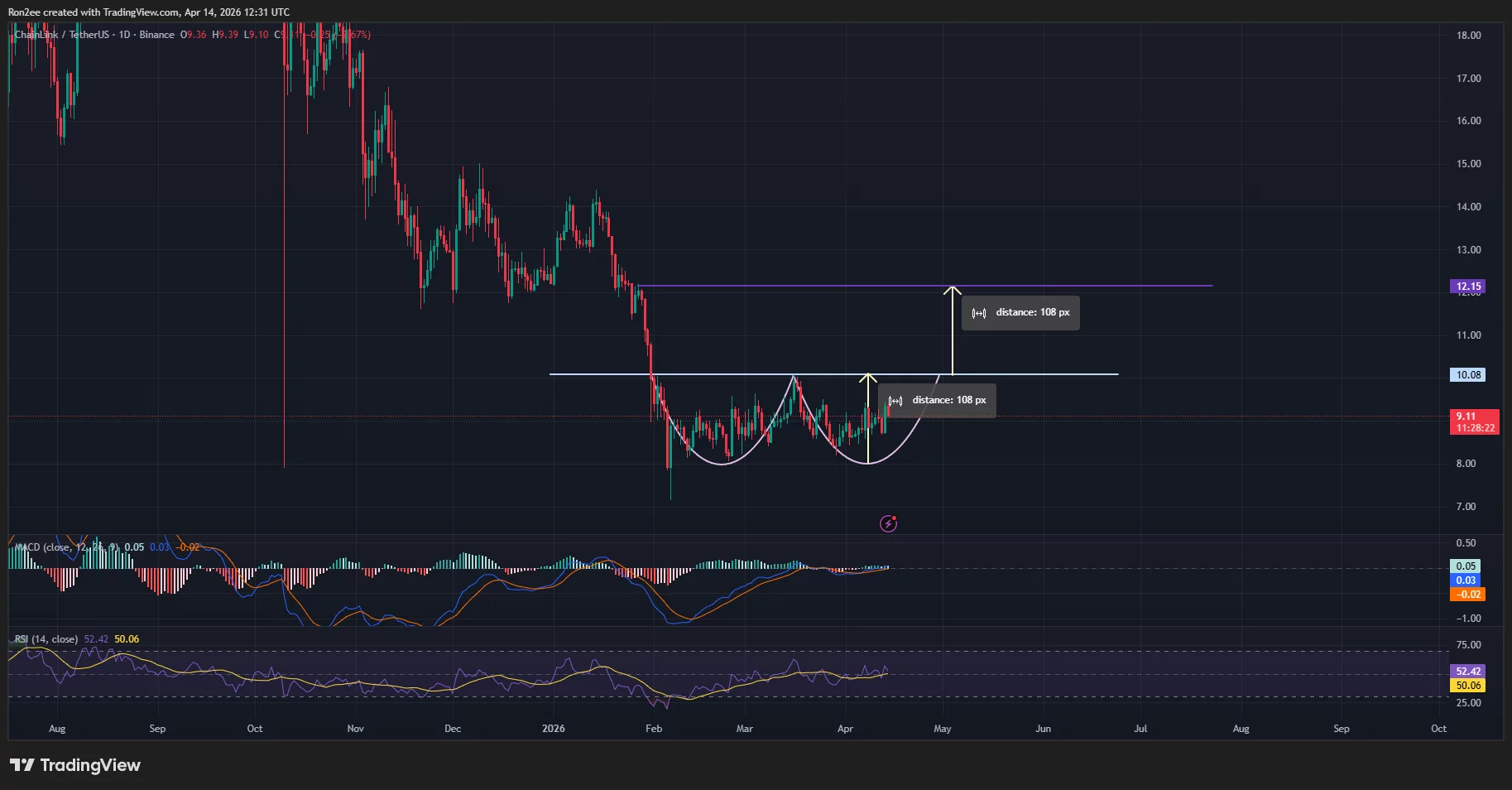
Chainlink price is forming a major bullish reversal pattern that could ultimately lead to a potential surge to $12 over the coming weeks.
Summary
- Chainlink price rose to $9.40, up ~13% from monthly lows, as a bullish reversal pattern takes shape.
- A double bottom formation points to a potential breakout above $10, with a projected upside toward $12.
- Whale accumulation and declining exchange reserves signal growing long-term confidence and reduced selling pressure.
According to data from crypto.news, Chainlink (LINK) price rallied nearly 8% to $9.40 on Tuesday, locking in gains of nearly 13% from its lowest point over a monthly period. Despite this, the token remains down nearly 25% below from where it started this year.
The 17th largest crypto asset by market cap is showing a highly bullish reversal pattern that suggests the token could be close to a breakout soon.
On the daily chart, Chainlink price appears to be completing a double bottom pattern, which is one of the most popular bullish signs in technical analysis. A breakout from the neckline of such a pattern has historically been followed by strong upside in a related asset for multiple sessions.
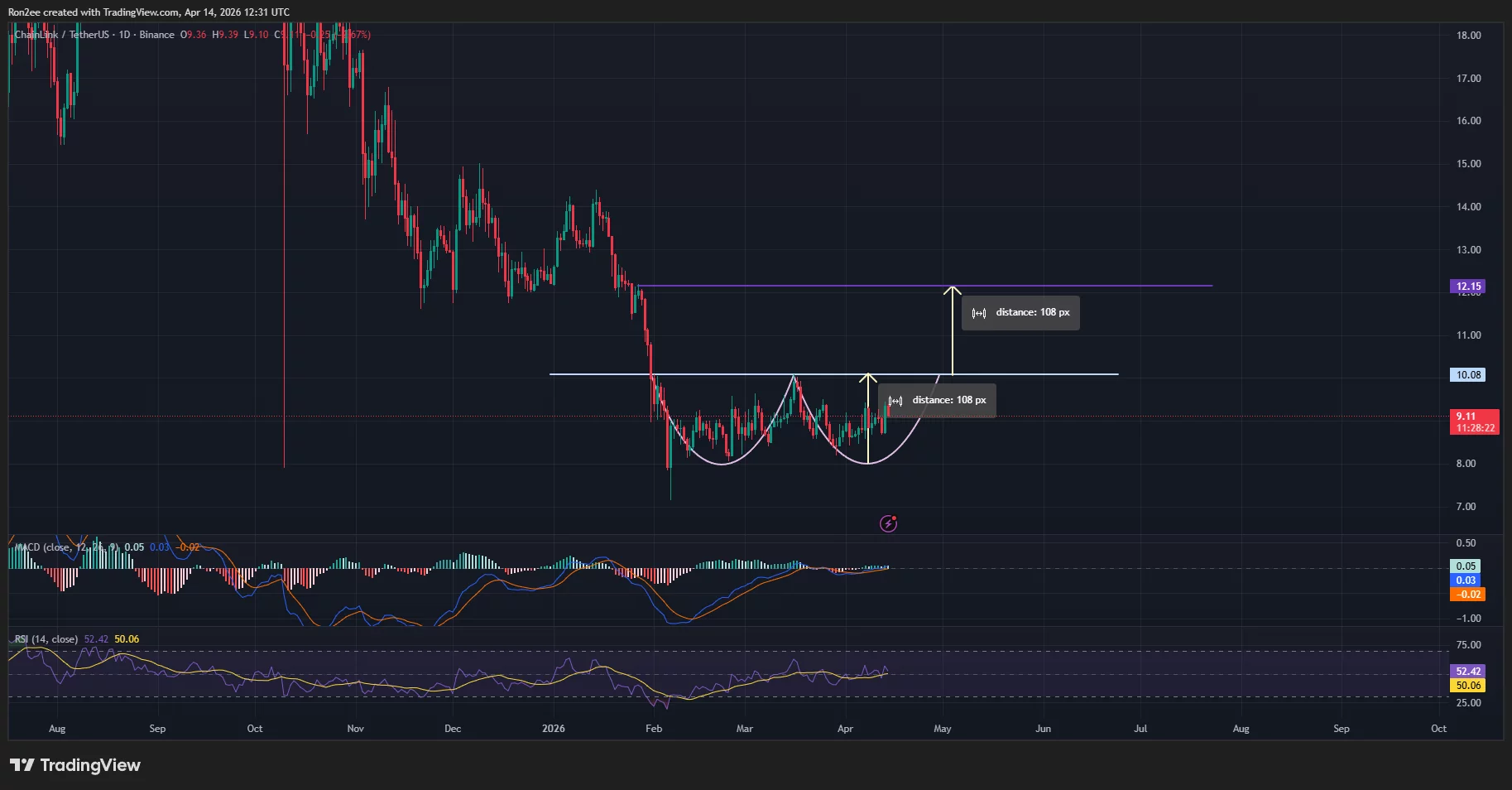
For Chainlink, a breakout from the $10 neckline of the pattern formed could push its price to above $12. This level is calculated by adding the height of the double bottom pattern to the neckline itself.
For now, the most immediate resistance sits at $10, which also serves as a key psychological resistance level. On the contrary, a drop below $8 could erode the ongoing bullish momentum and potentially invalidate the current setup.
Momentum indicators such as the MACD and RSI suggest that a recovery could already be underway. Notably, the MACD lines have moved upwards and are close to breaking out of their bearish zone, while the RSI has bounced above neutral thresholds, suggesting bulls are regaining control of the market.
A major catalyst that seems to be supporting Chainlink price has been active accumulation by whales. According to recent reports, whales have added another 1.89 million LINK tokens worth approximately $16.9 million recently, bringing total holdings by these investors to 661.9 million tokens.
What is interesting is that this large-scale purchase came alongside declining LINK reserves on exchanges, a sign that investors are moving their assets into cold storage for long-term holding.
Disclosure: This article does not represent investment advice. The content and materials featured on this page are for educational purposes only.

BBS 3rd Year Finance Chapter 2 Full Live Class

Boris Johnson ‘faces danger’ as he ventures behind frontlines for Channel 5 show

Amazon: Andy Jassy's Shareholder Letter Is A Bull's Dream


-

 Politics4 days ago
US brings back mandatory military draft registration
-
 Sports4 days ago
Man United discover Nico Schlotterbeck transfer fee as defender reaches Dortmund agreement
-

 Fashion4 days ago
Weekend Open Thread: Veronica Beard
-

 Tech7 days ago
How Long Can You Drive With Expired Registration? What Florida Law Says
-

 Politics4 days ago
Malcolm In The Middle OG Turned Down ‘Buckets Of Money’ To Appear In Reboot
-

 Politics2 days ago
World Cup exit makes Italy enter crisis mode
-

 Crypto World5 days ago
Canary Capital Files SEC Registration for PEPE ETF
-

 Business4 days ago
Tesla Model Y Tops China Auto Sales in March 2026 With 39,827 Registrations, Beating Cheaper EVs and Gas Cars
-

 Fashion7 days ago
Let’s Discuss: DEI in 2026
-

 Crypto World20 hours ago
The SEC Conditionalises DeFi Platforms to Be Avoided for Broker Registration
-

 Crypto World6 days ago
Bitcoin recovers as US and Iran Agree a Ceasefire Deal
-

 Crypto World16 hours ago
SEC Signals Exemption for Crypto Interfaces From Broker Registration
-
 NewsBeat2 days ago
Pep Guardiola and Gary Neville agree over Arsenal title problem that benefits Man City
-

 Business4 days ago
OpenAI Halts Stargate UK Data Centre Project Over Energy Costs and Copyright Row
-

 Business3 days ago
Ireland Fuel Protests Enter Day 5 as Blockades Spark Shortages and Government Prepares Support Package
-

 Politics4 days ago
LBC Presenter Mocks Trump Over Iran War Failures
-

 Tech5 days ago
A version of Windows 10 released a decade ago is now eligible for additional security patches
-

 Crypto World4 days ago
Federal judge blocks Arizona from bringing criminal charges against Kalshi
-
 NewsBeat2 days ago
JD Vance announces ‘no agreement’ with Iran over nuclear weapons fear
-

 Business4 days ago
IMF retains floor for precautionary balances at SDR 20 billion
You must be logged in to post a comment Login