
Business & Hustles
Mortgage Rates Hit 6% High as 1,500 Cheap Deals Vanish in a Month


Mortgage rates in the UK have climbed to their highest level in three years, with the average five-year fixed deal now standing at 6% for the first time since September 2023, according to new figures that paint a grim picture for homeowners and prospective buyers alike.
Financial information provider Moneyfacts reports that two-year fixed deals are not far behind, averaging 5.98% — their highest point since December 2023. The speed of the increase has stunned industry watchers: since the start of September, roughly 1,500 fixed-rate mortgage deals priced below 5% have disappeared from the market. Today, just nine such deals remain, a collapse of 99% in little more than a month.
Rachel Springall, a finance expert at Moneyfacts, did not mince words about the impact. “Average fixed mortgage rates rising back to three-year highs will be disastrous news for borrowers,” she said. “Borrowers who were hoping mortgage rates would stabilise will be disappointed.” She added that rising rates were “inevitable” given the pressure lenders are facing from higher wholesale funding costs.

Why mortgage rates are climbing so fast
The surge is not being driven by a change in the Bank of England’s base rate, which has remained untouched since December last year. Instead, turmoil in global bond markets is pushing up gilt yields — the cost of government borrowing — which in turn affects the swap rates lenders use to price fixed mortgage deals.
Much of this volatility has been linked to the ongoing war in Iran, which has rattled international markets and fuelled broader economic uncertainty. Major High Street lenders including Barclays, HSBC, Lloyds Bank, Nationwide, NatWest, Santander and TSB have all repeatedly hiked their fixed rates in recent weeks, with Barclays alone making four separate rounds of increases in September.
For borrowers, the mechanics matter: once a fixed mortgage rate is locked in, it typically stays the same for two or five years, regardless of what happens in the wider market. But when that term ends, homeowners must shop for a new deal — and many are about to find the market has shifted dramatically beneath them.
Who stands to be hit hardest
According to Bank of England forecasts, just over five million homeowners are expected to see their monthly mortgage repayments rise by the end of 2028 as their current fixed deals expire and they’re forced to refinance at today’s higher mortgage rates.
The financial toll is significant. Figures from the HomeOwners Alliance show that a £250,000 loan fixed at 6% for five years now costs £158 more per month than the same loan would have cost at the 4.94% average rate recorded back in February. For families already stretched by other rising costs, that gap could prove decisive.
Springall advised borrowers nearing the end of a fixed term to act early. “It would be wise to seek advice and compare deals carefully,” she said, noting that some lenders allow customers to lock in a new rate as much as six months before their existing deal expires — a window that could help homeowners dodge further increases if rates continue climbing.
Not everyone is locking in, however. Springall noted that while the number of sub-5% fixed deals has collapsed, variable-rate mortgages priced below 5% have remained comparatively stable, prompting some borrowers to consider tracker mortgages tied to the Bank of England’s base rate instead of fixed terms.
Ripple effects across the housing market
The consequences are already visible beyond individual household budgets. Nationwide building society recently reported that annual house price growth had halved in September, a sign that buyers are growing increasingly cautious as borrowing costs climb.
Ian Harris, president of the estate agents’ body NAEA Propertymark, said members were seeing the squeeze firsthand. “For some buyers, even a relatively small increase in monthly repayments can mean they have to reduce their budget or step back from a purchase altogether,” he said. “Equally, homeowners coming off fixed-rate deals may face significantly higher repayments, which could affect their decision to move.”
The pressure on mortgage rates comes against a backdrop of wider cost-of-living strain. Diesel prices passed £2 a litre in the UK for the first time on Friday, domestic energy prices rose 4% at the start of October, and regulator Ofgem is expected to announce a further 16% increase to the energy price cap in January.
With household budgets being squeezed from multiple directions, the government is facing mounting pressure to offer targeted support in this month’s Budget. For now, though, the message from the mortgage market is unambiguous: after a year in which many borrowers hoped for relief, rates are heading firmly in the wrong direction.
Explore more on this topic with Vexel Search.


An American and Alaska Airlines planes land on the runway in near-perfect synchronization at San Francisco International Airport in San Francisco, California on March 23, 2026.
Tayfun Coskun | Anadolu | Getty Images
How much is domestic airfare this fall? It depends where you’re flying and when.
Thanksgiving fares are up more than 30% this year over last, while holiday fares overall are up more than 23%, as airlines pass more of this year’s surge in jet fuel prices along to customers, according to a tally of “good deal” fares from flight-tracking site Hopper. But there are some bargains outside of that period for certain routes, while others are sky-high.
The cheapest flights in November include routes between Atlanta, the world’s busiest airport, and various Midwest and Southeastern cities. Others are short trips, like intra-island Hawaii flying or within Florida.
But the length of the flight alone doesn’t dictate the price. Routes from Nantucket and Martha’s Vineyard off the coast of Cape Cod, Massachusetts, to New York and Washington, D.C., are among the priciest.
Trips originating in remote Alaska bound for the East Coast take the cake for most expensive flights. While it’s an oil-producing state, it imports a significant amount of jet fuel and other refined products.
Here’s how the cheapest and most expensive routes ranked:
Hawaiian Airlines airplanes sit idle on the runway at the Daniel K. Inouye International Airport due to the business downturn caused by the coronavirus disease (COVID-19) in Honolulu, Hawaii, U.S. April 28, 2020. Picture taken April 28, 2020.
Marco Garcia | Reuters

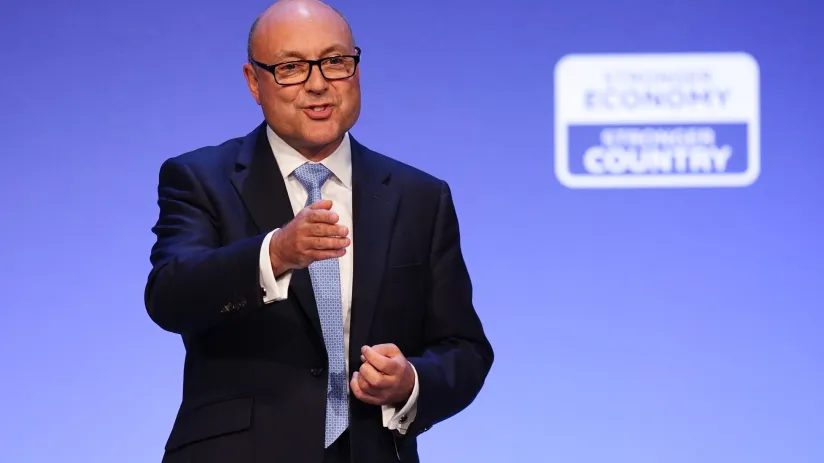
Britain’s brain drain has become the latest battleground in Westminster politics, after shadow chancellor Andrew Griffith used a conference speech to beg young people not to abandon the country, promising tax cuts and housing reforms to keep them here.
Speaking to Conservative Party members on Monday, Griffith made an emotional appeal that doubled as a political pitch, arguing that his party, not Labour, offers young Britons the clearest path to a stable, prosperous life at home. The newly appointed shadow chancellor said reversing the exodus of young workers was now central to Tory economic strategy, framing it as a crisis every bit as urgent as the debates around asylum and migration that have dominated headlines in recent months.
“Many Labour MPs spend their time talking about safe and legal routes for asylum seekers to come here,” Griffith told the room. “Well, what about safe and legal routes for our own young people to get a job, buy a home, have a good life? Does that not count?”
The scale of Britain’s brain drain
The numbers behind Griffith’s appeal are striking. According to the Office for National Statistics, roughly 246,000 British nationals left the country in 2025, with nearly half of those departures made up of people aged between 16 and 34. That figure has given fresh ammunition to critics who argue the UK is failing to retain the young talent it needs to drive future growth, and it has turned the brain drain into a politically charged phrase that both major parties are now scrambling to address.
Griffith’s message was blunt and personal. “So, if you are thinking of leaving, whether you are young or old, don’t,” he said. “Many of the things we hold dear are threatened as never before, but none have yet been lost. Stay, stay and help us win.” The line was as much a rallying cry to party loyalists as it was a direct message to disillusioned young voters weighing up a move abroad.
Tax cuts and housing pledges as the fix
To back up the rhetoric, Griffith pointed to a string of policies the Conservatives have rolled out over the past year that he says are designed to ease the financial pressure driving the brain drain. Chief among them is a pledge to scrap stamp duty on primary residences, a move the party claims could save homebuyers tens of thousands of pounds and make getting on the property ladder realistic for younger buyers locked out of the market.
The party has also proposed reforming student loans to stop debt “spiralling,” and Griffith used his speech to confirm the Tories would scrap Labour’s so-called mansion tax, a levy on properties worth more than £2 million. Taken together, the measures are meant to paint a picture of a party actively fighting to keep young people’s economic prospects alive in Britain rather than abroad.
Griffith went further, setting out a personal ambition that he said would guide his approach if he becomes chancellor. “Like Nigel Lawson, it is my ambition to scrap at least one tax every budget,” he said, invoking the late Thatcher-era chancellor as a model for aggressive tax reform. He described tax cuts as his “North Star,” a signal that reducing the overall tax burden will remain the centrepiece of Tory economic messaging heading into the next election.
Pensions row overshadows the pitch
The appeal to younger voters comes as the Conservatives face scrutiny over their commitment to the state pension triple lock, which guarantees the pension rises each year by whichever is highest of wage growth, inflation, or 2.5%. Labour’s Andy Burnham said last week his party would campaign on reforming the uprating mechanism, a move Griffith seized on, telling the BBC on Monday morning that young people themselves oppose scrapping the triple lock because it protects their own parents and grandparents.
Not everyone agrees the issue is resonating as loudly as the headlines suggest. One senior government source said the intense media scrutiny of the Tories’ pensions stance was not necessarily shared by the wider public, suggesting the triple lock row may be more of an inside-Westminster story than a doorstep issue. Still, the timing is notable: by tying the pensions debate to his brain drain message, Griffith is attempting to position the Conservatives as the party for both ends of the age spectrum, pensioners and young workers alike.
Whether the strategy can actually reverse the brain drain remains to be seen. Tax pledges and housing reforms take time to bear fruit, and Griffith’s speech offered promises rather than enacted policy. But with net departures running into the hundreds of thousands and young people disproportionately represented among those leaving, the political pressure to show tangible progress on the brain drain is unlikely to ease any time soon.
Explore more on this topic with Vexel Search.

French government bonds have come under pressure as expectations of higher interest rates and growing political uncertainty ahead of the country’s 2027 election raise doubts about whether the euro zone’s second-largest economy can stabilise its public finances.
Eurozone bond yields diverged again, although the moves were less pronounced than late last week. Investors favoured traditional safe-haven assets such as German government debt over bonds issued by more indebted countries amid mounting fiscal and inflation concerns.
The yield spread between French bonds and benchmark German Bunds—a measure of the extra return investors demand to hold French debt—widened to nearly 160 basis points on Friday, its highest since the euro-zone sovereign debt crisis in 2011. The gap later narrowed by about four basis points to 137.
“It just seems to me like the market is rejecting this 2027 budget. There’s an election coming up … who’s going to vote for fiscal austerity with elections coming up?” said Erik Bregar, director of FX and precious metals risk management at Silver Gold Bull in Toronto.

“That French story probably is the biggest FX story of the week. On Friday, they were 160 French over Bunds; now it’s 135. That probably explains the euro’s bounce in the morning off the lows.”
According to Reuters report, the euro was last down 0.37% at $1.1211 after falling as much as 0.8% to $1.116, its weakest level since May 2025. The currency is coming off a fourth consecutive weekly decline against the dollar, its longest losing streak since May 2025, after dropping 3.1% over the period.Dollar gains on inflation concerns
Although expectations of a Federal Reserve rate increase this month have fallen sharply, concerns about euro-zone debt and US data pointing to persistent inflation have supported the dollar.
The Institute for Supply Management said its non-manufacturing purchasing managers’ index slipped to 54.9 in September from 55.4 in August. The reading was slightly below the 55.2 forecast in a Reuters poll but remained above the 50 mark separating expansion from contraction.
The survey’s measure of prices paid by businesses for inputs increased to 74.0 from 72.6 in August, reinforcing concerns about lingering inflation.
Markets now see a 23.8% probability of the Fed raising rates by at least 25 basis points at its October meeting, according to the CME FedWatch Tool, down from 70.9% a week earlier. Expectations of a December increase remain high, with traders pricing in an 86.8% probability.
The dollar index, which tracks the US currency against a basket of peers, rose 0.26% to 102.16 after touching 102.53, its highest since April 10, 2025.
Japan pledges bond control
The dollar strengthened 0.09% against the yen to 157.97. Verbal warnings from Japanese authorities about the yen’s depreciation, along with the currency’s traditional safe-haven status, have done little to arrest its recent weakness.
Japanese Prime Minister Sanae Takaichi pledged to “control” bond issuance and respond swiftly to market turbulence as the government sought to reassure investors concerned about the country’s deteriorating public finances and rising bond yields.
Separately, a business survey showed that Japan’s services sector expanded at a slower pace in September as growth in activity and new orders weakened and earthquake-related disruptions weighed on demand.
Sterling slipped 0.14% to $1.3223 but gained about 0.2% against the euro.
(Disclaimer: This article is based on inputs from agencies. These do not represent the views of The Economic Times)

2024 Chevrolet Corvette E-Ray hybrid sports car
GM
DETROIT — General Motors plans to introduce hybrid models into its U.S. lineup as sales of the vehicles continue to grow amid inflated gas prices and a pullback in all-electric cars.
Mike Anderson, GM’s vice president of propulsion engineering, reconfirmed the automaker’s hybrid plans, but declined to discuss timing for such vehicles, which had previously been expected as soon as next year.
“It’s fair to say that [hybrids are] part of the plan,” Anderson, a 35-year GM veteran, told CNBC during an interview. “We’re not tone deaf to our customers. We know what they want and we want to give that to them as quickly as we can.”
GM has largely been absent from the hybrid market this decade, instead using its resources to go “all-in” on all-electric vehicles. But amid lackluster EV demand, industry deregulation and increased hybrid popularity, Anderson said the company needs to meet customer demand wherever it may be.
“Our long-term vision is an all-electric future. That’s our goal,” Anderson said. “That’s the end state, but it’s going to be a journey that involves technology diversity.”
GM CEO Mary Barra in January said the automaker was still studying plug-in hybrid electric vehicles, or PHEVs, for its U.S. lineup as well as traditional hybrids but remained critical of the technologies. She also told Bloomberg later that month that a “handful” of such models were coming but did not give a timeline.
In mid-2024, GM announced plans to introduce PHEVs by 2027. At that time, GM was under pressure to meet stricter federal tailpipe emissions standards that have since been lowered or eliminated by the Trump administration.

AutoForecast Solutions, an automotive data and consulting firm, expects GM to begin offering PHEVs in late 2027 to early 2028 with a 70-mile EV range “throughout its portfolio,” according to Casey Selecman, director of powertrain forecasts for the company.
“GM has several PHEVs planned throughout the portfolio from the Equinox to the Silverado but has been very cautious in rolling them out due to fears of customer technology preference changes that have burned them in the past,” he said.
Anderson declined to discuss potential products or timing for GM’s first new hybrid model.
“You can see, without me saying what our future plans are, where the customers are clamoring for these things and really, really going for them,” he said. “We want to meet them where they want things.”
Sales of hybrid models in the U.S. have jumped amid dimming EV demand, inflated gas prices and more offerings in the market, which GM has been missing out on.
Cox Automotive reports hybrid vehicle sales from the second quarter of this year increased 23% from a year earlier to represent a record 16.3% of U.S. sales from April through June. That compares with roughly 5.8% of sales for EVs, Cox said.
EV/Hybrid vehicle types
The automotive industry has more powertrain and “propulsion” options than ever before. Here’s a breakdown:
- Internal combustion engine (ICE): A “traditional” vehicle with an engine that’s fueled with gasoline or diesel.
- Mild-hybrid electric vehicle (MHEV): An ICE vehicle that functions largely like a nonhybrid vehicle but may include minimal electrified features such as a small battery, regenerative braking or electric motor.
- Hybrid electric vehicle (HEV): Think of the Toyota Prius, a vehicle that has a hybrid powertrain system combined with an engine.
- Plug-in hybrid electric vehicle (PHEV): These vehicles feature an internal combustion engine combined with a hybrid system, including a larger battery than traditional hybrid vehicles as well as a plug to recharge the vehicle’s battery. They typically allow drivers to travel a certain number of miles using the battery before the engine is needed to power the car or truck.
- Battery-electric vehicle (BEV): These all-electric vehicles do not feature an internal combustion engine. Instead, they contain an electric motor that’s powered by a large battery. They need to be recharged using an electrical outlet and charging port or charging station.
- Fuel cell electric vehicle (FCEV): Hydrogen fuel cell electric vehicles and equipment operate much like BEVs but are powered by electricity generated from hydrogen and oxygen instead of pure batteries, which commonly include lithium. They’re filled up with a nozzle, similar to traditional gas and diesel vehicles.
- Extended-range electric vehicles (EREV): These are an emerging technology that largely function as a PHEV, however after the battery runs out of energy to power the vehicle, an engine works as a generator to exclusively power electric motors. The vehicle still drives like an EV instead of having the engine directly power the vehicle’s motion.
There are a growing number of hybrid variants being introduced by automakers but, in general, those vehicles combine a traditional gas-powered engine with electric motors and a battery to offer better fuel economy and, in many cases, better performance.
The fastest-growing segments for hybrids in the U.S. are compact crossover/SUV and mid-size vehicles, according to Cox.
“Hybrid vehicles continue to be the clearest growth story in the electrified market,” Stephanie Valdez Streaty, Cox director of industry insights, said during a presentation last week.
There are currently a few types of hybrids available in the U.S. Traditional hybrids, like a Toyota Prius, feature many electrified engine technologies, while PHEVs have a designated all-electric range before using an engine to power the vehicle.
Then there are extended-range electric vehicles, or “series hybrids,” that drive like an EV but have an engine that essentially operates like a generator to power electric motors to propel a vehicle.
Data shows more gas-electric hybrid drivers are less likely to trade in for another one. GM has temporarily halted production of its Chevrolet Volt plug-in car.
Getty Images
The combination of two powertrains adds additional complexity and costs, which has been an argument GM has made against hybrids, but it’s something many consumers appear willing to pay for as hybrid sales continue to rise.
GM currently offers only one hybrid, a model of its Chevrolet Corvette. The Detroit automaker’s last true push into hybrids was the Chevrolet Volt plug-in, which was discontinued in 2019.
GM’s crosstown rivals, Ford Motor and Chrysler parent Stellantis, have leaned on suppliers to get hybrid vehicles to market more quickly.
Anderson said GM’s strategy “will be a mix” of internal and external technologies based on cost, segment and product.
“We’re deliberate because, usually for strategic reasons, we need to control our own destiny. We need to control our own timing,” he said. “Or, if it’s commodity, go get it. Go get the best price you can.”
Business & Hustles
Chick-fil-A Hits $10.3 Billion in Revenue While Staying a Family Business, CEO Says


Chick-fil-A is proving that a family business can still outgrow nearly every rival in the restaurant industry without ever ringing a bell on Wall Street. The Atlanta-based chicken chain pulled in $10.3 billion in revenue last year, a 14% jump, and net income of $1.05 billion, according to franchise disclosures reviewed by CNBC. That performance, paired with $23.92 billion in systemwide sales across roughly 3,000 locations, makes it the third-largest restaurant chain in the country by sales, trailing only McDonald’s and Starbucks.
Yet CEO Andrew Cathy, who took over from his father Dan nearly five years ago, insists the company has no interest in chasing the kind of windfall an initial public offering could bring. “We’re able to plan for the quarter century, and we don’t have to plan for the quarter,” Cathy told CNBC, describing the company’s growth strategy as “calculated” and “conservative” even as it pushes into new international markets.
Why staying a family business still works
Chick-fil-A was founded by Cathy’s grandfather, S. Truett Cathy, and has remained privately held and family-controlled ever since. That structure means the company doesn’t report quarterly earnings to shareholders or face pressure to hit short-term growth targets — a freedom Cathy says lets leadership focus on decades-long plans rather than fiscal quarters.
The timing of that philosophy looks especially shrewd given how public restaurant stocks have performed this year. Shares of Jersey Mike’s have dropped nearly 28% since its July IPO, and Dunkin’ parent Inspire Brands is reportedly holding off on going public until the sector’s fortunes improve. For a family business like Chick-fil-A, staying out of public markets has become less a sentimental choice and more a practical advantage.
It also hasn’t slowed expansion. The chain opened 179 new restaurants last year and has launched operations in Canada, the United Kingdom and Singapore in recent years, part of a $1 billion international growth plan. Its venture arm has also rolled out Daybright, a beverage-focused concept aimed at capturing a different kind of customer than the flagship chicken sandwich shops.
Navigating industry headwinds
The broader restaurant industry has had a rough stretch. Elevated costs and increasingly selective consumers have hurt traffic at McDonald’s, Popeyes, KFC and other major chains. Cathy acknowledged the pressure but said Chick-fil-A’s locations haven’t seen the same slump. “This has been a good year,” he said. “Our operators have done such a good job executing on the fundamentals and adding the hospitality to it.”
That focus on hospitality is central to how Cathy frames the balance between legacy and growth. He compared running the business to driving a race car: “There’s a reason that the windshield’s bigger than the rearview mirror. It’s important for the rear view to be grounded on where you are, and there are things that we think about our purpose, our mission, that won’t change, but everything else we have to be able to evolve and change.”
Some traditions are untouchable — Chick-fil-A’s restaurants will continue closing on Sundays, a policy in place since the company’s founding. Others, like the specifics of in-store hospitality, are expected to shift as customer habits evolve, particularly around how people order and receive food. Cathy said the chain is taking a “human plus” approach to new technology, exploring tools like artificial intelligence and even drone delivery without abandoning the personal service that has defined its brand.
As competitors chase public listings or restructure under private equity ownership, Chick-fil-A’s choice to remain a family business stands out as increasingly rare among chains of its size. For Cathy, that rarity is the point — a bet that long-term thinking, not quarterly results, is what keeps the chain growing while so many rivals stumble.
Explore more on this topic with Vexel Search.

With lump-sum investors losing money and SIP investors making only low single-digit returns over the past two years, what should investors expect going forward?
We have been telling investors to focus on asset allocation, unconstrained investing, and expect moderate returns. The reason for moderate returns is precisely the current environment, where the US AI cycle is driving a large part of global markets, geopolitical risks remain elevated, and global equity markets are expensive. At some point, expensive markets will have to correct.
Do you still feel the market is expensive?
We are in middle territory. The sectors connected to US AI look overvalued unless you have a growth mindset. Small- and mid-cap stocks are not cheap largely because of the sustained flows into them. It is not that such companies are not growing. They can certainly be growing, and some may even be growing faster than large-cap companies.
How are you looking at markets keeping in mind the continued boom in AI?
If AI-related growth continues to remain strong, Indian equity markets may continue to face pressure from shifting global preferences. However, when AI-led growth begins to slow, we believe India could see a rebound in investor interest as capital looks towards markets with stronger domestic growth prospects.Read more: Indian stocks face a cyclical correction, not a deeper earnings reset: Mahindra Manulife MF CIO
What is your assessment of the flood of IPOs?
We think IPOs are trading at higher prices than many of the older listed companies. There seems to be a bigger bull market in IPOs than in the broader market.
So where would you allocate and where would you stay away?
I like contrarian investing now because of the significant gap between what has performed well and what has not. At this point, we like sectors such as private-sector banks and insurance, where growth is not a problem. We are also positive on insurance following the proposed regulatory changes announced recently. Our experience in the mutual fund industry has been that whenever regulations have become more customer-friendly, the industry has grown. That is why we see the changes in the insurance industry as a positive trigger from a longer-term perspective.
But in sectors such as IT and FMCG, growth has been an issue. The challenge is that people always want either a very positive view or a very negative view. The reality is somewhere in between.
What kind of earnings growth do you expect over the next three years?
Over the near term, earnings growth is likely to remain reasonably good. One reason is that inflation is positive for earnings. Second, when inflation is rising, consumers often advance their purchases. This brings demand forward. So, in the near term, earnings are likely to remain reasonably decent. In the medium term, however, earnings will depend on what happens to the US AI cycle. If the US AI cycle eventually leads to deflation, purchasing decisions could get postponed. Companies may reduce inventories, and consumers may defer purchases. That can have an impact on earnings growth.
How should investors approach gold and silver?
Investors need not be negative on gold at this point. We continue to like gold as a component of multi-asset investing.
There is a rush among investors to allocate money overseas to diversify
At this point, we would be cautious about making a momentum-driven decision to invest overseas. Both the currency and global equity markets have moved significantly. Investors should be conscious of the fact that they may be investing following a period of strong performance.
The situation, however, is different with global bonds. Bonds have performed poorly globally, so investing in global fixed income today is less of a momentum decision.
Do you think FPIs will return to India soon, especially when US interest rates are at a two-decade high?
Right now, investors can earn around 5.3-5.5% in US Treasury instruments. They can also invest in US bonds and earn attractive yields without significant currency risk. For FPIs to return significantly to India, we will need an environment of lower global interest rates.
Our view is that we are not very far away from the peak in US interest rates. There could perhaps be two more hikes, but after that we do not believe the hiking cycle will continue indefinitely.
There is one major engine, i.e., the US AI cycle, which is driving a large part of the global investment environment. Emerging markets are not seeing significant inflows. It is not just India. This year, for example, money has gone out of markets such as Korea and Taiwan. Some money is going into Brazil and other countries, partly because they are large oil producers.



Columbus Vegetable Oils
Las Vegas facility will produce a range of conventional, non-GMO and organic oils.
Imagine the bustling streets of West Side Chicago in 1936, where Italian immigrant Michael Gagliardo opened a modest grocery store. This was not just any grocery store—it was the beginning of a remarkable journey. With a vision and a bit of grit, Michael and his son took an old, fire-damaged can fabricating machine and breathed new life into it, setting the stage for what was to come.
In the basement of their store, amidst the clamor of daily life, they crafted something extraordinary. They didn’t just create cans—they built a thriving canning business that became a cornerstone of their business.
Then came World War II, and with it, a cooking oil shortage that left the community scrambling. But the Gagliardos saw an opportunity and quickly secured an oil supplier, establishing themselves as a vital resource in the region. This adaptability and foresight gave birth to what is now Columbus Vegetable Oils.
Our story is a testament to the spirit of innovation and resilience. From those early days in a basement to becoming industry leaders, we continue to celebrate the legacy of our founder, Michael Gagliardo, in every product we deliver.
Family Owned & Operated
Today, the fourth-generation family leads the business as a certified woman-owned company prides itself on high quality products, superior service and fast delivery.
Business & Hustles
Suppliers Warn of “Second Energy Crisis” as Government Faces Pressure Over Energy Bills


Energy bills are once again at the centre of a political storm, with the industry’s own trade body warning the government that delaying support for struggling households could trigger a deeper and more expensive crisis than the one Britain endured just a few years ago.
Energy UK, which represents suppliers, says ministers need to act immediately rather than wait for conditions to worsen further. The warning comes after domestic gas prices rose on Thursday and new forecasts pointed to a steep increase in energy bills from January, just as colder weather pushes up demand.
Figures reported by the BBC this week suggest a 16% rise in domestic energy prices is likely in the new year for roughly 20 million households on variable tariffs governed by regulator Ofgem’s price cap. That cap, which limits the maximum price suppliers can charge per unit of gas and electricity, already rose by 4% at the start of October — adding about £60 a year, or £5 a month, to a typical household’s costs and pushing the average annual bill for dual-fuel customers paying by direct debit to £1,723.

Energy bills could near £2,000 by January
The outlook for the new year is considerably bleaker. Consultancy Cornwall Insight forecasts that the same typical annual bill could rise to £1,999 in January, a jump that would mark the sharpest seasonal increase in four years and pile further strain on household budgets already stretched by the broader cost of living.
Energy UK acknowledges the government has taken some steps to ease the burden, including a cut to VAT on electricity bills that took effect on Thursday and the earlier removal or shifting of certain levies into general taxation. But the trade body argues those gains have already been swallowed up by soaring wholesale costs, which suppliers must pay before passing charges on to customers.
Much of that wholesale pressure, the organisation says, stems from international instability — particularly conflict in the Middle East and disruption to shipping routes through the Strait of Hormuz — echoing the dynamics that sent bills spiralling after Russia’s invasion of Ukraine in 2022.
“We cannot afford to wait,” says industry chief
Dhara Vyas, chief executive of Energy UK, said the lessons of the last crisis must not be ignored. “We cannot afford to wait for the same scale of crisis before acting again,” she said, pointing to mounting customer debt as evidence that households are already struggling before the worst of the winter price rises take hold.
Vyas said the growing debt burden now adds an average of £67 a year to every household’s bill, regardless of whether they are behind on payments themselves. “Last-minute emergency interventions run the risk of being badly targeted and costing us all more,” she warned, urging the government to move before prices jump again in January rather than scrambling to respond afterwards.
Her comments followed a stark warning from Simone Rossi, chief executive of EDF Energy, who said on Thursday that the UK was “walking into a second energy crisis.” Adam Scorer, head of the fuel poverty charity National Energy, echoed the concern, telling BBC Breakfast that rising debt levels reflect not simply more people falling behind on payments, but poorer households sinking deeper into financial difficulty with no clear way out.
“Until you do something about that, there’s no way forward, there’s no breathing space, there’s no future for households who can’t see their way beyond debt,” Scorer said.
What suppliers want the government to do
Energy UK has set out a series of measures it wants ministers to consider as part of an urgent response. These include targeted financial support that goes beyond the existing £150 Warm Home Discount offered to people on benefits, eventually paving the way for a discounted social tariff for the most vulnerable customers.
The trade body is also calling for a debt relief scheme aimed at households that have fallen furthest behind, alongside a broader strategy to stop debt accumulating among new tenants and homeowners in the first place. It further wants more levies stripped from electricity bills and shifted onto general taxation, part of a long-term push toward electrification that supporters argue would make switching away from gas more financially attractive.
Prime Minister Andy Burnham, speaking after the warnings emerged, said he would not describe Rossi’s “second crisis” comments as an overstatement, acknowledging that the cost of home energy — along with petrol and diesel prices — remained “very difficult indeed” for many families. He said the government was “looking at any measure that can give people breathing space, that can take the pressure off.”
With forecasts pointing to energy bills climbing toward £2,000 a year for typical households by January, pressure is mounting on Westminster to decide quickly whether it will intervene now or risk repeating the costly, reactive scramble that characterised the last major energy crisis.

Costa Coffee says it has delivered a year of “strong progress,” rebounding to profitability just months after its parent company, Coca-Cola, quietly abandoned efforts to sell the chain to a private equity buyer.
The UK’s second-largest coffee chain grew revenue by five per cent to £1.3bn last year and swung back into operating profit, according to accounts filed by the company. The turnaround marks a notable reversal of fortune for a brand that just a year ago was being shopped around to buyout firms as Coca-Cola looked to cut its losses on a business it bought for £3.9bn in 2018.
Costa Coffee Returns to Profit After Rocky 2024
Costa posted an operating profit of £20m in 2025, a sharp turnaround from the £13.5m loss recorded the previous year. The company attributed that earlier slump to “soft footfall and growth of value-led competitors” — a polite way of describing the squeeze cheaper rivals have put on traditional coffee shop chains across British high streets.

Still, not every metric moved in the right direction. Costa’s statutory profit actually fell by seven per cent to £62m, a reminder that headline recovery narratives rarely tell the whole story. The gap between operating performance and bottom-line profit suggests one-off costs or accounting adjustments took some shine off an otherwise upbeat set of results.
Chief executive Philippe Schaillee credited the company’s investment programme — a mix of store refurbishments and product innovation — for driving the improvement. “These results demonstrate the strength of the Costa brand and the dedication of our hard-working teams, who serve great coffee with heart every day, and reinforce our focus on building sustainable long-term growth,” he said.
A Sale That Never Happened
The backdrop to this recovery is Coca-Cola’s abandoned attempt to offload Costa. The beverage giant had been seeking roughly £2bn for the chain, with names including Asda owner TDR Capital, Gail’s backer Bain Capital, and private equity firm Apollo reportedly circling as potential buyers. But in January, Coca-Cola scrapped the sale process after bids came in below its expectations.
That decision leaves Costa Coffee back under the Coca-Cola umbrella for now, with the drinks giant presumably watching closely to see whether this year’s improved numbers represent a genuine turnaround or a temporary bounce. Either way, the failed sale has given Costa breathing room to pursue its own recovery plan rather than operating under the uncertainty of a looming ownership change.
Losing Ground to Greggs and Cheaper Rivals
Despite the improved financials, Costa’s position atop the UK coffee market has slipped. Earlier this month, bakery chain Greggs overtook Costa to become the country’s largest branded coffee destination by outlet count, with 2,737 sites compared with Costa’s 2,707. For a brand that has long positioned itself as Britain’s coffee shop of choice, ceding that crown to a bakery chain best known for sausage rolls is a symbolic blow.
The competitive pressure runs in both directions. Budget-focused operators have chipped away at Costa’s customer base from below, while upmarket entrants like Blank Street have begun appearing on UK high streets, targeting younger, trend-conscious coffee drinkers from above. Costa also has the dubious distinction of having the highest proportion of sites within a five-minute drive of another coffee brand — 73 per cent as of December 2025 — underscoring just how saturated and fiercely contested the UK coffee market has become.
In response, Costa appears to be prioritising quality over sheer scale. The chain opened just 79 new UK stores in 2025 and plans to open only 40 to 50 new sites over the coming year — a notably cautious expansion pace for a brand that once blanketed town centres with new openings.
Betting on Refurbishments and New Flavours
Instead of chasing growth through new store openings, Costa has poured resources into revamping existing locations. The company has refurbished 1,063 stores across the UK and Ireland since 2023, including 305 last year alone, and plans to refresh roughly 210 more sites in 2026.
Product innovation has also played a role in the recovery. Costa pointed to its Matcha and Ube drinks as key drivers of customer growth, with iced beverages proving especially popular during last year’s summer heatwaves. “Costa is deliberate with innovations, ensuring that innovations have staying power that Costa can scale really well,” the company said. “That’s the advantage of Costa’s scale: when we see something customers genuinely want, we can make it accessible to millions of people.”
The chain still serves more than four million cups of coffee daily and counts six million active members in its loyalty scheme — scale that gives Costa Coffee a cushion even as its market lead narrows. Whether that scale is enough to fend off cut-price challengers and premium newcomers alike will determine if this year’s progress marks a lasting recovery or merely a pause before the next downturn.


I’m a passionate investor from the Netherlands with 12 years of stock market experience. My articles usually contain a good overview of important investment criteria. A stock for my portfolio is of interest to me if the company has the following characteristics:1. Companies that are growing in both revenue, earnings and free cash flow.2. Companies that have excellent growth prospects.3. Stocks with favorable valuations.I prefer steadily growing companies with high free cash flow margins, dividend stocks and stocks with generous share repurchase programs.Disclaimer: My articles do not provide financial advice, they reflect my own findings and insights.
Analyst’s Disclosure: I/we have no stock, option or similar derivative position in any of the companies mentioned, and no plans to initiate any such positions within the next 72 hours. I wrote this article myself, and it expresses my own opinions. I am not receiving compensation for it (other than from Seeking Alpha). I have no business relationship with any company whose stock is mentioned in this article.
Seeking Alpha’s Disclosure: Past performance is no guarantee of future results. No recommendation or advice is being given as to whether any investment is suitable for a particular investor. Any views or opinions expressed above may not reflect those of Seeking Alpha as a whole. Seeking Alpha is not a licensed securities dealer, broker or US investment adviser or investment bank. Our analysts are third party authors that include both professional investors and individual investors who may not be licensed or certified by any institute or regulatory body.

Nations League Window Exposes Football’s Fault Lines: Politics, Pressure and a Packed Schedule

IEEE Day Celebrates Global Tech Collaboration

A Decade-Old Coat Stole the Night: Dakota Johnson’s Birthday Look Shows Why Archive Dressing Is Having a Moment


-

 Fashion3 days ago
Weekend Open Thread: Veronica Beard
-

 Tech & AI6 days ago
Figure F.02 Robots Meet Molten Steel as Arnold Schwarzenegger Watches in Finland
-

 Tech & AI14 hours ago
Common Mistakes You Should Avoid When Using Foldable Phones
-

 Business & Hustles7 days ago
OpenAI rebrands AI agents as ‘dots’ amid security fears
-

 Tech & AI7 days ago
Alternatives to Animal Testing Are Finally Taking Off
-

 Tech & AI4 days ago
Fireflies.ai Launches Fireflies Talk for Free, Unlimited Voice Dictation
-

 Business & Hustles7 days ago
UK chancellor uses bitcoin to mock Nigel Farage
-

 Tech & AI4 days ago
Excellent hardware badly hampered by too-small SSD
-

 Tech & AI6 days ago
OpenAI Pulls Plug on New AI Model as Industry’s Safety Cracks Widen
-

 Crypto5 days ago
OpenPayd’s MiCA Approval Signals Europe’s Stablecoin Infrastructure Is Going Mainstream
-

 Crypto5 days ago
NEAR Intents hacked days after freezing stolen Bitget funds
-

 Tech & AI4 days ago
Mystery AMD Chip “Gainsborough” Fuels Steam Deck 2 Speculation — But Don’t Get Too Excited Yet
-

 Tech & AI4 days ago
Sony’s new PS5 Pro lottery requires 60 hours of playtime just to apply
-

 Tech & AI5 days ago
Whatever AI Safety Is, It’s Not This
-

 Tech & AI5 days ago
Photon held a funeral for mobile apps. Now it has $4.5M to help replace them with agents
-

 Fashion6 days ago
Moving to a New City as a Creative? How to Build a Routine, Community, and Life That Feels Like You
-

 Tech & AI5 days ago
Can Schools Trust AI Features in Edtech Products?
-

 Gaming4 days ago
Reigns Studio Nerial Shuts Down as Founders Step Back “To Our Roots”
-

 Tech & AI7 days ago
What Irish tech companies need to know about the EU’s CRA
-

 Crypto5 days ago
Base Cobalt upgrade puts new controls inside tokenized assets
You must be logged in to post a comment Login