
Business
A seven-year standoff over Venezuelan gold nears its end

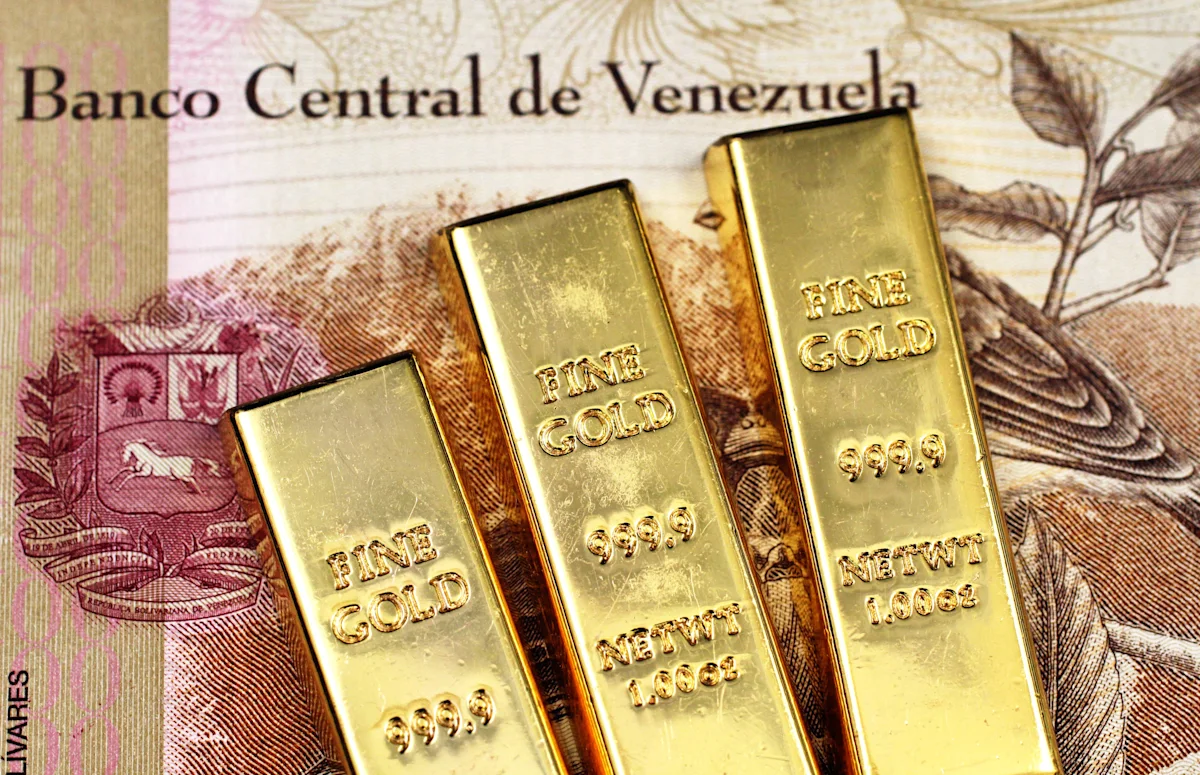
Gold is the asset people buy when they have stopped believing in promises. Then most of them hand it to a bank in another country for safekeeping, which is itself a promise.
That arrangement is older than most of the world’s central banks. The Bank of England has provided gold custody services to developing nations for decades, according to Reuters, and it usually works for the simple reason that nobody involved has any incentive to argue about it.
Custody is boring. It stays boring right up until two governments claim the same account.
Then the metal in the vault ceases to be a reserve asset and becomes a legal exhibit. It does not move, and it does not get sold.
It sits in a basement in London, earning nothing and settling nothing, while lawyers on two continents argue over whose signature counts on the paperwork.
That is exactly what happened to 31 metric tons of Venezuelan bullion, and after seven years, the standoff is nearing an end.
Venezuela’s government and its opposition are near an agreement to move the central bank’s gold, worth about $4 billion, from the Bank of England to the Federal Reserve Bank of New York, the Financial Times reported on Friday, Sept. 18.
Reuters said it could not immediately verify the report, which cited four people familiar with the discussions.

Why the Bank of England stopped moving Venezuela’s gold
The freeze started with a shipment request. Venezuela asked for part of its bullion back in 2018, and the Bank of England has withheld the roughly 31 metric tons it holds ever since, citing its non-recognition of the legitimacy of then-President Nicolas Maduro’s government, according to Reuters.
More Gold & Silver:
Britain recognized opposition leader Juan Guaido in February 2019. Two rival boards of Venezuela’s central bank then spent years sending the Bank of England conflicting instructions about the same bars.
The fight reached Britain’s highest court in December 2021. British courts were bound to accept that the government does not recognize Maduro as president “for any purpose,” the Supreme Court said in a press release, according to Al Jazeera.
That ruling handed the gold to nobody. It pushed the remaining questions back down to the Commercial Court, and the bars stayed put.
What the proposed gold transfer would actually change
The deal now on the table does not set the gold free. It changes the metal’s address and its job.


Harbor Transformative Technologies ETF Q2 2026 Commentary

Fidelity’s mission is to strengthen the financial well-being of our customers and deliver better outcomes for the clients and businesses it serves. With assets under administration of $12.6 trillion, including discretionary assets of $4.9 trillion as of December 31, 2023, Fidelity focuses on meeting the unique needs of a broad and growing customer base. Privately held for 77 years, Fidelity employs more than 74,000 associates with its headquarters in Boston and a global presence spanning nine countries across North America, Europe, Asia and Australia. Note: This account is not managed or monitored by Fidelity, and any messages sent via Seeking Alpha will not receive a response. For inquiries or communication, please use Fidelity’s official channels.
Business
Main Street Capital Went Public at $15 a Share. $10,000 Invested Then Now Collects About $177 a Month in Regular Dividends.

Main Street Capital (NYSE: MAIN) completed its initial public offering on Oct. 4, 2007, at $15 per share. If you invested $10,000 into the business development company (BDC) stock at its IPO, you’d have purchased around 667 shares. Those shares would now generate around $177 per month in regular dividend income alone at the current rate of $0.265 per share. You’d also currently collect another $200 each quarter in supplemental dividends at the current $0.30 per share rate.
Here’s a look at Main Street Capital’s impressive dividend track record.
Missed AI’s “Act 1”? Act 2 Could Be 15x Bigger. Most investors think they missed the AI boat because they didn’t buy Nvidia in 2005. But according to our analysts, we’re only at the end of “Act 1″—the R&D phase. “Act 2” is the global rollout. Continue »

An income-producing machine
As a BDC, Main Street Capital must distribute 90% of its taxable income to shareholders each year to remain compliant with IRS regulations. It has a unique strategy to meet that obligation while also providing income investors with the stability they desire. It has set its monthly dividend at a level it can sustain throughout market cycles. Main Street Capital currently generates enough distributable net investment income to cover its regular monthly dividend by a comfortable 1.39 times. The BDC pays supplemental quarterly dividends to return excess taxable income to shareholders and remain compliant.
Main Street Capital has grown its monthly dividend by 141% since its IPO. It has paid a cumulative $42.465 per share in regular monthly dividends during that period, and an additional $8.74 per share in supplemental dividends. It has never suspended or reduced its regular dividend, though it has at times stopped paying supplemental dividends.
What’s driving the dividend growth?
Main Street Capital stands out from other BDCs for its growth. The company has grown its net asset value (NAV) per share from $12.85 at its IPO to $33.92 at the end of the second quarter, 164% total growth (5.4% compound annual growth rate). One of the keys to its success is its dual investment strategy of investing in the secured debt of smaller private companies with meaningful equity participation. The company’s equity investments provide upside.
For example, this past June, Main Street announced the exit of a portfolio investment. Its initial investment consisted of a $2.4 million revolving line of credit, a $12.2 million first-lien senior secured loan, and a $5.8 million direct equity investment. It subsequently completed seven follow-on investments, growing its total debt and equity investments to $42.3 million and $6.4 million, respectively. The BDC recently realized a $46.4 million gain on its equity investment in this portfolio holding, which had also generated $2.2 million in cumulative dividend income. Gains like these have supported its growing NAV per share while providing the BDC with additional capital to reinvest to grow its portfolio. That portfolio growth has helped support its rising dividend.

Ukraine’s Zelenskiy says he and Trump agree to meet in New York
Business
Diesel at $6.48 per gallon pushes truck drivers to spend $3,500 a week on fuel, forcing some to quit

It’s safe to say that truck drivers around the country are feeling the impact of record-breaking diesel prices.
As of Sept. 19, diesel stood at $6.48 per gallon nationwide, according to AAA. And per GasBuddy, the highest prices can be found in Washington, Hawaii and California, the latter which has seen diesel top $8 per gallon.
Must Read
Diesel is needed to fuel trucks that transport food to your local supermarket, vehicles to out-of-state dealerships and your latest retail purchase to a local distribution center, plus much more. The American Trucking Associations estimates that trucks moved 73% of the nation’s freight by total weight in 2024.
However, high diesel prices — thanks in part to geopolitical conflicts like the U.S.-Iran war and the Russia-Ukraine War — can strain the supply chain and increase operating costs for logistics companies and freight operators. Ultimately, the prices consumers pay for goods also go up.
Some owner-operators are calling it quits
While the entire trucking industry is feeling the pinch, it’s possible that owner operators — drivers with their own trucks in business for themselves — are feeling it the most.
One owner operator, Yahathan, told WALB 10 News that he has cut down on loads because of the distances he has to travel. Owner-operators like himself have had to be extra careful about managing fuel spending of late.
“I feel that diesel for truck drivers, you know, it shouldn’t go up at a high rate because we make the world go ’round,” he said.
Vatissa Rhodes, whose weekly fuel bill has nearly doubled, said in an interview with ABC affiliate KATU 2 that she is contemplating selling her truck and working for someone else.
“I’m actually already looking to drive for another company to park my truck,” she said. “My paycheck has been cut maybe about a third.”
On cross-country trips, Rhodes would spend anywhere from $1,700 to $2,000 a week on fuel. Now, it’s at least $3,500, she told the outlet. She has been running her own business for six years, as a means to grow her savings and reinvest in her company. But the venture has instead landed her in debt, with each year being more difficult than the last.

Trump administration prepares to sanction the International Criminal Court, WSJ reports

Gabelli Dividend & Income Trust Q2 2026 Commentary

Northern Trust Asset Management is a global investment manager that helps investors navigate changing market environments in efforts to realize their long-term objectives.
Entrusted with $1.2 trillion in assets under management as of March 31, 2024, we understand that investing ultimately serves a greater purpose and believe investors should be compensated for the risks they take — in all market environments and any investment strategy. That’s why we combine robust capital markets research, expert portfolio construction and comprehensive risk management in an effort to craft innovative and efficient solutions that seek to deliver targeted investment outcomes.
As engaged contributors to our communities, we consider it a great privilege to serve our investors and our communities with integrity, respect and transparency.
Northern Trust Asset Management is composed of Northern Trust Investments, Inc., Northern Trust Global Investments Limited, Northern Trust Fund Managers (Ireland) Limited, Northern Trust Global Investments Japan, K.K., NT Global Advisors, Inc., 50 South Capital Advisors, LLC, Northern Trust Asset Management Australia Pty Ltd, and investment personnel of The Northern Trust Company of Hong Kong Limited and The Northern Trust Company. Note: This account is not managed or monitored by Northern Trust Asset Management, and any messages sent via Seeking Alpha will not receive a response. For inquiries or communication, please use Northern Trust Asset Management’s official channels.

Suspects in 2021 killing of Haitian president flown to U.S. to face trial

PGIM Investments, a subsidiary of PFI, is an investment adviser and the investment manager to all PGIM US open-end investment companies and manager or administrator to closed-end investment companies. Note: This account is not managed or monitored by PGIM Investments, and any messages sent via Seeking Alpha will not receive a response. For inquiries or communication, please use PGIM Investments’ official channels.

I don’t understand the glum face

A power station and store hopes

Yahoo Finance Live: Daily Market Coverage – July 30, 2026 9AM-11AM (ET)




-

 Fashion2 days ago
Weekend Open Thread: Talbots – Corporette.com
-

 Crypto World2 days ago
Circle launches Arc Studio AI agent for building onchain apps
-
 NewsBeat2 days ago
Trump says US has reached an agreement to take permanent control of Greenland’s security
-

 Crypto World6 days ago
Revolut Attackers Warn of Ongoing Daily Customer Data Leaks
-

 Crypto World6 days ago
Kraken Lets xStocks Holders Earn Yield Through DeFi
-

 Crypto World5 days ago
Robinhood engineers charged over $50K crypto scheme
-

 Crypto World5 days ago
What Is the Status of the U.S.-Iran Peace Talks? Here's What Both Sides Are Saying
-

 Crypto World2 days ago
Bitcoin price breaks channel as RSI climbs to 63
-

 Crypto World4 days ago
US Charges Robinhood Engineers Over Crypto Listing Trades
-

 Crypto World6 days ago
Elon Musk Drops a Bombshell: Grok 5 Could Be the AGI Breakthrough
-
 NewsBeat6 days ago
‘Sick conspiracy’: Trump says only guardrails AI needs is ‘a strong and smart (High IQ!) president’ in all-caps rant
-
 Crypto World6 days ago
NVIDIA Analysis: Attempted Rising Wedge Breakout Amid Pressure on the AI Sector
-
Business6 days ago
SK Hynix ADRs Fall More Than 6% as Memory Rally Breaks on Fears of Slower AI Spending
-
 Crypto World7 days ago
3 Token Unlocks to Watch in the Third Week of September 2026
-

 Tech5 days ago
Webb’s IC 348 Mosaic Includes Two-Jupiter Dwarfs, Twin Jets, and a Nursery Still Making Worlds
-
Crypto World6 days ago
Can Circle’s Arc Repeat Robinhood Chain’s Meme Coin Boom?
-

 Crypto World6 days ago
DOJ Seeks to Seize $61M in Iran Oil Funds From Binance Accounts It Vouched For
-
 NewsBeat2 days ago
US was ‘on brink of war’ with China over false AI report of nukes moving in Middle East
-

 Entertainment5 days ago
Big Brother Update: Melody Explodes at Drew as Illness Sweeps BB28 House
-
 Business5 days ago
Federal Reserve expected to hike interest rates 25 basis points at FOMC meeting
You must be logged in to post a comment Login